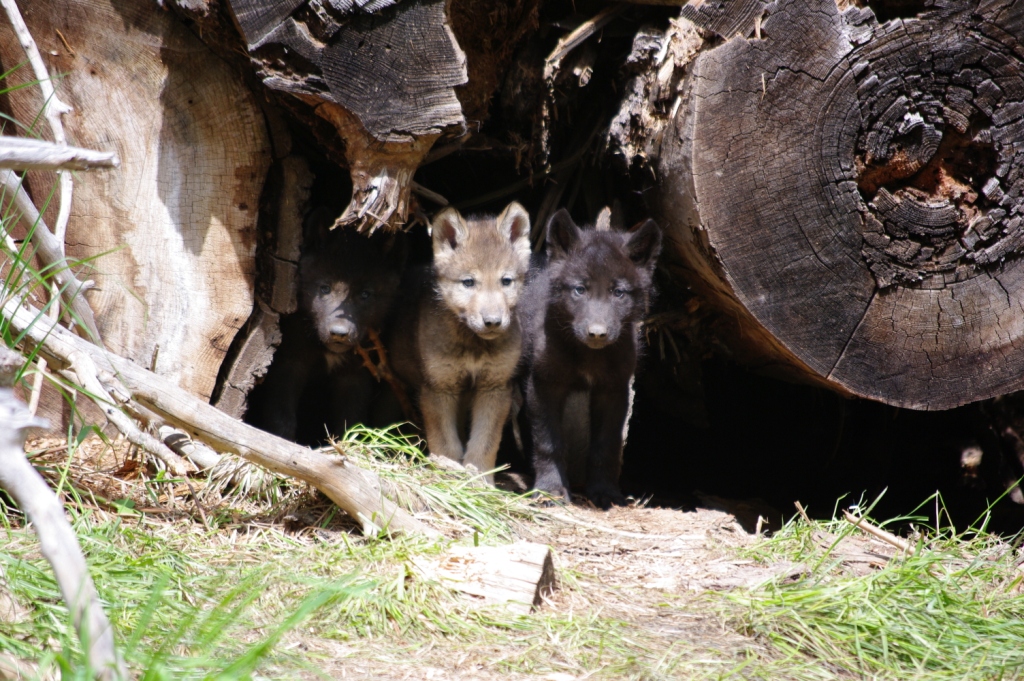
Category: Science

Meet Molly.

A most heart-warming story! Beats the heck out of murders, politics and terrorists!

This was sent in by John Hurlburt for Jean who has been a bit of a ‘horse lady’ in her times and is devoted to the two miniature horses we have here in Oregon.

oooOOOooo

Meet Molly

molly1

Molly is a gray speckled pony who was abandoned by her owners when Hurricane Katrina hit southern Louisiana . She spent weeks on her own before finally being rescued and taken to a farm where abandoned animals were stockpiled. While there, she was attacked by a dog and almost died.  Her gnawed right front leg became infected and her vet went to Louisiana State University (LSU) for help.

However, LSU were overwhelmed and Molly became a ‘welfare’ case. You know where that goes, don’t you!

Then surgeon Rustin Moore met Molly and changed his mind. He saw how Molly was careful to lie down on different sides so she didn’t seem to get sores.  He saw how Molly allowed people to handle her. She protected her injured leg. She constantly shifted her weight and didn’t overload her good leg. She was a smart pony with a serious survival ethic.

Surgeon Moore agreed to remove her leg below the knee and a temporary artificial limb was built. Molly walked out of the clinic and, in a very real sense, that’s where her story really begins.

This was the right horse and the right owner!” Moore insisted.

Molly happened to be a one-in-a-million patient. She’s tough as nails, but sweet, and she was willing to cope with pain. She made it obvious she understood that she was in trouble. The other important factor, according to Moore , is having a truly committed and compliant owner who is dedicated to providing the daily care required over the lifetime of the horse.

Molly’s story turns into a parable for life in Post-Katrina Louisiana.  The little pony gained weight and her mane finally felt a comb.  Then, amazingly, a prosthesis designer built her a leg.

The prosthetic has given Molly a whole new life, Allison Barca DVM, Molly’s regular vet, reports:

And she asks for it. She will put her little limb out and come to you and let you know that she wants you to put it on. Sometimes she wants you to take it off too. And sometimes, Molly gets away from Barca. “It can be pretty bad when you can’t catch a three-legged horse,” she laughs.

Most important of all, Molly has a job now. Kay, the rescue farm owner, started taking Molly to shelters, hospitals, nursing homes, and rehabilitation centers. Anywhere she thought that people needed hope. Wherever Molly went, she showed people her pluck. She inspired people, and she had a good time doing it.

It’s obvious to me that Molly had a bigger role to play in life,” Kay said. “She survived the hurricane, she survived a horrible injury, and now she is giving hope to others.

Allison Barca concluded, “She’s not back to normal, but she’s going to be better. To me, she could be a symbol for New Orleans itself.”

This is Molly's most recent prosthesis.
This is Molly’s most recent prosthesis.

Wherever Molly goes, she leaves a smiley hoof print behind.  Literally as well as metaphorically.

The photo shows the ground surface that she stands on has a smiley face embossed in it!
The photo shows that the bottom flat surface of the prosthesis has a smiley face embossed in it!

Leave you with that wonderful feeling of love for Molly?  Feel free to share it with all the animal lovers that you know.

What part of the argument are you missing?

Sometimes one just scratches the head and wonders!

In yesterday’s post, I wrote, “strongly resonated with a recent item on Peter Sinclair’s excellent blog Climate Denial Crock of the Week …”

Here is that item, republished with Peter’s kind permission:

oooOOOooo

Global Warming Continues to Accelerate

March 25, 2013

slide12

Skeptical Science:

A new study of ocean warming has just been published in Geophysical Research Letters by Balmaseda, Trenberth, and Källén (2013).  There are several important conclusions which can be drawn from this paper.

  • Completely contrary to the popular contrarian myth, global warming has accelerated, with more overall global warming in the past 15 years than the prior 15 years.  This is because about 90% of overall global warming goes into heating the oceans, and the oceans have been warming dramatically.
  • Some recent studies have concluded based on the slowed global surface warming over the past decade that the sensitivity of the climate to the increased greenhouse effect is somewhat lower than the IPCC best estimate.  Those studies are fundamentally flawed because they do not account for the warming of the deep oceans.
  • The slowed surface air warming over the past decade has lulled many people into a false and unwarranted sense of security.

The main results of the study are illustrated in its Figure 1.

Figure 1: Ocean Heat Content from 0 to 300 meters (grey), 700 m (blue), and total depth (violet) from ORAS4, as represented by its 5 ensemble members. The time series show monthly anomalies smoothed with a 12-month running mean, with respect to the 1958–1965 base period. Hatching extends over the range of the ensemble members and hence the spread gives a measure of the uncertainty as represented by ORAS4 (which does not cover all sources of uncertainty). The vertical colored bars indicate a two year interval following the volcanic eruptions with a 6 month lead (owing to the 12-month running mean), and the 1997–98 El Niño event again with 6 months on either side. On lower right, the linear slope for a set of global heating rates (W/m2) is given.

The Data

In this paper, the authors used ocean heat content data from the European Centre for Medium-Range Weather Forecasts’ Ocean Reanalysis System 4 (ORAS4).  A ‘reanalysis’ is a climate or weather model simulation of the past that incorporates data from historical observations.  In the case of ORAS4, this includes ocean temperature measurements from bathythermographs and the Argo buoys, and other types of data like sea level andsurface temperatures.  The ORAS4 data span from 1958 to the present, and have a high 1°x1° horizontal resolution, as well as 42 vertical layers.  As the authors describe the data set,

“ORAS4 has been produced by combining, every 10 days, the output of an ocean model forced by atmospheric reanalysis fluxes and quality controlled ocean observations.”

Accelerated Global Warming

As illustrated in Figure 1 above, the study divides ocean warming into three layers for comparison – the uppermost 300 meters (grey), 700 meters (blue), and the full ocean depth (violet).  After each of the Mt. Agung, Chichón, and Pinatubo volcanic eruptions (which cause short-term cooling by blocking sunlight), a distinct ocean cooling event is observed in the data.  Additionally, after the very strong El Niño event of 1998, a cooling of the upper 300 and 700 meters of oceans is visible as a result of heat being transfered from the surface ocean to the atmosphere.

One of the clearest features in Figure 1 is the rapid warming of the oceans over the past decade.  As we have previously discussed, the warming of the shallower oceans has slowed since around 2003, which certain climate contrarians have cherrypicked to try and argue that global warming has slowed.  However, more heat accumulated in the deeper oceans below 700 meters during this period.  The authors describe the ocean warming since 1999 as,

“the most sustained warming trend in this record of OHC.  Indeed, recent warming rates of the waters below 700m appear to be unprecedented.”

Their results in this respect are very similar the main conclusion of Nuccitelli et al. (2012), in which we noted that recently, warming of the oceans below 700 meters accounts for about 30% of overall ocean and global warming.  Likewise, this new study concludes,

“In the last decade, about 30% of the warming has occurred below 700 m, contributing significantly to an acceleration of the warming trend.”

The warming of the oceans below 700 meters has also been identified by Levitus et al. (2012) and Von Schuckmann & Le Traon (2011), for example.

Some ‘Missing Heat’ Found

Kevin Trenberth past comments about ‘missing heat’ drew considerable attention.  The phrase refers to the fact that the heat accumulation on Earth since about 2004 (e.g. from warming oceans, air, and land, and melting ice) that instruments were able to measure could not account for the amount of global heat accumulation we expected to see, based on the energy imbalance caused by the increased greenhouse effect, as measured by satellites at the top of the Earth’s atmosphere.

These new estimates of deeper ocean heat content go a long way towards resolving that ‘missing heat’ mystery.  There is still some discrepancy remaining, which could be due to errors in the satellite measurements, the ocean heat content measurements, or both.  But the discrepancy is now significantly smaller, and will be addressed in further detail in a follow-up paper by these scientists.

So what’s causing this transfer of heat to the deeper ocean layers?  The authors suggest that it is a result of changes in winds related to the negative phase of the Pacific Decadal Oscillation and more frequent La Niña events.

Good News for Climate Sensitivity?  Probably Not

Recently there have been some studies and comments by a few climate scientists that based on the slowed global surface warming over the past decade, estimates of the Earth’s overall equilibrium climate sensitivity may be a bit too high.  However, as we previously discussed, these studies and comments tend to neglect the warming of the deep oceans below 700 meters.

Does the warming of the deep ocean support these arguments for lower equilibrium climate sensitivity?  Probably not, as Trenberth explained (via personal communication),

“it contributes to the overall warming of the deep ocean that has to occur for the system to equilibrate.  It speeds that process up.  It means less short term warming at the surface but at the expense of a greater earlier long-term warming, and faster sea level rise.”

So the slowed warming at the surface is only temporary, and consistent with the ‘hiatus decades’ described by Meehl et al. (2011).  The global warming end result will be the same, but the pattern of surface warming over time may be different than we expect.

The real problem is that in the meantime, we have allowed the temporarily slowed surface warming to lull us into a false sense of security, with many people wrongly believing global warming has paused when in reality it has accelerated.

Global Warming Wake Up Call

Perhaps the most important result of this paper is the confirmation that while many people wrongly believe global warming has stalled over the past 10–15 years, in reality that period is “the most sustained warming trend” in the past half century.  Global warming has not paused, it has accelerated.

The paper is also a significant step in resolving the ‘missing heat’ issue, and is a good illustration why arguments for somewhat lower climate sensitivity are fundamentally flawed if they fail to account for the warming of the oceans below 700 meters.

Most importantly, everybody (climate scientists and contrarians included) must learn to stop equating surface and shallow ocean warming with global warming.  In fact, as Roger Pielke Sr. has pointed out, “ocean heat content change [is] the most appropriate metric to diagnose global warming.”  While he has focused on the shallow oceans, actually we need to measure global warming by accounting for all changes in global heat content, including the deeper oceans.  Otherwise we can easily fool ourselves into underestimating the danger of the climate problem we face.

oooOOOooo

“Global warming has not paused, it has accelerated.”

Now I should end it there.  But I can’t!

American readers worried about the drought? Do watch this short video from Paul Douglas. (Apologies for the ad. at the start.)

For worldwide readers who have seen the massive changes in ‘normal’ weather this winter, take a look at this, first published on the NASA Earth Observatory website:

arctic_oscillation_nasa_march_2013

arcticoscillation_2013

While a high-pressure weather system brought warmer than normal temperatures to Greenland and northern Canada in March 2013, much of North America, Europe, and Asia shivered through weeks of unseasonably cool temperatures. The contrasting temperatures are no coincidence: the same unusual pressure pattern in the upper atmosphere caused both events.

Atmospheric pressure patterns are constantly in flux, as air masses of differing temperatures and densities move around the skies. One key measure of pressure that meteorologists track closely is known as the Arctic Oscillation (AO) index, the difference in relative pressure between the Arctic and the mid-latitudes. Changes in the AO have can major impacts on weather patterns around the world.

When the AO index is in its “positive” phase, air pressure over the Arctic is low, pressure over the mid-latitudes is high, and prevailing winds confine extremely cold air to the Arctic. But when the AO is in its ”negative“ phase, the pressure gradient weakens. The pressure over the Arctic is not as low and pressure at mid-latitudes is not as high. In this negative phase, the AO enables Arctic air to flow to the south and warm air to move north.

In late March, the AO dropped as low as -5.6. (See this chart published by the Washington Post’s Capital Weather Gang to see how this compares with other periods when AO values reached record-low levels).

The temperature anomaly map above, based on data from the Moderate Resolution Imaging Spectroradiometer (MODIS) on NASA’s Aqua satellite, shows how this affected temperatures in the Northern Hemisphere. The map displays land surface temperature anomalies between March 14–20, 2013, compared to the same dates from 2005 to 2012. Areas with above-average temperatures appear in red and orange, and areas with below-average temperatures appear in shades of blue. Much of Europe, Russia, and the eastern United States saw unusually cool temperatures, while Greenland and Nunavut Territory were surprisingly warm for the time of year.

Many parts of the Northern Hemisphere saw near record-breaking cool temperatures as the value of the AO fell. The United Kingdom experienced its 4th coldest March since 1962. In late-March, two-thirds of weather stations in the Czech Republic broke records. Germany saw its coldest March since 1883. And Moscow had its coldest March since the 1950s.

NASA Earth Observatory image by Jesse Allen and Robert Simmon, using MODIS data from the Land Processes Distributed Active Archive Center (LPDAAC). Arctic Oscillation data from the NOAA National Weather Service Climate Prediction Center. Caption by Adam Voiland.

oooOOOooo

Sorry, I know I went on a bit!

If only we had an alpha dog!

Yearnings for a new start!

You may wonder about the title of this post?  Stay with me for a moment.

As has been written before on Learning from Dogs, when dogs were living in the wild just three animals had pack roles.  The leader of the pack, always a female animal, was the alpha dog. Second in command was the beta dog, always a dominant male, and the third role was the omega or clown dog.  The wild dog pack was thought to have consisted, typically, of about 50 animals.

Pharaoh
The wisdom of thousands of years showing clearly in Pharaoh’s eyes, our very own beta dog.

As leader of her pack an alpha dog had two primary functions .  One was having first choice as to the male dog she was going to mate with – thus demonstrating how women always choose! 😉

Her second important duty was deciding that her pack’s home range was insufficient for the needs of her ‘family’.  As wolves still do, wild dogs lived within small, well-defined territories when food was abundant.  When food became less abundant then it was time to move to more fertile grounds.  As an aside, research in South Africa as to the area requirements for a small pack of African wild dogs (Lycaon pictus) shows they require from 65 square kilometers (25 square miles) to 150 sq. km. (58 sq. mi.). (See footnote.)

Dogs, like all wild animals, instinctively live in harmony with nature.  So the call from the alpha dog to find a new range didn’t mean they left their old one as a barren disaster area.  You can see where this is heading!

Wild dogs were in contact with early man at least 50,000 years ago. (Just reflect for a moment on the length of that relationship between man and dog.) So each specie has had plenty of time to learn from the other.

Thus, as mankind is on the verge of discovering that our existing ‘territory’ is becoming unsustainable for the healthy life of the species,  one fundamental learning point from dogs appears to have escaped us: Mankind doesn’t have a new range available to our species.

This preamble came to mind when I recently read a short but powerful essay on Alex Jones’ blog The Liberated Way.  The essay was called A global leaky bucket.  Alex has very kindly given me permission to republish it.

A global leaky bucket

Global weather extremes will force people to hard choices.

Nature will have the last word in the debate over sustainability.

I write this in despair, it is snowing again here in Colchester UK.  I admit envy for those of you who live in California or Hong Kong area, I see your photographs where the seasons always seem to be warm and sunny.  The northern Jet Stream refuses to move, Greenland enjoys growing strawberries as the lambs die in the fields of Britain from the winter that refuses to let go.

The extremes of weather are noted in the South of the world as well as the North.  Argentina has had the worst floods in decades last week.  The cause is that the systems such as the Jet Stream are paralysed in one place, thus everyone suffers flood, drought or winter in excess.  Nobody is sure why this paralysis is going on with systems like the Jet Stream, some say it is climate change, the point is that we are experiencing this, and it appears to be more than a temporary issue.

My opinion is that these weather extremes are here to stay for the long duration.  One is then left with a harsh reality of does one seek to control the weather or adapt to the weather? How does one control the weather, a chaotic energy system where even a small change can have great consequences? Perhaps adaptation is the better option, but does one know how huge those adaptations will have to be where drought and flood could be lasting decades?

Lets say food, water and energy are all contained in a bucket.  We take a jug and scoop out from the bucket what we need.  There is a tap that is constantly running filling the bucket with the food, water and energy.  We waste those resources so the bucket leaks.  We disrupt or destroy the renewal systems in the ecosystems so the tap is no longer running as fast as it should.  We are greedy consumers so we take more than we need from the bucket with our jug.  How will the bucket look now? Is this a sustainable future to you?

If our global weather extremes continue as they are it will be like a storm rocking the bucket spilling its contents, will our bucket future look even less sustainable? Extreme weather destroys harvests, kills animals, sends already distressed ecosystems into the abyss.  What happens when the bucket is so empty that people can no longer enjoy their lifestyle of wasteful excess, or worse that people grow cold, hungry and thirsty? Do they sit there and do nothing but die? Will they fight? Who will fight who? As the bucket contents get ever smaller, who will win in the fighting for what is left?

Copyright (c) Alex Jones 2011-2013.

Colchester has a place in my past as I started and ran a business there between the years of 1978 to 1986.  More about that some other day.

Back to Alex’s essay.  It strongly resonated with a recent item on Peter Sinclair’s excellent blog Climate Denial Crock of the Week which I will refer to tomorrow.

So I will leave you with this tragic, emotional thought – where, oh where, is our alpha dog?

Footnote:  The figures for the ranges of wild dogs were taken from a fascinating paper published by Lindsay, du Toit and Mills that may be read here.

Only outcomes matter!

The Resilience Imperative and Civil Disobedience

Introduction

I have long been a subscriber to CASSE, The Center for the Advancement of the Steady State Economy.  As Casse’s home page sets out, “Perpetual economic growth is neither possible nor desirable. Growth, especially in wealthy nations, is already causing more problems than it solves.  Recession isn’t sustainable or healthy either. The positive, sustainable alternative is a steady state economy.”  Do take a minute to see the sense and power of this fundamentally and obvious position by reading a little more here.

But as the title of today’s post sets out, all the ideas and actions and commitments come to naught if the outcomes aren’t delivered.  This recent essay by Michael Lewis on the CASSE website explores the issue of outcomes and I am very grateful for being granted permission to republish it here on Learning from Dogs.

oooOOOooo

The Resilience Imperative and Civil Disobedience

by Michael Lewis

As I was making a speech in Alberta, Canada, to a business audience, mainly from the finance and energy industries, a fully engaged participant in the front row caught my eye. He was the first to approach me after the question period and the first to get my autograph on The Resilience Imperative: Cooperative Transitions to a Steady-State Economy, the book that I co-authored with Pat Conaty.

During my talk, I had argued that economic growth and a casino-like financial system were taking us to the edge of a deadly precipice. I made the case that societies urgently need to navigate the turn to a steady-state economy, based on local and regional trade. I also offered suggestions on how we might accomplish this. The thesis has a bit of an edge to it, especially in a business crowd accustomed to globalization and growth, so I was anxious to learn more about the front-row enthusiast.

He turned out to be a warm, charming, and open senior manager at Cenovus Energy, a large player in the Athabasca Tar Sands. The corporation seems to be respected in Alberta and Saskatchewan because of its health and safety, community, and environmental initiatives. He rapidly brought the discussion to the issue of “social license,” a condition he acknowledged was a big problem for the tar sands operators. But his view, after many years around boardroom tables, is that the industry is becoming more transparent and responsible, and its performance is improving.

I believe this to be true; certainly Cenovus has been doing a lot of things right. However, I argued that he was missing the point; social license in this industry could only be understood in a global context, and it is not going to be forthcoming for two simple reasons: (1) economic growth produces carbon and (2) carbon is going to kill a lot of us and thousands of other creatures.

If the oil and gas sector wants to explore the potential for broadening its social license, it would have to stand shoulder to shoulder with scientists, governments, businesses, and civil society and argue for a stiff tax on carbon. Only by taking such responsibility can Cenovus and its fellow corporations expand their social license. At the same time they would be helping to set the stage for the transition to a steady-state economy.

“Nothing less would do,” I proclaimed.

“Well you know, Mike,” he replied, “I have not seen much evidence of such a move afoot.”

Why am I not surprised? “I know,” I said. “Shareholder interests are framed by the ideology of growth and profit maximization, and even when these interests are complemented by an ethic of corporate social responsibility, the ideology does not exactly encourage this vital and necessary conversation.”

A few days later I attended the launch conference of the New Economics Institute at Bard College in Upstate New York. It was a remarkable convergence of practitioners, researchers, and activists engaged in debates about economics, analysis of mindboggling challenges (both local and planetary in scale), and exploration of hopeful transformational pathways.

Bill McKibben delivered a Friday evening keynote speech to a packed audience. His laser focus on greenhouse gas emissions was at once absorbing, terrifying, and hopeful, precisely the kind of dynamic that is motivating more and more people to step up to the front lines of civil disobedience, including many scientists and even a few economists. Mark Jaccard, a well-known energy economist in Vancouver, is hardly considered to be a radical, but he joined the front-line battle as part of a 350.org action. He was arrested in May of this year [Ed: 2012] for blocking a coal train headed north to Vancouver’s coal port.

McKibben and Jaccard are picking up on the analysis of James Hansen et al. that oil and gas are a problem, but we do not have enough of it left to take us over 450 parts per million of carbon dioxide in the atmosphere. Coal is the real threat. Unless we phase out coal completely by 2050, we will blast beyond this concentration, and that’s an event that many climate scientists believe will trigger catastrophic consequences. What are we to do?

McKibben and Jaccard are showing us part of the answer. But to make real progress, we need to pay much more attention to Herman Daly, the outstanding chronicler of our economic and ecological lunacy. He concluded one recent essay with this strident statement befitting of our circumstances:

Even though the benefits of further growth are now less than the costs, our decision-making elites have figured out how to keep the dwindling extra benefits for themselves, while “sharing” the exploding extra costs with the poor, the future, and other species. The elite-owned media, the corporate-funded think tanks, the kept economists of high academia, and the World Bank — not to mention Gold Sacks and Wall Street — all sing hymns to growth in perfect unison, and bamboozle average citizens.

Dr. Daly has clarified and expanded the arguments for a steady-state economy that go back to John Stuart Mill, John Ruskin, Frederick Soddy, Kenneth Boulding, and Ghandi. In the same essay referenced above, Daly also noted that in spite of all the evidence of the growing crisis, “our economists, bankers, and politicians still have unrealistic expectations about growth. Like the losing gambler they try to get even by betting double or nothing on more growth.”

Well then, perhaps we need to follow the leads of McKibben, Jaccard, and Hansen, and go get arrested. Perhaps we need to breathe deeply and act courageously to make hope more concrete and despair less convincing. Perhaps those of us in the 50 to 90-year-old set need to commit to civil disobedience to honor our children, grandchildren and our hopes for their survival. The time has arrived for all of us, but especially the post-war “growth generation” to break out of our too-comfortable zones. Stopping carbon emissions is a pre-condition, but nothing will change unless we are prepared to put ourselves on the line.

Of course, this is not enough. We have many questions to answer. How are we going to meet basic needs for energy, food, and shelter? How are we going to finance the economic transition? How do we restructure property rights to overcome the pervasive me-first culture? How do we achieve more local and democratic ownership of the means of production? How do we share jobs and income in a transition that will require less stuff and thus less making of stuff?

These are the questions we concentrate on in The Resilience Imperative. Pat Conaty and I put 42 months of serious forehead pressing into the book, and the early results are gratifying. People as divergent as John Fullerton, former managing director of JP Morgan whose focus is now on resilience and transition (good-bye Wall Street), and Robin Murray from the London School of Economics have endorsed it — they believe we have presented hopeful ideas for getting the transition going.

After presenting numerous positive examples of how people are changing the economy today, we end the book on this note:

The tasks of transition are many. The challenges are daunting. The outcomes are uncertain. Our courage remains untested. But we are a resilient species. We are not alone; there is “blessed unrest” all about. If we but open our eyes, we will SEE change is possible. If we act in ways that recognize we are interdependent, we will continue to innovate co-operative transitions to a steady-state economy.

There is one key question we need to ask ourselves. What stories will we be able to tell our loved ones about what we did to advance the Great Transition?

oooOOOooo

One sentence really jumped out at me from Michael’s essay and it was this one, “Perhaps we need to breathe deeply and act courageously to make hope more concrete and despair less convincing.”  Reminds me of the quotation ascribed to Napoleon Bonaparte:

Courage isn’t having the strength to go on, it is going on when you don’t have strength.

It is all about outcomes.

2020 vision

A moving, sensitive video about the Arctic.

I won’t let on why I called this post ‘2020 vision’ but if you watch the video below to just before the 7-minute mark the use of the number 2020 will become clear.

This video came to my attention from a recent post on Climate Crocks.  It’s a strongly powerful message about the changes going on in Arctic region and the profound effect those changes will have on the rest of the planet.  Indeed, many experiencing the recent weather in North-West Europe will amend the future tense of my sentence to present tense!

You can read more here about Professor Ken Dunton at the University of Texas where he is Professor, Department of Marine Science.

Professor Dunton
Professor Dunton


He is the sort of person that we should be listening to very carefully as the world changes in ways not seen for tens of thousands of years.

Sceptical about global warming? Read this!

Learning from Dogs is not a blogsite about climate change!

Why, you may ask, do I start today’s post with that sub-heading?  Because, I am conscious that many of my posts do touch on this subject.  For example, just two days ago there was Breaking news.  Then there was the piece about the climate implications for Phoenix, Arizona.  Followed the next day by the changes in the flow of the jet stream across the North Atlantic with all the weather implications for North-West Europe.

Indeed, as the heading to today’s post makes clear, this is also about the changes going on to our planet.

Learning from Dogs is about a different way of living and behaving.  A campaign, if one wants to call it that, to show that the way that modern man is living is corrupt.  Not with a big ‘C’ but still in the sense of living a dishonest life.  Learning from Dogs attempts to show that our wonderful dogs, a source of so much love and pleasure for so many millions, offer us an example of a life in and of this planet.

If there was ever a time in the history of man when we needed being reminded of our frailty and vulnerability, it is now.  As the following so starkly illustrates.

Peter Sinclair of Climate Crocks recently republished an item from Skeptical Science that opened up as follows:

A new study of ocean warming has just been published in Geophysical Research Letters by Balmaseda, Trenberth, and Källén (2013).  There are several important conclusions which can be drawn from this paper.

  • Completely contrary to the popular contrarian myth, global warming has accelerated, with more overall global warming in the past 15 years than the prior 15 years.  This is because about 90% of overall global warming goes into heating the oceans, and the oceans have been warming dramatically.

But what really jumped off the page was this graph.  It is truly scary!

orasa4
Figure 1: Ocean Heat Content from 0 to 300 meters (grey), 700 m (blue), and total depth (violet) from ORAS4, as represented by its 5 ensemble members. The time series show monthly anomalies smoothed with a 12-month running mean, with respect to the 1958–1965 base period. Hatching extends over the range of the ensemble members and hence the spread gives a measure of the uncertainty as represented by ORAS4 (which does not cover all sources of uncertainty). The vertical colored bars indicate a two year interval following the volcanic eruptions with a 6 month lead (owing to the 12-month running mean), and the 1997–98 El Niño event again with 6 months on either side. On lower right, the linear slope for a set of global heating rates (W/m2) is given.

I’m not going to republish the whole piece, although Peter Sinclair kindly gave permission, because I want to move on.  But please do go to that article here and take in the conclusions; for all our sakes.  Conclusions such as:

Their results in this respect are very similar to the main conclusion of Nuccitelli et al. (2012), in which we noted that recently, warming of the oceans below 700 meters accounts for about 30% of overall ocean and global warming.  Likewise, this new study concludes,

“In the last decade, about 30% of the warming has occurred below 700 m, contributing significantly to an acceleration of the warming trend.”

and such as:

Most importantly, everybody (climate scientists and contrarians included) must learn to stop equating surface and shallow ocean warming with global warming.  In fact, as Roger Pielke Sr. has pointed out, “ocean heat content change [is] the most appropriate metric to diagnose global warming.”  While he has focused on the shallow oceans, actually we need to measure global warming by accounting for all changes in global heat content, including the deeper oceans.  Otherwise we can easily fool ourselves into underestimating the danger of the climate problem we face.

What I want to move on to is a recent item highlighted on Grist.  This was an essay by David Roberts under the heading of Two reasons climate change is not like other environmental problems.  David opens by saying:

If you’ll forgive me for stating the obvious: Most people don’t understand climate change very well. This includes a large proportion of the nation’s politicians, journalists, and pundits — even the pundits who write about it. (I’m looking at you, Joe Nocera.)

One reason for the widespread misunderstanding is that climate change has been culturally coded as an “environmental problem.” This has been, in all sorts of ways, a disaster. Lots of pundits, especially brain-dead “centrist” pundits, have simply transferred their framing and conception of environmental problems to climate. They approach it as just another air pollution problem.

David writes that firstly carbon dioxide is not like other pollutants, for example like air particulants.  Then later goes on to say:

The second difference is that climate change is irreversible.

As Joe Romm notes in a recent post, New York Times columnist Joe Nocera slipped up in his latest column and referred to technology that would “help reverse climate change.” I don’t know whether that reflects Nocera’s ignorance or just a slip of the pen, but I do think it captures the way many people subconsciously think about climate change. If we heat the planet up too much, we’ll just fix it! We’ll turn the temperature back down. We’ll get around to it once the market has delivered economically ideal solutions.

But as this 2009 paper in Nature (among many others) makes clear, it doesn’t work that way:

This paper shows that the climate change that takes place due to increases in carbon dioxide concentration is largely irreversible for 1,000 years after emissions stop. Following cessation of emissions, removal of atmospheric carbon dioxide decreases radiative forcing, but is largely compensated by slower loss of heat to the ocean, so that atmospheric temperatures do not drop significantly for at least 1,000 years. [my emphasis]

The article is really best read in full. Because it’s a reminder that the way we presently behave is, in so many ways, a scary legacy for future generations.

So, back to dogs!

When dogs were living as wild dogs, thousands of years ago, a typical pack size was between 40 to 50 animals. The ‘head’ dog was the alpha dog, always a female.  Next in status was the beta dog, always a dominant male. The last one in terms of status was the omega dog, or clown dog.  Those genetic traits still survive in the domestic dog.

Pharaoh - still being an assertive beta dog; taken 22 days ago!
Pharaoh – still being an assertive beta dog; taken 22 days ago!

The alpha dog had two important roles as ‘leader of the pack’.  She had first pick of the male dogs, for obvious reasons. (Only much later in life do we human men come to understand that it’s always the woman who chooses!)

The second role was that she was the one who decided that their territory was unsustainable for her pack and signalled the need to find a new territory.

For man, there’s no other territory to move to.  So we will just have to clean up the only one we have!

Breaking news!

Recent news items reinforce messages from yesterday’s book review.

In my review published yesterday of Martin Lack’s book Denial of Science, I wrote, “the continuing and accelerating loss of the Arctic ice-cap“.  Back on the 22nd in More new tomorrows, I included:

study published in 2012 showed that by changing the temperature balance between the Arctic and mid-latitudes, rapid Arctic warming is altering the course of the jet stream, which steers weather systems from west to east around the northern hemisphere. The Arctic has been warming about twice as fast as the rest of the Northern Hemisphere, due to a combination of human emissions of greenhouse gases and unique feedbacks built into the Arctic climate system. The jet stream, the study said, is becoming “wavier,” with steeper troughs and higher ridges.

A new study published in the journal Environmental Research Letters shows that reduced sea ice cover can favor colder and stormier winters in the northern midlatitudes. [my emphasis – UK readers will need no reminding of this!]

So bear those references in mind as you read:

Breaking News (Literally): NOAA Video Confirms Early Breakup

March 23, 2013

Compare to our recent discussion of these developments in the Beaufort Sea.

NOAA Visualizations:

Published on Mar 22, 2013

A series of intense storms in the Arctic has caused fracturing of the sea ice around the Beaufort Sea along the northern coasts of Alaska and Canada. High-resolution imagery from the Suomi NPP satellite shows the evolution of the cracks forming in the ice, called leads, from February 17 — March 18 2013. The general circulation of the area is seen moving the ice westward along the Alaskan coast

“Intense storms” are not an unheard of thing in the arctic. What’s new is that the ice is so fragile that normal storm activity is breaking it up much earlier than has been seen in the past.

Arctic Sea Ice Blog:

To recapitulate: It is normal for the ice to crack and for leads to occur. However, this is very extensive cracking and there are some very big leads, and all of it seems to come earlier than expected. Given last year’s melting mayhem and the low amount of multi-year ice, it makes one wonder whether this early cracking will have any effect in the melting season to come.

There are still several weeks to go before this part of the Arctic is going to start melting, up till then the ice will actually thicken some more, even when the Sun’s rays start to reach the ice. But the ice is already getting broken up in smaller pieces, which means that 1) the pack becomes more mobile (like we saw last year), and 2) the thin ice that now grows to fill up the leads will go first when the melting starts, potentially leading to more open water between floes to absorb solar energy and convert it to heat.

But maybe not. Maybe this will have zero influence. We don’t know. That’s why we watch.

Nothing more to add except to ponder on what strange weather we will be experiencing this year!  Actually, no need to ponder.  The UK Met Office issued a weather warning last Sunday that included this sentence, “Cold easterly winds will persist through the coming week with bitterly cold conditions.”  That came on the back of a blog entry from the Met Office that same day that included:

Many areas also saw strong winds, with a gust of 61 mph recorded at Shap, Cumbria and 48 mph recorded at Machrihanish, Argyll . These winds have caused even deeper drifts of snow in some areas. [my emphasis].

61mph?  That’s Storm Force 10 under the Beaufort scale and 3mph under the lower boundary of a Violent Storm; Beaufort Force 11!

oooOOOooo

The next item that caught my eye was some ‘goodish’ news from the US Senate via a recent post on 350.org.

Bill’s Response to the Senate Vote Today

Posted by Duncan Meisel – 03/22/13, 4:51pm

Friends,

After a very chaotic week on Capitol Hill, I wanted to write you with an update on what just happened in the Senate today.

First and foremost: the oil industry’s Senators did not manage to pass legislation that would force President Obama to build Keystone XL.

Because you — and people like you, all across the country — jumped into action this week, they backtracked and instead held a vote on a nonbinding resolution that says it would be nice to build the pipeline, but doesn’t actually do much about it. For that vote, they got the stomach-churning number of 62 Senators to vote with them. As usual, the ones who had taken the most money from the fossil fuel industry lined up to cast their votes—the cosponsors of the bill, on average, had taken $807,000 in dirty energy money.

Now, this amounts to symbolic chest thumping by the oil industry: showing just how many Senators they can get to jump when told to. It’s not the worst thing that could have happened, but it reminds everyone why, in one recent poll, congress had approval ratings lower than head lice and colonoscopies — even on the symbolic stuff, they can’t get it together to stand up to the oil industry guys cutting them checks.

In a certain way though, this vote couldn’t come at a better time. Congress is going on break, and for the next two weeks, these 62 Senators will be back in their home states, doing things like meeting with constituents — people like you.

Home states are where some of the most heroic work took place the last week — in Minneapolis, say, where 150 350MN.org activists showed up on very short notice at Sen. Klobuchar’s office in a snowstorm to tell her to vote no on Keystone (and she did, it should be added).

If you’re interested in following in the fine example of those leaders who held actions at their senators offices, you have a chance in the next two weeks.

We’re looking for people who can step up to lead, and then we’ll put the 350 network into action to get people to join you. If you want to lead an action, just click here to tell us when you’d like to do so: act.350.org/survey/kxl-senate-accountability-2013/

Look, there are two ways to react to a democracy for sale. One is to walk away in disgust, which is what the Koch Brothers count on. The other is to stand up and say: no more. If you visit your Senator, take some pictures or some video so we can share them around. It’s time to build this broader fossil fuel resistance.

And remember, Capitol Hill is not the center of the world. Around the country this week our friends at Tar Sands Blockade have been actively targeting Keystone investors; faith groups have been hauled off to jail in front of the White House to protest the pipeline; and the divestment campaign has expanded off college campuses and into municipal and state governments.

The movement is doing amazing stuff — we just need more of it. We can’t outspend the oil industry, but we can out-organize them. In fact, we have to.

Forward,

Bill McKibben

oooOOOooo

the cosponsors of the bill, on average, had taken $807,000 in dirty energy money.”  Words utterly fail me!

Funny old world!

The Denial of Science: A review.

A review of the recently published book by Martin Lack.

denial of science

In many ways it would be terribly easy to find fault with this book. If it had been written as a book, been through the edits that a new book requires, then published, those faults would be a significant criticism.

But it was not written as a book! It was originally written as an academic text.  As Martin explains in the Preface:

This book is based on research originally undertaken – and a dissertation written – as part of my MA in Environmental Politics from Keele University in Staffordshire (in 2010-2011).

Then in the following paragraph goes on to say:

Academics generally disapprove of the publication of academic research via non-academic, non-peer-reviewed routes.  However, I am trying to reach more than just an academic audience.

Three sentences later:

However, this book retains many of the features of a piece of academic research, …. (All quotes from page viii of the preface)

To a person unaccustomed to reading academic research, as is this reader, the structural and presentational differences between a ‘normal’ non-fiction book and a dissertation are significant.  That needs to be borne in mind as you turn to page one.

OK, now that I have got that off my chest, on to the substance of the review.

Turning to the outside back cover, one sees Martin clearly explaining that the book is not about climate science, rather an analysis of why some people dispute “the reality, reliability and reasonableness of this science.”

That alone justifies the work that Martin put into his research and dissertation and his subsequent decision to adapt his findings into a book.

The pace and scale of the changes that are being visited on Planet Earth is truly frightening.  The number of feedback loops that we are locked into now don’t even bear thinking about.  Just take the continuing and accelerating loss of the Arctic ice-cap and extrapolate that for a couple of decades (touched on in my recent post More new tomorrows and see footnote.)

We are not talking of subtle changes over many generations. We are talking about irreversible and irrevocably massive changes to our environment within the lifetimes of just about every living person on this planet.  (I’m 70 next year and while I have no idea how many years I have left, I rate it as at least 50:50 that before I take my last breath, the coming destruction of biosphere will be blindingly obvious to me, Jean and 99.9% of the world’s population.)

Makes me want to shout out ……

There is not much time left to leave a sustainable world for future generations.  Come on politicians and power-brokers; start acting as though you truly understand the urgency of the situation!

Ah, that feels much better!

Back to the book!

Martin examines 5 categories that display denial behaviours, to a greater or lesser extent.  These categories are: Organisations; Scientists, Economists, Journalists and Politicians. Oh, and a 6th catch-all category: Others.

Each section dealing with a category is structured in the same way: Preliminary Research; Key Findings and Summary.  Tables are used extensively to allow easy review of the findings.

Again, what needs to be hammered out is that this format is very unlike a typical non-fiction book.  Because it’s fundamentally an academic dissertation!  But, so what!

What is important is for the widest possible audience to understand the breadth and extent of the denial going on.  Denial that is, literally, playing with the future of humanity on this planet; the only home we have.

Let me reinforce that last sentence by picking up on what Martin writes on his closing page (p.76):

Furthermore, there is strong circumstantial evidence to suggest that this scepticism is being fuelled by those with a vested interest in the continuance of “business as usual” by seeking to downplay, deny or dismiss the scientific consensus on the extent of ACD.

Martin Lack’s book may be unconventional in many ways.  But as a tool to show how those who deny the science of climate change deny the right of future millions to live in a sustainable manner, it is most powerful.  It is a valuable reference book that should be in every library and every secondary school across the globe!

The Denial of Science is published by AuthorHouse 02/23/2013

oooOOOooo

Footnotes:

  1. To add weight to the points made in this review, do look in on tomorrow’s post.
  2. I have no commercial links to Martin Lack; indeed, I purchased the copy of the book that I used for this review.

More new tomorrows.

New world order goes to ramming speed!

We spent some enjoyable time with neighbours Dordie and Bill yesterday afternoon from where my sub-heading quote comes.  Perhaps, a tad tongue-in-cheek, but only a tad!

Yesterday, the bulk of my post The new tomorrows consisted of a powerful essay from William deBuys ‘Phoenix in the Climate Crosshairs‘, courtesy of TomDispatch.  It painted in very stark terms the impact of climate change on the metropolitan city of Phoenix in Arizona; a city of over 4 million people, indeed home to more than two-thirds of Arizona’s population.

So, today, I wanted to wander through some other aspects of this new world order.

Here’s a recent item on Climate Crocks examining the changes in March’s weather, 2013 vs 2012.  From which I quote:

Much Different March. Same Reason?

Dittohead reasoning: “So when it’s warm, you blame it on climate change. When its cold, you blame it on climate change. It can’t be both.”

Well, yeah, it can, kinda.

Meteo people weigh in.

7Weather Blog WHDH-TV:

I think we’ve passed the point of tolerance with these ceaseless storms. Gone are the days when viewers would flood our inboxes with pretty pictures of their pets and kids frolicing in the snow. Constant cleanup has made us snippy and short – even a few plow guys have hoisted the white flag. The holidays are long past, the winter is stale, and the people just want spring…

…and accountability.  Instead of pictures, I get questions in my inbox. “Why are we getting so much snow? Why did it turn on a dime? And when will it stop?”

Those are fair questions. But with the limits of the long range (10-14 day) forecasts, I’m not ready to answer the last question. We may sail out of this in April, but so far the first week of the month isn’t looking much different from the first week in March. The ultimate question is why.

The jetstream has taken on an odd path. [my emphasis]

Now just look at this:

Forecast sea level pressure departures from average from the GFS computer model. This shows the large area of unusually high atmospheric pressure over Greenland.Image from Weatherbell
Forecast sea level pressure departures from average from the GFS computer model. This shows the large area of unusually high atmospheric pressure over Greenland.
Image from Weatherbell

Later on that article says:

Recent research suggests that rapid Arctic climate change, namely the loss of sea ice cover, may be contributing to blocking patterns like we’re seeing right now. That rapid decline in Arctic sea ice since the beginning of the satellite record in 1979 may be altering weather patterns both in the Far North and across the U.S.. Some studies have shown that sea ice loss favors atmospheric blocking patterns such as the pattern currently in place, while others have not shown statistically significant changes in blocking patterns across the Northern Hemisphere, at least not yet. Arctic sea ice extent declined to a record low during the 2012 melt season.

The last Winter in North-West Europe has been ‘interesting’, to say the least!  A follow-up to that Climate Crock’s essay reports:

study published in 2012 showed that by changing the temperature balance between the Arctic and mid-latitudes, rapid Arctic warming is altering the course of the jet stream, which steers weather systems from west to east around the northern hemisphere. The Arctic has been warming about twice as fast as the rest of the Northern Hemisphere, due to a combination of human emissions of greenhouse gases and unique feedbacks built into the Arctic climate system. The jet stream, the study said, is becoming “wavier,” with steeper troughs and higher ridges.

A new study published in the journal Environmental Research Letters shows that reduced sea ice cover can favor colder and stormier winters in the northern midlatitudes

Did you fully take in that paragraph?  The one about “The Arctic has been warming about twice as fast as the rest of the Northern Hemisphere …“?

The other great ‘river’ in the North Atlantic is the thermohaline circulation or to put it in more familiar terms: The Gulf Stream.  Has that been changing?  You bet! In more ways than one might expect.

Here’s a snippet from an item from last October’s issue of Nature journal:

Recent changes to the Gulf Stream causing widespread gas hydrate destabilization

The Gulf Stream is an ocean current that modulates climate in the Northern Hemisphere by transporting warm waters from the Gulf of Mexico into the North Atlantic and Arctic oceans. A changing Gulf Stream has the potential to thaw and convert hundreds of gigatonnes of frozen methane hydrate trapped below the sea floor into methane gas, increasing the risk of slope failure and methane release.

How the Gulf Stream changes with time and what effect these changes have on methane hydrate stability is unclear. Here, using seismic data combined with thermal models, we show that recent changes in intermediate-depth ocean temperature associated with the Gulf Stream are rapidly destabilizing methane hydrate along a broad swathe of the North American margin.

As the diagram below shows all too clearly, the cold waters from above the Arctic circle directly affect the Gulf Stream.

gulfstream

From the website of the National Snow & Ice Data Center:

Average sea ice extent for February 2013 was 14.66 million square kilometers (5.66 million square miles). This is 980,000 square kilometers (378,000 square miles) below the 1979 to 2000 average for the month, and is the seventh-lowest February extent in the satellite record.

Less ice means more cold water. QED!

OK, moving on.

We met recently with Wayne over at Rogue Valley Firewood here in Merlin.  Not to buy more firewood but because Wayne has started into hugelkultur.  Jean and I hadn’t heard of the term before.  Come back to that in a moment.

In musing with Wayne about how rapidly life is changing for us all, he spoke of the consequence of rising fuel prices and the rising costs of putting petrol (OK, he used the word ‘gas’!) in one’s car.  Wayne pointed out the obvious.  That the inevitable effect of those rising costs would be to steadily reduce one’s range for ‘affordable’ car journeys.  Many people will no longer be able to afford to drive longer distances.

In other words, local will increasingly become more relevant to daily life.  Or to use a better word than local, community will return to the centre stage of our world.  And of all the things important to a community, none is more so than access to food.

Back to Hugelkultur. Watch this video:

Wayne is committed to seeing just what can be grown for the local community of Merlin using this form of raised garden bed.  You can read more here.

Is this just a piece of fun?  Most definitely not!

Here’s a recent item from Grist.

This sobering map shows you all of America’s food deserts

By Sarah Laskow

The USDA’s new Food Access Research Atlas is a map of all the places in the country where people live in food deserts — places where it’s difficult to access fresh food.

food-deserts1

More details here.

The message that hits me from that map is the consequence for millions of people, especially those in rural areas or unable to afford a car, when it comes to getting hold of fresh food.  Another reason why community food programs are going to be a feature of the new tomorrows.

Finally, take a look at a recent item on Paul Gilding’s blogsite.

paulgildingportrait
Paul Gilding

Paul is an independent writer, advisor and advocate for action on climate change and sustainability. He recently published Victory at Hand for the Climate Movement? From which I offer:

There are signs the climate movement could be on the verge of a remarkable and surprising victory. If we read the current context correctly, and if the movement can adjust its strategy to capture the opportunity presented, it could usher in the fastest and most dramatic economic transformation in history. This would include the removal of the oil, coal and gas industries from the economy in just a few decades and their replacement with new industries and, for the most part, entirely new companies. It would be the greatest transfer of wealth and power between industries and countries the world has ever seen.

To understand this incredible potential we first have to step back and understand the unique structure of this social change movement, which may rank among the most influential in history. It is simplistic to characterise it as an alliance of grass roots organisations and activists pitched against a rich and well connected adversary. While that is part of the story, it is more accurately understood as an idea whose tentacles reach into every tier of government, the world’s largest companies and financial institutions, and throughout the academic and science communities.

Because of this, it is winning the battle from within: Its core arguments and ideas are clearly right; being endorsed by the world’s top science bodies and any significant organisation that has examined them.

Read the full article here.

Strikes me that in one very important way, we will be reverting to how our ancient hunter-gatherer ancestors lived.  I mean reverting to living our lives as relatively small interdependent communities almost exclusively at the local level.

Guess what!  Yet another aspect of learning from dogs.  In the wild, dogs live in groups of about 50 animals with clear boundaries to their territory.  Just like the ancestors of the domesticated dog and the wild dog: The grey wolf Canis Lupus.

Grey wolf Canis Lupus

See you all tomorrow!

A mathematical approach to the demise of the Neanderthals.

Pure mathematics is, in its way, the poetry of logical ideas. Albert Einstein.

I have never been proficient at mathematics. But that doesn’t mean that I am not fascinated by the field of maths.

Hold that in your thoughts as I mention the name of blogger: Patrice Ayme.  It’s a non-de-plume but so what!  What blows me away, to use the vernacular, is the depth of thought expressed through the keyboard of Mr. Ayme (even the gender is an assumption).  The sub-heading on the home page of his blog is “Intelligence at the core of humanism“.  Just run your eye down the list of Recent Posts to the right-hand side of the home page to get a feel for the topics covered in the last few months.  Impressive is an understatement!

Anyway, five days ago Patrice published a post proposing how the Neanderthals were outbred, under the title of Math Extinguished Neanderthals.  It fascinated me and Patrice was gracious in allowing me permission to republish it on Learning from Dogs.

oooOOOooo

Math Extinguished Neanderthals

HOW NEANDERTHALS WERE OUTBRED:

Zillions of theories about the “disappearance” of Neanderthals. The latest one, from Oxford University, claims that Neanderthals’ big, beautiful eyes, and their big muscles caused their demise. They were too busy looking at things, and flexing their muscles. The idea is that significantly larger eyes would have crowded the Neanderthal brain out, making them relatively stupid. In particular it made them incapable of having social groups as large as those of Homo Sapiens Sapiens.

Big Eyes Do Not Kill

Big Eyes Do Not Kill

Sapiens girl on the left, Neanderthal girl on the right (reconstitution published in Science Magazine a few years ago).

I have long argued that the strength of democracy came from having many brains working in parallel. There is little doubt that larger social groups bring a higher cultural intelligence, hence higher individual intelligence. So I agree about that bit of logic. Yet, ironically, to reach the conclusion that Neanderthals’ social group were less numerous, the simple fact that Neanderthals were bigger, is enough. There is no need for hazardous demeaning allegations about Neanderthals’ brains.

That big eyes made Neanderthals stupid contradicts some facts that were thought to be established:

1) Sapiens Neanderthalis’ brains were significantly larger to start with. See Wikipedia.

2) Many very clever Homo Sapiens Sapiens have small brains. Famously Anatole France, an intellectual, had only a 1,000 cubic centimeters brain. Homo Floresiensis, the “hobbit” species living on the island of Flores, Indonesia, until it was wiped out recently, was extremely intellectually capable, although it had really small (and completely different) brains.

3) In the Middle East, Neanderthals and Sapiens went back and forth through the same large caves over 50,000 years. So whatever happened, it was not in evidence for 50,000 years.

So, of course, I have my own theory. That’s what philosophy is all about: trying to guess what really matters most, and how that most significant data logically articulate. Then scientists, politicians and writers can swoop, figure out the details, and attribute themselves the glory.

What could have happened by around 28,000 years ago that caused the demise of Neanderthals? At the time, the last fierce glaciation was gaining ground. (It reached its maximum 25,000 years ago.) Some have argued, absurdly, that the Neanderthals could not take it. That’s beyond silly, as Neanderthals had evolved, from half a million years ago, precisely to handle extreme cold.

Neanderthals were stocky, powerful, and they had thrived through hundreds thousands years of glaciation, mostly on a meat diet, hunting big game. But they also knew how to cook plants, and eat them.

50,000 years ago, Neanderthals exterminated Cave Bears, a huge animal who lived in caves, prime real estate Neanderthals craved for. Could the disappearance of Cave Bears be logically linked to the disappearance of Neanderthals? Yes. That’s a consequence of my theory. More advanced technology played a direct role.

How did Neanderthals kill Cave Bears? With technology. We do not know exactly what weapons Neanderthals had at their disposal. However, technology had improved, and kept improving. Recently it was found that Sapiens Sapiens (Homo SS; I hope one gets the joke) in Africa had invented bows and arrows 80,000 Before Present (BP).  (About 60,000 years earlier than previously thought!) Before bows and arrows, the propeller had been invented, and was used in Europe. The propeller took advantage of angular momentum to send a sort of mini lance further and stronger than by hand.

Why did the Neanderthals and Denisovans (another human species from Central Eurasia) lose their edge? Advancing technology is the obvious answer. When technology of clothing and weapons was sufficiently advanced, the physiological advantage that the Neanderthals genetically had, disappeared. Homo Sapiens Sapiens could thrive just as well through winter.

At that point, Homo Sapiens Sapiens from Africa could be as successful as the Neanderthals through the freezing wastelands of Europe. OK.

But the Homo SS outbred the Neanderthals, so they became genetically more successful. How do I explain that?

Simple. However, the explanation involves the exponential function, the same function found all over, and that the mathematician Rudin called “the most important function in mathematics”. The exponential also explains the plutocratic phenomenon, and that is why it’s so dangerous. The exponential always rules extinction events, that’s why one day a species is all over, like the American Pigeon, or the Tasmanian Tiger, and the next day, it’s gone.

So visualize this. Neanderthals were bigger than Homo SS, just like the Polar Bear is bigger than the Black Bear. Bigness is an adaptation to cold. Southern Europe’s Brown Bears are smaller than those found in Kamchatka, or Alaska (also known as Grizzlies: the Grizzly is an emigrated European Brown Bear!) Bigger makes warmer inside. That’s why the most massive animal that ever was, the Blue Rorqual, at up to 180 tons, is nearly twice the mass of the largest dinosaur (it’s not just that it’s floating, but also that water is cooler than Jurassic air, I hold).

To simplify, let’s use a bit of exaggeration (that’s reasoning by exaggeration, one of my preferred tactic of thought; the one humor exploits, and why joking helps thinking). Let’s assume Neanderthals were twice more massive than Homo SS.

Now let’s consider an habitat where Homo SS and Neanderthal bands roamed. They will tend not to mix, for obvious racist reasons. The racial hatred between Neanderthals and Homo SS has got to have been colossal. People who look too different are not even sexually attracted to each other (and where Neanderthals and Homo SS were in contact in the Middle East, for 50,000 years, there is no evolution of an interbred species, an indirect proof that there was no love lost there!)

The density of human mass is going to be roughly the same all over, because that density depends only upon the resources available (mostly meat on the hoof, and fur in burrows in glaciating conditions).

Thus, there would have been apartheid. But the Homo SS would have been twice more numerous, where they reigned (from my assumption of twice the mass). So now graft on this a catastrophe; a drought, a flood, a very tough winter, a volcanic super disaster, whatever. The climate was highly variable, starting about 40,000 years ago, just when Homo SS appeared. Some have stupidly argued that Neanderthals were too stupid to adapt to this changing circumstances. Like this paralyzing stupidity struck them just when Homo SS were around. My explanation is more subtle.

After a catastrophe in said habitat, say one of these numerous habitat in Europe isolated by glacial mountain ranges, or seas and lakes, most of the human population would be wiped out, Homo SS, just as Neanderthals. There would tend to be always a small remaining population, because the greatest limit on man is man himself: as a population gets wiped out, resources rebound, and life of the survivors tend to get much easier (that’s what happened in Europe after the Black Death of 1348 CE; if nothing else, survivors could ask for higher salaries from their plutocratic masters, and they did).

So say 90% of the population of the habitat was wiped out. As suddenly resources are now not limited, the human population will rebound exponentially. The equation is: N(t) = N(0) exp(Rt). “R” is the “Malthusian” parameter, the rate of growth. Now it’s going to require twice the resources to feed a Neanderthal to sexual maturation (under our outrageously simplifying assumption that Neanderthals are twice the mass). Thus one may assume that R(Homo SS)/R(Neanderthal) is 2. The end result is that the quotient:

Number Homo SS/ Number Neanderthal = A exp(2t). (Where A is the ratio of the populations H SS/Neanderthal after the catastrophe.)

Thus the population of H SS would exponentially grow relative to that of the Neanderthals, resulting in a quick extinction. And in no way this is happening because Homo SS were superior. Just because they were more gracile.

Hence the mystery of the evolution of contemporary man is smoothly explained. Just a bit of math. QED.

Europeans & Asians: Not Just African

Europeans & Asians: Not Just African

***

Patrice Ayme

***

Note 1: what of the mentally deliquescent and racist article in the Proceedings of the Royal Society? First, they sank so low as tousing orbit size as a proxy, that Neanderthals had larger visual systems than contemporary AMH [Anatomically Modern Humans]. That’s about as intelligent as saying that, because special forces use night vision goggles, they have got to have bigger visual systems.

The main woman author also found the same physiological feature, bigger eyes, in the past, about people presently living at high latitude. She contentedly asserted that, because light levels are lower in the north, people living in the north (40,000 years at least for Homo SS) have bigger eyes. Amusingly, she did not draw, in that case the conclusion that Norwegians and the English are therefore more stupid. Somehow, though, in her lack of smarts, she applies that controversial reasoning to Neanderthals. Does she have giant eyes?

Seriously the Oxford study rests on a central fact that contradicts one of established facts about Neanderthals. Indeed it claims Neanderthals’ brains were not any larger than Homo SS.

***

Note 2; what catastrophes am I talking about? Well the climate fluctuated wildly, to start with. Second, A Campanian ignimbritevolcanic super-eruption around 40,000 years ago, followed by a second one a few thousand years later, certainly crashed Neanderthal populations (based on logic, and evidence fromMezmaiskaya cave in the Caucasus. Mitochondrial DNA analysis of a specimen there is C14 dated 29,000 years BP, one of the latest living pure Neanderthals). After such a catastrophe, the exponential rebounds of populations would have advantaged Homo SS, as explained above.

***

Note 3: OK, I exaggerated with the mass ratio. (Mathematicians often do this, considering an exaggerated case to understand the mean, through the tails.) But the real mass ratio would be aggravated because, Neanderthal was built in such a way, relative to gracile Homo SS, that they consumed more calories per day (some paleontologists have come up with 300). So there is no doubt that the effect above will play a role, even if the mass ratios were not as bad. Notice the mechanism above would tend to extinguish the Neanderthal traits that were most characteristic of the subspecies.

***

Note 4: A preferred trick of Neanderthals’ haters is to exhibitArchaic Neanderthals‘skulls, and compare them to those of modern men. The skull of an Archaic Neanderthal of 400,000 years ago should not be compared to a modern human, less than 40,000 year old! All the more since Neanderthals’ brain size augmented faster than the brain size of Homo Sapiens Sapiens.

***

Note 5: Part of the mechanism above generalizes for other species in competition. It provides with a disappearance mechanism after ecological turbulence, according to species’ ecological footprint.

oooOOOooo

So hope that others shared my pleasure at reading the essay.

Going to close with another quotation from Mr. Albert Einstein: “As far as the laws of mathematics refer to reality, they are not certain, and as far as they are certain, they do not refer to reality.”