Category: Science

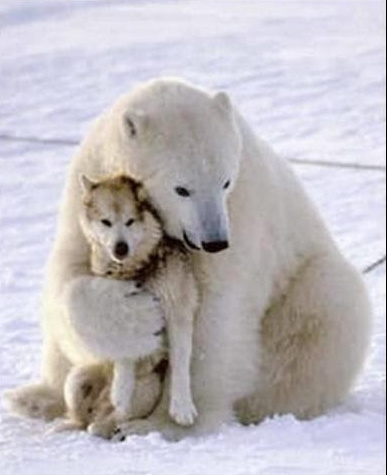
Do animals fall in love?

Opening our minds to a beautiful concept!

One of the better things about my old home country, the United Kingdom, is The Open University.  As Wikipedia explains:

The OU was established in 1969 and the first students enrolled in January 1971. The University administration is based at Walton Hall, Milton Keynes in Buckinghamshire, but has regional centres in each of its thirteen regions around the United Kingdom. It also has offices and regional examination centres in most other European countries. The university awards undergraduate and postgraduate degrees, as well as non-degree qualifications such as diplomas and certificates or continuing education units.

With more than 250,000 students enrolled, including around 32,000 aged under 25 and more than 50,000 overseas students, it is the largest academic institution in the United Kingdom (and one of the largest in Europe) by student number, and qualifies as one of the world’s largest universities.

For reasons that I am unclear about, I subscribe to the OU’s newsletter.  Thus it was that a few weeks ago, this dropped into my ‘in-box’.

Do animals fall in love?

Do romantic relationships exist in the animal kingdom?

Throughout his lifetime, evolutionist and biologist Charles Darwin researched and wrote about how he felt that love can exist within the animal world. Particularly in his papers ‘The Expression of Emotions in Man and Animals’ and ‘Comparison of the Mental Powers of Man and the Lower Animals’, he explored how animals can display supposed ‘human emotions’ like pleasure, pain, happiness and misery. He investigated how animals could seemingly appear to feel ‘down’ when separated from their companions, and seemed to jump for joy and touch one another in a way similar to a human hug when reunited.

Although monogamy and lifelong pair bonds are generally rare in the animal kingdom, some animals seem to thrive on it. Recent research has shown that Gibbons, who were thought to mate for life, have more complicated relationships, with mates occasionally philandering, and even sometimes dumping a mate, suggesting some similarity to human relationships. Swans also form monogamous pair bonds that last for many years, and occassionally for life. Loyalty to their mates has made them a virtually universal symbol of love. But some researchers believe it isn’t as romantic as it first appears, and that they stay together because spending extra time attracting a new mate has the potential to impact on the otherwise reproductive time.

Darwin’s theories have paved the way for further studies. In this free article, Tim Halliday explores natural selection and evolution in the animal world.

Here is that article.

ooOOoo

Natural Selection and Evolution

Tim Halliday explores natural selection and evolution in the animal world

By: Professor Tim Halliday (Department of Life Sciences, The Open University)*

In the Rules of Life series, and its accompanying CD, Aubrey Manning looks at the behaviour of animals and describes many new discoveries about the way that this is beautifully adapted to meet the challenges which animals face in their daily lives. The scientific study of animal behaviour, or ethology, was founded some 50 years ago by Niko Tinbergen and Konrad Lorenz. Their most significant contribution was to bring together the study of natural history with an understanding of evolution by natural selection. Since then, the numerous studies that have been made of animal behaviour have revealed that animals do many things that challenge many of the ideas that people had about natural selection 50 years ago. Natural selection theory has developed enormously since that time, largely as the result of animal behaviour studies, and a number of popular misconceptions about evolution have been revealed to be false as a result.

One such misconception is embodied in the phrase ‘survival of the fittest’, first coined by Herbert Spencer, and often used to encapsulate the way natural selection works. It is misleading, because ‘survival’ is only part of the story. Evolutionary change comes about because some individuals are more successful in reproduction and so pass on their genes to succeeding generations. As a result, the characteristics that make individuals successful in reproduction become more common in the population. It is thus reproduction that is important in evolution, and survival becomes simply a means to that end.

The importance of this point becomes apparent when we appreciate that, for most animals, reproduction is a very costly and sometimes dangerous activity, as illustrated many times in the series. To engage effectively in reproductive activity requires a great deal of energy and other resources that could otherwise be put towards survival. This is apparent in the common observation that animals show a greatly reduced growth rate, or stop growing altogether, when they reach sexual maturity. The resources that they derive from feeding are diverted from growth to reproduction.

A second common misconception is that natural selection acts ‘for the good of the species’. There are numerous examples of animal behaviour that show that this cannot be the case. For example, African lions live in prides, consisting of several females and their cubs, controlled by a group of two or three males. Other mature males are excluded from living in a pride. From time to time, a coalition of excluded males is formed and they attempt to take over a pride, by attacking and driving away the current pride-holders. If they succeed in doing this, their first act is to kill any cubs in the pride that are still being suckled by their mothers. To kill the young of one’s own species cannot benefit the species. The adaptive value of this behaviour for males is that, deprived of the cubs they have been suckling, the females very quickly come on heat and can conceive cubs fathered by the new pride-holders.

This example illustrates another common misconception about evolution, that, when mating, males and females are acting cooperatively. While it is in the interests of both parents that reproduction is successful, the way that that success comes about is not necessarily the same for the two sexes. For male lions, it is of no reproductive benefit to them to guard females that give birth to cubs fathered by other males. Infanticide is of benefit to them because it ensures that cubs born in the pride are their offspring. Infanticide is costly for females because the considerable time and resources that they have put into producing cubs is wasted. There is thus a conflict between the sexes, even though they have to behave cooperatively if either is to reproduce at all.

The interplay of cooperation and conflict is also apparent in the relationship between parents and offspring. For animals that produce more than one young at a time, it is usually to the advantage of the parent to share food more or less equally among its progeny. For each individual progeny, however, it is to its advantage if it receives more food than its siblings. There is thus a great deal of competition among progeny. This takes a bizarre form in the European Fire Salamander, and in a species of shark described in one of the programmes. In these animals, the young develop within the mother and, as they grow, they eat one another until only one, very large young is left. It may be that producing one offspring at a time is a good strategy from the mother’s point of view, or it could be that she would have higher reproductive success if she produced more; it may be, however that she has no choice in the matter.

The key to understanding evolution by natural selection is to think of it, not in terms of an individual’s survival, but in terms of its effectiveness in passing on its genes, what in the series is referred to as ‘genetic accounting’. Natural selection favours those individuals that pass on the most copies of their genes. This enables us to explain many aspects of animal behaviour that are difficult to explain purely in terms of survival. For example, in many species, particularly among birds, certain adult individuals do not breed themselves, but help other adults to do so, for example by feeding their young. In almost all cases, helpers turn out to be close relatives of the parents they are helping and so they are, in an indirect way, helping to spread those genes that they share with their relatives.

* Tim Halliday is professor of biology at The Open University, where he has worked on newts, toads and frogs since 1977.

ooOOoo

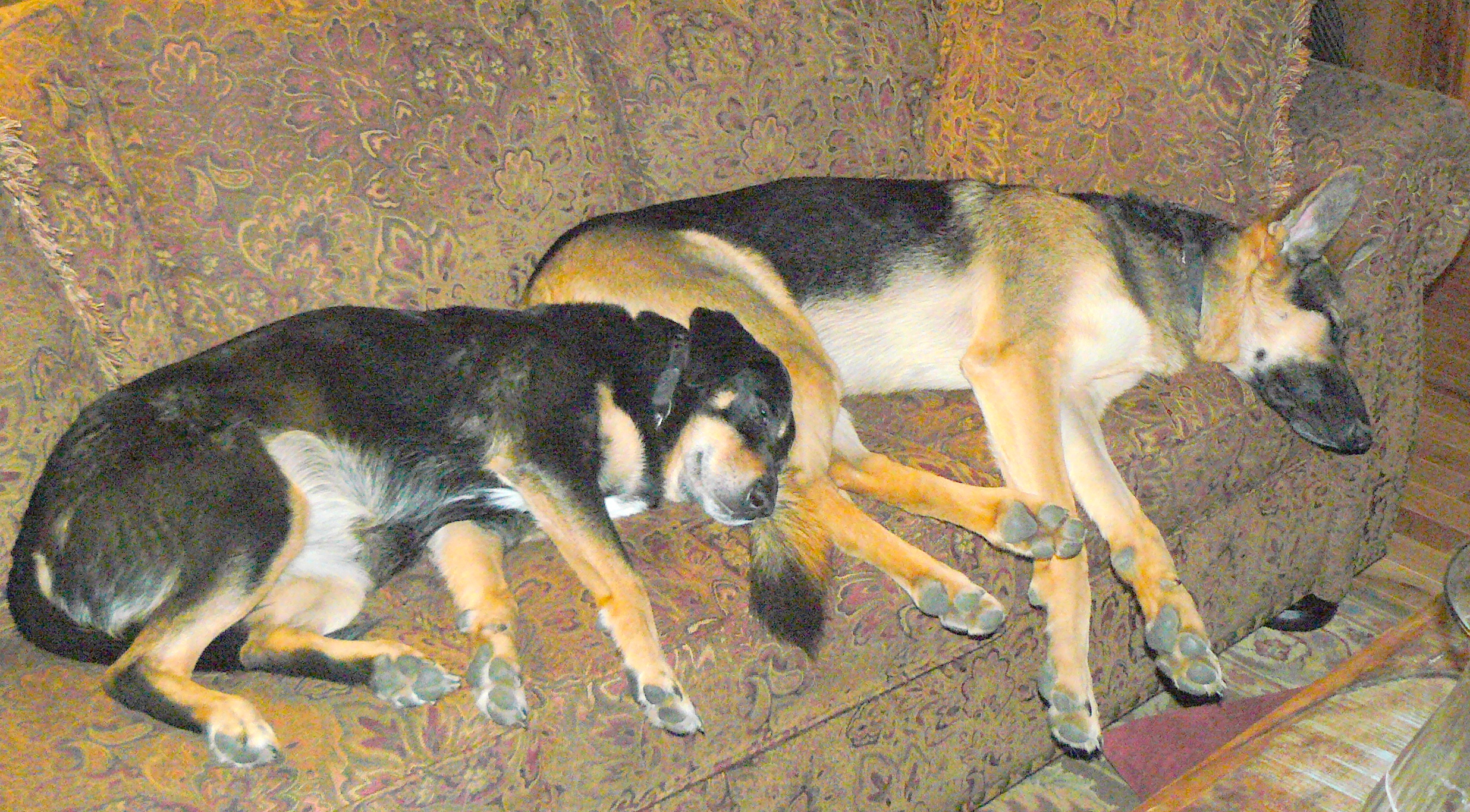
Two photographs that offer my answer to the question: Do animals fall in love?
animallove

oooo

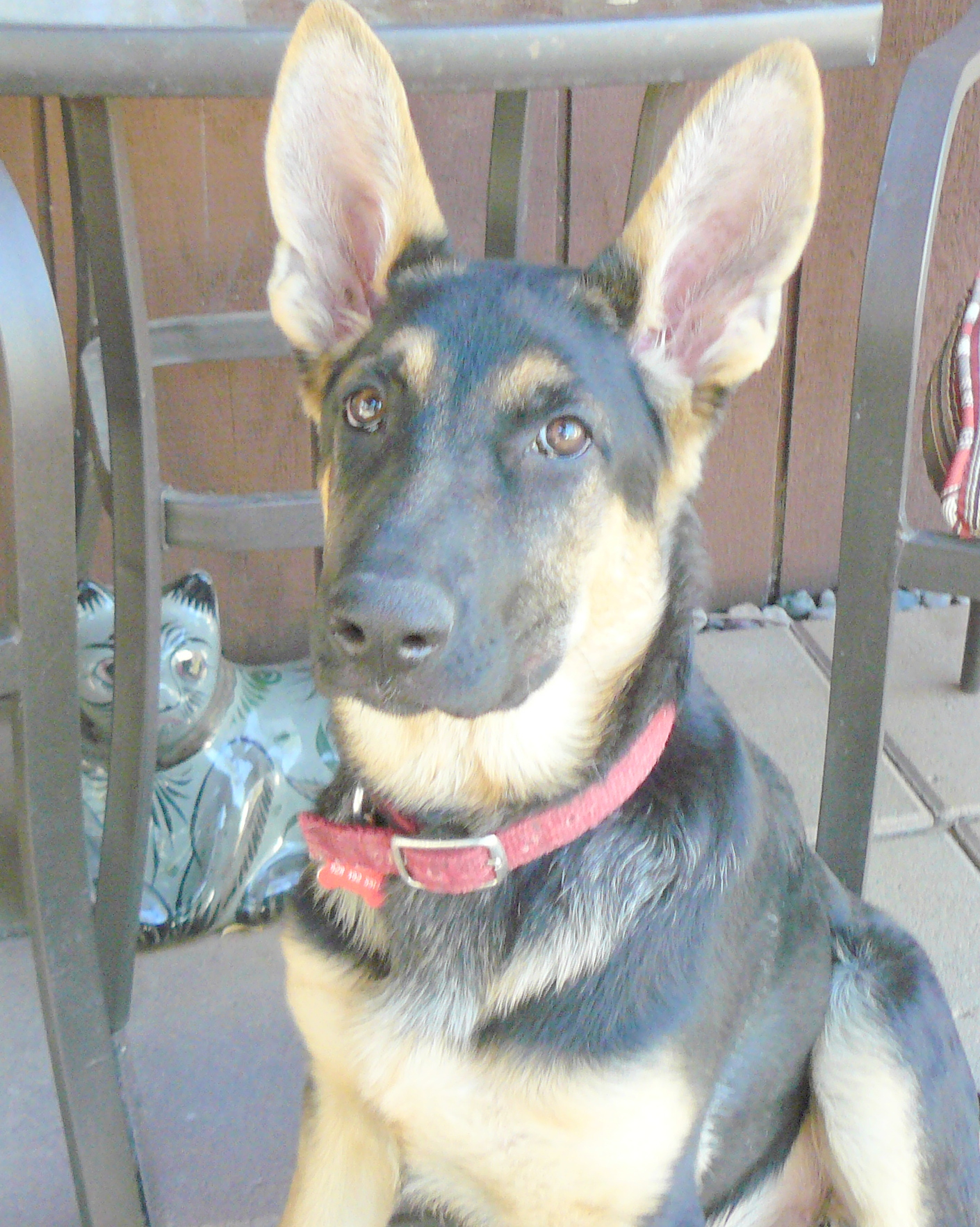
Hazel asleep with her dear friend Cleo. (Hazel to the left.)

Our incredible star – the sun.

Amazing NASA footage.

Taking a bit of an emotional rest after the last two days!

Wanted to share with you something that Dan Gomez sent me.  It was an email with a link to an item in the British newspaper, The Independent. It was an article headlined: Incredible Nasa footage shows a ‘hole in the Sun’ that’s bigger than Jupiter. The article opened:

Nasa has released new footage showing a square ‘hole’ in the Sun captured by the space agency’s Solar Dynamics Observatory (SDO) spacecraft.

The phenomenon – known as a coronal hole – is perfectly normal and shows an area of the Sun’s corona that contains plasma with lower than average density. Nasa says that the coronal hole appears dark in the ultraviolet filter “as there is less material to emit in these wavelengths.”

It was then a simple matter to go to that NASA report and enjoy this stunning image.

Coronal Hole Squared A coronal hole, almost square in its shape, is one of the most noticeable features on the Sun of late (May 5-7, 2014). A coronal hole is an area where high-speed solar wind streams into space. It appears dark in extreme ultraviolet light as there is less material to emit in these wavelengths. Inside the coronal hole you can see bright loops where the hot plasma outlines little pieces of the solar magnetic field sticking above the surface. Because it is positioned so far south on the Sun, there is less chance that the solar wind stream will impact us here on Earth. Credit: Solar Dynamics Observatory/NASA
Coronal Hole Squared

Coronal Hole Squared
A coronal hole, almost square in its shape, is one of the most noticeable features on the Sun of late (May 5-7, 2014). A coronal hole is an area where high-speed solar wind streams into space. It appears dark in extreme ultraviolet light as there is less material to emit in these wavelengths. Inside the coronal hole you can see bright loops where the hot plasma outlines little pieces of the solar magnetic field sticking above the surface. Because it is positioned so far south on the Sun, there is less chance that the solar wind stream will impact us here on Earth. Credit: Solar Dynamics Observatory/NASA

NASA also released the following video.

Just amazing!

Progressing Wisdom – the essay.

What is wisdom?

On May 11th, Patrice Ayme published an essay entitled Science: Progressing Wisdom.  I found it deeply engaging. At the same time, I was frustrated because there was a part of me that wanted to know more about “Patrice”.

For some time, I had known that Patrice Ayme was a nom-de-plume and that his, or her, identity was carefully protected. Still that part of me that wanted to relate to the real person, for want of a better description, still wouldn’t quieten down.  I offered the following comment:

Patrice, you have demonstrated an amazing breadth of knowledge across your many essays. However, I did wonder if you would be happy to declare your educational experience? As in your specialisation at a degree or Doctorate level (I suspect you do hold a PhD!)? Best wishes, Paul

Patrice’s reply, which you are encouraged to read in full, opened, thus:

You are so funny, Paul! You have an Obsession-Compulsion about “qualifications”.

One of my main ideas, idea #956, is that the authority principle is severely abused. People with Philosophiae Doctor have nothing sacred about them. Goebbels had one (in humanities).

Do you think Goebbels’ authority in humanities is to be “declared”? There were even not just PhDs, but Nobel Laureates, who became Nazis, BEFORE Hitler (who had been sent to spy on them).

No doubt Hitler, a simple caporal, and gifted painter (he lived off it), was super-impressed when he met some of the most educated people in the world, and they were Nazis… Full of PhDs.

One should not confuse the message’s content and her bearer.

This site is about learning to think better. That’s why I go back to the basics.

The idea that, say, those with PhDs is Idionomics, are the only ones qualified to speak about idiocy, is, well, idiotic.

Another reader of Patrice’s essay, gmax, said this, in part:

You have to learn to judge knowledge, not just follow oligarchs like a bleating sheep to learn what’s true and what is not.

That really made me sit up and think! For the first time in my life (I’m 70 later this year), I realised that my own ragged educational experience, as offered yesterday, had left in its wake a personal insecurity over my education, and a consequential weakness in evaluating knowledge with me somehow needing to know the identity of anonymous authors. When Patrice wrote, “Please do not hesitate to make it a post, Paul! I was thinking of it myself, but, as it is, right now, I don’t seem to have the time.“, I couldn’t resist.

Here is my essay.

ooOOoo

Wisdom, knowledge and authority.

Abstract: Wisdom requires clarity of knowledge; no more and no less.

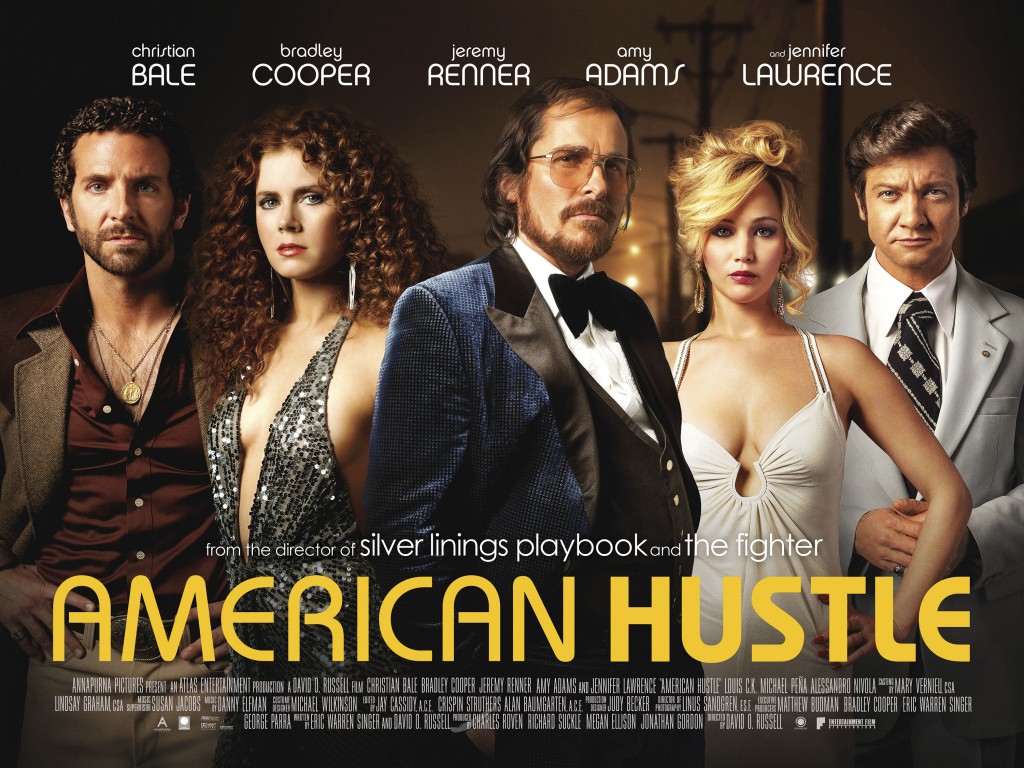
On Tuesday evening, Jean and I rented a movie.  We watched the film American Hustle.

american-hustle-poster
The film tells the story of brilliant con man Irving Rosenfeld, who along with his equally cunning and seductive British partner Sydney Prosser is forced to work for a wild FBI agent Richie DiMaso. DiMaso pushes them into a world of Jersey powerbrokers and mafia that’s as dangerous as it is enchanting. Jeremy Renner is Carmine Polito, the passionate, volatile, New Jersey political operator caught between the con-artists and Feds. Irving’s unpredictable wife Rosalyn could be the one to pull the thread that brings the entire world crashing down.

The film has received rave reviews (here’s a typical one in the Guardian newspaper) and was fun to watch; albeit somewhat confusing for much of the first half. At one point towards the end, the hero of the film, Irving Rosenfeld, reflects that, “People see and hear what they want to believe!“.

Bingo!

That is the challenge about accruing wisdom. How to be analytical and wise in learning new thinking and new ideas. In other words, in acquiring knowledge!

If the subject is simple (well on the surface!) as, for example, the effect of the Earth’s gravitational field then that’s fine and dandy.  It’s easy to become wise to the fact that falling off a tall building is likely to kill you.

But take an extremely complex, and highly current matter, that of Planet Earth’s changing climate, and it is extremely difficult for the average person without a scientific background to determine the truth.  Really, when I use the phrase “to determine the truth” in the context of this essay I should have written ‘to gain knowledge‘.

To illustrate that, my good Californian friend of more than 35 years, Dan Gomez, is highly sceptical about climate change as a product of man’s activities.  Recently, I sent him an email with a link to the NBC News report: American Doomsday: White House Warns of Climate CatastrophesThis was Dan’s email reply:

Think about it, Paul.

1. Consider the source and the timing of these new headlines i.e. the left-thinking Obama regime and current unfavorable political challenges.
2. A deflection from mainline issues confronting us today i.e., jobs, economy, healthcare, upcoming elections, Benghazi and IRS political issues.
3. Major opportunity to raise taxes unilaterally without Congress involved.
4. Major opportunity to redistribute corporate wealth from private sector to public sector.
5. Refocus of competitive, free-market energy sector to controlled renewables managed by a few very wealthy political contributors. A lot of money at stake.
6. Man, is empowered via a political party to “save the world” by changing the Weather. The only problem is, there is no solution, no global will and no participants to make anything significant happen i.e., China, Southeast Asia and another billion people scattered about.
7. Euro Zone and USA have already cut CO2 emissions by over 30% each to no avail. In fact, they say it is getting worse after hundreds of billions of dollars already diverted from private sector to public sector with no results. They are now asking for trillions.
8. Average person is not willing to give up his car, nor spend more for battery power (peel back the onion on the battery manufacturing and recycling industry vis a vis CO2 contributions). Much fewer cars, trains, tractors, jets, etc. to make anything work. Sacrifice begins at home.
9. Cows vent 20 times the CO2 emissions in the form of methane than man-made artifacts.  Just saying….
10. Check out the bacteria challenge facing Man. This will help put priorities in order for you.

As always, follow the money and you’ll get your answers…..

I am unable to respond to Dan in an analytical and precise manner. I am not sufficiently knowledgeable to so do. Having an emotional response is fine – but it does not advance my personal wisdom.

On the 6th May, I posted an item that featured a TED Talk by scientist Gavin Schmidt, a climate scientist no less.  His view is that, “You can’t understand climate change in pieces. It’s the whole, or it’s nothing.”  The TED Talk explains how the big picture of climate change illustrates the endlessly complex interactions of small-scale environmental events.

Just a few days ago, Jean and I had the pleasure of a couple of hours at the home of Leon Hunsaker, renowned meteorologist who has claimed that the 1862 Californian flood could happen again.

Leon Hunsaker has done the math, and he thinks Sacramento isn’t prepared for another series of storms like the ones that hit the state in January 1862.

Leon lives less than 5 minutes from us here in Southern Oregon. I asked him what he thought of climate change and he said that the planet’s atmosphere was like a large chocolate cake and man’s activities were no more than the icing on the cake.

So there you are: a range of opinions about this particular, potentially very important, subject. Although in my own (emotional) mind the weight of evidence is in favour of the argument that man is having a deepening and worsening effect on our planet.

Take, for example, the report issued yesterday about significant melting of Antarctica’s glaciers now unstoppable. (Patrice has just released an informative post on the subject!)

People see and hear what they want to believe!” comes immediately back to mind. Dan wants to believe that the planet is going through normal cycles of change.  I want to believe that mankind can make a difference; for the sake of my children and grandson.

Let me turn to the subject of anonymous authors, my Obsession-Compulsion about qualifications!

I have admitted the flaw in my thinking. Here’s the rationale for my change of opinion.

Just two days ago, Tom Engelhardt published his latest TomDispatch, a guest essay by Glenn Greenwald coinciding with the publication of Greenwald’s new book, No Place to Hide: Edward Snowden, the NSA, and the U.S. Security State. In that essay, Glenn Greenwald says:

On December 1, 2012, I received my first communication from Edward Snowden, although I had no idea at the time that it was from him.

The contact came in the form of an email from someone calling himself Cincinnatus, a reference to Lucius Quinctius Cincinnatus, the Roman farmer who, in the fifth century BC, was appointed dictator of Rome to defend the city against attack. He is most remembered for what he did after vanquishing Rome’s enemies: he immediately and voluntarily gave up political power and returned to farming life. Hailed as a “model of civic virtue,” Cincinnatus has become a symbol of the use of political power in the public interest and the worth of limiting or even relinquishing individual power for the greater good.

The world now knows what Glenn Greenwald (and Laura Poitras, the documentary filmmaker) knew long before.  That Snowden’s anonymity was critically important in the run-up to his knowledge being made widely known.

I was convinced. What is important is not the name and identity of the author of knowledge.  What is important is the knowledge itself. No one would deny Snowden’s right to privacy. Indeed, millions of us would opt for email privacy if we fully realised the ease and extent with which our emails, indeed our communications in general, can be intercepted.

Many know that Patrice is a frequent, outspoken voice about the dangers of plutocracy and the slip-sliding away of democracy in the United States. His, or her, personal safety is the highest need of all. Patrice has a perfect right to privacy.

Which leads on to the final, obvious question. If we do not know the identity of the author of knowledge then how can we be certain that the knowledge is valid?

Answer: Through testing!

Of course!

In the best traditions of research, especially scientific research, testing the validity of a claim is the only certain way of determining the validity of knowledge; of being able to derive wisdom from that knowledge.

Let me give you a clear example.

Commercial aviation is incredibly safe. Many countries operate an equivalent to the UK’s Air Accidents Investigation Branch. That UK AAIB website proclaims:

The purpose of the AAIB is:

To improve aviation safety by determining the causes of air accidents and serious incidents and making safety recommendations intended to prevent recurrence
…It is not to apportion blame or liability.

Keith Conradi, Chief Inspector

Critical to that purpose of improving safety (aka improving knowledge) is looking for trends. Any trends or patterns would be impossible to discover without testing and debate.

Thus what makes aviation safer is no different to what makes all of knowledge reliable: the testing of ideas and of the hypotheses behind those ideas. The identity of the author of those ideas, per se, is irrelevant.

Thus it is clear to me, clear now beyond doubt, that wisdom is the application of knowledge disconnected from the person who is the author of that knowledge. One might see it as a marriage of knowledge and intellect. Nothing more and nothing less!

All aspects of wisdom depend on trust, on the confidence that the knowledge is ‘reliable‘. Reliability gained from debate and testing.

Never forgetting that in the final analysis, as Patrice wrote it:

“Nature is the only authority worth respecting always.”

ooOOoo

In every which way that one can imagine, we have to return to the principles of fairness and balance so beautifully demonstrated to man by the breadth of Nature.  We have to embrace Nature’s wisdom.

In other words, we have to learn from dogs!

Progressing Wisdom – the preamble.

A reflection on intelligence, learning and knowledge.

Today’s essay has been prompted by a fascinating exchange of views and comments on a post recently published by Patrice Ayme.  More of that tomorrow.

Before getting to the heart of things, I feel compelled to offer a little background on my own educational journey. It is presented today as a preamble to tomorrow’s main essay.

By rights, I should have enjoyed a stunning academic journey as a young man.  My mother holds a double degree in French and German from Cambridge University.  My father was both a Chartered Architect and Chartered Surveyor and worked for Barclay Perkins & Co at their Anchor Brewery in Southwark, London all his working life.  My uncle, Christian Schiller, took up a mathematics scholarship at Sidney Sussex college at Cambridge University and ended up HM Inspector of Schools in the United Kingdom. Notably, he was a promoter of progressive ideas in primary education.

But it was not to be so.

My father died suddenly and with very little warning five days before Christmas in 1956.  I had turned 12-years-old some six weeks previously and just completed my first term at Preston Manor County Grammar School.  My secure, comfortable young life was thrown into emotional turmoil with one of the consequences being that instead of passing a clutch of GCE ‘O-Level’ exams, I barely managed to pass two subjects and was unable to continue on with a higher level of studying and the consequent sitting of GCE ‘A-Level’ exams, a pre-requisit for university.

Somehow, I then managed to win a place as a student at the Faraday House of Electrical Engineering, in those days based at Southampton Row, London.  It was to study for a Diploma in Electrical Engineering.  The requirement was that by the end of my first year at Faraday House I should pass two A-level examinations.

I was very happy as a college student.  That first year was spent entirely learning about engineering with much time ‘hands-on’ in the engineering workshop. Then came time for me to sit those two A-level exams. I failed both of them! There was no choice but for me to leave the college.

faradayhouseplaque
So that’s enough to demonstrate that academic prowess was not my speciality.

However, being unable to jump through the hoops needed for a degree or equivalent didn’t mean that I was a poor learner; far from it.

After my father’s death, my mother remarried and my ‘new’ Dad was very supportive.  He had a background in communications and quickly encouraged me to become a radio amateur.  I joined the nearby Radio Society of Harrow (still in existence!) and their encouragement enabled me to pass the full set of exams necessary to become a licensed radio amateur and a full member of the Radio Society of Great Britain.  My amateur call sign was (and still is) G3PUK. I was 17.


G3PUK0001
I can still whistle the alphabet in morse code, from A to Z, and the numbers 0 to 9!

Later on, when I was an apprentice at the British Aircraft Corporation’s site in Stevenage, Hertfordshire, one of the commercial staff, Jim Jenner, spent many hours preparing me for the Institute of Advanced Motorists examination. I passed that exam and became a full member of the IAM in May, 1966.

So there’s my background that, hopefully, will set the scene to a wonderful exchange of views and ideas that flowed from Patrice’s blog. Ideas that will be explored tomorrow.

For the reason, the powerful reason, that the intelligence and wisdom of humanity has always been important.  But now, in this time of the affairs of man, our collective intelligence and wisdom has never been more important.

It’s all in the eyes!

What makes a dog a dog and a wolf a wolf?

I can’t recall why it was many months ago that I came across the website of Frontiers in Science. But I did and, in particular, I came across a fundamental difference between the two species.  In an article entitled: A simple reason for a big difference: wolves do not look back at humans, but dogs do. I’m going to take a chance, as in not having formal permission to republish it, in reposting it in full here.  Because it means so much to me and other dog lovers!

ooOOoo

A simple reason for a big difference: wolves do not look back at humans, but dogs do.

Adám Miklósi, Enikö Kubinyi, József Topál, Márta Gácsi, Zsófia Virányi and Vilmos Csányi
Department of Ethology, Eötvös University, Budapest, Pázmány P. 1c, 1117, Hungary. miklosa@ludens.elte.hu

The present investigations were undertaken to compare interspecific communicative abilities of dogs and wolves, which were socialized to humans at comparable levels. The first study demonstrated that socialized wolves were able to locate the place of hidden food indicated by the touching and, to some extent, pointing cues provided by the familiar human experimenter, but their performance remained inferior to that of dogs. In the second study, we have found that, after undergoing training to solve a simple manipulation task, dogs that are faced with an insoluble version of the same problem look/gaze at the human, while socialized wolves do not. Based on these observations, we suggest that the key difference between dog and wolf behavior is the dogs’ ability to look at the human’s face. Since looking behavior has an important function in initializing and maintaining communicative interaction in human communication systems, we suppose that by positive feedback processes (both evolutionary and ontogenetically) the readiness of dogs to look at the human face has lead to complex forms of dog-human communication that cannot be achieved in wolves even after extended socialization.

ooOOoo

Actually, that article from the Department of Ethology at Eötvös University in Budapest is just an excuse for me to post three photographs confirming the good scientists results!

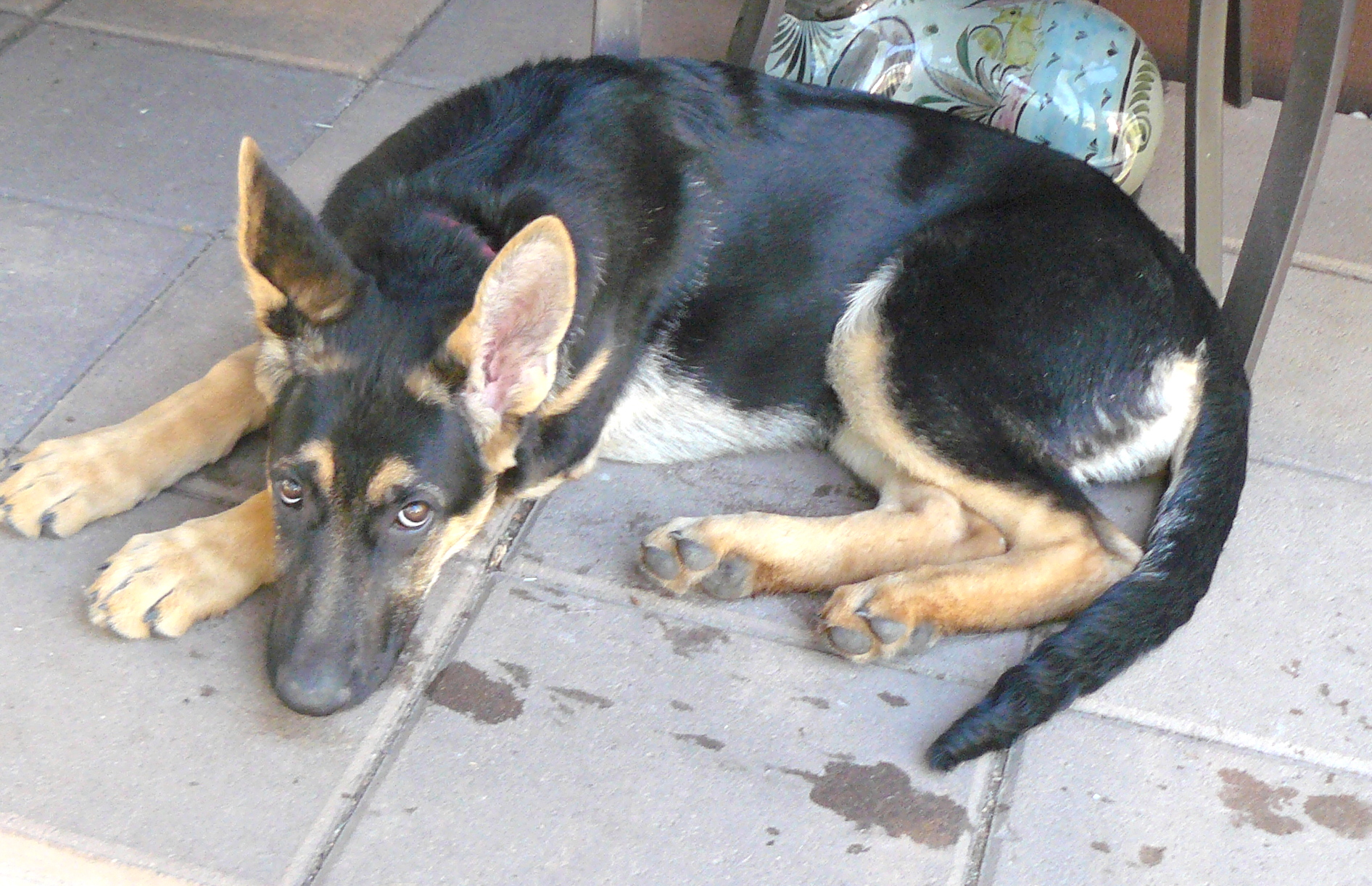
Young Cleo, May 12th, 2012.

oooo

Mr Pharaoh's look from June, 2007.
Mr Pharaoh’s look from June, 2007.

oooo

The second Cleo look from May, 2012.

oooo

There’s no question in my mind that millions of dog lovers across the world know the intimacy that is conveyed in a dog’s eyes!

Prediction is easy ….

…. unless it involves the future!

There was a recent TED Talk that really made me sit up and think.  Before I introduce the talk, let me offer a personal view.  I’m speaking about the changing nature of the Earth’s climate.

On balance I believe that the climate of our planet is changing and, again on balance, I believe that mankind’s activities especially with regard to CO2 emissions are the primary cause.

But here’s the rub! I’m not a scientist.

So when scientist Gavin Schmidt, a climate scientist no less, recently gave a twelve-minute TED Talk about the complexity of Planet Earth’s climate I found it compelling.

Here is is.

Published on May 1, 2014
You can’t understand climate change in pieces, says climate scientist Gavin Schmidt. It’s the whole, or it’s nothing. In this illuminating talk, he explains how he studies the big picture of climate change with mesmerizing models that illustrate the endlessly complex interactions of small-scale environmental events.

Then just two days later, on May 3rd, Alex Jones, he of the blog The Liberated Way, posted Unpredictable nature, that I have the pleasure in republishing in full.  Read it and then reflect on Alex’s post and the talk given by Gavin Schmidt.

ooOOoo

Unpredictable nature

Posted on May 3, 2014
Nature is always full of surprises.

Amber the fox reflects the unpredictable face of nature showing up in my garden by surprise on random days.

I went camping and woke to frost on the ground. I wrote yesterday that summer had arrived in Britain. A pool of water from recent rains had frozen over.

One thing you quickly learn about nature is its unpredictability. Everything in nature has its own free will, and will determine its own unpredictable path regardless of what humanity thinks. Those that are able to let go of control enjoy a nature full of surprises.

ooOOoo

Thanks to the modern-day internet, it takes only a moment to find a relevant quotation to close today’s post.

It is always wise to look ahead, but difficult to look further than you can see.Sir Winston Churchill.

The history of man and dog.

Revising my understanding.

Regular visitors to this blog probably now don’t notice my home page where I state, in part:

Dogs live in the present – they just are! Dogs make the best of each moment uncluttered by the sorts of complex fears and feelings that we humans have. They don’t judge, they simply take the world around them at face value. Yet they have been part of man’s world for an unimaginable time, at least 30,000 years.

Just as likely, I expect, readers do not go across to my sideline Dogs and integrity that includes, in part:

Dogs are part of the Canidae, a family including wolves, coyotes and foxes, thought to have evolved 60 million years ago.  There is no hard evidence about when dogs and man came together but dogs were certainly around when man developed speech and set out from Africa, about 50,000 years ago.  See an interesting article by Dr. George Johnson.

Recently Patrice Ayme published a post under the title of Neanderthal Superiority.  In that post he set out very convincing arguments about the origins of the Neanderthals and I do recommend you read it in full.

However, what I would like to republish is the part of Patrice’s essay that explains the origins of the domesticated dog, as it is very different to what I have been presenting on Learning from Dogs.  Here it is:

Previously unknown Neanderthal technologies are found every year. Neanderthals invented needle and thread, way back (80,000 years ago, at least; probably much older). Necessity was the mother of invention: Europeans (aka Neanderthals) needed clothing more than Africans did, as the latter wore none. Moreover, appropriate fibers are more easily found in the temperate zone (everything rots quickly in the very warm, wet tropics, including DNA).

NEANDERTHALS INVENTED DOGS, COAL BURNING, SHELL FISH DINING:

Some of the arguments against Neanderthals have been outright ridiculous: not only we were told, without any evidence, that they could not talk, but that the superiority of Africans came from eating shell fish, about 70,000 years ago (along the East Coast of Africa).

However, it has since been discovered that Neanderthal cavemen supped on shellfish on the Costa del Sol 150,000 years ago, punching another torpedo hole in the theory that only Africans ate (supposedly) brain-boosting seafood.

Neanderthals also used coal, as long ago as 73,000 years. Once again, making a fire in present day France, then suffering from a pretty bad glaciation, made more sense than trying to stay warm in the Congo.

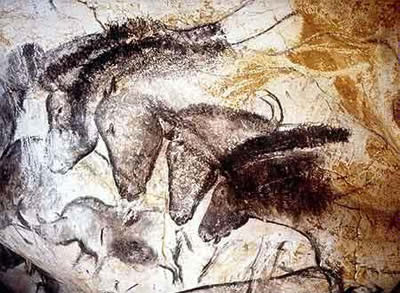
Earlier and earlier prehistoric art has been found. It’s getting ever harder to claim that Neanderthals had nothing to do with it. This is from the enormous Chauvet cave in France, at least 32,000 years old:

If Not Neanderthal, Probably Mostly Neanderthal

(42,000 year old art was also found in Spain.)

Neanderthals also domesticated, and genetically engineered dogs, from European wolves. That’s very clear.

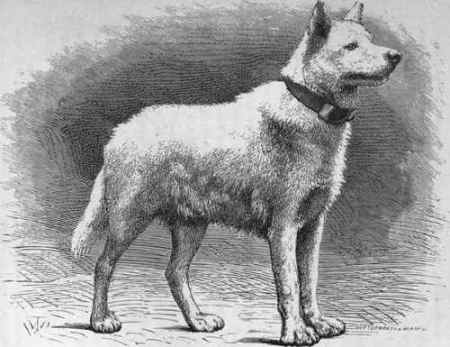
How do I know this? Simple. The Goyet dog, pictured below was dated around 32,000 years. In 2010, an even older dog was found in the Altai mountains. Both dogs were derived from Canis Lupus Familiaris, the European wolf, but were quite distant from it, genetically, they had been evolved probably on a time scale of more than 10,000 years, thus well before any arrival of Sapiens Sapiens from Africa.

Those dogs were completely compatible with people, just as contemporary dogs are. Proof? Ancient, 26,000-year-old footprints made by a child and a dog deep in the Chauvet Cave, France. (OK, by then Neanderthals had been deemed “extinct” by some… However, these are still the same dogs Neanderthals invented.)

It Took Many Thousands Years To Breed Such Large Dogs From European Wolves.

It is perplexing that other human groups did not domesticate the local canids. There are (still!) wolves in Africa and India. And also Lycaons (“African Wild Dogs”). Those are supremely intelligent, and sort of domesticate readily in the wild (I tried this myself as a child).

The argument that Africans would have moved to Europe to domesticate European wolves, when they had a similar fauna, including wolves, to domesticate in Africa, is simply extravagant.

In the next few days I will amend those static pages to incorporate this fascinating update to my knowledge.  I shall also seek permission to republish the articles linked to by Patrice as they are full of detailed knowledge about the oldest man-animal relationship; by far!

The Natural order – life and death.

Nature imposes herself on us humans in absolute terms.

I do not believe in any form of life after death.  Jean is uncertain.  Many good people do believe in some form of spiritual afterlife.

However, one thing is sure. Our living mind and body will die.

These few words are an introduction to the first essay under the broad title of The Natural order. On the 23rd April I introduced the idea of writing a regular essay “about the past, present and future of man’s relationship with Nature.

Thus it did seem entirely appropriate to ‘kick off’ the essays with reflections about life and death.

Alex Jones of The Liberated Way blog recently wrote a post under the title of ‘The circle of life and death‘.  I am republishing it in full with Alex’s kind permission.

ooOOoo

The circle of life and death

Posted on April 27, 2014 |
Nature reminds me life and death is a circle.

The circle of life and death.

I visit a house, the noise of hungry little birds emanating from a nest hidden in the roof, busy parents flying in and out feeding their brood. Less than a week before summer (1st May) I encounter life all about me, like a vast fountain of creativity, as plant and animal erupt into growth and creation. I feel a sense of joy at the life all about me, like dipping my feet in crystal clear spring waters.

Amongst this carnival of life a reminder that with life there is also death. Helix our cat is an effective hunter, a blue tit is found dead upon the ground. I feel no sadness for the death, it is a natural part of the cycle of nature, my animistic viewpoint is of a small spirit returning to the source, and from then renewing. No anger for Helix, since this is the nature of cats, despite being fed, a cat must follow the primal instinct of its nature to hunt. I carry the dead blue tit to an overgrown spot of trees and grass, here I place the blue tit to decay and thus become part of the life of plant and animal of that place, such is the circle of life and death.

ooOOoo

There can’t be a single person on this planet who does not understand that our human life is finite.

Life span of early man: Until fairly recently, little information existed about how long prehistoric people lived. Too few fossilized human remains made it tough for historians to estimate the demographics of any population. Anthropology professors Rachel Caspari and Sang-Hee Lee chose instead to analyze the relative ages of skeletons found in archeological digs in eastern and southern Africa, Europe, and elsewhere. Comparing the proportion of those who died young, with those who died at an older age, the team concluded that longevity only began to significantly increase (that is, past the age of 30 or so) about 30,000 years ago – quite late in the span of human evolution.

In an article published in 2011 in Scientific American, Caspari calls the shift the “evolution of grandparents”, as it marks the first time in human history that three generations might have co-existed. ( Source: Longevity Throughout History.)

Thus given that living much past the age of thirty years is a relatively recent experience, it baffles me beyond comprehension that we, as in mankind, have become so short-sighted about reinvesting in the one and only natural planet that sustains us.

Beautifully expressed in another wonderful essay from John Hurlburt.

ooOOoo

 Notes on the Human Dilemma

The metanexus of Faith, Nature and Science form an integral vision of the reality in which we exist. We are components of Creation living in an emerging universe. As consciously aware life forms we are each and all responsible to the Nature of God in a steadily emerging universe. Change is both constant and inevitable. Species that don’t adapt, do not survive.

Our human problems are obvious.

The essential growth of human conscious awareness remains questionable.

There is a blatant disregard for Nature. The rate of Natural disasters is increasing everywhere on Earth

Civil unrest is bordering on a second Civil War and is already in that state in many other nations of the world.

Imminent economic collapse remains probable as long our world economy is based on a foundation that has been leveraged at least twenty-five times above any realistic material foundation on Earth.

Are we a moral species?

A steady increase in natural disasters worldwide is inevitable until we change in response to Nature’s warnings or become extinct. The collapse of morality threatens the existence of global civilization.

The virtual extinction of the human race in its present state is all but assured within the next century unless we adapt to the Reality we presently blithely ignore or chose to vilify.

We still have a choice.

Our alternative to what has been euphemistically referred to as “new reality” is the process of education, reformation and transformation on a personal level. The objectives are an obvious need to adapt to constant natural change and create a species renaissance in harmony with the reality of God, Nature and Science.

There is clearly a need for a global economy that is based on our primal need for clean air, clean water, clean food and clean energy. We need to maintain our balance through gratitude for the blessings of the life we share and equal justice for all. We need to remember that we are not in charge of anything except our responsibilities to God, Nature and each other.

Under these simple guidelines, a healthy, growing future remains possible as we prepare to migrate from our home planet and relieve the consumptive consequences of an exponentially growing and ravenous demographic ruled by the artificial symbol of Money.

Sound impossible? Au contraire…

The world is being forced to re-evaluate its economic premises. Here are a few proven solutions to help create a naturally invigorated economy.

We can cut air pollution dramatically overnight by converting commercial diesel engines to far more cost-effective bio-fuels without a single change to the diesel mechanisms.

Bio-diesel distillation plants can filter and recycle the clean water we need to live.

We are capable of growing our own food with recycled organic fertilizers.

We have begun the process of harnessing the limitless clean renewable energy provided by the sun, the wind and hydraulic power.

Electric cars that may be fueled by solar energy are winning world class races.

The list of what we are capable of doing is only limited by our imaginations.

The questions to ask ourselves are:


Are we at the beginning of a new world or at the end of an old world?


Are we a part of the problem or part of a realistic solution?”


What will be the harvest of our lives?”


an old lamplighter


ooOOoo

What steps will each one of us take?

Reflections on the Great March through Payson, Arizona.

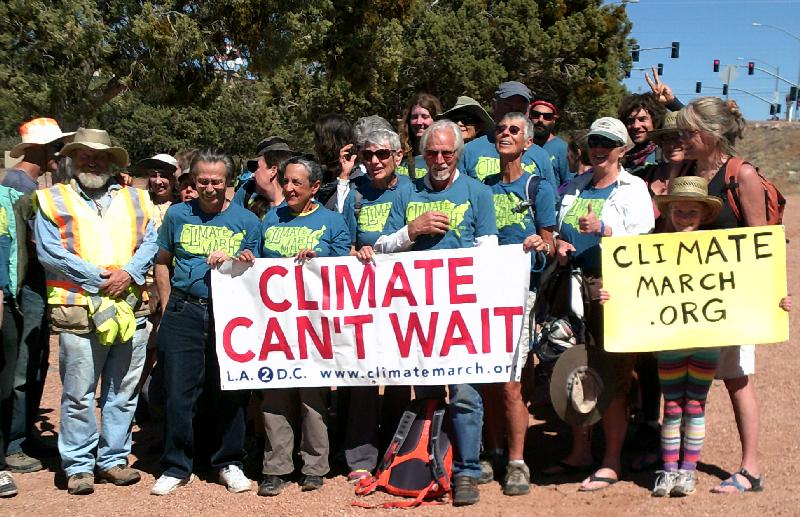
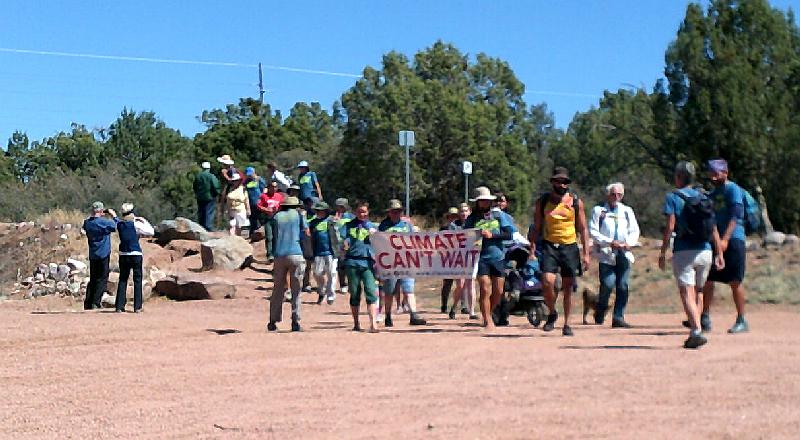
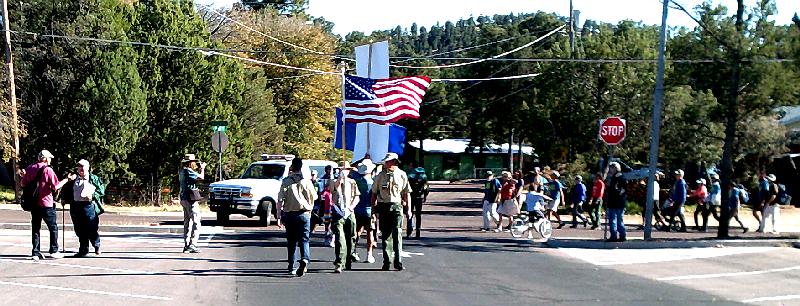
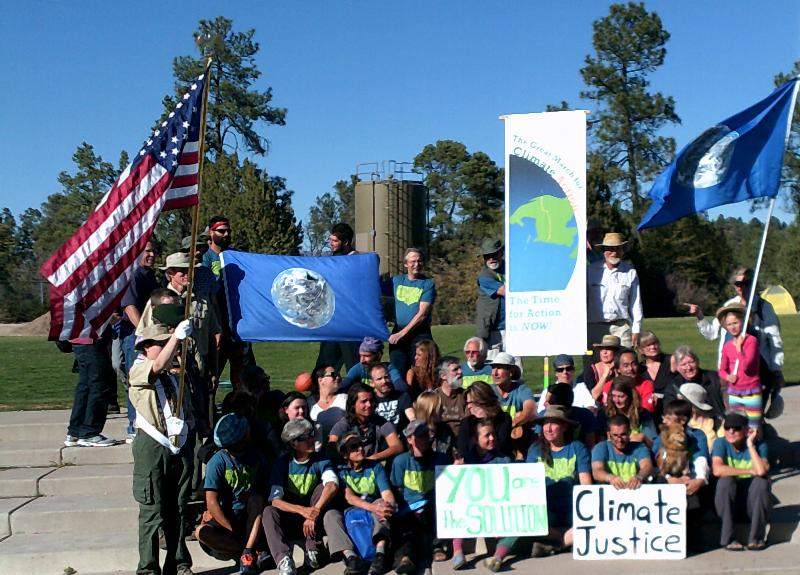
In yesterday’s post The Natural order I referred to Payson recently welcoming the Great March for Climate Action in their walk from Los Angeles to Washington D.C.  I also referred to writing an essay on the event. That now follows, starting with a report from John Hurlburt, one of the organisers.

Thanks for your help for “the Great March for Climate Action”

“The Great March for Climate Action” arrived In Payson mid-afternoon on April 14. We had learned that the majority of the marchers are in the “younger” category (under 40), including two girls ages 10 and 12, walking for about a week of the journey with their Mom. But, impressively, quite a few are “AARP-ers”, in their 60’s and 70’s — walking all the way! Most of the group plans to continue on to Washington, D.C., being joined in various sections by hundreds of others! Our efforts aimed at making their brief visit to Payson as friendly and comfortable as possible.

They arrived at the meeting spot by the Event Center, having hiked up from near Rye, about twelve miles with significant elevation gain. Though weary, they were friendly and enthusiastic. Jim Speiser and family had set up their hot-dog cart, and we provided cold water and fresh fruit donated by Safeway — a case of huge premium oranges, and a case of bananas. The Marchers were delighted with the snacks, and extra fruit was given to their “chuck-wagon” for future days.

About ten local folk joined the Marchers on the two mile walk to the Payson Christian School, following their beautiful banners and signs. A local Boy Scout Color Guard led the procession and two Payson Police vehicles accompanied the March all the way. People in passing cars waved, smiled, honked and took pictures. Exhilarating and fun! A feature writer/photographer from the Payson Roundup covered the March, both along the route and at the school, where she took group photos and interviewed some of the participants.

Marchers who desired showers/clean laundry were transported to various Payson homes. Some of the group rested in their tents that were clustered on the sports field grass, and others helped with our dining room and kitchen set-up for the dinner. Food from our Payson volunteers began to arrive at five pm and by six the big buffet tables were loaded with delicious hot dishes, sides, snacks, beverages, salad and desserts, and the dining room was packed nearly to overflowing.

The evening opened with a Proclamation of welcome from the Mayor and Town Council, read by Ed Blair, and a prayer. John Hurlbert introduced the evening program that began with a talk about the History of Marches by Ray Spatti. Rob Ingram gave an overview of Payson, its achievements, water and forest issues, and future. Various participants in the March described their adventures, goals and dreams and asked about Payson’s outlook regarding environmental issues. Interacting with these dedicated Marchers was an education, a pleasure and an inspiration, perhaps motivating our Town to step ahead with sustainable solutions. In fact we heard that a young woman from here in Payson is going to join the “Great March”!

Our evening peaked with a delightful music performance by Cinnamon Twist and a sing-along. A number of Marchers were also musicians and they joined in with their instruments, resulting in a spontaneous “jam session” that brought the evening to a grand and joyful conclusion.

We couldn’t have done it without the amazing generosity and assistance from the Payson Christian School and their Staff, and without volunteers like you. Countless Marchers said they were overwhelmed by the friendly reception they received, and it was due to great team-work and local involvement. All the small things you did – offering showers, bringing food, walking with the Marchers, coming to the dinner – added up to a most memorable event. It is through small daily things that we can make a difference in our world — and all of you certainly have.

We can’t thank you enough!

The Organizational group for “The Great March for Climate Action” Payson visit 4-14-14: Ray Spatti, John Hurlburt, Jim Spieser, Dean Gooding and Vee Jeanne.

These were some photographs sent on by John.

TTPMarch1

oooo

TTPMarch2

oooo

TTPMarch3

oooo

TTPMarch4

But it’s no good just thinking how wonderful it was for Payson to be involved, and for the marchers in their nearly 3,000 mile walk from Los Angeles to Washington DC.  Each of us who cares for a sustainable future on Planet Earth must make a difference.  As is now a common plea: “Think globally: Act locally.”

One story that came out from the march through Payson struck me forcibly.  MaryAnne, a good friend of this blog, offered, as did others, laundry and washing facilities to two young marchers.  One of them, a young girl, was so committed to the message behind the march that she had vowed to remain silent from start to finish; the only exception being singing in the evenings.  I was blown away by that commitment.

Read the full details of the event from the Transition Town Payson website.

Will close by offering these two items.

The first is picking up the relevant Editorial headline from the Arizona Republic of the 17th April.

Our View: It’s time to move beyond denial and become part of the solution

The second is asking you to watch this short video.

Published on Jul 15, 2013
Apply to March here: ClimateMarch.org
Like and follow us here: Facebook.com/ClimateMarch

On March 1, 2014, 1,000 climate patriots will set-out from Los Angeles, CA, walking 2,980 miles across America to Washington, DC, inspiring and motivating the general public and elected officials to act now to address the climate crisis. This will be the largest coast-to-coast march in American history.
Credits:

Director, Producer and Chief Editor: Zach Heffernen

Script Writer: Melvin Baker

Studio Manager: Maddie Kain

Voice 1: Ed Fallon
Voice 2: Maddie Kain
Voice 3: Jami Bassman
Voice 4: Zach Heffernen

Editor: Ed Fallon
Editor: Shari Hrdina
Editor: Courtney Kain

The Natural order.

Back to the basics of life.

Regular readers of Learning from Dogs will recall that just under a week ago I published an essay under the title of A bedtime story for mankind.  The post centred around an essay from Patrice Ayme.  Patrice’s essay could be summarised as follows: “At the present rate of greenhouse gases emissions, within nine years, massively lethal climate and oceanic changes are guaranteed.

Then just last Sunday, Patrice published a second essay reinforcing that first one.  The subsequent essay was called Ten Years to Catastrophe.  I was minded to republish that but upon reflection thought that there was a better option.  That was to explore the deep, core questions that both of Patrice’s essays raised in my mind and, presumably, must be raised in the minds of countless thousands of others.  Questions along the lines of a comment I submitted to that subsequent post from Patrice.

Do you have an idea, even a sense, of when global leaders, elected Governments, the ‘movers and shakers’ in societies, will truly embrace the global catastrophe that is heading our way?

And a supplementary question: What would be the indicators that Governments were acknowledging the task ahead?

Frankly, they weren’t especially good questions but they were an attempt by me to open up a debate on whether or not this is the “beginning of the end” of life for us humans.  Central to what was going through my mind was the core question of how did it all go wrong?

Welcome to Payson, AZ

On Monday evening, I rang John Hurlburt, a close friend of Jean and me from our Payson, Arizona days and kicked around those questions .  It was a most enlightening conversation.  John is an active founder member of Transition Town Payson and Payson recently welcomed the Great March for Climate Action in their walk from Los Angeles to Washington D.C. (An essay on that event coming soon.)

Anyway, from out of that conversation with John came the idea of a series of essays here on Learning from Dogs about the past, present and future of man’s relationship with Nature.  The aim is to offer an essay on a weekly basis but we’ll see how it goes.  Wherever possible, I will use the essays and posts from other bloggers that reinforce the vision. As always, your feedback in the form of ‘Likes’ or comments will reflect on the value of the essays to you.

After John and I finished the call, he sent me an email with what could be best described as his vision for these essays.  Here is that email [my emphasis].

Integral Vision

Everything fits together. Otherwise, we’d simply be disassociated atoms.

Human beings are a consciously aware component of Nature. We have a DNA-level directive to survive as a species and as individual members of a species …. in that order!

We are consciously aware components of the conscious interaction between energy and matter in a predominently smoothly emerging cyclic universe with departures from time to time into pockets of chaos.

We disconnect from reality when we become self-centered, often during the various stages of our lives. When we are blessed we continue to live and learn.

Issues of ideology, rational thought, economics, politics, religion, history and science become insignificant in comparison to the whelming power of Nature.

Such is life. It comes with the territory. Spirituality, Nature and Science describe the metanexus in which we live.

Maintain an even strain,

an old lamplighter

Ref: Episcopal “Catechism of Creation”

Ideas, feedback and comments, as always, hugely welcomed.