Category: Science

Selective hearing!

Dogs very quickly learn the system!

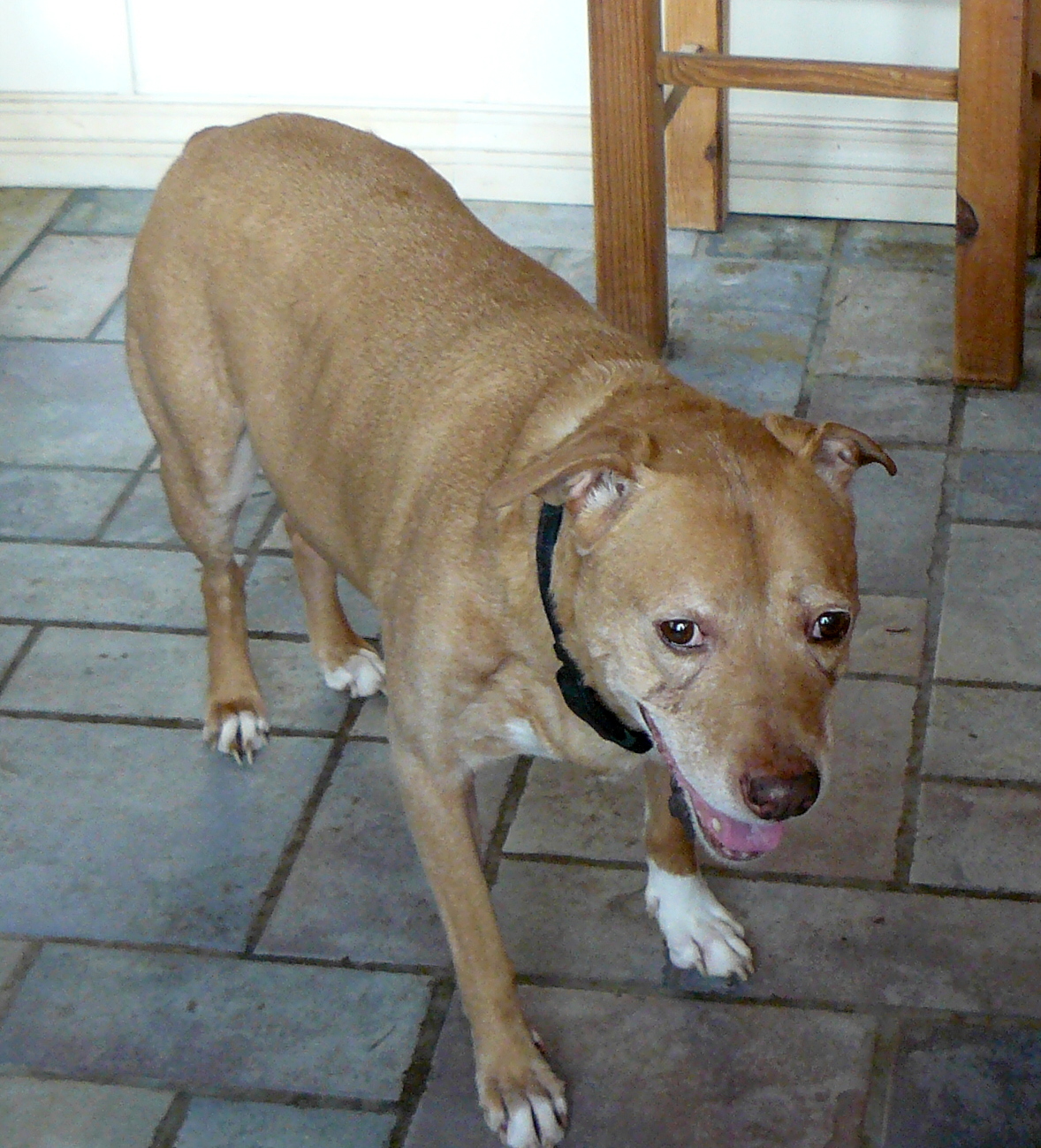
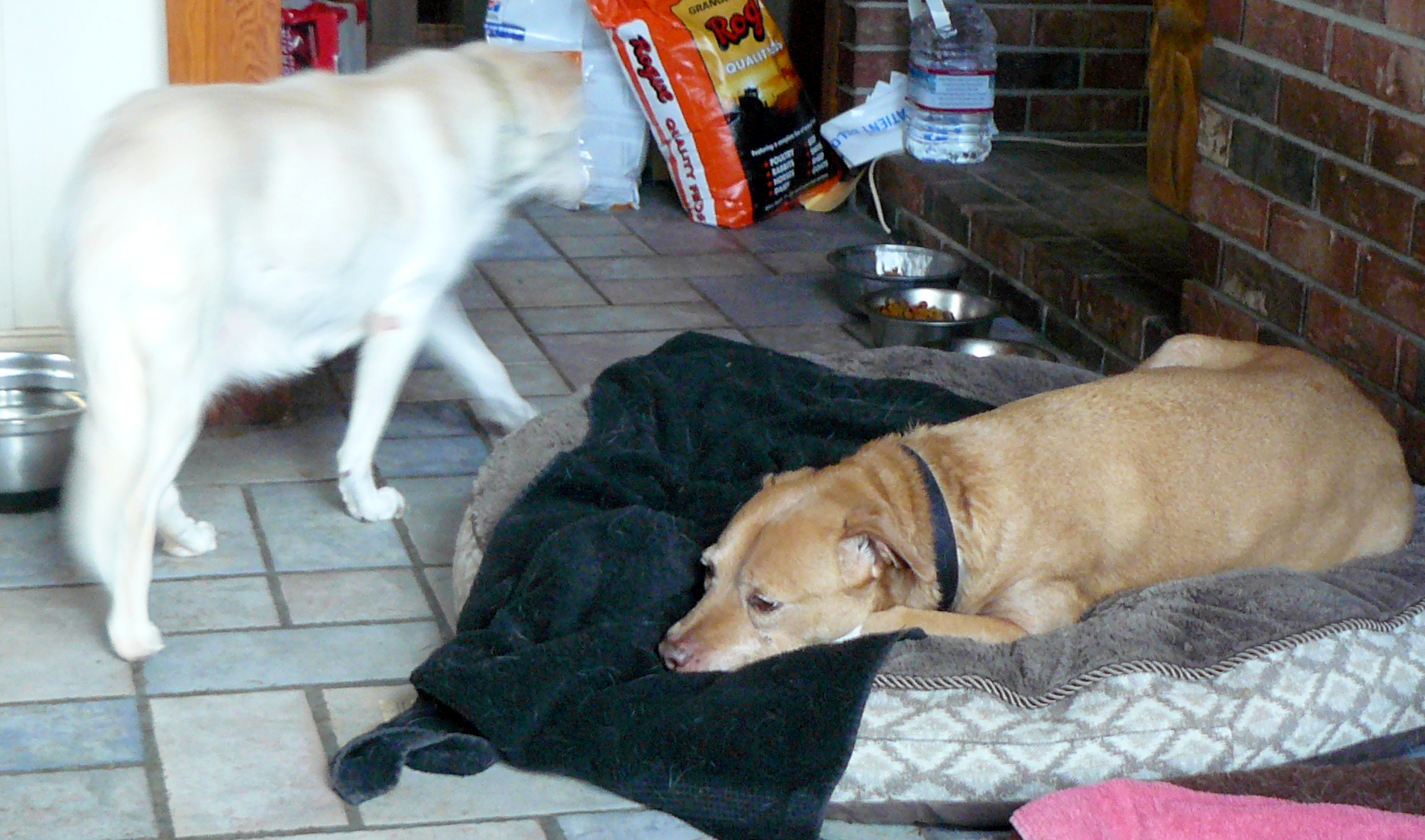
We have two dogs that are delightfully obedient, but with an over-rider; they choose whether to be responsive to the ‘requests’ from Jean and me.

Those two dogs are Oliver and Brandy.

Oliver sleeping in front of the wood-stove yesterday morning. (February 18th, 2015.)
Jean and Brandy at our local yard sale last weekend. (June 29th, 2016)

It’s so easy to see each of them listening to a request from us and deciding whether or not to oblige us at that moment.

So when I came across a recent article over on the Care2 website about dogs deciding what are or are not valuable instructions from their human carers it really struck a chord with me. Read it below and I bet many of you will know exactly what I mean.

ooOOoo

Dogs Are Smart Enough to Know When to Ignore Useless Directions

1392529-largeBy: Elise Morea October 29, 2016

About Elise Follow Elise at @elisem0reau

Dogs are pretty smart, but they’re still pretty clueless enough that we’re able have a good laugh at their reactions to certain things every so often. Whether it’s confusion over a ball that was never thrown or fear of a strange looking photograph sitting on the fireplace mantel, dog brains definitely see and understand the world in a way that can be pretty amusing to us.

According to recent research from Yale University’s Canine Cognition Center, it turns out that dogs can learn to pick up on the uselessness of their owners’ orders or directions so that they can disregard them altogether. In fact, they’re even less likely to follow them than children.

Researchers gathered 40 dogs of different breeds and examined their behavior in some problem solving experiments to see whether they could differentiate between helpful and useless directions. A treat was placed inside of a clear puzzle box with a red lid that the dogs had to open to get their reward.

The dogs were shown how to solve the puzzle box, which had a lever attached to it that could be pushed. Although the lever step was shown in the demonstration, it was actually completely unnecessary and didn’t serve any purpose at all to help open the box. The dogs really only needed to lift the lid to get to their treat.

 The researchers left the room while the dogs worked on the puzzle to make sure they would actually try to solve it on their own rather than just follow orders from people. All of the dogs spent several rounds trying to figure out the puzzle to get to their treat, eventually figuring out that they didn’t need to do anything with the lever after all and that all they needed to do was lift the lid. By the end, the dogs were completely ignoring the lever.

The results suggest that dogs learn on an individual level as opposed to humans who imitate each other when trying to learn. The study was inspired by a previous study that involved observing children as they solved puzzles.

Unlike the dogs, the children didn’t stop to think about how the puzzle might be solved differently and more effectively from what was demonstrated, instead repeating what they were shown to do again and again. Even when the children raced to finish solving the puzzle, they still repeated all the unnecessary steps.

Researchers described the children’s problem solving as ”overimitation,” which may be a unique aspect of how humans learn. Dogs and humans are both very social, but dogs are clearly independent problem solvers while children are natural copycats. Children seem to find it instinctive to limit problem solving because they have so much to learn.

Regardless of whether you have a dog, children, or both, these findings give us the opportunity to notice and appreciate their unique learning styles. From a very young age, children will often start mimicking their parents behaviors whether it serves them as an independent human being or not, offering parents all the more reason to be extra conscious of their own behaviors.

Your dog, of course, might just figure out your trickery after falling for a few fake throws of his favorite toy or ball. Now you know that he’s his own kind of canine problem-solving genius!

ooOOoo

I think I need to be a bit more careful what I discuss in front of our dogs!

As the saying goes:

An apple a day keeps the doctor away!

Picture credit Don Kinzler's blog on Growing Together
Picture credit Don Kinzler’s blog on Growing Together

Read this very interesting item that was published on the Care2 site:

ooOOoo

10 Surprising Ways Apples Are Good for Your Health

A Care2 favorite by Michelle Schoffro Cook

About Michelle Follow Michelle at @mschoffrocook

Martin Luther once said, “even if I knew that tomorrow the world would go to pieces, I would still plant my apple tree.”  New research gives more reasons than ever to plant apple trees and enjoy their delicious and nutritious fruit.  Here are ten surprising reasons to sink your teeth into an apple today:

1. Research found that when healthy adults consumed an apple fifteen minutes before eating a meal, they ate 15 percent less at the meal.  This simple habit can result in weight loss for anyone looking for an easy and healthy way to lose weight.

2. In other studies, apples have been shown to significantly alter the amounts of the bacteria Clostridiales and Bacteroides in the large intestine, conferring gastrointestinal health benefits.

3. Thanks to their phytonutrient content, apples have been show to lower the risk of asthma and lung cancer in numerous studies.

4. In a study funded by the USDA, postmenopausal women who ate dried apples daily experienced a 23 percent reduction in LDL cholesterol (the one known as “bad cholesterol”) and a 4% increase in HDL cholesterol (“the good cholesterol”) within six months.

5. In a British study published in BMJ, researchers found that eating an apple a day was as effective as statin drugs to lower cholesterol levels, without the harmful side-effects.  They also found that if 70% of the British population simply ate an apple on a daily basis, 8500 lives would be spared every year from heart attacks or strokes.

6. Researchers at Tufts University found that catechin polyphenols found in apples speed abdominal fat loss by 77 percent and double weight loss in overweight individuals.  Catechins also improve the body’s ability to use insulin, thereby preventing wild blood sugar fluctuations that effect energy, mood, and cravings.

7. Apples contain flavonoids (including catechin polyphenols and quercetin), which have been shown to interfere with the development of cancer cells and preventing their ability to multiply.

8. Research in the journal Nutrition Reviews found that a diet that’s too low in magnesium increases the risk of cancer.  Apples are a good source of magnesium.

9. According to research in the International Journal of Biological Macromolecules scientists found that apple oligosaccharides showed an ability to inhibit human colon cancer cells.  Oligosaccharides are complex carbohydrates.  The apple compound induced a process known as apoptosis, which is the body’s mechanism to kill damaged or cancerous cells. They also found that the apple oligosaccharide stopped the growth of new cancer cells. They concluded: “Apple oligosaccharide is a potential chemoprevention agent or anti-tumor agent and is worthy of further study.”

10. Apples contain a natural compound known as malic acid, which helps improve energy production in the body. It has been found to aid fibromyalgia and chronic fatigue syndrome.

ooOOoo

 Amazing what one reads and learns on ‘the internet’ these days. If it wasn’t such crap weather just now I would go outside and take a photograph of our three delicious apple trees! Trust me, Jean and I and the deer love to eat them!

Returning to the wet dogs season!

We most certainly need the rain but …..

Pharaoh playing in Bummer Creek after Autumn rains in 2013.

The weather forecast for the next few days is ‘interesting’!

From Grants Pass Weather:

Thursday Rain. High near 68. East wind 5 to 7 mph becoming calm. Chance of precipitation is 100%. New precipitation amounts between a half and three quarters of an inch possible.
Thursday Night Rain. The rain could be heavy at times. Low around 51. South southeast wind 10 to 18 mph becoming southwest in the evening. Winds could gust as high as 28 mph. Chance of precipitation is 100%. New precipitation amounts between 1 and 2 inches possible.
Friday Rain before 11am, then showers after 11am. High near 65. South southwest wind around 11 mph. Chance of precipitation is 90%. New precipitation amounts between a quarter and half of an inch possible.
Friday Night A chance of showers before 11pm, then rain likely after 11pm. Cloudy, with a low around 53. Chance of precipitation is 70%.
Saturday Rain. High near 65. Chance of precipitation is 100%.
Saturday Night Rain. Cloudy, with a low around 51.

The hydrologic report from the National Weather Service even more interesting (my emphasis and we are in Josephine County about 80 miles inland from the coast):

HYDROLOGIC OUTLOOK
NATIONAL WEATHER SERVICE MEDFORD, OR
333 PM PDT TUE OCT 11 2016

Hydrologic Outlook for significant rises on rivers and streams in
Sisikyou and Modoc counties in California and Coos, Curry, Douglas,
Jackson, Josephine, Klamath and Lake counties in Oregon.

A series of storms will move through the region beginning Thursday.
A strong jet stream stretching across the Pacific Ocean will bring
a steady stream of moisture into the Pacific Northwest with these
storms. This will result in heavy rainfall across the region. The
heaviest rainfall will be with the storm on Saturday as the remnants
of Typhoon Songda are pulled into the stream. Rainfall amounts of
over 6 inches at the coast and western Siskiyou county,to over
thirteen inches on the extreme southern coast can be expected
through Monday. Three to six inches can be expected inland to the
Cascades with one to two inches east of the Cascades from Thursday
to Monday. These forecast totals across the region are equal to or
higher than the totals normally seen through the entire month of
October.

While main stem rivers will experience significant rises due to
these storms, they are not expected to flood. Small streams and
urban areas could experience high water or even flooding where there
is poor drainage. As this is the first large storm of the rainy
season, there is the potential for debris to clog storm drains,
ditches and culverts resulting in flooding.

Another concern is the heavy rain falling on recent burn scars. If
you live downstream of a recent burn scar, or if you are just
driving through a burn scar, stay alert as there is a high risk of
flash flooding and debris flows in and below burned areas.

The exact scenario for flooding and high water remains uncertain.

These forecast totals across the region are equal to or higher than the totals normally seen through the entire month of October.”

As I said in the beginning, we most certainly need the rain, and with rain comes …

486b759b1c97151a9be677ed3974aaeaThank goodness we have nine dogs! 😉

Mouthing it canine fashion.

Another fascinating insight into the behaviours of dogs.

Every dog owner knows how dogs appear to have their mouths directly linked to their emotions. From licking to growling, from dribbling to holding stuff, we humans don’t really have a clue as to the role of the canine mouth over and above eating food.

Which is why this recent item over on the Care2 site caught my eye (not my mouth!) and I wanted to share it with you.

ooOOoo

Why Does My Dog Grab Something in His Mouth When He’s Excited?

1390782-largeBy Vetstreet.com September 26, 2016

About Vetstreet.com Follow Vetstreet.com at @vetstreet

Some dogs seem to love to entertain. When guests come to the door, these dogs become delighted hosts, racing to greet their visitors with something — anything — they find to put in their mouths.

What’s behind this amusing behavior?

Vetstreet checked in with Dr. Wailani Sung, a veterinary animal behaviorist, to find out.

There are several different reasons your dog might be doing this, she says. Among them: They’re offering a gift, they’re looking for attention or they want to show us they’re happy.

“I think some dogs are so excited to see a visitor because it may represent a new person who will play with him/her, so the dog grabs a toy to try to entice the person to play, whether it is tug or throwing the object,” Dr. Sung explains.

A Welcome Distraction?

For other dogs, it may be a behavior that the owners taught them or encouraged to give them something more appropriate to do in place of jumping on people or barking.

“Other owners have recognized that their dogs may appear anxious or worried, but if they get the dog engaged with their toys, they appear less concerned about new visitors in the house,” she says. “Some dogs may naturally grab a toy on their own, whether to solicit play or to have something to do.”

The dog may also be reacting to your own excitement and responding in kind.

Dr. Sung has seen the behavior mainly in Retrievers but said it’s something any breed might exhibit.

Avoiding an Embarrassing Moment

In some cases, owners report some rather embarrassing situations — like when the first thing their pooch spotted to grab was dirty laundry or other “unmentionables.”

Dr. Sung says it’s best to be sure those things are out of the dog’s reach. But if the arrival is a surprise and the dog does get something he shouldn’t have, the owner should try to keep calm and get the dog to exchange the contraband for another toy or treat.

“They should distract the dog, redirect to a more appropriate behavior, such as come and sit, and then ask the dog to drop it,” Dr. Sung said. “Sometimes people forget and raise their voices or go chasing after their dog and it becomes a game to the dog. Then the next time visitors arrive, the dog remembers how much fun he had last time people arrived and grabbed an item.”

It can be flattering to be the source of a canine host’s excitement — unless he’s so thrilled, he’s jumping or running into people. In those cases, Dr. Sung recommends putting him in another room or in his kennel or bed while guests arrive to try to avoid the excitement.

By Amy Sinatra Ayres | Vetstreet.com

ooOOoo

Anyone got any wonderful stories about what their dog has put in their mouth? (That you would like to share!!)

The utterly incomprehensible

A journey of the mind and the soul.

NB: Regular readers will find that today’s post is rather different to my usual run of things. But I do hope that you end up sharing my feelings of mystery; sharing what seems to me utterly incomprehensible. I am speaking of The Infinite.

Let me start with this quotation:

The infinite has always stirred the emotions of mankind more deeply than any other question.

The infinite has stimulated and fertilised reason as few other ideas have. But also the infinite, more than another other notion, is in need of clarification.

Let me now take you back many years, back to the Autumn of 1969 when I left Gibraltar bound for The Azores on my yacht Songbird of Kent. I was sailing solo.

My home for five years – Songbird of Kent; a Tradewind 33.

Despite me being very familiar with my boat, and with sailing in general, there was nonetheless a deep sense of trepidation as I headed out into a vast unfamiliar ocean.

On the third or fourth night, I forget which, when some four hundred miles into the Atlantic and therefore far from the light pollution from the land, I came on deck and was emotionally moved in a way that has never ever been surpassed.

For way up in the heavens above me was the Andromeda galaxy, clearly visible with the naked eye.

andromeda-galaxy-josh-blash-7-23-2014-e1473897834535
Josh Blash captured this image of the Andromeda galaxy.

That photograph above and the following are from the EarthSky site.

Although a couple of dozen minor galaxies lie closer to our Milky Way, the Andromeda galaxy is the closest major galaxy to ours. Excluding the Large and Small Magellanic Clouds, which can’t be seen from northerly latitudes, the Andromeda galaxy – also known as M31 – is the brightest galaxy in all the heavens. It’s the most distant thing you can see with your unaided eye, at 2.3 million light-years. To the eye, it appears as a smudge of light larger than a full moon.

Not only could I not take my mind off seeing the Andromeda galaxy, I couldn’t easily comprehend seeing the stars come all the way down to the horizon; all 360 degrees about me.  Right down to the edge of my ocean horizon; a swirling blackness out to where it kissed that glorious night sky.

That image of that dome of stars would be forever burnt into my memory. An image that both made no sense, yet made every sense

Fast forward forty-seven years to now!

Recently we have had some beautiful clear nights here in Southern Oregon. Just the other night, before the moon had risen, there up in the night sky just a short distance from the constellation Cassiopeia was Andromeda. Immediately, my memory of that dark night sky out in the Atlantic came rushing back at me

The Andromeda galaxy is 2.3 million light-years away. But how can one possibly comprehend the distance? The fact that light travels at 186,000 miles per second or 671 million miles per hour (the exact value is 299,792,458 metres per second (approximately 3.00×10⁸ m/s) has no meaning whatsoever. Think about it! Light is traveling at the equivalent speed of going around our planet 7.46 times every second!

But if you can’t fathom the distance to the Andromeda galaxy try this!

Back in March, 2016 a new galaxy that has been named GN-z11 was spotted by the Hubble space telescope 13.4 billion light years away. That’s approximately 5,830 times more distant than the Andromeda galaxy!

Now it is starting to become very difficult to comprehend.

Over the last couple of weeks BBC Radio 4 has been airing 10 talks given by Professor Adrian Moore under the heading of A History of the Infinite. They are freely available to be listened to and I so strongly recommend them.

But it was episode eight that made me lose my mind. Just like that night so many years ago on Songbird of Kent.

For that episode was called The Cosmos. You can listen to it here. Please, please do so! This is how that episode is presented:

Does space go on for ever? Are there infinitely many stars? These are some of the questions Adrian Moore explores in the eighth episode in his series about philosophical thought concerning the infinite.

With the help of the theories of the Ancient Greeks through to those of modern cosmologists, Adrian examines the central question of whether our universe is finite or infinite.

For most of us, looking up at the stars gives us a sense of infinity but, as Adrian discovers, there is a strong body of opinion which suggests that space is finite, albeit unbounded. This is a difficult idea to grasp, but by inviting us to think of ourselves as ants, astrophysics professor Jo Dunkley attempts to explain it.

Adrian also tackles the idea of the expanding universe and the logic that leads cosmologists to argue that it all started with a big bang, and may all end with a big crunch.

Finally, we discover from cosmologist John Barrow how the appearance of an infinity in scientists’ calculations sends them straight back to the drawing board. The infinite, which the Ancient Greeks found so troubling, has lost none of its power to disturb.

A Juniper production for BBC Radio 4.

If you find that episode compelling beyond belief then all the episodes are available on the BBC iPlayer and may be found here.

I started with a quotation that is the opening of the final episode. It is a quotation from the German mathematician David Hilbert. As Wikipedia explains, in part:

hilbertDavid Hilbert (German: [ˈdaːvɪt ˈhɪlbɐt]; 23 January 1862 – 14 February 1943) was a German mathematician. He is recognized as one of the most influential and universal mathematicians of the 19th and early 20th centuries.

I will return to that first sentence in Hilbert’s quotation:

The infinite has always stirred the emotions of mankind more deeply than any other question.

For me that sight of the Andromeda galaxy and the stars back in 1969 was in every meaning of the word a sight of the infinite and it has forever stirred my emotions very deeply indeed!

Caring for the family: Correction Truth.

Nature so often guides us in how to behave.

Yes, nature can be cruel but in ways that we understand. Animals, to the best of my knowledge, do not hunt for sport. Animals do not lie. They don’t seek political power (sorry; couldn’t resist that!).

All of which is my short introduction to an item that Dan sent me yesterday.

ooOOoo

image
Cesare Brai’s photo.

A wolf pack: the first 3 are the old or sick, they give the pace to the entire pack.
If it was the other way round, they would be left behind, losing contact with the pack. In case of an ambush they would be sacrificed.

Then come 5 strong ones, the front line. In the center are the rest of the pack members, then the 5 strongest following. Last is alone, the alpha. He controls everything from the rear.

In that position he can see everything, decide the direction. He sees all of the pack. The pack moves according to the elders pace and help each other, watch each other.

For once I am speechless, I knew that wolves are different, but didn’t realize how much we could learn from them…

ooOOoo

Compelling, eh! But factually correct?

No!

In this case Nature is not guiding us. It is man misguiding us.

Or in the words of the Truth or Fiction website:

That makes for a compelling and inspirational story about teamwork — but it’s not true.

David Attenborough took the photo in question for the BBC’s “Frozen Planet” Series in 2011. It shows 25 timber wolves hunting bison in Wood Buffalo National Park in Canada. The female alpha wolf led the pack, and the others followed in a single file line to save energy as they made their way through deep snow, according to the environmental website Benvironment.

Wolf packs are typically about half the size of the pack pictured in the photo from 2011. Most packs don’t hunt prey the size of bison (which is 10 times the size of a wolf), but the larger pack is able to. And the wolves walking in a single file line through deep snow is a classic example of how they’re able to use weather conditions to their advantage while hunting prey that’s much larger than them.

Also, the idea that wolves have to be on the lookout for “ambushes” or attacks isn’t true, either. Wolves are at the top of the food chain and have no natural predators. Aside from turf battles with other wolves (which wouldn’t start in an ambush) bears are the only threat to wolves in Canada. Even so, experts say that bears are only able to prey on wolf pups because grown wolves are too fast, swift and clever to get caught by them.

I will close with this quotation from Andre Gide:

Believe those who are seeking the truth. Doubt those who find it.

Listening furry ears!

Returning to the fascinating topic of how dogs understand us humans.

At the beginning of the month I published a post called Be Careful What You Say. It featured an item on BBC Radio Four regarding the science report from a team in Hungary seeking better to understand how dogs process human vocal sounds, as in speech. (The science report was rapidly featured in many other media outlets.)

Anyway, I am delighted to say that the Rights & Permissions Department of the AAAS pointed out that:

Virginia’s article is freely available on our open news website (http://www.sciencemag.org/news)  so rather than post, please link to it (http://www.sciencemag.org/news/2016/08/video-your-dog-understands-more-you-think). Your site visitors will encounter no barriers to viewing the article on our website.  We welcome hyperlinks to Science articles provided a plain text link is used and providing our content is not framed. We also ask that the text surrounding the hyperlink not imply any endorsement of your website, products or services by AAAS/Science.

The article, written by Virginia Morell, primarily features a video (see below) but I will just republish Virginia’s opening paragraphs.

Video: Your dog understands more than you think


It’s the eternal question for pet owners: Does your dog understand what you’re saying? Even if Fido doesn’t “get” your words, surely he gets your tone when you let loose about another accident on the carpet. But a new imaging study shows that dogs’ brains respond to actual words, not just the tone in which they’re said. The study will likely shake up research into the origins of language, scientists say, as well as gratify dog lovers.

“It’s an important study that shows that basic aspects of speech perception can be shared with quite distant relatives,” says Tecumseh Fitch, a cognitive biologist at the University of Vienna, who was not involved in the work.

It’s not a long article but for any dog lover it is a most interesting read.

So here’s that video.

Virginia concludes her article, thus:

The new results add to scientists’ knowledge of how canine brains process human speech. Dogs have brain areas dedicated to interpreting voices, distinguishing sounds (in the left hemisphere), and analyzing the sounds that convey emotions (in the right hemisphere).

The finding “doesn’t mean that dogs understand everything we say,” says Julie Hecht, who studies canine behavior and cognition at City University of New York in New York City and who was not involved in the study. “But our words and intonations are not meaningless to dogs.” Fitch hopes that similar studies will be done on other domestic animals and on human-raised wolves to see how much of this ability is hardwired in dogs and how much is due to growing up among talking humans.

What a wonderful relationship dogs and humans have with each other!

And Another Saturday Smile

Enjoy your weekend, and don’t miss the Harvest Moon!

Another fabulous reposting of an article that first was seen on the Care2 site.

ooOOoo

This Man May Wear a Hard Hat, But He Sure Has a Soft Spot for Dogs

3188741-largeBy: Laura S. September 11, 2016

Max Kahrimanovic lives in his hard hat. It’s covered in the dust of three continents where he programs wind turbines, often at a dangerous height. But some may say Max’s greatest accomplishments unfold in the far less intricate scenarios down on the ground where he feeds hungry, and often very thirsty, stray dogs. This is the story of how Max won the trust of one of those dogs and the remarkable new life she is now beginning.

my-work1
So close he could kiss the clouds, Max programs wind turbines internationally.

“I saw her the very first day I came to the construction site,” Max said of the shy sweetheart he encountered during his latest assignment in Turkey. “She was scared and wouldn’t approach no matter what. I would leave food and would have to walk away. Then, from the far, I would see her eating and drinking what I left for her. Slowly she started to trust me and one day she finally let me pet her on the head.”

From that day forward Karis (as Max named her) decided that she had adopted Max. She would keep watch outside his office door and she would be waiting for him when he arrived at work each morning.

Although she was once so afraid of human touch, Karis soon learned that Max was different than the others she’d encountered.

“She can be naughty at times,” Max laughs, thinking of the occasions Karis dumped over the trash cans. “She wasn’t hungry, I know that much. I was feeding her three times a day. But I guess the leftovers smelled delicious to her and she had to check it out.”

And one day, when Max arrived, Karis had a surprise for him. Overnight, she had delivered seven puppies.

“My first thought was devastation,” Max said candidly. “I know, you’ll think how can I be devastated seeing so much cuteness. But in all these years of traveling through Europe, Morocco, New Zealand, etc. I’ve seen so much misery involving these animals, that I couldn’t feel anything else at that moment.”

At this point, Max had already found a home for Karis in the U.S. and was making arrangements to transport her there. But with seven more lives to worry about, now what?

“How are we gonna manage 7 pups too?” Max wondered. “Knowing what will happen to them after I leave was devastating. I knew they will either die under car wheels, die of starvation, diseases or they will get killed by other bigger dogs that wander around there.”

So, despite the enormity of the costs and challenging logistics, Max and his wife Neli – back in Sweden – began making arrangements to transport the entire family of dogs to the U.S. for adoption. They turned to the Harmony Fund international animal rescue charity for help with the costs of the rescue.

The whole family will be coming to the U.S. soon, and Karis already has a permanent home with one of Max’s friends who has adopted internationally before. Max has no doubt that Karis will be very good to her pups during the transition as she has always been such an excellent mother.

Karis and her pups were moved to a safe location where they await travel to the U.S.

“When she had the puppies, I admired how she never went to eat their food that I gave them,” Max said. “She waited for me to get hers ready. One time I left 6 hard boiled eggs on the table for her lunch. I just stepped out to wash my hands and when I got back eggs were gone. She ate them like that, not peeled or anything.”

Max isn’t always admired for his devotion however. He said he’s known by management as “the guy who feeds strays” and that he has received warnings not to do so. But he simply can’t go against his own moral compass.

Max always makes time to offer food and water to strays like this one in Turkey.

“This is much stronger than me,” Max explains. “I can’t eat my lunch knowing there is a being, not far from me, starving and hasn’t had a piece of bread for days…. We usually work in small villages far from civilization or any bigger cities. If it is possible to buy it, then I always have one or two huge bags of dry food and some cans in the trunk of my car. And on my way from the site to my hotel, I stop and feed strays that I see. If it isn’t possible to buy dog food, then I improvise with our food by either taking extra breakfast from the hotel or just by buying extra food when I go shopping for myself. I know I can’t save them all. But for that day or that time when I meet that dog I can feed him at least and give him some water.”

joy-turkey1ooOOoo

I am so pleased to promote what Max Kahrimanovic is doing and to thank Laura for writing this up in the first place.

Max’s admission in that last paragraph uses words that I have heard Jean using when I first met her back in December, 2006 when she was living in Mexico and rescuing so many street dogs and finding loving homes for them in the USA.

Exit one polyp!

It’s your fault this is being published! 😉

I couldn’t resist showing my appreciation for the interest and best wishes from so many of you regarding the removal of my polyp.

Jean and I arrived at Three Rivers Hospital locally in Grants Pass a little before 10am and were quickly admitted to the pre-op room. Once I had been connected to all the various devices it was but a short wait before Dr. Nelson came in to check that all was ready for the procedure.

Amazingly, I was then back in the pre-op room after the 45-minute procedure had been carried out by 11:40am. Dr. Nelson then briefed me that everything had gone well and passed me the photos below.

I couldn’t resist sharing the photographs showing the polyp before removal on the left-hand side and the ‘crater on the moon’, as Dr. Nelson described, on the right-hand side it where the polyp once was!

scan-16The photograph on the right was taken before it was sewn over to prevent any subsequent infection.

Once again, thanks for all your best wishes. As Marina and Sue and others implied it was a very straightforward operation.

Listening to our pets in more difficult times.

Loving owners want so much to know when their pets may be in pain.

Our dear Pharaoh (born June, 2003) is getting very weak in his rear hip joints and Jean and I are very sensitive to understanding whether or not he is in pain. Any loving owner of a cat or a dog would be the same; and it doesn’t stop with our cats and dogs.

Care 2 Healthy Living recently had an article on just this subject: Trying to know when our pets are in pain.

Here it is shared with you good, caring people.

ooOOoo

6 Ways Your Pet Tells You They’re In Pain

1390100-largeBy: Lisa Spector September 11, 2016

September is Animal Pain Awareness Month. My Lab, Sanchez, is 13-years-old. I still sometimes have a hard time identifying the difference between a behavior problem and a physical ailment. Our dogs are so adaptable and want to please us so much, it’s sometimes challenging to detect their pain.

These often subtle signs will help you determine when your pet may be showing signs of pain. Some require a veterinary visit, but other times there are simple things you can do to help. When Sanchez had a slipped neck disc at age 9, I thought he was in so much pain that he’d never recover. A few acupuncture sessions later, and he turned into a puppy!

1. Mouth Fluttering

It wasn’t until I made a video with Sanchez in it that I noticed he was making all sorts of mouth movements. (He starts the mouth movement at :28 seconds.) I knew he wasn’t stressed and his lip licking was not a calming signal. It sparked enough curiosity that I had my vet look at this mouth. Sure enough, he needed his molars pulled. As hesitant as I was to have this operation on a 13-year-old dog, he came through it just fine and started acting much younger post-surgery. I didn’t realize he was in pain for months.

Little dog maltese refusing eating his food from a bowl in home

2.  Decreased Appetite

A change in desire to eat is not always a sign of illness. It sometimes can also be about mouth pain. If you give Fido or Fluffy hard food, try some soft food and see if they want to eat. Experiment with different textures. Decreased appetite is a good reason to visit your vet.

sanchezupcar-443x3323. Reluctance to Get In The Car

While this might happen throughout a cat’s entire life, dogs may show hesitancy getting in a car when it causes them pain to jump up (or down). Try using a ramp so that they can easily get in and out without adding any pressure to their joints.

thinkstockphotos-589434262-405x4434. Difficulty Standing Up

Older pets tend to sleep a lot and they can be slow at getting up. Give them plenty of time to stretch as they know how to listen to their own bodies. But, if Fido or Fluffy is hesitant to stand up, they may be feeling pain. Personally with Sanchez, this is one of the areas where it’s hard to tell the difference between behavior and pain. But, I can usually find out the answer quickly when I entice him with a yummy treat.

thinkstockphotos-530496846-443x2955. Decreased Activity and Engagement

When pets are in pain, they often want to be left alone. Watch for any signs of social behavior changes. Is Fido engaging with his dog buddies? Is Fluffy getting in more cat fights? Senior pets have a taxed nervous system in general and aren’t as curious as their puppy or kitty playmates. But notice if there has been any drastic change in their activity level. It may be a reason for a vet call.

The International Veterinary Academy of Pain Management (IVAPM) also offers this downloadable chart that helps you determine when you’ll need to make a vet visit.

ooOOoo

That downloadable chart is a graphical version, as in a pdf, of this post. Nonetheless, IVAPM are to be congratulated on producing the chart and for highlighting the important indicators when trying to decide whether or not to take your loved pet to see a vet.