Category: Science

A nose for doing good work!

A dog’s nose, of course!

We all know how good are the noses of our dogs. Yet, I suspect, many do not know how truly good is that nose. The Science ABC site has a detailed account of Why Do Dogs Have Such A Great Sense of Smell?
Here’s part of that article:

Dog Nose vs. Human Nose

When we try to smell something, we inhale air with our nose and we use the same passage in our nose to exhale that air. Therefore, all the smell that we get when we are inhaling is lost when we exhale that air. However, a dog has two different air passages, one for breathing and another for smelling. This means that dogs are able to store the smell in their nose even while breathing out the air!

When dogs exhale, they send air out through the slits of their nose, but the manner in which this air is exhaled through their nose helps the dogs to draw in new odor molecules. This also helps dogs capture more smells when sniffing.

You must have noticed that dogs’ noses are always wet, but have you ever wondered why? The mucus on the dog’s nose helps it smell by capturing scent particles. A dog also has the ability to smell independently from each nostril, this helps the dog to understand from which direction the smell is coming.

The passage through which dogs smell the air contains highly specialized olfactory receptor cells, which are responsible for receiving smells. A dog contains about 225-300 million smell receptors, as compared to just 5 million of these receptors being present in a human nose.

Dog Brain vs. Human Brain

By now, we clearly know that dogs have a nose that can smell about 1,000-10,000 times better than a human, but how are dogs able to remember all the different smells that they have sensed throughout their life?

The answer lies in the difference between the brains of dogs and humans. A human brain has a larger visual cortex than dogs, whereas a dog’s brain has a much larger olfactory cortex than humans. The visual cortex is responsible for processing visual information, whereas the olfactory cortex is responsible for processing the sense of smell. A dog’s olfactory cortex is about 40 times larger than that of a human.

Read the full science article here.

All of which makes a slightly longer introduction than normal to a fascinating article over on Mother Nature Network published two days ago.

ooOOoo

5 ways dogs are used for species conservation

May 16, 2017 Jaymi Heimbuch

Photo: Jaymi Heimbuch

Working dogs are an amazing asset not only for people, but for wildlife, endangered species and even threatened habitats. Expanding on the skills dogs have for tracking down scents and guarding something important, we humans have enlisted their help in many ways for conservation.

Here are five ways dogs are contributing to environmental protection efforts.

Smell for scat

It’s amazing the amount of information that can be sussed out of an animal’s poop. We can determine diet, health, genetics — even whether or not an animal is pregnant. Scat is really important to biologists studying elusive, sensitive or endangered species. Putting dogs on the track is an ideal solution.

Take cheetahs, for example. Scientists in Africa are using dogs and their unparalleled sniffing power to find cheetah poop, all in an effort to get an accurate count on the endangered big cats. (Only 7,000 cheetahs are left in the African wild, according to estimates.) And it’s working. Two trained dogs found 27 scats in an area of 2,400 square kilometers in western Zambia, according to a study published in the Journal of Zoology. Humans, looking for cheetah tracks over the same area, found none.

Groups like Conservation Canines (a handler and dog from the program pictured above), Working Dogs for Conservation and Green Dogs Conservation specialize in this area. Conservation Canines rescues highly energetic, “last chance” dogs from shelters and trains them to track down the scat of dozens of species, from wolves to moose to owl. Even things that are nearly impossible for humans to find — the minuscule scat of endangered pocket mice or orca scat floating on the ocean surface — dogs can track down. They are able to make huge contributions to scientific studies, all without ever bothering the wildlife being studied.

Sniff out problems for wildlife

Whether it’s sniffing out invasive species like giant snails in the Galapagos or detecting disease in beehives, dogs’ noses can be put to work in searching out what shouldn’t be there so that humans can act.

Dogs are able to sniff out particular plant species, pointing ecologists to tiny patches of invasive mustard so that the plants can be removed before they take over an area.

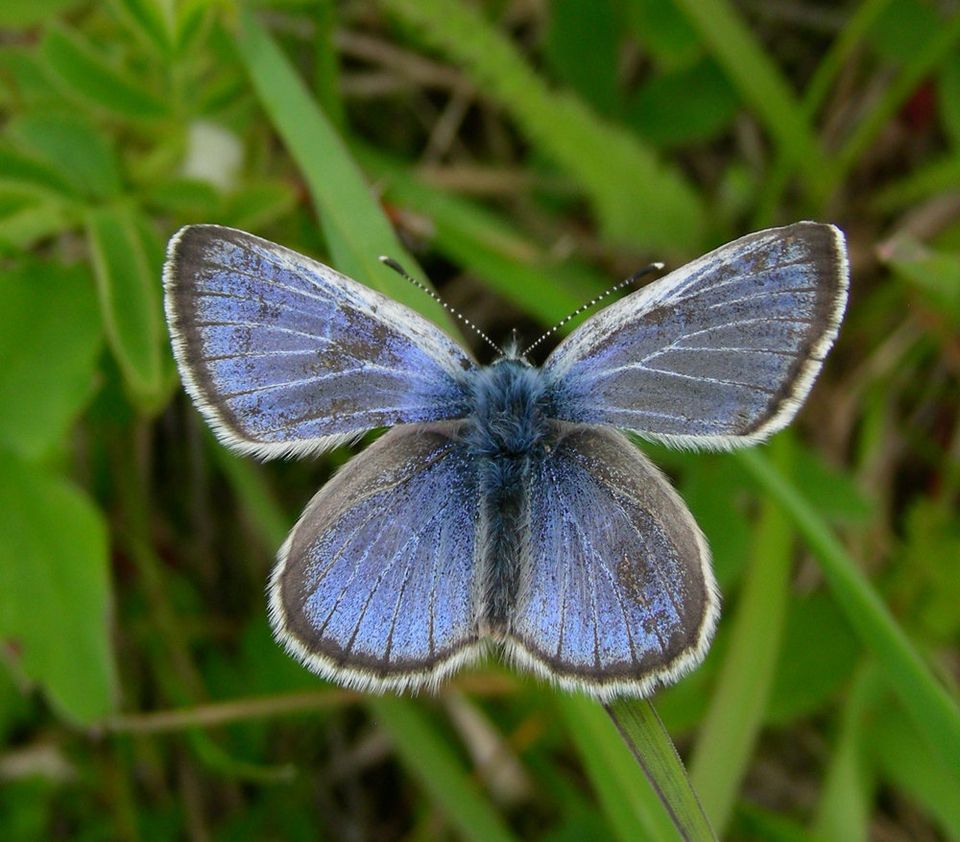
Conversely, dogs can sniff out rare or endangered native plants so that the species can be protected. Rogue is one such dog. The Nature Conservancy writes, “The 4-year-old Belgian sheepdog is part of a Nature Conservancy collaborative project to test the efficacy of using dogs to sniff out the threatened Kincaid’s lupine. The plant is host to the endangered Fender’s blue butterfly, found only in Oregon’s Willamette Valley.”

Surveying for the plant species is difficult work for people. It can only be done when the plant is in bloom so people can visually identify it. However, dogs like Rogue can sniff out the plant even when not in bloom, which can potentially double the length of the field season.

“More refined regional mapping of Kincaid’s lupine could promote the butterfly’s recovery and delisting — and contribute to larger habitat goals and wildlife impacts.”

Track down poachers

The trade in rare or endangered wildlife is a lot tougher for traffickers thanks to wildlife detector dogs. Trained to smell anything from tiger parts to ivory to South American rosewood, dogs are used in shipping ports, airports, border crossings and other locations to sniff out smuggled products.

It doesn’t stop there. Trained dogs can lead rangers to armed poachers in the wild, tracking down the culprits over long hours through heat and rain. They can catch poachers in the act, rather than just the products.

“Canine sleuths aren’t limited to the plains of East Africa, either,” reports National Geographic. “In the Democratic Republic of the Congo, bloodhounds are assisting in the fight against poaching in forested Virunga National Park, where the world’s last remaining mountain gorillas live. In South Africa, Weimaraner and Malinois dogs are helping to find wounded animals and track poachers on foot through the reserves around Kruger National Park.”

Guard endangered species

Dogs are also useful in putting their protective nature to use for endangered species.

Livestock protection dogs are trained to keep predators like cheetahs, lions and leopards safe, which then reduces conflict between ranchers and big cats and minimizes the instances of snaring or retaliatory killing of big cats. Cheetah Conservation Fund has a successful livestock protection dog program, which places Anatolian shepherd and Kangal dogs with ranchers. That not only has significantly reduced the number of livestock killed by predators but is also improving the attitude of local people toward cheetahs.

Sometimes the dogs are put to work guarding the endangered species themselves. One such successful program uses Maremma shepherd dogs to protect colonies of little penguins from foxes.

Keep bears wild

Karelian bear dogs are trained to keep bears from becoming too comfortable around people. A program by Wind River Bear Institute named Partners-in-Life uses a technique called bear shepherding. This specialized breed of hunting dog is used to scare bears away, and are an important part of the “adverse conditioning” work that keeps bears from becoming habituated. The ultimate goal is to protect bears from becoming habituated, a problem that leads to their being relocated or euthanized.

“Our Wind River Bear Institute mission, with the effective training and use of Karelian Bear Dogs, is to reduce human-caused bear mortality and conflicts worldwide to ensure the continued survival of all species of bears for future generations,” states the program.

This list is only a handful of ways that dogs help us with environmental conservation every day. More and more, we are figuring out new ways to put their skills to work, and more and more the dogs are proving they’re ready for the task!

Editor’s note: This story was originally published in July 2016 and has been updated with more recent information.

ooOOoo

Closing words from that Science ABC piece:

A dog does not care how you look or dress, but if he gets good vibes from your smell, then a dog will love you. The world is truly a better place because of these wonderful creatures that we are lucky enough to welcome into our lives.

Why not make the world smell a bit more beautiful for them?

Belay that!

Closing picture taken from the OregonLive website. A stunning picture of the “Fender’s blue butterfly, found only in Oregon’s Willamette Valley.”
Unconditional dog love

Couldn’t have a better story to follow yesterday’s news about Socks finding a new home.

I have lost count of the times that over the years I have featured on this blog the bond between a person and a dog. Yet that hasn’t blunted my mind or dulled my heart to hearing of new stories of this wonderful bond arriving over the ‘air waves’.

Such is the case of Ben and his dog that was featured on the Shareably site last July.

My pleasure to share this story with you.

ooOOoo

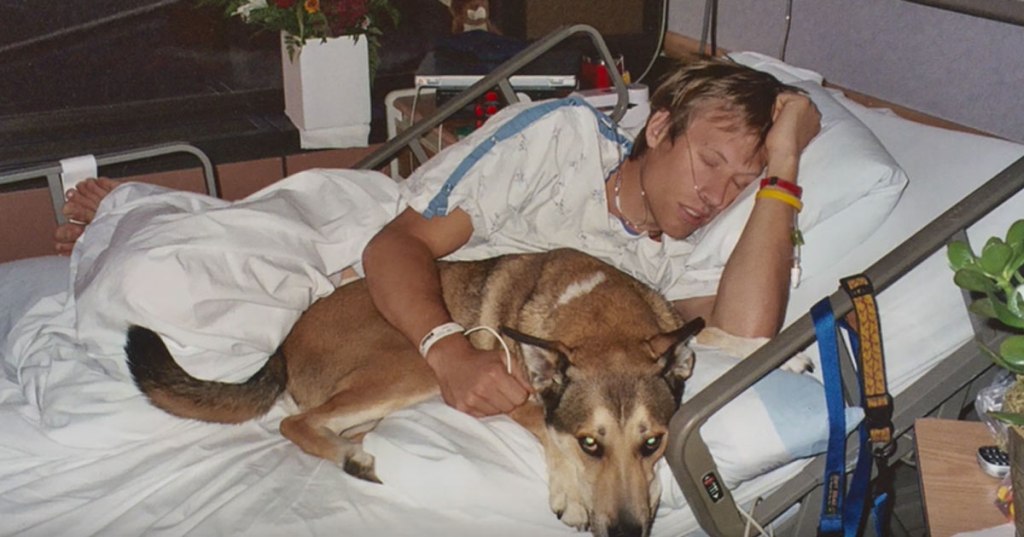
Doctor’s tell dog to leave owner’s hospital bed, but dog refuses and lays by his owner’s side

written by Jenny Brown on July 11th, 2016
There is the saying that a dog is a man’s best friend. It might be because a dog is by your side when you’re feeling down, is there to play catch when you feel like throwing around the frisbee, or simply there when you want some company.
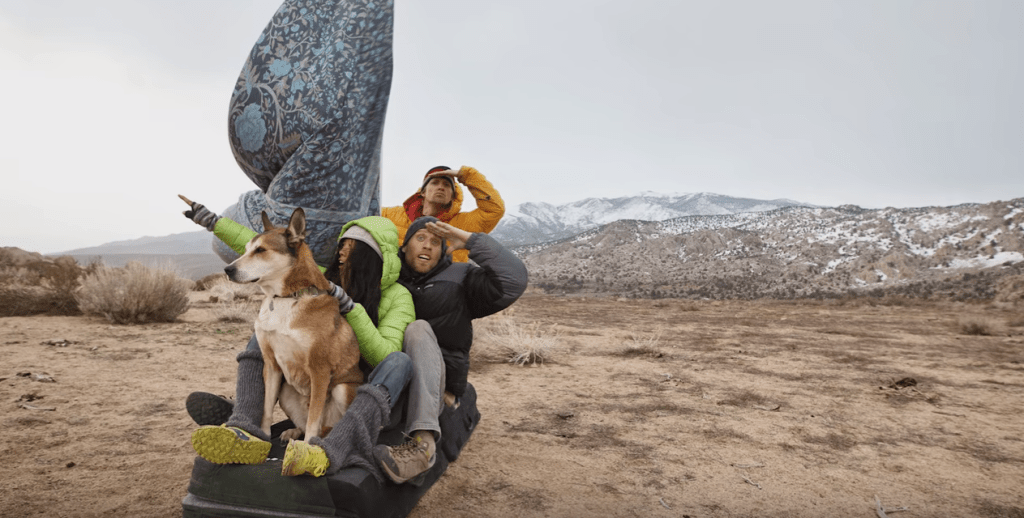
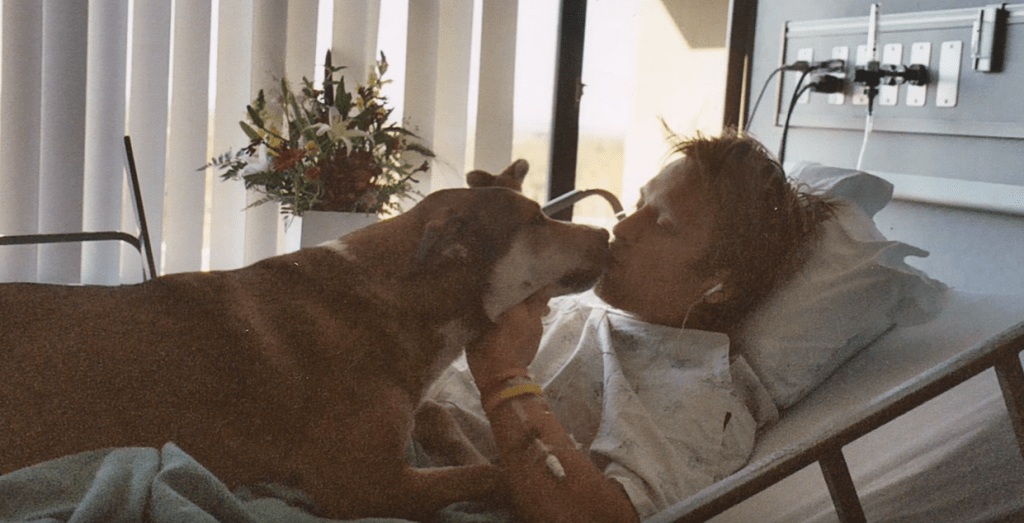
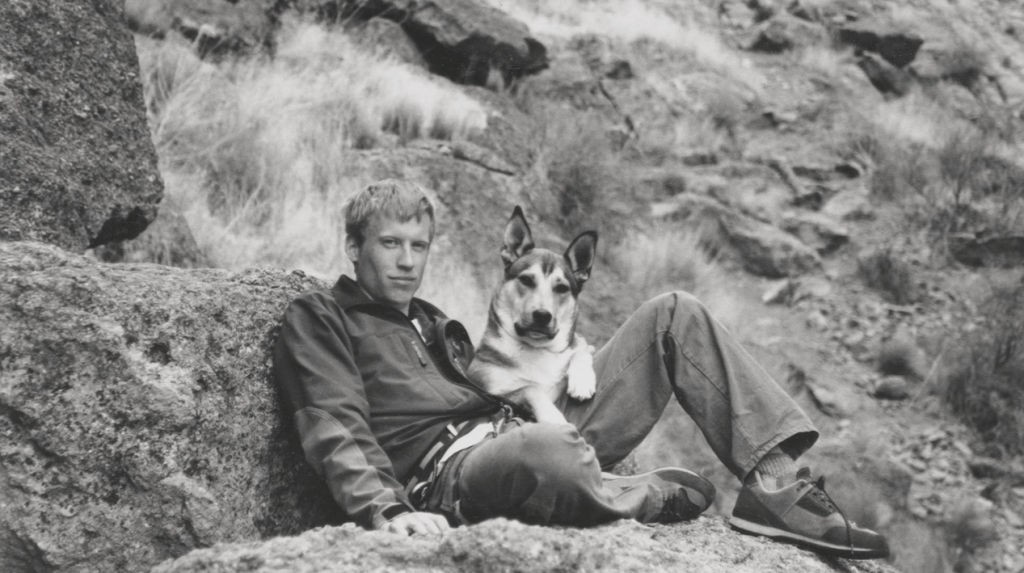
As dog-lovers we are grateful for the things dogs do for us, but do we consider how dogs might be as grateful for the things we do for them? In this video, the beautiful relationship between one man, Ben, and his dog is shown from the perspective of not the man, but his dog.

The relationship between Ben and his dog begins in their earlier years. The two of them travel around the world. From camping in the deserts to hiking in the mountains, they discover their favorite places to visit and make new friends along the way.

Source YouTube/Ben Moon

As the story continues, however, Ben develops cancer. While Ben must spend his time in a hospital and away from traveling, his dog continues to stay by his side, night and day. The relationship between Ben and his dog seems that it may worsen due to Ben’s obstacle, but instead, their relationship only strengthens.

Source YouTube/Ben Moon

The story progresses years later, as Ben overcomes his battle and the bond between him and his dog continues to grow. Through the highs and lows of their relationship, Ben and his dog remain the best of friends until the very end.
This touching video is a dedication made by Ben to his dog, for all the best moments they spent together. This video also shows what is truly the essence of friendship, between a man and his best friend, his dog.

Source YouTube/Ben Moon

Please SHARE this with your friends and family.

(Ed: Note that the dialogue in the following professionally shot film is the voice of the dog.)

ooOOoo

Friendship, as in true friendship, is very precious. That true friendship is rarely unconditional between humans. Not impossible, just rare.

For common examples of unconditional friendship, as in the unconditional love bond, we have to turn to our dogs.

What beautiful teachers they are!

Up, Up And Away?

It is very hard to avoid hyperbole when one speaks of global warming.

I am indebted to The Nation magazine, May 8/15 Issue, in which is included a feature article authored by Bill McKibben. My sub-heading is much of what Bill wrote in his first line.

It is hard to avoid hyperbole when you talk about global warming. It is, after all, the biggest 
thing humans have ever done, and by a very large margin.

A few sentences later, Bill offers this:

In the drought-stricken territories around the Sahara, we’ve helped kick off what The New York Times called “one of the biggest humanitarian disasters since World War II.” We’ve melted ice at the poles at a record pace, because our emissions trap extra heat from the sun that’s equivalent to 400,000 Hiroshima-size explosions a day.

Yet what scares me, scares me beyond comprehension, is the almost universal disregard being shown by Governments and those with power and influence right across the world to what in anyone’s language is the most pressing catastrophe heading down the tracks. Not next year; not tomorrow, but now!

Or in Mr. McKibben’s words, once more from that Nation article:

But as scientists have finally begun to realize, there’s nothing rational about the world we currently inhabit. We’re not having an argument about climate change, to be swayed by more studies and journal articles and symposia. That argument is long since won, but the fight is mostly lost—the fight about the money and power that’s kept us from taking action and that is now being used to shut down large parts of the scientific enterprise. As Trump budget chief Mick Mulvaney said in March, “We’re not spending money on that anymore. We consider that to be a waste of your money to go out and do that.” In a case this extreme, scientists have little choice but to be citizens as well. And given their credibility, it will matter: 76 percent of Americans trust scientists to act in the public interest, compared with 27 percent who think the same thing about elected officials.

Whatever your response is to what I have already presented, the one thing that I do know is that you have been aware of humanity’s effect on our atmosphere for many, many years. Indeed, Bill McKibben wrote his first book twenty-eight years ago!

His 1989 book The End of Nature is regarded as the first book for a general audience about climate change, and has appeared in 24 languages; he’s gone on to write a dozen more books.

But I would be the first to acknowledge that back in 1989 while I did become aware of Bill McKibben and did purchase and read that book of his, I didn’t see the effects he prophesied. In addition, I didn’t understand the mechanisms that would bring those effects into place.

Now, today, it’s very difficult to deny that global weather systems are behaving in ways that most do not understand albeit we do understand how those weather changes are affecting our lives.

One person who did, and still does even more, understand the physics involved in our changing weather, is Patrice Ayme. For some nineteen years after Bill McKibben’s first book, Patrice published a post on his blog. I have been following Patrice’s blog for some years and while I would be the first to stick my hand in the air and declare that some of his posts are a little beyond me, there’s no question of the integrity of his writings and his bravery in spelling out the truth of these present times. (OK, the truth a la Monsieur Aymes but I would place a decent bet of PA being closer to the core truth of many issues than Joe Public.)

I am indebted to Patrice for granting me permission to republish that post. Please read it. Don’t be put off by terms that may not be familiar to you. Read it to the end – the message is very clear.

ooOOoo

Applying Equipartition Of Energy To Climate Change PREDICTS WILD WEATHER.

By Patrice Ayme, March 8th, 2008.

Lately, the world weather has been especially perplexing, influenced by the cold ocean temperatures of a La Niña current in the equatorial Pacific. For Earth’s land areas, 2007 was the warmest year on record.

This year, record cold is more the norm. Global land-surface temperatures so far are below the 20th-century mean for the first time since 1982, according to the National Climatic Data Center. Last month in China, snowstorms stranded millions of people, while in Mumbai, officials reported the coldest day in 46 years.

Yet, England basked in its fourth-warmest January since 1914, the British Met Office reported. The crocus and narcissus at the U.K.’s Royal Botanical Gardens at Kew flowered a week earlier than last year — 11 days ahead of their average for the decade and weeks ahead of their pattern in the 1980s. In Prague, New Year’s Day was the warmest since 1775.

“It is difficult to judge the significance of what we are seeing this year,” said Kew researcher Sandra Bell. “Is it a glitch or is it the beginning of something more sinister and alarming?”” (Robert Lee Hotz, Wall Street Journal, March 8, 2008).

Many scientists have pondered this question, as if they did not know the answer, but it is a straightforward application of thermodynamics.

A basic theorem of equilibrium thermodynamics, the EQUIPARTITION OF ENERGY theorem, says that the same amount of energy should be present in all degrees of freedom into which energy can spill.

(How does one demonstrate this theorem? Basically, heat is agitation, kinetic energy at the scale of atoms and molecules. This agitation can spill in a more organized manner, in great ensembles, such as vast low and high pressure systems, or large scale dynamics. See the note on entropy and negative temperatures.)

In the case of meteorology, this implies, oversimplifying a bit, that only one-third of the energy should go into heat (and everybody focuses on the augmentation of temperature). Now, of course, since the energy enters the system as heat, non equilibrium thermodynamics imposes more than one-third of the energy will be heat.

As time goes by, though, the other two degrees of freedom, potential energy (represented as the geometry of gradients of pressures, high and low pressure systems, hurricanes) and dynamics (wind speed and vast movements of air masses of varying temperatures and/or pressure; and the same for sea currents) will also store energy.

Thus the new heat created in the lower atmosphere by the increased CO2 greenhouse will be transformed in all sorts of weather weirdness: heat, cold, high and low pressures, wind, and big moves of big things. Big things such as vast re-arrangements of low and high pressure systems, as observed in the Northern Hemisphere, or the re-arrangement of sea currents as apparently also observed, and certainly as it is expected. Since it happened in the past (flash ice age of the Younger Dryas over Europe, 18,000 years ago).

As cold and warm air masses get thrown about, the variability of temperatures will augment all over.

In other words, record snow and cold in the Alps and record warmth simultaneously in England is a manifestation of the equipartition of energy theorem applied to the greenhouse warming we are experiencing. It is not mysterious at all, and brutal variations such as these, including sudden cold episodes, are to be expected, as more and more energy gets stuffed in the planetary climate, and yanks it away from its previous equilibrium.

Wind speed augmentations have already had a spectacular effect: by shaking the waters of the Austral ocean with increasingly violent waves, carbon dioxyde is being removed as if out of a shaken carbonated drink. Thus the Austral ocean is now a net emitter of CO2 (other oceans absorb CO2, and transform it into carbonic acid).

Hence the observed variations are the beginning of something more sinister and alarming. Climate change is changing speed. Up, up, and away.

Patrice Ayme
Patriceayme.com
Patriceayme.wordpress.com.

Note on entropy: Some may object that transforming heat into collective behavior of vast masses of air or sea violates the Second Law Of Thermodynamics, namely that entropy augments always, in any natural process. Well, first of all, the genius of the genus Homo, not to say of all of life itself, rests on local violations of the Second Law. Secondly, the most recent physics recognizes that fundamental considerations allow systems where increased energy lead to increased order (such a system is said to be in a negative temperature state).

Even more revealingly, a massive greenhouse on planet Earth would lead, as happened in the past, to a much more uniform heat, all around the planet, that is, a more ordered state. Meanwhile, the transition to the present order of a temperate climate to the completely different order of an over-heated Earth will bring complete disorder, as observed.

ooOOoo

Going to leave you with a picture taken from weather.com

An emaciated polar bear is seen on a small sheet of ice in this image taken in August in Svalbard, north of mainland Norway. (Kerstin Langenberger)

Please, please, please: make a difference! Environmentally, domestically and politically, please make a difference.

Happy Endings!

All we all want is more good news than the other variety!

My sub-heading offers a great introduction to this recent essay over on The Conversation site. Republished within the terms of that site.

I don’t need to waffle on!

You all have a wonderful weekend.

ooOOoo

Will optimistic stories get people to care about nature?

By    David H. Smith Conservation Research Fellow, Georgia State University

May 7, 2017

Nature doesn’t make the news often these days. When it does, the story usually revolves around wildlife on the brink, record-setting climate extremes or ruined landscapes. However, that is not the whole story. There is also good news, but it often receives little attention.

It is easy to see how bleak accounts of the state of the planet can overwhelm people and make them feel hopeless. What is the point of even trying if the world is going down the drain anyway?

To muster public and political support on a scale that matches our environmental challenges, research shows that negative messaging is not the most effective way forward. As a conservation scientist and social marketer, I believe that to make the environment a mainstream concern, conservation discussions should focus less on difficulties. Instead we should highlight the growing list of examples where conservation efforts have benefited species, ecosystems and people living alongside them.

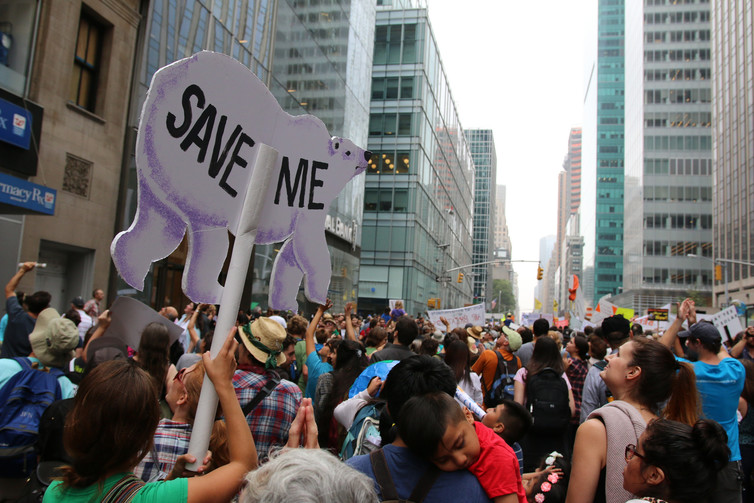
People’s Climate March, New York, New York, Sept. 21, 2014. CIFOR/Flickr, CC BY-NC-ND

The power of positive messages

This question is not new. Professionals in many fields have to consider how to frame their messages to maximize their impact. For example, public health agencies can make positive recommendations that emphasize benefits of being disease-free, or use negative messages that focus on the consequences of disease. A 2008 meta-analysis of 60 health communication studies concluded that messages focused on loss were less likely to be effective than positive messages.

Another study examined ads designed to persuade income support recipients to report their incomes. It concluded that messages focused on fear, shame or guilt could generate emotional backlash, in which people rationalized decisions to protect themselves from feeling ashamed of their behavior. This approach also caused emotional saturation that led people to “switch off” from the message because of its negativity.

Environmental advocates also confront this challenge. Much discussion has centered on the issue of climate change, where a number of scholars and advocates assert that doom-and-gloom messaging has not been effective. Yet until recently, we have not asked the same question about how we frame nature conservation.

Lost and found species

Today a growing number of scholars and activists are working to create a positive vision for protecting wildlife and wild places. One key effort started in 2014 with the launch of a marine conservation movement called Ocean Optimism, which works to “create a new narrative of hope for our oceans,” and by doing so, to help move towards “a sustainable future for our seas.”

In April 2017 the Earth Optimism Summit, organized by the Smithsonian Institution, brought together environmentalists, scientists, industry and the media to shift the global conservation movements focus away from problems and toward solutions. What started as a single event in Washington, D.C. soon turned into a truly global movement, with about 30 sister events in countries including Colombia, New Zealand and Hong Kong.

Lost & Found – Author provided

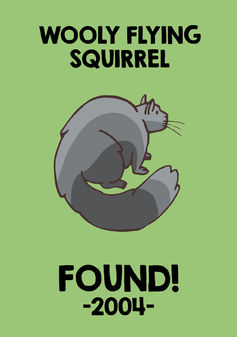
This effort has kick-started a range of initiatives that are all about communicating conservation bright spots to as many people as possible. One, which I co-founded, is the Lost & Found project, sponsored by the Society for Conservation Biology and the British Ecological Society. This online storytelling initiative focuses on a particularly inspiring kind of good news: rediscovering species that once were thought to be long extinct. After all, what can be more rousing than recovering something unique that you thought was lost forever?

Every year numerous species thought to have disappeared are rediscovered. Over the past century more than 300 species have been rediscovered, mostly in the tropics. On average, these species were missing for about 60 years before being rediscovered. Most rediscovered species have restricted ranges and small populations, which means they are usually highly threatened.

Lost & Found – Author provided

Our goal is not only to tell good stories, but also to showcase the dedication and determination of adventurers who lead these improbable quests and rewrite the history of species they care deeply about. While not every reader may be interested in a red-crested tree rat or a golden-fronted bower bird, all humans are curious about other people.

Lost & Found is making content available in various formats, including text, comics and soon, video animations. This helps make the stories more accessible to people who are not instinctively inclined to read about nature. Currently we have 13 stories freely available online that feature diverse species, from squirrels and toads to bats and birds. They cover a wide geographic range, from Latin America and Oceania to North America and Southeast Asia.

The response has been tremendously positive. More than 1,000 people from over 50 countries visited the website in its first 10 days. Some of our more popular stories, such as the Bulmer’s Fruit Bat and the Cave Splayfoot Salamander, are animals that would commonly not be considered particularly charismatic.

Getting these inspirational rediscoveries into the hands of as many people as possible is a first step toward creating a more positive vision for Earth’s future. The timeless principles of storytelling seem like the right place to start. After all, who doesn’t love a happy ending?

ooOOoo

Did you note the name of that website!!

Lost & Found. Go visit it and enjoy these wonderful happy endings!


Still in the month of May!

Figurative and literal cracks!

My rather cryptic sub-heading will make sense very soon.

Just ten days ago I published a post The Month of May. It explained why May had always been a special month in my life and then went on to introduce an article published by The Smithsonian Using a New Roadmap to Democratize Climate Change.

That article featured the former president of Iceland, Olafur Grimsson, and how he was encouraging new solutions to climate change. Primarily via a new organisation called RoadMap. (Did you sign up??)

There is change in the air. People are starting to make a better future. Cities across the USA (and elsewhere undoubtedly) are pledging to go 100 percent renewable. Here’s what Grist published on May 4th.

ooOOoo

Cities all over the U.S. are pledging to go 100 percent renewable.

Atlanta, Georgia (Shutterstock)

On Monday, Atlanta lawmakers voted unanimously to power the city entirely with clean energy sources by 2035.

Atlanta is the 27th city to make the pledge, according to the Sierra Club. These kinds of municipal promises have been popping up nationwide over the past few months. Here’s a recap:

“We know that moving to clean energy will create good jobs, clean up our air and water, and lower our residents’ utility bills,” said Kwanza Hall, an Atlanta City Council member and mayoral candidate, in a statement. “We have to set an ambitious goal or we’re never going to get there.”

A round of applause for local climate progress!

ooOOoo

Lovely to see the city of Portland on that list.

Keep it coming. For we need to see cracks of change; cracks of hope.

Cracks to counter literal cracks.

ooOOoo

The crack that’s redrawing the world’s map.

(From the BBC Culture Newsletter 5th May.)

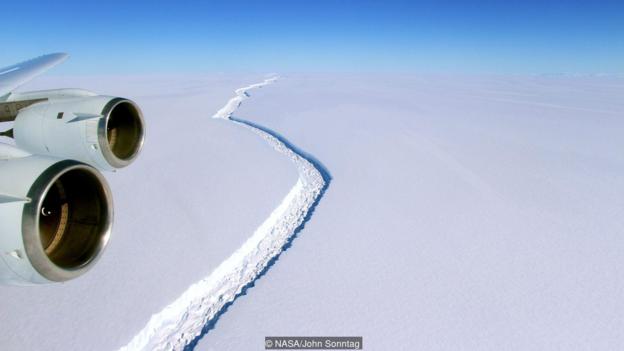
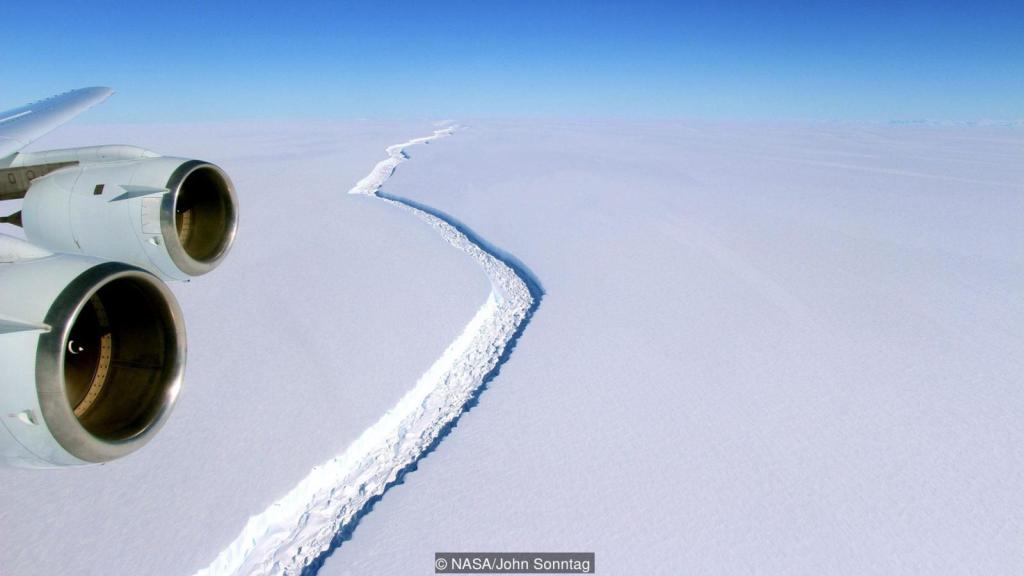
The shape of the world is hanging by a thread – or rather, according to experts, by a 110 mile-long (177km) rift. That’s the extent of a rapidly expanding crack in an enormous ice shelf in Antarctica. When the Larsen C shelf finally splits, the largest iceberg ever recorded (bigger than the US state of Rhode Island and a third the size of Wales) will snap off into the ocean. Widening each day by 3 ft (1 m), the groaning cleft is on the verge of dramatically redrawing the southern-most cartography of our planet and is likely to lead, climatologists predict, to an acceleration in the rise of sea levels globally.

 An aerial photo of the frigid fissure, taken late last year when it was discovered that the pace of the icy tear was quickening, was suddenly back in the news this week with the announcement that a second rift in the shelf had been detected. The fracture leads our eye along a zig-zagging path – from the backward gaze of the plane’s right engines to the pristine polar blue of the horizon in the distance. The jaggedness of the cleft, which takes our vision on a journey whose ultimate destination is unfathomable, seems at once monumental and terrifyingly fragile. The photo intensifies our helplessness in the face of cataclysmic change. It freezes the potential destruction in the blink of a camera’s shutter, while at the same time hinting at a catastrophe that we can witness unfolding but are utterly powerless to stop.

A second rift was recently discovered in the Larsen C ice shelf on the Antarctic peninsula (Credit: NASA/John Sonntag)

As a visual statement, the aerial photo of the Larsen C crack is, by definition, incomparable; never before has the world marked the glacial advance of such a sublime and fearsome fracture in its very fabric. Yet the reemergence of the image in the news anticipates the ten-year anniversary of one of the most intriguing and innovative large-scale works in contemporary art – a work whose power relies for its thought-provoking effect on the peculiar poetry of ruinous rifts. In October 2007, the Colombian-born artist Doris Salcedo unveiled in London an ambitious installation in the cavernous space of Tate Modern’s Turbine Hall – a piece that split reaction down the middle.

Inviting gallery-goers into the otherwise empty and austere interior of the former Bankside Power Station, Salcedo subverted expectations. Rather than offering visitors a hall of temporarily installed sculptures, she orchestrated the contemplation instead of a ragged subterranean breach that appeared to rip open the concrete floor of the structure – a crevice that extended from one end of the yawning space to the other.

For the Colombian artist Doris Salcedo’s 2007 work, Shibboleth, a giant crack was made in the concrete floor of Tate Modern’s Turbine Hall (Credit: Alamy)

Salcedo deepened the mystery of her bold and experimental conceptual work by giving to it the curious title Shibboleth – a biblical word which, when mispronounced, was said to have exposed the outsider status of individuals. Complicating matters still further, the artist insisted that her work was a comment not on the folly of material ambitions, but on racism – that deep cultural scar that tears at the foundations of humanity. Placed side-by-side, this week’s photo from Antarctica and the image captured a decade ago of Doris Salcedo’s challenging Shibboleth share both a brutal beauty and a common theme: the brittleness of being.

If you would like to comment on this story or anything else you have seen on BBC Culture, head over to our Facebook page or message us on Twitter.

And if you liked this story, sign up for the weekly bbc.com features newsletter, called “If You Only Read 6 Things This Week”. A handpicked selection of stories from BBC Future, Earth, Culture, Capital and Travel, delivered to your inbox every Friday.

ooOOoo

“the brittleness of being.”

Please, all of us, let’s make a positive difference so that we can soften the edges of that brittleness.

Dog & Cat Food Recall

This was issued a little over two hours ago!

It concerns possible contamination of food with Salmonella so please read and share as widely as you can.

ooOOoo

Smallbatch Dog and Cat Food Recall of May 2017

May 5, 2017 — Smallbatch Pets Inc. of Portland, OR, is voluntarily recalling two lots of its Smallbatch frozen chicken blend for dogs and cats due to the potential to be contaminated with Salmonella.

About Salmonella

Salmonella can affect animals eating the products and there is risk to humans from handling contaminated pet products, especially if they have not thoroughly washed their hands after having contact with the products or any surfaces exposed to these products.

Symptoms of infection in people include nausea, vomiting, diarrhea or bloody diarrhea, abdominal cramping and fever.

Rarely, Salmonella can result in more serious ailments, including arterial infections, endocarditis, arthritis, muscle pain, eye irritation, and urinary tract symptoms.

Consumers exhibiting these signs after having contact with this product should contact their healthcare providers.

Pets with Salmonella infections may be lethargic and have diarrhea or bloody diarrhea, fever, and vomiting.

Some pets will have only decreased appetite, fever and abdominal pain.

Infected but otherwise healthy pets can be carriers and infect other animals or humans.

If your pet has consumed the recalled product and has these symptoms, please contact your veterinarian.

No pet or consumer illnesses from this product have been reported to date. However, because of their commitment to safety and quality, Smallbatch Pets is conducting a voluntary recall of this product.

Consumers should also follow the Simple Handling Tips published on the Smallbatch Pets package when disposing of the affected product.

What’s Recalled?

The affected lots of 2 pound bags of Smallbatch Chicken Blend were distributed to retail pet food stores in the following states:

  • California
  • Colorado
  • Oregon
  • Washington

Two hundred eighty-two cases of this product were sold between the dates of 2/1/17 and 5/5/17.

The affected products are sold frozen in 2 pound bags.

The products affected by this recall are identified with the following manufacturing codes and “Best By” dates, located on the back of the package.

  • Lot: D032
    UPC: 705105970974
    Best By: 2/1/2018
  • Lot: E058
    UPC: 705105970974
    Best By: 2/27/2018

    What Caused the Recall?

    The recall was initiated after routine testing by the Food and Drug Administration of a 2 pound bag of Smallbatch Chicken Blend that was collected at a distributor revealed the presence of Salmonella.

    This recall is being made with the knowledge of the U.S. Food and Drug Administration.

What to Do?

Consumers who have purchased the above lots of Smallbatch Chicken Blend are urged to stop feeding the product to their dogs or cats and to return product to place of purchase for a full refund.

Or dispose of them immediately.

Consumers with questions are asked to call the company at 888-507-2712, Monday through Friday, 9:00 AM to 4:00 PM PST.

Or via email at info@smallbatchpets.com.

U.S. citizens can report complaints about FDA-regulated pet food products by calling the consumer complaint coordinator in your area.

Or go to http://www.fda.gov/petfoodcomplaints.

Canadians can report any health or safety incidents related to the use of this product by filling out the Consumer Product Incident Report Form.

Get Dog Food Recall Alerts by Email

Get free dog food recall alerts sent to you by email. Subscribe to The Dog Food Advisor’s emergency recall notification system.

ooOOoo

Once again, good people, read and share.

The aesthetic beauty of mathematics!

Sorry! Did you say the beauty of mathematics?

Those of you that read this blog fairly regularly know that from time to time I drift away from all things dog and potter in the garden of simply fascinating ideas.

Such is the case today.

It is an article on mathematics that was sent to me by Jim Goodbrod. He had read it in The New York Times in April.

Read it and see if you, too, find it as fascinating as I did!

ooOOoo

The World’s Most Beautiful Mathematical Equation

The Month of May!

For all my life this has felt like a very special month.

And, dear friends, at the risk of repeating myself to many of you, this is why the month of May is special for me.

Simply that I was born in London during the closing months of the Second World War. Inevitably, I was unaware of the number of German bombs that were falling on London during those last few months. But there were thousands.

On May 8th. 1945, the day that WWII ended and six months to the day from when I was born, my mother looked down at me and said aloud to me: “You are going to live”. Despite the fact that I don’t recall my mother saying that, it was verified many times later when I was growing up.

Now here we are approaching May 8th. 2017 and in a very real sense it seems that we are in another war.

A war of consequence.

A war that we have been engaged in for many, many years.

A war where we are inadvertently fighting on a global battlefield.

A war where 99.99% of us don’t consciously identify the weapons we are using. Weapons that are incredibly effective. So much so that we are in sight of winning the last battle; winning the war.

Yet a war where winning is no win at all. Indeed, where winning this war, this global war, spells the end. The end of life for 99.99% of us humans (and much else besides).

Now what on earth has got me so fired up?

Two things have:

The first is that I am living in my 73rd year of life. I have no idea of when my life comes to an end. But that death is a guarantee. Indeed, if one takes note of the average life expectancy of a male today in the USA (75.6 years) , it may not be that far away.

The second thing is that before my death I truly want to know that humankind has laid down its weapons of war against our planet and that there really is an unstoppable mission, a united wave of passion, to live in peace on this planet. Perhaps better put to live in peace with this planet.

Or in the words of an organization that I now want to introduce:

A mission which will require the hard work and dedication of each and every one of us as we do everything in our power as individuals, but also as we galvanize businesses, entrepreneurs, innovators, city planners, communities, people and politicians—all those who share our purpose.

OK! Thank you if you are still reading this! (Someone give Fred in that soft arm-chair over there a nudge; I can hear his snores from here!)

In the last Smithsonian electronic newsletter that I was reading yesterday morning there was a reference to an organization that I hadn’t previously come across. Here is the link to that item on The Smithsonian website. I am republishing it in full in this place. As you read it you will understand why I am republishing it.

ooOOoo

Using a New Roadmap to Democratize Climate Change

A new tool aims to bypass governments and put the power of climate action in the people’s hands

By Anne Glusker    Smithsonian.com     April 28, 2017

Olafur Grimsson, who was president of Iceland from 1996 to 2016 and saw his country through the worst economic crisis in its history, making headlines all over the world as banks collapsed and the country fell into a depression, is the very picture of an urbane statesman. Collected and poised, with a striking full head of white hair, as comfortable in English as in his native Icelandic, he seems an unlikely revolutionary, not the sort of person you’d look at and immediately find yourself thinking: “Power to the People.”

 But Grimsson is one of the primary architects of a quietly radical new idea whose aim is to facilitate action on climate change without any of the usual suspects—governments, countries, international bodies, negotiating parties.

He and several other veterans of the historic 2015 Paris Agreement on climate change were in Washington, D.C., last year, just before COP22, the climate meeting held in Marrakesh in 2016. They were pondering next steps when the conversation took a new and interesting turn, Grimsson says, addressing the question: “Was it possible to have the success of Paris without governments necessarily being in the leading role?”

The group included movers and shakers such as Peter Seligmann, the chairman of Conservation International; Laurene Powell Jobs, president of the philanthropic organization the Emerson Collective; and Andy Karsner, an assistant energy secretary during the administration of George W. Bush. Galvanized by their own query, they decided to try to answer it—to set about creating a new tool to aid in achieving the goals of the Paris accord.

At the Smithsonian’s Earth Optimism Summit, a gathering this past weekend of conservation-minded citizens, scientists and activists, Grimsson explained: “You get governments that are opposed or even hostile to climate action. We decided to bring together in Marrakesh a gathering of thinkers and scientists and innovators and policymakers from different countries in order to discuss a new model of securing the success of the future of the climate movement.”

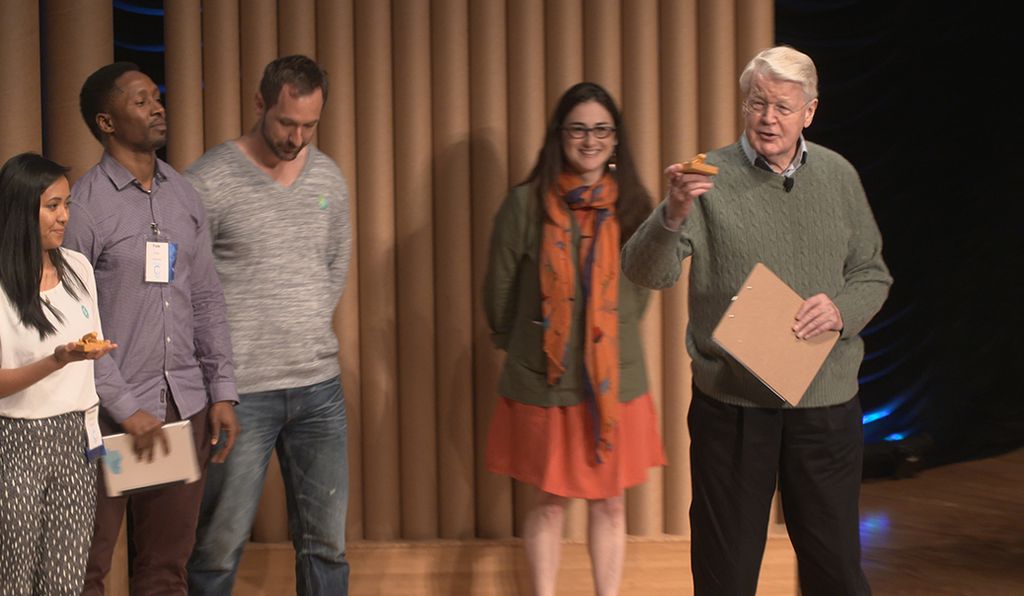
At the Smithsonian’s Earth Optimism Summit, the former president of Iceland Olafur Grimsson encouraged new solutions to climate change, awarding cash prizes to the winners of the “Make for the Planet” challenge. (The Roadmap)

Grimsson’s group felt that due to changes in information technology and social transformations, the large organizations and structures that used to be necessary to effect change were now not needed. And thus was born Roadmap, a new crowdsourcing tool for anyone and everyone interested in climate action. Still in its very early stages, Roadmap’s founders envision it as a platform for those working on climate issues—from scientist and policymaker to farmer and fisherman—to facilitate the sharing of knowledge and ideas, methods and techniques.

“A new political model is possible—where everyone can be a doer, where you no longer need big government or big enterprises to bring about success,” Grimsson says.

This new model for social change that skips the usual cumbersome channels and processes has been seen everywhere from public health, where the Bill & Melinda Gates Foundation has redefined the sector, to the hospitality industry, which is working to combat the human trafficking that plagues its businesses, to perhaps most famously the Arab Spring, where the role of social media in bringing about political change is still being debated today.

And this new model is complemented by technological changes. “The innovation in energy technology is such that we no longer have to wait for the big energy breakthrough,” Grimsson says. “We already have the available technologies. Every individual, home, village, community, town and region can execute change. The good news from the climate point of view is that, in addition to the information technology revolution, there has now also taken place an energy revolution. A house can be a power station: If the people who live in that house have extra energy, they can sell their energy through the smart grid. The notion that every house can be a power station is as revolutionary as saying that every mobile phone can be a media company.”

Grimsson admits that it may seem odd for someone in his position to be advocating that ordinary citizens take action apart from the conventional corridors of governmental power.

“For me to say that these traditional political organizations and positions are somewhat outdated is perhaps a strange statement: I was a professor of political science, I’ve been a member of parliament, I’ve been a minister of finance, I was president for 20 years,” he says.

It was during Iceland’s financial meltdown that he first experienced this new kind of social change: “I saw this very strongly through the financial crisis in my own country, which led to a big social economic uprising. All those activities were engineered by unknown people, people who were not part of a big organization, who used Facebook and the information media to bring thousands of people together in one day.”

Right now, Roadmap consists of a website and a lofty manifesto that speaks of raising the value of “moral currency” and creating a “best practices warehouse.” Visitors to the site can fill out a form if they want to become part of its community of “doers.” The practical part of the manifesto speaks of identifying the best methodologies and models; implementing a “real-time system of measurement” and a way to “gauge and understand what is working, what is not, and exactly what is being achieved.” As the platform develops, it will be interesting to see exactly what form these gauges, measurement systems, and warehouses take.

After the Paris Agreement, Grimsson says of himself and his Roadmap co-founders, “We were all optimistic, but we are all also realists.” It is his belief that if you “give people the tools, they can execute the transformation and the change—without governmental leadership.” Perhaps Roadmap will be one of those tools.

 ooOOoo

Here’s a video that spells it out in ways that I find impossible to ignore. (And, yes, I signed up, as in joining, yesterday afternoon.)

Because in hundreds of years time I want others to look at the following picture of Troutbeck Valley in England and know how precious is this one and only planet we live on.

Or in the words of Sue Dreamwalker that I read yesterday evening:

We are witnessing more storms, more unseasonal weather patterns, and I just hope that we wake up soon to the damage we are doing to our beloved Mother that has held us in her eternal arms for so long..

Photo credit: Getty Images

Enjoy the month of May wherever you are in the world!

Closing by repeating a key pronouncement in that RoadMap video above:

Why We? Who Else!

Talking to one’s dog!

Are you a dog owner? Then here’s something else that you gain from your wonderful friend.

I was rather short on time yesterday so apologies for cutting my introduction to a minimum. But you will still love this item that appeared on the Care2 site three days ago.

ooOOoo

People Who Talk to Their Pets Are Actually Quite Intelligent

If you’ve ever owned a pet, you’ve probably talked to it at one point or another. And even though you may have been fully aware that your pet couldn’t talk back or even really comprehend what you were saying, you still did it anyway.

Why do we do this? Why do we talk to our pets like human friends when we know their little minds just aren’t built to think or feel the same way we do?

When we talk to our pets, we subconsciously create a human-like bond in our own minds with non-human creatures. We’re built for connection — and we feel more connected to things when we recognize that they’re just like us.

Talking to animals (and even to inanimate objects, such as house plants) is called anthropomorphism. We usually call it “cute” when kids do it, but when adults do it, we tend to view it as a little weird and immature.

According to behavioral science professor at the University of Chicago and anthropomorphism expert Nicholas Epley, talking to animals and objects is actually a sign of intelligent social cognition. Humans are very social creatures, so our brains are wired to see faces and perceive minds everywhere.

Epley explains that we anthropomorphize the things that we love as opposed to the things that we hate. The more we like something, the more likely we are to want to engage with its mind — even if it doesn’t actually have a mind.

In a 2011 study where a group of participants were shown photos of baby animals and adult animals, most admitted to liking the baby animals better and were more likely to anthropomorphize them. If the participants could own one of the baby animals, they said that they would name it, talk to it and refer to it by its appropriate gender pronoun.

The most common way we anthropomorphize animals and objects is by giving them names, but it can apply to character traits, too. For example, a person may describe their cat as “sassy” or their car as a “rickety old man.” These human-like character traits given to non-human things reflect our relationship with them and perhaps even symbolize extensions of ourselves.

Anthropomorphizing only benefits us when inanimate objects are involved, but when it comes to anthropomorphizing domesticated animals like dogs and cats, both ourselves and our pets can benefit. Since these animals evolved over thousands of years to become human companions, they are biologically designed to bond with us.

Studies have shown that when we talk to dogs, they can distinguish between the meaning of the words and the emotional cues we give them. Cats may not be as responsive to human language as dogs are, but they do have the ability to recognize their owners’ voices and they also have 16 different types of vocalizations they use to communicate.

So you can let go of the widely held belief that talking to your pet, your houseplants, your car or anything else is childish or even a little bit crazy. From a scientific viewpoint, it turns out that quite the opposite is true.

ooOOoo

Let me close by reminding all you good people of yet another wonderful aspect of the relationship between humans and dogs. In that we all know the dog evolved from the grey wolf. But had you pondered on the fact that wolves don’t bark! Yes, they howl but they do not bark.

There is good science to underpin the reason why dogs evolved barking; to have a means of communicating with us humans.

Every person who has a dog in their life will instinctively understand the meaning of most, if not all, of the barks their dog utters.

Dogs are saving our lives!

Literally, not just emotionally!

Over on my website, under My Writings, I mention my recently published booklet, The Amazing World of Dogs.

Here’s an extract from pages 17-18 of that booklet.

Finally, Dr. Morten Kringelbach of the Department of Psychiatry at Oxford University1 explains that the need to nurture is very deep in us humans and that dogs produce an instinctive parental response in us that is very similar to our nurturing instinct for our children.

If the magic of having dogs in our lives for such a long time ended there it would still be breathtakingly wonderful. But dogs could now be offering us humans the capacity to understand many human diseases. Literally, our dogs could be saving our lives!

The challenge in understanding human diseases is that within our ‘breed’ there is a great variability of genes. Not surprising when one considers the incredible diversity and variation within us humans.

But when we turn to dogs then we have a bonus. For despite there being, as mentioned earlier, 400 or more different breeds of dog, within each breed dogs are very similar to each other. In other words, that narrow gene pool within a specific dog breed makes if far easier to pinpoint genetic mutations than it is in humans.

Elinor Karlsson is the director of the Vertebrate Genomics Group at the Broad Institute of MIT and Harvard.2 As a geneticist, Dr. Karlsson has identified, “hundreds of diseases common to dogs and humans”. In 2005, the dog’s genome was fully mapped; all 2.4 billion letters of the dog’s genome

Among those common diseases between us humans and our wonderful dogs are diabetes, cardiac diseases, epilepsy, many cancers especially bone cancers, and breast cancer and even brain tumours.

So it was an obvious thing to do to republish the following article that appeared on the Care2 site a few days ago.

ooOOoo

 Could a Dog Vaccine Help Save Kids With Brain Cancer?

By: Laura Goldman April 17, 2017

About Laura Follow Laura at @lauragoldman

The statistics are grim: About 60 to 70 percent of children who have glioblastoma, a form of brain cancer, do not survive more than two years. This fast-growing cancer is resistant to traditional treatments like radiation and chemotherapy.

For dogs, cancer statistics are also grim. More than 6 million dogs are diagnosed with cancer every year, and one out of four dogs will get cancer during their lifetime. It’s the leading cause of death for dogs after the age of two.

But there could be hope for both dogs and kids. A vaccine being developed that destroys cancer cells in dogs could also be successful in fighting glioblastoma in children.

Researchers at Children’s Mercy Hospital in Kansas City, Mo., have started a partnership with ELIAS Animal Health, a company that’s testing treatments for osteosarcoma (bone cancer) and B cell lymphoma in dogs.

“If we take advantage of the resources we have in this region and get behind those collaborations, this could be a mecca for advanced, exciting, innovative therapies for cancer and lots of other diseases,” Dr. Doug Myers, an oncologist at Children’s Mercy, told the Kansas City Star.

ELIAS Cancer Immunotherapy (ECI) uses the dog’s own immune system to destroy the cancer. “Research has shown that ex vivo activated T cells have the machinery to effectively kill cancer cells, including cancer stem cells,” according to the company’s website. “ELIAS Cancer Immunotherapy utilizes adoptive cell therapy to deliver an army of activated T cells.”

The dog is vaccinated with his own cancer cells to produce an immune response, then the generated white blood cells destroy the cancer cells.

“Personalized T cells are then safely obtained from the patient through apheresis [the removal of blood] and then ‘super charged’ to produce a large population of killer T cells that are reinfused into the patient to kill the cancer,” the company explains.

ELIAS Animal Health is currently conducting clinical trials of ECI at Kansas State University, the University of Missouri-Columbia and a few animal hospitals across the country. The success rates of using ECI along with surgery on dogs with cancer are being compared with those of patients that are treated with surgery alone.

“Early clinical study results already show positive outcomes,” Tammie Wahaus, CEO of ELIAS Animal Health, said in November 2016.

Among the ECI success stories is that of Dakota, a German shorthaired pointer who continues to survive a year after she was diagnosed with osteosarcoma. This is twice as long as her original prognosis. X-rays taken during a follow-up examination showed no signs of the cancer spreading.

Could ECI also successfully treat children with glioblastoma? Dr. Kevin Ginn, a pediatric oncologist at Children’s Mercy, and other researchers are currently developing protocols for trials. They’re planning to apply for a Phase II clinical trial with the U.S. Food and Drug Administration, using the results of ECI’s studies on safety and effectiveness as far as dogs are concerned. The Phase II trial would give ECI to a large group of children to see if it’s effective and further evaluate its safety.

Animal health trials are regulated by the U.S. Department of Agriculture. They are less expensive and proceed faster than FDA-regulated human trials, the Kansas City Star reports, “but successful human health treatments often bring a larger return on investment.”

In this case, a larger return on investment could be a win-win for children as well as dogs with cancer.

Photo credit: cgordon8527

ooOOoo

My booklet closes thus:

Many would extend that proficiency of dogs to include their sense of loyalty and forgiveness, to and of us humans, but that all pales into insignificance when compared to what our understanding of dogs is giving us.

No less than the capacity to help cure many of our diseases, to deeply understand the workings of the human mind, and above all else, to offer insight into our very existence.

That’s quite a relationship!

Quite a relationship indeed!