Such a shame that British electioneering couldn’t be honest.
Well, the British General Election Campaign meanders along towards the final week before we are put out of our misery on May 6th.
Sadly, the main topic of interest has been the success of Nick Clegg in the Leaders’ TV debates. The new young face on
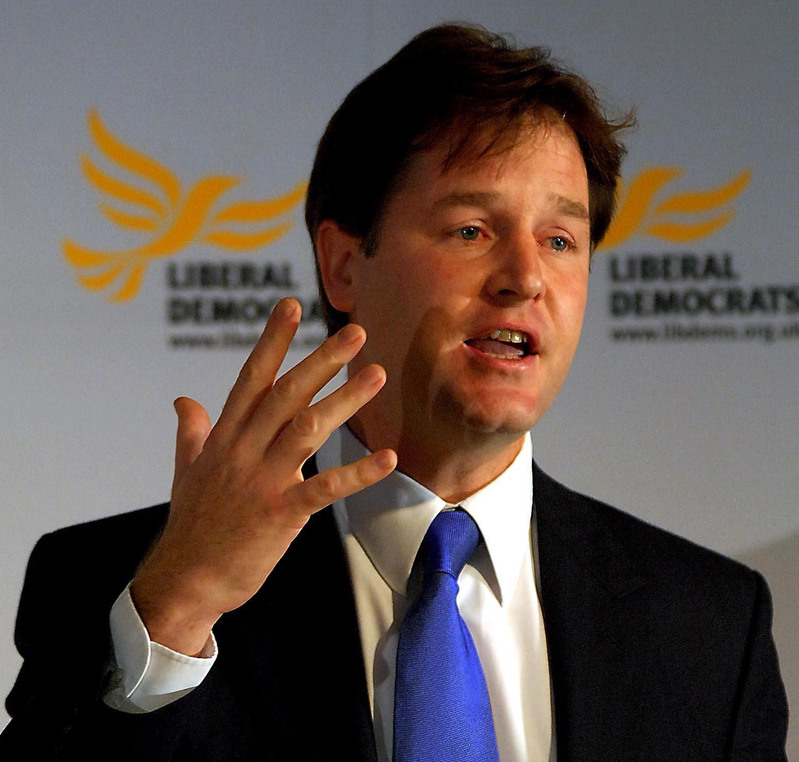
the block has proved once and for all the huge power of television. Not one single Lib-Dem policy or personnel changed during the debate, yet the mere appearance on the telly of a new, personable kid on the block has rocketed his party up the ratings.
Well, not exactly rocket science, but sobering all the same. However, more importantly, most policy discussion seems mired in a series of scare-mongering ploys along the lines of, “Don’t vote for that lot or this terrible thing will happen.”
Yes, perhaps this is the stuff of all elections, but this one should have been a bit different since
A) it comes after a long period of power held by the Labour Party and whichever way it goes will mark a historic change and,
B) the stakes are so high as Britain hovers on the edge of joining the economically-challenged PIIGS [Portugal, Italy, Ireland, Greece, Spain, Ed.] of Europe.
We desperately need a government that can take us safely away from that particular event horizon, but to choose one rationally, we need the “truth” about what really needs to be done to reduce debt.
But sadly, we seem infected by the Greek syndrome, an ability to see the bleedin’ obvious, which is that nobody can live beyond their means for ever, much as they might like to.
So, we’re having to look for “the truth” further afield, to the Institute for Fiscal Studies (IFS), for example. According to them, the cuts in public costs will have to be as deep as any made since World War II. (Oh, and thank you to Labour and the banks for jointly getting us into this sorry mess.)
Here’s a brief quote from that BBC link:
The UK faces the deepest spending cuts since the late 1970s if the three main parties are to meet their budget commitments, new analysis suggests.
The years between 2011 and 2015 must see the largest cuts since 1976-80, according to a report from the Institute for Fiscal Studies (IFS).
Here’s Stephanie Flanders, the BBC’s Economics Editor writing in her blog:
They may disagree in public, but privately they couldn’t agree more. On the single most important issue facing the country after this election, our politicians think it’s better to keep us in the dark.
WHERE is the party explaining this clearly and unambiguously to the people? In other words, TELLING THE TRUTH?
I don’t see it. Neither of the big, old dinosaur parties are being straight with us. The Tories are proposing to spend even MORE on the NHS, (National Health Service) that sacred cow that nobody dare speak any ill of, while Labour seem to be promising to spend more on just about everything despite our £163 billion borrowing this year.
Why is this? It can – I submit – only be because they don’t think the public will understand and accept “the truth”.
If party A tells the truth and admits the cuts in public services will be deep and involve some pain and party B LIES and says it will “preserve frontline services” (the Labour line) then they (Party A) fears the public will not buy their version and opt for whoever promises them a fantasy instead, or in other words a gradual recovery without too much pain and in particular for themselves.
So, there is deep cynicism and an extreme economy with the truth from all parties who fear a voter backlash if they tell it. This is rather a sad reflection on the Labour Party’s proud boast of “education, education, education” of 1997.
Apparently, the British public is so stupid that they can’t be trusted to believe the truth when they get it. Of course, this could possibly be because they are so UNUSED to getting it and moreover because this policy of spinning smoke and mirrors worked so well in previous Labour victories.

By Chris Snuggs




 Learning from Dogs