Published on Nov 6, 2015
Another try at a slow motion video of Abbey shaking the water off after a bath
Published on Apr 24, 2014
Stunning, Perfection, Breathtaking – just a few words that describe this 3 minute surfing clip that shows Ian Walsh catching huge waves and making it look effortless.
Well over two million viewings.
Music: Versailles
Warner // Chappell Production Music
Published on Oct 22, 2014
This is a clip from our movie “THE SECRET LIFE OF TREES”.
More on www.homan.pl
Finally, back to slow animal shakes! (And I must acknowledge Mother Nature News for the idea for today’s picture parade.)
Published on Mar 21, 2013
Why do wet furry mammals shake? Si and Sam give some of their favourite animals a shower to uncover the science behind the ‘wet dog shake’. Sam caught up with Andrew Dickerson from Georgia Institute of Technology to find out more about the science… we’ll have the full interview for you soon.
Yesterday, I wrote a post under the title of You couldn’t make it up! It featured a recent essay Pregnant Silence from George Monbiot about the consequences and implications of the widespread consumption of meat and dairy products.
Now look at this example of what nature does make up.
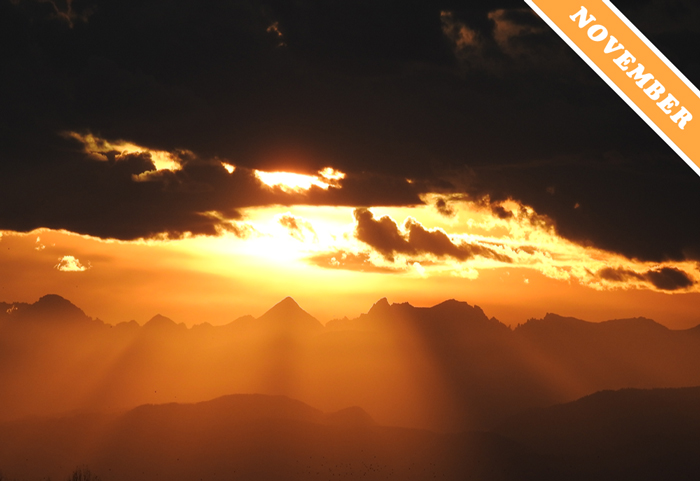
A Sunset with Searchlights
You know those glorious fingers of sunlight that sometimes burst out from behind clouds? They’re called ‘crepuscular rays’, they form when light and shadow are rendered visible by haze in the atmosphere and these photographed by Alli Bush over Fort Collins, Colorado, US, are the Cloud of the Month for November.
The haze giving rise to crepuscular rays can be due to the air being filled with fine particles such as sand, dust or pollen. Or it can result from a delicate mist of water droplets – plentiful enough to scatter the sunlight but too scarce to show up as a cloud. The scattering is the important bit. Since we only see light that shines directly into our eyes, rays of sunlight shining in other directions are not visible unless they encounter something that scatters light towards us. Think of shining a torch beam on a clear night. The light only appears where it strikes a surface such as the ground. But on a foggy night, the full torch beam shows up because some light is also scattered towards us by the droplets of fog in the air it passes through. This is why a hazy sky renders rays of sunlight visible.
The other requisite for crepuscular rays besides haze is something to cast the shadows. Most commonly it is a cloud blocking the sunlight that creates the regions of light and shadow we see in the sky. But the crepuscular rays in Alli’s photograph are cast not by clouds but by the peaks of the Rocky Mountains. The rays fan outwards because they are coming towards the camera. In fact, the Sun’s rays are actually pretty much parallel by the time they reach Earth. They only appear to spread out like this because of the effect of perspective. It is just like looking down the length of train tracks. Even though they are parallel, they appear to spread outwards the nearer they are. Only when the sun is high in the sky so that its rays are pointing more directly downwards do crespuscular rays look parallel.
The photograph comes from the website of The Cloud Appreciation Society of which I am a lowly member. Thus it was that in my in-box yesterday was their latest newsletter. In that newsletter there was the following stunning film, described thus:
This month, we were sent an amazing film of storms over Arizona, US. It was made by Davo Laninga, Cloud Appreciation Society Member No 1,095. You can learn a lot about how storms develop by watching time-lapse videos. Well done, Davo, for this stunning example, showing the monumental power that drives our atmosphere.
Do drop in to Dave’s website and admire his incredible photographs and videos.
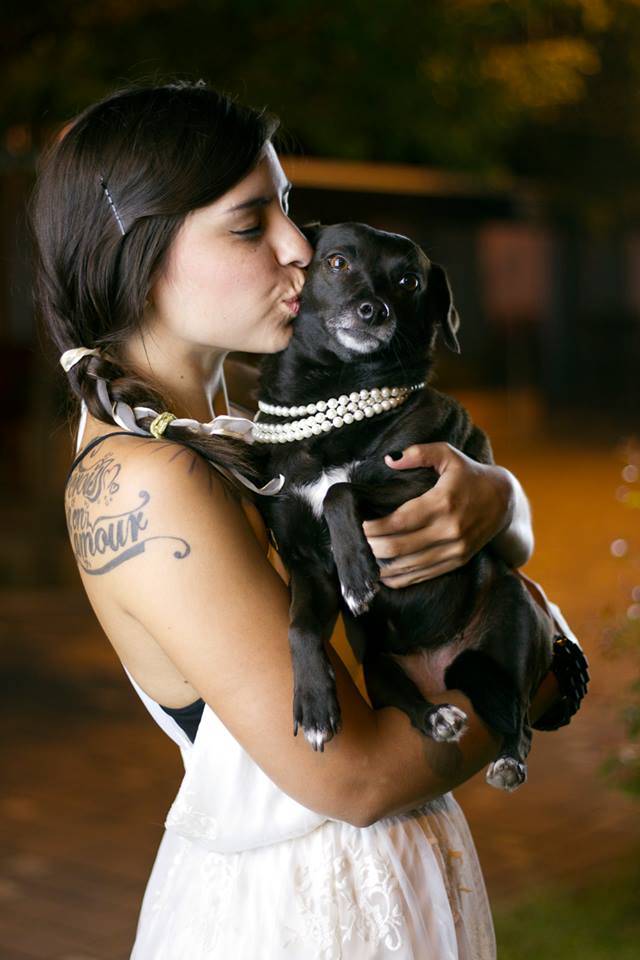
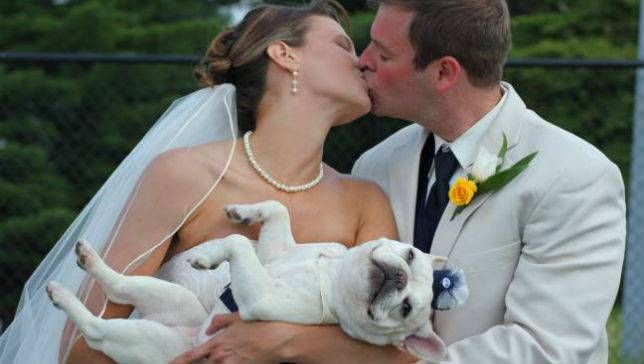
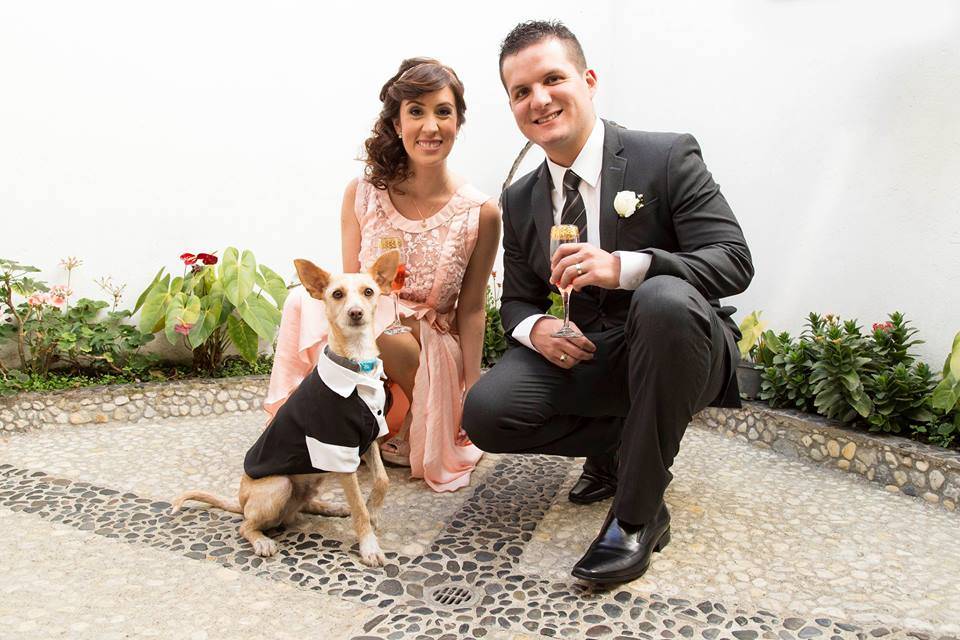
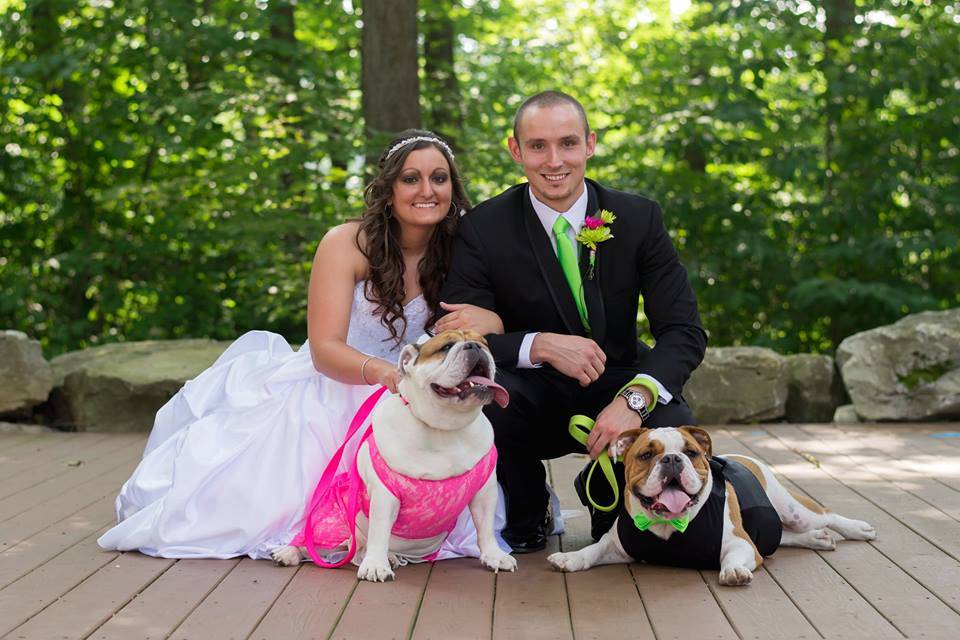
When putting together yesterday’s post, based heavily on a recent article over on Mother Nature Network, I couldn’t help noticing a link on that MNN item to this: 13 photos of dogs that got invited to the wedding. Wanted to share some of the photographs with you for today’s picture parade.
Final picture for today is the one of Jean and me at our anniversary lunch taken at The Twisted Cork in Grants Pass on Friday. Not quite newly-weds but still not that long ago!
Those that read my post from yesterday will understand that it was both a busy and wonderful day. Topped off beautifully by arriving home to find four proof copies of The Book!
Four copies of The Book rather hastily assembled under my desk light.
So it was well after 5pm yesterday when I sat down to publish today’s post.
It seemed very appropriate to offer a recent item that appeared on Mother Nature Network and is republished here within MNN’s terms.
(Please note that I didn’t have the time to copy and insert the many interesting links in the original but have coloured the words or phrases to indicate that by going here you can access those links.)
ooOOoo
The science behind how dogs play
When dogs bow or let another dog ‘win’ the wrestling match, there’s a good reason.
By: Laura Moss, October 29, 2015.
If a dog plays too rough, other dogs may exclude him from play. (Photo: Brad Armentor/flickr)
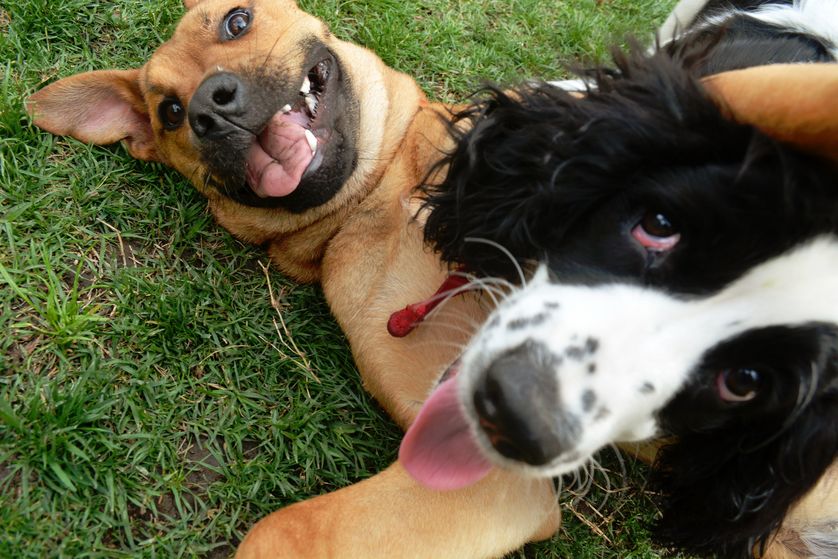
Dogs play by chasing, tackling and nipping at each other, but there’s more to their lively antics than meets the eye. The way dogs interact with one another reveals that dogs have a language as well as a moral code, and they don’t engage in play simply to establish dominance.
Marc Bekoff, professor emeritus at the University of Colorado at Boulder, has been studying animal behavior for more than 40 years. After reviewing four years’ worth of footage of dogs, wolves and coyotes, he discovered that even dogs’ wild relatives play by chasing each other, rolling over and jumping on one another.
“Play is a major expenditure of energy, and it can be dangerous,” Bekoff told The Washington Post. “You can twist a shoulder or break a leg, and it can increase your chances of being preyed upon. So why do they do it? It has to feel good.”
Bekoff and other researchers have conducted numerous studies on how these animals play and what their actions mean. What they’ve found is that dogs’ behavior during play is a language all its own, and every shift of the eyes or wag of the tail is a form of communication.
Play even has a set of rules, and if a dog breaks them — by playing too rough, for example — that dog may be excluded from group play. Bekoff says this response suggests that dogs enforce moral conduct, which means they’re capable of experiencing a range of emotions and even of recognizing these emotions in other canines.
What exactly do their different play behaviors mean?
The bow is a signal for play to commence — but there’s more to it than that. (Photo: Mike McCune/flickr)
Play bow
When a dog lowers the front of its body in a bow-like stance, this is an invitation to play. If your dog often bows to other canines you meet while out on a walk, it’s a good indication that your pup would like a playmate.
However, this stance doesn’t only invite play. It also communicates to other dogs that the jump, nip or roughhousing that follows the bow isn’t an act of aggression. It’s simply a dog’s way of saying, “I’m just playing around.”
See my belly? That has meaning too. (Photo: Eric Sonstroem/flickr)
Rolling over
When a dog rolls over onto its back during play, it’s often considered a submissive gesture; however, research suggests it could mean something else entirely.
Earlier this year, scientists at the University of Lethbridge and the University of South Africa observed 33 play sessions between two dogs, and they also studied 20 YouTube videos of dogs playing together.
While not all the dogs rolled over during play, those that did weren’t necessarily the smaller or weaker of the two dogs, nor were the dogs that rolled over exhibiting submissive behaviors such as decreasing play.
In fact, smaller dogs were no more likely to roll over than larger ones, and the pups that did roll over used the position to evade a nip or to get into position to playfully bite the other dog.
The researchers found that none of the 248 rollovers were submissive during play and concluded that rolling over is actually meant to facilitate play.
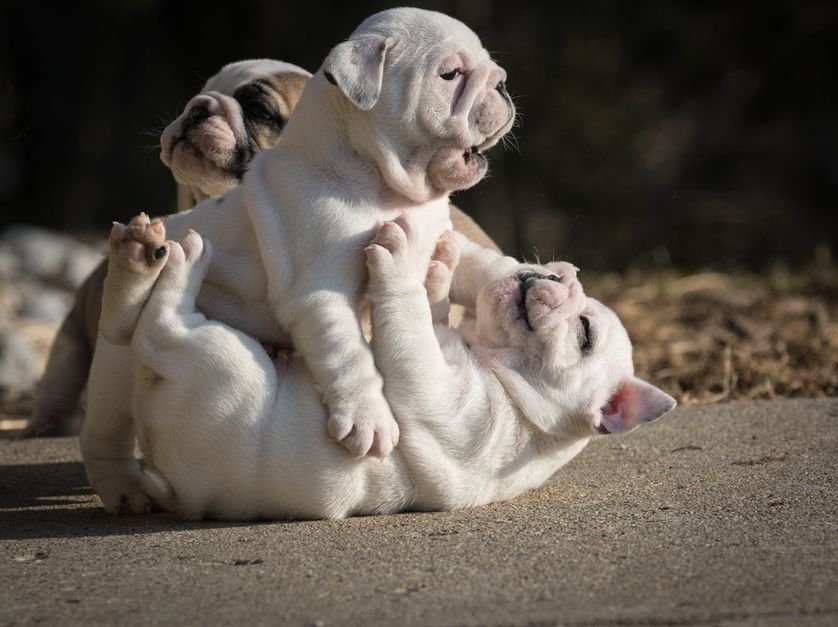
There’s a lot of communication going on here — though to human watchers it may simply induce giggles. (Photo: WilleeCole Photography/Shutterstock)
Letting female puppies win
A 2008 study found that male puppies frequently let their female puppy playmates win during play, even when the males were bigger and stronger.
The male dogs would even put themselves in positions that left them vulnerable to attack. For example, the male puppies would occasionally lick their playmates’ muzzles, which provided the female puppies with an opportunity to easily bite in return.
Why? Researchers say the act of playing may be more important to the male dogs than winning.
“Perhaps males use self-handicapping with females in order to learn more about them and to form close relationships with them — relationships that might later help males to secure future mating opportunities,” Camille Ward, lead author of the study, told NBC News.
ooOOoo
How lucky we are in this modern world to read and share such interesting essays.
Consequently, writing a blog post for today wasn’t high on my list of things to do.
So this is to offer my thanks to everyone who sent me greetings; it was wonderful to hear from so many friends, old and new.
Thus my post today is to share three items that came from family back in England.
First, my mother, who is still teaching piano and oboe at the age of 95, sent me this:
Secondly, my son, Alex, and his long-term partner, Lisa, sent me this in an card chosen from the Friends of the Earth selection:
(All dog owners know, I’m sure, that dogs must never eat chocolate.)
Lastly, my grandson, Morten, who despite being just five-years-old, is already a dab hand with an iPhone and sent me the following picture of himself with Dad in the background:
Finally, my love and gratitude to Jeannie for making me feel special yesterday, as she has done every day since we first met.



















 Learning from Dogs