Category: Photography

Playfulness in dogs!

A perfect follow-on to yesterday’s post.

Those that read my post from yesterday will understand that it was both a busy and wonderful day. Topped off beautifully by arriving home to find four proof copies of The Book!

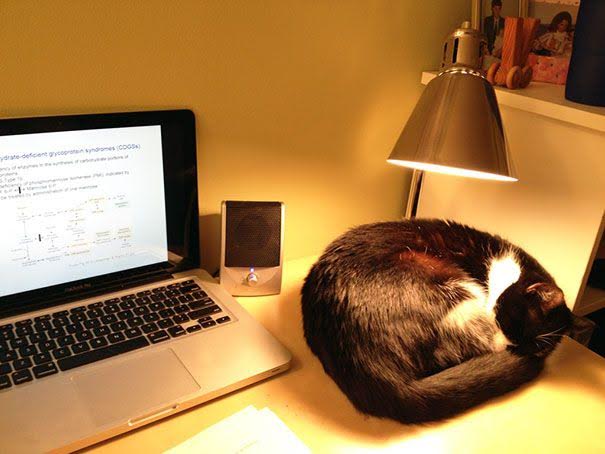
Four copies of The Book rather hastily assembled under my desk light.

So it was well after 5pm yesterday when I sat down to publish today’s post.

It seemed very appropriate to offer a recent item that appeared on Mother Nature Network and is republished here within MNN’s terms.

(Please note that I didn’t have the time to copy and insert the many interesting links in the original but have coloured the words or phrases to indicate that by going here you can access those links.)

ooOOoo

The science behind how dogs play

When dogs bow or let another dog ‘win’ the wrestling match, there’s a good reason.

By: Laura Moss, October 29, 2015.

If a dog plays too rough, other dogs may exclude him from play. (Photo: Brad Armentor/flickr)

Dogs play by chasing, tackling and nipping at each other, but there’s more to their lively antics than meets the eye. The way dogs interact with one another reveals that dogs have a language as well as a moral code, and they don’t engage in play simply to establish dominance.

Marc Bekoff, professor emeritus at the University of Colorado at Boulder, has been studying animal behavior for more than 40 years. After reviewing four years’ worth of footage of dogs, wolves and coyotes, he discovered that even dogs’ wild relatives play by chasing each other, rolling over and jumping on one another.

“Play is a major expenditure of energy, and it can be dangerous,” Bekoff told The Washington Post. “You can twist a shoulder or break a leg, and it can increase your chances of being preyed upon. So why do they do it? It has to feel good.”

Bekoff and other researchers have conducted numerous studies on how these animals play and what their actions mean. What they’ve found is that dogs’ behavior during play is a language all its own, and every shift of the eyes or wag of the tail is a form of communication.

Play even has a set of rules, and if a dog breaks them — by playing too rough, for example — that dog may be excluded from group play. Bekoff says this response suggests that dogs enforce moral conduct, which means they’re capable of experiencing a range of emotions and even of recognizing these emotions in other canines.

What exactly do their different play behaviors mean?

The bow is a signal for play to commence — but there's more to it than that. (Photo: Mike McCune/flickr)
The bow is a signal for play to commence — but there’s more to it than that. (Photo: Mike McCune/flickr)

Play bow

When a dog lowers the front of its body in a bow-like stance, this is an invitation to play. If your dog often bows to other canines you meet while out on a walk, it’s a good indication that your pup would like a playmate.

However, this stance doesn’t only invite play. It also communicates to other dogs that the jump, nip or roughhousing that follows the bow isn’t an act of aggression. It’s simply a dog’s way of saying, “I’m just playing around.”

See my belly? That has meaning too. (Photo: Eric Sonstroem/flickr)

Rolling over

When a dog rolls over onto its back during play, it’s often considered a submissive gesture; however, research suggests it could mean something else entirely.

Earlier this year, scientists at the University of Lethbridge and the University of South Africa observed 33 play sessions between two dogs, and they also studied 20 YouTube videos of dogs playing together.

While not all the dogs rolled over during play, those that did weren’t necessarily the smaller or weaker of the two dogs, nor were the dogs that rolled over exhibiting submissive behaviors such as decreasing play.

In fact, smaller dogs were no more likely to roll over than larger ones, and the pups that did roll over used the position to evade a nip or to get into position to playfully bite the other dog.

The researchers found that none of the 248 rollovers were submissive during play and concluded that rolling over is actually meant to facilitate play.

There's a lot of communication going on here — though to human watchers it may simply induce giggles. (Photo: WilleeCole Photography/Shutterstock)
There’s a lot of communication going on here — though to human watchers it may simply induce giggles. (Photo: WilleeCole Photography/Shutterstock)

Letting female puppies win

A 2008 study found that male puppies frequently let their female puppy playmates win during play, even when the males were bigger and stronger.

The male dogs would even put themselves in positions that left them vulnerable to attack. For example, the male puppies would occasionally lick their playmates’ muzzles, which provided the female puppies with an opportunity to easily bite in return.

Why? Researchers say the act of playing may be more important to the male dogs than winning.

“Perhaps males use self-handicapping with females in order to learn more about them and to form close relationships with them — relationships that might later help males to secure future mating opportunities,” Camille Ward, lead author of the study, told NBC News.

ooOOoo

How lucky we are in this modern world to read and share such interesting essays.

You all have a lovely weekend.

Picture parade one hundred and twenty-two.

The third welcome to the season of mists and autumnal colours.

With thanks to Mother Nature Network where these wonderful photographs were published. Set one is here. Last week’s set is here.

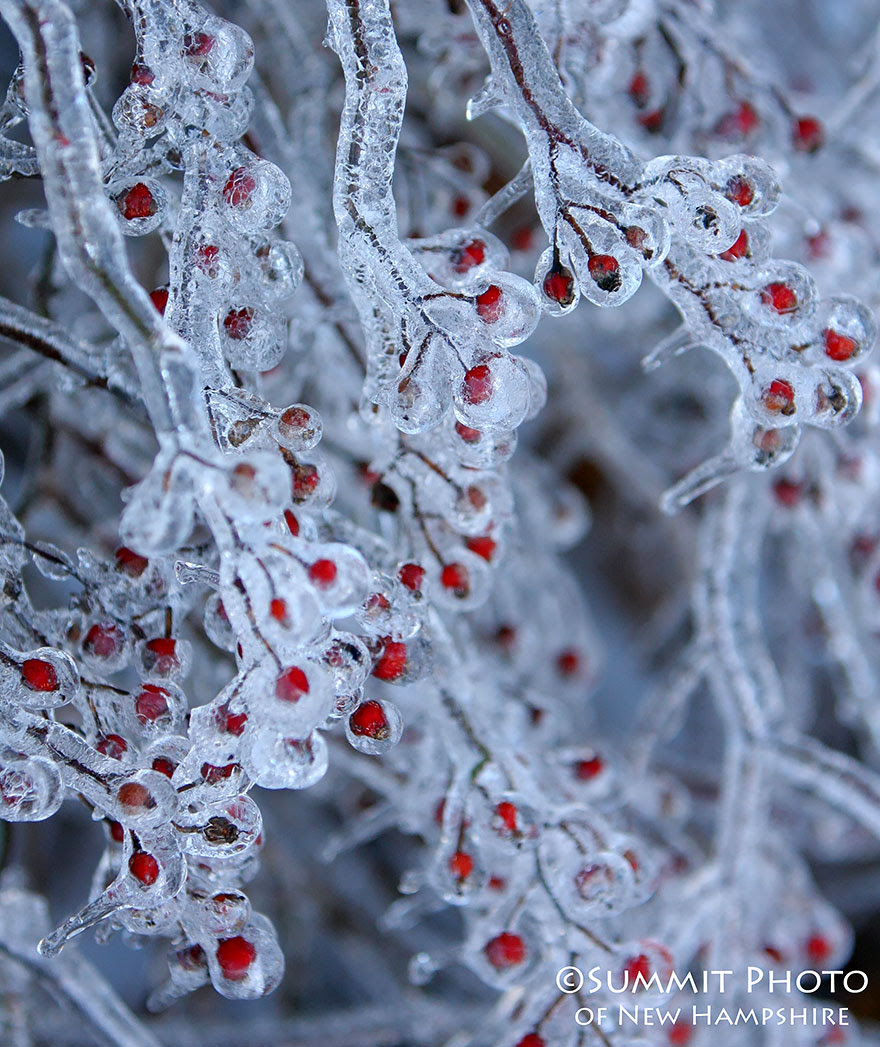
Photo: photoknipser/flickr

oooo

Photo: Thawt Hawthje/flickr

oooo

Photo: Maja Dumat/flickr

oooo

Photo: Alexandra Giese/Shutterstock

oooo

Photo: wplynn/flickr

oooo

Photo: Andrea_44/flickr

Well that’s the last of the Autumn scenes and we will see what next Sunday brings.

Meanwhile, you all take care of yourself out there.

There’s another year gone!

Yesterday was my 71st birthday.

Consequently, writing a blog post for today wasn’t high on my list of things to do.

So this is to offer my thanks to everyone who sent me greetings; it was wonderful to hear from so many friends, old and new.

Thus my post today is to share three items that came from family back in England.

First, my mother, who is still teaching piano and oboe at the age of 95, sent me this:

Secondly, my son, Alex, and his long-term partner, Lisa, sent me this in an card chosen from the Friends of the Earth selection:

dog cake
(All dog owners know, I’m sure, that dogs must never eat chocolate.)

Lastly, my grandson, Morten, who despite being just five-years-old, is already a dab hand with an iPhone and sent me the following picture of himself with Dad in the background:

photo

Finally, my love and gratitude to Jeannie for making me feel special yesterday, as she has done every day since we first met.

Picture parade one hundred and twenty-one.

The second welcome to the season of mists and autumnal colours.

With thanks to Mother Nature Network where these wonderful photographs were published. Last week’s set are here.

mix8
Photo: Scott Kinmartin/flickr

oooo

Photo: Tanya Uralova/Shutterstock

oooo

Photo: Tanya Uralova/Shutterstock
Photo: AJU_photography/flickr

oooo

Photo: Kichigin/Shutterstock

oooo

Photo: Josh McGinn/flickr

oooo

Photo: otsphoto/Shutterstock

oooo

Photo: Mark Jones/flickr

The third and final welcome will be in a week’s time.

You all take care out there.

Picture parade one hundred and twenty

Welcome to the season of mists and autumnal colours.

With thanks to Mother Nature Network where these wonderful photographs were published.

mix1

oooo

mix2

oooo

mix3

oooo

mix4

oooo

mix5

oooo

mix6

oooo

mix7

oooo

Happy November 1st to you all.

Picture parade one hundred and eighteen

In recognition that a week ago National Wolf Awareness Week started.

The photographs were seen here but the original source of both the text and photographs is the National Geographic website.

ooOOoo

Intelligent and highly social, wolves fascinate us as the untamed predecessors to Man’s Best Friend. But the relationship between humans and wolves has not always been so reverential, especially in the United States.

Through the early 1900s, populations of Canis lupus, the gray wolf, shrank from estimated historical highs of 2 million to near-extinction in the lower 48 states, largely a result of expanded human settlement in the western U.S. and large-scale poisonings meant to protect livestock.

In 1973, the gray wolf was classified as endangered under the Endangered Species Act, and after decades of conservation efforts, wolves are doing well in the U.S. Current estimates peg the gray wolf population in the lower 48 at around 5,500—with at least 7,000 more in Alaska. In fact, a pack of wolves recently planted roots in Siskiyou County, California, the first wolfpack in modern Californian history.

“The gray wolf is in no danger of being endangered, biologically,” says Dave Mech, a senior research scientist with the U.S. Geological Survey.

But controversy still swirls around the gray wolf’s conservation status. In 2013, the U.S. Fish and Wildlife Service proposed removing the gray wolf from the federal list of endangered species, a move it says reflects the wolves’ rebound. But animal rights groups and environmental organizations have decried the very thought, unsuccessfully petitioning the Service to maintain national protections for the gray wolf. Meanwhile, ranchers in the northwestern United States have pushed for rollbacks to state-level wolf protections.

In fact, the U.S. Fish and Wildlife Service declined to comment about the gray wolf, due to ongoing litigation with conservationists over the Mexican gray wolf, a rare subspecies. And given the wolf’s status as both a possible scourge to ranchers and an ecological marvel to environmentalists, the debate is “always going to be contentious,” says Mech.

Yet the allure of the wolf will endure, as it always has in the public’s imagination. “I think there’s a certain aesthetic beauty to [wolves],” says Mech, that defines “their charismatic nature.”

In honor of National Wolf Awareness Week, which begins October 11, we take a closer look at the fascinating ways in which wolves around the world eke out a living.

wolf1

oooo

wolf2

oooo

wolf3

oooo

wolf4

oooo

wolf5

oooo

wolf6

oooo

There are another six photographs that I will offer you in next Sunday’s Picture Parade.

A Wet Saturday!

All the indications are that, at long last, rain is heading our way!

Yesterday afternoon, the forecast for Grants Pass and area was:

Tonight (Friday):  A 30 percent chance of rain after 11pm. Mostly cloudy, with a low around 53. West wind around 6 mph becoming calm after midnight.

Saturday: Rain before 11am, then showers likely after 11am. High near 71. Calm wind becoming west southwest around 5 mph. Chance of precipitation is 80%. New precipitation amounts between a tenth and quarter of an inch possible.

Saturday Night: A 20 percent chance of showers before 11pm. Partly cloudy, with a low around 50. West wind around 6 mph becoming calm in the evening.

As the crow flies, here in Merlin we are a tad over 10 miles to the North-West of the centre of Grants Pass. So we are holding our breath that we receive a decent wetting over this coming weekend.

All of which creates a wonderful lead-in to a recent item published over on Mother Nature News, that I am delighted to share with you.

ooOOoo

‘Wet Dog’ portraits expose bath-time vulnerability

By: Catie Leary, October 15, 2015.

Pancake and Chelsea (Photo: Sophie Gamand)

Bath time may not be a pup’s favorite activity, but if these comical “Wet Dog”‘ portraits are any indication, there may be a silver lining to this necessary evil.

The dog lover behind this endearing series is Sophie Gamand, a New York-based photographer who regularly focuses her lens on canines to examine the relationship they have with humans.

“Wet Dog is a series of dogs captured at the groomer during their least favorite activity: Bath time,” Gamand writes on her website. “I chose this activity because it is a very unnatural one for the dogs, yet it is a direct consequence of their cohabitation with humans.”

Seeing our best friends in such a vulnerable state can be comical and heart-wrenching — especially because canine facial expressions possess an uncanny resemblance to our own.

Gamand began photographing soggy doggies a while back, but after some of the images went viral, she felt compelled to put together a complete “Wet Dog” photo book.

(Photo: Sophie Gamand)

The comical coffee table book, which is now available for purchase, is filled with 120 photos of these soaked doggies — each sporting his own unique post-bath expression.

Continue below for a look at just a few of the images featured in the book.

Benji (Photo: Sophie Gamand)
Marnie (Photo: Sophie Gamand)
Wanda (Photo: Sophie Gamand)

Picture parade one hundred and seventeen.

The second set of rapidly disappearing memories of a hot summer.

Set one was here.

hot9

oooo

hot10

oooo

hot11

oooo

hot12

oooo

hot13

oooo

hot14

oooo

hot15

oooohot16

oooo

hot17

oooo

As ever, you take good care of yourselves.

Picture parade one hundred and sixteen

Rapidly disappearing memories of a hot summer.

(Another set of pictures sent to me by Dan.)

Set One

hot1

oooo

hot2

oooo

hot3

oooo

hot4

oooo

hot5

oooo

hot6

oooo

hot7

oooo

hot8

oooo

Aren’t they wonderful! Set two in a week’s time.

You all take care out there.

Picture parade one hundred and fifteen.

The openness of dogs, and cats, to new ways of living.

Today’s picture parade needs a short introduction.

When Jean and I moved from San Carlos in Mexico to Payson, Arizona, we came with twelve dogs and seven cats of which all but one (Pharaoh) were rescues from the Mexican streets over the years; many from before Jean and I met each other.

That was five years ago and, inevitably, some of the dogs and cats have died of old age.

Since we arrived here in Merlin, Oregon, three years ago this October, the five cats we came with have been living in our largish double garage that, as you can imagine, is pretty cold during the winter. One cat died last year and Jean and I were thinking how nice it would be to bring the remaining four cats into the house.

Thus, just over a week ago, we brought two of the cats, George and Mitts, across to the house and the following pictures reveal a little of how that has gone.

Wow! What's this that Mummy is holding?
Wow! What’s this that Mummy is holding? A guess at what Cleo could be thinking!

oooo

P1150734
Jean combing Mitts very soon after it came into the house much to the interest of Cleo and Sweeny (whose head can just be seen by the edge of the table). Mitts has not a single tooth in her head, by the way.

oooo

P1150735
Little Pedy was totally nonchalant about the arrival of Mitts right from the start.

oooo

P1150755
As this photograph underscores.

oooo

Hedy just as happy with ???
Pedy is just as happy with George.

oooo

The cats have adopted my office as their new home.
The cats have adopted my office as their new home, with Mitts demonstrating how to fit a cat into a small bin!

oooo

P1150738
Meanwhile, George has found his resting spot under a small table.

 oooo

But not if the vacant settee in the den is free.
But not if the settee in the den is vacant.

oooo

Plus, a sunny area of the carpet suits Mitts better than the bin.

oooo

I hope to update you with the news of how the final two cats make the transition into the house in two or three weeks time.