Category: Philosophy

Our healing dogs!

Is it me or is the world becoming crazier each new day!

What with the ‘Remain/Leave’ EU referendum coming up in my old country and Presidential politics in my new country it seems these days as though the need for healing is growing in leaps and bounds. Thank goodness for being able to hug a dog or two (and Jean) to be reminded of what matters most of all.

I was reminded of the incredible healing power of our dogs in a recent article published by author Deborah Taylor-French. That will be republished tomorrow, with Deborah’s kind permission. However, I wanted to make this message last for more than a single post and to achieve that I’m republishing a guest post that appeared in this place towards the end of last year.

But first my introduction to that guest post.

Forget about the big world out there, be loved by our dogs.

Monday’s post about the precariousness of man’s future on this planet if we don’t prevent the melting of the Antarctic ice sheet was a bit gloomy, however true it might be. The gloom continued with yesterday’s post about the VW scandal illustrating the “unethical culture endemic in business”.

So what a nice change to think about the way that our pets keep us bright, cheerful and healthy.

All of which is my way of introducing a guest post from Vee Cecil. Now I am fairly cautious about guest posts from those who want to promote their businesses, for obvious reasons. But Vee’s essay is so lovely that it truly deserves to be shared.

Firstly, here is the email that Vee sent me back in August,

Hi!

In the U.S., 91 percent of pet owners say they consider their pet to be a member of the family. And for good reason! Our pets are constant sources of comfort and companionship.

What many pet owners may not realize is how great their furry family members are for their physical and mental health. For example, studies have shown that pet owners have lower blood pressure than people who don’t have pets and that being around pets also makes us “less anxious and less stressed.” And that’s just the beginning. There are many other wonderful health benefits that result from owning a pet.

May I write an article for learningfromdogs.com on this topic? The article will be approximately 500 words, unique to your site, and complete with resources.

Please let me know – I am always looking to spread the word about how we can be healthier and happier and having a pet is a great way to achieve both!

Best,
Vee

Here then is that article.

ooOOoo

Feeling Under the Weather? Learn More About the Amazing Healing Powers of Pets

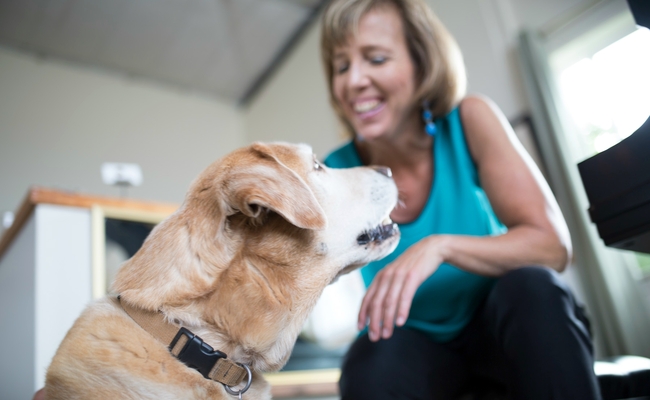
HappyTailsAsk any dog owner and you’ll find out just how remarkable a dog can be. They can turn a terrible day into an amazing one with one lick of the face or wag of the tail. But more and more studies are showing that our four-legged friends might be even more awesome than we previously thought.

As The Washington Post explains, research is showing that being around dogs can help us feel better and less stressed, while also improving our physical health. For example, the article cites studies which found that our pets can lead to “lower blood pressure, lower resting heart rates and less risk of hypertension.”

And that’s not all. Here are four other health issues and how dogs help their human companions:

Cancer. As this CBSNews.com article explains, a recent study at Mount Sinai Beth Israel found that therapy dogs had a very positive impact on patients receiving chemo therapy. The patients showed improvements in “emotional well-being and quality of life.” The director of the program that provided the therapy dogs also noted that patients felt less stressed and anxious. The article notes that this was a ground-breaking study as the impact of therapy dogs on cancer patients hadn’t been examined before.

Alzheimer’s Disease. Therapy dogs are also proving to be extremely helpful for patients with Alzheimer’s. In this article, a man with early on-set Alzheimer’s explains how his therapy dog helps him with daily tasks. Through the help of his therapy dog, the man says his stress and anxiety levels have significantly reduced.

Surgery recovery. Chances are if you were recovering from a painful surgery you wouldn’t turn down a snuggle from a pet. But, as The Telegraph shows, researchers have found that pets can do more than just provide you with a little tender loving care. A study led by a researcher from Loyola University found that pet therapy can reduce the amount of pain patients experience after surgery. In fact, according to the article, the patients in the study, who had had joint replacement surgery, “needed 50 per cent less pain medication if they used pet therapy.”

Diabetes. And perhaps most remarkable of all is what therapy dogs can be trained to do for diabetics. In this case, dogs put their acute sense of smell to good use. As this article explains, dogs exhibiting a better-than-average sense of smell can be trained to help diabetics. Once trained these dogs use their sense of smell to detect signs of hypoglycemia and low blood sugar (based on their human companion’s breath). They’re also trained to get a sugary food for their diabetic, get help if the person goes into diabetic shock, and more.

As more research is conducted to see the benefits of not only service dogs, but pets too, it will be interesting to see how dogs are woven into more medical treatments. They are truly amazing creatures, who can help us mind, body, and soul.

***

Vee Cecil keeps busy by being a wellness coach, personal trainer and bootcamp instructor in Kentucky. She also recently launched a blog where she shares her passion for health by writing about her favorite tips, activities and recipes.

ooOOoo

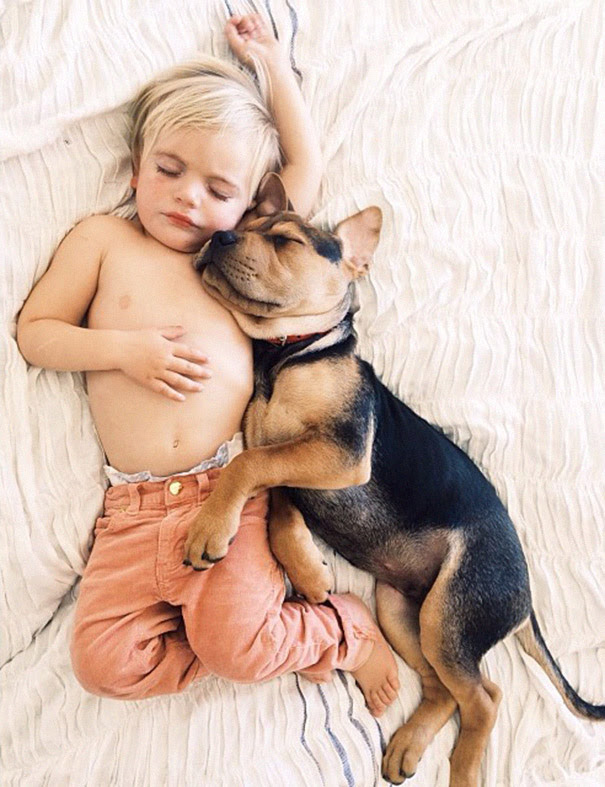
If proof was needed of the quality of a relationship that can exist between a person and a dog then just look at the following photograph.

Theo11It has healing power stamped all over it; for the young boy and the Shepherd Dog!

A Eulogy for Hazel.

This dear, precious dog!

Back in March, 2014 when I was writing a series of posts about our dogs, I published a Meet the dogs – Hazel post. This eulogy consist mainly of what I wrote then, with a few minor changes to bring it up to date, and a closing thought.

Hazel

I first met Jean in Mexico; namely, in San Carlos, Sonora, Mexico to be precise. Just a few days before Christmas, 2007. At that time, Jean had 16 dogs, all of them rescues off the streets in and around San Carlos. Jean was well-known for rescuing Mexican feral dogs.

In September, 2008 I travelled out to Mexico, via London-Los Angeles, with my Pharaoh. Jean and I have been together ever since. In February, 2010, because we wanted to be married and to be married in the USA, we moved from San Carlos to Payson, in Arizona; some 80 miles North-East of Phoenix.

One morning, just a few days before we were due permanently to leave San Carlos and move our animals and belongings the 513 miles (827 km) to Payson, AZ, Jean went outside the front of the San Carlos house to find a very lost and disorientated black dog alone on the dusty street. The dog was a female who in the last few weeks had given birth to puppies that had been weaned. Obvious to Jean because the dog’s teats were still somewhat extended.

The dog had been abandoned outside in the street. A not uncommon happening because many of the local Mexicans knew of Jean’s rescues over many years and when they wanted to abandon a dog it was done outside Jean’s house. The poor people of San Carlos sometimes resorted to selling the puppies for a few Pesos and casting the mother dog adrift.

Of course the dog was taken in and we named her Hazel. Right from Day One Hazel was the most delightful, loving dog and quickly attached herself to me.

The truest of love between a man and a dog!

Of all the dogs that we have here at home, and, trust me, many are extremely loving, my relationship with Hazel was precious beyond description. She was in Pharaoh’s ‘group’ (Pharaoh, Cleo, Sweeny, Pedy and Brandy) so slept in our bedroom at night. Most nights Hazel was tucked up against me.

Plus frequently during the day Hazel would take an interest in what I was doing, as the next photograph illustrates.

Hazel taking an interest in my potterings.
Hazel taking an interest in my potterings; March 2014.

If ever one wanted an example of the unconditional love that a dog can offer a human, then Hazel was that example. Precious creature.

ooOOoo

Just stay with me for a little longer.

Recently there was a documentary on the BBC about Koko the gorilla and how many hand signs Koko had learnt. As Wikipedia explains (in part):

Hanabiko “Koko” (born July 4, 1971) is a female western lowland gorilla who is known for having learned a large number of hand signs from a modified version of American Sign Language (ASL).

Her caregiver, Francine “Penny” Patterson, reports that Koko is able to understand more than 1,000 signs of what Patterson calls “Gorilla Sign Language” (GSL). In contrast to other experiments attempting to teach sign language to non-human primates, Patterson simultaneously exposed Koko to spoken English from an early age. Reports state that Koko understands approximately 2,000 words of spoken English, in addition to the signs.

The reason why I mention this is at the end of the programme it is stated that Koko’s ability to communicate shows very clearly that she is capable of feelings and emotions. Indeed, the way that Koko hugs Penny is very moving.

The presenter of the BBC programme concludes how things have changed over all the years from the birth of Koko some 45 years ago to today. As in back in the ’70s’ the idea that animals had emotions was just not accepted whereas nowadays there is mounting evidence that many warm-blooded animals have emotions; are capable of emotional feelings.

Why do I mention this?

For there isn’t one shred of doubt in the minds of Jean and me that Hazel was full of feelings of love and affection towards her human friends.

That is the epitaph with which Hazel will be remembered! This is her legacy.

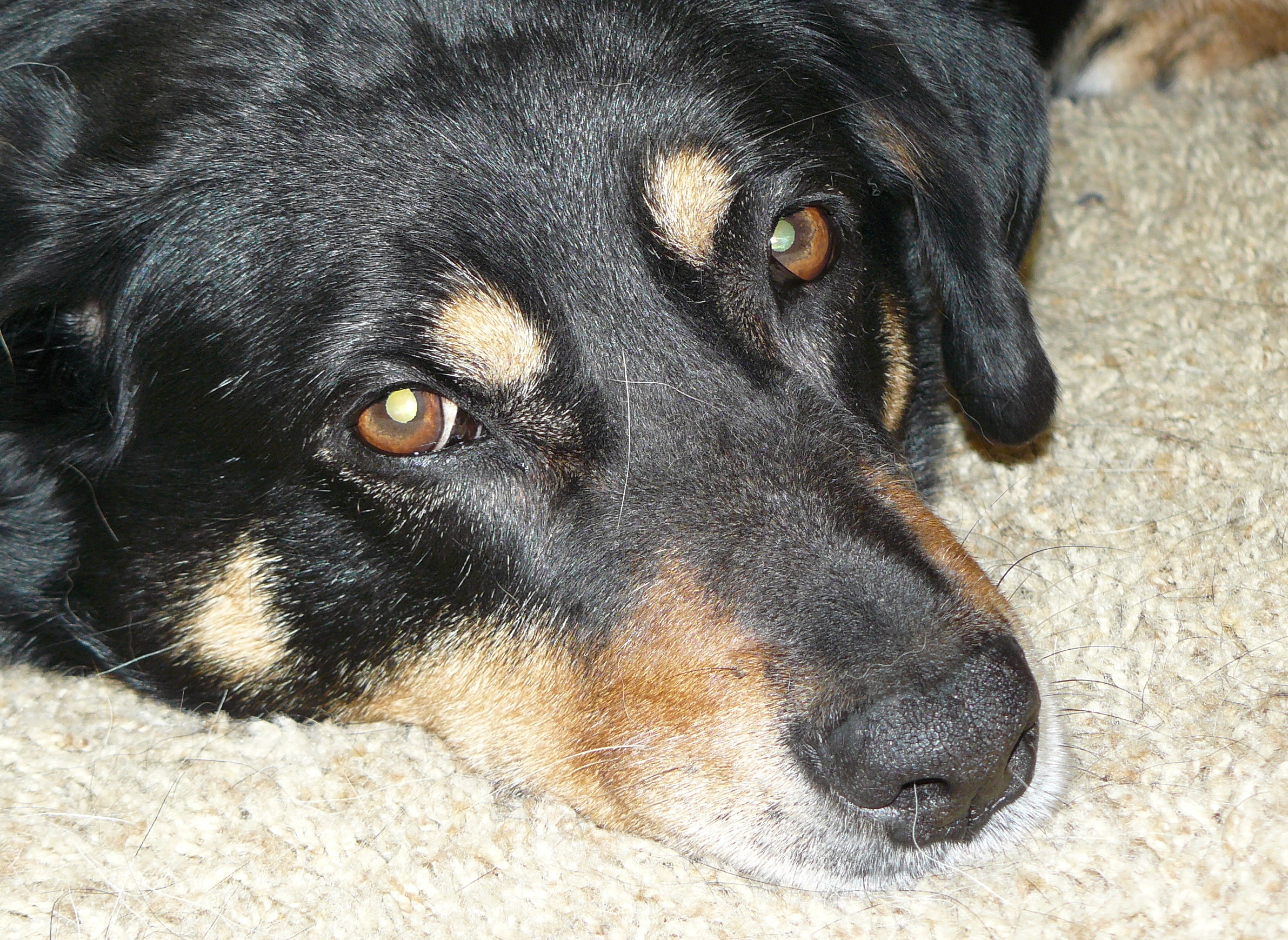
Picture of Hazel taken in the last twenty-four hours.
Picture of Hazel taken in March, 2014.

Pitchforks or Pens.

The extreme importance of engaging in the fight for better societies.

I must warn you that today’s post is nothing about dogs. Unless, as with me, you see dogs as well as being the most gorgeous of creatures as being critically important metaphors for what societies need now! Or as I present elsewhere in this place:

Because of this closeness between dogs and man, we (as in man!) have the ability to observe the way they live.  Now I’m sure that scientists would cringe with the idea that the way that a dog lives his life sets an example for us humans, well cringe in the scientific sense.  But man seems to be at one of those defining stages in mankind’s evolution where the forces bearing down on the species homo sapiens have the potential to cause very great harm.  If the example of dogs can provide a beacon of hope, an incentive to change at a deep cultural level, then the quicker we ‘get the message’, the better it will be.

Dogs:

  • are integrous ( a score of 210) according to Dr David Hawkins
  • don’t cheat or lie
  • don’t have hidden agendas
  • are loyal and faithful
  • forgive
  • love unconditionally
  • value and cherish the ‘present’ in a way that humans can only dream of achieving
  • are, by eons of time, a more successful species than man.

richard-murphySo what’s this all leading up to!

Regular followers of this place (and you are always appreciated – never forget that) will know that previously I have mentioned Professor Richard Murphy. I have been following and reading his blog Tax Research UK for some time.

Many of the good Professor’s posts are specific to what is going on in the UK and, inevitably, Europe and the EU referendum.

But on the wider horizon these seem to be such terrible times. Here’s a comment I left to another of Richard’s posts that opened with the sentence, I am so bored by the EU referendum campaign.

My comment being:

It’s coming up to 5:30 am here in Southern Oregon and, as per usual, I have dipped into the latest postings from Tax Research. Part of me, a large part of me, is sickened by what seems to be going on in this world with the EU referendum and the US Presidential election being the two most glaringly terrible examples. But this old Brit (London-born in 1944) has this sense that the way that Richard and so many of his supporters can now ‘shout’ out the truth will, in the end, deliver a better future. Indeed, my own blog post today is called The Power of Open Opinions.

So keep on banging your truthful drum, Richard!

However, last Tuesday Richard published a post that seemed to speak to me, and presumably countless others, about the dilemma as to whether to be active in speaking up about what is right or wrong, or to just huddle up with one of your dogs on a nice (oversized) dog bed!

In my estimation that post from Richard should be widely circulated and it is republished in full now with Richard’s kind permission.

ooOOoo

To engage or not; that is the question

Posted on7:57 am May 31 2016

It would seem I have touched a raw nerve for some regular commentators by suggesting that I welcome the IMF article, recently published, that appeared to recognise the failure of neoliberalism to tackle inequality and the inappropriateness of much of the austerity agenda.

It now seems that this article has attracted a vicious backlash from the FT, which clearly sees it as touching on neoliberal heresy. In that case to suggest, as some do, that this article is inconsequential is, in my opinion, wrong.  If nothing else, it has revealed the true opinion of the FT, and the sharp divide between its editorial stance and the opinion of its lead economic  columnist, Martin Wolf.

It is also safe to assume that if this has been the response outside the organisation then the debate within it has been at least as heated,  and all this on an article which says it can find merit in some parts of the neoliberal agenda.

Why come back to the issue then?  I think there are three good reasons for doing so.

First, how to respond to such an article from such an organisation opens up one of the more difficult questions in campaigning, which is whether to engage or not with those organisations that you criticise?  It is not possible to be a tax justice campaigner and to not have been critical of the IMF and its approach over the last few decades.  I have been of the IMF, the World Bank and, of course, of the Washington Consensus  that they have promoted.  But, a long time ago I decided that the only viable way  in which I could help deliver tax justice was by engaging with those people and organisations whose opinions I wished to change.

Over the years I’ve been criticised for this, and  been told that the policy would undermine my chances of success.  So, variously,  I was told that it was a mistake to serve on George Osborne’s General Anti-Abuse Rule  committee.  Likewise, engaging with the  OECD BEPS  process was described as a mistake by some because the terms of engagement were clearly biased against developing countries.  Others have also suggested that it was a mistake not to object to Jeremy Corbyn  using some of my policy ideas.   I suspect some would also criticise the fact that I went to the World Bank last week  and there were definitely those who suggested that I should not accept an appointment at City University, precisely because it has got links to the City of London. As for the Fair Tax Mark; some say that is a sell out.

In all cases I disagree.  It is my job to  create ideas  that might effect change.  My purpose for doing so is, I hope clear:  my aim is to create a more  genuinely prosperous, more equal, more democratic, more accountable, more sustainable,  more tolerant  and so more enjoyable world in which we might live.  More is an important word in that sentence:  it could be prefaced with ‘much’  in many cases but I do not think we will ever create  utopia.  I want better because I doubt that the best I believe possible is actually achievable within the necessary compromises that human society requires, not just now but ever.

That, then, brings me to my second point.  I am not seeking a revolution, but an evolution.  I respect those who wish to be perpetual outsiders because they believe that the only way forward is to sweep away all that is in their path to create an entirely new society, but their’s is not a path I would ever choose.  There is good reason for that: I believe that the cost of such change is too high, and the uncertainty of the outcome too great for any such risk to be taken.  The chance  that what we have will be replaced by tyranny is also too significant to justify this approach, in my opinion.

But, perhaps, most of all,  and thirdly, I believe that the power of an idea at the right time is sufficiently strong to ensure that such a revolutionary approach is wholly unnecessary.  I stress, I am not claiming that my ideas are in this category;  I am suggesting that ideas can be.  Neoliberalism arose because it was an idea in the right place at the right time, even if I fundamentally disagree with the prescription that it offered.  The post-war consensus was similarly created in this way.

I regret that as yet we have not reached a point where a similar replacement idea has been sufficiently developed to capture, unambiguously, the common political narrative.  Discussion of sustainability is become mainstream, but not in reality commonplace.  Disquiet with austerity is deep-rooted, but has not yet displaced the obsession with balanced budgets.  Debate on inequality  in its many egregious forms is taking place, but is not yet reversing trends. Some  political developments  now arising are deeply  antagonistic to democracy. But, and I stress the point,  the fact that all these things are happening is, in itself, indication that something really important is going on and that we may, in my opinion, be reaching a point where real change is possible.

I stress, in the context the IMF article is, in my opinion  important even though it is not  as radical as that  which many people would wish to read.  But that is how change takes place: very few of us are really capable of embracing giant leaps. Most of us have to, inevitably, partake in incremental steps on the way to a bigger goal.

I accept, and embrace that fact,  which I perceive to be a reality.  That is not to say there is no place for the campaigner who demands, with reason, more radical change.  Whilst I see many of the attractions of being a ‘no compromiser’  that is not the path I have chosen to follow, even with tax havens (as my Plan B for Jersey made clear).  If the choice is between a pitchfork and a pen, then I choose the pen,  believing that at the end of the day this is the way to  create real change. But as a result I also choose to engage, without apology.

ooOOoo

We must never forget that the pen is mightier than the sword! And we must never stop engaging!

Relationships.

Everything comes down to our relationships.

It is not the first time that I have written on the theme of the importance of relationships. However, I am inspired by a number of separate and discrete outcomes in the last couple of days that compell me to return to this most important principle of all: We are what we think about most.

The first outcome was a lovely reply left by Hariod Brawn to yesterday’s post. This is what she wrote:

My GSD had hip dysplasia too, Paul – if that’s what you’re alluding to with Pharaoh. He still was able to die a natural death though, as his rear quarters became paralysed with the dysplasia and he felt no pain. There were plenty of other problems resulting from his immobility, but I wouldn’t have traded those difficulties and the incredible communication we shared as a result of them, for anything – his last few weeks were some of the most powerful and precious of my entire life.

Then after my response, Hariod went on to say:

It was a deeply profound time for me, and I honestly wouldn’t have believed anyone had they told me what I experienced, but experience it I did. It was not the product of fanciful imagination, much as it might sound so in words. The communication between the two of us was quite incredible, and which really was empathic in nature, in the deepest sense of the word. We always had great communication and understanding, which all dog lovers do with their charges, of course, but this was another level altogether. Some might call it ‘psychic’, as if that meant something mystical and woo-like, but it just means ‘of the mind’. The question is, does the mind have the psychical power to share in understanding across physical borders? You will doubtless know of J. Allen Boone:

I will return to that mention of J. Allen Boone at the end of the post.

Then later on there was a further reply to the post from Barb of Passionate About Pets :

Thanks for re-publishing Gina’s post here, I found it interesting because Poppy, my little shih-tzu is an old dame now – she will be 17 in two months time. She has developed serious separation anxiety in the last year and if I am working in the garden, she barks for me to get back inside even though my husband is inside with her – she wants us BOTH with her. She is weak in her back legs so her walks are shorter. All these signs of old age make me so sad. Just like you and Pharoah, old age is creeping up on us all.
A special thank you to Hariod for including that video clip of J. Allen Boone’s dog Strongheart and the very special connection they had; he was so wise about Strongheart’s qualities – they never die. It really resonated with me.
Thank you for a wonderful post.

You can see why I entitled today’s post Relationships!

Then earlier on in my day I had a call with Jon Lavin, a friend from my days when I lived in Devon, South-West England. Jon and I still speak on a regular basis and yesterday I was complimenting Jon on a wonderful post he had written on his own business blog The People Workshop.

Jon’s post was about relationships in the workplace, his area of professional experience, and I was struck by how far the messages were relevant to all of us, in all areas of our lives. But just as key it was another reminder of the importance of all of us who express themselves on blogs; both as authors and as commentators. Because those expressions make, build and maintain great relationships.

Jon’s post is republished here with his full permission.

ooOOoo

Relationships in the workplace

Posted on

Poppies and sea
Poppies and sea

When you look at how much of our lives we spend at work it’s really quite attention-grabbing. I did a very rough calculation based on 40 years and 40 hours a week – and I took out holidays and weekends. It works out approximately at 4900 hours. That’s a lot of hours, especially if you do lots of overtime and weekends. All of that time, you’re probably going to be mixing with people – usually, quite a large number of people.

We are ‘relationship seeking’, says Eric Berne, originator of Transactional Analysis. So for all of that time, we’re moving in and out of relationships with other people. So here, I’m categorising any interaction with another as ‘relationship’.

Then there’s what happens when we go home, another set of relationships, and where we came from – our parents and families.

So how we are in relationship with others is very important and has a major impact on the results we get generally and particularly in the context of this article, at work.

I hear a lot of talk about ’employee engagement’ at the moment. I believe that for employees to be ‘engaged’, so actively involved in what they’re doing, thinking about it, in the ‘here and now’, they’ve got to be in relationship with their manager and probably, the team they’re part of, at least, if the job is being done properly.

I see it as the role of the manager or team leader that they have the skills and ability to develop these relationships with as many team members as possible, any exclusions being the exception. This requires a lot of self-awareness and confidence, plus the ability to build high levels of trust with a wide range of character types. I think it also requires the ability to see the world from the view point of the other person – ‘putting yourself in somebody else’s shoes’, we say. That’s quite difficult to do in my experience. However, we can donate the time to get to know the people in our team and so increase the likelihood of all of us coming from the same angle.

I think this is about the ability to value the uniqueness of others in all the different forms and approaches that manifests in, and finding ways of harnessing those skills and abilities.

These are not easy things and I am aware of the relatively few, good people managers I come across in my work but it is possible to develop these skills. You need to have the intention to want the best from ALL relationships. Also, to be prepared to use the feedback we all get, especially when things don’t go to plan in a relationship, and be continually revisiting and adjusting your approach so that you get more of what works. This way, you automatically get less of what doesn’t work.

Never under estimate the power of intention.

Stormy seas
Stormy seas

ooOOoo

I am now going to close today’s post with those words of  J. Allen Boone that Hariod had in her second reply:

To echo Jon’s closing message, let us never cease our intention of having wonderful relationships; with our dogs, with others and, not least of all, with ourselves.

Embracing those senior years.

And I’m speaking of our dogs as well as me!

Whether we like it or not, time flows in one direction.

I find it almost as difficult to know that I shall be 72 years old in November as I know that dear Pharaoh will be 13 on June 3rd., a little over three weeks from today. Both of us most firmly now in our senior years.

This introspection was generated by something that was read recently over on the Care2 site: 7 Steps to Help Your Senior Dog Be Happy and Fulfilled

Knowing that dozens of you dear readers will have dogs that are also in their senior years was the motivation for me republishing the article; as follows:

ooOOoo

7 Steps to Help Your Senior Dog Be Happy and Fulfilled

1381516.largeBy: Lisa Spector May 8, 2016

About Lisa Follow Lisa at @throughadogsear

I can hardly believe that my yellow Labrador, Sanchez, is turning 13 next week. I count my blessings that he is in good health and still enjoys our twice daily walks. But, I’m also aware that he can’t keep up to his activity level from even a year ago, let alone in his prime. I’m always looking for ways to provide mental stimulation to his environment without physically taxing his body.

1. Alone Time Together Daily
It’s not always easy having a multi-dog household. But, it’s important to make a priority of having time alone with your pets daily. Since Sanchez was an only dog for the first seven years of his life, he particularly appreciates this. It means walks take longer (walking Gina separately), but it’s well worth the time when I see Sanchez’s smile of contentment.

2. Keep Training
Dogs love to learn, no matter their age. I still spend time training every night with Sanchez. If it gets late, he starts whining and begging for his training time with me. The bonding time is precious and it stimulates him to keep learning and being challenged. He has no complaints about his yummy rewards either.

3. Give Him Attention in Creative Ways
Gina is a high-drive dog. We spend a lot of time retrieving and tugging. While it helps alleviate her pent up energy, Sanchez used to look neglected when she was getting the extra attention. So, I started sneaking him small treats while tugging with her. At night time, I often play ball with her inside, having her run down and up the stairs, chasing and retrieving the ball. I include Sanchez in the game by discreetly tossing him small treats while she’s running back up to me to deliver the ball. It not only makes him feel included, but it also engages his senses as his nose has to search for the tossed treat.

http://www.youtube.com/watch?v=7pa3-wD5b-o

4. Reward. Reward. Reward.
In the video above, I am training both of my dogs together. Even though Gina is doing all of the physical activity, Sanchez is getting equally paid for staying calm and still while she jumps over and goes under him. Good Boy, Sanchez!

5. Pay Attention to New Behaviors
It’s not unusual for senior dogs to develop anxiety issues later in life that seemingly come out of nowhere. They can include sound phobias, separation anxiety or resource guarding. There are some that I just accept, such as tearing tissue out of the bathroom waste basket. I call it his puppy behavior returned. I just make sure that I don’t put anything in the trash that could be harmful when chewed. Other behaviors will only get worse if ignored, such as separation anxiety or food resource guarding. Tips for Separation Anxiety are here. For all anxiety issues, consult with your veterinarian and/or a positive reinforcement dog trainer. Ignored, they will only escalate.

6. Keep The Safe Physical Activity
Sanchez and I used to enjoy musical freestyle classes. He would weave between my legs, spin and jump on my arm on cue. While that would be too taxing on his body now, we have kept in what is safe for him. He still loves to “go back,” lift his left and right paw on cue, and show off his “downward dog.”  Of course, he is well paid for his behavior.

7. Engage The Senses
National Association of Canine Scent Work (NACSW™) is the official sanctioning and organizing body for the sport of K9 Nose Work. It is a growing popular sport, and it’s great for dogs of all ages. K9 Nose Work is built on scent work where dogs use their nose to search for their prize. Sanchez loved his K9 Nose Work class. Now, at home, I put pieces of liver into a mixed variety of cardboard boxes. He is told to “find” the liver. Boy, does his tail ever wag when he is searching!

Dog training should always be fun for both 4- and 2-leggeds. Get creative with your senior pup. Because you can teach an old dog new tricks.

Mark Holtuhusen

ooOOoo

This strikes me as very sound advice.

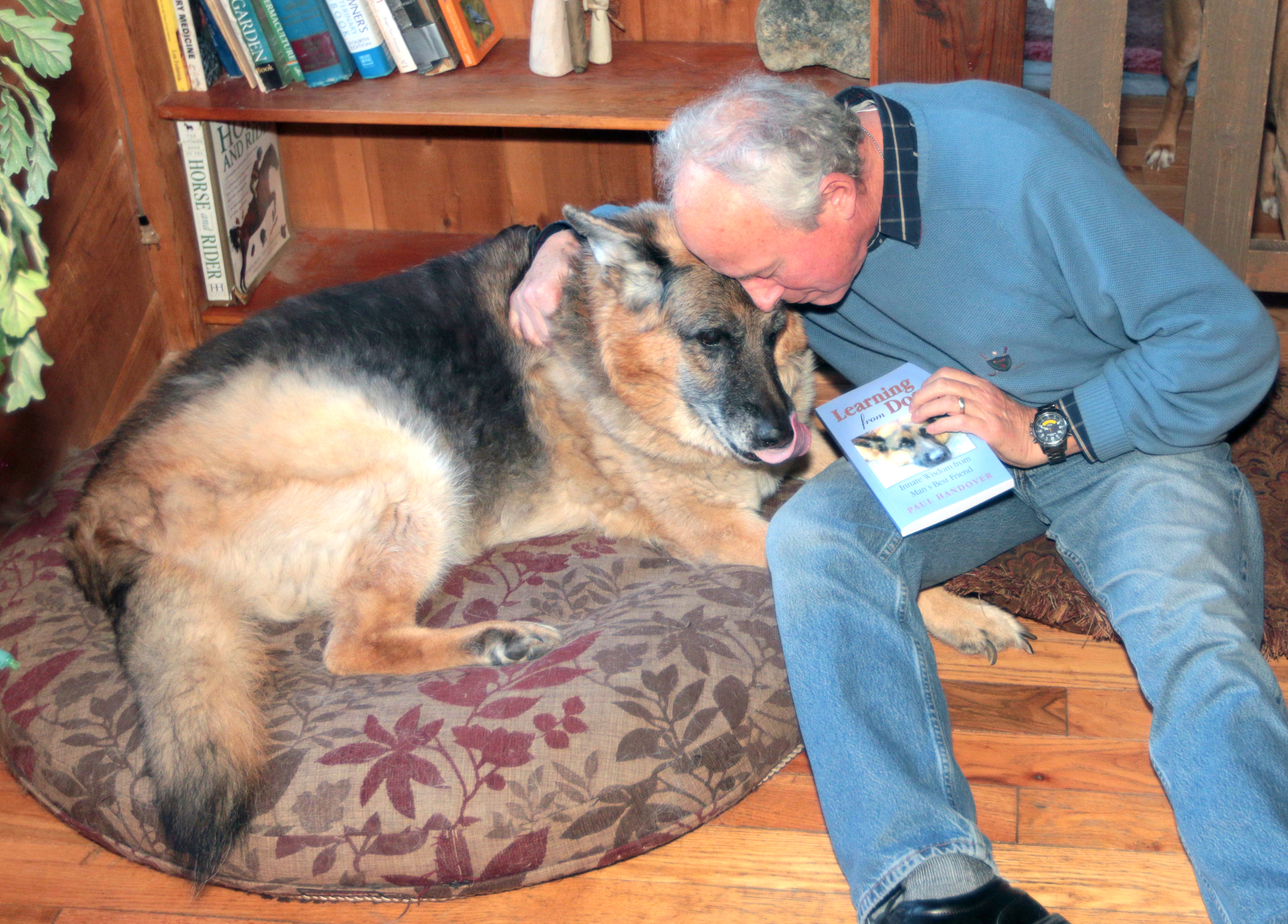
I will close today’s post with a photograph of dear Pharoah and me, both well into our senior years, taken just a few weeks ago demonstrating that both of us are old dogs learning new tricks!

TIMOTHY BULLARD/Daily CourierPaul Handover with Pharaoh, a 12year-old German Shepard that he uses on the cover of his new book about man's best friend.
TIMOTHY BULLARD/Daily CourierPaul Handover with Pharaoh, a 12year-old German Shepard that he uses on the cover of his new book about man’s best friend.

On second thoughts there’s a much better way to close this post that reflects on those precious years before the end of our days. That is by offering you the poem by John Oldham,  A Quiet Soul.

A Quiet Soul

Thy soul within such silent pomp did keep,

As if humanity were lull’d asleep;
So gentle was thy pilgrimage beneath,
Time’s unheard feet scarce make less noise,
Or the soft journey which a planet goes:
Life seem’d all calm as its last breath.
A still tranquillity so hush’d thy breast,
As if some Halcyon were its guest,
And there had built her nest;
It hardly now enjoys a greater rest.

John Oldham

Of love, and trauma.

When it comes to animals it’s practically impossible to have one without the other.

Today’s post was inspired by a comment left on yesterday’s post The most beautiful bond of all by MargfromTassie. This is what she wrote (my emphasis):

Yes, these people are inspirational as are all the people who voluntarily give their time and efforts to animal welfare work, sometimes for years. For many, it can be emotionally traumatising as well as rewarding.

It didn’t take me long to agree that for most it will be emotionally traumatising. In fact, one of the great lessons that we learn from our dogs, and all the other animals that we love, is that unconditional love brings with it emotional trauma.

So much better expressed by Suzanne Clothier in her book Bones Would Rain from the Sky: Deepening Our Relationships with Dogs

There is a cycle of love and death that shapes the lives of those who choose to travel in the company of animals. It is a cycle unlike any other. To those who have never lived through its turnings or walked its rocky path, our willingness to give our hearts with full knowledge that they will be broken seems incomprehensible. Only we know how small a price we pay for what we receive; our grief, no matter how powerful it may be, is an insufficient measure of the joy we have been given.

Our grief is always an insufficient measure of the joy we receive!

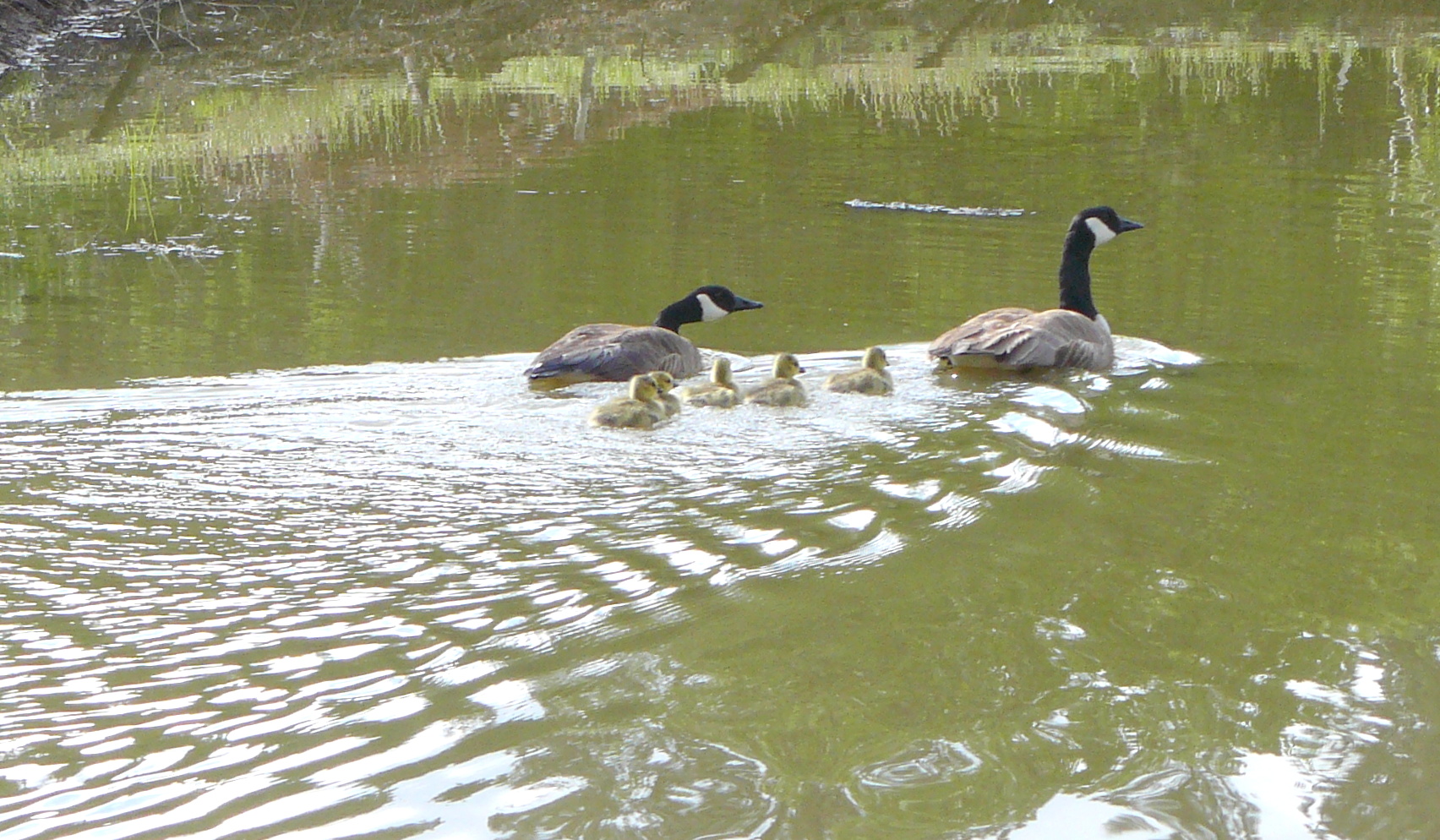
Speaking of joy, when we pulled back the bedroom curtains this morning (Thursday) the nest was empty!

P1160060For the last too many weeks to remember a mother Canadian Goose has been sitting on her nest of eggs with Father Goose staying close. We like to think that the mother returned to this place after having been born here a year ago.

Overnight five young healthy goslings were born! 🙂

P1160059May their little lives be full of love with a total absence of trauma!

Chew on this!

Why it’s impossible to actually be a vegetarian!

Jean and I are both vegetarians. Indeed, Jean has been a ‘veggie’ for decades and I swung inline with her when we started being together in 2008.

So it was natural (pun unintended!) for my eyes to notice a recent item that was published over on The Conversation.

Not only is it an interesting article but it also saved my bacon (pun intended!) when I was running out of time and wondering what to post for today.

The article is republished here within the generous terms of The Conversation.

ooOOoo

Why it’s impossible to actually be a vegetarian

April 26, 2016

In a sense, aren’t they one and the same? 'Heads' via www.shutterstock.com
In a sense, aren’t they one and the same? ‘Heads’ via http://www.shutterstock.com

In case you’ve forgotten the section on the food web from high school biology, here’s a quick refresher.

Plants make up the base of every food chain of the food web (also called the food cycle). Plants use available sunlight to convert water from the soil and carbon dioxide from the air into glucose, which gives them the energy they need to live. Unlike plants, animals can’t synthesize their own food. They survive by eating plants or other animals.

Clearly, animals eat plants. What’s not so clear from this picture is that plants also eat animals. They thrive on them, in fact (just Google “fish emulsion”). In my new book, “A Critique of the Moral Defense of Vegetarianism,” I call it the transitivity of eating. And I argue that this means one can’t be a vegetarian.

Chew on this

I’ll pause to let the collective yowls of both biologists and (erstwhile) vegetarians subside.

A transitive property says that if one element in a sequence relates in a certain way to a second element, and the second element relates in the same way to a third, then the first and third elements relate in the same way as well.

Take the well-worn trope “you are what you eat.” Let’s say instead that we are “who” we eat. This makes the claim more personal and also implies that the beings who we make our food aren’t just things.

How our food lives and dies matters. If we are who we eat, our food is who our food eats, too. This means that we are who our food eats in equal measure.

Plants acquire nutrients from the soil, which is composed, among other things, of decayed plant and animal remains. So even those who assume they subsist solely on a plant-based diet actually eat animal remains as well.

This is why it’s impossible to be a vegetarian.

For the record, I’ve been a “vegetarian” for about 20 years and nearly “vegan” for six. I’m not opposed to these eating practices. That isn’t my point. But I do think that many “vegetarians” and “vegans” could stand to pay closer attention to the experiences of the beings who we make our food.

For example, many vegetarians cite the sentience of animals as a reason to abstain from eating them. But there’s good reason to believe that plants are sentient, too. In other words, they’re acutely aware of and responsive to their surroundings, and they respond, in kind, to both pleasant and unpleasant experiences.

Check out the work of plant scientists Anthony Trewavas, Stefano Mancuso, Daniel Chamowitz and František Baluška if you don’t believe me. They’ve shown that plants share our five senses – and have something like 20 more. They have a hormonal information-processing system that’s homologous to animals’ neural network. They exhibit clear signs of self-awareness and intentionality. And they can even learn and teach.

It’s also important to be aware that “vegetarianism” and “veganism” aren’t always eco-friendly. Look no further than the carbon footprint of your morning coffee, or how much water is required to produce the almonds you enjoy as an afternoon snack.

A word for the skeptics

I suspect how some biologists may respond: first, plants don’t actually eat since eating involves the ingestion – via chewing and swallowing – of other life forms. Second, while it’s true that plants absorb nutrients from the soil and that these nutrients could have come from animals, they’re strictly inorganic: nitrogen, potassium, phosphorus and trace amounts of other elements. They’re the constituents of recycled minerals, devoid of any vestiges of animality.

As for the first concern, maybe it would help if I said that both plants and animals take in, consume or make use of, rather than using the word “eat.” I guess I’m just not picky about how I conceptualize what eating entails. The point is that plants ingest carbon dioxide, sunlight, water and minerals that are then used to build and sustain their bodies. Plants consume inasmuch as they produce, and they aren’t the least bit particular about the origins of the minerals they acquire.

With respect to the second concern, why should it matter that the nutrients drawn by plants from animals are inorganic? The point is that they once played in essential role in facilitating animals’ lives. Are we who we eat only if we take in organic matter from the beings who become our food? I confess that I don’t understand why this should be. Privileging organic matter strikes me as a biologist’s bias.

Then there’s the argument that mineral recycling cleanses the nutrients of their animality. This is a contentious claim, and I don’t think this is a fact of the matter. It goes to the core of the way we view our relationship with our food. You could say that there are spiritual issues at stake here, not just matters of biochemistry.

Changing how we view our food

Let’s view our relationship with our food in a different way: by taking into account the fact that we’re part of a community of living beings – plant and animal – who inhabit the place that we make our home.

We’re eaters, yes, and we’re also eaten. That’s right, we’re part of the food web, too! And the well-being of each is dependent on the well-being of all.

From this perspective, what the self-proclaimed “farmosopher” Glenn Albrecht calls sumbiotarianism (from the Greek word sumbioun, to live together) has clear advantages.

Sumbioculture is a form of permaculture, or sustainable agriculture. It’s an organic and biodynamic way of farming that’s consistent with the health of entire ecosystems.

Sumbiotarians eat in harmony with their ecosystem. So they embody, literally, the idea that the well-being of our food – hence, our own well-being – is a function of the health of the land.

In order for our needs to be met, the needs and interests of the land must come first. And in areas where it’s prohibitively difficult to acquire the essential fats that we need from pressed oils alone, this may include forms of animal use – for meat, manure and so forth.

Simply put, living sustainably in such an area – whether it’s New England or the Australian Outback – may well entail relying on animals for food, at least in a limited way.

All life is bound together in a complex web of interdependent relationships among individuals, species and entire ecosystems. Each of us borrows, uses and returns nutrients. This cycle is what permits life to continue. Rich, black soil is so fertile because it’s chock full of the composted remains of the dead along with the waste of the living.

Indeed, it’s not uncommon for indigenous peoples to identify veneration of their ancestors and of their ancestral land with the celebration of the life-giving character of the earth. Consider this from cultural ecologist and Indigenous scholar-activist Melissa Nelson:

The bones of our ancestors have become the soil, the soil grows our food, the food nourishes our bodies, and we become one, literally and metaphorically, with our homelands and territories.

You’re welcome to disagree with me, of course. But it’s worth noting that what I propose has conceptual roots that may be as old as humanity itself. It’s probably worth taking some time to digest this.

ooOOoo

In reflecting on how to close this post I couldn’t help thinking that “The bones of our ancestors have become the soil, ” presumably includes the bones of our dogs! Leading me to ponder that maybe our dogs from old are nourishing our bodies; I would like to think that is the case.

Inner Thinking: Of dogs and humans.

We are what we think about most.

Today’s post was inspired by something yesterday I read, not for the first time, over on The People Workshop site. (As an aside, I know that many regulars of this place are familiar with the history of my friendship with Jon.) On the page that explains more of Jon Lavin’s approach to his work with clients, he writes:

“We can’t solve problems by using the same kind of thinking we used when we created them.”

Thus said Albert Einstein (1879-1955).

Intuitively, it strikes one as correct. However, reflect for a few moments on how you think and very quickly it becomes clear that how you think is based on deep-seated experiences and the learnings that flow from those experiences.

As it is for all of us.

Just as relevantly, perhaps more so, is that how we behave is based on those same deep-seated experiences and subsequent learnings. This offers a clue as to why bringing about lasting, behavioural change can often feel like pushing water uphill!

That prompted me to look up a previous time when I had written a post about feelings. It was last December when in a post called Feelings – Of Both Humans and Animals, I wrote this:

There couldn’t have been a better answer to that ponder than a recent video that was presented by TED Talks. It was a talk by Carl Safina about what is going on inside the brains of animals: What are animals thinking and feeling? Or in the fuller words of that TED Talk page:

What’s going on inside the brains of animals? Can we know what, or if, they’re thinking and feeling? Carl Safina thinks we can. Using discoveries and anecdotes that span ecology, biology and behavioral science, he weaves together stories of whales, wolves, elephants and albatrosses to argue that just as we think, feel, use tools and express emotions, so too do the other creatures – and minds – that share the Earth with us.

So back to what inspired today’s post. It was the challenge of really knowing why we behave the way we do, both humans and dogs. With dogs, however, we accept they cannot speak to us clearly. Or as Esme put it in a recent reply to an update on Hazel: “Well you’re getting there, half the battle is diagnosis with dogs because they can’t actually tell us how they feel.” (My emphasis.)

Back to humans. When Jon wrote on his site, “…. how you think  …… is based on deep-seated experiences ….”, what I heard is that for us humans there are many times when we cannot actually tell ourselves what we are feeling. That is why we need the counselling of someone who has the professional training and experience to expose those deep emotional and psychological drivers within us; those drivers that are normally out of sight from us.

In my own case, how my father’s death was managed by my mother back in December, 1956 left an emotional wound that was totally out of sight from my conscious mind for 50 years.  The emotional crisis that I went through back then was discovered by Jon to have its roots back in December, 1956. By a massive stroke of fortune Jon gave me the insight into that mental place of old and a year later I met Jean down in Mexico.

In other words, to return to Albert Einstein:

We can’t solve problems by using the same kind of thinking we used when we created them.

The challenge is having sufficient self-awareness to know when an aspect of our behaviour requires the support of the Jon Lavins of this world.

So what would we require from a counsellor, from a therapist, who was working with us to uncover those hidden aspects? In other words, in terms of assessing that therapist what’s the difference that would make the difference?

Naturally, I don’t have the skills to answer that question in any direct, professional manner. But if I look down at our dogs then a form of answer does ‘speak’ to me. Dogs are creatures of integrity, openness and trust. They relate to us humans and other known dogs around them through friendship and love; frequently unconditional love.

A therapist who embraces those values; nay, lives those values, would display that very quickly after meeting with the ‘client’. Any person seeing that in a therapist would be seeing the difference that makes the difference.

Good people, I’m not asking any of you who read this to divulge any personal stuff but, nonetheless, I would love to hear your thoughts on what I have written today!


The difference that makes the difference!

A nice reminder of past scribblings!

Yesterday, a visitor to this place left a comment to a post published in September, 2012. Simply, he wrote, “Some food for thought midst all the drivel and crap.” The post was under the heading of The Charles Schulz Philosophy. I had forgotten about it. I thought it would be nice to republish it today (or rather the essence of that post).

 ooOOoo

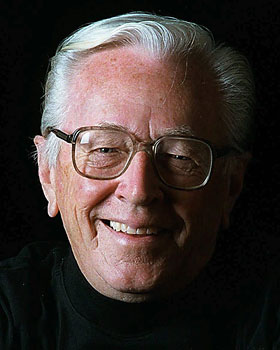
Charles Schulz

The following is the philosophy of Charles Schulz, the creator of the ‘Peanuts’ comic strip.

You don’t have to actually answer the questions. Just ponder on them. It will make very good sense!

Here’s A Little Quiz

You don’t have to actually answer the questions. Just read them straight through, ponder a tad, and you’ll get the point.

  • Name the five wealthiest people in the world.
  • Name the last five Heisman trophy winners.
  • Name the last five winners of the Miss America pageant.
  • Name ten people who have won the Nobel or Pulitzer Prize.
  • Name the last half dozen Academy Award winners for best actor and actress.
  • Name the last decade’s worth of World Series Winners.

How did you do?

The point is, none of us remember the headliners of yesterday. These are no second-rate achievers. They were the best in their fields.

But the applause dies. Awards tarnish over time. Achievements are forgotten and accolades and certificates are buried with their owners.

Here’s another quiz. See how you do on this one:

  • List a few teachers who aided your journey through school.
  • Name three friends who have helped you through a difficult time.
  • Name five people who have taught you something worthwhile.
  • Think of a few people who have made you feel appreciated and special!
  • Think of five people you enjoy spending time with.

Did you find that Easier? Of course you did!

So here’s the lesson!

The people who make a difference in your life are not the ones with the most credentials, or the most money…or the most awards…they simply are the ones who care the most.

ooOOoo

You all have a very wonderful weekend.

Friday fondness

A rather personal posting for today.

My dear, sweet wife is struggling with a personal issue that I am not going to share with you dear readers; for obvious reasons. The issue is not to do with our relationship, not at all, but part of the journey of getting a little older day by day.

Yesterday morning, sitting up in bed after breakfast, accompanied by many of our dogs fast asleep around us, Jean had a bit of a weepy session. Today Jean and I are off to see a medical consultant to ascertain the nature of the issue. Not going to say any more than that.

So back to yesterday morning, me reflecting on Jean’s tears, and me musing about what to write for today’s post. There in my email inbox was an item in the latest Big Think newsletter that was perfect. It was called The Science behind Maintaining a Happy Long-Term Relationship and it was by Dr. Helen Fisher, senior research fellow at the Kinsey Institute.

Here is how that article by Dr. Fisher opens:

Plenty of people are pessimistic about the state of relationships in society. Dr. Helen Fisher, senior research fellow at the Kinsey Institute, isn’t one of them. She sees trends like extended periods of cohabitation before marriage and a persistent fear of divorce not only as interrelated, but also signs of a healthy change in attitude toward love. While marriage was once the start of a long-term relationship, she says, today it’s the finale. And that’s a good way to cope with a brain whose primitive regions are driven intensely toward short-term relationships. Dr. Fisher also explains how to maintain novelty, the fuel of romantic love, and how to be aware of the brain regions that affect satisfaction in a relationship.

Now I don’t have permission to republish the full transcript but I see that the video, that was included in the Big Think article, is on YouTube.

I count myself incredibly lucky to have met Jean back in December, 2007 and that out of that meeting came a loving relationship that is more beautiful than words. Well more beautiful than my words so I will let E. E. Cummings say it how it should be said.

love is more thicker than forget
more thinner than recall
more seldom than a wave is wet
more frequent than to fail
it is most mad and moonly
and less it shall unbe
than all the sea which only
is deeper than the sea
love is less always than to win
less never than alive
less bigger than the least begin
less littler than forgive
it is most sane and sunly
and more it cannot die
than all the sky which only
is higher than the sky
Share this text …?

E.E. Cummings, “[love is more thicker than forget]” from Complete Poems 1904-1962, edited by George J. Firmage. Copyright 1926, 1954, 1991 by the Trustees for the E.E. Cummings Trust. Copyright © 1985 by George James Firmage. Reprinted with the permission of Liveright Publishing Corporation.

Source: Poetry (January 1939). (Taken from here)

That is my love for Jean.