Category: Philosophy

Feeding the correct wolf!

A very heart-touching guest post

Yesterday I used as a sub-heading “I will never, ever tire of the wonderful connections made by this blog!

I wrote that before Sydney sent in a guest post which reached out to me, to Jeannie and, undoubtedly, will reach out to many others. Sydney further validated the power of the wonderful connections that blogging brings.

Here’s how it came about.

Not that long ago, there was a new follower to this place. As is so frequently the case that new follower was also a blogger. Their blog is called very beautifully: Recovery For All Of My Heart. As I always try to do, I went across to leave a ‘thank you’ note. I also read the About page that I want to republish here by way of my introduction to Sydney.

Hello, I am in recovery from an eating disorder, depression and anxiety. The way I got to the best place in my mind is by changing my perspective.

In this blog, I use my new open-mindedness to show the world the beauty I see in hopes that others will then see the beauty in themselves. For me, all it took was to see the beauty in myself, but I needed someone to help me see it first. My hope is to be that person for others.

There is a way to see the good in every piece of you. You can get your mindset to see what others love about you. The proof of everyone’s beauty lies in changing your perspective and this blog hopes to put into light the beauty in everyone that ever existed.

So now to Sydney’s post. (And if you want to understand why I chose the title to this post, then please read right down to the end.)

ooOOoo

Mindfulness and a dog named Bailey

By Sydney R. February 23rd., 2017
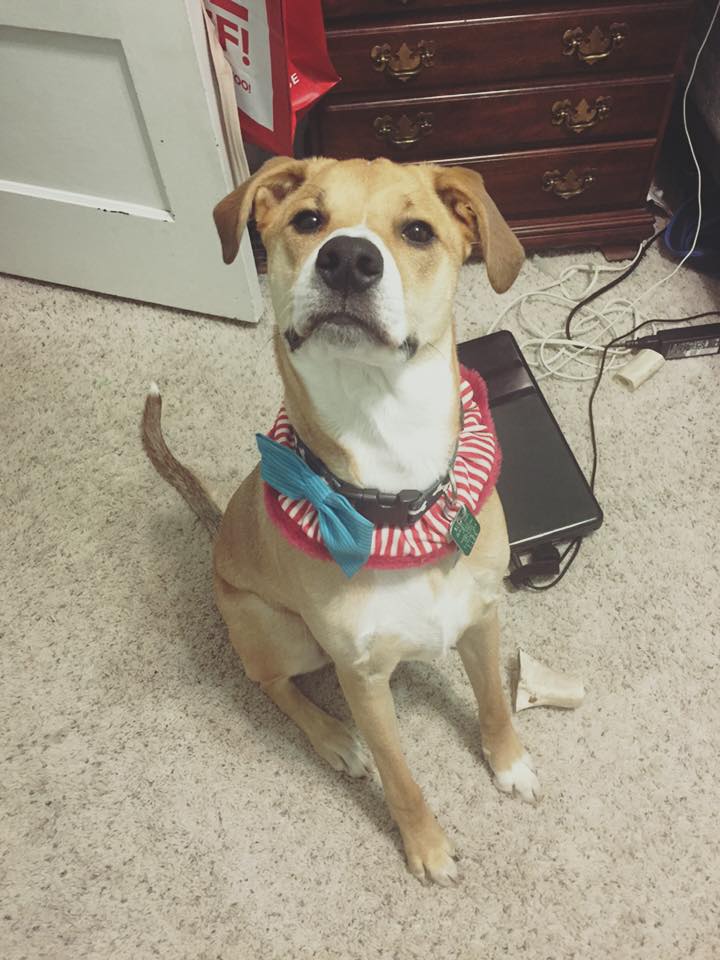
Bailey
Bailey

When I was 21 years old, I got a hound boxer puppy named Bailey. Previously, I had a dog my mom and I raised when I was seven; she was named Rachel.

I only speak of Bailey in this post because of a certain situation I want to talk about, but I also wanted to mention how amazing Rachel was too.

Anyway, I raised Bailey to be the sweet almost two-year-old he is today. He is not a normal dog to me. This is because I believe him to be extraordinary (so original for dog owners, I know), and also because I have struggled with my mental health.

I have struggled with depression and he has changed my life for the better. One day last year I was having a very hard time with my depression. I wanted to just lay in bed and quit my job and begin isolating again. I wanted to just sleep and not fight the thoughts and just let them rattle on inside of my mind while I lay there.

I grabbed my dog as he was lying next to me and held onto him ready to remain in my negative thoughts for all eternity. Then something changed: I felt his fur. I felt my cheek against his fur. I heard his sweet little breathing that used to put me to sleep when he laid on my chest when he was a puppy. I was being mindful without even realizing it.

I was aware of everything I was feeling when holding this thing that is so dear to my heart.

Suddenly, all the pain went away. I was reminded of this feeling I can have while holding my dog. I can fight this depression and I can have a wonderful life. If you ever are feeling extremely sad or have any type of negative urges, and this can be about anything, grab your furry little one and just stay in the moment until they pass.

And why is this?

Research has shown that if you look into your dogs eyes, the hormonal response is activated just like the one that is activated when you look at infants. Scientists took blood samples of dogs and their owners before and during time spent petting. The results were that the levels of oxytocin went up in humans during a petting session of a dog and it was at very similar levels of new mothers and their infants.

Even more amazing, dogs had the same levels in their blood as well, showing how happy they are around their owners. During my depression that night, holding onto my dog was not just helping me overcome my sadness, he was having a nice time as well.

Now what I am guessing is that if you are sitting down, petting your dog, but not really paying much attention, your dog will be happy, but your oxytocin levels will not be as high as they could be. When you are mindful and staying in the moment whilst petting your dog, you could be seriously happy, to the point where your oxytocin levels from your dog stops you from ruminating on your negative thoughts.

Don’t just pet your dog when you are upset…make sure you are completely in the moment.

Notice your body and notice what your hands and arms are feeling as you wrap your arms around your dog. Let your hands and all of your arms feel the fur. Use all of your senses. Make sure you hear your dog and do not let your thoughts block out being in the moment. Regular petting of the dog is enjoyable. Mindful petting of a dog could change your life, like it did mine.

Now I will always know that I have something to go to when I feel depressed. This is extremely important because one huge part of depression is hopelessness. This is the feeling that you will always feel depressed.

With a dog, you have hope to get out of those feelings. I know that I have my dog to go to and I will never fear being sad forever again. I always have the mindful petting of Bailey or Rachel that will make the negative thoughts drain away.

ooOOoo

Good people, I am genuinely humbled by both Sydney’s desire to share this with you, and by the magic of having a dog in our life.

So let me close like this.

BBC Television in the UK currently have on their iPlayer site a drama series called Death in Paradise: The programme website is here.

Detective drama series set on a Caribbean island.

In a recent episode there was this profoundly wise observation made by the detective, Jack Mooney, played by Ardal O’Hanlon.

Detective Jack Mooney

There are always two wolves deep inside us.

One is a hateful, angry, selfish wolf that doesn’t hesitate to try and do you harm.

The other wolf is a soft, gentle creature that responds to love and always wants to love you back.

So which wolf is in charge?

The wolf we feed!

Footnote:

This came to my ‘inbox’ a short time ago (as of 09:30 Sunday morning):
unnamed2

Who pulls the strings?

Or, more specifically, do we believe we have free will?

One of the endless benefits of this wired-up, digital world is how easy it is to have one’s mind opened and stretched a little.

Take this, for instance, as an intriguing start to a new day.

Do we have free will?

This isn’t a question I can answer, but what I am interested in is “what happens if we do (or do not) believe in free will?” In other words, does believing in free will matter in your daily life?

Just let one’s mind float around that idea, not only as it applies to us humans but also to the animals that share our human intuition, such as dogs and horses.

So what’s got me bubbling along today? Nothing less than an article that appeared on The Conversation blog-site back last September.

I found it fascinating and hope you do as well. It is republished within the terms of The Conversation site.

ooOOoo

Believing in free will makes you feel more like your true self

September 1, 2016

By Elizabeth Seto, Ph.D. Candidate in Social and Personality Psychology, Texas A&M University .

image-20160830-28235-1xkam7s
Believing in free will makes us feel more like ourselves. Man walking via http://www.shutterstock.com

Do we have free will? This is a question that scholars have debated for centuries and will probably continue to debate for centuries to come.

This isn’t a question I can answer, but what I am interested in is “what happens if we do (or do not) believe in free will?” In other words, does believing in free will matter in your daily life?

My colleagues and I at the Existential Psychology Lab at Texas A&M University study the psychological outcomes of belief in free will. While contemplating my next research project, I realized at some point in our lives, we all want to understand who we are – it’s human nature. So, we decided to explore how believing in free will influences our sense of self and identity.

 One way or another? Feet image via www.shutterstock.com.
One way or another? Feet image via http://www.shutterstock.com.

What is free will?

Free will is generally understood as the ability to freely choose our own actions and determine our own outcomes. For example, when you wake up in the morning, do you hit snooze? Do you put on your workout gear and go for a run? Do you grab a hot cup of coffee? While those are simple examples, if you believe in free will, you believe there are a limitless number of actions you can engage in when you wake up in the morning, and they are all within your control.

Believing in free will helps people exert control over their actions. This is particularly important in helping people make better decisions and behave more virtuously.

For instance, research has found that promoting the idea that a person doesn’t have free will makes people become more dishonest, behave aggressively and even conform to others’ thoughts and opinions. And how can we hold people morally responsible for their actions if we don’t believe they have the free will to act any differently? Belief in free will allows us to punish people for their immoral behaviors.

So, not only is there a value to believing in free will, but those beliefs have profound effects on our thoughts and behaviors. It stands to reason that believing in free will influences how we perceive ourselves.

You might be thinking, “Of course believing in free will influences how I feel about myself.” Even though this seems obvious, surprisingly little research has examined this question. So, I conducted two studies to suss out more about how believing in free will makes us feel.

What believing in free will makes us feel about ourselves

In the first study, I recruited 304 participants from Amazon Mechanical Turk and randomly assigned them to write about either personal experiences reflecting a high belief in free will, like changing career paths or resisting drugs or alcohol, or experiences reflecting a low belief in free will, such as growing up in poverty or working under an authoritative boss. Then, they were all asked to evaluate their sense of self.

Participants who wrote about experiences reflecting low belief in free will reported feeling less “in touch” with their true selves. In other words, they felt like they did not know themselves as well as the participants who wrote about experiences reflecting high belief in free will.

Then, I conducted a follow-up study testing one’s sense of authenticity, the feeling that one is behaving according to their own beliefs, desires and values.

I recruited another group of participants from Amazon Mechnical Turk, and like the first experiment, randomly assigned them to write about personal experiences demonstrating high belief in free will or low belief in free will. Then, they all completed a decision-making task where they had to make a series of choices about whether to donate money to charity or to keep the money for themselves.

Afterwards, participants were asked how authentic they felt while making their decisions. Participants in the low free will group reported feeling less authentic than participants in the high free will group.

 Up and at it. Female runner image via www.shutterstock.com.
Up and at it. Female runner image via http://www.shutterstock.com.

So, what does this all mean?

Ultimately, when people feel they have little control over their actions and outcomes in life, they feel more distant from their true, authentic selves. They are less in touch with who they are and do not believe their actions reflect their core beliefs and values.

We believe this is because belief in free will is linked to feelings of agency, the sense that we are the authors of our actions and are actively engaged with the world. As you can imagine, this sense of agency is an important part of a person’s identity.

The importance of feeling like you are in charge of your life applies to significant actions like moving or getting a new job or pondering the big questions in life. But it also applies to the minor decisions we make throughout the day.

Here’s one simple, though relatable, decision I am faced with every morning. When I wake up in the morning and decide to put on my workout gear and go for a run instead of hitting snooze, I might feel like I am the primary decision-maker for this morning routine. Additionally, I am most likely acting on the part of me that values physical health.

But what if I wake up, and I feel like I can’t exercise because I have to go to work or some other external factor is making it difficult to go? I might feel as if someone or something else is controlling my behavior, and perhaps, less like my true self.

So, do you have free will? Do any of us? Remember, the question isn’t whether it exists or not, but whether you believe it does.

ooOOoo

Now thinking of dogs having their own free will might seem a little bizarre, but I do not intend it to be seen as such. Many of you will have dogs (and horses) that have ‘minds of their own’.

For our family here at home, if there’s one of our dogs that exhibits free will it is our Brandy.

Our Brandy is a Pyrenean Mastiff!

Without warning or any other indication, he will suddenly decide it is time to go ‘walk-about’. Mainly during the day but sometimes at night, whatever the weather, he will disappear. He will always return but can be wandering around our thirteen acres for up to an hour.

Does he have free will?

Does he believe he has free will?

Do we believe he has free will?

What, dear reader, do you think?

Max, our dark Prince

Another crossing of the Rainbow Bridge

Yesterday, in came an email that brought a tear to my eye:

Dear Paul,

I came across your blog this morning and saw the post on ‘We shall not forget them’ to pay tribute to our fur babies.

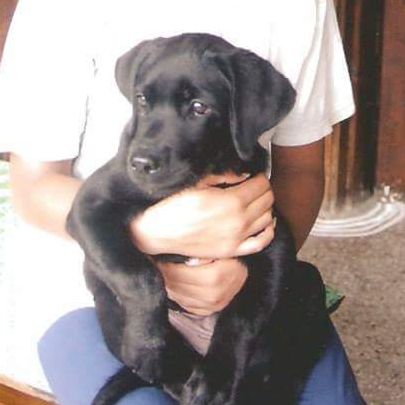
My black Labrador, Max, crossed the Rainbow Bridge on November 28th. He’s on my mind all the time and I have constantly been trying to do little things that make me feel his presence.

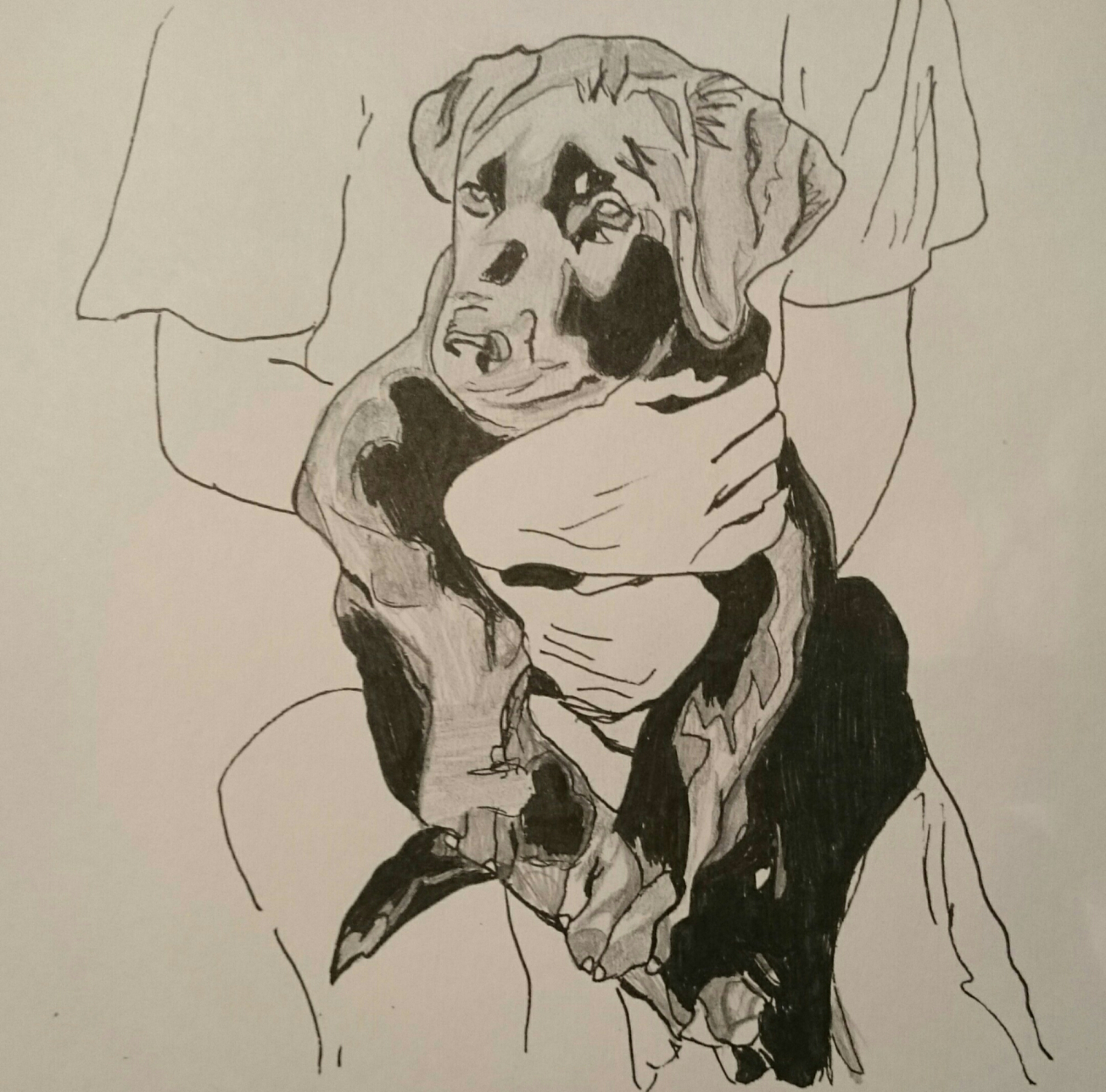
I was hoping I could pay a tribute to him on your blog. Please find a small poem and a portrait of him that I had penned down earlier. This is the original picture I sketched of him.

The email came from Samyuktha Sridhar and it is a wonderful honour and privelege to offer Sam’s tribute to Max.

ooOOoo

Max, our dark Prince

by Samyuktha Sridhar

Max, our handsome black labrador who was eleven and a half years old crossed to the other side of the Rainbow Bridge on 28 November, 2016. We miss him like crazy and it hasn’t yet fully sunk in.

There is no way we can make the pain go away, but we need to move on and learn to live with the beautiful memories. Every person has a different way of dealing with loss and sadness. I like to put my thoughts on paper. It helps me get things out of my system.

So here’s what I did..

wp-image-979505248jpgIf memories could bring us closer, if tears could bridge the gap

I’d cross the oceans to see you, in warm wet hugs we’d wrap

I opened my eyes to reality, to warm wet tears instead

The pain in my heart was real, as the voices in my head

Echoed, “No teary goodbyes were exchanged, no words of farewell spoken,

Would it have made it easier, if we had that chance?” I’m torn!

If I knew t’was the last time, that you’d look into my eyes

I’d have cradled your head upon my lap, stayed by you as you lay.

Were you in pain that fateful night, when the big brown clock struck three?

Sadly I’ll never know, would I? If you’d reached out to me.

With every breath you took you filled, my heart with so much love

You took a piece of my heart with you, the piece that belonged to you.

img_20161128_031547ooOOoo

Again and again we are reminded of what our dogs mean to us. So beautifully expressed by Sam.

Please, if you want to offer a tribute to your dearly departed dog do share it on these pages.

Memories of Diego

Another reminder of what our dogs mean to us.

Or, more specifically, what Diego meant for Laura Bruzzese. (This will be the second in the series We Shall Not Forget Them.)

ooOOoo

Dog Love In August

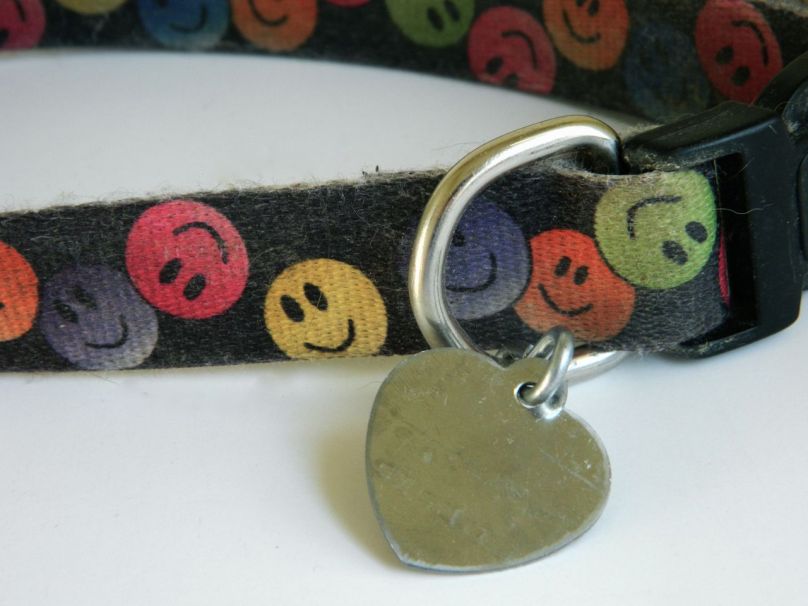
collarAugust is the start of the dying season. Garden things begin their slow shrink into the earth, the days grow shorter and cooler, lazy ocean- or mint-scented summer days snap into rigid schedules of work and school.

August is also the month that I lost Diego, my first dog. You can get acquainted with Diego here, a post I wrote a few days before he died. But I would like to share a little more now, on the second anniversary of his departure.

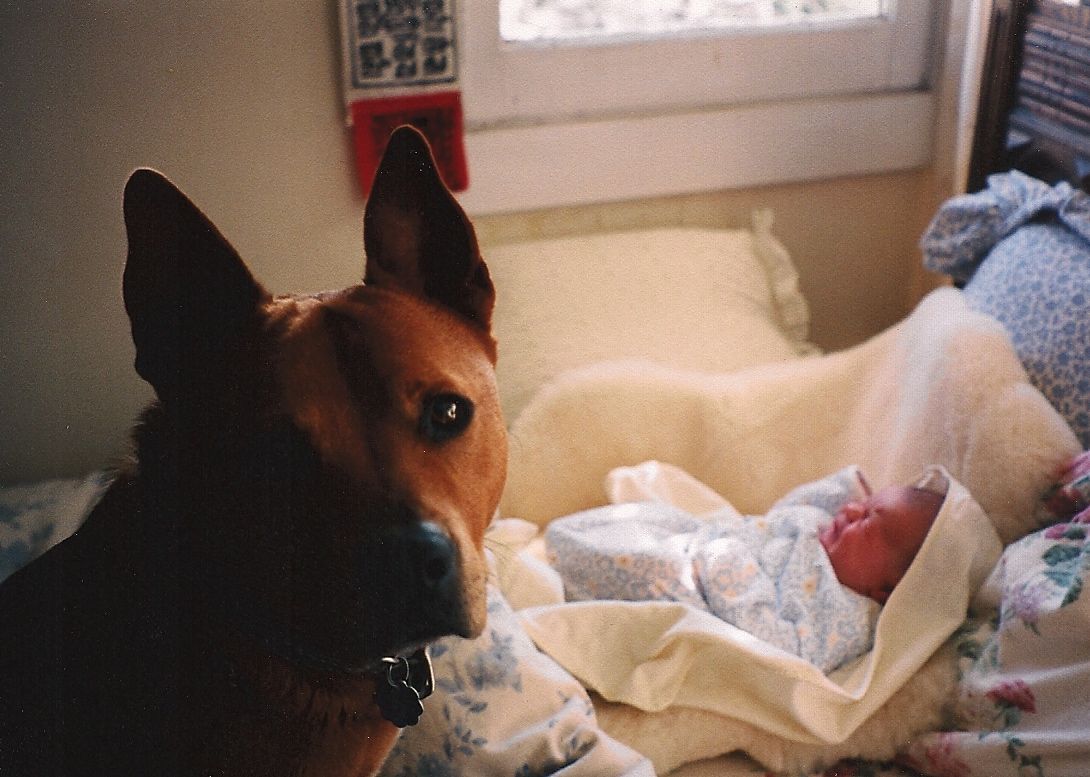
Diego was a poser, in a very literal sense of the word. He loved having his picture taken; in fact, he insisted on it whenever he saw me holding the camera. This picture, for example: it was taken the day I brought my daughter home from the hospital, the day after 21 hours of hard labor produced an eight-and-a-half-pound baby who actually stopped halfway out of my body, looked around, and scowled before resuming her reluctant journey onto the planet. (She was 12, twelve days overdue, FYI all you mothers out there who can surely feel my pain.)

There is something screaming in the bed. Please make it stop before it explodes.

I laid baby Isabella down, stepped back with the camera, looked up, and there he was: Diego, staring. Fifty-eight pounds of solid, unmoving dog. Insisting that I photograph him, too, with this creature that he wasn’t sure if he should guard against or lick. This child who personified the singular emotion of furious for the first nine weeks of her life (if she was not sleeping or eating, she was screaming).

Oh, hi Aunt Rosie. I know you’ve passed on, but I’ll bet you can still hear that screaming baby wherever you are.

When my doula told me that the colic or distemper or petite innards or whatever it was making Isabella so unhappy would resolve itself in about nine weeks, I said oh, that’s nice. But I won’t be alive for nine weeks of this. I’ll be in an asylum acquainting myself with a selection of opiates, or at the bottom of the mighty Rio Grande; so behold, an orphan.

But somehow, I survived. And Diego was part of it.

You see, from the very beginning, it was just us — the two of us, the three of us.  I was abandoned by my husband before Isabella was born, a painful time that I don’t often write about.

Within a matter of weeks, the married-and-expecting life I’d known was gone, and I was left to fumble around with the pieces, a wreckage sitting on a pile of broken glass in the dark. The small hours of it were the worst, waking up alone and panicked in the middle of the night wondering how (or if) I would live through the next weeks and years. And Diego was always there, a silent and comforting presence curled at the foot of the bed or coming up to lick my tears if I was crying, which was basically all the time. He was always there.

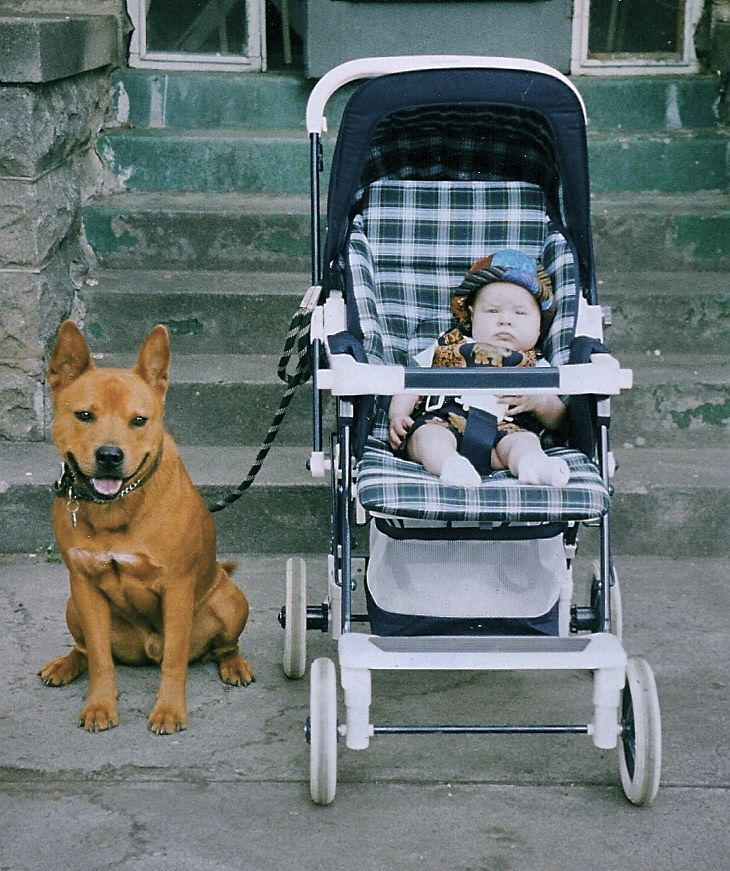
dog-and-babyI have a teenager now and those days seem ancient. While I rebuilt my life, Isabella grew up and Diego grew old. And finally, in his sixteenth year, he began to deteriorate to the point of pain. I knew he wouldn’t be with me much longer and I had already called the vet to ask her how it worked — when do you know it’s time? Do I take him to the office, or do you come to the house? Will he feel anything? I planned to schedule an appointment soon; I hadn’t had to make this decision before and it was a very painful.

On the morning of August 9 before I left for work, I told Diego that we would have to say good-bye soon because his body wasn’t working right anymore. I told him that I loved him and it was okay for him to go. Over and over I told him I loved him.

Less than two hours later, he drowned in the pond.

I think it was his way of avoiding the vet (he hated the clinic), and maybe sparing me that particular pain. I’m not going to say that I wasn’t devastated. But rather than remembering the urgent phone call at work from Isabella, or the vision of him when I got home, or my step-father struggling to carry the terrible weight of him away, I like to imagine Diego simply being received by the fish and toads. Delivered from his pain by warm water, wrapped in a blanket of lilies.

lilyAnyone who has cared for pets perhaps knows that there is one, a special one, who will always occupy the largest piece of real estate in your heart, though others may follow. That was Diego for me.

But now we’re lucky enough to share our lives with another dog, the rascally, neurotic, road trip-loving Velma. I’ll end this post with a short video of her that reminds me of exactly what I love about dogs: their absolute and abundant connection with life, free of judgement, agenda, or desire to be anything other than what they are. That’s what I think of every time I see Velma in her Writhe of Exquisite Happiness. Perfect contentment of being.

ooOOoo

Laura wrote and published this back in August, 2012. But her words, emotions and feelings are those that never age. Indeed, I would add her courageous words.

Tensions abound in many societies.

Reader alert: This has nothing to do with dogs!

Then as soon as I started to write today’s post (as of yesterday afternoon) I realised the error in my sub-title. For one might argue that this does have a connection with how our dogs behave as a cohesive group. But I’m going to be ‘an arse’ (‘ass’ in American speak) and ask you to hold out until the end of today’s post to read the ‘doggie’ connection. (Note that today’s post is Part One. Part Two continues tomorrow.)

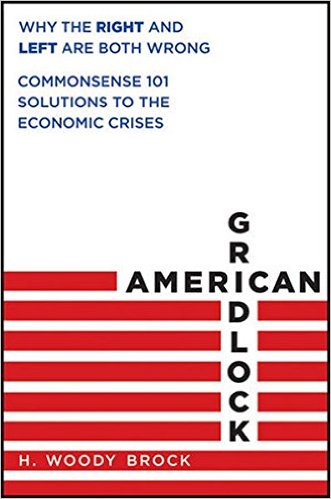
american-gridlock_0I am in the middle of reading American Gridlock written by H. Woody Brock and published in 2012. Here’s an extract of what the book is about, courtesy of Amazon:

A sensible solution to getting our economy back on track

Pessimism is ubiquitous throughout the Western World as the pressing issues of massive debt, high unemployment, and anemic economic growth divide the populace into warring political camps. Right-and Left-wing ideologues talk past each other, with neither side admitting the other has any good ideas. In American Gridlock, leading economist and political theorist H. Woody Brock bridges the Left/Right divide, illuminating a clear path out of our economic quagmire.

Arguing from first principles and with rigorous logic, Brock demonstrates that the choice before us is not between free market capitalism and a government-driven economy. Rather, the solution to our problems will require enactment of constructive policies that allow “true” capitalism to flourish even as they incorporate social policies that help those who truly need it.

Brock demonstrates how deductive logic (as opposed to ideologically driven data analysis) can transform the way we think about these problems and lead us to new and different solutions that cross the ideological divide. Drawing on new theories such as game theory and the economics of uncertainty that are based upon deductive logic, Brock reveals fresh ideas for tackling issues central to the 2012 U.S, Presidential election and to the nation’s long-run future:

It greatly influenced me and I sat down and wrote an essay. Mainly to clarify my own thinking ahead of a meeting last Saturday of our local Freethinkers Group where the topic was “Ideas for Improving our Democratic Processes”. The “our” being the US democratic process but just as valid for many other countries.

I first set out to see if there was a clear, unambiguous definition of what a democratic society is. Surprise, surprise there isn’t one. Very quickly I came up with three:

The first:

A democracy by definition is government through elected representatives. It is a form of society which favours equal rights, freedom of speech and a fair trial and tolerates the views of minorities. Civics and Citizenship website

The second:

A DEMOCRACY IS a society in which all adults have easily accessible, meaningful, and effective ways:

(a) to participate in the decision-making processes of every organization that makes decisions or takes actions that affect them, and;

(b) to hold other individuals, and those in these organizations who are responsible for making decisions and taking actions, fully accountable if their decisions or actions violate fundamental human rights, or are dishonest, unethical, unfair, secretive, inefficient, unrepresentative, unresponsive or irresponsible;

(c) so that all organizations in the society are citizen-owned, citizen-controlled, and citizen-driven, and all individuals and organizations are held accountable for wrongdoing. Democracy Watch website

And the third:

Better democracy, everywhere.

The Democratic Society (Demsoc) works for more and better democracy, where people and institutions have the desire, opportunity and confidence to participate together.

We work to create opportunities for people to become involved in the decisions that affect their lives and for them to have the skills to do this effectively. We support governments, parliaments and any organisation that wants to involve citizens in decision making to be transparent, open and welcoming of participation. We actively support spaces, places and processes to make this happen. Democratic Society website.

I went on to say in my essay:

Yes, there is some harmony between all three definitions but there are also significant differences in tone and language.

I am sure many of you are familiar with the book by H. Woody Brock American Gridlock. I started reading it a few days ago and cannot now put it down.

For the core message of the book is that we, as in society, must distinguish between inductive and deductive reasoning. Let me use the definitions as found on the Live Science website.

Deductive reasoning

Deductive reasoning is a basic form of valid reasoning. Deductive reasoning, or deduction, starts out with a general statement, or hypothesis, and examines the possibilities to reach a specific, logical conclusion, according to the University of California. The scientific method uses deduction to test hypotheses and theories. “In deductive inference, we hold a theory and based on it we make a prediction of its consequences. That is, we predict what the observations should be if the theory were correct. We go from the general — the theory — to the specific — the observations,” said Dr. Sylvia Wassertheil-Smoller, a researcher and professor emerita at Albert Einstein College of Medicine.

In deductive reasoning, if something is true of a class of things in general, it is also true for all members of that class. For example, “All men are mortal. Harold is a man. Therefore, Harold is mortal.” For deductive reasoning to be sound, the hypothesis must be correct. It is assumed that the premises, “All men are mortal” and “Harold is a man” are true. Therefore, the conclusion is logical and true.

That is, we predict what the observations should be if the theory were correct.

Let that really work it’s way through your consciousness. It’s an idea that is rooted in the great scientists and philosophers of many thousands of years ago. Think of Euclid, the Greek Socratic philosopher who founded the Megarian school of philosophy. He was a pupil of Socrates in the late 5th century BCE, and was present at his death. (I cheated and looked it up.)

It was Euclid who through Euclidian geometry came to understand the principles of angles and straight lines; as in the shortest distance between two points.

Moving on:

Inductive reasoning

Inductive reasoning is the opposite of deductive reasoning. Inductive reasoning makes broad generalizations from specific observations. “In inductive inference, we go from the specific to the general. We make many observations, discern a pattern, make a generalization, and infer an explanation or a theory,” Wassertheil-Smoller told Live Science. “In science there is a constant interplay between inductive inference (based on observations) and deductive inference (based on theory), until we get closer and closer to the ‘truth,’ which we can only approach but not ascertain with complete certainty.”

Even if all of the premises are true in a statement, inductive reasoning allows for the conclusion to be false. Here’s an example: “Harold is a grandfather. Harold is bald. Therefore, all grandfathers are bald.” The conclusion does not follow logically from the statements.

Inductive reasoning has its place in the scientific method. Scientists use it to form hypotheses and theories. Deductive reasoning allows them to apply the theories to specific situations.

Now for some of you this side trip into reasoning may have seen more like a complete departure. But the point is that, as American Gridlock makes so powerfully: There are two main problems to be solved if this nation is to get back on track. First, win-win policy solutions must be identified for the five real-world problems addressed in Chapters 2 through 6. Second, the Dialogue of the Deaf must come to an end, policy gridlock with it, and these solutions must be implemented. (Pages 7-8)

I closed my essay by setting out the following proposition:

Until we have a clear, universally acknowledged definition of what a democratic society is then it is impossible and utterly futile to debate the various processes including what is the best process for American society.

Is this relevant to the world outside the USA? You bet it is. For better or for worse, what the USA does today the rest of the world does soon thereafter.

And as you will see in Part Two that comes tomorrow democratising the economy is key.

For when we look at the way that dogs, and wolves, operate as a pack in the wild there are only three animals with status:

  • The alpha female who has first choice of the male dogs for mating purposes and makes the decision, as and when necessary, to move her pack to a new territory,
  • The beta dog, always a male, whose role is to keep the pack running smoothly as a cohesive group and not letting squabbles get out of hand, and,
  • The omega dog, that can be of either gender, whose role is to keep the pack happy.

All the other animals in the pack of around fifty are of equal status and work for the benefit of the pack. Now that is something we should learn from dogs!

Dreams of hope

My wish for 2017, and for evermore.

One of the many things that we adore about living here in Merlin, Southern Oregon is the closeness of nature. Not just the nature of the slopes and mountains but the nature of the trees, creeks, grasses and wild plants.

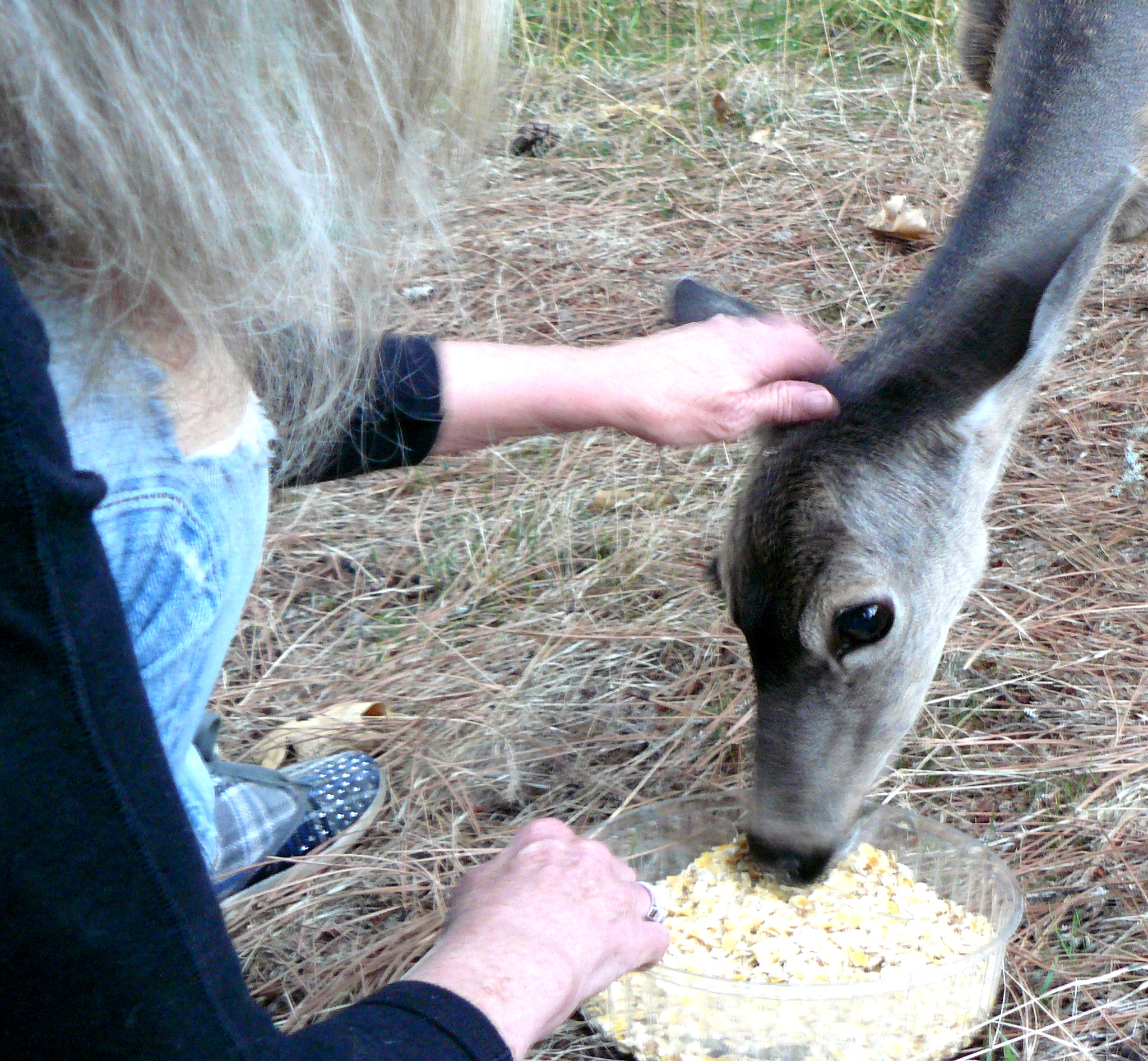
Plus the awareness over the 4+ years that we have been here of how easy it is to gain the trust of wild animals. I will go to my grave holding on to the sweet sensation of a wild deer trusting me and Jean to the point where we could stroke the deer’s neck when we were feeding her.

The trust between the deer and Jean then enabled the deer to feed from Jean's hand.
The trust between the deer and Jean then enabled the deer to feed from Jean’s hand.
Then, unbelievably, the wild deer continues feeding as Jean fondles the deer's ear.
Then, unbelievably, the wild deer continues feeding as Jean fondles the deer’s ear.

(Both photographs taken in October, 2014 in the area of grassland near to our stables.)

The measure of how we, as in humanity, really feel about the only home we have, as in Planet Earth, is how we regard our planet.

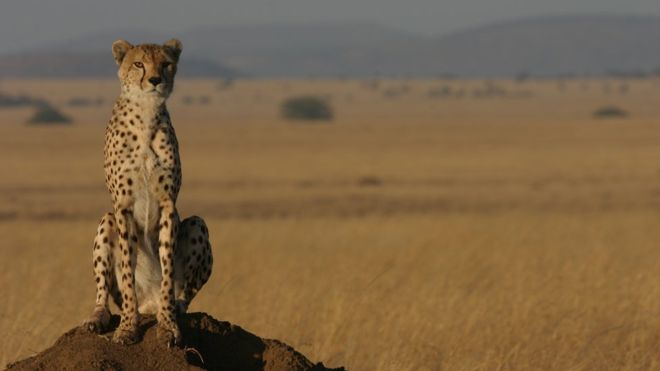
The pain that we feel when we read, as I did yesterday, about another animal species possibly heading towards extinction. In this case, an item on the BBC News website about Cheetahs.

Cheetahs heading towards extinction as population crashes

By Matt McGrath Environment correspondent

Protected parks and reserves for cheetahs are not sufficient as the animal ranges far beyond these areas.

 The sleek, speedy cheetah is rapidly heading towards extinction according to a new study into declining numbers.

The report estimates that there are just 7,100 of the world’s fastest mammals now left in the wild.

Cheetahs are in trouble because they range far beyond protected areas and are coming increasingly into conflict with humans.

The authors are calling for an urgent re-categorisation of the species from vulnerable to endangered.

(Read the full article here.)

It’s no good tut-tutting; something different has to be done. For otherwise nature will have the last word to say about the future of vast numbers of species especially homo sapiens!

All of which leads me to the main theme of today’s post: holding nature in higher esteem as in higher legal esteem.

Read the following that was published on The Conversation blogsite on October 10th, 2016 and is republished here within their terms. The author is , Lecturer on Anthropology, University of Colorado, Denver.

ooOOoo

What if nature, like corporations, had the rights and protections of a person?

October 10, 2016 8.16am EDT

image-20161005-20110-9ipkfz
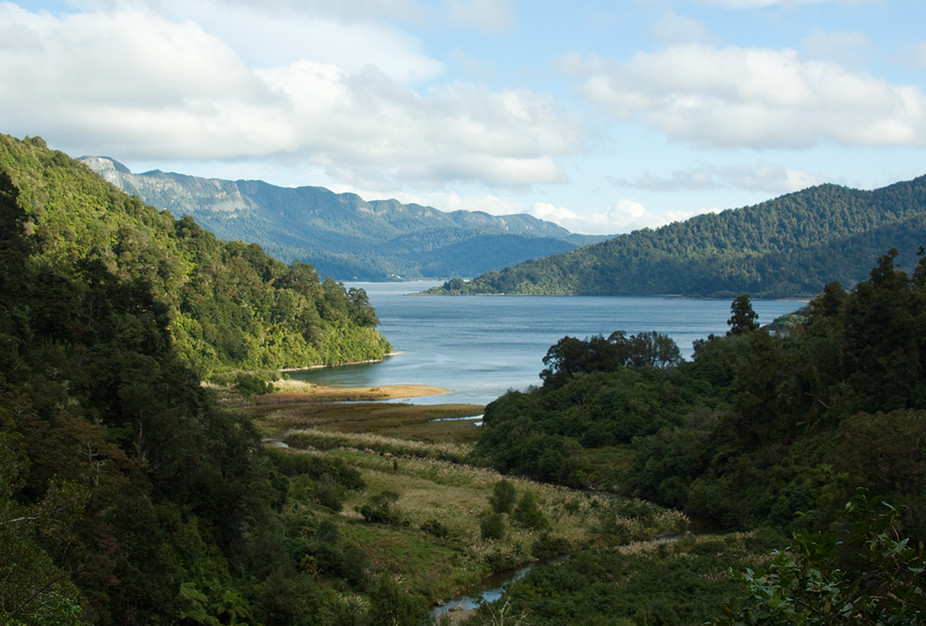
The forest around Lake Waikaremoana in New Zealand has been given legal status of a person because of its cultural significance. Paul Nelhams/flickr, CC BY-SA

In recent years, the U.S. Supreme Court has solidified the concept of corporate personhood. Following rulings in such cases as Hobby Lobby and Citizens United, U.S. law has established that companies are, like people, entitled to certain rights and protections.

But that’s not the only instance of extending legal rights to nonhuman entities. New Zealand took a radically different approach in 2014 with the Te Urewera Act which granted an 821-square-mile forest the legal status of a person. The forest is sacred to the Tūhoe people, an indigenous group of the Maori. For them Te Urewera is an ancient and ancestral homeland that breathes life into their culture. The forest is also a living ancestor. The Te Urewera Act concludes that “Te Urewera has an identity in and of itself,” and thus must be its own entity with “all the rights, powers, duties, and liabilities of a legal person.” Te Urewera holds title to itself.

Although this legal approach is unique to New Zealand, the underlying reason for it is not. Over the last 15 years I have documented similar cultural expressions by Native Americans about their traditional, sacred places. As an anthropologist, this research has often pushed me to search for an answer to the profound question: What does it mean for nature to be a person?

The snow-capped mountain

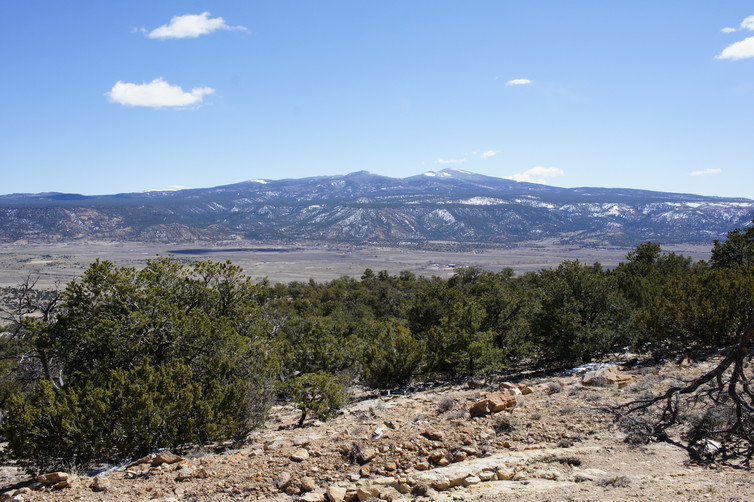
A majestic mountain sits not far northwest of Albuquerque, New Mexico. Like a low triangle, with long gentle slopes, Mount Taylor is clothed in rich forests that appear a velvety charcoal-blue from the distance. Its bald summit, more than 11,000 feet high, is often blanketed in snow – a reminder of the blessing of water, when seen from the blazing desert below.

The Zuni tribe lives about 40 miles west of Mount Taylor. In 2012, I worked with a team to interview 24 tribal members about the values they hold for Dewankwin K’yaba:chu Yalanne (“In the East Snow-capped Mountain”), as Mount Taylor is called in the Zuni language. We were told that their most ancient ancestors began an epic migration in the Grand Canyon.

 Mount Taylor in New Mexico, a sacred site to the Zuni who believe it is a living being. Chip Colwell, Author provided.
Mount Taylor in New Mexico, a sacred site to the Zuni who believe it is a living being. Chip Colwell, Author provided.

Over millennia they migrated across the Southwest, with important medicine societies and clans living around Mount Taylor. After settling in their current pueblo homes, Zunis returned to this sacred mountain to hunt animals like deer and bear, harvest wild plants like acorns and cattails, and gather minerals used in sacrosanct rituals that keep the universe in order. Across the generations Dewankwin Kyaba:chu Yalanne has come to shape Zuni history, life, and identity no less than the Vatican has for Catholics.

But unlike holy places in the Western world, Zunis believe Mount Taylor is a living being. Zuni elders told me that the mountain was created within the Earth’s womb. As a mountain formed by volcanic activity, it has always grown and aged. The mountain can give life as people do. The mountain’s snow melts in spring and nourishes plants and wildlife for miles. Water is the mountain’s blood; buried minerals are the mountain’s meat. Because it lives, deep below is its beating heart. Zunis consider Mount Taylor to be their kin.

There is a stereotype that Native American peoples have a singular connection to nature. And yet in my experience, they do see the world in a fundamentally different way from most people I know. Whether it is mountains, rivers, rocks, animals, plants, stars or weather, they see the natural world as living and breathing, deeply relational, even at times all-knowing and transcendent.

In my work with Arizona’s Hopi tribe, I have traveled with cultural leaders to study sacred places. They often stop to listen to the wind, or search the sky for an eagle, or smile when it begins to rain, which they believe is a blessing the ancestors bestow upon them.

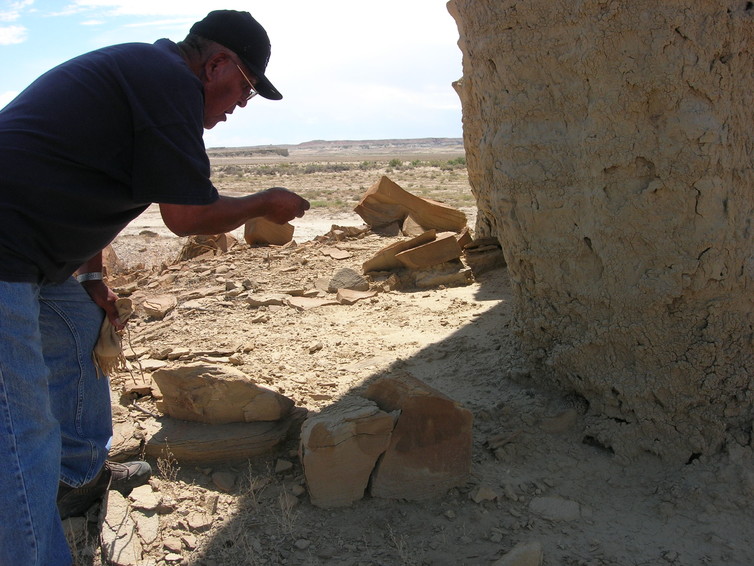
During one project with the Hopi tribe, we came across a rattlesnake coiled near an ancient fallen pueblo. “Long ago, one of them ancestors lived here and turned into a rattlesnake,” the elder Raleigh H. Puhuyaoma Sr. shared with me, pointing to the nearby archaeological site. “It’s now protecting the place.” The elders left an offering of corn meal to the snake. An elder later told me that it soon rained on his cornfield, a result from this spiritual exchange.

Violent disputes

Understanding these cultural worldviews matters greatly in discussions over protecting places in nature. The American West has a long history of battles over the control of land. We’ve seen this recently from the Bundy family’s takeover of the federal wildlife refuge in Oregon to the current fight over turning Bears Ears – 1.9 million acres of wilderness – into a national monument in Utah.

Yet often these battles are less about the struggle between private and public interests, and more about basic questions of nature’s purpose. Do wild places have intrinsic worth? Or is the land a mere tool for human uses?

 A Hopi elder making an offering to a snake to protect a sacred space. Chip Colwell, Author provided.
A Hopi elder making an offering to a snake to protect a sacred space. Chip Colwell, Author provided.

Much of my research has involved documenting sacred places because they are being threatened by development projects on public land. The Zuni’s sacred Mount Taylor, much of it managed by the U.S. National Forest Service, has been extensively mined for uranium, and is the cause of violent disputes over whether it should be developed or protected.

Even though the U.S. does not legally recognize natural places as people, some legal protections exist for sacred places. Under the National Historic Preservation Act, for example, the U.S. government must take into consideration the potential impacts of certain development projects on “traditional cultural properties.”

This and other federal heritage laws, however, provide tribes a small voice in the process, little power, and rarely lead to preservation. More to the point, these laws reduce what tribes see as living places to “properties,” obscuring their inherent spiritual value.

In New Zealand, the Te Urewera Act offers a higher level of protection, empowering a board to be the land’s guardian. The Te Urewera Act, though, does not remove its connection to humans. With a permit, people can hunt, fish, farm and more. The public still has access to the forest. One section of the law even allows Te Urewera to be mined.

Te Urewera teaches us that acknowledging cultural views of places as living does not mean ending the relationship between humans and nature, but reordering it – recognizing nature’s intrinsic worth and respecting indigenous philosophies.

In the U.S. and elsewhere, I believe we can do better to align our legal system with the cultural expressions of the people it serves. For instance, the U.S. Congress could amend the NHPA or the American Indian Religious Freedom Act to acknowledge the deep cultural connection between tribes and natural places, and afford better protections for sacred landscapes like New Mexico’s Mount Taylor.

Until then, it says much about us when companies are considered people before nature is.

ooOOoo

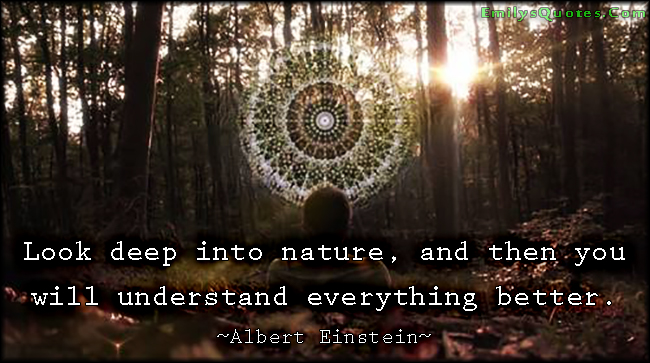
 emilysquotes-com-look-deep-nature-understand-wisdom-inspirational-life-albert-einsteinMy dreams of hope!

Just slip away for a while.

There are some things we will always cherish.

Just a few days ago I wrote of the time when I was living in the small village of Harberton in South Devon, England. Harberton was a wonderful reminder that these modern times don’t reach to everyone all of the time. There were still plenty of folk who recalled the past times in very beautiful ways. (I wish I could remember the name of the old Devonian who used to come into the village pub on a regular basis and demonstrate that by listening to a local’s accent he could tell which Devon village they were from!)

It’s all too easy to lose sight of the fact that many things change very slowly, and local and regional accents are examples of that.

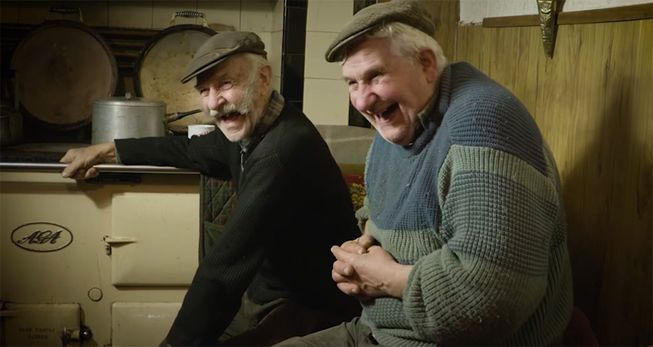
You know the saying Down to Earth? Chill out for 18 minutes and revel in these two Welshmen that appeared in a recent essay over on Mother Nature News.

ooOOoo

These 2 Welsh farmers will melt your heart (and challenge your ears)

The internet’s newest stars have lived and farmed on the same plot of land in Wales for over 70 years.

 Welsh farmers Howell and Gerwyn George's secret to a rich life is plain to see: just enjoy a good laugh! (Photo: Riverlea/YouTube)
Welsh farmers Howell and Gerwyn George’s secret to a rich life is plain to see: just enjoy a good laugh! (Photo: Riverlea/YouTube)

If we told you that listening to two old Welsh farmers recount the good ol’ days might just become the highlight of your day, would you believe us?

For whatever reason, whether it’s their charm, genuine brotherly love, or endearing/confounding Welsh dialect, Howell and Gerwyn George have mesmerized nearly everyone who has given up a few moments to watch them reminisce.

“They don’t make boys like that any more, more is the pity!!!,” said one commenter on Facebook. “Quality, pleasure to watch.”

“I could listen to this pair all day long…,” said another.

In the 18-minute video, the George brothers discuss everything from livestock to family and changing agricultural practices. Everything is interjected with anecdotes that invariably lead to one or both of the men to erupt into laughter. Several times, I found myself laughing without even knowing what in the world they were saying.

But enough gab from us; we’ll gladly let Howell and Gerwyn take over the conversation. Someone throw these two a reality television contract.

ooOOoo

Simply gorgeous!

Of certainties

The immovable markers in one’s life.

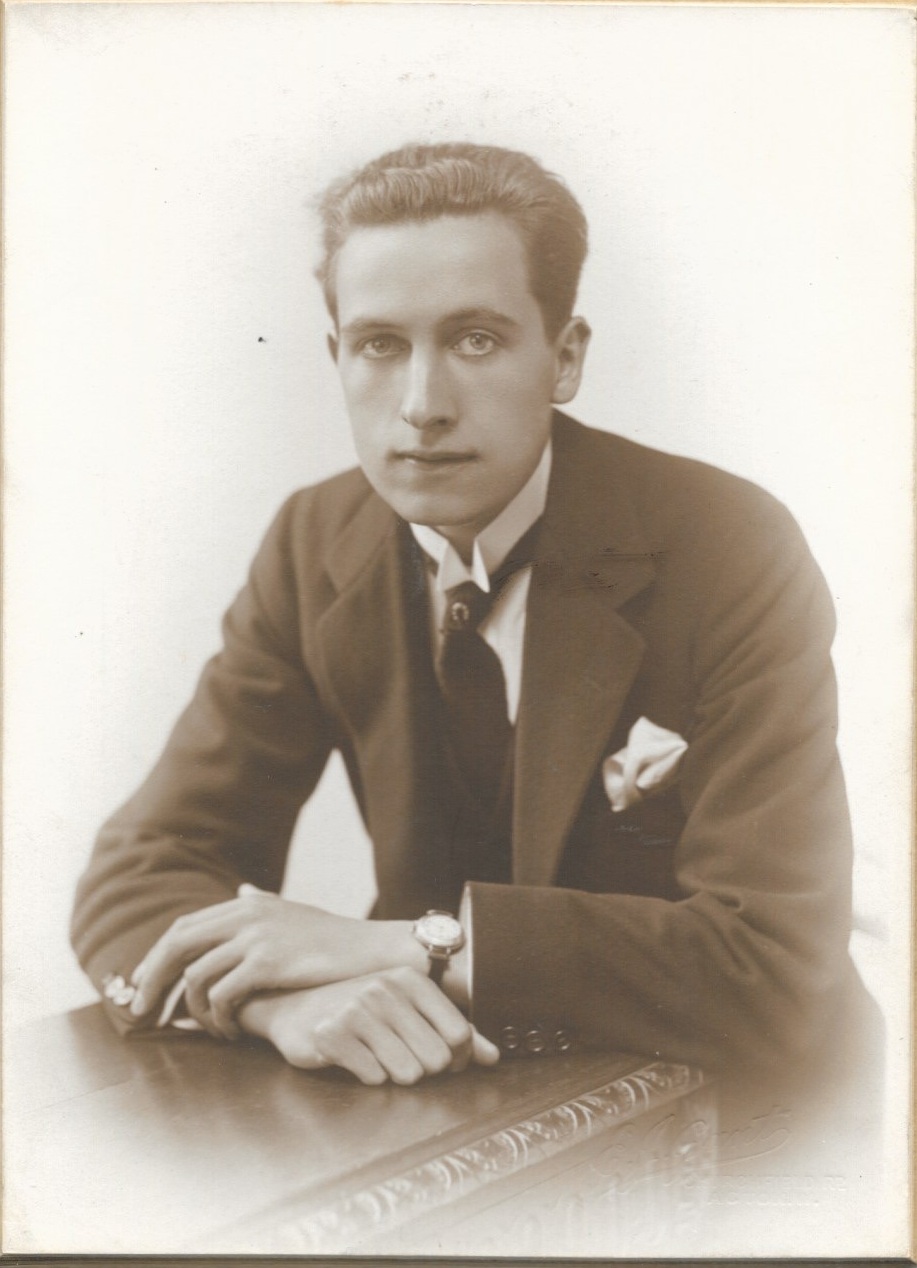
My father's 21st birthday- June 15th, 1922
My father’s 21st birthday- June 15th, 1922

Today, sixty years ago, my father died.

Yes, December 20th., 1956. Just five days before Christmas Day.

I had turned 12 on November 8th that year and my dear sister, Elizabeth, was then 7-years-old.

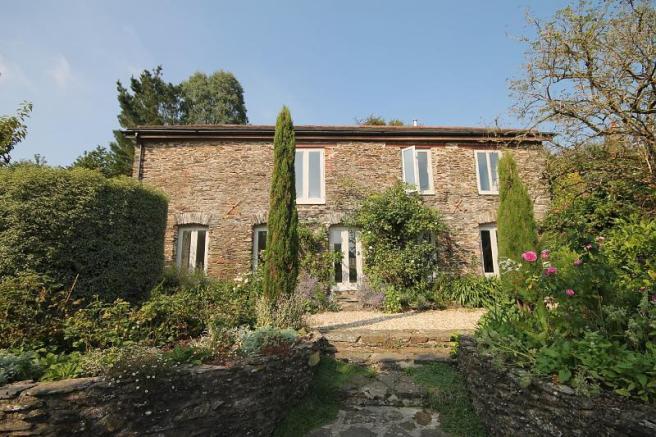
Ten years ago this very day, in other words on the fiftieth anniversary of my father’s death, something happened to me when I was living in the small South Devon village of Harberton; just three miles from Totnes. That ‘something’ started a chain of events that led to me meeting Jeannie in Mexico and us becoming married in Arizona on November 20th, 2010.

Upper Barn, Harberton
Upper Barn, Harberton: My home until early 2007.

I accept that this is of little interest to you, dear reader, but I wanted to put the following ‘out there’.

December 20th will always be a poignant day, until I take my last breath.

But it will also be the most precious day in the year for, again, until I take my last breath December 20th. will always mark the start of my journey to meeting Jean.

Loving Jean and being loved so much in return is as much an immovable marker in my life as was my father’s death.

Life can offer so many twists and turns!

What to say to the kids.

Reflections on what we leave behind.

I included in yesterday’s post the interview with Bill Kotke and his concern that humanity’s greed, and that’s the correct term in my view, focusing on each generation having more, howsoever one defines ‘more’, was utterly at odds with a sustainable future on the only home we have: Planet Earth.  A finite planet in a finite solar system.

On Monday I was chatting with Roger D. back in the old country. It was Roger who introduced me to gliding back in the late 70s. Later we were in business together in Colchester, Essex and we still keep in touch.

Anyway, Roger was bemoaning the current state of affairs in the UK regarding Brexit and went on to say that every economic strategy offered by this or that UK Government was about growth. Whether we are talking economic growth, improvement in living standards or population growth why are there no leading figures in any leading government standing up and saying this can’t go on! Because it can’t!

world_population_1050_to_2050We are presently a global population of 7.5 billion. This year alone, as of today, there have been 56,000,000 deaths. But also, as of today, there have been 133,000,000 births. (I rounded the figures but what difference does it make!) That’s a growth of 77 million persons in this one year. It cannot go on!

Bill Kotke also spoke of soil loss. Just last Sunday there was a Care2 item about soil loss. From which I extract:

Could soil ever actually run out?

Yes. If we continue to harm and degrade topsoil at the current rate, it’s estimated that the world could lose all its topsoil within 60 years.

Topsoil is the uppermost layer of soil on the surface of the earth. It’s the most fertile type of soil that typically contains lots of nutrient-rich organic matter from broken down plants and other organisms. Topsoil is also alive with beneficial microbes, fungi and critters like earth worms, which feed on the organic matter.

The deeper layers of soil beneath the topsoil are not nearly as rich. They are primarily made up of decomposing rock that provides the raw material for future topsoil as well as a substrate for deeply rooted plants to anchor in.

If the delicate ecosystem within topsoil is disrupted, it will essentially die. Plants can’t grow in topsoil that doesn’t have abundant organic matter and thriving populations of microbes.

Yes, there are street protests about this political action or that political action but why aren’t we seeing tens of thousands on the streets protesting about the loss of our topsoil!!

Moving on.

There was a recent essay from Patrice Ayme in which he wrote about the Australian Asthma Thunderstorm. Just read this long extract from that essay:

(November 29th, 2016 Italics are from the story as presented in the New York Times)

Mr. McGann was one of thousands of people in Melbourne having an attack of thunderstorm asthma. About 8,500 people went to hospitals. Eight have died, and one remains in intensive care more than a week after a thunderstorm surged across Melbourne, carrying pollen that strong winds and rain broke into tiny fragments.

Perennial ryegrass seeds were swept up in whorls of wind and carried from four million hectares of pasturelands (about 9.9 million acres) that lie to Melbourne’s north and west. If broken into fragments, they are so fine that they can be inhaled.” 

Actually what also lie north and west of Melbourne are giant fields of canola. Consider the following propaganda picture:

Mr. McGann did not end up in the hospital.  “Every breath I took made the next breath harder,” he said, adding that he had no family history of asthma. “I just didn’t realize it could have the effect it had.”

Grass pollen is the primary source of allergies in southern Australia, and tracking the data allowed scientists to forecast high levels of grass seeds in the atmosphere on Nov. 21. Still, Ms. Hennessy said, the government was taken by surprise.”

Surprise, indeed, this did not happen before, by two orders of magnitude. How come so much more severity?

My lawyer’s theory is different.  It evolved from my own observations and theories of why asthma and allergies, let alone weird cancers, have been augmenting spectacularly. There are around 150,000 artificial, man-made chemical products in use. By medical drug standards, they are untested (in earlier essays, I mentioned 80,000, which is the number brandished in the USA; however, French specialists talk about 150,000 untested chemicals.).

Canola (or rapeseed), Brassica napus, is an oilseed crop which is cultivated for its high quality edible oil used in many foods (eg. margarines and cooking oil) and seed meal (the fibrous material left after the oil pressing process), which has a high protein content. That makes it highly desirable as a stock feed.

In 2010-11, the Australian state of Victoria, where Melbourne is located,  produced 476 thousand tonnes of canola with a gross value of $293 million.

Control of weeds, particularly weeds from the Brassicaceae family (broadleaf), through herbicide application during the canola-growing season, significantly improves the quantity of the grain produced. Weeds compete for space, nutrients and sunlight. (African countries have dismissed that the quality of GMO seed is higher, in contradistinction with US propaganda; quite the opposite, they say)

Two genetically modified (GM) canola varieties have been developed in Australia, Roundup Ready® (by Monsanto Australia Ltd) and InVigor® (by Bayer CropSciences Pty Ltd). For maximum effect, each GM variety has been developed to be tolerant to and hence used with, a specific herbicide. The result is the mass poisoning of the planet, horizon to horizon.

The same poisoning trick is used for insecticides. To boot, the poison resistance spreads, demanding even higher doses of poison to be used in the grand outdoors..

In other words, massive quantities of poisons are put in the soil, and from there, are kicked up, in the air.

Exposed to this life destroying poisons, the body reacts by shutting down all pores. Asthma.

It cannot go on!

It is time for you and me and millions of others to be the change we want to see. Whether it’s the little things like recycling, or car sharing, or the bigger things like moving to an eco village we have to make a difference.

We have to learn from those communities that for thousands of years lived harmonious and sustainable lives on the planet. Doing so many thousands of years before farming man came on to the scene

In 1969 I spent a year in the outback of Australia as a correspondent for KotiPosti; a Finnish magazine. While I was out in the wilderness looking for Finns to write about it was impossible not to be drawn into the history of the aboriginal Australian.

ABORIGINAL AUSTRALIANS ARE descendents of the first people to leave Africa up to 75,000 years ago, a genetic study has found, confirming they may have the oldest continuous culture on the planet.
Professor Eske Willerslev of the University of Copenhagen, who led the study, says Aboriginal Australians were the first modern humans to traverse unknown territory in Asia and Australia. “It was a truly amazing journey that must have demanded exceptional survival skills and bravery,” he says.
A century-old lock of hair, given by a West Australian indigenous man to an anthropologist, has led to the discovery that ancestors of Aboriginal Australians reached Asia at least 24,000 years before another wave of migration that populated Europe and Asia.

It was back then that I truly understood the relationship that those early Australians had with the earth; with their planet. Forget religions and churches, the Aborigines had a spiritual relationship with the planet that sustained them.

I will never forget exploring quietly, just me and my wife of those days, the caves and darker recesses around the base of Ayers Rock, better called Uluru, the most amazing monolith right out there in the middle of the desert. The unmistakable signs of so many of those quiet recesses being spiritual places for those ancient people.
home-1Uluru, or Ayers Rock, is a massive sandstone monolith in the heart of the Northern Territory’s arid “Red Centre”. The nearest large town is Alice Springs, 450km away. Uluru is sacred to indigenous Australians and is thought to have started forming around 550 million years ago. It’s within Uluru-Kata Tjuta National Park, which also includes the 36 red-rock domes of the Kata Tjuta (colloquially “The Olgas”) formation.

It is just he same for the North American Indians. They have a spiritual relationship with the land.

Back to Bill Kotke’s talk. He spoke of how when each of us was the product of the fertilisation of the egg by the sperm in utero we grow first as a fish, then as a mammal and, finally, emerge as a human: “We are connected to the earth!

As you all know I am a secular humanist. But that doesn’t mean that I don’t have deep, as in spiritual, feelings for the lands and the oceans and for the wildlife of this planet

So let me close by repeating what I said at that meeting where Bill was presenting. For Bill spoke of being connected, in a heartfelt manner, with the planet. For if one is so connected then it is natural for one to want to love and protect the planet.

This is what I said:

Bill,

In 1991 I departed Gibraltar Harbour solo on my yacht Songbird of Kent heading West out across the Atlantic.

After I had settled in to the routine of being at sea, better described as settling in to being connected to the ocean, I loved watching the dolphins come up to the boat, give it the once over, raise their heads and offer me a brief eye contact and then slip away.

Then I became aware that when I was laying down on my bunk in the cabin I could sense when the dolphins were close to my hull. Each time I had that sense I would come up to the deck, briefly pausing to clip on my safety harness lest I truly joined the dolphins, and one or two of those dolphins were always by my boat.

I called this post What To Say To The Kids. Not just my son and daughter, now both mature adults, but my grandson Morten son to my daughter and her husband.

Because I feel so strongly that waiting for our leaders and politicians to lead humanity in protecting our planet is pointless. They are driven by other values.

It cannot go on!

I want to be measured by my son and my daughter, and by my grandson in due time, as a person who made a difference; even just a small one.

For I truly believe that showing love for our planet will make a difference and that is what I want to say to my kids.

We have to return to community living;  a twenty-first century version of such living. Even in the giant populations of big cities we have to reach out and form local communities. Groups of people who are driven by the imperative to curtail population growth, eager to share in as many ways as possible and totally committed to taking no more from the planet than they put in.

Because It cannot go on!

This is what I want to say to my kids.


Being saved by a dog!

A serendipitous find!

Yesterday, I published a post under the title of Forecasting Wonderful ‘Blu’ Days!

There was an exchange of thoughts between me and Susan Leighton, who is the author of the blog Woman On the Ledge:

(In part:)

Susan: Dogs can be such a comfort when life becomes overwhelming.

Me: For nobody can escape those moments when life becomes overwhelming. A loving partner is precious beyond words at those times, but there’s still something comforting beyond that love when it comes to our dogs.

Susan: Very true, Paul. A dog has saved me many times!

Later on yesterday, when I was looking for something for today’s post, I came across this video:

 Published on Jan 5, 2015

Hantu the White German Shepherd Plays Surrogate Mum to Poncho the Opossum at the Rare Species Fund, South Carolina, USA.
Poncho the opossum was found clinging to his mother’s back after she had been hit by an oncoming vehicle, a common hazard for nocturnal animals. Under veterinary supervision, Poncho was brought to the Rare Species Fund in South Carolina where he has nursed to health. Opossums are the only New World marsupials and, in the wild, spend the first several months of their lives clinging to their mother’s backs. Having had no puppies of her own, Hantu seems a more than willing foster mum and mode of transportation for Poncho. Robert Johnson of the Rare Species Fund says, “They are both playing important roles in each other’s lives. When Hantu goes for her daily walks through the woods, she won’t leave the house until Poncho is securely mounted on her back.”
http://www.RareSpeciesFund.com
http://www.MyrtleBeachSafari.com

Just thought that was a lovely reminder of the unconditional love offered by our dogs; for humans and for other creatures!