Category: Philosophy

Just slip away for a while.

There are some things we will always cherish.

Just a few days ago I wrote of the time when I was living in the small village of Harberton in South Devon, England. Harberton was a wonderful reminder that these modern times don’t reach to everyone all of the time. There were still plenty of folk who recalled the past times in very beautiful ways. (I wish I could remember the name of the old Devonian who used to come into the village pub on a regular basis and demonstrate that by listening to a local’s accent he could tell which Devon village they were from!)

It’s all too easy to lose sight of the fact that many things change very slowly, and local and regional accents are examples of that.

You know the saying Down to Earth? Chill out for 18 minutes and revel in these two Welshmen that appeared in a recent essay over on Mother Nature News.

ooOOoo

These 2 Welsh farmers will melt your heart (and challenge your ears)

The internet’s newest stars have lived and farmed on the same plot of land in Wales for over 70 years.

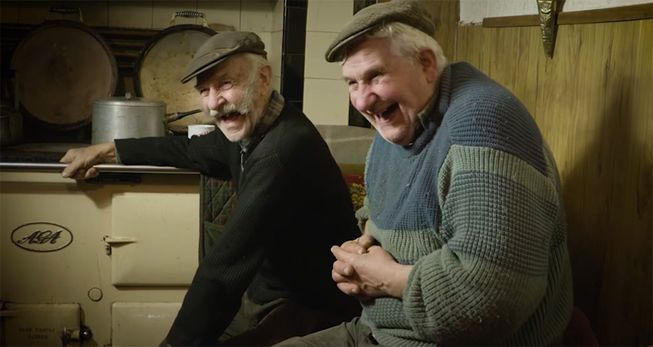
 Welsh farmers Howell and Gerwyn George's secret to a rich life is plain to see: just enjoy a good laugh! (Photo: Riverlea/YouTube)
Welsh farmers Howell and Gerwyn George’s secret to a rich life is plain to see: just enjoy a good laugh! (Photo: Riverlea/YouTube)

If we told you that listening to two old Welsh farmers recount the good ol’ days might just become the highlight of your day, would you believe us?

For whatever reason, whether it’s their charm, genuine brotherly love, or endearing/confounding Welsh dialect, Howell and Gerwyn George have mesmerized nearly everyone who has given up a few moments to watch them reminisce.

“They don’t make boys like that any more, more is the pity!!!,” said one commenter on Facebook. “Quality, pleasure to watch.”

“I could listen to this pair all day long…,” said another.

In the 18-minute video, the George brothers discuss everything from livestock to family and changing agricultural practices. Everything is interjected with anecdotes that invariably lead to one or both of the men to erupt into laughter. Several times, I found myself laughing without even knowing what in the world they were saying.

But enough gab from us; we’ll gladly let Howell and Gerwyn take over the conversation. Someone throw these two a reality television contract.

ooOOoo

Simply gorgeous!

Of certainties

The immovable markers in one’s life.

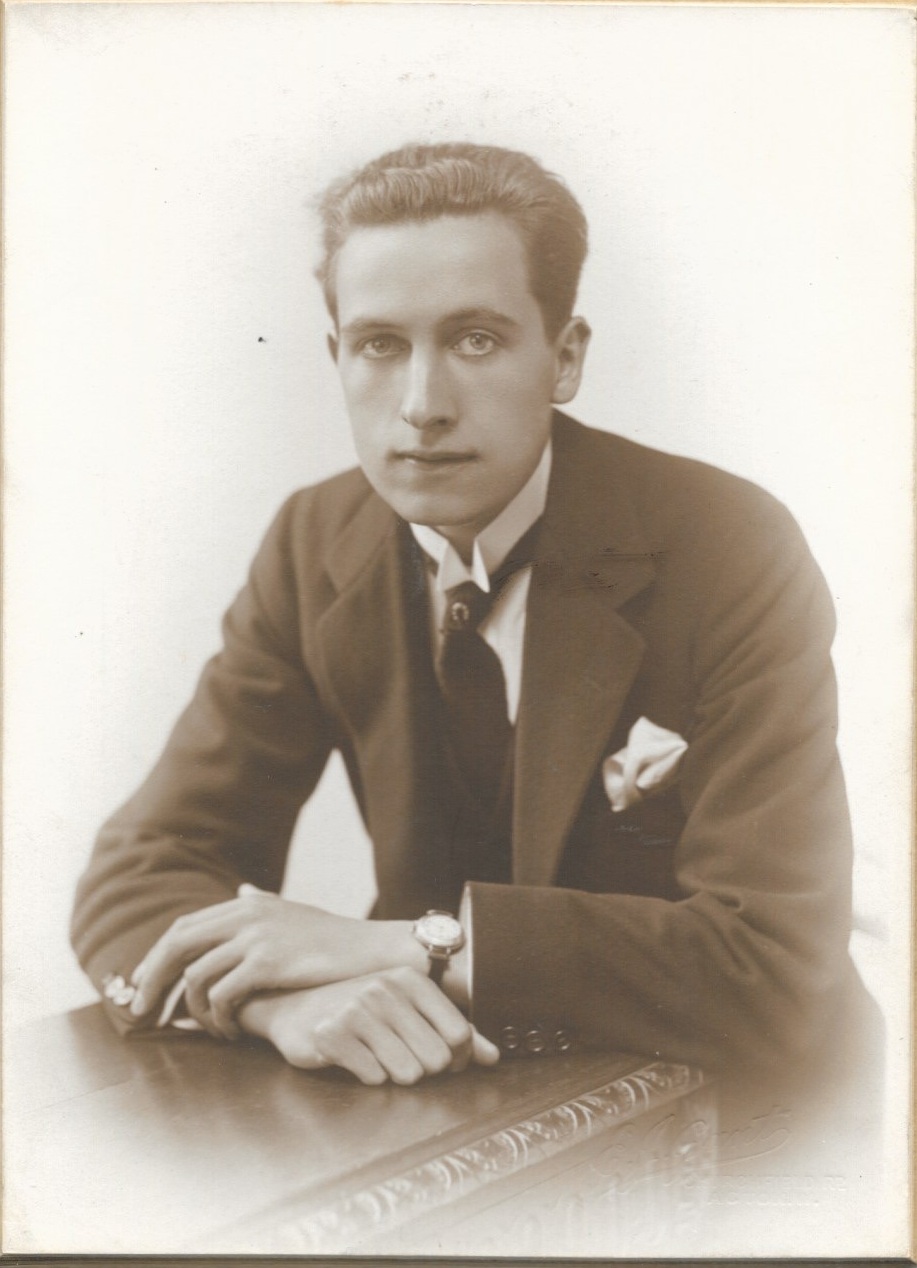
My father's 21st birthday- June 15th, 1922
My father’s 21st birthday- June 15th, 1922

Today, sixty years ago, my father died.

Yes, December 20th., 1956. Just five days before Christmas Day.

I had turned 12 on November 8th that year and my dear sister, Elizabeth, was then 7-years-old.

Ten years ago this very day, in other words on the fiftieth anniversary of my father’s death, something happened to me when I was living in the small South Devon village of Harberton; just three miles from Totnes. That ‘something’ started a chain of events that led to me meeting Jeannie in Mexico and us becoming married in Arizona on November 20th, 2010.

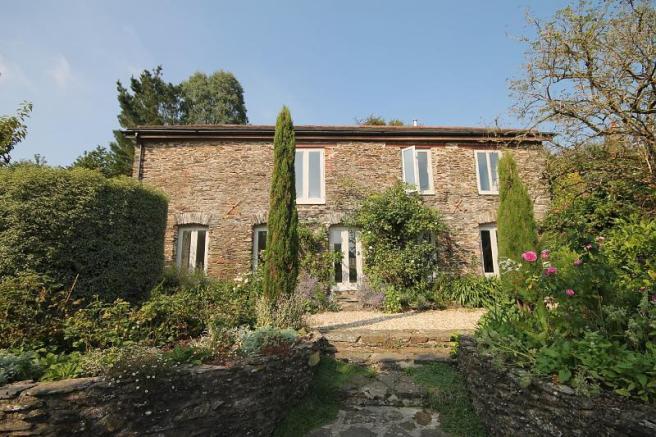
Upper Barn, Harberton
Upper Barn, Harberton: My home until early 2007.

I accept that this is of little interest to you, dear reader, but I wanted to put the following ‘out there’.

December 20th will always be a poignant day, until I take my last breath.

But it will also be the most precious day in the year for, again, until I take my last breath December 20th. will always mark the start of my journey to meeting Jean.

Loving Jean and being loved so much in return is as much an immovable marker in my life as was my father’s death.

Life can offer so many twists and turns!

What to say to the kids.

Reflections on what we leave behind.

I included in yesterday’s post the interview with Bill Kotke and his concern that humanity’s greed, and that’s the correct term in my view, focusing on each generation having more, howsoever one defines ‘more’, was utterly at odds with a sustainable future on the only home we have: Planet Earth.  A finite planet in a finite solar system.

On Monday I was chatting with Roger D. back in the old country. It was Roger who introduced me to gliding back in the late 70s. Later we were in business together in Colchester, Essex and we still keep in touch.

Anyway, Roger was bemoaning the current state of affairs in the UK regarding Brexit and went on to say that every economic strategy offered by this or that UK Government was about growth. Whether we are talking economic growth, improvement in living standards or population growth why are there no leading figures in any leading government standing up and saying this can’t go on! Because it can’t!

world_population_1050_to_2050We are presently a global population of 7.5 billion. This year alone, as of today, there have been 56,000,000 deaths. But also, as of today, there have been 133,000,000 births. (I rounded the figures but what difference does it make!) That’s a growth of 77 million persons in this one year. It cannot go on!

Bill Kotke also spoke of soil loss. Just last Sunday there was a Care2 item about soil loss. From which I extract:

Could soil ever actually run out?

Yes. If we continue to harm and degrade topsoil at the current rate, it’s estimated that the world could lose all its topsoil within 60 years.

Topsoil is the uppermost layer of soil on the surface of the earth. It’s the most fertile type of soil that typically contains lots of nutrient-rich organic matter from broken down plants and other organisms. Topsoil is also alive with beneficial microbes, fungi and critters like earth worms, which feed on the organic matter.

The deeper layers of soil beneath the topsoil are not nearly as rich. They are primarily made up of decomposing rock that provides the raw material for future topsoil as well as a substrate for deeply rooted plants to anchor in.

If the delicate ecosystem within topsoil is disrupted, it will essentially die. Plants can’t grow in topsoil that doesn’t have abundant organic matter and thriving populations of microbes.

Yes, there are street protests about this political action or that political action but why aren’t we seeing tens of thousands on the streets protesting about the loss of our topsoil!!

Moving on.

There was a recent essay from Patrice Ayme in which he wrote about the Australian Asthma Thunderstorm. Just read this long extract from that essay:

(November 29th, 2016 Italics are from the story as presented in the New York Times)

Mr. McGann was one of thousands of people in Melbourne having an attack of thunderstorm asthma. About 8,500 people went to hospitals. Eight have died, and one remains in intensive care more than a week after a thunderstorm surged across Melbourne, carrying pollen that strong winds and rain broke into tiny fragments.

Perennial ryegrass seeds were swept up in whorls of wind and carried from four million hectares of pasturelands (about 9.9 million acres) that lie to Melbourne’s north and west. If broken into fragments, they are so fine that they can be inhaled.” 

Actually what also lie north and west of Melbourne are giant fields of canola. Consider the following propaganda picture:

Mr. McGann did not end up in the hospital.  “Every breath I took made the next breath harder,” he said, adding that he had no family history of asthma. “I just didn’t realize it could have the effect it had.”

Grass pollen is the primary source of allergies in southern Australia, and tracking the data allowed scientists to forecast high levels of grass seeds in the atmosphere on Nov. 21. Still, Ms. Hennessy said, the government was taken by surprise.”

Surprise, indeed, this did not happen before, by two orders of magnitude. How come so much more severity?

My lawyer’s theory is different.  It evolved from my own observations and theories of why asthma and allergies, let alone weird cancers, have been augmenting spectacularly. There are around 150,000 artificial, man-made chemical products in use. By medical drug standards, they are untested (in earlier essays, I mentioned 80,000, which is the number brandished in the USA; however, French specialists talk about 150,000 untested chemicals.).

Canola (or rapeseed), Brassica napus, is an oilseed crop which is cultivated for its high quality edible oil used in many foods (eg. margarines and cooking oil) and seed meal (the fibrous material left after the oil pressing process), which has a high protein content. That makes it highly desirable as a stock feed.

In 2010-11, the Australian state of Victoria, where Melbourne is located,  produced 476 thousand tonnes of canola with a gross value of $293 million.

Control of weeds, particularly weeds from the Brassicaceae family (broadleaf), through herbicide application during the canola-growing season, significantly improves the quantity of the grain produced. Weeds compete for space, nutrients and sunlight. (African countries have dismissed that the quality of GMO seed is higher, in contradistinction with US propaganda; quite the opposite, they say)

Two genetically modified (GM) canola varieties have been developed in Australia, Roundup Ready® (by Monsanto Australia Ltd) and InVigor® (by Bayer CropSciences Pty Ltd). For maximum effect, each GM variety has been developed to be tolerant to and hence used with, a specific herbicide. The result is the mass poisoning of the planet, horizon to horizon.

The same poisoning trick is used for insecticides. To boot, the poison resistance spreads, demanding even higher doses of poison to be used in the grand outdoors..

In other words, massive quantities of poisons are put in the soil, and from there, are kicked up, in the air.

Exposed to this life destroying poisons, the body reacts by shutting down all pores. Asthma.

It cannot go on!

It is time for you and me and millions of others to be the change we want to see. Whether it’s the little things like recycling, or car sharing, or the bigger things like moving to an eco village we have to make a difference.

We have to learn from those communities that for thousands of years lived harmonious and sustainable lives on the planet. Doing so many thousands of years before farming man came on to the scene

In 1969 I spent a year in the outback of Australia as a correspondent for KotiPosti; a Finnish magazine. While I was out in the wilderness looking for Finns to write about it was impossible not to be drawn into the history of the aboriginal Australian.

ABORIGINAL AUSTRALIANS ARE descendents of the first people to leave Africa up to 75,000 years ago, a genetic study has found, confirming they may have the oldest continuous culture on the planet.
Professor Eske Willerslev of the University of Copenhagen, who led the study, says Aboriginal Australians were the first modern humans to traverse unknown territory in Asia and Australia. “It was a truly amazing journey that must have demanded exceptional survival skills and bravery,” he says.
A century-old lock of hair, given by a West Australian indigenous man to an anthropologist, has led to the discovery that ancestors of Aboriginal Australians reached Asia at least 24,000 years before another wave of migration that populated Europe and Asia.

It was back then that I truly understood the relationship that those early Australians had with the earth; with their planet. Forget religions and churches, the Aborigines had a spiritual relationship with the planet that sustained them.

I will never forget exploring quietly, just me and my wife of those days, the caves and darker recesses around the base of Ayers Rock, better called Uluru, the most amazing monolith right out there in the middle of the desert. The unmistakable signs of so many of those quiet recesses being spiritual places for those ancient people.
home-1Uluru, or Ayers Rock, is a massive sandstone monolith in the heart of the Northern Territory’s arid “Red Centre”. The nearest large town is Alice Springs, 450km away. Uluru is sacred to indigenous Australians and is thought to have started forming around 550 million years ago. It’s within Uluru-Kata Tjuta National Park, which also includes the 36 red-rock domes of the Kata Tjuta (colloquially “The Olgas”) formation.

It is just he same for the North American Indians. They have a spiritual relationship with the land.

Back to Bill Kotke’s talk. He spoke of how when each of us was the product of the fertilisation of the egg by the sperm in utero we grow first as a fish, then as a mammal and, finally, emerge as a human: “We are connected to the earth!

As you all know I am a secular humanist. But that doesn’t mean that I don’t have deep, as in spiritual, feelings for the lands and the oceans and for the wildlife of this planet

So let me close by repeating what I said at that meeting where Bill was presenting. For Bill spoke of being connected, in a heartfelt manner, with the planet. For if one is so connected then it is natural for one to want to love and protect the planet.

This is what I said:

Bill,

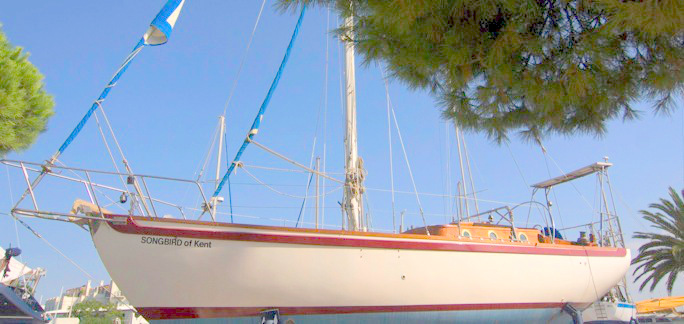
In 1991 I departed Gibraltar Harbour solo on my yacht Songbird of Kent heading West out across the Atlantic.

After I had settled in to the routine of being at sea, better described as settling in to being connected to the ocean, I loved watching the dolphins come up to the boat, give it the once over, raise their heads and offer me a brief eye contact and then slip away.

Then I became aware that when I was laying down on my bunk in the cabin I could sense when the dolphins were close to my hull. Each time I had that sense I would come up to the deck, briefly pausing to clip on my safety harness lest I truly joined the dolphins, and one or two of those dolphins were always by my boat.

I called this post What To Say To The Kids. Not just my son and daughter, now both mature adults, but my grandson Morten son to my daughter and her husband.

Because I feel so strongly that waiting for our leaders and politicians to lead humanity in protecting our planet is pointless. They are driven by other values.

It cannot go on!

I want to be measured by my son and my daughter, and by my grandson in due time, as a person who made a difference; even just a small one.

For I truly believe that showing love for our planet will make a difference and that is what I want to say to my kids.

We have to return to community living;  a twenty-first century version of such living. Even in the giant populations of big cities we have to reach out and form local communities. Groups of people who are driven by the imperative to curtail population growth, eager to share in as many ways as possible and totally committed to taking no more from the planet than they put in.

Because It cannot go on!

This is what I want to say to my kids.


Being saved by a dog!

A serendipitous find!

Yesterday, I published a post under the title of Forecasting Wonderful ‘Blu’ Days!

There was an exchange of thoughts between me and Susan Leighton, who is the author of the blog Woman On the Ledge:

(In part:)

Susan: Dogs can be such a comfort when life becomes overwhelming.

Me: For nobody can escape those moments when life becomes overwhelming. A loving partner is precious beyond words at those times, but there’s still something comforting beyond that love when it comes to our dogs.

Susan: Very true, Paul. A dog has saved me many times!

Later on yesterday, when I was looking for something for today’s post, I came across this video:

 Published on Jan 5, 2015

Hantu the White German Shepherd Plays Surrogate Mum to Poncho the Opossum at the Rare Species Fund, South Carolina, USA.
Poncho the opossum was found clinging to his mother’s back after she had been hit by an oncoming vehicle, a common hazard for nocturnal animals. Under veterinary supervision, Poncho was brought to the Rare Species Fund in South Carolina where he has nursed to health. Opossums are the only New World marsupials and, in the wild, spend the first several months of their lives clinging to their mother’s backs. Having had no puppies of her own, Hantu seems a more than willing foster mum and mode of transportation for Poncho. Robert Johnson of the Rare Species Fund says, “They are both playing important roles in each other’s lives. When Hantu goes for her daily walks through the woods, she won’t leave the house until Poncho is securely mounted on her back.”
http://www.RareSpeciesFund.com
http://www.MyrtleBeachSafari.com

Just thought that was a lovely reminder of the unconditional love offered by our dogs; for humans and for other creatures!

Forecasting wonderful ‘Blu’ days!

So many examples of how special our dogs are!

I have said it before and, undoubtedly, I will say it many more times. That is that the connections made in the world of blogging are special beyond imagination. So many good people that one will never get to know in the traditional sense of being around that person yet people that one comes to know, and know well, through the medium of blogging.

I was contacted by Grinia who offered to write a guest post for this place. In turn, to better know her, I went across to her blog, Mirror & Soul, and then read this: Real Stories, Real People: Forecast: Blu Skies. I wanted to republish that and Grinia very rapidly gave me permission.

Here it is:

ooOOoo

Real Stories, Real People: Forecast: Blu Skies

96a25d84809fad7de736bb867f5317eb

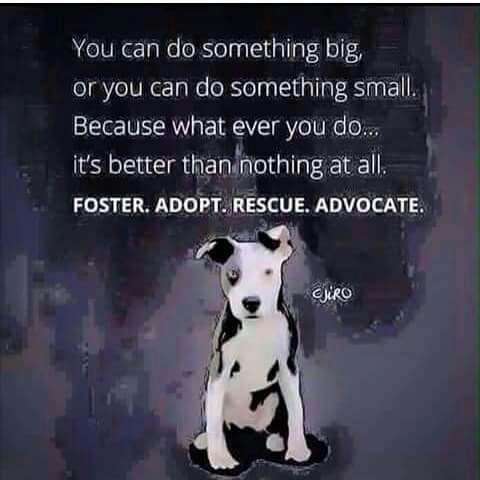
Alexandra thought of adopting a dog to provide company to her mother and bring a happy distraction to her days. What Alexandra didn’t expected was that this dog would become an important member of their family and would help her dealing with the emotions of caring for her mom with dementia. Alexandra became an advocate for rescuing dogs and she is sharing her touching story with us. Thank you Alexandra!

Forecast: Blu skies

By Alexandra Goodwin

My husband and I had many discussions about adopting a dog because he had grown up with dogs in the UK and missed having his four legged friends around. I was open to the idea as I had never had any pets growing up and thought perhaps it might help my mother, who has dementia and lives with us.

We went to various rescue shelters in February 2014 to get an idea of what kind of dog to get and to warm my mother up to the idea of acquiring a dog. My husband had had mostly pointers and greyhounds and we both wanted a medium / large dog with whom to go hiking and enjoy the outdoors.

When we went to the various shelters we knew we couldn’t bring anyone home right away due to my husband traveling for business the following month. One of the shelters we visited was Greyhound Friends in Hopkinton, Mass. My husband had made few solo trips there previously in his spare time and met Louise Coleman, owner of Greyhound Friends. They both had the same passion and heart for these neglected beautiful dogs. Blu was one of the dogs in the shelter back in February 2014. Blu was waving his paw at us as if he were trying to communicate and begging us to take him home.

Fast forward couple months later to April 26, 2014, a brisk Saturday morning when we set out to rescue a dog to bring home. We made many stops within 25 mile radius that day to various shelters. When we went to Greyhound Friends, we inquired about Blu as he had impacted his paw on our hearts back in February. Blu was in foster care in Milford, MA, so they called the foster parents and we arranged to go visit their home to see Blu again. We saw that Blu was comfortable and calm in home setting and was living with another dog and cat.

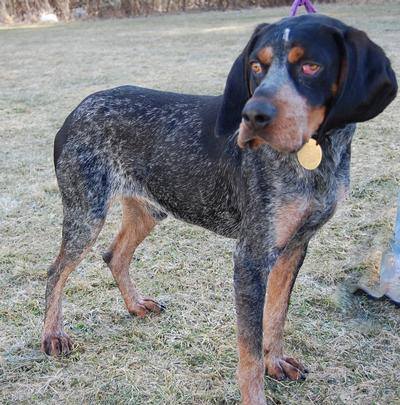
Blu’s a Bluetick Coonhound from way of Ohio. He was found in a litter of five back in Ohio when a generous rescue group called ” Stop the Suffering” picked up Blu and his mates. Blu was transferred to Greyhound Friends in the winter of 2013.

14642944_10210525099625327_1644640663_nWhat drew us to Blu, aside from him waving at us, was that he had a cherry eye. Dogs have three eyelids and it’s common for dogs under the age of two for one of the eyelids to protrude. Cherry eye is not serious but if untreated it causes dry eye which then could lead to other complications. Blu will probably be on eye drop medications all his life.

After our Saturday afternoon of surveying various rescue shelters, we decided to adopt the dog who might be left behind, the underdog. We figured Blu might be overlooked because of his cherry eye. Most folks want to adopt puppies and the storybook happy perfect little dog. Little do they realize the trauma and suffering most dogs in shelters have had in their lives before being scooped up in shelters. All dogs just need patience and love and if you win their heart over, they will do anything for you and give back tenfold.

Blu has made a huge impact on our lives. For me, being the prime caretaker of my mother, he has calmed me down enormously and is aware of encompassing emotions. My mother’s not so fond of dogs as she grew up in Greece where dogs lived outside and their purpose was hunting. Blu has brought so much love and happiness in our lives that now can’t imagine life without him! Blu is a blessing!!! Thank you to all the rescue shelters who save dogs and try to find them forever homes — what a difficult and most rewarding job you have! Thank you for not giving up on these beautiful dogs!

Greyhound Friends is located in Hopkinton, Massachusetts, please go visit their kennel and find your best friend like we did….

Featured Image with quote credit to Pinterest

ooOOoo

I can’t wait to receive Grinia’s guest post and I’m sure you feel the same way.

What lucky people we are to have these beautiful dogs in our lives.

The utterly incomprehensible

A journey of the mind and the soul.

NB: Regular readers will find that today’s post is rather different to my usual run of things. But I do hope that you end up sharing my feelings of mystery; sharing what seems to me utterly incomprehensible. I am speaking of The Infinite.

Let me start with this quotation:

The infinite has always stirred the emotions of mankind more deeply than any other question.

The infinite has stimulated and fertilised reason as few other ideas have. But also the infinite, more than another other notion, is in need of clarification.

Let me now take you back many years, back to the Autumn of 1969 when I left Gibraltar bound for The Azores on my yacht Songbird of Kent. I was sailing solo.

My home for five years – Songbird of Kent; a Tradewind 33.

Despite me being very familiar with my boat, and with sailing in general, there was nonetheless a deep sense of trepidation as I headed out into a vast unfamiliar ocean.

On the third or fourth night, I forget which, when some four hundred miles into the Atlantic and therefore far from the light pollution from the land, I came on deck and was emotionally moved in a way that has never ever been surpassed.

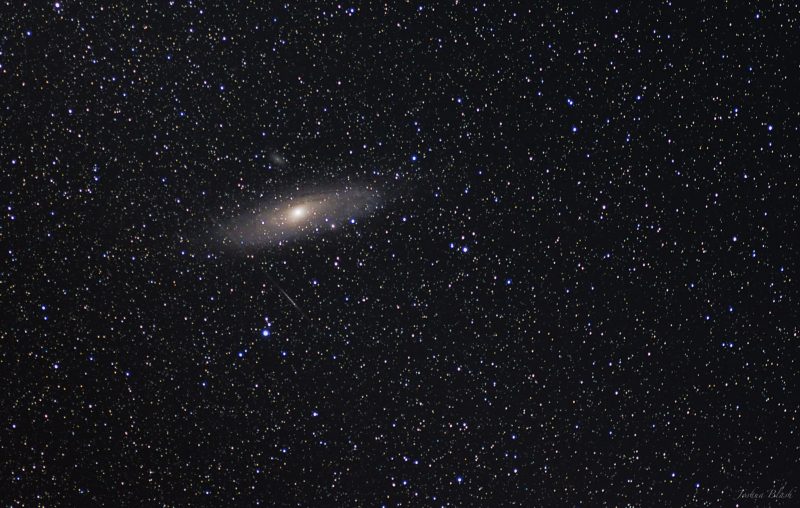
For way up in the heavens above me was the Andromeda galaxy, clearly visible with the naked eye.

andromeda-galaxy-josh-blash-7-23-2014-e1473897834535
Josh Blash captured this image of the Andromeda galaxy.

That photograph above and the following are from the EarthSky site.

Although a couple of dozen minor galaxies lie closer to our Milky Way, the Andromeda galaxy is the closest major galaxy to ours. Excluding the Large and Small Magellanic Clouds, which can’t be seen from northerly latitudes, the Andromeda galaxy – also known as M31 – is the brightest galaxy in all the heavens. It’s the most distant thing you can see with your unaided eye, at 2.3 million light-years. To the eye, it appears as a smudge of light larger than a full moon.

Not only could I not take my mind off seeing the Andromeda galaxy, I couldn’t easily comprehend seeing the stars come all the way down to the horizon; all 360 degrees about me.  Right down to the edge of my ocean horizon; a swirling blackness out to where it kissed that glorious night sky.

That image of that dome of stars would be forever burnt into my memory. An image that both made no sense, yet made every sense

Fast forward forty-seven years to now!

Recently we have had some beautiful clear nights here in Southern Oregon. Just the other night, before the moon had risen, there up in the night sky just a short distance from the constellation Cassiopeia was Andromeda. Immediately, my memory of that dark night sky out in the Atlantic came rushing back at me

The Andromeda galaxy is 2.3 million light-years away. But how can one possibly comprehend the distance? The fact that light travels at 186,000 miles per second or 671 million miles per hour (the exact value is 299,792,458 metres per second (approximately 3.00×10⁸ m/s) has no meaning whatsoever. Think about it! Light is traveling at the equivalent speed of going around our planet 7.46 times every second!

But if you can’t fathom the distance to the Andromeda galaxy try this!

Back in March, 2016 a new galaxy that has been named GN-z11 was spotted by the Hubble space telescope 13.4 billion light years away. That’s approximately 5,830 times more distant than the Andromeda galaxy!

Now it is starting to become very difficult to comprehend.

Over the last couple of weeks BBC Radio 4 has been airing 10 talks given by Professor Adrian Moore under the heading of A History of the Infinite. They are freely available to be listened to and I so strongly recommend them.

But it was episode eight that made me lose my mind. Just like that night so many years ago on Songbird of Kent.

For that episode was called The Cosmos. You can listen to it here. Please, please do so! This is how that episode is presented:

Does space go on for ever? Are there infinitely many stars? These are some of the questions Adrian Moore explores in the eighth episode in his series about philosophical thought concerning the infinite.

With the help of the theories of the Ancient Greeks through to those of modern cosmologists, Adrian examines the central question of whether our universe is finite or infinite.

For most of us, looking up at the stars gives us a sense of infinity but, as Adrian discovers, there is a strong body of opinion which suggests that space is finite, albeit unbounded. This is a difficult idea to grasp, but by inviting us to think of ourselves as ants, astrophysics professor Jo Dunkley attempts to explain it.

Adrian also tackles the idea of the expanding universe and the logic that leads cosmologists to argue that it all started with a big bang, and may all end with a big crunch.

Finally, we discover from cosmologist John Barrow how the appearance of an infinity in scientists’ calculations sends them straight back to the drawing board. The infinite, which the Ancient Greeks found so troubling, has lost none of its power to disturb.

A Juniper production for BBC Radio 4.

If you find that episode compelling beyond belief then all the episodes are available on the BBC iPlayer and may be found here.

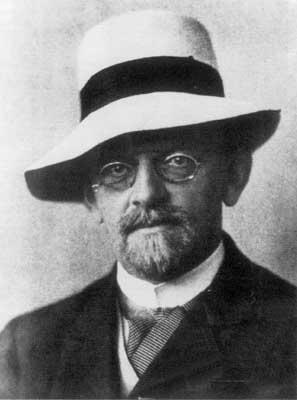
I started with a quotation that is the opening of the final episode. It is a quotation from the German mathematician David Hilbert. As Wikipedia explains, in part:

hilbertDavid Hilbert (German: [ˈdaːvɪt ˈhɪlbɐt]; 23 January 1862 – 14 February 1943) was a German mathematician. He is recognized as one of the most influential and universal mathematicians of the 19th and early 20th centuries.

I will return to that first sentence in Hilbert’s quotation:

The infinite has always stirred the emotions of mankind more deeply than any other question.

For me that sight of the Andromeda galaxy and the stars back in 1969 was in every meaning of the word a sight of the infinite and it has forever stirred my emotions very deeply indeed!

The love for dogs.

A very beautiful, insightful guest post.

Like many other authors of blogs when someone decides to follow these scribblings and they are also the author of a blog I go across to their place and leave a thank you note. Frequently, I also say that if they would like to write a guest post for Learning from Dogs that I would welcome that.

Regular readers of this blog will know how often it is my pleasure to publish a guest post from another blogger.

So it is today.

Not very long ago there was a new follower who is the author of the blog: The Well Rounded Individual. I went across there and liked very much what I saw, especially a recent post about dogs.

I am honoured to have permission to share it with you all.

ooOOoo

Throw the Ball Already and Other Things I Can’t Live Without

Oh, I Wish …..

…. that animal cruelty just never ever happens!

Yes, I know that’s a naive wish.

But it doesn’t alter my sincere wish!

So thank goodness for the many wonderful people and organisations around the world that do their utmost to help animals.

Take, for example, Animals Asia. This is what they do:

Founded in 1998, Animals Asia promotes compassion and respect for all animals and works to bring about long-term change. We work to end the barbaric bear bile trade, which sees over 10,000 bears kept on bile farms in China, and, according to official figures, about 1,200 suffering the same fate in Vietnam.

Animals Asia has rescued over 500 bears, caring for them at its award-winning bear sanctuaries in China and Vietnam.

Animals Asia also works to end the trade in dogs and cats for food in China and Vietnam, and lobbies to improve the welfare of companion animals, promote humane population management and prevent the cross border export of “meat dogs” in Asia.

In addition, Animals Asia campaigns for an end to abusive animal practices in zoos and safari parks in Asia, and works closely with governing authorities to improve animal management and increase awareness of the welfare needs of captive animals.

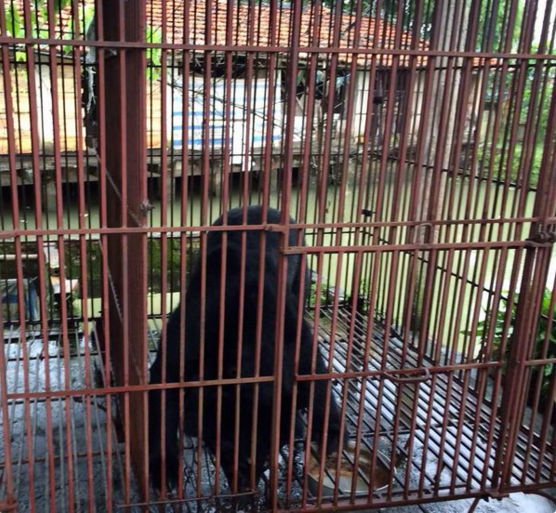
Take this wonderful account of what they did for one bear.

ooOOoo

Freed from a bile farm – is this the happiest bear ever?

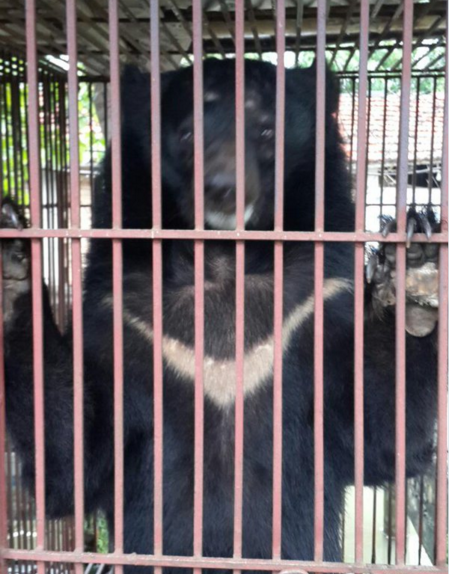
Watch Tuffy jump for joy in his first days outside – after being rescued from a bear bile farm where he’d spent years of torture in a tiny cage.

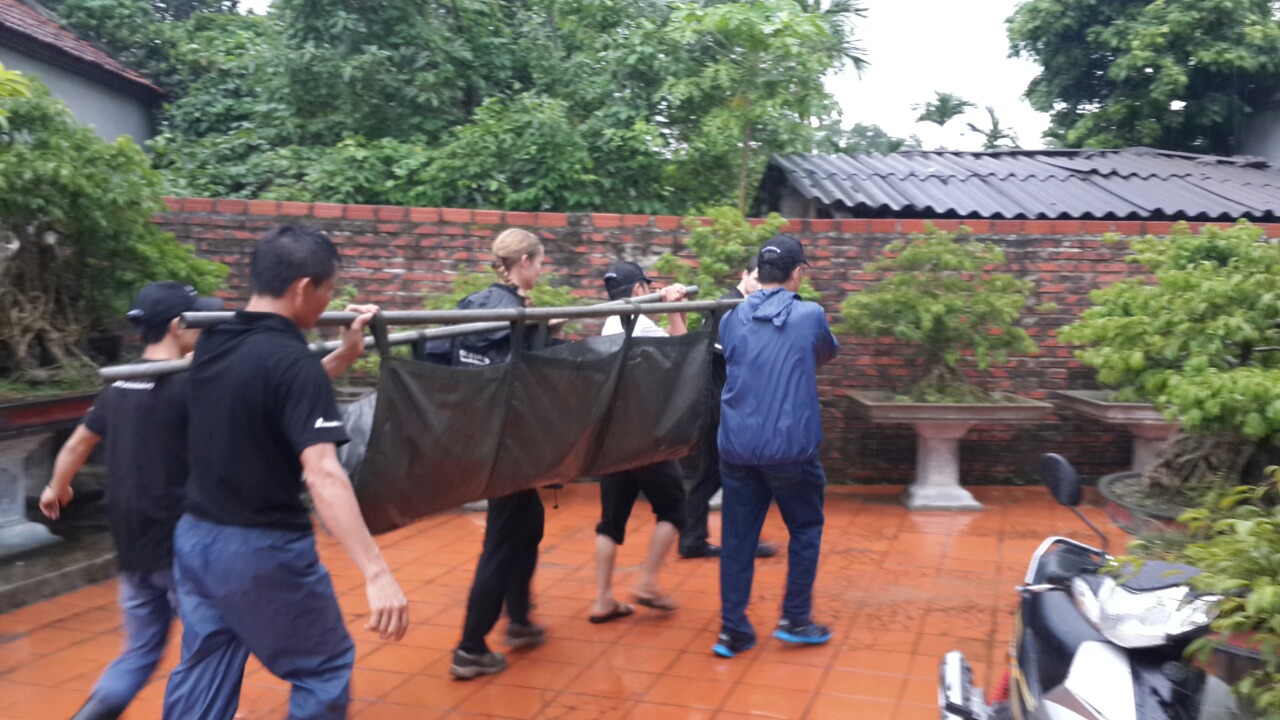
Rescued in September last year on the same day as six other bears, Tuffy’s paws have hardly hit the ground since arriving at Animals Asia’s Vietnam sanctuary.

tuffycagedThe vet team has been working hard to rehabilitate him after years of having his bile extracted. In fact his gall bladder was so damaged it had to be removed. Examinations had found numerous gallstones, meaning he’d lived in pain for years.

That wasn’t the only surgery Tuffy faced. In addition he had three fractured teeth removed. He also had painful, dry, cracked paws.

tuffyinacageAnimals Asia Bear Manager Louise Ellis said:

“The cracked paws are common to bile farm bears as they only walk on bars, not grass. Dehydration is likely to have contributed to this too. So for his carers to see him take to the pool so quickly after he first became ready to face the outdoors was an amazing moment.

“Coming from years of little or no water, for Tuffy this must feel like a true oasis after being parched and in pain for so long. It must have felt like such a relief to have the freedom to splash around in the water after only being able to stand on the hard metal bars of the bile farm cage.”

tuffyrescuedIn fact Tuffy loved being outdoors so much he decided not to return to his den in the evening – choosing instead to sleep under the stars.

There are still around 1,200 bears in bile farms in Vietnam and over 10,000 more in China. Animals Asia has rescued nearly 600 bears from the bile industry and continues to care for almost 400.

Bear bile is used in traditional medicine.

ooOOoo
Dearest Tuffy! One of the lucky ones.
But that doesn’t diminish the anger and the disgust I feel at the way too many so called human beings can have such disregard for our beautiful animals!

Reggie the Black Lab.

To whomsoever gets my dog!

With thanks to Suzann Reeve who sent this on to me.

You all have a very wonderful Autumn weekend.

ooOOoo

They told me the big black Lab’s name was Reggie,
as I looked at him lying in his pen.
The shelter was clean, no-kill,
and the people really friendly.

lab1I’d only been in the area for six months, but
everywhere I went in the small college town, people
were welcoming and open. Everyone waves
when you pass them on the street.

But something was still missing as I attempted to settle
in to my new life here, and I thought a dog couldn’t hurt.
Give me someone to talk to. And I had just seen
Reggie’s advertisement on the local news. The shelter
said they had received numerous calls right after,
but they said the people who had come down
to see him just didn’t look like “Lab people,”
whatever that meant. They must’ve thought I did.

But at first, I thought the shelter had misjudged me
in giving me Reggie and his things, which consisted
of a dog pad, a bag of toys almost all of which were
brand new tennis balls, his dishes and
a sealed letter from his previous owner.

lab2See, Reggie and I didn’t really hit it off when we got home.
We struggled for two weeks (which is how long the shelter
told me to give him to adjust to his new home).

Maybe it was the fact that I was trying to adjust, too.
Maybe we were too much alike.

lab3I saw the sealed envelope. I had completely forgotten
about that. “Okay, Reggie,” I said out loud, “let’s see
if your previous owner has any advice.”

lab4

To Whomever Gets My Dog:

Well, I can’t say that I’m happy you’re reading this,
a letter I told the shelter could only be opened by
Reggie’s new owner. I’m not even happy writing it.

He knew something was different.

lab5

So let me tell you about my Lab in the hopes
that it will help you bond with him and he with you.
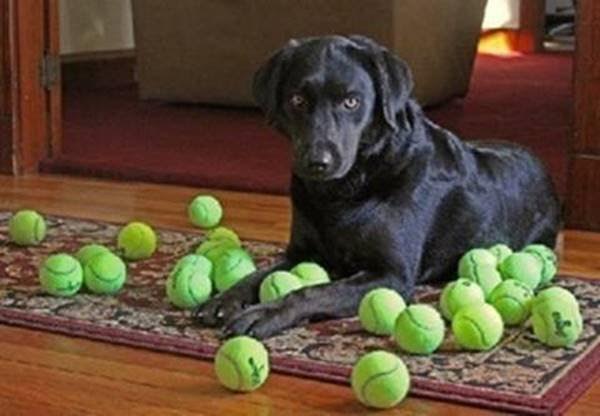
First, he loves tennis balls. The more the merrier.
Sometimes I think he’s part squirrel, the way he hoards them.
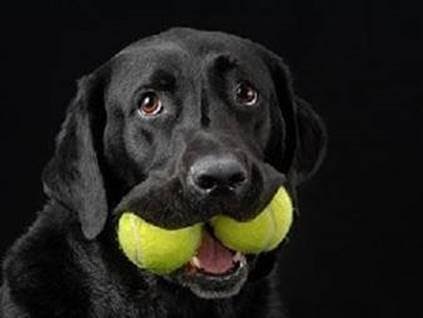
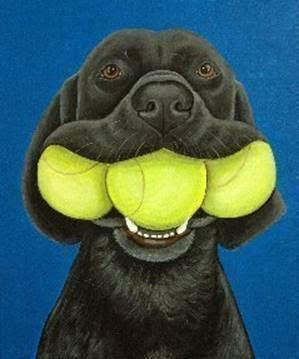
He usually always has two in his mouth, and he tries to get a third in there. Hasn’t done it yet.

Doesn’t matter where you throw them, he’ll bound after them, so be careful.  Don’t do it by any roads.

lab6


Next, commands. Reggie knows the
obvious ones —“sit,” “stay,” “come,” “heel.”
He knows hand signals, too: He knows “ball”
and “food” and “bone” and “treat” like nobody’s business.
Feeding schedule: twice a day, regular
store-bought stuff; the shelter has the brand.
He’s up on his shots. Be forewarned: Reggie hates the vet.
Good luck getting him in the car. I don’t know how he
knows when it’s time to go to the vet, but he knows.
Finally, give him some time. It’s only been Reggie and
me for his whole life. He’s gone everywhere with me,
so please include him on your daily car rides if you can.
He sits well in the backseat, and he doesn’t bark
or complain. He just loves to be around people,
and me most especially.

lab7

And that’s why I need to share one more bit of info with you…His name’s not Reggie. He’s a smart dog, he’ll get used to it and will respond to it, of that I have no doubt. But I just couldn’t bear to give them his real name. But if someone is reading this …well it means that his new owner should know his real name.
His real name is “Tank.” Because, that is what I drive.
I told the shelter that they couldn’t make “Reggie” available for adoption until they received word from my company commander.
You see, my parents are gone, I have no siblings, no one I could’ve left Tank with … and it was my only real request of the Army upon my deployment to Iraq, that they make one phone call to the shelter …in the “event” … to tell them that Tank could be put up for adoption.
Luckily, my CO is a dog-guy, too, and he knew where my platoon was headed. He said he’d do it personally. And if you’re reading this, then he made good on his word.  Tank has been my family for the last six years, almost as long as the Army has been my family. And now I hope and pray that you make him part of your family, too, and that he will adjust and come to love you the same way he loved me.
If I have to give up Tank to keep those terrible people from coming to the US I am glad to have done so. He is my example of service and of love. I hope I honored him by my service to my country and comrades.
All right, that’s enough. I deploy this evening and have to drop this letter off at the shelter. Maybe I’ll peek in on him and see if he finally got that third tennis ball in his mouth.
Good luck with Tank. Give him a good home, and
give him an extra kiss goodnight – every night – from me.
Thank you,
Paul Mallory

_____________________
I folded the letter and slipped it back in the envelope.

Sure, I had heard of Paul Mallory, everyone in town knew him, even new people like me. Local kid, killed in Iraq a few months ago and posthumously earning the Silver Star when he gave his life to save three buddies.  Flags had been at half-mast all summer.

lab8I leaned forward in my chair and rested my elbows on my knees, staring at the dog.
“Hey, Tank,” I said quietly.
The dog’s head whipped up, his ears
cocked and his eyes bright.

lab9He was instantly on his feet, his nails clicking on the hardwood floor.  He sat in front of me, his head tilted, searching for the name he hadn’t heard in months. “Tank,” I whispered.  His tail swished.

I kept whispering his name, over and over, and each time, his ears lowered, his eyes softened, and his posture relaxed as a wave of contentment just seemed to flood him. I stroked his ears, rubbed his shoulders, buried my face into his scruff and hugged him.
“It’s me now, Tank, just you and me. Your old pal gave you to me.”
Tank reached up and licked my cheek.
“So whatdaya say we play some ball?”
His ears perked again.
“Yeah? Ball? You like that? Ball?”
Tank tore from my hands and disappeared into the next room.  And when he came back, he had three tennis balls in his mouth.

lab10If you can read this without getting a lump in your
throat or a tear in your eye, you just ain’t right.
============================== ========
“The true soldier fights not because he hates what is in front of him, but because he loves what is behind him.” G.K. Chesterton

ooOOoo

Millions of us have to fight our demons, both real and imagined. Doing it without a dog by one’s side is so much harder!

A rescue, with a twist!

Connections!

Just recently, on the 20th to be precise, I added a comment to the ‘About’ page of the blog: Beyond The Flow.

This is what I wrote”

Hi Rowena, I’m the author of the blog Learning from Dogs and recently one of my followers “RoughseasintheMed” recommended one of your posts: https://beyondtheflow.wordpress.com/2016/09/19/a-different-type-of-rescue-dog/
Apart from the pleasure in making the connection, I would love to have your permission to republish your post over on LfD.
Look forward to hearing from you.

Paul H.

Rowena is a blogger, mother and wife and explains a little about her blog, thus:

Beyond the Flow documents our journey through life’s ups and downs from a fairly philosophical and hopefully humourous perspective so hopefully you’ll laugh, cry and think a bit as you share in our adventures.
Based on the Australian East-Coast just North of Sydney, this motley cast and crew features:
Myself-Rowena
Anyway, Rowena very promptly offered me permission and it is my pleasure to republish this wonderful account of a Newfoundland (the dog that is not the country).
ooOOoo

newfoundlanddogstampA Different Type of Rescue Dog.

Welcome to Rumford, Maine where we’re chatting with ferry master Jerry Putnam and his dog, Major beside the Androscoggin River. Major is a New Foundland or “Newfie” and while I’m used to big dogs, Major is more like a bear crossed with a tank and yet he’s very friendly.

androscoggin_river-nh
Androscoggin River, New Hampshire, sadly renowned for its poor water quality.

Please be advised that you’ll be needing to set you watch back more than just a couple of hours to join me on this trip. You see, we’re traveling back to 1885 or thereabouts to hear this tale.  By the way, I apologise if the details get a little sketchy on this trip. You see, I’ve never been to America and I’ve never seen a Newfoundland dog beyond Googles images. However, I’ve never let that stop me from spinning a yarn before and it won’t stop me now. I stumbled across this story online in a small Australian country newspaper from 1885. I have no idea how it found its way there but it seems that after all these years, I’ll be sending the story all the way back to Rumford, Maine where I hope it finds a new home.

As you might be aware Newfoundlands are excellent and enthusiastic swimmers and are famed as the lifesavers of the sea. Indeed, there have even been some famous and very impressive rescues carried out by Newfoundlands:

  • In 1881 in Melbourne, Australia, a Newfoundland named Nelson helped rescue Thomas Brown, a cab driver who was swept away by flood waters in Swanston Street on the night of 15 November. While little is known about what became of Nelson, a copper dog collar engraved with his name has survived and 130 years after the rescue it was acquired by the National Museum of Australia and is now part of the National Historical Collection.
  • In the early 20th century, a dog that is thought to have been a Newfoundland saved 92 people who were on the SS Ethie which was wrecked off the Northern Peninsula of Newfoundland during a blizzard. The dog retrieved a rope thrown out into the turbulent waters by those on deck, and brought the rope to shore to people waiting on the beach. A breeches buoy was attached to the rope, and all those aboard the ship were able to get across to the shore including an infant in a mailbag. Wreckage of the ship can still be seen in Gros Morne National Park. E. J. Pratt‘s poem, “Carlo”, in the November 1920 issue of The Canadian Forum commemorates this dog.
  • In 1995, a 10-month-old Newfoundland named Boo saved a hearing-impaired man from drowning in the Yuba River in Northern California. The man fell into the river while dredging for gold. Boo noticed the struggling man as he and his owner were walking along the river. The Newfoundland instinctively dove into the river, took the drowning man by the arm, and brought him to safety. According to Janice Anderson, the Newfoundland’s breeder, Boo had received no formal training in water rescue.

You can watch some Newfoundlands going through their rescue paces here:

By now,  I’m sure I’ve whetted your appetites sufficiently and you’re all just longing to find out what Major did. What act of great heroism plucked this ordinary dog out of obscurity and onto the pages of a distant Australian newspaper?

newfoundlandHowever, there’s an exception to every rule. Just because some dog’s profiles read like a brochure from the Kennel Club, there’s always an exception. Just as people don’t like being categorized, stereotyped or told how they should conform to type, dogs can be much the same.Not that Major almost drowned but he did have a different interpretation of what constitutes a “rescue”.

Or, did he?

After all, what constitutes a rescue? Is it just about saving that drowning person from the surging waters? Or, is it also about encouraging someone to overcome their fear of drowning,  let go of the edge and finally learn to swim? What if that person doesn’t respond to “encouragement”? Is it okay to add a bit of persuasion? A nudge? A tug or even the proverbial cattle prod?

Well, you don’t need to ask Major. When it came to helping his canine counterpart overcome his fear, he was a Dog of Action with no time for philosophising, desensitization or phoning a friend. When a brindle hound was too scared to swim out to its owner on the ferry and was howling on the shore, Major grabbed it by the scruff and threw it in the water so it either had to sink or swim.

You’ve got to laugh and who hasn’t been tempted to do that to someone we know, but a bit of compassion doesn’t go astray either.

So, even if another dog is having a full blown panic attack about getting their precious paws wet, you don’t grab him by the scruff and throw him in the drink. After all, most breeds of dog don’t have a Newfoundland’s webbed paws, innate love of swimming and other special design features. They chase sheep.

I’m not putting my paws in there!

Of course, this includes the Border Collie. While our last Border Collie loves chasing sticks through the surf, Bilbo rarely gets his paws wet and it’s taken a lot of angst for him to get to the point where he sometimes now retrieves his ball out of the wash on the beach.

Indeed, Bilbo has had a few newsworthy water avoidances and he could well have been cast as that miserable mutt Major threw into the river.

Finally some assistance. Miss puts Bilbo out of his misery!

A few years ago, when Bilbo saw us all kayaking from the backyard at Palm Beach, he also started howling and fretting just like that other poor hound. Bilbo chewed through the back gate, jumped the back fence and we were about a kilometre from home when we looked out and kids said: “Someone else has a Border Collie”. As we paddled closer, our fears were confirmed. It was our freaked out mutt, giving us the paw: “What do you think you’re doing going out there on that crazy contraption? OMG!!!! You could fall in. Drown!!!! Then, who’s going to feed me?” His heart was racing. He was puffing. The dog was a wreck…so was the gate!

I would never have thrown Bilbo into the water to get him used to it. Yet, over time, he accidentally fell in the pool chasing his ball. He also fell out of the kayak and took our son into the water with him. That could’ve been nasty because he tried grabbing on to Mister which could’ve pulled him under. However, through all of this knockabout exposure and by being part of our family, Bilbo isn’t quite so anxious anymore. He’s stepped out and started filling out those paws, becoming a brave dog.

Meanwhile, here’s the original newspaper story about Major:

A Dog Story.

When Jerry Putnam had charge of the ferry at Rumford, Me., over the Androscoggin River, he owned one of the handsomest Newfoundland dogs I ever saw, and the dog was as intelligent as he was handsome. Like all of his kind, he was fond of the water, and further than that,  he manifested an absolute contempt for those of his species who shrank from the aqueous element, and it is of one of those contemptuous manifestations that I wish to tell, for I was there and saw.

The ferryboats, of various sizes, to accommodate different burdens, were impelled by means of a stout cable stretched from shore to shore, as that was the only device by which the heavy boats could be kept to their course in times of strong currents, and during seasons of freshet I have seen a current there that was wonderful.

One warm summer day, while a few of us were sitting in the shade of an old apple tree, between Jerry’s house and the river, two gentlemen, with implements for hunting and fishing, came down to be set across, and straightway one of the boys went to answer the call. He selected a light gondola, the two gentlemen stepped onboard, and very soon they were off ; but before they had got far away from the shore a common brindle house dog came rushing down upon the landing, where he stood and barked and howled furiously— furiously at first, and then piteously.

The boat was stopped, and from the signs made we judged that the strange dog belonged to one of the passengers. Yes, the owner was calling to him to come.

‘Come Ponto! Come !Come! ‘

But Ponto didn’t seem inclined to obey. Instead of taking to the water, he stood there, on the edge of the landing, and howled and yelped louder than before.

Presently old Major — our Newfoundland; who had been lying at our feet, got up and took a survey of the scene. Jerry said only this—’What is it, Major! What dy’e think of it?”

The dog looked around at his master, and seemed to answer that he was thoroughly disgusted. And then he started for the boat-landing — started just as the boy in the boat, at the earnest solicitation of his passenger, had begun to pull back. With  dignified step, Major made his way down upon the landing, proceeded directly to the yelping cur, took him by the nape of the neck; and threw him — he did not drop him — but gave him a vigorous, hearty throw, far out into the water ; and when he had done that he stood his ground as though to prevent the noisy, cowardly animal from landing. He stood there until he had seen the cur turn and swim towards the boat — until he had been taken on board by his master— after which he faced about, with military dignity and precision, and came back to his place beneath the apple tree.

— N. Y. Ledger.

The Burrowa News (NSW : 1874 – 1951) Friday 13 March 1885 p 3 Article

Have you ever been to Rumford, Maine or had any experiences with Newfoundlander Dogs? We’d love to hear your tales!

xx Rowena

ooOOoo

Let me add to Rowena’s wish to hear your experiences with Newfoundland Dog’s, or any other dogs!