Category: People

Habituated to eating

A startling and counter-intuitive essay from George Monbiot.

Hariod Brawn, she of the blog Contentedness.net, left a response to yesterday’s post in this place. Here is what Hariod said:

Yes Paul, I too recognise the value in understanding the neural substrates involved, regardless of what may in any case be reliably inferred and readily apparent in behavioural evidence. The social intelligence of the dog seems remarkably advanced of course, and so naturally provides a rich source for such research. Having said that, I am struck by the amount of academic funding that goes into confirming what is already self-evident, and wonder if the apportioning of funds is done quite as effectively as it could be. Much is determined by commercial interests of course.

“Much is determined by commercial interests …”

I have been a resident of the United States since April 2011. There has been much to take in and embrace at so many levels. However, one of the things that has seemed very foreign to my eyes was the extent of the obesity seen almost everywhere that one is out and about. At first it seemed more of an American issue, but over the last few years watching news items from the UK and seeing other general items on the internet from ‘the old country’ I came to realise that countries both ‘sides of the pond’ are grappling with what could be fairly described as an epidemic.

Yesterday, George Monbiot published an essay called Slim Chance. As with so many of Mr. Monbiot’s essays this one highlights issues that I am sure are not widely appreciated. It is republished here with Mr. Monbiot’s kind permission.

ooOOoo

Slim Chance

11th August 2015

New evidence suggests that obesity might be incurable. So why does the government propose to punish sufferers?

By George Monbiot, published in the Guardian 12th August 2015

Is overeating more addictive than crack cocaine? It’s hard to compare addiction rates, or to produce a clear definition that holds true across all substances and behaviours. But consider this crude contrast. Between 10 and 20% of people who use crack cocaine become addicted to it. Across a 9-year study of 176,000 obese people, 98.3% of the men and 97.8% of the women failed to return to a healthy weight. Once extreme overeating begins, it appears to be almost impossible to stop.

A paper published in the journal Neuroscience and Biobehavioral Reviews proposed that “food addiction” is a less accurate description of this condition than “eating addiction”. There is little evidence that people who are driven to overeat become dependent on a single ingredient; instead they tend to seek out a range of highly palatable, energy-dense foods, of the kind with which we are now surrounded.

The activation of reward systems in the brain and the loss of impulse control are similar to those involved in dependency on drugs. But eating addiction appears to be more powerful. As the same paper notes, in laboratory experiments “a majority of rats will prefer a sweet reward over a cocaine reward.”

Once you become obese, an article published in the Lancet this year explains, biological changes lock you in. Fat cells proliferate. The brain becomes habituated to dopamine signalling (the reward pathway), driving you to compensate by increasing your consumption. If you try to lose weight, the body perceives that it is being starved, and powerful adaptations (such as an increase in metabolic efficiency) try to bounce you back to your previous state. People who manage, against great odds, to return to a normal weight must consume 300 fewer calories per day than those who have never been obese, if they are not to put the weight back on. “Once obesity is established, … bodyweight seems to become biologically stamped in”. The more weight you lose, the stronger the biological pressure to get back to your former, excessive size.

The researchers find that “these biological adaptations often persist indefinitely”: in other words, if you have once been obese, staying slim means sticking to a strict diet for life. The best you can hope for is not a dietary cure, but “obesity in remission”. The only effective, long-term treatment for obesity currently available, the same paper says, is bariatric surgery. This can cause a number of grim complications.

I know this statement will be unwelcome. I too hate the idea that people cannot change their circumstances. But the terrible truth is that, except through surgery, for the great majority of sufferers, obesity is an incurable disease. In one respect it resembles cancer: the changes in lifestyle that might have prevented it are unlikely to be of use in curing it.

Fat-shaming is worse than useless. Another paper found that the more weight-conscious people are, the more likely they are to overeat: the stress it induces is a trigger for comfort eating. As Sarah Boseley points out in her book The Shape We’re In, “the diet industry … is one of the biggest frauds of our time”. For the obese, temporary reductions in weight will almost inevitably be reversed.

People who are merely overweight, rather than obese (in other words who have a BMI of between 25 and 30) appear not to suffer from the same biochemical adaptations: their size is not “stamped in”. For them, changes of diet and exercise are likely to be effective. But urging obese people to buck up produces nothing but misery.

The crucial task is to reach children before they succumb to this addiction. As well as help and advice for parents, this surely requires a major change in what scientists call “the obesogenic environment” (high energy foods and drinks and the advertising and packaging that reinforces their attraction). Unless children are steered away from overeating from the beginning, they are likely to be trapped for life.

You might have expected this knowledge to lead to acceptance, empathy and an end to stigmatisation. Fat chance. A fortnight ago, just after the figures I mentioned at the top of this article were published, David Cameron announced a review that could lead to obese people being deprived of social security payments if they fail to accept “treatment” for their condition.

This review, conducted by Dame Carol Black, has already pre-empted its conclusions: eight times it describes obesity as “treatable”. Really? How? It will consider the case “for linking benefit entitlements to take up of appropriate treatment”. Are Cameron and Black proposing that benefit claimants will be forced to undergo surgery? Or will they be pressed into a useless and punitive dietary regime? These proposals look to me like a transfer of blame for the disease away from food manufacturers and advertisers and onto those afflicted.

Why do we have an obesity epidemic? Has the composition of the human species changed? Have we suffered a general collapse in willpower? No. The evidence points to high-fat, high-sugar foods that overwhelm the impulse control of children and young adults, packaged and promoted to create the impression that they are fun, cool and life-enhancing. Many are placed in the shops where children are bound to encounter them: around the tills, at grasping height.

The disease will keep ravaging the population (and slowly overwhelm the health service) until these circumstances change. But the government’s sole contribution has been to tear down mandatory controls, replacing them with a voluntary – and therefore useless – “responsibility deal” with manufacturers and retailers. It allows them to choose whether or not to use the traffic light system, which is the most effective way of informing people about the likely impact of what they eat. And many corporations, unsurprisingly, choose not to. As far as nutritional content is concerned, food manufacturing is effectively unregulated.

Industry and government will resist the obvious solutions until they can be resisted no longer. Eventually, the change will have to happen: similar restrictions on advertising, sponsorship, display and accessibility to those imposed on the tobacco pedlars. One day, though not before many thousands have needlessly died, it will become illegal to advertise any food or drink that merits a red traffic light warning. They will be sold only in plain packaging, with health warnings, on high shelves.

Does this seem draconian to you? If so, remember that obesity afflicts a quarter of the adult population, and is rising rapidly. It causes a range of hideous conditions, just one of which – diabetes – accounts for one sixth of NHS admissions and 10% of its budget. If smoking demands fierce intervention, why not overeating?

This is the choice we face. To recognise that the only humane and effective means of addressing the obesity epidemic is to prevent more people from being hooked, by restricting the pushers. Or to continue a programme of fat-shaming, bullying and compulsory treatment, whose only likely outcome is unhappiness. Now ask yourself again: which of these two options is draconian?

www.monbiot.com

ooOOoo

Let me close with an image. The image that George Monbiot believes will be seen very widely and representing the same common-sense in eating that we have been used to with regard to No Smoking signs.

9129948_orig

The happiness of wolves

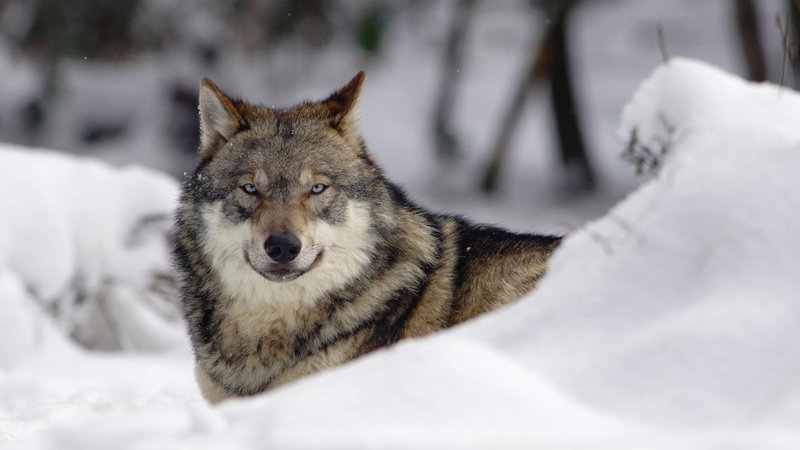
Loving dogs must mean, surely, loving and protecting our wolves.

In yesterday’s post, George Dvorsky wrote:

Unlike a certain companion animal that will go unnamed, dogs lose their minds when reunited with their owners. But it’s not immediately obvious why our canine companions should grant us such an over-the-top greeting—especially considering the power imbalance that exists between the two species. We spoke to the experts to find out why.

Call of the Wild

In order to gain an appreciation for dog behavior, it’s important to understand that dogs are descended from wolves (or at least a common wolf-like ancestor). Clearly, the two species, separated by about 10,000 to 15,000 years, share a lot in common.

Like dogs, wolves greet each other with vigorous face licking (Credit: Sander van der Wel CC A-SA 2.0)

That reference to wolves seemed like as good a reason as any to write further about the wonderful wolf. Or more specifically about the wolves of Oregon.

Such as this from a recent newsletter from Oregon Wild:

Dear Oregon Wild Supporter,

It’s been a busy last few days for Oregon’s wolves and those working to protect them, with new places, new dates, and new pups!

When I wrote to you last, it was about an important Oregon Department of Fish and Wildlife (ODFW) Commission meeting in Seaside. But there’s been a change! The agenda for that meeting has moved and the ODFW Commission will now be taking comments on whether to delist gray wolves on Friday, Oct. 9th in Florence, Oregon. Please sign up to attend and testify on behalf of Oregon’s wolves. After all, they can’t testify for themselves!

I also shared with you a video of the Rogue Pack yearlings playing, caught by trail cam. These were Journey’s pups from last year, but it was also reported that he and his mate had produced another litter this year. Thanks to the US Fish and Wildlife Service, we have a look at these new pups.

Here’s that video:

Published on Jul 8, 2015
A camera captured images of three yearling wolves playing in June, providing biologists with confirmation the offspring of Oregon’s wandering wolf OR7 and his mate have survived.

I can well imagine that the majority of the readers of Learning from Dogs will not be able to attend that ODFW Commission meeting in Florence, OR, on the 9th October (as we can’t) but that doesn’t stop you from wanting to support wolf recovery here in Oregon by signing and sharing the Oregon Wild petition.

Thank you.

Nothing to do with dogs, women or men!

Enough of this introspection!

Dear friend, Suzann, sent me the link to this video a few days ago, it’s just fabulous.

Here’s the description of what the video is about:

The KFPS Friesian Horse: beautiful, versatile, athletic, kind, willing, and able to do anything! May the world see that this breed is loved and enjoyed by all.  Too magnificent not to send on, you’ll love the music as well, beautifully played.

These horses were originally bred as “war horses” in the days of knights and armor. As armor got heavier, bigger horses were needed and the Friesian almost became extinct. They are black and are one of the most beautiful horses in stature as well as gait. What gorgeous animals! Just watching them becomes an emotional experience. Can you imagine what it would be like to ride one? Their manes and tails are the longest that I have seen and I noticed that when performing on grass, their hoofs do not kick up a divot, as they land flat footed. Creatures such as these are what makes this world so special. These horses are native to the Netherlands. Amazing Music is by E.S. Posthumus titled “Manju“.

The male of the species, Part Two

Further musings on dogs, women and men.

A few weeks ago, I read a book entitled The Republican Brain written by Chris Mooney and to quote WikiPedia:

The Republican Brain: The Science of Why They Deny Science — and Reality is a book by the journalist Chris Mooney that is about the psychological basis for many Republicans’ rejection of mainstream scientific theories, as well as theories of economics and history.

On page 83, Chris Mooney writes (my emphasis):

Here also arises a chief liberal weakness, in Lakoff’s view (*), and one that is probably amplified by academic training. Call it the Condorcet handicap, or the Enlightenment syndrome. Either way, it will sound very familiar: Constantly trying to use factual and reasoned arguments to make the world better and being amazed to find even though these arguments are sound, well-researched, and supported, they are disregarded, or even actively attacked by conservatives.

When glimpsed from a bird’s eye view, all the morality research that we’re surveying is broadly consistent. It once again reinforces the idea that there are deep differences between liberals and conservatives – differences that are operating, in many cases, beneath the level of conscious awareness, and that ultimately must be rooted in the brain.

(*) George Lakoff, Berkeley Cognitive Linguist and author of the book Moral Politics.

What Chris Mooney is proposing is that the difference between liberals and conservatives could be genetically rooted, at least in part.

That underlines in my mind how each of us, before even considering our gender differences, is truly a complex mix of ‘nature and nurture’ with countless numbers of permutations resulting.

That there are deep differences, apart from the obvious ones, between man and woman goes without saying. In earlier times, these differences were essential in us humans achieving so much and leading to, in the words of Yuval Noah Harari from yesterday’s post., ” … few would disagree that humans dominate planet Earth; we’ve spread to every continent, and our actions determine the fate of other animals (and possibly Earth itself).”

Speaking of earlier times, let me turn to dogs, for it is pertinent to my post, and I would like to quote an extract from what Doctor of Veterinarian Medicine, Jim Goodbrod, writes in the foreword of my forthcoming book:

But what exactly is this human-dog bond and why do we feel such an affinity for this species above all others? My feeling is that it may be associated with our deep but subconscious longing for that age of simple innocence and innate human goodness that we supposedly possessed before we became truly “human”: that child-like innocence or what Rousseau referred to as the “noble savage”, before being corrupted by civilization, before we were booted out of the Garden of Eden. We humans, for better or worse, somewhere along that evolutionary road acquired consciousness or so-called human nature and with it we lost that innocence. What we gained were those marvelous qualities that make us uniquely human: a sense of self-awareness, an innate moral and ethical code, the ability to contemplate our own existence and mortality, and our place in the universe. We gained the ability to think abstract thoughts and the intellectual power to unravel many of the mysteries of the universe. Because of that acquired consciousness and humans’ creative and imaginative mind we have produced the likes of Shakespeare, Mozart, and Einstein. We have peered deep into outer space, deciphered the genetic code, eradicated deadly diseases, probed the bizarre inner world of the atom, and accomplished thousands of other intellectual feats that hitherto would not have been possible without the evolution of our incredible brain and the consciousness with which it is equipped.

No other living species on this planet before or since has developed this massive intellectual power. But this consciousness was attained at what cost? Despite all the amazing accomplishments of the human race, we are the only species that repeatedly commits genocide and wages war against ourselves over political ideology, geographic boundaries, or religious superstition. We are capable of justifying the suffering and death of fellow human beings over rights to a shiny gold metal or a black oily liquid that powers our cars. We are the only species that has the capability to destroy our own planet, our only home in this vast universe, by either nuclear warfare, or more insidiously by environmental contamination on a global scale. Was it worth it? No matter what your or my opinion may be, Pandora’s Box has been opened and we cannot put the lid back on.

What can we do now to reverse this trend and help improve the quality of life for humanity and ensure the well-being of our planet? I think, if we recognize the problem and look very critically at ourselves as a unique species with awesome powers to do both good and bad, and put our collective minds to the task, it may be possible to retrieve some of the qualities of that innocence lost, without losing all that we have gained.

Dogs represent to me that innocence lost. Their emotions are pure. They live in the present. They do not suffer existential angst over who or what they are. They do not covet material wealth. They offer us unconditional love and devotion. Although they certainly have not reached the great heights of intellectual achievement of us humans (I know for a fact that this is true after having lived with a Labrador retriever for several years), at the same time they have not sunk to the depths of depravity to which we are susceptible. It could be argued that I am being overly anthropomorphic, or that dogs are simply mentally incapable of these thoughts. But nevertheless, metaphorically or otherwise, I believe that dogs demonstrate a simple and uncorrupted approach to life from which we all could benefit. I think the crux of Paul’s thesis is that, within the confines and limitations of our human consciousness, we can (and should) metaphorically view the integrity of the dog as a template for human behavior.

“Dogs demonstrate a simple and uncorrupted approach to life …”

I closed yesterday’s post with these words, “It is my contention that humankind’s evolution, our ability to “cooperate flexibly in large numbers”, is rooted in the gender differences between man and woman.”

The premise behind that proposition is that until, say one hundred years ago, give or take, that co-operation between large numbers of humans was critically important in so many areas: health; science; medicine; physics; exploration; outer space and more. (And whether one likes it or not: wars.)  My proposition is that it is predominantly men who have been the ‘shakers and movers’ in these areas. Of course not exclusively, far from it, just saying that so many advances in society are more likely to have been led by men.

But (and you sensed a ‘but’ coming up, perhaps) these present times call for a different type of man. A man who is less the rational thinker, wanting to set the pace, and more a man capable of expressing his fears, exploring his feelings, defining his fear of failure, and more. I don’t know about you but when I read Raúl Ilargi Meijer words from yesterday, “And if and when we resort to only rational terms to define ourselves, as well as our world and the societies we create in that world, we can only fail.”, it was the male of our species that was in my mind. As in, “And if and when we [males] resort to only rational terms to define ourselves …”.

Staying with Raúl Meijer’s words from yesterday (my emphasis), “And those should never be defined by economists or lawyers or politicians, but by the people themselves. A social contract needs to be set up by everyone involved, and with everyone’s consent.”

Dogs demonstrate a simple and uncorrupted approach to life but that doesn’t extend to them making social contracts. Women do understand social contracts, they are predominantly caring, social humans. Less so for men. But for that social contract to be successfully set up by everyone it must, of course, include men. And that requires men, speaking generally you realise, to find safe ways to get in touch with their feelings, to tap into their emotional intelligence, using positive psychology to listen to their feelings and know the truth of what they and their loved ones need to guarantee a better future. What they need in terms of emotional and behavioural change. And, if I may say, sensing when they might need the support of subject experts to embed and sustain those behavioural changes.

It was the fickle finger of fate that led me to the arms, metaphorically speaking, of a core process psychotherapist back in Devon in the first half of 2007. That counselling relationship that revealed a deeply hidden aspect of my consciousness: a fear of rejection that I had had since December, 1956. That finger of fate that took me to Mexico for Christmas 2007 and me meeting Jean and all her dogs. That finger of fate that pointed me to the happiest years of my life and a love between Jeannie and me that I could hitherto never ever have imagined.

However, as much as I love and trust Jean, wholeheartedly, it comes back to dogs.

For when I curl up and wrap myself around a dog and sense that pure unconditional love coming back to me, I have access to my inner feelings, my inner joys and fears, in a way unmatched by anything else.

Where learning from dogs is a gateway to learning from me.

Pharaoh – more than just a dog!


The male of the species, Part One

Dogs, women and men.

I did warn you, my dear reader, at the end of yesterday’s post that my introspective mood continues!

Over today and tomorrow, I want to explore why we humans can be so incredibly clever, especially in a group sense, yet the males of our species find it so difficult to express themselves, and what that means for the future of humanity (at the risk of sounding a tad pompous).

More or less at random, a dip into yesterday’s selection of blogs brought to light some deeply disturbing items.

Professor William Even, Professor of Economics at the Farmer School of Business at Miami University was reported in The Conversation saying that:

As of 2014, there were approximately 39 million people aged 16-24 in the US, and 5.4 million of them were neither employed nor in school. That’s almost 14% of the age cohort, or more than two-and-a-half times the national rate of unemployment.

In that same bulletin from The Conversation, John Shepherd, a Professorial Research Fellow in Earth System Science at the University of Southampton in England, in writing about the challenges of directly removing CO2 from the atmosphere, stated (my emphasis):

A new paper in Nature Communications shows just how big the required rates of removal actually are. Even under the IPCC’s most optimistic scenario of future CO2 emission levels (RCP2.6), in order to keep temperature rises below 2℃ we would have to remove from the atmosphere at least a few billion tons of carbon per year and maybe ten billion or more – depending on how well conventional mitigation goes.

We currently emit around eight billion tonnes of carbon per year, so the scale of the enterprise is massive: it’s comparable to the present global scale of mining and burning fossil fuels.

Then Raúl Ilargi Meijer authored an item on The Automatic Earth blog, a blog that usually writes almost exclusively about money matters. His article was called: Power and Compassion. He opens his essay:

Time to tackle a topic that’s very hard to get right, and that will get me quite a few pairs of rolling eyes. I want to argue that societies need a social fabric, a social contract, and that without those they must and will fail, descend into chaos.

Then after referring to the European Union, he goes on to write (my emphasis):

Though it may look out of far left field for those of us -and there are many- who think in economic and political terms only, we cannot do without a conscious definition of a social contract. We need to address the role of compassion, morals, even love, in our societies. If Jesus meant anything, it was that.

There have been times through history when this subject would have been much easier to breach, but we today almost seem to think they are irrelevant, that we can do without them. We can’t. But in the US, people get killed at traffic stops every day, and in Europe, they die of sheer negligence. Developments like these will lead to ‘centers that cannot hold’.

In that part of the media whirlwind that we at the Automatic Earth expose ourselves to, virtually all discussions about our modern world, and what goes wrong with it, which is obviously a whole lot, are conducted in rational terms, in financial and political terminology.

But that’s exactly what we should not be doing. Because it’s never going to get us anywhere. In the end, let alone in the beginning too, we are not rational creatures. And if and when we resort to only rational terms to define ourselves, as well as our world and the societies we create in that world, we can only fail.

For a society to succeed, before and beyond any economic and political features are defined, it must be based solidly on moral values, a moral compass, compassion, humanity and simple decency among its members. And those should never be defined by economists or lawyers or politicians, but by the people themselves. A social contract needs to be set up by everyone involved, and with everyone’s consent. Or it won’t last.

How and why that most basic principle got lost should tell us a lot about where we are today, and about how we got here. Morals seem to have become optional. The 40-hour death struggle of Cecil the lion exemplifies that pretty well. And no, his is not some rare case. The lack of morals involved in killing Cecil is our new normal.

Let me now set the stage for what I want to write about tomorrow. And I’m going to do that by referring to a TED Talk that was recorded by historian and author Yuval Noah Harari. Here’s how that TED Talk was introduced:

Seventy thousand years ago, our human ancestors were insignificant animals, just minding their own business in a corner of Africa with all the other animals. But now, few would disagree that humans dominate planet Earth; we’ve spread to every continent, and our actions determine the fate of other animals (and possibly Earth itself). How did we get from there to here? Historian Yuval Noah Harari suggests a surprising reason for the rise of humanity.

Yuval Harari’s talk is based firmly on his thesis presented in his book: Sapiens: A Brief History of Humankind. (There’s a review of his book in The Guardian newspaper.) Namely:

The book surveys the history of humankind from the evolution of archaic human species in the Stone Age up to the twenty-first century. Its main argument is that Homo sapiens dominates the world because it is the only animal that can cooperate flexibly in large numbers. The book further argues that Homo sapiens can cooperate flexibly in large numbers, because it has a unique ability to believe in things existing purely in its own imagination, such as gods, nations, money and human rights. The author claims that all large scale human cooperation systems – including religions, political structures, trade networks and legal institutions – are ultimately based on fiction.

Other salient arguments of the book are that money is a system of mutual trust; that capitalism is a religion rather than only an economic theory; that empire has been the most successful political system of the last 2000 years; that the treatment of domesticated animals is among the worst crimes in history; that people today are not significantly happier than in past eras; and that humans are currently in the process of upgrading themselves into gods.

It is my contention that humankind’s evolution, our ability to “cooperate flexibly in large numbers”, is rooted in the gender differences between man and woman. A contention that I expand upon tomorrow.

Synecdoche : Little World

The concluding part of Hariod Brawn’s wonderful essay.

Haroid’s opening part was republished by me in this place yesterday, under the blog title of Alone in a sea of many. For the concluding part, I have named this blog post in accordance with Hariod’s chosen name. Thank you to all who read Part One and I hope you find Part Two equally stimulating.

ooOOoo

Synecdoche (Part Two): Little Person

Fool’s Cap Map of the World. Unknown origin c.1580-1590

In the first part of this article, we discussed how each person, in coming to understand how they construct themselves as the self-entity they take themselves to be, must in the process come to understand how all others do too. In other words, self-knowledge is not particular to the individual, because the self – in essence an embedded, accumulating and by graduation morphing narrative and body schema – comes into being by identical means in our species. Each of us remains unique in many ways, such as in our formative experience, our psychological make-up, conditioned traits, genetic inheritance, and in our individuated physicalities. Yet that which we regard as our quintessence, the enduring internalised construct we each unquestioningly hold as the self and the aspect of ourselves which we most intimately cling to, is little more than a formulaic pretence determined and governed solely by means of evolved, unbidden and unconscious processes.

Each character has a given name, societal position, cultural identity and perhaps a hierarchical status; yet all such markers are in part a figure of speech, or synecdoche, denoting an undeniable correlation with countless others. The markers delineate superficial distinctions alone, and the greater the number of them, the more we remove from our understanding the underlying truth of the other’s commonality with us. In much the same way, in our coming to understand how the worlds we ourselves inhabit are constructed, we see also that same world as a synecdoche for all others. How I relate to my home and environment, my relatives and loved ones, those I engage with out of chance or necessity, and those whom I depend upon or those who depend upon me, human or non-human, all make up my little world. It is a relational world, an interactive adventure forged from myriad connections, surprisingly few of which do I have great control over.

The argument against this is to assert that such correlations are facile, that how can I, a materially secure Westerner living in a largely strife-free state, possibly share any commonality with the oppressed and malnourished other on, say, the Indian sub-continent? Are these conditions not worlds apart, if only qualitatively? Well, in examining human suffering, we find it has a common genesis, proceeding as it does from the mind. For example, we commonly mistake unpleasant bodily sensations for suffering, failing to distinguish between physical pain and the attendant overlay of mental anguish. Is the suffering of the wealthy financier who contemplates suicide at her portfolio’s decimation greater than that of the homesteader in sub-Saharan Africa facing a crop failure of a few sacksful of grain? Objectively, then yes, these are worlds apart, yet the subjective suffering of each may be qualitatively indistinct, even in their wildly differing experiential settings.

Geography of Twitter. By Eric Fischer, Washington, DC

And what of care and affection; are we to suppose that our world as comprising love is any the lesser or greater than others? Ought we to suppose the human instinct to loving solicitude is greater than that of our fellow creatures? Who amongst us knows what human love is as distinct from other forms of animal love, and whether it is qualitatively superior? Am I so arrogant as to suggest my altruistic benevolence is any the greater than that of my pet Border Collie, for it seems far from being so? If I am unable to define precisely what constitutes this world aspect, how am I to know that those of other animals are not simulacra of my own, there being no original and authentic love-world other than the one as represented by the many – is this not a truth hard to refute? I may describe a personal world of felt affection, yet in doing so prescribe but a figure of speech alone, a synecdoche for all worlds inhabited perhaps by most beings of sentience.

My little world is forged at the interface between psyche and otherness, between ideas and the world as impressed upon my senses. Those impressions and the precise nature of that otherness differ in every detail from the next person’s, yet the means of forging are identical. This shared action results in distinct narratives of course, and it is these that are held to in our bids to assert the pre-eminence of individuality over commonality. I want to believe I am, if not special, then unique; yet that is only true in the differing stories of what I am and what my little world is. To those without privilege to my narratives of self and world, my assumed mantle of uniqueness is meaningless, and the same is true of theirs to me. We may here be at a cold and sterile juncture, yet it also is a starting point from which we may begin to introduce the binding agents of humankind – our innate qualities of kindness and compassion, of empathic understanding.

So what, why should I care about such ideas when I have altogether more pressing concerns? What is the point in abstracting notions such as these from the warp and weft of daily living, the place where I earn my crust, feed my children, and work on my betterment as a means of personal fulfilment? Perhaps the answer lies somewhat starkly in the evidence, and which seems to me to be in a state of constant deterioration. We live in a polarised world, where theists fight theists and atheists argue against both, where the wealthy seldom flinch in their impoverishment of others, and where power-hungry and psychopathic leaders crush the potential of all they have dominion over. Is it not time to find our common humanity, or even our common animality? We humans are destroying our sole environment; we are chasing down the darkening corridors of economic systems at the point of failure. Can we not rest awhile so as to perceive our little worlds as one?

ooOOoo

My sense is that for quite a few readers who read yesterday’s and today’s postings, they were not the easiest read that has been seen on Learning from Dogs. But in a world where the dumbing down of the English vocabulary seems ever more present, to read Hariod’s essay slowly and carefully, and let the deeper meanings of her arguments settle within the mind, is a profound and compelling reminder of the beauty and elegance of the English language.

This introspective mood continues tomorrow: you have been warned!

Alone in a sea of many

A few days of inner contemplation.

I suspect that many, if not most, originally came to this place expecting the blog to be directly about dogs. And, in many instances, the posts are directly about canis lupus familiaris. But the original idea behind choosing the blog name Learning from Dogs was the sense that we, as in mankind, have to change our ways if we are to offer our grandchildren a viable planet upon which they may live. More succinctly expressed in The Vision for this blog:

Our children require a world that understands the importance of faith, integrity and honesty,

Learning from Dogs will serve as a reminder of the values of life and the power of unconditional love – as so many, many dogs prove each and every day,

Constantly trying to get to the truth …

The power of greater self-awareness and faith; faith that the only way forward for us is through the truth …

If you have read this far you may be wondering if the old guy has lost yet another marble!

So what has prompted this introspection? I’ll tell you.

I subscribe to Hariod Brawn’s blogsite Contentedness.net For those that do not know Hariod’s writings then her About page offers (in part):

We’re here to discuss aspects of human well-being as they relate to our sense of self, our personal identity and whatever other notions we may hold for our own uniquely human sense of being. This means the discussion centres upon the pragmatic or real-life dimensions of experience – things like our sense of contentedness, of personal meaningfulness, and other tangibly perceived aspects of well-being. The discussion is positive, respectful, non-judgemental, considerate.

That, as you can see, resonates very much with me thinking of Learning from Dogs as a means, metaphorically so, of finding greater self-awareness.

On June 10th, Hariod published the first part of an essay called Synecdoche: Little Person. I found the essay extraordinarily interesting and wanted to share it with you in this place. Hariod generously gave me permission, so here is Part One.

ooOOoo

Synecdoche (Part One): Little Person

Hariod1

I am just a little person, one person in a sea of many little people who are not aware of me, yet each potentially a simultaneous understanding of the other; each, in a sense, a simulacrum or synecdoche for all others: if I understand myself sufficiently deeply, then in that moment I understand the other, however remote my presence to them. This is not to say I can appreciate their specific complexities, of course, and the detail, the true intricacy of any given life, remains forever removed from that quota of awareness I am privileged to. Each little person, tagged with their own unique package of characteristics, is still a synecdoche though, potentially at least, for all the little people out in the sea of otherness. The word means literally ‘take with something else’, so conveying the idea that even a partial representation alone is sufficient to apprehend the whole, or vice versa.

This sounds rather fanciful to the contemporary mind, conditioned as it is in a belief as to the total, inarguable individuality of each little person. What an appealing belief this is too, for this same little person here finds a seemingly plausible counter to a reluctantly intuited sense of homogeneity, which word itself derives from the Greek ‘homogene’, meaning ‘of the same kind’: Homo Sapiens. Even though each of the little person’s internal organs are replaceable with those fished from the sea of many little people, even though their blood, hair, bones, limbs, eyes and hands can be substituted with biological or manufactured alternatives, still the little person resists the evidence, demanding their status as a uniquely enduring entity. It is of course the mind itself that insists upon countering the intuited and actual homogeneity, and the mind, so the little person believes, belongs to them.

Hariod2

This raises a problem, for if the little person’s physicality is all but totally interchangeable, then at what point during this theoretical process does the supposed possessor of the mind cease to exist? When does the point arrive at which we can no longer claim the mind belongs to any little person? If we hold to Physicalism, or Hard Materialism, we assert the mind belongs, if not to the little person, then to the organ of the brain. Should we be an Eliminative Materialist, we say there is no mind, and so no such question arises. I resist these philosophical perspectives, for to me there is a non-locality of awareness, meaning it arises both within as well as about what we think of as the little person, and whilst we call this aware experience ‘mind’, I do not adhere to any Cranialism; it’s not exclusively headstuff. In accepting this, we logically must ask whether the mind is under ownership.

Ownership implies agency, or self-determination, and it is belief in this that makes the little person feel unique and autonomous, directing their life just as all others would theirs. Yet this owning agent is never verifiable other than as consciousness, for it is only ever a belief that resides within and as that consciousness. Now, all conscious displays are themselves non-local simulacra, representations of otherness that are neither the little person nor any owning agent, and which clearly may never be evidenced outside of consciousness. This means the little person is always a thought-construct, a put-up job forged by mind and subsisting in otherness but never in essence itself. Should this hypothesis obtain, then the little person is a synecdoche for the entirety of others in kind; this is because every little person, being a fabrication of mind, comes into apparent existence in an identical manner.

Hariod3

Where are we? We heard that the mind persists in countering a reluctantly intuited homogeneity of all the little persons. Further, we said the mind forges each little person as a thought-construct, and that the little person does not exist as an enduringly instantiated entity – just like a house, a car, or a computer, its parts are interchangeable. Beyond this, we learned the mind produces only conscious effects as verification of its own fabrications, and that these subsist universally for all the apparent little persons, being as they are culled from the same sea of otherness. And lastly, we found that the hypothesis as a whole demonstrates that each apparent little person is a synecdoche for the sea of many little people. So, in understanding myself sufficiently deeply, then in that moment I understand the other, which was the assertion of the opening paragraph and a challenge to the curious mind.

In the ‘Ship of Theseus’ paradox, a parallel question is raised: in replacing a wooden ship plank by plank, are the ongoing resultants still the original ship? In point of fact, only the conception itself endures across the constant transitioning. The ship, as known, is not a wooden construct; it is a thought-construct, a fixed conception presenting to any observing little person, all of whom create each the other in identical fashion. Each parallel the ship in that their structure constantly mutates whilst a sense of enduring selfhood smears out across the whole, forged in mind in homogeneous ways. Now, if the little person turns the mind in on itself reflectively, they in time realise that they must be more than a thought-construct, a belief. They see that the little person whom they believed they existed as was a synecdoche: a motif in play which in its perfectly clear seeing brings knowledge of all of its kind.

Images courtesy of New Zealand Government Archives.

ooOOoo

The concluding part of Hariod’s essay is published tomorrow.

Saturday smile

Shared with me by our neighbours Larry and Janell.

Have a great weekend.

French police

This actually happened to an Englishman in France who was totally drunk.

oooo

A French policeman stops the Englishman’s car and asks if he has been drinking.

With great difficulty, the Englishman admits that he has been drinking all day, that his daughter got married that morning, and that he drank champagne and a few bottles of wine at the reception, and many single malt scotches thereafter.

Quite upset, the policeman proceeds to alcohol-test (breath test) the Englishman and verifies that he is indeed totally sloshed.

He asks the Englishman if he knows why, under French Law, he is going to be arrested?

The Englishman answers, with a hint of humour in his voice, “No sir, I do not!”

He then continues, “But while we’re asking questions, do you realize that this is a British car and that my wife is driving . . . . . on the other side?”

oooo

So, whatever side of the road you drive on, you all stay safe out there!

Saturday smile.

Wonderful volunteers keep a stranded Orca whale alive.

I saw this shared on Facebook by George Ball, a friend from my English days. It’s a lovely example of the compassionate side of man.

ooOOoo

From CBS News:

Stranded orca saved by volunteers who kept it cool for hours until high tide

A pump and sheets were used to keep whale alive near Hartley Bay on B.C.’s North Coast

By Maryse Zeidler, CBC News Posted: Jul 23, 2015 7:20 AM PT – Last Updated: Jul 24, 2015 5:35 AM PT

An orca that was stranded on some rocks was kept alive for eight hours by a dedicated team of whale researchers and volunteers on the North Coast of B.C.

“She cried often, which tore at our hearts, but as the tide came up there were many cheers as this whale was finally free,” said in a Facebook post from the group The Cetacean Lab.

Early Wednesday morning, the group received a call from a colleague about the beached orca, which was stuck on some rocks at low tide.

“We decided the best thing to do would be to keep her cool, that meant to put water on her body and we used blankets and sheets,” said Hermann Meuter, a co-founder of Cetacean Lab.

“It was the only thing we could do.”

Meuter said they could see the orca’s behaviour change as they began to help her.

“At first she was stressed, you could see that her breathing was getting a little faster,” said Meuter.

But after about 15 to 20 minutes, she began to calm down.

“I think she knew that we were there to help her,” said Meuter.

Around 4 p.m. PT, the tide began to rise and the orca was able to start freeing herself.

“It took her about 45 minutes to negotiate how best to get off the rocks,” said Meuter. “We all just kept our distance at that point.”

When she swam away, the orca was quickly reunited with her pod, which was nearby.

Metuer said members of the World Wildlife Fund and the Git G’at Guardians from Hartley Bay were also on the scene helping to free the animal.

“We all cared about this whale and we were just very lucky to give that whale another chance,” said Meuter.

ooOOoo

There are photographs to view on that CBS News item plus this video (wish it could have been longer) was also included in Maryse Zeidler’s report.

Well done to everyone who helped save this magnificent animal.

A return to the topic of rewilding.

Lessons from the wild

At the end of 2013, I published a post under the title of We must rewild. The core of that post was an essay from Patrice Aymes called Rewilding Us. Here’s a small extract from that essay:

In Africa, there are about 500,000 elephants. 25,000 to 30,000 are killed, a year, to send the ivory to east Asia (China, Vietnam). So African elephants may disappear. This is beyond tragic, it’s irreplaceable. Elephants understand people’s gestures, without any learning (they apparently learn to use trunk gestures among themselves). One is talking about extremely intelligent animals here. (In contrast, chimpanzees have great difficulties understanding human gestures.)

My post also included this photograph of young Cleo, just five months old, showing that her innate skills of being in the wild were alive and well, despite thousands of years of dogs being domesticated animals. Ergo, humans could manage just as well.

Photograph taken 25th April, 2012.

Last Friday, George Monbiot published an essay in The Guardian newspaper that stays with the theme of loving the wild.  It is republished here with Mr. Monbiot’s very kind permission.

ooOOoo

Falling in Love Again

17th July 2015

Rebuilding our relationship with the natural world can re-animate our own lives, as well as the ecosystem.

When the robin was voted the UK’s national bird last month, we chose to celebrate half of a broken relationship. The robin is to the wild boar what the oxpecker is to the Cape buffalo: it has evolved to catch the worms and insects exposed by their grubbing. But boar are mostly absent from the UK, so its survival often depends on finding the next best thing: human gardeners. This is why the robin is so tame in this country. As far as the bird is concerned, you and I are just fake pigs.

We are surrounded by such broken relationships, truncated natural processes, cauterised ecologies. In Britain we lack almost all large keystone species: ecological engineers that drive the fascinating dynamics which allow other lifeforms to flourish. Boar, beavers, lynx, wolves, whales, large sharks, pelicans, sturgeon: all used to be abundant here, all, but for a few small populations or rare visitors, are missing.

The living systems that conservationists seek to protect in some parts of this country are a parody of the natural world, kept, through intensive management, in suspended animation, like a collection in a museum. An ecosystem is not just a place. It is also a process.

I believe their diminished state also restricts the scope of human life. We head for the hills to escape the order and control that sometimes seem to crush the breath out of us. When we get there, we discover that the same forces prevail. Even our national parks are little better than wet deserts.

Our seas were once among the richest on earth. A few centuries ago, you could have watched fin whales and sperm whales hammering the herring within sight of the shore. Shoals of bluefin tuna thundered up the North Sea. Reefs of oysters and other sessile animals covered the seabed, over which giant cod, skate and halibut cruised. But today, industrial fishing rips up the living fabric of all but 0.01% of our territorial waters. To walk or dive in rich environments we must go abroad.

Though not, I hope, for long. On Wednesday, a new organisation, Rewilding Britain, was launched. (It was inspired by my book Feral and I helped to found it, but I don’t have a position there). Its aim is to try to catalyse the mass restoration of the living world, bring trees back to bare hills, allow reefs to form once more on the seabed and to return to these shores the magnificent, entrancing animals of which we have so long been deprived. Above all it seeks to enhance and enrich the lives of the people of this nation. I hope that it might help to change the face of Britain.

Already, local projects hint at what could be achieved. In the southern uplands of Scotland, the Borders Forest Trust has bought 3000 hectares of bare mountainside and planted hundreds of thousands of native trees. The community of Arran seabed trust in the Firth of Clyde managed, after 13 years of campaigning, to persuade the government to exclude trawlers and scallop dredgers from one square mile of seabed. The result, in this tiny reserve, is an explosion of lobsters, crabs, scallops and fish. It’s now trying to extend the project to a larger area.

In Sussex, the Knepp Castle estate gave up its unprofitable wheat farming, released a few cattle and pigs and let natural processes take over. Now it hosts some of Britain’s highest populations of nightingales, purple emperor butterflies and turtle doves. Partly through ecotourism and accommodation and selling high-grade meat, it has become profitable. In south London, the Wandle Trust has turned a mangled and polluted urban river back into a beautiful chalkstream, supporting kingfishers and wild trout. Wonderful as these projects are, until now they have lacked a national voice. Britain remains in a state of extreme depletion.

Some people argue that we should not seek to re-establish missing species until we’ve protected existing wildlife. But nothing better protects our ecosystems than keystone species. Beaver dams provide habitats for fish, invertebrates, amphibians and waterbirds. In Ireland, resurgent pine martens appear to have pushed back the grey squirrel, allowing red squirrels to recolonise. One study suggests that our woodland ecology cannot recover unless half the country’s deer are culled every year. Lynx could do it for nothing. Functional ecosystems, in which dynamic living processes prevail once more, are likely to be more resistant to climate change than stagnant collections in virtual glass cases.

Over the past two years, there has been a surge of enthusiasm for change. A poll in Scotland found that 60% support the reintroduction of beavers, with only 5% opposed. 91% of respondents to a survey by the Lynx UK Trust supported a trial reintroduction. Researchers at the University of Cumbria digitally altered photographs of Borrowdale in the Lake District, adding or subtracting trees. 69% of the people who saw them favoured the images with extra trees. A video extracted from my TED talk, about the relationship between wolves and other wildlife, has been watched 18 million times.

But the interests of local people must never be overruled. Rewilding must take place only with active consent. Already, landowners are coming forward, proposing to rewild their own property. Community groups, such as Cambrian Wildwood in mid-Wales, are seeking to buy and restore surrounding land. What rewilding offers is a new set of options in places where traditional industries can no longer keep communities alive, where schools and shops and chapels and pubs are closing and young people are leaving the land to find work elsewhere.

In the hills of southern Norway, the return of trees has been accompanied by a diversification and enrichment of the local economy. There, the small income from farming is supplemented with eco-tourism, forest products, rough hunting, fishing, outdoor education, skiing and hiking. The governments of Britain now claim to be willing to pay for the protection of soils and watersheds. These are likely to be more resilient sources of income than the current farm subsidy system upon which all hill farming in this country depends, whose gross injustice – transferring vast sums from the poor to the rich simply for owning land – is as unsustainable politically as it is ecologically.

Perhaps most importantly, rewilding offers hope. It offers the hope of recovery, of the enhancement of wonder and enchantment and delight in a world that often seems crushingly bleak. My involvement with rewilding, to my own amazement, has made me much happier and more optimistic than I was before. I feel an almost evangelical sense of excitement about the prospects for change. I want other people to be able to experience it too.

In 2009, the rewilding pioneers Trees for Life released some wild boar into an enclosure at Dundreggan, in the Scottish Highlands. Within twenty minutes, robins came down from the trees and started following them. Their ecological memory was intact. When I’ve accompanied children from deprived London boroughs to the woods and rockpools for the first time in their lives, I have seen something similar: an immediate, instinctive re-engagement, the restoration of a broken ecological relationship. Once we have richer wild places to explore, we won’t need much prompting to discover their enchantments.

www.monbiot.com

ooOOoo

In the copy of George Monbiot’s essay that was published on his blogsite there were 25 links to other materials. I feel very bad that I just didn’t have the time to copy across all those links so my strong recommendation is that if you enjoyed reading this here then you go across to the essay on his blogsite and check out all the additional material available to you. My only exception was to insert the link to the organisation Rewilding Britain that was referred to in the sixth paragraph.