With huge thanks to Sally McCarthy.
Sally reposted this video that was seen on Paul Goosen’s Facebook page.
Is there no end to what our wonderful dogs can do!
Dogs are animals of integrity. We have much to learn from them.
Category: People
With huge thanks to Sally McCarthy.
Sally reposted this video that was seen on Paul Goosen’s Facebook page.
Is there no end to what our wonderful dogs can do!
“All that evil needs to succeed is for good people to do nothing.”
You will recall that on the 8th March I published a post called Anger Alert. It was about raising awareness for “Stella has spent the last two years locked in a 3-by-9 foot cage in a kennel in Devon, England. She has never been let out to exercise or play.”
I included a link to a Care2 Petition that as of now has been signed by nearly 38,000 persons including many who read this blog. Thank you. Keep Stella in your thoughts.
Regretably, Stella’s imprisonment has not yet come to an end but here is a good news story that underlines why we must always keep fighting for the things we believe need to be changed.
ooOOoo

 By: Judy M. March 14, 2016
About Judy Follow Judy at @judymolland
When Kirstyn Smith heard that 31 pit bulls had been rescued from a dog-fighting ring in her native Ontario, Canada, she was thrilled, but then she learned there was a catch: Officials had plans to euthanize the dogs, rather than free them. That’s when she jumped into action and decided to create a Care2 petition.
That petition now has over 61,000 signatures, as people around the world react to the horrifying and deeply unfair death sentence.
Here’s what Smith wrote in her petition:
“My name is Kirstyn Smith and I have been following a very heart-breaking story since October 2015. The town of Chatham-Kent, ON fell victim to a horrible and cruel act where 31 pitbull-type dogs were seized from an alleged dog fighting-ring.
These animals need our help.
Please sign and share this petition to demand that these dogs are treated humanely, medically taken care of and rehabilitated in order to live out their lives away from torture and neglect.”
Close To Victory
On March 10, she issued this update to her petition:
“We are so close! The accused have agreed to hand over ownership to Dog Tales Sanctuary in King City, ON. This is incredible news, but we still need the Ministry of Community Safety & Correctional Services to give proper designation which will allow the dogs to legally reside in Ontario. Thank you to each and every one of you for your support on this long journey!!”
Smith is referring to the fact that pit bulls are banned in the province of Ontario, and only a pound can take in pit bull-type dogs. However, Dog Tales is not a pound, so the sanctuary must make a special application in an effort to get the designation that will allow them to take in the pit bulls.
This of course is not unique to Ontario. Pit bulls are banned or restricted in most Canadian provinces; in the U.S., over 700 cities have enacted breed-specific legislation which is any ordinance, or dog law, that relates to specific dog breeds but does not affect any others.
The next court date will be March 18, and there will likely be another one after that, but things are moving forward in a positive way, thanks largely to Smith’s persistence and the awesome support of those 61,000 Care2 activists.
An Awesome Sanctuary
If justice prevails, these dogs will move to their new home, which CTV News London describes as an “opulent sanctuary in King City, Ontario, which is owned by one of Canada’s richest families.”
“The issues present are nothing that we haven’t seen before, and nothing that we feel cannot be changed with time, patience, and the proper technique,” says Clare Forndran, a spokesperson at Dog Tales Rescue and Sanctuary.
“At Dog Tales we are fortunate enough to have the facilities and the resources to provide for our dogs in ways that many other shelters cannot,” owner Danielle Eden said in an email.
While this story has come a long way and is very close to a happy ending, it’s not quite there yet.
You can help rescue these dogs from a death sentence by signing Smith’s petition, asking the authorities to treat these animals humanely, and take care of them so that they can live out their lives away from torture and neglect.
And if you have a cause that you care deeply about, and want to make a difference in the world, you can create your own petition, just as Kirstyn Smith did. You’ll soon find the Care2 community of activists ready to join you in your cause. And if you’d like to read more about petitions, you can check out this handy guide.
ooOOoo
So, please, if you are not one of those 61,000 who have already signed this petition then, without delay, go here and add your support to this wonderful cause.
Celebrating the life and times of Albert Einstein.
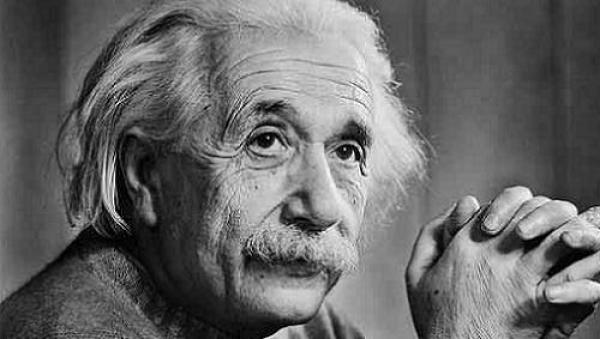 Yesterday was the centenary of the birth of Albert Einstein (14 March 1879 – 18 April 1955). It has been widely reported. For example, a piece on the EarthSky blog:
March 14, 1879. This is the anniversary of the birth of Albert Einstein, undoubtedly the most famous scientist of the modern era.
Einstein was born in Ulm, Germany, where an uncle – Jakob Einstein, an engineer – introduced him to science and math. At age 17, he enrolled in the Swiss Polytechnic Institute after failing the entrance exam the previous year. He graduated in 1900, and in 1902 he became a junior patent examiner in the Swiss Patent Office in Bern, Switzerland, where he specialized in electrical devices.
The year 1905 came to be known as Einstein’s Miracle Year. He was 26 years old, and in that year he published four papers that reshaped physics.
Now before you read on let me proclaim that today’s post has absolutely nothing to do with dogs! (Unless dogs exist in parallel universes!)
But a recent documentary that was published on Top Documentary Films was really fascinating and incredibly well presented. Thus, in terms of the likes of you and I better understanding what Einstein revealed about our universe, I couldn’t resist sharing it with you all today. It is just 29 minutes long.
STORYLINE
One hundred years have passed since Albert Einstein first unleashed his highly influential Theory of General Relativity unto the world. These revelations charted a future course of scientific pursuit, and never cease to inform our understanding of the universe today. In celebration of that impressive legacy, the documentary short Einstein’s Extraordinary Universe travels to three research facilities in different regions across the globe, and shows us how Einstein’s work continues to challenge, shape and inspire the scientific discoveries of tomorrow.
The film opens in Tuscany. Under the shadows of Galileo’s groundbreaking work on gravity research, a group of astrophysicists are exploring Einstein’s theories related to the occurrence of gravitational waves through space and time. Can modern technologies and advanced scientific intellect result in actual proof of such waves?
Viewers are then taken to the world’s largest underground laboratory. Hidden far beneath Italy’s Gran Sasso mountains, the lab serves as a home to researchers who work tirelessly to prove another of Einstein’s grandiose theories: the existence of dark matter. The vast majority of our universe is made up of materials that we have not yet been able to detect through forces of light and energy. The dedicated team who toil away in this impressive underground lair hope they can lay the groundwork in changing that.
The filmmakers’ next stop is Switzerland, where they are given a tour of one of the most impressive displays of scientific testing technology on the planet. Housed by the European Organization for Nuclear Research, or CERN, the Large Hadron Collider is the most powerful particle accelerator on the planet, and is being used to question and examine the substance of all matter in our universe.
Through each destination on this incredible journey, what amazes most is how prescient Einstein’s theories have proven even after a century has passed. His work continues to test the limits of our scientific understanding, and sets a groundwork from which researchers still strive for answers. Featuring a plethora of illuminating interviews with many top figures in the fields of scientific study, Einstein’s Extraordinary Universe is certain to delight seasoned science geeks and novices alike.
What an extraordinary mind he had!
Huge thank you to Producer John Letz and the whole crew.
A week ago last Saturday Jean and I travelled down to Ashland and to the studios of Rogue Valley Community Television (RVTV). This is how RVTV describe themselves:
Based at the Southern Oregon Digital Media Center, RVTV provides access television and streaming media services for the citizens and local governments of Jackson and Josephine Counties. Please visit rvtv.sou.edu for more information.
John Letz, the Producer for Adventures in Education and Ramping Up your English, had read my book and thought it might make a good programme.
I’m both delighted and flattered to say that the programme is now available and published under a Commons Creative Licence. Here it is!
Everything, eventually, falls into decay.
What is deeply fascinating, at a number of levels, is how time only goes one way. At every single level of our experience, from the scale of the universe down to the tiniest particle known to science, it all flows forward. The arrow of time!
I was reminded of this interesting question of time in a book that has been published by a local Oregon author, John Taylor Our Curious UNIVERSE (the book is not available online otherwise I would have linked to it.)
It got me thinking of age. How we are all aging. How there is nothing that we can do to stop it. How the only thing we can do is to change our relationship with age. That then reminded me of an item that was published on The Conversation site a week ago that I wanted to share with you – share within the terms provided by The Conversation. The article was called It’s time to measure 21st century aging with 21st century tools.
ooOOoo
March 4, 2016
The research was conducted in the framework of the European Research Council ERC-2012-AdG 323947-Re-Ageing
Sergei Scherbov receives funding from the European Research Council ERC-2012-AdG 323947-Re-Ageing
oooo
The populations of most countries of the world are aging, prompting a deluge of news stories about slower economic growth, reduced labor force participation, looming pension crises, exploding health care costs and the reduced productivity and cognitive functioning of the elderly.
These stories are dire, in part because the most widely used measure of aging – the old-age dependency ratio, which measures the number of older dependents relative to working-age people – was developed a century ago and implies the consequences of aging will be much worse than they are likely to be. On top of that, this ratio is used in political and economic discussions of topics such as health care costs and the pension burden – things it was not designed to address.
Turning 65 in 2016 doesn’t mean the same thing as hitting 65 in 1916. So instead of relying on the old-age dependency ratio to figure out the impact of aging, we propose using a series of new measures that take changes in life expectancy, labor participation and health spending into account. When you take these new realities into account, the picture looks a lot brighter.
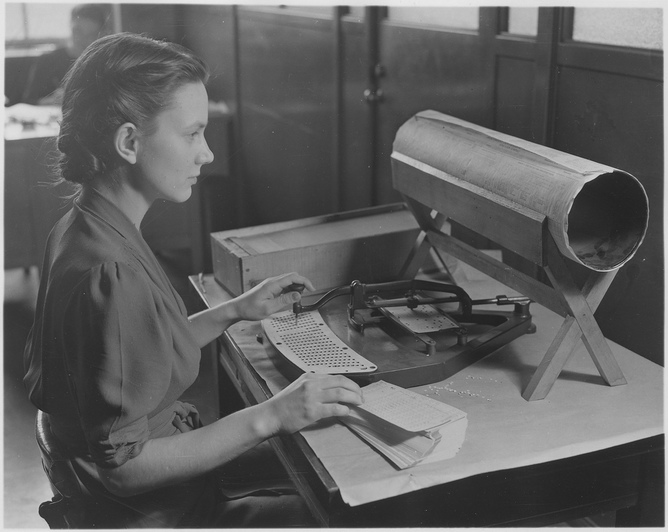
The most commonly used measure of population aging is the “old-age dependency ratio,” which is the ratio of the number of people 65 years or older to those 20 to 64.
But, since the old-age dependency ratio was introduced in the early 1900s, most countries have experienced a century of rising life expectancy, and further increases are anticipated.
For instance, in 1914, life expectancy at birth in Sweden was 58.2 years (average for both sexes). By 2014, it had risen to 82.2 years. In 1935, when the U.S Social Security Act was signed into law, 65-year-olds were expected to live 12.7 more years, on average. In 2013, 65 year-olds may expect to live 19.5 years more.
But these changes aren’t reflected in the conventional statistics on aging. Nor is the fact that many people don’t just stop working when they turn 65, and that people are staying healthier for longer.
To get a better sense of what population aging really means today, we decided to develop a new set of measures that take these new realities into account to replace the old-age dependency ratio. And instead of one ratio, we created several ratios to evaluate health care costs, labor force participation and pensions.
One of these new realities is that the number of people working into their late 60’s and beyond is going up. In 1994, 26.8 percent of American men aged 65-69 participated in the labor force. That figure climbed to 36.1 percent in 2014 and is forecast to reach 40 percent by 2024. And the trend is similar for even older men, with 17 percent of those aged 75-79 expected to still be working in a decade, up from just 10 percent in 1994.
Clearly, these older people did not get the message that they were supposed to become old-age dependents when they turned 65.

This isn’t unique to the U.S. Rates like these in many countries have been rising. In the U.K., for instance, the labor force participation rate of 65- to 69-year-old men was 24.2 percent in 2014, and in Israel it was 50.2 percent, up from 14.8 percent and 27.4 percent, respectively, in 2000. In part this is because older people now often have better cognitive functioning than their counterparts who were born a decade earlier.
So, instead of assuming that people work only from ages 20 to 64 and become old-age dependents when they hit 65, we have computed “economic dependency ratios” that take into account observations and forecasts of labor force participation rates. This tells us how many adults not in the labor force there are for every adult in the labor force, giving us a more accurate picture than using 65 as a cutoff point. We used forecasts produced by the International Labour Organization to figure this out.
The old-age dependency ratio in the U.S. is forecast to increase by 61 percent from 2013 to 2030. But using our economic dependency ratio, the ratio of adults in the labor force to adults not in the labor force increases by just 3 percent over that period.
Clearly, doom and gloom stories about U.S. workers having to support so many more nonworkers in the future may need to be reconsidered.
Another reality is that while health care costs will go up with an older population, they won’t rise as much as traditional forecasts estimate.
Instead of assuming that health care costs rise dramatically on people’s 65th birthdays, as the old-age dependency ratio implicitly does, we have produced an indicator that takes into account the fact that most of the health care costs of the elderly are incurred in their last few years of life. Increasing life expectancy means those final few years happen at ever later ages.
In Japan, for example, when the burden of the health care costs of people aged 65 and up on those 20-64 years old is assessed using only the conventional old-age dependency ratio, that burden is forecast to increase 32 percent from 2013 to 2030. When we compute health care costs based on whether people are in the last few years of their lives, the burden increases only 14 percent.
The last reality we considered concerns pensions.
In most OECD countries, the age at which someone can begin collecting a full public pension is rising. In a number of countries, such as Sweden, Norway and Italy, pension payouts are now explicitly linked to life expectancy.
In Germany, the full pension age will rise from 65 to 67 in 2029. In the U.S., it used to be 65, is now 66 and will soon rise to 67.
Instead of assuming that everyone receives a full public pension at age 65, which is what the old-age dependency ratio implicitly does, we have computed a more realistic ratio, called the pension cost dependency ratio, that incorporates a general relationship between increases in life expectancy and the pension age. The pension cost dependency ratio shows how fast the burden of paying public pensions is likely to grow.
For instance, in Germany, the old-age dependency ratio is forecast to rise by 49 percent from 2013 to 2030, but 65-year-old Germans will not be eligible for a full pension in 2030. Our pension cost dependency ratio increases by 26 percent over the same period. Instead of indicating that younger Germans will have to pay 49 percent more to support pensioners in 2030 compared to what they paid in 2013, taking planned increases in the full pension age into account, we see that the increase is 26 percent.

In addition to this suite of measures focused on particular aspects of population aging, it is also useful to have a general measure of population aging. We call our general measure of population aging the prospective old-age dependency ratio.
People do not suddenly become old-age dependents on their 65th birthdays. From a population perspective, it makes more sense to classify people as being old when they are getting near the end of their lives. Failing to adjust who is categorized as old based on the changing characteristics of people and their longevity can make aging seem faster than it will be.
In our prospective old-age dependency ratio, we define people as old when they are in age groups where the remaining life expectancy is 15 years or less. As life expectancy increases, this threshold of old age increases.
In the U.K., for instance, the conventional old-age dependency ratio is forecast to increase by 33 percent by 2030. But when we allow the old-age threshold to change with increasing life expectancy, the resulting ratio increases by just 13 percent.
Populations are aging in many countries, but the conventional old-age dependency ratio makes the impact seem worse than it will be. Fortunately, better measures that do not exaggerate the effects of aging are now just a click away.
ooOOoo
Yes, we live in interesting times!
Let’s embrace those who seek out and love our lost dogs!
Just going to include today two videos from the Hope for Paws charity both of them about rescuing and restoring love to Pit Bulls.
I can’t close this post without thinking of the amazing quality of forgiveness that our dogs demonstrate. It would be a rare person who suffered this pain and rejection and wasn’t scarred for the rest of their days.
So much we must learn from our dogs!
But not of the royal variety.
Last week, author and blogger (4am Writer) Kate Johnston published a post about getting 1 million supporters to help save the monarch butterfly. Kate was very happy for me to republish that here on Learning from Dogs. Please read it and sign up.
ooOOoo
Threatened by illegal logging, global warming, herbicide use, and vanishing food source (milkweed) for caterpillars, monarchs are in serious danger.
“Now more than ever, Mexico, the United States, and Canada should increase their conservation efforts to protect and restore the habitat of this butterfly along its migratory route,” said Omar Vidal, Director General for WWF-Mexico.
Last year, I began planting my own butterfly garden in an effort to help provide a habitat for monarch butterflies, and any other form of wildlife that might seek food and shelter there.




Spring is just around the corner in the US, and the monarch butterflies will be heading along their migratory route, back to their northern homes. They will be in search of food and shelter. They will need milkweed, the only plant on which they lay their eggs and the one food source for their babies.
If you have a backyard, won’t you consider providing a home for some beautiful monarchs? Even if you’re sans yard, you can still fight for their survival.
ooOOoo
So, please sign up and share this as widely as you can.
For everyone’s sake!

As shared by Roger Davis, a gliding colleague from way back.
and
The things we do for fun!
Have a wonderful weekend, everyone, whatever your attitude!
Will you help my son support Parkinson’s UK?
Back on the 24th of February I published a post under the title of Personal Journeys. It opened thus:
Life is a one-way track.
Those of you who follow this place on a regular basis know that last Friday I published a post under the title of Friday Fondess. You will also know that later that same day I left this comment to that post:
Thus, as heralded, I am going to write some more.
You would not be surprised to hear that the last few days have been an emotional roller-coaster, for both Jean and me. Including on Monday Jean hearing from our local doctor here in Grants Pass, OR, that a recent urine test has shown that Jean has levels of lead in her bones some three times greater than the recommended maximum. While our doctor is remaining open-minded it remains to be seen whether Jean is exhibiting symptoms of lead poisoning, whether the lead is a possible cause of the Parkinson’s disease (PD), see this paper, or whether it is a separate issue to be dealt with.
Both my son and my daughter, Alex and Maija, have been very supportive. Alex has even decided to ride in the Ride London 2016 and raise funds for the notable charity Parkinson’s UK. Parkinson’s Disease is affecting more and more people and there is a great incentive to help any charity in pushing back against this disease. As the sub-title on that Parkinson’s UK home page declares, “CHANGE ATTITUDES, FIND A CURE, JOIN US.”
Alex has started a little blog to record his preparation for his charity ride:
ooOOoo
 This is my blog about training for Ride London 2016, on it I will detail what I get up to, who I’m raising money for and also cycling kit reviews as well.
So I entered the ballot for ride London this year and was unlucky, probably as I’m one of 20,000 odd middle aged men in Lycra (MAMIL) who try to get in every year, so I got my lovely rejection magazine and a cycling top as well.
I then found out that my stepmum Jean, has just been diagnosed with Parkinson’s disease, so I thought I would enter on a charity place and raise some much needed funds for research into this disease. Found out last week that I have been lucky to get onto a charity place and so the training begins…
Link to my fundraising page, thanks 
ooOOoo
Please, please if anyone would like to chip in anything at all you can trust me that it will be greatly appreciated by Alex and all those around him. Donations, both from within the UK and overseas, may be made by going here.
Thank you!
Is there a case for optimism? You bet there is!
To be honest, at a personal level I just don’t know the answer to that question. It seems to depend on the mood that Jean and I are in at any particular time. All I can fall back on is that well-used saying from me: “Never underestimate the power of unintended consequences”.
In other words, we shouldn’t underestimate the strength of millions of good people when their demands start reaching out to those in power. (And whatever your reaction to this post, please don’t miss watching the inspirational Al Gore speech towards the end of this post.)
Recently over on the Grist site there was an article about the critical changes that each and every one of us should be making. I want to share it with you in full.
ooOOoo
A few months ago, the U.S. and 195 other countries signed this thing in Paris in which all parties involved kind of sort of agreed to stop messing with the world’s climate. It was very exciting.
So what if we, as Americans, were going to join in as individuals in order to help the U.S. meet its emissions goals? What would we do differently? Two researchers at the University of Michigan’s Transportation Research Institute, Michael Sivak and Brandon Schoettle, recently set out to answer those questions. (Here is the abstract of their report.) Their conclusion: The largest single source of greenhouse gas emissions is making things (industry, clocking in at 29 percent of greenhouse gas emissions). After that, there’s moving people and things around (transportation, 27 percent), then the energy we use at home (17 percent) followed by the energy used by non-industrial businesses (17 percent) and the energy used in agriculture (10 percent).
Most of this energy is stuff that you don’t have any control over: If you are looking at a row of lawn chairs at the store, you don’t have any way of knowing how much energy it took to produce each one. You cannot, on a personal level, decide to have your contact-lens solution delivered to your local pharmacy by cargo bicycle instead of long-haul trucker.
So, given the imperfections of this world, what is a lone wolf such as yourself to do? Here are some conclusions gleaned from this study:
You might notice that Sivak and Schoettle don’t even consider the option of going without a car — even though their own graph suggests that, if having an efficient car is good, having none at all is even better:
 To be sure, many people live in cities and work at jobs where living without a car is virtually impossible — and these are the people who this report is written for.
Currently, the average car on the road gets about 21.4 miles per gallon. If that went up to just 31 mpg, Sivak and Schoettle claim that the amount of carbon that the U.S. emits would drop by 5 percent — as long as we didn’t go crazy and drive a lot more. If the average fuel economy rose to 56 mpg, total U.S. emissions would be reduced by 10 percent.
That said, I would like to see Sivak and Schoettle have a conversation with my (very nice) Motor City-born mom about why she should get the most fuel-efficient car she can afford when she loves her damn Jeep and gas right now is less than $2 a gallon. Since they both live in Michigan, maybe they have already.
The average age of a car on the road right now is 11.5 years. The average 3,000-pound car takes the equivalent of 260 gallons of gasoline to make. It’s not like you can compare among different manufacturers to see which one is the most energy-efficient carmaker any more than you can compare lawn-chair makers or cellphone manufacturers.
But unless you’re trading it in for something that is significantly more energy efficient than what you have already, keep the old stuff around. That goes for cars, clothes, shoes, remodeling your kitchen, and so on and so forth. There is no law requiring you to buy a new cellphone every two years, and though that’s what we do in the U.S., in other countries people keep them much longer.
According to Sivak and Schoettle, frequent hard stops and rapid acceleration have a dramatic effect on fuel efficiency. They assume that the average driver can reduce overall fuel consumption by 5 percent by chilling out a little while driving. Also: Since engines don’t use gasoline efficiently past a certain speed, a hypothetical driver could reduce emissions even more by never driving faster than 61 mph.
I will also say that, based on my experience growing up with a dad whose default driving speed was about 60, driving at that speed on many U.S. highways and backcountry roads is going to piss a lot of people off. They will honk, tailgate, flash their brights at you, and jokingly and not-so-jokingly pretend like they’re about to run you off the road when they do pass you. It’s a little harder to maintain zen composure under those circumstances, but that will just make those times that you do accomplish it even more impressive.
Or, well, don’t fly at all. But when taking a train from SF to NY takes four days, and flying takes about six hours, it’s not hard to see why a lot of people fly. In some cases, flying can produce less emissions than driving (if you drive alone — not if you take a train or the bus).
There’s also some information out there about which airlines are the most fuel efficient. (Spoiler: This more or less correlates precisely with which carriers pack flyers in like sardines and make them pay extra to check their bags.)
Planes use a disproportionate amount of fuel during takeoff, so minimizing the number of takeoffs is relatively easy (if more expensive). If you need to take a connecting flight, choose the option that gives you the least number of miles traveled.
Right. And put on a sweater. While people who use air conditioning inspire all those summer energy conservation think pieces, according to Sivak and Schoettle’s stats, it’s heating the air and water around us to a temperature that we like that is the greater problem.

Sivak and Schoettle cite stats (published in Climatic Change in 2014) suggesting that the average vegetarian diet produces 32 percent lower emissions than the average omnivore diet. Are there ways around this? Sivak and Schoettle don’t get into this, but yeah, it gets complicated. Some processed vegetarian food has a pretty hefty carbon footprint, and if you live somewhere with an abundant white-tailed deer or squirrel population, you’ve got some low-carbon meat nearby. Still, this is about averages, not your Hunger Games lifestyle.
 Sivak and Schoettle also suggest that we all try reducing our collective caloric input by 1 percent, eating 25 fewer calories a day (if we’re men) or 20 fewer a day (for women) — about a tablespoon of hummus, or a single egg white, if you even think measuring things in calories makes sense (I don’t). Their excuse? “Given that 69 percent of American adults are overweight (CDC, 2015), most of us could safely lose some weight.” Dudes. Really. The low-carbon agricultural revolution will not come any faster because you fat-shamed America.
So: I have read a lot of reports like this one before. This one is particularly weird, though, because it focuses so much on personal choice, and ease of that choice. And because its definition of “ease” makes no sense.
As Sivak and Schoettle put it:
This study did not exhaustively examine all possible actions that an individual can take to reduce greenhouse gas emissions. The emphasis was on selected actions that do not require substantial effort and time, do not require much in the way of changing one’s lifestyle, and are relatively easy to quantify in terms of their effects. Examples of actions not considered are increasing home insulation (takes both substantial effort and time), eliminating the use of drive-through banks and restaurants, and thus eliminating the associated idling (requires a change, albeit small, in one’s lifestyle), and buying locally sourced products (effects are not easy to generalize because they vary from product to product).
I’m not quite sure what to make of the fact that the study’s authors have somehow decided that going vegetarian, or figuring out how to consistently eat a tablespoon less of hummus than you usually do, is less arduous than parking your car, getting out of it, and going into a building to order food.
Let’s take this study at face value. What can a hypothetical person do to cut emissions easily, when they are not trying very hard to do anything? The answer to that question is, by far and away, this one: Buy a more fuel-efficient car.
But here’s the thing. The only reason we have fuel-efficient cars to buy is because of political pressure, rather than individual choice — the first Corporate Average Fuel Economy (CAFE) standards were created by Congress in 1975. The newest CAFE standards, which are intended to get the average mpg up to 54.5 mpg by 2025, were the result of hard bargaining — and an auto industry that had been weakened by the recession. At the time that the standards were finalized in 2005, only two cars (the Chevy Volt and a thing called a Ford Focus BEV FWD) met that standard — even the much-hyped Toyota Prius didn’t qualify. Now there are a handful that get nearly double that — but the average mpg of cars sold actually fell slightly between 2014 and 2015, probably because of lower gas prices.
Meanwhile, for way too long, the low-income people with long commutes who would have the most practical incentive to drive a fuel-efficient car have been locked out of the market for one, even as the current housing status quo pushes them farther out into the suburbs. Individual choice only goes so far: Sometimes you need the whammy of regulation to change the available options before you can get to the point where you have a choice.
On paper, it’s totally possible for the U.S. to transition to lower carbon emissions and still have a strong economy. But looking at the numbers alone leaves out the huge political and social obstacles — angry oil barons, stick-in-the-mud utilities, car companies that would rather roll out old models than develop new tech — that have to be overcome to make that happen. You can’t buy fuel-efficient vehicles until companies are under pressure to actually make them — and to make them affordable. You can’t reduce the amount of time you spend driving unless your city or suburb actually has the infrastructure (sidewalks, transit, zoning that allows jobs and housing and shopping to coexist) that makes such changes possible.
Climate change is not something that we can conserve our way out of individually or easily. As Maggie Koerth-Baker put it in her excellent book Before the Lights Go Out, if we Americans were going to conserve our collective way out of climate change, we would have to reduce our emissions to less than one ton per person. While one ton seems like a big number, getting to it is much harder than it sounds:
One ton of greenhouse gas emissions buys a year’s worth of heat for one average home in the United States … That’s not including electricity, clothes, food, or transportation. Do you travel a lot for business? Maybe you could spend your one ton of emissions on airline flights instead. On that yearly budget, you can afford to fly 10 thousand miles in coach. Of course, again, that leaves you with no food to eat, no clothes to wear, and no house to come home to.
Getting to less than a ton per person — in the U.S., anyway — would involve a level of change that hasn’t been seen since WWII. Back then, tires, automobiles, typewriters, bicycles, gasoline, sugar, coffee, meat, cheese, butter, firewood, and coal were all rationed. Factories stopped making consumer products and concentrated on the war effort.
The national speed limit was set to 35 mph to conserve fuel. All forms of automobile racing were banned. Driving for “sightseeing” was banned. Special courts were set up to deal with those who broke the law — people who were found to be driving “for pleasure” had their gasoline rations taken away.
I’m not suggesting we go full WWII on climate change. (For one thing: We had more trains then. For another thing: We could get a lot done with just a Cold War approach.) What I am saying is that, yes, we can change our individual ways — and we should. But with a problem as big as climate change, we shouldn’t pretend that we can go it alone.
ooOOoo
Things do change, and are changing, as this recent item in the LA Times reported:
For example, that half of all urban water consumption is spent on landscaping seems to have sunk in, as has a greater appreciation for the hardiness of lawn grass. In Northern California at least, lawns that went brown in the summer and fall are now green — following the natural cycle of the foothills.
“It is hard to kill grass,” Marcus said. “And while I don’t think in the long run it’s realistic to think people are going to keep their lawns brown forever, I do think folks have learned they don’t need as much water as they have been dumping on them.… So that is a real ‘aha’ for people.” [Ed: Marcus refers to Felicia Marcus, chair of the state water board.]
Also demonstrated through eight months of mandatory cutbacks is that reducing consumption by nearly 25% is doable — a mark Marcus feared would be unattainable when the order went out.
Marcus grows most animated when discussing a movement underway at many local agencies up and down the state — one aimed toward integrating traditional water delivery with enhanced recycling, storm-water capture, underground storage and the like.
To conclude my proposition that only an optimistic attitude is going to sort this out for our heirs let me close with this recent TED Talk given by Al Gore. Mr. Gore supplies all the power we need to be optimistic about the future.
Al Gore has three questions about climate change and our future. First: Do we have to change? Each day, global-warming pollution traps as much heat energy as would be released by 400,000 Hiroshima-class atomic bombs. This trapped heat is leading to stronger storms and more extreme floods, he says: “Every night on the TV news now is like a nature hike through the Book of Revelation.” Second question: Can we change? We’ve already started. So then, the big question: Will we change? In this challenging, inspiring talk, Gore says yes. “When any great moral challenge is ultimately resolved into a binary choice between what is right and what is wrong, the outcome is foreordained because of who we are as human beings,” he says. “That is why we’re going to win this.”
Pertinent to that inspiring talk is The Climate Reality Project, of which Al Gore is both founder and chairman.
Do drop across and consider joining. Because by so doing you will become, “… part of a growing community of millions of people worldwide who have come together in support of taking urgent steps to halt the growing climate crisis.”
Let this be the time of all of our lives where we say, “Enough is enough”, and vote and act, both individually and collectively, for positive change!


 Learning from Dogs
Sue, and everyone else, we returned from seeing Dr. Lee, the neurologist, a little under two hours ago. Dr. Lee’s prognosis is that Jean is showing the very early signs of Parkinson’s disease, and Jean is comfortable with me mentioning this.
Everyone’s love and affection has meant more than you can imagine. I will write more about this next week once we have given the situation a few ‘coatings of thought’.
Jean sends her love to you all!