Category: People

Positive circles!

Or, what goes around, comes around!

Both with animals and with us humans we reap what we sow. Or as I am oft to put it: “Always play with a straight bat for bent bats are practically useless”.

So what has prompted this introspective start to today’s post?

Something that was published on the Care2 blogsite earlier in the month. It was a story about how ex-rescue dogs went on to become dogs that rescued others.  It certainly spoke to me and I feel sure that many of you will be inspired by the story.

ooOOoo

Puppy Rescued Day After Italy’s Latest Quake to Become a Rescue Dog

3193677-largeBy: Laura Goldman November 10, 2016

Among the survivors pulled from the rubble of Italy’s latest major earthquake (Oct. 29) was a border collie puppy who was trapped in the town of Norcia for two days.

The puppy was reunited with his owners, who were so grateful for his rescuers’ work that they decided to let the local fire service adopt him.

Now named Terremoto, which is Italian for – you guessed it – “earthquake,” the pup will be trained to pay it forward by becoming a search-and-rescue dog.

Volunteers from the nonprofit ENPA have been helping nearly 1,000 animals rescued after the earthquakes this year in Italy’s central region. ENPA, an acronym for Ente Nazionale Protezione Animali (National Animal Protection Agency), has been around since 1871. It is Italy’s oldest and largest animal rights organization.

 After the 6.6-magnitude Oct. 29 earthquake, at least 900 animals have received assistance from the organization, according to the ENPA website. Almost 160 of them required veterinary care, including 59 dogs, 63 cats, 13 chickens, 10 tortoises, four parrots, five canaries, two geese, one hedgehog and a hamster. Amazingly, only one animal died: a dog rescued from the rubble alive but in serious condition in the town of Nottoria.

So far, at least 78 animals have been reunited with their owners. Police in Perugia adopted two rescued puppies, The Local reports.

A video captured rescuers using their hands to dig out another dog, Ulysses, after they saw his legs sticking out of the rubble. Like Terremoto, Ulysses had been buried alive when the 6.5 earthquake struck. And, like Terremoto, despite his terrible ordeal, Ulysses was checked out by a veterinarian and found to be in good condition.

About 50 trained search-and-rescue dogs worked with more than 5,000 rescuers after a 6.2 earthquake struck the same region of Italy in August. Among the survivors the dogs sniffed out were two children who’d been stuck in the rubble at separate locations for about 15 hours.

Like these dogs, Terremoto will be trained to bark if he detects a survivor less than 7 feet below the rubble. The rescuers will then dig out the survivor by hand. If Terremoto or other search-and-rescue dogs do not bark, it indicates there are no survivors below. In these cases, heavy machinery is brought in to clear the debris, with care being taken in case there are bodies buried in it.

Search-and-rescue dogs usually stop barking about three days after a disaster like a major earthquake. The rescue efforts then become recovery efforts, since victims would not be able to survive that long without water.

Here in the United States, the National Disaster Search Dog Foundation trains rescued dogs to become search-and-rescue dogs. The dogs are saved from shelters and rescue groups across the country.

While I’d like to wish Terremoto a successful career as a search-and-rescue dog, I’m really hoping he never needs to put those skills to use.

Photo credit: ENPA

ooOOoo

I am going to close today’s post by republishing what you will read if you go across to the home page of the National Disaster Search Dog Foundation website:

From Rescued…to Rescuer

Founded in 1996, the National Disaster Search Dog Foundation (SDF) is a 501(c)(3) non-profit, non-governmental organization based in Santa Paula, California. Our mission is to strengthen disaster response in America by recruiting rescued dogs and partnering them with firefighters and other first responders to find people buried alive in the wreckage of disasters.
 

A celebration of a life.

My mother was a remarkable woman.

Back in North-West London (Preston Road, Wembley) my two sisters, Elizabeth and Eleanor, are today hosting a party to celebrate my mother’s life. Many family members and friends will be at the house.

My contribution was to record a eulogy that I will broadcast to everyone using a ‘FaceTime’ link between here and Alex’s tablet that he will have with him at the party.

I wanted to share that eulogy with all you good people.

Flick!

Just like that!

How is it that I am sitting at a computer keyboard writing these words in this my seventy-second year of my life!

Where did it all go?

What did I learn?

But this is what I do know.

That it is only as we get into our ‘senior’ years that we can start to put our lives into some form of perspective.

When I look back at my life I can see many things that, in hindsight, I didn’t handle all that well. Yet that same backward gaze also reveals many things that I would never have changed.

That is the person that I am.

Or to put it in a more introspective way, that is the person that I was brought up to be. For each and every one of us rises to adulthood wearing a rather colourful psychological overcoat. Our life’s journey hopefully offers us the opportunity to undo our overcoat from time to time and take note of the shape and style of our underclothes.

That is the true legacy of my father, of my step-father and, most importantly, of my mother.

I was very privileged to have them as my guardians and parents.

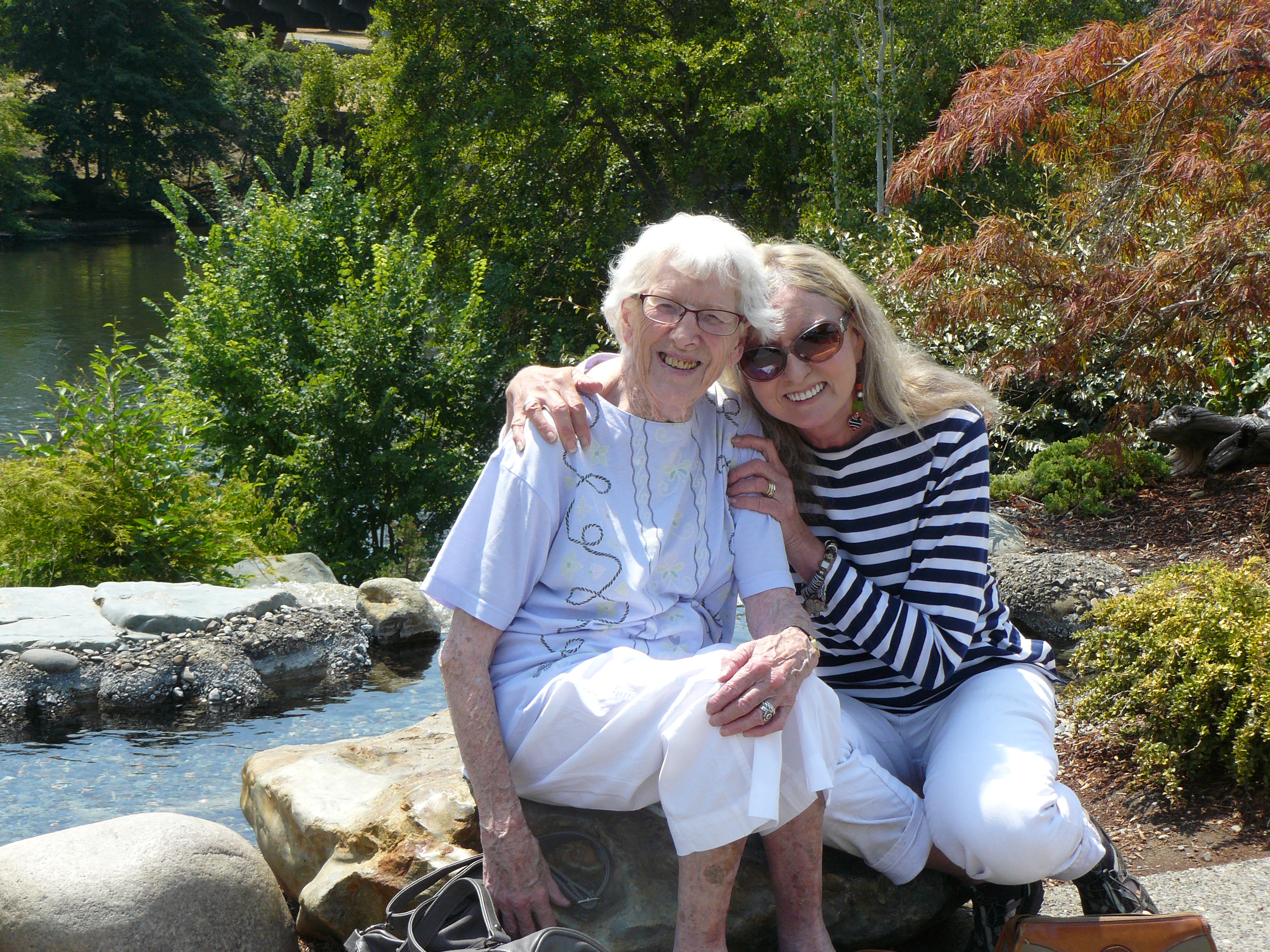
Mum and Jeannie - photo taken 31st July, 2014 here in Oregon.

Mum and Jeannie – photo taken 31st July, 2014 here in Oregon.

How we love.

Reflections!

This the fourth day since my mother died.

They have been days of a great jumble of emotions.

But the over-riding emotion has been one of feeling very loved and cared for. Not only by Jeannie, of course, and by my son, Alex, and daughter, Maija, but also by so many of you from my Learning from Dogs ‘family’.

A dear friend, Richard, living in England was incredibly supportive. Richard and I go back nearly 40 years to when we first met. We were both selling Commodore computers for our respective companies back in the early 1980’s. (Richard used to be a typewriter salesman for Olivetti UK and I was an ex-IBM Office Products salesman.)

Anyway, Richard pointed me to this beautiful song by Beth Nielsen-Chapman How We Love.

It sums up perfectly what all your ‘Likes’ and responses to my post The End Of An Era meant to me.

Love you all! I will return to daily posts from this Saturday.

I will not forget your kindness when I needed it so much.

The end of an era.

In memory of a great woman.

My mother was born on December 10th, 1919

She died a short while ago, at 21:22 GMT/UTC on Monday, November 14th.

That is 9:22 pm British time on the same day as the moon’s closest distance to our Mother Planet since 1948.

Or to find some poetry in the timing of the end of my mother’s life, she died 10 hours to the minute after that closest moment of the moon’s passing, that was at 11:22 British time this morning.

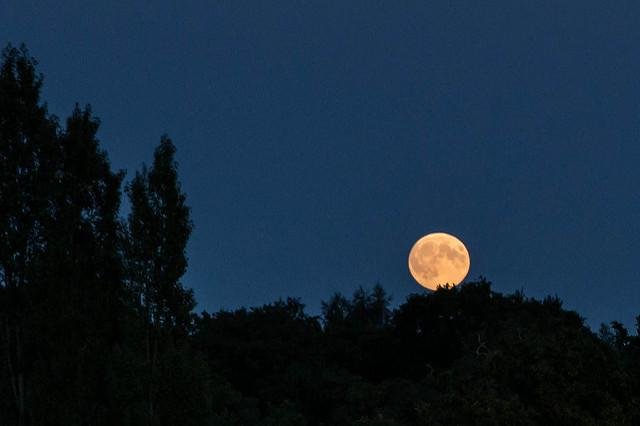
p1160632This photograph of the moon was taken last night from here at home in Oregon at a few minutes after 10pm.

My mother was born Elizabeth Foreman and after the death of our father, Frederick Handover, in 1956, she subsequently married Richard Mills.

My sister, Elizabeth, and I were born in 1944 and 1949 respectively. My mother and Richard were parents to our half-sister Eleanor, who was born in 1959.

Our mother was an incredible woman and her death is truly the end of an era for the family.

For the rest of my years, I will look up at the full moon and remember my mother’s amazing life.

Dan, my Best Man, at the wedding of Jean and me, November 20th 2010
Dan, my Best Man, at the wedding of Jean and me, November 20th 2010. My mother is between Dan and me.

Dear people, you will understand why I will be taking a few days away from blogging.

What a Moon!

This is a night to be outside! (And that includes you, Susan L.)

It has been receiving quite a lot of publicity in recent days. I’m speaking of the “Supermoon”.

Or in the opening words of a recent Smithsonian Magazine article:

The Biggest Supermoon in 68 Years Will Leave You “Moonstruck”

It hasn’t been this close since 1948 and won’t be again for the next 18 years

(Adrian Scottow via Flickr)

In terms of when this is happening then I will draw on Mother Nature Network:

According to NASA, the full moon that rises on Nov. 13 will be the closest one to Earth since 1948. If viewing conditions are clear, the moon will not only appear 30 percent brighter, but also 14 percent larger. While the nighttime viewing is supposed to be spectacular, the true closest approach of the supermoon will take place on the morning of Nov. 14 at 8:52 a.m. EST.

Just how special is this super supermoon? Humanity won’t get another show like this one until Nov. 25, 2034.

Or as the EarthSky blogsite puts it:

The moon turns precisely full on November 14, 2016 at 1352 UTC. This full moon instant will happen in the morning hours before sunrise November 14 in western North America and on many Pacific islands, east of the International Date Line.

For those of us on Pacific time that equates to 0852 PST.

So the balance of today’s post will comprise the republication, with permission, of a recent essay on The Conversation blogsite.

ooOOoo

Supermoons are big and bright, but not as rare as the hype would suggest.

November 8, 2016

By

Senior Lecturer and Associate Department Head for Undergraduate Programs in Astronomy & Astrophysics, Pennsylvania State University.

As an observational astronomer who teaches students about the behavior of the moon, I’m thankful for anything that inspires people to go out and look at the sky. For me it’s second nature to pay attention to the moon; when my son was born, I would take him out at night to observe with me, and one of his very first words was “moon.”

But I have mixed feelings about what’s being billed as the upcoming “super-supermoon.” Many astronomers do not like using the term because reports overhype the factors that make certain full moons unusual. Most of what you’ve likely read has probably misled you about what you can expect to see on Nov. 14 and just how rare this event is. Beautiful, yes. Worth looking up for, definitely. Once in a lifetime… that’s a bit overblown.

he moon’s phases as it revolves around the Earth. Orion 8, CC BY-SA
The moon’s phases as it revolves around the Earth. Orion 8, CC BY-SA

The moon’s cyclical phases

Just about everyone is familiar with the moon’s changing appearance as it goes through its phases from crescent, to half-illuminated (first quarter), to gibbous, to full, and then back through gibbous, to half-illuminated (third quarter), to crescent, to new.

This pattern occurs because the moon orbits the Earth. When the moon is between the Earth and sun, it’s a new moon, and you don’t see it that day. When the moon is on the opposite side of the Earth from the sun we get a full moon as the sun’s light illuminates almost its entire face. The complete sequence of phases takes about the same amount of time as it does for the moon to orbit the Earth once – just about a month.

As the moon makes its monthly trip around our planet, it travels on an elliptical, not circular, path. Every object in the solar system orbits like this, including the Earth around the sun; over the course of the year, the Earth is sometimes closer to the sun and sometimes more distant. Same for the moon – sometimes it’s closer to us and sometimes farther away.

The changes are proportionally not large; at “perigee” (the closest it gets to the Earth) the moon’s approximately 10 percent closer to the Earth than at “apogee” (most distant point on its orbit). Over the year, the moon’s distance from Earth varies from around 222,000 to 253,000 miles.

 The moon’s orbit is elliptical and changes over time. Rfassbind
The moon’s orbit is elliptical and changes over time. Rfassbind

The time it takes the moon to go from perigee to perigee (about 27.3 days) is shorter than the time it takes to go through a complete set of phases (about 29.5 days). Because these timescales are different, the phase at which perigee occurs varies. Sometimes perigee occurs when the moon is full, but it is just as likely for perigee to occur when the moon is in the first quarter phase, or any other. Whichever phase the moon is in when it’s at perigee will be the one that looks largest to us here on Earth for that month.

At perigee, the moon can appear 14 percent larger and 30 percent brighter than an apogee full moon. But this is complicated by the fact that our eyes play tricks on us and convince us the moon looks larger when it is near the horizon than when it is higher in the sky. Every full moon will look big and bright whether it happens at perigee or apogee.

So what’s a supermoon?

The first time I heard the phrase “supermoon” was in 2011, and someone had to explain the suddenly in vogue term to me. People were using it to describe the full moon that happened to occur within an hour of perigee in March of that year. The moon’s perigee distance also varies a bit, and March 2011 was the moon’s closest perigee of that year.

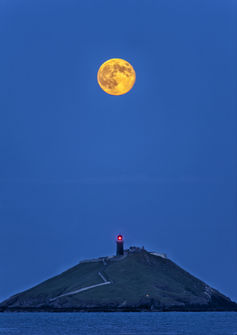
 A 2013 supermoon as seen from Ireland. John Finn, CC BY-NC-ND
A 2013 supermoon as seen from Ireland. John Finn, CC BY-NC-ND

This was a somewhat rare event – a full moon occurring not just at perigee, but at the closest perigee of the year. But many people got the impression that this was an exceedingly unusual event, and rushed to see and capture images of this supposedly ultra-rare moon. Depending on how closely you require the full moon to occur to perigee in order to call it a supermoon, though, these events happen at least roughly once a year, and often more frequently.

Which brings us to this month’s much ballyhooed “super-supermoon.” News stories are hyping the upcoming full moon as a once-in-a-lifetime viewing opportunity. It’s true that the Nov. 14 full moon is the closest since 1948, and the next time the full moon will be closer is in 2034.

But this month’s full moon is only 0.02 percent closer – a mere 41 miles! – than the March 2011 supermoon. These tiny distances make no noticeable difference in the moon’s appearance.

 Get out there and enjoy this supermoon! AP Photo/Charlie Riedel
Get out there and enjoy this supermoon! AP Photo/Charlie Riedel

Please do go out and observe the November full moon. If you are good with photography, try to document that the moon does appear larger than the other months this year. Just be aware you’ll have other virtually equivalent opportunities to do so pretty much every year for the rest of your life. So don’t worry if you miss it. You can catch the supermoon next time around.

ooOOoo

Fingers crossed our local weather will enable Jean and me to view this moon and I will try and photograph it.

If any readers also get to see this moon do let us know your thoughts and feelings.

I vote for peace!

My contribution to this day.

(I saw this posted over on Val Boyko’s blogsite the other day and thought how apt it was. It is republished with Val’s kind permission.)

ooOOoo

World Peace is Within You

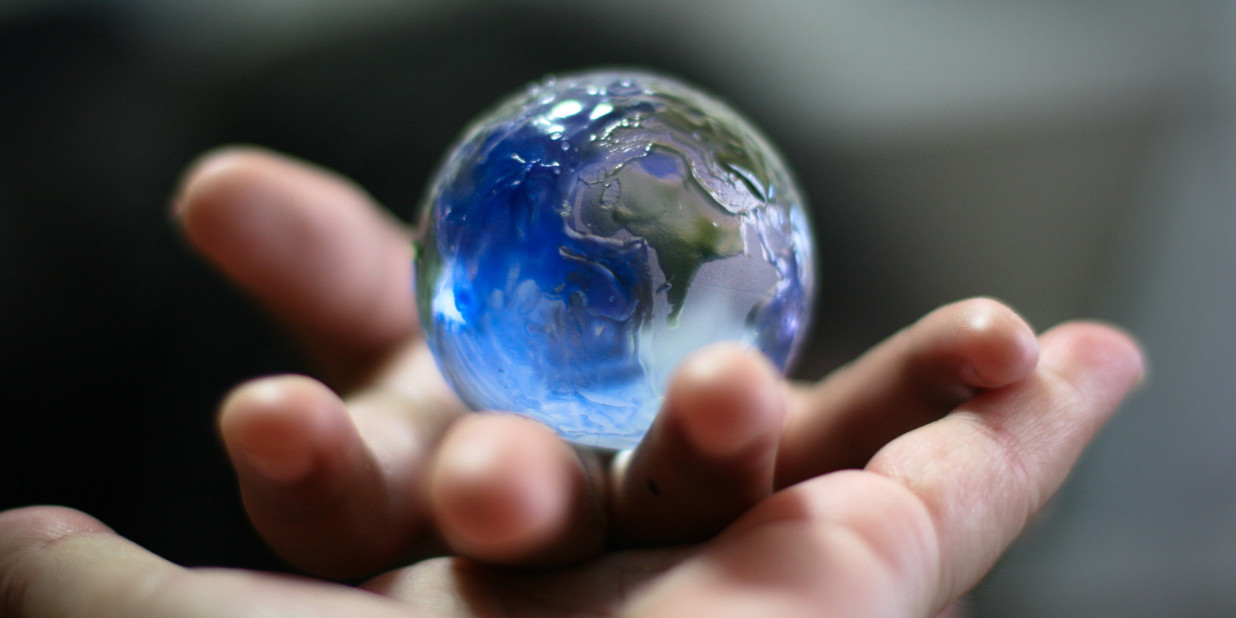
Marbles, by Anne Schroeder

Introducing Anne Schroeder – a local Oregon author.

This week presents a number of interesting challenges.

The first is that while I am getting along reasonably well with the draft of my second book, Four Dogs On My Bed, I am still about 3,000 words (as of yesterday) behind where I wanted to be on November 7th. (There’s NaNoWriMo pressing in against me!)

The second challenge is that tomorrow is a special day. No, I’m not referring to the circus that has come to town, to everybody’s towns, but to my birthday. It is my birthday on the 8th and I’m trying hard to stay away from my computer.

The third and final challenge is that there are too many things going on for the balance of the week, even without me needing to keep my writing nose to the grindstone, for me to properly put together the blog posts otherwise required.

anne-croppedBut then along comes Anne Schroeder. I met Anne when I joined our local authors group, AIM, and, like all the other members of AIM, Anne was supportive and helpful towards me.

A week ago, Anne emailed me a short story that was perfect for all you dear readers.

That story is in three parts and I shall be continuing with Part Two and Part Three on Wednesday and Thursday. (I have something else for the 8th!)

Before the story, here is an introduction to Anne.

mariainesfrontAnne Schroeder writes memoir and historical fiction set in the West. She has won awards for her short stories published in print and on-line markets. She was 2015 President of Women Writing the West and lives with her husband and new Lab puppy in Southern Oregon where they explore old ruins and out-of-the-way places. Her new release, Maria Ines, is a novel about an Indian girl who grows up under Padre Junipero’s cross and endures life under the Spanish, Mexican and Yanqui conquest of California. http://www.anneschroederauthor.com

Here, then, is Part One of Anne’s tale.

ooOOoo

MY SEASON FOR MARBLES

I have a confession: Dogs and I have never gotten along. Well, okay, there was Happy, our black, floppy-eared Cocker Spaniel who died in front of me, under the wheel of my father’s truck when I was seven. After that, it seemed easier not to get attached.

On our sheep farm, dogs ate table scraps and slept under the tank house. We had a pair of Australian Shepherds, trained by Basque herders in their native language that guarded the flock at night against coyotes and neighbors pets. We weren’t allowed to distract the Aussies from their work.

My attitude regarding dogs could be described as cautious regard. I carry memories of being chased onto a John Deere tractor by a snarling stray. I have vivid memories of my uncle’s Doberman sinking its fangs into my calf because I was swinging hands with my cousin, a six-year-old like myself, as we walked up her driveway after school. I can still see that dog, loping toward us in slow-motion, slobber spraying off his jowls, his eyes keenly fixed on the enemy—which was me. All I could do was drop my little cousin’s hand, stand still, and hope that the dog would be merciful. No such luck.

I learned later that he was a watchdog, trained to protect his family. My aunt and uncle worked at a mental hospital and had received death threats from patients who escaped on a fairly regular basis.

Even when it was not my fault, I managed to annoy dogs. When I was seven my grandmother’s hound nipped me in the fleshy part of my palm as I dumped dinner into his bowl. My scream of pain was mostly indignant fury, but the memory scarred my soul. Another time a cousin’s cattle dog crawled out from under the porch where her new litter was sleeping. No bite this time; she just snarled with bared teeth until I hopped back on my bicycle and rode home. It was probably a bluff on her part, but I didn’t wait around to find out.

Eventually, dogs and fear became synonymous.

ooOOoo

Whoa! Where does it go from here? I do hope that you will return on Wednesday to find out! (That’s assuming that we all survive tomorrow’s circus!)

November writing alert!

Normal service may not be possible for the next few weeks!

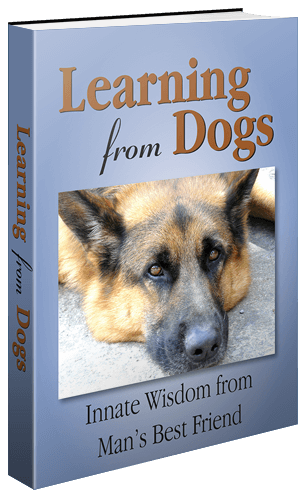
learningfromdogs_3dbook_500xAs many of you know last December I published my first book Learning from Dogs.

That book had been the result of me getting my head down in the Novembers of 2013 and 2014. Why November? Because that is the month of NaNoWriMo, or to use the long-form: National Novel Writing Month.

Having brought book number one the light of the day, it was only natural that my mind started to turn to a sequel. At first, I thought of another book about dogs; perhaps Learning About Dogs? But for a variety of reasons I just couldn’t get started and it all came to a head last Wednesday during one of our regular group cycle rides. As follows:

Jim Goodbrod, he who wrote the foreword to my first book, asked how book number two was coming along.
“Oh Jim,” I replied, “I have left it far too late to contact the many academics that I have come across, to seek permission to quote their works and to find out if they have more scientific information of potential interest.”
“I have this terrible feeling that I’m setting myself up to fail!”

Jim then opened a wonderful window for me; metaphorically speaking. But before describing what Jim went on to say I should explain to you, dear reader, the connection between Jim and Janet, his wife, and Jean and me. Jim and Janet live about half-a-mile from us in Merlin, Southern Oregon, and right from the moment when we moved into our home back in 2012 they have been very good friends indeed. That friendship built upon Jim and Janet sharing very many similar outlooks on life to Jeannie and me. Plus Jim is a professional veterinarian doctor at a vet’s practice in Grants Pass, our local town some 12 miles from home, but has frequently given us advice ‘out of hours’ when one of our pets at home has gone down with something beyond Jean’s extensive experience.
So the four of us have spent much time together socially and I am embarrassed to admit that quite a few of my stories from past years have been told by me.

Back to that conversation during that bike ride. “Paul, Janet and I were only saying the other day that we would really love to see your next book being something autobiographical. You have had so many interesting experiences in so many parts of the world that we truly believe that they would be of interest to many others.”

It felt slightly uncomfortable to hear that. Uncomfortable in the sense that immediately responding by saying what a good idea that was carried too much egotism, was too self-indulgent. But at the same time I knew that Jim and Janet would offer a genuine recommendation and that it would most certainly get me out of my present difficult situation. I thanked Jim profusely. Jim then went on the describe the style that he and Janet would enjoy: “Janet and I have long loved reading books where each chapter was a self-contained story. In other words, a book that one could pick up and dip into and still feel that it was a good read.”

When I returned home and spoke about this to Jeannie she immediately said that it was something that she had been urging me to consider. An hour later I was speaking on the phone to my sister Eleanor and she, too, encouraged me to go down this route.

So that’s how it has come about that book number two is going to be semi-autobiographical, and it already has a name: Four Dogs On My Bed.

Or as the byline reads: On Life; On Love; and On Dogs.

All of which is a rather wordy way of saying that from now until the end of November my first priority is going to be book writing. How that will impact my attention to this blog and all you wonderful readers is uncertain. But if you see a string of re-posts from earlier times, if I don’t provide the most fulsome introduction to a guest author that they deserve, if my replies to comments are not as quick as I normally try to be, then you will know the reason why.

Thank you!

The power of a good massage.

This was a day when a massage would have been perfect treatment!

On Wednesday afternoon Jean and I hooked a big flatbed trailer, borrowed from a neighbour, to our pickup truck and went into town to collect a new sectional settee that we had recently purchased at a furniture sale.

Yesterday, Michael who comes in to help us on a regular basis turned up at 8:30 and we all set to. First up was to dismantle an old sectional in our den that had seen much better days and then carry that out to the front.

Next we moved a settee from our living-room to the den.

Last up was to unpack all three units that comprised the new sectional. Oh, nearly forgot! Then the old sectional from the den was loaded on to the trailer and taken to the tip!

By the end of the day this Brit, who will be 72 in a couple of weeks time, was feeling the odd aching muscle or two!

All of which is my introduction to this:

ooOOoo

Watching animals get massages is the most relaxing thing ever — for people

Humans aren’t the only ones who enjoy a soothing rubdown.

Starre Vartan

October 15, 2016
dog-massage-bulldog-jpg-653x0_q80_crop-smart
Most animals can benefit from massage, but whether it’s theraputic or not, they sure enjoy it, just like we do. (Photo: Serjey Saraschenko/Shutterstock)

I get massages whenever I’m able, and it’s my answer to the fun party question: “What would you do with a million dollars?” Well, first I’d pay off my grad school loans, but second on the list would definitely be weekly massage. Every time I get one, I end up walking on air; for me it’s like doing a yoga class without the effort.

But watching massage can be relaxing too — not watching people (that’s icky), but animals. I’m not the only one: My Facebook feed is littered with people posting and reposting cute furry animals both wild and domesticated getting backs kneaded and shoulders rubbed. My favorites are below, so if you need a moment of chill, check out a couple of these and relax.

This corgi’s face massage is a joy to watch, and it’s funny too — check out his reclining position which is more guy-napping-on-a-pool-float than canine.

This sweet gray kitten getting an ever-so-gentle facial massage in the sunshine starts out asleep and seems to get more relaxed as you watch. Is that even possible?

Guinea pigs are known for being snuggly creatures, but also nervous ones. Watching this one slowly relax does the same thing for me.

If you get sucked into this video like I did, you’ll be rewarded with a soft-as-marshmallow white bunny, which follows the gray bunny. Spoiler alert: Both get lots of love.

The relaxation and happiness of this pregnant cow getting a solid rubdown is crystal clear even though the video quality is low.

Aside from dogs, horses are probably the domesticated animal that gets the most serious massage attention, since many of them are performers and athletes, either in the dressage ring or on a racecourse. So there are lots of instructional videos about horse massage, but I think Jess, a trained horse massage therapist, shows it best.

There are a lot of animals that give themselves massages, especially otters. This one is clearly an expert — after a solid minute of scalp massage, she has a nap!

ooOOoo

Well I have to say that receiving a massage directly would have been a tad better than watching these animals get their massages, but it was way, way better than nothing!

English as she is spoken!

Difficult to avoid the irony!

(Of an Englishman helping Americans to ‘Ramp Up Their English’! 😉

Good followers of this place will recall that in March I published a ‘thank-you’ piece showing my appreciation for Rogue Valley TV and John Letz.  Here’s how I opened that post:

Huge thank you to Producer John Letz and the whole crew.

A week ago last Saturday Jean and I travelled down to Ashland and to the studios of Rogue Valley Community Television (RVTV). This is how RVTV describe themselves:

Based at the Southern Oregon Digital Media Center, RVTV provides access television and streaming media services for the citizens and local governments of Jackson and Josephine Counties. Please visit rvtv.sou.edu for more information.

John Letz, the Producer for Adventures in Education and Ramping Up your English, had read my book and thought it might make a good programme.

Anyway, leaving the irony to one side, John recently sent me a link to the 30-minute episode that is included below.

To be honest if you are comfortable with your English then I strongly recommend that you skip this video unless you can’t live another minute without peeking into the Handover household and our dogs.

Mind you, even if you want to skip the video I can’t let you get away entirely Scot free. For at the 3:30 minute mark in the video John sets out the definition of pet:

PET: A dependent animal with a close emotional connection to the pet-owner.

I wonder if John had this in mind (photos taken yesterday morning in our bedroom):

p1160542oooo

p1160543oooo

p1160547Please give all your dogs out there a big hug! Now! 🙂