Category: People

Starting Out on The Meditation Journey

If meditation really works then we want to engage in it.

Those who watched the video that was the central component of yesterday’s post will not have missed the references by Ted Meissner that scientific, double-blind evidence shows that meditation offers benefits for us humans.

Both Jean and I are especially interested in learning more and, hopefully, finding an appropriate meditation group in our nearest town, Grants Pass.

We would also welcome feedback and advice from any of you good people who have trod this path before.

For example, when one conducts a quick internet search into the different forms of meditation there are dozens of websites that are returned in the search findings. Almost choosing one website at random, the Visual Meditation website declares there are 7 Types of Meditation.  As in:

  • Transcendental Meditation (TM)
  • Heart Rhythm Meditation (HRM)
  • Kundalini
  • Guided Visualization
  • Qi Gong
  • Zazen
  • Mindfulness

To my uneducated eye, not one of those types seems to accord with the type supported by the American Meditation Society:

OUR MISSION

  • To provide instruction in meditation as taught by the founder of AMS, Gururaj Ananda Yogi.
  • To preserve and share the universal teachings of Gururaj with integrity and wisdom.
  • To provide a place where those who wish to unfold the inner self may do so in the company of other like-minded people.

Back to the plot! For this post is about the science.

The following video seemed worthy of sharing with you.

I watched the first 10 minutes before deciding it should be shared. By the time this post is published Jean and I will have watched it to the end. [20:45 yesterday evening. Jean and I have just finished watching the Bob Roth video below. It was both fascinating and very helpful!!]

The Aspen Institute

Published on Jun 26, 2016

Published studies have documented the many physical and mental health benefits of meditation, including decreased pain, better immune function, less anxiety and depression, a heightened sense of well-being, and greater happiness and emotional self-control. Google Scholar turns up almost 700,000 research documents on meditation, among them imaging studies that show increased activity in brain regions associated with attention, a higher volume of grey matter, and lessened amygdala response to emotional stimuli. What actually happens in the brain when we meditate? Why is meditation so nourishing to the mind, body and spirit?

Perri Peltz, Interviewer
Bob Roth

But a search of the YouTube website using the search term “meditation science” brought up many other links to shorter videos.

I selected the following (2:23 mins) because it is presented by Ferris Jabr who is an Associate Editor with Scientific American magazine.

Bottom line to my way of thinking is that this is something worth committing to once we know much more about engaging in meditation.

Your experiences most welcomed.

(And, of course, when it comes to chilling out for hours regularly each day then there’s another thing we can learn from our beloved dogs! No better demonstrated than by Brandy yesterday morning in the following photograph!)

Buddhism and Humanism

Reflections on a very interesting meeting of our local Freethinkers group.

Last Saturday was the regular monthly meeting of our local Rogue Valley Freethinkers and Humanists. Many know that Jean and I are secular humanists and go as often as we can to these meetings in Grants Pass, Oregon.

Saturday’s meeting was all about Buddhism or more accurately as Jerry Reed, the group’s administrator, put it in a recent email:

For Saturday, Aug 5: Brenda will be our presenter/discussion leader. She will introduce us to Secular Buddhism, including comments on basic principles of Buddhism, and how traditional and secular Buddhism compare with each other, as well as on overlapping philosophical views of Buddhism and Humanism.

This video link provides a discussion between a humanist, Scott Lohman, and a secular Buddhist, Ted Meissner, which may help to familiarize you with Brenda’s topic prior to our meeting. It is about 29 minutes long, all interesting, but if you are cramped for time, especially the segment from about 10:30 to 16:30 which discusses basic Buddhist principles that might also relate to humanism, and another segment from about 19:30 to 27:00 on advice to a beginner who might want to try meditation, and how Star Trek borrowed from Buddhism, and also about the similarity of ethical focus of Buddhism and Humanism.

What I would hope is that if any of you are interested in this subject, then do watch the interview with Ted Meisser conducted by Scott Lohman .
Here it is.

Here follow links to the organisations represented by Scott and Ted Meissner. For Scott the Humanists of Minnesota, and for Ted the Secular Buddhist Association.

If you do watch the video you will undoubtedly pick up on the science now discovering that meditation does change the brain … for the better!

More on that tomorrow!

Picture Parade Two Hundred and Seven

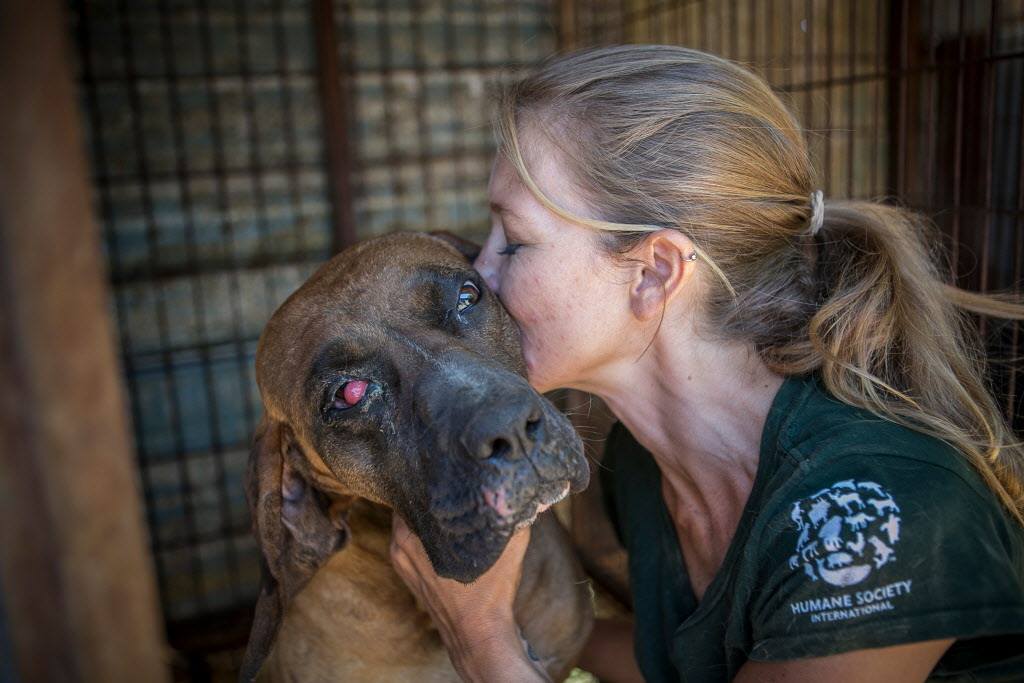
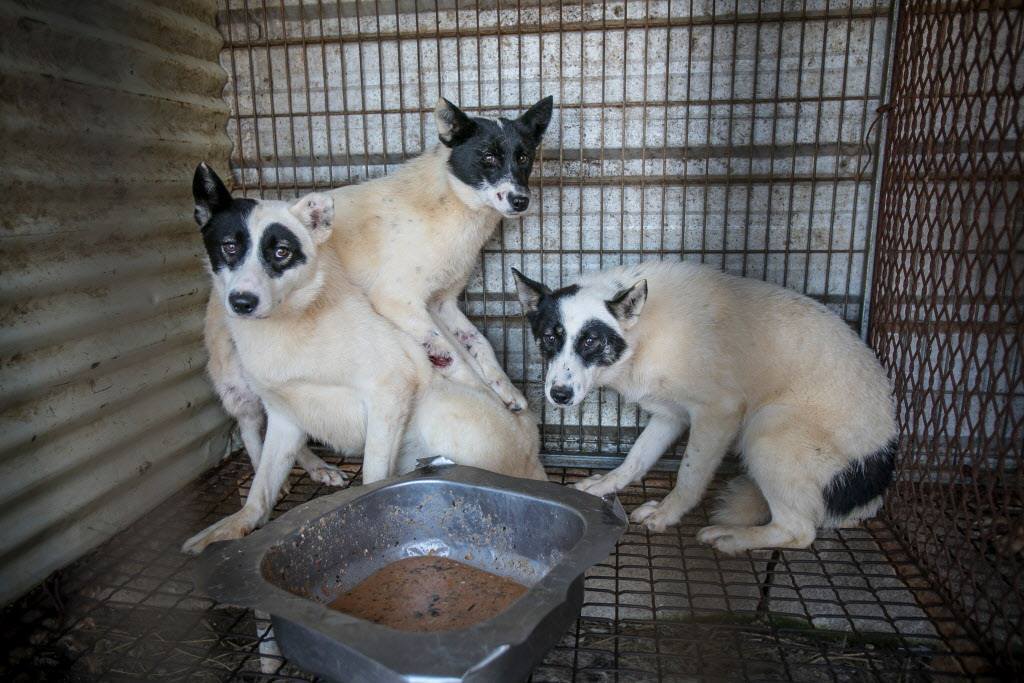
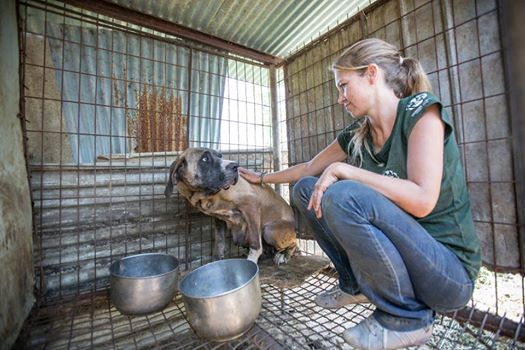
Those precious dogs saved from the meat trade.

On the 26th July I posted an item about the work of The Humane Society in saving dogs. I included a very moving photograph and promised to include the rest of the photographs in a Picture Parade. Well, here they are including the one I republished.

oooo

oooo

oooo

oooo

oooo

oooo

Wonderful!

Give the Mexican Wolf a single chance!

Picking up on Annie

Remember Kristin’s guest post just two days ago? Annie’s Second Chance?

I’m sure you do.

Well the reason I am using that connection is because I want to share with you an email that was received yesterday.

Paul

The Mexican gray wolf (also called lobo) is the rarest subspecies of gray wolf in the world.  With just 113 individuals in the wild, this federally endangered species needs your voice now.

Tell the U.S. Fish & Wildlife Service (USFWS) to draft a science-based recovery plan for endangered lobos!

Despite recommendations by the US Fish and Wildlife Service’s own scientists, they have released a highly politicized Draft Mexican Wolf Recovery Plan, which we fear will lead these severally endangered wolves to extinction.

Ask the USFWS to revise their Draft Mexican Wolf Recovery Plan to protect endangered lobos instead of protecting special interests.

The draft recovery plan ignores science, gives special interests controlling power over recovery, and outlines criteria which will prematurely remove Endangered Species Act protections from the wolf.

Already plagued by mismanagement, poaching, and declining genetic diversity, the Mexican wolf needs your help more than ever.  We only have until the close of the comment period on August 29th to generate opposition to this flawed plan. Please submit your comment today to ask the US Fish and Wildlife Service to draft a recovery plan that’s based on science, not politics!

Thank you for your commitment to wildlife and wild places.

Sincerely,

Hailey Hawkins
Southern Rockies Representative
Endangered Species Coalition
www.endangered.org

PS. Links not working? Take action for wolves at this URL: https://actionnetwork.org/letters/comment-on-the-draft-mexican-wolf-recovery-plan-sciencenotpolitics

Of course I wrote in support of the Lobo! And was delighted to notice that Action Network had set a goal of 3,200 letters and, as of yesterday morning, only a further 275 letters were needed to make that goal.

Please, dear reader, add your name. Thank you!

Have a wonderful weekend!

Our incredible world!

What to see in the night sky in August

You all understand that this blog, while predominantly about our special doggie friends, never hesitates to wander away from matters canine if I think it will be enjoyed by all you good people.

You will also all appreciate that August is the month where in the USA, on August 21st, there will be a total eclipse of the sun.

The reasons why I didn’t hesitate to republish a recent post that was presented on Mother Nature Network.

ooOOoo

What to see in the night sky in August

While the total solar eclipse is the highlight, there are other celestial fireworks to look forward to this month.

Michael d’Estries   August 1, 2017.

Michael d’Estries ( @michaeldestries ) covers science, technology, art, and the beautiful, unusual corners of our incredible world.

Celestial events for August 2017 include a total solar eclipse, Perseid meteor shower and the rise of the Sturgeon Moon. (Photo: Michael Seeley/Flickr)

Welcome to August, a month defined by loud cicadas, pool parties, humidity and children fretting about an impending return to school. When it comes to celestial happenings, however, there is no larger star this month that our own moon. From a partial lunar eclipse to the first coast-to-coast solar eclipse in almost a century, the moon will be the cause of most eyeballs drifting towards the heavens over the next several weeks.

Below is a small sampling of some of the night and day celestial events to look forward to this month. Wishing you all clear skies!

The rise of the full Sturgeon Moon (Aug. 7)

The full Sturgeon Moon is so-named for the fish that are easily caught in August and early September. (Photo: Paul Kline/flickr)

August’s full moon, nicknamed the Sturgeon Moon, will rise for the U.S. Eastern Seaboard on the evening of Aug. 7 at 8:05 p.m.

The Sturgeon Moon gets its name from the species of fish native to both Europe and the Americas that is easily caught this time of year. Other nicknames include the Corn Moon, Fruit Moon and Grain Moon. In countries experiencing winter, such as New Zealand, native Māori called this full moon “Here-turi-kōkā” or “the scorching effect of fire is seen on the knees of man.” This reference is to warm fires that glow during the Southern Hemisphere’s coldest month.

Partial lunar eclipse (Aug. 7 & 8)

Observers in Africa, Asia and Australia will see August’s partial lunar eclipse in its entirety. (Photo: Forrest Tanaka/flickr)

As a kind of consolation prize for missing out on this month’s total solar eclipse over North America, those living on the continents of Africa, Asia and Australia will bear witness to a partial lunar eclipse. Spectators in Europe will catch the tail end of the eclipse as the moon rises around 7:10 p.m. on Aug. 7.

This phenomenon occurs between two to four times a year when the moon passes through a portion of the Earth’s shadow. Because the shadow cast is more than 5,700 miles wide, lunar eclipses last much longer than solar eclipses. In some instances, totality can occur for as long as 1 hour and 40 minutes. As a reference, maximum totality for the Aug. 21 solar eclipse will top out a mere 2 minutes and 42 seconds. The longest, at over 7 minutes, won’t take place until the year 2186.

This month’s partial lunar eclipse is the last of the year. Next year, total lunar eclipses will take place in January and July.

Perseid meteor shower (Aug. 12)

A composite shot of last year’s Perseid meteor shower over Turkey. Notice how the path of the meteors appears to race from the constellation Perseus. (Photo: NASA)

Regarded as one of the best celestial light shows of the year, the Perseid meteor shower occurs from July 17 to Aug. 24 and peaks on the evening of Aug. 12.

The shower, sometimes creating as many as 60 to 200 shooting stars per hour, is produced as Earth passes through debris left over from the orbit of Comet Swift-Tuttle. This 16-mile-wide periodic comet, which completes an orbit around the sun every 133 years, has been described as “the single most dangerous object known to humanity.” This is because every instance of its return to the inner solar system brings it ever closer to the Earth-moon system. Though astronomers believe the comet bears no threat for at least the next 2,000 years, future impacts cannot be ruled out.

If the comet were to hit Earth, scientists believe Swift-Tuttle would be at least 27 times more powerful than the asteroid or comet that wiped out the dinosaurs. For now, you can take in the beauty of the debris from this harbinger of doom by looking north towards the constellation Perseus. Because the moon will be three-quarters full, you’ll need to search out a nice dark sky to escape any light pollution from urban environments.

Total solar eclipse (Aug. 21)

A total solar eclipse as captured over the Southern Hemisphere in November 2012. (Photo: NASA Goddard Space Flight Center)

By far the biggest celestial event in ages, Aug. 21 marks the first time since June 1918 that a total solar eclipse will race from coast to coast across the United States. Cities and towns along the 72-mile-wide path of totality are preparing for an influx of visitors, with millions of Americans expected to drive to view the rare phenomenon. Those outside totality will still experience a show, with partial solar eclipses happening over much of North America. Regardless, everyone will want to invest in a pair of special solar eclipse glasses to avoid ruining your eyesight.

Total solar eclipses occur when the new moon moves between the Earth and the sun and casts its shadow on the planet. This shadow is comprised of two concentric cones –– the larger penumbra, which from Earth only shows the sun partially blocked, and the much smaller umbra, which blocks the sun completely. It is within this latter cone that totality will occur, giving spectators on the ground what’s considered by many to be a “once-in-a-lifetime” experience.

The Great American Eclipse will actually first start out in the Pacific (at this point, it will actually, unbelievably rise while completely eclipsed!), making landfall on the Oregon community of Lincoln Beach at 10:16:01 a.m. (PDT). From there, the moon’s shadow will continue to race across the U.S. The point of greatest eclipse, where the axis of the moon’s shadow passes nearest to the center of Earth, will take place in Hopkinsville, Kentucky and last 2 minutes and 40.1 seconds. In celebration of the event, the town has temporarily renamed itself “Eclipseville,” and expects anywhere from 55,000 to 150,000 tourists to visit in advance of Aug. 21.

The next total solar eclipse over the U.S. will take place on April 8, 2024.

New moon (Aug. 21)

August’s new moon will not only create a show during the day, but also leave the heavens to glow unimpeded by night. (Photo: Coconino National Forest/flickr)

Fresh after wowing the U.S. during the day with its solar theatrics, August’s new moon will give way to dark skies for the next several nights. This is the perfect opportunity to grab a blanket and head outside into the still-warm summer evenings to enjoy the heavens in all their glory. With some remnants of the Perseids still visible, it will also offer a chance to catch some of the faintest shooting stars.

Look for Earth’s shadow (All year)

The Earth’s shadow and ‘Belt of Venus’ as captured above Mauna Kea, Hawaii. (Photo: Jay El Eskay/flickr)

Ever wonder what causes the beautiful bands of color in the eastern sky at sunset or the western sky at sunrise? The dark blue band stretching 180 degrees along the horizon is actually the Earth’s shadow emanating some 870,000 miles into space. The golden-red portion, nicknamed the “Belt of Venus,” is Earth’s upper-atmosphere illuminated by the setting or rising sun.

Now that you know about this phenomenon, choose a night or morning sometime to try and pick it out. You’ll need a western or eastern horizon that’s fairly unobstructed to get a clear view of our planet’s huge curved shadow.

Looking ahead to September

On Sept. 15, the Cassini spacecraft will end its 20-year mission to Saturn with a dramatic death dive into the ringed planet. (Photo: NASA)

As fall beckons, the biggest event next month will be the dramatic death dive of the Cassini spacecraft into Saturn. Taking place on Sept. 15, Cassini will make discoveries about Saturn right up until its fiery conclusion, with unprecedented photos and data captured and transmitted during its final moments.

ooOOoo

It is going to be quite a month!

Oh, and for those of you that want to know the timings of the eclipse over North America there is a useful reference site here, from which I republish the following table.

Eclipse Start & End: Local Time for US States

The eclipse will begin over the Pacific Ocean at 15:46 UTC, which corresponds to 8:46 am Pacific Time. It will reach the coast of Oregon at Lincoln City, just west of Salem, at 9:04 am local time. The eclipse will reach its maximum point here at 10:17 am.

From here, the Moon’s central shadow will move inland. The following table shows when the Moon will begin to move in front of the Sun and the moment it completely covers the Sun, as seen from some locations along the central path of the eclipse. All times are local.

Location Partial Eclipse Begins Sun Completely Obscured
Salem, OR 09:05 am PDT 10:18 am PDT
Idaho Falls, ID 10:15 am MDT 11:33 am MDT
Casper, WY 10:22 am MDT 11:43 am MDT
Lincoln, NE 11:37 am CDT 1:03 pm CDT
Sabetha, KS 11:38 am CDT 1:05 pm CDT
Jefferson City, MO 11:46 am CDT 1:14 pm CDT
Carbondale, IL 11:52 am CDT 1:21 pm CDT
Hopkinsville, KY 11:56 am CDT 1:25 pm CDT
Nashville, TN 11:58 am CDT 1:28 pm CDT
Talulah Falls, GA 1:07 pm EDT 2:37 pm EDT
Columbia, SC 1:13 pm EDT 2:43 pm EDT
Charleston, SC 1:16 pm EDT 2:47 pm EDT

Please note that this list includes only a small selection of locations where the total eclipse will be visible. You can look up more locations in our Eclipse Database or via the Eclipse Map.

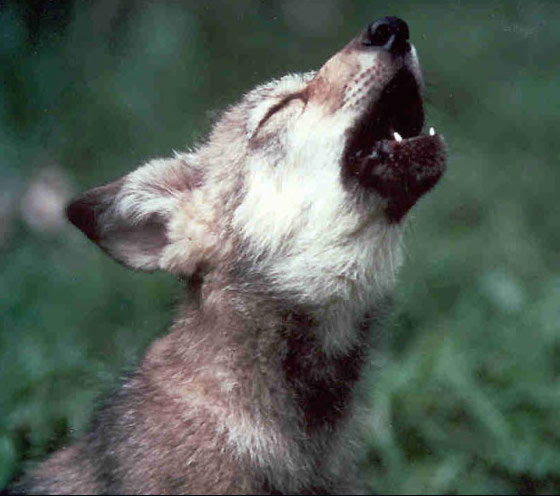
Enjoy your nights out there! And let your dogs howl their hearts out!

Help Stop the use of dogs for medical testing!

Sometimes I wonder about the human race!

Sorry for the outburst above but in the last ten minutes I read this over on Lady Freethinker’s blog: Sign: Pass Bill to Ban Cruel VA Medical Testing on Dogs It made me very angry!

It has to be shared with all you good people.

ooOOoo

Sign: Pass Bill to Ban Cruel VA Medical Testing on Dogs

We are of the stars!

I so relate to this item from EarthSky News!

Long-term readers of this place will possibly recall that between April, 1989 and June, 1994 I lived on a Tradewind 33 sailing yacht Songbird of Kent. I have written before about those days.

Songbird of Kent. My home for five years.

When sailing at night when the sky is clear it is impossible not to feel deeply connected to the stars above one’s head.

My logbook for Songbird of Kent reports that at noon on Wednesday, 1st June, 1994, I departed the yacht harbour at Horta in The Azores bound for Plymouth, South-West England. Plymouth was 1,257 nautical miles (2,329km/1,447 statute miles) from Horta.

Horta on Faial Island of the Azores

The logbook has an entry for the 6th June.

0400 Lat. 43 deg 25 minutes North, Long 22 deg 3 minutes West. Engine Off. Still no wind but must sleep after 19 hours of helming. 840 miles to run. Wind 2 knots from SW. Baro 1027 mb, Viz Good.

The visibility was wonderful and seeing the stars up in the night sky all around me, as in all 360 degrees about me, practically down to the horizon on this moonless night is an image still etched in my mind.

That’s why I want to republish this article that appeared on the blog EarthSky News yesterday.

ooOOoo

We are galaxy stuff

A new study – based on supercomputer simulations – reveals that each one of us may be made in part from matter that passes from one galaxy to another.

This image shows M81 (bottom right) and M82 (upper left), a pair of nearby galaxies where intergalactic transfer – transfer of materials between galaxies – might be happening. Image via Fred Herrmann.

Sagan famously said that we are made of star stuff. He meant the carbon, nitrogen and oxygen atoms in our bodies, as well as atoms of all other heavy elements, were created inside stars. Yet Sagan’s expression of this idea, which quickly became a cornerstone of popular culture, might not take the concept far enough. According to astrophysicists at Northwestern University, our origins are much less local than previously thought. In fact, according to their analysis – which they say is the first of its kind – we’re not just star stuff. We’re galaxy stuff.

This study is being published on July 26, 2017 (July 27 in the U.K.) by the peer-reviewed journal Monthly Notices of the Royal Astronomical Society.

The Northwestern researchers found that up to half of the matter in our Milky Way galaxy may come from distant galaxies. As a result, each one of us may be made in part from extragalactic matter. That is, atoms of carbon, nitrogen, oxygen and so on in our bodies may be created not just by stars in our own Milky Way galaxy, but by stars in far-flung galaxies.

They arrived at this conclusion using supercomputer simulations. The study required the equivalent of several million hours of continuous computing.

The simulations show that supernova explosions eject great quantities of gas from galaxies, which causes the atoms made inside stars to be transported from one galaxy to another via powerful galactic winds. According to their statement, intergalactic transfer is a newly identified phenomenon, which, they say, requires supercomputer simulations in order to be understood. According to these astrophysicists, this understanding is critical for knowing how galaxies evolve … and hence for knowing our own place in the universe.

Animation of gas flows around a Milky Way-like galaxy, as seen by the team’s computer simulations.

Daniel Anglés-Alcázar is a postdoctoral fellow in Northwestern’s Center for Interdisciplinary Exploration and Research in Astrophysics (CIERA). He led the study, and he said:

It is likely that much of the Milky Way’s matter was in other galaxies before it was kicked out by a powerful wind, traveled across intergalactic space and eventually found its new home in the Milky Way.

Given how much of the matter out of which we formed may have come from other galaxies, we could consider ourselves space travelers or extragalactic immigrants.

Space is vast. Galaxies are located at almost inconceivable distances from each other. So, Alcázar and his team said, even though galactic winds propagate at several hundred kilometers per CIERA second, the process of intergalactic transfer occurs over billions of years.

As always, this new research built on earlier studies. Northwestern’s Claude-André Faucher-Giguère and his research group, along with a unique collaboration called Feedback In Realistic Environments (FIRE), had developed numerical simulations that produced realistic 3-D models of galaxies. These simulations followed a galaxy’s formation from just after the Big Bang to the present day.

Anglés-Alcázar then developed state-of-the-art algorithms to mine this wealth of data. In this way, he and his team were able to quantify how galaxies acquire matter from the universe.

The scientists say the prediction of intergalactic transfer can now be tested. The Northwestern team plans to collaborate with observational astronomers who are working with the Hubble Space Telescope and ground-based observatories to test the simulation predictions.

Simulated examples of intergalactic winds, shown as green string, in action around galaxies, shown as clusters of yellow dots. The galaxy at the center is ejecting the winds, blowing them toward potential the other galaxies.

Bottom line: Supercomputer simulations suggest that each one of us may be made in part from extragalactic matter. Hence, we are galaxy stuff.

ooOOoo

16th June, 1994

1945 Lat. 50 deg 21 minutes North, Long. 4 deg 10 minutes West. ARRIVED MAYFLOWER MARINA. Wind Nil. Baro 1023 Mb. Viz Good.

LOG CLOSED!

Mayflower Marina is at Plymouth.

Saving dogs big time

This is really what matters!

Well it does in the worlds of Jean and me and many of you who frequent this place.

Whatever is going wrong in the world around us, all we need is examples of people putting animals in front of them.

No better illustrated than by a recent news item released by Humane Society International. Albeit, I am using the story as it was presented on the Care2 site.

ooOOoo

Nearly 150 Dogs Saved From the Dog Meat Trade in South Korea

Get ready for some happy news: 149 dogs who were destined to be turned into food have been successfully rescued and will now be starting their new lives in peace.

These dogs, who were rescued by a team from Humane Society International (HSI), are among millions who are raised and killed for their meat in South Korea. According to HSI, more than one million dogs are killed and eaten during Bok Nal days – the three hottest days of the summer – mainly as a soup that’s mistakenly believed to improve stamina and virility.

Fortunately, their fate changed when the farmer who was raising them turned to HSI for help. The organization has been working in partnership with those in the industry who express interest in getting out to help them close their farms and transition into other lines of work.

This latest rescue marks the ninth dog meat farm that HSI has permanently closed since 2014, which has resulted in saving the lives of nearly 1,000 dogs who would have otherwise been brutally slaughtered.

The dogs from this farm will now be free from the cages and chains that confined them, and are headed to HSUS Emergency Placement Partner shelters in the U.S. located in Florida, Illinois, Indiana, New Jersey, New York, Pennsylvania and Wisconsin, where they’ll be prepared to be adopted into homes where they’ll become members of a family.

The first few have already arrived, and the rest will be on their way in the coming weeks. A group of 15 puppies who were too young to fly are being fostered with their moms until they’re ready to make the trip.

“With every dog meat farm we close, we are not only saving the lives of these poor, terrified dogs caught up in this cruel trade, but we are also presenting a successful blueprint for change that we hope the government will follow. Eating dog is a dying practice in Korea, especially among young people. However, the Bok Nal days of summer still lead many to eat dog meat soup in the mistaken belief that it will invigorate the blood in the sluggish heat. Our campaign shows them the disgusting conditions in which the dogs are forced in live in their own feces, and their pitiful suffering, and it is changing hearts and minds,” said Nara Kim, HSI’s South Korea dog meat campaigner.

While millions of dogs are still at risk, attitudes among the public are changing for the better, particularly among younger generations who are eschewing dog meat.

“Some people say that dog eating is Korean culture, but you won’t find many young people who feel it’s a cultural habit we want to hold on to. It’s intellectually lazy to use culture as an excuse for cruelty because all cultures evolve over time and we often shed practices of the past. We are hopeful that things will change, and that the new Korean president will advance a new culture of compassion to animals. I am so happy that for these dogs the dog meat trade is over, but we have to fight on for the millions who are still suffering,” added Kim.

HSI is continuing to urge the government to act to end the trade ahead of the 2018 Winter Olympics, which will be hosted in South Korea, and will be heavily campaigning this summer to raise more awareness about the issue locally.

For more info on how to help, and updates on the dogs, check out Humane Society International.

Photo credit: Friends of Oregon Zoo Elephants/IDA

ooOOoo

The Care 2 version also included a number of very moving photographs but this one, in particular, seemed a great one to share with you. The rest will form the next Picture Parade.

Well done HSI!


Never taking democracy for granted!

Cold-water shower time again!

All you good people who stick with this blog know that the majority of the posts are to do with dogs or cats in one form or another.

Yet, I am cognizant of the fact that no one can completely hide, metaphorically speaking, in the warm fur of our favourite dog or cat and let the rest of the world go tits up. From time to time I read an article or an essay that touches on something fundamentally important to a civil society and am compelled to share same with you.

That was the case on July 5th when I published a post called The Implications of Inequality.

OK – moving on!

Regulars know that I am a great admirer of the writings of essayist George Monbiot. He is a very regular contributor to The Guardian newspaper. Just a few days ago, Mr. Monbiot published an essay that really does need to be read as widely as possible. It is called Missing Link and is republished here with George Monbiot’s very kind permission.

ooOOoo

Missing Link

21st July 2017
How a secretive network built around a Nobel prizewinner set out to curtail our freedoms

By George Monbiot, published in the Guardian 19th July 2017

It’s the missing chapter: a key to understanding the politics of the past half century. To read Nancy MacLean’s new book Democracy in Chains: the deep history of the radical right’s stealth plan for America is to see what was previously invisible.

The history professor’s work on the subject began by accident. In 2013 she stumbled across a deserted clapboard house on the campus of George Mason University in Virginia. It was stuffed with the unsorted archives of a man who had died that year, whose name is probably unfamiliar to you: James McGill Buchanan. She writes that the first thing she picked up was a stack of confidential letters concerning millions of dollars transferred to the university by the billionaire Charles Koch.

Her discoveries in that house of horrors reveal how Buchanan, in collaboration with business tycoons and the institutes they founded, developed a hidden programme for suppressing democracy on behalf of the very rich. The programme is now reshaping politics, and not just in the US.

Buchanan was strongly influenced by both the neoliberalism of Friedrich Hayek and Ludwig von Mises and the property supremacism of John C Calhoun, who argued, in the first half of the 19th century, that freedom consists of the absolute right to use your property – including your slaves – however you may wish. Any institution that impinges on this right is an agent of oppression, exploiting men of property on behalf of the undeserving masses.

James Buchanan brought these influences together to create what he called “public choice theory”. He argued that a society could not be considered free unless every citizen has the right to veto its decisions. What he meant by this was that no one should be taxed against their will. But the rich were being exploited by people who use their votes to demand money that others have earned, through involuntary taxes to support public spending and welfare. Allowing workers to form trade unions and imposing graduated income taxes are forms of “differential or discriminatory legislation” against the owners of capital.

Any clash between what he called “freedom” (allowing the rich to do as they wished) and democracy should be resolved in favour of freedom. In his book The Limits of Liberty, he noted that “despotism may be the only organisational alternative to the political structure that we observe.” Despotism in defence of freedom.

His prescription was what he called a “constitutional revolution”: creating irrevocable restraints to limit democratic choice. Sponsored throughout his working life by wealthy foundations, billionaires and corporations, he develop both a theoretical account of what this constitutional revolution would look like and a strategy for implementing it.

He explained how attempts to desegregate schooling in the American South could be frustrated by setting up a network of state-sponsored private schools. It was he who first proposed the privatisation of universities and the imposition of full tuition fees on students: his original purpose was to crush student activism. He urged the privatisation of Social Security and of many other functions of the state. He sought to break the links between people and government and demolish trust in public institutions. He aimed, in short, to save capitalism from democracy.

In 1980, he was able to put the programme into action. He was invited to Chile, where he helped the Pinochet dictatorship to write a new constitution, which, partly through the clever devices Buchanan proposed, has proved impossible to reverse in its entirety. Amid the torture and killings, he advised the government to extend its programmes of privatisation, austerity, monetary restraint, deregulation and the destruction of trade unions: a package that helped trigger economic collapse in 1982.

None of this troubled the Swedish Academy, that, through his devotee at Stockholm University, Assar Lindbeck, in 1986 awarded James Buchanan the Nobel Memorial Prize for economics. It is one of several decisions that have turned this prize toxic.

But his power really began to be felt when Charles Koch, currently the seventh richest man in the US, decided that Buchanan held the key to the transformation he sought. Koch saw even such ideologues as Milton Friedman and Alan Greenspan as “sellouts”, as they sought to improve the efficiency of government rather than destroying it altogether. But Buchanan took it all the way.

MacLean says that Charles Koch poured millions into Buchanan’s work at George Mason University, whose law and economics departments look as much like corporate-funded thinktanks as they do academic faculties. He employed the economist to select the revolutionary “cadre” that would implement his programme (Murray Rothbard, at the Cato Institute that Koch founded, had urged the billionaire to study Lenin’s techniques and apply them to the libertarian cause). Between them, they began to develop a programme for changing the rules.

The papers Nancy Maclean discovered show that Buchanan saw stealth as crucial. He told his collaborators that “conspiratorial secrecy is at all times essential.” Instead of revealing their ultimate destination, they would proceed by incremental steps. For example, in seeking to destroy the Social Security system, they would claim to be saving it, arguing that it would fail without a series of radical “reforms”. (The same argument is used by those attacking the NHS over here). Gradually they would build a “counter-intelligentsia”, allied to a “vast network of political power” that would eventually become the new establishment.

Through the network of thinktanks that Koch and other billionaires have sponsored, through their transformation of the Republican Party, and the hundreds of millions they have poured into state congressional and judicial races, through the mass colonisation of Trump’s administration by members of this network and lethally effective campaigns against everything from public health to action on climate change, it would be fair to say that Buchanan’s vision is maturing in the USA.

But not just there. Reading this book felt like a demisting of the window through which I see British politics. The bonfire of regulations highlighted by the Grenfell Tower disaster, the destruction of state architecture through austerity, the budgeting rules, the dismantling of public services, tuition fees and the control of schools: all these measures follow Buchanan’s programme to the letter. I wonder how many people are aware that David Cameron’s free schools project originated with an attempt to hamper racial desegregation in the American South.

In one respect, Buchanan was right: there is an inherent conflict between what he called “economic freedom” and political liberty. Complete freedom for billionaires means poverty, insecurity, pollution and collapsing public services for everyone else. Because we will not vote for this, it can be delivered only through deception and authoritarian control. The choice we face is between unfettered capitalism and democracy. You cannot have both.

Buchanan’s programme amounts to a prescription for totalitarian capitalism. And his disciples have only begun to implement it. But at least, thanks to Maclean’s discoveries, we can now apprehend the agenda. One of the first rules of politics is know your enemy. We’re getting there.

http://www.monbiot.com

ooOOoo

I found it very difficult to write these closing thoughts; as is obvious as you read this sentence!

Looking up quotations online under the headings of fairness or equality brought up many that could have worked here. Yet they seemed too trite, too obvious, too remote from the reality of what Mr. Monbiot describes here today.

So let me leave you with this: US income inequality is the highest it’s been since 1928. (Source: Pew Research.) But worse than that, US wealth inequality is even greater than income inequality. (Source: Pew Research.) (I’m certain that this is not exclusive to the USA.)

That is wrong! Plain and Simple!

New ideas about our relationship with dogs.

What a delight to read this latest scientific news.

There’s so much ‘doom and gloom’ to be seen on the news services across the world that a genuine discovery that enlarges the mind is always a treat. Now make that a discovery about our dogs. Better still, let the BBC do it for you.

ooOOoo

How did dogs become our best friends? New evidence

19 July 2017

Dogs most probably evolved from wolves at a single location about 20,000 to 40,000 years ago, a study suggests.

Previously, it had been thought that dogs were tamed from two populations of wolves living thousands of miles apart.

Researchers studied DNA from three dogs found at archaeological sites in Germany and Ireland that were between 4,700 and 7,000 years old.

The ancient canines share ancestry with modern European dogs.

By looking at the rates of change to the DNA from the oldest specimen, scientists were able to place the timing of the domestication of dogs to between 20,000 and 40,000 years ago.

Krishna Veeramah of Stony Brook University in New York is a researcher on the study.

He said the process of dog domestication began when a population of wolves moved to the outskirts of hunter-gatherer camps to scavenge for leftovers.

”Those wolves that were tamer and less aggressive would have been more successful at this,” he explained.

“While the humans did not initially gain any kind of benefit from this process, over time they would have developed some kind of symbiotic relationship with these animals, eventually evolving into the dogs we see today.”

DNA was obtained from the skull of an ancient dog.

The story of how dogs came to be tamed from wolves is complex and hotly debated.

Scientists believe dogs started moving around the world, perhaps with their human companions, about 20,000 years ago.

By 7,000 years ago, they were pretty much everywhere, although they were not the kind of dogs that we would consider pets.

”They would likely have resembled dogs we today call village dogs, which are free-breeding that did not live in specific people’s houses and have a similar look to them across the world,” said Dr Veeramah.

The dogs were later bred for their skills as hunters, herders or gundogs, eventually creating hundreds of modern breeds.

The research, published in Nature Communications, suggests even the dog breeds and village dogs found in the Americas and Pacific Islands are almost completely derived from recent European dog stock.

This is probably due to prolific dog breeding in Victorian times.

The dog skull inside an ancient burial chamber.

”In this regard, it appears therefore that our 7,000-year, Neolithic-old dog from Europe is virtually an ancestor to most modern breed dogs found throughout the world,” said Dr Veeramah.

”This ancestral relationship may even stretch back to the oldest dog fossil we know of, which is approximately 14,000 years old from Germany.”

Previous evidence suggested that the first domestic dogs appeared on opposite sides of the Eurasian continent more than 12,000 years ago.

Later, the eastern dogs moved with migrating humans and bred with those from the west, according to this theory.

Dr Greger Larson of the University of Oxford said it was great to see more ancient dog genomes being published.

“There is a fascinating story here and we’re only just scraping the surface,” he said.

“The more we get the more we might have a shot at finally unravelling the story of how we became such good friends over such a long time.”

Follow Helen on Twitter.

ooOOoo

Once read, it was but a moment to do a web search for Dr Veeramah and bring up the news of his research on the Stony Brook Newsroom.

ooOOoo

Study Reveals Origin of Modern Dog Has a Single Geographic Origin

Reported in Nature Communications, the finding counters previous research that suggested two domestication events led to the modern dog

Stony Brook, NY; Stony Brook University: Department of Ecology and Evolution Assistant Professor Krishna Veeramah. His research will be published in Nature and his study reveals origin of modern dog has a single geographic origin.

STONY BROOK, N.Y., July 18, 2017 – By analyzing the DNA of two prehistoric dogs from Germany, an international research team led by Krishna R. Veeramah, PhD, Assistant Professor of Ecology & Evolution in the College of Arts & Sciences at Stony Brook University, has determined that their genomes were the probable ancestors of modern European dogs. The finding, to be published in Nature Communications, suggests a single domestication event of modern dogs from a population of gray wolves that occurred between 20,000 and 40,000 years ago.

Dogs were the first animal to be domesticated by humans. The oldest dog fossils that can be clearly distinguished from wolves are from the region of what is now Germany from around 15,000 years ago. However, the archeological record is ambiguous, with claims of ancient domesticated dog bones as far east as Siberia. Recent analysis of genetic data from modern dogs adds to mystery, with some scientists suggesting many areas of Europe, Central Asia, South Asia and the Middle East as possible origins of dog domestication.

(L to R) Shyamalika Gopalan, PhD Candidate, Dean Bobo, Bioinformatics Scientist, and Krishna Veermah, Assistant Professor of Ecology & Evolution. (F) Four-legged friend, Joci

In 2016, research by scientists using emerging paleogenomics techniques proved effective for sequencing the genome of a 5,000-year-old ancient dog from Ireland. The results of the study led the research team to suggest dogs were domesticated not once but twice. The team from Oxford University also hypothesized that an indigenous dog population domesticated in Europe was replaced by incoming migrants domesticated independently in East Asia sometime during the Neolithic era.

“Contrary to the results of this previous analysis, we found that our ancient dogs from the same time period were very similar to modern European dogs, including the majority of breed dogs people keep as pets,” explained Dr. Veeramah. “This suggests that there was no mass Neolithic replacement that occurred on the continent and that there was likely only a single domestication event for the dogs observed in the fossil record from the Stone Age and that we also see and live with today.”

In the paper, titled “Ancient European dog genomes reveal continuity since the Early Neolithic,” Veeramah and colleagues used the older 7,000 year old dog to narrow the timing of dog domestication to the 20,000 to 40,000 years ago range.

They also found evidence of the younger 5,000 year old dog to be a mixture of European dogs and something that resembles current central Asian/Indian dogs. This finding may reflect that people moving into Europe from the Asian Steppes at the beginning of the Bronze Age brought their own dogs with them.

“We also reanalyzed the ancient Irish dog genome alongside our German dog genomes and believe we found a number of technical errors in the previous analysis that likely led those scientists to incorrectly make the conclusion of a dual domestication event,” added Veeramah.

Overall, he emphasized, their new genomic analysis of ancient dogs will help scientists better understand the process of dog evolution, even if the exact geographic origin of domestication remains a mystery. He expects further sequencing of the ancient genomes from Eurasia will help to eventually solve the issue.

The study and findings are a collaboration between scientists at Stony Brook University; the University of Michigan, Johannes Gutenberg-University, Germany; University of Bamberg, Germany; Trinity College, Ireland; and the Department of Monumental Heritage in Germany.

The research was supported in part by the National Institutes of Health.

###

 About Stony Brook University
Stony Brook University is going beyond the expectations of what today’s public universities can accomplish. Since its founding in 1957, this young university has grown to become one of only four University Center campuses in the State University of New York (SUNY) system with more than 25,700 students, 2,500 faculty members, and 18 NCAA Division I athletic programs. Our faculty have earned numerous prestigious awards, including the Nobel Prize, Pulitzer Prize, Indianapolis Prize for animal conservation, Abel Prize and the inaugural Breakthrough Prize in Mathematics. The University offers students an elite education with an outstanding return on investment: U.S. News & World Report ranks Stony Brook among the top 40 public universities in the nation. Its membership in the Association of American Universities (AAU) places Stony Brook among the top 62 research institutions in North America. As part of the management team of Brookhaven National Laboratory, the University joins a prestigious group of universities that have a role in running federal R&D labs. Stony Brook University is a driving force in the region’s economy, generating nearly 60,000 jobs and an annual economic impact of $4.65 billion. Our state, country and world demand ambitious ideas, imaginative solutions and exceptional leadership to forge a better future for all. The students, alumni, researchers and faculty of Stony Brook University are prepared to meet this challenge.

ooOOoo

Even better than the University providing the link to the above, it also gave me the good Doctor’s email address. I shall reach out to him and see if there is more that I can share with you!