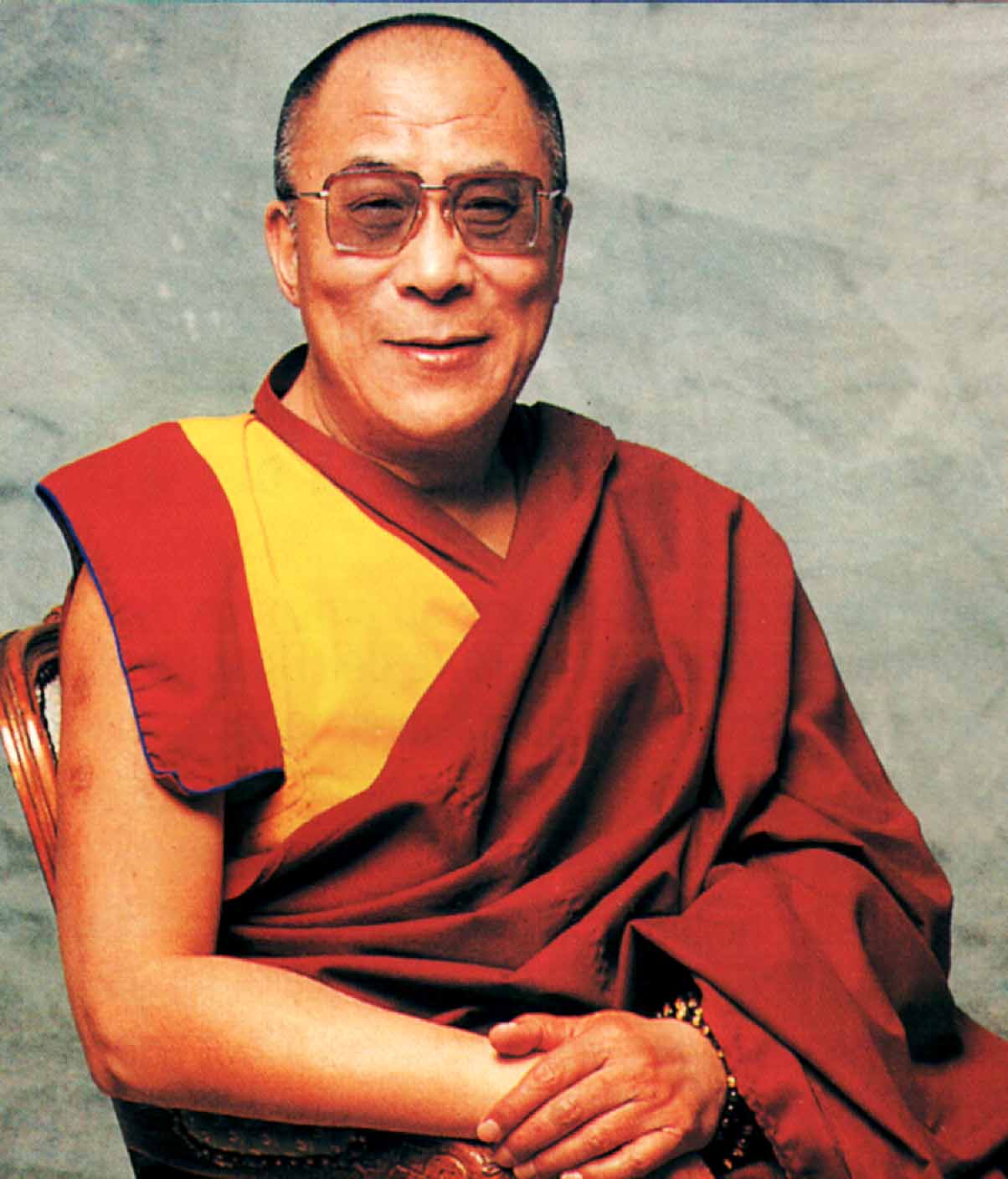
The 14th Dalai Lama was born on the 6th July, 1935 thus making him 75 today.
By Paul Handover
Dogs are animals of integrity. We have much to learn from them.
Category: People
The 14th Dalai Lama was born on the 6th July, 1935 thus making him 75 today.
By Paul Handover
Conscientiousness isn’t all it’s cracked out to be!
(Foreword from Paul.)
Jon is one of those rare individuals who not only has been committed to a path of self-awareness for more than 30 years but who has also studied incredibly hard so as to be able to help others and do so from a base of real competence, as his own Blog describes. I can speak as a current ‘client’ of Jon who is assisting me in my own journey.
But then I realised the great strength in what Jon has written. It is this.
There are many notable teachers out there who thousands upon thousands have turned to for a deeper understanding of what life is all about. As far back as time itself teachers have surfaced and given spiritual guidance to those that come in need. But it’s very difficult to read or listen to these great teachers and connect with the fact that they were born, as we are all born, with nothing. And all of them, like many of us, went through Hell on wheels to come out the other side with a greater self-awareness and a deeper understanding of the real truths in nature. Like all of us who wish to rise above our present place they first acknowledged their own frailties. It is the starting point.
So, let me get to the point. Jon has the awareness and understanding to offer real help to those that seek answers that are currently beyond reach. Jon’s article is an wonderful illustration that he experiences the same fears and feelings of helplessness that you and I feel. You and I and Jon and all of humanity are much more closely connected than we realise.
Paul H.
—————————————–

I’ve been running my own business for about 12 years now. In the beginning it started because I had a thirst for wanting to make a difference in small business in our local area and a passion for wanting to do it through working with people directly, on their behaviours. Still have, really.
I think this came as a form of acknowledgement to the few exceptional people managers I experienced while I was employed, and the all too common, terrible ones.
I was also mentored by a group of people to whom no developmental tool was barred. My eyes were well and truly opened to how a change of view could change outcomes.
The final boot up the backside was redundancy in the late 90s. I was all ready to go and just needed a kick.
My work ethic, trained at home and then through an engineering apprenticeship, was to conscientiously work hard and try hard and to treat people the way you want to be treated. Nothing wrong with that. I assumed automatic reward would follow as long as I did those things.
Over time I wised up and became a bit less idealistic and a little more politically aware but carried on in much the same way.
Much later I found myself embarking on a whole new adventure, with a lovely wife and family, all dependent on me, with a few contacts to start getting work from!
It took a year before the first jobs came in that didn’t necessitate robbing the almost non-existent savings and redundancy payment just to keep food on the table. Then, work slowly picked up and it started to get quite good for a one-man band. We were able to go on holiday once a year, camping, but still great, and then abroad.
All the time, I beavered away, trying hard, being very conscientious, as I’d been brought up to be, but slowly getting very stressed.
Time was when it took Friday night to de-stress, then 3 days, then 10 days and recently, not at all.
So faced with this present downturn, which is likely to go on for much longer than any of the others I’ve seen and survived, I’m wondering just what new strategy to adopt. Money is already getting very tight and everything is feeling very ‘hand to mouth’. Can’t really see one month in front of the other.
I notice our local farmer who I went to school with but didn’t really know.
I’ve got degrees, lived abroad, can speak Finnish fluently, (what use is that, I hear you say!), and can turn my hand to most things, but I still feel quite dis-empowered and at a bit of a loss.
My farmer friend is always smiling, he’s got a flock of geese he’s fattening up, the same with his beef cattle, does livery for half a dozen horses or so, has fields planted with various cereal crops, and has his finger in lots of different pies – and definitely does not look stressed. He is also renting his land plus another farm.
I honestly don’t know what to make of this all except for a few really important things – the importance of diversification, relationships and appreciating what you’ve got, especially people things, here, in the now.
I have also come to the realisation that I still haven’t cracked the main thing with being self-employed, and that is replacing fear with trust.
It’s been said by various enlightened people that we see a reflection of the world we hold in mind. Going forward into this brave new world I would like to see opportunities rather than fear, I will diversify into things which make more use of my wide range of talents, and I will swap fear for trust.
By Jon Lavin
“An ethic of kindness, benevolence and sympathy extended universally and impartially to all human beings.” WikiPedia
Introduction

I do not in any of this mean to say that humanitarianism is a negative thing, I am merely attempting to describe why humanitarianism exists in the world today in much larger proportion than it has in the past.
I hope also in some of this to disagree, hopefully intelligently, with Nietzsche’s claim that humanitarianism decreases the overall strength of the human race, or at least its higher echelons.
Self-interest
Human beings are either entirely or nearly entirely driven by self-interest, this much has been made clear by both ancient and modern philosophy.
Different philosophers have realized this point in different ways.
I highly doubt that human nature has changed a great deal in 100 years.
However, 100 years ago it was very common for European nations to do just about whatever they wanted to the rest of the world. In fact, human nature is in all likelihood not very different now than it was in the days of the early church, when Christians were wrapped in lambskin, covered in oil, and burned alive in order to serve as torches.
Humanitarianism goes mainstream
The answer to whom we turn to when the times are tough.

Regular readers of Learning from Dogs will know that a few days ago, Sherry wrote a piece entitled Light My Fire? It expressed her view that lately she was finding it a problem to be inspired, finding the passion as Sherry put it.
I have been thinking about Sherry’s article for the last few days and a couple of peripheral things come to mind.
We tend to get more of what we notice and orient towards. By allowing ourselves to become absorbed in the negative, that is what we tend to notice. The fact is that the media thrive and make vast sums of money focusing on the negative. Just compare the amount of negative with the positive in any news cast.
That is not to say that we should not be aware of the negative or hide our heads in the sand. We can however change the way we view things and that has to come from within.
In fact, the answer rarely lies “out there”.
Change in how we view things, i.e. our attitude, needs to start coming from “within” ourselves.
The one thing that characterises these times is uncertainty.
A lot of us don’t even know where the next bit of money to pay the bills is coming from. In spite of the tendency to look ‘out there’ for strong direction, I still feel that the inner resolve has got to come for inside.
Another thing, I don’t believe it’s possible to think ourselves out of this one.
Although it’s a subject I go on a lot about, the sense of direction and well being has to come from us, or rather the feeling of interconnectedness that we share with everything. At a level, we are all connected.

The one thing that gets us all through is a faith in some higher consciousness, that we can all tap into when we remember and ask for that miracle of clarity.
This is not thinking. The opposite in fact. This is a process of trust and ‘allowing’.
Allowing requires a power that few can sustain for long as we’re all geared to doing. ‘Allowing’ requires us to turn off the noise machine that is in our head and creating a quietness and space for awareness to surface.
Paul recently wrote an article on Living in the Present that describes this way of letting go rather well. I know for a fact that Paul is new to these ideas but already he is finding a peace and clarity emerging that shows that there’s always a good time to start – NOW!
Back to my thoughts. I am not advocating lying down and letting the world roll over us – the opposite in fact. By bringing awareness into this whole mess, we are more likely to take the right action.
I have honestly noticed that the more effort and circular thinking I have put into my present financial difficulties, and I’m a real expert in worry and circular thinking, the worse things have got.
I notice that by returning to silence and simply observing, a background is created that allows solutions and options to rise.
By asking to be shown the way forward and then letting go of the need for an instant solution, subtle options and ways forward present themselves.
Then right action follows.
An acceptance that in any moment we are all operating at our maximum level of consciousness. We are all doing the best we can. If we knew better, we would do better.
Therefore, what is going on in the world is a reflection of ourselves and is absolutely perfect for where the sum total of all of us are. (“Perfect”, does not mean we have to like it but it is, never the less, inevitable)
It follows, therefore, that the best way to help the world is to work on ourselves by striving to be the best we can, in every way. And the only way to do that is with awareness.
I think it was Abraham Maslow who coined the phrase, “Self Actualising”, meaning, being the best we can in every way, mentally and physically.
During these undoubtedly troubled times in the earth’s history, we all tend to turn to someone or something to provide a sense of direction. That someone you need to turn to is yourself.
By Jon Lavin
Safe, as in psychologically as well as physically, has its rewards.

I had a very interesting session recently. I did some coaching work with a client company who managed a small team. The day was split into two – the morning with the client and the afternoon with the whole team.
What struck me about the day was the power of good leadership and the importance of leaders who are aware of how they come across and are capable of forming a relationship with their teams.
My client was struggling with her team because she was unaware how she was communicating, not only with her team but with other people in the organisation.
Unfortunately, becoming aware of how we are in a relationship with others brings us face to face with ourselves and requires a willingness to accept ourselves, warts and all, before trying to change anything.
After we all had lunch together and broke the ice a bit we focused on what was working (not what was not working), what was missing, what inspired and what was possible. By examining these areas and so creating a safe environment, everybody was able to reveal more of themselves and what they needed to have a satisfactory, safe working relationship with each other.
By Jon Lavin
That pre-frontal cortex is at it again.

There’s a fascinating video on the http://www.TED.com website given by Prof Dan Gilbert. Prof Dan is Professor of Psychology at Havard and there’s a good resume on WikiPedia.
Here’s how John Brockman describes Dan Gilbert.
Dan Gilbert doesn’t have an instruction manual that tells you how to be happy in four easy steps and one hard one. Nor is he the kind of thinker who needs Freud, Marx, and Modernism to explain the human condition.
Gilbert, the Director of Harvard’s Hedonic Psychology Laboratory, is a scientist who explores what philosophy, psychology, neuroscience, and behavioral economics have to teach us about how, and how well the human brain can imagine its own future, and about how, and how well it can predict which of those futures it will most enjoy.
There can’t be a human that hasn’t pondered on what makes them happy. Gilbert sets out some fascinating and possibly counter-intuitive ideas. Here’s the video
By Paul Handover
A foreigner but not a foreigner!
Despite the fact that we have now been living in Payson, Arizona, since the end of February and, therefore, a degree of familiarity exists in both directions, the local Saturday Farmers Market prompted this thought.
Why do I not feel a foreigner here?
There is no question that America, in general, and Arizona, in particular, is very different to England. In many ways the differences are far greater than, say, England and Australia, or England and New Zealand (I’m picking other English speaking countries to avoid to obvious difference between countries of different languages).

I love Farmers Markets. They seem to encapsulate the wholeness of locals growing meat and produce for other locals. They seem to serve as a reminder of the integrity that is needed just as much in food as in all other areas of life.
Of course, I am not so naive to think that we could wind the food revolution back to before the days of supermarket chains – food is wonderful value nowadays especially for those families on tight incomes.
But I can’t be the only one that ponders what the long term effect of all those
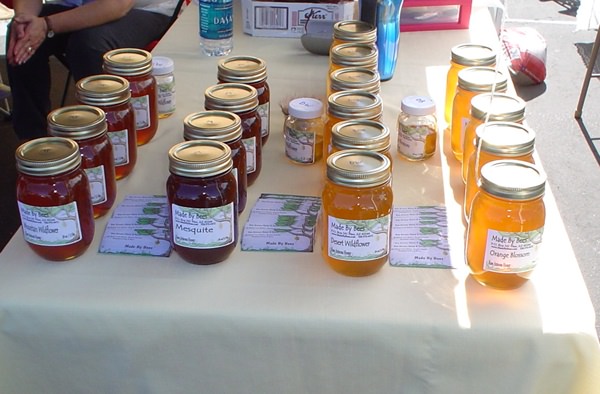
E-numbers and other strange ingredients that one reads on most packets of most items, and whether or not fruit is sprayed with anything that we should know about, and so on and so forth.
That’s why that place in my psyche is ‘stroked’ so well by wandering around the Farmers Market.
One would expect if there was going to be any place where yours truly, dressed and sounding like the Englishman that he is, is going to feel foreign, it would be at the Payson Farmers Market. I don’t even try to hide my origins, responding to a “Howdy folks” from the stall-holder with a quintessentially English “Good Morning!”
Inevitably there are reasons why I am made to feel welcome here in Payson, my hunch is that it is much to do with this being a pioneering town for most of the last 100 years, and therefore co-operation, collaboration and a welcoming attitude were key elements of sustaining a way of life, but, in the end, analysis is pointless.
What matters is how we are made to feel, and we are made to feel very welcome.
Indeed, Payson with it’s predominance of right-wing, independent thinking, tough ‘cow-boy’ inhabitants echoing a recent past, may have an important lesson for all of us, across the globe, as the forces of disconcerting change build and build: be local, think local, preserve local.
I’m very proud to be slowly but surely turning into a Payson local.
By Paul Handover
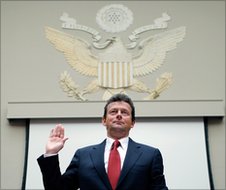
I can’t possibly add anything of substance to the hours and millions of words spoken about this tragic event.
All I felt as I watched the Congressional Hearing live on CNN was both embarrassment and sadness as a fellow Englishman demonstrated how the lawyers have won.
Hayward, from the couple of hours that I saw, said nothing of substance, nothing of real value and nothing that recognised how the American people, and the world in general, deserved openness and in-depth answers.
Very poorly advised, in my opinion.
Tragic.
By Paul Handover
In the laboratory of the hermits, no one noticed that the monkeys could talk.
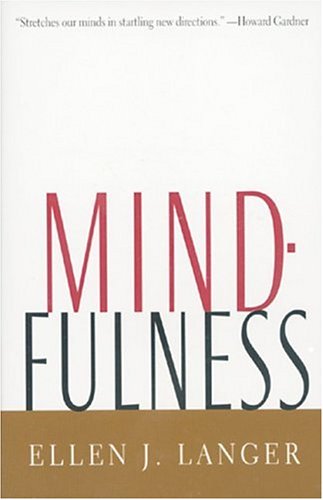
When a book ends with the above line, you know it’s going to be interesting.
When the inside front page carries a short review from Prof Alan Dershowitz of Havard Law School that reads, “One simply can’t finish this book and see the world in the same way”, you know the book is important.
Yes to both.
On Page 2, Ellen writes,
Unlike the exotic “altered states of conciousness” that we read so much about, mindfulness and mindlessness are so common that few of us appreciate their importance or make use of their power to change our lives.
This is a book for so many different aspects of life. From fields like aviation where mindlessness can, literally, kill to mindful new perspectives for people looking to explore new horizons for the soul.
Langer demonstrates a rare capacity both to see what is extraordinary about human events and to envision even more enlivening human possibilities. – Lee Ross, Stanford University.
By Paul Handover
Amazed they don’t just tax Fun and leave it at that!

Once again the British Politically Correct nanny-state lobby seems about to pounce by reducing the drink-driving limit to 50 mg. This is yet another fatuous knee-jerk “Let’s give the image that we are responsible and doing something” initiative.
No, I do NOT favour driving while drunk, but at 80 mg per ml you are not “drunk” or even impaired. The introduction of the 80 mg limit was a great step, but more would be a mg too far.
I know for an absolute fact that if I drink one pint of beer I am in no way more dangerous than if I drink nothing. Don’t ask me how I know; I just do. I’ve been driving all over Europe for 40 years; and experience counts for something after all.
Yes, I do want to see road accidents reduced, but let’s see something REALISTIC and EFFECTIVE. Why are most accidents caused? (apart from people way over the limit, unlicenced or driving unroadworthy cars and so on)
The last two points are perhaps crucial. Drive on the périphérique in Paris and you’ll see examples of both. Of course, the French are, in general, brilliant drivers and 99.9% of the time they can get away with driving up someone’s boot, but statistics tell us that there is 0.01% of the time when this will NOT be OK.
What steps COULD be taken instead of clobbering the one pinter?
The truth is that a car is as dangerous as a gun and people should treat them as such. Sadly, familiarity breeds contempt and people too often forget the basic principles.
Every time I get in my car I tell myself the following:
Let’s hope the new British government has a bit of commonsense about this.
PS The Police could do their bit, too. A significant number of people are killed by policemen rushing about.
By Chris Snuggs

A P.P.S. from the Editor. In fact, one of the best things that could be done is create an
incentive for passing the Institute of Advanced Driving driving test. I passed the test in 1966 and it has been the best investment I have ever made.
Why doesn’t the UK Government give a free year’s road-tax for every person who passed the IAM test. All this proposed change in the drink/drive limit will do is to put yet more British pubs out of business. G’rrr.

