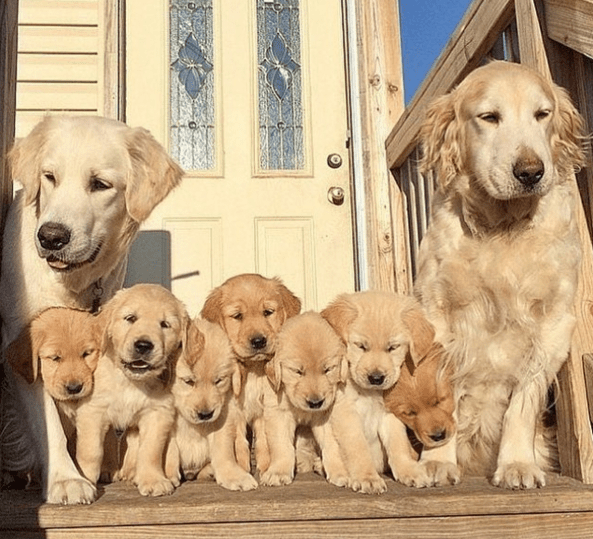
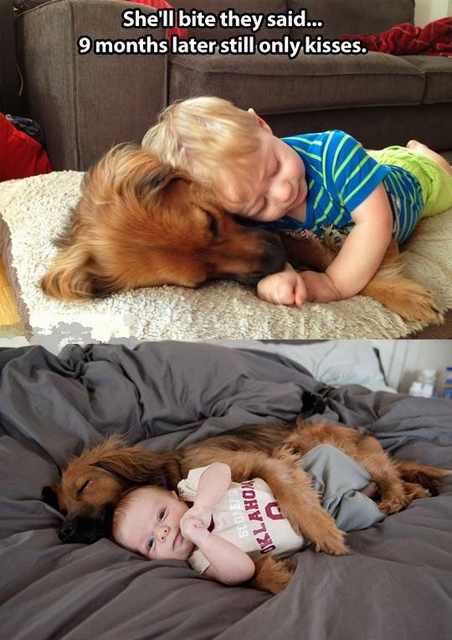
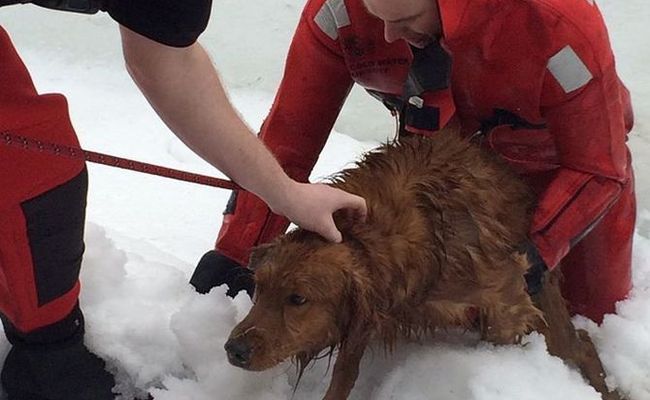
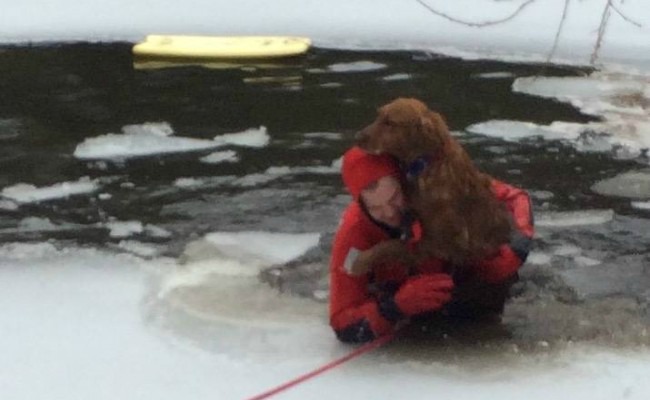
Sent to me by neighbour Janet Goodbrod.
(There may be a couple of duplicates from a previous picture parade but so what! They are still gorgeous!)

oooo

oooo

oooo

oooo


Another set, thanks to Janet, coming along in a week’s time.
Dogs are animals of integrity. We have much to learn from them.
Category: People and their pets
Sent to me by neighbour Janet Goodbrod.
(There may be a couple of duplicates from a previous picture parade but so what! They are still gorgeous!)

oooo

oooo

oooo

oooo


Another set, thanks to Janet, coming along in a week’s time.
Too adorable for words!
Was first seen as a Rumble video and then it came up on YouTube.
Published on Feb 24, 2017Jude the French Bulldog refuses to give up trying to bring his stick inside, but soon victory is all his. Well done little guy!
Not just for dogs!!
At 11am this morning I am checking in to the local hospital in nearby Grants Pass for a colonoscopy. I am very hopeful that this routine examination will not find anything to worry about.
However, yesterday evening I had to take the first of two doses of Bowel Preparation ‘Kit’. That was after a full day staying off solids!! The second dose is being taken at 7am PDT this morning. One could take a tongue-in-cheek view that the results will not be a pretty site. Once back home a decent shower and a lovely meal will be the order of the day.
So with bathing in my mind, let me share this recent delightful item that was published by Mother Nature News.
ooOOoo
Noel Kirkpatrick April 4, 2017.
Getting pets into the bath can be a tricky endeavor, but these two dogs seem content to be in the tub. Now if they only had the same idea of how to behave there …
The husky on the right is just there for a relaxing soak and maybe a good shampooing. Its pal, on the other hand, wants to dig through the water the entire time as if there’s a bone somewhere buried just below the water.
To the husky’s credit, it allows its puppy companion to live in its own bath tub truth, but we all know that deep down it’s thinking, “I just wanted some quiet time and some cucumbers on my eyes. Is that too much to ask?”
Apparently, yes, it is.
ooOOoo
See you tomorrow!
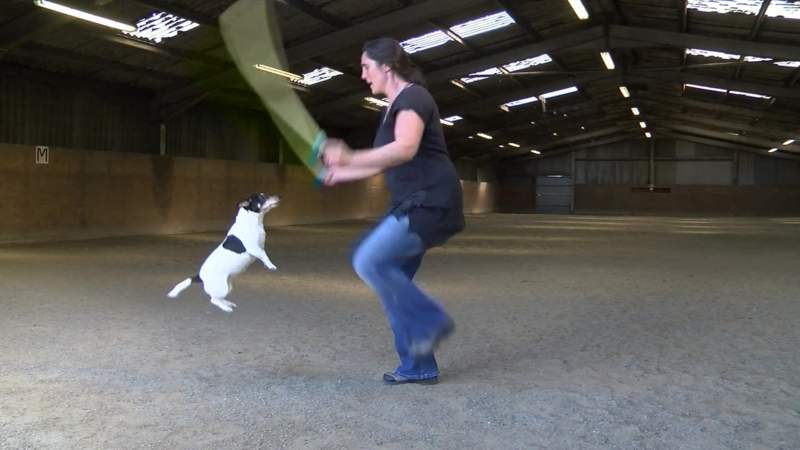
Actually it’s just about skipping! A dog skipping!!
This was seen on the BBC News website yesterday and I am delighted that the video clip is on YouTube.
Here’s how the story was reported by the BBC.
Devon dog sets skipping world record
3 April 2017 Last updated at 12:17 BST
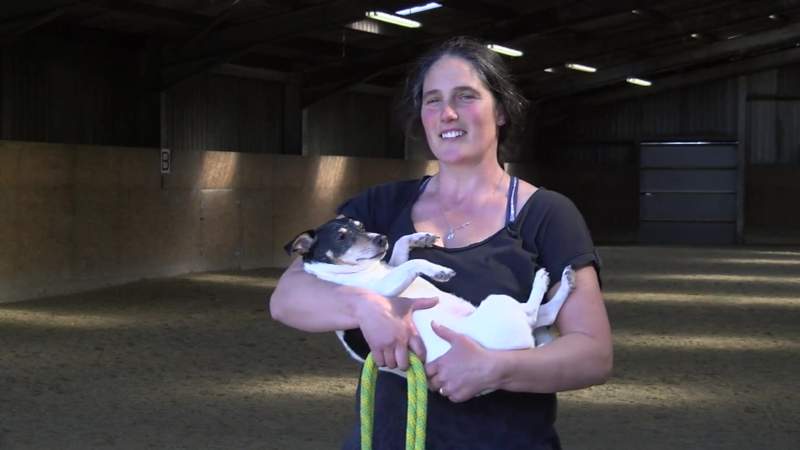
A skipping Jack Russell and her owner have set a new world record.
The endless miracles of having dogs in our lives.
I have two sisters: Elizabeth and Eleanor. Elizabeth lives in Tokyo, Japan and Eleanor lives in Johannesburg, South Africa. They are both dear sisters and we all love each other as brothers and sisters should!
Anyway, Eleanor’s husband, Warwick, has a brother and this story is about Warwick’s brother’s step-daughter, Stacey Maguire.
It was Eleanor who sent this story to me to be published in this place.
ooOOoo
Stacey Maguire’s life is always in danger.
A severe Type 1 Diabetic, her body doesn’t produce the insulin it needs to control her blood sugar, leaving her vulnerable to catastrophic changes in sugar levels. But as long as her dog, Gretchen, is around she has nothing to fear. For Gretchen is a trained Diabetic Assist Dog (DAD).
Gretchen is a Swiss Shepherd who saves her owner’s life on a daily basis by warning her whenever her blood sugar is at a dangerous level. Incredibly, Gretchen does this by smell.
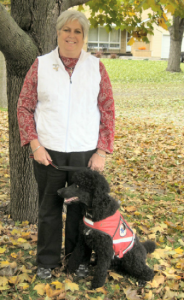
Stacey’s chronic condition is so severe that she’s on the best monitoring technology in South Africa. But before Gretchen came into her life, and even with that monitoring technology, Stacey still experienced hypoglycemic episodes and seizures at least once a week when changes in her blood sugar levels weren’t detected in time.
Thus when Gretchen arrived from America her sole objective was sniffing out the problem as fast as possible. And Gretchen does that – a full hour ahead of that best available technology!
Her method? An urgent paw to the knee, followed by a bark. Gretchen takes no nonsense, delivering the testing kit to Stacey’s hand if her response is sluggish. If anything goes wrong Gretchen, as a trained service animal is taught to so do, sounds an alarm or alerts the nearest person to the danger. Stacey couldn’t ask for better care.
Stacey is the first South African to benefit from a Diabetic Assist Dog. Stacey Maguire’s dream is to start a facility to train more dogs to help diabetics like her. That’s something South Africa can get behind.
ooOOoo
Eleanor also added the following by way of background:
We found a phenomenal lady called Diane Marquette in Minnesota who agreed to train a dog for export – her first time for such an undertaking.
A three-year-old white Swiss Alsatian called Gretchen made the grade for the initial training after which Di started the diabetic training. In preparation, whenever Stacey felt unwell she spat into cotton-wool and put these samples into the freezer. When Stacey had collected a bundle she sent them via courier to Di who then trained Gretchen on Stacey’s scent.
This process took ten months. Then Stacey flew to Minnesota to meet Gretchen, to be bonded with Gretchen, to be trained and, finally, to sit and pass a very stringent exam before being allowed to bring Gretchen back home. Ten days later we met them at Cape Town International, after twenty-one hours of flying for Stacey with Gretchen at her feet in the aeroplane. SA’s first DAD had landed!
In an email to me, Eleanor included:
Stacey and Gretchen have now been together for several years with their bond just strengthening and strengthening! Gretchen alerts Stacey continuously and in recent times has started alerting at night too. Thus even accounting for the fact that, as with all dogs, Gretchen sleeps at night coinciding, unfortunately, with when Stacey is most vulnerable to shocking lows, this fabulous dog maintains awareness of Stacey’s body scents during the night hours.
Stacey’s wish is to bring trainer Di of Scent Angels to Cape Town to train trainers, and then to roll this life-saving program out to fellow diabetics.

Eleanor also included the link to the website for Scent Angels. I shall pass on the link to this post to Diane Marquette with the request that she might allow me to share some more stories of these incredible dogs with you all.
These dogs are most definitely not suffering from depression!
Good people, I was late to my desk yesterday and was looking for something to present to you without it taking too much time.
The Care2 site came to the rescue with the following video. Plus, such a bonus following last Saturday’s article about dogs suffering from depression and how to cure them when they are down.
It doesn’t get farther from depression than this!
Hopefully back to normal tomorrow!
Dogs do suffer from depression.
OK, in many cases I’m sure it is because dogs are watching too much television; especially the news!
OK: Only kidding!
Some may be surprised that dogs can express sadness and suffer from depression but it is true.
Only a few days ago there was a bit of a ‘punch up’ between Brandy and Ruby. Ruby was feeding and Brandy approached her food bowl. Ruby gave a short, throaty “stay away from my food” growl and the next instant Brandy had Ruby’s face in his mouth and it was quickly turning into a Grade A dog fight.
Luckily Jean and I were on hand and had the two of them separated within seconds. But it was still sufficient time for Brandy to have drawn blood from a small bite to the side of Ruby’s face.
However, the point I was coming to was that since that incident Ruby has clearly been very depressed and withdrawn.
So on to today’s topic. Recently published on Mother Nature Network.
ooOOoo
Find out what causes doggy depression and how to fix it.
Jaymi Heimbuch March 30, 2017.

Yes, dogs can get depressed. Whether or not it’s the same as what humans experience, we may never know since we can’t ask a dog. But there are signs and symptoms from a dog’s behavior that reveal when a dog is in the doldrums. If you’ve noticed a sudden change in your four-legged friend’s behavior and are worried, you may need to see if the change is a clue that your dog needs some psychological TLC.
Common triggers for dog depression
Dogs are creatures of habit, activity and loyalty. A sudden change that affects their world can cause a dog to have a spat of depression. Triggers include:
Dogs may also suffer from Seasonal Affective Disorder, or SAD, during the winter months. Stanley Coren reports in Psychology Today: “Do dogs suffer from SAD? Some data comes from a survey conducted by a leading veterinary charity in the UK. PDSA (The People’s Dispensary for Sick Animals) found that approximately 40 percent of dog owners saw a considerable downturn in their pet’s moods during the winter months. In addition, half of the dog owners felt that their dogs slept longer, with around two in five reporting their pets to be less active overall.”
Some dogs may suffer depression simply for not having a job to do. The Guardian notes:
“In the not too distant past, dogs mostly had to work for a living and were probably very often physically and mentally fatigued at the end of the day – which is why we have the expression ‘dog-tired’. Could the stress of being made redundant be the source of this apparent unhappiness? Dog behaviourist Penel Malby told me: ‘Dogs live very differently to the way they used to. Lots more dogs, lots more people, lots more stress for everyone, I think. If you think back even just 50 years, dogs were allowed to roam free every day, socialise with their neighbourhood friends. Now they either go out with a dog walker or go out for an hour if they’re lucky, and the rest of the time is spent at home.'”
The upside is that canine depression usually isn’t permanent, or even necessarily long-lived, and there are ways to combat it to help your dog get back to normal in due time.
What are the warning signs?

The most common symptoms dogs display when they’re depressed mirror those that humans experience during a depression. They include:
Unfortunately, these symptoms also occur with a range of other medical issues. A dog might have a change in appetite because of a thyroid or kidney issue, or the dog might not want to go on a walk because of joint pain or arthritis flaring up. So if you notice any changes in your dog’s behavior, the first thing to do is visit the vet to rule out any serious health-related issues before assuming it comes down to depression.
How to help your dog out of a depression

If you have determined your dog is feeling depressed, there are many things you can do to help them pull out of it.
– Take your dog on more frequent walks during the day to favorite places, allowing them to sniff around and enjoy the scenery. It’s also helpful to do this first thing in the morning to start the day out with a bit of fresh air and energy.
– Try to keep a schedule as much as possible. Dogs are creatures of habit and having a predictable routine can be an enormous source of comfort for a stressed or depressed dog, especially if the trigger for the depression was a sudden change in routine.
– Reward your dog when he shows signs of improved mood or energy. Rather than babying the dog during the down times — which reinforces that behavior — reward him with extra special treats or a favorite toy when he shows a bit of enthusiasm about life to amplify the mood even more.
– Bring home a new toy, such as a squeaker or puzzle toy that stimulates the senses and encourages play.
– If the cause of depression is the loss of a companion, like another household pet, consider adopting another dog that can be a companion. However, only do this if you’ve seriously considered the needs of your household and your depressed dog. It isn’t an option to be taken lightly.
As a last resort, medication could be an option. There are antidepressants for dogs that you can discuss with your veterinarian. However, catching depression early on and trying for behavioral changes first is the best solution. Bonnie Beaver, DVM, notes in a WebMD article, “[I]t can take up to two months for drugs to become effective. But unlike people, who often remain on antidepressants for years, most dogs can get better in six to 12 months and then be taken off the drugs.”
And finally, give it time. As Wag Walking notes, “Be Patient: Sometimes — especially if the issue was a loss of a companion or master — the only thing that will heal a dog’s heart is time. It may be as few as a couple days or as much as a few months, but most dogs will be able to pull themselves out of depression with a little time and understanding.”
ooOOoo
May you, your family and all your wonderful animals have a wall-to-wall happy weekend!
Dear Ruby joins the crowd.
When Paloma died on the 16th, a little over a week ago, and, in turn, just a couple weeks after the sad loss of Casey, she was the last of the ‘kitchen’ group. To explain to newcomers, ever since we moved to Oregon in 2012 we had our dogs divided into two groups: the ‘kitchen’ and ‘bedroom’ groups. Primarily to ensure the minimum of any tensions between what at times has been 12 dogs.
There is a gate between the living room and the kitchen area and we have been leaving that open hoping that Ruby would work out when it was the right time to join the others.
That right time was yesterday afternoon around 4:30.
I grabbed my camera and quickly took a few flash photographs. They weren’t very good because Ruby is upset by camera flashguns. But the following is the best of the set and Jean and I wanted to share the lovely occasion with you.

Why did I choose the title I did?
Because a few moments before Ruby jumped up on to the settee Jean and I had been giggling about something silly.
Dogs know!