Category: People and their pets

Personal protection dogs

From someone who knows!

From time to time I have an offer of a guest post. That is a person who wishes to write for Learning from Dogs. In nearly all cases I say ‘yes please’.

So it was with Adrian.

On the 15th January this year Adrian emailed me:

Hi Paul,

My name is Adrian and I am reaching out on behalf of Scott’s Police K9. I’ve followed your Learning from Dogs blog for a while now!

We write content for the family protection dog industry and love to share our expertise.

I’ll keep it short, I think I could be a valuable contributor and I would love to provide additional content to your site!

Please let me know if you are interested, I will send you a couple suggestions to choose from, which I feel would resonate with your readers’ interests. We’re also open to topic suggestions that you might want to touch upon on.

Thanks for your time and we hope to hear back from you soon.

Adrian Brito
On Behalf of Scott’s Police K9
https://scottsk9.com/

I replied to say that I would love a guest post, and here it is!

ooOOoo

How to Get Your New Protection Dog Adjusted to the Family

By Steve Scott

If you’re the new parent of a protection dog, congratulations! You just made one of the best purchases for you and your family’s well being. Personal protection dogs are loyal animals that will happily become one of the “pack” and put all of its training, skills, and intelligence to work in looking after your family.
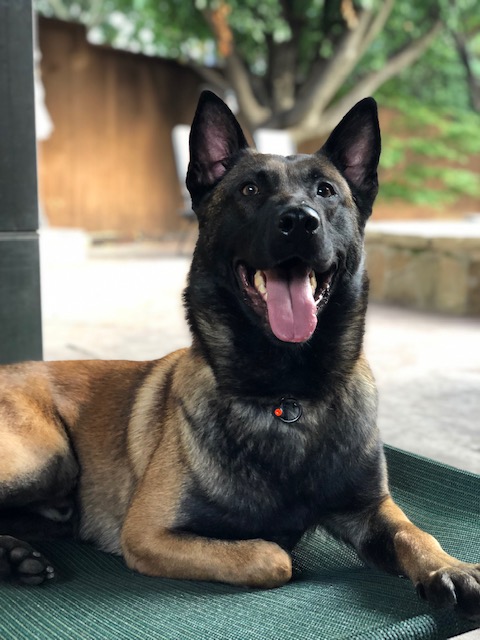
Should you be on the verge of bringing home your new family member, you’ll likely be wondering how to help them adjust to life at their new home. Read on for the best tips and tricks for a smooth adjustment for your trained K9 companion.

Visits with the Family

Dogs, even intelligent ones, prefer to be familiar with their surroundings, people, and environment. When your protection dog is being raised and trained, it will be beneficial to visit and begin bonding with the dog.

Bring each member of your family, and any important people your protection dog will be in charge of protecting once you take them home. If you have another dog and the trainer or foster allows it, provide some time for your protection dog to play with your current family pet.

Getting to know your protection dog before the big day when you take them home will help them, and you adjust to the new living arrangement. They will begin to associate you with someone they enjoy being around and when it comes time for you to train with the dog and the trainer, you’ll be a step ahead.

During this time, the dog shouldn’t leave the trainer or foster parent to spend time with you. Instead, you should visit the dog in the environment and surrounding it knows best with the trainer present.

Time of Day

When the big day comes, and it’s time to bring your personal protection dog home, plan to do so early in the day. Great protection dogs are raised to protect you and they’ll want to get a good look at their surroundings.

Moving a dog at night will cause a greater sense of unease and anxiety.

Introduce them to unfamiliar territory when there is plenty of daylight and the opportunity to explore together. Show them your house, the surrounding, and if you live in a place with property, walk the land with your new pup.

This will help them get oriented with the place they have sworn to protect and settle them in right away.

Be Ready for Their Arrival

When you bring your personal protection dog home, be ready for their arrival. Have their food bowl ready and filled. Ensure they have fresh water and a comfortable place to sleep. Acquaint them with their belongings, toys, dog bed, and everything related to their personal ownership.

Be prepared to spend most of the day with your dog, getting him used to your house, property, and your family. It’s important that you don’t bring your dog home then leave shortly after.

Adjusting your dog to your home and family takes time and is a crucial part of the bonding process.

Establish a Routine

All dogs thrive on routine. Help your new protection dog get to know yours. It’s a good idea to bring your protection dog home when life is normal, and you’re not planning on going on vacation in the following week.
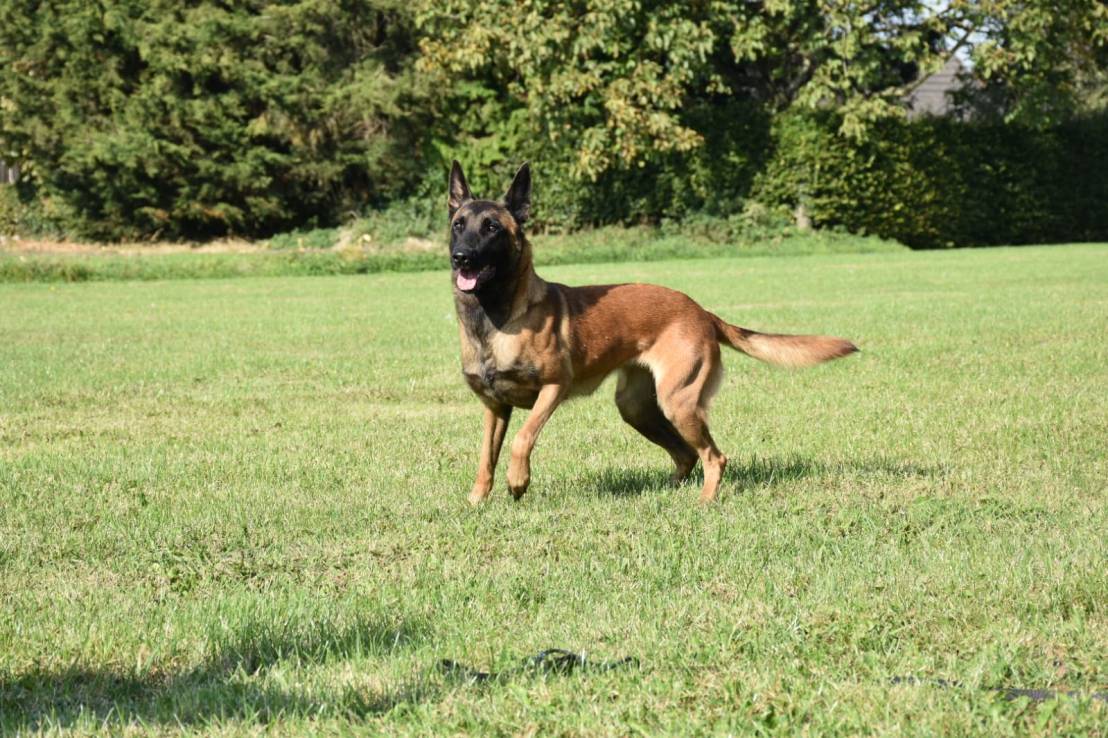
Give them time to adjust to your routine. Protection dogs like knowing what to expect, what type of work they’ll regularly do, and the way your “pack” functions so they can better serve you.

Will you take them with you to work? Start taking them right away and put routines in place, so your protection dog knows this will happen regularly.

Will you leave them with your spouse and child at home? Have a ritual of letting them know you’re leaving and make sure they know that their job is to take care of your loved ones.

Plan regular times of continued training, running and playing daily after work and on the weekends. This will help them smoothly fit into the regular ebb and flow of your family’s work, school, and routine schedules. Also, protection dogs love to remain active.

Supervision Required

As you show your new protection dog around the house, yard, property, and introduce them to friends and family members they haven’t met, keep in mind that supervision is required.

They will still be getting used to their new location and the people they are supposed to protect, and introductions are best done in person with you by their side. Supervision is especially important when it comes to spending time with small children for the first several months.

Are You Ready?

Introducing your protection dog to its new home is an exciting and fun time. You alone have the opportunity to make its first impression the best one possible. How you begin life at home for your protection dog goes a long way in setting the tone for how it lives with you, your family, and your friends.

Are you ready for your protection dog to make its grand entrance?

ooOOoo

I asked for some background and this is what was sent:

Steve Scott – After his service in the Army, Steve pursued a career in Law Enforcement, earning honors as the head trainer of his Police Department’s K9 Unit. Steve’s real-world police K9 experience is what sets Scott’s Police K9 apart from other protection dog companies. With Steve’s dog training expertise and his access to the top European kennels, our Family Protection Dogs and trained Police Dogs are second to none.

This is a fabulous piece of advice. From, I have to say, someone who jolly well knows what he is talking about!

More please!

This is a walk and a half!

An outstanding walk.

Tom came to Learning from Dogs a short while ago and signed up to follow the blog. As is usual, I went across to his blog in order to leave a thank-you note. I was flabbergasted at what I saw. Tom and his two dogs were walking across Spain. He called his blog Chica’s Challenge and this is what he wrote on his home page.

First, Tom decided he wanted to do a long walk.
Then he thought Spain would be nice as it has to be in winter.
And he’d like to take Chica, our podenco.
As an afterthought, he said, “Maybe we could raise some money?”
“Who for?” I asked.
“Well, as I’m taking Chica and it’s in Spain, I guess for Spanish podencos.”
“Great idea! I’ll write the blog!”

I wanted to follow his posts and did so.

Then I wanted to republish a post and asked Tom if I had his permission to so do.

“Of course”, came the reply.

So I am going to republish the post that was Day 7 of the walk.

ooOOoo

Chica’s Challenge

One dog and her man walking across Spain, raising money for their podenco friends.

Day 7: Jimena de la Frontera to Cerra de la Fantasia 20k

The last two days were non-walking days, one for bad weather and another to move base again. Now we have the luxury of being in a house for a while in Jimera de Libar, a village we know well.

So the day started with the drive back to Jimena and the weather looked reasonable. Again, Merlin refused to be left so the three of them set off up the path, climbing steadily for the first hour and a half.

Climbing path
Spanish Fir / Pinsapo (Abies Pinsapo) in the background

The path eventually levelled out and passed beneath the rocky outcrops of the Altos de Paneron and Cerro de Marin. After a bare rocky sections where the route was harder to determine, they went into dense forest of oak and Spanish fir (we love these and call them lollipop trees because of their shape). Both dogs in great form, but Tom was mean and moody :).

Dark clouds were gathering from all directions but the view to the coast was still impressive. However, it wasn’t long before the rain began and the temperature dropped.

Looking south – you can just see the sea

Fortunately the rest of the route was on a well-defined and signposted track, winding down through the cork oaks in the midst of the Los Alcornacales. It was here deep in the forest that I eventually picked them up. I had forgotten that smaller Spanish roads aren’t always roads as I know them and the last five and a half miles I was driving along a rough track with no mobile signal, not at all sure I was in the right place. Even though we have a 4×4, I made very slow progress and it was with considerable relief that I found them, damp but completely unconcerned.

ooOOoo

In the original some of the photographs were side-by-side but in copying them across I chose to enlarge them.

The start of Tom’s walk may be seen here and I thoroughly recommend that you read it in full.

I shall continue to follow Tom’s walk and may republish another post.

Dogs observations of us humans

A widely-reported study shows the depth to which dogs understand us.

I have seen this reported both in The Smithsonian and Mother Nature News.

I have included both!

I’ll comment at the end of the articles.

ooOOoo

Stray Dogs May Understand Human Signals, Too

By Brigit Katz

Researchers in India studied whether 160 stray dogs would react to commands like gesturing toward a bowl. This image, taken in 2012, shows street dogs surrounding an Indian tea vendor in Allahabad. (AP Photo / Rajesh Kumar Singh)

Dogs are famously good at interpreting human signals, whether communicated verbally or through gestures. But much of what we know about our furry friends’ comprehension of social cues focuses on pet dogs, which share close relationships with their owners and are trained to follow commands. Now, a study published in Frontiers in Psychology, suggests that stray dogs can also understand human gestures, indicating that this ability might be innate.
The new research took place on the streets of several regions in India, which is home to some 30 million stray dogs. Coexistence between canines and humans there is not always peaceful; people have been known to attack street dogs, and vice versa. Around 36 percent of the world’s annual rabies deaths occur in India, most of them children who came into contact with infected dogs.

To better manage the country’s street dogs, it’s essential to gain further knowledge of their behavior, Anindita Bhadra, study co-author and animal behaviorist at the Indian Institute of Science Education and Research Kolkata, tells Liz Langley of National Geographic. So she and her colleagues set out to discover whether strays, which have never undergone specific training, are able to understand humans in a similar way to their pet counterparts.

The researchers took to the streets equipped with two bowls; one contained chicken and the other was empty but had been rubbed with raw chicken, transferring the food’s scent. The bowls were covered with pieces of cardboard and handed to an experimenter who did not know which one contained the snack. This researcher would approach a stray dog, place the bowls on the ground and point at one of them, sometimes momentarily, sometimes repeatedly.

In total, the researchers studied 160 adult strays. Around half of them refused to get close to either bowl, perhaps because they had negative interactions with humans in the past, the researchers speculate. But of the dogs that did approach the bowls, approximately 80 percent went to the one to which the experimenter had pointed. Whether the researcher had pointed to the bowl briefly or repeatedly did not seem to matter. This response, according to the study authors, suggests that untrained stray dogs are “capable of following complex pointing cues from humans.”

Dogs share an intertwined evolutionary history with humans, with domesticated pooches emerging at least 10,000 to 15,000 years ago, though some experts have argued for an even earlier date. This close contact has prompted dogs to develop a number of skills that allow them to communicate with people, including interpreting human emotion. Still, Bhadra says, the researchers found it “quite amazing” that stray dogs without a history of close human interaction were able to “follow a gesture as abstract as momentary pointing.”

“This means that they closely observe the human, whom they are meeting for the first time, and they use their understanding of humans to make a decision,” Bhadra adds. “This shows their intelligence and adaptability.”

Because some dogs seemed anxious and were wary of approaching the researchers, it’s not clear how a dog’s personality—and past experiences—might affect its ability to interpret human signals. But this ability does not appear to be entirely dependent on training, the study authors say, which in turn should inform efforts to manage stray dogs.

“They are quite capable of understanding our body language and we need to give them their space,” Bhadra says. “A little empathy and respect for another species can reduce a lot of conflict.”

ooOOoo

Mother Nature News had a second picture in their broadly-similar article. Indeed, I’m going to republish this article as well. For although they are of the same story they offer a slightly different account.

ooOOoo

Even stray dogs understand human cues

A new study shows these feral canines are paying close attention.

By Starre Vartan   January 21, 2020

Even untrained dogs can follow simple communications. (Photo: Abir Bhattacharya/Shutterstock)

Dogs were likely the first animals that human beings domesticated — scientific guesses vary as to whether that was 10,000 years ago in Europe or 30,000 years ago in Asia (or, as one theory goes, humans tamed grey wolves two separate times). Regardless, they have been our companions for much of human history, and all of modern history. We have evolved together.

And that longstanding connection shows up in feral dogs.

Behavioral biologist Dr. Anindita Bhadra of the Indian Institute of Science Education and Research in Kolkata, India, revealed this by studying stray dogs in several Indian cities. In the experiment, Bhadra and her colleagues would find a solo stray dog and put two covered bowls on the ground nearby. They they’d simply point to one of the bowls; some did this just once, others did it a few times.

The researchers, who published their work in Frontiers in Psychology, recorded the dogs’ reactions. Half the dogs seemed nervous, and didn’t look at or come close to either bowl. But the other half — noted as less anxious dogs by the researchers — approached the bowls. Of those friendlier dogs, about 80% went to the bowl the researcher pointed at. As long as the dogs weren’t too scared of the people, they were easily able to interpret what the pointing meant.

“We thought it was quite amazing that the dogs could follow a gesture as abstract as momentary pointing,” Bhadra said in a news release. “This means that they closely observe the human, whom they are meeting for the first time, and they use their understanding of humans to make a decision. This shows their intelligence and adaptability.”

Wolf puppies surprised researchers with their responses. (Photo: Bildagentur Zoonar GmbH/Shutterstock)

In another study, three out of 13 untrained 8-week-old wolf puppies spontaneously retrieved a ball for a person who threw it, as MNN’s Mary Jo DiLonardo explains. It was a small study, and a low percentage of retrieving puppies, but it was an unexpected result as these weren’t domesticated dogs. “It was so unexpected, and I immediately knew that this meant that if variation in human-directed play behavior exists in wolves, this behavior could have been a potential target for early selective pressures exerted during dog domestication,” Christina Hansen Wheat, a biologist at Stockholm University, said.

Her observations show that playing with people may be a very old trait for wolves, that could reflect how our human ancestors first got to know them. This playful behavior may have sparked humans’ interest in domestication. If a dog could fetch a stick or other thrown object, they could be quite useful to hunting humans.

Of course, their adorable, big puppy-dog eyes and floppy ears (both traits that have become accentuated over time as dogs evolved) are among the reason we are still drawn to dogs today. (It also helps that they’re great listeners.)

But long before that happened, dogs served an important purpose — assisting people in locating and retrieving prey, and serving as eyes and ears for an intruder. Simple tasks like showing they can follow directions or fetch an object may have moved prehistoric dogs from outside the fire circle to within it, which is why understanding these behaviors are so important.

ooOOoo

If we go back into the mists of time then prehistoric wolves (or dogs) learnt to bond with early humans because it served both their interests to so do. Humans became much more adept at hunting and wolves obviously became the benefactors of food!

Now dogs are so well bonded to human gestures that even non-domesticated dogs understand the signals that we humans put out. I say ‘non-domesticated’ but in a real sense all dogs are domesticated. It would be more accurate to say that these are dogs who do not have a home with humans.

The oldest human-animal relationship by far!

How old is that doggie in the window?

Interesting article about calculating a dog’s age.

It’s a well-known ‘calculation’ that a dog’s age is seven years for every human year. But it’s wrong; the scientific result is more complex.

But rather than me say it, I’ll hand it over to Christian Yates of the BBC who on the 6th January this year published an article on this subject.

ooOOoo

Your pet clearly ages faster than you do, but new research is giving us a much clearer idea of just how old your dog really might be.

By Christian Yates, January 6th, 2020

If your dog has been alive and kicking its paws about for a decade, the widely held belief is it has aged as much as a human would have done over 70 years. This conversion factor – each year of a dog’s life accounting for seven human years – comes from dividing human life expectancy of around 77 by the canine life expectancy of around 11.

The underlying assumption is that each calendar year a dog lives through is equivalent to seven human years at any stage of a dog’s life. But new research suggests that things aren’t so simple. And if we look at some basic developmental milestones, it’s clear why.

For example, most dog breeds reach sexual maturity between the ages of six and 12 months – the upper end of that range corresponding, by the traditional conversion, to a human age of seven. And at the other end of the spectrum, although unusual, some dogs have been known to live for over 20 years. Under the “factor-of-seven” conversion rule, this would equate to an unfathomable 140 human-equivalent years.

New insights into how dogs age suggest our pets move into middle age more rapidly than most owners might suspect (Credit: Getty Images)

To make matters more complicated, dogs’ life expectancy depends significantly on the breed. Smaller dogs tend to live significantly longer, suggesting that they age more slowly than bigger dogs.

All of this raises the question of what exactly we mean by age. The most obvious way to describe it is simply the length of time that has passed since birth. This is known as the chronological definition of age.

When it comes to comparing animal ages across species, the biological definitions of age are far more useful than their chronological counterparts

However, there are other descriptions. Biological age, for example, is a more subjective definition, which relies on assessing physiological indicators to identify an individual’s development. These include measures like the “frailty index” – surveys that take into account an individual’s disease status, cognitive impairments and levels of activity.

Then there are the more objective ageing biomarkers, such as levels of gene expression (genes produce proteins at differing rates at different stages of life) or numbers of immune cells. The rate at which biological age increases depends on genetically inherited factors, mental health and lifestyle.

Rather than celebrating chronological age, looking at the levels of methylation on a dog’s DNA is a much more accurate measure of aging (Credit: Getty Images)

For example, if you’ve spent a lot of time eating junk food and smoking cigarettes instead of taking exercise and eating healthily, the chances are your biological age will exceed your chronological age. Or, you might be a 60-year-old with the body of a 40-year-old if you’ve looked after yourself well.

A dog’s life

When it comes to comparing animal ages across species, the biological definitions of age are far more useful than their chronological counterparts. Knowing a hamster is six weeks old doesn’t give you a good picture of that animal’s life stage, even if you know the life expectancy of a hamster is only three years. Learning that a hamster has reached an age where it can reproduce gives a much better picture of its level of maturity.

The authors of the new ageing study suggest that a sensible way to measure biological age is though so-called “epigenetic clocks” – changes to the packaging of our DNA that accumulate over time in all mammals.

In their first year of life, puppies grow up so quickly that they age the equivalent of 31 human years (Credit: Getty Images)

In particular, “methylation” – the addition of methyl groups (a carbon atom bonded to three hydrogen atoms) to DNA – seems to be a good indicator of age. Many prominent physiological markers, such as the development of teeth, seem to occur at the same levels of methylation across different species. So by matching the levels of methylation in Labrador retrievers and humans, the researchers derived a formula to map dog age to its human equivalent.

That formula is: human equivalent age = 16 x ln(dog’s chronological age) + 31.

Here “ln” represents a mathematical function known as the natural logarithm. The logarithm function is well-known in the non-linear scales for energy released during earthquakes (Richter) or for measuring sound (decibels). It comes in useful for measuring quantities whose sizes vary over many orders of magnitude. It’s even possible that a logarithmic experience of the passing of time might explain why we perceive time speeding up as we get older.

A handy short cut is to remember that the first dog year counts for 31 human years

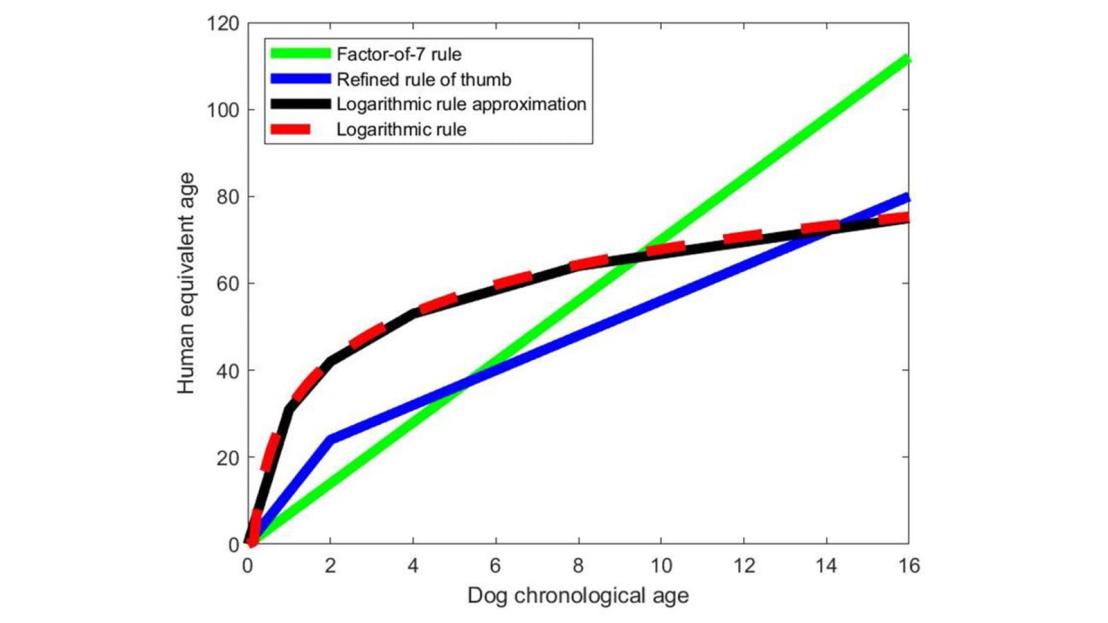
In the graph below, you can see how the natural logarithm works to convert the years a dog has lived (dog age) into the equivalent human age in the red dashed curve. The curve suggests that dogs mature extremely rapidly at first, but that their ageing then slows down, meaning that most of their lives are experienced as a form of protracted middle age.

A handy short cut is to remember that the first dog year counts for 31 human years. Then, after that, every time the dog’s chronological age doubles, the number of equivalent human years increases by 11. So eight calendar years represents three “doublings” (from one to two, two to four and then four to eight) giving a dog age equivalent of 64 (that’s 31 + 3×11).

This useful approximation is plotted as the black curve on the conversion figure below. The green line represents the discredited factor-of-seven rule that suggests unrealistic ages at the higher end of the dog age spectrum.

In eight calendar years a dog will approximately age the equivalent of 64 years (Credit: Christian Yates)

Most dog lovers will already have suspected that the human-to-dog age relationship is non-linear, having noticed that, initially, their pets mature much more quickly than the linear factor-of-seven rule suggests.

more sophisticated refinement to the factor-of-seven rules has suggested that each of the dog’s first two years correspond to 12 human years while all subsequent years count for four human equivalents. The blue curve in the above figure, which represents this ad hoc rule, shows better agreement with the new logarithmic law.

In practice the new molecular insights into human-to-dog age conversion encapsulated by the logarithmic law suggest that dogs move into middle age even more rapidly than most dog-owners would have suspected. It’s worth bearing in mind, when you find that Rex is reluctant to chase the ball like he once did, that he’s probably got more miles on the clock than you’ve been giving him credit for.

Christian Yates is a senior lecturer in mathematical biology at the University of Bath. He is also the author of The Maths of Life and Death.

This article originally appeared on The Conversation, and is republished under a Creative Commons licence. 

ooOOoo

I don’t know about you but I found this article extremely interesting.

Well done the BBC!

There’s more to a dog’s whiskers than we imagined!

A fascinating article.

The following was sent to me by Chris Gomez, brother of Dan, who I have known for nearly as long as Dan (and that’s a long time)!

The article appeared on ZME Science was published on the 15th January. It contains material that I, for one, didn’t know and I suspect I’m not the only one.

Have a read.

ooOOoo

Why do dogs have whiskers?

Whiskers allow dogs to “see” things that are literally under their noses.

By Tibi Puiu

Credit: Pixabay

Many mammals, including canines, have whiskers. Some dog owners think these whiskers are just longer unruly hairs that can be groomed and even snipped off entirely — but this would be a huge mistake. The whiskers, technically known as “vibrissae”, serve important specialized functions that help dogs sense the world around them and coordinate their movement.

Humans sense touch through millions of sensory receptors that line the skin and deeper tissue. Unlike humans, the follicles of the coarse hairs protruding from a dog’s muzzle, jaw and above its eyes are also packed with nerves that relay sensory information.

Essentially, these whiskers allow dogs to sense objects and the world around them as humans do with fingers.

What are a canine’s whiskers good for

Credit: Wikimedia Commons.

The tactile sensation is made possible thanks to Merkel cells, which are specialized skin receptors associated with nerve terminals. A dog’s mouth and snout are very rich in Merkel cells, according to a study published in the journal Veterinary Science.

According to researchers, these tactile hairs serve a variety of functions. For instance, the whiskers allow dogs to gather information from subtle changes in air currents about size, shape, and speed of nearby objects. Ultimately, this allows canines to see their surroundings better, even in dark. It’s well known that vision isn’t a dog’s strong point, so their vibrissae greatly assist them — especially when dealing with close objects (dogs are farsighted). Whiskers beneath the chin allow dogs to “see” objects obstructed by their snouts.

Whisker’s positioned immediately above the eyes are particularly important for vision. When an object or strong airflow causes these whiskers to flex, dogs will reflexively blink in order to protect their eyes.

It’s not clear whether dogs use their whiskers for food acquisition. However, if they’re anything like rats, seals, and walruses — all related species that have been shown to use their whiskers to find food — dogs might very well use their sensing hairs for this purpose, too.

A dog’s whiskers can also serve an important role in communication with other canines or other species. Like many other mammals, when a dog is threatened it will automatically flare its whiskers, pointing them in a forward direction. This signals to predators and other aggressive animals that the dog is ready to defend itself and respond with violence.

Dogs may use their whiskers to also disperse pheromones, keep their head upright when swimming, and monitor their environment.

About 40% of a canine’s visual cortex (the part of the brain responsible for processing vision) is devoted to mapping information from whiskers. They’re that important!

What you need to know about your dog’s whiskers

Credit: Pxfuel.

Although they might look similar, vibrissae are distinct from body hair. The main difference is that a dog’s whiskers are directed by the nervous system and contain nerves.

Unlike cats, which have four rows of whiskers on either side of a cat’s face, the placement of a dog’s whiskers is less predictable. Some have a multitude of vibrissae, others may have few or even none. You should find them above the eyes, on both sides of the muzzle, above the upper lip (pointing down) and beneath the dog’s chin.

According to scientists, there are no breed-specific differences in canine whiskers. An exception may involve hairless breeds, which have no whiskers at all.

That being said, you should never trim your dog’s whiskers. Some pet owners believe their dogs’ whiskers should be groomed and snip them for aesthetic purposes.

This practice won’t hurt the dog, because there are no pain receptors found in whiskers. However, given the multitude of functions they serve, a whisker-less dog will become confused, disorientated, and less able to navigate its spatial surroundings. If you cut your dog’s whiskers in the past out of ignorance, know at least that they will grow back naturally.

In summary, dogs use their whiskers as a sort of radar to detect objects that they cannot properly see with their own eyes.

ooOOoo

Apart from the fact that the photographs are gorgeous there is much material that is good to know. For instance, I never knew there were no breed-specific differences in canine whiskers. Just hadn’t thought about it before.

Thank you, Chris, for a great link!

Dog rescuers are a great bunch of people!

I was reminded of this earlier yesterday.

Yesterday and today are days where it’s my turn to do the neighborhood watch patrols. I left for the first patrol a little after 9am yesterday and when I was going up Livingston Drive there was a guy walking his Corgi. Now it’s the second time we have met and I stopped and let the sweet dog come up to my outstretched hand and sniff my fingers. John, not his real name, mentioned that he was slowly adapting to a life of love and affection in stark contrast to the beatings the dog received in his previous life. John was a real hero!

Here’s another example of goodness beyond description. Taken from The Dodo.

ooOOoo

Dog Found On Side Of Road Immediately Snuggles Her Rescuer

Photo Credit: Kris Lenker

Kris Lenker and her husband were driving home from work last week when they spotted something on the road ahead.

They assumed, being out in the country, that the small, tan animal was a baby deer — but as they got closer, they realized their mistake. “We slowed down and realized that it was a dog,” Lenker told The Dodo.

Lenker hopped out of the car and called to the dog, but the nervous pup took off down a pathway. Lenker followed close behind, tempted to turn around. “I couldn’t see her anymore and we almost left,” Lenker said. “I just had a feeling, though.”

Photo Credit: Kris Lenker

Lenker found the dog hiding behind a fence, and after a few minutes of gentle pets, the nervous dog decided to take a chance. “She wrapped her front paws around my neck and let me carry her back to the car,” Lenker said. “She was absolutely terrified, but I could tell she trusted me … It just felt like we were brought together for a reason.”

Shortly after the dog entered the car, her demeanor changed. It was as if she knew she was finally safe. “I just pet her and told her I had her,” Lenker said. “That is when she just collapsed into a ball in my lap. It’s like relief just hit her. She rode the rest of the way home in my lap like that.”

Photo Credit: Kris Lenker

While she decompresses and regains her strength, the dog, whom the couple has named Reba, is hanging out in a warm bathroom. When she’s up to it, she’ll get to meet her new dog siblings, who will show her the rules of the house.

And Reba is still just as affectionate as the first day they found her: “Belly rubs are her favorite, and she doesn’t hesitate to ask for them!” Lenker said. “She rolls on her back and paws at us until we give in.”

Reba was initially resistant to being rescued, but now she doesn’t want to leave — even to go outside for potty training. She demands that her mom carries her outside and back in every time.

Photo Credit: Kris Lenker

“I think she is still afraid she will be left out there,” Lenker said.

It’s only been a few days, but already Reba has been putting on weight and learning what it means to have a real family. “Her energy level is so much better and she is the biggest love bug,” Lenker said. “All she wants to do is snuggle us and give us kisses. It’s her favorite thing to do.”

Lenker believes they were truly meant to have Reba as part of their family. “She wouldn’t let anyone get near her, but she let us take her,” Lenker said. “She trusts us so much and we have fallen in love.”

ooOOoo

She trusts us so much and we have fallen in love.” What a fabulous end result.

There are so many loving people out there that would do the same. It’s an honour to present this account.

It’s amazing what your bladder will do for you!

This is a delightful story.

It was published on the Majestic Animals website and I hope republishing it is OK.

ooOOoo

Dog accidentally runs half-marathon after being let out for pee, finishes 7th

Sports are great for the health and running is the best way to keep you in a good shape. But I just can’t imagine to train hard for a 13 miles marathon, only to have a dog beat you. Well, that is exactly what happened with most of the Elkmont Trackless Train Half Marathon runners, in Alabama.

Ludivine, a 2 years old Bloodhound was out for a pee when she spotted all those guys running. And since there wasn’t any rule to say that only humans re allowed to participate, the quick thinker pup joined the marathon. Surprisingly, that wasn’t all as the doggy not just finished the run, but she even got a medal.

The adorable dog who finished seventh in the race, even had some pit stops!

She finished in just over an hour-and-a-half. Her owner April Hamlin said:

“All I did was open the door, and she ran the race on her own accord. My first reaction was that I was embarrassed and worried that she had possibly gotten in the way of the other runners. She’s laid back and friendly, so I can’t believe she ran the whole half marathon because she’s actually really lazy.”

Jim Clemens, who finished fourth in the half marathon said, “Every time I thought she had dropped off to go back home, I would hear her coming back up to me and she would race past me up to the two leaders. She would run off to romp through the streams and into yards to sniff around for a while.”

After the week I’ve had, I so needed this story! Check the video below!

ooOOoo

Again and again our love for dogs comes across!

This man loves his dog a lot!

An item in The Dodo just had to be shared with you.

This is devotion with a capital ‘D’.

Straight into the article that, as I said, came from a recent Dodo newsletter.

ooOOoo

Man Makes A Cozy Wagon So His Paralyzed Dog Can Still Take Walks

He said that she would do the same for him ❤

By
Published On 01/07/2020

Photo Credit: Facebook/Bryan Thompson

Last month, on a chilly winter day in Nova Scotia, Canada, Bryan Thompson had a chance encounter he won’t soon forget.

While walking through a local park, Thompson saw this: a stranger making his way through the snow, pulling a cart containing the most precious cargo.

Inside, bundled up against the cold, was a cozy white pup.

Photo Credit: Facebook/Bryan Thompson

Speaking to the stranger, Thompson came to learn that the dog has amyotrophic lateral sclerosis (ALS), a spinal cord disorder which can lead to paralysis in dogs. Because of that, she’s unable to get around on her own — but that hasn’t stopped the pair from still taking walks.

The dedicated dog owner crafted the cart to ensure it never does.

In a post online, Thompson described his reaction to that scene.

“I told him he was a great person for doing that, because I know there are many who wouldn’t. He just said that she would do the same for him,” Thompson wrote. “It’s hard to type this without tearing up.”

Photo Credit: Facebook/Bryan Thompson

Afterward, the stranger and his happy dog continued on their way — slipping out of sight, but not out of mind.

Thompson’s account of that touching encounter has since gone viral, inspiring countless others with an example of true love at its finest.

ooOOoo

This stranger, who is not named, is just a miraculous person. Plus a caring and loving man. It’s no surprise that the encounter, as described above, has gone viral.

This is, after all, what matters!

Bow ties!

Yes, you read that correctly.

I came late to my desk yesterday afternoon so you will forgive me for launching straight into a piece I read on the BBC.

ooOOoo

Bow ties give dogs in shelters a ‘second chance’

When 13-year-old Sir Darius Brown (yes, his real name) heard about displaced dogs being euthanised after Hurricanes Harvey and Irma in 2017, he had an idea.

His sister had taught him how to make bow ties and he decided to donate some to local animal shelters. It helped the dogs to get adopted faster.

Now his handmade bow ties have helped around 200 dogs across the US, leading him to receive a letter of recognition from former President Barack Obama.

ooOOoo

There’s no shortage of brilliant young people!