Category: People and their pets

Better than pills

I’m talking about dogs, of course!
 

Perfect!


Don’t know where today has gone but my plans to write a long, thoughtful piece have evaporated much like the snow that fell over the week-end.

So I am taking the liberty of reproducing a piece on About.com showing the health benefits that come from being close to dogs and cats.

When thinking of ways to reduce stress in life, usually techniques like meditationyoga and journaling come to mind. These are great techniques, to be sure. But getting a new best friend can also have many stress relieving and health benefits. While human friendsprovide great social support and come with some fabulous benefits, this article focuses on the benefits of furry friends: cats and dogs! Research shows that, unless you’re someone who really dislikes animals or is absolutely too busy to care for one properly, pets can provide excellent social support, stress relief and other health benefits—perhaps more than people! Here are more health benefits of pets:

Pets Can Improve Your Mood:
For those who love animals, it’s virtually impossible to stay in a bad mood when a pair of loving puppy eyes meets yours, or when a super-soft cat rubs up against your hand. Research supports the mood-enhancing benefits of pets. A recent study found that men with AIDS were less likely to suffer from depression if they owned a pet. (According to a press release, men with AIDS who did not own a pet were about three times more likely to report symptoms of depression than men who did not have AIDS. But men with AIDS who had pets were only about 50 percent more likely to report symptoms of depression, as compared to men in the study who did not have AIDS.)

Pets Control Blood Pressure Better Than Drugs:
Yes, it’s true. While ACE inhibiting drugs can generally reduce blood pressure, they aren’t as effective on controlling spikes in blood pressure due to stress and tension. However, in a recent study, groups of hypertensive New York stockbrokers who got dogs or cats were found to have lower blood pressure and heart rates than those who didn’t get pets. When they heard of the results, most of those in the non-pet group went out and got pets!

Pets Encourage You To Get Out And Exercise:
Whether we walk our dogs because they need it, or are more likely to enjoy a walk when we have companionship, dog owners do spend more time walking than non-pet owners, at least if we live in an urban setting. Because exercise is good for stress management and overall health, owning a dog can be credited with increasing these benefits.

Pets Can Help With Social Support:
When we’re out walking, having a dog with us can make us more approachable and give people a reason to stop and talk, thereby increasing the number of people we meet, giving us an opportunity to increase our network of friends and acquaintances, which also has great stress management benefits.

Pets Stave Off Loneliness and Provide Unconditional Love:
Pets can be there for you in ways that people can’t. They can offer love and companionship, and can also enjoy comfortable silences, keep secrets and are excellent snugglers. And they could be the best antidote to loneliness. In fact, research shows that nursing home residents reported less loneliness when visited by dogs than when they spent time with other people! All these benefits can reduce the amount of stress people experience in response to feelings of social isolation and lack of social support from people.

Pets Can Reduce Stress—Sometimes More Than People:
While we all know the power of talking about your problems with a good friend who’s also agood listener, recent research shows that spending time with a pet may be even better!Recent research shows that, when conducting a task that’s stressful, people actually experienced less stress when their pets were with them than when a supportive friend or even their spouse was present! (This may be partially due to the fact that pets don’t judge us; they just love us.)

It’s important to realize that owning a pet isn’t for everyone. Pets do come with additional work and responsibility, which can bring its own stress. However, for most people, the benefits of having a pet outweigh the drawbacks. Having a furry best friend can reduce stress in your life and bring you support when times get tough.

Sources:

Evenson RJ, Simon RW. Clarifying the Relationship Between Parenthood and DepressionJournal of Health and Social Behavior. December 2005.

Siegel JM, Angulo FJ, Detels R, Wesch J, Mullen A. AIDS diagnosis and depression in the Multicenter AIDS Cohort Study: the ameliorating impact of pet ownership. AIDS Care. April 1999.


Want more? Then go to this article on The Huffington Post published last December

Dog love

The great gift that dogs grant us.

That is the ability to feel in our hearts and souls what unconditional love really is.  Both the giving and receiving of that unconditional love.

As regular readers know there has been a number of articles on Learning from Dogs in recent times about the relationship that we humans have with this genetic off-shoot of wolves with an origin literally in the mists of time.  So it is an honour to share with you all, a poem about a very special dog, written by the grandniece of a good friend of ours here in Payson.

That grandniece is Meg and her dog’s name is Siku.  Here is Meg’s love poem.

SIKU

My best friend in the whole world is Siku.

Siku is a smelly, thick-fur, cute type of dog.

Siku has a wet nose, round eyes and pointy ears like shark teeth.

She is a happy-go-lucky free-minded smart dog and I am so lucky to have her in my life.

She also is a fun-funny, hip-happy type of dog.

Siku is a run-running, camp-camping, playing games type of dog.

Siku loves to train with me, go sledding with me, and she loves to catch the squirrels and torture our poor little stressed-out cats.

When I am with Siku I feel like the whole world loves me.

I feel smart, cool, funny and loved.


SIKU and Meg.


Welcome Sweeny

The pain of losing Poppy dissolves with the love of Sweeny.

Regular followers of this funny old Blog will recall that last Friday we lost our sweet little Poppy out in the forest on one of our regular walks.  Jeannie has been in such pain since then despite trying very hard to move on really because Poppy was the only dog that she could cuddle and call her baby.  Even though Jean has no issues with not having been a mother in her life, it was clear that this tiny little dog had been answering Jean’s needs to nurture something that could be held close to her.

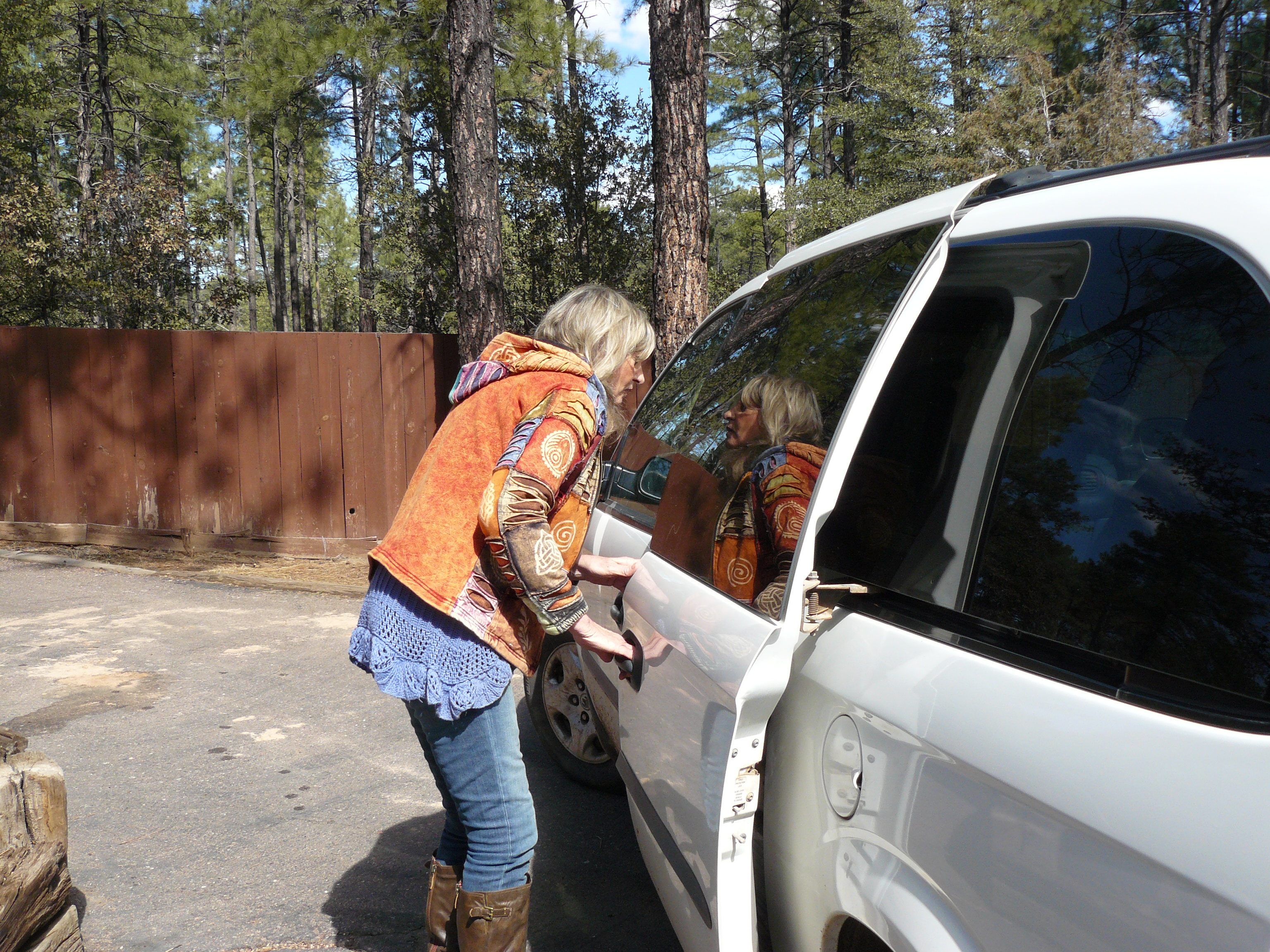
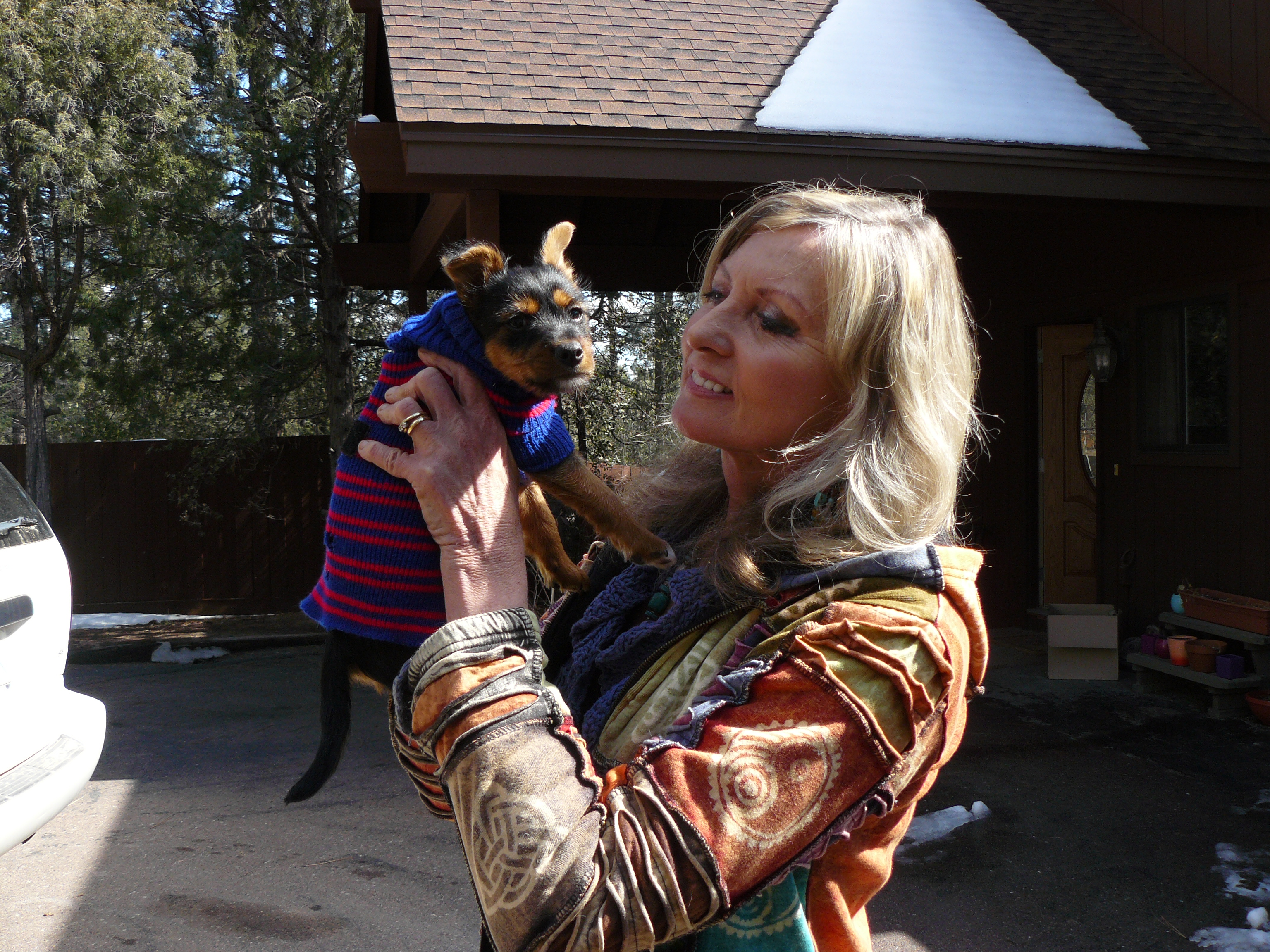
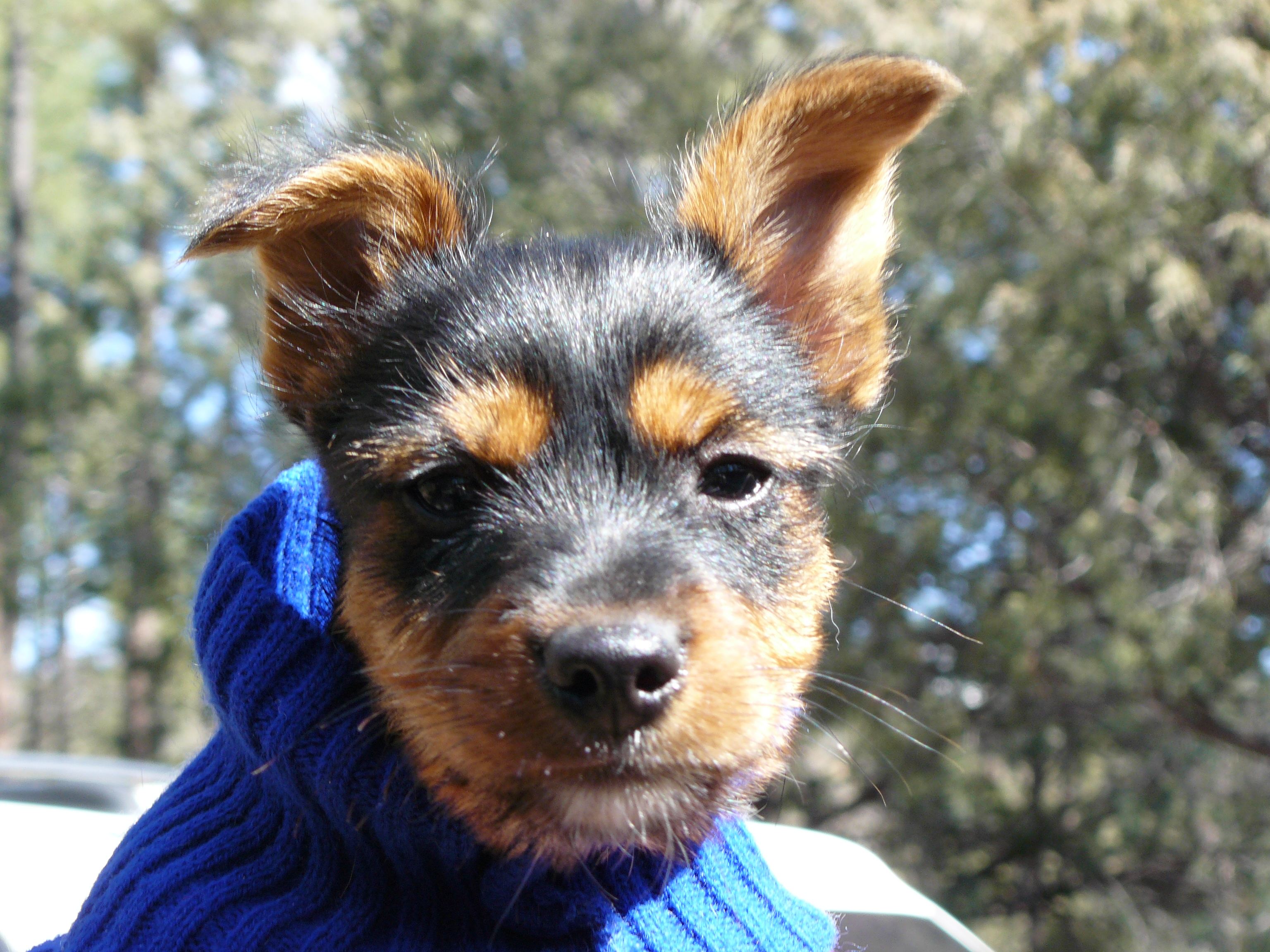
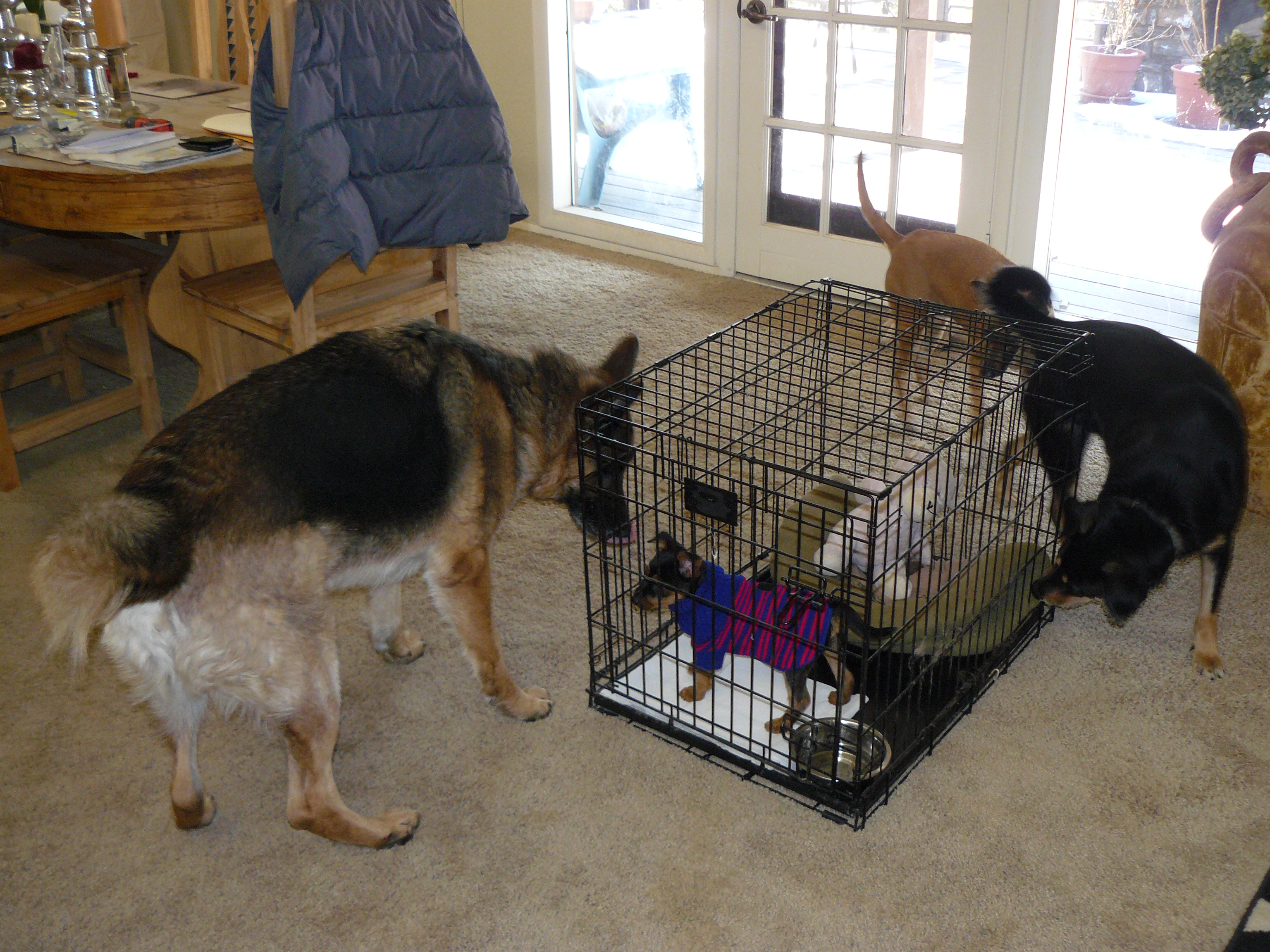
So today (Wednesday) we have been to our local humane society and found a little fella who can fill the void in our lives.  He is a puppy with the name of Sweeny.

And due to being very short on time just now, I trust you will accept a few pictures for today’s Post.

Arriving home
Welcome, little Sweeny
How cute is that!


Hi! I'm Pharaoh, going to be my buddy?

This most beautiful of relationships

That of man and dog.

A number of items have crossed my screen that, together, present the most wonderful story of the intensity and length of the time that mankind has shared his life with the dog.

First is this piece from Anthropology.net from 2008 when this was big news.

A Possible Domestication Of Dogs During The Aurignacian: 31,700 Years Ago

Both Dienkes and John Hawks have shared news about the latest research on the domestication of dogs. The researchers analyze 117 skulls of prehistoric canids from sites in Belgium, Ukraine and Russia. They conclude that a 31,700 year old canid from Belgium is ‘clearly different from the recent wolves, resembling most closely the prehistoric dogs.’

The draft can be found in the Journal of Archaeological Science under the title, “Fossil dogs and wolves from Palaeolithic sites in Belgium, the Ukraine and Russia: osteometry, ancient DNA and stable isotopes.” If the dating, and phylogenetic analysis is correct, these remains makes them the oldest known remains of domesticated dog, pushing back domestication time by 17,700 years, since the second oldest known dog, found in Russia, dates to 14,000 years ago as explained by Carl Feagans.

Doral View of the Goyet Cave Dog (a) and wolf skulls (b & c)Doral View of the Goyet Cave Dog (a) and wolf skulls (b & c)

Prehistoric dogs are distinguished from both prehistoric and extant wolves in having a shorter and broader snout, relatively wider brain cases, and a general reduction in skull size. Palaeolithic dogs in the study conform to this pattern. The researchers extended their anatomical analysis to mtDNA and stable isotopes on the Belgian samples. All fossil samples yielded unique DNA sequences.

This is a fascinating article, read the rest of it here.

Next a further explanation of the history of the dog from About.com Archaeology:

Dog history is really the history of the partnership between dogs (Canis lupus familiaris) and humans. That partnership is based on human needs for help with herding and hunting, an early alarm system, and a source of food in addition to the companionship many of us today know and love. Dogs get companionship, protection and shelter, and a reliable food source out of the deal. But when this partnership first occurred is at the moment under some controversy.

Dog history has been studied recently using mitochondrial DNA, which suggests that wolves and dogs split into different species around 100,000 years ago; but whether humans had anything to do with that, no one really knows.

Just think about that – 100,000 years ago!  But even if one assumes that early man wasn’t linked to this species divergence, the hard evidence of dogs being special to man still goes back a very long way.  Continuing the piece above:

The oldest dog skull discovered to date is from Goyet Cave, Belgium. The Goyet cave collections (the site was excavated in the mid-19th century) were examined recently (Germonpré and colleagues, cited below) and a fossil canid skull was discovered among them. Although there is some confusion as to which level the skull came from, it has been direct-dated by AMS at 31,700 BP. The skull most closely represents prehistoric dogs, rather than wolves. The study examining the Goyet cave also identified what appears to be prehistoric dogs at Chauvet Cave (~26,000 bp) and Mezhirich in the Ukraine (ca 15,000 years BP), among others.

However, I am told that what the Goyet Cave skull represents is not a “domesticated dog” but rather a wolf in transition to a dog, and that the physical changes seen in the skulls (consisting primarily of the shortening of the snout) may have been driven by changes in diet, rather than specific selection of traits by humans. That transition in diet could well have been partly due to the beginnings of a relationship between humans and dogs, although the relationship might have been as tenuous as animals following human hunters to scavenge, rather like the behavior that is believed to have existed between humans and cats. You could argue that cats never have been domesticated, they just take advantage of the mice we attract

As they say, dogs have masters, cats have slaves! Millions of dog owners have a relationship with their dog that is close to spiritual, and that also isn’t new. Let’s read on:

A burial site in Germany called Bonn-Oberkassel has joint human and dog interments dated to 14,000 years ago. The earliest domesticated dog found in China is at the early Neolithic (7000-5800 BC) Jiahu site in Henan Province. European Mesolithic sites like Skateholm(5250-3700 BC) in Sweden have dog burials, proving the value of the furry beasts to hunter-gatherer settlements. Danger Cave in Utah is the earliest case of dog burial in the Americas, at about 11,000 years ago.

Haplotypes and Grey Wolves

A recent study led by Robert Wayne (vonHoldt et al., below) at UCLA and appearing in Nature in March 2010 reported that dogs appear to have a higher proportion of wolf haplotypes from grey wolves native to the Middle East. That suggests, contrary to earlier studies, that the middle east was the original location of domestication. What also showed up in this report was evidence for either a second Asian domestication or a later admixture with Chinese wolves.

Dog History: When Were Dogs Domesticated?

It seems clear that dog domestication was a long process, which started far longer ago than was believed even as recently as 2008. Based on evidence from Goyet and Chauvetcaves in Europe, the dog domestication process probably began as long ago as 30,000 years, although the oldest evidence for a broader relationship, a working relationship, is at the Bonn-Oberkassel site, 14,000 years ago. The story of dog domestication is still in transition itself.

14,000 years ago people buried a dog with a human!  That is so beautiful.

Finally, National Geographic have been showing a series on this wonderful relationship between man and dog.  Enjoy this introduction video.

Poppy, Be in Peace

A tragic loss of a wonderful dog.

Little Poppy

On Friday afternoon, Jeannie and I were out on our usual walk along a trail through the Granite Dells.  This is spectacular scenery with magnificent granite boulders, escarpments and mountains all around.  The trail that we use is a Payson Area Trails System/United States Forestry Service designated walk.

As it happens it’s just over a mile from where we live and it has been a regular place to walk Pharaoh’s ‘pack’ most days.

Pharaoh’s little group of dogs includes Dhalia, Hazle and Poppy.  Poppy is a small terrier/poodle mix and like Dhalia and Hazle is a rescue dog.  Indeed Jean rescued Poppy many years ago from a Mexican rubble site practically hairless and surviving, just, off food scraps she could beg, steal or find.  Poppy, at 15 lbs, was also the closest buddy of Pharaoh, at 90 lbs!  Pharaoh is our German Shepherd dog whose face is the subject of the home page of this Blog.

We walk all four of them most days along the trail described above; Friday was no exception.  The only difference was that when we were almost back to the car we stopped and chatted to a neighbour, Bud, who was in his truck with a couple of his dogs.

Bud then drove off and we immediately noticed Poppy wasn’t with us.

One minute she was with us, the next Poppy had simply disappeared!

And that really is it.  I could go on about the hours spent going over and over the area, re-walking the trail, staying there until nightfall on Friday, going back at 06.30 am on Saturday morning, then again twice more on Saturday and again on Sunday with an inch of snow on the ground and with heavy sleet pelting down.  Not a sign, not a whimper, not a clue.

Thus she remains lost in weather that for the last 48 hours has been brutal; it is unrealistic to imagine that she survived despite us praying for a miracle.  Jeannie is devastated; I the same.  What hurts so much is not knowing what happened.

So dear little Poppy we hope you are at peace and we thank you for the great love you have given Jean and then later on me and Pharaoh.

“There is one best place to bury a dog.
“If you bury him in this spot, he will
come to you when you call – come to you
over the grim, dim frontier of death,
and down the well-remembered path,
and to your side again.

“And though you call a dozen living
dogs to heel, they shall not growl at
him, nor resent his coming,
for he belongs there.

“People may scoff at you, who see
no lightest blade of grass bent by his
footfall, who hear no whimper, people
who may never really have had a dog.
Smile at them, for you shall know
something that is hidden from them,
and which is well worth the knowing.

“The one best place to bury a good
dog is in the heart of his master.”

Ben Hur Lampman —
from the Portland Oregonian Sept. 11, 1925

Poppy is beautifully placed in the heart of Jeannie, me and all her doggie friends.

Nothing ‘knows’ like a dog’s nose

Lovely what comes across one’s PC screen.

It started when someone we know in Payson, Peter N, posted an item on Facebook about dogs being able to smell out cancer.  The Facebook item referred to an article in Natural News.  That item here went as follows:

(NaturalNews) The mainstream media is suddenly reporting on the idea that dogs can sniff out cancer in human beings. This concept is no surprise to NaturalNews readers, of course, as we’ve talked about this before, but until now the idea that cancer patients could be detected by smelling them was considered pure quackery by conventional doctors.

Of course, conventional doctors are once again wrong:Cancer patients do have a particular smelldue to the metabolic off-gassing of cancer cell tumors. But here’s the real story the mainstream media isn’t telling you: It’s not just dogs that can smell cancer — manyhealth practitionerscan also smell cancer patients.

I’ve personally spoken to numerous natural health practitioners who say they can smell cancer in patients. It’s not really a difficult thing to do, it turns out. With a bit of training, I believe most doctors could even be trained to do it, much like this dog in Japan which correctly identified cancer from stool samples 37 out of 38 times.

It doesn’t mean doctors have to sniff patients’ poo, either: You can also smell cancer on someone’s breath, so just talking to a patient can give a doctor an opportunity to do that. (Historically, by the way, physicians use to taste patients’ urine, from which they could diagnose a number of diseases, especially diabetes.)

This particular research on dogs’ ability to sniff out cancer was conducted by researchers at the Kyushu University in Japan. Dr Hideto Sonoda, who conducted the research, told the BBC, “The specific cancer scent indeed exists, but the chemical compounds are not clear. Only the dog knows the true answer.”

An important point in all this is thatthe cancer-sniffing dogs were able to detect early-stage bowel cancer— something that is extremely difficult for modern medical technology to detect. And it only takes a dog a few seconds — at virtually zero cost — to make the assessment.

Now, of course, medical scientists are busy trying to build an electronic device to replace the dog, because conventional medicine can’t stand the fact that something built by nature (the dog’s nose) might be better than some million-dollar electronic gizmo they come up with that can be billed out at $500 a test. So rather than just using dogs who can already detect cancer right now, they’re going to wait around a few years and try to create some high-tech equipment that will probably be a poor replacement for the dog.

That’s how modern medicine works: It steals good ideas from nature and replicates them, but the results are almost always a poor imitation of what Mother Nature has provided for free. Here’s how the end results would likely stack up:

CANCER-SNIFFING DOG
Accuracy: 98%
Cost: One dog biscuit and a pat on the head

CANCER-SNIFFING HIGH-TECH MACHINE
Accuracy: 60%
Cost: $500 billed to Medicare [the US medical system for those unfamiliar with the term. Ed.]

Gee, which one do you think conventional medicine will end up using?

In fact, a quick web search finds much information on the topic including these YouTube videos.

Now how to get our dogs to tell us ……… we’re OK; assuming we are!

Then from HousePet online magazine comes this:

The British Medical Journal published a ground-breaking research reporting how dogs have been trained to detect bladder cancer by its smell in urine, bringing together dogs’ exceptional sense of smell, with the theory that cancer produces chemicals with distinctive odours. (on September 24th, 2004 )

Six dogs, none of which had any prior experience in scent discrimination, were trained over seven months to distinguish between urine samples from bladder cancer patients and those from healthy people and individuals with non-cancerous diseases. For the final tests, each dog was offered a set of seven urine samples, and their task was to determine which of them was from a patient with bladder cancer. All of the samples used in the tests were completely new and unfamiliar to the dogs.

The dogs, comprising three spaniels, one papillon, one Labrador and one mongrel, correctly selected the bladder cancer urine on 22 out of 54 occasions – an average success rate of 41% compared to the 14% which would have been expected if the dogs had randomly selected a sample each time. This was statistically significant.

The research was undertaken by a unique partnership of medical scientists, including a statistician, and dog trainers. An orthopaedic surgeon from Buckinghamshire, Mr John Church, brought together colleagues from the Department of Dermatology, Buckinghamshire Hospitals NHS Trust (funded by the Erasmus Wilson Dermatological Research Fund) to develop and supervise the scientific protocol for the research, and Hearing Dogs for Deaf People (based near Princes Risborough) for the purpose of training the dogs for the trial.

“We were flattered to be asked to assist in this study on the basis of our reputation in the field of training dogs,” Claire Guest, Operations Director at Hearing Dogs said, “although we have been very careful not to let this project affect our normal work which involves training dogs for deaf people. The four of us who trained these cancer detection dogs did so using our own pet dogs, in our own homes, in our own spare time.”

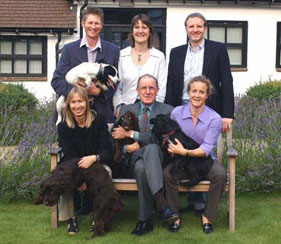
Back row: And Cook, Claire Guest, Martin Church. Front row: Carolyn Willis, John Church, Susannah Church

I rather loved the quote from John Church, “I am a passionate believer that animals have a huge amount to teach us, and I have heard many stories of people who have been alerted to the presence of cancer in their bodies by their pet dogs. I was delighted to find that the two charities were open-minded enough to participate in this study, so that we could really examine this phenomenon scientifically.”

As I keep going on about – we really can learn from dogs!

Thanks Peter.

This is the dog!

More close to man for more years than one could ever imagine.

A week ago, there was an article on Learning from Dogs entitled What is the dog? It was primarily based on the work of Dr. George Johnson; his details are here.

Anyway, last Thursday Pete N who is incredibly helpful in passing me items of interest, passed me a link to a series of videos that come under the collective name of Dogs Decoded.  They were on the website Top Documentary Films itself an interesting site.

It looks as though the videos are due to be released as a single film later on this year, as this link suggests.  Here’s how the three videos are introduced.

Dogs Decoded reveals the science behind the remarkable bond between humans and their dogs and investigates new discoveries in genetics that are illuminating the origin of dogs – with surprising implications for the evolution of human culture.

Other research is proving what dog lovers have suspected all along; dogs have an uncanny ability to read and respond to human emotions.

Humans, in turn, respond to dogs with the same hormone responsible for bonding mothers to their babies. How did this incredible relationship between humans and dogs come to be? And how can dogs, so closely related to fearsome wild wolves, behave so differently?

No more from me.  Just find a quiet corner and watch the three videos by clicking on each link in turn.  They will blow your mind.

Dogs Decoded (1/3)

Dogs Decoded (2/3)

Dogs Decoded (3/3)


Don’t forget Tara’s Babies!

Big thank you to all those that have acted.

I have received quite a few emails in response to a mailing sent out by me yesterday promoting the fabulous work being done by a dog rescue centre near Payson, here in Arizona.  Thank you for letting me know you are adding your support to this great effort by Tara’s Babies to win $250,000 from Pepsi!

If you missed the post on Friday, here’s a link to it – https://learningfromdogs.com/2011/01/21/taras-babies/

An email received a short while ago from Tara’s Babies shows that everyone involved is making a difference!

Yesterday we were unplaced in

The Animal Rescue Site, now we’re

#9 in AZ and 266 overall!

Thank you for VOTING : we CAN win!!


PEPSI VOTING LINKS:Three dogs
a. vote online here

b. text 105549 to 73774


c. Have a Facebook page?
1. Click here
2. Click on “Vote for this Idea”
3. Click on “Login with Facebook account”
4. Click on “Vote for this Idea” again!
 

THE ANIMAL RESCUE SITE VOTING LINK:


1. Click here

2. Click on the Purple Box “Click Here to Give, its FREE”

3. Click on thje link in the box at the top of the page “Vote Now”

4. Search for “Taras Babies” in “AZ”

5. Click on “VOTE”

6. Prove you are a human being and not a Bot by identifying an animal!

7. Click on “Confirm Vote”

NB: You only have to do Step 4 – Search – the first time you vote. The site remembers Tara’s Babies for you!
Mr HCompassion  community  innovation

love   determination  humor  prayer

MANY THANKS FROM ALL OF US AT TARA’S BABIES


Tara’s Babies

A rare request from Learning from Dogs asking if you will vote on behalf of a dog rescue centre.

Many who follow this Blog will know that my beautiful wife, Jean, is totally devoted to dogs, especially rescue dogs.  Over the years that she and her previous husband Ben, who died in 2005, lived in Mexico, Jean must have rescued at least 70 dogs.  Even today, we have 11 ex-rescue dogs enjoying a fabulous life in our mountain home here in Payson, Arizona.

So it was a big surprise to come across a dog rescue organisation called Tara’s Babies and find that their sanctuary is in our neighbourhood.


Photo by Wib Middleton


Here’s a description of the organisation taken from the local newspaper from September 9th, 2009.

By Alan R. Hudson
Gazette/Connection Correspondent
It has been nearly five years since Tara’s Babies Animal Welfare began rescuing animals displaced by Hurricane Katrina. Tara’s Babies operates a no-kill animal rescue and sanctuary “off the grid” at the Ellinwood Ranch, near Young.

A few dogs from the dark days of Katrina still remain and many more have been added since. This is no normal animal rescue however: It is operated by three very dedicated and compassionate ordained Buddhists.

Kunzang Drolma, a Buddhist Nun and the director of Tara’s Babies, graciously invited the Connection to spend the afternoon at the facility. When we arrived, she was (as we had anticipated) wearing her Shamtab—the traditional Buddhist robe—as she fed her canine adoptees.

From that article Drolma explains:

“Katrina was a catastrophe that threw it in everyone’s faces but ultimately, every day, hundreds of dogs and cats are being euthanized in shelters because there’s not enough space for them—just because they were abused, homeless, old or sick. And so that’s when we just moved straight into this process of being a no-kill rescue and sanctuary. We will never euthanize.”

What’s needed, explained Drolma, is a paradigm shift. One that is so profound that shelters will become a thing of the past. While euthanasia is something that Tara’s Babies does not agree with, the solution lies at a higher cultural level.

Frankly, my view is that we need solutions to so many of life’s problems to come from a ‘higher cultural level’ but this Post is about helping Tara’s Babies raise more funds to help their mission.  It’s easy for any of you to help.  You can do it now from your computer.

Go here – http://www.tarasbabies.org/pepsi_refresh.html and read.  If you need convincing of the purpose watch this video (the one at that last web page or direct from YouTube as below).

And from that web-link you can read:

Feel free to copy and personalize the following paragraph to send to your friends:

“Have you heard about Tara’s Babies Animal Welfare, a No-Kill Dog Rescue and Sanctuary in Arizona? They started rescuing dogs left homeless and injured by Hurricane Katrina, after their founder, Jetsunma Ahkon Lhamo, felt compelled to act on seeing the devastation and suffering in the Gulf. They have continued rescuing dogs on death row in overcrowded shelters ever since.

Tara’s Babies Animal Welfare is working to win a $250,000 Pepsi Refresh grant by receiving the most votes for their project in the month of January. The grant will allow them to improve the care they provide to dogs at their beautiful, off-the-grid Sanctuary.

I am going to help Tara’s Babies Animal Welfare by voting for them daily in the Pepsi Refresh grant program and hope that you will too. Please visit www.tarasbabies.org to check them out. You will be able to sign up from their website to support their application to Pepsi Refresh.

The dogs need your vote!”

Here, here!  It’s very quick to initiate and then each day all you need to do is to add your daily vote – a few seconds of your life exchanged for the rest of the life of a dog that, otherwise, would have nowhere to go!

Thank you!