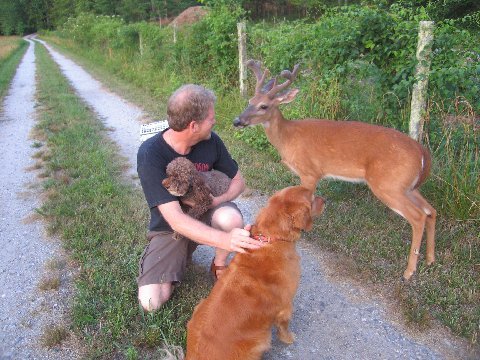
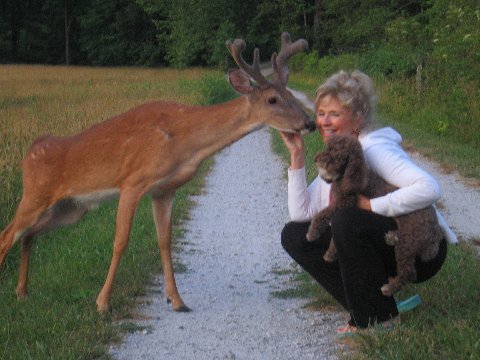
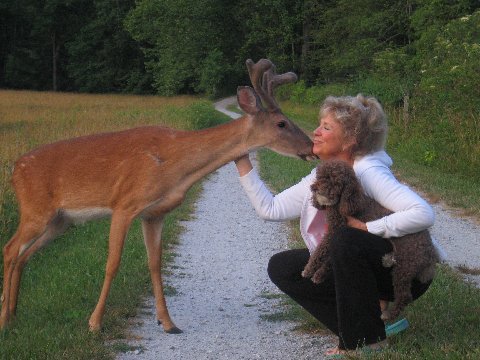
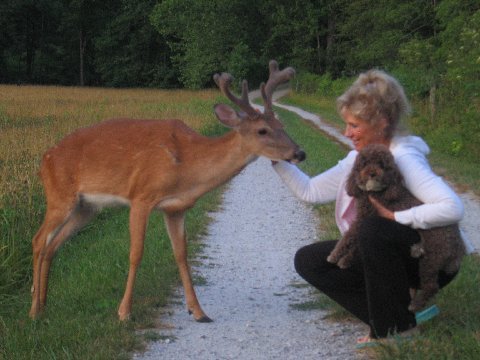
Winter wonderland three (One was here, and two was here.)
oooo
oooo
oooo
oooo
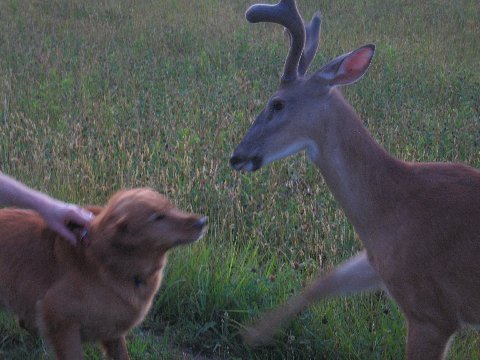
Now a change of scene and temperature! But still the pictures sent in by Dordie.
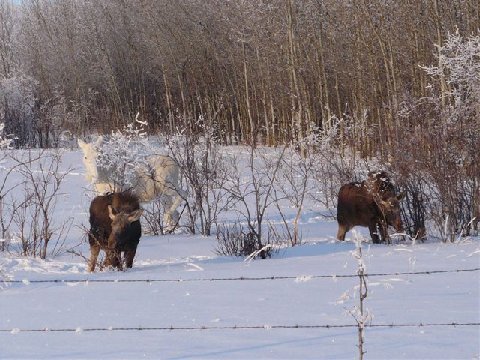
oooo
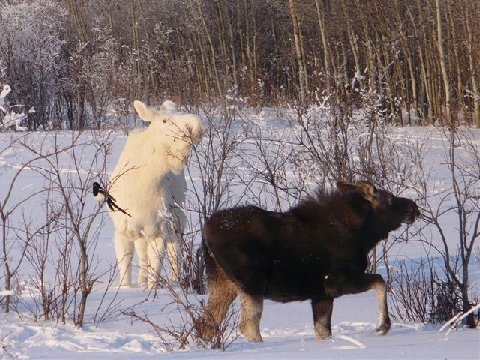
The fourth and final group of winter wonderland pictures in a week’s time. Enjoy!
Dogs are animals of integrity. We have much to learn from them.
Category: People and their pets
Events!
Perhaps the fundamental reason why I am so hooked on this world of blogging is because there are always wonderful surprises. What do I mean by this?
Yesterday’s post, Sometimes the world seems very strange was a rather bleak affair. I had been affected by, and reported, a couple of items read elsewhere that seemed to me, in a rather dark and miserable way, to highlight what is wrong with our so-called modern society. Perhaps, no more clearly expressed than in my reply to a comment left by Sue Dreamwalker.
Here is what Sue said, and how I replied.
I agree with what Alex has to say… The super rich live in a totally different reality… Have no clues on the real structure of how their wealth is being created often on the backs of the poor. Who are squeezed ever tighter at every conceivable way of extracting more in the form of taxes, both on incomes and on everything else..
Change will come but what frightens you Paul is that when it does come it will come swiftly.. We have seen the social unrest in other nations… What is happening in many countries is the injustices and discriminations which are getting ordinary peoples backs up..
Stupid Gun Laws to teach children how to handle weapons..
Yes Paul sometimes the world is very Strange.. and also Very Stupid!..
Thank you and wishing you and Jean a lovely week
Sueoooo
Sue, a wonderful reply from you. Thank you. What I find so strange is this. That here I am, turned 70-years-old, having enjoyed a fabulously interesting life, full of variety and opportunities. That, to some small degree, I believe I have a better, albeit still partial, sense of how we humans tick than, say, 20 years ago. How our lives fundamentally revolve around our relationships, with the most important one being our relationship with ourself and, flowing from that, some understanding of who we are!
Yet, (and you knew there was a ‘yet’ coming, didn’t you!) beyond the very small world of loved ones, family and close friends (and I count blogging friends in that last category) the world around me becomes more strange, more remote, more alien almost on a week-by-week basis.
I was born in the middle of London six months to the day of the end of the Second World War in Europe. Those first six months would have been unrecognisable to the later world I grew up in, and got to know. My fear is that I will spend the last six months of my life in a world that is similarly unrecognisable from the world I thought I knew.
Thank my lucky stars for a wonderful, loving woman in my life and for so many fabulous doggie friends.
Sue, apologies, I went on a tad – nay, a tad and a half!
Fondest love to you and your Hubby.
Paul
I think that makes it pretty clear what my mood was like yesterday morning.
Jean and I were out from 9am until 12:30 pm and it was coming up to 3pm when I sat down in front of my PC. Frankly, I didn’t have a clue as to what to write and still felt pretty miserable about the ‘strange world’.
However, one of the first things that I saw in my ‘in-box’ was the weekly email from the Rev. Terry Hershey. Here is how his email opened up:
Live deeply and deliberately
January 12, 2015
“The purpose of life is to live it, to taste experience to the utmost, to reach out eagerly and without fear for newer and richer experience.” Eleanor Roosevelt
“To be fully alive, fully human, and completely awake is to be continually thrown out of the nest. To live fully is to be always in no-man’s-land, to experience each moment as completely new and fresh. To live is to be willing to die over and over again.” Pema Chodron
“On his right hand Billy tattooed the word love,
and on his left hand was the word fear,
And in which hand he held his fate was never clear.”
Bruce Springsteen: “Cautious Man“
“To live is to be willing to die over and over again.” Wow! Did that ‘speak’ to me or what!
Then the very next item in my ‘in-box’ was a note that “Deaf Duke is now following Learning from Dogs“. I try and make it across to every new follower of this blog and thank them for their support. Seems the least I should do.
So it was with ‘Deaf Duke’. But I have to quietly admit that before clicking on the link I found myself wondering just what Deaf Duke was.
Then I went across to their place and was uplifted; hugely so! Because Deaf Duke is the name of a blog that … well in their words ….
About
Deaf Duke is an American Bulldog mix that my boyfriend (Tyler) and I got just after the Fourth of July this year. He was only 6.5 weeks old when we got him so he had some issues to begin with. When he was about 6 months old we decided to take him to a trainer, we thought he was a bad dog because he would never listen to us, we soon found out that he was becoming deaf. He wasn’t a bad dog he just couldn’t hear us. Our lives changed a lot from that moment on. Everyone says that training a deaf dog is no harder than training a dog that can hear, which is true on so many levels but they never talk about how difficult it can be for the owners who are primarily vocal beings. This blog is about the upbringing and stories about Duke and his life.
Here’s a post from Deaf Duke from last December.
Skinny Boy
When we got Duke at 6.5 weeks old he was very under weight. Finding out that he was deaf could explain why he was. Deaf dogs generally don’t wake up for feedings because they cannot hear when the other puppies in the litter are eating. Duke is now a healthy and happy 7 month old boy learning just like his parents are to train him and us.
So thank you Terry, and thank you Duke and your Mum and Dad, for reminding me that life is utterly and whole-heartedly what we make of it!
Onwards and upwards!
Winter wonderland two. (One was here.)
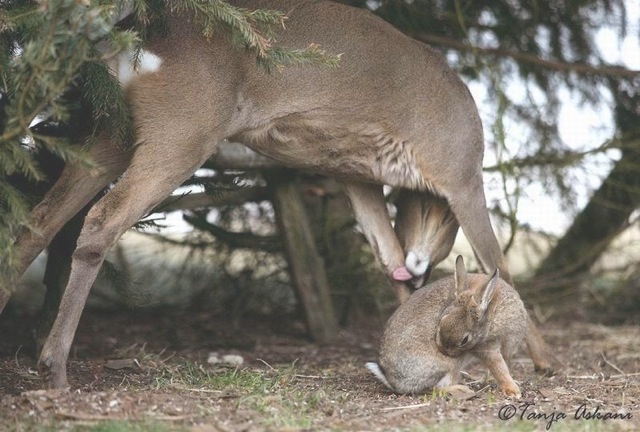
oooo
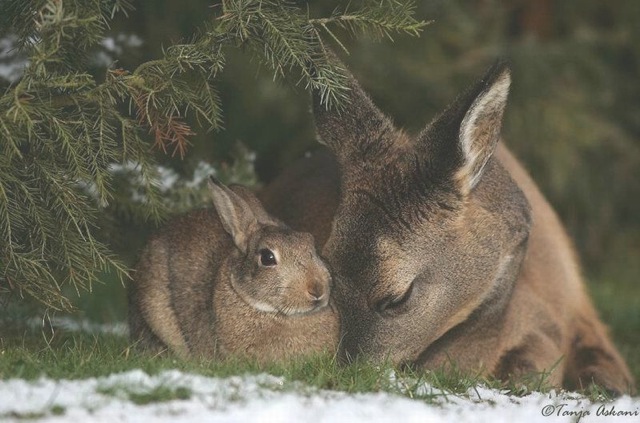
Now still remaining with the pictures sent in by Dordie but a change from deer and rabbit to deer and dog!
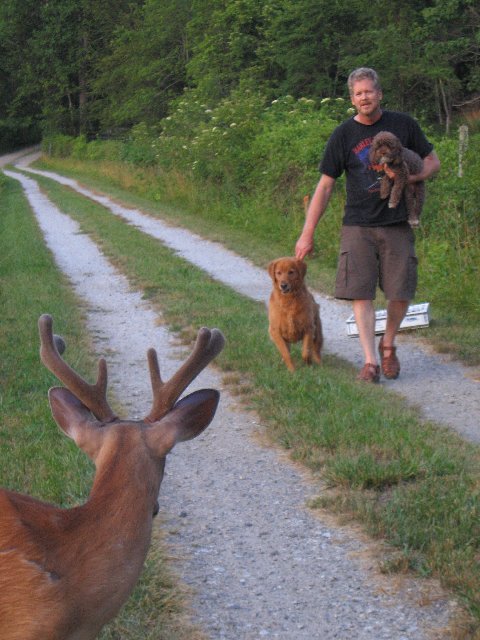
oooo
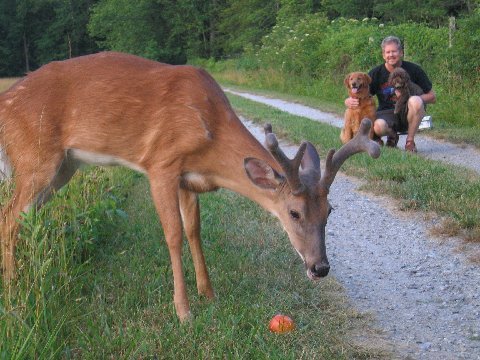
oooo
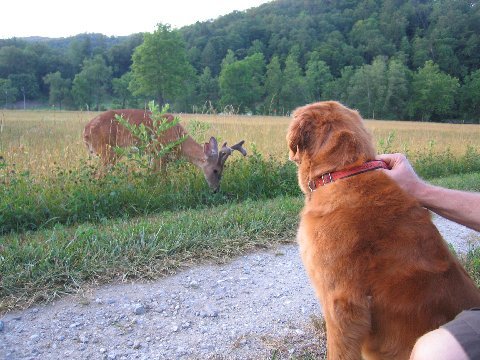
oooo
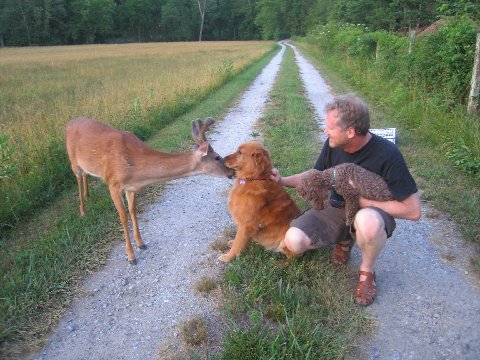
oooo
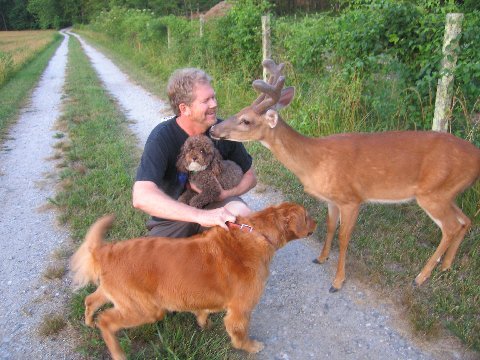
The third group of winter wonderland pictures in a week’s time. Enjoy!
A return to a theme previously presented in this place.
The primary motivation for today’s post was to continue the theme in my post last Wednesday: Canada – Ellesmere Island, that featured the most beautiful film from the BBC about the wolves on Ellesmere: Snow Wolf Family and Me.
Now it struck me that in writing a blog called Learning from Dogs there was a fair chance that the history of dogs had been featured before. I ran a quick search through previous posts using the search term ‘history of dogs’. There were a number of returns. Such as the republication of an article by Mark Derr: The Wolf Who Stayed last November. Then there was a post called Dogs and Wolves: Fascinating Research in February, 2014. Back in 2013, a post Dogs and Man: An eternity of a relationship.
Yet, all these and more didn’t quite offer what I am presenting today. (Well, that’s my story!)
First up was the chance finding of a blog called Bioventures. On the 11th September, 2013 there was a post published by D.K. Taylor under the title of: The Science of Dogs: Dogs Vs. Wolves. Here’s how it started:
While watching The Science of Dogs, one portion of the documentary that interested me was the comparison of domestic dogs verses wolves. I knew beforehand that dogs and wolves behaved differently, but it was not until now that I knew much about these differences. Wolves depend upon their pack only, while dogs have been taught to rely on humans to meet many of their needs. The difference must be extreme for it to have been so obvious in the demonstration with the meat and rope from the documentary! (For anyone in the class that watched the other documentary: A piece of meat was tied to a rope, and a wolf kept pulling at it and trying to solve the problem for itself while the dog almost immediately looked to the nearby human for help.)
Then, and I forget how, I came upon a news blog, for want of a better description, called The Examiner. More precisely, I came across an article published on The Examiner back in January, 2013 called: How wolves became dogs explained in groundbreaking study.
A study by a team of American and Swedish researchers published on Jan. 23 in the Journal of Nature, shows that dogs have more genes involved in starch metabolism than wolves.
The finding suggests that this was a major factor in the evolution process of the wolf. No one knows exactly when or how our ancestors began to be so closely linked to dogs, but archaeological evidence indicates that it was thousands of years ago.
One theory suggests that modern behavior of the dogs came from the hunters that used wolves as guards or fellow hunters.
But another theory – that underpins the study – suggests that domestication began when the wolves began to approach the villages in search of food, stealing the remains left by people.
This practice became increasingly common and as a result, wolves began to live around humans. According to this second hypothesis, when we became sedentary and dependent on agriculture, waste dumps created around our settlements soon became the power source of many wolves, explains Erik Axelsson, of the University of Uppsala.
You will need to go here to read the full article, but I will offer this further piece:
Dr. Axelsson and colleagues examined the DNA of more than 50 modern breeds – from the Cocker Spaniel to the German Shepherd.
They then compared their genetic information with 12 wolves from around the world. They scanned DNA sequences of the two canids in areas with large differences. They assumed that these areas contained genes that could help explain the domestication of dogs. Axelsson’s team identified 36 regions, with more than one hundred genes.
The analysis detected the presence of two major functional categories – genes involved in brain development and starch metabolism.
The latter suggests that dogs have many more genes encoding enzymes needed to break down starch, a feature that could have been advantageous to the ancestors who rummaged among the wheat and corn of the farmers.
“The wolves also have these genes, but not used as efficiently as dogs,” said Dr. Axelsson.
“When we look at the wolf genome, we only see one copy of the gene [for the amylase enzyme] on each chromosome. When we look at the dog genome, we see a range from two to fifteen copies; and on average a dog carries seven copies more than the wolf.”
“That means the dog is a lot more efficient at making use of the nutrition in starch than the wolf.”
As for the genes related to brain development, these probably reflect some of the behavioral differences we now see in the two canids.
The dog is an animal that is much more docile, which is probably due to the past humans preferring to work with animals that were easier to tame.
“Previous experiments have indicated that when you select for a reduction in aggressiveness, you obviously get a tamer animal but you also get an animal that retains juvenile characteristics much longer during development, sometimes into adulthood,” said Dr. Axelsson.
This may help explain why it is said that dogs act like puppies throughout their lives.
The study of the origin of dogs is still, in many ways, a puzzle.
Fossil evidence suggests that some populations have been around for tens of thousands of years, long before the advent of agriculture. One reason why it is so difficult to determine the time of this change of behavior is that domestication may have occurred more than once.
Over on YouTube, there are many videos about the subject of ‘the science of dogs’, albeit many of them lengthy. But so what!
I have gone for a 2013 Documentary film that has found its way on to YouTube: Wolf and Human – The Creation of The Dog (Full Nature Documentary). It is 90-minutes long and, at the time of writing this post, Jean and I haven’t watched it. We will this evening. But it comes highly rated and I very much hope it is a good film. The title of the film is perfectly aligned with the theme of today’s post. (N.B. We had bandwidth issues last night and gave up the struggle after just eleven minutes. Despite the poor resolution of the video, it still looked like an interesting video to watch in full.)
A repeat posting of a wonderful joke from earlier times.
Good friend from my English days, Bob Derham, a few days ago sent me the well-known joke about the dog for sale. At first, I had forgotten that I had posted a slightly modified version back in April, 2012. When I re-read it, I had to repost it today. It’s wonderful.
oooo

A guy is driving around the back streets of Bristol, England.
He sees a sign in front of an unkempt terraced house: ‘Talking Dog For Sale‘, so he rings the bell and the owner appears and tells him the dog is in the garden.
The guy goes into the backyard and sees a nice looking Labrador retriever sitting there.
‘You talk?‘ he asks.
‘Yep,’ the Lab replies.
After the guy recovers from the shock of hearing a dog talk, he says ‘So, what’s your story?‘
The Lab looks up and says, ‘Well, I discovered that I could talk when I was pretty young.. I wanted to help the government, so I told the SAS. [Special Air Service or SAS is a corps of the British Army]
In no time at all they had me jetting from country to country, sitting in rooms with spies and world leaders, because no one figured a dog would be eavesdropping.‘
‘I was one of their most valuable spies for eight years running…
But the jetting around really tired me out, and I knew I wasn’t getting any younger so I decided to settle down. I signed up for a job at the airport here in Bristol to do some undercover security. You know, wandering near suspicious characters and listening in, that sort of thing. I uncovered some incredible dealings and was awarded a batch of medals.’
‘Then I got married, had a load of puppies, and now I’m just retired.‘
The guy is amazed. He goes back in and asks the owner what he wants for the dog.
‘Ten quid,’ the guy says.
‘Ten quid? This dog is amazing! Why on earth are you selling him so cheap?‘
‘Because he’s a liar. He’s never been out of the garden all his life!’

oooo
Really hope that many of you haven’t come across this wonderful joke before!
Or should that be the tell of a dog!
In the funny way that items flow around the internet, I recently read an item that appeared on the daily email summary from EarthSky. It was entitled: Read the message your dog sends with his tail. That, in turn, had been prompted by an article published on the website ScienceDirect. It was a study announced in Current Biology and published on the 18 November 2013, (Pages 2279–2282). Here’s how that article opens (and go here to read the numbered references):
Seeing Left- or Right-Asymmetric Tail Wagging Produces Different Emotional Responses in Dogs
Marcello Siniscalchi, Rita Lusito, Giorgio Vallortigara, Angelo QuarantaSummary
Left-right asymmetries in behavior associated with asymmetries in the brain are widespread in the animal kingdom [1], and the hypothesis has been put forward that they may be linked to animals’ social behavior [2 and 3]. Dogs show asymmetric tail-wagging responses to different emotive stimuli —the outcome of different activation of left and right brain structures controlling tail movements to the right and left side of the body. A crucial question, however, is whether or not dogs detect this asymmetry. Here we report that dogs looking at moving video images of conspecifics exhibiting prevalent left- or right-asymmetric tail wagging showed higher cardiac activity and higher scores of anxious behavior when observing left- rather than right-biased tail wagging. The finding that dogs are sensitive to the asymmetric tail expressions of other dogs supports the hypothesis of a link between brain asymmetry and social behavior and may prove useful to canine animal welfare theory and practice.
Graphical Abstract
In terms of understanding for the non-scientific minded, then the EarthSky article is an easier read.
Read the message your dog sends with his tail
Tail-wagging is a reflection of what’s happening in your dog’s brain. Learn to read your dog’s tail signals, and you’ll know if he’s happy … or stressed.
Tail-wagging in dogs is the classic signal for happiness. But researchers have found that tail-wagging can mean that your dog is either happy or stressed.
Activation of the left-brain causes a dog’s tail to wag to the right. Activation of the right-brain causes a wag to the left. That’s not new knowledge. Scientists detected that difference seven years ago.
What is new is that, not surprisingly, other dogs can easily read the message your dog is sending with his tail. And so can you.
Researchers at the University of Trento in Italy tested 43 dogs of various breeds for their ability to distinguish between tail wags. They showed the dogs videos of other dogs wagging their tails (much like the one above) and monitored the dogs’ heart rates and reactions. How could they be sure that the dogs weren’t watching their canine buddies’ facial or body cues? The researchers also showed the dogs only a silhouetted version of a tail-wagging dog.
As it turned out, every dog responded the same way. Dogs watching other dogs wag their tails to the left looked anxious, and their heart rates increased. In other words, they, too, became stressed. But dogs watching others swing their tails to the right stayed calm and relaxed — an indication that right wags are an expression of companionship and confidence, according to these scientists.
Why study tail wags in dogs? The team said in the summary to their study, which was published in Current Biology last year:
The finding that dogs are sensitive to the asymmetric tail expressions of other dogs supports the hypothesis of a link between brain asymmetry and social behavior and may prove useful to canine animal welfare theory and practice.
Bottom line: A dog wagging his tail to the right is happy, but a dog wagging to the left is stressed, say researchers.
Let me finish off today’s post with the following video.
So here’s to dozens of people watching their dogs’ tails!
Opening up the memory box.
Last Saturday, under the post title of The family flight, I wrote about the formation display given by five A350 XWB development aircraft.
That prompted a comment from Hariod Brawn:
He [my father] was an RAF pilot during the war and through to the early 1960’s. He test-piloted the Vulcan and Victor, though started on what he called ‘string bags’, by which he meant Tiger Moths. In between he flew the Spitfire, Lancaster, Meteor and specialised in flying in electrical storms, about which he wrote a manual for the RAF.
……
I took my father to see Vulcan XH558 fly what was then thought to be its final flight (it subsequently was overhauled and took to the skies again). It flew along the length of the runway at a 45 degree angle with its bomb bay doors open. On the inside of the doors in huge letters was the single word ‘farewell’. It was really quite an emotional experience both for my father and myself.
I thought it would be nice to include some video of XH558; that will be tomorrow’s post. For today, I wanted to reminisce from my own private flying days.
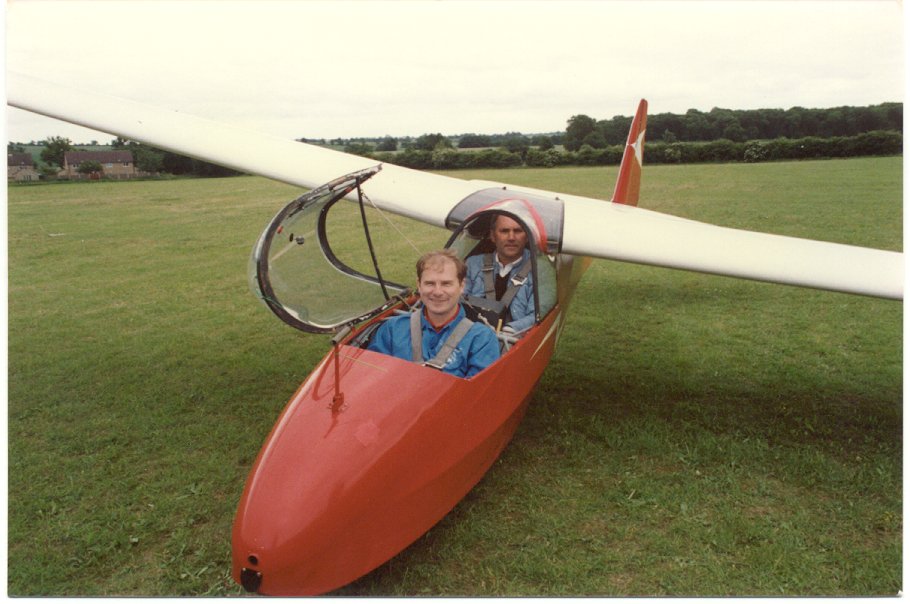
My first exposure to private flying was on the 7th June, 1981 when, at Rattlesden Gliding Club in Suffolk, I was taken up for two air-experience circuits in a two-seater glider known as a ‘K7’. I was immediately hooked! Those experience flights leading to a 4-minute flight (flight number 46) on the 6th September, 1981 that has the remark in my pilot’s log book: Solo! Now fast forward to October, 1984 and my log book shows me attending a gliding instructor’s course at Lasham, resulting in me being issued with a British Gliding Association (BGA) Assistant Instructor Rating on the 14th October. (105/84).
Over on the power side of things, in March, 1984, I started Private Pilot training at the Suffolk Aero Club at Ipswich Airport and gained my PPL on the 9th November, 1984. Subsequently, gaining my Instrument Rating in July, 1999 when I was then operating from Exeter Airport and flying frequently for business purposes. For that ‘serious’ flying I used a Socata TB20, a French retractable, single-engined aircraft, based at Exeter. A very fine, long-distance aircraft.
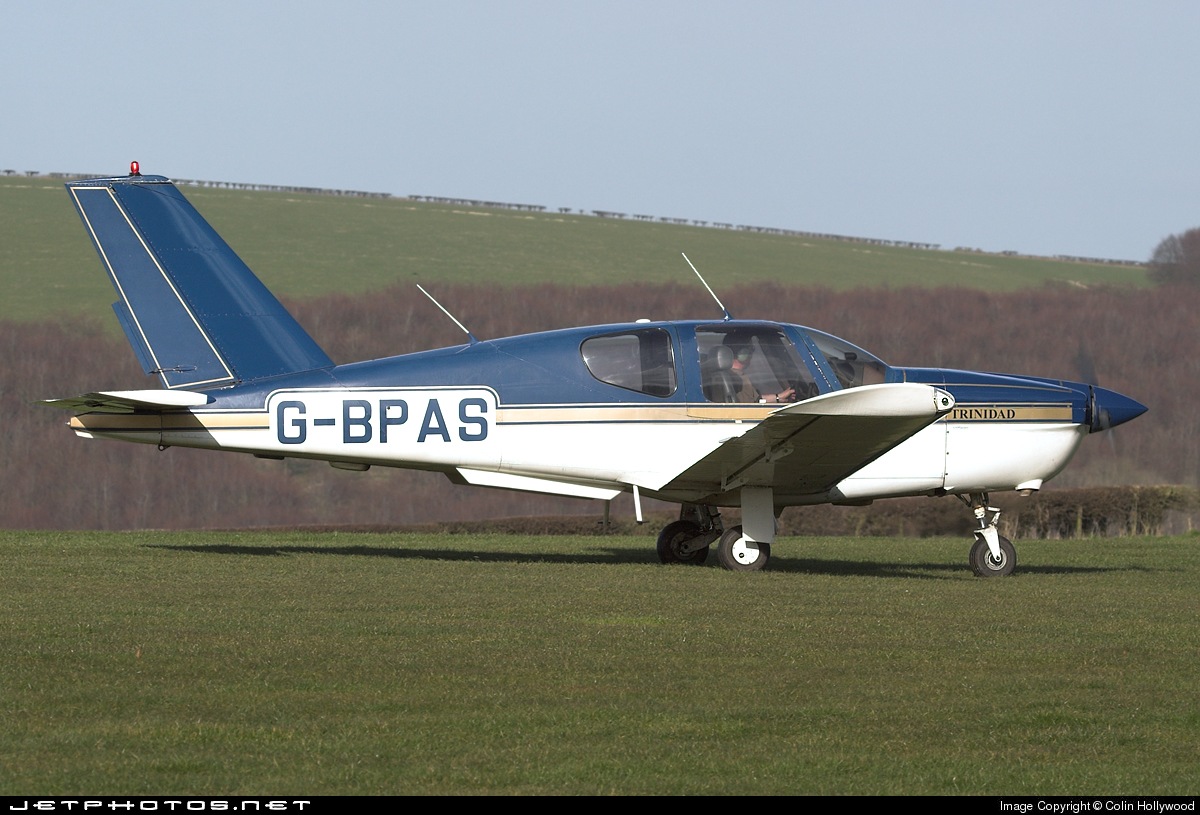
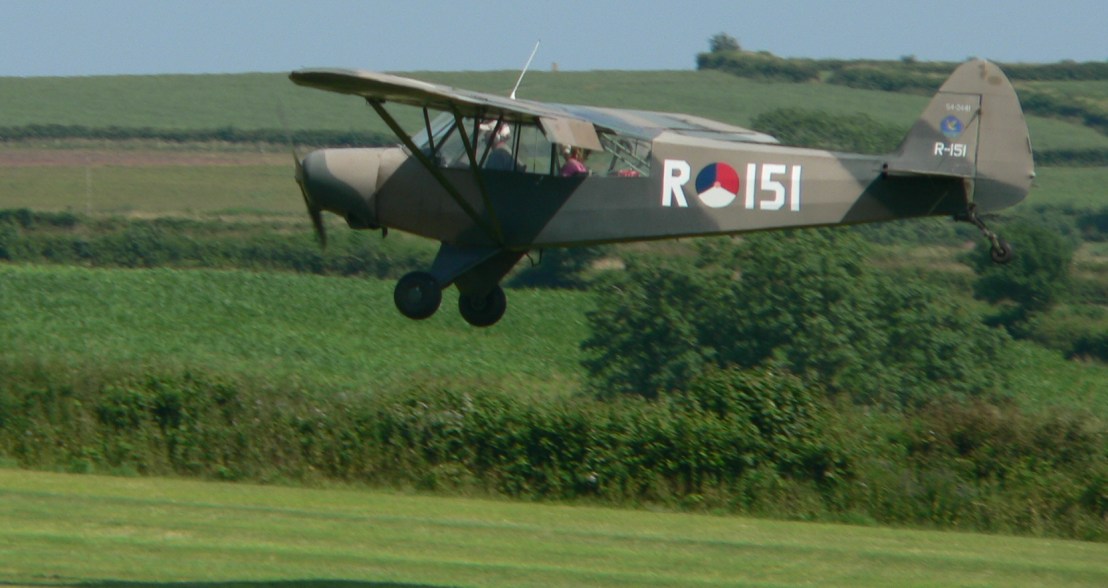
But the aircraft that I had the most fun flying was a dear old Piper Super Cub. Here’s the background to the aircraft.
Piper Super Cub, L-21B, R-151
A/C Construction No. 18-3841, Frame No. 18-3843
Original Engine, Lycoming 135 Type 0-290-D2, 54/2441
Romeo 151 was one of a batch of 298 L-21’s delivered in 1954. There were 584 L-21B’s produced by Piper for military use, the ‘L’ standing for Liaison. The L-21B’s were PA-18-135’s with civil Lycoming 0-290-D2 engines, glasswork as most L-21A’s and L-18’s and a gross weight of 1760 lbs.
This aircraft was delivered to Koninklijke Luchtmacht, Dutch Air Force, on the 1st July, 1954 and registered R-151. After various homes R-151 transferred to the Dutch civil register as PH-GER, 1st April 1976 with 4,458 hours and shortly thereafter was registered to Vlieclub Hoogeveen, Certificate Number 2380.
On the 27th March, 1981 the aircraft was delivered to the UK with a total time of 5,043 hours and in September, 1981 became G-BIYR; ‘YR’. In April, 1983 YR was the first of type to be given a Public Transport CofA (Certificate of Airworthiness) and was used for training at Tollaton. YR reverted to a Private CofA in January, 1984 when purchased by Mike and Barbara Fairclough. The aircraft had by then accumulated 5,120 hours.
In 1992, YR was re-engined with a Lycoming 150HP, 0320-A2B No. L49809-27A (zero hours). Finally on the 2nd June, 1995 the aircraft was repainted in her original Dutch insignia and given CAA (UK Civil Aviation Authority) permission to use the original call-sign: Romeo 151.
The aircraft was based at and flown from Watchford Farm airstrip in South Devon, England.
Now forgive the nostalgic photographic memories!


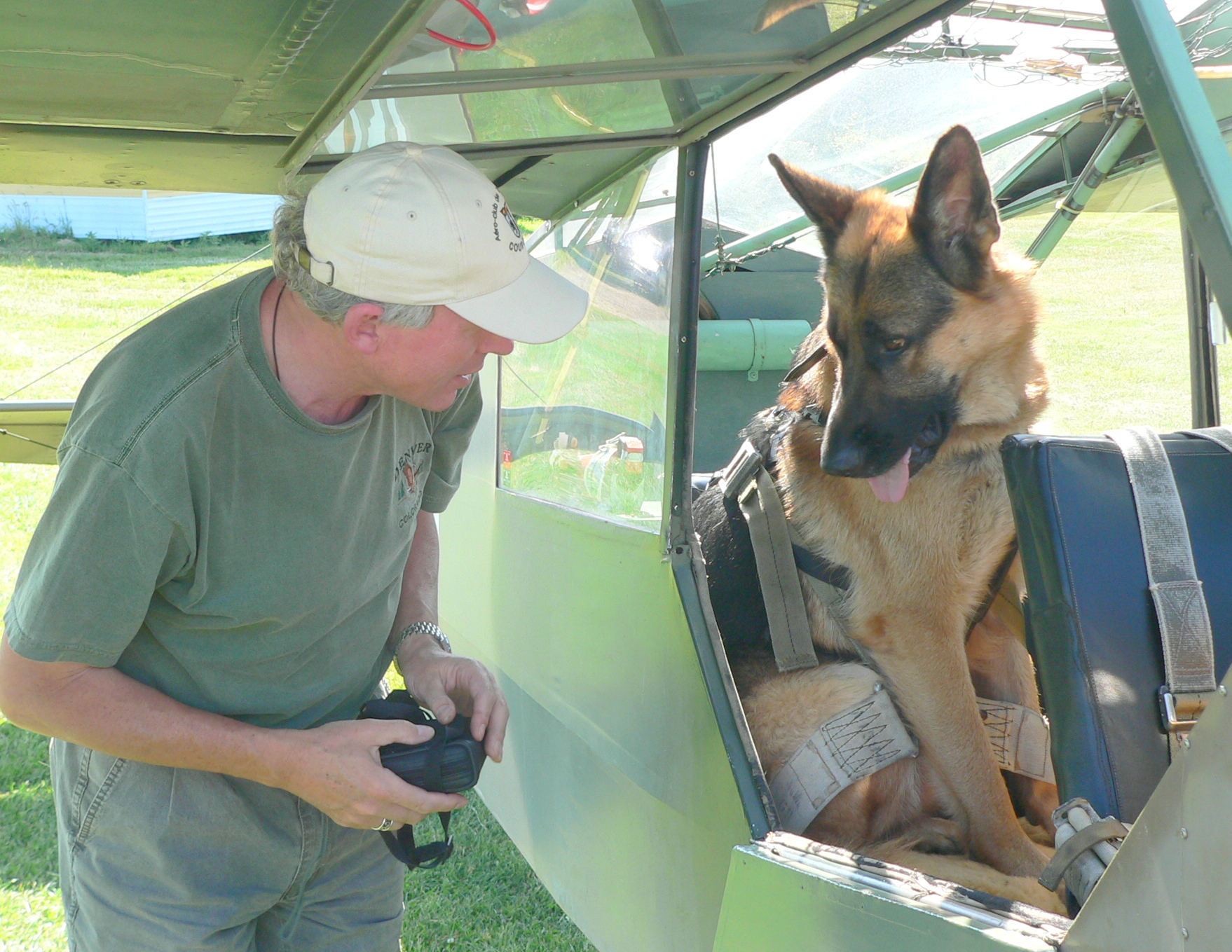
Every time I went to the airfield with Pharaoh he always tried to climb into the cockpit. So one day, I decided to see if he would sit in the rear seat and be strapped in. As the next picture shows, there was absolutely no problem with that!
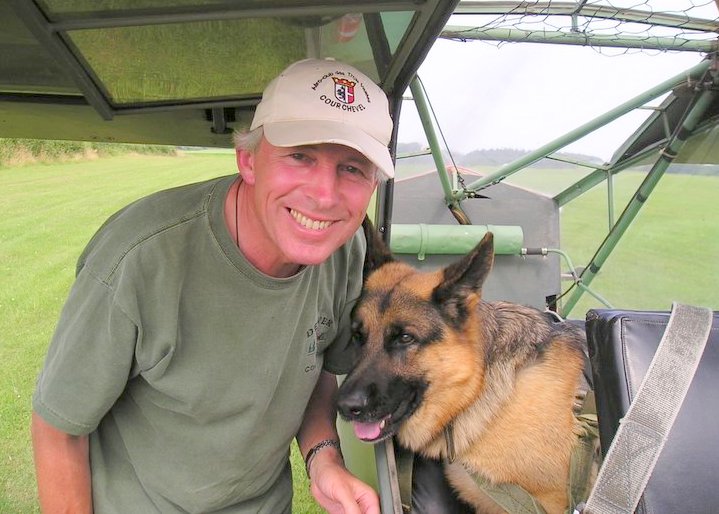
My idea had been to fly a gentle circuit in the aircraft. First, I did some taxying around Watchford’s large grass airfield to see how Pharaoh reacted. He was perfectly behaved.
But then I thought long and hard about taking Pharaoh for a flight. In the Piper Cub there is no autopilot so if Pharaoh struggled or became agitated it would have been almost impossible to fly the aircraft and cope with Pharaoh sitting in the seat behind me. So, in the end, I abandoned the idea. The chances are that it would have been fine. But if something had gone wrong, the outcome just didn’t bear thinking about.
Thus we elected for taxying all around the airfield which, as the next picture shows, met with full doggie approval. The date was July 2006.
So enough of my recollections for today – tomorrow the Vulcan XH558.
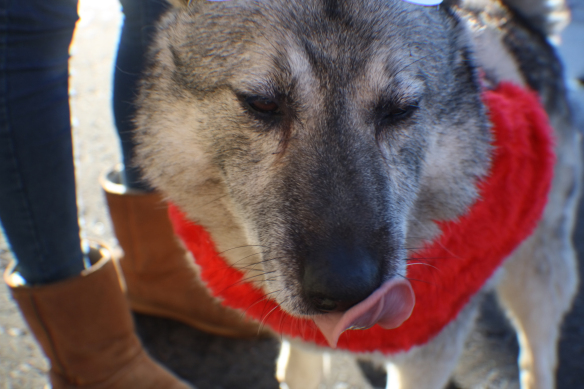
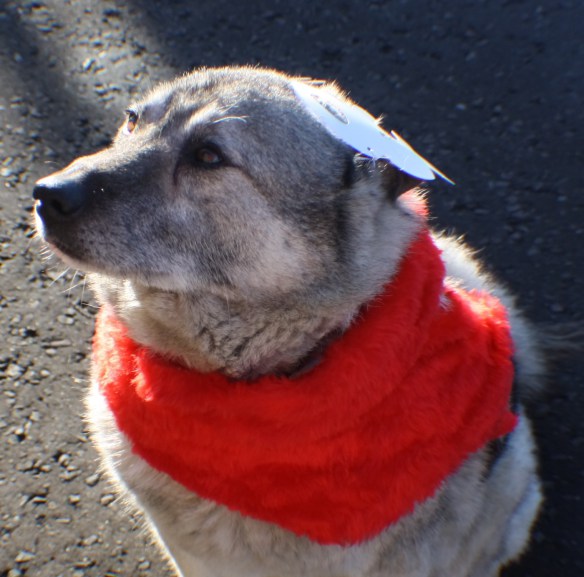
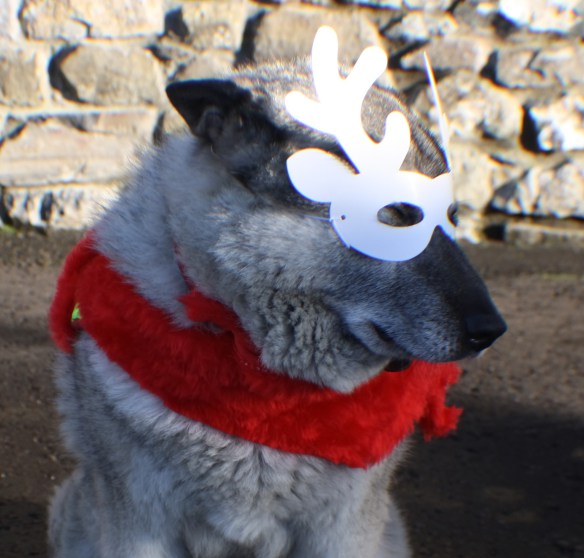
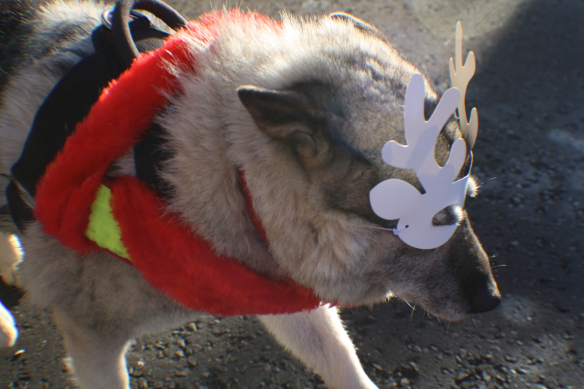
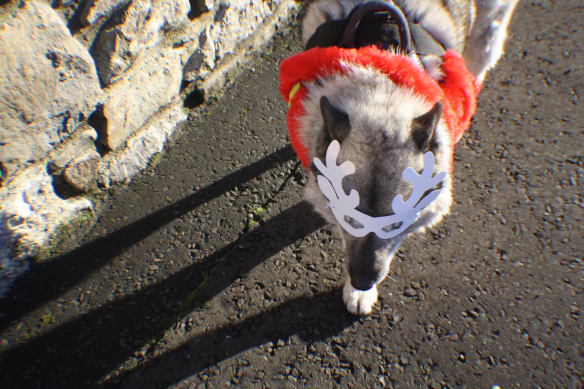
I saw the following images published over on the blogsite Decidingly Bob, that has the sub-heading of Life as I see it! What was so perfect was that the ‘I’ is a dog! The post from which these images are taken, with Bob’s permission, was published on December 12th under the post title of “Bob’s Diary. ..I am not a Reindeer!”
They seemed perfect for the last Picture parade before Christmas Day!
ooOOoo
“After the Christmas Reindeer story, I thought I was safe for a few weeks. Life can be cruel can’t it?
I knew there was trouble brewing when Maria and Sara offered me jelly babies.”
oooo
oooo
oooo
oooo
oooo

ooOOoo
Listen everyone, have a wonderful week and please be safe out there.
Have a gorgeous Saturday smile!
Thanks to the wonders of the modern dictionary, I am able to understand that about two-hundred years ago, sometime around 1790 to 1800, the word ‘able’ that I just used was added to the word ‘adapt’ to make the word ‘adaptable’. I read that the word is an adjective and that from that comes a related word, a noun: adaptability. That same dictionary informs me that the meaning of adaptability is: “capable of being adapted” or “able to adjust oneself readily to different conditions: an adaptable person.”
Now I would be the first to accept that the history of man, the long history of man, reveals a species, namely us, that is incredibly adaptable. Yet, (and you knew there was a ‘yet’ coming!) my sense of how adaptable any one person might be is inextricably wound up with change, and change is often a bitter fruit to taste.
You may recall that I closed the chapter on The process of change, in Part Four, with a snippet quotation from the film Interstellar: “We all want to protect the world, but we don’t want to change.”
That sentiment could be applied to so many aspects of our lives, especially to any form of change that heralded perceived uncertainty, or potential vulnerability; indeed anything that might be regarded as taking us outside our ‘comfort zone’. Granted not everyone, all of the time, yet not no-one at any one time.
Dogs, just like us humans, love routines. However, what strikes me from having lived for a number of years with a great many dogs in the home, variously from sixteen to the nine we have at present[1], is how amazingly easily a dog will adapt to new circumstances, both temporary and long-term changed circumstances.
Somewhere in my research, and I regret not being able to quote the reference, I came across a review of the author Jean Donaldson[2], in connection with her book Culture Clash. This book has shaped modern thinking about the behaviour of dogs and the relationship between dogs and humans.
The reviewer, in discussing the adaptability of dogs, proposes, “Maybe it’s the simple way they view their world. Each thing in their lives seems to fall neatly into its place in their world view. Things to seek out, things to avoid, things to keep, and things to leave behind.”
Then a couple of sentences later, the reviewer adding: “I would guess that scavengers need that kind of mind set. Take it as it comes, deal with it, and move on. Dogs seem to have developed a sense of adaptation. They see what needs to be done and simply find a way to do it no matter what the impediments might be.”
That last sentence describes an attitude towards adaptability that, in my opinion, would be very rare to find in a person.
I am going to devote the balance of this chapter to a true story. The true story about an Akita breed of dog that lived with its owner in Tokyo back in the first quarter of the 20th century. I included this account, despite the main theme of the story being about the extreme loyalty of the dog, because the dog’s ability to adapt is equally as impressive.
In 1924, Hidesaburō Ueno, a professor in the agriculture department at the University of Tokyo took in an Akita breed of dog as a pet and named him Hachikō. During his owner’s life, Hachikō not only saw Professor Ueno come out from the front door each morning but quickly learned to greet him at the end of the day by going to the nearby Shibuya Station. Hachikō continued this daily routine of going to the station until a day in May 1925, when that evening Professor Ueno did not return on his usual train. The reason being that the professor had suffered a cerebral haemorrhage at the university that day, had died and, therefore, never returned to the train station where his doggy friend was waiting.
Kind persons found Hachikō another home after his master’s death but he routinely escaped, showing up again and again at his old home. Eventually, Hachikō in some doggie manner realised that his master, Professor Ueno, clearly no longer lived at the house. So Hachikō went to look for his master at the train station, where he had accompanied him so many times before. Each day, Hachikō waited for Professor Ueno to return. And each day he did not see his friend among the commuters leaving the station.
Now almost a permanent fixture at the train station, Hachikō inevitably attracted the attention of other commuters. Many of the people who frequented the Shibuya train station had seen Hachikō and Professor Ueno together each day. They now brought Hachikō treats and food to nourish him during his long wait – Hachikō waiting at the train station at the end of every single day.
That same year, it happened that another of Ueno’s faithful students, who had become something of an expert on the Akita breed, saw the dog at the station and followed him when he went back to the home of the former gardener of Professor Ueno: Kikuzaboro Kobayashi. There the student learned the history of Hachikō’s life. Shortly after this meeting with Kikuzaboro, the former student published a documented census of Akitas in Japan. His research found only 30 purebred Akitas remaining, including Hachikō from Shibuya Station.
Professor Ueno’s former student returned frequently to visit the dog and over the years published several articles about Hachikō’s remarkable loyalty. In 1932, one of these articles, published in Tokyo’s largest newspaper, threw the dog into the national spotlight. Hachikō became a national sensation. His faithfulness to the memory of his master impressed the people of Japan as a spirit of family loyalty that all should strive to achieve. Teachers and parents used Hachikō’s vigil as an example for children to follow. A well-known Japanese artist rendered a sculpture of the dog, and throughout the country a new awareness of the Akita breed grew.
Hachikō was so loyal that every day for the next nine years he waited, sitting there amongst the town’s folk, appearing precisely when the train was due at the station.
Hachikō died on March 8, 1935. He was found on a street in Shibuya. His heart was infected with filarial worms and 3-4 yakitori sticks were found in his stomach. His stuffed and mounted remains are kept at the National Science Museum of Japan in Ueno, Tokyo. Hachiko’s legendary faithfulness became a national symbol of loyalty. There is a memorial statue of Hachikō in front of Shibuya Station.
This tale of Hachikō is an astounding tribute to the adaptability of the dog.
1,123 words. Copyright © 2014 Paul Handover
[1] December, 2014
[2] http://www.jeandonaldson.com


