Why is it you can never find one when you want one!
(My great apologies to the person who sent me the following and my not noting who it was.)
Have a wonderful weekend!
Dogs are animals of integrity. We have much to learn from them.
Category: People and their pets
Why is it you can never find one when you want one!
(My great apologies to the person who sent me the following and my not noting who it was.)
Have a wonderful weekend!
A very Happy Valentine’s Day to all of you.
(And that, of course, means all you humans and your pets.)
I am sharing three very appropriate items for today.
Firstly, a recent article over on the Care2 site.
ooOOoo
 By: Katie Medlock February 8, 2016
About Katie Follow Katie at @offbeatherbivor
Whether you’re on board with celebrating a “traditional” Valentine’s Day this year—chocolates, cards, romance—or not, this year should be the year we also show some extra love to the animals in our lives. Whether we focus on our own companion animals or forgotten creatures out there in the world who also need compassion, this Valentine’s Day could be the start of a new tradition. Here are a few ideas to really bring the love to our furry and feathered friends this year:
1. Plan a trip to an animal sanctuary
Animal sanctuaries are wonderful places to visit solo, with your partner or with the kids. Most, if not all, states have at least one farmed animal sanctuary where pigs, cows, goats, chickens, geese, horses and many others have found a permanent home after being rescued on the way to slaughter or from their terrifying lives in the animal industries. There are few ways to connect with an animal and appreciate all they have been through in their lives that shine brighter than spending time petting a goat or cuddling a pig.
2. Dine on a meatless meal
To have a truly animal-friendly Valentine’s Day, don’t serve any of them on your plate! By choosing to dine on a plant-based meal full of fresh vegetables, hearty legumes, sweet fruits, wholesome grains and satisfying nuts and seeds, you are showing the animals the utmost respect. Try these Valentine’s recipe ideas, ethical wine suggestions and delicious vegan chocolate truffles for the big day! And, if you are interested in reducing the amount of animal products you consume beyond V-Day, visit the Meatless Monday website to learn how to tip the scales gradually toward regular vegan meals.
3. Reach out to an animal in need
Do you have a friend who could use a dogsitter for an upcoming trip? Does your local animal shelter or adoption agency need an extra hand with walking the dogs, cleaning cages and spending time with furry friends? Have you spoiled your own companion critter lately with a new toy, extra play time or some homemade treats? Valentine’s Day is the perfect time to extend our love to our own companion animals and to those around us who also need a little extra love. The rewards from reaching out to a pet in need are tenfold what we expend putting forth the effort. Use this February as an excuse to spend more time with some critters!
ooOOoo

Dogs have lived alongside us for thousands of years, earning the reputation as “man’s best friend” for good reason. But while some people may be quick to dismiss a dog’s devotion as simply a relationship based on need, experts say that’s just not true.
“Dogs have developed the strongest ability of all animals on Earth to form affectionate bonds with humans,” says Dr. Frank McMillan D.V.M., director of well-being studies at Best Friends Animal Society, an organization helping adopters find loving companions. “Dogs don’t just love us — they need us, but not just for food and physical care. They need us emotionally. This is why the attachment bond a dog feels for his human is one of deep devotion and is, as has been often stated, unconditional.”
But how exactly does a dog say, “I love you”? Read on to find out.
Your dog wants to be close to you.
If your dog is always in your lap, leaning against you or following you room to room, it’s clear your pooch is attached to you.
“A dog’s affection is most evident in their desire to be physically close to you. This can sometimes appear to be a clinginess, and it isn’t always easy to distinguish healthy positive clinginess from insecurity, but in both cases your dog is deeply attached to you,” McMillan says.
Your dog gazes into your eyes.
When you and your pup share a long look, your dog is “hugging you with his eyes,” according to Brian Hare, a professor at Duke University who studies canine cognition, and research shows that this “hug” has a profound effect on both man and animal.
When scientists at Japan’s Azabu University took urine samples from dogs and their owners before and after 30 minutes of interacting, they found that the pairs that spent the most time gazing into each others’ eyes showed significantly higher levels of the hormone oxytocin, the same hormonal response that bonds us to human infants. “It’s an incredible finding that suggests that dogs have hijacked the human bonding system,” Hare told Science.

Your dog excitedly greets you.
Does your pup jump up, wag his tail and barely seem able to contain his excitement when you arrive home? If so, that’s a sure sign of affection.
“This becomes even more obvious when your dog learns, like Pavlov’s dogs, that some sound signals your upcoming arrival, like the garage opener or sound of your car, and they show excitement upon hearing that sound,” McMillan says.
Your dog sleeps with you.
Dogs are pack animals that often huddle together at night for warmth and protection, so when your dog snuggles up with you, it means he considers you to be part of the family. And these canine cuddles may even help you get a better night’s sleep.
You are your dog’s safe haven.
“Much affection in animals and humans is based on how much you can be relied on as a source of comfort and support in scary situations,” McMillan says. “If your dog seeks your comfort during thunderstorms, car rides, vet visits or other frightening occurrences, then you are seeing another aspect of her attachment bond to you.”
Your dog ‘reads’ you and reacts accordingly.
A close bond with your dog may enable him to sense your mood and respond with affection. “Many dogs who sense that you are upset or not feeling well will demonstrate their affection by spending even more time by your side. They might give you licks or rest their head or paws on some part of your body,” McMillan says.

Your dog yawns when you yawn.
If you’ve ever yawned after witnessing another person’s yawn, you’re aware how contagious the act can be. This contagious yawning is unique to only a few species, and man’s best friend is one of them.
Researchers have even found that not only are dogs more likely to yawn after watching familiar people yawn, but also that dogs will yawn when hearing only the sound of a loved one’s yawn. So if your canine companion yawns in response to your yawns, odds are good that his affection for you enables him to empathize with you.
Your dog focuses on you.
It’s not unusual for dogs to delight in positive attention from virtually anyone, but just because your pooch loves on everyone, doesn’t mean he doesn’t love you most. Pay attention to how your dog acts when in a room full of people. If he stays focused on you or ignores others while awaiting your return, you know you hold a special place in your dog’s heart.
Your dog forgives you.
“Part of the affectionate feelings your dog has for you shows up in their willingness to forgive you for things you do that make them feel bad, such as raising your voice, or misplacing your frustration on your dog by ignoring them,” McMillan says. “Forgiveness is your dog’s attempt to maintain the loving bond they share with you.”
However, even if your canine best friend doesn’t show affection in these ways, it certainly doesn’t mean your pooch doesn’t love you. Just as some people can care deeply without expressing their feelings, so can your pup.
“Be sure not to go through the list above and think that because your dog shows very few or even none of these things, he or she doesn’t love you. Odds are, love is very much there. After all, we’re talking about a dog here,” McMillan says.
And how can you show your dog some love? Engage in playtime, take a long walk, bake some yummy dog treats, or give your pup a homemade toy. Above all, McMillan says the best thing you can do is simply give your dog more of you because that’s what man’s best friend wants most of all.
ooOOoo
Finally, enjoy this fabulous video. (Thanks Sue Dreamwalker)
Published on Oct 20, 2014As humans animals can be also friends. If animals live together they became often friends. Friendship between different species can be cold as unlikely animals friendship. In this you can see friendship between dogs and cats, Lion tiger and bear friends, Baby Chick and Chihuahua best friends, cat and own friendship etc.
So many loving relationships! So many lessons for us to learn from our dogs!
One Common Thing That is More Toxic Than Chocolate for Dogs!
Note: This is a repeat of the Xylitol warning that appeared in a LfD post on the 4th. January. It is being repeated to ensure the maximum awareness of all my readers and followers.
Deborah Taylor-French is an author and also has the blog Dog Leader Mysteries. It was on her blog that I saw a reference to the acute dangers on Xylitol for dogs, and for cats. So please read and share the following.
ooOOoo
Actually, I didn’t know the answer until I did the research. The startling fact that thousands of

products contain this substance stymied me. There are no warning labels for pet owners. Because these products are made for people, hundreds of dogs and cats suffer when adults or children leave these foods and products where pets can ingest them.
This substance naturally develops in grapes and onions. Is also an ingredient often added to gum, candy, mouthwash, toothpaste, and ear medications for children, plus it is added to many prepared foods.
WRONG! What is okay for people to eat, proves toxic for pets. Chocolate and nuts are two examples of what people can eat, yet can be lethal for pets. Xylitol damages dogs’ livers. In both people and canines liver failure often means the end of life.
In an article in The Wall Street Journal, Mark Maremont reported that, “Besides gum, xylitol is used by manufacturers in products including mints, gummy vitamins, toothpaste, specialty peanut butter and melatonin sleep aids—in part because it has about two-thirds the calories of sugar and is safer than sugar for diabetics. Some gum makers cite studies showing dental-health benefits.”
“A type of sugar alcohol extracted from plants, xylitol is well-tolerated by humans, but in dogs causes a sudden release of insulin, resulting in low blood sugar and potentially leading to seizures and brain damage. It also can cause liver failure.” Xylitol has been added to literally thousands of products. It is safe in these many products for people, but it kills dogs and cats.”
Hershey’s Ice Breakers contain 10 times the pet toxic Xylitol level per piece
“Xylitol makes up more than half the weight in certain Ice Breakers flavors, about 1.2 grams of xylitol per piece, according to Hershey’s consumer helpline. That’s about 8 to 10 times the amount of xylitol in some other popular gums. A pack of the brand, introduced in 2006, contains 40 pieces.”
Hard candies, breath mints, toothpaste, tooth whiteners, mouthwash, some jams and jellies all contain xylitol. The U.S.A. Federal Drug Administration does not require warning labels on any of these sweet treats.
As reported in the Wall Street Journal article, “A toxic dose of xylitol—enough to potentially cause low blood sugar or other symptoms—is 0.1 grams per kilogram of the dog’s weight.”
from Mark Maremont, “Sweetener in Gum Is Causing Surge in Accidental Dog Poisonings” The Wall Street Journal, November 2, 2015.
“Xylitol is extracted from plant material and is available as an ingredient (additiive) in more and more foods, but the amount naturally occurring in foods is very small. In addition to gum, xylitol can now be found in some hard candies, chocolate, table syrup, jams, and jellies.” WebMD.com/ supplements/xylitol
“…some animal studies have shown tumor growth resulting from high doses of xylitol over long periods.…” – WebMD Warning for Dog Owners
“If you are a dog owner, be aware that xylitol can be toxic to dogs, even in small amounts”
Note: This list is far from complete.
Please read the labels on anything you put on pet level in your car and home. Dogs love sweets.
Keep these foods containing xylitol away from pets:
Xylitol may kill pets that ingest it. If you suspect your dog of eating any items made with this toxin, immediately rush you pet to a veterinarian.
Symptoms of Poisoning
Please help dog lovers and cat lovers by sharing.
Here’s hoping all dog lovers will receive benefit from my second guest post on 4Knines’ blog. Ready to save pets’ lives? Please share this with dog and cat lovers everywhere. Spread the word about this naturally substance, artificially introduced to our homes in dozens of products. Please share and discuss the threat to pets’ health and lives from ingesting even a small amount of xylitol.
ooOOoo
As I mentioned in my introduction, do share this vital information.
And stay safe! (That applies to you and your wonderful animals!)
You are going to adore these!
(Big thanks to neighbour Dordie who sent these to me.)
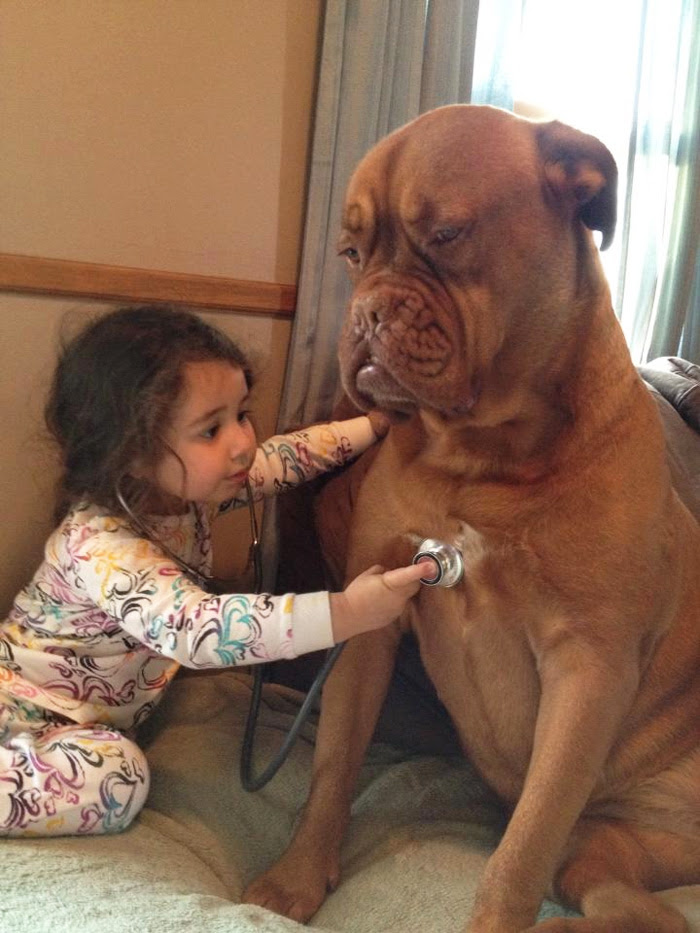
Few friendships can compare to the bond between a child and their pet. Pets provide companionship, they help kids learn, they encourage nurturing, they keep them healthy and help build beautiful family bonds. Let’s take a look at some of the cutest kid-and-pet pictures around.
 oooo
oooo
 oooo
oooo
 oooo
oooo
 oooo
oooo
 oooo
oooo
 oooo
oooo
The second set will not be next Sunday owing to that day being Valentine’s Day and I have plans for that day! 😉 So part two of this wonderful three-part series of photographs will be Sunday, 21st February.
A lovely reminder of our fabulous dogs.
Before moving on to the story, can I just say that the link to this report was emailed to me by a follower of Learning from Dogs. It underlines something that I had no idea about when I first started up this blog in July 2009. The wonderful sense of community that develops between a blogger and his or her readers and followers.
So many of you that interact with this place feel like long-established friends, and are treasured.
Marg, thank you for sending me the link to the following. It’s a wonderful item that appeared on the Australian outlet of The Huffington Post.
ooOOoo
This concerned dog just wanted to make sure some young pups would be OK in a new place.
Maggie the dog was staying at the Barker’s Pet Motel and Grooming in Alberta, Canada, when she was caught on a surveillance camera sitting outside a kennel that held two 9-week-old rescue puppies named Hannah and Kari last week.

The canine sneaked out of her own kennel to comfort them on their first night there, and after pet motel owner Sandy Aldred let Maggie into the pups’ cage, the older dog spent the entire night cuddling with the two new guys on the block, according to ABC News.
“We’ve never really seen it before, where a dog sneaks out to some puppies and is so excited to see them.” Aldred’s son, Alex, who also works at the pet motel, told ABC News.
Anna Cain, office manager at the pet motel, told The Huffington Post that Maggie, who is a former shelter dog herself, had been staying there while her owners were on vacation. The puppies were dropped off at the facility after they were rescued by Alberta Animal Rescue Crew Society.

The thoughtful dog, who recently had puppies of her own that were adopted out by a humane society, likely heard Hannah and Kari crying, according to a Facebook post from the motel. So Maggie squeezed her way out of her kennel after pushing aside a water bowl built into her door. She then went right to the pups’ cage.
“She paid them a lot of attention and you could see her little tail wagging. And she’d do the little bow down to them and poke them through the chainlink gate of their room,” Aldred told CBC News. “She just decided that was where she was going to stay until we came to get her.”
When Aldred returned to the kennels and let Maggie into the puppies’ cage, she supervised to see if all the dogs would get along. And of course they did.
“They were just all so happy to be together,” Aldred told CBC. “She was nuzzling them really gently and nudging them, and then she laid down and let them cuddle with her.”
The trio stayed together and were even found snuggling the next morning, ABC News reported. While Maggie’s actions are sweet, it’s not uncommon for dogs who have had puppies, to act compassionately like she did.
“It’s innate in a lot of female dogs, especially if they’ve had a litter in the past. It’s just in their nature,” Deanna Thompson of AARCS told ABC News. “We’ve seen it in a lot of dogs even with male dogs, when they hear other puppies crying they want to console them and make sure they’re feeling safe.”
Maggie and the pups have parted ways unfortunately as her owners have returned from their trip. There are pending adoption applications for both puppies, but for the time being, the pair are in the motel, Cain said.
ooOOoo
Other readers who know and love dogs will endorse my claim that it is not just crying puppies that are consoled by adult dogs; we humans as well experience a fair degree of compassion from our dogs!
Lovely story!
More information for dog owners.
Jim and Janet are good friends here in Merlin and live just a short distance away. Jim is also a Doctor of Veterinary Medicine (DVM) and he emailed me following my post on Saturday about being more aware of dog flu. This is what Jim said:
Hey Paul …..I saw on your blog that you had already posted info regarding canine influenza. I don’t know if you needed any more material, but, if you are interested, attached is a client information sheet and a couple maps indicating the spread of the DZ as of 11/15.
That client information sheet explained these important details.
ooOOoo
Canine Influenza H3N2
Authored by: Dr. Mark Rishniw, ACVIM
VP Client Information Sheets
What is canine influenza?
Influenza in dogs is caused by canine influenza viruses (CIVs). The two main CIVs in circulation internationally are H3N8 and H3N2. Dogs are occasionally infected with human influenza viruses. These viruses are extremely contagious.
When did the current U.S. outbreak of H3N2 start?
The outbreak began in the Chicago area in March, 2015.
Where have cases been reported?
Geographic locations expanded in the months after the initial outbreak. To see the latest news on where it has been seen, see regularly updated information from Cornell University College of Veterinary Medicine.
What strain of influenza caused this outbreak?
The 2004 outbreak, which was caused by the H3N8 strain, has remained circulating in the U.S. dog population, causing sporadic disease since that time. However, the current outbreak has been identified as a H3N2 strain of influenza A virus. This strain is closely related to an Asian strain that is circulating in China and South Korea.
Will the influenza vaccines against the H3N8 (old) strain protect against the H3N2 strain involved in the current outbreak?
Probably not. The current commercially available vaccines are not likely cross-protective against the H3N2 strain involved in the current outbreak.
What about the new H3N2 vaccines?
These should reduce the clinical signs if a dog becomes infected. They will also decrease the time that a dog remains “infective” to other dogs. They will not protect against the old (H3N8) strain.
Should I vaccinate my dog with the new vaccine?
That’s a decision for you and your veterinarian. Any place where dogs unknown to you congregate in large numbers confers an increased risk to your dog, such as boarding kennels, shows, traveling, going to dog parks, training classes, and performance competitions. Dogs that have diseases or treatments that suppress the immune system (e.g. corticosteroids, cancer etc.) are at higher risk. The virus does not survive well in the environment, so there is little risk of infection if a dog is mostly at home.
Prevention
For dog owners living in the affected areas, the best prevention is to minimize contact with other dogs. Consider avoiding places such as dog parks, dog day care, grooming facilities, boarding, training classes, and group gatherings. Walking your dog should be fine, but avoid socializing with other dogs.
If your dog in the affected areas has respiratory signs, such as coughing, hacking, gagging or difficulty breathing, call your veterinarian before your appointment to let them know your dog has respiratory signs so that they can take appropriate precautions to minimize the possibility of contaminating the facility. When you get to the clinic, leave your dog in the car and have the veterinary team meet you at the car so they can figure out how to best handle the dog.
What are signs of infection?
Clinical signs range from subclinical infection, or mild fever and malaise to severe, life-threatening pneumonia; however, most clinically affected dogs have signs that are typical of kennel cough. Of approximately 1000 dogs recognized to be infected in the Chicago area, about five have died from the infection. Clinically, influenza infection is not distinguishable from kennel cough caused by other pathogens, such as Bordetella bronchiseptica.
How is canine influenza diagnosed?
Tests that broadly detect influenza A virus (e.g., broadly targeted influenza A real time RT-PCR) should effectively detect both H3N8 and H3N2. However, tests targeted directly at H3N8 are unlikely to identify H3N2 infection because of limited cross-reaction between H3N8 and H3N2 antibodies.
Can other animals or people become infected with this strain?
Currently, there is no evidence that people can contract this virus. However, studies in Asia have shown limited transmission to cats. Whether this can happen with the strain currently involved in the U.S. outbreak is unknown. In Asia, the H3N2 strain that infected cats (and caused disease) was considered to be of avian origin. Current information about the U.S. H3N2 strain suggests that it might be of porcine origin.
How are the dogs treated?
The mild form requires minimal supportive treatment, as is the case with ANY mild upper-respiratory infection (kennel cough). Cough suppresants may be provided. Antibiotic therapy is restricted to high-risk patients. With the severe form, treatment is largely supportive. A rapid onset of disease (4-6 hours) is matched by an equally rapid improvement in clinical signs if treatment is instigated. Fluid support and broad-spectrum antimicrobials that cover both gram-positive and gram-negative bacteria are generally required.
Copyright 2015 – 2016 by the Veterinary Information Network, Inc. All rights reserved.
ooOOoo
Jim also included in his email these following maps in pdf format that I was unable to include in this post. Luckily I also found them as images originally published on the Dog Influenza website.
 oooo
oooo

Please treat this post as general information. If you have any doubt or queries about the health of your pet animals please see a vet without delay.
This article was recently seen on Mother Nature Network and is shared with you all.
ooOOoo

As animal experts around the country amplify their warnings about dog flu outbreaks, pet owners are scrambling to understand the illness and learn how they can protect their pets. Here’s what you need to know about this potentially deadly disease.
What is the dog flu?
Dog flu — or canine influenza — is an infection caused by one of two virus strains: H3N2 and H3N8. Of the two, H3N2 is more commonly seen in pets in the U.S. It is thought that the strain came from Asia, possibly originating as an avian flu that was transferred to a dog.
Dog flu symptoms
Like the flu that affects humans, the symptoms of the dog flu hit the respiratory system causing coughing, a runny nose, watery eyes and a sore throat. It’s also usually accompanied by a high fever and loss of appetite. But unlike with humans, your dog won’t be able to tell you how bad she is feeling, and you may not notice the symptoms right away. Animal experts say to watch your dog for changes in behavior. If your normally hyper dog seems lethargic or if your pup who is usually enthusiastic about eating starts skipping meals, it’s time to take a closer look.

How does the dog flu spread?
The dog flu virus spreads just like the human flu virus does — through bodily fluids that are released into the air via a sneeze or cough or by touching objects or surfaces that have been contaminated. The dog flu virus can live in the environment for two days.
Dogs that spend a lot of time around other dogs — in dog parks, kennels, shelters, groomers or veterinary clinics — are the most likely to contract the illness.
What to do if your dog gets the flu
Older dogs, younger dogs and dogs that are already sick are the most vulnerable when it comes to the dog flu, not because of the virus itself, but because these dogs are the most likely to develop complications, like pneumonia, that could be fatal. If you think your dog may have the flu, it’s important to check in with your vet to make sure he isn’t getting any worse.
At home, you can keep track of your dog’s temperature by placing a thermometer under her armpit, or for a more accurate reading, in her backside. According to the American Kennel Club the normal range for a dog’s temperature should be between 101 and 102.5 degrees Fahrenheit (38.3 to 39.2 degrees Celsius.)
Keep the fluids going as much as possible and try to entice your pooch to keep eating. Check with your vet about foods that may prompt him to eat without giving him a stomachache.
More than anything, give your pet plenty of time for R&R. Give her a week or so off from running, walking and other forms of exercise and just let her rest and sleep as much as she needs. Just make sure that she is still drinking, eating a little, and relieving herself.
How you can keep your dog from getting the flu?
The best way to minimize your dog’s risk of getting the flu is to keep her away from other dogs. If you spend time with other dogs, be sure to wash your hands and even change your clothes before interacting with your own dog. While humans can’t contract canine influenza, we can carry the virus on our hands and clothing for up to 24-hours after handling an infected dog.
You could also talk to your vet about a dog flu vaccine, although there is some question about its effectiveness as the vaccine for H3N8 may not offer protection from H3N2 and vice versa.
ooOOoo
If any readers have anything to add to this article, I would love to hear from you.
Let’s please keep all our dogs safe!
As seen on the Care2 website.
Jack the dog somehow tolerates Julia the kitten’s limitless desire to play with him…even when that includes some kitty paws to the face! Impressed?
Can’t resist these videos.
I was looking up stories on German Shepherds, a breed we just adore, and quite by chance came across a lovely follow-up to my post last Tuesday Dogs and Dolphins.
Published on Mar 9, 2012This is a video of a German Shepherd jumping in on some dolphins while we were underway in our boat. I guess he wanted to play with the dolphins lol
Thanks for watching
After that video had come to an end, YouTube then automatically went on to this one:
(The soundtrack quality is poor but, nevertheless, it was been viewed over six million times!)
You all have a great week-end.
This is gorgeous.
(Apologies for such a short post – I got badly squeezed timewise yesterday – it doesn’t detract from this delightful video.)
Published on Aug 10, 2015http://www.DolphinWhisperer.org : Sandy meets the dolphins!
I’ve been bringing people to swim with wild dolphins for years, this was the first time I brought a dog. Sandy was a stray taken in by friends here in Bimini. Sandy is a strong swimmer (she can swim over a kilometer). Last week she came out on the ocean with me, it was her first time ever on a boat. The next time I went out, she wanted to come, even jumped off the dock and swam after me, so I scooped her up and off we went.
Sandy was very curious about the dolphins, it was clear she wanted to go in. The following footage is of her first wild dolphin swim!Special thanks to Jwala, Amlas, Atmo, Sukhama and of course Sandy!
Joebaby aka Joe Noonan is a shamanic nature guide, author and dolphin whisperer who leads private custom ocean adventures swimming with wild dolphins for small groups and families in Hawaii and the Bahamas. Visit his website at http://www.DolphinWhisperer.org
Enjoy everyone!
 Learning from Dogs