Category: Musings

Saturday serendipity

Facing up to our challenges often inspires new beginnings.

I subscribe to Val Boyco’s blog Find Your Middle Ground (and love it!).

Last Thursday, Val published a beautiful poem that she, in turn, had seen over on Mindfulbalance, a blog that I hadn’t come across but suspect that I am going to like.

ooOOoo

Originally posted on Mindfulbalance:

Trittsteine_am_oberen_Teich_Japanischer_Garten_Kaiserslautern

It may be that

when we no longer know

what to do,

we have come

to our real work,

and when we

no longer know

which way to go,

we have begun

our real journey

Wendell Berry, The Real Work

ooOOoo

Going to close today’s post by repeating something that is in a little book that I have had for years: Extracts from Peace In Every Step by Thich Nhat Hanh originally published by Bantam Books.

Aimlessness

There is a word in Buddhism that means “witlessness” or “aimlessness”. The idea is that you do not put something in front of you and run after it, because everything is already here, in yourself.

While we practice walking meditation, we do not try to arrive anywhere. We only make peaceful, happy steps.

By taking good care of the present moment, we take good care of the future.

You all have a wonderful present moment!

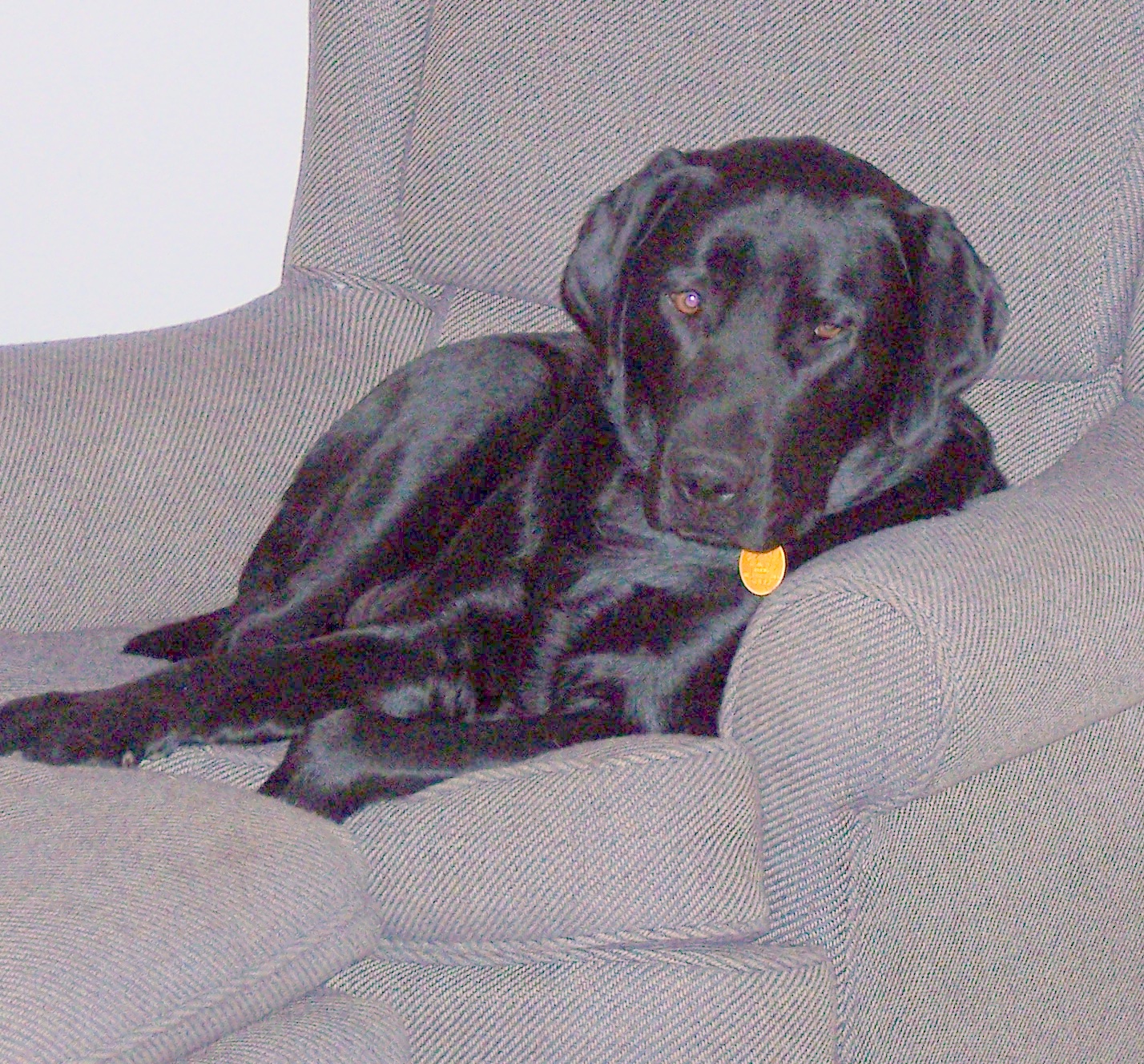
In memory of Clyde!

This could be the most important lesson we learn from our dear dogs.

Reclining Clyde
Reclining Clyde

Our immediate neighbours to the South of us, Larry and Janell, lost one of their dogs last Saturday. Here’s the email that was sent out by Larry:

Bad day at the ranch

We lost Clyde today. A neighbor who is a veterinarian came by this morning and did the deed. He had cancer in his shoulder, we had a tumor removed a couple of months ago but there must have been some left because his left front became totally unusable and then his left rear started to go too. We tried everything that the vets could come up with but it was starting to eat him up.
He was born in central South Dakota at a cattle ranch where I got him in April 2004, a six week old black bundle of wrinkles. He learned his manners from Barney, who we lost a little over 2 years ago from cancer as well. Barney and Clyde, what a GREAT pair!!

We still have Baxter the Aussie, who has pretty well recovered from getting hit by a car and severely injured the beginning of last month and Bob the cat.

I will miss Clyde terribly, just like I have ALL my labs! They are wonderful dogs. Just thinking that I’ll probably never have another big floppy eared pal like that makes me want to just cry my eyes out!!

One of the fondest memories of my life is/was going bird hunting, especially ducks, and having a well mannered lab as my partner!! I’ve shared time and my lunch with some good ones!! I so very much wish/hope that there really is a “RAINBOW BRIDGE”!!

Jean and I obviously knew Clyde and can confirm that he was the most gentle, kind-hearted dog one could find.

I wanted to treasure the memory of Clyde, on behalf of all the dear dogs in the world, and asked Larry and Janell if they would be comfortable with me publishing the email. They replied without hesitation that it was fine and then sent me some photographs of Clyde to include in this post.

———-

So the easy course for this post would be to leave it at this and move on. (And, please, if you are not up for a degree of introspection from yours truly, then do stop reading at this point!)

———-

But when I awoke this morning (Tuesday), a little after 5am, Jean still asleep next to me, three dogs likewise across the bed, and knowing I would be writing about Clyde later on in the day, I started to reflect on life and death and was there a lesson for us humans in the death of our beloved dogs. When Jean awoke an hour later, I asked her how many of her dogs had died over the years. She replied that there had been at least twenty dogs that had died and that she could remember each and every one of them.

That then opened up a much deeper reflection on death and whether our dogs really can offer us a lesson in this regard. For I’m not ashamed to admit that at times I feel scared about the future. I’m 70-years-old, seeing the signs of what the medics call ‘cognitive ageing’, have a few minor challenges in the areas of prostate, blood pressure, thyroid, and know how terribly unprepared I am for the second of life’s two certainties: death.

Jean’s view was that dogs have the ability to live so perfectly in the present that, except in very rare occasions, they don’t grieve for the loss of a loved one. Clearly, a significant difference between dogs and us humans.

Then it was clear that we humans only grieve for the death of someone we knew. That within the family that rarely extended back beyond our grand-parents. That seemed to offer some philosophical help. For if it comes down to the memories that others will have of us, after we have died, then it behoves us to live the best life we can, doing our best at every stage in our lives. Accepting that it is impossible not to make mistakes and end up with regrets, yet so long as we try to be true to ourselves then that’s all that matters.

It was then a very small onward step to love and the potential for the greatest learning from our dogs. For dogs so frequently show us the magic of unconditional love.

Back to Clyde.

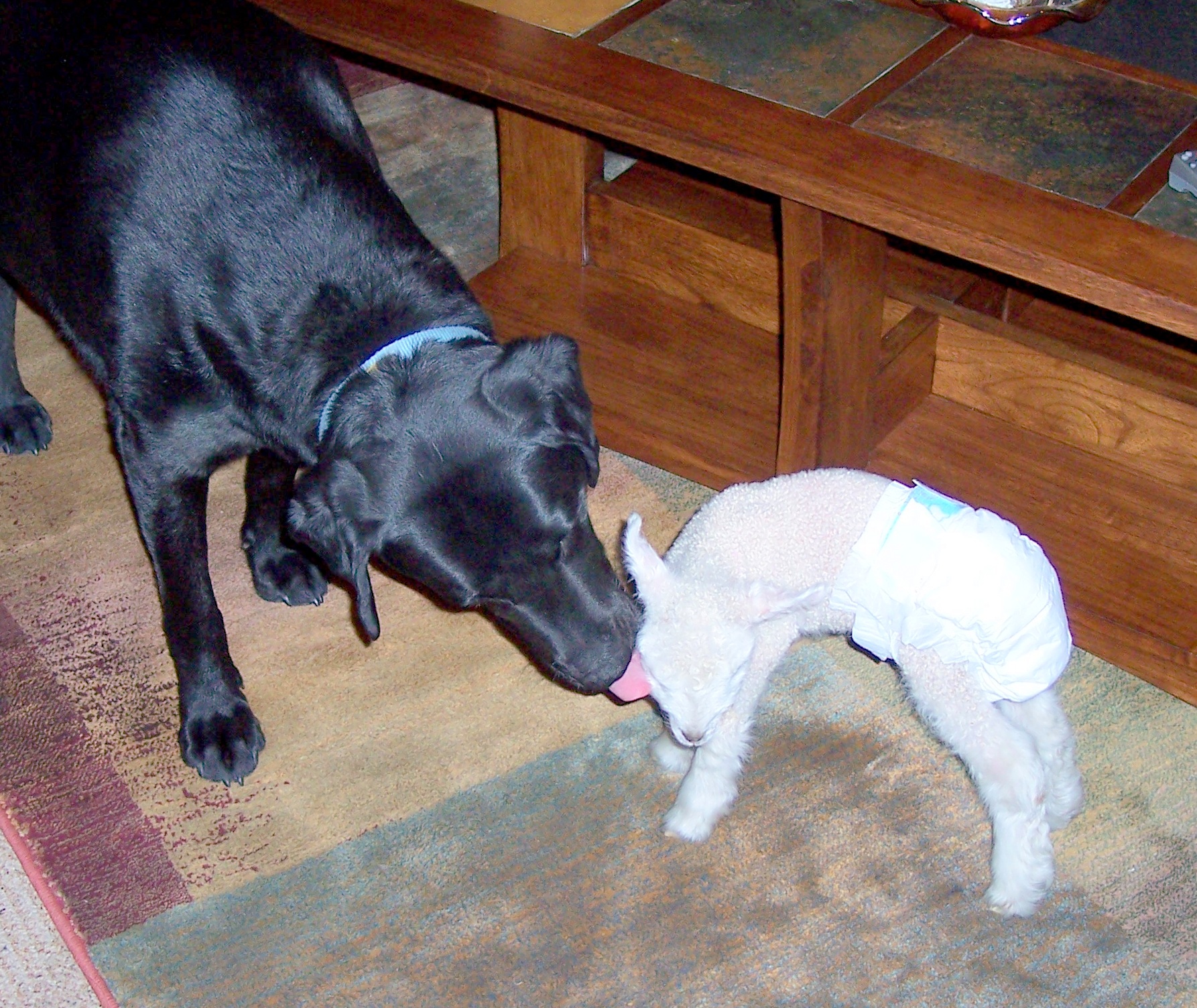
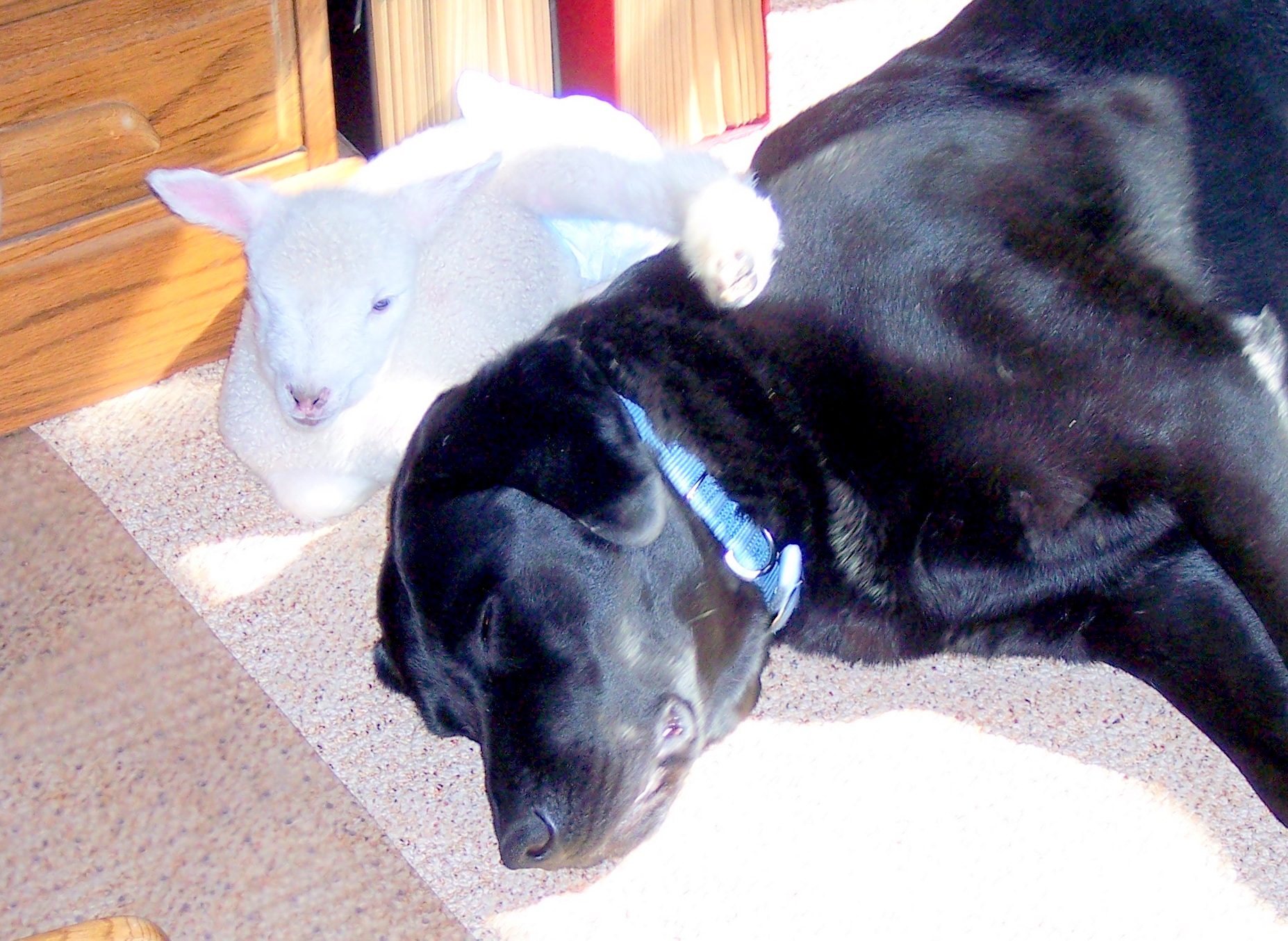
Here are two other photographs of dear Clyde, separated by the words in Larry’s covering email.

Clyde cleaning Pearl the lamb.

Paul, here are a few pictures of Clyde. Feel free to use what you like. We always said Clyde had a big heart, big stomach and no ambition as evidenced by these pictures! At one time we were nursing an orphan lamb in the house, Clyde adopted the lamb, Pearl, and looked after her, Larry.

Clyde and Pearl demonstrating such a dear friendship.
Clyde and Pearl demonstrating a dear friendship.

I know that when our Lilly dies, she is 17, Jean will weep many tears.

I know that when our Pharaoh dies, he is soon to be 12, I will weep many tears.

But those pictures of Clyde remind all of us that it is in life that it is important to love. Important, almost beyond words, to be kind to others, to offer and receive love, and to treasure the present.

So, yes, we must shed a few tears of the heart yet thereafter we must treasure the memories.

“For if we cry at losing the sun, our tears will hide the light of the stars.”

Thank you, Clyde!

On your bike, Mrs. H.!

My dear wife takes to cycling.

Like most young boys I was on a bicycle at a very young age. Then once sufficiently old to drive a motor car that was the end of bike riding for almost forever. Except that a few months ago the argument for anaerobic exercise as a means of delaying the worst of all the ailments that come with an ageing body (and mind!) convinced me to get back on a bike.  That was made a lot easier because a small group of close neighbours ride three times a week and that seemed an opportunity not to be missed.

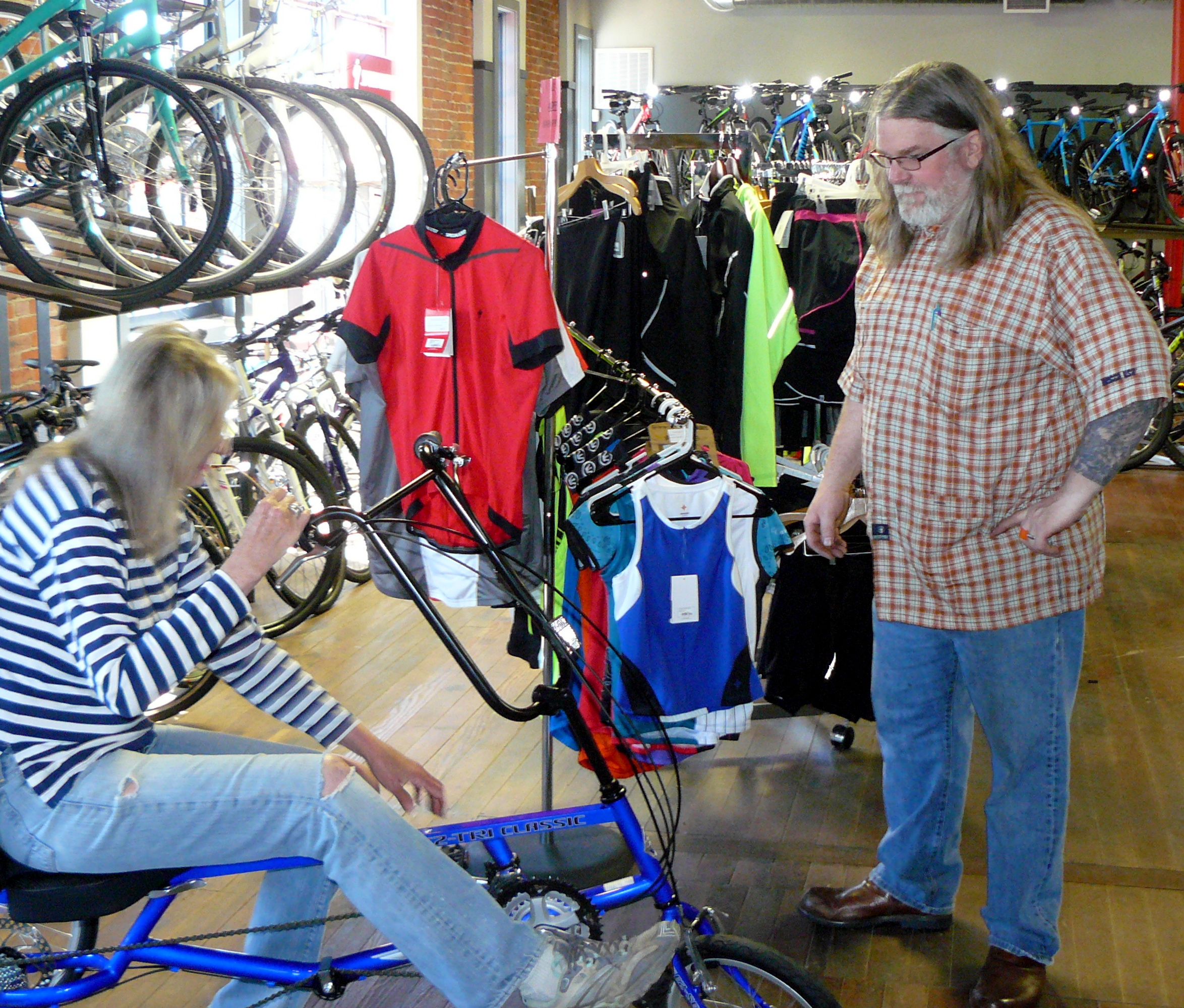
Those same neighbours supported, and recommended, a local bike shop in Grants Pass and I have ‘borrowed’ this picture of the store from their website.

Views of the interior of Don's Bike Center, Grants Pass, Oregon.
Views of the interior of Don’s Bike Center, Grants Pass, Oregon.

Having now been riding an average of 35 miles a week for the last ten or twelve weeks, I can vouch for the benefits it is providing.

Logically, therefore, it was going to be much better if Jean could come with me, and the rest of the riding group, each week. But there was a small challenge: Jean had never ridden a bike in her life. Horses, yes! Bicycles, no!

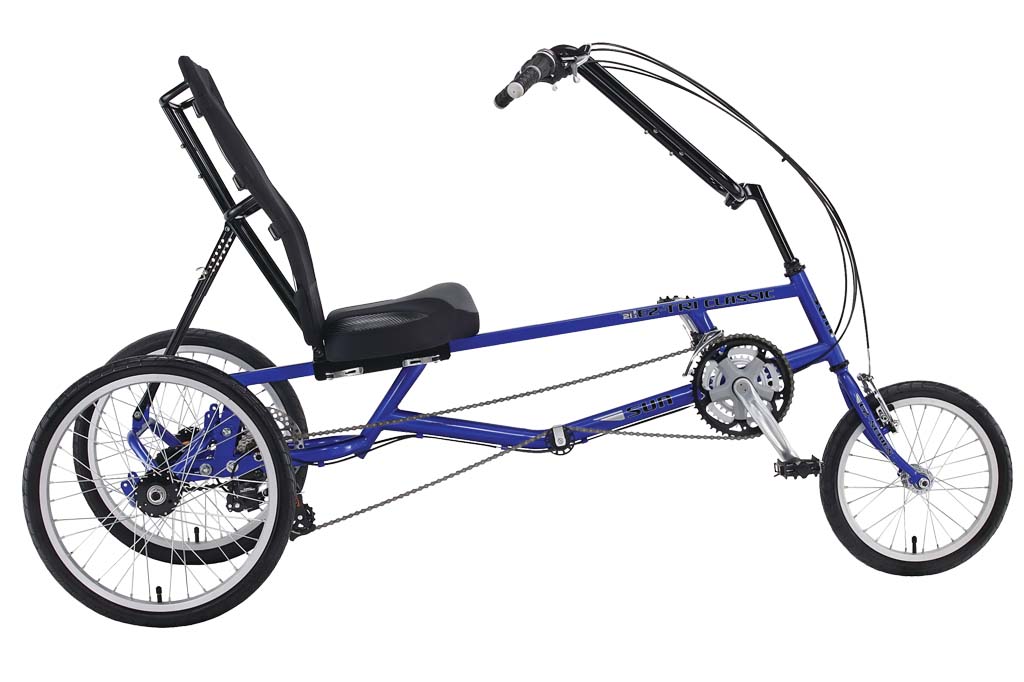
Eric over at the bike centre lent Jean a two-wheeler to try but very quickly it was clear that Jean would not easily develop the confidence to ride on our local roads. The next suggestion from Erik was a tricycle! Not one that was designed in the days of Noah and his Arc but a modern model of the ‘recumbent’ design. In particular, one manufactured by Sun Bicycles. Here’s an image of the trike from the Sun’s website.

Sun EZ Tri Classic SX

Thus it came about that last Friday Jean and I went over to Don’s Bike Center to collect her new bike.

Eric at the store checking that the bike was properly set up for Jean.

Then once home it was time for Jean to learn a number of very new skills. At first just by riding around our turning circle in front of the house.

P1150655

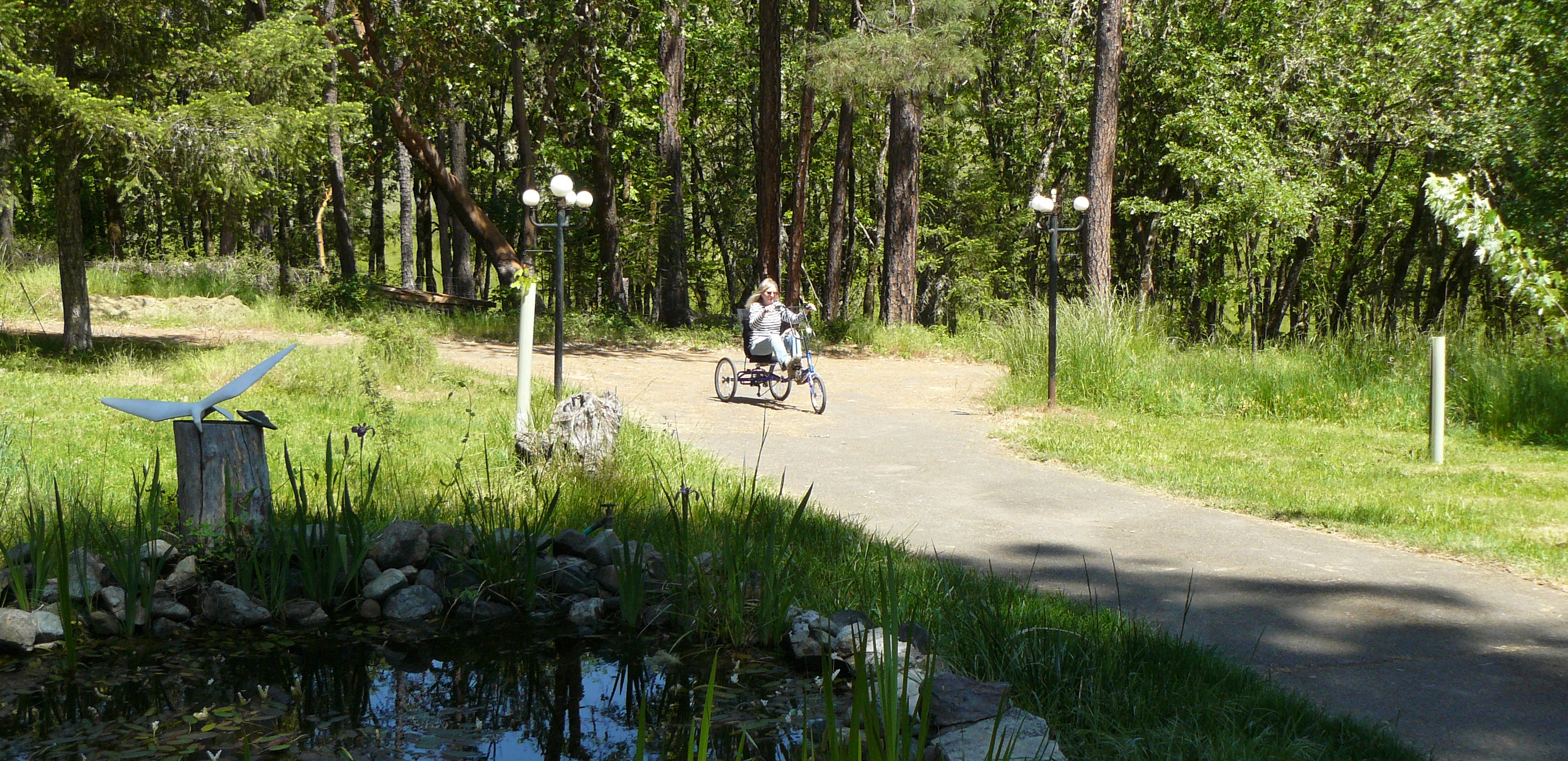
Then trying out our quarter-mile driveway that includes a couple of steep gradients; well steep for a cycle rider!

P1150660

Another view of Jean getting to know her new bike here at home.

P1150656

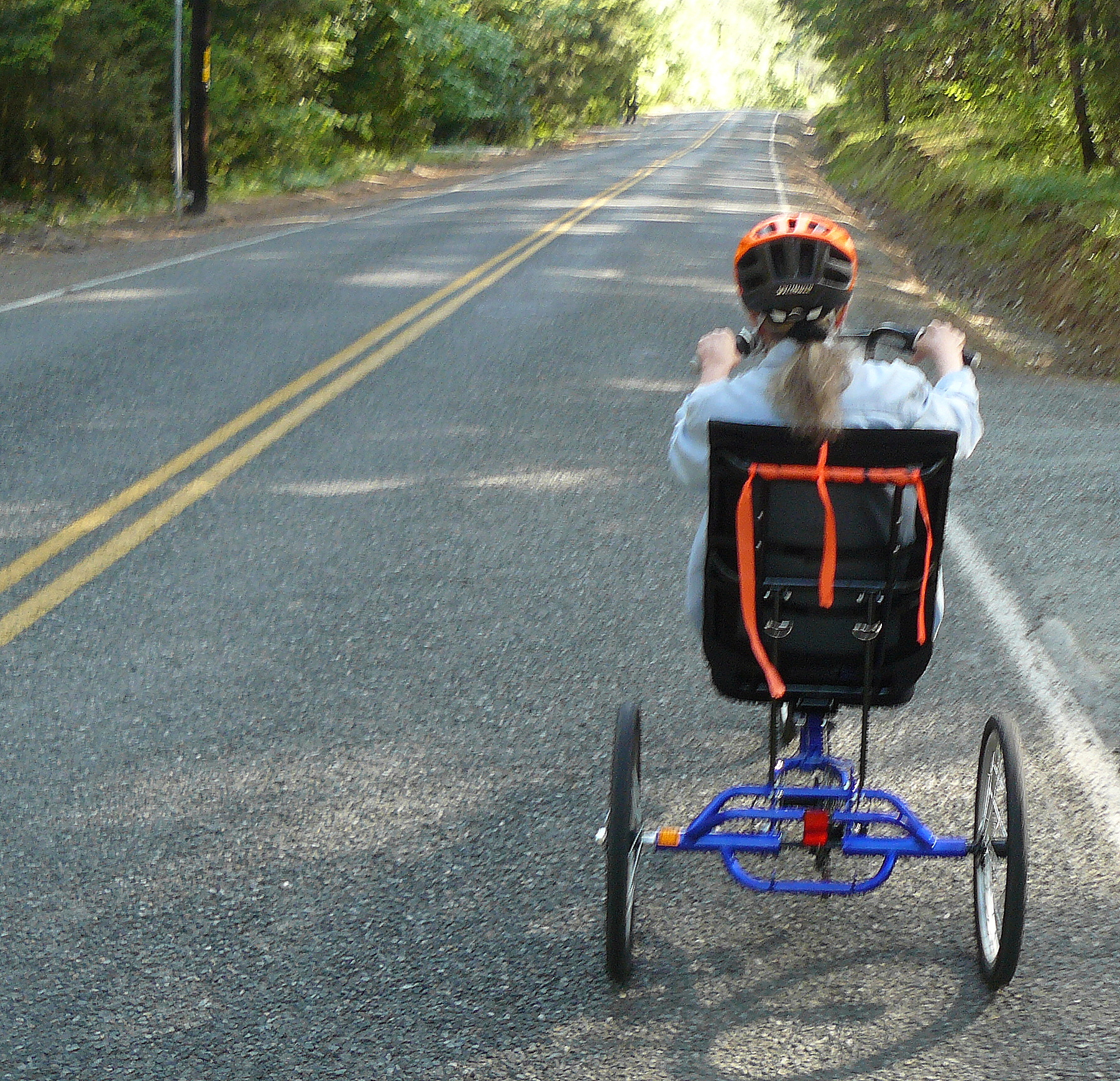
Then, deep breath, time to put on the safety helmet and go for a short ride on Hugo Road, our local road that runs past our property.

Slightly blurred image as I had the camera in my hand as I was riding behind Jean.

So all’s well that ends well!

Jean coming up the road towards the driveway entrance!

I will embarrass Jean by saying to my dear readers that Jean is already getting familiar with riding her trike and it won’t be too long before our riding group will be increased by one Mrs. Handover on her bike!

The things we do to stay healthy in our increasing years!

Sharing Ideas.

There’s no limit to learning.

I can’t recall how but recently I came across an online source of analysis, ideas and research that calls itself The Conversation. In their folder How we’re different, (in part) they explain:

The Conversation US launched as a pilot project in October 2014. It is an independent source of news and views from the academic and research community, delivered direct to the public.

Our team of professional editors work with university and research institute experts to unlock their knowledge for use by the wider public.

Access to independent, high quality, authenticated, explanatory journalism underpins a functioning democracy. Our aim is to promote better understanding of current affairs and complex issues. And hopefully allow for a better quality of public discourse and conversation.

We aim to help rebuild trust in journalism. All authors and editors sign up to our Editorial Charter. All contributors must abide by our Community Standards policy. We only allow authors to write on a subject on which they have proven expertise, which they must disclose alongside their article. Authors’ funding and potential conflicts of interest must also be disclosed. Failure to do so carries a risk of being banned from contributing to the site.

The Conversation launched in Australia in March 2011 and​ the UK in May 2013.

So with no further ado, and within the terms of The Conversation, may I share:

What does it mean to preserve nature in the Age of Humans?

Ben A Minteer, Arizona State University and Stephen Pyne, Arizona State University

Is the Earth now spinning through the “Age of Humans?” More than a few scientists think so. They’ve suggested, in fact, that we modify the name of the current geological epoch (the Holocene, which began roughly 12,000 years ago) to the “Anthropocene.” It’s a term first put into wide circulation by Nobel-Prize winning atmospheric chemist Paul Crutzen in an article published in Nature in 2002. And it’s stirring up a good deal of debate, not only among geologists.

The idea is that we needed a new planetary marker to account for the scale of human changes to the Earth: extensive land transformation, mass extinctions, control of the nitrogen cycle, large-scale water diversion, and especially change of the atmosphere through the emission of greenhouse gases. Although naming geological epochs isn’t usually a controversial act, the Anthropocene proposal is radical because it means that what had been an environmental fixture against which people acted, the geological record, is now just another expression of the human presence.

It seems to be a particularly bitter pill to swallow for nature preservationists, heirs to the American tradition led by writers, scientists and activists such as John Muir, Aldo Leopold, David Brower, Rachel Carson and Edward Abbey. That’s because some have argued the traditional focus on the goal of wilderness protection rests on a view of “pristine” nature that is simply no longer viable on a planet hurtling toward nine billion human inhabitants.

Given this situation, we felt the time was ripe to explore the impact of the Anthropocene on the idea and practice of nature preservation. Our plan was to create a salon, a kind of literary summit. But we wanted to cut to the chase: What does it mean to “save American nature” in the age of humans?

We invited a distinguished group of environmental writers – scientists, philosophers, historians, journalists, agency administrators and activists – to give it their best shot. The essays appear in the new collection, After Preservation: Saving American Nature in the Age of Humans.

Getting the chronology right, it turns out, matters less than we might think. The historian J R McNeill recounts the difficulty in fixing a clear start date for the Anthropocene. (Should it coincide with the late Pleistocene megafaunal extinctions? The rise of agriculture? The birth of the industrial era in the 19th century? The mid-20th century uptick in carbon emissions?) Wherever we peg it, McNeill argues, the future of nature preservation in America will increasingly be shaped by environmental traditions more congruent with notions of a human-driven world.

Is humanity now ‘too big for nature?’ (Photo by Mark Klett)
Trails of Weekend Explorers, near Hanksville, CC BY-NC-ND

It’s a view shared by ecologist Erle Ellis. We’ve simply “outgrown” nature, Ellis argues, and so we have to become more comfortable within the “used and crowded planet” we’ve made. Andrew Revkin, author of the Dot Earth environmental blog for the New York Times, sounds a similar theme, arguing that the whole idea of “saving” a nature viewed outside the human presence is an anachronism. What we need instead, he suggests, is to focus on restoring a bipartisan politics able to cope with the challenges of living in and managing a human-driven world.

But all this talk of a more human-driven world and a species that is now “too big for nature” is dismissed by wilderness activist Dave Foreman, who spies a dark future awaiting us if we continue on the current path. Foreman condemns the vision of the “Anthropoceniacs” who he argues are promoting nothing less than the technological takeover of life on the planet. We need to remind ourselves, he writes, “that we are not gods.”

The need for humility courses throughout After Preservation. But it’s joined by an equally strong plea for pragmatism and more intelligent control. As science journalist Emma Marris writes, the desire to restrain ourselves in nature may ironically prove self-defeating if it means we can’t intervene to prevent present and future species extinctions. The biologist Harry Greene echoes this view with his manifesto to “rewild” the Anthropocene by actively introducing cheetahs, elephants, camels and lions to North America as proxies for the long-lost megafauna of the Pleistocene. It’s a rebooting of the wilderness idea – or maybe a wilderness 2.0 – for the technological age.

Regardless of how the Anthropocene debate plays out, environmental science and policy experts Norm Christensen and Jack Ward Thomas remind everyone how hard it is to implement whatever we want on the ground without unexpected consequences. Thomas, a former chief of the US Forest Service, describes how the unpredictability of ecosystems can result in cases in which the preservationist agenda becomes complicated as ecosystems change in surprising ways (for instance, when an unplanned growth in the barred owl population starts to displace the protected northern spotted owl in the Pacific Northwest).

The Anthropocene has become an environmentalist Rorshach. (Photo by Mark Klett)
Computer Monitor Washed Down Stream by Flood Waters, Salt River, CC BY-NC-ND

Much of the discussion of the Anthropocene must hinge on values. But many of our authors conclude that it also needs grounding in a deeper and more nuanced understanding of history. As historians Donald Worster and Curt Meine point out, even if purist notions of the wilderness may no longer be realistic in the Anthropocene, it would be a grave mistake to jettison our environmental traditions and the commitment to protecting as much wildness as we can.

Even so, many suggest that nature conservation will have to evolve in order to reflect a more diverse constituency, an urban population not well served by the older preservationist values and images. Or, as ecologist Michelle Marvier and The Nature Conservancy’s Hazel Wong sum it up, “Move over, Grizzly Adams.”

The debate wasn’t settled at the end of After Preservation but we didn’t expect it to be. The argument has deep roots, as the writer and climate activist Bill McKibben reminds us in his coda to the book. And in one way or another, pragmatists and preservationists have been at odds since the birth of the American conservation movement in the late 19th century. The Anthropocene debate is only the most recent replaying of this enduring struggle.

What way forward? We think John McPhee probably got it about right nearly forty years ago in his memorable portrait of modern Alaska, Coming into the Country:

Only an easygoing extremist would preserve every bit of country. And extremists alone would exploit it all. Everyone else has to think the matter through – choose a point of tolerance, however much the point might tend to one side.

Our hope is that After Preservation will help us choose that point of tolerance as we puzzle through the environmental ethos of the Anthropocene. We’ve little choice: it’s going to be a challenge confronting the meaning and work of nature preservation for some time to come.

The Conversation

Ben A Minteer is Arizona Zoological Society Endowed Chair at Arizona State University.
Stephen Pyne is Regents Professor in the School of Life Sciences at Arizona State University.

This article was originally published on The Conversation.
Read the original article.

ooOOoo

No matter what people tell you, words and ideas can change the world.” Robin Williams

The power of a single word!

Happy Birthday Dan! (And that word is ‘fortnight’!)

Back in September, 2013 I wrote a post called Closing my windows. It explained how I first met Dan Gomez; now some thirty-six years ago. Let me republish the relevant section:

Earlier on I wrote about launching Wordcraft, the word-processing software for personal computers. That was in early 1979 and later that year I was invited to present Wordcraft at an international gathering of Commodore dealers held in Boston, Mass.

During my presentation, I used the word ‘fortnight’ unaware that Americans don’t use this common English word.  Immediately, someone about 10 rows back in the audience called out, “Hey, Handover! What’s a fortnight?

It released the presenter’s tension in me and I really hammed up my response in saying, “Don’t be so silly, everybody knows the word fortnight!” Seem to remember asking the audience at large who else didn’t know the word.  Of course, most raised their arms!

Now on a bit of a roll, I deliberately started using as many bizarre and archaic English words that came to me.  Afterwards, the owner of the voice came up to me and introduced himself.  He was Dan Gomez, a Californian based in Costa Mesa near Los Angeles and also involved in developing software for the Commodore.

Dan became my US West Coast distributor for Wordcraft and was very successful. When Dataview was sold, Dan and I continued to see each other regularly and I count him now as one of my dear friends.  Through knowing Dan I got to know Dan’s sister Suzann and her husband Don.  It was Su that invited me to spend Christmas 2007 with her and Don at their home in San Carlos, Mexico.  Jean also lived in San Carlos and was close friends with Su. Together they had spent many years rescuing feral dogs from the streets of San Carlos and finding new homes for them.

Thus it was that I met Jean.  Discovering that Jean and I were born 23 miles apart in London!

So from ‘Hey, what’s a fortnight’ to living as happily as I have ever been in the rural countryside of Oregon.  Funny old world!

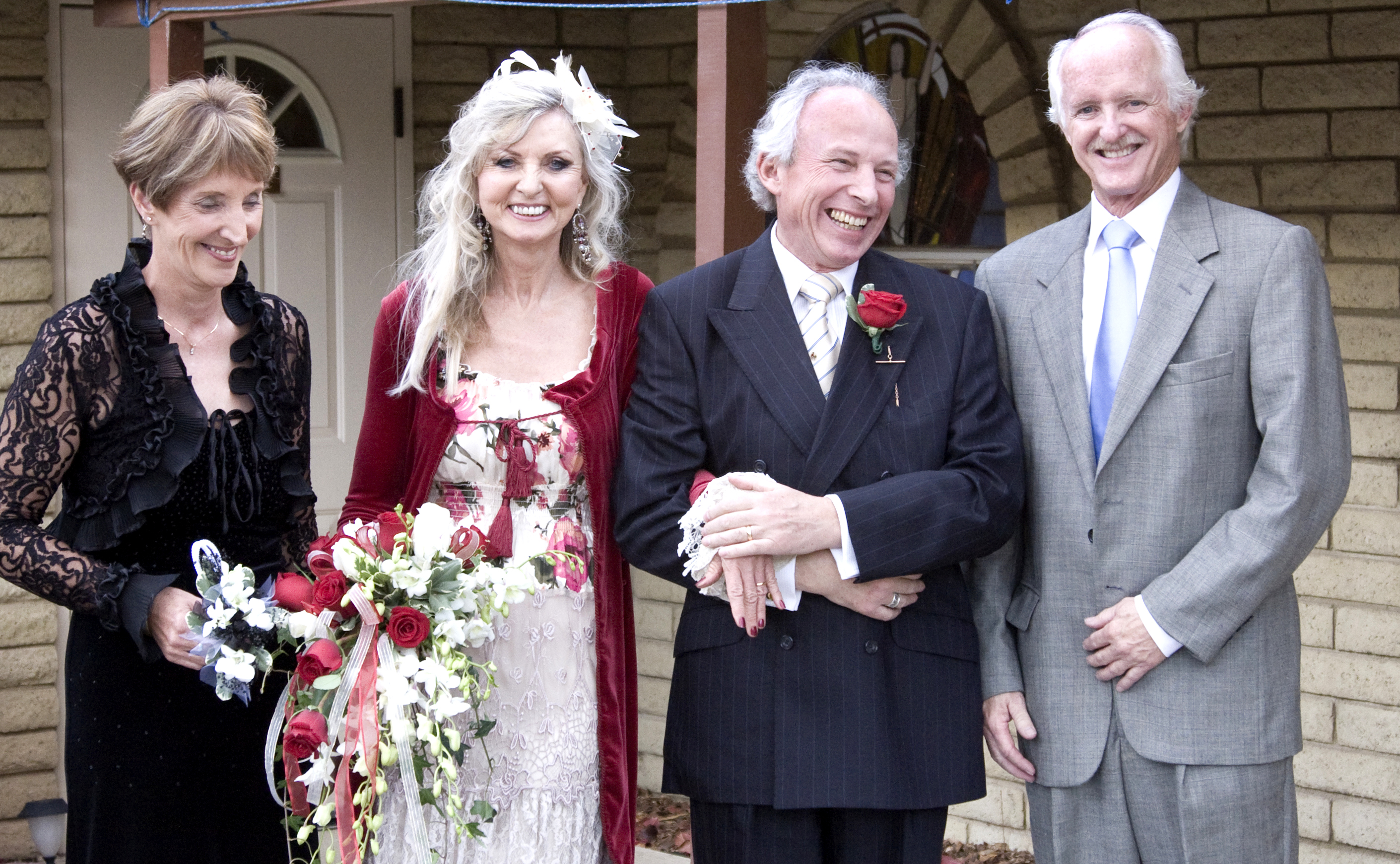
The marriage of Jean and Paul wonderfully supported by Diane, maid of honour, and best man, Dan Gomez.
Dan Gomez – Best Man, and Diane Jackson – Bridesmaid when Jean and I were married;  November 20th 2010.

It is Dan’s birthday today. One of those big birthday milestones in life. (And it would be wrong for me to openly state his age today but just let me say that Dan would be seeing a sixties birthday again!)

So to my very dear and special friend …..

Happy Birthday!

Our beautiful, life-giving trees.

Today we sing for our trees.

I’m very grateful to a recent post over on Dreamwalker’s SanctuarySing for the Trees. This is how the post opens.

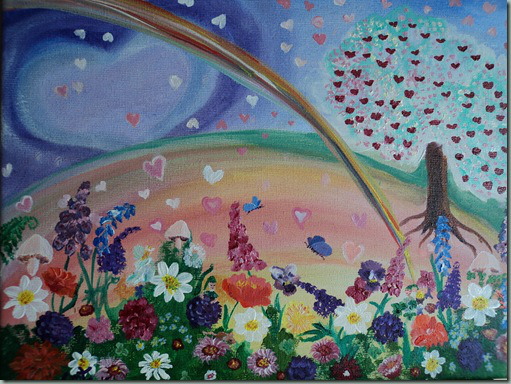
dsc01947_thumb

My Earth Day Painting, in tribute to our Earth Mother and Nature

You can find out more about Singing for our Trees Here and why its important to honour our sacred trees which are fast disappearing from our Earth.

In celebration of connecting with Gaia, our Earth Mother, I spent the weekend Painting. I wanted something Light, bright and showing the love.. Hence all the hearts and flowers.

But can you spot a Fairy two little elves and a new born, mouse and pot of gold in there?

That link in Sue’s second paragraph goes across to Songkeeper.net where one reads:

Earth Day – Sing for the Trees
April 22, 2015

Noon, wherever you are on the planet

Sing for the Trees You Love

A Single Idea Planted With Hope

In January 2010 a single idea was planted on the fertile ground of Facebook. It was a simple call: Create your own Woodstock. On Earth Day, April 22, 2010 sing to your favorite tree.

The Response

Since then over 8,000 people from 45 countries and 48 U.S. States have sung to trees

The Need

Every day a rain forest the size of Central Park is destroyed.

Every year a rain forest area larger than England is cut down.

15% of deforestation is caused by cutting down trees for toilet paper.

Why Sing?

The Civil Rights Movement, Apartheid and more recently Pete Seeger’s Ship of Hope to clean the Hudson River have used song to create awareness and galvanize action.

Singing:

  • Helps create community
  • Gives us a way to have a voice in saving what we love
  • Is an offering of our life force and spirit
  • Connects us to ancient traditions
  • Nourishes trees by giving them carbon dioxide
  • Is part of the joy of being human
  • Helps us relax and tune into nature and to each other
  • Reminds us we are part of the chorus of life

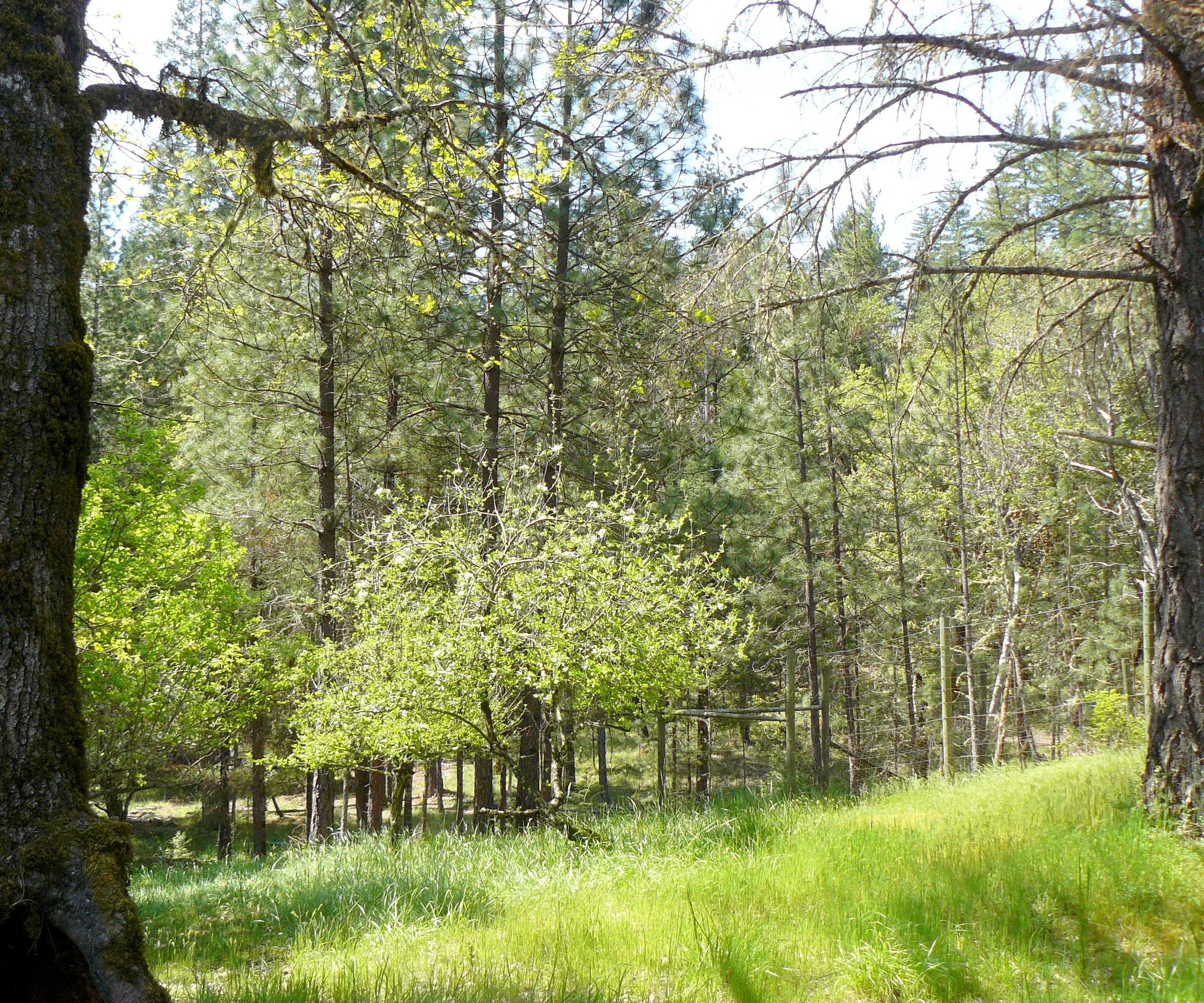
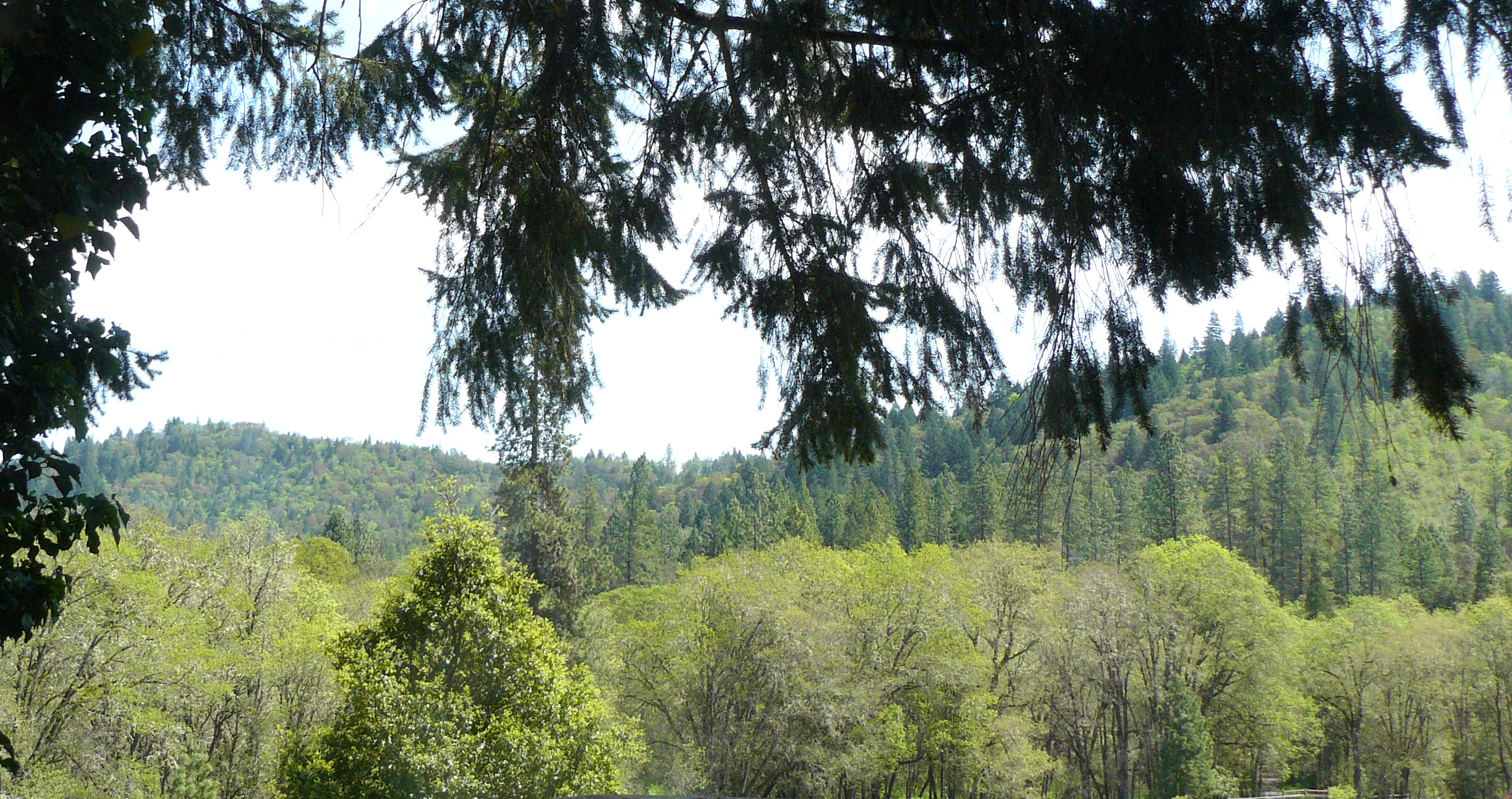
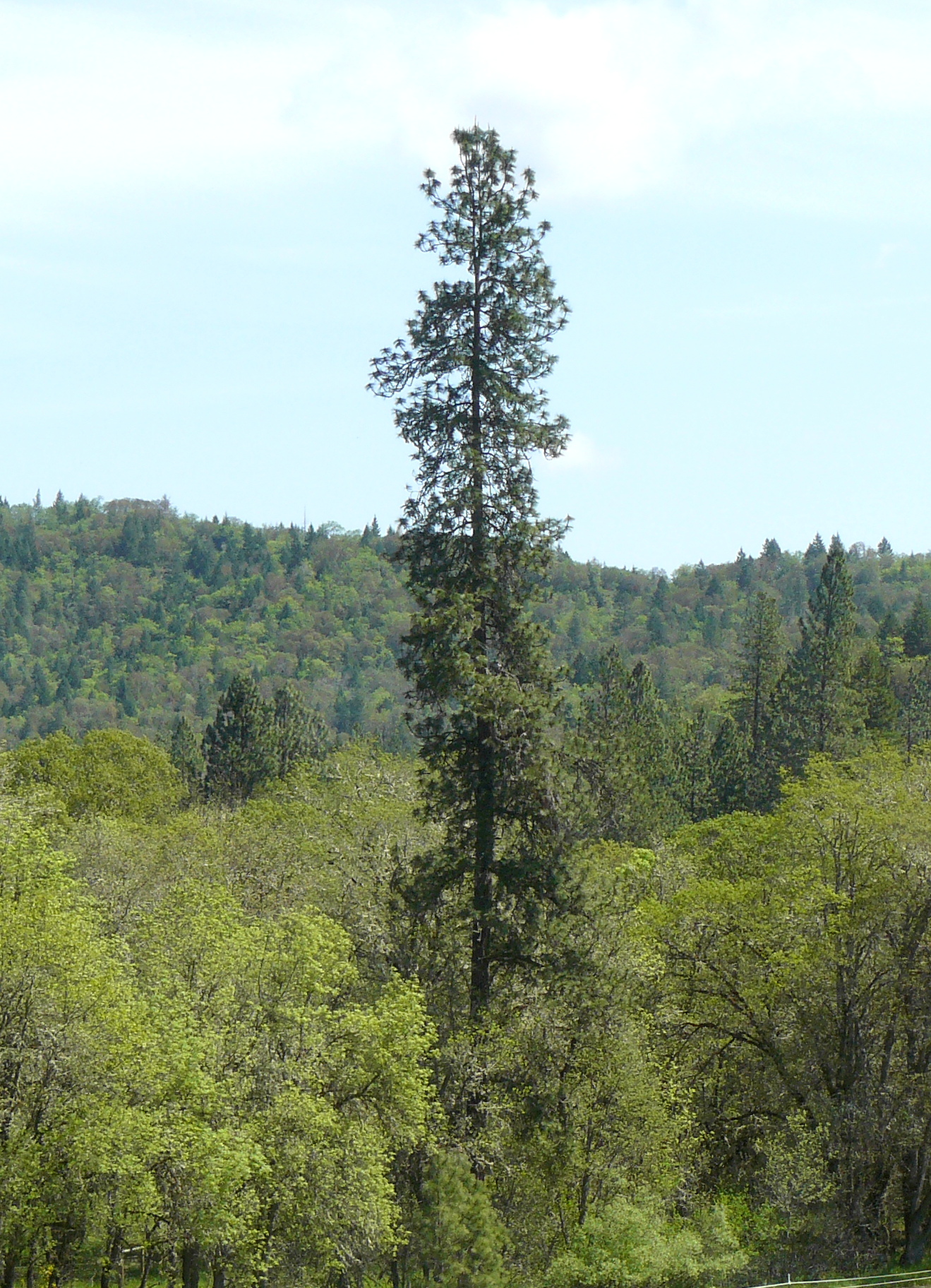
What more can I add other than offer some pictures of the trees here at home.

P1150587

oooo

P1150584

oooo

P1150585

 oooo

P1150588

oooo

P1150589

Yes, we will sing for the trees today, and not just today!

And there is one more thing I can offer; a song.

Admiration for lost souls!

Back to dogs!

The last two weeks predominantly have been posts under the umbrella of WordPress’ Writing 101 event. I’m bowing out at the half-way point.

Simply because the arrival of Pedy and the huge pleasure that Jean and I have had from rescuing him meant I wanted to return to writing most of the time about dogs and what we humans can learn from them.

So with that in mind it has been widely reported in recent days about the news that we humans bond with dogs as we do with babies. Let me quote a little from a recent article from the BBC.

Gazing into a dog’s eyes can stimulate the same bonding process that occurs between mother and child.

Presented by Zoe Gough

Eye contact between a mother and her baby strengthens their attachment by activating the so-called ‘love hormone’ – oxytocin – in the mother’s brain.

This drives emotional bonding between parent and offspring by encouraging both nurturing and interactive behaviours.

Studies have shown that stroking or making eye contact with a dog can trigger a similar release of oxytocin in a human’s brain.

Now a team of Japanese scientists have found that the “mutual gaze” between dogs and their owners can lead to a bond that is similar to that between a mother and child, with humans experiencing the same feelings of affection for their dogs as they might do for their family, therefore helping to bring the species closer.

The findings are reported in the journal Science and also note that wolves do not show the same response. Authors suggest this means that the bonding process probably co-evolved in both species as dogs became domesticated.

It can be said that dogs successfully cohabit with humans because they have been successful in adapting the bonding mechanism to relations with humans,” said lead author Dr Miho Nagasawa, from the School of Veterinary Medicine, Azabu University, Japan.

Do read the rest of the article here.

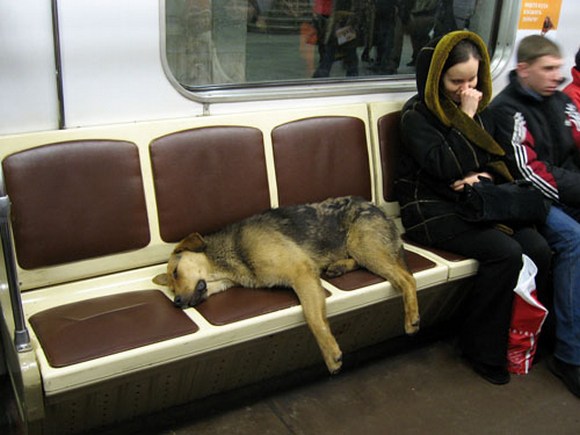
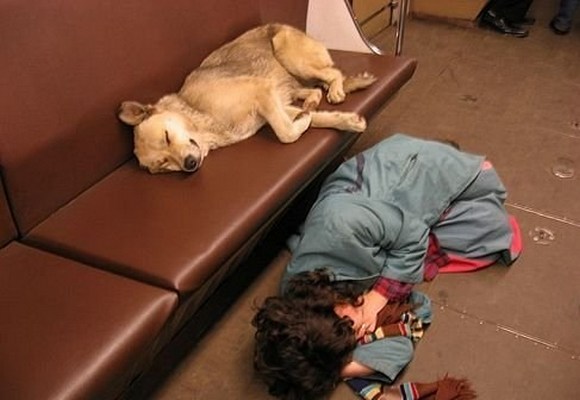
All of which serves as a wonderful foreword to how the stray dogs manage so successfully to exist on the Moscow subway. I reported on this back in 2011 under the title of The Tenacity of Dogs but immediate neighbours Larry and Janell sent me a link to a much more detailed account of these subway dogs. Here is the remarkable story.

ooOOoo

The Life of Subway Dogs

To those of you who own dogs or like them, this should be interesting.

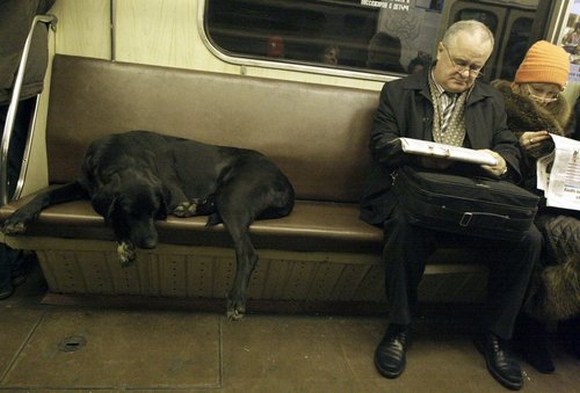
The elite of Moscow’s 35,000 stray dogs are about 500 Russian dogs constantly living in the Moscow subway (Metro). About 50 of subway dogs have learned to ride the trains, commuting from quiet suburbs stations where they spend the night to downtown where it’s easier to get some food.

SW1

Each morning, like clockwork, they board the subway, off to begin their daily routine amidst the hustle and bustle of the city. But these aren’t just any daily commuters. These are stray dogs who live in the outskirts of Moscow Russia and commute on the underground trains to and from the city centre in search of food scraps.

SW2

Then after a hard day scavenging and begging on the streets, they hop back on the train and return to the suburbs where they spend the night.

SW3

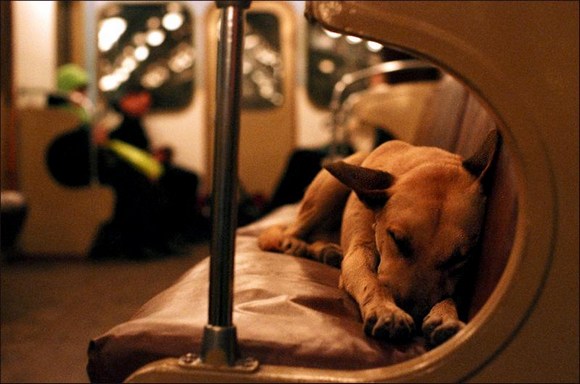
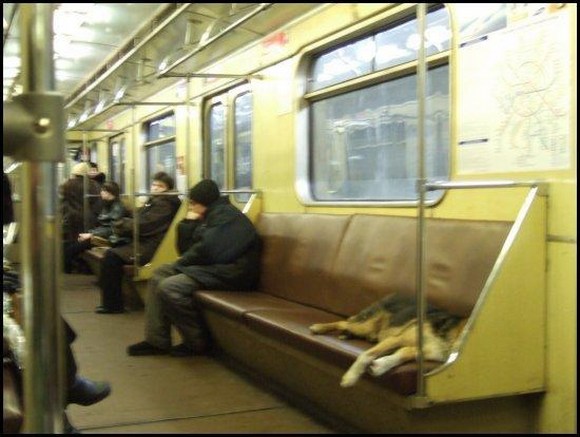
Living in the subway is just a survival tactic the Moscow stray dogs have come up with. The subway dogs have figured out how to use the city’s huge and complicated subway system, getting on and off at the stops they need. They recognize the desired station by smell, by recorded announcer’s voice, and by time intervals basing on their biological clocks. Usually they ride first or last car to keep away from crushes.

SW4

Experts studying the dogs, who usually choose the quietest carriages at the front and back of the train, say they even work together to make sure they get off at the right stop – after learning to judge the length of time they need to spend on the train.

SW5

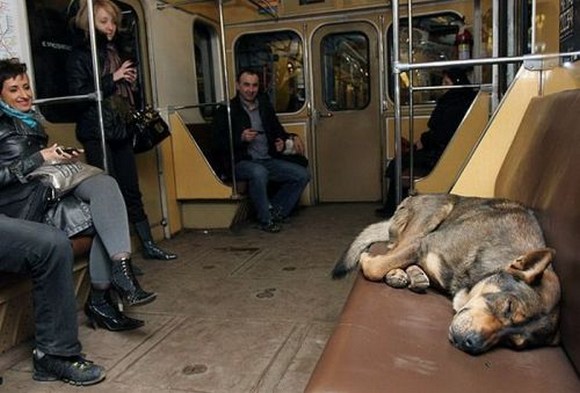
In Soviet times stray dogs were barred from subway. Moscow Metro’s passengers are so accustomed to dogs on subway – sleeping on empty seats and hanging around stations – that they do not pay any attention.

SW6

For these strays the Moscow Metro is their home. The subway dogs get outside to do all their deeds and behave friendly to the passengers. They have very good instincts about people, greeting happily kind passengers and avoiding contacts with intolerant persons. And they always find somebody who will share food with them.

SW7

With children the dogs “play cute” by putting their heads on youngsters’ knees and staring pleadingly into their eyes to win sympathy – and scraps.

SW8

Dogs are opportunistic and intelligent, and when they figured out they were no longer chased away from the subway stations, they began hopping trains for a lift into the city. The Moscow subway system is a maze that can be confusing for people, but the dogs appear to have learned the system.

SW9

Once in the city, the dogs have their own special ways of getting food. Some position themselves outside butcher shops and wait for dog lovers coming out of the shop to toss them a bone. Others have refined a technique of sneaking up behind people who are eating food and surprising them with a loud bark which hopefully scares the person into dropping whatever they’re eating. If the dog is successful in getting the person to drop their food, he grabs his prize and runs.

SW10

Packs of stray dogs are led not by the strongest or most dominant member, but by the most intelligent dog in the pack. The dogs understand living among people in a large city requires brains and not muscle to survive. Researchers have observed dog packs selecting pack members that are smaller and cuter than the other ones who are then sent out to beg for food.

SW11

The dogs also don’t leave messes laying around where someone can step in them, and they relieve themselves in out of the way spots away from the main traffic areas. The subway riding stray dogs of Moscow have essentially learned how to interact with people and move among them in order to survive.

SW12

ooOOoo

Aren’t dogs the most remarkable species of animal!

Writing 101 Day Nine

It all depends on one’s point of view!

Day Nine: Point of View

Today’s Prompt: A man and a woman walk through the park together, holding hands. They pass an old woman sitting on a bench. The old woman is knitting a small, red sweater. The man begins to cry. Write this scene.

We encourage you to give fiction a try, even if that is not what you normally do — it can be a fun way to stretch. If fiction feels like a bridge too far, take some element from the scene that speaks to you, and write a non-fiction piece about that. Perhaps you are drawn to the old woman, and will write a piece about your grandmother, or the crying man will inspire a story about the last time you cried joyful tears.

Today’s twist: write the scene from three different points of view: from the perspective of the man, then the woman, and finally the old woman.

If point of view was an object, it would be William Carlos Williams’ infamous red wheelbarrow; everything depends on it.

Consider a car/pedestrian accident: the story differs depending on whether you’re the driver, the pedestrian, or the woman across the street who witnessed the horror. Everyone will tell a different story if asked to recount the event.

Shifting point of view can be your best friend if you’ve got writers’ block. If you’re stuck or you feel your writing is boring and lifeless, Craig Nova, author of All the Dead Yale Men, suggests shifting the point of view from which your story is told:

Take point of view, for example. Let’s say you are writing a scene in which a man and a woman are breaking up. They are doing this while they are having breakfast in their apartment. But the scene doesn’t work. It is dull and flat.

Applying the [notion] mentioned above, the solution would be to change point of view. That is, if it is told from the man’s point of view, change it to the woman’s, and if that doesn’t work, tell it from the point of view of the neighborhood, who is listening through the wall in the apartment next door, and if that doesn’t work have this neighbor tell the story of the break up, as he hears it, to his girlfriend. And if that doesn’t work tell it from the point of view of a burglar who is in the apartment, and who hid in a closet in the kitchen when the man and woman who are breaking up came in and started arguing.

Now my reaction upon first reading today’s theme was that this was both fun and inspiring.  Then I realised that before I could commit words to the post I would need to let the fictional circumstances brew for a while amongst the aged brain cells and, if possible, it would be wonderful to include a dog in the story. 🙂

So for the next hour (I’m writing this at 10:30am) I shall use the wonderful weather we have today to continue my project of sorting out the grand mess around the back of the garage and see what creative thoughts come to mind!

Yet another point of view!

oooo

Echoes

“Jim, what’s the matter? You’ve seen this dear old lady sitting on the bench almost every time we’ve come walking. What’s brought on the tears today?”

Sandra thought that she knew her husband inside out, possibly better than he knew himself. Yet this quiet, sudden release of deep inner feelings from Jim had her perplexed.

Jim let go of Sandra’s fingers and fished around in his trouser pocket for a tissue. He blew his nose and wiped his eyes on his sleeve.

“Oh, it’s OK sweetheart, just some stirring of a place from too many years ago.”

Sandra re-engaged her fingers with Jim’s and they carried on walking through the park. Cleo bounded across the soft, green parkland grass, as ever looking so happy. She reflected that Cleo had always shown such happiness for being alive. Ever since they had cradled the young German Shepherd puppy in their arms. Gracious, Sandra reflected, nearly five years ago now.

What was it that had been stirred in Jim’s memories?

OK, it was the first time they had seen the old woman knitting but, otherwise, the woman was a familiar sight always sitting quietly on the park bench. Sandra struggled to recall exactly what the woman had been knitting; seemed like a tiny sweater, possibly for a very young grandchild. Why had that reduced Jim to tears? He was such an open man. That was what had attracted her to Jim all those many years ago when they had first met by chance. Jim’s previous wife, Diana, had been killed a few years before in a tragic car accident, her own husband had died of a coronary a couple of years before she met Jim.

Jim sensed that his sudden weeping would have raised some deep questions for Sandra. He struggled to rise above the pain of his recollection and decide what to do about that memory. That memory of his and Diana’s first child, a son, born with such hope yet with such tragedy written into his potentially short future. How the hospital staff had broken the news. Little Philip had been born with a massive brain aneurism and, at best, had a life expectancy of a few months. Philip never came out of hospital and died sixty days after he was born. Jim quietly ran the numbers through his mind; nearly eighteen years ago now.

He had never mentioned it to Sandra. A connection to the past that really should have died that same day as Philip died. First Philip and then Diana. After Diana died in that terrible road accident he thought that was the end of everything. Thought there was nothing that could ever happen in his future that would return a smile to his face, return the feelings of love to his heart. That’s when he started volunteering at the local dog shelter. There was something about helping those unfortunate dogs, dogs of all ages and circumstances, that, over time, spoke to him and made him discover reasons for living again. If these dogs, many of whom had had such terrible experiences, could so easily put their past behind them and enjoy living for each new moment then so could he.

That’s how he and Sandra had met. She had come in to the dog shelter carrying a small, lively little mongrel mix that she had found in the forest when out on a walk.

Their walk today, as usual, had brought them almost full circle and they were approaching the black, wooden park bench; the old lady still knitting away.

Doris had seen this couple on many previous occasions when the weather made it pleasant for her to sit on the bench here in the park. They seemed such a happy couple, unusually so in these complicated times. Every time she saw them it reminded her of the many happy years that she and Larry had had together. Still couldn’t accept that it was over five years ago now since he had died. That’s why, whenever the weather made it possible, she would come and sit on this park bench and remember the times when she and Larry would sit quietly here and just watch the world go by.

Today, for reasons only known to Cleo, as Jim and Sandra approached the park bench, Cleo went bouncing over to the old woman and next thing was sitting next to her on the seat.

Doris put out an arm to Cleo and ruffled the soft warm hair between Cleo’s gorgeous Shepherd ears. She watched as the man came over to her. “I’m so sorry but Cleo, for whatever reason, has taken a shine to sitting next to you today. Funny why today Cleo sensed the need to be with you on the bench. For we have seen you sitting out here in the park dozens of times before”

The man’s wife joined him and they both stood in front of the wooden bench. “My name’s Jim and this is my wife Sandra. I know we have seen each other frequently over the months.”

“Hi Jim and Sandra, my name is Doris and, yes, I have also seen you both out walking frequently. It looks as though your dog, Cleo is that her name, has instinctively sensed my good news.”

Jim and Sandra looked quizzically at Doris.

“Yes, I heard last weekend that my daughter and her husband successfully had the birth of their first child; a son. My grandson that is. I’m knitting him a sweater, as you can see.”

“Oh, that’s wonderful, Doris”, said Jim. “Wish we could stay a little longer and chat but we need to be home within the hour. When we next see you can we come across and here the good news in detail?”

“Of course you can! Go on, off you both go and take your gorgeous dog with you otherwise I will steal her away from you!” There was a soft laugh in the back of her throat.

“Come on, Cleo”, called Sandra and off they went.

Later when Jim and Sandra were back home and enjoying a hot tea after their walk, Jim apologised for his tears and quietly explained what had brought them on.

Sandra put down her cup of tea, came up to Jim and kissed him very slowly and tenderly on the lips.

“That was nice, sweetheart, what did I do to deserve that?”

“Jim, I didn’t want to mention it until I was certain. I have not had my period this month. I’m pretty sure that I’m pregnant. I’m going to town tomorrow to take a pregnancy test.”

For the second time that day Jim uncontrollably burst into tears.

oooo

I’m not sure how well I really captured each person’s point of view but it was fun writing it nonetheless!

Back on Monday with Writing 101 Ten.

Writing 101 Day Three

Practice makes perfect.

Again, here is the WordPress theme for the day:

Day Three: Commit to a Writing Practice

Today’s Prompt: Write about the three most important songs in your life — what do they mean to you?

Nailing Brahms’ Hungarian Dance Number 5 on your alto sax. Making perfect pulled pork tacos. Drawing what you see. Or, writing a novel. Each requires that you make practice a habit.

Today, try free writing. To begin, empty your mind onto the page. Don’t censor yourself; don’t think. Just let go. Let the emotions or memories connected to your three songs carry you.

Today’s twist: You’ll commit to a writing practice. The frequency and the amount of time you choose to spend today — and moving forward — are up to you, but we recommend a minimum of fifteen uninterrupted minutes per day.

The basic unit of writing practice is the timed exercise. – Natalie Goldberg

Author Natalie Goldberg says to “burn through to first thoughts, to that place where energy is unobstructed by social politeness or the internal censor.” Here are some of her rules of free writing practice from Writing Down the Bones, which we recommend you keep in mind:

  • Keep your hand moving. (Don’t pause to reread the line you’ve just written. That’s stalling and trying to get control of what you’re saying.)
  • Don’t cross out. (That is editing as you write. Even if you write something you didn’t mean to write, leave it.)
  • Don’t worry about spelling, punctuation, grammar. (Don’t even care about staying within the margins and lines on the page.)
  • Lose control.
  • Don’t think. Don’t get logical.
  • Go for the jugular. (If something comes up in your writing that is scary or naked, dive right into it. It probably has lots of energy.)

Jorge Luis Borges said: “Writing is nothing more than a guided dream.” So, what are you waiting for? Get writing. Fifteen minutes. Go. And then, do it again tomorrow, and the day after, and the day after.

Now having written a daily post for well over five years, I’m comfortable with the concept of committing to a writing practice.

Thus I’m going to republish something that gets to the heart of more worldly matters – keeping a smile on your face in these ‘interesting’ times. It comes from a blog that I recently started following: One Regular Guy Writing about Food, Exercise and Living Longer.

ooOOoo

How You Can Benefit from a Positive View on Your Life – WSJ

Regular readers know that I have embraced the theory of positive psychology. I have written a number of posts on the benefits of a positive point of view. You can find an index of them at the end of this post.

Meanwhile, I was thrilled to see Elizabeth Bernstein’s piece in the Personal Journal of Tuesday’s Wall Street Journal entitled “It’s Healthy to Put a Good Spin on Your Life.

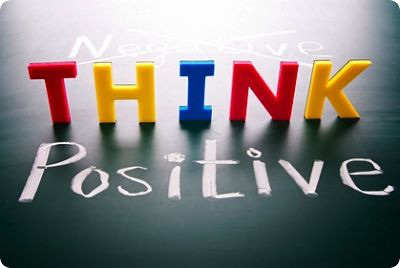
think +ve

In a study of a large number of adults in their mid to late 50’s researchers found that “when people displayed higher levels of agency, communion and redemption and lower levels of contamination, their mental health improved. They consider good mental health to be low levels of depression and high levels of life satisfaction and psychological and social well-being.

They explained the four keys to good mental health as follows:

• Agency—Did the subjects feel able to influence and respond to events in life, or did they feel battered around by the whims of external forces?
• Communion—Are the people connected to others or disconnected?
• Redemption—Did the subjects take a negative experience and find some positive outcome?
• Contamination—Did they tell narratives of good things turning bad?

I would like to point you to a post I wrote in May of 2011 called Super Tools for Handling Stress.

In it I quoted Maggie Crowley, Psy.D., a Health Psychologist at the center for Integrative Medicine and Wellness at Northwestern Memorial Physicians Group.

Dr. Crowley listed the following as maladaptive coping strategies:

*Demand our circumstances be different
*Devalue ourselves and others
*Demean/blame ourselves and others
*When the above fail to work, do we choose another strategy?
*Or, do we double our ill-conceived efforts and feed our downward spiral.

She said that we needed something to shift our mental gears out of the stressful/fearful response that triggers that damaging cascade of negative emotion. She suggested the following activities that set off the parasympathetic approach:

*Practicing appreciation
*Making choices that are positive
*Using constructive language
*Employing our strengths and personal power.

I think that there is a great similarity between the four keys to good mental health mentioned in the Journal and the points made by Dr. Crowley in dealing with stressors.

Regarding positive psychology, I have found it answered a lot of questions for me. If you are interested you can explore it in the following posts:

What is Positive Psychology?
How to Harness Positive Psychology for You – Harvard
Breaking down 8 Barriers to Positive Thinking – Infographic
11 Ways to Become a Better, More Positive You
How to Become a Positive Thinker
7 Exercises That Train Your Brain to Stay Positive
Positive, Happy People Suffer Less Pain

Tony.

ooOOoo

This is such incredibly powerful and useful advice with lots of further reading to boot!

For we are bombarded with negative news from all quarters and having a healthy relationship with oneself and, thence, with the world around us is, in the end, what life is all about.

Writing 101 Day Two

A room with a view.

Here’s what WordPress sent out:

Today’s Prompt: If you could zoom through space in the speed of light, what place would you go to right now?

The spaces we inhabit have an influence on our mood, our behavior, and even the way we move and interact with others. Enter a busy train station, and you immediately quicken your step. Step into a majestic cathedral, and you lower your voice and automatically look up. Return to your own room, and your body relaxes.

A place belongs forever to whoever claims it hardest, remembers it most obsessively, wrenches it from itself, shapes it, renders it, loves it so radically that he remakes it in his own image. – Joan Didion

Today, choose a place to which you’d like to be transported if you could — and tell us the backstory. How does this specific location affect you? Is it somewhere you’ve been, luring you with the power of nostalgia, or a place you’re aching to explore for the first time?

Today’s twist: organize your post around the description of a setting.

Giving your readers a clear sense of the space where your story unfolds will help them plunge deeper into your writing. Whether it’s a room, a house, a town, or something entirely different (a cave? a spaceship?), provide concrete details to set this place apart — and to create a more immersive reading experience.

You can go the hyperrealist route (think the opening four paragraphs of Gustave Flaubert’s A Simple Soul, a masterclass of telling detail). Or focus on how a specific space makes the people in it feel and behave, like blogger Julie Riso did in this visceral recounting of her hike through an Estonian bog.

So here we go!

 The lonely sea and the sky.

The title of my story is taken from that famous poem Sea Fever by John Masefield. Here’s that first stanza of Masefield’s poem:

I must go down to the seas again, to the lonely sea and the sky,
And all I ask is a tall ship and a star to steer her by;
And the wheel’s kick and the wind’s song and the white sail’s shaking,
And a grey mist on the sea’s face, and a grey dawn breaking.

There is a place in my mind to which I can so easily travel that resonates perfectly with my chosen title. A memory of a dark night out in the Atlantic ocean one time in the Autumn of 1969.

First let me set the scene of this place in my mind, a scene almost fifty years ago, written from that time.

The call of the open ocean

Those first few hours were utterly absorbing as I went through the whole business of clearing the yacht harbour at Gibraltar and heading out to the South-West hugging this unfamiliar coastline of Southern Spain. It was tempting to move out to deeper waters but the almost constant flow of large ships through the Straights of Gibraltar soon quashed that idea. Thankfully, the coastal winds were favourable for me and my single-masted sailing yacht.

After such a long time sailing in the relatively confined waters of the Mediterranean, it was difficult for me to imagine that in a few hours time the southern-most point of Spain would pass me by and the vastness of the Atlantic ocean would be my home for the next few weeks.

Soon the city of Tarifa was past my starboard beam and the Spanish coastline was rapidly disappearing away to the North-West. The horizon ahead of me was already approaching 180 degrees of raw, open ocean.  There was just a flicker of a thought that whispered across my mind: Oh Paul, what have you gone and done!

Where this crazy adventure had been born.

In 1986 I had the opportunity to take a few years off. Off from a working life, that is. I had started my own company in 1978 after eight years of being a salesman for the Office Products Division of IBM UK. In 1986, the successful sale of my company meant that for a while I could go and play. By chance, that summer I went on a vacation to Larnaca on the Island of Cyprus; Larnaca being on the Greek side of what was a divided island (and still is!) between Greece and Turkey.

Larnaca struck me as a lovely place on a lovely island in the Eastern part of the Mediterranean Sea. Again, quite by chance, one day during my vacation, when strolling around Larnaca Marina, I noticed a yacht with a For Sale notice on the yacht’s pulpit. The yacht, named Songbird of Kent, was a Tradewind 33, a type that I had heard about previously from reading yachting magazines. I vaguely recalled that the type had been designed in the UK by John Rock, himself an experienced deep-water yachtsman, for the purpose of serious ocean sailing and that many Tradewinds had completed vast ocean crossings.

I was still looking at the yacht, lost in some dream about sailing the seas, when a call brought me back to ground, so to speak. It was a call from a man who had just come on deck from the cabin and had spotted me looking at Songbird.

Hi, my name is Ken and I’m the owner of Songbird. Did you want to come onboard and have a look around?” I couldn’t resist!

It transpired that Ken, and Betty his wife, an English couple, had been living on Songbird for some years, cruising the Mediterranean each Summer, and now wanted to return to England.

It was obvious that the yacht, a single-masted vessel with double head-sails known in the trade as a cutter rig, had been cared for in every possible way and that the yacht was offered for sale in a manner that meant she could become my permanent new home with little or no effort on my behalf. Thus so it was that three hours later Ken and Betty and yours truly had agreed terms for the sale of Songbird of Kent. One of those spur of the moment things that we do in our lives that, so often, make being alive such a reward.

I should explain that as a younger man (I was 42 when I agreed to buy Songbird) I had devoured the books written by such round-the-world solo sailors as Francis Chichester and Joshua Slocum and many others and harboured this silly, naive dream of one day doing a solo transatlantic crossing. Later on in life, when living in Wivenhoe in Essex, I bought my first yacht but never achieved anything more than local coastal sailing and a couple of overnight sailings to Holland; all with others I should hasten to add, never solo! However, I knew for sure that if there was one yacht that was perfect for open ocean sailing it was the Tradewind.

So it wasn’t long before my home in Great Horkesley, near Colchester, had been sold and I was adjusting to a new life as a ‘live aboard yachtie’ out in Cyprus.

I loved living in Larnaca for a whole bundle of reasons that I won’t go into here. Except one! That was that in my years of living and working near Colchester, which was where my business had been based, I had been introduced to gliding and eventually had ended up becoming a gliding instructor. So imagine my delight at finding that there was an active gliding club on a British ex-military airfield thirty minutes away from Larnaca. It was not long before I was fully back to gliding.

One day, I was doing gliding experience flights for some visitors. Early in the afternoon, up came a quietly spoken Englishman who wanted to get an idea of what it was like to fly in a glider. Les, for that was his name, settled himself in. I checked his straps were secure, pointed out the canopy release and jumped into the seat behind him, and within moments we were airborne.

Later on, when back on the ground and sitting to one side of the old runway, Les and I started chatting about our backgrounds and what had brought each of us to Larnaca. I learned that Les was not only Les Powles, the famous solo sailor, but that he was living on board his yacht, Solitaire, right here in Larnaca Marina.

Over the following days, often with a beer or two in hand, I heard Les’ tales about him having been in his 50s when he built Solitaire, with little prior knowledge of boatbuilding. That he had just eight hours of sailing experience when he decided to sail solo around the world. That remarkably, he had made it across the Atlantic, albeit discovering that his navigation skills didn’t quite match up to his boatbuilding abilities. This translating to his first landfall being the coast of Brazil, a 100 miles south of, and a different hemisphere, to the Barbados he had been aiming for!

I listened for hours, in utter rapture of what Les had achieved. This quiet, unpretentious man that had achieved so much. Including how after solo circumnavigation number one, Les ended up completing a further three solo circumnavigations, all of them full of incidents. Particularly, the last one, with Les being given up for dead when he hadn’t been heard of for over four months. When eventually he sailed up the Lymington River in Hampshire, in a skeletal state, his arrival caused a media frenzy. Lymington Marina subsequently gave him a free berth for life. Les’ boat had been damaged in a storm, he had lost all communications and had virtually run out of food by the time he made it back to England. Oh, and Les was 70 at the time!

At one point in me listening to Les he asked me about my own sailing ambitions. I remarked that I had this tired old idea of a solo sailing across the Atlantic.

Have you done any solo sailing before?”, Les asked me.

I replied, “At the start of most Summers, I sail alone from Larnaca across to the Turkish coast to meet up with family and friends who want to cruise along with me.

Continuing, “Generally I head for Alanya or a little further along the Turkish coast; to Antalya. It takes me two or three days to get there non-stop, most often with me going west-about Cyprus, and then straight up to Turkey. But I am embarrassed to admit that I hate both that trip, and the return solo trip at the end of the Summer. Detest would be a better word than hate.

Pausing before adding a moment later, “If I can’t stomach solo sailing for three days then there’s no chance, no chance at all, that I could sail solo across the Atlantic ocean.

It was then that Les said something both profound and deeply inspiring.

Paul, guess what! The first three days of being alone at sea are just as terrible for me, too. Indeed, I have never met a solo sailor who doesn’t say the same. Those early days of adjusting to your new world, your new world of being alone out on the ocean, are the worst. But never lose hope that from some point around the third or fourth day, you will have worked through that transition and found an unbelievable state of mind; a freedom of mind that has no equal.

Back to reality.

So here I was, Les’ words still ringing in my ears, as slowly but persistently the coastlines of Spain to the North and of Africa to the South became more and more distant and fuzzy.  It was at 15:30 that I made an entry in my yacht’s log: “No land in sight in any direction!

Now was the time to make sure that my bunk was made up, flashlights to hand, and my alarm clock ready and set. Alarm clock? Set to go off every twenty minutes; day and night! For this was the only way to protect me and my yacht from being hit by one of those gigantic container ships that seemed to be everywhere. It took at least twenty minutes from the moment a ship’s steaming lights appearing above the horizon to crossing one’s path!

It was in the early hours of my first morning alone at sea, when once again the alarm clock had woken me and I was looking around an ocean without a single ship’s light to be seen that more of Les’ words came to me. I remembered asking Les: “What’s the ­appeal of sailing?” Les replied without a moment’s hesitation: “It’s the solitude. When you’re out at sea on your own, there’s no government or bankers to worry about. You’re not ­responsible to anyone but yourself.

Yes, I could sense the solitude that was all around me but it was an intellectual sense not an emotional one. That would come later. Inside I was still afraid of what I had let myself in for.

Remarkably quickly however, the pattern of solo life aboard a thirty-three-foot yacht became my world. Frankly, it staggered me as to how busy were my days. Feeding myself, navigating, trying to forecast the winds, staying in touch with other yachties via the short-wave radio, keeping the boat tidy and a zillion other tasks meant the first few days and nights just slipped by.

But it was a sight on my fourth night at sea that created the memory that would turn out to remain with me for all my life. The memory that I can go to anytime in my mind.

That fourth night I was already well into the routine of waking to the alarm clock, clipping on my harness as I climbed up the three steps that took me from my cabin into the cockpit, scanning the horizon with my eyes, checking that the self-steering had the boat at the correct angle to the wind and then, if no ships’ lights had been seen slipping back down into my bunk and sleeping for another twenty minutes. Remarkably, I was not suffering from any long-term tiredness during the day.

It was a little after 3am that fourth night when the alarm clock had me back up in the cockpit once again. Then it struck me.

Songbird was sailing beautifully. There was a steady wind of around ten knots from the south-east, almost a swell-free ocean, and everything set perfectly.  Not a sign of any ship in any direction.

Then I lifted my eyes upwards. There was not a cloud in the night sky, not a single wisp of mist to dim a single one of the million or more stars that were above my head. For on this dark, moonless night, so far removed from any shore-based light pollution, the vastness, yet closeness of the heavens above was simply breath-taking. I was transfixed. Utterly unable to make any rational sense of this night splendour that glittered in every direction in which I gazed. This dome that represented a vastness beyond any meaning other than a reminder of the magic of the universe.

This magic of the heavens above me that came down to touch the horizon in all directions. Such a rare sight to see the twinkling of stars almost touching the starkness of the ocean’s horizon at night. A total marriage of this one planet with the vastness of outer space.

I heard the alarm clock go off again and again next to my bunk down below. But I remained transfixed until there was a very soft lightening of the skyline to the east that announced that another dawn was on its way.

I would never again look up at the stars in a night sky without being transported back to that wonderful night and the memory of a lonely sea and sky.

ooOOoo

As dear Les said, “… a freedom of mind that has no equal.

That place in my mind, that dark, stupendous night out in the Atlantic, still has the power to remind me of that freedom!

I know it will be one of my last thoughts when my time is up.