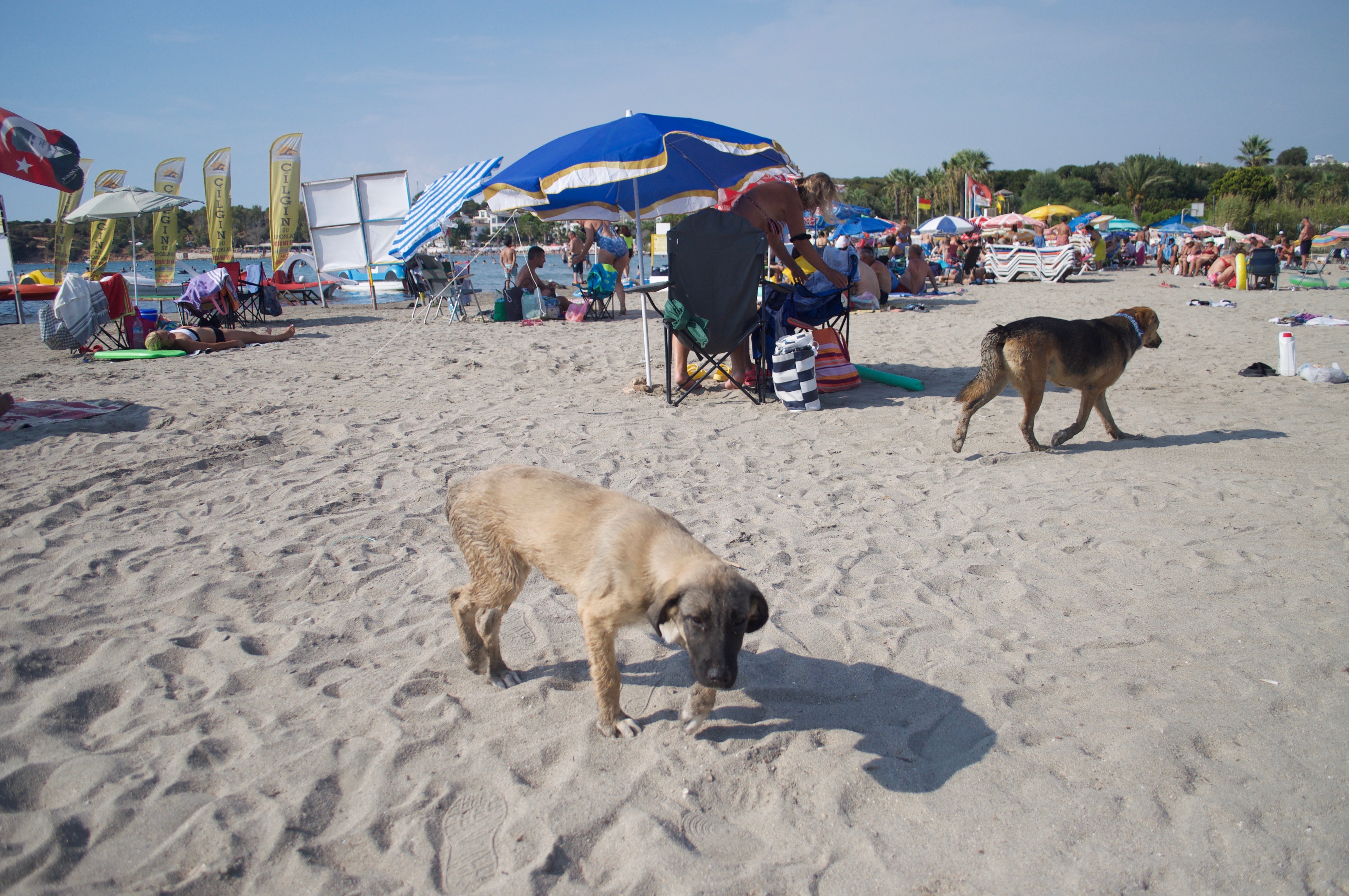
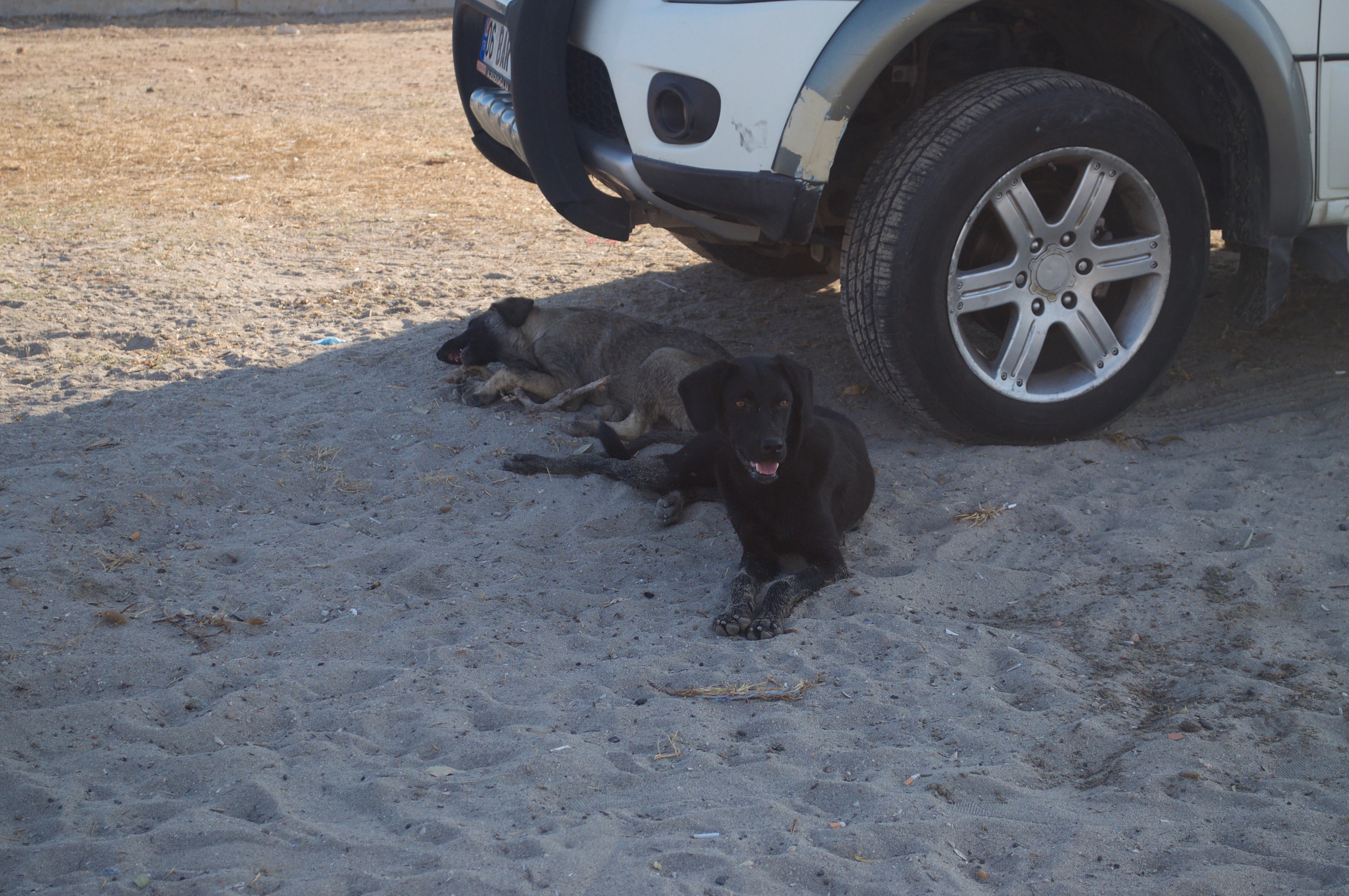
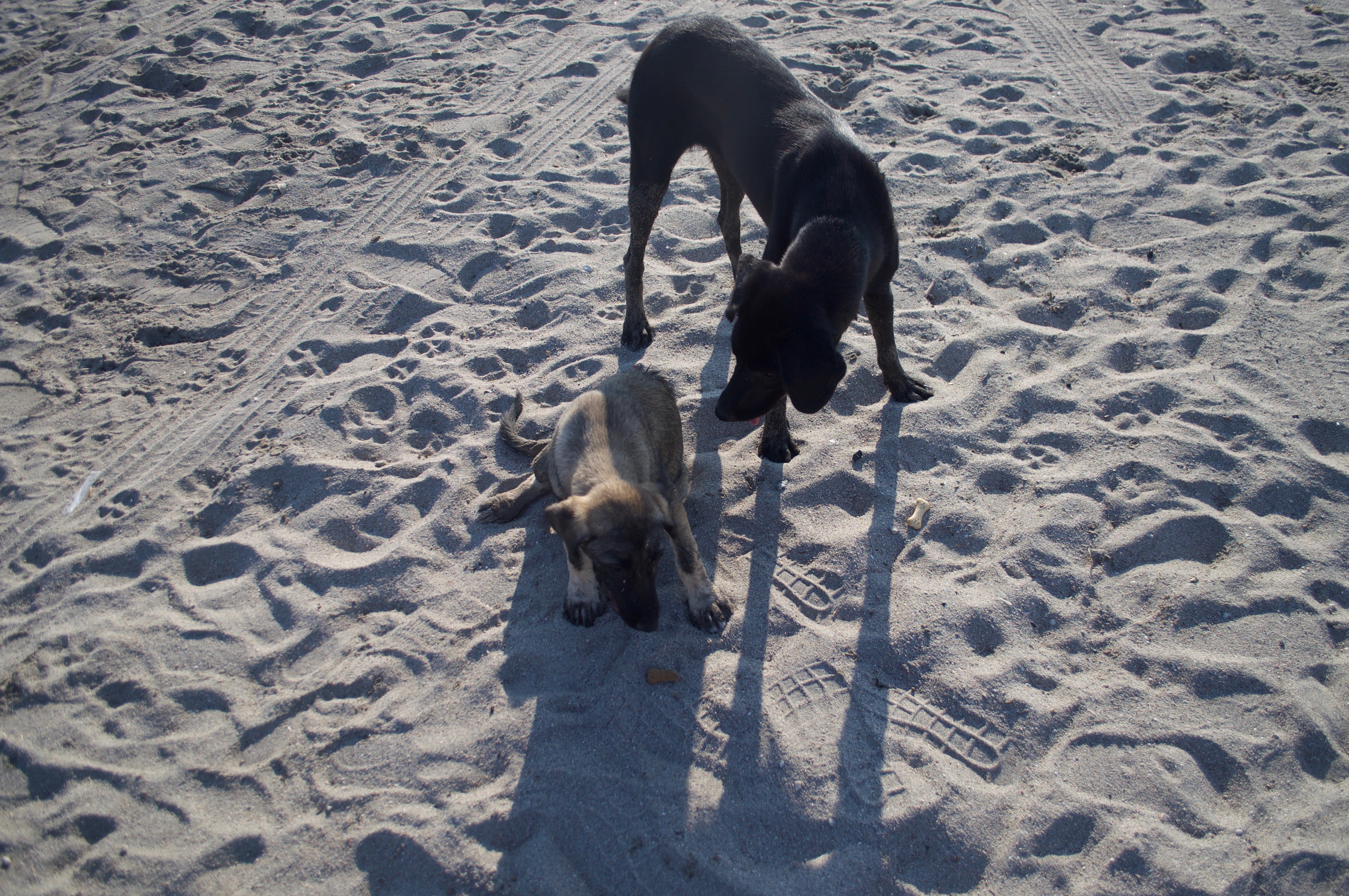
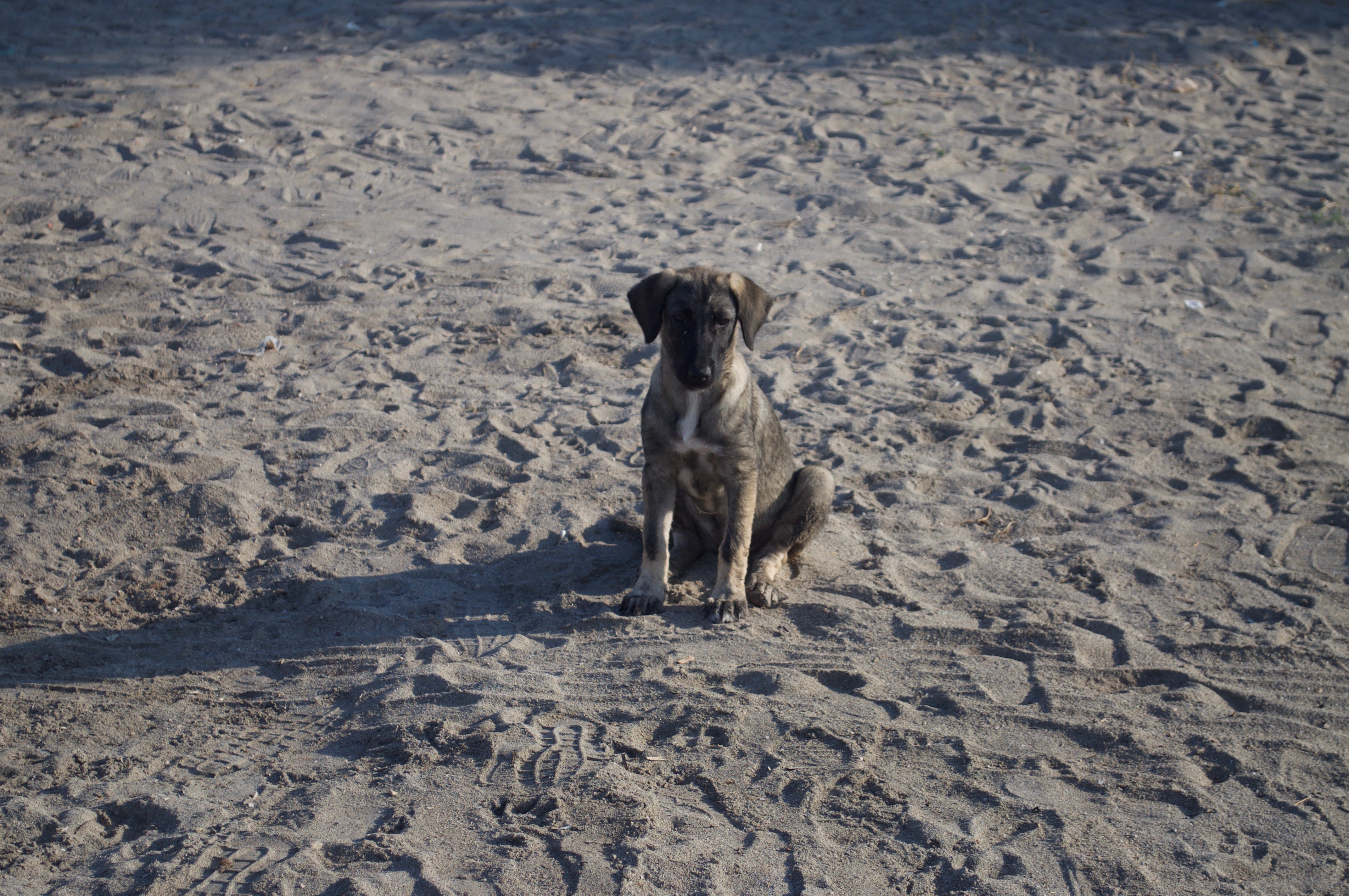
I can’t put it better than the email that I received recently from Chris. Here it is:
Hi Paul
Happy Thanksgiving. Hopefully you had a far better one than the last time I celebrated with American friends when I lived in Indonesia. We ended up having to evacuate the house (including the deputy US ambassador) as the kitchen caught fire!
It’s been a bit of a journey writing the post as so many adventures with the dogs came back to me. In the end I focussed on the first one Princess and the latest Tinker. I hope it’s OK. Let me know if not, as I can always rewrite it. There are so many other dogs I could have mentioned which is the scary thing! Still, the copy is attached and I’m sending photos using WeTransfer.com. They’ll send you an email with a link to download the pics. It’s totally safe and free (It’s been a godsend for designing book covers as it stops emails getting clogged up). I’ve put far too many pics in there so please feel free to use the ones you like and discard others.
Thank you so much for letting me do this post. It’s been quite emotional, but put a huge smile on my face all week.
Countless numbers of people have dreamt that they can communicate with animals and I would imagine an enormous percentage of those would have dreamt that they can communicate with dogs.
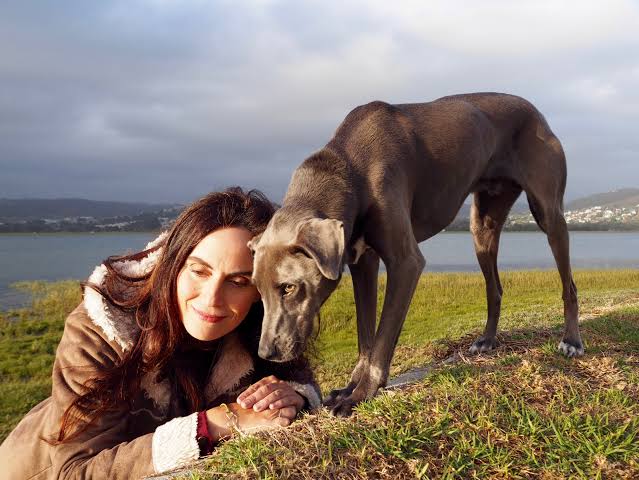
Certainly of the three dogs we have alive still here at home (we had in the past some fifteen dogs) Oliver below appears to understand much of what is said to him by me and Jean
If one goes to the YouTube website then one is introduced to Anna Breytenbach who has made it her life’s passion to better communicate with animals. Here’s a small piece from the extensive WikiPedia entry:
In her twenties she decided to pursue her passion for wildlife (big cats in particular) by becoming a cheetah handler at a conservation education project. On moving to America, she explored wolf and other predator conservation. She has also served on committees for wolf, snow leopard, cheetah and mountain lion conservation.
Anna Breytenbach and friend
So now we come to this video of Anna and Diablo, more properly called Spirit, (and the video will make that clear).
Arjan Postma explains the background to the film:
I just want to share this message as much as possible without any commercial intent, personal benefit or whatsoever. All used materials and therefore copyrights do not belong to me. I hope you enjoy discovering and watching this story and skill as much as I did: What if you could talk to animals and have them talk back to you? Anna Breytenbach has dedicated her life to what she calls interspecies communication. She sends detailed messages to animals through pictures and thoughts. She then receives messages of remarkable clarity back from the animals. In this section, Anna transforms a deadly snarling leopard into a relaxed content cat. The amazing story of how leopard Diabolo became Spirit… I found the source of this amazing documentary here: http://www.cultureunplugged.com/docum… This is the first full length documentary film on the art of animal communication. Nominated for Best Long Documentary, Best Director of “Jade Kunlun” Awards of 2012 World Mountain Documentary Festival of Qinghai China. Director: Craig Foster | Producer: Vyv Simson | Narrator: Swati Thiyagarajan Genre: Documentary | Produced In: 2012.
Like so many others I read many items online. One of the websites that I follow is the EarthSky site because for a long time I have been interested in space.
So when I saw an article on why intelligent life is so rare in our Milky Way I read it fully. And hoped it would be of interest to others.
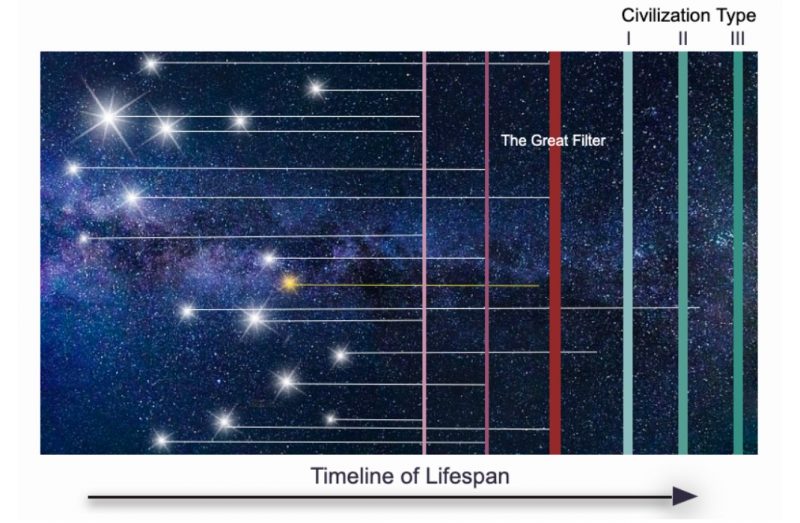
This graphic depicts intelligent civilizations as stars. The vertical lines represent Great Filters that civilizations do or don’t survive. This graphic depicts Earth’s human population (the yellow “star”) approaching its own Great Filter. How would we surpass it, and keep going? Image via NASA/ arXiv.
What is the Great Filter?
Is intelligent life common, or rare in our Milky Way galaxy? If it’s common, why haven’t we encountered it? While discussing UFOs on a walk to lunch in the year 1950, the physicist Enrico Fermi is famously said to have asked, “But where is everybody?” Scientists today call that riddle Fermi’s Paradox. Now a new paper by NASA scientists explores one possible answer to the paradox. The answer may be what’s called the Great Filter.
Economist Robin Hanson first proposed the Great Filter, in the late 1990s. It’s the idea of that – even if life forms abundantly in our Milky Way galaxy – each extraterrestrial civilization ultimately faces some barrier to its own survival. The barrier might come from without (for example, an asteroid striking a planet, and wiping out all life forms). Or it might come from within (for example, all-out nuclear war).
Hanson proposed that a Great Filter might be at work within our Milky Way galaxy. He argued – from what we can see here on Earth – life expands to fill every niche. And so, he argued, we should see signs of intelligent life beyond Earth in nearby star systems, perhaps even in our solar system. But we don’t see this.
Is humanity facing a Great Filter?
The authors of the new paper take Hanson’s idea further. They explore the idea that humanity may now be facing a Great Filter. The authors wrote:
We postulate that an existential disaster may lay in wait as our society advances exponentially towards space exploration, acting as the Great Filter: a phenomenon that wipes out civilizations before they can encounter each other … In this article, we propose several possible scenarios, including anthropogenic and natural hazards, both of which can be prevented with reforms in individual, institutional and intrinsic behaviors. We also take into account multiple calamity candidates: nuclear warfare, pathogens and pandemics, artificial intelligence, meteorite impacts, and climate change.
And they offer solutions, beginning with, as they say:
… a necessary period of introspection, followed by appropriate refinements to properly approach our predicament, and addressing the challenges and methods in which we may be able to mitigate risk to mankind and the nearly 9 million other species on Earth.
In a sense, the authors of the new paper – including lead author Jonathan H. Jiang of NASA’s Jet Propulsion Laboratory in Pasadena, California – are engaging in a “necessary period of introspection” by the act of writing their paper.
And, with their paper, they’re laying out the challenges we’re facing and methods of addressing them.
We’ve already survived some ‘filters’
The scientists point to life’s resilience. Life on Earth has already survived a number of filters in the form of mass extinction events. The Permian-Triassic extinction – aka the Great Dying – occurred 250 million years ago and nearly ended all life on the planet. This extinction event wiped out about 96% of marine life and 70% of land species. The exact cause of the Great Dying is still a matter of study, but some scientists have said it was a combination of warming temperatures and decreasing oxygen.
But these previous filters, or extinction events, have been natural, arising from the evolution of our planet and solar system, including volcanic eruptions and asteroid impacts.
A Great Filter of our own making
But now, clearly, humanity may be facing a Great Filter of our own making, and one that other intelligent civilizations in the galaxy have faced … and failed to withstand. Perhaps it’s no surprise that the technological advancements humans have achieved might ultimately lead to our undoing. Perhaps that’s nature’s way. As the new paper said:
It seems as though nearly every great discovery or invention, while pushing back the borders of our technological ignorance, is all too quickly and easily turned to destructive ends. Examples such as splitting the atom, biomedical innovations and resource extraction and consumption come to mind with disconcerting swiftness. Still, some have suggested artificial intelligence (AI) as yet another factor, which, pending substantial technical hurdles, may yet have its chance to prove friend or foe.
Here’s a look at some of the issues that might compose Earth’s Great Filter.
Unchecked population growth
One of the factors Earth faces, according to the paper, is unchecked population growth. Earth just passed a milestone on November 15, 2022, when it reached 8 billion human inhabitants. The paper said with our current population figures, Earth has experienced:
… an exponential rise from about 1.6 billion [people] at the start of the 20th century.
Technological advancements in farming, energy production and distribution have made such a large population possible on Earth. But, as the paper said, these advancements cannot:
… indefinitely offset the multifaceted stresses imposed by an ever-escalating population.
When will Earth’s human population reach its peak size? Some projections report that education in developing nations might allow Earth’s population to peak at 10 billion in the 2060s. But, of course, no one really knows.
Nuclear war
While warfare has long been a factor of life on Earth, only in the past century has humanity had a weapon that could destroy all nations, not just those participating in a nuclear war. The scientists said the greater the number of democracies in the world, the better our chances for avoiding nuclear war. The scientist also saw other encouraging signs, including:
Peace agreements in the historically troubled Middle East, a vast reduction in nuclear warheads since the height of the Cold War and a wide coalition of nations rallying their support for the besieged in Eastern Europe.
Pathogens and pandemics
The threat of illness and pandemics continues to grow simply because our world is so interconnected. Spreading diseases have a much easier time in our global society. But on the positive side, advancements in medicine have also given us an edge. The scientists said that having current and reliable data is crucial:
… in predicting how future pandemics will spread, how deadly they will be and how quickly and effectively we will be able to leverage our knowledge of the life sciences to counter this manifestation of the Great Filter.
Artificial intelligence
While true artificial intelligence as a separate sentient being is not yet reality, the authors of the paper urge a proactive plan to peacefully share Earth. They project that computer sophistication will one day rival that of the human mind. The scientists said:
As for whether AI would be benign or otherwise, self-imposing a Great Filter of our own invention, that will depend on the evolving nature and disposition of Earth’s first high-tech species.
Asteroid and comet impacts
Here’s an extinction event from the past that could still spell our doom in the future. While large impacts are exceedingly rare, there is, as the scientists said:
… a non-zero percentage [of asteroids or comets] which are large enough to survive passage through the atmosphere and, impacting the surface, cause catastrophic destruction to our sensitive biosphere.
The odds of a mass extinction level event in the coming years is vanishingly small. But, over time periods extending into the very distant future, the odds increase toward 100%. Meanwhile, with projects such as the DART mission, and given enough lead time, humanity has a way of defending itself.
Climate change
Climate change has become one of the most studied threats to life on Earth. Because the threats from climate change happen on a slower time scale than, say, the time it takes to launch a nuclear weapon, the efforts to curb these effects have not been as rapid as they could have been. The scientists said:
The major impediment to taking more decisive actions, however, are the challenges imposed by transitioning to non-carbon-based energy sources such as solar, wind, nuclear power. Here again, rapidly advancing technologies in areas such as modularized nuclear power plants and carbon capture and sequestration (CCS) are among the best hopes for avoiding slow-motion ensnarement by this lulling but lethal Great Filter.
Avoiding the Great Filter
So you see there’s not just one possible Great Filter for Earth, but many. Any one of them could be our downfall. These scientists are suggesting something that sounds simple on its face, but is (apparently) hard to do. That is, in order to avoid the Great Filter, humans must work together and recognize the big picture. As the paper said:
History has shown that intraspecies competition and, more importantly, collaboration, has led us toward the highest peaks of invention. And yet, we prolong notions that seem to be the antithesis of long-term sustainable growth. Racism, genocide, inequity, sabotage … the list sprawls.
Meanwhile, we continue to look outward, peering at the dark depths between the stars, hoping for a sign that we aren’t alone in the universe. Ultimately, our quest to find life beyond Earth is part of trying to understand life on our planet and where we fit in. As Carl Sagan said:
In the deepest sense, the search for extraterrestrial intelligence is a search for ourselves.
Bottom line: Scientists say the reason we haven’t found intelligent civilizations in the galaxy is that they may not have survived the Great Filter. And they say we may be facing down our own Great Filter.
Let me first provide some background to Breanna. She offered the following:
Breanna Alam is a passionate dog-lover who strives to find holistic ways for dogs to live their very best lives. The most recent passing of her 10.5 year old boxer, Santana taught her how to truly understand a dog’s purpose in this world. She always felt a strong emotional connection to dogs, and throughout her life she often noticed that dogs reflect the personalities of their owners. Breanna earned her master’s degree in User Experience Design and utilizes that knowledge to better understand how dogs and owners can enhance their experiences with one another in their everyday lives. This also brought her to the realization that through showing owners how to better understand their dogs, they can better understand themselves. She hopes to spread peace, love, and deeper connections to dogs and their owners all around the world by bringing awareness to the natural ways to plug back into the earth.
I’d love to spread the word about the natural healing power of crystals for dogs!
And what better than this article by Breanna on how crystals help the healing of dogs.
ooOOoo
How Crystals Can Help Heal Your Dog
By Breanna Alam.
Crystals are a natural way to connect to the earth. They often form when magma hardens and cools slowly or when water evaporates from a mixture. This can take a few days to several years! Most crystals are naturally formed while others can be man-made or manipulated to exude a certain color or shape. Since crystals are composed of natural elements from the earth, they contain grounding properties that allow us to feel centered and calm. But the power of crystals doesn’t stop at humans, dogs can benefit from them too!
oooo
Chevron Amethyst
Black Obsidian
If you’re concerned about negativity, black obsidian is perfect for you. While other crystals tend to enhance positive attributes and surrounding energy, black obsidian will absorb the negative! This works well in conjunction with other crystals, but also works perfectly fine on its own. If your dog has a dark or painful past, black obsidian can help draw out the toxic energy that is no longer serving purpose in your happy home. Along with drawing out negativity, this powerful stone has the ability to help heal old wounds and traumas. Place black obsidian in any area your dog frequents to reap the benefits of this powerful stone.
Howlite
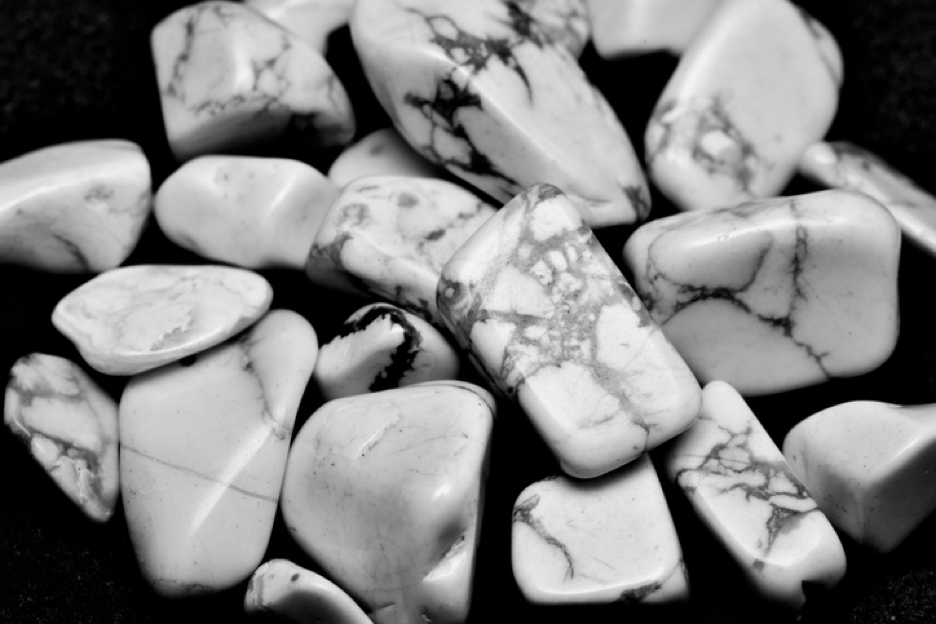
Does your precious pooch have trouble sleeping? Howlite might do the trick! This powerful stone promotes a better sleep cycle to allow you both to wake up feeling refreshed each morning. It’s also known to encourage expression, which can help boost the confidence of shy dogs. When a dog feels more confident, they are less likely to excessively chew or exhibit destructive behavior. Howlite is a dreamy white and grey color combination and one that could benefit from staying near your dog’s bed.
Howlite.
Rose Quartz
New owners should definitely consider adding rose quartz to their shopping list. It’s well known for attracting feelings of unconditional love, within and without. An increase in self-love allows dogs to see an increase in love all around. This can especially come in handy with opening a dog’s heart to its new owner. It also helps to heal old wounds, which could benefit those suffering from a traumatic past. Rose quartz is a soft pink color, and you can place it anywhere near your dog to amplify all the loving energy around you both!
If you’ve been curious about how crystals can help strengthen your relationship with your dog, we hope this article helps. Always be sure to keep crystals in an area where your dog can’t accidentally (or purposely) eat them. Check with SpaDog weekly for more tips, tricks, and useful information on spoiling your dog in healthy and fun ways!
ooOOoo
Thank you, Breanna, I am sure that will find many readers who see where you are coming from. That last sentence says it all for dog-lovers: “Check with SpaDog weekly for more tips, tricks, and useful information on spoiling your dog in healthy and fun ways!”
Herman Daly had a flair for stating the obvious. When an economy creates more costs than benefits, he called it “uneconomic growth.” But you won’t find that conclusion in economics textbooks. Even suggesting that economic growth could cost more than it’s worth can be seen as economic heresy.
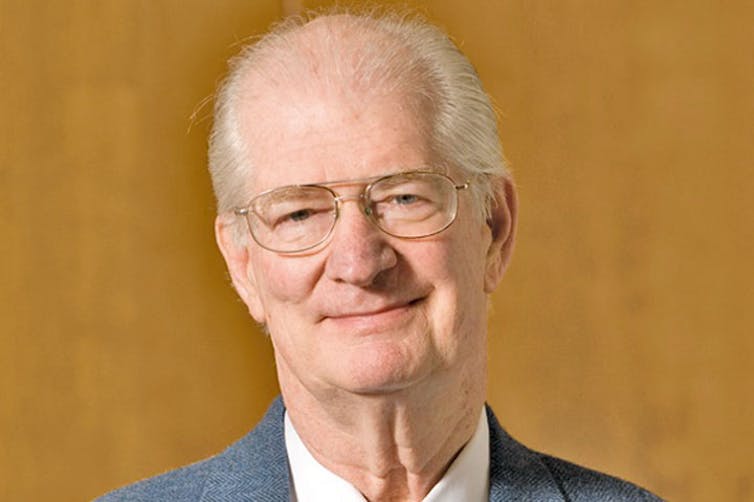
The renegade economist, known as the father of ecological economics and a leading architect of sustainable development, died on Oct. 28, 2022, at the age of 84. He spent his career questioning an economics disconnected from an environmental footing and moral compass.
In an age of climate chaos and economic crisis, his ideas that inspired a movement to live within our means are increasingly essential.
The seeds of an ecological economist
Herman Daly grew up in Beaumont, Texas, ground zero of the early 20th century oil boom. He witnessed the unprecedented growth and prosperity of the “gusher age” set against the poverty and deprivation that lingered after the Great Depression.
To Daly, as many young men then and since believed, economic growth was the solution to the world’s problems, especially in developing countries. To study economics in college and export the northern model to the global south was seen as a righteous path.
Economist Herman Daly (1938-2022) Courtesy of Island Press
But Daly was a voracious reader, a side effect of having polio as a boy and missing out on the Texas football craze. Outside the confines of assigned textbooks, he found a history of economic thought steeped in rich philosophical debates on the function and purpose of the economy.
Unlike the precision of a market equilibrium sketched on the classroom blackboard, the real-world economy was messy and political, designed by those in power to choose winners and losers. He believed that economists should at least ask: Growth for whom, for what purpose and for how long?
Daly’s biggest realization came through reading marine biologist Rachel Carson’s 1962 book “Silent Spring,” and seeing her call to “come to terms with nature … to prove our maturity and our mastery, not of nature but of ourselves.” By then, he was working on a Ph.D. in Latin American development at Vanderbilt University and was already quite skeptical of the hyperindividualism baked into economic models. In Carson’s writing, the conflict between a growing economy and a fragile environment was blindingly clear.
After a fateful class with Nicholas Georgescu-Roegen, Daly’s conversion was complete. Georgescu-Roegen, a Romanian-born economist, dismissed the free market fairy tale of a pendulum swinging back and forth, effortlessly seeking a natural state of equilibrium. He argued that the economy was more like an hourglass, a one-way process converting valuable resources into useless waste.
Daly became convinced that economics should no longer prioritize the efficiency of this one-way process but instead focus on the “optimal” scale of an economy that the Earth can sustain. Just shy of his 30th birthday in 1968, while working as a visiting professor in the poverty-stricken Ceará region of northeastern Brazil, Daly published “On Economics as a Life Science.”
His sketches and tables of the economy as a metabolic process, entirely dependent on the biosphere as source for sustenance and sink for waste, were the road map for a revolution in economics.
Economics of a full world
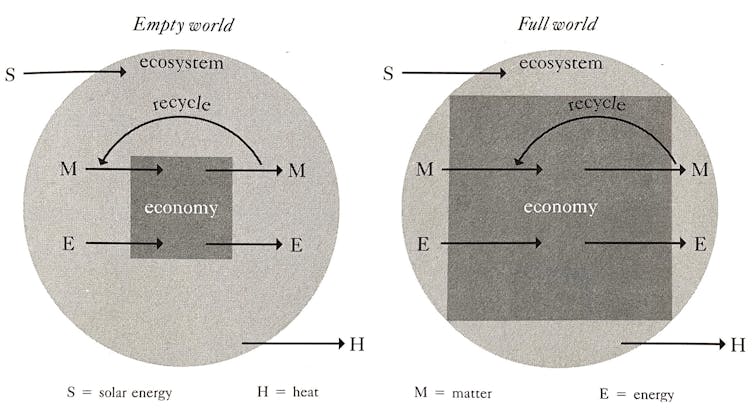
Daly spent the rest of his career drawing boxes in circles. In what he called the “pre-analytical vision,” the economy – the box – was viewed as the “wholly owned subsidiary” of the environment, the circle.
When the economy is small relative to the containing environment, a focus on the efficiency of a growing system has merit. But Daly argued that in a “full world,” with an economy that outgrows its sustaining environment, the system is in danger of collapse.
Herman Daly’s conception of the economy as a subsystem of the environment. In a ‘full world,’ more growth can become uneconomic. Adapted from ‘Beyond Growth.’ Used with permission from Beacon Press.
While a professor at Louisiana State University in the 1970s, at the height of the U.S. environmental movement, Daly brought the box-in-circle framing to its logical conclusion in “Steady-State Economics.” Daly reasoned that growth and exploitation are prioritized in the competitive, pioneer stage of a young ecosystem. But with age comes a new focus on durability and cooperation. His steady-state model shifted the goal away from blind expansion of the economy and toward purposeful improvement of the human condition.
The international development community took notice. Following the United Nations’ 1987 publication of “Our Common Future,” which framed the goals of a “sustainable” development, Daly saw a window for development policy reform. He left the safety of tenure at LSU to join a rogue group of environmental scientists at the World Bank.
For the better part of six years, they worked to upend the reigning economic logic that treated “the Earth as if it were a business in liquidation.” He often butted heads with senior leadership, most famously with Larry Summers, the bank’s chief economist at the time, who publicly waved off Daly’s question of whether the size of a growing economy relative to a fixed ecosystem was of any importance. The future U.S. treasury secretary’s reply was short and dismissive: “That’s not the right way to look at it.”
I knew Herman Daly for two decades as a co-author, mentor and teacher. He always made time for me and my students, most recently writing the foreword to my upcoming book, “The Progress Illusion: Reclaiming Our Future from the Fairytale of Economics.” I will be forever grateful for his inspiration and courage to, as he put it, “ask the naive, honest questions” and then not be “satisfied until I get the answers.”
A rather gloomy analysis about the next few years!
One makes decisions all one’s life. But too few of us are making decisions that will prevent our planet from over-heating.
Patrice Ayme wrote a comment in a recent post that said (in part): “However we are tracking to a much higher temperature: + 7 (seven) Celsius in some now temperate parts… imminently. That is going to be catastrophic.”
There is a terrible change going on right now. From the deforestation in the Amazon rainforest to the unseasonable heat in Europe, as reported in the Guardian newspaper: “The result of this advection has been anomalously warm temperatures across large parts of Europe – in particular across France and Spain, where temperatures soared to over 10C above normal. Maximum temperatures widely exceeded 30C in parts of Spain on Thursday, with 35.2C measured at Morón de la Frontera, south-east of Seville.“
One would think that our governments would be pulling together in order to have a co-ordinated global plan. But there’s no sight of that yet. What we do have is a sort of craziness of Governments that causes me to lament over our, as in a global ‘our’, distractions. We are running out of time!
To this end I am republishing in full the latest George Monbiot essay. I hasten to add with Mr Monbiot’s permission.
ooOOoo
The Oligarch’s Oligarch
Published 30th October 2022.
Just as we need to get the money out of politics, we have been gifted a Prime Minister who represents the ultra-rich.
By George Monbiot, published in the Guardian 26th October 2022
Before we decide what needs to change, let’s take stock of what we have lost. I want to begin with what happened last week. I don’t mean the resignation of the prime minister. This is more important.
Almost all the media reported a scripted comment by the newly reinstated home secretary, Suella Braverman, about the “Guardian-reading, tofu-eating wokerati”. Astonishingly, scarcely any of them reported what she was doing at the time. She was pushing through the House of Commons the most repressive legislation of the modern era.
Under the public order bill, anyone who has protested in the previous five years, or has encouraged other people to protest, can be forced to “submit to … being fitted with, or the installation of, any necessary apparatus” to monitor their movements. In other words, if you attend or support any protest in which “serious disruption to two or more individuals or to an organisation” occurs, you can be forced to wear an electronic tag. “Serious disruption” was redefined by the 2022 Police Act to include noise.
This is just one of a series of astounding measures in the bill, which has been hardly remarked upon in public life as it passes through Britain’s legislature. What we see here is two losses in one moment: the final erasure of the right to protest, and political journalism’s mutation from reporting substance to reporting spectacle. These are just the latest of our losses.
So extreme has inequality become, and so dangerous is the combination of frozen wages, lagging benefits, rising rents and mortgage repayments, soaring bills and food inflation, that millions of people are being pushed towards destitution. Unless something changes, many will soon lose their homes. In the midst of this crisis, we have been gifted a prime minister who owns four luxury “homes”. One of them is an empty flat in Kensington that he reserves for visiting relatives.
While Rishi Sunak was chancellor, the government repeatedly delayed its manifesto promise to ban no-fault evictions. Landlords are ruthlessly exploiting this power to throw their tenants on to the street or use the threat to force them to accept outrageous rent rises and dismal conditions. Had Sunak’s “help to buy” mortgage scheme succeeded (it was a dismal flop), it would have raised house prices, increasing rents and making ownership less accessible: the opposite of its stated aim. But this, as with all such schemes, was surely its true purpose: to inflate the assets of existing owners, the Conservative party’s base.
Public services are collapsing at breathtaking speed. Headteachers warn that 90% of schools in England could run out of money next year. NHS dentistry is on the verge of extinction. Untold numbers are now living in constant pain and, in some cases, extracting their own teeth. The suspicion that the NHS is being deliberately dismembered, its core services allowed to fail so that we cease to defend it against privatisation, rises ever higher in the mind.
But Sunak appears determined only to hack ever further. Sitting on a family fortune of £730m, he seems unmoved by the plight of people so far removed from him in wealth that they must seem to exist on another planet. He is the oligarch’s oligarch, ever responsive to the demands of big capitaland the three offshore plutocrats who own the country’s biggest newspapers, oblivious of the needs of the 67 million people who live here.
After 12 years of Conservative austerity and chaos, the very rich have taken almost everything. They have even captured virtue. They now appropriate the outward signs of an ethical life while continuing – despite or because of their organic cotton jackets and second homes, their electric cars and pasture-fed meat, their carbon offsets and ayahuasca retreats, philanthropy and holidays in quiet resorts whose palm-thatched cabins mimic the vernacular of the people evicted to make way for them – to grasp the lion’s share of everything.
Corruption is embedded in public life. Fraud is scarcely prosecuted. Organised crime has been so widely facilitated, through the destruction of the state’s capacity to regulate everything from money laundering to waste dumping, that you could almost believe it was deliberate. Our rivers have been reduced to sewers, our soil is washing off the land, the planning system is being dismantled, and hundreds of environmental laws are now under threat. We hurtle towards Earth systems oblivion, while frenetically talking about anything but.
In other words, it’s not just a general election we need, it’s a complete rethink of who we are and where we stand. It’s not just proportional representation we need, but radical devolution to the lowest possible levels at which decisions can be made, accompanied by deliberative, participatory democracy. It’s not just new lobbying laws we require, but a comprehensive programme to get the money out of politics, ending all private political donations, breaking up the billionaire press and demanding full financial transparency for everyone in public life. We should seek not only the repeal of repressive legislation, but – as civil disobedience is the bedrock of democracy – positive rights to protest.
All this now feels far away. Jeremy Corbyn offered some (though by no means all) of these reforms. Keir Starmer offers none. Though Labour MPs voted against the public order bill, his only public comment so far has been to endorse its headline policy: longer sentences for people who glue themselves to roads. But if the Labour party or its future coalition partners can persuade him to agree to just one aspect of this programme, proportional representation, we can start work on the rest, building the political alliances that could transform the life of this nation. Without PR, we’re stuck with a dysfunctional duopoly, in hock to the billionaire press and the millionaires it appoints to govern us. We cannot carry on like this.
So much is really telling but I just want to draw your attention to this sentence: In other words, it’s not just a general election we need, it’s a complete rethink of who we are and where we stand.
It is not just in England and Wales but also in the USA. Indeed, most of the countries in the world.
Here is an excerpt from the latest email from The Economist. It presages the COP27 to be held in Egypt next week.
By burning fossil fuels, humans have altered Earth’s atmosphere, which has consequences for almost everything on the planet. It is reshaping weather systems and coastlines, transforming where crops can be grown, which diseases thrive, and how armies fight . Rising temperatures affect geopolitics, migration, ecosystems and the economy. Over the next century and beyond, climate change—and the responses to it—will remake societies and the world.
And a paragraph later:
This week I wrote about the seven texts I recommend as an introduction to the climate crisis—and explained why each is worth turning to—as a part of our “Economist reads” series. They range from Bill Gates’s assessment of technological solutions to a discussion of international justice by the former UN High Commissioner on Human Rights. One book I find myself recommending over and over again is “What We Know About Climate Change” by Kerry Emanuel, an atmospheric scientist at MIT. At 88 pages, it is a blessedly short, readable primer on the science, history and economics of climate change. The climate crisis touches everything. Understanding it, even a little, is essential for anyone who is engaged with the world and its future. This is a good place to start.
Please follow this advice because it is an excellent place to start.
I wish with all my heart that I am wrong and maybe, just maybe, I am having a ‘down in the dumps’ day. Whatever, my judgement is that we have a few more years at most to find out.
First, let me will quote from the text that comes with the YouTube video.
This is the remarkable story of Zeus, who was effectively paralyzed at the time he was rescued from a high-kill animal shelter in Oklahoma by the wonderful people at St. Francis CARE in Murphysboro, Illinois.
Video edited and produced by Jason Greene
Next, this unmissable video confirms what so many now already: Dogs are stars in their own world.
There you go! A short, little post for today but one that highlights the power of dogs! They are incredible!
I have said it many times before and, knowing me, will undoubtedly say it many times again. That is that this blog wouldn’t still have in excess of 4,000 followers if all these good people had only me to read.
I know you will enjoy Jackie’s post and it is a most important post looking at the history of the dog. Jackie and her husband look at the dog back in Roman times. You will love this!
ooOOoo
Pup Pompeii – Discovering the Dogs of Ancient Rome
Research has now proven that dogs have been companions to humans for 40,000 years. DNA analysis of a 35,000-year-old bone fragment from an ancient wolf, discovered on the Taimyr peninsula in Siberia, presented evidence that dogs diverged from the wolf species much earlier than previously thought. The findings, published in the journal Current Biology, state that Siberian Huskies and Greenland Sled Dogs share many genes with the Taimyr Wolf.
As such, it is no surprise to learn that, a mere two thousand years ago, the ancient Romans kept dogs. However, on a recent road trip to the ruined city of Pompeii with The Fab Four, our four Cavapoos, my husband Mark and I discovered some fascinating facts about the relationship between ancient Romans and Man’s Best Friend.
Pompeii in southern Italy is the most extraordinary time capsule. It grants the onlooker a fascinating and sometimes painfully intimate window into an ancient civilisation. Snuffed out almost instantly by the eruption of Mount Vesuvius, metres of volcanic ash preserved the entire city for two millennia, exactly how it was on those two fateful days in 79 AD.
My husband, Mark, and I visited in April this year with The Fab Four, our four Cavapoos (Cavalier/Poodle cross.) Within thirty minutes of leaving our campsite, I had bought my first Pompeii souvenir – a coaster portraying the striking black-and-white mosaic of a dog wearing a spiked collar crouched and ready to pounce, along with the words Cave Canem – Beware of the Dog.
Cave has nothing to do with underground chasms. It comes from the same Latin root as caveat, as in caveat emptor – buyer beware. The original mosaic is in the entrance to the House of the Tragic Poet. Since we were investigating Pup Pompeii, we had to find the real thing and when we got there, The Fab Four thrilled me by lining up in front of it, unasked!
If you think about it, Rome’s canine connections go right back to the beginning. According to the legend, a she-wolf suckled the twins, Romulus and Remus. Although Remus was killed, Romulus went on to found Rome.
Many objects and artefacts confirm Romans kept dogs. It is no surprise to find pooches employed as guardians, hunters, soldiers, and entertainers; both on the racetrack and as gladiators in the arena. Sculptures, paintings, and mosaics often depict these large and muscular dogs wearing spiked collars to make them look fierce, or protect them from the dangerous predators that were their prey, such as wolves, bears, and boar.
They also protected against the supernatural. Trivia, the Roman goddess of sorcery and witchcraft, held sway over places of transition, such as graveyards and crossroads. Also known as ‘The Queen of Ghosts’, she wandered during the night and, like her Greek counterpart, Hecate, was silent and invisible. Yet, the Romans believed dogs could see and hear her, so a dog seemingly barking at nothing was warning its owner that Trivia or her ghosts were approaching.
I was touched to discover a softer side of dog ownership, too. Romans also kept dogs as companions, status symbols, used them as hot water bottles, and revered them as an emblem of loyalty and devotion. Infrared analysis of a dog’s collar discovered in Pompeii carries praise for it saving its master’s life in a wolf attack. The archetypal mutt’s name, ‘Fido’, is the Latin word for ‘trust’ or ‘fidelity’, which explains why dogs were popular gifts between lovers.
There was no Kennel Club in ancient Rome, so dog breeds, as we know them today, did not exist. Ever practical, the Romans classified dogs according to their function, or place of origin.
In 2020, archaeologists in Pompeii discovered the skeleton of a tiny adult dog, about 10 inches (25 cm) at the shoulder – the size of a Yorkshire Terrier or Maltese. Malta is just 60 miles south of Sicily, and the “Roman Ladies’ Dog”, Canis Melitae or Melitan, was an expensive status symbol, affordable only to the upper classes. Besides providing companionship and warmth, the Romans believed they drew fleas away from their owners.
The Cave Canem mosaic of a black-and-white dog wearing a spiked collar possibly depicts a Molossian, forbear of the Roman Canis Pugnaces. In modern English, pugnacious means ‘ready to fight’, so there are no prizes for guessing the purpose of CanisPugnaces!
The legions imported Molossians from Epirus, a mountainous region in the southern part of modern-day Albania. The name Molossian derives from the ruling dynasty of Epirus at the time. Alexander the Great’s ‘terrible mother’, Olympias, was a Molossian princess. Historian Plutarch suggested she slept with snakes in her bed!
Molossians may also have found their way to Britain with the Phoenicians, where they founded the Pugnaces Britanniae, which the Romans not only faced in battle, but subsequently captured, imported, and selectively bred with their own Pugnaces, because the British version was “inflamed with the spirit of Mars, the god of war.”
Roman classical poet Virgil praised the Molossian’s abilities as a guard dog. “Never, with them on guard, need you fear for your stalls a midnight thief, or onslaught of wolves, or Iberian brigands at your back.”
The Molossian and Pugnaces Britanniae are the ancestors ofthe Neapolitan Mastiff and the lighter Cane Corso. The Romans used both types in war, notably as piriferi (fire bearers).Greek writer Polybius notes thesefearless canine warriors charging towards enemy lines with containers of flaming oil strapped to their backs.
In 300 AD, the Greco-Syrian poet, Oppiano, described the Molossian as,
“A dog of large size, snub nosed, truculent with its frowning brows, not speedy but impetuous, a fighter of great courage and incredible strength, to be employed against bulls and wild boar, undaunted even when confronted with a lion.”
Alexander the Great’s favourite dog, Peritas, is believed to have been a Molossian. It reputedly changed the course of history by saving Alexander’s life twice; protecting him from a war elephant at the Battle of Gaugamela, and holding off Malian troops until reinforcements arrived, even though it was mortally wounded. The legend says it died with its head in Alexander’s lap.
Among the fabulous mosaics that adorn the floors of the house of Paquius Proculus in Pompeii, a rather regal lurcher-type dog guards the door – perhaps a Vertragus – ancestor of the modern Greyhound. The Romans prized this sighthound as a hunter as well as guarding, and, like the smaller lapdogs, also cuddled them for warmth.
Poet, Grattius, who lived from 63 BC to 14 AD, during the time of Emperor Augustus, praised the Vertragus for its speed and refined features, noting rather splendidly that it runs “swifter than thought or a winged bird.”
The Celtic people originated in the upper Danube basin and expanded their culture across great swathes of continental Europe, including France, Spain, Belgium, the Netherlands, the Balkans, as well as in the east in places such as Asia Minor and Anatolia (part of Turkey) – and took their dogs with them.
Curiously, despite its Celtic connections, studies in the 1970s and 2000 confirm that prior to Roman occupation, Greyhound-type dogs did not exist in Britain. The wooden Vindolanda tablets, the oldest handwritten account of life in the north of Roman Britain, do mention that Imperial troops either knew of the Vertragus, or had them with them.
Julius Caesar allegedly castigated Roman citizens for caring more for their dogs than their children. As is so often the case, funerary goods shed light on ancient civilisations. Many inscriptions on Roman tombs highlight the high regard in which the Romans held their dogs. They also suggest that in the past, dogs may have lived longer than in modern times, perhaps because of the interbreeding required to create pedigree strains.
These heartrending inscriptions will strike a chord with any modern dog owner. The first two could easily refer to Canis Melitae:
“Behold the tomb of Aeolis, the cheerful little dog, whose loss to fleeting fate pained me beyond measure.”
“Bedewed with tears I have carried you, our little dog, as in happier circumstances, I did fifteen years ago. So now, Patrice, you will no longer give me a thousand kisses nor will you be able to lie affectionately ’round my neck. You were a good dog and, in sorrow, I have placed you in a marble tomb and I have united you forever to myself when I die. You readily matched a human with your clever ways; alas, what a pet we have lost! You, sweet Patrice, were in the habit of joining us at table and fawningly asking for food in our lap, you were accustomed to lick with your greedy tongue the cup which my hands often held for you and regularly to welcome your tired master with wagging tail.”
Yet it wasn’t just lap dogs who earned tributes from their owners. Here is a truly beautiful and touching dedication on a Roman marble tablet from the first century AD in the British Museum, contemporary with Pompeii. It is written in verse, from the point of view of a prized hunting dog, Margarita (Pearl), from Gaul, who died giving birth. With allusions to the poetry of Virgil, who stated “Mantua gave birth to me”, the care taken over this memorial proves Margarita was clearly a very beloved family member.
“Gaul gave me my birth and the pearl-oyster from the seas full of treasure my name, an honour fitting to my beauty.
I was trained to run boldly through strange forests and to hunt out furry wild beasts in the hills, never accustomed to be held by heavy chains nor endure cruel beatings on my snow-white body.
I used to lie on the soft lap of my master and mistress and knew to go to bed when tired on my spread mattress and I did not speak more than allowed as a dog, given a silent mouth
No-one was scared by my barking but now I have been overcome by death from an ill-fated birth and earth has covered me beneath this small piece of marble.
Margarita (‘Pearl’)”
In the Monty Python film, The Life of Brian, an anti-Roman revolutionary famously asks, “What have the Romans ever done for us?”
Yet, besides roads, aqueducts, plumbing, sanitation, and fast food, they have clearly passed on a deep love and appreciation of dogs!
Attributions:
Photo of Romulus and Remus with the she-wolf courtesy of Benutzer:Wolpertinger on WP de, Public domain, via Wikimedia Commons
FREE Tickets – these are available for visits on the first Sunday of every month. They must be downloaded online and the gates close once a mere 15,000 have been admitted
Self-Guided Walking Tour App – there are few interpretive signs on the site. ‘These two expert-designed self-guided walking tours to explore Pompei, Italy on foot at your own pace. You can also create your own self-guided walk to visit the city attractions which interest you the most.’
Author Bio:
Jacqueline Lambert is an award-winning author and blogger, who gave up work in 2016 to tour Europe full-time with her husband and four dogs. “Laugh out loud funny and a great travel guide.” is just one of many five-star reviews of Jackie’s ‘Adventure Caravanning with Dogs’ series of light-hearted road trip memoirs.
Follow her blog www.WorldWideWalkies.com to keep up to date with their latest expedition, get travel tips and advice, or find out how they live their dream without a lottery win.
ooOOoo
The photograph below is from a collection of photos on the tombstones of ancient Roman dogs. More images may be seen here!
It just goes to show how long these incredible animals have been associated with humans.
This is another guest post from Indiana Lee. She writes with a compassionate and loving style and I am so pleased to be able to offer this post to you.
ooOOoo
How To Create a Healthy, Eco-Friendly Environment for Your Dog
As a dog owner, it’s perfectly normal to want an environment for your canine companion that is fun, happy, and healthy. That includes making sure they have a clean and secure place that’s comfortable and safe, as well as free from hazardous materials and harmful pests.
Creating a healthy environment for your dog is easier than you might think. By dedicating a specific space to your pooch and making some simple swaps, you can be an eco-friendly pet parent, doing something good for the planet and your pup all at once.
Create a Safe Space
First and foremost, try to create a safe space in your home for your dog. You can always consider a pet room, but even just an area in your living room or a comfy crate can do the trick.
Having a designated area for your dog in your home can make a big difference. Dogs are den animals and like having their own safe space to go to. While you don’t necessarily need to dedicate a whole room to your four-legged friend, your space should be pet-proofed to keep them safe.
That includes keeping things organized and clearing up clutter, so your dog doesn’t get into or chew on things they shouldn’t. You can also use baby gates to keep your dog in their space or to prevent them from going into areas of your home that haven’t been pet-proofed.
Use Eco-friendly Cleaning Products
Once you have set up that space, it’s important to keep it clean for your dog. Between rest and play and dinner time, it’s all too easy for your home to get dirty quickly. This means you have to keep your home clean, regularly pick up after your dog, and sanitize their space.
However, you must keep them away from potentially toxic substances — including the supplies you use to clean their area. Make sure your dog can’t get to any of the following:
Bleach
Aerosols
Ammonia
Phenol
Formaldehyde
You’ll quickly learn to become a “label reader” when it comes to the cleaning products you choose. Not only are the above ingredients bad for your pet, but they can also damage the environment.
When shopping for cleaning supplies, choose all-natural products as often as possible. Alternatively, consider making your own so you know exactly which ingredients are used. Vinegar, baking soda, and lemon juice are all common household items that you can use in cleaners — and they’re better for your pet and the planet.
Keep Pests Away
Creating a safe environment for your pet also means protecting your pooch from pests. You might not be able to control what comes into your house — especially since many pests can sneak in through tiny cracks — but you can discourage them from bothering your dog. You can do so while still making your yard a fun place for your dog.
You can reduce the risk of certain bugs and rodents entering your home by keeping your yard clean and trimmed. Don’t give wild animals a space to “hang out” and enjoy. The more time they spend in your yard, the more likely it is that they’ll get inside.
Additionally, the more wildlife you have in your yard, the more likely it is that your dog will bring in fleas or ticks that have “jumped” from raccoons, possums, or mice. Pests like fleas and ticks can be especially harmful to dogs, and they’re quick to get into rugs, carpets, and furniture, which can end up putting everyone’s health at risk. You can vacuum frequently if you’ve seen your dog with a tick or fleas and utilize some of the cleaning supplies listed earlier to deter them from sticking around.
If you see a bug on your dog, give them a thorough brushing and use natural shampooing solutions to get rid of the fleas quickly. Keep their fur trimmed back neatly and make sure they’re as clean as possible. Regular baths and grooming can also help keep pests away from your pet and ensure your dog doesn’t bring any extra visitors into your home.
Are you sensing a pattern?
A clean, healthy home typically means a happier, safer space for dogs. Whether you’re trying to live more sustainably or just focus on more natural ways of doing things, these suggestions will get you on the right track. Not only will your dog have a secure and pet-friendly environment to enjoy, but you can feel good knowing you’re doing something to improve the health of your entire family, as well as the future of the planet.
ooOOoo
This really hits the spot. For we live in the country in Southern Oregon and have more than our fair share of flies and fruit flies, and who knows what else!
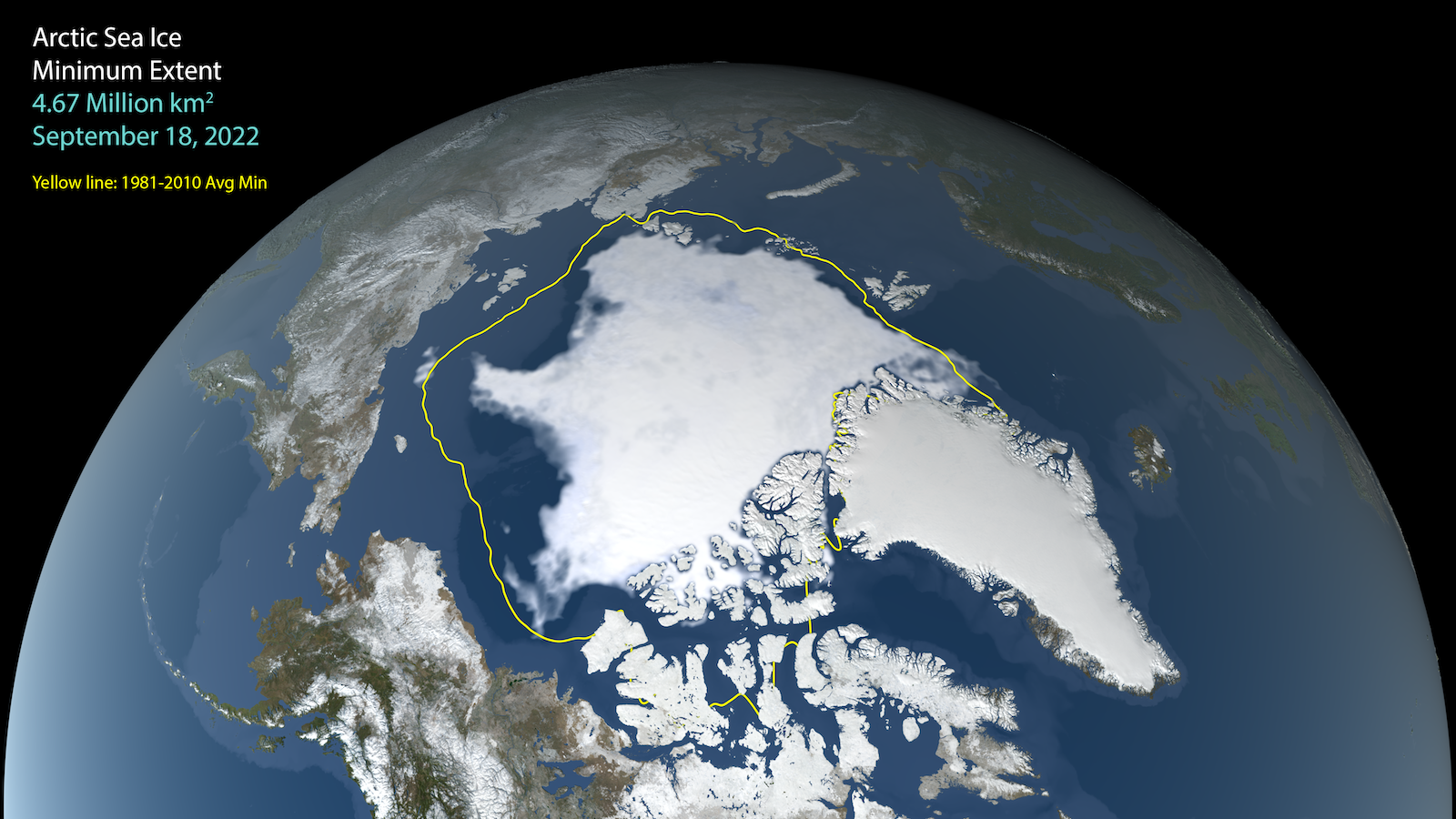
There’s no way to make this pleasant; the Arctic Summer Sea Ice tied for the tenth lowest on record.
ooOOoo
This image visualizes sea ice change in the Arctic using data provided by the Japan Aerospace Exploration Agency’s Global Change Observation Mission 1st-Water “SHIZUKU” satellite, which is part of a NASA-led partnership to operate several Earth-observing satellites. The visualization can be accessed at https://svs.gsfc.nasa.gov/5030. Credit: NASA’s Scientific Visualization Studio.
According to satellite observations, Arctic sea ice reached its annual minimum extent (lowest amount of ice for the year) on Sept. 18, 2022. The ice cover shrank to an area of 4.67 million square kilometers (1.80 million square miles) this year, roughly 1.55 million square kilometers (598,000 square miles) below the 1981-2010 average minimum of 6.22 million square kilometers (2.40 million square miles).
The average September minimum extent record shows significant declines since satellites began measuring consistently in 1978. The last 15 years (2007 to 2021) are the lowest 15 minimum extents in the 43-year satellite record.
This visualization, created at NASA’s Goddard Space Flight Center in Greenbelt, Maryland, shows data provided by the Japan Aerospace Exploration Agency (JAXA), acquired by the Advanced Microwave Scanning Radiometer 2 (AMSR2) instrument aboard JAXA’s Global Change Observation Mission 1st-Water “SHIZUKU” (GCOM-W1) satellite.
Music: “Celestial Vault” from Universal Production Music
Video credit: NASA’s Goddard Space Flight Center
Kathleen Gaeta (GSFC AIMMS): Lead Producer
Trent L. Schindler (USRA): Lead Animator
Roberto Molar (KBR): Lead Writer
ooOOoo
As I said, a sorry tale for which there is no good news. I wish there were!