Category: Musings

Naming the States of America

A fascinating article read recently!

Being born in London and therefore British by birth I have no idea where the American States get their names from. That is why I read with great interest a recent article on the Word Genius blog that explained it all. I wanted to share it with you.

ooOOoo
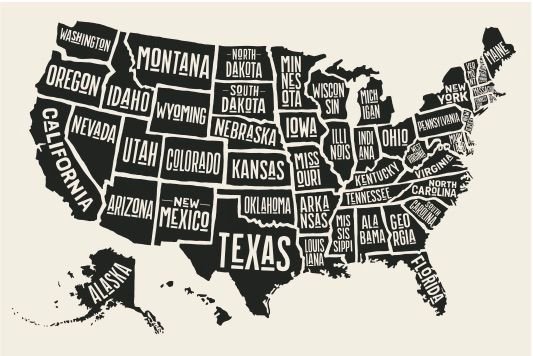
Every state in America has its own unique culture, flavor, and quirks – including their names. State pride is alive and well from Alabama to Wyoming, but do you know the story of how your state got its name?

While the name etymology for some states is a bit muddled, in general, a good number are derived from Native American tribes and languages, such as Algonquin, Sioux, and Iroquois. Others are nods to the origins of the European settlers who claimed patches of America for their own.

Here’s a guide to where all 50 state names came from – and what they mean!

Origins of State Names

Alabama comes from the Choctaw word albah amo meaning thicket-clearers or plant cutters.

Alaska has ties to the Aleuts and the Russians, with the words alaxsxaq and Аляска, respectively, essentially meaning mainland.

Arizona has ancient roots as the Uto-Aztecan word ali sona-g, which was adopted by the Spaniards as Arizonac, meaning good oaks.

Arkansas is the French pronunciation of an Algonquin name for the Quapaw people, akansa.

California is truly a magical place. So magical in fact, it’s named after a fictional world invented by the author Garci Ordóñez de Montalvo, which Spanish explorers adopted when setting foot on the gold coast.

Colorado is another Spanish-influenced name that essentially means ruddy or ruddish. The name was first applied to the Colorado River for its distinctive color.

Connecticut, much like Colorado, was named for the river running through it. The word possibly stems from the Native American term quinnitukqut, meaning beside or at the long tidal river.

Delaware is also named for a body of water, but that body of water was named for Baron De la Warr, the first English governor of Virginia. The baron’s name is old French for of the war.

Florida taps into its Spanish roots by referencing Pascua florida, meaning flowering Easter, as Spanish explorers found the lush area during the holiday season. There’s also a tie to the Latin word floridus, meaning strikingly beautiful.

Georgia may be known for its southern hospitality, but it’s actually named for King George II from Great Britain.

Hawaii comes from the Polynesian word hawaiki, meaning place of the Gods. It was, however, originally named the Sandwich Islands by James Cook in the late 1700s.

Idaho has notorious roots in the Athabaskan word idaahe, meaning enemy. It was originally applied to part of Colorado before being given to the Gem State.

Illinois has a silent “s” at the end, because it’s of French origin. “Illinois” means “Land of Illini,” giving a nod to the Native American population. “Illini” is the Algonquin word for “man” or “warrior.”

Indiana, as you might expect, stems from the English word Indian. The Latin suffix tacked on the end roughly means “land of the.”

Iowa comes from the Dakota word yuxba, meaning sleepy ones.

Kansas references the Kansa tribe, meaning people of the south wind. Makes sense for tornado alley.

Kentucky is yet another state named for the river running through it, inspired by the Shawnee word for on the meadow.

Louisiana, like Georgia, was named for a regent of the times, specifically, Louis XIV of France.

Maine has uncertain origins. Though it’s worth noting that Maine was also the name of a traditional province in France.

Maryland is a tip of the hat from King Charles I to his wife Henrietta Maria. Some husbands give jewelry; King Charles gave naming rights to an entire state.

Massachusetts comes directly from the Algonquian word Massachusett that references the people living in the area, and means at the large hill.

Michigan is based on the Algonquin word meshi-gami, meaning big lake.

Minnesota, like many other Midwest states, comes from a Native American language. In this case, the Dakota word mnisota means cloudy, milky water.

Mississippi literally means big river in Algonquin Ojibwa, although it’s based on the French variation of the word.

Missouri relates to the Algonquin word wimihsoorita, which translates to people of the big canoes.

Montana has some Spanish flair that links back to the Latin mons, for mountains.

Nebraska stems from the Sioux name for the Platte River, omaha ni braska, meaning flat water.

Nevada comes from the Spanish name for the surrounding Sierra Nevada mountain range, which essentially means snowy mountains, or snowcapped.

New Hampshire is the first of many states and cities named as new outposts of other parts of the world. In this case, Hampshire was a county in Southern England.

New Jersey was coined by Sir George Carteret of the Channel Island of Jersey.

New Mexico is self-explanatory and based on the Spanish Nuevo Mexico. Although, did you know the Aztecs coined the word Mexihco for their ancient capital?

New York was named for the Duke of York and the future King James II.

North and South Carolina are named after a monarch, King Charles II, as Carolus is the proper Latin version of Charles. 

North and South Dakota: The word Dakota, of course, describes the Dakota people, but it also means friendly or allies.

Ohio once again comes from a body of water, this time, the Ohio River. The Seneca Native Americans billed it as a good river.

Oklahoma comes from the Choctaw word meaning red people.

Oregon’s origin is less clear, although some scholars point to Algonquin as the source.

Pennsylvania was named after Admiral William Penn, under Charles II. It literally means Penn’s Woods.

Rhode Island has multiple name theories, including the idea that Dutch explorer Adrian Block applied the name Roodt Eylandt, meaning red island, to reflect the red cliffs of the region. Alternatively, it may come from the Greek island of Rhodes.

Tennessee comes from the Cherokee village name ta’nasi, but the meaning is unclear.

Texas is another old Spanish name from the word tejas, meaning friends or allies.

Utah has a short, spunky sound from the Spanish yuta, the name given to indigenous Uto-Aztecan people of the mountains.

Vermont has an elegant French sound and meaning – mont vert means green mountain in French.

Virginia and West Virginia are a Latin nod to sovereign Elizabeth I, the Virgin Queen.

Washington is named for President George Washington. His surname means estate of a man named Wassa in Old English.

Wisconsin may come from the Miami word meskonsing, which was spelled by the French as mescousingand then shifted to ouisconsin.

Wyoming has origins from the Algonquian chwewamink, meaning at the big river flat. There is another theory, however, that states Wyoming comes from a word for mountains and valleys alternating.

ooOOoo

Fascinating!

I wonder how many Americans, i.e. those that were born in this country, know the origins of the names of the States?
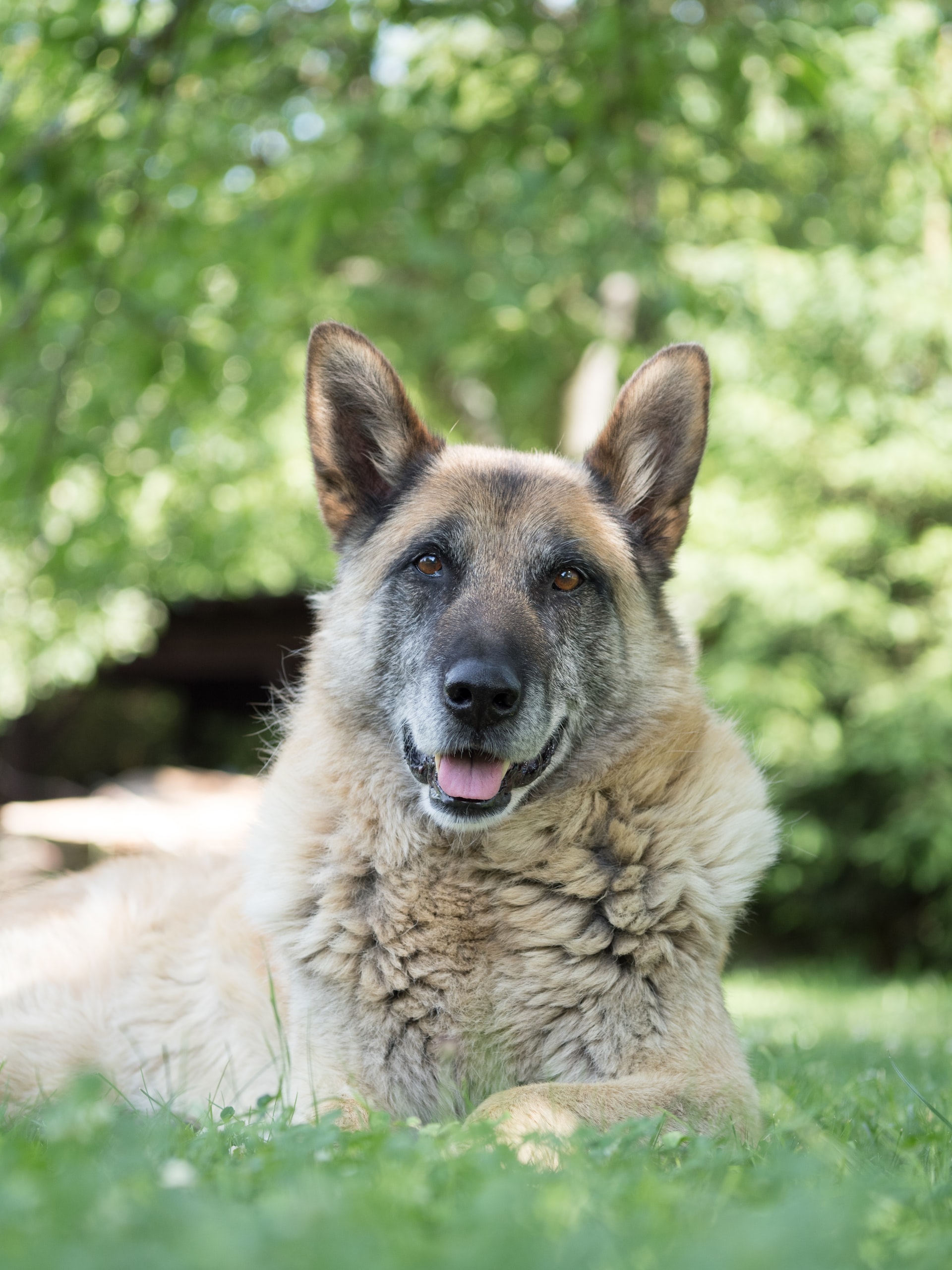
Picture Parade Four Hundred and Sixty-Eight

Once again taken from Unsplash apart from the last two photographs.

oooo

oooo

oooo

oooo

oooo

oooo

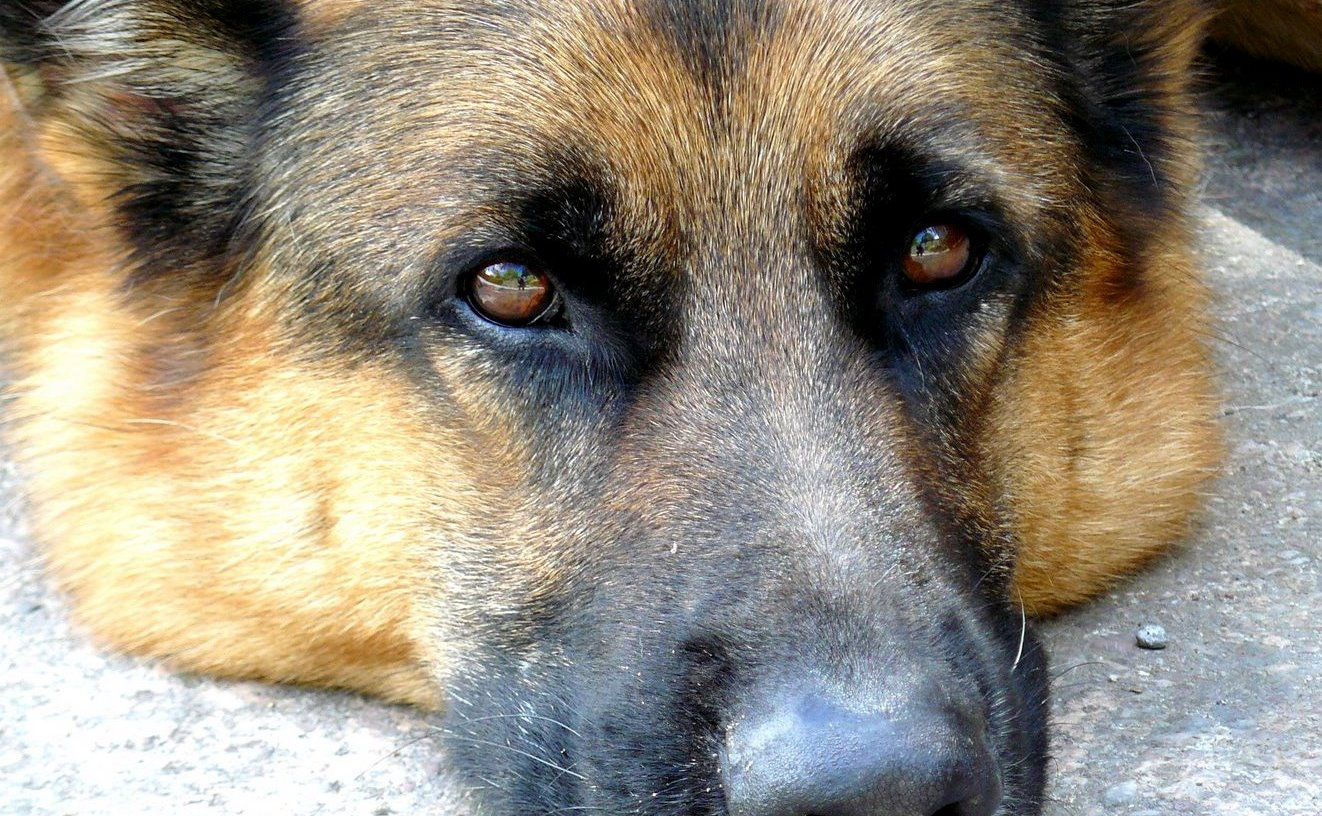
My love for dogs in general and the German Shepherd in particular goes back to 1955 when I was 10 years old. My father offered to look after a GSD called Boy. Boy belonged to a lovely couple, Maurice and Marie Davies.  They were in the process of taking over a new Public House (Pub); the Jack & Jill in Coulsdon, Surrey.  My father had been the architect of the Jack & Jill. Boy quickly bonded with me and that love for the dog never left me.

Beloved Pharaoh. Born: June 3rd., 2003 – Died: June 19th., 2017. A very special dog that will never be forgotten.

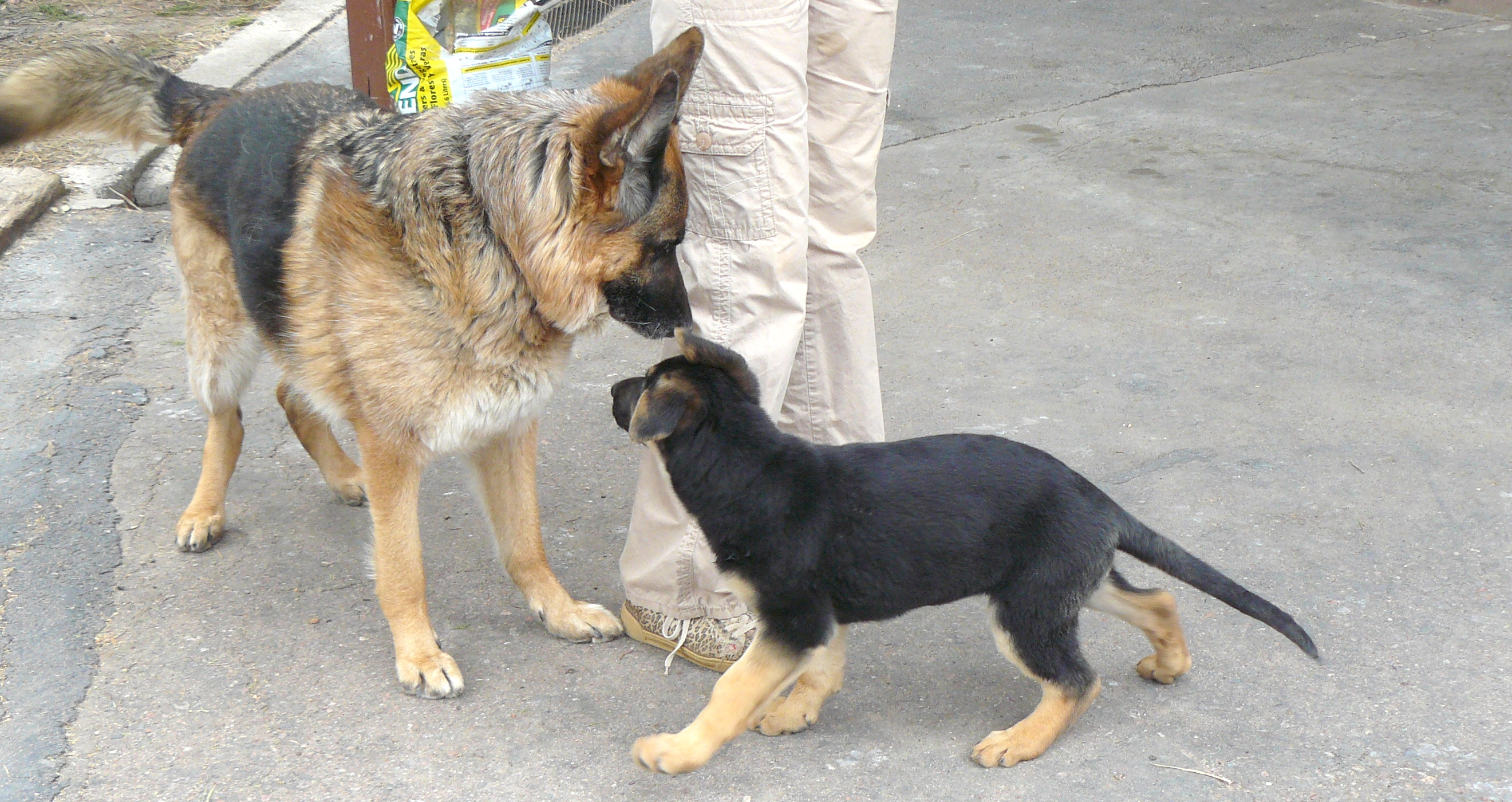
Pharaoh meeting Cleo, the year being 2012.

Cleo will be eleven on the 25th January, 2023. Where did the years go?

Cleopatra

Some more thoughts on this delightful German Shepherd.

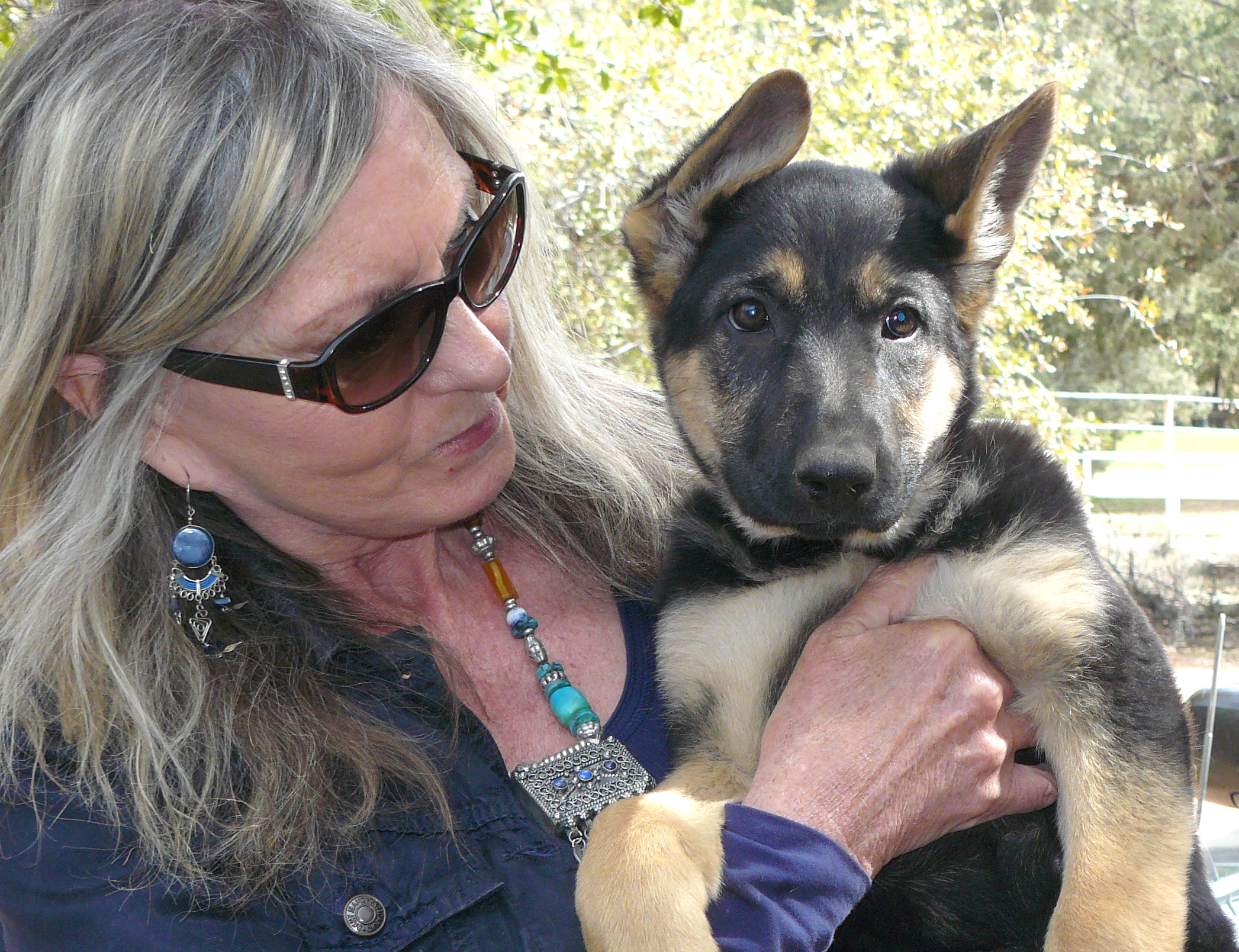
Cleopatra has been with us since 2011 when we lived in Payson, Az. The background is that Sandra Tucker who ran the GSD Breeders Jutone, in Devon, England, where Pharaoh was born, gave me some advice. Sandra said that when Pharaoh was getting on in life, then bring in a German Shepherd puppy. Apparently, there were two solid reasons why this made sense. The first was that Pharaoh would teach the new puppy many of the skills and disciplines that Pharaoh had learnt as a young dog and, secondly, the puppy would keep Pharaoh active.

That was the case. Cleo has never had a day’s training from Jean and me yet she is a bright, smart dog that knows all that is to be known.

Well Pharaoh died in 2017 but Cleo is very much alive. She is a beautiful dog!

Cleo deep in meditation.

One of the issues with Parkinson’s disease is that it plays havoc with one’s sleep patterns. For a long time Jean has been waking anytime between midnight and 3am and having to get up. Jean tends to go into the kitchen and prepare the breakfast to be consumed much later on when we are both washed and dressed.

But this article is about Cleo.

Cleo has the instincts of a hunter dog; that’s a common feature of GSDs. So when Jean gets up and goes into the kitchen Cleo is right with her. Indeed Jean says that she won’t enter the kitchen area properly until Cleo has given it the all clear. Cleo takes a careful observation, including scent and hearing, looking for any sign of mice and rats. Luckily I sleep through it all albeit in the early days I used to wake up as well.

Just another example of the way that dogs embrace our human lives!

Another dog rescue for the New Year.

It was published late last year but so what!

This story from the Dodo caught my eye. Don’t know why because the articles about dogs being rescued are not rare! But anyway, whatever the reason it seemed a good article to share with you all today.

ooOOoo

Dog Trembling In A Pile Of Rubble Is So Grateful Someone Finally Noticed Her

“Her legs were shaking so hard” 💔

By Ashley Ortiz, Published on the 23rd December, 2022

The first time Donna Lochmann searched a crumbling, abandoned apartment building in St. Louis, Missouri, she couldn’t find who she was looking for. A Good Samaritan called Stray Rescue of St. Louis (SRSL) to report a dog sighting, but Lochmann, the shelter’s chief life saving officer, came out empty-handed.

“We searched every floor and never saw anything,” Lochmann told The Dodo. “There was not one dog, nothing.”

With temperatures dropping and more calls coming in about a dog barking from inside the building, Lochmann decided to go back again and keep searching. This time, she found someone.

“When I got to the backside of the building, I saw a dog lying in the grass,” Lochmann said. “I saw her run towards the back of the building and she went in, so I followed her.”

Unfortunately, by the time Lochmann made it inside the building, the dog had already disappeared into one of the many empty apartments. She couldn’t find the pup on her own, so Lochmann went back to the shelter and recruited the help of other staff members.

Lochmann and her team went back to the building the next day, and as they went from room to room searching for the scared pup, they suddenly heard barking coming from inside.

“I got over there and there was a poor dog just lying in the rubble of this building,” Lochmann said. “She was absolutely trembling, her legs were shaking so hard.”

The weather was cold that day, but Lochmann knew that the dog’s shaking was caused by fear more so than lack of warmth.

“I felt so bad for her,” Lochmann said. “It’s been a while since I’ve seen one shaking that hard, and it’s just gut-wrenching to see them so scared of you.”

To get the dog out of the building, Lochmann decided to use a plastic crate instead of attempting to walk her out on a leash. Not only would it be physically difficult to lead the pup out of the crumbling building on a leash, but Lochmann feared it would stress her out even more.

So Lochmann used the leash she had to guide the dog into the plastic crate, then quickly closed the door behind her.

“Once she was in the crate, she was calm,” Lochmann said.

Lochmann and her team carried the crate out of the building, then gently loaded it into her Jeep. They brought her back to the shelter, where she underwent a medical evaluation. Luckily for the pup, she passed with flying colors.

The dog, whom Lochmann named Habenero, was OK physically, but she was still a little nervous when she first got to the shelter.

“She was still pretty scared at first,” Lochmann said. “But she came around fairly quickly. Within a few days, she wasn’t growling anymore and she stopped shaking when we would talk to her.”

Habanero has since been spending time with Lochmann and her crew at the shelter, slowly getting used to her surroundings. Together, they go on walks around the neighborhoods surrounding the shelter and enjoy plenty of snuggles throughout the day.

Now that Habanero is feeling more comfortable, Lochmann believes that she’s finally ready to go into a foster home. It’ll be yet another change for the 7-year-old pup, but Lochmann is confident that she’ll thrive.

“Once she gets into a home, she’s gonna have a bit of adjustment to do,” Lochmann said. “But she’ll do great. I’m just glad she’s not trembling anymore.”

All images by STRAY RESCUE OF ST. LOUIS with whom copyright rests.

ooOOoo

The thing about dogs is the way that we, as in humans, bond so well with the majority of dogs, and that the majority of dogs bond so well with us.

I was just saying this to Jeannie yesterday morning when Oliver jumped up on to the three-seat settee, admittedly onto his special cushion, next to me and proceeded to snooze with his head on my thigh. Dogs are the perfect companions and they are incredibly conscious of the states of mind of their loving humans.

The tradition of Christmas

It goes back much further than the Christian church.

Jean and I are atheists and have been all our lives. Therefore we tend to take more notice of the Winter solstice (that is today as the day that I am preparing this post) rather than Christmas Day and our sense that it is a product of Jesus Christ being born on the 25th; or so I thought!

But the tradition of a Christmas tree in particular goes much further back, as this article from The Conversation sets out.

ooOOoo

The Christmas tree is a tradition older than Christmas

Public Christmas trees, like Rockefeller Center’s famous tree, didn’t start appearing in the U.S. until the 20th century. Nicholas Hunt/WireImage via Getty Images

Troy Bickham, Texas A&M University

Why, every Christmas, do so many people endure the mess of dried pine needles, the risk of a fire hazard and impossibly tangled strings of lights?

Strapping a fir tree to the hood of my car and worrying about the strength of the twine, I sometimes wonder if I should just buy an artificial tree and do away with all the hassle. Then my inner historian scolds me – I have to remind myself that I’m taking part in one of the world’s oldest religious traditions. To give up the tree would be to give up a ritual that predates Christmas itself.

A symbol of life in a time of darkness

Almost all agrarian societies independently venerated the Sun in their pantheon of gods at one time or another – there was the Sol of the Norse, the Aztec Huitzilopochtli, the Greek Helios.

The solstices, when the Sun is at its highest and lowest points in the sky, were major events. The winter solstice, when the sky is its darkest, has been a notable day of celebration in agrarian societies throughout human history. The Persian Shab-e Yalda, Dongzhi in China and the North American Hopi Soyal all independently mark the occasion.

The favored décor for ancient winter solstices? Evergreen plants.

Whether as palm branches gathered in Egypt in the celebration of Ra or wreaths for the Roman feast of Saturnalia, evergreens have long served as symbols of the perseverance of life during the bleakness of winter, and the promise of the Sun’s return.

Christmas slowly emerges

Christmas came much later. The date was not fixed on liturgical calendars until centuries after Jesus’ birth, and the English word Christmas – an abbreviation of “Christ’s Mass” – would not appear until over 1,000 years after the original event.

While Dec. 25 was ostensibly a Christian holiday, many Europeans simply carried over traditions from winter solstice celebrations, which were notoriously raucous affairs. For example, the 12 days of Christmas commemorated in the popular carol actually originated in ancient Germanic Yule celebrations.

The continued use of evergreens, most notably the Christmas tree, is the most visible remnant of those ancient solstice celebrations. Although Ernst Anschütz’s well-known 1824 carol dedicated to the tree is translated into English as “O Christmas Tree,” the title of the original German tune is simply “Tannenbaum,” meaning fir tree. There is no reference to Christmas in the carol, which Anschütz based on a much older Silesian folk love song. In keeping with old solstice celebrations, the song praises the tree’s faithful hardiness during the dark and cold winter.

Bacchanal backlash

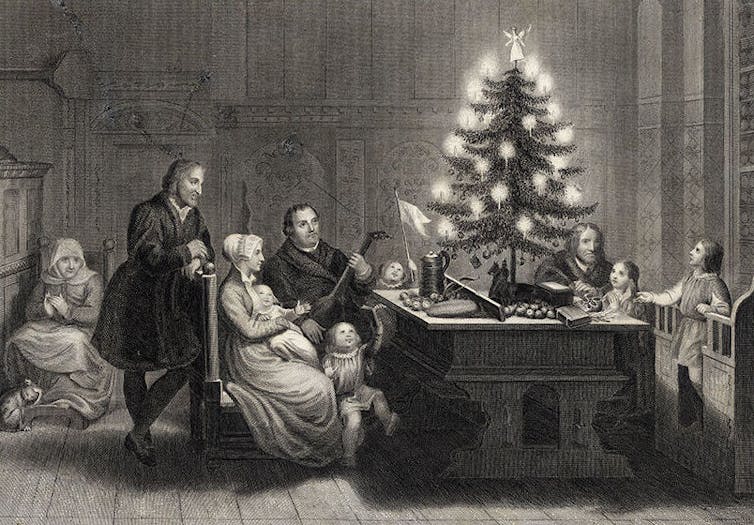
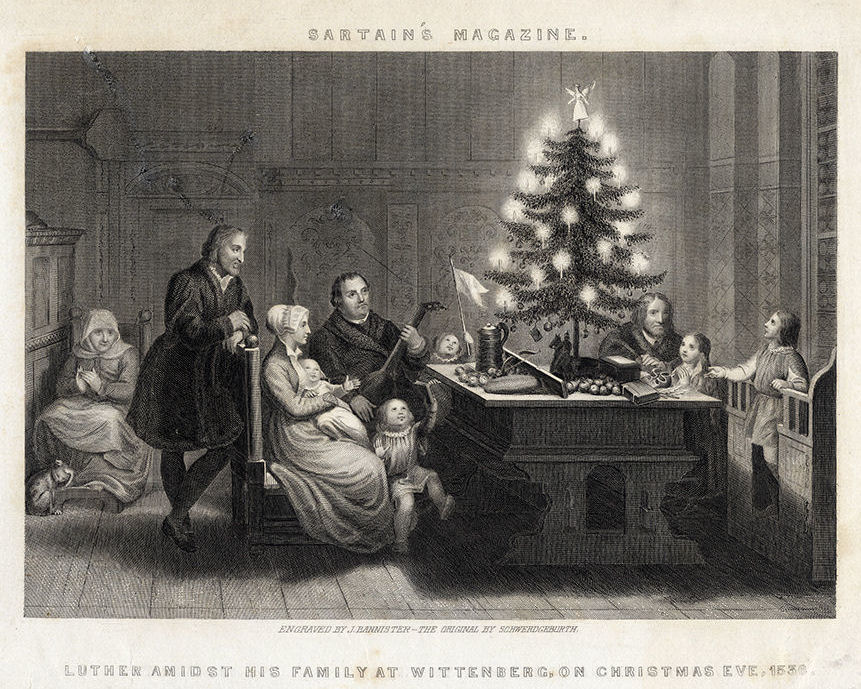
Sixteenth-century German Protestants, eager to remove the iconography and relics of the Roman Catholic Church, gave the Christmas tree a huge boost when they used it to replace Nativity scenes. The religious reformer Martin Luther supposedly adopted the practice and added candles.

Engraving of adults and children gathered around a desk with a small Christmas tree adorned with candles.
German Protestants sought to replace ornate Nativity scenes with the simpler tree. Wikimedia Commons

But a century later, the English Puritans frowned upon the disorderly holiday for lacking biblical legitimacy. They banned it in the 1650s, with soldiers patrolling London’s streets looking for anyone daring to celebrate the day. Puritan colonists in Massachusetts did the same, fining “whosoever shall be found observing Christmas or the like, either by forbearing of labor, feasting, or any other way.”

German immigration to the American colonies ensured that the practice of trees would take root in the New World. Benjamin Franklin estimated that at least one-third of Pennsylvania’s white population was German before the American Revolution.

Yet, the German tradition of the Christmas tree blossomed in the United States largely due to Britain’s German royal lineage.

Taking a cue from the queen

Since 1701, English kings had been forbidden from becoming or marrying Catholics. Germany, which was made up of a patchwork of kingdoms, had eligible Protestant princes and princesses to spare. Many British royals privately maintained the familiar custom of a Christmas tree, but Queen Victoria – who had a German mother as well as a German grandmother on her father’s side – made the practice public and fashionable.

Victoria’s style of rule both reflected and shaped the outwardly stern, family-centered morality that dominated middle-class life during the era. In the 1840s, Christmas became the target of reformers like novelist Charles Dickens, who sought to transform the raucous celebrations of the largely sidelined holiday into a family day in which the people of the rapidly industrialized nation could relax, rejoice and give thanks.

His 1843 novella, “A Christmas Carol,” in which the miserly Ebenezer Scrooge found redemption by embracing Dickens’ prescriptions for the holiday, was a hit with the public. While the evergreen décor is evident in the hand-colored illustrations Dickens specially commissioned for the book, there are no Christmas trees in those pictures.

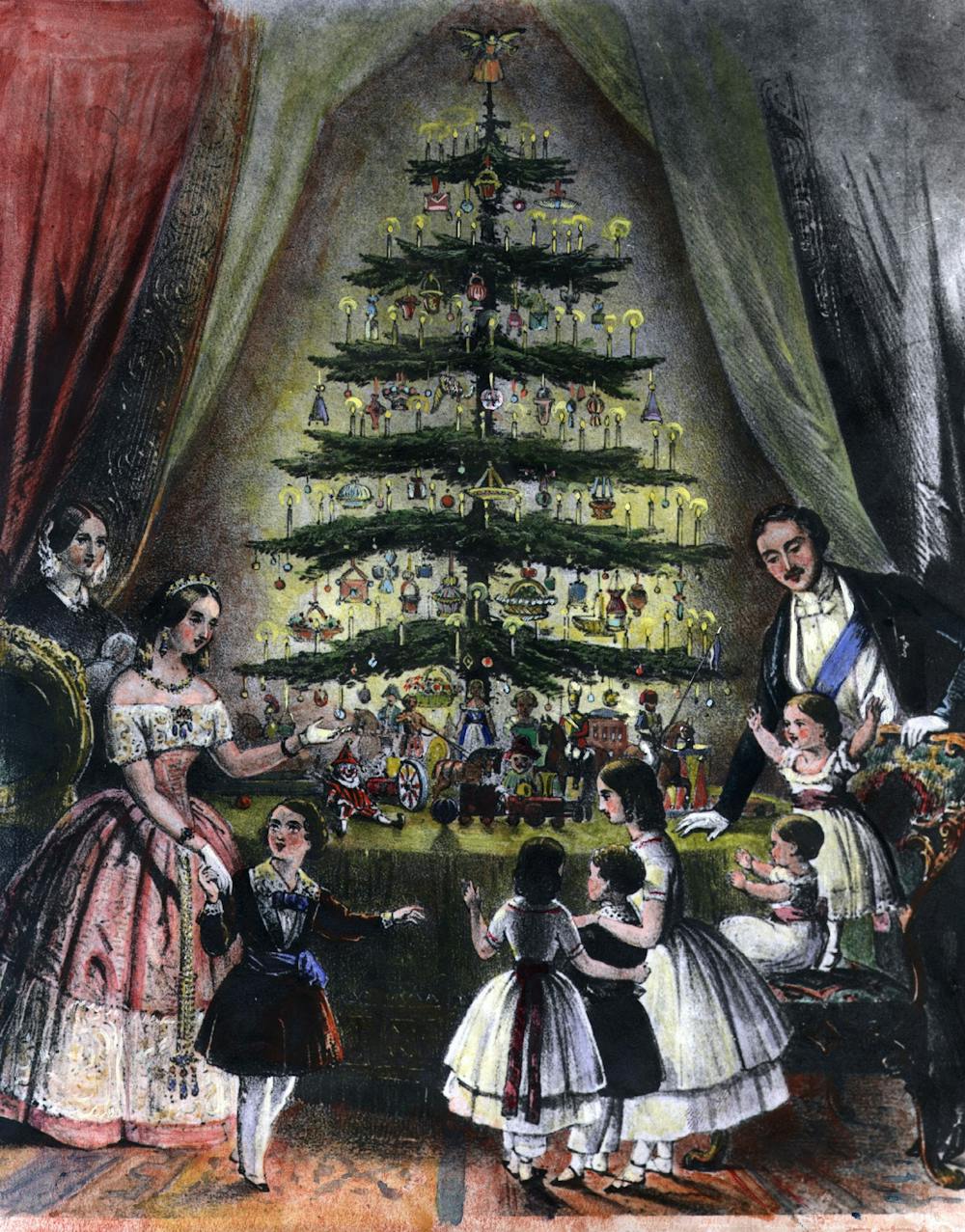
Drawing of royal family decorating a Christmas tree.
After the London Illustrated News published an image of Queen Victoria’s tree, the public eagerly sought to mimic the tradition. Wikimedia Commons

Victoria added the fir tree to family celebrations five years later. Although Christmas trees had been part of private royal celebrations for decades, an 1848 issue of the London Illustrated News depicted Victoria with her German husband and children decorating one as a family at Windsor Castle.

The cultural impact was almost instantaneous. Christmas trees started appearing in homes throughout England, its colonies and the rest of the English-speaking world. Dickens followed with his short story “A Christmas Tree” two years later.

Adopting the tradition in America

During this period, America’s middle classes generally embraced all things Victorian, from architecture to moral reform societies.

Sarah Hale, the author most famous for her children’s poem “Mary had a Little Lamb,” used her position as editor of the best-selling magazine Godey’s Ladies Book to advance a reformist agenda that included the abolition of slavery and the creation of holidays that promoted pious family values. The adoption of Thanksgiving as a national holiday in 1863 was perhaps her most lasting achievement.

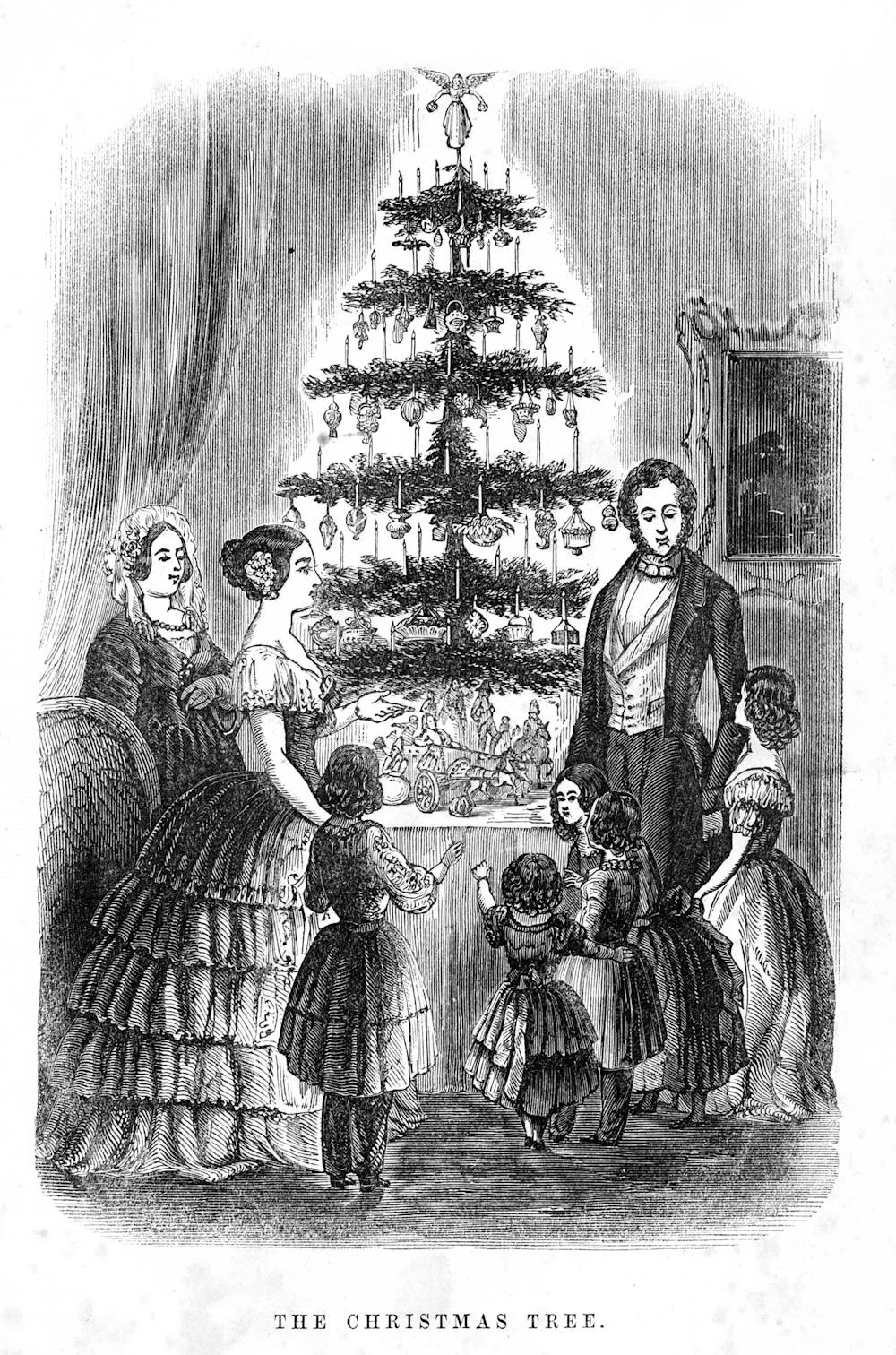
Drawing of adults and children gathered around a decorated Christmas tree.
An engraving of Queen Victoria’s tree in Godey’s Ladies Book popularized Christmas trees in the U.S. Godey’s Lady’s Book

It is closely followed by the Christmas tree.

While trees sporadically adorned the homes of German immigrants in the U.S., it became a mainstream middle-class practice when, in 1850, Godey’s published an engraving of Victoria and her Christmas tree. A supporter of Dickens and the movement to reinvent Christmas, Hale helped to popularize the family Christmas tree across the pond.

Only in 1870 did the United States recognize Christmas as a federal holiday.

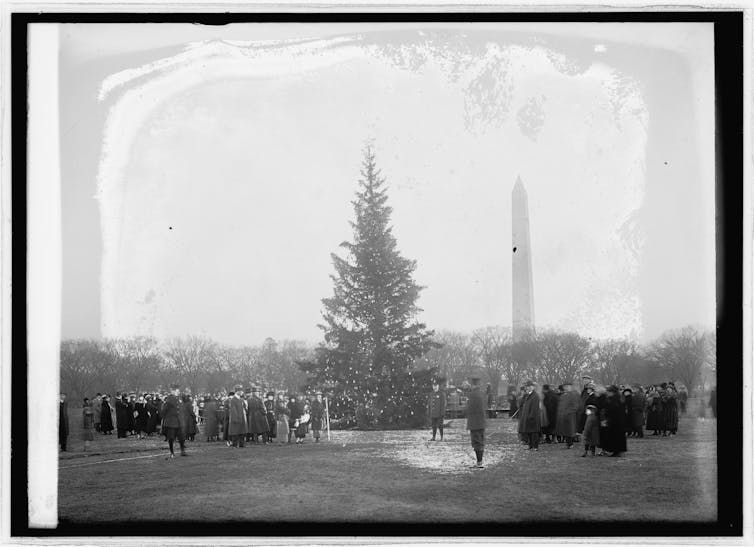
The practice of erecting public Christmas trees emerged in the U.S. in the 20th century. In 1923, the first one appeared on the White House’s South Lawn. During the Great Depression, famous sites such as New York’s Rockefeller Center began erecting increasingly larger trees.

Black and white photo of people gathered around a tall Christmas tree in Washington, D.C.
A Christmas tree was erected on the White House South Lawn for the first time in 1923. Library of Congress

Christmas trees go global

As both American and British cultures extended their influence around the world, Christmas trees started to appear in communal spaces even in countries that are not predominately Christian. Shopping districts in Dubai, United Arab Emirates, Hong Kong and Tokyo now regularly erect trees.

The modern Christmas tree is a universal symbol that carries meanings both religious and secular. Adorned with lights, they promote hope and offer brightness in literally the darkest time of year for half of the world.

In that sense, the modern Christmas tree has come full circle.

Troy Bickham, Professor of History, Texas A&M University

This article is republished from The Conversation under a Creative Commons license. Read the original article.

ooOOoo

So not a doggie post for today but nevertheless one that I hope will be of interest.

The next post will be a Picture Parade this coming Sunday: December 25th!

Christmas food for your pets

They can be toxic!

This is a timely warning that feeding our dogs and cats nibbles from the plate or worse can be life-threatening.

ooOOoo

Holiday foods can be toxic to pets – a veterinarian explains which, and what to do if Rover or Kitty eats them

Treat Kitty to a new box or pet-safe treat, but not scraps from holiday meals. Cyndi Monaghan/Moment via Getty Images

Leticia Fanucchi, Oklahoma State University

During the holidays, it’s typical for people to indulge in special foods. Being a pet owner myself, I know that many pet parents want to give their fur babies special treats as well.

As a veterinarian and clinical veterinary researcher, however, I also know that some very common foods – including many popular holiday staples – are dangerous to pets.

Here are some of the most common food-related crises we veterinarians encounter in the animal ER during the holidays, and what to do if they happen.

Fatty food risks

Turkey with gravy is probably among the most popular holiday meals. And most dogs or cats would certainly agree with their humans that roast turkey is delicious.

However, the fat contained in turkey skin – and the excess of fatty, greasy foods that can accompany it, such as gravy, butter and bacon – don’t go down well with cats and dogs. Pets that ingest an overload of fats may develop pancreatitis, an inflammation of the pancreas, the organ that helps break down fat, protein and carbs.

Pancreatitis causes the pancreas to leak digestive enzymes and ultimately “digest” itself. If untreated, pancreatitis can affect other organ systems such as the kidneys and the liver and even cause blood clotting.

The most common symptoms of pancreatitis include vomiting and diarrhea. Pets that may have pancreatitis should be rushed to the closest veterinary hospital or ER. The vet will perform diagnostic blood tests, including a specific test for pancreatic enzymes called pancreatic lipase immunoreactivity or cPLI/fPLI.

Treatment for pancreatitis mostly involves dealing with its symptoms. The pet receives IV fluids to help establish electrolytes balance, with added anti-nausea and pain medications to stop the vomiting. Antibiotics may be necessary, as well as liver protectants and probiotics, and a special diet.

Onion offenses and bread badness

If only turkey were the sole problem! Many other common holiday ingredients can also harm pets.

Several allium species common to holiday cooking, such as leeks, garlic, onions, chives and shallots, can be healthy for people. For dogs and cats, though, alliums are toxic. If ingested, they can cause hemolytic anemia – a decreased number of red blood cells.

The signs of hemolytic anemia, which normally appear a few days after ingestion, include vomiting, diarrhea, lethargy and jaundice.

To treat hemolytic anemia in pets, veterinarians do blood tests to determine whether a transfusion is necessary. They address the symptoms of allium intoxication with IV fluids, antioxidants and anti-nausea drugs.

Yeast-risen foods like rolls and breads are also holiday dinner staples that people should keep away from their pets. The yeast in these foods can ferment in a pet’s warm stomach and produce toxic levels of ethanol. In pets, ethanol toxicity may lead to metabolic acidosis, which can cause sudden drop in blood glucose, respiratory depression, seizures and cardiac arrest.

Normally, pet owners do not suspect metabolic acidosis until it is almost too late, because it has few outward symptoms. So if there’s a possibility that a pet has swallowed any type of cooked or raw yeast dough, get it to a veterinary ER right away.

By the way, pets can also experience ethanol toxicity by lapping up cocktails or beer, so keep alcoholic drinks out of their reach as well.

No chocolate for pets

Now, what about a favorite holiday treat – chocolate?

Substances that may actually attract humans to chocolate – methylxanthines like theobromine and caffeine – are toxic to both dogs and cats. When vets provide emergency treatment for chocolate ingestion, we typically hear that children shared their candy with their beloved pet.

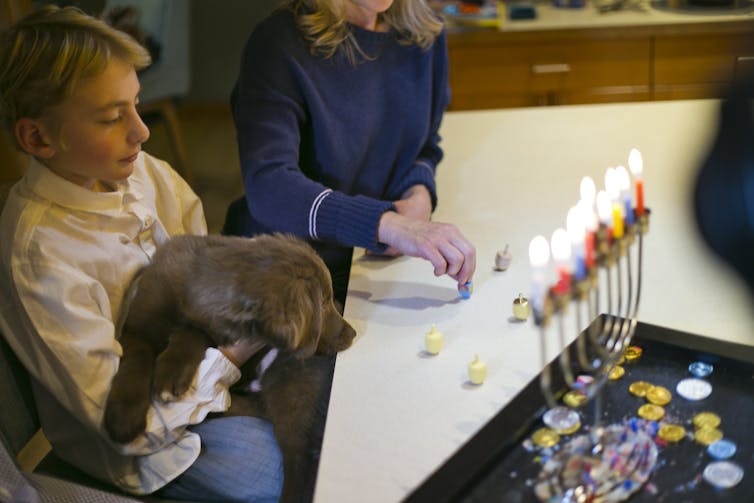
A boy holding a puppy sits with his family during the lighting of candles on a hanukkiah menorah.
Chocolate contains substances that are poisonous to pets, even though they are safe for people. Nathan Bilow/Photodisc via Getty Images

Pets that ingest chocolate can develop “chocolate intoxication,” a condition in which methylxanthines accumulate in the body and make them sick. Signs of chocolate intoxication in pets include tremors, increased heart rate, vomiting, diarrhea, restlessness and even seizures.

Chocolate intoxication in pets is a medical emergency. The pet needs to have its stomach emptied and receive support therapy with IV fluids and activated charcoal. The vet will probably want to know the type and how much chocolate the pet ate, because some kinds of chocolate, such as baking chocolate, can have worse toxic effects.

Chocolate also has a lot of fat, so the cat or dog’s pancreas will not enjoy it either.

Grapes and dogs don’t mix

How about fruits? Well, there is a fruit very toxic to dogs that often shows up at holiday gatherings: grapes, both fresh and dehydrated into raisins.

If eaten, the tartaric acid in grapes or raisins may cause acute kidney disease. Common signs of acute kidney disease in dogs are vomiting, intermittent diarrhea and increased intake of water.

Acute kidney disease in dogs is a medical emergency. If it is suspected, the pet should be rushed to a veterinary hospital or ER right away. Treatment is typically limited to stabilizing the pet with IV fluids.

Sweet for people, poison to pets

While xylitol toxicity is one of the more common emergencies we veterinarians see these days, it’s still largely unknown among pet owners.

Xylitol is an artificial sweetener often used in sugar-free products. While safe for humans, for cats and dogs it’s a fast-acting and potentially deadly poison.

Ingesting even the smallest amount of xylitol can cause a pet’s liver to rapidly release insulin, causing hypoglycemia – unusually low blood glucose levels. Within 30 minutes, the pet will experience symptoms such as vomiting, lethargy and seizures and lose coordination of its limbs – called ataxia.

Emergency treatment for a pet with xylitol toxicity involves giving the animal IV fluids containing dextrose to raise its blood glucose level and carefully monitoring its progress.

The bottom line? Several delicious foods that are safe for humans can be very dangerous for pets in general – not just cats and dogs, but also birds, reptiles and pocket pets like mice, hamsters and gerbils. So make the holidays special for furry or feathery babies by giving them treats from the pet food store or veterinarian’s office, and keep them away from the kitchen counter and trash can.

Leticia Fanucchi, Clinical Assistant Professor of Veterinary Clinical Sciences, Oklahoma State University

This article is republished from The Conversation under a Creative Commons license. Read the original article.

ooOOoo

That’s a very important point about Xylitol. So please take notice and have a wonderful holiday for you and for your pets.

Please take care!

Parkinson’s Disease

It affects so many but it is also a cruel disease.

Parkinson’s Disease (PD) is unique to each individual as it is a disease of the brain. Yet there are aspects of the disease that affect most and especially the people who are close to the PD sufferer.

From the National Institute of Neurological Disorders and Stroke comes a small extract:

Following Alzheimer’s disease, Parkinson’s disease (PD) is the second-most common neurodegenerative disorder in the United States. Most people diagnosed with PD are age 60 years or older, however, an estimated 5 to 10 percent of people with PD are diagnosed before the age of 50. Approximately 500,000 Americans are diagnosed with PD, but given that many individuals go undiagnosed or are misdiagnosed the actual number is likely much higher. Some experts estimate that as many as 1 million Americans have PD. Of course, given the progressive nature of the disabilities associated with PD, the disease affects thousands more wives, husbands, children, and other caregivers.

NINDS website

Jean was diagnosed in December, 2015 at the same time as my best friend in England, Richard Maugham.

More than 10 million people worldwide are living with PD!

Here is a video put out by Parkinson’s UK that is introduced as follows:

In this honest and often funny live talk Colin describes his experience with Parkinson’s and his hopes for the future.

So a wish on behalf of those countless other people: May there be a cure soon!

Picture Parade Four Hundred and Sixty-One

Just a change for today! A fabulous change!

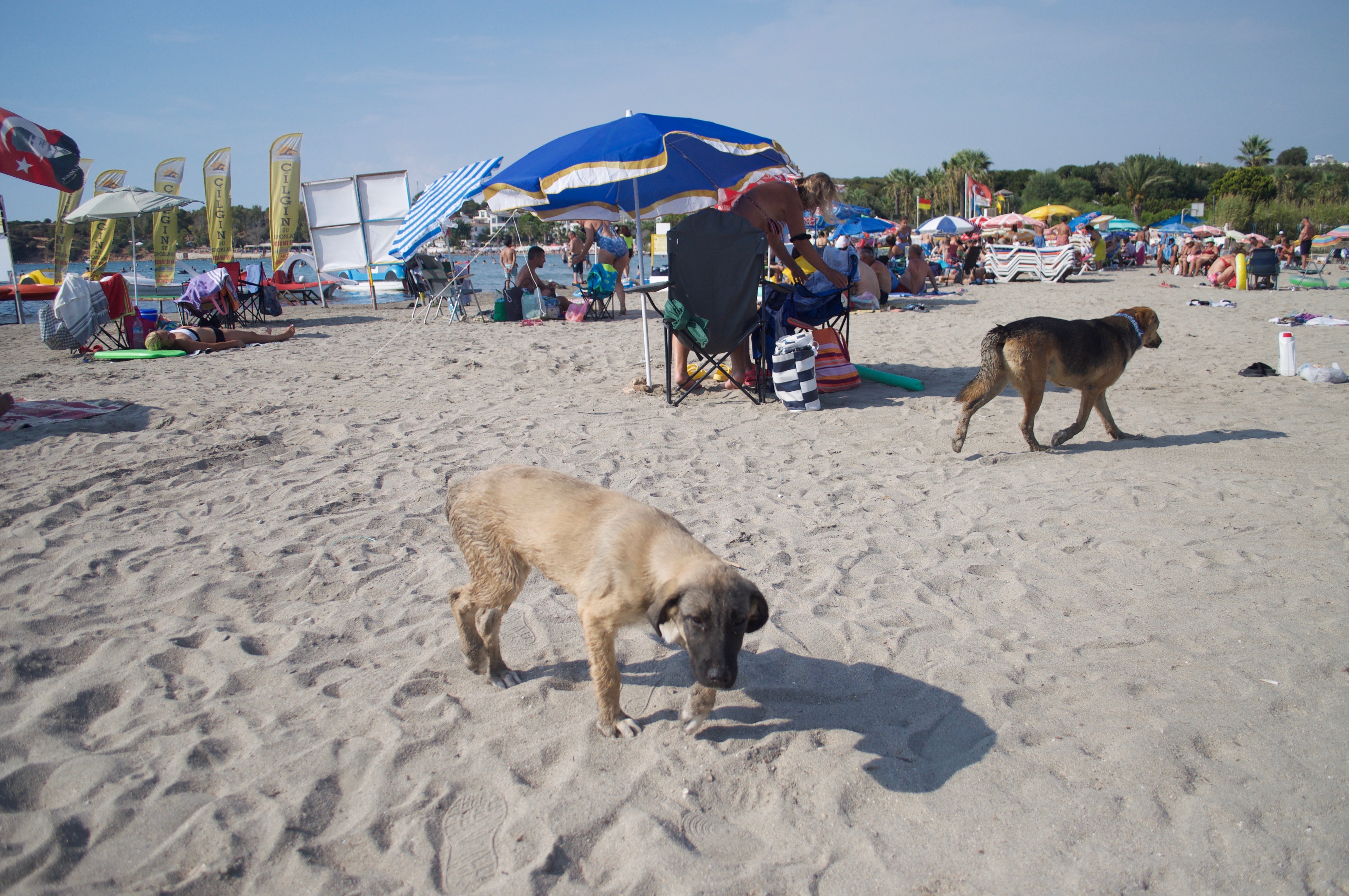
Tinker

oooo

Tinker on the Beach

oooo

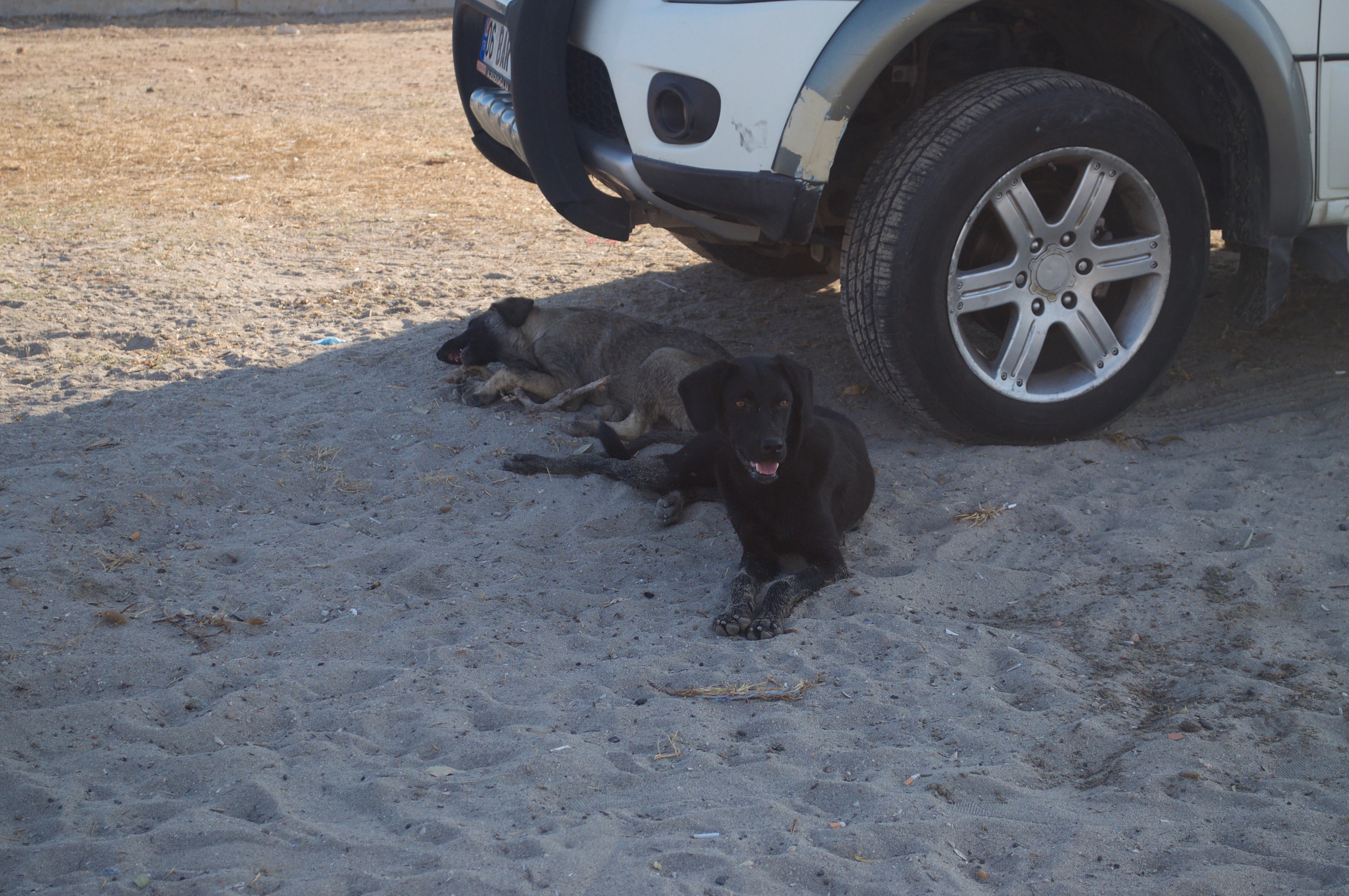
Tinker and Lucy

oooo

Tinker and Lucy playing

oooo

Tinker

oooo

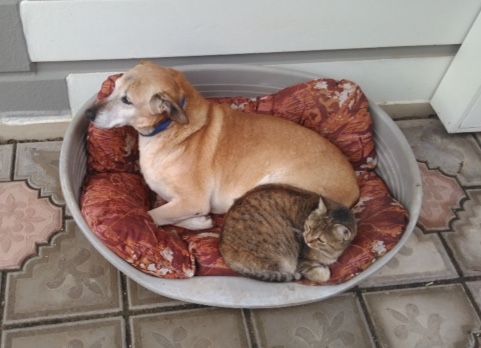
Princess sharing her bed with Smokey the cat.

oooo

Princess

oooo

Princess in her new bed.

I can’t put it better than the email that I received recently from Chris. Here it is:

Hi Paul

Happy Thanksgiving. Hopefully you had a far better one than the last time I celebrated with American friends when I lived in Indonesia. We ended up having to evacuate the house (including the deputy US ambassador) as the kitchen caught fire!

It’s been a bit of a journey writing the post as so many adventures with the dogs came back to me. In the end I focussed on the first one Princess and the latest Tinker. I hope it’s OK. Let me know if not, as I can always rewrite it. There are so many other dogs I could have mentioned which is the scary thing! Still, the copy is attached and I’m sending photos using WeTransfer.com. They’ll send you an email with a link to download the pics. It’s totally safe and free (It’s been a godsend for designing book covers as it stops emails getting clogged up). I’ve put far too many pics in there so please feel free to use the ones you like and discard others.

Thank you so much for letting me do this post. It’s been quite emotional, but put a huge smile on my face all week.

Best wishes

Chris

The incredible story of Diablo

Just watch this after the introduction.

Countless numbers of people have dreamt that they can communicate with animals and I would imagine an enormous percentage of those would have dreamt that they can communicate with dogs.

Certainly of the three dogs we have alive still here at home (we had in the past some fifteen dogs) Oliver below appears to understand much of what is said to him by me and Jean

If one goes to the YouTube website then one is introduced to Anna Breytenbach who has made it her life’s passion to better communicate with animals. Here’s a small piece from the extensive WikiPedia entry:

In her twenties she decided to pursue her passion for wildlife (big cats in particular) by becoming a cheetah handler at a conservation education project. On moving to America, she explored wolf and other predator conservation. She has also served on committees for wolf, snow leopard, cheetah and mountain lion conservation.

Anna Breytenbach and friend

So now we come to this video of Anna and Diablo, more properly called Spirit, (and the video will make that clear).

Arjan Postma explains the background to the film:

I just want to share this message as much as possible without any commercial intent, personal benefit or whatsoever. All used materials and therefore copyrights do not belong to me. I hope you enjoy discovering and watching this story and skill as much as I did: What if you could talk to animals and have them talk back to you? Anna Breytenbach has dedicated her life to what she calls interspecies communication. She sends detailed messages to animals through pictures and thoughts. She then receives messages of remarkable clarity back from the animals. In this section, Anna transforms a deadly snarling leopard into a relaxed content cat. The amazing story of how leopard Diabolo became Spirit… I found the source of this amazing documentary here: http://www.cultureunplugged.com/docum… This is the first full length documentary film on the art of animal communication. Nominated for Best Long Documentary, Best Director of “Jade Kunlun” Awards of 2012 World Mountain Documentary Festival of Qinghai China. Director: Craig Foster | Producer: Vyv Simson | Narrator: Swati Thiyagarajan Genre: Documentary | Produced In: 2012.

P.S. Happy Thanksgiving to everyone!

Why is intelligent life so rare?

Maybe it is because of a ‘Great Filter‘.

Like so many others I read many items online. One of the websites that I follow is the EarthSky site because for a long time I have been interested in space.

So when I saw an article on why intelligent life is so rare in our Milky Way I read it fully. And hoped it would be of interest to others.

Here it is:

ooOOoo

What is the Great Filter, and can we survive it?

Posted by

Kelly Kizer Whitt and Deborah Byrd

November 17, 2022

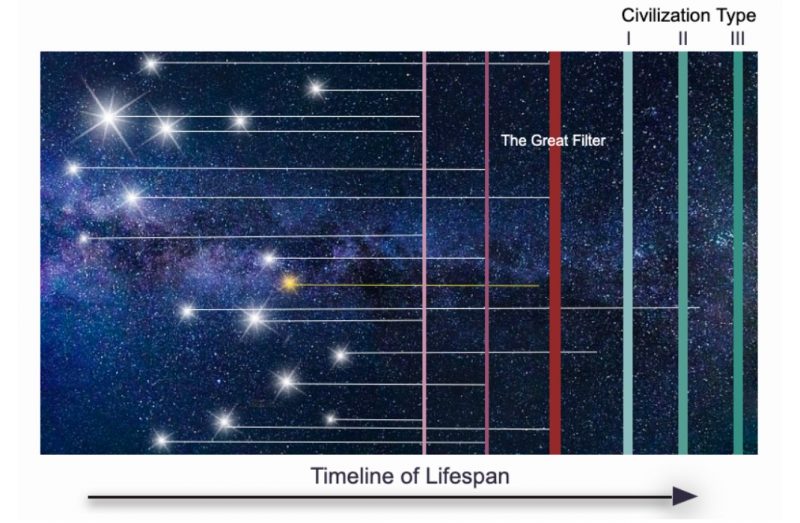
This graphic depicts intelligent civilizations as stars. The vertical lines represent Great Filters that civilizations do or don’t survive. This graphic depicts Earth’s human population (the yellow “star”) approaching its own Great Filter. How would we surpass it, and keep going? Image via NASA/ arXiv.

What is the Great Filter?

Is intelligent life common, or rare in our Milky Way galaxy? If it’s common, why haven’t we encountered it? While discussing UFOs on a walk to lunch in the year 1950, the physicist Enrico Fermi is famously said to have asked, “But where is everybody?” Scientists today call that riddle Fermi’s Paradox. Now a new paper by NASA scientists explores one possible answer to the paradox. The answer may be what’s called the Great Filter.

Economist Robin Hanson first proposed the Great Filter, in the late 1990s. It’s the idea of that – even if life forms abundantly in our Milky Way galaxy – each extraterrestrial civilization ultimately faces some barrier to its own survival. The barrier might come from without (for example, an asteroid striking a planet, and wiping out all life forms). Or it might come from within (for example, all-out nuclear war).

Hanson proposed that a Great Filter might be at work within our Milky Way galaxy. He argued – from what we can see here on Earth – life expands to fill every niche. And so, he argued, we should see signs of intelligent life beyond Earth in nearby star systems, perhaps even in our solar system. But we don’t see this.

Is humanity facing a Great Filter?

The authors of the new paper take Hanson’s idea further. They explore the idea that humanity may now be facing a Great Filter. The authors wrote:

We postulate that an existential disaster may lay in wait as our society advances exponentially towards space exploration, acting as the Great Filter: a phenomenon that wipes out civilizations before they can encounter each other … In this article, we propose several possible scenarios, including anthropogenic and natural hazards, both of which can be prevented with reforms in individual, institutional and intrinsic behaviors. We also take into account multiple calamity candidates: nuclear warfare, pathogens and pandemics, artificial intelligence, meteorite impacts, and climate change. 

And they offer solutions, beginning with, as they say:

… a necessary period of introspection, followed by appropriate refinements to properly approach our predicament, and addressing the challenges and methods in which we may be able to mitigate risk to mankind and the nearly 9 million other species on Earth.

In a sense, the authors of the new paper – including lead author Jonathan H. Jiang of NASA’s Jet Propulsion Laboratory in Pasadena, California – are engaging in a “necessary period of introspection” by the act of writing their paper.

And, with their paper, they’re laying out the challenges we’re facing and methods of addressing them.

We’ve already survived some ‘filters’

The scientists point to life’s resilience. Life on Earth has already survived a number of filters in the form of mass extinction events. The Permian-Triassic extinction – aka the Great Dying – occurred 250 million years ago and nearly ended all life on the planet. This extinction event wiped out about 96% of marine life and 70% of land species. The exact cause of the Great Dying is still a matter of study, but some scientists have said it was a combination of warming temperatures and decreasing oxygen.

But these previous filters, or extinction events, have been natural, arising from the evolution of our planet and solar system, including volcanic eruptions and asteroid impacts

A Great Filter of our own making

But now, clearly, humanity may be facing a Great Filter of our own making, and one that other intelligent civilizations in the galaxy have faced … and failed to withstand. Perhaps it’s no surprise that the technological advancements humans have achieved might ultimately lead to our undoing. Perhaps that’s nature’s way. As the new paper said:

It seems as though nearly every great discovery or invention, while pushing back the borders of our technological ignorance, is all too quickly and easily turned to destructive ends. Examples such as splitting the atom, biomedical innovations and resource extraction and consumption come to mind with disconcerting swiftness. Still, some have suggested artificial intelligence (AI) as yet another factor, which, pending substantial technical hurdles, may yet have its chance to prove friend or foe.

Here’s a look at some of the issues that might compose Earth’s Great Filter.

Unchecked population growth

One of the factors Earth faces, according to the paper, is unchecked population growth. Earth just passed a milestone on November 15, 2022, when it reached 8 billion human inhabitants. The paper said with our current population figures, Earth has experienced:

… an exponential rise from about 1.6 billion [people] at the start of the 20th century.

Technological advancements in farming, energy production and distribution have made such a large population possible on Earth. But, as the paper said, these advancements cannot:

… indefinitely offset the multifaceted stresses imposed by an ever-escalating population.

When will Earth’s human population reach its peak size? Some projections report that education in developing nations might allow Earth’s population to peak at 10 billion in the 2060s. But, of course, no one really knows.

Nuclear war

While warfare has long been a factor of life on Earth, only in the past century has humanity had a weapon that could destroy all nations, not just those participating in a nuclear war. The scientists said the greater the number of democracies in the world, the better our chances for avoiding nuclear war. The scientist also saw other encouraging signs, including:

Peace agreements in the historically troubled Middle East, a vast reduction in nuclear warheads since the height of the Cold War and a wide coalition of nations rallying their support for the besieged in Eastern Europe.

Pathogens and pandemics

The threat of illness and pandemics continues to grow simply because our world is so interconnected. Spreading diseases have a much easier time in our global society. But on the positive side, advancements in medicine have also given us an edge. The scientists said that having current and reliable data is crucial:

… in predicting how future pandemics will spread, how deadly they will be and how quickly and effectively we will be able to leverage our knowledge of the life sciences to counter this manifestation of the Great Filter.

Artificial intelligence

While true artificial intelligence as a separate sentient being is not yet reality, the authors of the paper urge a proactive plan to peacefully share Earth. They project that computer sophistication will one day rival that of the human mind. The scientists said:

As for whether AI would be benign or otherwise, self-imposing a Great Filter of our own invention, that will depend on the evolving nature and disposition of Earth’s first high-tech species.

Asteroid and comet impacts

Here’s an extinction event from the past that could still spell our doom in the future. While large impacts are exceedingly rare, there is, as the scientists said:

… a non-zero percentage [of asteroids or comets] which are large enough to survive passage through the atmosphere and, impacting the surface, cause catastrophic destruction to our sensitive biosphere.

The odds of a mass extinction level event in the coming years is vanishingly small. But, over time periods extending into the very distant future, the odds increase toward 100%. Meanwhile, with projects such as the DART mission, and given enough lead time, humanity has a way of defending itself.

Climate change

Climate change has become one of the most studied threats to life on Earth. Because the threats from climate change happen on a slower time scale than, say, the time it takes to launch a nuclear weapon, the efforts to curb these effects have not been as rapid as they could have been. The scientists said:

The major impediment to taking more decisive actions, however, are the challenges imposed by transitioning to non-carbon-based energy sources such as solar, wind, nuclear power. Here again, rapidly advancing technologies in areas such as modularized nuclear power plants and carbon capture and sequestration (CCS) are among the best hopes for avoiding slow-motion ensnarement by this lulling but lethal Great Filter.

Avoiding the Great Filter

So you see there’s not just one possible Great Filter for Earth, but many. Any one of them could be our downfall. These scientists are suggesting something that sounds simple on its face, but is (apparently) hard to do. That is, in order to avoid the Great Filter, humans must work together and recognize the big picture. As the paper said:

History has shown that intraspecies competition and, more importantly, collaboration, has led us toward the highest peaks of invention. And yet, we prolong notions that seem to be the antithesis of long-term sustainable growth. Racism, genocide, inequity, sabotage … the list sprawls.

Meanwhile, we continue to look outward, peering at the dark depths between the stars, hoping for a sign that we aren’t alone in the universe. Ultimately, our quest to find life beyond Earth is part of trying to understand life on our planet and where we fit in. As Carl Sagan said:

In the deepest sense, the search for extraterrestrial intelligence is a search for ourselves.

Bottom line: Scientists say the reason we haven’t found intelligent civilizations in the galaxy is that they may not have survived the Great Filter. And they say we may be facing down our own Great Filter.

Source: https://arxiv.org/ftp/arxiv/papers/2210/2210.10582.pdf

ooOOoo

We are a funny bunch! As was said just a couple of paragraphs ago we humans must work together and recognise the big picture. But we do not!

Why do we not do that?

I wish I knew the answer to that conundrum! Nevertheless, I hope you enjoyed the article.