Category: Musings

A reflection from Patrice Ayme

Intelligence at the core of humanism – Patrice Ayme

This is a full copy of a recent post from Patrice Ayme published on Learning from Dogs with Patrice’s written permission.

I am bound to say that many of the arguments set forth in much of Patrice’s writings stretch my brain cells but that is not the point.  The point is that all right-minded (not in a political sense, you will grant me!) citizens of the free world need the expressions of thoughtful people in order to make the best decisions they can; for themselves, their families and the wider community.  For me that is why Patrice should be read.

Here is the article from Patrice Ayme published on his Blog on the 22nd October. (It’s long – but it’s a Sunday so think of it as your Sunday newspaper, settle down in an easy chair and get stuck in!)

Krugman, or Crudeman?

By Patrice Ayme

HIGH DEBT = HIGH PLUTOCRACY.

Abstract: President Obama has been getting atrocious economic and financial advice, all across the spectrum, from Summers to Krugman.

This abominable advice reinforced the plutocracy, with tax cuts, and a giant spigot of money creation directed at giant banks and their demons. While the banks are getting nearly all the money, the rest of the economy has been weltering. The government is obsessed with throwing money at bank holding companies to save its friends, while accusing everybody else.

The main architect of this quiet coup, Summers, and his demoncrats and democrats, is supposedly on his way out (see Note1). That may be just a ruse to escape the sword of justice and positive change.

Another Reagan adviser posing as a democrat, and a progressive, Paul Krugman, has been more in evidence recently, as some of his advice has obviously gained traction.

Krugman’s advice: accusing China, with GUSTO (while sparing the American plutocracy of much blame), and augmenting government spending, BLINDLY. It does not matter if said spending is on foolish things: just spend. Keynes, the Jesus Christ of Krugman’s religion, said so, so it ought to be right. A detail: said augmented spending goes through… the friendly giant banks. Friendly to them oligarchs (see Rahm Emanuel’s 17 millions from one bank).

After accusing China, whatever China does, Krugman has also targeted European austerity programs, from Ireland to Lithuania, blaming them for the difficulties of the USA.

Krugman’s latest attacks are against the British government austerity program (some of which was started by Labor before the election in Spring, so there is real tripartisan support for it).

China and Europe are trying hard, in many ways, to change their economies and societies for the best, though, whilst the USA is just forking more money to its greedy plutocrats, calling thatdismal masquerade “recovery and reinvestment (a lot of these huge transfers of money go through hermetic notions such as “Quantitative Easing”, or buying toxic garbage from the banks, as if it were worth anything: it’s done through the banks… the private banks).

Let me repeat slowly. The advice of Krugman is dressed in leftist garb, but it is nothing of the sort. It’s like getting currency advice from Soros: dangerous at any speed.

The policies Krugman promotes, such as Quantitative Easing 2 (flushing the biggest banks with money), and xenophobia, are deeply pro-plutocratic (unsurprisingly Soros advises QE2 too).

This essay will rectify some of Krugman’s massive disinformation. Whether he is fully conscious of it, or not, is irrelevant: Krugman gives bad advice to the government of the USA. The USA needs to engage in Colbertism, as Europe and China are doing, and the defense department of the USA does.

Sending more money on the ravenous world manipulating financiers, as Krugman suggests to do even more of, in practice, amounts to feeding more poison to the victim, throwing more gasoline on the fire, breeding more black mambas inside the house, while screaming that more insanity will bring strength. And lying about other countries, from China to Great Britain, does not help. It’s internationalism at its worst.

***

***

DEBASING CHINA:

According to Krugman, China is bad, Europe is bad, whilst the hard working USA is good, as it tries single handedly to pull the entire world economy out of the slump it itself created. But the USA’s goodness is not quite enough to master the foreign devils. So sad. This is apparently Krugman’s latest New Trade Theory: USA sinks, because big bad aliens did it.

Nothing to do with reaganomics, Obama’s admiration for Reagan, Clinton’s dismal selling of democracy and the future to plutocracy, and Krugman’s work for Reagan, hand in hand with Summers. This is all the past, we don’t need to ruminate it. Krugman would rather talk about…1937. (Not to tell us about American plutocracy supporting Hitler, while undermining democracy, as what was going on then, but to talk about FDR overenthusiastic support of… interest rates!)

One has to know that Krugman is viewed as one of the authors of“New Trade Theory”, NTT, a sophistry which basically boiled down to claiming that trade is good, no matter what. NTT did not work for the common folk, thus apparently Paul Krugman is now down to trading insults with reality, in the apparent hope that this will distract enough simple common folks. Thus New Trade Theory has revealed its true nature: adding insult to injury.

New Trade Theory faltered by ignoring the enormous leverage American plutocracy would get by going global, while no legal strings were attached, and conspiring with local dictators (the later a good source of Bill Clinton’s prodigious income). Plutocracy could drive at any speed, carry whatever cargo it wanted, including the most precious good: people’s employment.

The result is the unfolding economic and social disaster in the USA (and a lot of the world). Krugman may be trying to change his spots to cleanse his soul. And Krugman liberally attacks all foreigners, all over, most of the time, thus diverting attention to the root cause of the problem, already clear with his old boss, Reagan.

Last week Krugman was furious because China had lifted its short term interest rates up to 2.5%. That should lift the Chinese currency, which is one of the obsession of Krugman. So Krugman gets what he wanted, but that makes him even angrier (because, as expected, it changes nothing).

Meanwhile the dollar of the USA is returning a colossal .18% on short term maturities (Fed Funds rate). Yes that is about zero percent. Yes, that is about 13 times LESS than the return on the Chinese currency! In other words the USA is trying to lower the dollar as much as possible (Obama said he wanted to double USA exports in the next five years. But he forgot the slight detail that the USA is becoming a banana republic. I cannot believe he will find so many bananas to sell, even if they come super cheap, not everybody wants to splurge and become obese on American bananas).

So Krugman accuses China to debase its currency, but the USA is debasing the US dollar thirteen times more (this, what I just uttered, is a parody of what plutocratic economists call a model, full of sophisticated mathematics, the sort of things Krugman claims he does. but it’s little more than smoke and mirrors, and silly graphs which mean nothing, except that plutocracy is hiding behind them).

In truth China has something like four giant infrastructure projects running concurrently, in education, trains, biology, clean energy, etc. China builds universities, and China builds Airbuses (yes, from the company headquartered in Toulouse). Just the Chinese High Speed Rail infrastructure project amounts to 500 billion dollars or so (it uses basic European HSR technology).

China has even offered to finance and build the High Speed Rail in California. That is because all the American money goes to American plutocrats, and none is left for mundane activities. As Stiglitz pointed out a few days ago:

The US Federal Reserve may make funds available to banks at close to zero interest rates, but if the banks make those funds available to small and medium-sized enterprises at all, it is at a much higher rate.”

The banks keep the money, making risk free profits, feeding their bonuses, and their power.

And don’t worry: Silicon Valley plutocrats use private planes, and do not want to see 250 mph trains in their backyards, for many reasons, so it will not happen, for a long time (except if American sheep wake up and turn into combative Europeans, which is unlikely, because they have been brainwashed into believe that it is cool to be as cool and politically minded as barnacles).

***

WRONG IS WRONG:

Krugman, Stiglitz, and also myself, would be viewed, by many as critics from the left. As the last British election unfolded, I was more in support of Mr. Brown, who had long aggravated me, but changed his spots, once he became Prime Minister. However, I hold that the truth is the truth. It is not because one overall disapproves of the general drift of the new PM, Cameron, that one should then support invented data inimical to Cameron. But that is what Krugman has been doing.

When the sheep invents data to support its cause, it invites the wolf to do the same, and the wolf will do it better, with more drastic consequences for the sheep.

In a remarkably misleading editorial, Krugman says the following (see full quotes in the notes):

1) “Fiscal austerity is the fad of 2010. That fad is fading, but the damage is done.” (False: successful Europeans nations, such as Sweden and Germany, have been at austerity for arguably 20 years. Let alone France in the 1930s…)

2) Krugman asserts that austerity does not rest on careful analysis(False: not only it rests on careful analysis, all the way from the High Middle Ages, but austerity rests on careful experience: Europe is made of more than 30 nations, and some went austere, and came out ahead, while the profligate ones are down in the dumps.)

3) Krugman claims that austerity has been justified by the hope of gaining confidence. (False: Europeans and Chinese don’t give primacy to market and business confidence, due to the fact that there, in China and Europe, the state rules, rather than the plutocracy. In the EU around half of the economy is state.)

4) Krugman claims that The sensible thing, then, is to devise a plan for putting the nation’s fiscal house in order, while waiting until a solid economic recovery is under way before wielding the ax. But trendy fashion, almost by definition, isn’t sensible — and the British government seems determined to ignore the lessons of history.

(False: the sensible thing to do is to do what has worked several times in Europe, let alone China: re-establish fiscal, economic and social order, FIRST. Don’t wait for plutocracy to toll for thee. There is no evidence that the other way around ever worked.)

-So what history is Krugman alluding to? Just the relevant, but specious case of the 1937 USA, when FDR squeezed “liquidity” (that is, money creation by private banks, in financial jargon) too early, reverting a nascent recovery of the PRIVATE economy.- This a special case, irrelevant to the present Europe and China. And, of course, irrelevant to the present USA where short term interest rates have long been put at zero by the government (and other rates have been made very low, by same government, to HUGE opportunity cost for the rest of society)-

5) Krugman compare incomparables by claiming that Both the new British budget announced on Wednesday and the rhetoric that accompanied the announcement might have come straight from the desk of Andrew Mellon, the Treasury secretary who told President Herbert Hoover to fight the Depression by liquidating the farmers, liquidating the workers, and driving down wages.”Krugman confuses here the private sector in the USA in 1931, with the public sector in Great Britain in 2011. So many words, so many ideas, so many concepts, so many years! It can all go zoom zoom in one’s head!

6) Krugman then observes that Great Britain’s debt is below “historical average”. He disingenuously forgets to say that historically average debt, contracted in World War One was what the boom of the 1920s was engineered to fix (causing Great depression II). And that historically average debt, furthered by World War Two, and the USA financially perfidious behavior, ruined Great Britain durably thereafter. As a good American patriot, Krugman wants Great Britain to be historically indebted, so it can keep on being the USA’s poodle. Fortunately the present British government has no docile canine temperament, and has figured out American perfidy.

7) Sanctimoniously, Krugman gives the usual preaching about learning from history. But the preceding shows that as he threatens Great Britain with Japan’s fate, he forgets that Japan has a total state debt above 200% of GDP, nearly double that of Greece (itself much larger than Britain’s). Among dozens of other important facts he conveniently forgets to mention as true.

Paul Krugman forgets to say that, overall, the British government spending will keep on augmenting. UK government spending is planned to be UP by 6% in nominal terms by 2014. (Down 3% in real terms with inflation taken into account.) So much for the gloom and doom. Oh, wait…

Why so many spectacular cuts while spending increases? Because the payment of the interest on the British government debt is exploding, and the government has to budget it. It is pretty telling that Krugman does not mention the rotting elephant in the bathroom: what a jolly sight, what a happy surprise!

The problem of exploding interest is not exclusive to Great Britain. In France the entire national income tax is used to pay for the interest on the national debt. French national debt is still augmenting as more debt is piled up to pay for retirees, some retiring at 54 (as in the railways, as if we were still in the age of steam and coal). 10% of the French retirement is paid through more national debt.

***

KRUGMAN IS RIGHT (OF THE PLUTOCRATS), EXCEPT FOR ALL THE FACTS:

I reacted to Krugman’s “British Fashion Victims” with the following reply that the honorable Krugman and his New York Times had the kindness to publish:

In truth, Europe knows what it is doing, and Krugman, with all due respect, does not know enough about what he is talking about, to be cogent, as we will presently demonstrate by deconstructing most of his remarkably erroneous essay.

An example: Prime Minister Cameron program will reduce government employees by 490,000 (much of them through attrition, as employees retire with their expensive pensions). Krugman says that’s terrible, and it will depress the British economy.

However, Great Britain has six million civil servants in 2010. Proportionally to the population, it is as if the USA had 30 millioncivil servants (the UK has a bit more than 60.5 million citizens, the USA a bit more than 310 millions).

But how many civil servants do the USA have? Krugman forgot to point that number out. The USA has 18 millions employed in government, three times as much as in Great Britain. Three times as much, for five times as big a population. Thus, to have the same relative number of civil servants as the USA, PM Cameron would need to fire more than two million British civil servants.

Thus the situation is much different from what Krugman depicts it to be. Different times, different countries, different situations.

Krugman compares Prime Minister Cameron in 2011 to Hoover in 1931. In truth, by letting banks close, Hoover was destroying the private economy. Cameron and his government are cutting what they view as government fat. Education and defense are basically untouched. Nationalized health care is left completely untouched (as promised in the campaign).

Cameron’s and Clegg’s idea is to increase high technology plus innovation. Tories and Liberals are singing the praises of Airbus (a major employer in the UK, as it builds there Airbus’ wings). This is very far from what the Americans expected, as it behooves them that Britain would be anti-European, that is, against itself. The British government wants to make economies by sharing aircraft carriers with France. What is there not to like in this no non sense approach to the real European economy?

Indeed, the analysis in Britain is that the UK has fallen behind France and Germany in high technology industry (after centuries of leading, or being equal), and that this is the root of Great Britain’s doom, should it be not fixed immediately. The aim is to do whatever it takes to catch up in industrial high technology. This is a major insight of Tories and Liberals. It is of course a major rapprochement with the main line of France, first, and Germany, second.

This line of progress was the line of the Franks: instead of enslaving men, let technology do the work… And let’s keep the government small. After five hard centuries of using that method to pull out of the Dark Ages imposed by the Christian obscurantism and fascist theocracy, by the year 1000 CE, the Franks (basically the present Eurozone) had achieved the world’s highest GDP per head.

So it is not surprising that Europe is going back to the tried and true. All of Europe is reigning in state spending. Even Norway (which is more than twice richer, per head, than the USA). Even Sweden, the temple of social democracy, richer per capita than France, or Germany.

Even in Germany, the world number one exporter (even beating sneaky China, most of the time).

In France, more than 10% of the present retirement spending is paid by further borrowing by the state. This is unsustainable, thus unacceptable. Most of the French population (more than 60%) believe that it is unacceptable (while, paradoxically a majority supports the strikers according to the sacred French principle that loud protests are the only religion worth having… as long as it does not interfere with the All Saints vacation).

And the stingy Europeans are right. Those who have borrowed money are owned by those who lent it to them. The last time there was really major borrowing in Europe, it came to be called serfdom. This is indeed what happened in the High Middle Ages.

The debt had to be piled up, then, because the Imperium Francorum was invaded from all directions. First Charles Martel nationalized the church, to pay for the army. But that was not enough.

The terrible Muslim invasions were very expensive to fight as the attacking fascists had harnessed the resources of more than half, and the richest half, of the Roman empire to feed and equip their jihadist armies.

Thus, although the Franks had outlawed slavery, overspending, caused in great part by the necessity of rising the greatest armies since the heydays of imperial Rome, and the cost of reconstruction once the ravaging Muslim armies had been pushed out, brought them right back down into a system where the average person was indebted… And being indebted means being indebted to the rich.

The first European Prime Minister who came to understand that government spending had to be cut down was the Swedish PM, and he was a Social-Democrat. Social democrats had put in place the all controlling Swedish nanny state. That Swedish PM, as progressive a liberal as they come, embarked on a savage austerity program who made him very hated.

At the time, the Swedish economy was collapsing, so there was no choice. The PM started very crafty changes, replacing a lot of costly central state functions by cheaper local citizen initiatives, for example in health care ( midwives and other non MD medical personnel were allowed to make a lot of medical procedures, and lots of health care is conducted on the phone, making Sweden the best health care system, even ahead of the 2% of GDP costlier French health care, which is more gold plated).

Now, but for oil rich Norway, Sweden is doing better economically and socially than all other European countries. And Sweden is in the EU, and it has no oil. The Swedes are proselytizing, and the rest of the 26 EU countries are inspired by it.

In general, Scandinavia has long cracked down on the imperial state. Scandinavian politicians pay for all their private expenses, and do not fly business on flights less than 3.5 hours. One is far from the Imperial Roman state based in Washington, with a First Man (“Princeps”) and a “First Lady” who make Nero and Caligula look like misers, relatively speaking.

***

IMPERIAL USA, DOWN THE PLUTOCRATIC ROAD: I SELL, THEREFORE I RULE:

Why does this all mean? Trying to boost the economy through throwing money at the people was done during the worst centuries of Rome. It led to success only in the sense that the fascist imperial degeneracy kept on going.

Of course, some will say that those days are back. Imperial Rome was at its most grotesque when the Praetorian Guard put the imperial throne for auction. Yesterday, Barack Obama came to the San Francisco Bay Area. Plutocrats paid $30,400 per person to come to events where the president was acting up. Two months old plutocratic babies paid their $30,400. Then, to have your photograph taken with the president, it would cost you another $6,500.

Yes, $30,400 is more than half the average family income in the USA. And yes, Barack Obama visited several plutocratic homes. Meanwhile the Praetorian Guard is building bases as if it were going to stay a century in Afghanistan. Never mind what Obama says, he will do as the plutocrats say. As long as they pay. A Silicon Valley plutocrat spent more than 100 million dollars of her money to be elected governor.

***

LEVERAGING STATE SPENDING FOR THE TECHNOLOGICAL ADVANCEMENT OF THE ECONOMY:

I am as progressive as they come. I am for central state spending in health, education, etc. I believe in Colbertism, the invention, earlier, by King Henri IV, of the high technology, legislated advancing economy to provide every family with a hen in the pot, at least once a week, as he put it.

However, this government investing in a valuable future works better when the spending is similar to what is done with money creation through private banks (the fractional reserve money creation system). The state brings in 10%, of the money, the privates do the rest. So the privates leverage on public money. For example in Europe, 250 mph, High Speed Rail is financed and built by private companies, leveraging governmental input. The USA used to do this, for example when railroads were built in the USA in the 19C. But for that government has to have available money to spend. This is highly relevant: 1.2 million construction workers are idle, and they could be put to work on conventional railroads, making them faster, safer, more efficient. But of course that cannot happen as long as the money goes to the corruptocrats and other plutocrats.

To borrow for current spending is unacceptable, in a family, but even more in a country: a family can die, and escape debt that way, but not a country…without great mayhem. Actually this is exactly how debt leads to war.

Cautious spending, investment spending, is the way to go. Unfortunately, Obama’s spending, deluded by Reagan advisers, and their plutocratic masters, has been neither. What British PM Cameron is doing is risky, but it may well work. What has been done under Obama, so far, cannot work.

***

Patrice Ayme

***

Note 1: STIMULATING PLUTOCRACY, NOT JOBS: First there was Larry Summers, who used to be a Reagan economic adviser, at the inception of the plan to put the plutocracy in power much more than it already was (“trickle-down economics”). Summers advised to write as many big checks to the banks as needed, to save their owners and managers.

TARP was put in evidence, but was only a small part of the (on-going) support to the giant banks and their giant owners. A grandly called “stimulus” was also put in evidence. But it was nothing of the sort. More than half of it was made of tax cuts (yes, a la Reagan!), and most of the rest compensated for the states’ financial collapse. A tiny proportion went to creating jobs (mostly of the menial, non multiplying type, such as improving trails in the middle of national lands).

This meant that money creation was mostly directed at Wall Street. Money was created, to serve Wall Street, not industry. In 2 years Obama stimulated jobs for 50 billion dollars (the trails above, and a few potholes), while Wall Street, in bonuses alone, distributed to itself 300 billion dollars. The source of the money is the same: taxpayers. To create these 300 billion dollars of bonuses, about four trillion dollars were spent.

How? Through Quantitative Easing. Basically the government lent short at zero interest to the giant banks, which were then allowed to reinvest with the government on so called longer maturities, at much higher interest. Many other tricks were used, such as having nationalized companies (FHA, Fannie Mae, Freddie Mac) buy at outrageous prices worthless mish mash of over-valued mortgages. said nationalized companies are broke.

The other of ex-twenty something Reagan adviser, Summers’ alter ego, at least in the Reagan White House, was Paul Krugman. He seems to be listened to recently (considering the USA’s aggressive dollar devaluation, and all azimuths attacks against other countries).

***

Note 2: HOW THE QUR’AN CREATED MIDDLE AGE SERFDOM: One way the Franks beat the Muslim armies, aside from sheer intelligence, was with very heavy cavalry, and its giant armored horses. The cost was tremendous, but a cavalry charge by European knights would go through Muslim horse like a hot knife into butter. More generally a highly specialized military aristocracy, training itself from early childhood was created (under Charles Martel). But it put all of Western Europe in debt. On the positive side, the savages from the north (Vikings), from the east (various types of Huns), and the south (Muslims), were thereafter domesticated, once their armies had been defeated and chased out (which took more than 12 centuries in the case of Europe itself, and various Muslim theocracies).

Note 3: American ignorance is an astounding marvel: The other day, Fox News’ Neal Cavuto, one of Fox’s stars, who thinks he is a business genius, was interviewing a BRITISH European Member of Parliament in Strasbourg, France (the Euro parliament sits in Strasbourg, part time).

As he interviewed the British European MP, Cavuto idiotically insisted, again and again, that “Great Britain had to be happy not being part of that club“. Meaning that Great Britain had to be happy not being in the European UNION. First, the EU is not a club, but an Union.

Secondly Cavuto was interviewing a British Euro MP, knowing very well that the gentleman was British, and a Euro MP, but apparently, Cavuto was congenitally incapable of drawing the conclusion that this meant that Great Britain was part of the European Union.

This is the degree of ignorance of Americans about Europe, in full evidence. And it’s not just Fox’s Cavuto: Krugman and Stiglitz, and smart, for American economists, are both deeply ignorant of European politics, history and economics, to the point that the advice they give about Europe reminds of the advice of Huns about Ukraine.

(Stiglitz, as Krugman has long been anti-European; in the last few days, Stiglitz wrote an essay in the Financial Times along the lines I have long held, of doing what one could call an investment stimulus… by opposition to a current account debt pile up, advocated before. So some are learning… Hopefully such knowledge can reach Obama…)

***

Happiness

Is happiness elusive?

Well the first thing that raised a smile was me putting in the word ‘happiness’ into a Google search and noticing the response – About 50,000,000 results (0.15 seconds)!

50 million results – wow.

Let me tell you that I don’t propose to cast myself as anything other than an ordinary Joe.  The simple motivation behind this Post is that if a single person reading these words gets some insight into seeing their own lives in a richer way, then it’s worth while.

Let’s come at the subject from the perspective of good mental health.  What’s that then?

Here’s an extract from MIND – the leading mental health charity in the UK.

From which comes this:

What do we mean by good mental health?

Good mental health isn’t something you have, but something you do. To be mentally healthy you must value and accept yourself. This means that:

  • You care about yourself and you care for yourself. You love yourself, not hate yourself. You look after your physical health – eat well, sleep well, exercise and enjoy yourself.
  • You see yourself as being a valuable person in your own right. You don’t have to earn the right to exist. You exist, so you have the right to exist.
  • You judge yourself on reasonable standards. You don’t set yourself impossible goals, such as ‘I have to be perfect in everything I do’, and then punish yourself when you don’t reach those goals.

If you don’t value and accept yourself, you are always frightened that other people will reject you. To prevent people seeing how unacceptable you are, you keep them at a distance, and so you are always frightened and lonely. If you value yourself, you don’t expect people to reject you. You aren’t frightened of other people. You can be open, and so you enjoy good relationships.

If you value and accept yourself, you are able to relax and enjoy yourself, without feeling guilty. When you face a crisis, you know that, no matter how difficult the situation is, you will manage. How we see ourselves is central to every decision we make. People who value and accept themselves cope with life.

The BBC, often so good at important public service issues, ran a series of programmes in 2008 under the banner of The Happiness Formula.  Included in that web link is a simple test to measure one’s own happiness.

Psychologists say it is possible to measure your happiness.

This test designed by psychologist Professor Ed Diener from the University of Illinois, takes just a minute to complete.

NB: I just tried this test myself and wasn’t sure if the analysis part of the test was working – try it yourself.  But the information offered is still well worth reading.

There’s more background on Prof.  Diener here.  And a short video below.

Perhaps more valuable is another excellent TEDtalks video Habits of Happiness.

Enjoy and smile!

By Paul Handover

Serendipity

Is it luck or something more fundamental?

I love the word serendipity.  It reminds me of the power of letting go.  Allowing the universe to reflect back what is in our souls, good or bad!

Before moving to why this article surfaced in my mind, let’s just examine a couple of web definitions of the word.  Here’s The Free Dictionary:

ser·en·dip·i·ty

n. pl. ser·en·dip·i·ties

1. The faculty of making fortunate discoveries by accident.
2. The fact or occurrence of such discoveries.
3. An instance of making such a discovery.

.
Here’s the definition from the UK Web Dictionary:

Pure luck in discovering things you were not looking for.

But the Buddhist belief is that there is no such thing as luck.  See here:

The dictionary defines luck as ‘believing that whatever happens, either good or bad, to a person in the course of events is due to chance, fate or fortune.’ The Buddha denied this belief completely. Everything that happens has a specific cause or causes and there must be some relationships between the cause and the effect. (My italics.)

So you takes your choice!  The Free Dictionary goes on to provide a fascinating account of the word history of serendipity:

Word History: We are indebted to the English author Horace Walpole for the word serendipity, which he coined in one of the 3,000 or more letters on which his literary reputation primarily rests. In a letter of January 28, 1754, Walpole says that “this discovery, indeed, is almost of that kind which I call Serendipity, a very expressive word.” Walpole formed the word on an old name for Sri Lanka, Serendip.He explained that this name was part of the title of “a silly fairy tale, called The Three Princes of Serendip:as their highnesses traveled, they were always making discoveries, by accidents and sagacity, of things which they were not in quest of….”

Anyway, to a real example of serendipity!

I subscribe to the Blog The Sales 2.0 Network and therefore had my attention brought to the article published on the 16th October entitled Be Inspired. Be a Changemaker. Here’s what caught my eye.

The work that the dedicated folks at WITNESS do is both humbling and uplifting and puts into perspective the value of what we do everyday.

Take 10 minutes from your busy day to view this video and then look at the WITNESS website to see what real change looks like. It will inspire you and enrich your life. It is important.

That reference to the charity WITNESS impressed me.  Especially the fact that

Peter Gabriel

it was founded by that great musician Peter Gabriel.

Here’s the video mentioned in the extract above:

So how to close this particular post? Not sure, to be honest. But whether one believes in luck or not, there’s no doubt that we attract the world around us that we ‘deserve’.

As has been said before on this Blog, we get more of what we think about most. So really the Buddhist approach that there “must be some relationships between the cause and the effect” is more than sufficient reason to be a good and integrous member of this planet.

By Paul Handover

The power of love

Your task is not to seek for love, but merely to seek and find all the barriers within yourself that you have built against it. Jala ad-Din Rumi 1207 – 1273

One would suspect that readers of this Post title would have many different responses to the word ‘love’.  Perhaps in this harsh, economically challenged world, it seems a little quaint to think about love in anything other than a romantic sense.

But, trust me, there’s nothing quaint or ‘away with the fairies’ about reminding us all of both the power of love and the urgent need to bring that power further up the scale of human consciousness.  Let’s even try and aim for where dogs are.  Dogs intuitively demonstrate unconditional love to those around them that they trust.


Dog love!


Before we look at the effects of love, let’s remind ourselves of some of the outcomes from the stress and trauma generated by present times.  A news item from the London School of Hygiene and Tropical Medicine published in July, 2009, said this:

Researchers at London School of Hygiene & Tropical Medicine and Oxford University estimated that soaring stress brought on by job losses could prompt a 2.4% rise in suicide rates in people under-64 years of age, a 2.7% rise in heart attack deaths in men between 30 and 44 years, and a 2.4% rise in homicides rates, corresponding to thousands of deaths in European Union countries, such as the UK.

Will Hutton, in his outstanding book, Them and Us, writes on Page 9:

Nor is the impact just economic.  The sudden flipping from the wild optimism of the boom to the personal gloom and self-doubt of recession and system-wide financial crisis is bad for health and well-being.

So it appears as if there’s no shortage of reasons why engaging the power of love offers infinite possibilities for us all.

The BBC recently reported on research that shows that people in love can lower their levels of pain.

Love hurts, at least according to many a romantic songwriter, but it may also help ease pain, US scientists suggest.

Brain scans suggest many of the areas normally involved in pain response are also activated by amorous thoughts.

Stanford University researchers gave 15 students mild doses of pain, while checking if they were distracted by gazing at photos of their beloved.

Later on it that BBC item, it reads thus:

Professor Paul Gilbert, a neuropsychologist from the University of Derby, said that the relationship between emotional states and the perception of pain was clear.

He said: “One example is a footballer who has suffered quite a painful injury, but who is able to continue playing because of his emotionally charged state.”

He added that while the effect noticed by the Stanford researchers might only be short-lived in the early stages of a love affair, it may well be replaced by something similar later in a relationship, with a sense of comfort and wellbeing generating the release of endorphins.

“It’s important to recognise that people who feel alone and depressed may have very low pain thresholds, whereas the reverse can be true for people who feel secure and cared for.

Prof Gilbert states on his web page that “After years of exploring the processes underpinning shame and its role in a variety of psychopathologies,


Prof. Gilbert


my current research is exploring the neurophysiology and therapeutic effectiveness of compassion focused therapy.” (My italics.)

The old adage that you can’t love another if you don’t love yourself is based on very high levels of awareness. So the starting point to gaining the power of love is self-awareness.  Here’s something from MIND:

Good mental health isn’t something you have, but something you do. To be mentally healthy you must value and accept yourself. This means that:

  • You care about yourself and you care for yourself. You love yourself, not hate yourself. You look after your physical health – eat well, sleep well, exercise and enjoy yourself.
  • You see yourself as being a valuable person in your own right. You don’t have to earn the right to exist. You exist, so you have the right to exist.
  • You judge yourself on reasonable standards. You don’t set yourself impossible goals, such as ‘I have to be perfect in everything I do’, and then punish yourself when you don’t reach those goals.

Finally, back to romantic love.  The most glorious feeling in the world.

Again expressed so beautifully by Rumi“The minute I heard my first love story I started looking for you, not knowing how blind that was. Lovers don’t finally meet somewhere. They’re in each other all along.”

Some things are timeless.

By Paul Handover

We are all together

A wonderful reminder of the power of community

Hopefully, by the time this Post is published (it’s being written on the 12th) the steel rescue chamber above the trapped Chilean miners will be in action, carefully and steadily bringing the men to the surface, one by one.  The event will be mainstream news so Learning from Dogs will simply watch from the side.

(And to the huge joy of millions, we now all know the miners are safe! Jon)

But there was something that caught my eye from the BBC News website on the 12th.  Here’s the extract:

Meanwhile, Alejandro Pino, a journalist who has been in daily contact with the miners and advising them on handling interviews, revealed that he had been helping them prepare a speech.

“I asked them to give me just one word and with that word I would show them how to create a speech,” he said.

“It was just a try, so I can repeat to you what happened because I was touched by it and they were touched by it too, not because I made the speech but because the word they chose to start with was extraordinary: it was ‘comradeship’.”

Comradeship!

It doesn’t take very long to realise that mining is one of those crafts that relies on comradeship.

Here’s a quote from Antoine de Saint-Exupery, “The greatness of a craft consists firstly in how it brings comradeship to men.

From the word ‘comradeship’ it seems a small step to the word ‘community’ and all that is implied for the health and welfare of mankind.


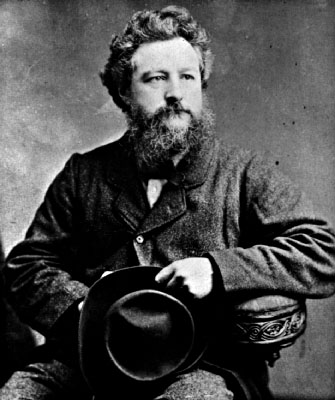
William Morris


Here’s a lovely reminder from William Morris in a paper on community by Mark K Smith published on the Infed website (for citation see end of post).

Fellowship is heaven, and lack of fellowship is hell; fellowship is life, and lack of fellowship is death; and the deeds that ye do upon the earth, it is for fellowship’s sake ye do them. (A Dream of John Ball, Ch. 4; first published inThe Commonweal 1886/7)

Fellowship, community, comradeship – call it what you will, it will have to be the essence of mankind’s future.

By Jon Lavin

(Full citation is: Smith, M. K. (2001) ‘Community’ in the encyclopedia of informal education

http://www.infed.org/community/community.htm)

My old English Master

Often our lives move in mysterious ways

For some reason I have been thinking a lot recently about my school English Master, perhaps as a result of feature articles on the Dead Poets Society and the Oxford Boys.

With a slightly unusual name, and some knowledge of an area I might concentrate on, I checked the internet and, indeed, found an address and phone number which might tie up.

Bearing in mind I left school in 1968, and probably last saw him in 1970, I was apprehensive about him remembering me.  I called the phone number.

A man answered, “Are you Mr Anthony Weeks-Pearson?” I asked. “Yes”, he said.

“My name is Robert Derham, I was a pupil at your old school during the 60s”, replied I.

“Oh”, he said, “I was thinking about you only yesterday!”

We then proceeded to have an hour-long conversation covering detailed facts from my happy school days. He was as sharp as a button, and had forgotten nothing!

I learnt so much more about him in that conversation and am looking forward to meeting him again next month. Isn’t that wonderful.

But there’s an even more interesting aspect to this event.  That is, what is the nature of coincidences? This video throws some light on this.

By Bob Derham

Is it me…

…. or have we all gone stark, staring mad!

Sorry, in a bit of a rant mood just now.

I read widely many Blogs out there because it seems that this channel is one which is more likely to offer real, valid commentaries on what is going on at present with regard to the economic crisis, that is the crisis in the broader sense.

Here’s a recent piece from Baseline Scenario about the US Federal Reserve.  Here’s how that piece ends:

Regulation remains largely ineffective (in fact, the industry has managed to demonize the word), the big banks are too important to fail, and interest rates are low across the yield curve. The Fed provides downside protection and there is no effective limit on the amount or nature of risks that the private financial sector can take. This is a recipe not for stagnation but rather for a metaboom in which we will receive warnings, including painful recessions – but consistently ignore them.

The 1920s opened with an 18-month recession, an eerie parallel to the 2007-9 experience. It ended with the Great Crash of 1929.

Then across the way we have a piece on The Daily Beast about Summers. I quote from the first two paragraphs with their permission (thanks guys.)

Washington is swirling with the usual rumors—the White House’s man was pushed! He jumped! But Summers is leaving because he made sure real reform was discussed—but not accomplished.

Thomas

The rumor that come November, when the mid-term elections are history, Lawrence Summers, administration’s quarterback on economic matters, will leave the White House, has been confirmed. The usual presumptions have been put in play: Summers is weary of the job; the president and his men and women feel the need for a new pair of hands under center; the man has done well; the man has done badly. There is no indication that, like Bush II’s ill-served first Treasury Secretary, Paul O’Neill, Summers is being canned for speaking truth to power. That is not the man’s style, not—let it be said—that there’s much evidence that the administration has better than a shaky grasp of the practical truths of American financial and economic life in the Age of Goldman Sachs.The bottom line is that we can expect the usual judgemental blahblahblah to grow in volume and marginality on the talk-show and Op-Ed circuit as the day calendared by the media for Summers’ leave-taking approaches.

Now go across to the article and read it in full. Read why Michael Thomas, the author and no stranger to Wall St., describes Summers as someone who “saw to it that the talk was talked, but the walk was never walked.

And I’ll close by repeating a comment I made to the Baseline Scenario article:

I don’t have the knowledge to respond to Simon’s excellent Post in detail but his comments reinforce what feels like a constant throbbing in my mind – how can the citizens of so many countries have abdicated so much interest and concern in how they/we are governed. Wish I had even a clue as to the answer to that question.

Significant social unrest would be very scary – the ‘law’ of unintended consequences and all that – but there are times when I wonder if this, in the end, might be the only form of real progress for the hard-working, tax-paying majority.

End of rant! 😉

By Paul Handover

Power of peace

This week is a tough one for me with no internet access until the 18th.  So I’m quickly offering items from elsewhere that have caught my eye.

Seriously being at rest!

Here’s another thoughtful, and powerful, reminder of the power of peace from Zen Habits.

‘The miracle is not to walk on water. The miracle is to walk on the green earth, dwelling deeply in the present moment and feeling truly alive.’~Thich Nhat Hanh

These days we have an abundance of luxuries, but I’ve found that excess actually decreases my enjoyment of life.

Sure, we can get massive amounts of rich foods, feasting to our heart’s content, stuffing ourselves in alarming displays of gluttony … but is that really enjoyable on a regular basis?

And yes, television can be fun, and so can ridiculously large parts of the Internet, but if it’s always on, if we’re always connected, doesn’t that lower the fun factor?

Excesses lead to all kinds of problems, but the biggest problem is that life is less enjoyable.

I’ve been finding that simplifying things means I can savor life more fully.

Savoring life starts with a mindset. It’s a mindset that believes that excess, that rushing, that busy-ness, that distractedness, isn’t ideal. It’s a mindset that tries instead to:

  • simplify
  • do & consume less
  • slow down
  • be mindful & present
  • savor things fully

It’s the little things that make life enjoyable: a walk with a loved one, a delicious book, a chilled plum, a newly blooming tree.

And by simplifying, we can savor life to the fullest.

Some ideas I’ve been considering lately:

1. Coffee: Instead of ordering a latte, mocha, cappuccino with whipped cream and cinnamon and shavings … simplify. Just get pure, good coffee (or espresso), brewed fresh with care and precision, with quality beans, freshly roasted. Make it yourself if you can. Drink it slowly, with little or nothing added, and enjoy it thoroughly.

2. Tea: I recently had tea with Jesse Jacobs, the owner of Samovar Tea Lounge, and he poured two different teas from tiny tea pots: Nishi Sencha 1st Flush and Bai Hao Oolong tea. It was fresh, hand-made tea from real leaves, not a tea bag, and it was simply delicious. Drink it slowly, with your eyes closed, fully appreciating the aroma … wonderful.

3. Workouts: I’ve been a fan of simpler workouts recently. While others might spend an hour to 90 minutes in the gym, going through a series of 10 different exercises, I just do 1-3 functional exercises, but with intensity. So I might do some sprint intervals, or a few rounds of pushups, pullups, and bodyweight squats. Or 400 meters of walking lunges. Let me tell you, that’s a simple but incredible workout. Another I like: five rounds 85-lb. squat thrusters (10 reps) alternated with pushups (10 reps). Today’s workout was three rounds of 15 burpees and 800-meter runs. No rest unless you need it. These are great workouts, but very simple, and very tough. I love them.

4. Sweets: I used to be a sugar addict. Now I still enjoy an occasional dessert, but in tiny portions, eaten very slowly. What I enjoy even more, though, is cold fruit. A chilled peach, some blueberries, a few strawberries, a plum: eat it one bite at a time, close your eyes with each bite, and enjoy to the fullest. So good.

5. Meals: While the trend these days is super-sized meals of greasy, fried things (more than two people need to eat actually), I have been enjoying smaller meals of simplicity. Just a few ingredients, fresh, whole, unprocessed, without chemicals or sauces. My meals usually include: a breakfast of steel-cut oats (cooked) with cinnamon, almonds, and berries; a lunch of yogurt, nuts, and fruit; a dinner of beans or tofu with quinoa and steamed veggies (or sauteed with garlic and olive oil). These simple meals are better because not only are they healthy, each ingredient can be tasted, its flavor fully enjoyed.

6. Reading: While the Internet is chock full of things to read, I’ve been enjoying the simplicity of a paper book, borrowed from the library or a friend (borrowing/sharing reduces natural resources consumed). When I read online, I read a single article at a time, using either the Readability or Clippable bookmarklet to remove distrations, and in full-screen mode in the Chrome browser (hit Cmd-Shift-F on the Mac version or F11 in Windows). It’s pure reading, no distractions, and lovely.

The power of now!

The lesson from dogs is so obvious but, in a sense, so out of reach to us.

The story published yesterday about the Japanese Akita dog, Hachikō, reverberated around my mind for some days afterwards. (It was written on the 27th.)

It wasn’t only about the incredible loyalty shown by the dog towards its master – refusing to accept that its master was never coming home, year after year.  To be honest, humans also show great loyalty to their families and dear friends.

No, there was something else that I couldn’t put my finger on until this morning.  It was a dog’s ability to make the best of every moment, to fully experience what is happening now.  It’s not the first time I have reflected on this aspect of the dog.

We humans have a similar capability but our intellect, our capacity to reflect on the past and ponder (worry?) about the future frequently means that the value of the moment, the preciousness of now, is lost.  I could go on about this – perhaps in another Post.

But I was reminded of when I published a short piece over a year ago, from an unknown author, that was a wonderful attempt to let us humans see into the mind of a dog.  Here it is again.

A love song

Pharaoh

I am your dog and have something I would love to whisper in your ear. I know that you humans lead very busy lives. Some have to work, some have children to raise, some have to do this alone. It always seems like you are running here and there, often too fast, never noticing the truly grand things in life.

Look down at me now. While you sit at your computer. See the way my dark, brown eyes look at yours.

You smile at me. I see love in your eyes. What do you see in mine? Do you see a spirit? A soul inside who loves you as no other could in the world? A spirit that would forgive all trespasses of prior wrong doing for just a single moment of your time? That is all I ask. To slow down, if even for a few minutes, to be with me.

So many times you are saddened by others of my kind passing on. Sometimes we die young and oh so quickly, so suddenly that it wrenches your heart out of your throat. Sometimes, we age slowly before your eyes that you may not even seem to know until the very end, when we look at you with grizzled muzzles and cataract-clouded eyes. Still the love is always there even when we must take that last, long sleep dreaming of running free in a distant, open land.

I may not be here tomorrow. I may not be here next week. Someday you will shed the water from your eyes, that humans have when grief fills their souls, and you will mourn the loss of just ‘one more day’ with me. Because I love you so, this future sorrow even now touches my spirit and grieves me. I read you in so many ways that you cannot even start to contemplate.

We have now together. So come and sit next to me here on the floor and look deep into my eyes. What do you see? Do you see how if you look deeply at me we can talk, you and I, heart to heart. Come not to me as my owner but as a living soul. Stroke my fur and let us look deep into the other’s eyes and talk with our hearts.

I may tell you something about the fun of working the scents in the woods where you and I go. Or I may tell you something profound about myself or how we dogs see life in general. I know you decided to have me in your life because you wanted a soul to share things with. I know how much you have cared for me and always stood up for me even when others have been against me. I know how hard you have worked to help me be the teacher dog that I was born to be. That gift from you has been very precious to me. I know too that you have been through troubled times and I have been there to guard you, to protect you and to be there always for you. I am very different to you but here I am. I am a dog but just as alive as you.

I feel emotion. I feel physical senses. I can revel in the differences of our spirits and souls. I do not think of you as a dog on two feet; I know what you are. You are human, in all your quirkiness, and I love you still.

So, come and sit with me. Enter my world and let time slow down if only for a few minutes. Look deep into my eyes and whisper in my ears. Speak with your heart and I will know your true self. We may not have tomorrow but we do have now.

We may not have tomorrow, but we do have now!  Cherish the moment.

By Paul Handover

V838 Monocerotis

Awesome!  Plain and simply awesome.

V838 Monocerotis

From the Hubble website.  Here’s the description of the image:

“Starry Night”, Vincent van Gogh‘s famous painting, is renowned for its bold whorls of light sweeping across a raging night sky. Although this image of the heavens came only from the artist’s restless imagination, a new picture from the NASA/ESA Hubble Space Telescope bears remarkable similarities to the van Gogh work, complete with never-before-seen spirals of dust swirling across trillions of kilometres of interstellar space.

This image, obtained with the Advanced Camera for Surveys on February 8, 2004, is Hubble’s latest view of an expanding halo of light around a distant star, named V838 Monocerotis (V838 Mon).

The illumination of interstellar dust comes from the red supergiant star at the middle of the image, which gave off a flashbulb-like pulse of light two years ago. V838 Mon is located about 20,000 light-years away from Earth in the direction of the constellation Monoceros, placing the star at the outer edge of our Milky Way galaxy.

Credit:

NASA, the Hubble Heritage Team (AURA/STScI) and ESA

Here are my thoughts.

A single light-year is approximately 6 trillion miles, or 9,460,730,472,580.8 kms for the metric brigade!  Thus 20,000 light-years is 120,000 trillion miles, or 120,000,000,000,000,000 miles.

It is beyond imagination – yet it is real!

It humbles one beyond measure that in this short lifetime on mine, science has reached out so far.  And then one looks more closely to home and remains appalled that we have learnt so little about living in peace and with integrity on this funny third rock from the Sun.

The ultimate paradox!

By Paul Handover