Communication seems to be a bit of a theme just at present!
About 18 months ago, I wrote a piece on Learning from Dogs about Rupert Sheldrake’s fascinating book Dogs That Know When Their Owners Are Coming Home. The reason that this has come up again (and, as it happens, I’m rereading Sheldrake’s book just now) is a recent item on the Big Think website called Can We Have Brain-to-Brain Communication? Here’s what was written.
Dr. Michio Kaku addresses the question of Collective Intelligence. Some people think that the next big innovation in the coming decades is not going to involve the Internet because we can already connect computers to the human mind. Therefore, Dr. Kaku says this brain-to-brain communication would involve not just the exchange of information, but also the transmission of emotions and feelings, “because these are also part of the fabric of our thoughts.”
There’s also an interesting 4-minute video by Dr. Kaku that may be accessed here.
But then again, many pet owners would probably take it for granted that our cats and dogs can read our mind, as Dr. Sheldrake rather entertainingly explains below.
Before closing today’s post, the research that Dr. Sheldrake has undertaken is very impressive. His website is here, from which one learns that,
Dr. Sheldrake
Rupert Sheldrake, one of the world’s most innovative biologists and writers, is best known for his theory of morphic fields and morphic resonance, which leads to a vision of a living, developing universe with its own inherent memory.
He worked in developmental biology at Cambridge University, where he was a Fellow of Clare College. He was then Principal Plant Physiologist at the International Crops Research Institute for the Semi-Arid Tropics (ICRISAT), in Hyderabad, India. From 2005 to 2010 he was Director of the Perrott-Warrick project. , funded from Trinity College, Cambridge.
One of the seven experiments concerned unexplained abilities of animals, and I published a series of papers on the unexplained powers of animals, see Papers on animals .
My research with Aimée Morgana into the telepathic powers of her African Grey Parrot, Nkisi, led to the celebrated debate at the London RSA with Prof Lewis Wolpert, which is featured on this website The Telepathy Debate
More information is available on Nkisi, including a tape of one of his conversations with Aimée in The Nkisi project
So if your pet is looking at you as though they know what you are thinking – they probably are!
A new angle on the famous ‘hear no evil, see no evil, speak no evil’ saying!
What climate change??
That new angle being ‘hear no climate change, see no climate change, speak no climate change!‘
So what has prompted this outburst from me? It started with me seeing a truly scary graph that was on Peter Sinclair’s Climate Crock blogsite on the 20th September. That was the graph that was published yesterday on Learning from Dogs under the post title of It’s not rocket science! If you didn’t see that graph yesterday, don’t read further on until you have looked at it.
Thus while today’s post could easily be interpreted as yet another blogpost from yet another writer about climate change, that is not the case. What I am doing is taking a quick trip across a few recently published items that really do make it utterly clear what is happening to the Earth’s biosphere, all in support of a very simple question to two gentlemen who are currently in the news; stay with me for all to become clear!
However, this is what caught my eye, (an interview between Dr. Francis and Peter Sinclair).
What she told me in a recent interview was that the sea ice record is not something that we just pay attention to in September – there will, in fact, be reverberations that will make fall and winter “very interesting” around the globe.
An unusually strong storm formed off the coast of Alaska on August 5 and tracked into the center of the Arctic Ocean, where it slowly dissipated over the next several days. The center of the storm was located in the middle of the Arctic Ocean.
On Wednesday, the National Snow and Ice Data Center concluded Arctic sea ice is at its lowest late-August level since records began, and the area covered by ice has continued to shrink in September. Since 1979, the 1.54 million square miles of ice is the smallest coverage on record at the North Pole, the report states.
With so many questions surrounding these latest findings, perhaps one of the most immediate is whether this melting of sea ice will affect the upcoming winter across the United States and Northern Hemisphere. Is it possible that a lack of Arctic sea ice could change weather patterns across the globe?
Four meteorologists spoke about these possibilities, and while they didn’t say dramatic weather shifts are imminent in the short-term, they did give some thoughts on what could happen.
One of the meteorologists was Dr. Jeff Masters, Director of Meteorology, Weather Underground. He wrote,
In my December 2011 blog post, I discuss research by Dr. Jennifer Francis of Rutgers University, who found that Arctic sea ice loss may significantly affect the upper-level atmospheric circulation, slowing its winds and increasing its tendency to make contorted high-amplitude loops. High-amplitude loops in the upper level wind pattern (and associated jet stream) increases the probability of persistent weather patterns in the Northern Hemisphere, potentially leading to extreme weather due to longer-duration cold spells, snow events, heat waves, flooding events, and drought conditions.
Several studies published in 2012 have linked Arctic sea ice loss to an increase in probability of severe winter weather in Western Europe, Eastern North America and Eastern Asia.
Then if one goes to that December 2011 blog post, one reads this,
“The question is not whether sea ice loss is affecting the large-scale atmospheric circulation…it’s how can it not?” That was the take-home message from Dr. Jennifer Francis of Rutgers University, in her talk “Does Arctic Amplification Fuel Extreme Weather in Mid-Latitudes?“, presented at last week’s American Geophysical Union meeting in San Francisco. Dr. Francis presented new research in review for publication, which shows that Arctic sea ice loss may significantly affect the upper-level atmospheric circulation, slowing its winds and increasing its tendency to make contorted high-amplitude loops. High-amplitude loops in the upper level wind pattern (and associated jet stream) increases the probability of persistent weather patterns in the Northern Hemisphere, potentially leading to extreme weather due to longer-duration cold spells, snow events, heat waves, flooding events, and drought conditions.
Arctic sea ice loss can slow down jet stream winds
Dr. Francis looked at surface and upper level data from 1948 – 2010, and discovered that the extra heat in the Arctic in fall and winter over the past decade had caused the Arctic atmosphere between the surface and 500 mb (about 18,000 feet or 5,600 meters) to expand. As a result, the difference in temperature between the Arctic (60 – 80°N) and the mid-latitudes (30 – 50°N) fell significantly. It is this difference in temperature that drives the powerful jet stream winds that control much of our weather. The speed of fall and winter west-to-east upper-level winds at 500 mb circling the North Pole decreased by 20% over the past decade, compared to the period 1948 – 2000, in response to the extra warmth in the Arctic. This slow-down of the upper-level winds circling the pole has been linked to a Hot Arctic-Cold Continents pattern that brought cold, snowy winters to the Eastern U.S. and Western Europe during 2009 – 2010 and 2010 – 2011.
OK, nearly finished! Stay with me for one last item. Did you note in that blog post (the first section quoted) this, “Dr. Francis presented new research in review for publication …“? Here’s the Abstract from that publication, from which one reads,
Evidence linking Arctic amplification to extreme weather in mid-latitudes
Key Points
Enhanced Arctic warming reduces poleward temperature gradient
Weaker gradient affects waves in upper-level flow in two observable ways
Both effects slow weather patterns, favoring extreme weather
Jennifer A. Francis, Institute of Marine and Coastal Sciences, Rutgers University, New Brunswick, New Jersey, USA
Stephen J. Vavrus, Center for Climatic Research, University of Wisconsin-Madison, Madison, Wisconsin, USA
So to the point of both yesterday’s Post and the information above.
Will someone tell me why Messrs Barack Obama and Willard Mitt Romney so fervently adopt the stance of ‘hear no climate change, see no climate change, speak no climate change!‘
How Virtual Reality Has Changed the English Language and the Way Humans Communicate
Introduction
Is it noise or content?
One of the wonderful consequences of spending far too much time ‘blogging’ is the connections that I have made over the last 27 months. I have come across a wonderful range of interesting writers and learnt so much more from those links. However, that’s not all, by a long chalk. A number of you have offered to contribute an essay to Learning from Dogs. (And if you are reading this and would like to offer a guest post then ‘fill your boots!‘ )
So it was that a few weeks ago I received an email from Alexa Russell. She offered me a guest post that I found very interesting, leading to it being published today.
I asked Alexa to write a little about herself, to which she replied, “I am a freelance writer who likes to write about technology, education and the changing nature of society. I am currently considering graduate school but fear being scared off by mounting costs and diminishing returns.”
So onto the post, which Alexa explains is about the ways in which virtual reality and digital devices change how we humans communicate and use the English language. Alexa is the author of several resources on studying English and the value in earning anEnglish PhD. Here she asks what Learning from Dogs has previously wondered — do we need to understand language in order to get the message?
oooOOOooo
How Virtual Reality Has Changed the English Language and the Way Humans Communicate
Technology has changed the way we communicate in some obvious (and occasionally obnoxious) ways. Grammar, punctuation, and even a more general respect for lexical rules have diminished in favor of speed and facility in text messages, which are now the most common communicative tool. Probably more periods have been omitted in the last two days than in the hundreds of years since the Gutenberg Bible. None will be omitted here, but maybe they should be.
As social networks expand, making an acquaintance at a coffee shop can easily translate to a lifetime connection – thanks to Facebook. And finally, there is a way to sever contact without engaging in direct conflict – defriending. The funniest thing about defriending is that it is usually considered as an unimpeachable revocation, as starkly offensive as a breakup – when in fact the message has not even crossed the digital threshold to the real world.
As virtual reality and networks progress, so too do our attempts to understand exactly what has happened and may happen to our grip on physical reality. There are a myriad of movies that attempt to explore the subject: The Matrix, Inception, and Avatar, to name a few of the most popular. In The Matrix, Neo discovers that he can will himself to do anything, move with almost infinite speed, gain superman strength, as long as he can carry that belief to his avatar in The Matrix. In Avatar, the protagonist cannot walk in real life but is then given a taller, stronger, more agile host to control. Inception tests the boundaries of the physical, as well as the emotional, as the virtual realities of the “hacked” mind have real impact on his or her emotional truth.
The conclusions that all of these movies come to is the same, albeit shocking fact: virtual reality has real-world effects. Neo can die if he believes he has died. Love can transfer from the blue, tall, strong, avatar to the avatar’s handicapped controller. Inception controls the outlook and actions of an individual well beyond the confines of the dreamworld. It can even come to define the rest of the dreamer’s life.
Virtual reality allows us to shed our physical shells and our weak points. There is nothing holding us back from becoming what or who we want to be. The zits and potbellies of real life give way to what is being communicated. Equally, as in the Matrix, World of Warcraft and even in NASA’s new medical diagnosis virtual reality for astronauts, skills can be learned more quickly than ever will be possible in real life. The NASA device gives astronauts an instant how-to guide, which will enable them to collect data and provide diagnoses as if they had years of medical school under their belts.
So, it really shouldn’t be all that surprising that grammar, punctuation, and spelling have lost a lot of their importance. When people communicate through a virtual medium, they can forget things like academic training and rules of grammar. The value of training and rules is diminishing. It is the essence of the message, not its style, that matters. The biggest question, however is, can you understand the essence?
oooOOOooo
You can understand why it was such a pleasure to receive Alexa’s essay! And the question left in the air, so to speak, in her closing sentence, is one of huge import. As we add to, or is it replace, our tradition of the ‘spoken’ word with this new-world of staccato speak, what’s happening to the essence of the message!
I do hope that Alexa will grace these pages again.
The official video about Miniatur Wunderland Hamburg, the largest model railway in the world, and one of the most successful tourist attractions in Germany. On the 1.300 m² large layout, far more than a thousand trains, aircrafts, cars and ships move about. A wonder of the world in miniature. Please, find more information here.
A reflection on why living in harmony with Planet Earth seems so challenging.
John Hurlburt is the ‘mover and shaker’ behind a series of talks and discussions under the overall title of Everything Fits Together, part of the adult education umbrella of St Paul’s Episcopal Church here in Payson, AZ. John generously asked if I would lead the discussion tonight (19th) along the theme of Nature and Faith. I plan to close the session with these words and the compelling video that was on Learning from Dogs last Friday A planet worth protecting.
oooOOOooo
Man – a study in behaviours.
The relationship between Planet Earth and man goes back a very long way. But what of today?
There is little doubt that many people, even with the minimum of awareness about the world in which we live, are deeply worried. On so many fronts there are forbidding and scary views. It feels as though all the certainty of past times has gone; as if all the trusted models of society are now broken. Whether we are talking politics, economics, employment or the environment, nothing seems to be working.
Why might this be?
It would be easy to condemn man’s drive for progress and an insatiable self-centredness as the obvious causes of our society failing in widespread ways. But in my view that’s too simple an explanation. It’s much more complex.
I propose that the challenges we all face today have their roots in the dawning of our evolution. Let’s remind ourselves how far back that goes.
The earliest documented members of the genus Homo are Homo habilis which evolved around 2.3 million years ago. Homo habilis was the first species for which we have positive evidence of the use of stone tools.
A theory known as Recent African Ancestry theory, postulates that modern humans evolved in Africa possibly from Homo heidelbergensis and migrated out of the continent some 50,000 to 100,000 years ago, replacing local populations of Homo erectus and Homo neanderthalensis.
Thus for tens of thousands of years, the behaviours of humans have served our species well, by definition. Ergo, mankind has evolved as the result of mankind’s behaviours. Behaviours that may have changed little over those countless years.
So one might speculate that these behaviours have been potentially damaging to the ultimate survival of our species, perhaps hugely damaging, for a very long time. But because man’s population footprint has been so small for 99% of eternity the consequences have not impinged on the planet until now. Let’s reflect on those population figures.
Until the development of agriculture, around the 11th millennium BC, the world population was stable at around one million persons, as man lived out a subsistence hunter-gatherer existence. By about 2000 years ago the global population of man had climbed to around 300 million. It took another 1,200 years for that global population to reach the first billion, as it did in 1804.
However, just 123 years later, in 1927, the two-billionth baby was born. The three-billionth baby was born in 1960, just 33 years later! Only a further 14 years slip by for the four-billionth baby to be born in 1974. Another blink of the geological eyelid and 13 years later, in 1987, along comes the five-billionth bundle of joy. Around October 1999, the sixth-billionth baby is born! It is likely that we are in a world where there are now seven billion people! Indeed, the world population clock estimates that on September 12th, a week ago, the world population was 7,039,725,283 persons.
About a billion every decade. The equivalent of a growth of 100 million each and every year, or around 270,000 every single day! Or if you prefer 11,250 an hour (Remember that’s the net growth, births minus deaths, of the population of humans on this planet!)
Combine man’s behaviours with this growth of population and we have the present situation. A totally unsustainable situation on a planet that is our only home.
The only viable solution is to amend our behaviours. To tap into the powers of integrity, self-awareness and mindfulness and change our game.
All of us, no exceptions, have to work with the fundamental, primary relationships we have with each other and with the planet upon which we all depend. We need the birth of a new level of consciousness; of our self, of each other and of the living, breathing planet. A new consciousness that will empower change. We need spiritual enlightenment. We need a spiritual bond with this beautiful planet.
Over eons of time, Planet Earth has favoured our evolution. Now, today, not tomorrow, it is time to favour our beautiful planet with our love and with our faith. It is the ultimate decision for our species.
oooOOOooo
If you need a reminder of how beautiful our planet is (and I’m sure the majority of LfD readers don’t require that reminder) then go back and watch David Attenborough’s video and voice-over to the song What a Wonderful World.
I will close by inserting into this post, the video that Martin Lack included in a recent comment to my post The wind doth blow!
Getting forgetful seems another fascinating aspect of ‘growing up’!
This has turned out to be a Neil Kelly week-end on Learning from Dogs. Yesterday, there was his gorgeous jig-saw joke. Today, the following cartoon, sent to me by Neil.
Let me leave you with one of my favourite sayings, “I remember everything, except those things I forget!“
There have been a couple of hard-hitting posts this week, first about the implications of climate, with respect to the massive drought across the USA this year, and the efforts of Polly Higgins of the Eradicating Ecocide movement to make ecocide a crime against humanity.
This short but very compelling video shows why the planet is so worth protecting. Enjoy!
OK, that sub-heading must seem a tad bizarre! Let me explain. On Tuesday, Jean had an important visit to make down in Mesa, AZ on the outskirts of Phoenix. The first 65 miles, give or take, from Payson to Mesa are down along Highway 87.
At 11.20 we started on our return from Mesa planning on being early back home, say by 1pm at the latest. But 31 miles up the Northbound carriageway of Highway 87, we came to a halt. The road was closed due to an accident with a tanker. As our local newspaper, the Payson Roundup, put it,
The driver of the truck was taken by ambulance to a Scottsdale hospital with non life-threatening injuries. DPS has not ruled out speed as the cause of the crash. Photo by Andy Towle.
Due to a hazardous spill, Highway 87 was closed most of Tuesday, but reopened Wednesday morning after overnight clean up efforts, according to the Arizona Department of Public Safety.
Officials initially thought the roadway could be closed as many as two days due to the amount of oil spewed across both sides of the highway.
The highway closed down after a semi truck carrying oil used for paving rolled Tuesday afternoon near milepost 228, at the bottom of Slate Creek.
That resulted in us having to take a 170 mile detour and not arriving back until 4.30pm!
So what’s that got to do with the post for today? Simply that the implications of Tuesday spilled, like the tanker’s oil cargo, across into Wednesday and the long, thoughtful post I had in my mind to write got put on hold. Thus in its place is this republication of a recent release by Stanford School of Engineering at Stanford University. Apologies for another republished item but the article is relevant and interesting.
oooOOOooo
WIND COULD MEET WORLD’S TOTAL POWER DEMAND – AND THEN SOME – BY 2030
Wind turbines near Livermore, CA.
HIGH RESOLUTION MODELS
In their study, Jacobson and Archer adapted the three-dimensional, atmosphere-ocean-land computer model known as GATOR-GCMOM to calculate the theoretical maximum wind power potential on the planet taking into account wind reduction by turbines. Their model assumed wind turbines could be installed anywhere and everywhere, without regard to societal, environmental, climatic or economic considerations.
The new paper contradicts two earlier studies that said wind potential falls far short of the aggressive goal because each turbine steals too much wind energy from other turbines, and that turbines introduce harmful climate consequences that would negate some of the positive aspects of renewable wind energy.
The new model provides a more sophisticated look than previously possible by separating winds in the atmosphere into hypothetical boxes stacked atop and beside one another. Each box has its own wind speed and weather. In their model, Jacobson and Archer exposed individual turbines to winds from several boxes at once, a degree of resolution earlier global models did not match.
“Modeling the climate consequences of wind turbines is complex science,” said Jacobson. “This software allows that level of detail for the first time.”
With a single model, the researchers were able to calculate the exposure of each wind turbine in the model to winds that vary in space and time. Additionally, the model extracts the correct amount of energy from the wind that gets claimed by the turbines, reducing the wind speed accordingly while conserving energy. It then calculates the effect of these wind speed changes on global temperatures, moisture, clouds and climate.
POTENTIAL APLENTY
Among the most promising things the researchers learned is that there is a lot of potential in the wind—hundreds of terawatts. At some point, however, the return on building new turbines plateaus, reaching a level in which no additional energy can be extracted even with the installation of more turbines.
“Each turbine reduces the amount of energy available for others,” Archer said. The reduction, however, becomes significant only when large numbers of turbines are installed, many more than would ever be needed.
“And that’s the point that was very important for us to find,” Archer said.
The researchers have dubbed this point the saturation wind power potential. The saturation potential, they say, is more than 250 terawatts if we could place an army of 100-meter-tall wind turbines across the entire land and water of planet Earth. Alternatively, if we place them only on land (minus Antarctica) and along the coastal ocean there is still some 80 terawatts available—about seven times the total power demand of all civilization. Hypothetical turbines operating in the jet streams six miles up in the atmosphere could extract as much as an additional 380 terawatts.
“We’re not saying, ‘Put turbines everywhere,’ but we have shown that there is no fundamental barrier to obtaining half or even several times the world’s all-purpose power from wind by 2030. The potential is there, if we can build enough turbines,” said Jacobson.
Mark Z. Jacobson, professor of civil and environmental engineering. Photo: Linda Cicero / Stanford News Service
HOW MANY TURBINES?
Knowing that the potential exists, the researchers turned their attention to how many turbines would be needed to meet half the world’s power demand—about 5.75 terawatts—in a 2030 clean-energy economy. To get there, they explored various scenarios of what they call the fixed wind power potential—the maximum power that can be extracted using a specific number of wind turbines.
Archer and Jacobson showed that four million 5-megawatt turbines operating at a height of 100 meters could supply as much 7.5 terawatts of power—well more than half the world’s all-purpose power demand—without significant negative affect on the climate.
“We have a long way to go. Today, we have installed a little over one percent of the wind power needed,” said Jacobson.
In terms of surface area, Jacobson and Archer would site half the four million turbines over water. The remaining two million would require a little more than one-half of one percent of the Earth’s land surface—about half the area of the State of Alaska. However, virtually none of this area would be used solely for wind, but could serve dual purposes as open space, farmland, ranchland, or wildlife preserve.
Rather than put all the turbines in a single location, Archer and Jacobson say it is best and most efficient to spread out wind farms in high-wind sites across the globe—the Gobi Desert, the American plains and the Sahara for example.
“The careful siting of wind farms will minimize costs and the overall impacts of a global wind infrastructure on the environment,” said Jacobson. “Regardless, as these results suggest, the saturation of wind power availability will not limit a clean-energy economy.”
Funding sources include National Science Foundation, U.S. Environmental Protection Agency, and National Aeronautics and Space Administration high-end computing.
Andrew Myers is associate director of communications for the Stanford University School of Engineering.
Monday, September 10, 2012
oooOOOooo
Let me close by pointing you to Mark Jacobson’s website.
This was sent to me recently. It has been doing the rounds big time, and rightly so!
oooOOOooo
Before going on to today’s post, I feel the need to explain something. That is that over the last week or so I have been republishing many more items rather than writing my own creative stuff. This is an unfortunate consequence of us having our house here in Payson up for sale, which is generating more work than usual. Plus we are packing. All this to do with us moving from Arizona to Oregon in the first week of November.
oooOOOooo
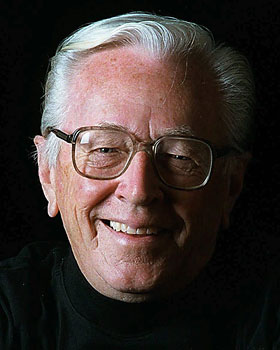
Charles Schulz
The following is the philosophy of Charles Schulz, the creator of the ‘Peanuts’ comic strip.
You don’t have to actually answer the questions. Just ponder on them. It will make very good sense!
Here’s A Little Quiz
You don’t have to actually answer the questions. Just read them straight through, ponder a tad, and you’ll get the point.
Name the five wealthiest people in the world.
Name the last five Heisman trophy winners.
Name the last five winners of the Miss America pageant.
Name ten people who have won the Nobel or Pulitzer Prize.
Name the last half dozen Academy Award winners for best actor and actress.
Name the last decade’s worth of World Series Winners.
How did you do?
The point is, none of us remember the headliners of yesterday. These are no second-rate achievers. They were the best in their fields.
But the applause dies. Awards tarnish over time. Achievements are forgotten and accolades and certificates are buried with their owners.
Here’s another quiz. See how you do on this one:
List a few teachers who aided your journey through school.
Name three friends who have helped you through a difficult time.
Name five people who have taught you something worthwhile.
Think of a few people who have made you feel appreciated and special!
Think of five people you enjoy spending time with.
Did you find that Easier? Of course you did!
So here’s the lesson!
The people who make a difference in your life are not the ones with the most credentials, or the most money…or the most awards…they simply are the ones who care the most.







 Learning from Dogs