Category: Morality

It’s been hot here in recent days.

And not just here!

This story comes from Mexico, a country renowned for being a hot place. Even in Northern Mexico it can be flipping hot (and that’s putting it nicely). Let’s face it I met Jeannie in San Carlos, Mexico in 2007. San Carlos is in the county of Sonora, just along the coast from Guaymas and about 270 miles South from Nogales on the Arizona border.

Anyway, back to the story which comes from The Dodo.

ooOOoo

Nice Store Opens Its Doors To Homeless Dog During Heat Wave

“He came to us for help.”
BY

PUBLISHED ON THE 27th August, 2019.

Recently, on a scorching hot day in northern Mexico, Adolfo Pazzi Ahumada witnessed love in its purest form.

After noticing he was out of milk at home, Ahumada decided to brave the 104°F weather to make a quick stop at his local market. When he arrived, he saw sweet scene unfolding out front.

“A stray dog was being fed and getting water from the [store] clerk,” Ahumada told The Dodo. “Then I saw they let the dog inside.”

Google Maps

Once Ahumada entered the store, he decided to ask the clerk about the dog. Ahumada recounted that conversation to The Dodo: “He has been here the past [few] days. We suspect he was left behind by his owner. He came to us for help,” the clerk told Ahumada. “We could only provide him with food, water and some toys from the store that we paid with our money.”

But the shop’s kindness doesn’t end there.

“We let him inside because the temperature outside is really hell-like. We feel bad for him, but he looks happier around the store,” the clerk said.

Peeking down one of the aisles, Ahumada observed that firsthand:

Adolfo Pazzi Ahumada

The downtrodden dog had found people who cared.

In the time he’s been there, the dog has shown kindness to the clerks and customers in return. The store hopes perhaps a shopper will see fit to adopt him into their home.

Unable to be that person, Ahumada paid for his milk and bought a treat for the dog to enjoy after his nap — resting assured the pup was in safe and caring hands until that day comes.

Adolfo Pazzi Ahumada

“I felt bad for what the dog has passed through,” Ahumada said. “But he is now receiving the love he deserves.”

ooOOoo

 I find myself staggered at what this dog has endured yet at the same time how very quickly he settled in at the store. Well done to all the staff at the OXXO store. It would have been so easy to let the dog suffer and in all probability die in the heat.

Please, let the sweet dog find a loving home as soon as possible!

How dogs are so good for children.

A delightful guest post from Holli.

A short while ago I was emailed by Holli Burch who asked me if I was ready for another guest post. Was I! I love to receive guest posts. From regular contributors, such as Holli, and people who are new to Learning from Dogs.

There was a quick exchange of emails and then yesterday in came Holli’s latest. It’s brilliant!

ooOOoo

How Dogs are Good For Kids

By Holli Burch. 22nd August, 2019
Many kids dream of having a dog.

While we know that dogs teach kids loyalty and unconditional love, there are also many other reasons that dogs are good for kids! I feel so grateful to be able to have both human and canine kids at home. I have always had dogs around me as a child also. My dad had hunting dogs and my mom liked the smaller poodle terrier dog breeds.

According to an article in the Washington Post, a recent study found that children who had strong bonds with their dog also had more secure stronger bonds with their parents and with their (human) best friends. I find this so extremely important, especially in adolescent age when kids struggle the most!

They had another study regarding how dogs effect children’s emotions during stressful times. They found that when the children had their dog with them, they were much more calm. Suggesting that the contact they have with their dog enhances positive affect.
More reasons dogs are good for our kids…

  • Dogs can help kids with behavioral problems – A dog can calm a hyperactive child and have been shown to be especially beneficial to those with special needs. Having a therapy dog can help ease parent worries a little by knowing the dog will protect them and can be trained to react to certain behaviors, including wandering.
  • Dogs can help ease anxiety- Petting your dog or cuddling with them releases the “feel good” hormones in their body called oxytocin. This soothes the anxiety mind and helps to calm them down
  • Dogs teach kids responsibility- Dogs need to be fed, walked and given love daily. When a child gets a dog they learn to take care of something other than themselves. This also creates empathy and self confidence.
  • Dogs keep kids in better health- Dogs can help overweight children and help get kids active. Parents need to make sure both are getting daily exercise. A study from Psychology today found that children who walked their dogs were 50% less likely to become obese. Not only that but according to LiveScience, kids that grow up around dog dust have less chance of developing allergies and asthma! It helps them develop a strong immune system.
  • Protection- A dog will always protect those it feels are family. This can mean protecting your child from bullies or helping them to feel safe while home alone. Kids often feel more safe during scary events if they have their dog by their side.
  • Dogs are best friends- They are always willing to play with your child and lift their spirit. Dogs can help with loneliness and depression because they won’t go away, they give unconditional love no matter what, so kids feel wanted and loved. They don’t fight with them, hit or yell. Kids can share anything with them with no judgement. Dogs often can help kids recover from trauma because they can confide in them.

We rescued Tuffy (above) from a shelter, as a puppy, after my daughter lost her horse in a traumatic accident. It’s been a couple years now and Tuffy has also helped her through more. We are blessed to have her and she follows my daughter everywhere. I know she will always keep her safe. Their bond is so strong and if she is ever feeling down, Tuffy knows and is right there to lift her spirit.

Each of my children have one of our dogs that they call theirs, except my 5 year old. Although, he did just ask me the other day if he can get his own dog. He is good at helping me walk them everyday and loves to cuddle with them. When we recently lost Jesse in April, it was also a hard lesson for the kids on loss. We miss her everyday. That’s her below.
One last thing I want to mention is how important it is to teach your child to respect their dog. First few things to teach is to respect their boundaries, how dogs communicate and how to interact when the dog is new to the family.

I would love to hear your comments and stories about how your dogs have helped your kids!
Dog Bless!~ The Dog Connection

oooo

A little bit about Holli.

As a mother of 4 canines and 4 humans, I am here to help the connection between dogs and humans; mind, body & soul.  My purpose is providing inspiration and information to dog lovers on health, training and bonding.

Holli – The Dog Connection
Blog link: https://mysecretdog.blog

Dog Bless!❤🐾

ooOOoo

Time and time again we see a bonding between a human and a dog. It’s precious and the need to involve children from a young age is crucial. Young people growing up today will be facing a whole raft of issues, many of them extremely serious. All the more reason to have a young person bond with a dog, because that’s so important for that young person.

Is your community no-kill?

A timely republication of a helpful article.

The Best Friends website has a useful article under their 2025 Goal aim.

It follows nicely yesterday’s post.

ooOOoo

2025 Goal

No-Kill for Cats and Dogs in America’s Shelters

You believe that animals deserve compassion and good quality of life. You also love your community and want to take action for the pets and people in it. Here’s how.

Last year, about 733,000 dogs and cats were killed in our nation’s animal shelters, simply because they didn’t have safe places to call home. Together, we can change that and achieve no-kill for dogs and cats nationwide by 2025.

Is your community no-kill?

Explore lifesaving nationwide using the interactive tool below and see which shelters in your community need your support. When every shelter in a community achieves a 90% save rate for all cats and dogs, that community is designated as no-kill. This provides a simple, effective benchmark for our lifesaving progress.

This dashboard presents a dynamic data set that is being updated regularly with the most current information available. We welcome your feedback to help ensure that our data is the latest and most accurate information.

Go here to access the map!

Common elements of a no-kill community
All no-kill communities embrace and promote:

Collective responsibility: We hold ourselves accountable for the welfare of pets in our animal shelters and communities.

    • Individual community members are willing to participate in lifesaving programs.
    • State and local government are poised to support those programs.
    • A transparent shelter staff is working with their community to save more lives.

Progressive lifesaving: We value compassionate and responsible actions to save animals.

  • Decision-making is data-driven and anchored by best practices in the field.
  • Quality care is provided to every pet and quality of life is a priority.
  • Programs are designed to save the animals most at risk of being killed.
  • Programs are designed to tackle the root of the problem rather than the symptoms.

True euthanasia: We recognize that, for some animals, euthanasia is the most compassionate choice. This is why the no-kill benchmark for save rate is 90% and not 100%. In some cases, shelters may not meet the 90% benchmark, but do meet the philosophical principles of no-kill, which are:

  • Ending the life of an animal only to end irremediable suffering.
  • Ending the life of an animal when the animal is too dangerous to rehabilitate and place in the community safely.

End-of-life decisions are made by animal welfare professionals engaging in best practices and protocols.

Visit the “Community Lifesaving Dashboard Frequently Asked Questions” page to learn more.

Working together to save more pets

About the lifesaving community maps

These community maps are the first of their kind in animal welfare. They represent an enormous undertaking on the part of compassionate organizations and individuals throughout the country and a commitment to collaboration and transparency from more than 3,200 shelters across the country.

Learn more about how these maps were created and how you can help make them more accurate and powerful for the pets in your community and beyond.

ooOOoo

Once again, go here to view the maps.

The best of luck!

A no-kill approach!

Funny how things come around!

I just happened to click on the ‘signature’ of a follower that took me to a blog where I was truly enthralled. It was called Who Will Let the Dogs Out? and I was fascinated by what was being written.

Now I already follow this blog but had been very reluctant to go across to their place and read the posts. Shame on me! I have no idea why!

How about this post, that I am taking the liberty of republishing.

ooOOoo

No Kill is Not Rocket Science.

BY CARA SUE ACHTERBERG

July 25th, 2019

Ian and I are still processing what we saw and what we learned in Tennessee, each in our own way.

He is taking a break and feels he can’t look at the pictures for a bit. His pictures capture the emotion of the dogs caught in our human failure, and that is hard to look at. I know eventually he will be ready to edit them and to hopefully share more here on the blog. He took thousands of pictures. My big son has a very big heart, and it truly broke in Tennessee.
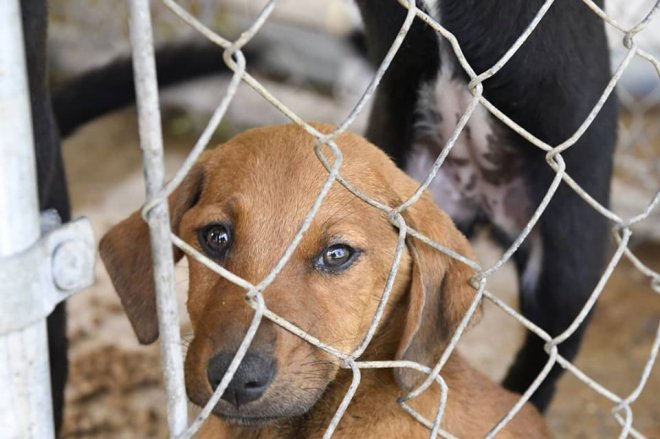
For me, seeing the conditions in western Tennessee made me furious. This should not be happening. We should not be leaving the responsibility for lost and surrendered animals to a handful of citizens who are quite literally standing in the gap left by a government that neglects its duties and an unaware public.

I cannot look away. So, I am doing what I do– writing and talking and making a nuisance of myself. I’m working on articles, blog posts (like this one), and even a book. I am in the midst of signing a publishing contract for 100 Dogs and Counting, a follow up to Another Good Dog: One Family and Fifty Foster Dogs that will recount more of our fostering adventures, and then take the reader south to discover where these dogs come from and what they can do about it.

I am also planning another trip in September– this time back to Tennessee, and then on to Alabama. Ian will be in school, but I will bring along another talented photographer and excellent co-pilot, Nancy Slattery.

One of the people I am excited to see on this next trip is a rescue hero of mine — Aubrie Kavanaugh. I’m excited to introduce you to her today in the following interview. Aubrie is not only an expert in the fight for a No-Kill nation, but a talented writer, a wickedly smart and funny person, and a dog-hearted woman relentlessly and methodically committed to changing the situation.

Enjoy!

The biggest first – the question everyone asks me – Why are there so many unwanted dogs in the south?

I honestly try to avoid the word “unwanted” because it implies that no one wants the animals when that is not necessarily true. Having said that, we have so many in need of homes for a host of reasons, some of which I’ll explain.

In many locations, there is a complete disconnect between animal control agencies/animal shelters which have animals needing new homes and the general public who could provide those homes. The shelters presume no one wants the animals and the public presumes the animals all find homes. The chasm between the agencies and the public is wide and leads to animals who otherwise may be saved being destroyed.

We have issues with most municipalities who manage animal shelters continuing to use the outdated “catch and kill” method of sheltering because they have not learned about or embraced No Kill programs and philosophies which could both reduce shelter intake and increase shelter output. Rather than educate themselves on how to keep animals alive which still ensure public safety, they hold firm to the status quo with the mindset of, “its’ not broken, so don’t fix it.” But the shelter system is broken and it does need to be fixed.

Many people are quick to ascribe what has been called “The Bubba Factor” to the south which essentially means that people here are too woefully stupid or callous to care about what happens to animals in need. We do have cultural differences regarding the value of animals in our lives (“it’s just a dog”) or where animals live (inside v. outside) and there are some people who could care less about animal welfare. Most people, however, do care at most about the welfare of animals and at least about how their tax dollars are spent. People can be informed not only about how their tax dollars can be best used, but also about how they can make better personal choices which affect how shelters operate (like the value of spay/neuter, how to keep pets contained, how to rehome pets in the event of their death or some life crisis, etc.). Many see themselves as stewards of the species we have domesticated and for them this is an issue of ethics, but they need to be informed of the need to address the need.

In many parts of the south, there is also very limited access to spay/neuter at all, let alone at a reasonable cost. This means that in some places, pet populations are not contained and just continue to grow over time. The more animals there are in any particular community, the more animals are apt to end up in animal control systems.

Define what ‘no-kill’ means to you.

No kill means we don’t kill healthy and treatable shelter animals using our tax dollars or donations.

Some try to portray the phrase as controversial or complicated when it really is not. When we use the intended meanings of words like “euthanasia” and “kill,” the phrase makes more sense.

If you have ever made The Terrible Decision to euthanize a beloved pet who is suffering, you know exactly what euthanasia means. It is an act of mercy to end or alleviate suffering. If a shelter ends the life of a healthy dog, that is not euthanasia no matter how many times we call it that. If someone outside an animal shelter setting were to end the lives of healthy animals, we would not say those animals were euthanized. We would say they were killed. We should not alter the meaning of words based on the location where the act takes place.

There will always be animals in shelters who are suffering and for whom euthanasia is the only responsible action as an act of mercy. There will also always be a very small number of dogs who are so broken as to be genuinely dangerous (as opposed to scared, traumatized or undersocialized) and who cannot be adopted out because they present a public safety risk and those dogs must, unfortunately, be euthanized. No Kill does not mean animals do not die. It means we keep the healthy and treatable animals alive because that’s what the public expects and because it is possible using a progressive business model.

I blogged about this topic recently for No Kill Movement and the blog explains a bit more about what No Kill is and what it is Not.

What made you get involved in no-kill advocacy?

We had our 16-year old German Sheppard mix euthanized on Earth Day of 2006. We knew for years that the day was coming, but it was heart-wrenching. I found I was not coping well in the wake of our loss. I began donating to the animal shelter in the city where I work in her honor and to help me cope with the loss by doing something positive.

I was on the shelter website a few months later when I came across a promotional video which began harmlessly but then transitioned to footage of an outwardly healthy dog being taken from his kennel to be killed. It shocked me. I had no real clue prior to that that the shelter was destroying healthy and treatable animals. When I later asked if the dog in the video had actually died, I was told five words that changed my life: “nobody wants Beagles these days.”

I got upset, then I got angry and then I began educating myself about why this was happening not just in my area, but all over the country. I wanted to do all I could to make it stop. I now consider myself an unapologetic No Kill advocate. For me, this is an issue about free speech and municipal accountability. I see my advocacy as a moral imperative. Shelters operate using tax dollars and it is up to us to hold those places accountable for how they spent our money and in our name (while sometimes blaming us for the process). As a country, we are better than this.

Is no-kill truly possible and if so, what will it take?

I absolutely believe that any community can become a No Kill Community and that as more places take this step, we move closer to a time when the killing of healthy and treatable animals will become part of our shameful past. Change can come in one of two ways. Municipalities can get ahead of this issue by adopting progressive programs. If they will not do so, the burden passes to citizens to educate themselves and then speak out to demand better of elected and appointed officials. If elected officials will not listen to the will of the people, they need to be replaced.

I support and promote the No Kill Equation which is a one-size-fits-all DIY solution for any community which was first published by Nathan Winograd in 2007. It is an all-in series of programs which work in concert with each other to reduce shelter intake and then move animals who are in the shelter through the system as quickly as possible. I group them into “keep them out” and “get them out” programs. Anyone can learn about the No Kill Equation by reading Nathan’s book, “Redemption: The Myth of Pet Overpopulation and the No Kill Revolution in America.” They can also read about the equation on numerous websites including those for the No Kill Advocacy Center, No Kill Movement, No Kill Learning, my Paws4Change website or our No Kill Huntsville website. I also go into a lot of detail about the Equation in my book and explain a bit about how each of the programs works.

What can someone who is not in the rural south do to help?

Every area can improve. If you live outside the south, find out how your local shelter is functioning using your tax dollars. Many shelters claim to have high release rates when, in fact, they are playing a numbers game or are using words in different ways than they are used by the public to condone or excuse killing. If you don’t like what you learn, speak out and ask for better. Only when more places across our country change will those changes ultimately become infectious everywhere, including in the south.

Even if your local area is doing a great job, you can connect with people you know in the south and encourage them to educate themselves and perhaps become politically active about their local shelter. It often falls to the public to speak out and demand better. Only those who live in the area can speak out for better use of their tax dollars in ways which are consistent with their values.

If you don’t know anyone in the south, you can help rescue and advocacy organizations in the south which are doing some of the heavy lifting to keep animals alive. If that is the help you choose to provide, please also encourage the rescue group or advocates with whom you engage to speak out to seek better. While I have the utmost respect for people “in the trenches,” who are keeping animals alive, they are doomed to provide that role indefinitely unless the system is forced to change through public demand. I have a section in my book called “For Rescuers,” which addresses this need to go beyond saving X dog and Y cat to becoming a catalyst for change so there are fewer animals in need of rescue or help. As simple as it sounds, nothing will change unless something changes to alter the process.

I love the title of your book because that’s what I’ve concluded, too – It’s not Rocket Science. Tell me a little about why you wrote the book and what you hope people take from it.

I formed an advocacy group called No Kill Huntsville in 2012 to speak with one voice to persuade the City of Huntsville, Alabama, to stop destroying healthy and treatable animals using tax dollars. The live release rate at the shelter at the time was about 34% and my individual efforts going back to 2008 to bring about change had failed. Fast forward a few years and things have changed remarkably. The live release rate at the shelter has been above 90% for more than four years and while there is still work to be done, the culture at our shelter has changed. It was an incredible struggle for a long time. It got ugly with some strong opposition from some unlikely sources. But we’re proud of what we did working together as a coalition.

One day last fall after a city council meeting which set some new guidelines for the shelter, I was thinking back to all the times people have contacted us asking for help or asking what we recommend. People contact us from the south, from other regions and even from other countries. I decided to write the book to help others learn from our path. We didn’t get everything we wanted and our work is not over, but the worst is behind us and I think people may learn something from our methods and from our mistakes. I think the content in the book about the opposition we faced is almost as important as the No Kill Equation we promoted and still promote. If advocates are not prepared to counter opposition, their arguments in support of animal shelter reform may fall short.

Anything else you’d like to add?

The phrase No Kill is on the public radar and is not going away. We do better to educate people on what it means and to help people learn how to promote change than to try to sugarcoat what is happening in our shelters using our money. We should be respectful in our advocacy, but there truly is no polite way to say, “please stop killing healthy and treatable animals using our money.” No Kill advocates are not the enemy of shelters any more than the public is the enemy. I always encourage people to focus not on the messenger, but the fact that the message is necessary in the first place.

There are some who use the phrase No Kill and do so in ways which are inconsistent with our social movement. Some of these people engage in criminal acts for which they should be prosecuted. We should absolutely call out those bad actors when we find them. Those people who co-opt the phrase No Kill for illegal or unethical purposes are no more representative of our social movement than unethical breeders of animals represent all breeders. If an organization calls itself No Kill and destroys a lot of animals, keeps them for years, or does not provide for their care, they are using the words without the actions to support them. My book covers this topic and I touch on it in the No Kill Movement blog.

I believe a time will come when all shelters in America will be No Kill shelters. How long that takes is up to all of us. We must educate ourselves on what his happening in our own communities so we can decide if our money is being spent in ways of which we approve. When it is not, it is up to us to ask for better and, when necessary, be advocates for change. The lives of animals depend on it.

Aubrie Kavanaugh is an Army veteran who has worked for decades as a litigation paralegal doing defense work; her clients are mostly municipalities and law enforcement officials.

Aubrie became an animal welfare advocate in 2006 after learning about the deaths of animals at her local animal shelter. She manages the Paws4Change educational website, blogs on animal welfare issues, creates video productions and public service announcements for animal shelters and nonprofit organizations across the country, and is involved in advancing animal welfare legislation on the local and state level. She also leads an advocacy group called No Kill Huntsville. She lives in northern Alabama with her husband, their dog, and the enduring inspiration of their dogs to whom they have said farewell for now.

Her book, “Not Rocket Science: A Story of No Kill Animal Shelter Advocacy in Huntsville, Alabama” is available on Amazon. It is priced to print.

ooOOoo

Well done, Aubrey!

And if you go to that Amazon Books page you will read this:

America is an animal friendly society. Approximately sixty-eight percent of U.S. households own a pet – about 85 million families. Most of us consider our companion animals family members. We recognize that they enrich our lives in countless ways, improve our physical and mental health, and make us better people. We value the fact that they don’t care what we look like, where we live, what we do for a living or how much money we make; their love for us is unconditional. And we agonize over our decisions when the time comes to say farewell to them due to advanced age or disease.

But there is a dark side to our relationship with companion animals which is our collective shame. We destroy millions of healthy and treatable animals in our tax-funded animal shelters every year. Many people simply do not know about what happens at their local animal shelter using their money and in their name. Some who know about this tragedy believe there is no other way to function. There is.

“Not Rocket Science” is a story of no kill animal shelter advocacy in Huntsville, Alabama, which explains how a group of animal welfare advocates joined forces to speak with one voice to save the lives of healthy and treatable animals in the municipal animal shelter. This advocacy helped change the shelter from one which destroyed more than half of the animals entrusted to its care to a shelter which saves the lives of all healthy and treatable animals instead.

Any community can be a no kill community. Sometimes it just takes the courage to try something new. And sometimes it just takes a group of people willing to band together and speak out with one voice to say “enough. We are better than this.”

The book is priced at $5.52. I have ordered a copy!

Diya’s story

With thanks to Michelle Orcutt.

I am not a great Facebook user. I have nothing against the app just prefer not to be active in terms of my comings and goings. However, I do automatically send posts from this blog across to Facebook. Some of my followers come from FB.

As was the case with Michelle Orcutt.

I went across to her FB ‘page’ to leave my thanks for her follow and read a wonderful account of Diya.

Michelle kindly gave me permission to republish the article in this place. Here it is.

ooOOoo

Diya’s Story

By Michelle Orcutt

Most of my friends know I adopted Diya, originally a street puppy from India (aka a desi dog, an Indie, a native Indian dog, pariah dog, or a streetie), almost 4 years ago. I wrote this for her rescue’s private Facebook group a year ago, in hopes of encouraging a better understanding of street dogs, and have had some requests to make it public, so here it is:

What follows are my own musings, not anything coming from ISDF. I think about dogs a lot!😁 Through Diya’s rescuer’s visit to the Twin Cities, I was able to meet and observe 7 other Indian-Minnesotan dogs. Thinking about some common difficulties voiced by these dogs’ people, and also about some of the worries and frustrations recently expressed in group and my own challenges with Diya, I feel like sharing my perspective.

To a person, the Desi adopters I met here have been patient and accommodating towards their dogs, yet most of the dogs continue to have difficulty in certain situations. These are dogs, working from what their DNA and experience gives them to go on, in a wholly other environment from where they emerged into the world. Especially with random-bred, pariah type dogs like many from India, Oman, and Thailand, these dogs’ lives center around finding food and water, protecting themselves and their territory, avoiding harm, and successfully breeding, bearing, and raising pups. Certainly the pursuit of pleasure and comfortable resting spots plays into their lives too.

We ask these dogs, who are dogs as dogs are truly meant to be—to become “ours” when they arrive in America. We subject them to foreign constraints like crates and leashes, and saddle them with our own expectations. We spend a lot of time telling dogs they are good and that they are bad. But bottom line, they’re dogs, not just our fur babies, or our charges, but entities deserving of respect in their own right. This isn’t to minimize the difficulty and emotional toll of trying to change worrisome behaviors.

Our dogs think hard to get a handle on us; they interpret and build their own sense of the meanings behind our facial expressions, movements, words, tone, touch, habits, clothing, and smells. Their language is far broader than English, Hindi, Arabic, or Thai. They are another form of intelligent life in our midst, in our cars, on our sofas, under the covers and curled into the bend of our knees. Yet they can also be incredibly distressing as they bark at our friends, growl at our guests, lung at terriers, chase cats, and destroy door frames.

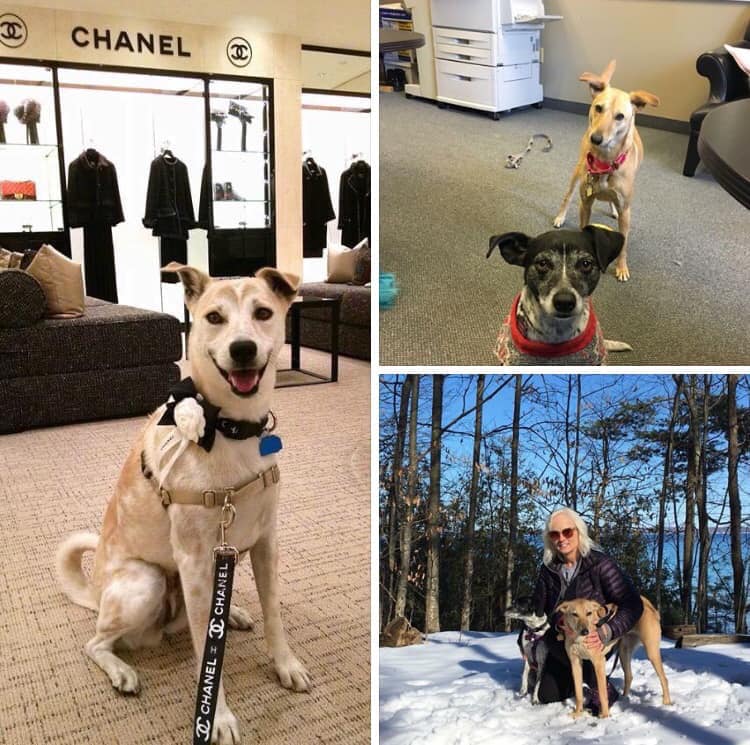
Dogs are incredibly adaptable; this is one of the reasons for their success as a species. A terrified dog rescued from meat trade smugglers in Thailand can transform into a remarkable beauty at ease in a Chanel boutique (😉😉Sparkle Stern); a dog from torrid Muscat can thrive in snow (you Omani pups know who you are). A Delhi puppy fated to starve in the same spot her mother died, can instead run miles through the Michigan woods and “go to work” in an air-conditioned office with her human mom and other people with their own dogs (yes, that’s you, Miss Lily). These changes don’t happen magically or automatically (except in the case of snow), but through initial acts of grace followed by steady and hope-fueled progression.

The things that come easiest to most of these former street puppies and dogs, are the ones that overlap with their natural instincts. Bonding with people who treat them well and provide their food, comfort, and positive mental stimulation is relatively straightforward, though many of our dogs retain more of a capacity for independence than common American companion breeds. Diya is always watching for suspicious people and crows; I live in a part of St. Paul where it’s not uncommon for neighborhood Facebook group posts to start out, “Was that gunshots or fireworks?” so I appreciate her sharp eyes and formidable-sounding bark (I love my city neighborhood, by the way. I love crows too—this is one of the points at which Diya and I differ).

It’s the things that are really weird for street dogs that are hard: being expected to be outgoing, friendly, and trusting of all people and other dogs…always having to stifle your growl…tolerating being left in a wire or plastic box for hours…not being able to run away when you get nervous or to sniff as many spots as you think you need to gather information…to have people decide what you need…going to the vet, going to dog parks, etc. Dogs are social animals, but their idea of social life is different from ours (and also very different from wolves’), and each has their own unique relationship with their person or people, and to the other animals in the household.

So when you are flustered and upset by your dog’s behavior, step back, and think of all we are expecting them to learn and all we are asking them to put aside. Learning new things can be very uncomfortable and anxiety-provoking, especially when going against strong instincts. Living alone with my dogs and cats, and being an introvert by nature, I’ve tended to avoid some trying situations that other families have to work through, but Diya and I have still come a long way. I look forward to finding out where all we’ll go and what we’ll teach each other.

ooOOoo

If you just glanced at this post then make a note, a firm note, to come back and read it fully and carefully.

For Michelle captures precisely what it is to be a dog, especially a street dog.

It is a profoundly wise article and it is a great honour to be able to republish it in this place.

Picture Parade Two Hundred and Ninety-Nine

Dear Pharaoh.

For some reason I have found myself thinking of you dear dog in the last couple of days so please forgive the indulgence.

First published on June 4th, 2017.

ooOOoo

 In celebration of Pharaoh’s 14th birthday yesterday.

(Long-term followers of this place will have seen many of these photos before.)

Just being a dog!

oooo

Luckily the training paid off! Pharaoh was fabulous around sheep!

oooo

Pharaoh riding the back of the Piper Super Cub

oooo

Pharaoh enjoying Bummer Creek.

oooo

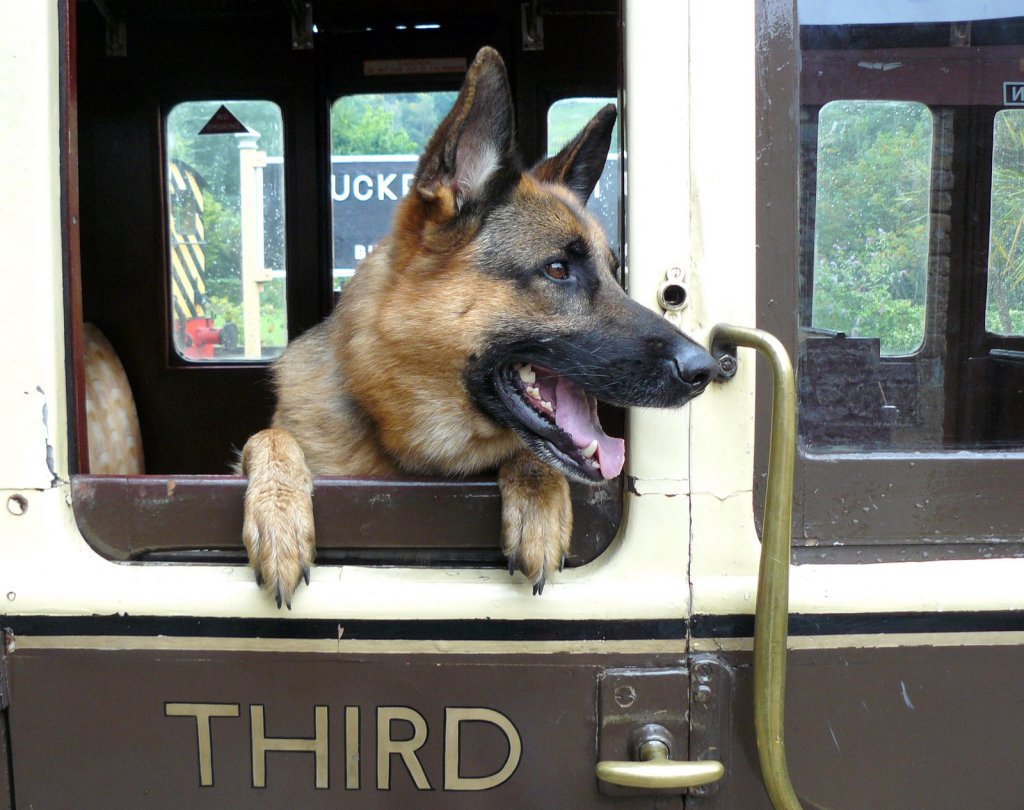
On board the Dart Valley Steam Railway stopped at Buckfastleigh Station.

oooo

Pharaoh, relaxing in a Devon garden.

oooo

First meeting between Pharaoh and Cleo; April 7th, 2012.

oooo

Pharaoh with little Poppy, a stray found on a Mexican building site

oooo

Hi Pedy, I’m the bossman around here. Name’s Pharaoh and you’ll be OK.

oooo

Taken on the afternoon of Pharaoh’s birthday, June 3rd 2017.

oooo

The face of a King of dogs!

ooOOoo

Dear Pharaoh!

Dogs teach us so much!

But the single most important lesson is integrity.

Again, another post from previous times. Albeit just a couple of years ago.

ooOOoo

Another tribute to dear Pharaoh.

The most profound thing that I learned from Pharaoh is that dogs are creatures of integrity. That goes back to a day in June, 2007. Some six months before I met Jeannie in Mexico in December, 2007. I was sitting in Jon’s home office just a few miles from where Pharaoh and I were then living in South Devon.

It was a key chapter in Part Four of my book where I examine all the qualities that we humans need to learn from our dogs.

So here is Chapter 13 from my book Learning from Dogs. (Written in ‘English’ English!)

ooOOoo

Chapter 13
Integrity

In the Introduction to this book I mentioned how the notion of “learning from dogs” went back to 2007 and me learning that dogs were creatures of integrity. Let me now elaborate on that.
It is a Friday morning in June in the year 2007. I am sitting with Jon at his place with Pharaoh sleeping soundly on the beige carpet behind my chair. I didn’t know it at the time but it was to become one of those rare moments when we gain an awareness of life that forever changes how we view the world, both the world within and the world without.

“Paul, I know there’s more for me to listen to and I sense that we have established a relationship in which you feel safe to reveal your feelings. However, today I want to talk about consciousness. Because I would like to give you an awareness of this aspect of what we might describe under the overall heading of mindfulness.”
I sat quietly fascinated by what was a new area for me.

“During the years that I have been a psychotherapist, I’ve seen an amazing range of personalities, probably explored every human emotion known. In a sense, explored the consciousness of a person. But what is clear to me now is that one can distil those different personalities and emotions into two broad camps: those who embrace truth and those who do not.”

Jon paused, sensing correctly that I was uncertain as to what to make of this. I made it clear that I wanted him to continue.

“Yes, fundamentally, there are people who deny the truth about themselves, who actively resist that pathway of better self-awareness, and then there are those people who want to know the truth of whom they are and seek it out when the opportunity arises. The former group could be described as false, lacking in integrity and unsupportive of life, while the latter group are diametrically opposite: truthful, behaving with integrity and supportive of life.”
It was then that Jon lit a fire inside me that is still burning bright to this day. For he paused, quietly looking at Pharaoh sleeping so soundly on the carpet, and went on to add, “And when I look at dogs, I have no question that they have a consciousness that is predominantly truthful: that they are creatures of integrity and supportive of life.”
That brought me immediately to the edge of my seat, literally, with the suddenness of my reaction causing Pharaoh to open his eyes and lift up his head. I knew in that instant that something very profound had just occurred. I slipped out of my chair, got down on my hands and knees and gave Pharaoh the most loving hug of his life. Dogs are creatures of integrity. Wow!

****

Later, when driving home, I couldn’t take my mind off the idea that dogs were creatures of integrity. What were those other values that Jon had mentioned? It came to me in a moment: truthful and supportive of life. Dogs have a consciousness that is truthful, that they are creatures of integrity and supportive of life: what a remarkable perception of our long-time companions.
I had no doubt that all nature’s animals could be judged in the same manner but what made it such an incredibly powerful concept, in terms of dogs, was the unique relationship between dogs and humans, a relationship that went back for thousands upon thousands of years. I realised that despite me knowing I would never have worked it out on my own, Jon’s revelation about dogs being creatures of integrity was so utterly and profoundly obvious.

As I made myself my usual light lunch of a couple of peanut butter sandwiches and some fruit and then sat enjoying a mug of hot tea, I still couldn’t take my mind off what Jon had revealed: dogs are examples of integrity and truth. I then thought that the word “examples” was not the right word and just let my mind play with alternatives. Then up popped: Dogs are beacons of integrity and truth. Yes, that’s it! Soon after, I recognised that what had just taken place was an incredible opening of my mind, an opening of my mind that didn’t just embrace this aspect of dogs but extended to me thinking deeply about integrity for the first time in my life.

Considering that this chapter is titled “Integrity”, so far all you have been presented with is a somewhat parochial account of how for the first time in my life the word “integrity” took on real meaning. That until that moment in 2007 the word had not had any extra significance for me over the thousands of other words in the English language. Time, therefore, to focus directly on integrity.

If goodness is to win, it has to be smarter than the enemy.

That was a comment written on my blog some years ago, left by someone who writes their own blog under the nom-de-plume of Patrice Ayme. It strikes me as beautifully relevant to these times, times where huge numbers of decent, law-abiding folk are concerned about the future. Simply because those sectors of society that have much control over all our lives do not subscribe to integrity, let alone giving it the highest political and commercial focus that would flow from seeing integrity as an “adherence to moral and ethical principles; soundness of moral character; honesty.” To quote my American edition of Roget’s Thesaurus.

Let me borrow an old pilot’s saying from the world of aviation: “If there’s any doubt, there’s no doubt!”

That embracing, cautious attitude is part of the reason why commercial air transport is one of the safest forms of transport in the world today. If you had the slightest doubt about the safety of a flight, you wouldn’t board the aircraft. If you had the slightest doubt about the future for civilisation on this planet, likewise you would do something! Remember, that dry word civilisation means family, children, grandchildren, friends, and loved ones. The last thing you would do is to carry on as before!

The great challenge for this civilisation, for each and every one of us, is translating that sense of wanting to change into practical, effective behaviours. I sense, however, that this might be looking down the wrong end of the telescope. That it is not a case of learning to behave in myriad different ways but looking at one’s life from a deeper, more fundamental perspective: living as a person of integrity. So perfectly expressed in the Zen Buddhist quote: “Be master of mind rather than mastered by mind.” Seeing integrity as the key foundation of everything we do. Even more fundamental than that. Seeing integrity as everything you and I are.

It makes no difference that society in general doesn’t seem to value integrity in such a core manner. For what is society other than the aggregate of each and every one of us? If we all embrace living a life of integrity then society will reflect that.

Integrity equates to being truthful, to being honest. It doesn’t mean being right all the time, of course not, but integrity does mean accepting responsibility for all our actions, for feeling remorse and apologising when we make mistakes. Integrity means learning, being reliable, and being a builder rather than a destroyer. It means being authentic. That authenticity is precisely and exactly what we see in our dogs.

The starting point for what we must learn from our dogs is integrity.

ooOOoo

The face of integrity!

ooOOoo

Dogs don’t lie!

They offer unconditional love!

Their world is relatively straightforward.

That is all that we need to know about them.

What if Reporters Covered the Climate Crisis

Like Murrow Covered World War II?

The new Covering Climate Now project will help media “tell the story so people get it.”

This is how the speech by Bill Moyers is introduced in this issue of The Nation:

The following is an abridged version of the speech by the iconic TV newsman Bill Moyers, as prepared for delivery at a conference at the Columbia Journalism School on April 30. A video of the speech can be seen at TheNation.com/moyers-speech.

Well, we have the advantage of going straight to the video.

What is journalism for, if not to awaken the world to looming catastrophes?

Batman to the rescue!

Seriously!

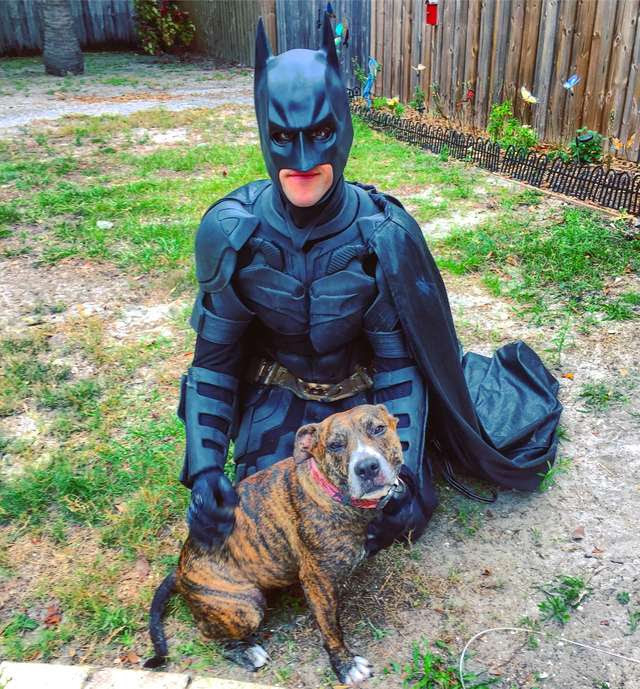
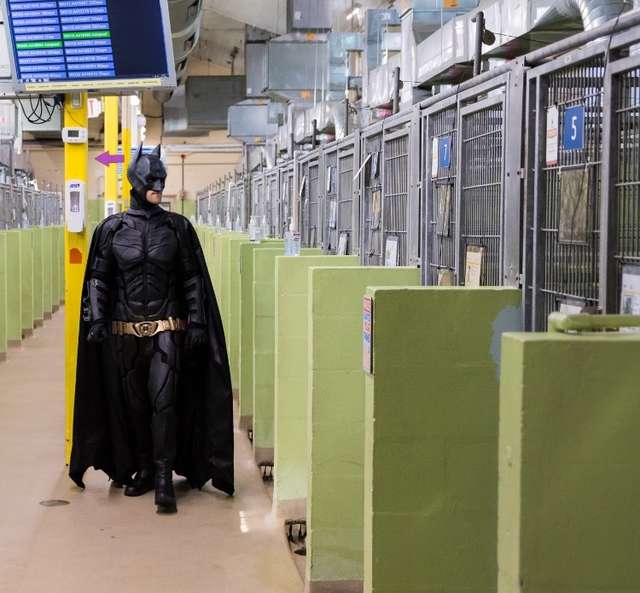
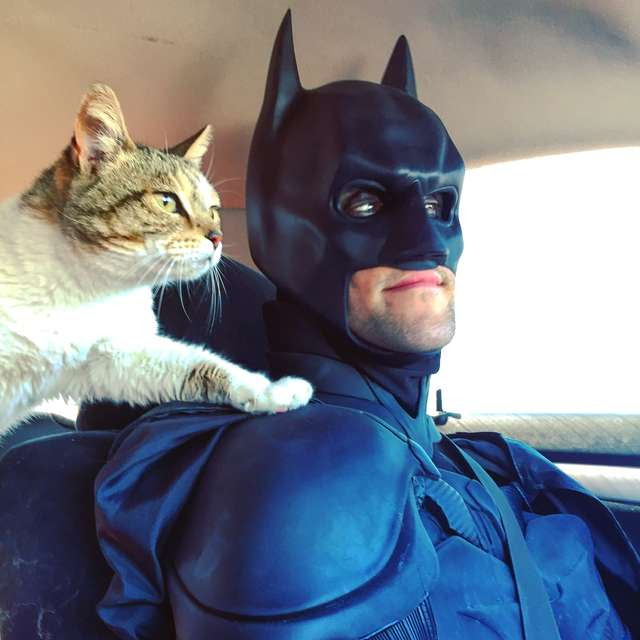
It’s unbelievable but there’s a guy who transports rescue dogs and cats to their new owners. And he dresses up in a batman tunic!

This story was recently carried by The Dodo and is shared with you all today.

ooOOoo

There’s A Real-Life Batman Going Around Saving Shelter Pets

“It’s not who I am underneath but what I do that defines me”

BY

PUBLISHED ON 07/03/2019

Not all heroes wear capes — but when it comes to helping animals in need, some really do.

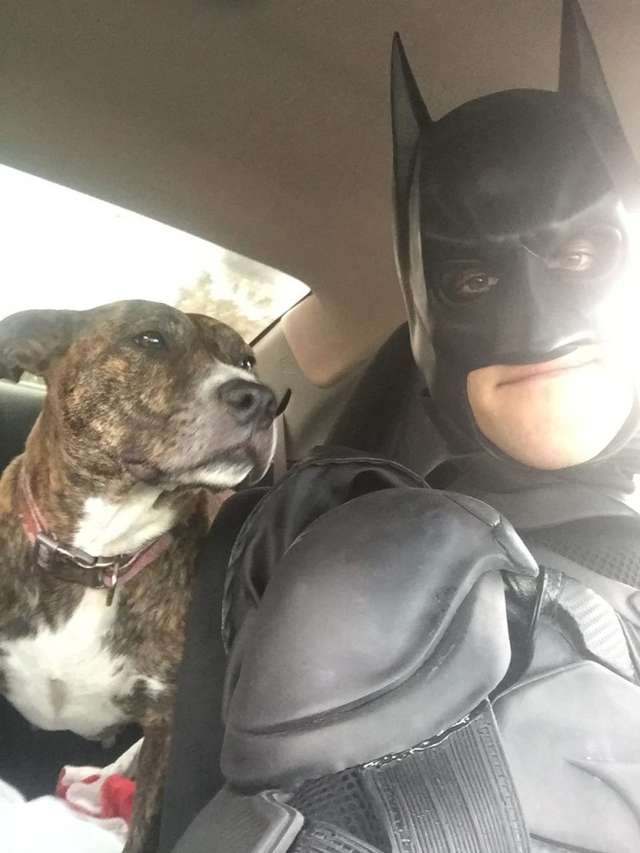
That’s what one homeless pit bull named Koko learned when the Caped Crusader himself changed her life forever.

Photo Credit: Batman4Paws

Koko arrived at the Pet Resource Center of Tampa as a stray. Day after day, she waited patiently for a family to choose her. But, before that day could come, she was put on the euthanasia list. With an hour left to live, Koko was pulled from the shelter by her foster mom and months later found a forever home in Gatlinburg, Tennessee.

The only problem? She had no way of getting there.

Enter the Dark Knight — otherwise known as Chris Van Dorn, founder of the animal rescue nonprofit Batman4Paws.

Batman4Paws

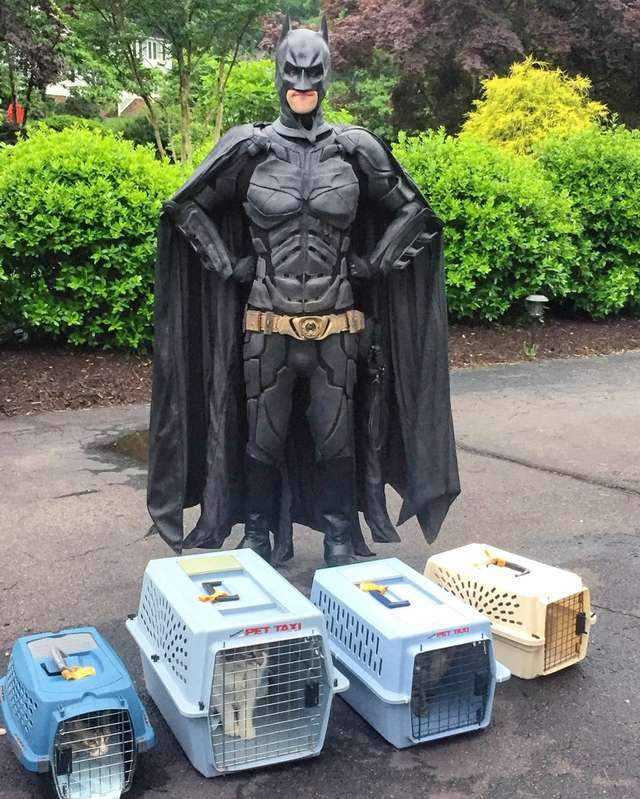
An eight-hour road trip dressed in an elaborate Batman costume is all in a day’s work for Van Dorn. “I would say I’m just the middleman,” Van Dorn told The Dodo. “The real heroes are the people giving these dogs a good, loving home.”

Koko is one of many dogs and cats whom Van Dorn has helped transport from overcrowded shelters to the safety of their forever homes.

And while dressing as Batman isn’t necessary to save an animal’s life, it has helped Van Dorn open up a dialogue about the importance of adoption and fostering.

Batman4Paws

The costume just makes everybody happy and smile,” Van Dorn said. “It’s special to see Batman walking around, and when they find out that he’s doing a good deed in the world they get even more excited.”

“It kind of just came as a way to embody all the good I wanted to do in the world,” he added, “and make it easy for people to talk to me right off the bat.”

Batman4Paws[/caption]

Van Dorn grew up watching the Batman animated series and began volunteering with animal rescues when his family adopted an Australian shepherd named Mr. Boots. When it came time for Van Dorn to start his own rescue organization, he decided to do it as Batman with, of course, Mr. Boots occasionally stepping in as Robin.

Batman4Paws

Every superhero has a secret identity, and for Van Dorn, wearing a mask was an intentional way of keeping the focus on his mission of saving animals.

“When I was first starting out, I was keeping everything really anonymous,” Van Dorn said. “I would sign everything ‘Bruce Wayne’ and not put my real name out there … My catchphrase is, ‘It’s not who I am underneath but what I do that defines me,’ and I still hold that true today.”

Batman4Paws

His cover was blown when GoFundMe honored his campaign, naming him as their GoFundMe Hero for May. Van Dorn hopes soon to put his private pilot’s license to good use by purchasing a plane so he can fly the animals to their forever homes every week.

But for the time being, he’s using his Batmobile, and making a difference whenever he can.

“Actions speak louder than words and I’m just doing my best to empty the cages,” Van Dorn said. “And I challenge anyone to go to their local shelter because it’s a depressing place, but if you can help out in any way — whether that’s to foster a dog or adopt a dog or just volunteer your time, then you should go out and do it.”

ooOOoo

This is one amazing guy. Simple and straightforward!

A plea!

A republication of shared angst

I haven’t been a follower of Cara’s blog Who Will Let The Dogs Out?  for a very long time but her posts are powerful and good. I have every intention of remaining a follower.

Especially when one reads posts this one that speaks of the stream of unwanted animals.

Cara has given me permission to republish it.

ooOOoo

A Neverending Stream of Unwanted Animals

We are home and settled in for the holiday week, but in some ways, I feel like I’m still in Tennessee. The pull is so strong. The stories down there break my heart but they also fire up my desire to fix this situation.

It is SO fixable. It does not need to be happening. There are more than enough of us to help the women struggling to help the dogs in western Tennessee. Once more, there are more than enough homes for those dogs, too.

From Kim Kavin’s excellent, well-researched book, The Dog Merchants:

“The notion that America’s homeless dogs face an ‘overpopulation problem’ does not match up against the available statistics. Supply is not exceeding demand. Americans want about 8 million dogs a year as new pets, while only about 4 million dogs are entering shelters….If just half the Americans already getting a dog went the shelter route, then statistically speaking, every cage in US animal control facilities could be emptied. Right now.”

And Tabi and Amber and Kim and Anne and Laura wouldn’t spend their every waking moment fighting to keep animals alive.

I’m not trying to guilt those of you who chose to buy your dog, particularly if you bought that dog from a reputable breeder and/or intend to show your dog. What I am saying is that if the next time you decide you’d like another pet (especially a cat), you’d consider looking at your local shelter or rescue.

And the next time a friend of yours or just an acquaintance tells you they adopted a dog from a shelter or rescue, thank that person for choosing to save a dog.

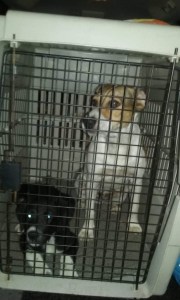
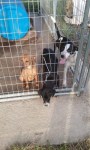
I’ve been home for five days now and already I’ve heard of more heartbreaking stories landing in the lap of both Karin’ 4 Kritters and Red Fern. Puppies abandoned and struggling, three dogs rescued by a woman who has them kenneled on her front porch to keep neighbors from poisoning them, dogs and puppies simply dumped. I can’t keep count of how many are in desperate need of rescue, so I asked for a summary from Laura (who handles transports from the area for OPH and many other rescues across our country).

The list here of calls for help in one day is:

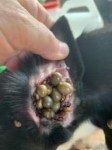
– 3 pups dumped at Red Fern (that may go to Greenfield pound) – the picture of the ear with ticks is one of these puppies.

– 2 choc pups dumped in the country that they put at the city pound for now

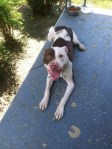
– 2 pittie teens they’re being asked to take. (Crockett and Tyke)

– 3 strays in Sharon, TN that a lady caught because the neighbors were threatening to poison them because they’ve been running loose for months.

– pittie pup in Greenfield that the owner wants to surrender because it’s getting to be “too much”

– 2 three month old pups someone is asking her to take

– a 6 month injured beagle. The owner was going to “put it on the street” so her brother went and picked it up but he thinks it has a broken rib and it’s in pain and he doesn’t have money to treat it so he wants to dump it on Tabi.


That’s just in a day. Multiply that times all the little towns and counties all over western Tennessee that rely on rescues like Red Fern and Karin’ 4 Kritters and their minimalist dog pounds. Places where there is no safety net and dogs are suffering and dying daily. Places where there is no real, reasonable, low-cost access to spay/neuter. Places where dogs (and cats) are not valued or loved, and where their local government will not spend money because it’s ‘just a dog’ or ‘just a cat.’

We seem to have ‘solved’ the problem in the northeast and many metropolitan areas, but we are far from a solution in the rural south and Midwest. We cannot forget them.

The need is so real. Something has got to change. Someone has got to let these dogs out.

Thanks for reading and for caring.

Blessings,

Cara

If you’d like to help, page back through these posts for contact information, but if you’d really like to help, TELL someone. Spread the word – I remain convinced, that the problem is not that people don’t care, it’s that they don’t know. Please help us tell them.

ooOOoo

Bear in mind that the above list is for One Day!
Is it true that people don’t know about this?

Well those that read this blog certainly do now.