The latest announcement continues to show dogs in very good light!
Before I plunge into this Post, just an apology. I’m trying hard to get out of what feels like a recent pattern of ‘re-publishing’ stuff rather than posting material that is primarily my own creative output. Ironically, it’s become a little harder to achieve since starting a creating writing course last Tuesday 23rd (every Tuesday evening for 12 weeks!). The course requires several thousand words of ‘homework’ each week.
Then I lost the plot and published two posts yesterday, when one of them should have been scheduled for today! Thus making it almost impossible to be fully creative today!
Anyway, to today’s theme. Which comes very close on the heels of my post on Monday about the antics of the big oil companies and ‘recovering’ oil from tar sands in Canada.
We all know that some of the most ecologically and environmentally fragile places on the planet are the polar regions. Of the two polar regions, the more sensitive one is the North Polar region. The Arctic ice cap is forecast to be clear of ice each Summer by 2030 assuming the huge annual run-off of fresh water doesn’t screw up the existing ocean currents before then. (Indeed, a fascinating film about the complexity of the weather systems as a result of very long heating and cooling cycles was seen recently on YouTube – link at the end of this post.)
So continued madness over our love affair with oil is just that: madness. Don’t get me wrong. Jean and I drive gasoline-powered vehicles but at least we are conscious of the damage we are doing and will change just as soon as it becomes viable for us to so do.
So with all that in mind, here’s a recent announcement from Exxon first seen on the BBC News website.
US oil major Exxon Mobil has clinched an Arctic oil exploration deal withRussian state-owned oil firm Rosneft.
The venture seemingly extinguishes any remaining chance of BP reviving its own deal, which lapsed in May.The agreement was signed on Tuesday in the presence of Prime Minister Vladimir Putin, a Rosneft spokesman said.
Prime Minister Putin said that it would also allow Rosneft to develop fields in the Gulf of Mexico and Texas, according to local media reports.
“New horizons are opening up. One of the world’s leading companies, Exxon Mobil, is starting to work on Russia’s strategic shelf and deepwater continental shelf,” he said.
‘Big win
‘Under the agreement, the two firms will spend $3.2bn on deep-sea exploration in the East Prinovozemelsky region of the Kara Sea, as well as in the Russian Black Sea.
Exxon described these areas as “among the most promising and least explored offshore areas globally, with high potential for liquids and gas”.
The two companies will also co-operate on the development of oil fields in Western Siberia.
Exxon spokesman Alan Jeffers told the BBC: “[The Russian Arctic] is among the most promising and least explored regions for oil, that is why we are very interested.
Cynic mode on: “The Russian Arctic is among the most promising and least explored regions for oil …” Well that’s alright then!
If one follows that link in the BBC news item, it goes to the ExxonMobil press release where one can quickly read the following key points,
US $3.2 billion exploration program planned for Kara Sea and Black Sea
Establishment of a joint Arctic Research and Design Center for Offshore Development in St. Petersburg
Rosneft participation in ExxonMobil projects in the U.S. and other countries with a focus on building offshore and tight oil expertise
Joint operations to develop Western Siberia tight oil resources
Companies form partnership to undertake projects in the Russian Federation and internationally
Thus this is not some small sideline – it’s potentially very big business for both partners.
The Kara Sea, an extension of the Arctic Ocean, is located off the coastline of Siberia in far northwestern Russia.
It’s separated from the Barents Sea (in the west) by the Kara Strait and Novaya Zemlya – and the Laptev Sea (in the east) by the Taymyr Peninsula and Severnaya Zemlya. The northern border (shown) is a mapping opinion.
It has an estimated area of 880,000 sq km (340,000 sq mi), an average depth of 128 m (420 ft) and a maximum depth of 620 m (2,034 ft).
Ice-bound for most of the year, the sea is generally navigable only during August and September.
The main ports are Dikson (Dickson) and Novyy Port, and they are heavily used during the two-month (lucrative) fishing season. They will also be distribution points when the petroleum and natural gas discovered here is brought to the surface.
Just look at that map again and see how far North of the Arctic Circle is the Kara Sea.
Dad, where's the ice gone?
Let’s go back to dogs. When dogs were primarily wild animals, really when they were still carrying all the ‘habits’ of the Grey Wolf, from which dogs are genetically descended, they were very territorial, as indeed domestic dogs are towards their domestic area. WikiPedia explains, ‘The core of their territory is on average 35 km2 (14 sq mi), in which they spend 50% of their time.‘ (That’s a great article on WikiPedia about the Grey Wolf, by the way.)
Anyway, the wolves, like practically all other animal species, live in harmony within their territory and only move or amend their territorial boundaries if the survival of the pack is threatened.
So when, oh when, is mankind going to learn that our territory is Planet Earth. We have no other territory to move to. I still remember my form teacher way back in my first English school saying to me, “There are two ways you can learn this lesson, the easy way or the hard way!” Same applies to us all! Let’s urgently learn this lesson from dogs and move on from oil.
Finally, that YouTube video. Less than an hour long, it has some interesting facts about climate change over many thousands of years and a rather interesting conclusion.
(Apologies to all you readers – bit under the cosh at the moment in terms of free thinking time – so have lent on this timely update from CASSE for today.)
From CASSE, the Centre for the Advancement of the Steady State Economy
Why Do So Many People Believe in the Fantasy of Infinite Growth on a Finite Planet?
by Rob Dietz
How do you feel about the economy these days? How about the environment? Do you think we’re sitting in a better spot than we were ten, twenty, or thirty years ago? It’s hard to find folks who are satisfied with either economic or environmental conditions. In the first place, the way we run the economy is producing appalling results. We have a mix of financial fiascos, unacceptable unemployment, and a dismal disparity between the haves and the have-nots. And if you’re not soiling yourself (or at least somewhat concerned) about what’s happening on land, sea and air, then you’re not paying much attention to the omnipresent signs of environmental breakdown.
Each day it becomes more apparent that we are on a misguided mission. Pursuit of perpetual economic growth is not a winning proposition for a lasting prosperity. Building a bigger economy can make sense in some circumstances, but always aiming to build a bigger economy means taking an ever-bigger chunk out of the earth’s ecosystems and the life-support services they provide. Why, then, do so many people believe in the fantasy of infinite growth on a finite planet? Is it because we can’t come up with a better idea? Is it because the rich and powerful have trapped the rest of us in their web of conspiracy? Is it because people are hopelessly greedy and materialistic?
At various times and places we might answer these questions affirmatively, but we can more commonly answer, “No, no, and no.” Putting aside conspiracy theories for the moment, there are three honest (but bogus) reasons why we pursue economic growth past the point of effectiveness and reason.
Bogus Reason #1: We think we have to have economic growth to create jobs.
People, and especially politicians, want jobs. We’ve used the blunt tool of economic growth to create jobs for decades, but do we really need economic growth to have good jobs? It’s true that there are typically more job openings in a growing economy, but there are other, less costly ways to make sure jobs are available. Growth, however, gives corporate elites an easy out. They can point to economic growth as the job creator while doing what they want without considering the impacts of their decisions on jobs.
If jobs are really the priority, then we wouldn’t replace people with machinery. And we wouldn’t eliminate service jobs to shift more and more burden onto people to serve themselves. My friend Chris works as a gas station attendant and provides a valuable service pumping gas for customers. He wouldn’t have a job, however, if he lived elsewhere. He happens to live in Oregon where the law says that only professional attendants can pump gas. In most states, gas station attendants have been replaced by customer labor and credit card readers. This sort of substitution has become commonplace in the name of efficiency — policy makers find it easier (or at least they’ve found it easier in the past) to avoid considering jobs explicitly. Just grow the economy and let Chris find a job elsewhere — that’s just the way it goes if his job is eliminated and the customer is forced to pick up the slack.
The truth is that we can have good jobs without producing and consuming evermore stuff. For starters, we can institute policies to make job-sharing an attainable reality. Many people would gladly trade some salary for more time. We can also stop the process of eliminating jobs through outsourcing and machinery-for-people swaps. Of course stopping this process would require a change in corporate incentives…
Shareholder corporations are severely flawed. In my household, let’s say my overriding goal is to maximize my earnings. What would I do? I would take the highest paying job I could get. I certainly wouldn’t be involved in public policy or a not-for-profit enterprise. I wouldn’t spend much time with my wife or daughter — that would be time away from my career, and it could eat into my earnings (cue the Cat’s in the Cradle). If the goal is so single-focused, the results aren’t surprising. Profit maximization, whether it occurs in my household or in a corporation, produces perverse outcomes.
We know this about shareholder corporations. We know there are better ways to set up productive enterprises that have more worthy goals, but we don’t make the change. The reason is that we are addicted to two things corporations do well. First, we’re addicted to consumer novelty. We’ve gotta have the latest and greatest. People chase after I-phones, I-pods, I-pads, and plenty of other I-wants. Second, we’re addicted to receiving unearned income from investments in stocks or mutual funds. People who can afford it are invested in corporations. Their personal wealth is tied to the ability of corporations to grow. We’ve become accustomed to the idea of passive investment — we put extra money into an account and do absolutely nothing but watch the size of the account get bigger. Are we really entitled to get something for nothing?
Bogus Reason #3: We refuse to pay attention to the downsides of economic growth.
Few people are studying ecology and understanding how economic growth is degrading environmental resources. In fact, a whopping 21% percent of college students are business majors. And as Dr. Seuss noted in his classic book, The Lorax, “Business is business, and business must grow!” While we continue to tempt fate by disrupting and dismantling natural systems that we only partially understand, our attention is locked on the results of reality TV shows, Tiger Woods’s sex life, Jennifer Anniston’s and Justin Bieber’s haircuts, fairytale weddings of figurehead monarchs, and other matters of critical importance.
While we’re failing to pay attention, those who benefit most from growth — the corporate elites — will keep on doing what they do, and they’ll keep on selling it to the rest of us. If we don’t start asking, “why?” real soon, our kids will one day be asking “How did we let this happen?”
The powerful anti-democratic forces that will threaten civilisation.
In one sense this post today carries an underlying political message – and in another sense, it does not. It does in the sense that if every American voter truly understood the risks of a continued relationship with oil then the tar-sands projects wouldn’t have a prayer of a chance of being allowed.
In the other sense, it does not. Because the influence and power of ‘behind-the-scenes’ oil and money is beyond imagination and, just possibly, outside the reach of democracy.
So what’s got me so agitated?
Well first is that I have been quietly reading The Transition Handbook by Rob Hopkins, he of Transition Totnes fame. Most readers will be aware that Totnes was the first Transition Town in the world and started what is becoming the greatest social movement of the 21st century.
In Rob’s book, on page 51, there is a diagram showing the relative energy returns from the energy invested to produce that energy – hope that makes sense! Let me explain further. For example, for every unit of energy invested in building tidal-range generators, there are eighty-seven units of energy returned. I.e. this is a great investment for mankind in terms of the net benefit.
If we look at the generation of electricity from solar photo-voltaic (PV) panels then the return is about eight units from every unit invested.
The worst return of them all is from Tar sands: just one unit returned from every unit invested. Investment and humanitarian madness!
Then next I came across this item about Tar sands on The Ecologist magazine website,
Emissions from tar sands seriously underestimated
Governments and companies making no effort to quantify the real climate impacts
Greenhouse gas emissions from tar sands operations are being significantly under-reported according to new research by Global Forest Watch Canada.
The report, ‘Bitumen and Biocarbon‘, says oil companies and governments are not accounting for emissions from deforestation. It says that when boreal forest is destroyed for tar sands development, significant amounts of greenhouse gases are emitted.
‘Governments and companies are working hard to downplay the impacts of tar sands operations, but it turns out that they don’t even know the full extent of the problem,’ said Christy Ferguson, Greenpeace climate and energy coordinator.
‘What’s worse, they’re doing nothing to find out. Denial is not a climate strategy.’
In addition, the report shows that biological carbon stored in living and decaying plants is lost when natural ecosystems are disturbed or destroyed through mining of bitumen and construction of roads, pipelines or facilities.
‘Peatlands are one of the world’s most important storehouses of soil carbon. Industrial activity in the tar sands is destroying peatlands, releasing carbon and eliminating a crucial natural mechanism.
‘Even if peatlands are reclaimed, the carbon released through industrialisation won’t be replaced for thousands of years,’ said Ferguson.
Finally, today (25th) I received in my in-box the latest TomDispatch offering. (I am indebted to Tom Engelhardt for, once again, giving me permission to reproduce in full this TomGram.)
Tom’s latest piece is written by Bill McKibben (with an introduction by Tom) and I strongly urge you to read it – the implications are global. If you read an earlier TomDispatch article by Bill re-published on Learning from Dogs on the 18th July, The Great American Carbon Bomb, today’s piece will surely make you sit up and fume; as it did me! Here it is in full.
Tomgram: Bill McKibben, Jailed Over Big Oil’s Attempt to Wreck the Planet
What might have happened if John McCain had won the presidency in 2008? One thing is certain: there would have been a lot more protest from Democrats, progressives, and the left. Take it as an irony of his election, but Barack Obama has proved remarkably effective in disarming the antiwar movement, even as the use of war in American policy in the Greater Middle East has only grown. That Obama, the supposed anti-warrior of the 2008 campaign, has paid less than no attention to his antiwar critics is no news at all. It’s now practically a cliché as well that he seems to feel no need to feed his political “base” and that, generally speaking (and explain it as you will), his base has not yet pushed back.
This has been particularly true of Obama’s wars, especially the disastrous, never-ending one in Afghanistan. Had Afghanistan been “McCain’s war,” you would surely have seen growing waves of protest, despite the way 9/11 ensured that the Afghan War, unlike the Iraq one, would long be the unassailable “good war.” Still, as American treasure surged into the ill-starred enterprise in Afghanistan, while funds for so much that mattered disappeared at home, I think the streets of Washington would have been filling. What protest there has been, as John Hanrahan of the Nieman Watchdog website reported recently, tends to be remarkably ill-covered in the mainstream media.
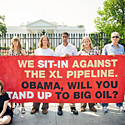
Obama, only two points ahead of Ron Paul in the latest Gallup Poll in the race for 2012, is a beyond-vulnerable candidate. (Somewhere there must be some Democratic pol doing the obvious math and considering a challenge, mustn’t there?) Fortunately, in another area at least as crucial as our wars, demonstrators against a Big Oil tar-sands pipeline from Canada that will help despoil the planet are now out in front of the White House — you can follow them here — and they haven’t been shy about aiming their nonviolent protests directly at Obama. Will he or won’t he act like the climate-change president that, on coming into office, he swore he would be? Time will tell. Meanwhile, let Bill McKibben, TomDispatch regular, an organizer of the protests, and just out of a jail cell, fill you in. Tom
Arrested at the White House
Acting as a Living Tribute to Martin Luther King
By Bill McKibben
I didn’t think it was possible, but my admiration for Martin Luther King, Jr., grew even stronger these past days.
As I headed to jail as part of the first wave of what is turning into the biggest civil disobedience action in the environmental movement for many years, I had the vague idea that I would write something. Not an epic like King’s “Letter from a Birmingham Jail,” but at least, you know, a blog post. Or a tweet.
Heros
But frankly, I wasn’t up to it. The police, surprised by how many people turned out on the first day of two weeks of protests at the White House, decided to teach us a lesson. As they told our legal team, they wanted to deter anyone else from coming — and so with our first crew they were… kind of harsh.
We spent three days in D.C.’s Central Cell Block, which is exactly as much fun as it sounds like it might be. You lie on a metal rack with no mattress or bedding and sweat in the high heat; the din is incessant; there’s one baloney sandwich with a cup of water every 12 hours.
I didn’t have a pencil — they wouldn’t even let me keep my wedding ring — but more important, I didn’t have the peace of mind to write something. It’s only now, out 12 hours and with a good night’s sleep under my belt, that I’m able to think straight. And so, as I said, I’ll go to this weekend’s big celebrations for the openingof the Martin Luther King Jr. National Memorial on the Washington Mall with even more respect for his calm power.
Preacher, speaker, writer under fire, but also tactician. He really understood the power of nonviolence, a power we’ve experienced in the last few days. When the police cracked down on us, the publicity it produced cemented two of the main purposes of our protest:
Eaarth
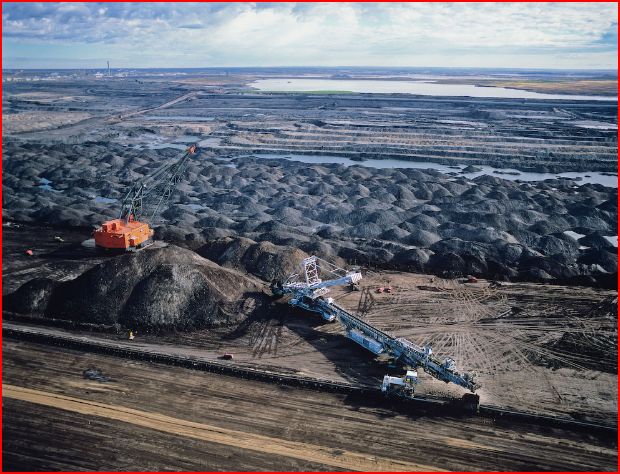
First, it made Keystone XL — the new, 1,700-mile-long pipeline we’re trying to block that will vastly increase the flow of “dirty” tar sands oil from Alberta, Canada, to the Gulf of Mexico — into a national issue. A few months ago, it was mainly people along the route of the prospective pipeline who were organizing against it. (And with good reason: tar sands mining has already wrecked huge swaths of native land in Alberta, and endangers farms, wild areas, and aquifers all along its prospective route.)
Now, however, people are coming to understand — as we hoped our demonstrations would highlight — that it poses a danger to the whole planet as well. After all, it’s the Earth’s second largest pool of carbon, and hence the second-largest potential source of global warming gases after the oil fields of Saudi Arabia. We’ve already plumbed those Saudi deserts. Now the question is: Will we do the same to the boreal forests of Canada. As NASA climatologist James Hansen has made all too clear, if we do so it’s “essentially game over for the climate.” That message is getting through. Witness the incredibly strong New York Times editorial opposing the building of the pipeline that I was handed on our release from jail.
Second, being arrested in front of the White House helped make it clearer that President Obama should be the focus of anti-pipeline activism. For once Congress isn’t in the picture. The situation couldn’t be simpler: the president, and the president alone, has the power either to sign the permit that would take the pipeline through the Midwest and down to Texas (with the usual set of disastrous oil spills to come) or block it.
Barack Obama has the power to stop it and no one in Congress or elsewhere can prevent him from doing so. That means — and again, it couldn’t be simpler — that the Keystone XL decision is the biggest environmental test for him between now and the next election. If he decides to stand up to the power of big oil, it will send a jolt through his political base, reminding the presently discouraged exactly why they were so enthused in 2008.
That’s why many of us were wearing our old campaign buttons when we went into the paddy wagon. We’d like to remember — and like the White House to remember, too — just why we knocked on all those doors.
But as Dr. King might have predicted, the message went deeper. As people gather in Washington for this weekend’s dedication of his monument, most will be talking about him as a great orator, a great moral leader. And of course he was that, but it’s easily forgotten what a great strategist he was as well, because he understood just how powerful a weapon nonviolence can be.
The police, who trust the logic of force, never quite seem to get this. When they arrested our group of 70 or so on the first day of our demonstrations, they decided to teach us a lesson by keeping us locked up extra long — strong treatment for a group of people peacefully standing on a sidewalk.
No surprise, it didn’t work. The next day an even bigger crowd showed up — and now, there are throngs of people who have signed up to be arrested every day until the protests end on September 3rd. Not only that, a judge threw out the charges against our first group, and so the police have backed off. For the moment, anyway, they’re not actually sending more protesters to jail, just booking and fining them.
And so the busload of ranchers coming from Nebraska, and the bio-fueled RV with the giant logo heading in from East Texas, and the flight of grandmothers arriving from Montana, and the tribal chiefs, and union leaders, and everyone else will keep pouring into D.C. We’ll all, I imagine, stop and pay tribute to Dr. King before or after we get arrested; it’s his lead, after all, that we’re following.
Our part in the weekend’s celebration is to act as a kind of living tribute. While people are up on the mall at the monument, we’ll be in the front of the White House, wearing handcuffs, making clear that civil disobedience is not just history in America.
We may not be facing the same dangers Dr. King did, but we’re getting some small sense of the kind of courage he and the rest of the civil rights movement had to display in their day — the courage to put your body where your beliefs are. It feels good.
So perhaps you understand why every American reading this should make sure your voice is heard. And in the last few minutes – 1.30pm MT 25th August – Reuters have just put out this news release,
Nation’s Leading Environmental NGOs Unified Against Tar Sands Pipeline
Update on Day 5 of Tar Sand Pipeline Protest at the White House
See past update and background.
275 people have been arrested so far and many have been released. Today, the largest environmental groups in the US joined to send a letter to President Obama voicing their unified opposition to the Keystone pipeline and asking him to block it.
Why is this important? “For those of us out there in front of the White House, the best thing about this ringing statement is that the administration won’t be able to play one group off against another by making small concessions here and there”; says protest organizer Bill McKibben.
“There’s only one way to demonstrate to the environmental base the rhetoric of Obama’s 2008 campaign is still meaningful – and that’s to veto this pipeline. Since he can do it without even consulting Congress, this is one case where we’ll be able to see exactly how willing he is to match the rhetoric of his 2008 campaign.”
The letter says:
Dear President Obama,
Many of the organizations we head do not engage in civil disobedience; some do. Regardless, speaking as individuals, we want to let you know that there is not an inch of daylight between our policy position on the Keystone Pipeline and those of the very civil protesters being arrested daily outside the White House.
This is a terrible project – many of the country’s leading climate scientists have explained why in their letter last month to you. It risks many of our national treasures to leaks and spills. And it reduces incentives to make the transition to job-creating clean fuels.
You have a clear shot to deny the permit, without any interference from Congress. It’s perhaps the biggest climate test you face between now and the election.
If you block it, you will trigger a surge of enthusiasm from the green base that supported you so strongly in the last election. We expect nothing less.
Sincerely,
Fred Krupp, Environmental Defense Fund
Michael Brune, Sierra Club
Frances Beinecke, Natural Resources Defense Council
Phil Radford, Greenpeace
Larry Schweiger, National Wildlife Federation Erich Pica, Friends of the Earth
Rebecca Tarbotton, Rainforest Action Network
May Boeve, 350.org
Gene Karpinski, League of Conservation Voters
Margie Alt, Environment America
New York Times Also Opposes Pipeline
In an August 21 editorial, the NY Times took a opposition against the pipeline, citing two main concerns: the risk of oil spills along the pipeline, which would traverse highly sensitive terrain, and the fact that the extraction of petroleum from tar sands creates far more greenhouse emissions than conventional production does.
Building the pipeline would clear the way for Canada to double tar sands production over the next decade to more than 1.8 million barrels a day. To do that, some 740,000 acres of boreal forest – a natural carbon reservoir – would be destroyed.
In addition to the emissions produced by tar sands extraction, would be emissions from the loss of this vast, crucial carbon sink, [editor’s note: not to mention the biodiversity it harbors.] Read the editorial:
Website: here with permission from Sustainable Business
With grateful thanks to Cynthia G. for forwarding this to me.
The Rescue
On the morning of May 18, 2011 , my wife noticed a deer in our yard that appeared to be frantically looking for something in the rocks that form a wall on our property line in Brush Prairie, WA.
When we first went out with our neighbors, we didn’t see anything, but the deer wouldn’t leave our yard. We went back to our house and watched; after a few minutes the deer came back. We went out to the area the deer was concentrating on and could hear a baby fawn crying in the rocks.
We moved some of the rocks and smaller boulders and saw a baby fawn’s face in the rocks. He had apparently fallen in one of the gaps and was now trapped. The larger boulders were too heavy to move, and we didn’t want the rocks to cave in on the baby deer.
We called our Clark County Fire District 3. The B Shift team came out; they were able to move the larger rocks out of the way with the Jaws of Life enough to be able to reach in a pull the baby fawn out and reunite it with its momma.
The fawn, maybe stuck in there most of the night, quickly went to nurse its momma. One of our neighbors took some video clips of the fire department’s rescue. I edited the clips into this short clip. After sharing it with some friends they thought that it was just too cute not to share with more people; my neighbor agreed to let me upload it.
For a number of reasons, both private and public, I have not been feeling as creative as normal these last 24 hours. What I am conscious of is that events of this week, from the riots in the UK, the chaos of financial markets, right through to the death of our dog Tess have all contributed to a mental heaviness.
So I am taking a small creative short-cut, as it were, by writing about a film that we watched on Monday night; Fierce Light.
There is a trailer on YouTube. This is how it is presented,
A Feature Documentary By Velcrow Ripper
From the Director of Scared Sacred & The Producer of The Corporation
“Fierce Light” is a feature documentary that captures the exciting movement of Spiritual Activism that is exploding around the planet, and the powerful personalities that are igniting it.
Fueled by the belief that “another world is possible,” the film portrays stories of what Martin Luther King called “Love in Action,” and Gandhi called “Soul Force”; what Ripper is calling “Fierce Light.” Acclaimed filmmaker Velcrow Ripper (Scared Sacred) takes an insightful look at change motivated by love, featuring interviews with spiritual activists Thich Nhat Hanh, Desmond Tutu, Daryl Hannah, Julia Butterfly Hill, and more.
If you would like to sink a little deeper into the film and what the motivations are behind the making of it, then do go to the web site Fierce Light.
Jean and I found the film inspiring and beautifully presented. It came over as a film that seriously approached the topic of human consciousness and gave plenty of opportunity to reflect on some of the many forces within our societies at this present time.
Then you may like to watch this talk by the Director, Velcrow Ripper (actually born Steve Ripper in 1963), broken into two parts as follows,
The film and this talk by Mr. Ripper both date back to 2009 so, in the light of where we are in August 2011, they are proving to be extremely relevant.
A new book about dogs by John Bradshaw offers a theme for today.
Yesterday, I mentioned an article from the current issue of The Economist. Also in that issue was a review of a new book from John Bradshaw, called Dog Sense: How the New Science of Dog Behaviour Can Make You a Better Friend to Your Pet. You can read the review here. But in terms of the theme of today’s post, read this paragraph from that review,
Dogs are not like nicely brought-up wolves, says the author, nor are they much like people despite their extraordinary ability to enter our lives and our hearts. This is not to deny that some dogs are very clever or that they are capable of feeling emotion deeply. But their intelligence is different from ours. The idea that some dogs can understand as many words as a two-year-old child is simply wrong and an inappropriate way of trying to measure canine intellect. Rather, their emotional range is more limited than ours, partly because, with little sense of time, they are trapped almost entirely in the present. Dogs can experience joy, anxiety and anger. But emotions that demand a capacity for self-reflection, such as guilt or jealousy, are almost certainly beyond them, contrary to the convictions of many dog owners.
That last sentence is key, “But emotions that demand a capacity for self-reflection, such as guilt or jealousy, are almost certainly beyond them, contrary to the convictions of many dog owners.”
So in yesterday’s post, when I wrote about the terrible uncertainty that millions and millions of humans must be experiencing, there is no useful metaphor available to link this human idea to how the dogs feel; as John Bradshaw writes, this level of reflection is just beyond them.
We hug a dog (or any animal) to escape from matters complex. As Sue Miller wrote so beautifully, “I was taken up by them [pets] and their life and energy, by what they needed and asked of me. I let go of everything difficult or complex in my life. As I was driving home, I thought of all this, and it seemed to me that I’d chosen work which offered me daily the presence of pure innocence, a forgiveness for all my human flaws.”
So accept the gift of pure innocence that our pets give us.
But what ‘gift’ can we humans accept that relates to the very complex world that we humans see all around us?
What about hope? Let’s accept the gift of hope. As I wrote recently in an email to a friend (before the London riots burst upon our consciousness),
‘Hope’ is going to be the key message over the coming weeks and months because the feeling that the ‘end of the world is nigh’ is incredibly strong, well it is to me!
Of course, the ‘end of the world’ feeling is, as you well know from me, really the end of an era. But an era where for decades money has equalled power; ergo money has equalled control.
Now the speed of change must be terrifying to millions across the world. So out of that terror must come a new order, a new way of understanding that how we have treated our planet is a busted model and that it is time, indeed the 11th hour as it were, to find that new order, of love and sustainability with our planet, both in earthly and spiritual ways.
We must have faith in the hope that we are living through the chaotic transition from an era of greed and destruction to one where we have a future that goes on for thousands of years.
Unlike my recent review of Capt. Luis Montalvan’s book Until Tuesday which came about as a result of an invitation from the UK publishers, Headline Publishing, this review of Mr. Gilding’s book is totally off my own bat. I should also declare that I have recently been in email contact with Paul Gilding with some pleasant outcomes. To the review.
The way ahead.
Regular readers of Learning from Dogs will know that I have been making recent references to this book, which I have now finished reading. On the 25th I quoted from the book in a post that I called The blame game. I used a quote from Chapter 5, Addicted to Growth, namely “Growth goes to the core of the society we have built because it is the result of who we are and what we have decided to value.”
Then the next day again when writing about Tim Bennett’s movie, What a Way To Go, when I reflected on Paul Gilding’s opinion that, ” the quicker that mankind recognises the massive levels of denial presently in place, the quicker that mankind will commit to the scale of change that is required“.
Now if mankind’s efforts to change to a sustainable way of life were proportional to the number of books, films and essays written about the subject then, frankly, the task would be complete. There’s an awful lot out there! Here’s a list of the books that I have read in the last few years:
The Human Side of Enterprise – Douglas McGregor
Motivation and Personality – Abraham Maslow
The Power of Pause – Terry Hershey
Earth in the Balance – Al Gore
The Spectrum of Consciousness – Ken Wilber
Politics Lost – Joe Klein
Why America Doesn’t Work – Chuck Colson & Jack Eckerd
The Art of Happiness – HH Dalai Lama & Howard C Cutler
Eaarth – Bill McKibben
Stabilizing an Unstable Economy – Hyman P. Minsky
The Next 100 Years – George Friedman
World of the Edge – Lester Brown
and finally
The Great Disruption – Paul Gilding
And, of course, this doesn’t even scratch the number of online journals, essays and articles that have been read in conjunction with writing hundreds of posts on this Blog.
So what’s the point?
On p.260, Chapter 20 Guess Who’s in Charge?, Paul Gilding writes,
We need to fully acknowledge the challenging times and inevitable suffering ahead but stay focused and determined to move forward and past this. Easy to say, harder to do.
So yes, it is challenging to know how to respond to all this and what to do personally. It is easy to see what the world should do, but what should you do?
but what should you do? Talk about a thump on the back of the head!
This is about me!
Of all the books that have influenced how I see the world and my opinions, the one book that has rammed home to me that this is about me, about my attitudes and behaviours, is The Great Disruption. For a long time I haven’t needed convincing that man is screwing up the planet. For ages, I’ve been sure that our greed and materialism were fundamentally incompatible with the planet. I have been so good at ‘talking the talk’ ….. but ….
But the way that Mr. Gilding has so comprehensively approached every aspect of how my past behaviours have been incompatible with the future needs of my little grandson, Morten, (and all the grandchildren in the world) is powerfully inspiring. I now totally and utterly believe that only I am in charge of making a difference.
Why The Great Disruption touched me in this way when so many other books and articles haven’t done so isn’t clear. Perhaps it was in the opening paragraphs?
The earth is full.
[skip one paragraph]
This means things are going to change. Not because we will choose change out of philosophical or political preference, but because if we don’t transform our society and economy, we risk social and economic collapse and the descent into chaos. The science on this is now clear and accepted by any rational observer. While an initial look at the public debate may suggest controversy, any serious examination of the peer-reviewed conclusions of leading science bodies shows the core direction we are heading in is now clear. Things do not look good.
These challenges and the facts behind them are well-known by experts and leaders around the world, and have been for decades. But despite this understanding, that we would at some point pass the limits to growth, it has been continually filed away to the back of our mind and the back of our drawers, with the label “Interesting – For Consideration Later” prominently attached. Well, later has arrived.
I nodded silently in agreement when reading that.
Was it the opening paragraph to Chapter 4, Beyond the Limits – The Great Disruption?
The plans we have been making for our economies, our companies, and our lives have all been based on a key assumption that is clearly wrong. This assumption is that our current economic model will carry on unless we choose to change it – in other words, no action means more of the same.
This resonated strongly with me because I happen to believe, without any specialist economic skills to my name – just a gut sense, that the economic situation now afflicting so many economies across the world is not cyclical but the start of a breakdown of the policies and behaviours of the last 20 years or more. In other words, the Great Disruption was in my face already! As is written on p. 87 in Chapter 6, Global Foreshock – The Year That Growth Stopped,
My view, firmly held at the time and since, is that 2008 was the year that growth stopped. It was the year, as Thomas Friedman said, “when Mother Nature and Father Greed hit the wall at once”.
The Power of a New Future
But, in the end, the real power that I found in this book was the strength of Gilding’s argument that we will change, that seeing the future as hopeless is wrong, that man has the ability to commit to huge change when there is no alternative. Ergo, p121 Chapter 9 When the Dam of Denial Breaks,
To argue we are naturally greedy and competitive and can’t change is like arguing that we engage naturally in murder and infanticide as our forebears the chimps do and therefore as we did. We have certain tendencies in our genes, but unlike other creatures we have the proven capacity to make conscious decisions to overcome them and also the proven ability to build a society with laws and values to enshrine and, critically, to enforce such changes when these tendencies come to the surface.
So don’t underestimate how profoundly we can change. We are still capable of evolution, including conscious evolution. This coming crisis is perhaps the greatest opportunity in millennia for a step change in human society.
This quote is towards the end of the last chapter that spells out, as so many other books have done, that our global society Has a Very Big Problem. Thus from page 123 onwards, slightly less than half-way through the book, Paul Gilding devotes huge detail to describing how we will change. Frequently, the comparison used is World War II,
British poster from 1940
When Great Britain went to war in World War II, do you think they had clarity on all the details of transitioning into a war economy before they made the decision to act? Of course they considered it, as we must, but it wasn’t a determining issue because there was no choice. Do you think President Roosevelt calculated the United States could win the war by increasing military spending to 37 percent of U.S. GDP and producing a nuclear bomb before he decided to enter the war? Of course not: he just knew they had to succeed and so they would. He had confidence in human ingenuity delivering under pressure, when it’s given defined parameters and political support, and so must we.
From p. 164, Chapter 12 Creative Destruction on Steroids.
That’s what ended up being the real inspiration for me. That it’s not about the complex problems looming large; as so many that Jean and I chat to here in Payson, AZ, readily admit to being worried. It’s not news! The majority of the world’s citizens know the trends are not good.
No, what really socked me between the eyes was reading all the many and varied ways that we are changing (note present tense), that the Great Disruption is, in fact, mankind moving to a new era. One where we will have less inequality, less poverty, be happier, have extended life-spans and a future that goes on for thousand of years.
The Future is Here.
The phrase ‘life-changing’ is often used but this book is truly life-changing. The book will motivate you in ways that you can’t imagine. It will inspire you but, above all, it will show you the way ahead. Read it.
While being born an Englishman in 1944 has me slightly ahead of the so-called Baby Boomer period, which in American terms, ergo the U.S. Census Bureau, is defined as those born between January 1st, 1946 and December 31st, 1964, American and British people born in those ‘boomer’ years after WWII share many attitudes.
However, there is one stark difference between the UK and the USA regarding that period; the Vietnam War.
U.S. military advisors arrived beginning in 1950 and that U.S. involvement escalated in the early 1960s, with U.S. troop levels tripling in 1961 and tripling again in 1962.
Many good young Americans paid the ultimate price for that involvement (58,220 U.S. service members died in the conflict).
Why do I mention this? Because just as so many Americans have no idea of the scale of enemy bombing that England suffered during WWII, just as many Brits have no idea of the scale of the ‘draft’ (i.e. conscription) that was employed by the U.S. Government as the Vietnam involvement grew.
Now keep that in mind as a means of adding context to what follows.
Until Tuesday is a book of many extremes. It is a powerful book, a disturbing book, and a book about the beauty, dignity and, sadly, the madness of man.
I have been talking to a good friend of my life-long Californian pal, Dan Gomez. Let me just call him Tom. Tom saw service in Vietnam. This is how Tom describes his early experiences.
I was young and keen for some adventure. I had watched many war movies so I knew exactly what war was all about. So I enlisted as a soldier and was shipped out to Vietnam. After 60 days, I had experienced sufficient to know that things were not as they were portrayed by the media and the reality of Vietnam was very different to those movies. I had seen enough and was ready to come home.
Except that it didn’t work that way. I was there for a full tour of duty.
It became increasingly apparent by our behavior that we were not there to liberate the masses. We were there because some politicians had a theory and because of it didn’t want the locals to have a democratic election. So good people were put into harm’s way, died or were severely injured for no other reason than some politicians had a theory – that proved to be false in the end.
Through it all, the biggest pain that I suffered was to see my Government operating under false pretences, with no integrity and no dignity. It left me with a deep anger and mistrust of government that is still deep inside me.
Tom’s very personal and intimate sharing of his experiences of Vietnam resonates powerfully with what Captain Montalvan experienced in Iraq. Here’s an extract from the book,
I am an American soldier. I am an expert and I am a professional.
But at the same time, I was coming unmoored, my mind dwelling on the hand-to-hand struggle for my life, the Syrian ambush, the sandstorms, the riots, and Ali, Emad and Maher, the men left behind.
I am a guardian of freedom and the American way of life.
The wife of one of my best men from Al-Waleed had become pregnant during his midtour leave. The foetus was fatally deformed, but Tricare, the army’s health service, doesn’t provide abortions under any circumstances, and she was forced to carry the child to term. I will never accept defeat. Little Layla was born without a nose and several internal organs. Her parents had no financial resources on a soldier’s pay to provide her comfort. I emailed everyone I knew for help – hundreds of dollars were sent to the sergeant and his family. Nevertheless, it was heartbreaking, absolutely heartbreaking, to hold Layla in my hands. I will never quit. She lived eight weeks, and the difficulty of her life, and the inhumanity of forcing that existence not only from her but her parents too – I will never leave a fallen comrade – fuelled my downwards drive.
I was angry with the army. Not on the surface, but underneath, in the depth of my mind. Why did Layla and her parents have to endure that pain, especially after everything they had already endured? Why were they forcing our regiment back to Iraq just ten months after our return? Why weren’t they helping us cope with our pain? We were badly banged up. We were undermanned and underequipped. The army didn’t care. They were churning us through. They cared more about getting us back to Iraq and making the numbers than they did about our health and survival.
It was the summer of 2004. Victory was slipping away. Everyone could see that, but the media kept pounding the message: ‘The generals say there are enough men. The generals say there is enough equipment. The generals say everything is going well.’ It was a lie. The soldiers on the line knew it because we were the ones suffering. We were the ones who endured days of enemy mortar fire when we arrived in Iraq without weapons or ammunition, as my eighty troopers had in Balad in 2003; we were the ones going back in 2005 without adequate recovery time or armour for our Humvees. And that is the ultimate betrayal: when the commanding officers care more about the media and the bosses than about their soldiers on the ground. [Chapter 5, An American Soldier, pps 88-89]
So the first thing that most definitely comes out of the pages of Until Tuesday is the depth of disconnect between Montalvan as an active soldier in the front line and his nation. Just like Tom in Vietnam!
It’s not until Chapter 8, The Thought of Dogs, that the author moves on from his obsessiveness about his military experiences to his future world. Please realise that when I use the word ‘obsessiveness’, in no way is it used as a derogatory term. One of the symptoms of mental insecurity is the ease with which we can obsess on things in our lives.
Here’s how Chapter 8 starts,
I can’t tell you how much my life changed when I read the email on 1 July 2008. (A Tuesday, I just realised. I’ll have to add that to my list of fake reasons for Tuesday’s name.) The Wounded Warrior Project, the veteran service organisation I went with to the Bruce Springsteen concert, forwarded the message. They forwarded messages every day, actually, but I usually didn’t read them. This tagline intrigued me: ‘WWP and Puppies Behind Bars’. Puppies behind bars?
The message was almost as simple: ‘Dear Warriors, please note below. Puppies Behind Bars has 30 dogs a year to place, free of charge, with veterans from Iraq or Afghanistan who are suffering from PTSD, traumatic brain injuries or physical injuries. I’ve attached the Dog Tags brochure which explains the programme, as well as the Dog Tags application.’
As soon as I read the attached description, I knew the programme was for me. I suffered from debilitating social anxiety, and the dogs were trained to understand and soothe emotional distress. I suffered from vertigo and frequent falls, and a dog could keep me stable. Because of my back I could barely tie my own shoes, and a dog could retrieve and pick things up for me. I was the perfect candidate. I was down, but I was working towards a future. I was a leader, so I would never give up. And I was lonely. Terribly, terribly lonely.
From this point onwards the remaining 189 pages of Until Tuesday are about Luis Montalvan’s recovery built upon the foundation of his beautiful relationship with Tuesday, his service dog.
Of course there are ups and downs, as there are in all our lives, but the overall message is clear. A dog loves a human in the most beautiful and purest fashion of all. That unconditional, undemanding love for the humans in that dog’s life unlock even the most damaged souls. Tuesday unlocked the private hell that Captain Montalvan endured for so long.
In the privacy of a deep hug of your dog lays release. From that release comes peace, understanding and the desire to re-connect with the larger world. There is no greater gift than that.
So standing back in terms of reviewing this book (I reviewed the UK edition) here are my thoughts.
It’s a deeply moving book which many, but especially dog owners, will be touched by.
It’s a book that offers real hope and inspiration, most certainly for those who are going through their own private hell.
It’s a very American book and, at times, when reading it I did wonder if some UK readers might find themselves culturally disconnected.
Overall, this is a book that needs to be read.
Perhaps I should close by saying this. I didn’t have to pay for the book, it was sent to me on a complimentary basis once I had agreed to do the review. In the UK Until Tuesday is published by Headline Publishing. However, having read the book I realise that to have missed the opportunity of reading it would have left my life a little poorer.
Footnote
A note for all those that have been good enough to read to the end! This post published today is the 1,000th post since Learning from Dogs first saw the light of day on July 15th, 2009. That it has reached this point is a direct result of the number of readers and the support that so many of you give to this rather crazy enterprise! Thank you all!
A powerful and insightful essay from Bill McKibben about our love affair with carbon-based energy.
Introduction
I subscribe to a number of Blogs and one of them is TomDispatch. Here’s how Tom describes what the writings are all about.
Tom Engelhardt launched Tomdispatch in November 2001 as an e-mail publication offering commentary and collected articles from the world press. In December 2002, it gained its name, became a project of The Nation Institute, and went online as “a regular antidote to the mainstream media.” The site now features Tom Engelhardt’s regular commentaries and the original work of authors ranging from Rebecca Solnit, Bill McKibben, and Mike Davis to Chalmers Johnson, Michael Klare, Adam Hochschild, Robert Lipsyte, and Elizabeth de la Vega. Nick Turse, who also writes for the site, is associate editor and research director.
Tomdispatch is intended to introduce readers to voices and perspectives from elsewhere (even when the elsewhere is here). Its mission is to connect some of the global dots regularly left unconnected by the mainstream media and to offer a clearer sense of how this imperial globe of ours actually works.
I read the TomDispatch essay from Bill McKibben on the 14th. It caught my eye, not only because of the power of Bill’s conclusions, but also because I was deeply impressed with Bill’s book ‘eaarth’, which I reviewed on Learning from Dogshere and here.
Tom Engelhardt has given written permission for that TomDispatch to be re-published in full on Learning from Dogs. It now follows.
First the introduction by Tom Engelhardt,
The Great American Carbon Bomb
These days, even ostriches suffer from heat waves. More than 1,000 of them reportedly died from overheating on South African farms during a 2010 drought. As for American ostriches, the human variety anyway, at the moment it should be increasingly hard for them to avoid extreme-weather news. After all, whether you’re in sweltering heat, staggering drought, a record fire season, or a massive flood zone, most of us are living through weird weather this year. And if you’re one of the lucky few not in an extreme-weather district of the USA, you still won’t have a problem running across hair-raising weather stories, ranging from the possible loss of one out of every ten species on this planet by century’s end to the increasing inability of the oceans to soak up more atmospheric carbon dioxide.
Then, of course, there are those other headlines. Here’s a typical one: “As Water Rises, Florida Officials Sit on Their Hands” (a former member of the just abolished Florida Energy and Climate Commission points out that, thanks to Republican governor Rick Scott and the legislature in the part of the country most vulnerable to rising sea levels, “there is no state entity addressing climate change and its impact”). And here’s another: “Economy Keeps Global Warming on the Back Burner for 2012” (American climate-change “skeptics” are celebrating because “the tide of the debate — at least politically — has turned in their favor” and “political experts say that… concerns over global warming won’t carry much weight in the 2012 election”). And then there are the polls indicating Americans are confused about the unanimity of the scientific consensus on climate change, surprisingly dismissive of global-warming dangers, worry less about it than they did a decade ago, and of major environmental issues, worry least about it.
It’s true, of course, that no weird-weather incident you experience can definitively be tied to climate change and other factors are involved. Still, are we a nation of overheating ostriches? It’s a reasonable enough conclusion, and in a sense, not so surprising. After all, how does anyone react upon discovering that his or her way of life is the crucial problem, that fossil fuels, which keep our civilization powered up and to which our existence is tethered, are playing havoc with the planet?
TomDispatch regular Bill McKibben, author most recently of Eaarth: Making a Life on a Tough New Planet, is a man deeply committed to transforming us from climate-change ostriches to climate-change eagles. Perhaps it’s time, he suggests, for the environmental movement to get one heck of a lot blunter. Tom
Here’s the essay from Bill,
Will North America Be the New Middle East?
It’s Yes or No For a Climate-Killing Oil Pipeline — and Obama Gets to Make the Call
By Bill McKibben
The climate problem has moved from the abstract to the very real in the last 18 months. Instead of charts and graphs about what will happen someday, we’ve got real-time video: first Russia burning, then Texas and Arizona on fire. First Pakistansuffered a deluge, then Queensland, Australia, went underwater, and this spring and summer, it’s the Midwest that’s flooding at historic levels.
The year 2010 saw the lowest volume of Arctic ice since scientists started to measure, more rainfall on land than any year in recorded history, and the lowest barometric pressure ever registered in the continental United States. Measured on a planetary scale, 2010 tied 2005 as the warmest year in history. Jeff Masters, probably the world’s most widely read meteorologist, calculated that the year featured the most extreme weather since at least 1816, when a giant volcano blew its top.
Since we’re the volcano now, and likely to keep blowing, here’s his prognosis: “The ever-increasing amounts of heat-trapping gases humans are emitting into the air put tremendous pressure on the climate system to shift to a new, radically different, warmer state, and the extreme weather of 2010-2011 suggests that the transition is already well underway.”
There’s another shift, too, and that’s in the response from climate-change activists. For the first two decades of the global-warming era, the suggested solutionsto the problem had been as abstract as the science that went with it: complicated schemes like the Kyoto Protocol, or the cap-and-trade agreement that died in Congress in 2010. These were attempts to solve the problem of climate change via complicated backstage maneuvers and manipulations of prices or regulations. They failed in large part because the fossil-fuel industry managed, at every turn, to dilute or defang them.
Clearly the current Congress is in no mood for real regulation, so — for the moment anyway — the complicated planning is being replaced by a simpler rallying cry. When it comes to coal, oil, and natural gas, the new mantra of activists is simple, straightforward, and hard to defang: Keep it in the ground!
Two weeks ago, for instance, a few veteran environmentalists, myself included, issued a call for protest against Canada’s plans to massively expand oil imports from the tar sands regions of Alberta. We set up a new website, tarsandsaction.org, and judging from the early response, it could result in the largest civil disobedience actions in the climate-change movement’s history on this continent, as hundreds, possibly thousands, of concerned activists converge on the White House in August. They’ll risk arrest to demand something simple and concrete from President Obama: that he refuse to grant a license for Keystone XL, a new pipeline from Alberta to the Gulf of Mexico that would vastly increase the flow of tar sands oil through the U.S., ensuring that the exploitation of Alberta’s tar sands will only increase.
Forget the abstract and consider the down-and-dirty instead. You can undoubtedly guess some of the reasons for opposition to such a pipeline. It’s wrecking native lands in Canada, and potential spills from that pipeline could pollute some of the most important ranchlands and aquifers in America. (Last week’s Yellowstone River spill was seen by many as a sign of what to expect.)
There’s an even bigger reason to oppose the pipeline, one that should be on the minds of even those of us who live thousands of miles away: Alberta’s tar sands are the continent’s biggest carbon bomb. Indeed, they’re the second largest pool of carbon on planet Earth, following only Saudi Arabia’s slowly dwindling oilfields.
If you could burn all the oil in those tar sands, you’d run the atmosphere’s concentration of carbon dioxide from its current 390 parts per million (enough to cause the climate havoc we’re currently seeing) to nearly 600 parts per million, which would mean if not hell, then at least a world with a similar temperature. It won’t happen overnight, thank God, but according to the planet’s most important climatologist, James Hansen, burning even a substantial portion of that oil would mean it was “essentially game over” for the climate of this planet.
Halting that pipeline wouldn’t solve all tar sands problems. The Canadians will keep trying to get it out to market, but it would definitely ensure that more of that oil will stay in the ground longer and that, at least, would be a start. Even better, the politics of it are simple. For once, the Republican majority in the House of Representatives can’t get in the way. The president alone decides if the pipeline is “in the national interest.” There are, however, already worrisome signs within the Obama administration. Just this week, based on a State Department cable released by WikiLeaks, Neela Banerjee of the Los Angeles Timesreported that, in 2009, the State Department’s “energy envoy” was already instructing Alberta’s fossil-fuel barons in how to improve their “oil sands messaging,” including “increasing visibility and accessibility of more positive news stories.” This is the government version of Murdochian-style enviro-hacking, and it leads many to think that the new pipeline is already a done deal.
Still, the president can say no. If he does, then no pipeline — and in the words of Alberta’s oil minister, his province will be “landlocked in bitumen” (the basic substance from which tar-sands oil is extracted). Even energy-hungry China, eager as it is for new sources of fossil fuels, may not be able to save him, since native tribes are doing a remarkable job of blocking another proposed pipeline to the Canadian Pacific. Oil, oil everywhere, and nary a drop to sell. (Unfortunately that’s not quite true, but at least there won’t be a big new straw in this milkshake.)
An Obama thumbs-down on the pipeline could change the economics of the tar sands in striking ways. “Unless we get increased [market] access, like with Keystone XL, we’re going to be stuck,” said Ralph Glass, an economist and vice-president at AJM Petroleum Consultants in Calgary.
Faced with that prospect, Canada’s oilmen are growing desperate. Earlier this month, in a classic sleight of hand, they announced plans for a giant “carbon capture and sequestration” scheme at the tar sands. That’s because when it comes to global warming, tar sands oil is even worse than, say, Saudi oil because it’s a tarry muck, not a liquid, and so you have to burn a lot of natural gas to make it flow in the first place.
Now, the oil industry is proposing to capture some of the extra carbon from that cooking process and store it underground. This is an untested method, and the accounting scheme Alberta has adopted for it may actually increase the province’s emmissions. Even if it turns out to work perfectly and captures the carbon from that natural gas that would have escaped into the atmosphere, the oil they’re proposing to ship south for use in our gas tanks would still be exactly as bad for the atmosphere as Saudi crude. In other words, in the long run it would still be “essentially game over” for the climate.
The Saudis, of course, built their oil empire long before we knew that there was anything wrong with burning oil. The Canadians — with American help, if Obama obliges the oil lobby — are building theirs in the teeth of the greatest threat the world has ever faced. We can’t unbuild those Saudi Arabian fields, though happily their supplies are starting to slowly dwindle. What we can still do, though, is prevent North America from becoming the next Middle East.
So there will be a battle, and there will be nothing complicated or abstract about it. It will be based on one question: Does that carbon stay in the earth, or does it pour into the atmosphere? Given the trillions of dollars at stake it will be a hard fight, and there’s no guarantee of victory. But at least there’s no fog here, no maze of technicalities.
The last climate bill, the one the Senate punted on, was thousands of pages long. This time there’s a single sheet of paper, which Obama signs… or not.
Guess what I read about on the BBC News website on the 15th, the day that I put this article together? I read about a fabulous new ship about to start construction at the Samsung Heavy Industries shipyard in South Korea. When launched and loaded, at 600,000 tonnes, it will be the world’s largest ship. Wow that’s impressive!
Now read here as to what is the purpose of this ‘ship’. Here’s a flavour of that BBC news item,
Shell has unveiled plans to build the world’s first floating liquefied natural gas (FLNG) platform. The 600,000-tonne behemoth – the world’s biggest “ship” – will be sited off the coast of Australia. But how will it work?
Deep beneath the world’s oceans are huge reservoirs of natural gas. Some are hundreds or thousands of miles from land, or from the nearest pipeline.
Tapping into these “stranded gas” resources has been impossible – until now.
At Samsung Heavy Industries’ shipyard on Geoje Island in South Korea, work is about to start on a “ship” that, when finished and fully loaded, will weigh 600,000 tonnes.
That is six times as much as the biggest US aircraft carrier.
By 2017 the vessel should be anchored off the north coast of Australia, where it will be used to harvest natural gas from Shell’s Prelude field.
Yes, it’s more technology to enable us to use more carbon! As the article (just) touches on,
But there has been opposition from environmentalists. Martin Pritchard from Environs Kimberley says he is concerned about the potential for “oil leaks and spills”.
WWF Western Australia, [my inserted link, Ed.] meanwhile, argues that the underwater wellheads and pipelines will harm the tropical marine environment, and estimates the project will emit more than two million tonnes of greenhouse gases per year.
Sort of reminds me of that old Devonshire saying (and you need to imagine hearing it in that wonderful dialect that just still exists in this far part of SW England)
“All the world’s a little queer except thee and me …. and I have me doubts about thee!”
Please watch this! It ‘s amazing, beautiful, and may take your breath away.
These are the words that John H., from here in Payson wrote, when he sent me the email that included the following video. Thanks John.
Here’s that video, Saving Valentina,
Now, while you are still ‘out there’ with the whales, go here and read,
Protecting blue whales along the California coast
The Great Whale Conservancy (GWC) Blue Whale Protection Program
Our Goal
To protect blue whales along the California coast from ship-strike caused injuries and death.
The Facts
The blue whale is the largest animal species to have ever inhabited the Earth. The global population prior to human predation has been estimated at 350,000 individuals. Today that number is ~10,000. Blue whales inhabit every ocean but one of the largest subpopulations is the Northeast Pacific group. These whales transit four favored areas: the California Bight (south of Point Conception,) the west coast of Baja California, the Sea of Cortez, and the Costa Rica Dome. By far the largest number of blue whales congregates in the California Bight between June and October where food availability is very high. This area is also one of the world’s busiest shipping lanes, with over 6000 cargo ships/year transiting the Santa Barbara Channel to and from the ports of Los Angeles and Long Beach.
The Problem
Blue whales are most vulnerable to strikes by cargo ships, tankers, cruise ships, and other large vessels at night while feeding on krill, transiting, or resting. During the day krill descend hundreds of feet into the water column, but every evening the whale’s photosensitive prey re-concentrate near the surface. The whales follow the krill back to the dark surface waters, and may not react quickly enough to avoid the large ships. A ship collision usually ends in injury or death for these giants of the seas. The documented number of blue whales killed by ships along the coast of California has been as high as 5 whales in a year. The actual number of mortalities is unknown and is suspected to be many times higher because blue whales are negatively buoyant – they sink when they die. The total number of ship-strike kills represents a survival threat to this subgroup and the worldwide population.
The Solution
Despite their size, California’s blue whales are for the most part unseen, which to a great degree is why they remain unprotected. The GWC will utilize media-generating tools such as web-based videos and public presentations and actions involving life-size blue whale floats to inform the public, focus attention on state and federal agencies and ship owners, and force a strengthening of the rules and operational policies for vessels transiting critical blue whale habitat. We will not turn the corner on this issue until the general public becomes aware of the problem and begins to “speak for the whales.” We must succeed – it would truly be a tragedy to lose this magnificent species forever.
It took decades to institute strong protections, including adjusted shipping lanes, ship speeds, and the establishment of protected areas for North Atlantic right whales, despite 60 years of “protected status” and the knowledge that 1/3 of the known mortalities every year resulted from ship strikes. The survival of the right whale population still hangs by a thread. We can’t afford to negotiate for decades on protecting blue whales in the Pacific.





 Learning from Dogs