Category: Morality

Round-Up Ready.

An update to my piece last year!

Last Friday, the 30th December, I published an hour-long video interview, introduced thus,

Toxic botulism in animals linked to RoundUp

Dr Mercola recently interviewed Dr Don Huber, whose letter to the USDA warning that Monsanto’s RoundUp, a broad-spectrum “herbicide” that has been linked with spontaneous abortion in animals, continues to be ignored by food and environmental safety authorities. In this important hour-long discussion, Huber, a plant pathologist for over 50 years, explains how RoundUp is destroying our healthy soils by killing needed microorganisms.

For those of you who watched that interview, you may like to watch the first few minutes of a documentary made by Journeyman Pictures that shows how right can overcome might!

Percy Schmeiser has his own website here and from there you can go to a section where Percy speaks about his experiences.

Funny old world!

The coming new year!

Be warned, one of my more reflective muses!

Tomorrow is the last day of the year 2011.

For reasons that I am not clear about, there is a mood of pessimism about my person.  Whether it is the scale of global issues that I see ahead that drags me down, whether the year of an American Presidential election will remind me of the loss of reason that afflicts so many modern democracies, whether the messages in Kunstler’s book The Long Emergency still resonate in my mind well, who knows?

But when one does look at the broader picture of modern society, there is much that troubles.

So forgive me if I provide a couple of examples of these troubles.  I do so on the grounds of communication – the more that understand the risks ahead of us, the more likely we, as in the peoples of this planet, will say to our leaders, “Enough of this!  For the sake of my children, my grandchildren and all of humanity we have to change our priorities, and soon!”

Here’s my first example.

The US National Resources Defense Council recently published an item about severe weather including an interactive Extreme Weather Map, introduced thus,

Climate change increases the risk of record-breaking extreme weather events that threaten communities across the country. In 2011, there were at least 2,941 monthly weather records broken by extreme events that struck communities in the US.

That was backed up by an article on the Onearth website that opened,

By many measures, 2011 was the most extreme weather year for the United States since reliable record-keeping began in the 19th century — and the costs have been enormous. According to the National Oceanic and Atmospheric Administration, 2011 set a record for the most billion-dollar disasters in a single year. There were 12, breaking the old record of nine set in 2009. The aggregate damage from these 12 events totals at least $52 billion, NOAA found.

And that just for the USA.  But will climate change be the Number One political issue in 2012?  And if not in 2012, when will it be?

Let me move on to my second example, very different from the one above but, in a sense, just as scary.  This is an interview that was in a recent article on the Food Freedom website ( brilliant website, by the way).  Dr. Joseph Mercola, the leading natural health practitioner, interviews Dr. Don M. Huber, one of the senior scientists in the U.S about the area of science that relates to genetically modified organisms (GMO). Here’s an extract from the article on Food Freedom,

Toxic botulism in animals linked to RoundUp

Dr Mercola recently interviewed Dr Don Huber, whose letter to the USDA warning that Monsanto’s RoundUp, a broad-spectrum “herbicide” that has been linked with spontaneous abortion in animals, continues to be ignored by food and environmental safety authorities. In this important hour-long discussion, Huber, a plant pathologist for over 50 years, explains how RoundUp is destroying our healthy soils by killing needed microorganisms.

Not only did his team discover a new soil pathogen, but he reports that animals are coming down with over 40 new diseases, like toxic botulism. Huber explains that before the widespread use of herbicides, pesticides and genetically modified food and feed, natural probiota would have kept Clostridium botulinum in check

The video, below, of the interview is included in the article.  Please don’t be put off by the length, the material covered is riveting and critical to our general knowledge about the threats to our society.

So that’s enough from me for one day!  On Monday, I shall include another video relating to the RoundUp issue that reveals, both directly and metaphorically, how the only solution to pessimism is to embrace the need to make change happen.  Be inspired by this poem by Sam Keen, included in the latest Sabbath Moment from Terry Hershey,

I Want to Surrender

God, I want to surrender
to the rhythm of music and sea,
to the seasons of ebb and flow,
to the tidal surge of love.

I am tired of being hard,
tight, controlled,
tensed against tenderness,
afraid of softness.
I am tired of directing my world,
making, doing, shaping.

Tension is ecstasy in chains.
The muscles are tightened to prevent trembling.
Nerves strain to prevent trust,
hope, relaxation….

Surrender is a risk no sane man may take.
Sanity never surrendered
is a burden no man may carry.

God give me madness
that does not destroy
wisdom,
responsibility,
love.

Sam Keen

The power of big money!

Disappointing news about the Keystone XL pipeline project.

I have previously written about the madness of this proposed project, in fact have written six or seven times before.  You may like to dip back into this Post.  This one, too, shows starkly how our relationship with oil is changing the world we live in.

So it is with some sadness that I reproduce in full a recent circulation from Duncan Meisel from 350.org.

Dear friends,

I’m writing to share some disappointing news: yesterday, the U.S. House of Representatives voted in favor of rushing approval of the Keystone XL oil pipeline.

This doesn’t mean the pipeline is getting built — not by a long shot. The bill would still have to pass the Senate and be signed by the President, neither of which are likely to happen. It does show that we need to be vigilant after our temporary victory to stop Keystone XL — the corporate polluters pushing this climate disaster never sleep.

Since we blocked the front door, Big Oil is now trying to bring Keystone in through the back — their representatives in Congress are attaching the pipeline as an amendment to a crucial bill about taxes and the economy. If we want to make sure the pipeline never gets built, once again we need to get loud and bring this fight back into the public.

Here’s the truth: much of our Congress is bought and sold by corporations. The 234 members of the House who supported this bill took $42,374,100 from corporate polluters in the last decade. If we want Congress to start working for us, and for the planet, we need to call them out on this corruption whenever it happens.

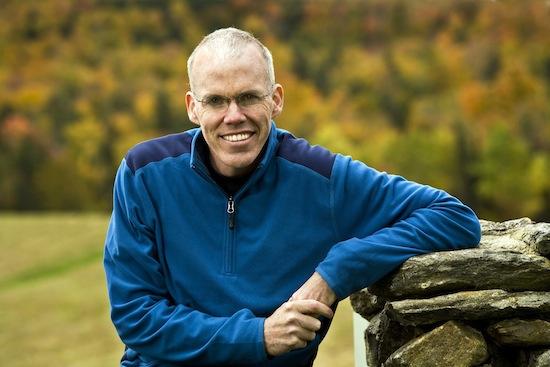
Can you share this image (with a quote from Bill McKibben) on Facebook or Twitter to show just how much this corrupt attempt to revive the pipeline stinks?

We’ll never have the money and the lobbyists of Big Oil, so we’ve got to use our voices and our bodies to make our point.

Over the past six months, we’ve signed petitions, led actions in communities coast-to-coast, and organized large-scale civil disobedience against this pipeline. All that work added up. President Obama’s announcement about the pipeline delay was HUGE, and gave us the chance to shut Keystone XL down for good.

Ultimately, we’re in a long term fight to save the planet from the polluters who would buy their way to total catastrophe. It’s up to us to use this moment to show just how dangerous they have become, and begin making the case that corporate control over government must end. Let’s make sure all of our friends know how much their latest Keystone XL stunt stinks.

Many thanks for raising your voice,

Duncan Meisel, for the 350.org team

P.S. In case you were wondering, we’re not only spreading the word online — folks in certain states are calling their senators and we’re continuing to ratchet up our actions across the country. As I type this, activists in Ohio are staging a “human oil spill” to House Speaker Boehner’s front door. We’ll need all sorts of creative tactics on the road ahead — more on that in a future email!

Please do everything to spread this message.  Thank you.

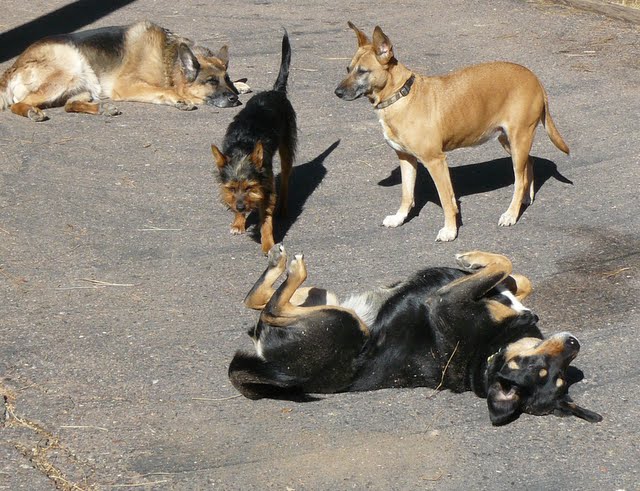
Finally, go and put your arms around your dog, give him or her a very big hug, and pray that mankind might learn something about truth and integrity from the humble dog!

Learning from dogs!

The Long Emergency, part one

A reflection on the huge changes facing our global society.

I am reading James Howard Kunstler’s book The Long Emergency.  On the front cover there is a quote from a review in The Independent newspaper, “If you give a damn, you should read this book.”  On the back cover, the quote, “Stark and frightening.  Read it soon.” – Daily Camera.  The quotes are spot on!

Rather than give my own opinion at this stage (I should finish the book first!), let me quote from the opening of Chapter Five, Nature Bites Back.

I was a at a four-day conference called Pop Tech in the seaside village of Camden, Maine, at the peak of the fall foliage season in October 2003, having a pretty good time at the talks, and enjoyiong a series of extravagant dinners – one featuring a free oyster raw bar and gratis Grey Goose vodka – not to mention all the lobsters, steaks, and other products of our bountiful cheap-oil economy.  Then, on Saturday afternoon, a scientist from the University of Washington, Peter D. Ward, got up in the old-time opera house where the conference was held and did a presentation about the life and death of the planet Earth,  Using a series of vivid artist’s renderings delivered on PowerPoint, Ward showed us how, hundreds of millions of years hence, all land animals would become extinct, the green forests and grasslands would broil away, the oceans would evaporate, and eventually our beloved planet would be reduced to a pathetic ball of inert lifeless lint – prefatory to being subsumed in the expanded red giant heat cloud of our baking sun.  Few members of the audience had any appetite for the spread of cookies and munchables laid out for the break that followed.  Personally, I was so depressed that I felt like gargling with razor blades.

The human spirit is remarkably resilient, though.  A few hours later, the horror of it all was forgotten and the conference-goers reported to the next supper buffet with the appetites recharged, happy to scarf more lobster and beef medallions and guzzle more liquor, while chatting up new friends about their various hopes and dreams for the continuing story of civilized life here on good old planet Earth, which, it was assumed, had quite a ways to go before any of us needed to worry about its fate, if ever.

Wasn’t it John Maynard Keynes who famously remarked to a group of fellow economists dithering about the long-term this and the long-term that: “Gentlemen, in the long term we’re all dead.”  Our brains are really not equipped to process events on a geological scale – at least in reference to how we choose to live, or what we choose to do in the here-and-now.  Five hundred millions years is a long time, but how about the mad rush of events in just the past 2,000 years starring the human race?  Rather action-packed, wouldn’t you say?  Everything from the Roman Empire to the Twin Towers, with a cast of billions – emperors, slaves, saviors, popes, kings, queens, navies, rabbles, conquest , murder, famine, art, science, revolution, comedy, tragedy, genocide, and Michael Jackson.  Enough going on in a mere 2,000 years to divert anyone’s attention from the ultimate fate of the earth, you would think.  Just reflecting on the events of the twentieth century alone could take your breath away, so why get bent out of shape about the ultimate fate of the earth?  Yet, I was not soothed by these thoughts, nor by the free eats, and even the liquor failed to lift me up because I couldn’t shake the recognition that in the short term we are in pretty serious trouble, too.

OK, that’s enough for today – I’ll continue this important extract on Monday.  Let me close by inviting you to watch James Kunstler in interview.

For the love of a dog

An astounding account of saving a dog’s life.

I can’t recall how I came across this story but I’m so glad I did.  Just watch this video and be very moved.

September 2010 Ellen welcomed Zak & Michelle Anderegg to the show to talk about Zak’s amazing rescue of an abandoned puppy. He saved the young pup, Riley, from 350 feet down a canyon — and then brought him here to meet Ellen!

The event being over a year ago doesn’t change anything – it was, is, and forever will be a wonderful example of what dogs bring out in us.

Here’s an account from KSDK dated July 2nd, 2010

NBC — A puppy rescued from the bowels of a deep Utah canyon is now recovering in Salt Lake City.

The man who rescued him documented much of the incredible story with his own video camera.  They don’t know his real name, so they just call him Puppy.

He’s now a temporary shop-dog at The Wrench-It Center, owned by Zak & Michelle Anderegg.

He was completely starved,” Zak Anderegg said. “He was, my best guess, 24 to 48 hours from being dead.

That was last week in a slot canyon near the Utah-Arizona border.It’s so deep and narrow and twisted, some sections are dark in the middle of the day.

Zak was rappelling when he suddenly saw a dog, starving and dehydrated.  “I cannot believe I found this guy down in this frickin’ pothole in this canyon,” he said.

He climbed out to get water.  On the way back down he wondered how the puppy got there. “The rim of the canyon is 350 feet above us, so falling from the rim would have killed him,” Zak said. “Every single time I work it through my head, I come up with the same answer: someone put him there  —  left, abandoned“.

He climbed out again and drove to Page, Arizona to recruit a rescue team.  “They told me flat-out, ‘We’re certainly not going to send out the fire department or the sheriff’s department to help you.‘  So I said, ‘All right, I’ll manage on my own.'”

The next morning he was back with a cat carrier and a plan, using ropes in a one-man rescue operation.

I took risks,” Zak said, “but none above what I do anyway.”

He rigged up a system to attach the cat carrier to his ropes and stabilize it.  Then he climbed back out.

The Page Animal Hospital saved Puppy’s life.  Most of the costs were covered by the hospital’s Angel Fund.  “The rate of improvement is just incredible,” Zak said. “I’d say within two weeks he’ll be at his weight.”

Michelle and Zak still haven’t decided whether to keep him, since they’re already a pet-heavy family.  They’re welcoming inquiries from qualified people who can give him a good home, and they’re encouraging contributions to the Angel Fund for future emergencies.  (Website is here.)

Well, Michelle and Zak did decide to keep Puppy, indeed Puppy has his own Facebook page here – http://www.facebook.com/canyonpuppy  from which this photograph was taken.

A very happy and lucky Puppy!

Finally, I took the liberty of calling the Wrench-It Center and to my great pleasure the call was answered by Michelle.  So if you are ever within reach of the Wrench-It Center 1245 South 700 West, Salt Lake City, Utah 84104, Tel :  801-977-7500, give them your business.

Pick up thy pen!

A reminder that other people in other places may not be so fortunate as you.

In that sub-heading is an assumption that everyone who calls by Learning from Dogs enjoys a life where they are, relatively speaking, free to make their own life decisions.  My apologies if that is a false assumption.

Amnesty International have a December campaign Write for Rights.  It is so worth supporting.  Here are some details from that website,

YOUR WORDS CAN CHANGE LIVES.

Your words can be a SPOTLIGHT that exposes the dark corners of the torture chamber. They can bring POWER to a human rights defender whose life is in jeopardy. They can IGNITE hope in a forgotten prisoner.

Your words can SAVE LIVES.

Join hundreds of thousands of people around the world in marking International Human Rights Day this December by taking part in Amnesty International’s Write for Rights Global Write-a-thon – the world’s largest human rights event. Through letters, cards and more, we take action to demand that the human rights of individuals are respected, protected and fulfilled. We show solidarity with those suffering human rights abuses, and work to bring about positive change in people’s lives.

Will you write a letter to save a life?

Sign up now to Write for Rights!

Jenni Williams

“I am alive today, after 34 arrests, because members of Amnesty International spoke out for me.”

 – Jenni Williams, human rights defender in Zimbabwe

It really doesn’t make any difference which Amnesty case you support – just pick one and do it before the end of the month.

Amnesty also offer a full suite of resources, obtainable from here, to assist you with producing your letter.

Jean and I have decided to write in support of Jabbar Savalan, as described here and below,

AZERBAIJAN – Jabbar Savalan / Youth activist detained after using facebook

Jabbar Savalan

Hours after he posted a note on Facebook calling for protests against the government, Jabbar Savalan told his family that he was being followed. The next evening, February 5, 2011, police arrested him without explanation and took him to the Sumgayit police station, where they “discovered” marijuana in his outer coat pocket. Police questioned him without a lawyer for two days, reportedly hitting and intimidating him to make him sign a confession.

Authorities in Azerbaijan have a history of using trumped-up drug charges to jail perceived critics. Jabbar maintains that he does not use drugs and that the marijuana was planted on him. In May 2011, he was was convicted of possessing illegal drugs and sentenced to two-and-a-half years in prison. Amnesty International believes that authorities fabricated the drug charges against Jabbar to silence him. Amnesty considers him to be a prisoner of conscience.

A history student in college, Jabbar was an active member of an opposition political party. In January 2011, he posted on Facebook a newspaper article that described Azerbaijan’s President Ilham Aliyev as corrupt.

On February 4, Jabbar was inspired by the protests in the Middle East and North Africa to use Facebook to call for a “Day of Rage” to protest the government in Azerbaijan. The next day, police arrested him. He was 19 years old at the time.

Enough said!

Let me close with this video.

Make a difference – now!

A plea to sign a global call not to delay action on global warming

How many of you in Europe watched the final episode of Sir Peter Attenborough’s Frozen Planet series, entitled On Thin Ice?

Did you watch the short video in last week’s post, The power of truth?  If not, it’s below.

Here’s a piece from a BBC news item from yesterday,

A hungry polar bear

It is an image that is sure to shock many people.

An adult polar bear is seen dragging the body of a cub that it has just killed across the Arctic sea ice.

Polar bears normally hunt seals but if these are not available, the big predators will seek out other sources of food – even their own kind.

The picture was taken by environmental photojournalist Jenny Ross in Olgastretet, a stretch of water in the Svalbard archipelago.

“This type of intraspecific predation has always occurred to some extent,” she told BBC News.

“However, there are increasing numbers of observations of it occurring, particularly on land where polar bears are trapped ashore, completely food-deprived for extended periods of time due to the loss of sea ice as a result of climate change.”

Re-read that last segment of that last sentence, “completely food-deprived for extended periods of time due to the loss of sea ice as a result of climate change.

So with all that in mind, please read on.

Friends,

What if someone told you we should abandon all hope for global climate action until 2020? Well, that’s exactly the proposal that the United States is pushing at the UN Climate Talks taking place this week in Durban, South Africa. The 2020 delay might well be the worst idea ever.

Waiting nine years for climate action isn’t just a delay, it’s a death sentence for communities on the front lines of the climate crisis — and it could slam the door on ever getting carbon pollution levels below the safe upper limit of 350 parts per million.

It’s not too late to stop this delay from going through. Over the next three days, our team of 350.org activists in Durban will be working with our partners at Avaaz and allies from around the world to isolate the United States — and build support for the African nations that are fighting for real climate action. But it will take a massive grassroots outcry to demonstrate that people everywhere are taking a stand to prevent the United States negotiators from signing away our future.

If we raise an international alarm before the talks end on Friday, we can convince the US to get out of way of progress and help unlock the global process that can lead to bold climate action all around the world.

Click here to add your voice to a global call to action we’re delivering in Durban: www.350.org/durban

The climate talks in South Africa end in just 48 hours, and it’s vital that we ramp up the pressure now. To make sure the US gets the message, our team on the ground here in Durban will deliver your messages directly to the US negotiating team at a high-impact event we’re helping to pull together on Friday. We can’t say much more about it now, but suffice to say our message will be unavoidable.

This year, the 350 network has shown that people power can truly move the planet in the right direction. We mobilized hundreds of thousands of people to push for climate action in nearly every country on earth. We beat back the Keystone XL pipeline when no one said it was possible. We took over the radio waves to spread a message of hope and action on the climate crisis. And through our actions, we helped keep the hope of saving our planet — and reaching 350 ppm — alive.

The UN Climate Talks here in Durban aren’t going to get us back to 350 by themselves, but they can keep the option open by making progress on a legally binding, international framework to help nations make serious cuts in carbon emissions. In 2012, we’re going to need to do all we can to challenge the fossil fuel companies that are the real obstacles to progress. Breaking their stranglehold on our governments is the only way to really unlock these negotiations.

But right now, the most important thing we can do is keep the possibility of a strong international climate deal alive by pushing back on the United States negotiating team. In recent months, President Obama has shown that he’ll stand up for the climate, but only if he’s got a movement to back him up. On the Keystone pipeline, he’s been doing the right thing by blocking Republican efforts to push it through — now we need him to do the right thing on the international stage.

There’s no guarantee that we’ll be successful, but we owe it to our allies across the planet — many of whom are already feeling the impacts of climate change — to resist the chorus of cynics and keep hope alive. As Nelson Mandela said, “It always seems impossible until it’s done.” The 350 network has pulled off the impossible before — now’s the time to step up the pressure again.

Please add your voice today: www.350.org/durban

Let’s do this,

Jamie Henn for the whole 350.org team

P.S. We have just 48 hours to build a huge groundswell of pressure. Please help make it go viral with a few clicks on Twitterand Facebook — tag your popular friends, and post it again and again.

Too late to be a pessimist

A life-changing film

Last Friday I published a Post under the title of The power of truth.  Just 5 minutes long, the YouTube video was powerful, starkly so.  I wrote at the end of that article, “The principal source for the footage was Yann Arthus-Bertrand’s incredible film HOME.”

Jean and I watched Yann Arthus-Bertrand’s film last Friday night and to say that we were moved would be pitiful compared to the emotional impact it really had.  Take a look at the film trailer; it’s a little over 3 1/2 minutes long.  (But please don’t use that as a substitute for watching the full film, see below!)

Home is a 2009 documentary by Yann Arthus-Bertrand. The film is entirely composed of aerial shots of various places around Earth. It shows the diversity of life on Earth and how humanity is threatening the ecological balance of the planet. The movie was released simultaneously on June 5th in cinemas all over the world, on DVD and on YouTube. Released on the same date in 50 countries is a world record for any film release in history. The film is 100% free, and no profits will be made from its release or future showings.

I wasn’t going to add anything other than a brief introduction to the main film.  However, an article in The Economist The World in 2012 caught my eye and seemed especially relevant to promoting the message carried by the film. Sheryl Sandberg, chief operating officer of Facebook, wrote about the power of social media and how it would be even more evident in 2012.  This is the paragraph that caught my eye,

Expressing our authentic identity will become even more pervasive in the coming year. Profiles will no longer be outlines, but detailed self-portraits of who we really are, including the books we read, the music we listen to, the distances we run, the places we travel, the causes we support, the videos of cats we laugh at, our likes and our links. And, yes, this shift to authenticity will take getting used to and will elicit cries about lost privacy. But people will increasingly recognise the benefits of such expression. Because the strength of social media is that it empowers individuals to amplify and broadcast their voices. The truer that voice, the louder it will sound and the farther it will reach.

That last sentence jumped out at me, “The truer that voice, the louder it will sound and the farther it will reach.” Mull on that as you watch the film and, please, please, please if you support the need to return to a harmonious relationship with the planet spread the word as far and wide as you can.

Please promise yourself to sit down quietly and watch it uninterrupted.  And if you feel so minded to add comments to this Post please do – would be delighted to have your feedback.

HOME

We are living in exceptional times. Scientists tell us that we have 10 years to change the way we live, avert the depletion of natural resources and the catastrophic evolution of the Earth’s climate.

The stakes are high for us and our children. Everyone should take part in the effort, and HOME has been conceived to take a message of mobilization out to every human being.

For this purpose, HOME needs to be free. A patron, the PPR Group, made this possible. EuropaCorp, the distributor, also pledged not to make any profit because Home is a non-profit film.

HOME has been made for you : share it! And act for the planet.

Yann Arthus-Bertrand

HOME official website
http://www.home-2009.com

PPR is proud to support HOME
http://www.ppr.com

HOME is a carbon offset movie
http://www.actioncarbone.org

More information about the Planet
http://www.goodplanet.info

So settle down and watch what may be one of the most important films of your life.

The power of truth

Three things cannot be long hidden: the sun, the moon, and the truth.

The above is a quote attributed to the Buddha.  It is perfect as an introduction to today’s piece.

When I sat down at my PC yesterday afternoon I was planning to finish off a Post about the BBC’s fabulous Frozen Planet TV series.  But a check of my email changed all that.  Because there was an email from Merci O., someone in Payson that Jean and I know well.  Merci had sent me an email with a link to the following YouYube video.

Watch and be moved.

This is a non-commercial attempt to highlight the fact that world leaders, irresponsible corporates and mindless ‘consumers’ are combining to destroy life on earth. It is dedicated to all who died fighting for the planet and those whose lives are on the line today. The cut was put together by Vivek Chauhan, a young film maker, together with naturalists working with the Sanctuary Asia network (www.sanctuaryasia.com).

Content credit: The principal source for the footage was Yann Arthus-Bertrand’s incredible film HOME http://www.homethemovie.org/. The music was by Armand Amar. Thank you too Greenpeace and http://timescapes.org/

This is not ‘rocket science’!

We all live on one, finite, planet.  Full stop!

When putting together the short item for yesterday, Sunday, I was taken by the power of such simple concepts as beauty, harmony, love, the natural world.  Then I came across an article published by Tom Engelhardt, of TomDispatch fame, a little over two weeks ago.  It was a guest essay by Chip Ward and is reproduced below.

Learning from Dogs is about integrity.  In the sense that dogs, both literally and metaphorically, offer mankind an alternative, and more integrous, way of living.  As I wrote in one of the background items to Learning from Dogs, over two years ago,

Because of this closeness between dogs and man, we (as in man!) have the ability to observe the way they live.  Now I’m sure that scientists would cringe with the idea that the way that a dog lives his life sets an example for us humans, well cringe in the scientific sense.  But man seems to be at one of those defining stages in mankind’s evolution where the forces bearing down on the species homo sapiens have the potential to cause very great harm.  If the example of dogs can provide a beacon of hope, a incentive to change at a deep cultural level, then the quicker we ‘get the message’, the better it will be.

Dogs:

  • are integrous ( a score of 210) according to Dr David Hawkins
  • don’t cheat or lie
  • don’t have hidden agendas
  • are loyal and faithful
  • forgive
  • love unconditionally
  • value and cherish the ‘present’ in a way that humans dream of achieving
  • are, by eons of time, a more successful species than man.

So with those thoughts in mind, please read Chip’s essay as published on TomDispatch.  It is reproduced with the written permission of Tom Engelhardt

Someone Got Rich and Someone Got Sick
Nature Is the 99%, Too
By Chip Ward

What if rising sea levels are yet another measure of inequality? What if the degradation of our planet’s life-support systems — its atmosphere, oceans, and biosphere — goes hand in hand with the accumulation of wealth, power, and control by that corrupt and greedy 1% we are hearing about from Zuccotti Park?  What if the assault on America’s middle class and the assault on the environment are one and the same?

Money Rules: It’s not hard for me to understand how environmental quality and economic inequality came to be joined at the hip.  In all my years as a grassroots organizer dealing with the tragic impact of degraded environments on public health, it was always the same: someone got rich and someone got sick.

In the struggles that I was involved in to curb polluters and safeguard public health, those who wanted curbs, accountability, and precautions were always outspent several times over by those who wanted no restrictions on their effluents.  We dug into our own pockets for postage money, they had expense accounts.  We made flyers to slip under the windshield wipers of parked cars, they bought ads on television.  We took time off from jobs to visit legislators, only to discover that they had gone to lunch with fulltime lobbyists.

Naturally, the barons of the chemical and nuclear industries don’t live next to the radioactive or toxic-waste dumps that their corporations create; on the other hand, impoverished black and brown people often do live near such ecological sacrifice zones because they can’t afford better.  Similarly, the gated communities of the hyper-wealthy are not built next to cesspool rivers or skylines filled with fuming smokestacks, but the slums of the planet are. Don’t think, though, that it’s just a matter of property values or scenery.  It’s about health, about whether your kids have lead or dioxins running through their veins.  It’s a simple formula, in fact: wealth disparities become health disparities.

And here’s another formula: when there’s money to be made, both workers and the environment are expendable.  Just as jobs migrate if labor can be had cheaper overseas, I know workers who were tossed aside when they became ill from the foul air or poisonous chemicals they encountered on the job.

The fact is: we won’t free ourselves from a dysfunctional and unfair economic order until we begin to see ourselves as communities, not commodities.  That is one clear message from Zuccotti Park.

Polluters routinely walk away from the ground they poison and expect taxpayers to clean up after them.  By “externalizing” such costs, profits are increased.  Examples of land abuse and abandonment are too legion to list, but most of us can refer to a familiar “superfund site” in our own backyard.  Clearly, Mother Nature is among the disenfranchised, exploited, and struggling.

Democracy 101: The 99% pay for wealth disparity with lost jobs, foreclosed homes, weakening pensions, and slashed services, but Nature pays, too.  In the world the one-percenters have created, the needs of whole ecosystems are as easy to disregard as, say, the need the young have for debt-free educations and meaningful jobs.

Extreme disparity and deep inequality generate a double standard with profound consequences.  If you are a CEO who skims millions of dollars off other people’s labor, it’s called a “bonus.”  If you are a flood victim who breaks into a sporting goods store to grab a lifejacket, it’s called looting.  If you lose your job and fall behind on your mortgage, you get evicted.  If you are a banker-broker whodesigned flawed mortgages that caused a million people to lose their homes, you get a second-home vacation-mansion near a golf course.

If you drag heavy fishnets across the ocean floor and pulverize an entire ecosystem, ending thousands of years of dynamic evolution and depriving future generations of a healthy ocean, it’s called free enterprise.  But if, like Tim DeChristopher, you disrupt an auction of public land to oil and gas companies, it’s called a crime and you get two years in jail.

In campaigns to make polluting corporations accountable, my Utah neighbors and I learned this simple truth: decisions about what to allow into the air we breathe, the water we drink, and the food we eat are soon enough translated into flesh and blood, bone and nerve, and daily experience.  So it’s crucial that those decisions, involving environmental quality and public health, are made openly, inclusively, and accountably.  That’s Democracy 101.

The corporations that shred habitat and contaminate your air and water are anything but democratic.  Stand in line to get your 30 seconds in front of a microphone at a public hearing about the siting of a nuclear power plant, the effluent from a factory farm, or the removal of a mountaintop and you’ll get the picture quickly enough: the corporations that profit from such ecological destruction are distant, arrogant, secretive, and unresponsive.  The 1% are willing to spend billions impeding democratic initiatives, which is why every so-called environmental issue is also about building a democratic culture.

First Kill the EPA, Then Social Security: Beyond all the rhetoric about freedom from the new stars of the Republican Party, the strategy is simple enough: obstruct and misinform, then blame the resulting dysfunction on “government.”  It’s a great scam.  Tell the voters that government doesn’t work and then, when elected, prove it.  And first on the list of government outfits they want to sideline or kill is the Environmental Protection Agency, so they can do away with the already flimsy wall of regulation that stands between their toxins and your bloodstream.

Poll after poll shows that citizens understand the need for environmental rules and safeguards.  Mercury is never put into the bloodstreams of nursing mothers by consensus, nor are watersheds fracked until they are flammable by popular demand.  But the free market ideologues of the Republican Party are united in opposition to any rule or standard that impedes the “magic” of the marketplace and unchecked capital.

The same bottom-line quarterly-report fixation on profitability that accepts oil spills as inevitable also accepts unemployment as inevitable. Tearing apart wildlife habitat to make a profit and doing the same at a workplace are just considered the price of doing business. Clearcutting a forest and clearcutting a labor force are two sides of the same coin.

Beware of Growth: Getting the economy growing has been the refrain of the Obama administration and the justification for every bad deal, budget cut, and unbalanced compromise it’s made.  The desperate effort to grow the economy to solve our economic woes is what keeps Timothy Geithner at the helm of the Treasury and is what stalls the regulation of greenhouse gasses.  It’s why we are told we must sacrifice environmental quality for pipelines and why young men and women are sacrificed to protect access to oil, the lubricant for an acquisitive economic engine.  The financial empire of the one percenters and the political order it has shaped are predicated on easy and relentless growth.  How, we are asked, will there be enough for everyone if we don’t keep growing?

The fundamental contradiction of our time is this: we have built an all-encompassing economic engine that requires unending growth.  A contraction of even a percent or two is a crisis, and yet we are embedded in ecosystems that are reaching or have reached their limits.  This isn’t complicated: There’s only so much fertile soil or fresh water available, only so many fish in the ocean, only so much CO2 the planet can absorb and remain habitable.

Yes, you can get around this contradiction for a while by exploiting your neighbor’s habitat, using technological advances to extend your natural resources, and stealing from the future — that is, using up soil, minerals, and water your grandchildren (someday to be part of that same 99%) will need.  But the limits to those familiar and, in the past, largely successful strategies are becoming more evident all the time.

At some point, we’ll discover that you can’t exist for long beyond the boundaries of the natural world, that (as with every other species) if you overload the carrying capacity of your habitat, you crash.  Warming temperatures, chaotic weather patterns, extreme storms, monster wildfiresepic droughtsBiblical floods, anavalanche of species extinction… that collapse is upon us now.  In the human realm, it translates into hunger and violence, mass migrations and civil strife, failed states and resource wars.

Like so much else these days, the crash, as it happens, will not be suffered in equal measure by all of us.  The one percenters will be atop the hill, while the 99% will be in the flood lands below swimming for their lives, clinging to debris, or drowning. The Great Recession has previewed just how that will work.

An unsustainable economy is inherently unfair, and worse is to come.  After all, the car is heading for the cliff’s edge, the grandkids are in the backseat, and all we’re arguing about is who can best put the pedal to the metal.

Occupy Earth: Give credit where it’s due: it’s been the genius of the protesters in Zuccotti Park to shift public discourse to whether the distribution of economic burdens and rewards is just and whether the economic system makes us whole or reduces and divides us.  It’s hard to imagine how we’ll address our converging ecological crises without first addressing the way accumulating wealth and power has captured the political system.  As long as Washington is dominated and intimidated by giant oil companies, Wall Street speculators, and corporations that can buy influence and even write the rules that make buying influence possible, there’s no meaningful way to deal with our economy’s addiction to fossil fuels and its dire consequences.

Nature’s 99% is an amazingly diverse community of species.  They feed and share and recycle within a web of relationships so dynamic and complex that we have yet to fathom how it all fits together.  What we have excelled at so far is breaking things down into their parts and then reassembling them; that, after all, is how a barrel of crude oil becomes rocket fuel or a lawn chair.

When it comes to the more chaotic, less linear features of life like climate, ecosystems, immune systems, or fetal development, we are only beginning to understand thresholds and feedback loops, the way the whole becomes greaterthan the sum of its parts.  But we at least know that the parts matter deeply and that, before we even fully understand them, we’re losing them at an accelerating rate.  Forests are dying, fisheries are going, extinction is on steroids.

Degrading the planet’s operating systems to bolster the bottom line is foolish and reckless.  It hurts us all.  No less important, it’s unfair.  The 1% profit, while the rest of us cough and cope.

After Occupy Wall Street, isn’t it time for Occupy Earth?

Chip Ward co-founded and led Families Against Incinerator Risk and HEAL Utah. A TomDispatch regular, he wrote about campaigns to make polluters accountable in Canaries on the Rim: Living Downwind in the West and about visionary conservationists in Hope’s Horizon: Three Visions for Healing the American Land.

Copyright 2011 Chip Ward