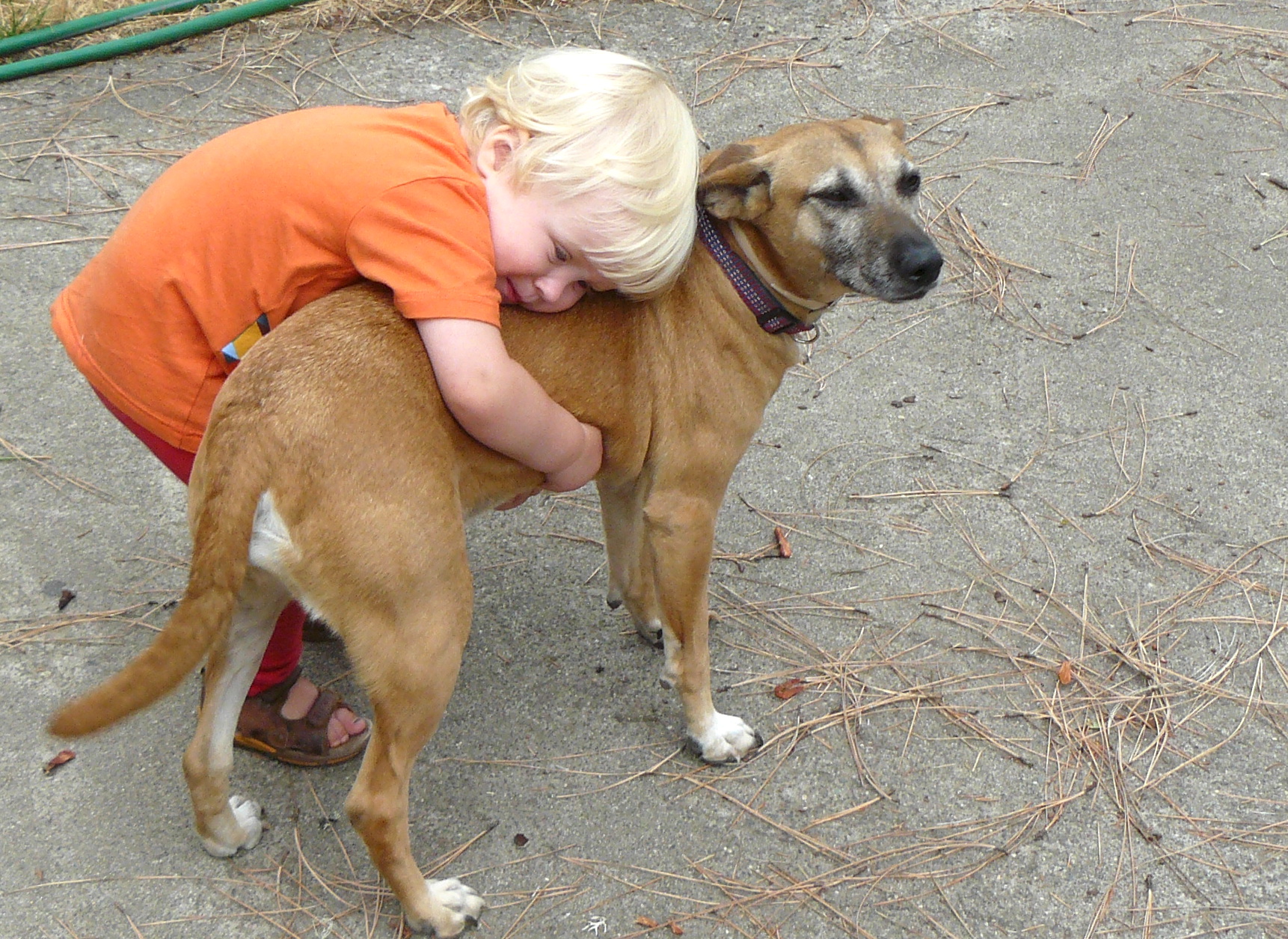
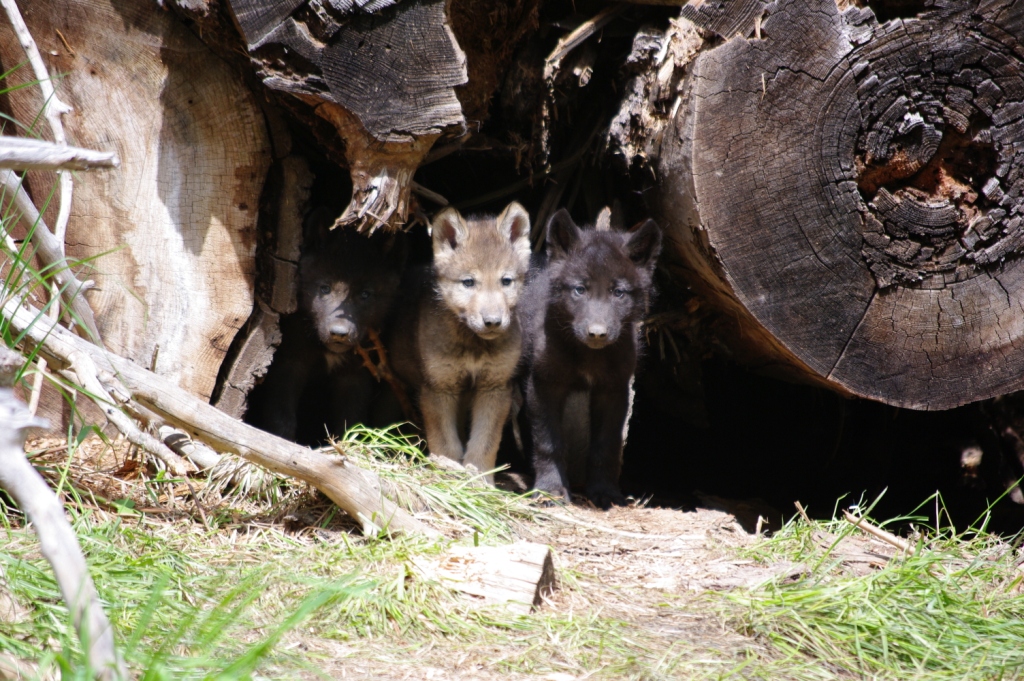
Category: Morality

The growth of empathy.

As they say in the old country, it’s an ill wind that doesn’t blow anyone any good!

So often when I stare at the screen wondering just what on earth to write about, along comes something to fire me up.

In this case, it was a small clutch of disconnected items that seemed to have a common thread for me.

The first was reading the links in this morning’s Naked Capitalism summary and seeing this:

The REAL Fukushima Danger

Posted on September 14, 2013 by WashingtonsBlog

The Real Problem …

The fact that the Fukushima reactors have been leaking huge amounts of radioactive water ever since the 2011 earthquake is certainly newsworthy.  As are the facts that:

But the real problem is that the idiots who caused this mess are probably about to cause a much biggerproblem.

Specifically, the greatest short-term threat to humanity is from the fuel pools at Fukushima.

If one of the pools collapsed or caught fire, it could have severe adverse impacts not only on Japan … but the rest of the world, including the United States.   Indeed, a Senator called it a national security concern for the U.S.:

The radiation caused by the failure of the spent fuel pools in the event of another earthquake could reach the West Coast within days. That absolutely makes the safe containment and protection of this spent fuel a security issue for the United States.

Nuclear expert Arnie Gundersen and physician Helen Caldicott have both said that people should evacuate the Northern Hemisphere if one of the Fukushima fuel pools collapses. Gundersen said:

Move south of the equator if that ever happened, I think that’s probably the lesson there.

Former U.N. adviser Akio Matsumura calls removing the radioactive materials from the Fukushima fuel pools “an issue of human survival”.

So the stakes in decommissioning the fuel pools are high, indeed.

But in 2 months, Tepco – the knuckleheads who caused the accident – are going to start doing this very difficult operation on their own.

The New York Times reports:

Thousands of workers and a small fleet of cranes are preparing for one of the latest efforts to avoid a deepening environmental disaster that has China and other neighbors increasingly worried: removing spent fuel rods from the damaged No. 4 reactor building and storing them in a safer place.

The Telegraph notes:

Tom Snitch, a senior professor at the University of Maryland and with more than 30 years’ experience in nuclear issues, said  “[Japan officials] need to address the real problems, the spent fuel rods in Unit 4 and the leaking pressure vessels,” he said. “There has been too much work done wiping down walls and duct work in the reactors for any other reason then to do something….  This is a critical global issue and Japan must step up.”

Apologies, that’s more than sufficient to ruin your day!  If you really want to read to the end, the item is here.

However, the next item carries a much more positive thread.  It was an essay that was highlighted on Linked-In back in June.

The Number One Job Skill in 2020

What’s the crucial career strength that employers everywhere are seeking — even though hardly anyone is talking about it? A great way to find out is by studying this list of fast-growing occupations, as compiled by the U.S. Bureau of Labor Statistics.

Sports coaches and fitness trainers. Massage therapists, registered nurses and physical therapists. School psychologists, music tutors, preschool teachers and speech-language pathologists. Personal financial planners, chauffeurs and private detectives. These are among the fields expected to employ at least 20% more people in the U.S. by 2020.

Did you notice the common thread? Every one of these jobs is all about empathy.

In our fast-paced digital world, there’s lots of hand-wringing about the ways that automation and computer technology are taking away the kinds of jobs that kept our parents and grandparents employed. Walk through a modern factory, and you’ll be stunned by how few humans are needed to tend the machines. Similarly, travel agents, video editors and many other white-collar employees have been pushed to the sidelines by the digital revolution’s faster and cheaper methods.

But there’s no substitute for the magic of a face-to-face interaction with someone else who cares. Even the most ingenious machine-based attempts to mimic human conversation (hello, Siri) can’t match the emotional richness of a real conversation with a real person.

Coincidentally, that thought about the ‘magic of a face-to-face interaction’ really echoed in me.  Why?  Because, I was ruminating on the wonderful world of human interaction this world of blogging delivers.  It seems to combine all the benefits of meeting real people with a global consciousness of those same real people spread way beyond our own local domains.

Hence  the reason why I offer the next seemingly unrelated item. The recent post from Sue Dreamwallker that I am republishing in full.

A Big Thank You to you ALL.

by Sue Dreamwalker

many-thanks-to-all_thumb

This is just a short post to say a Big thank you to all of my readers and to those who visit regular and comment upon my posts. You Bring with you such light and encouragement, and I often at a loss to say how much your kind support means.

I logged onto my Blog today and discover that my readership has swelled to 400 followers and so I just want to say a Big thank you for all of my oldest friends who have been with me since my beginnings of Windows Live Spaces days when I started in 2007, My first real post after transferring was called Finding Answers  here on WordPress.  And I remember well spending the best part of a Day getting to know and personalise my header  and  Blog back then as everything was alien that day was in Oct 2010.  A move I am so pleased to have made, as I just love the W.P. Community of friends we have gathered here and whom I have got to know and love.

And I just want to say a big thank you to all of my newest arrivals who have clicked the follow button.. I hope to get around to discovering your blogs as soon as time allows.And to say thank you to my email subscribers also.. And Welcome, I hope you enjoy my thoughts and if not please don’t be shy to air your opinions for that’s how we grow and learn by sharing knowledge and understanding.

Today I just want to post what I have been up to in recent days besides  the ‘Day-job’ in picture format.. So if you click the photos, you should be able to read more in the caption headings.. [Photos available on Sue’s blogsite.]

Take care all of you and I have a busy week a head in my Day Job, so I will catch you when I can…

Love and Blessings

~Sue~

Still the resonances continued.  For Rebecca Solnit published yesterday an incredibly powerful essay over on TomDispatch.  It was called Victories Come in All Sizes.  As always, Tom writes a wonderful introduction.  Let me skip to Rebecca’s opening paragraphs.

Joy Arises, Rules Fall Apart 
Thoughts for the Second Anniversary of Occupy Wall Street 
By Rebecca Solnit

I would have liked to know what the drummer hoped and what she expected. We’ll never know why she decided to take a drum to the central markets of Paris on October 5, 1789, and why, that day, the tinder was so ready to catch fire and a drumbeat was one of the sparks.

To the beat of that drum, the working women of the marketplace marched all the way to the Palace of Versailles, a dozen miles away, occupied the seat of French royal power, forced the king back to Paris, and got the French Revolution rolling. Far more than with the storming of the Bastille almost three months earlier, it was then that the revolution was really launched — though both were mysterious moments when citizens felt impelled to act and acted together, becoming in the process that mystical body, civil society, the colossus who writes history with her feet and crumples governments with her bare hands.

She strode out of the 1985 earthquake in Mexico City during which parts of the central city collapsed, and so did the credibility and power of the Institutional Revolutionary Party, the PRI that had ruled Mexico for 70 years. She woke up almost three years ago in North Africa, in what was called the Arab Spring, and became a succession of revolutions and revolts still unfolding across the region.

Such transformative moments have happened in many times and many places — sometimes as celebratory revolution, sometimes as terrible calamity, sometimes as both, and they are sometimes reenacted as festivals and carnivals. In these moments, the old order is shattered, governments and elites tremble, and in that rupture civil society is born — or reborn.

It really is an essay that you need to read in full.

However, this further extract covering the closing paragraphs explains why it resonated so strongly with me in terms of the rising consciousness of all the millions of ordinary people just trying to leave the world in a better place:

Part of what gave Occupy its particular beauty was the way the movement defined “we” as the 99%.  That (and that contagious meme the 1%) entered our language, offering a way of imagining the world so much more inclusive than just about anything that had preceded it. And what an inclusive movement it was: the usual young white suspects, from really privileged to really desperate, but also a range of participants from World War II to Iraq War veterans to former Black Panthers, from libertarians to liberals to anarchist insurrectionists, from the tenured to the homeless to hip-hop moguls and rock stars.

And there was so much brutality, too, from the young women pepper-sprayed at an early Occupy demonstration and the students infamously pepper-sprayed while sitting peacefully on the campus of the University of California, Davis, to the poet laureate Robert Hass clubbed in the ribs at the Berkeley encampment, 84-year-old Dorli Rainey assaulted by police at Occupy Seattle, and the Iraq War veteran Scott Olsen whose skull was fractured by a projectile fired by the Oakland police. And then, of course, there was the massive police presence and violent way that in a number of cities the movement’s occupiers were finally ejected from their places of “occupation.”

Such overwhelming institutional violence couldn’t have made clearer the degree to which the 1% considered Occupy a genuine threat. At the G-20 economic summit in 2011, the Russian Prime Minister, Dmitry Medvedev, said, “The reward system of shareholders and managers of financial institution[s] should be changed step by step. Otherwise the ‘Occupy Wall Street’ slogan will become fashionable in all developed countries.” That was the voice of fear, because the realized dreams of the 99% are guaranteed to be the 1%’s nightmares.

We’ll never know what that drummer girl in Paris was thinking, but thanks to Schneider’s meticulous and elegant book, we know what one witness-participant was thinking all through the first year of Occupy, and what it was like to be warmed for a few months by that beautiful conflagration that spread across the world, to be part of that huge body that wasn’t exactly civil society, but something akin to it, perhaps in conception even larger than it, as Occupy encampments and general assemblies spread from Auckland to Hong Kong, from Oakland to London in the fall of 2011. Some of them lasted well into 2012, and others spawned things that are still with us: coalitions and alliances and senses of possibility and frameworks for understanding what’s wrong and what could be right. It was a sea-change moment, a watershed movement, a dream realized imperfectly (because only unrealized dreams are perfect), a groundswell that remains ground on which to build.

On the second anniversary of that day in lower Manhattan when people first sat down in outrage and then stayed in dedication and solidarity and hope, remember them, remember how unpredictably the world changes, remember those doing heroic work that you might hear little or nothing about but who are all around you, remember to hope, remember to build. Remember that you are 99% likely to be one of them and take up the burden that is also an invitation to change the world and occupy your dreams.

Rebecca Solnit, author most recently of The Faraway Nearby spent time at Occupy San Francisco, Occupy Oakland, and Occupy Wall Street in 2011 and wrote about Occupy often for TomDispatch in 2011-2012. This essay is adapted from her introduction to Nathan Schneider’s new book, Thank You, Anarchy (University of California Press).

Copyright 2013 Rebecca Solnit

The final element was from an email yesterday in from Chris Snuggs.  Chris has previously written guest posts on Learning from Dogs, the last one being In Defence of Politics back on July 8th.  In that email was the following photograph.
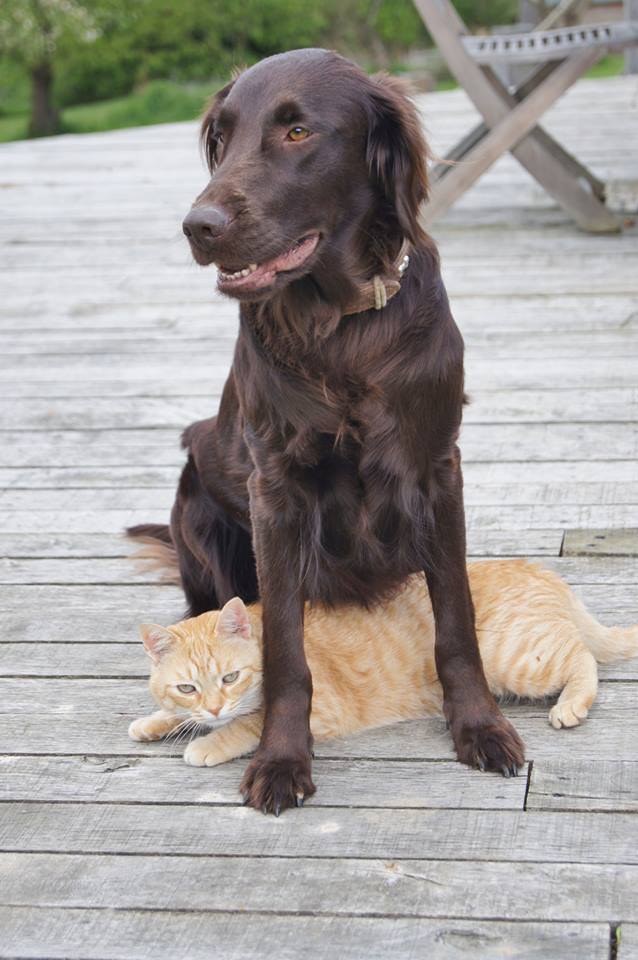
"You touch my mate and I'll have ya."
“You touch my mate and I’ll have ya.”

Let me draw out the thread that I saw in all these items.

That is that the 1% that Rebecca Solnit wrote about are incredibly powerful people, with access to more power, money and control than one can even imagine.  But what that 1% cannot control is the growing consciousness, the growing mindfulness and awareness of millions of people across this planet that something as simple and pure and beautiful as unconditional love will conquer all.

The most fundamental lesson that we can learn from dogs!

In the name of progress!

Or might that be in the name of insanity?

John Hurlburt is a frequent contributor to Learning from Dogs, as a quick search through the blog will reveal.

A few days ago, John sent Jean and me a film to watch.  It was the documentary Surviving Progress.  We watched it on Monday evening.  Here’s more on the film and related information.

survivingprogresssplash3

Here’s the trailer.

Published on Apr 6, 2012

Surviving Progress Trailer (Documentary 2012).

Directed by Mathieu Roy, Surviving Progress documentary film is based on the best selling book A Short History of Progress. From Executive Producer Martin Scorsese, this provocative documentary explores the concept of progress in our modern world, guiding us through a sweeping but detailed survey of the major “progress traps” facing our civilization in the arenas of technology, economics, consumption, and the environment….

Like all films these days, there is an associated website, from which one can read the synopsis, as follows:

“Every time history repeats itself the price goes up.”

Surviving Progress presents the story of human advancement as awe-inspiring and double-edged. It reveals the grave risk of running the 21st century’s software — our know-how — on the ancient hardware of our primate brain which hasn’t been upgraded in 50,000 years. With rich imagery and immersive soundtrack, filmmakers Mathieu Roy and Harold Crooks launch us on a journey to contemplate our evolution from cave-dwellers to space explorers.

Ronald Wright, whose best-seller, “A Short History Of Progress” inspired this film, reveals how civilizations are repeatedly destroyed by “progress traps” — alluring technologies serve immediate needs, but ransom the future. With intersecting stories from a Chinese car-driving club, a Wall Street insider who exposes an out-of-control, environmentally rapacious financial elite, and eco-cops defending a scorched Amazon, the film lays stark evidence before us. In the past, we could use up a region’s resources and move on. But if today’s global civilization collapses from over-consumption, that’s it. We have no back-up planet.

Surviving Progress brings us thinkers who have probed our primate past, our brains, and our societies. Some amplify Wright’s urgent warning, while others have faith that the very progress which has put us in jeopardy is also the key to our salvation. Cosmologist Stephen Hawking looks to homes on other planets. Biologist Craig Venter, whose team decoded the human genome, designs synthetic organisms he hopes will create artificial food and fuel for all.

Distinguished Professor of Environment Vaclav Smil counters that five billion “have-nots” aspire to our affluent lifestyle and, without limits on the energy and resource-consumption of the “haves”, we face certain catastrophe. Others — including primatologist Jane Goodall, author Margaret Atwood, and activists from the Congo, Canada, and USA — place their hope in our ingenuity and moral evolution.

Surviving Progress leaves us with a challenge: To prove that making apes smarter was not an evolutionary dead-end.

WikiPedia adds:

Surviving Progress is a 2011 Canadian documentary film loosely based on A Short History of Progress, a book and a 2004 Massey Lecture series by Ronald Wright about societal collapse. The film was produced by Daniel LouisDenise Robert, and Gerry Flahive and written/directed by Mathieu Roy and Harold Crooks.

So now to reactions to the film.

To say that it was compelling watching is both correct and, yet, emotionally disconnected.

The blunt truth is that the film is scary beyond belief.  Like watching a giant wave about to engulf you, or a snake about to strike; nothing to do but be transfixed; to be mesmerized by these last few moments of your life.

Because a reasonable conclusion to the weight of evidence put forward by the film is that the time left to pull back from the certainty of the end of life on Planet Earth is minuscule. By that I mean we are speaking of a decade, perhaps two at most.  Ninety-nine percent of the people reading this, living in your neighborhood, or your region, or your country will suffer the terrible consequences of the impending end of this planet as a home for life.

Unless?

Unless there is most incredible awakening of global consciousness in the next two or three years.  Unless the free world, from the highest in those lands to the vast masses of decent, working people, say, “Enough is enough.”

Unless every level of society, from local and national Governments, from Universities, from Churches, from employers both large and small, recognize that this time it’s different.  This is about to become a global crisis.

I taken the following from the Amazon page for Ronald Wright’s book A Short History of Progress, that inspired the film:

From Neanderthal man to the Sumerians to the Roman Empire, A Short History of Progress dissects the cyclical nature of humanity’s development and demise, the 10,000-year old experiment that we’ve unleashed but have yet to control. It is Wright’s contention that only by understanding and ultimately breaking from the patterns of progress and disaster that humanity has repeated around the world since the Stone Age can we avoid the onset of a new Dark Age.

the 10,000-year old experiment that we’ve unleashed but have yet to control.

So let’s seek some solace.  Back to John Hurlburt who in a post in July, Maybe home is found in our quietness, offered this:

Evening Meditation

Our world is increasingly spiritually, morally, mentally, physically and economically bankrupt. Many people would like to change the world one way or another. Most don’t really know why. Some folks simply don’t care. The idea is to leave life a bit better than we found it when we were born.

The fact is we’re all intrinsically sacred in a universe we didn’t create. We tend to prioritize illusion and delusion above reality. Playing God is a precursor of evil.  A supreme faith in Money is self contradictory and ultimately fatal. Arrogance compounds the problem.

We connect in unified awareness through serene meditation. We experience harmony within an emerging celestial symphony. Answers flow from the inside out as we surrender to the eternal energy flow.

Be still and know…

an old lamplighter

I was going to close with a quotation from that most famous of Brits, Winston Churchill.  The one that goes:  “To improve is to change; to be perfect is to change often.”

But after I had put the post ‘to bed’, so to speak, I started to read the Transition Primer from Transition US.  It was such a positive message that I decided to write about Transition tomorrow. Then there was a quote in the Primer that just had to be the one to close today’s post.

“Never doubt that a small group of thoughtful, committed citizens can change the world.  Indeed, it is the only thing that ever has.”

Margaret Mead.

Ever noticed how quickly a dog returns to wagging its tail!

Fight for the trees.

An update to yesterday’s post.

In the recent post Sing for the trees, Pedantry of the blog Wibble left this comment:

 don’t consider myself an envious type, but I have to admit to being jealous of your location there, Paul. Deer in the back garden! Amazing. I guess I’m lucky to see the odd squirrel. But (as usual) I digress…

Trees… yes. Were I King of the Earth my first edict would be to make it illegal to chop down any more trees anywhere for any reason, and to reward true reforestation efforts (while banning old-forest lumbering dressed up as ‘reforestation’).

As I’m not, the extent of my singing for the trees is limited to pledges on such worthy projects as Who Bombed Judi Bari? (less than subtle hint: just 39 hours to go, as I write).

Your first image above is wonderful, and is a terrific, healing counterpoint to the images I see elsewhere, such as in the clip below, of what we’re doing to our home, out of sight of most people. Thank you.

That comment also included this video:

I thought readers would be interested in learning more by visiting the Kickstarter Campaign page and just possibly offering whatever pledge you can afford.

The importance of this campaign was underlined by the fact that just last Wednesday my daughter Maija, son-in-law Marius, and grandson Morten visited the Redwood Forest as part of their holiday with us in Oregon.  Here are three of their pictures taken just two days ago.

Life-giving Redwoods.

oooo

That need lots of loving.

oooo

From young and old alike.

oooo

So do whatever you can, please!  There are just 26 hours to go at the time of posting this: 9:10 am PDT.

Thanks to Pedantry for bringing this to the attention of LfD readers and followers.

Healing our planet, person by person.

Jon Lavin reflects on the Four Noble Truths of Buddhism.

Last week, I republished a number of Jon’s posts from way back and was delighted at how many of you enjoyed his writings.  Jon and his family are taking a well-earned vacation which clearly includes reading posts on Learning from Dogs: Poor soul!  This was made clear from an email Jon sent me yesterday afternoon.

Jon had read the essay from George Monbiot that was published three days ago under my post title of Dichlorodiphenyltrichloroethane (DDT) all over again?  So hopefully, this introduction puts Jon’s email into proper context.  The subject title of Jon’s email was DDT 2.0.

oooOOOooo

Hi Paul!

Hope you guys are well on your lovely farm! We’re in sunny Falmouth for the week staying in our Ben’s student flat slowly working our way through his food supplies.

In my current chilled state, I read your reproduced article and I got to thinking; so you might pick out the odd bit of coherence in these ramblings!

I am reminded of David Hawkins’ ‘Scale of Human Consciousness’. If 80 percent of us are below the level of Integrity, and therefore truth, and the average level of integrity in business is below this level, it is no wonder that money comes before the greater good. Think of the banking crisis as a good example.

I guess we move forward at the speed of the slowest. We certainly seem to learn through the pain and suffering of our own making. I can understand now why this world is perfect for our development and advancement. We are exposed to every opportunity to better ourselves and not everyone has enough of what it takes to hit the mark. We just have to keep going until we get it, even if this means pain and suffering.

The Four Noble Truths of Buddhism talk about suffering and how we create it.The First Noble Truth states that life is suffering. The 2nd Noble Truth talks about our craving for things: money, possessions, etc.; cravings that create suffering. The Third Noble Truth talks of a cure and a way out of hopelessness and suffering and finally, the Fourth Noble Truth gives guidance on walking the path out of suffering.

So, although your article is awful, it is to be expected that we keep being attracted to these sorts of schemes and are attracted to money. We have to learn through pain and suffering until we get it right.

People frequently ask, “What can I do to help?”. Unfortunately or fortunately, there is a way out! The best way to help is to work on ourselves! Sounds a bit silly but by working and developing ourselves we raise the overall level of human consciousness. This means that when companies and individuals attempt to do things that are not integrous, there is less likelihood of them being successful.

Heady stuff really and I wouldn’t describe myself as Buddhist but I have to admit there seems to be some truth in this.

I hope some of this makes sense.

Warm wishes,

Jon.

oooOOOooo

Well, of course it makes sense; perfect sense!  Reminds me of the old adage that one cannot truly help another without first helping oneself.

Thus what I read in Jon’s words is that by living a life of integrity we help bring up the overall level of human consciousness, right across our planet.  Let me stay with that for a moment longer.  Jon mentioned David Hawkins’ ‘Scale of Human Consciousness’.  It was included in a post in January 2012 The evolution of the domestic dog but to save you going there, here it is again:

Map of Consciousness, copyright Dr. David Hawkins

One might argue that the column headed ‘LEVEL’ is a pseudonym for ‘Behaviour’. In other words, those behaviours from Courage and up represent integrity.

So when Jon writes, “The best way to help is to work on ourselves!“, what he is saying that by consciously abandoning levels below 200 we open ourselves to being a force for good beyond ourselves.  Just run your eye down the emotions from Ineffable to Affirmation and reflect on how others that offer those emotions affect us in such a positive and inspiring way.  Indeed, no better than reflecting on how a dog makes us feel when offering unconditional love!

Of course it’s not easy! Nothing great ever is. There is so much around us that we can hate (score 150), so much to create anxiety (score 100), and so many examples of despair (score 50).

But remember the beginning of integrity is 200.

Which is why trust (score 250) and optimism (score 310) and forgiveness (score 350) and especially love (score 500) are truly the tools of healing our planet.

You can start right now by hugging a dog (dogs score 210!).

Love and Trust - Grandson Morten hugging Dhalia.
Love and Trust – Grandson Morten hugging Dhalia.

Thank you, Jon.

Some content on this page was disabled on August 23, 2017 as a result of a DMCA takedown notice from Susan Hawkins. You can learn more about the DMCA here:

https://wordpress.com/support/copyright-and-the-dmca/

Bird Seed.

Solutions to present times: A guest post.

John Hurlburt writing as ‘an old lamplighter‘ has been a regular contributor to Learning from Dogs.  Indeed, just last Friday in my rather introspective post, Maybe home is found in our quietness, I included John’s beautiful Evening Meditation.  The day before that post, John sent me the following (the picture below is my contribution to John’s essay!)  It’s a reflection on both the absurdity of modern times and the simplicity of the answers.

oooOOOOoo

Our interconnected world.

Bird Seed!

In return for a local pet store patronage, today’s cost savings included free bird seed. Meanwhile, our economic system squanders our common wealth.

The agendas of rich and powerful people who don’t want anything to change are reflected by FAUX News. What we have on our hands is an absurd interpretation of reality, which is made up as they go along. Politics has become a game of “Can You Top This”; with no limits. There’s a question about our collective level of sanity.

Our shared crisis mounts as our demographic increases and our natural resources are depleted accordingly. The fact is that we’re beyond the carbon limits the atmosphere requires to maintain the inclusive well-being of life on earth. And we’re damaging the surface layer of the planet that sustains us all in the process.

The answers are simple and natural. Here are five quick examples and a conclusion of sorts.

1. Diesel fuels run the majority of the world’s heavy machinery. Switching from carbon-based diesel fuels to natural bio-fuels, as per the original design by Rudolf Diesel, would have a profound effect on carbon pollution as well as fostering green innovation and industry. No modification of any on-line diesel engines would be required. As a matter of fact, they’d probably run more efficiently.

Solution: Economic advantage of using bio-fuels.

2. Re-establishing human rights may be best accomplished through increased awareness of our fragile unity as a species. The openness, honesty and integrity of Creation lights the way each day and lends serenity to our reflections.

Solution: Accept that deliberate human war and related destruction of the earth is empty, has no future, and is contrary to the purpose of human life.

Incidentally, when we put a natural floor under the global economy we’ll save our collective bacon in the process. Transitioning military forces to support green economic development opportunities might be a possibility if we decide to take life seriously enough to make a real difference.

3. Re-establishing a realistic base for a global economy that’s swollen 25 times beyond any material planetary resource foundation may best be accomplished by transitioning to green industries that benefit our planet, nations, communities and the sanctity of life in general. A modification to our technically driven financial system is needed.

Solution: Isaac Asimov; “I Robot” (the laws of robotics)

4. Re-establishing common law with inclusive equality and justice may be best accomplished by an in-depth examination of personal beliefs values, motives and actions in terms of respect for whatever Higher Power we may believe there to Be, compassion for Creation and the realization that we’re all living in and on the same life boat.

Solution: Education, formation and transformation based upon the facts of reality that we know in our present state of development and the far greater Reality which transcends our being and our current understanding based upon reason alone.

For example, Einstein’s General and Special Theories of Relativity tell us that we are in the process of turning inside out without breaking. A phrase that comes to mind is “transrational reality”. When we step beyond “self” we see the world through new eyes.

5. Agreeing on an equitably interactive and enforceable world-wide corporate, government, labor, and service organization wage scale may best be accomplished by listening to the voices of economic reason which tell us that money is only a symbol.

Rationale: Everything fits together. Change is constant. Life needs to adapt to survive. In Unity there is strength. At our best, we care for the earth and each other.

Inclusive solution: Surrender to Reality. The global system is broken, Resources are limited. It’s time to wake up. It’s time to change. A sustainable and growing green economy benefits everyone on earth.

Bottom Line

Love lights the way
Faith is stronger than fear
Hope springs Eternal

an old lamplighter

oooOOOooo

True Independence.

Can’t believe a year has gone so quickly!

Last year, on this day, I published the transcript of the Declaration of Independence before Congress on July 4, 1776.  Part of one of the comments, left by Patrice Ayme, was this:

That the trust is gone is actually a good thing. We cannot trust a system where a few lead hundreds of millions, if not billions. Even if they come from the People, and especially if they come from the People. Because the less power where they come from, the greedier they are, and thus, the more eager to be bought.

Two thousand years ago, any grouping of a few thousands Germans got enraged when someone would proclaim himself a king. Now people venerate those who think they can do all the thinking in place of billions.

Hence we are facing the reality of a vastly incomplete revolution: Athens, at her apex, had direct democracy (OK, no women, no slaves…). We don’t.

Perhaps, what has changed most in the last year is the realisation, the growing realisation, as to where real power lies.

This highly subjective conclusion comes to me as a result of reading, very recently, two essays.

The first was an essay by ‘Gaius Publius’ seen on Naked Capitalism.  It was called: A Primer – What’s in a “Tar Sands” Pipeline?

In the wake of renewed interest in the Keystone Pipeline project and the likelihood that Obama will eagerly approve it unless we stop him, there’s a lot of interest in what actually flows through those pipes.

Van Jones has called it “planet-cooking goo.” I’ve called it “sludge.” But what is it really?

To answer that question, we need to look at:

▪ What is “tar sand“?
▪ What is extracted from it (answer, bitumen or “tar”)?
▪ What is done to the bitumen to make it “flow”?

All of which produces a great bottom line. Click any of those links to jump to that section.

The primary source, though not the only source, of this information is a great article and slideshow at the Scientific American website. Feel free to click and read as we walk through this material.

It is a thorough and very disturbing explanation of what Keystone XL is truly about; please don’t hesitate to read it in full.

It includes this video:

However, I will republish the closing paragraphs:

SO WHAT FLOWS THROUGH THE PIPES?

If you thought that diluted bitumen, as produced by the upgrading plants, is now capable of flowing through a pipeline to the cash registers in Texas (or wherever), you’d be wrong. Even in diluted form, bitumen doesn’t flow. To make it flow, it has to be heated — often to 150°–160°F — and then forced through the pipelines under high pressure.

So what flows through the pipeline? Keeping those cash registers in mind, you now have all the pieces. Tar sand pipelines contain:

A carbon-rich colloidal suspension …

Made up of lighter-than-water, easily-evaporated toxic liquids (like diesel) …

And heavier-than-water solids (the tar or bitumen itself) that sink to the bottom of rivers and below the mud in fields …

Which has been heated hot enough to burn your hand — or accelerate the external corrosion of the pipeline itself, including pinhole breaks …

Which has been forced to move under high pressure …

And which contains poisons and toxins like sulphur, arsenic, nickel, lead and mercury …

All so megalomaniacal carbon billionaires can make even more money.

That’s what flows through the pipelines. Or to put it more simply:

What flows through the pipes is the unmonetized assets of the try-and-stop-me CEO class, which if it spills, will poison everything it touches for decades or centuries, and if it gets into the air, will turn most of our grandchildren — the ones that survive — into hunter-gatherers.

Bill McKibben counts those unmonetized assets (proven reserves) at $27 trillion dollars. Add in reserves that are likely but not proven, plus the ones in the melting Arctic that are yet to be found, and you’re talking real money. The billionaire class won’t walk away from that in a hurry.

And that, kids, is Science Talk for today. We learned a little about a lot, didn’t we — everything from colloidal suspensions and bitumen “froth,” to billionaire psychopathology and cash registers in Texas. To those of you who got to this end of the post, my thanks!

So hold in mind the reference to the billionaire class as I cross the ‘pond’ to the old country for the second essay.

Recently, George Monbiot published an essay under the title of Robber Barons.

It opened, thus:

Why do we ignore the most blatant transfer of money from the poor to the rich?

It’s the silence that puzzles me. Last week, the Chancellor stood up in parliament to announce that benefits for the very poor would be cut yet again. On the same day, in Luxembourg, our government battled to maintain benefits for the very rich. It won. As a result, some of the richest people in Britain will each continue to receive millions of pounds in income support from taxpayers.

There has been not a whimper of protest. The Guardian hasn’t mentioned it. UK Uncut is silent. So – at the other end of the spectrum – is the UK Independence Party.

I’m talking about the most blatant transfer of money from the poor to the rich that has occurred in the era of universal suffrage. Farm subsidies. The main subsidy – the single farm payment – is doled out by the hectare. The more you own or rent, the more money you receive.

Later on mentioning:

The minister responsible for cutting income support for the poor, Iain Duncan Smith, lives on an estate owned by his wife’s family. Over the past ten years, it has received €1.5m in income support from taxpayers.

How much more obvious do these double standards have to be before we begin to notice?

Then Mr. Monbiot examines some of the cultural aspects such as how “A high proportion of the books aimed at very young children are about farm animals.” then closes with this thought.

Whatever the reason may be, it’s time we overcame these inhibitions and confronted this unembarrassed robbery of the poor by the rich. The current structure of farm subsidies epitomises the British government’s defining project: capitalism for the poor, socialism for the rich.

So examples from both sides of The Atlantic that reveal deeply disturbing issues.  However …….

I celebrate America this day.  I celebrate the power of the common man to achieve justice and fairness for the peoples of all nations. I celebrate the Constitution of the United States of America.

oooOOOooo

Preamble

We the people of the United States, in order to form a more perfect union, establish justice, insure domestic tranquility, provide for the common defense, promote the general welfare, and secure the blessings of liberty to ourselves and our posterity, do ordain and establish this Constitution for the United States of America.

oooOOOooo

Mid-week break.

Just ran out of time yesterday, so enjoy the following:

(Sent to me by Dan Gomez.)

DanG1

The beautiful strange-eyed kitten, taken in  Lovech, Bulgaria in the summer of 2009 by Bobby Pfeiffer.

DanG3

Zakynthos Island in Greece. The water is so clear, it looks like the boat is floating in the air.

DanG4
This is what ocean sand looks like when it’s magnified 250 times.

DanG5
California Red-Sided Garter Snake.

DanG8

Zanjeer, The Golden Labrador Who Saved Thousands Of Lives.

In March 1993, a series of 12 bombs went off across Mumbai, India. The serial blasts left 257 dead and 713 injured. But in the aftermath, an unlikely hero emerged. According to Reuters, a golden labrador named Zanjeer worked with the bomb squad and saved thousands of lives by detecting “more than 3,329 kgs of the explosive RDX, 600 detonators, 249 hand grenades and 6,406 rounds of live ammunition.” He helped avert three more bombs in the days following the blasts.

The dog died of bone cancer in 2000. He was eight years old.

In the photo, a senior police officer lays a wreath of flowers on Zanjeer as he was buried with full police honors at a widely-attended ceremony.

DanG6

The love of a woman for her horse!

The incredible story of one woman’s loyalty to her horse – she spent three hours holding its head above the tide after it got stuck in the mud on a beach in Australia.  His owner, Nicole Graham, who was enjoying an afternoon ride, stayed with him as rescuers struggled for three hours to pull him out. With moments to spare, the 500kg horse, named Astro, was freed with the help of a tractor and harness at Avalon Beach in Geelong, Victoria, Australia .

DanG7

AGW – summing up.

“If there’s any doubt, there’s no doubt!”

I opened the first post on Monday with the sub-heading: “Certainty is perfect knowledge secure from error or doubt.” going on to write that, “Whatever your views on the effect of man’s behaviours on our planet’s climate, it’s a long way from the logical idea of ‘2 + 2‘!”

Within that very strict definition, I remain unmoved.  The argument that mankind is the cause of the present change in the climate of Planet Earth is not certain!

However, if only life was that simple! The change in our planet’s atmosphere is possibly the most emotionally-laden topic of all time.  For some reason that quotation attributed to Hiram Johnson comes to mind, “The first casualty when war comes is truth.” because the supporters and deniers of AGW are engaged in what amounts to a verbal war.

Each side can draw on much information.

For example, a very recent article in The New York Times by their Justin Gillis offered this:

The rise in the surface temperature of earth has been markedly slower over the last 15 years than in the 20 years before that. And that lull in warming has occurred even as greenhouse gases have accumulated in the atmosphere at a record pace.

The slowdown is a bit of a mystery to climate scientists. True, the basic theory that predicts a warming of the planet in response to human emissions does not suggest that warming should be smooth and continuous. To the contrary, in a climate system still dominated by natural variability, there is every reason to think the warming will proceed in fits and starts.

But given how much is riding on the scientific forecast, the practitioners of climate science would like to understand exactly what is going on. They admit that they do not, even though some potential mechanisms of the slowdown have been suggested. The situation highlights important gaps in our knowledge of the climate system, some of which cannot be closed until we get better measurements from high in space and from deep in the ocean.

As you might imagine, those dismissive of climate-change concerns have made much of this warming plateau. They typically argue that “global warming stopped 15 years ago” or some similar statement, and then assert that this disproves the whole notion that greenhouse gases are causing warming.

Rarely do they mention that most of the warmest years in the historical record have occurred recently. Moreover, their claim depends on careful selection of the starting and ending points. The starting point is almost always 1998, a particularly warm year because of a strong El Niño weather pattern.

Dan Gomez, a long-time friend of over 40 years and a regular contributor to items on Learning from Dogs, wrote in a recent email,

I’m not sure what is meant by “believer”, Paul.  The Universe unfolds as it should.  Because many have been led to “believe” that AGW is inevitable and that all the facts are the ‘Truth”, we’ve created a religious substitute, almost a new “industry” with significant “tithing” obligations, etc. (e.g. Cap and Trade). Presumptions and facts are being manipulated to fulfill the prophecy.

Interesting to note in our daily lives, that weather prediction is very good 24-36 hrs out.  This drops precipitously just a few days out.  More than 7-10 days is nearly impossible. Even though both Europe and the USA have decreased CO2 levels by multiple percentage points over the last 20 years, the rest of the world does not care and the impact is very problematic.  Recently, CO2 gas has increased overall but heat has not. In the past, warming has occurred followed by CO2 levels increasing. Global politics and redistribution of wealth schemes continue to interfere with common sense.

Let’s just deal with the facts as Science reveals its secrets. New information is discovered every day about the interaction of the  Earth/Sun/Atmosphere/Lithosphere/Hydrosphere. New information is learned every day about the Universe.  These are not closed subjects. Climatology, meteorology, geology and solar system dynamics will continue to shape the Earth’s future for millennia to come whether Man is involved or not.

There is much in what Dan writes that has me nodding my head; stimulates my recollection of what Luther Haave and Derek Alker wrote in 2009:

With the explosion of knowledge, particularly in the past 100 years, each of us has found it a requirement for being successful, and to being able to earn a living, to concentrate our knowledge in an ever increasingly narrow field. Just as we have come to expect others to defer to our expertise in our narrow area, we have come to assume that we need to defer to others who have a deeper comprehension of seemingly complex topics such as the science related to climate change. [Apologies, can’t find the web link for this.]

However, if we broaden the perspective from that tight definition of certainty to an analysis of probabilities, then it all changes for me and I can embrace the views so strongly put forward by Martin Lack.

For example, Martin left a comment on Monday, “ACD is not a matter of opinion or belief; it is a matter of probability. As such, all that matters now is the extremely high probability that the scientific consensus is real, reasonable and reliable.”  That comment included a link to a discussion on the website Skeptical Science, Is the science settled? Let me quote from that:

Some aspects of the science of AGW are known with near 100% certainty. The greenhouse effect itself is as established a phenomenon as any: it was discovered in the 1820s and the basic physics was essentially understood by the 1950s. There is no reasonable doubt that the global climate is warming. And there is also a clear trail of evidence leading to the conclusion that it’s caused by our greenhouse gas emissions. Some aspects are less certain; for example, the net effect of aerosol pollution is known to be negative, but the exact value needs to be better constrained.

What about the remaining uncertainties? Shouldn’t we wait for 100% certainty before taking action? Outside of logic and mathematics, we do not live in a world of certainties. Science comes to tentative conclusions based on the balance of evidence. The more independent lines of evidence are found to support a scientific theory, the closer it is likely to be to the truth. Just because some details are still not well understood should not cast into doubt our understanding of the big picture: humans are causing global warming.

In most aspects of our lives, we think it rational to make decisions based on incomplete information. We will take out insurance when there is even a slight probability that we will need it. Why should our planet’s climate be any different?

That, ultimately, delivers for me what truly counts.

I am not a scientist; just a Brit living in Southern Oregon trying to make sense of the world while I still have a functioning head and body – time is not on my side! 😉  The powerful common-sense in the sentence, “Outside of logic and mathematics, we do not live in a world of certainties.” is beyond argument.

In the year 2012, the total number of passengers carried by US Airlines and other carriers in and out of the USA was a staggering 815 million people. 815,000,000 people!

Remember the sub-heading from the start of this post!  “If there’s any doubt, there’s no doubt!” Years ago I heard that from Bob Derham, a long-time friend and a commercial airline Captain since the time God was a boy!  It’s that cautious, safety-focused attitude that has made airline transport such an amazing mode of transport for all those millions of passengers.

Should we not travel with the same cautious, safety-focused attitude on the ‘vehicle’ that carries every man, woman and child; every animal, plant and living thing: Planet Earth!

The answer is obvious – more than obvious!

Please don’t forget the wolves!

Time is not on the side of the wolves and for all those who care for them.

It’s unusual for me to publish a post at this time of the day. However, following my recent post I cry for the wolves I wanted to circulate two recent emails received from the Center for Biological Diversity.  Here they are in their original format.

Feel free to forward this post as far and wide as you would like to.

Thank you,

Paul and Jean.

oooOOOOoo

Center for Biological Diversity

Dear Paul,

Gray wolf

Last week the Obama administration issued a sweeping delisting plan to remove protections for wolves across the lower 48 states. The plan only maintains protections for the small population of Mexican gray wolves in Arizona and New Mexico.

If finalized this proposal will mean the premature end of decades of work to restore wolves to the American landscape — even though wolves currently occupy a mere 5 percent of their historic range.

The proposal also means that states will hold the reins of wolf management across most of the country. We’ve already seen what state management entails for wolves in the northern Rocky Mountains and Great Lakes, where protections were removed in the past two years — in short, aggressive trapping and hunting seasons designed to drastically reduce populations, resulting in at least 1,600 wolves killed.

Please take action now to halt this delisting plan before it’s too late: Tell the U.S. Fish and Wildlife Service not to turn its back on America’s wolves.

Click here to take action and get more information.

If you can’t open the link, go to http://action.biologicaldiversity.org/p/dia/action3/common/public/?action_KEY=13725.

oooOOOooo

Center for Biological Diversity

Dear Paul,


Donate Now

Help Save America's Wolves.

Wolves Stripped of Protection —
Don’t Let it Happen.

The future of America’s wolves is at stake right now: The Obama administration just announced its plans to strip Endangered Species Act protections from nearly all wolves in the lower 48 states.

We need your help. A generous member is matching all emergency gifts to our Wolf Defense Fund until tomorrow. Please give right now.

This announcement means the U.S. Fish and Wildlife Service is gutting 40 years of wolf conservation and recovery.

And when wolves lose federal protections, they die. Too often they’re hunted, trapped and ruthlessly persecuted with the same vicious attitude that nearly drove them extinct a century ago.

It also means that wolves — absent today from 95 percent of their historic habitat in the continental United States — are virtually guaranteed never to fully recover in places like the Northeast, California, and most of the Rocky Mountains and Pacific Northwest.

The Center for Biological Diversity’s expert legal team is already working to get into court right away to stop this terrible plan.

The Center has an amazing track record of saving wolves. We’ve overturned illegal wolf-killing decisions in Idaho, Montana, Wyoming, Minnesota and Wisconsin. Wolves in Oregon today are protected by a court injunction won by the Center. But this will be the biggest wolf case yet, and we need your help to win it.

The entire U.S. wolf recovery program hangs in the balance.

If this decision stands, wolves will never be reintroduced to California, the Northeast or the southern Rocky Mountains. Killing of the small population in Oregon and Washington will ramp up, preventing it from ever recovering. Make no mistake: Despite the government’s warm and fuzzy PR spin, this decision is about ending wolf recovery in the United States once and for all.

Our team of scientists, lawyers and activists has been preparing for this terrible decision, and now — with your help — they’ll begin the biggest legal battle of the decade.

If you’re as sickened as I am by the killing, please help us stop it. Donate to the Wolf Defense Fund today.

For the wolves,

Kierán Suckling
Kierán Suckling
Executive Director
Center for Biological Diversity

P.S. Because this is an emergency, one of our members will match every gift made by tomorrow, Sunday, June 16. Help us take advantage of this extraordinary offer by donating as much as you can to the Center’s Wolf Defense Fund and passing this appeal on to your friends and social media networks.

P.P.S. If you have problems with the links above, please cut and paste this into your browser: https://org.salsalabs.com/o/2167/p/salsa/donation/common/public/?donate_page_KEY=9994&track=E1305G2

oooOOOooo

I cry for the wolves.

This is so wrong.

Like thousands of others I have been supporting the efforts to ensure that the US Government did not proceed with the proposal to remove wolves from endangered species protection.

Wolves are the animals that enabled early man to ‘progress’ from hunter-gatherer to the life of farming, and thence to our modern world.  As I write elsewhere on Learning from Dogs,

There is no hard evidence about when dogs and man came together but dogs were certainly around when man developed speech and set out from Africa, about 50,000 years ago.

So it utterly breaks my heart to republish a recent post on The Sand County, Jeremy Nathan Marks wonderful and evocative blog.  Here it is, republished with Jeremy’s kind permission.

oooOOOooo

I used to believe

As some of you may have heard, late last week the Obama Administration officially delisted gray wolves from endangered species protection. This means that 40 years of wolf recovery efforts have come to an end. Wolves only occupy a tiny fraction of their former habitat and with anti-wolf governments occupying the state houses in the few places that still have wolf populations, states like Montana, Wyoming, Idaho and Wisconsin, it is hard to imagine that wolves have a bright future in the lower 48 states.

I am deeply, profoundly saddened by this decision. I have learned over time how wolves -like so many other species- just don’t register on the list of national concerns and priorities. A great many people oppose the delisting, in fact one gets the impression that the effort to remove these protections has consistently been guided by political pressures and a political agenda and not by a true commitment to a sustainable and enduring wolf recovery. I know that I am hardly alone in registering my disappointment and voice of protest.

I cannot let this sad milestone pass without acknowledging it here on this blog. If you do not like wolves -if you feel hatred or resentment towards them or are pleased at what has recently transpired, I respectfully request that you refrain from sharing your feelings here. I seldom offer any “directives” like this, but if you are a reader of this blog then you know how strongly I feel about this issue. I am sharing these thoughts because I want to not only draw attention to what has happened, but also because I feel the need to mourn it. I tremble at the thought of a United States -or a North America- without wolves. Defenders of the administration and the Department of Interior’s position will say that the United States Government is committed to protecting wolves and ensuring their future but I am afraid I see things quite differently. This is not a partisan political issue: Democratic and Republican administrations alike are behind this stance towards wolves.

I would like to share a poem which I feel is very incomplete and does not begin to adequately draw upon the well of feelings, concerns and thoughts I have on this subject. But I would be remiss I think if I did not mark what has just happened.

I used to believe

I used to believe that one day
I might live carefully, cooperatively
beside the wolves

I would go to them but respect their
space; wait for their return and tend
my garden with local mind, open my windows

When they moved off I would wait
and make a space; I would lock my guns
in bolted cabinets to honor and not to intrude

I used to believe that there was a chance
of this because there were others who saw
in wolves the same uncertainties and histories

And we, a new community, would redraw
the map, eradicate “the frontier” and perhaps
expunge that word altogether from our plans

It is ironic really how a word, a concept,
one invisible line can have more tendrils
and seeds than a weed, more pups than a pack.

Jeremy Nathan Marks

oooOOOooo

The Center for Biological Diversity has been incredibly active in fighting for the continued protection of the wolf. The Press Release about the loss of protection is here.  Do read it and do everything you can to help. PLEASE!

Let me share some of my special feelings about wolves.

Back in September, 2009, I wrote about An amazing true story of a relationship between a wild wolf and a man, from which this picture is taken.

Luna, the wild wolf, sleeping with Tim and Tim's dog, taken in 2006.
Luna, the wild wolf, with Tim and Tim’s dog; taken in 2006.

Then in February this year, I wrote about Oregon and the wolf.  The following picture was in that Post.

These wolf pups born to the Wenaha Pack in 2012 helped get recovery back on track. But their future remains tenuous (photo courtesy ODFW)

Please now listen to this:

So you can see that I have written frequently about wolves; indeed just a few days ago did so and included this photograph.

Wolf greets man.
Wolf greets man.

Now just look at those eyes of the Grey Wolf above and compare them to the eyes of the German Shepherd dog below and tell me that wolves aren’t as close to man as dogs.

OLYMPUS DIGITAL CAMERA

Finally, feel free to share this post as far and wide as you can.  Learning from Dogs is published under a Creative Commons License. This link covers how to share my material.

Please do something to help these ancient animals who, more than any other creature, helped put mankind ‘on the map’.

Thank you.