In the vast majority of countries our pet animals have few, in any, legal rights.
Thus it was a wonderful reminder of another example of how the Swiss government sets the lead in so many ways to read on the Care 2 site how that country looks after their animals. Laura Burge offers the details in this republication of an essay on Care 2.
ooOOoo
10 Reasons Switzerland Is a Great Place to Be a Pet
Switzerland is a fairly small country, but it stills boasts an estimated seven million pets living there, not including the farm animals that dot the countryside. Although far from perfect, it has a long history of improving the working and living conditions for animals within the country, including landmark legislation in 1992 when it became the first country to include animal rights in their constitution. Specifically, it included a provision that allowed for the protection of animal dignity.
Then, in 2008, Switzerland introduced a bevy of new animal rights regulations that went even further. With that in mind, here are some of the more interesting laws that Switzerland has put in place to improve the lives of animals in their midst.
1. Guinea pigs must live with or have regular playdates with other members of their species. They can get lonely if they don’t have a companion. Since guinea pigs often don’t live the exact same amount of time, matchmaking services have sprouted up in the country to make sure they are not alone.
By Antoine Beauvillain via StockSnap.io
2. The Swiss have your cat’s social life in mind, too — if a cat doesn’t have a feline companion at home, he or she must be able to go outside to socialize with others, or at the very least, be able to see other cats from home.
3. Surprisingly, goldfish must also have friends to swim around with. The Swiss believe it is cruel to have them live alone in a small fish bowl, as they are actually social animals.
4. Rabbits’ enclosures must have a dark area that they can retreat to, if they feel the need. Rabbits are very particular about their space, and having a dark area of their enclosure helps ensure that bunnies are happy and less stressed.
5. Fish must live in aquariums that experience natural day and night cycles, and have at least one opaque side.
By Marvin Meyer via StockSnap.io
6. Before bringing a dog into a new home, a person must provide a certificate of competence demonstrating that they know how to deal with and treat dogs. If they can prove that they’ve already had a dog, though, they’re off the hook.
7. Dogs have to be exercised daily, according to what they need, and, as much as possible, off leash. Everyone knows that different dogs have different levels of energy, so whether someone has a lazy Great Dane who just wants to walk around the block, or a bouncing terrier who needs to run, the law accounts for it.
8. Dogs that are tied up must be able to run around freely for at least five hours a day, and the rest of the time, must be able to move around in at least 20 square meters of space. While this may not seem ideal, since dogs are still allowed to be tied up, it means that there’s a national law on the side of the pet if the owner is using a choke chain or the dog is not getting time to run around freely.
By Isaac Benhesed
9. Parrots, also considered social creatures, are required to have a companion to spend their days with. The legislation can be eye-opening in how many creatures need others of their own kind to have a relaxed and happy life as a companion to people.
10. Clipping the ears or tails of dogs is not allowed. It is considered undue pain and damage, and dogs get to live out their days with their natural floppy ears and wagging tails.
While Switzerland, like most other countries, are far from achieving perfect animal welfare laws and enforcement, they have made some good progress that other countries would do well to keep an eye on.
Photo credit: Laura Burge, author
ooOOoo
Did you spot that four out of those ten laws that were described in the article were for the well-being of dogs!
Fantastic!
And even better than that is a State in the USA that also comes to the rescue, legally, of abused animals. Tune in tomorrow for the full story.
Again and again the power of our relationship with dogs is breathtakingly beautiful.
If I carried on writing about dogs and sharing articles with you for a thousand years, I still don’t think I would become immune to the joy and wonder of what dogs mean to us. (Luckily for your sake you won’t have to follow this blog for quite those many years!)
Turning to us, the measure of a compassionate and caring society is how it looks after those who, through circumstance and bad luck, are disadvantaged. While there are many in such a situation who are the wrong side of twenty-one there’s something especially important, critically so, in reaching out to help our youngsters.
So why this switch from dogs to disadvantaged young people?
Read on:
ooOOoo
Shelter Dogs and Special Needs Kids: A Match Made in Heaven
Brook, a Rhodesian Ridgeback mix, was sitting in a high-kill shelter in Arizona with just two days to live when she was rescued by Janice Wolfe, founder and CEO of Merlin’s KIDS. The nonprofit organization rescues, rehabilitates and trains shelter dogs to work as service dogs for children with autism and special needs, as well as to assist disabled veterans. After extensive training Brook returned Wolfe’s kindness by transforming the life of Julie, 21, who is developmentally delayed due to a premature birth.
Wolfe describes Brook as a “rock star,” a calm sweet dog with the perfect temperament for working as an emotional support service dog. Julie’s mom, Ellen, couldn’t agree more.
“Brook has given Julie a greater sense of confidence,” Ellen said. “They are always together and Brook definitely knows that it’s her responsibility to take care of Julie.”
Before being paired with Brook, Julie was afraid to go outside the house on her own. Now she and Brook take walks down the block or sit together in the yard. Julie has become more outgoing and enjoys speaking or singing in front of people.
“Brook has become an emotional support for all of us,” Ellen said. “I can’t believe that they almost put her to sleep. She is the love of our lives!”
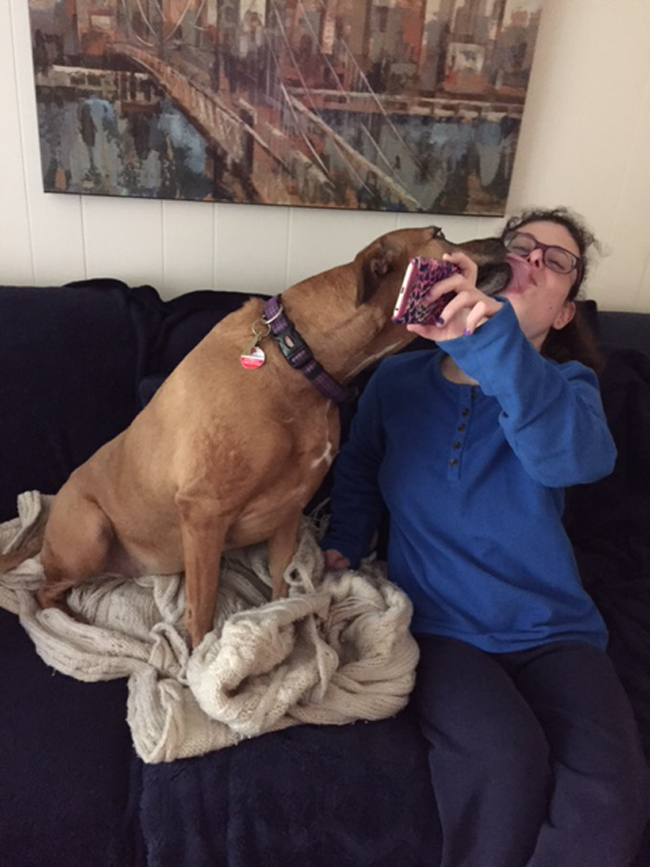
Julie takes a selfie with Brook as he smothers her with kisses.
Another Merlin’s KIDS graduate, Willow, was rescued from a beach in Aruba where she ran with a feral pack. She was so scared that nobody could touch her. With patience and love her foster family won her love and trust. Now after completing the training program, the 40-pound sweet-natured cunucu dog is ready to join three other Merlin’s Kids service dogs in the Animal Adaptive Therapy program at the Calais School for special needs children in New Jersey. Willow is a cortisol detection dog trained to detect stress signals in students and to alert the counseling team so that they can intervene before a problem escalates. She will also work with students to learn the social, emotional and behavioral skills they need to succeed in life.
Willow and Brook are just two of the 1,300 dogs that have been rescued, rehabilitated and trained as service dogs by Wolfe, a canine behavior rehabilitation specialist and author of “SHH HAPPENS! Dog Behavior 101.” In addition to Rhodesian Ridgebacks, the nonprofit organization has rescued and rehabilitated Labrador mixes, pointer mixes and coonhound mixes to work as service dogs. The goal of the organization is to ensure that service dogs are available to families in need regardless of financial circumstances. To fulfill this mission it depends on financial donations and sponsorships.
Wolfe said that Merlin’s KIDS service dogs are highly trained and highly specialized. They can do anything from keeping a special needs child from wandering away to opening doors or picking up pencils for children with disabilities to alerting before the onset of a seizure. It’s important, the trainer said, to make sure that the dogs are physically capable of doing the jobs being asked of them and that they have the right temperament.
“I’m very careful when placing dogs with autistic children because these kids can have such erratic behavior and the dogs have to be able to handle that,” Wolfe said. “Service dogs who will be tethered to a child have to be really chill and calm”
When it comes to autistic children Wolfe’s dogs are trained to serve the individual child. For example, dogs are trained to help children who are overstimulated by interrupting behavior patterns, and they can prevent children from opening a door and running out into the street. Some children need deep pressure to fall asleep so Wolfe and her team train service dogs to lay across their laps at night.
“We have a lot of autistic kids who had never slept in their own beds until they got a service dog,” Wolfe said. In addition to donations and sponsors, Merlin’s Kids is always in need of volunteers and foster families.
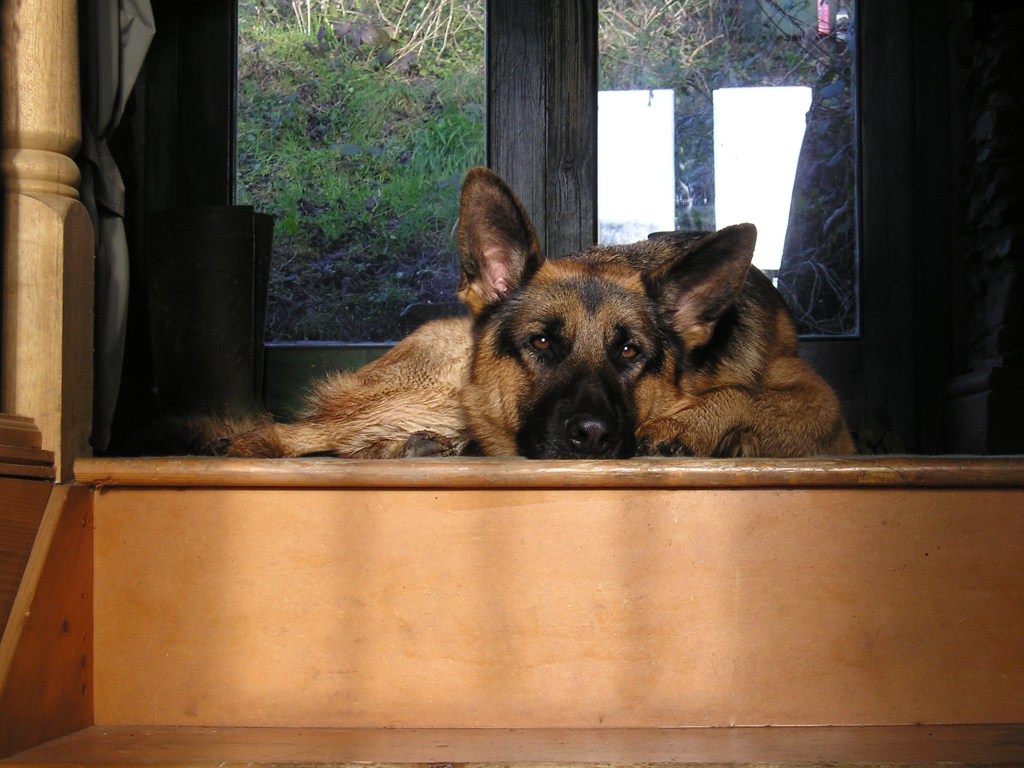
Here’s a photograph of Pharaoh taken on the 3rd December, 2005. Taken in my home in Harberton, Devon, some two years before I met Jeannie.
It’s not the world’s best photograph but I start today’s post with it simply because there is a look in Pharaoh’s eyes that spells out love to me in capital letters. Always has since the day I took that photograph.
Here’s an enlargement of the photo offering a closer look at Pharaoh’s expression in those eyes.
Right from the very first moment that I held Pharaoh I sensed the start of a loving bond. Did I choose to love Pharaoh? Well, of course I did! Was it a conscious decision? I don’t think so!
All of which is my introduction to a fascinating essay about the science of love that recently appeared on the Care2 site.
Love may often feel spontaneous and sometimes even out of control. But is it, really? Research is starting to show that you can change the intensity of love you feel towards others. Similar to emotions like fear or sadness, love can be influenced simply by how you think about a situation.
Is love under your control?
One study looked at altering love feelings in people who were either in a romantic relationship or had recently broken up from one. Each participant started by viewing pictures of their current lover or their ex-partner to bring up their current feelings towards them.
Then, researchers asked them to think about positive aspects of their partner, relationship or possible future scenarios. Their feelings towards their current or previous partners were assessed again.
The second part of the study asked participants to think of negative things about their partner, such as what’s wrong with them or their relationship.
Perhaps it’s not surprising that participants reported having greater love feelings after thinking positive thoughts. Whereas, they reported decreased lovingness after the negative thoughts. It was the same for everyone, whether they were in a relationship or had recently broken up.
Researchers felt this shows great potential for people to take more control of their emotional world, which could in turn benefit their lives and relationships.
Interestingly, thoughts also appeared to affect everyone’s overall mood and feelings about life in general. The positive thoughts improved people’s mood and disposition, whereas the negative thoughts brought everyone down.
This may highlight the importance of how positive and negative thoughts in general can affect our mental health.
How can you put this to use?
You can likely think of times in your own life when it would be helpful to either decrease or increase your love for another person.
Have you ever had an unwanted crush on someone? For instance, obsessing over a celebrity you’ll likely never meet can cause more frustration than joy in your life. Or maybe you’ve fallen for someone who’s not available, either physically or emotionally.
These are times when it’s in your best interest to end your attachment to the person and move on.
In addition, research has shown that thinking negatively about an ex-partner or your previous relationship helps you get over a break-up. The reverse is also true – if you think positively about an ex, it’s more difficult to heal and move on.
Keep this in mind if you’re going through a break-up, or need to reduce your feelings towards someone for another reason.
Try asking yourself questions like these:
What annoys me about this person?
Did we ever have a fight?
Why were we a bad match for each other?
What didn’t work in our relationship?
What could go wrong if we stayed together?
Reframing your thoughts is also a much healthier way to try to get over someone than taking self-destructive action to distract yourself, such as drinking too much.
On the other hand, the world always needs a lot more love to go around. Increasing your love towards others is often one of the best things you can do to help yourself and everyone in your life.
Unfortunately, the top reason married couples give for getting a divorce is growing apart and falling out of love. It’s true the intensity of love feelings usually fluctuates throughout a long-term relationship, but a decrease in feelings doesn’t have to mean the end.
If you’re starting to question whether or not you should stay in a long-standing relationship, take a closer look at your situation before making a final decision. Do you still respect and care for your partner? Do you still have lots in common? Is it possible you’re just in a temporary slump?
Questions like these may help to re-frame how you feel about your relationship:
What are some of your partner’s best qualities?
Why did you get together in the first place?
Are there things you’d like to do with your partner in the future?
What makes you a good match for each other?
Do you enjoy spending time with your partner?
Romantic partners who view each other in a positive light have been shown to actually have happier relationships. This is likely true for all relationships. Choosing more positive thoughts can go a long way towards creating greater harmony with all your loved ones.
Sharing your thoughts and telling others why you love them is even better.
ooOOoo
As my dearest Jeannie will confirm, I have never been the most comfortable person in terms of verbalising my love for her, despite Jean being the dream loving partnership of my life. Jean, on the other hand, expresses her love for me many times each day.
Maybe this essay offers an insight into the different ways we love?
For Jean also tells the dogs individually many times each day that she loves them. I feel the same but don’t say it anything like as often.
So is science showing us why the difference between Jean and me? I think so.
Yet another thing that we learn from dogs. Or more specifically that I have to learn from dogs!
Why can’t we leave nature to do what’s best for our world!
Now, I would be the first to ‘tut-tut’ a little over my sub-heading. For here I am sitting in front of a computer in a room in a reasonably-sized home that undoubtedly has denuded the natural world formerly underneath the present foundations.
Thirteen acres orientated West-East.
Plus, as the property boundary shown on the above picture confirms, about 50% of our acreage is no longer wilderness.
Ergo, it is impossible for humans to live on this planet without there being consequences that conflict with the natural order of the wild.
But homes to live in are one thing. A planned madness for the Lake District in Northern England is another thing altogether.
The attempt to turn the Lake District into a World Heritage site would be a disaster
By George Monbiot, published in the Guardian 9th May 2017
If this bid for power succeeds, the consequences for Britain will be irreversible. It will privilege special interests over the public good, shut out the voices of opposition and damage the fabric of the nation, perhaps indefinitely. No, I’m not writing about the election.
In the next few weeks Unesco, the UN’s cultural organisation, will decide whether or not to grant World Heritage status to the Lake District. Once the decision is made, it is effectively irreversible.
Shouldn’t we be proud that this grand scenery, that plays such a prominent role in our perceptions of nationhood, will achieve official global recognition? On the contrary, we should raise our voices against it. World Heritage status would lock the Lake District into its current, shocking state, ensuring that recovery becomes almost impossible.
Stand back from the fells and valleys and try to judge this vista as you would a landscape in any other part of the world. What you will see is the great damage farming has inflicted: wet deserts grazed down to turf and rock; erosion gullies from which piles of stones spill; woods in which no new trees have grown for 80 years, as every seedling has been nibbled out by sheep; dredged and canalised rivers, empty of wildlife and dangerous to the people living downstream; tracts of bare mountainside on which every spring is a silent one. Anyone with ecological knowledge should recoil from this scene.
This photo was used as the frontispiece of the “State of Conservation” section of the bid documents. It is meant to show how beautiful the fells are. If we saw it anywhere else, we would recognise it as an environmental disaster.
The documents supporting the bid for world heritage status are lavishly illustrated with photos, that inadvertently reveal what has happened to the national park. But this slow-burning disaster goes almost unmentioned in the text. On the contrary, the bid repeatedly claims that the park is in “good physical condition”, and that the relationship between grazing and wildlife is “harmonious”. Only on page 535, buried in a table, is the reality acknowledged: 75% of the sites that are meant to be protected for nature are in “unfavourable condition”.
This is another photo from the bid document, showing St John’s Beck in Thirlmere. The beck is notorious for its flashy response to rainfall – rising dangerously fast. It’s not hard to see why. As the photo shows, it has been dredged and canalised on behalf of the farmers in the valley, and now contains almost no natural features that can slow the flow.
This great national property has degenerated into a sheepwrecked wasteland. And the national park partnership, that submitted the bid, wants to keep it this way: this is the explicit purpose of its attempt to achieve world heritage status. It wants to preserve the Lake District as a “cultural landscape”. But whose culture? Whose landscape? There are only 1080 remaining farms in the district. Should the entire national park be managed for their benefit? If so, why? The question isn’t raised, let alone answered.
I can see the value and beauty of the traditional shepherding culture in the Lake District. I can also see that the farming there, reliant on subsidies, quad bikes and steel barns, now bears little relationship to traditional practice. As the size of landholdings has increased, it looks ever more like ranching and ever less like the old system the bid describes. The bid’s claim that farming there is “wholly authentic in terms of … its traditions, techniques and management systems” is neither intelligible nor true. Remnants of the old shepherding culture tend to be represented ceremonially, as its customs are mostly disconnected from the farm economy.
Shepherding is not the only cultural legacy in play. The other is that the Lake District is the birthplace of the modern conservation movement. Inspired by the Picturesque and Romantic movements, much of our environmental ethic and the groups representing it, such as the National Trust, originated here. Attempts to preserve natural beauty in the district began in the mid-18th century, with complaints against the felling of trees around Derwent Water. Today, the national park cares so little for this legacy that, as the bid admits, “there are no data available” on the condition of the Lake District’s woodlands.
The small group favoured by this bid sees environmental protection as anathema. Farmers’ organisations in the Lake District have fought tooth and nail against conservation measures. They revile the National Trust and the RSPB, whose mild efforts to protect the land from overgrazing are, with the help of a lazy and compliant media, treated like bubonic plague. As one of these farming groups exults, world heritage status “gives us a powerful weapon” that they can wield against those who seek to limit their impacts. If the plan is approved, this world heritage site would be a 230,000-hectare monument to overgrazing and ecological destruction.
30 years ago, this was a bare sheep pasture (with a couple of seeding birch trees). This is a photo I took (with my failing phone) on a hill elsewhere in Britain. It gives an idea of what parts of the Lake District fells could look like if they were allowed to recover.
This is not the only sense in which the bid is unsustainable. Nowhere in its 700 pages is Brexit mentioned. It was obviously written before the referendum, and has not been updated. Yet the entire vision relies, as the bid admits, on the economic viability of the farming system, which depends in turn on subsidies from the European Union.
Without these payments, there would be no sheep farming in the Lake District: it operates at a major loss. European subsidies counteract this loss, delivering an average net farm income of £9,600. Unsurprisingly, people are leaving the industry in droves: the number of farms in the national park is declining by 2% a year. And this is before the payments cease.
What is the national park partnership, that prepared this bid, going to do – march people onto the fells at gunpoint and demand they continue farming? Or does it hope that the government, amid the massacre of public investment that will follow Brexit, will not only match but exceed the £3bn of public money currently being passed to UK farmers by the European Union? Your guess is as good as mine. This omission alone should disqualify the bid.
The failure to mention this fatal issue looks to me like one of many attempts to pull the Herdwick wool over Unesco’s eyes. The entire bid is based on a fairy tale, a pretence that the rural economy of the Lake District hasn’t changed for 200 years. If Unesco grants world heritage status on these grounds, it will inflict irreparable harm on both our natural heritage and its own good standing.
The hills, whose clothes so many profess to admire, are naked. The narrative we are being asked to support is false. The attempt to ensure that the ecological disaster zone we call the Lake District National Park can never recover from its sheepwrecking is one long exercise in woolly thinking.
When one reads this one is left with a feeling of great sadness. A sadness that our ‘movers and shakers’ can’t resist the urge to meddle. Can’t understand the beauty that is found in nature in the raw.
Earlier on I illustrated how our own property has ‘interfered’ with the wilderness of this most beautiful Oregonian countryside. But as I hope to show you with the following photographs taken on our property back in 2014 that wild beauty can be hung on to in some measure.
Looking upstream along Bummer Creek from the driveway bridge.
I have sent a message to Unesco asking if the views of the public are being taken into account and, if so, how those views are to be communicated to Unesco. If you wish to contact them then the details are on this page: http://whc.unesco.org/en/world-heritage-centre/
Any replies from Unesco will be posted here.
UPDATE 0815 PDT May 22nd.
My email yesterday to Unesco was ‘bounced back’ as an invalid email address (despite me using the email address on the Unesco website!!).
But following George Monbiot’s reply to me, giving me the name of James Bridge (jbridge@unesco.org.uk) at Unesco, I have now sent Mr. Bridge the following email:
Dear Mr. Bridge,
I write as a British citizen, born a Londoner in 1944, to protest in the strongest possible terms to the proposal to turn the English Lake District into a World Heritage Site. This is your Tentative List reference http://whc.unesco.org/en/tentativelists/5673/.
Would you please provide me with the details of where or whom within Unesco I can write setting out in detail my objections to this proposal?
Your soonest reply would be very much appreciated.
Sincerely,
Paul Handover
I won’t hold my breath over getting a quick reply.
Couldn’t have a better story to follow yesterday’s news about Socks finding a new home.
I have lost count of the times that over the years I have featured on this blog the bond between a person and a dog. Yet that hasn’t blunted my mind or dulled my heart to hearing of new stories of this wonderful bond arriving over the ‘air waves’.
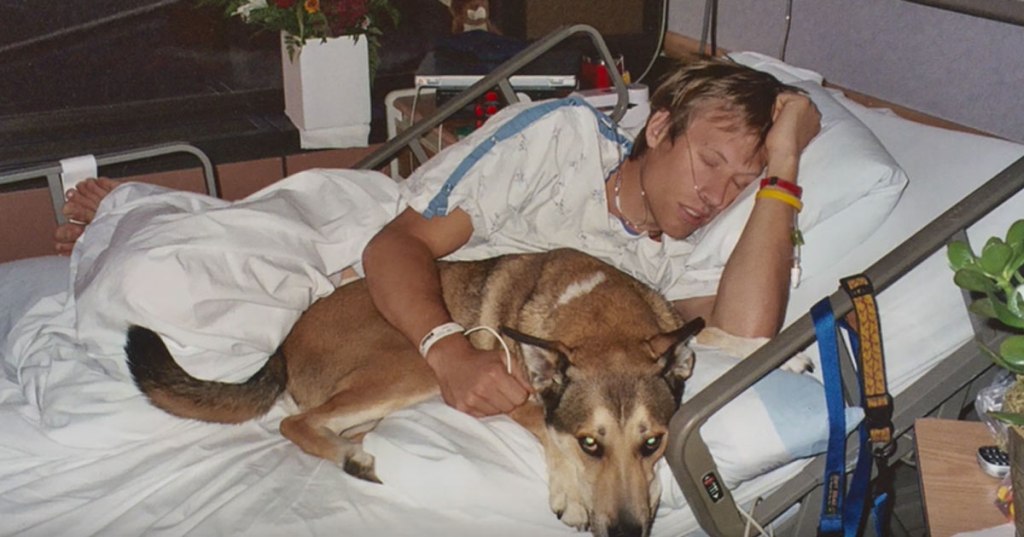
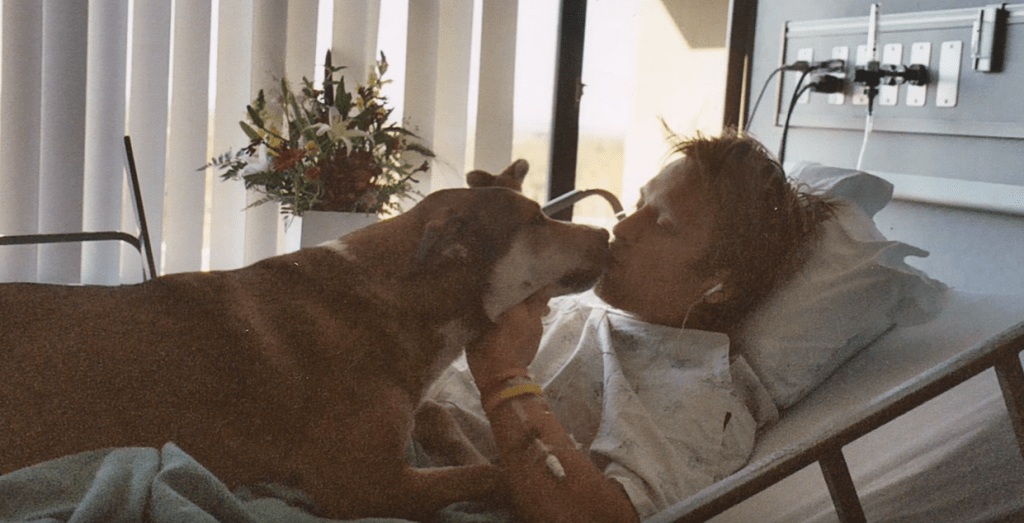
Doctor’s tell dog to leave owner’s hospital bed, but dog refuses and lays by his owner’s side
written by Jenny Brown on July 11th, 2016 There is the saying that a dog is a man’s best friend. It might be because a dog is by your side when you’re feeling down, is there to play catch when you feel like throwing around the frisbee, or simply there when you want some company.
As dog-lovers we are grateful for the things dogs do for us, but do we consider how dogs might be as grateful for the things we do for them? In this video, the beautiful relationship between one man, Ben, and his dog is shown from the perspective of not the man, but his dog.
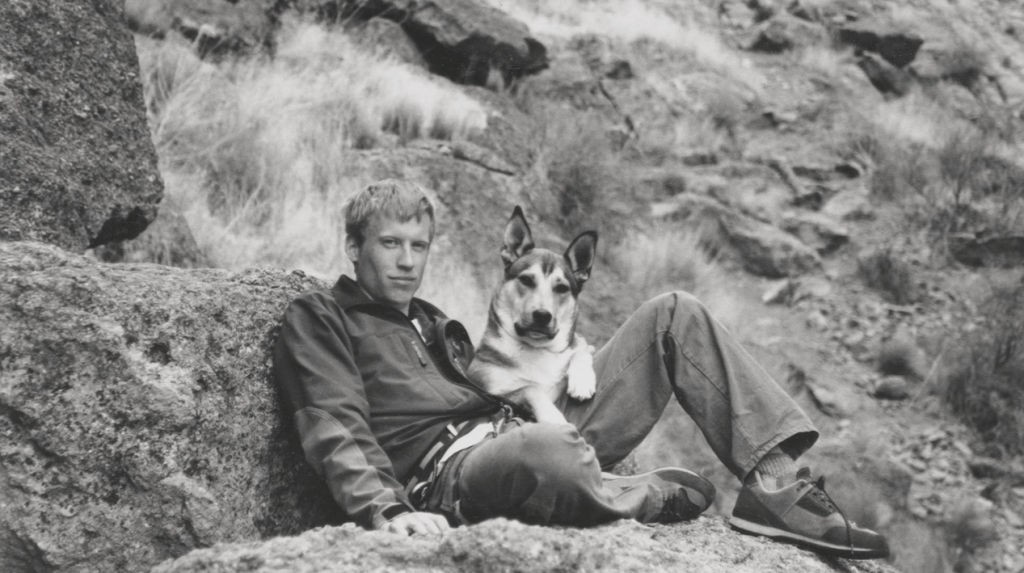
The relationship between Ben and his dog begins in their earlier years. The two of them travel around the world. From camping in the deserts to hiking in the mountains, they discover their favorite places to visit and make new friends along the way.
Source YouTube/Ben Moon
As the story continues, however, Ben develops cancer. While Ben must spend his time in a hospital and away from traveling, his dog continues to stay by his side, night and day. The relationship between Ben and his dog seems that it may worsen due to Ben’s obstacle, but instead, their relationship only strengthens.
Source YouTube/Ben Moon
The story progresses years later, as Ben overcomes his battle and the bond between him and his dog continues to grow. Through the highs and lows of their relationship, Ben and his dog remain the best of friends until the very end.
This touching video is a dedication made by Ben to his dog, for all the best moments they spent together. This video also shows what is truly the essence of friendship, between a man and his best friend, his dog.
Source YouTube/Ben Moon
Please SHARE this with your friends and family.
(Ed: Note that the dialogue in the following professionally shot film is the voice of the dog.)
ooOOoo
Friendship, as in true friendship, is very precious. That true friendship is rarely unconditional between humans. Not impossible, just rare.
For common examples of unconditional friendship, as in the unconditional love bond, we have to turn to our dogs.
I included a photo of Socks and wished him the very best of luck in finding a home.
Beautiful Socks!
Well, miracles of miracles, when I came to my emails last Saturday morning awaiting me was this email from John Zande.
Paul and Jean, Socks has a wonderful new home!
I really don’t want to jinx it by writing this email (I am the superstitious naked ape, after all), but the morning started out with not much hope as we drove and drove out into the countryside, wondering where on earth this petshop was that was hosting the adoption fair.
When we eventually found it, it was a tiny storefront, little more than a dog-bath business. We thought, “nothing is going to come from this.” They were just opening as we arrived and met the young girl who runs it. Lovely person. Literally two minutes later a family walk up the road dropping off their two dogs for a bath. We got to talking. They fell in love with Socks.
After a phone call to the woman’s husband (a serious, serious dog lover, we’re told, as she is too) we heard the words we did not think we’d hear: “If it’s OK, we’d love to give him a home.”
Ten minutes later we were in their house, which was about 50 meters down the road. Nice place, lots of room, and Socks has full run of the outside, and a huge enclosed laundry-come-Socks-home for the night. He won the lotto! Three young boys full of energy. He took to them like a champion. I still can’t believe it. It’s like this every time we find a home. It just doesn’t seem real.
Anyway, I’ve attached two short videos of Socks and his new home, and a photo. And yes, the family is keeping Jean’s name, Socks. They loved it. I’m sure G will write you later tonight, but you both played a huge role in this. Your help paid for his neutering, and for that we’re eternally grateful.
Here is that photo and those videos.
oooo
oooo
oooo
A little later on ‘G’, John’s nickname for his wife, sent me these further details:
Hello Paul and Jean – I guess you’ve been cheering since John’s e-mail, right? So have we, since this morning.
Well, I have to say I still can’t believe how lucky we (and Socks) have been. Virginia and Fabiano and their three boys: Lago (11 or 12 y.o, not sure); Marcos (turning 8 tomorrow, Sunday) and Raphael, 6. Lovely family, she invited us to go to their place (he was working), showed us around.
As I said at the outset: It doesn’t get more beautiful than this!
It is very hard to avoid hyperbole when one speaks of global warming.
I am indebted to The Nation magazine, May 8/15 Issue, in which is included a feature article authored by Bill McKibben. My sub-heading is much of what Bill wrote in his first line.
It is hard to avoid hyperbole when you talk about global warming. It is, after all, the biggest thing humans have ever done, and by a very large margin.
A few sentences later, Bill offers this:
In the drought-stricken territories around the Sahara, we’ve helped kick off what The New York Times called “one of the biggest humanitarian disasters since World War II.” We’ve melted ice at the poles at a record pace, because our emissions trap extra heat from the sun that’s equivalent to 400,000 Hiroshima-size explosions a day.
Yet what scares me, scares me beyond comprehension, is the almost universal disregard being shown by Governments and those with power and influence right across the world to what in anyone’s language is the most pressing catastrophe heading down the tracks. Not next year; not tomorrow, but now!
Or in Mr. McKibben’s words, once more from that Nation article:
But as scientists have finally begun to realize, there’s nothing rational about the world we currently inhabit. We’re not having an argument about climate change, to be swayed by more studies and journal articles and symposia. That argument is long since won, but the fight is mostly lost—the fight about the money and power that’s kept us from taking action and that is now being used to shut down large parts of the scientific enterprise. As Trump budget chief Mick Mulvaney said in March, “We’re not spending money on that anymore. We consider that to be a waste of your money to go out and do that.” In a case this extreme, scientists have little choice but to be citizens as well. And given their credibility, it will matter: 76 percent of Americans trust scientists to act in the public interest, compared with 27 percent who think the same thing about elected officials.
Whatever your response is to what I have already presented, the one thing that I do know is that you have been aware of humanity’s effect on our atmosphere for many, many years. Indeed, Bill McKibben wrote his first book twenty-eight years ago!
His 1989 book The End of Nature is regarded as the first book for a general audience about climate change, and has appeared in 24 languages; he’s gone on to write a dozen more books.
But I would be the first to acknowledge that back in 1989 while I did become aware of Bill McKibben and did purchase and read that book of his, I didn’t see the effects he prophesied. In addition, I didn’t understand the mechanisms that would bring those effects into place.
Now, today, it’s very difficult to deny that global weather systems are behaving in ways that most do not understand albeit we do understand how those weather changes are affecting our lives.
One person who did, and still does even more, understand the physics involved in our changing weather, is Patrice Ayme. For some nineteen years after Bill McKibben’s first book, Patrice published a post on his blog. I have been following Patrice’s blog for some years and while I would be the first to stick my hand in the air and declare that some of his posts are a little beyond me, there’s no question of the integrity of his writings and his bravery in spelling out the truth of these present times. (OK, the truth a la Monsieur Aymes but I would place a decent bet of PA being closer to the core truth of many issues than Joe Public.)
I am indebted to Patrice for granting me permission to republish that post. Please read it. Don’t be put off by terms that may not be familiar to you. Read it to the end – the message is very clear.
ooOOoo
Applying Equipartition Of Energy To Climate Change PREDICTS WILD WEATHER.
By Patrice Ayme, March 8th, 2008.
Lately, the world weather has been especially perplexing, influenced by the cold ocean temperatures of a La Niña current in the equatorial Pacific. For Earth’s land areas, 2007 was the warmest year on record.
This year, record cold is more the norm. Global land-surface temperatures so far are below the 20th-century mean for the first time since 1982, according to the National Climatic Data Center. Last month in China, snowstorms stranded millions of people, while in Mumbai, officials reported the coldest day in 46 years.
Yet, England basked in its fourth-warmest January since 1914, the British Met Office reported. The crocus and narcissus at the U.K.’s Royal Botanical Gardens at Kew flowered a week earlier than last year — 11 days ahead of their average for the decade and weeks ahead of their pattern in the 1980s. In Prague, New Year’s Day was the warmest since 1775.
“It is difficult to judge the significance of what we are seeing this year,” said Kew researcher Sandra Bell. “Is it a glitch or is it the beginning of something more sinister and alarming?”” (Robert Lee Hotz, Wall Street Journal, March 8, 2008).
Many scientists have pondered this question, as if they did not know the answer, but it is a straightforward application of thermodynamics.
A basic theorem of equilibrium thermodynamics, the EQUIPARTITION OF ENERGY theorem, says that the same amount of energy should be present in all degrees of freedom into which energy can spill.
(How does one demonstrate this theorem? Basically, heat is agitation, kinetic energy at the scale of atoms and molecules. This agitation can spill in a more organized manner, in great ensembles, such as vast low and high pressure systems, or large scale dynamics. See the note on entropy and negative temperatures.)
In the case of meteorology, this implies, oversimplifying a bit, that only one-third of the energy should go into heat (and everybody focuses on the augmentation of temperature). Now, of course, since the energy enters the system as heat, non equilibrium thermodynamics imposes more than one-third of the energy will be heat.
As time goes by, though, the other two degrees of freedom, potential energy (represented as the geometry of gradients of pressures, high and low pressure systems, hurricanes) and dynamics (wind speed and vast movements of air masses of varying temperatures and/or pressure; and the same for sea currents) will also store energy.
Thus the new heat created in the lower atmosphere by the increased CO2 greenhouse will be transformed in all sorts of weather weirdness: heat, cold, high and low pressures, wind, and big moves of big things. Big things such as vast re-arrangements of low and high pressure systems, as observed in the Northern Hemisphere, or the re-arrangement of sea currents as apparently also observed, and certainly as it is expected. Since it happened in the past (flash ice age of the Younger Dryas over Europe, 18,000 years ago).
As cold and warm air masses get thrown about, the variability of temperatures will augment all over.
In other words, record snow and cold in the Alps and record warmth simultaneously in England is a manifestation of the equipartition of energy theorem applied to the greenhouse warming we are experiencing. It is not mysterious at all, and brutal variations such as these, including sudden cold episodes, are to be expected, as more and more energy gets stuffed in the planetary climate, and yanks it away from its previous equilibrium.
Wind speed augmentations have already had a spectacular effect: by shaking the waters of the Austral ocean with increasingly violent waves, carbon dioxyde is being removed as if out of a shaken carbonated drink. Thus the Austral ocean is now a net emitter of CO2 (other oceans absorb CO2, and transform it into carbonic acid).
Hence the observed variations are the beginning of something more sinister and alarming. Climate change is changing speed. Up, up, and away.
Note on entropy: Some may object that transforming heat into collective behavior of vast masses of air or sea violates the Second Law Of Thermodynamics, namely that entropy augments always, in any natural process. Well, first of all, the genius of the genus Homo, not to say of all of life itself, rests on local violations of the Second Law. Secondly, the most recent physics recognizes that fundamental considerations allow systems where increased energy lead to increased order (such a system is said to be in a negative temperature state).
Even more revealingly, a massive greenhouse on planet Earth would lead, as happened in the past, to a much more uniform heat, all around the planet, that is, a more ordered state. Meanwhile, the transition to the present order of a temperate climate to the completely different order of an over-heated Earth will bring complete disorder, as observed.
ooOOoo
Going to leave you with a picture taken from weather.com
An emaciated polar bear is seen on a small sheet of ice in this image taken in August in Svalbard, north of mainland Norway. (Kerstin Langenberger)
Please, please, please: make a difference! Environmentally, domestically and politically, please make a difference.
Yet despite it being so obvious it hadn’t crossed my mind before.
I’m referring to the wonderful idea of using those people, who through circumstance have found themselves homeless, to care for animals via an animal shelter.
Glenn Greenwald Unveils New Project to Build Animal Shelter in Brazil Staffed by Homeless People
Published on May 10, 2017
http://democracynow.org – Pulitzer Prize-winning journalist Glenn Greenwald unveils his plans to build an animal shelter in Brazil with his husband David Miranda, a city council member in Rio de Janeiro. The shelter will be staffed by homeless people who live on the streets with abandoned pets.
ooOOoo
If you, like me, needed to be reminded as to Mr. Greenwald’s background there’s plenty online.
Glenn Greenwald is one of three co-founding editors of The Intercept. He is a journalist, constitutional lawyer, and author of four New York Times best-selling books on politics and law. His most recent book, No Place to Hide, is about the U.S. surveillance state and his experiences reporting on the Snowden documents around the world. Prior to co-founding The Intercept, Glenn’s column was featured at The Guardian and Salon. He was the debut winner, along with Amy Goodman, of the Park Center I.F. Stone Award for Independent Journalism in 2008, and also received the 2010 Online Journalism Award for his investigative work on the abusive detention conditions of Chelsea Manning. For his 2013 NSA reporting, he received the George Polk award for National Security Reporting; the Gannett Foundation award for investigative journalism and the Gannett Foundation watchdog journalism award; the Esso Premio for Excellence in Investigative Reporting in Brazil (he was the first non-Brazilian to win), and the Electronic Frontier Foundation’s Pioneer Award. Along with Laura Poitras, Foreign Policy magazine named him one of the top 100 Global Thinkers for 2013. The NSA reporting he led for The Guardian was awarded the 2014 Pulitzer Prize for public service.
That post in April also included a picture of a recent stray supported by the Fund. He was named Socks by Jean.
Socks starting a new and better life.
Anyway, a few days ago Dionete sent me an email that I wanted to share with you.
Hello Paul – how’s things with you & Jean & dogs? Fine, I hope.
We’ve got some news: Socks has just been neutered. We picked him up at the clinic an hour ago and took him to a temporary shelter. Unfortunately it is just for a couple of nights but at least he is safe and can recover from the grogginess tonight.
Here are the pics we’ve taken.
Thank you very much (again) for allowing it to happen.
All the very best,
Here are those photographs of Socks.
oooo
oooo
Socks has a really gentle look in those eyes. Hopefully, he will find a new loving home before too long.










 There is the saying that a dog is a man’s best friend. It might be because a dog is by your side when you’re feeling down, is there to play catch when you feel like throwing around the frisbee, or simply there when you want some company.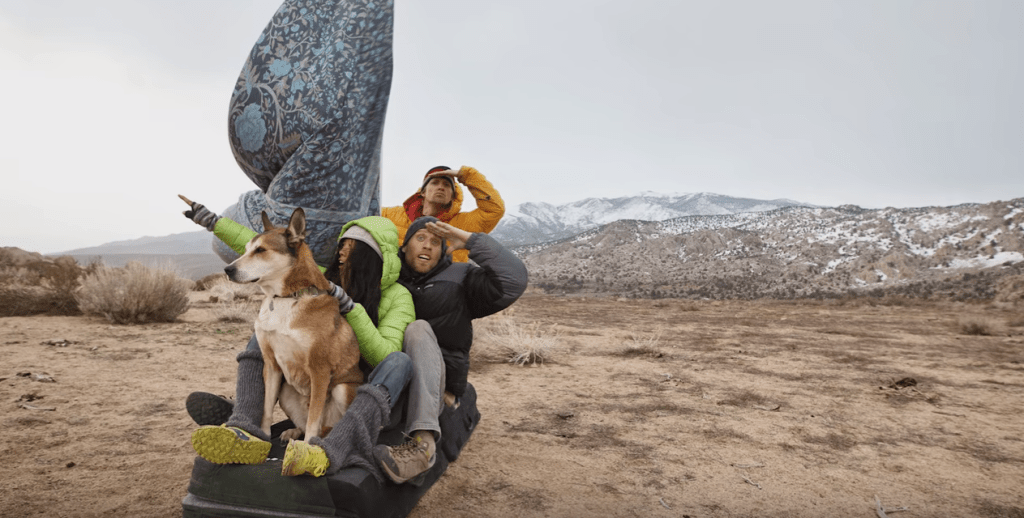





 Learning from Dogs