Category: Innovation

Our human language!

Namely a universal law.

I was attracted to an article that I read in The Conversation last a week ago.

It also taught me that we humans speak according to Zipf’s Law. I had not previously heard of this law.

So let me republish the article with the full permission of The Conversation.

ooOOoo

Whalesong patterns follow a universal law of human language, new research finds

A humpback whale mother and calf on the New Caledonian breeding grounds. Mark Quintin

Jenny Allen, Griffith University; Ellen Garland, University of St Andrews; Inbal Arnon, Hebrew University of Jerusalem, and Simon Kirby, University of Edinburgh

All known human languages display a surprising pattern: the most frequent word in a language is twice as frequent as the second most frequent, three times as frequent as the third, and so on. This is known as Zipf’s law.

Researchers have hunted for evidence of this pattern in communication among other species, but until now no other examples have been found.

In new research published today in Science, our team of experts in whale song, linguistics and developmental psychology analysed eight years’ of song recordings from humpback whales in New Caledonia. Led by Inbal Arnon from the Hebrew University, Ellen Garland from the University of St Andrews, and Simon Kirby from the University of Edinburgh, We used techniques inspired by the way human infants learn language to analyse humpback whale song.

We discovered that the same Zipfian pattern universally found across human languages also occurs in whale song. This complex signalling system, like human language, is culturally learned by each individual from others.

Learning like an infant

When infant humans are learning, they have to somehow discover where words start and end. Speech is continuous and does not come with gaps between words that they can use. So how do they break into language?

Thirty years of research has revealed that they do this by listening for sounds that are surprising in context: sounds within words are relatively predictable, but between words are relatively unpredictable. We analysed the whale song data using the same procedure.

Photo of a humpback whale breaching from the water.
A breaching humpback whale in New Caledonia. Operation Cetaces

Unexpectedly, using this technique revealed in whale song the same statistical properties that are found in all languages. It turns out both human language and whale song have statistically coherent parts.

In other words, they both contain recurring parts where the transitions between elements are more predictable within the part. Moreover, these recurring sub-sequences we detected follow the Zipfian frequency distribution found across all human languages, and not found before in other species.

Whale song recording (2017) Operation Cetaces 916 KB (download)

A chart showing the different frequencies of sound in whale song.
Close analysis of whale song revealed statistical structures similar to those found in human language. Operation Cetaces

How do the same statistical properties arise in two evolutionarily distant species that differ from one another in so many ways? We suggest we found these similarities because humans and whales share a learning mechanism: culture.

A cultural origin

Our findings raise an exciting question: why would such different systems in such incredibly distant species have common structures? We suggest the reason behind this is that both are culturally learned.

Cultural evolution inevitably leads to the emergence of properties that make learning easier. If a system is hard to learn, it will not survive to the next generation of learners.

There is growing evidence from experiments with humans that having statistically coherent parts, and having them follow a Zipfian distribution, makes learning easier. This suggests that learning and transmission play an important role in how these properties emerged in both human language and whale song.

So can we talk to whales now?

Finding parallel structures between whale song and human language may also lead to another question: can we talk to whales now? The short answer is no, not at all.

Our study does not examine the meaning behind whale song sequences. We have no idea what these segments might mean to the whales, if they mean anything at all.

Photo of whale backs and tails visible above the surface of the sea.
A competitive pod of humpback whales on the New Caledonian breeding grounds. Operation Cetaces

It might help to think about it like instrumental music, as music also contains similar structures. A melody can be learned, repeated, and spread – but that doesn’t give meaning to the musical notes in the same way that individual words have meaning.

Next up: birdsong

Our work also makes a bold prediction: we should find this Zipfian distribution wherever complex communication is transmitted culturally. Humans and whales are not the only species that do this.

We find what is known as “vocal production learning” in an unusual range of species across the animal kingdom. Song birds in particular may provide the best place to look as many bird species culturally learn their songs, and unlike in whales, we know a lot about precisely how birds learn song.

Equally, we expect not to find these statistical properties in the communication of species that don’t transmit complex communication by learning. This will help to reveal whether cultural evolution is the common driver of these properties between humans and whales.

Jenny Allen, Postdoctoral research associate, Griffith University; Ellen Garland, Royal Society University Research Fellow, School of Biology, University of St Andrews; Inbal Arnon, Professor of Psychology, Hebrew University of Jerusalem, and Simon Kirby, Professor of Language Evolution, University of Edinburgh

This article is republished from The Conversation under a Creative Commons license. Read the original article.

ooOOoo

The research scientists have led to a prediction: … we should find this Zipfian distribution wherever complex communication is transmitted culturally. Humans and whales are not the only species that do this.

Fascinating!
The Edwin Hubble Great Debate

The following is more than fascinating; it is an example of how far science has reached; both figuratively and literally.

ooOOoo

One large Milky Way galaxy or many galaxies? 100 years ago, a young Edwin Hubble settled astronomy’s ‘Great Debate’

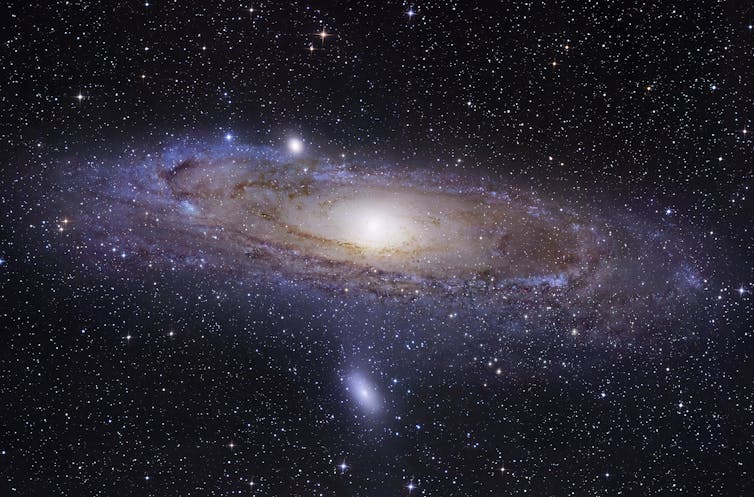
The Andromeda galaxy helped Edwin Hubble settle a great debate in astronomy. Stocktrek Images via Getty Images

Chris Impey, University of Arizona

A hundred years ago, astronomer Edwin Hubble dramatically expanded the size of the known universe. At a meeting of the American Astronomical Society in January 1925, a paper read by one of his colleagues on his behalf reported that the Andromeda nebula, also called M31, was nearly a million light years away – too remote to be a part of the Milky Way.

Hubble’s work opened the door to the study of the universe beyond our galaxy. In the century since Hubble’s pioneering work, astronomers like me have learned that the universe is vast and contains trillions of galaxies.

Nature of the nebulae

In 1610, astronomer Galileo Galilei used the newly invented telescope to show that the Milky Way was composed of a huge number of faint stars. For the next 300 years, astronomers assumed that the Milky Way was the entire universe.

As astronomers scanned the night sky with larger telescopes, they were intrigued by fuzzy patches of light called nebulae. Toward the end of the 18th century, astronomer William Herschel used star counts to map out the Milky Way. He cataloged a thousand new nebulae and clusters of stars. He believed that the nebulae were objects within the Milky Way.

Charles Messier also produced a catalog of over 100 prominent nebulae in 1781. Messier was interested in comets, so his list was a set of fuzzy objects that might be mistaken for comets. He intended for comet hunters to avoid them since they did not move across the sky.

As more data piled up, 19th century astronomers started to see that the nebulae were a mixed bag. Some were gaseous, star-forming regions, such as the Orion nebula, or M42 – the 42nd object in Messier’s catalog – while others were star clusters such as the Pleiades, or M45.

A third category – nebulae with spiral structure – particularly intrigued astronomers. The Andromeda nebula, M31, was a prominent example. It’s visible to the naked eye from a dark site.

The Andromeda galaxy, then known as the Andromeda nebula, is a bright spot in the sky that intrigued early astronomers.

Astronomers as far back as the mid-18th century had speculated that some nebulae might be remote systems of stars or “island universes,” but there was no data to support this hypothesis. Island universes referred to the idea that there could be enormous stellar systems outside the Milky Way – but astronomers now just call these systems galaxies.

In 1920, astronomers Harlow Shapley and Heber Curtis held a Great Debate. Shapley argued that the spiral nebulae were small and in the Milky Way, while Curtis took a more radical position that they were independent galaxies, extremely large and distant.

At the time, the debate was inconclusive. Astronomers now know that galaxies are isolated systems of stars, much smaller than the space between them.

Hubble makes his mark

Edwin Hubble was young and ambitious. At the of age 30, he arrived at Mount Wilson Observatory in Southern California just in time to use the new Hooker 100-inch telescope, at the time the largest in the world.

A black and white photo of a man looking through the lens of a large telescope.
Edwin Hubble uses the telescope at the Mount Wilson Observatory. Hulton Archives via Getty Images

He began taking photographic plates of the spiral nebulae. These glass plates recorded images of the night sky using a light-sensitive emulsion covering their surface. The telescope’s size let it make images of very faint objects, and its high-quality mirror allowed it to distinguish individual stars in some of the nebulae.

Estimating distances in astronomy is challenging. Think of how hard it is to estimate the distance of someone pointing a flashlight at you on a dark night. Galaxies come in a very wide range of sizes and masses. Measuring a galaxy’s brightness or apparent size is not a good guide to its distance.

Hubble leveraged a discovery made by Henrietta Swan Leavitt 10 years earlier. She worked at the Harvard College Observatory as a “human computer,” laboriously measuring the positions and brightness of thousands of stars on photographic plates.

She was particularly interested in Cepheid variables, which are stars whose brightness pulses regularly, so they get brighter and dimmer with a particular period. She found a relationship between their variation period, or pulse, and their intrinsic brightness or luminosity.

Once you measure a Cepheid’s period, you can calculate its distance from how bright it appears using the inverse square law. The more distant the star is, the fainter it appears.

Hubble worked hard, taking images of spiral nebulae every clear night and looking for the telltale variations of Cepheid variables. By the end of 1924, he had found 12 Cepheids in M31. He calculated M31’s distance as a prodigious 900,000 light years away, though he underestimated its true distance – about 2.5 million light years – by not realizing there were two different types of Cepheid variables.

His measurements marked the end of the Great Debate about the Milky Way’s size and the nature of the nebulae. Hubble wrote about his discovery to Harlow Shapley, who had argued that the Milky Way encompassed the entire universe.

“Here is the letter that destroyed my universe,” Shapley remarked.

Always eager for publicity, Hubble leaked his discovery to The New York Times five weeks before a colleague presented his paper at the astronomers’ annual meeting in Washington, D.C.

An expanding universe of galaxies

But Hubble wasn’t done. His second major discovery also transformed astronomers’ understanding of the universe. As he dispersed the light from dozens of galaxies into a spectrum, which recorded the amount of light at each wavelength, he noticed that the light was always shifted to longer or redder wavelengths.

Light from the galaxy passes through a prism or reflects off a diffraction grating in a telescope, which captures the intensity of light from blue to red.

Astronomers call a shift to longer wavelengths a redshift.

It seemed that these redshifted galaxies were all moving away from the Milky Way.

Hubble’s results suggested the farther away a galaxy was, the faster it was moving away from Earth. Hubble got the lion’s share of the credit for this discovery, but Lowell Observatory astronomer Vesto Slipher, who noticed the same phenomenon but didn’t publish his data, also anticipated that result.

Hubble referred to galaxies having recession velocities, or speeds of moving away from the Earth, but he never figured out that they were moving away from Earth because the universe is getting bigger.

Belgian cosmologist and Catholic priest Georges Lemaitre made that connection by realizing that the theory of general relativity described an expanding universe. He recognized that space expanding in between the galaxies could cause the redshifts, making it seem like they were moving farther away from each other and from Earth.

Lemaitre was the first to argue that the expansion must have begun during the big bang.

The Hubble telescope, which looks like a metal cylinder, floating in space.
Edwin Hubble is the namesake for NASA’s Hubble Space Telescope, which has spent decades observing faraway galaxies. NASA via AP

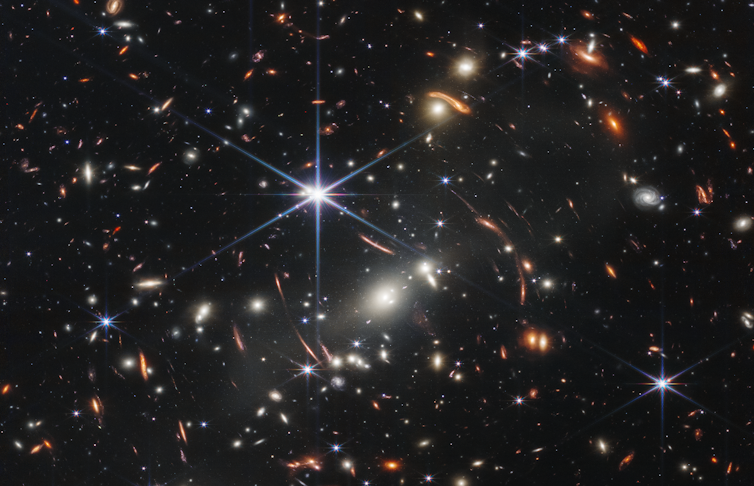
NASA named its flagship space observatory after Hubble, and it has been used to study galaxies for 35 years. Astronomers routinely observe galaxies that are thousands of times fainter and more distant than galaxies observed in the 1920s. The James Webb Space Telescope has pushed the envelope even farther.

The current record holder is a galaxy a staggering 34 billion light years away, seen just 200 million years after the big bang, when the universe was 20 times smaller than it is now. Edwin Hubble would be amazed to see such progress.

Chris Impey, University Distinguished Professor of Astronomy, University of Arizona

This article is republished from The Conversation under a Creative Commons license. Read the original article.

ooOOoo

So wonderful that in this modern era we can read articles from distinguished scientists in the comfort of our own homes.

Starting a veterinary clinic

Like any new start-up of a business venture, this requires knowledge, skills and quite a bit of luck!

I am delighted to offer this guest post by Penny.

ooOOoo

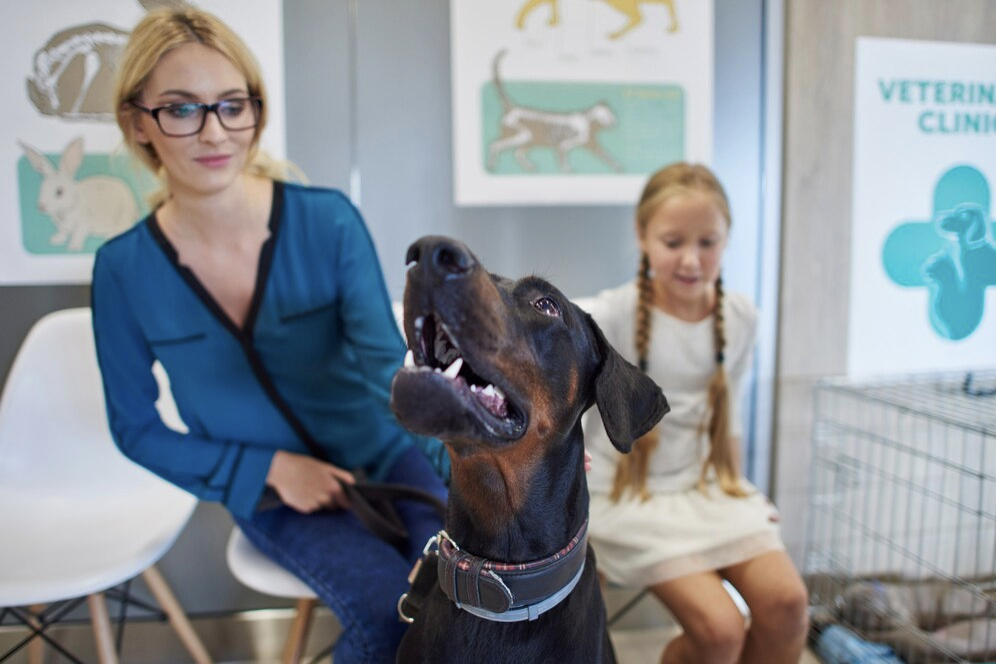
Image: Freepik

Vision to Reality: Building a Profitable Vet Clinic

Launching a veterinary clinic is a significant endeavor that requires meticulous planning and strategic decision-making. This venture combines a passion for animal care with the intricacies of managing a successful business. Aspiring clinic owners must navigate several critical steps to lay a strong foundation and ensure operational excellence. Starting your own clinic promises not only to fulfill a dream of helping animals but also to establish a thriving enterprise in the community.

Build a Strong Foundation with an Effective Marketing Strategy

A robust marketing strategy is essential to attract potential clients in the digital era. Establishing a professional online presence through a user-friendly website that details your services, team, and location builds trust among pet owners. Engage actively on social media with regular updates and client testimonials to showcase your expertise and commitment to animal care. Forge partnerships with local pet-related businesses to increase visibility and drive traffic to your clinic, enhancing both your and your partners’ customer bases.

Craft a Clear and Detailed Business Plan

A well-constructed business plan acts as your clinic’s roadmap, detailing your mission, services offered, and the specific target market. Identify your niche early—whether it’s specializing in certain animals or treatments—to attract the appropriate clientele. Include comprehensive financial projections and a marketing budget in your plan to ensure financial preparedness and support your clinic’s promotional activities.

Enhance Your Business Knowledge by Pursuing an MBA

Running a veterinary clinic demands a blend of clinical and business expertise. Pursuing a master’s of business administration online can boost your proficiency in key business areas such as strategy, management, and finance. An MBA not only deepens your understanding of business operations but also enhances leadership skills and self-assessment capabilities. These competencies are essential for balancing the medical and business demands of your clinic, ensuring its long-term success.

Safeguard Your Business with Proper Insurance

Operating a veterinary clinic comes with inherent risks, making comprehensive insurance coverage essential. Essential policies include malpractice insurance to handle legal issues and general liability insurance for accidents on your premises. Property insurance is crucial to protect your clinic’s infrastructure and equipment against unexpected events. Consulting with an insurance expert can ensure that you have thorough coverage to protect against potential financial setbacks.

Invest in High-Quality Veterinary Equipment

Providing top-tier care necessitates investing in high-quality veterinary equipment. Essential tools like X-ray machines, surgical instruments, and lab equipment should be of the highest standard to ensure accurate diagnoses and treatments. Modern technologies, such as digital imaging systems, not only enhance patient care but also improve operational efficiency. While the initial cost may be higher, investing in quality equipment pays off in the long run by boosting efficiency and minimizing errors.

Secure the Necessary Funding for Your Clinic

Securing sufficient funding is critical when starting a veterinary clinic. Estimate your startup costs accurately to understand your financial needs, including equipment, premises, staffing, and marketing. Explore diverse financing options, such as bank loans, private investors, and specialty medical practice loans that might offer favorable terms. Adequate initial funding prevents cash flow problems and supports your clinic’s growth trajectory.

Choose the Right Location for Your Clinic

The location of your clinic is pivotal to its success, necessitating a spot with a high demand for veterinary services. Conduct thorough market research to choose a community rich in pet owners who need your services. Select a location that is accessible, visible, and has ample parking to ensure convenience for your clients. Proximity to complementary services like pet groomers or dog trainers can further enhance client traffic and provide expansion opportunities.

Opening a veterinary clinic is both challenging and rewarding, demanding a careful blend of dedication and strategic foresight. Success in this field not only enhances the well-being of pets but also contributes positively to the local community. It requires ongoing commitment to adapt and grow in a dynamic environment. Ultimately, the fulfillment of running a successful veterinary clinic comes from both the impact on animal health and the achievement of entrepreneurial goals.

Discover the timeless wisdom that dogs offer at Learning from Dogs, where integrity and living in the present are celebrated. Dive into our content and embrace the lessons from our four-legged friends.

ooOOoo

This is a skilled summary of the needs of opening a vet’s clinic. And thank you, Penny, for your last paragraph. It has been a pleasure!

Picture Parade Four Hundred and Fifty

Today is the Autumn Equinox.

At the equinoxes, the ecliptic and the celestial equator intersect. See the intersection point on this imaginary great circle, representing the dome of Earth’s sky? The celestial equator is directly above Earth’s equator. The ecliptic is the sun’s apparent path across our sky. And the celestial equator intersects your horizon at points due east and due west. That’s why – at every equinox, no matter where you are on the globe – the sun, on the celestial equator, rises due east and sets due west. Image via NASA.

This September equinox happens at 12:44 UTC or 04:44 Pacific Daylight Time today, September 22, 2024.

The equinox sun rises due east and sets due west

It’s not true that day and night are precisely equal on the day of an equinox. But here’s an equinox fact that is true. The sun rises due east and sets due west at the equinox. It might seem counterintuitive. But it’s true no matter where you live on Earth (except at the North and South Poles). Here’s how to visualize it.

To understand the nearly due-east and due-west rising and setting of an equinox sun, you have to think of the reality of Earth in space. First think about why the sun’s path across our sky shifts from season to season. That’s because our world is tilted on its axis with respect to its orbit around the sun.

Read the rest of this article here: https://earthsky.org/tonight/equinox-sun-rises-due-east-and-sets-due-west/

A dog as a camera animal

This is a lovely story from The Dodo.

I saw this article in the August 23rd issue of The Dodo magazine and it appealed to me.

So I wanted to share it with you all.

ooOOoo

Couple Hires Dog To Film Their Wedding — And The Results Are Simply Perfect

Such a great idea ❤️

By Alana Francis-Crow

Published on Aug 23, 2024

Ellie Woods’ family dog Bobby has always been an important part of her love story with her wife Georgie Woods. When Ellie brought Georgie home for the first time, the family member she was most anxious for Georgie to meet was Bobby.

When the couple got engaged and started planning their wedding, they decided it would be fun to try to document the wedding from Bobby’s unique perspective. So right before the ceremony started, they attached a GoPro to Bobby’s back and then set him loose.

For some dogs, walking around with a camera on their back might take some getting used to — but not for Bobby. He immediately felt comfortable.

“He loves being the center of attention,” Georgie told The Dodo. “He just loved it.”

Georgie and Ellie said having Bobby at their wedding was incredibly meaningful for them.

@SASHALEEPHOTOGRAPHY


“Animals are really important to queer couples,” Ellie said. “[I]t was so important to have him … as part of our big day.

When the newlyweds sat down to watch the footage Bobby had captured, what they saw surprised and delighted them. The GoPro had caught Bobby stealing hors d’oeuvres and even walking in on Georgie’s sister in the bathroom. While Bobby is an expert videographer, he is still a dog, after all.

Of course, Bobby’s camera recorded much more than shenanigans. Georgie and Ellie loved watching themselves walk down the aisle together from Bobby’s perspective.

“It captured some really special moments,” Ellie said. “[W]e couldn’t be happier for how it came out because it’s just so organic and such an interesting, different perspective.”

ooOOoo

Dogs are just incredible. As much as I have already said that, time and time again there comes a story that just reinforces that previous sentence.

Parkinson’s Disease (PD)

More information on this terrible condition.

As you know, Jean suffers from PD and was diagnosed in 2015.

Very recently there was this article on PD and I reproduce parts of it (I have not applied for permission to republish) but I have provided the link to a pdf.

ooOOoo

Protein discovery linked to Parkinson’s disease opens future research areas

by WEHI

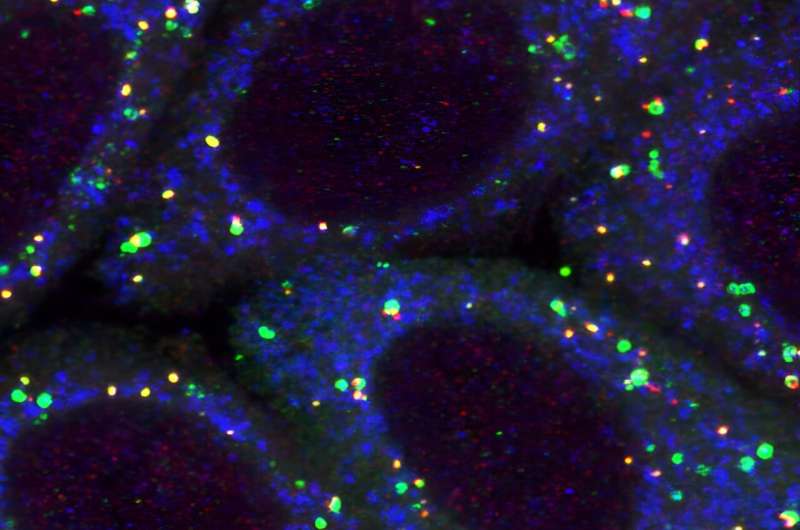
Mitochondria (blue) being targeted by mitophagy (green and red). Credit: WEHI

Parkinson’s disease is the world’s fastest growing neurological condition. Currently there are no drugs or therapies that slow or stop the progression of the disease.

In Australia, someone is diagnosed with Parkinson’s approximately every 30 minutes. Current estimates show there are more than 219,000 people living with Parkinson’s in Australia, a number forecast to double in the next 15 years.

WEHI’s Parkinson’s Disease Research Center has some of the world’s leading researchers tackling the problem using a multi-disciplinary collaborative approach.

New proteins linked to Parkinson’s pathway

Mitochondria are the energy generating machines in our cells and are kept healthy by mitophagy, which is the molecular process of removing or recycling damaged or dysfunctional mitochondria.

PINK1 and Parkin are two key genes involved in mitophagy, and mutations in these genes are linked to early-onset Parkinson’s disease.

Until the discovery of two proteins, NAP1 and SINTBAD, exactly how PINK1/Parkin mitophagy activation was regulated was unknown.

ooOOoo

We wish the scientists all the best as they delve into PD.

That link to the PDF file is https://www.nature.com/articles/s41594-024-01338-y

Do we understand our cosmos?

A recent article from The Conversation suggests not.

As much as I am interested in the cosmos my brain cannot tackle the subject with any form of intelligence.

Thus I really want to share this with you all, in the hope that some of you will appreciate the article.

ooOOoo

Scientists can’t agree on how fast the universe is expanding – why this matters so much for our understanding of the cosmos

Gemma Ware, The Conversation

It’s one of the biggest puzzles in cosmology. Why two different methods used to calculate the rate at which the universe is expanding don’t produce the same result. Known as the Hubble tension, the enigma suggests that there could be something wrong with the standard model of cosmology used to explain the forces in the universe.

Now, recent observations using the new James Webb Space Telescope (JWST) are shaking up the debate on how close the mystery is to being resolved.

In this episode of The Conversation Weekly podcast, two professors of astronomy explain why the Hubble tension matters so much for our understanding of the universe.

(The Conversation included two files that one could listen to but they could not be played directly. But I have left them in the post just in case.)

https://embed.acast.com/60087127b9687759d637bade/6669a6f9efa053001194ed11

https://shows.acast.com/60087127b9687759d637bade/6669a6f9efa053001194ed11

In February, the Nobel prize-winning physicist Adam Reiss, published a new paper. It said that new observations of far-away stars using the JWST matched those obtained by the Hubble Space Telescope.

These stars, called Cepheids, are commonly used in one method of calculating the rate at which the universe is expanding. Known as the local distance ladder, or cosmic distance ladder, this method has been around since observations first made by Edwin Hubble himself in 1929. And it generally produces a rate of expansion of around 73km per second per mega parsec.

But a second method, using predictions of the cosmic microwave background radiation left over by the Big Bang, has constantly arrived at a different number for the rate of expansion of the universe: 67km per second per mega parsec.

Reiss said that when the new data confirmed the earlier observations from the Hubble Space Telescope, the gap between the numbers remains unresolved. “What remains is the real and exciting possibility that we have misunderstood the universe,” he said.

A few months later, however, more data from the JWST, presented by Wendy Freedman, a physicist at the University of Chicago, using observations from a different set of stars, arrived at 69km per second per mega parsec, a number closer to the cosmic microwave background figure of 67. Freedman is excited that the numbers seem to be converging.

Vicent Martínez and Bernard Jones are fascinated by the Hubble tension. Jones is an emeritus professor of astronomy at the University of Groningen in the Netherlands. Martínez, his former student, is now a professor of astronomy and astrophysics at the University of València in Spain.

“The fundamental basis of science, what distinguishes science from science fiction, is our ability to verify the information we are getting,” explains Jones.

That’s why Martinez says the mystery of the Hubble tension is still driving people to:

Research and imagine experiments and organise huge projects with the complicated observation of the cosmos in order to understand what’s going on. At the end, this will affect your idea of the whole universe and probably you will need to change some fundamental ingredient of your cosmological model.

Martinez and Jones have just written a book, along with their co-author Virginia Trimble, about moments in history when scientists realised they’d got something very wrong, and had to readjust their way of thinking. Martínez thinks this could happen again with the Hubble tension:

It could happen that, for example, a new theory of gravity could solve the problem of dark energy or dark matter. We have to be open to those ideas.

Listen to Bernard Jones and Vicent Martínez talk more about the Hubble tension, and how it fits in the wider history of science, on The Conversation Weekly podcast. The episode also features an introduction from Lorena Sánchez, science editor at The Conversation in Spain.

Gemma Ware, Editor and Co-Host, The Conversation Weekly Podcast, The Conversation

This article is republished from The Conversation under a Creative Commons license. Read the original article.

ooOOoo

Fascinating, albeit much of this article a little beyond me. But still fascinating.

Picture Parade Four Hundred and Thirty-Seven

Just a single image today!

That of 50 years ago.

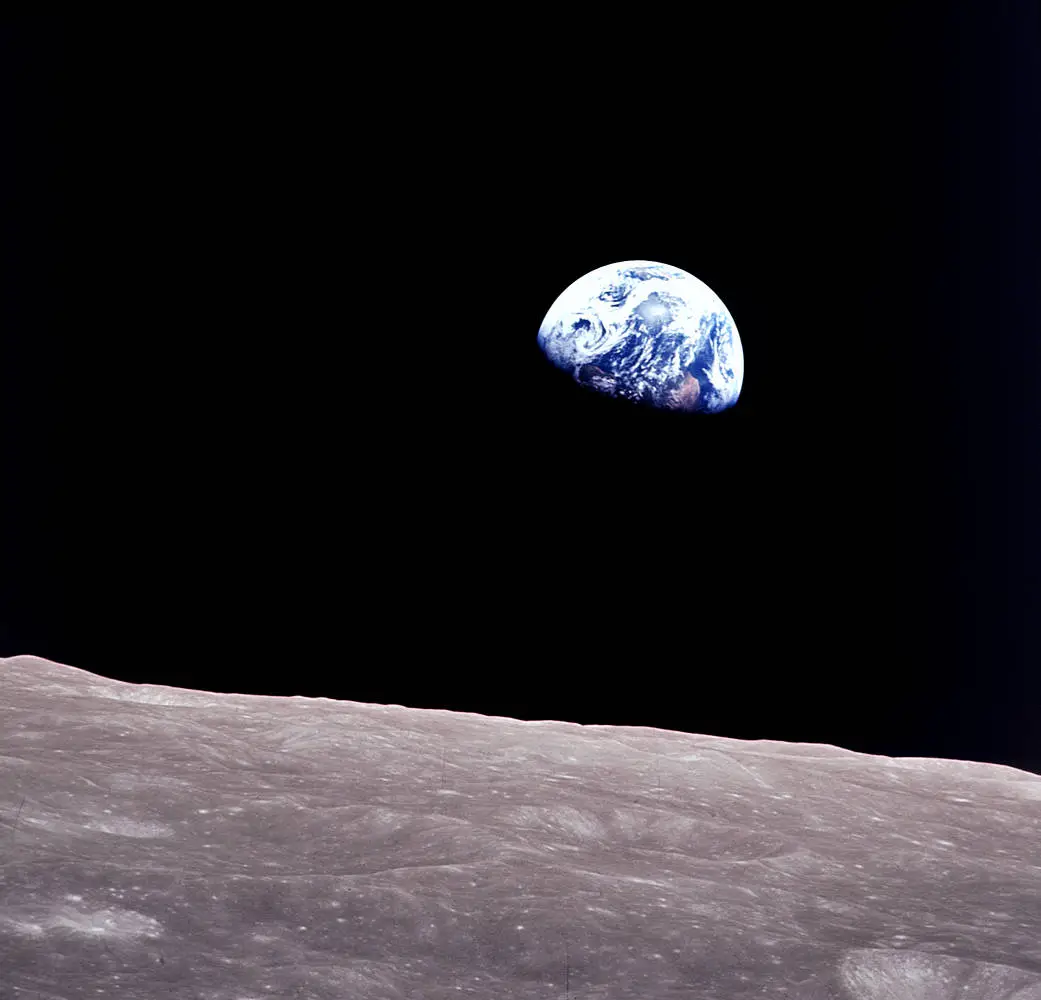
In other words when Apollo 8 was in Lunar Orbit and William Anders, who died on June 7th, aged 90, captured Earth-rise.

This iconic picture shows Earth peeking out from beyond the lunar surface as the first crewed spacecraft circumnavigated the Moon.

Image credit: NASA

What a photograph!

The Quantum Field Theory

This is on the edge of my understanding!

Patrice Ayme recently posted an essay called Relativistic Length Contraction Busts Helium3! As I said in my comment to that post:

“This is far ahead of my knowledge of science. I applaud you for writing this despite me not understanding it”

So it may seem a little strange that I now publish the following. It was published originally on Skeptic. It is quite a long video but, please, settle down and watch it.

ooOOoo

Sean Carroll is creating a profoundly new approach to sharing physics with a broad audience, one that goes beyond analogies to show how physicists really think. He cuts to the bare mathematical essence of our most profound theories, explaining every step in a uniquely accessible way.

Quantum field theory is how modern physics describes nature at its most profound level. Starting with the basics of quantum mechanics itself, Sean Carroll explains measurement and entanglement before explaining how the world is really made of fields. You will finally understand why matter is solid, why there is antimatter, where the sizes of atoms come from, and why the predictions of quantum field theory are so spectacularly successful. Fundamental ideas like spin, symmetry, Feynman diagrams, and the Higgs mechanism are explained for real, not just through amusing stories. Beyond Newton, beyond Einstein, and all the intuitive notions that have guided homo sapiens for millennia, this book is a journey to a once unimaginable truth about what our universe is.

Sean Carroll

Sean Carroll is Homewood Professor of Natural Philosophy at Johns Hopkins University, and Fractal Faculty at the Santa Fe Institute. He is host of the Mindscape podcast, and author of From Eternity to HereThe Particle at the End of the UniverseThe Big Picture, and Something Deeply Hidden. He has been awarded prizes and fellowships by the National Science Foundation, NASA, the American Institute of Physics, the Royal Society of London, and many others. He lives in Baltimore with his wife, writer Jennifer Ouellette. His new book series, The Biggest Ideas in the Universe, includes one volume on Space, Time, and Motion, and this new volume on Quanta and Fields.

Shermer and Carroll discuss:

  • the measurement problem in physics
  • wave functions
  • entanglement
  • fields
  • interactions
  • scale
  • symmetry
  • gauge theory
  • phases
  • matter
  • atoms
  • What is time?
  • Is math all there is? Is math universal?
  • double-slit experiment
  • superposition
  • metaphors in science
  • limitations of models and theories of reality
  • What banged the Big Bang?
  • Why is there something rather than nothing?
  • Second Laws of Thermodynamics and directionality in nature
  • Is there a place for God in scientific epistemology?
  • many interpretations of quantum mechanics
  • multiple dimensions and the multiverse
  • string theory and the multiverse
  • known unknowables: Are there things we can never know, even in principle?
    • God
    • hard problem of consciousness
    • free will/determinism.

ooOOoo

I’m assuming you have watched the video because in a world that is pre-occupied with the trivial this is just the opposite. Sean shares his physics in a profoundly different and powerful way!

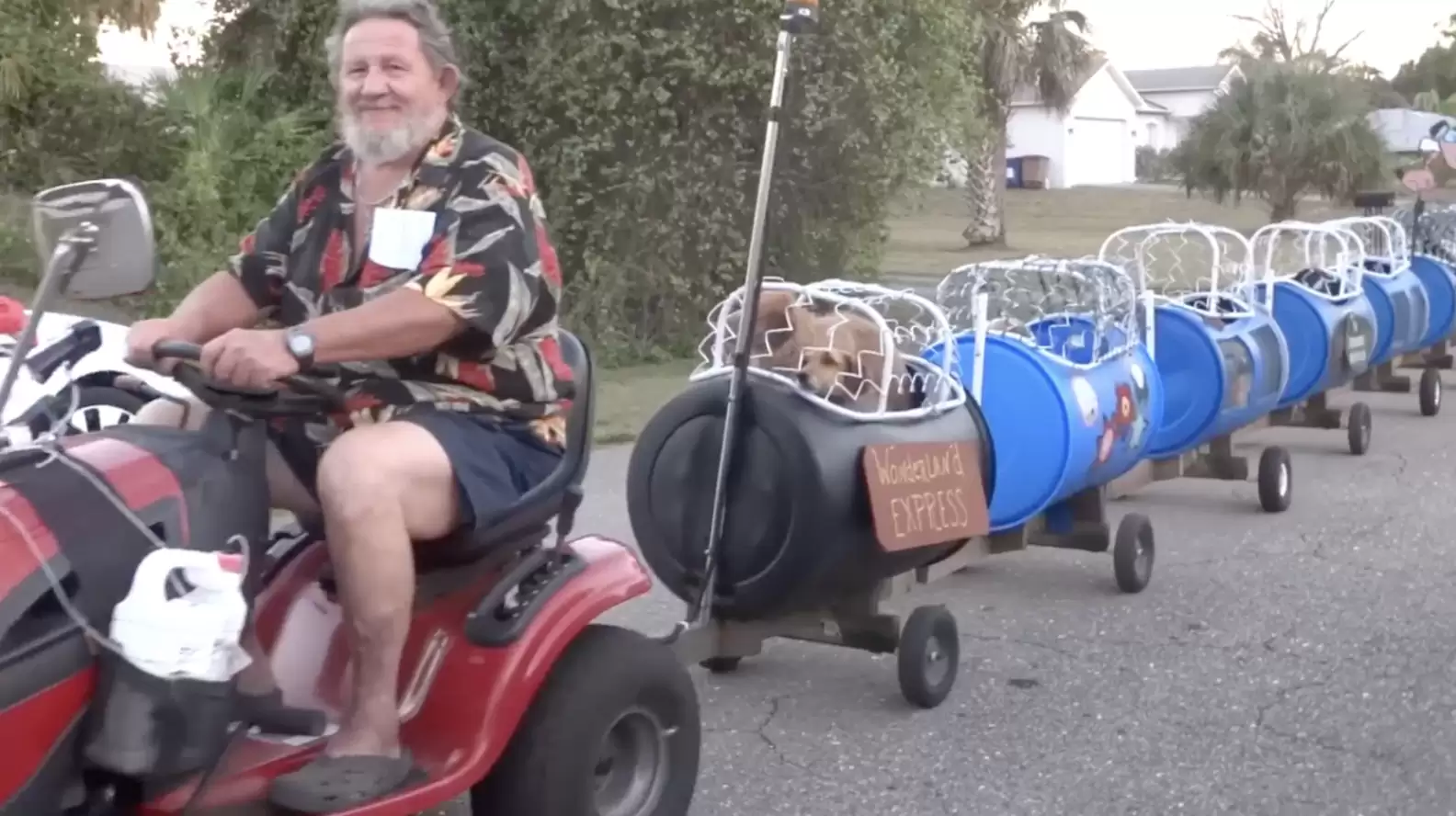
A dog train, no less!

Looking after their ex-rescue dogs.

This was an article on The Dodo and I thought it should be shared with you because it is a wonderful way of transporting their dogs.

ooOOoo

Couple Builds A ‘Dog Train’ To Take Their Rescue Pups Out On Little Adventures

“They just love it. They absolutely love it.”

By Stephen Messenger Published on the 15th March, 2022.

On Friday evenings, just before sunset, the din of traffic on the roads around Lehigh Acres, Florida, gives way to a sound far more pleasing — the cheerful chorus of happy pups on the move.

It’s at this time, like clockwork, a dog train takes to the streets just to brighten the lives of its furry passengers.

Alice E. Herrick

Alice Johnston and her husband, Paul, moved to Lehigh Acres about eight years ago, after years spent operating an animal rescue shelter in Costa Rica. But they didn’t relocate alone. They also brought along the more than a dozen dogs under their care there — all of whom had been saved from the streets.

Now in the suburbs, the Johnstons decided to get creative.

Alice E. Herrick

“We have so many dogs, of course we couldn’t walk them all or put them in the car to take them for a ride,” Alice Johnston told The Dodo. “So, my husband build a train so that we could take them out, drive around the community. He pulls the train with a lawnmower, and I ride a little scooter behind him to keep an eye on things, to make sure they’re safe.”

The happy gang is a sight to behold.

The idea for the Wonderland Express, as its known, was inspired by a Texas man who built a dog train for his own rescue pups. And the Johnstons’ dogs love it just as much.

“The dogs get so excited. They just love it. They absolutely love it,” Johnston said. “They know it’s Friday better than we do. It’s amazing how they know.”

But the pups aren’t the only ones thrilled about their weekly trips.

“We have people who wait for us every week [to pass by on the street],” Johnston said. “Some people come out and give the dogs treats. They really enjoy it.”

The Johnstons have put all that attention the train gets to some very good use.

“My husband has signs all over the train encouraging people to adopt, and not shop,” Johnston said. “There are so many homeless dogs, and they make wonderful pets. Anything we can do to encourage people to give these dogs a chance, we are happy to do it.”

The Johnstons don’t aim to publicize their Wonderland Express dog train, though they are glad people are happy to see it. For them, it’s all about their dogs’ enjoyment — and spreading the word about the joy of adopting.

“It gives us so much joy to know that dogs are getting a second chance,” Johnston said. “And it really gives us satisfaction knowing we’re giving our dogs a good life.”

ooOOoo

That last image I had real trouble with but I left it in the post just in case when it is published it comes out. But even without that photograph one gets the clear idea of the pleasure the Johnstons give to their dogs.

Perfect!