If meditation really works then we want to engage in it.
Those who watched the video that was the central component of yesterday’s post will not have missed the references by Ted Meissner that scientific, double-blind evidence shows that meditation offers benefits for us humans.
Both Jean and I are especially interested in learning more and, hopefully, finding an appropriate meditation group in our nearest town, Grants Pass.
We would also welcome feedback and advice from any of you good people who have trod this path before.
For example, when one conducts a quick internet search into the different forms of meditation there are dozens of websites that are returned in the search findings. Almost choosing one website at random, the Visual Meditation website declares there are 7 Types of Meditation. As in:
Transcendental Meditation (TM)
Heart Rhythm Meditation (HRM)
Kundalini
Guided Visualization
Qi Gong
Zazen
Mindfulness
To my uneducated eye, not one of those types seems to accord with the type supported by the American Meditation Society:
OUR MISSION
To provide instruction in meditation as taught by the founder of AMS, Gururaj Ananda Yogi.
To preserve and share the universal teachings of Gururaj with integrity and wisdom.
To provide a place where those who wish to unfold the inner self may do so in the company of other like-minded people.
Back to the plot! For this post is about the science.
The following video seemed worthy of sharing with you.
I watched the first 10 minutes before deciding it should be shared. By the time this post is published Jean and I will have watched it to the end. [20:45 yesterday evening. Jean and I have just finished watching the Bob Roth video below. It was both fascinating and very helpful!!]
The Aspen Institute
Published on Jun 26, 2016
Published studies have documented the many physical and mental health benefits of meditation, including decreased pain, better immune function, less anxiety and depression, a heightened sense of well-being, and greater happiness and emotional self-control. Google Scholar turns up almost 700,000 research documents on meditation, among them imaging studies that show increased activity in brain regions associated with attention, a higher volume of grey matter, and lessened amygdala response to emotional stimuli. What actually happens in the brain when we meditate? Why is meditation so nourishing to the mind, body and spirit?
Perri Peltz, Interviewer
Bob Roth
But a search of the YouTube website using the search term “meditation science” brought up many other links to shorter videos.
I selected the following (2:23 mins) because it is presented by Ferris Jabr who is an Associate Editor with Scientific American magazine.
Bottom line to my way of thinking is that this is something worth committing to once we know much more about engaging in meditation.
Your experiences most welcomed.
(And, of course, when it comes to chilling out for hours regularly each day then there’s another thing we can learn from our beloved dogs! No better demonstrated than by Brandy yesterday morning in the following photograph!)
You all understand that this blog, while predominantly about our special doggie friends, never hesitates to wander away from matters canine if I think it will be enjoyed by all you good people.
You will also all appreciate that August is the month where in the USA, on August 21st, there will be a total eclipse of the sun.
The reasons why I didn’t hesitate to republish a recent post that was presented on Mother Nature Network.
ooOOoo
What to see in the night sky in August
While the total solar eclipse is the highlight, there are other celestial fireworks to look forward to this month.
Celestial events for August 2017 include a total solar eclipse, Perseid meteor shower and the rise of the Sturgeon Moon. (Photo: Michael Seeley/Flickr)
Welcome to August, a month defined by loud cicadas, pool parties, humidity and children fretting about an impending return to school. When it comes to celestial happenings, however, there is no larger star this month that our own moon. From a partial lunar eclipse to the first coast-to-coast solar eclipse in almost a century, the moon will be the cause of most eyeballs drifting towards the heavens over the next several weeks.
Below is a small sampling of some of the night and day celestial events to look forward to this month. Wishing you all clear skies!
The rise of the full Sturgeon Moon (Aug. 7)
The full Sturgeon Moon is so-named for the fish that are easily caught in August and early September. (Photo: Paul Kline/flickr)
August’s full moon, nicknamed the Sturgeon Moon, will rise for the U.S. Eastern Seaboard on the evening of Aug. 7 at 8:05 p.m.
The Sturgeon Moon gets its name from the species of fish native to both Europe and the Americas that is easily caught this time of year. Other nicknames include the Corn Moon, Fruit Moon and Grain Moon. In countries experiencing winter, such as New Zealand, native Māori called this full moon “Here-turi-kōkā” or “the scorching effect of fire is seen on the knees of man.” This reference is to warm fires that glow during the Southern Hemisphere’s coldest month.
Partial lunar eclipse (Aug. 7 & 8)
Observers in Africa, Asia and Australia will see August’s partial lunar eclipse in its entirety. (Photo: Forrest Tanaka/flickr)
As a kind of consolation prize for missing out on this month’s total solar eclipse over North America, those living on the continents of Africa, Asia and Australia will bear witness to a partial lunar eclipse. Spectators in Europe will catch the tail end of the eclipse as the moon rises around 7:10 p.m. on Aug. 7.
This phenomenon occurs between two to four times a year when the moon passes through a portion of the Earth’s shadow. Because the shadow cast is more than 5,700 miles wide, lunar eclipses last much longer than solar eclipses. In some instances, totality can occur for as long as 1 hour and 40 minutes. As a reference, maximum totality for the Aug. 21 solar eclipse will top out a mere 2 minutes and 42 seconds. The longest, at over 7 minutes, won’t take place until the year 2186.
This month’s partial lunar eclipse is the last of the year. Next year, total lunar eclipses will take place in January and July.
Perseid meteor shower (Aug. 12)
A composite shot of last year’s Perseid meteor shower over Turkey. Notice how the path of the meteors appears to race from the constellation Perseus. (Photo: NASA)
Regarded as one of the best celestial light shows of the year, the Perseid meteor shower occurs from July 17 to Aug. 24 and peaks on the evening of Aug. 12.
The shower, sometimes creating as many as 60 to 200 shooting stars per hour, is produced as Earth passes through debris left over from the orbit of Comet Swift-Tuttle. This 16-mile-wide periodic comet, which completes an orbit around the sun every 133 years, has been described as “the single most dangerous object known to humanity.” This is because every instance of its return to the inner solar system brings it ever closer to the Earth-moon system. Though astronomers believe the comet bears no threat for at least the next 2,000 years, future impacts cannot be ruled out.
If the comet were to hit Earth, scientists believe Swift-Tuttle would be at least 27 times more powerful than the asteroid or comet that wiped out the dinosaurs. For now, you can take in the beauty of the debris from this harbinger of doom by looking north towards the constellation Perseus. Because the moon will be three-quarters full, you’ll need to search out a nice dark sky to escape any light pollution from urban environments.
Total solar eclipse (Aug. 21)
A total solar eclipse as captured over the Southern Hemisphere in November 2012. (Photo: NASA Goddard Space Flight Center)
Total solar eclipses occur when the new moon moves between the Earth and the sun and casts its shadow on the planet. This shadow is comprised of two concentric cones –– the larger penumbra, which from Earth only shows the sun partially blocked, and the much smaller umbra, which blocks the sun completely. It is within this latter cone that totality will occur, giving spectators on the ground what’s considered by many to be a “once-in-a-lifetime” experience.
The Great American Eclipse will actually first start out in the Pacific (at this point, it will actually, unbelievably rise while completely eclipsed!), making landfall on the Oregon community of Lincoln Beach at 10:16:01 a.m. (PDT). From there, the moon’s shadow will continue to race across the U.S. The point of greatest eclipse, where the axis of the moon’s shadow passes nearest to the center of Earth, will take place in Hopkinsville, Kentucky and last 2 minutes and 40.1 seconds. In celebration of the event, the town has temporarily renamed itself “Eclipseville,” and expects anywhere from 55,000 to 150,000 tourists to visit in advance of Aug. 21.
The next total solar eclipse over the U.S. will take place on April 8, 2024.
New moon (Aug. 21)
August’s new moon will not only create a show during the day, but also leave the heavens to glow unimpeded by night. (Photo: Coconino National Forest/flickr)
Fresh after wowing the U.S. during the day with its solar theatrics, August’s new moon will give way to dark skies for the next several nights. This is the perfect opportunity to grab a blanket and head outside into the still-warm summer evenings to enjoy the heavens in all their glory. With some remnants of the Perseids still visible, it will also offer a chance to catch some of the faintest shooting stars.
Look for Earth’s shadow (All year)
The Earth’s shadow and ‘Belt of Venus’ as captured above Mauna Kea, Hawaii. (Photo: Jay El Eskay/flickr)
Ever wonder what causes the beautiful bands of color in the eastern sky at sunset or the western sky at sunrise? The dark blue band stretching 180 degrees along the horizon is actually the Earth’s shadow emanating some 870,000 miles into space. The golden-red portion, nicknamed the “Belt of Venus,” is Earth’s upper-atmosphere illuminated by the setting or rising sun.
Now that you know about this phenomenon, choose a night or morning sometime to try and pick it out. You’ll need a western or eastern horizon that’s fairly unobstructed to get a clear view of our planet’s huge curved shadow.
Looking ahead to September
On Sept. 15, the Cassini spacecraft will end its 20-year mission to Saturn with a dramatic death dive into the ringed planet. (Photo: NASA)
As fall beckons, the biggest event next month will be the dramatic death dive of the Cassini spacecraft into Saturn. Taking place on Sept. 15, Cassini will make discoveries about Saturn right up until its fiery conclusion, with unprecedented photos and data captured and transmitted during its final moments.
ooOOoo
It is going to be quite a month!
Oh, and for those of you that want to know the timings of the eclipse over North America there is a useful reference site here, from which I republish the following table.
Eclipse Start & End: Local Time for US States
The eclipse will begin over the Pacific Ocean at 15:46 UTC, which corresponds to 8:46 am Pacific Time. It will reach the coast of Oregon at Lincoln City, just west of Salem, at 9:04 am local time. The eclipse will reach its maximum point here at 10:17 am.
From here, the Moon’s central shadow will move inland. The following table shows when the Moon will begin to move in front of the Sun and the moment it completely covers the Sun, as seen from some locations along the central path of the eclipse. All times are local.
Please note that this list includes only a small selection of locations where the total eclipse will be visible. You can look up more locations in our Eclipse Database or via the Eclipse Map.
Enjoy your nights out there! And let your dogs howl their hearts out!
What a delight to read this latest scientific news.
There’s so much ‘doom and gloom’ to be seen on the news services across the world that a genuine discovery that enlarges the mind is always a treat. Now make that a discovery about our dogs. Better still, let the BBC do it for you.
ooOOoo
How did dogs become our best friends? New evidence
By Helen BriggsBBC News, 19 July 2017
Dogs most probably evolved from wolves at a single location about 20,000 to 40,000 years ago, a study suggests.
Previously, it had been thought that dogs were tamed from two populations of wolves living thousands of miles apart.
Researchers studied DNA from three dogs found at archaeological sites in Germany and Ireland that were between 4,700 and 7,000 years old.
The ancient canines share ancestry with modern European dogs.
By looking at the rates of change to the DNA from the oldest specimen, scientists were able to place the timing of the domestication of dogs to between 20,000 and 40,000 years ago.
Krishna Veeramah of Stony Brook University in New York is a researcher on the study.
He said the process of dog domestication began when a population of wolves moved to the outskirts of hunter-gatherer camps to scavenge for leftovers.
”Those wolves that were tamer and less aggressive would have been more successful at this,” he explained.
“While the humans did not initially gain any kind of benefit from this process, over time they would have developed some kind of symbiotic relationship with these animals, eventually evolving into the dogs we see today.”
DNA was obtained from the skull of an ancient dog.
The story of how dogs came to be tamed from wolves is complex and hotly debated.
Scientists believe dogs started moving around the world, perhaps with their human companions, about 20,000 years ago.
By 7,000 years ago, they were pretty much everywhere, although they were not the kind of dogs that we would consider pets.
”They would likely have resembled dogs we today call village dogs, which are free-breeding that did not live in specific people’s houses and have a similar look to them across the world,” said Dr Veeramah.
The dogs were later bred for their skills as hunters, herders or gundogs, eventually creating hundreds of modern breeds.
The research, published in Nature Communications, suggests even the dog breeds and village dogs found in the Americas and Pacific Islands are almost completely derived from recent European dog stock.
This is probably due to prolific dog breeding in Victorian times.
The dog skull inside an ancient burial chamber.
”In this regard, it appears therefore that our 7,000-year, Neolithic-old dog from Europe is virtually an ancestor to most modern breed dogs found throughout the world,” said Dr Veeramah.
”This ancestral relationship may even stretch back to the oldest dog fossil we know of, which is approximately 14,000 years old from Germany.”
Previous evidence suggested that the first domestic dogs appeared on opposite sides of the Eurasian continent more than 12,000 years ago.
Later, the eastern dogs moved with migrating humans and bred with those from the west, according to this theory.
Dr Greger Larson of the University of Oxford said it was great to see more ancient dog genomes being published.
“There is a fascinating story here and we’re only just scraping the surface,” he said.
“The more we get the more we might have a shot at finally unravelling the story of how we became such good friends over such a long time.”
Study Reveals Origin of Modern Dog Has a Single Geographic Origin
Reported in Nature Communications, the finding counters previous research that suggested two domestication events led to the modern dog
Stony Brook, NY; Stony Brook University: Department of Ecology and Evolution Assistant Professor Krishna Veeramah. His research will be published in Nature and his study reveals origin of modern dog has a single geographic origin.
STONY BROOK, N.Y., July 18, 2017 – By analyzing the DNA of two prehistoric dogs from Germany, an international research team led by Krishna R. Veeramah, PhD, Assistant Professor of Ecology & Evolution in the College of Arts & Sciences at Stony Brook University, has determined that their genomes were the probable ancestors of modern European dogs. The finding, to be published in Nature Communications, suggests a single domestication event of modern dogs from a population of gray wolves that occurred between 20,000 and 40,000 years ago.
Dogs were the first animal to be domesticated by humans. The oldest dog fossils that can be clearly distinguished from wolves are from the region of what is now Germany from around 15,000 years ago. However, the archeological record is ambiguous, with claims of ancient domesticated dog bones as far east as Siberia. Recent analysis of genetic data from modern dogs adds to mystery, with some scientists suggesting many areas of Europe, Central Asia, South Asia and the Middle East as possible origins of dog domestication.
(L to R) Shyamalika Gopalan, PhD Candidate, Dean Bobo, Bioinformatics Scientist, and Krishna Veermah, Assistant Professor of Ecology & Evolution. (F) Four-legged friend, Joci
In 2016, research by scientists using emerging paleogenomics techniques proved effective for sequencing the genome of a 5,000-year-old ancient dog from Ireland. The results of the study led the research team to suggest dogs were domesticated not once but twice. The team from Oxford University also hypothesized that an indigenous dog population domesticated in Europe was replaced by incoming migrants domesticated independently in East Asia sometime during the Neolithic era.
“Contrary to the results of this previous analysis, we found that our ancient dogs from the same time period were very similar to modern European dogs, including the majority of breed dogs people keep as pets,” explained Dr. Veeramah. “This suggests that there was no mass Neolithic replacement that occurred on the continent and that there was likely only a single domestication event for the dogs observed in the fossil record from the Stone Age and that we also see and live with today.”
In the paper, titled “Ancient European dog genomes reveal continuity since the Early Neolithic,” Veeramah and colleagues used the older 7,000 year old dog to narrow the timing of dog domestication to the 20,000 to 40,000 years ago range.
They also found evidence of the younger 5,000 year old dog to be a mixture of European dogs and something that resembles current central Asian/Indian dogs. This finding may reflect that people moving into Europe from the Asian Steppes at the beginning of the Bronze Age brought their own dogs with them.
“We also reanalyzed the ancient Irish dog genome alongside our German dog genomes and believe we found a number of technical errors in the previous analysis that likely led those scientists to incorrectly make the conclusion of a dual domestication event,” added Veeramah.
Overall, he emphasized, their new genomic analysis of ancient dogs will help scientists better understand the process of dog evolution, even if the exact geographic origin of domestication remains a mystery. He expects further sequencing of the ancient genomes from Eurasia will help to eventually solve the issue.
The study and findings are a collaboration between scientists at Stony Brook University; the University of Michigan, Johannes Gutenberg-University, Germany; University of Bamberg, Germany; Trinity College, Ireland; and the Department of Monumental Heritage in Germany.
The research was supported in part by the National Institutes of Health.
###
About Stony Brook University Stony Brook University is going beyond the expectations of what today’s public universities can accomplish. Since its founding in 1957, this young university has grown to become one of only four University Center campuses in the State University of New York (SUNY) system with more than 25,700 students, 2,500 faculty members, and 18 NCAA Division I athletic programs. Our faculty have earned numerous prestigious awards, including the Nobel Prize, Pulitzer Prize, Indianapolis Prize for animal conservation, Abel Prize and the inaugural Breakthrough Prize in Mathematics. The University offers students an elite education with an outstanding return on investment: U.S. News & World Report ranks Stony Brook among the top 40 public universities in the nation. Its membership in the Association of American Universities (AAU) places Stony Brook among the top 62 research institutions in North America. As part of the management team of Brookhaven National Laboratory, the University joins a prestigious group of universities that have a role in running federal R&D labs. Stony Brook University is a driving force in the region’s economy, generating nearly 60,000 jobs and an annual economic impact of $4.65 billion. Our state, country and world demand ambitious ideas, imaginative solutions and exceptional leadership to forge a better future for all. The students, alumni, researchers and faculty of Stony Brook University are prepared to meet this challenge.
ooOOoo
Even better than the University providing the link to the above, it also gave me the good Doctor’s email address. I shall reach out to him and see if there is more that I can share with you!
I’m always a little cautious about submissions of guest articles from those who are ‘in the business’. But sometimes drawing the line between a genuinely informative article from a pet-related business and overt promotion is a fine one. I chose to publish an article from Alex back in November last year. It was about behavioral issues with dogs and was well received.
Earlier this month, in came another guest article from DoctorPup and, again, I think this is a good share with you. But please do let me know if you think it is too much of a product ‘sell’. I protect the integrity of this blog without question.
ooOOoo
Michael Schoeff reveals how to effectively potty train a puppy
Written by Florentina Popa on behalf of the company
Michael Schoeff, the inventor of the innovative potty training system called Pup Pee Poo Palace, considers that classic house training a puppy is a difficult process that takes time, patience, commitment and consistency.
Traditional potty training
If you want to follow the traditional path, it is important to inform yourself carefully and to establish clear guidelines to get on the right track your pup in just a few weeks. Puppies learn very fast from two to four months, picking up easily on the concept of housebreaking. Five to 30 minutes after eating, puppies want to defecate, so it is important to respect a clear schedule. The most important aspects you should take into consideration is to stay consistent, positive and patient and the results will appear gradually.
The first step is to establish a routine by creating a schedule for eating and playing. Feeding your puppy according to a clear schedule depending on his age, ensures eliminations at consistent times. This is crucial because generally, a puppy has control of his bladder one hour for every month of age so they are prone to accidents if they are not taken outdoor regularly. During his first months of life, a puppy should be taken outside at least every two hours as well as immediately after he wakes up, during and after playing and after eating.
Pick a specific spot outside and always take him there. Also, use a specific word or phrase before he goes outside to remind what he has to do. Take him to walks or playtime after he eliminated. Your attitude is important during potty training, so avoid being nervous or impatient as well as using a loud tone because you’ll make your pup anxious.
Reward him every time he eliminates outdoor, praising or giving treats immediately after he has finished and before coming back inside. This will help teaching him what you are expecting from him.
It is recommended to pick up his water dish about two hours before bedtimes to avoid relieving himself during the night.
An essential rule and hard to apply is to always supervise your puppy when he is indoor to avoid accidents or soiling. Keep your puppy in a specific area and watch him for signs he needs to go out. If you notice him barking, scratching the door, squatting, sniffing or circling, take him outdoor.
If there are times when you cannot supervise him, restrict him to an area small enough that he won’t want to eliminate there. Make sure that the space is comfortable to stand, lie down and turn around. A good idea is to use a crate or a leash, but don’t forget to take him outdoors whenever he needs to eliminate. You can gradually give him more freedom in the house as he learns to eliminate outdoor.
Keep in mind that accidents can happen anytime and make sure you act properly. If you see him eliminating indoor, interrupt him by saying “outside!” or making a noise without scaring him and take him to his eliminating spot outdoors. Always use positive reinforcement, keep calm and be assertive. Don’t punish him for eliminating in the house to avoid a negative connection with his bodily function, just clean up the room and make sure to remove the smell.
If your program doesn’t allow to stay at home with your puppy, you need to find someone to take your pup for bathroom breaks several times a day. You can teach him to eliminate in specific place indoors, but be careful regarding this process as he will get used to it and will practice it as well when becoming adult. Pup Pee Poo Palace was released in 2013 as an ideal solution for busy dog owners that don’t have enough time to spend with their puppies. The system is based on puppies’ natural behavior to get up on things, so it contains the separate elevated sleep and play area and the elimination area. Bedding area is made of a frame covered in bedding material and it is raised above the floor of the cage using frame extensions. The system helps reinforcing good patterns for puppies and encouraging them to repeat the actions.Puppy owners can let the palace door open when being with their puppies so they can return to the cage whenever they need to eliminate.
Using Pup Pee Poo Palace avoids the risks of infections especially if your puppy hasn’t completed all his vaccinations. You can perform your daily activities while your pup is enjoying his comfortable private space without worrying that he needs to potty.
Furthermore, you can still train your puppy to go outdoors whenever you can, especially after eating, drinking, playing or sleeping, but if you are busy or you’re not at home, count on Pup Pee Poo Palace and stay assured. Your puppy potty training will be easier and faster. Michael Schoeff and his partner, Gary Rybka, have created not only a very useful tool for dog owners, but a tool that suits any dog breed, starting with breeds that weigh under 5 lbs at maturity and finishing with those that weigh under 70 lbs at maturity. Author Bio
Florentina Popa is the founder of the digital marketing agency. She is a young entrepreneur with a strong passion for innovation, digital marketing technologies and a real focus on marketing strategies and evaluation process for her clients. She currently advises several companies in the Southeastern Europe and USA. She is content writer and social media manager for several small and medium companies located in the Southeastern Europe. She loves to create articles about business, leadership, digital marketing, lifestyle, animals (especially dogs). She has a great collection of materials published on various online marketing, business and lifestyle websites. When she’s not online, Florentina loves exploring the mountains and local coffee shops with her dogs, traveling and discovering new cultures watching movies and reading. ‘If you believe, you can achieve’ – that’s her motto!
ooOOoo
Good people, I do hope you found this interesting and not crossing the line of offering free promotion to a business. Neither me nor Learning from Dogs in publishing this guest post can offer any explicit or implicit endorsement of the company or this product. Any reader interesting in learning more must conduct their own research.
The power of a dog’s nose is incredible and it is something that has been written about in this place on more than one occasion.
But two recent news items reminded me once again of the way we humans can be helped by our wonderful canine partners.
The first was a report that appeared on the Care2 website about how dogs are being used to search for victims in the burnt out ruins following that terrible Grenfell Tower fire. That report opened, thus:
Wearing heat-proof booties to protect their feet, specially trained dogs have been dispatched in London’s Grenfell Tower to help locate victims and determine the cause of last week’s devastating fire that killed at least 79 people.
Because they’re smaller and weigh less than humans, urban search-and-rescue dogs with the London Fire Brigade (LFB) are able to access the more challenging areas of the charred 24-story building, especially the upper floors that sustained the most damage.
It then went on to include a photograph from the London Fire Brigade.
We’ve used specialist search dogs at #GrenfellTower. They’re lighter than humans and can cover a large area quickly.
The next item, apart from also being about the dog’s nose, couldn’t have been more different. It appeared on the Mother Nature Network site and is republished in full.
ooOOoo
Border collies join the search for Amelia Earhart
4 dogs skilled in finding long-buried bones are headed to the uninhabited island of Nikumaroro.
Amelia Earhart standing under nose of her Lockheed Model 10-E Electra. (Photo: Wikimedia Commons)
The high-tech search to find the remains of pilot Amelia Earhart and close the book on one of the aviation world’s greatest mysteries is going to the dogs.
According to National Geographic, four border collies — Berkeley, Piper, Marcy and Kayle — will embark on a voyage later this month to the uninhabited island of Nikumaroro (previously called Gardner Island) in the western Pacific Ocean. The remote triangular coral atoll, less than five miles long and two miles wide, is widely speculated as the location where Earhart and her co-pilot, Fred Noonan, performed an emergency landing during their ill-fated 1937 world flight.
While concrete evidence of the pair surviving as castaways on Nikumaroro has never been found, there have been some intriguing clues. These include a piece of scrap metal that likely came from Earhart’s Lockheed Electra 10E, a sextant box, and fragmented remains of U.S. beauty and skin care products that may date back to the 1930s.
The most intriguing find, however, happened in 1940 with the discovery of 13 bones under a tree on the island’s southeast corner. The remains were shipped to Fiji and subsequently misplaced, but measurements recorded before their loss and examined later by forensic anthropologists indicate that they may have belonged to “a tall white female of northern European ancestry.” With these findings were recently thrown into doubt, the only true way to know if the remains belong to Earhart or Noonan is to find the remaining bones.
The right nose for the job
The four dogs headed to Nikumaroro, officially known as Human Remains Detection Dogs, are part of the latest expedition organized by TIGHAR (The International Group for Historic Aircraft Recovery). Trained at the Institute for Canine Forensics (ICF), these specialized dogs are capable of sniffing out bones centuries old and buried as much as 9 feet deep.
“No other technology is more sophisticated than the dogs,” Fred Hiebert, archaeologist in residence at the National Geographic Society, which is sponsoring the canines, said in a statement. “They have a higher rate of success identifying things than ground-penetrating radar.”
According to the ICF, detection dogs are never trained to smell out live humans, focusing instead on old cases, small scent sources and residual scent. They also excel at locating remains without disturbing the burial site.
You can view one of the ICF dogs in action, seeking out the remains of ancient Native American burial sites, in the video below.
“This kind of searching requires the dog to be slow and methodical and keep its nose just above the surface of the ground, any fast moves and the dog can miss the grave,” the group explains. “It takes many years of slow and patient training to develop the skills needed to do this work.”
Once remains are detected, the dogs generally do little more than lie down on top of the potential burial site. Should Berkeley, Piper, Marcy and Kayle detect anything, TIGHAR’s archeologists will perform a careful excavation to uncover the source.
In addition to using canines, the team from TIGHAR will also take time over the eight-day expedition to survey sites on Nikumaroro using metal detectors and even an advanced underwater drone. Their greatest hope, however, lies with the highly advanced noses of the very good boys and girls sniffing out an 80-year-old mystery.
“If the dogs don’t find anything, we’ll have to think about what that means,” Hiebert added. “But if the dogs are successful, it will be the discovery of a lifetime.”
First Interview With the Climber Who Scaled El Capitan Without a Rope
Honnold approaching the top of El Capitan on Saturday, June 3rd. The historic event was documented for an upcoming National Geographic feature film and magazine story. Photograph by Jimmy Chin
By Mark M. Synnott
PUBLISHED June 4, 2017
Writer and climber Mark Synnott took Alex Honnold on his first international climbing expedition to Low’s Gully in Borneo back in 2009, and subsequent trips to Chad, Oman, and Newfoundland. Over the years they’ve kept up a running dialogue about the finer points of climbing and debated the dangers of free soloing—climbing alone, without ropes or other safety gear.
It seems fitting that in the first moments after Honnold had become the first person to free solo Yosemite’s El Capitan, the greatest pure feat of rock climbing in history, that he’d sit down with his old friend at the Manure Pile, a popular climbing spot at the foot of El Capitan. He ate an apple, listened to the birds, and described the experience of a lifetime. Their conversation has been edited for length and clarity.
ooOOoo
The rest of this story including the interview with Alex may be read here.
I’ll close with another photograph from that NatGeo piece.
Rock climber Alex Honnold sits atop Yosemite’s iconic El Capitan after nearly four hours of climbing alone, without ropes or any other equipment or safety gear.
El Capitan is only 500 miles drive from our home. Maybe next year’s Father’s Day outing? ( I jest, of course!)
Subsequently, I have come across a longer documentary that some may enjoy (??) watching.
Following on from yesterday’s post that highlighted how Switzerland is legally protecting the rights of animals.
Apologies for the brief introduction but our internet service was up and down yesterday and I didn’t know how long I had to get today’s post completed.
Abused animals in Connecticut now have a voice in court, thanks to a new law passed by the state in late 2016.
Connecticut lawmakers passed “Desmond’s Law” in response to the horrific death of a sweet shelter dog called Desmond in 2012. The man who adopted him, Alex Wullaert, reportedly rarely fed Desmond and often beat him.
Ultimately, Wullaert killed the dog by hanging him, after Desmond made the mistake of urinating on Wullaert’s leg. Then he dumped the body in a garbage bag and left it on the street.
When prosecuted for the crime, Wullaert admitted what he’d done. The prosecutor recommended that he spend time behind bars for this shocking offense. Despite this recommendation, the court gave him nothing more than Accelerated Rehabilitation. That meant upon successful completion of probation, Wullaert’s record would be wiped clean.
That result outraged the animal-loving citizens of Connecticut. And they enacted “Desmond’s Law” to ensure that court decisions offer a better measure of justice following animal-related crimes.
Seven attorneys, a law professor and her law students are part of the program statewide. The law authorizes qualified pro-bono lawyers and volunteer law students to:
[P]rovide investigative insight not readily available to the court, resulting in a more fair and efficient process and more meaningful outcomes in animal abuse cases. It is intended to shine a bright light on the full extent of crimes committed under the animal cruelty statute.
In a nutshell, these animal advocates help the prosecution or defense team with tasks it often has no time for, especially in animal cases. The volunteers investigate, research issues and conduct interviews with veterinarians and other witnesses. As official parties to the case, they also write briefs, make arguments in court and submit recommendations to the judge.
A judge has to approve the participation of the animal advocates, who must be requested by either the prosecution or defense.
“The hope [of the law] was that providing courts with an extra resource to help handle these cases, at no cost, [is] that the cases could be more thoroughly handled,” University of Connecticut law professor Jessica Rubin told the Hartford Courant.
Prosecutors in Connecticut already commend the animal advocates for helping them do a better job in these cases. Often, they barely have time to do much of this legwork for cases involving human victims. We all know that when time is precious, the human cases will take precedence over those involving animals. Now, with professionals in place solely for the animal cases, that won’t be a problem anymore.
“We hope with this law in place, we will start to see much better procedural outcomes [in animal abuse cases],” Annie Hornish, director for the Humane Society of the United States in Connecticut, told the AP. “We are very excited that judges seem to be taking advantage of it.”
This is an incredible step forward for animal victims. In particular, it helps overburdened courts provide the same level of investigation and consideration to animal victims that they give to human victims.
Connecticut has given animals a legitimate, recognized voice in the state court system. Why can’t every other state do the same thing? From Maine to California, every state has animal-loving lawyers and law students who would be grateful and eager to volunteer their time as animal advocates.
Lawmakers from other states are reaching out to Rubin to request information on how they might be able to pass a similar law. There’s interest out there, and animal activists can help fan this flame.
It’s time for every jurisdiction to pass its own version of Desmond’s Law.
Photo credit: Thinkstock
ooOOoo
Once again everyone: It’s time for every jurisdiction to pass its own version of Desmond’s Law.
As in how a primate chooses to communicate with humans.
In recent times there have been a couple of posts in this place about the science of communication between dogs and humans.
What about other animals?
What about a gorilla?
If you drop across to the YouTube site and search for Koko the Talking Gorilla you will be astounded by how many videos are to be seen.
Try this one:
A very moving account from Robin Williams.
If we then want more background information on this remarkable animal, Wikipedia is there to oblige (in part):
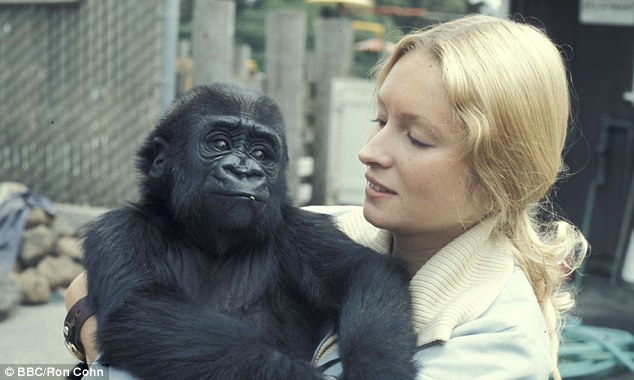
Hanabiko “Koko” (born July 4, 1971) is a female western lowland gorilla who is known for having learned a large number of hand signs from a modified version of American Sign Language (ASL).
Her instructor and caregiver, animal psychologist Francine “Penny” Patterson, reports that Koko is able to understand more than 1,000 signs of what Patterson calls “Gorilla Sign Language” (GSL).[2] In contrast to other experiments attempting to teach sign language to non-human primates, Patterson simultaneously exposed Koko to spoken English from an early age. Reports state that Koko understands approximately 2,000 words of spoken English, in addition to the signs.[3] Koko’s life and learning process has been described by Patterson and some of her collaborators in a number of books, peer reviewed articles, and on a website.
Koko got her birthday wish this July 4th — not only did one kitten come to visit, but a whole litter. Koko fell in love with one, and the other fell in love with her. Koko has adopted these two kittens into her family, and it has energized her world.
Not only have Koko’s maternal and play instincts kicked in, but she is signing more to her caregivers and generating new content everyday that can be used by The Gorilla Foundation to create empathy for great apes. This can have significant benefits to both endangered free-living great apes and those in captive environments, by encouraging the development of 2-way communication with their caregivers (which Koko has had since she was a baby).
The Gorilla Foundation is now working on a multimedia sequel to the classic book, “Koko’s Kitten,” which has already reached millions of children worldwide, and has the power to motivate millions more to learn how to make the world a better place for all of its conscious inhabitants.
You can support The Gorilla Foundation mission of Conservation through Communication by visiting http://www.koko.org
Thank you!
Will close with this photograph seen ‘on the web’.
Graduate student Penny Paterson with a young Koko on her back not long after they met in 1971 in San Francisco. (The Daily Mail newspaper 2nd June, 2016.)
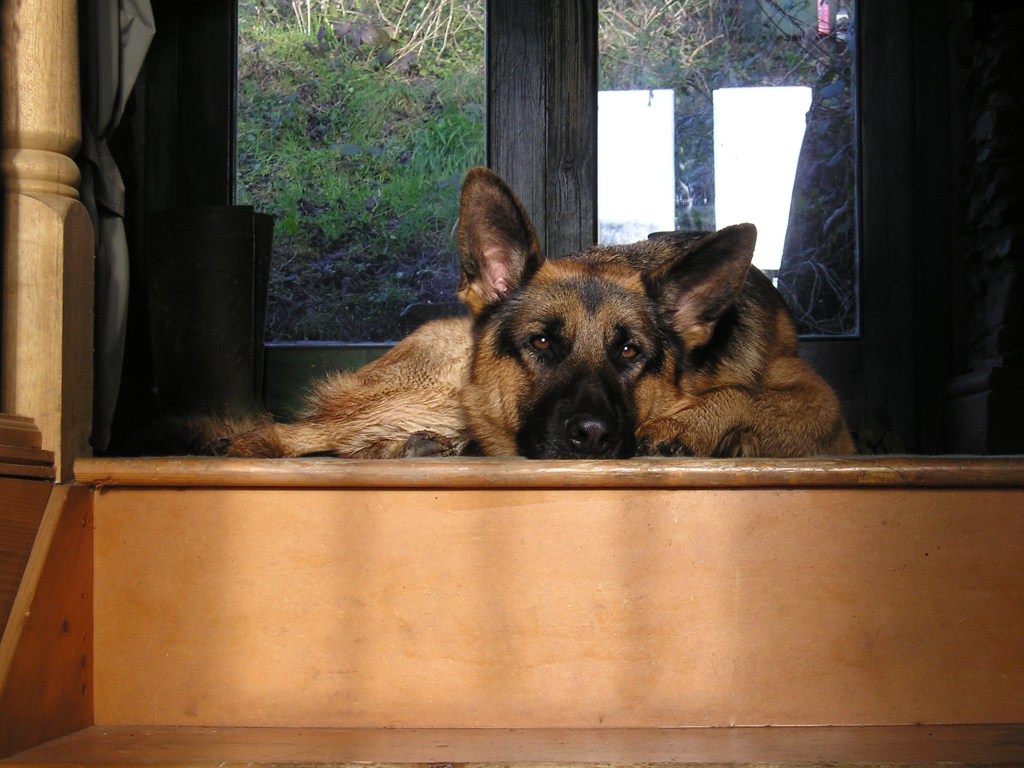
Here’s a photograph of Pharaoh taken on the 3rd December, 2005. Taken in my home in Harberton, Devon, some two years before I met Jeannie.
It’s not the world’s best photograph but I start today’s post with it simply because there is a look in Pharaoh’s eyes that spells out love to me in capital letters. Always has since the day I took that photograph.
Here’s an enlargement of the photo offering a closer look at Pharaoh’s expression in those eyes.
Right from the very first moment that I held Pharaoh I sensed the start of a loving bond. Did I choose to love Pharaoh? Well, of course I did! Was it a conscious decision? I don’t think so!
All of which is my introduction to a fascinating essay about the science of love that recently appeared on the Care2 site.
Love may often feel spontaneous and sometimes even out of control. But is it, really? Research is starting to show that you can change the intensity of love you feel towards others. Similar to emotions like fear or sadness, love can be influenced simply by how you think about a situation.
Is love under your control?
One study looked at altering love feelings in people who were either in a romantic relationship or had recently broken up from one. Each participant started by viewing pictures of their current lover or their ex-partner to bring up their current feelings towards them.
Then, researchers asked them to think about positive aspects of their partner, relationship or possible future scenarios. Their feelings towards their current or previous partners were assessed again.
The second part of the study asked participants to think of negative things about their partner, such as what’s wrong with them or their relationship.
Perhaps it’s not surprising that participants reported having greater love feelings after thinking positive thoughts. Whereas, they reported decreased lovingness after the negative thoughts. It was the same for everyone, whether they were in a relationship or had recently broken up.
Researchers felt this shows great potential for people to take more control of their emotional world, which could in turn benefit their lives and relationships.
Interestingly, thoughts also appeared to affect everyone’s overall mood and feelings about life in general. The positive thoughts improved people’s mood and disposition, whereas the negative thoughts brought everyone down.
This may highlight the importance of how positive and negative thoughts in general can affect our mental health.
How can you put this to use?
You can likely think of times in your own life when it would be helpful to either decrease or increase your love for another person.
Have you ever had an unwanted crush on someone? For instance, obsessing over a celebrity you’ll likely never meet can cause more frustration than joy in your life. Or maybe you’ve fallen for someone who’s not available, either physically or emotionally.
These are times when it’s in your best interest to end your attachment to the person and move on.
In addition, research has shown that thinking negatively about an ex-partner or your previous relationship helps you get over a break-up. The reverse is also true – if you think positively about an ex, it’s more difficult to heal and move on.
Keep this in mind if you’re going through a break-up, or need to reduce your feelings towards someone for another reason.
Try asking yourself questions like these:
What annoys me about this person?
Did we ever have a fight?
Why were we a bad match for each other?
What didn’t work in our relationship?
What could go wrong if we stayed together?
Reframing your thoughts is also a much healthier way to try to get over someone than taking self-destructive action to distract yourself, such as drinking too much.
On the other hand, the world always needs a lot more love to go around. Increasing your love towards others is often one of the best things you can do to help yourself and everyone in your life.
Unfortunately, the top reason married couples give for getting a divorce is growing apart and falling out of love. It’s true the intensity of love feelings usually fluctuates throughout a long-term relationship, but a decrease in feelings doesn’t have to mean the end.
If you’re starting to question whether or not you should stay in a long-standing relationship, take a closer look at your situation before making a final decision. Do you still respect and care for your partner? Do you still have lots in common? Is it possible you’re just in a temporary slump?
Questions like these may help to re-frame how you feel about your relationship:
What are some of your partner’s best qualities?
Why did you get together in the first place?
Are there things you’d like to do with your partner in the future?
What makes you a good match for each other?
Do you enjoy spending time with your partner?
Romantic partners who view each other in a positive light have been shown to actually have happier relationships. This is likely true for all relationships. Choosing more positive thoughts can go a long way towards creating greater harmony with all your loved ones.
Sharing your thoughts and telling others why you love them is even better.
ooOOoo
As my dearest Jeannie will confirm, I have never been the most comfortable person in terms of verbalising my love for her, despite Jean being the dream loving partnership of my life. Jean, on the other hand, expresses her love for me many times each day.
Maybe this essay offers an insight into the different ways we love?
For Jean also tells the dogs individually many times each day that she loves them. I feel the same but don’t say it anything like as often.
So is science showing us why the difference between Jean and me? I think so.
Yet another thing that we learn from dogs. Or more specifically that I have to learn from dogs!
Yesterday it was gliding, tomorrow it is going to be a celebration of Pharaoh’s 14th birthday and today it is about you!
Kadam Morten Clausen is a Buddhist teacher. Now I would be the first to stick up my arm and say that my understanding of Buddhism is pretty poor. But in the days many years back when I spent time exploring a number of Asian countries I found the culture surrounding Buddhism very appealing. (And I write as someone who is not a religious believer.)
Back to Morten Clausen.
The Kadampa Meditation Center in New York, where Kadam is a resident teacher, describe him as follows:
Kadam Morten met his teacher, Geshe Kelsang, while attending university in England. He taught widely throughout the UK and helped develop many Kadampa Centers in England. Kadam Morten has been teaching in the US for more than 20 years and has established centers throughout the New York area, as well as Washington DC, Virginia, and Puerto Rico. In addition to his local teaching responsibilities, he teaches and guides retreats regularly throughout the United States and Europe.
Kadam Morten is greatly admired as a meditation teacher and is especially known for his clarity, humor and inspirational presentation of Dharma. His teachings are always practical and easy to apply to everyday life. Through his gentle and joyful approach and his peaceful example, he has helped many people find true happiness in their hearts.
So what’s this all about when I say that today’s post is about you?
Evan Thompson of the University of British Columbia has verified the Buddhist belief of anatta, or not-self. Neuroscience has been interested in Buddhism since the late 1980s, when the Mind and Life Institute was created by HH Dalai Lama and a team of scientists. The science that came out of those first studies gave validation to what monks have known for years — if you train your mind, you can change your brain. As neuroscience has begun studying the mind, they have looked to those who have mastered the mind.
While Buddha didn’t teach anatta to lay people, thinking it might be too confusing, the concept is centered on the idea that there is no consistent self. The belief that we are the same one moment to the next, or one year to the next, is a delusion. Thompson says that “the brain and body is constantly in flux. There is nothing that corresponds to the sense that there’s an unchanging self.”
[W]hen there is no consistent self, it means that we don’t have to take everything so personally.
It is useful to look at a video of yourself from the past, or read something you wrote years ago. Your interests, perspective, beliefs, attachments, relationships, et al, have all changed in some way. Anatta doesn’t mean there’s no you; it just means that you are constantly changing, constantly evolving, and shape-shifting. Why is this important? Why does it matter if there’s no solid “you” or “me”?
Buddhist teacher Kadam Morten Clausen says Buddhism is a science of the mind:
Dr. Rick Hanson, author of Hardwiring Happiness and Buddha’s Brain, argues that when there is no consistent self, it means that we don’t have to take everything so personally. That is, our internal thoughts are only thoughts and don’t define us. External events are only external events and aren’t happening to us personally. Or as Tara Brach says, our thoughts are “real, but not true.”There is tremendous liberation in not identifying ourselves with thoughts, or a set idea of who we are.
It is then that we can grow and change, with the help of neuroplasticity. There is then hope that we can overcome our vices or bad habits (of mind and body), because if we aren’t stuck with the self-limiting beliefs inherent with a consistent self, we may orient ourselves toward becoming more of who we want to be.
The belief that we are the same one moment to the next, or one year to the next, is a delusion.
As science and Eastern thought continue to hang out with each other, there may be more 21st Century studies to back up 2,600-year-old thoughts. But, as HH Dalai Lama said, “Suppose that something is definitely proven through scientific investigation. … Suppose that that fact is incompatible with Buddhist theory. There is no doubt that we must accept the result of the scientific research.”Hearing a pro-science stance from a religious leader is a relief to many. In the end it seems Buddhism and neuroscience have similar goals: What is this thing we call the mind, and how can we use it to make ourselves a little less miserable and a little happier? Maybe even just 10 percent happier, as Dan Harris wrote. If there is no consistent self, it is at least my intention that my ever-changing self be equanimous and, well, 10 percent happier. No matter who I am.
—
Lori Chandler is a writer and comedian living in Brooklyn, NY, which is the most unoriginal sentence she has ever written. You can look at her silly drawings on Tumblr, Rad Drawings, or read her silly tweets @LilBoodleChild. Enough about her, she says: how are you?
PHOTO CREDIT: Chris McGrath/Getty Images
ooOOoo
So if there are times when you find yourself talking to yourself, perhaps the first thing to do is to ask if it is you! (Golly! I can feel a headache coming on!)








 We’ve used specialist search dogs at #GrenfellTower. They’re lighter than humans and can cover a large area quickly.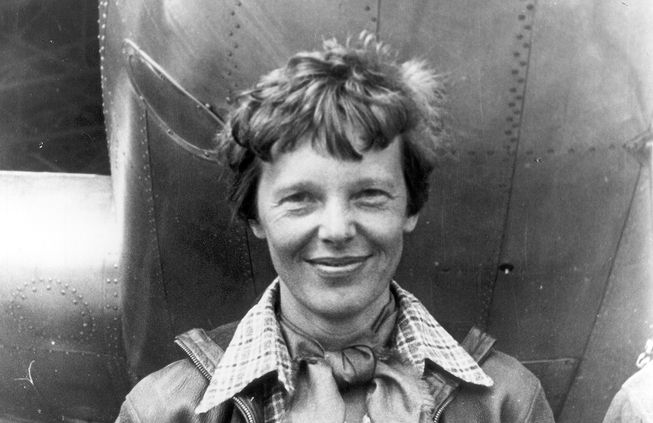





 taught widely throughout the UK and helped develop many Kadampa Centers in England. Kadam Morten has been teaching in the US for more than 20 years and has established centers throughout the New York area, as well as Washington DC, Virginia, and Puerto Rico. In addition to his local teaching responsibilities, he teaches and guides retreats regularly throughout the United States and Europe.

