I have two sisters: Elizabeth and Eleanor. Elizabeth lives in Tokyo, Japan and Eleanor lives in Johannesburg, South Africa. They are both dear sisters and we all love each other as brothers and sisters should!
Anyway, Eleanor’s husband, Warwick, has a brother and this story is about Warwick’s brother’s step-daughter, Stacey Maguire.
It was Eleanor who sent this story to me to be published in this place.
ooOOoo
My dog saves my life every day
Stacey Maguire’s life is always in danger.
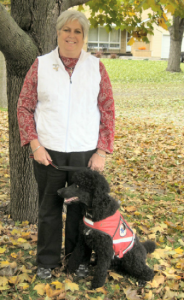
A severe Type 1 Diabetic, her body doesn’t produce the insulin it needs to control her blood sugar, leaving her vulnerable to catastrophic changes in sugar levels. But as long as her dog, Gretchen, is around she has nothing to fear. For Gretchen is a trained Diabetic Assist Dog (DAD).
Gretchen is a Swiss Shepherd who saves her owner’s life on a daily basis by warning her whenever her blood sugar is at a dangerous level. Incredibly, Gretchen does this by smell.
Stacey’s chronic condition is so severe that she’s on the best monitoring technology in South Africa. But before Gretchen came into her life, and even with that monitoring technology, Stacey still experienced hypoglycemic episodes and seizures at least once a week when changes in her blood sugar levels weren’t detected in time.
Thus when Gretchen arrived from America her sole objective was sniffing out the problem as fast as possible. And Gretchen does that – a full hour ahead of that best available technology!
Her method? An urgent paw to the knee, followed by a bark. Gretchen takes no nonsense, delivering the testing kit to Stacey’s hand if her response is sluggish. If anything goes wrong Gretchen, as a trained service animal is taught to so do, sounds an alarm or alerts the nearest person to the danger. Stacey couldn’t ask for better care.
Stacey is the first South African to benefit from a Diabetic Assist Dog. Stacey Maguire’s dream is to start a facility to train more dogs to help diabetics like her. That’s something South Africa can get behind.
ooOOoo
Eleanor also added the following by way of background:
We found a phenomenal lady called Diane Marquette in Minnesota who agreed to train a dog for export – her first time for such an undertaking.
A three-year-old white Swiss Alsatian called Gretchen made the grade for the initial training after which Di started the diabetic training. In preparation, whenever Stacey felt unwell she spat into cotton-wool and put these samples into the freezer. When Stacey had collected a bundle she sent them via courier to Di who then trained Gretchen on Stacey’s scent.
This process took ten months. Then Stacey flew to Minnesota to meet Gretchen, to be bonded with Gretchen, to be trained and, finally, to sit and pass a very stringent exam before being allowed to bring Gretchen back home. Ten days later we met them at Cape Town International, after twenty-one hours of flying for Stacey with Gretchen at her feet in the aeroplane. SA’s first DAD had landed!
In an email to me, Eleanor included:
Stacey and Gretchen have now been together for several years with their bond just strengthening and strengthening! Gretchen alerts Stacey continuously and in recent times has started alerting at night too. Thus even accounting for the fact that, as with all dogs, Gretchen sleeps at night coinciding, unfortunately, with when Stacey is most vulnerable to shocking lows, this fabulous dog maintains awareness of Stacey’s body scents during the night hours.
Stacey’s wish is to bring trainer Di of Scent Angels to Cape Town to train trainers, and then to roll this life-saving program out to fellow diabetics.
Diane Marquette
Eleanor also included the link to the website for Scent Angels. I shall pass on the link to this post to Diane Marquette with the request that she might allow me to share some more stories of these incredible dogs with you all.
I have just finished reading John’s recently published book On the Problem of Good. I am writing a review of the book that, fingers crossed, I will publish on Friday. But many of you that are recent converts to this blog (you poor, lost souls!) will not remember my review of John’s first book and my reaction to that book when I was only just into it.
So, for both today and tomorrow I am republishing two blog posts. Today, one that was originally published on the 16th September, 2015, and tomorrow the post that was first published on 1st October, 2015.
ooOOoo
Of paradoxes, and headaches!
The interconnectedness of everything – even beyond our wildest imagination.
A while ago John Zande signed up to follow Learning from Dogs. Naturally, I went across to John’s blog to thank him. There I discovered that John is an animal lover and an author. For he states, referring to his book, that, “BUY IT. ALL PROCEEDS GO TO ANIMAL RESCUE AND SHELTER IN BRAZIL”. Fabulous!
(I did buy the book, am about 20% through it and finding it very stimulating, – if you would like to buy it then click the image of the book on John’s home page.)
Anyway, a few days later we watched the BBC Horizon programme on multiple universes. Here’s how the BBC introduced the programme:
Which Universe Are We In?
Horizon, 2014-2015 Episode 17 of 19
Imagine a world where dinosaurs still walk the earth. A world where the Germans won World War II and you are president of the United States. Imagine a world where the laws of physics no longer apply and where infinite copies of you are playing out every storyline of your life.
It sounds like a plot stolen straight from Hollywood, but far from it. This is the multiverse.
Until very recently the whole idea of the multiverse was dismissed as a fantasy, but now this strangest of ideas is at the cutting edge of science.
And for a growing number of scientists, the multiverse is the only way we will ever truly make sense of the world we are in.
Horizon asks the question: Do multiple universes exist? And if so, which one are we actually in?
Horizon is always great to watch but this episode was incredibly stimulating and interesting. Later, in a exchange of comments to one of John’s posts, where I referred to that programme, John wrote:
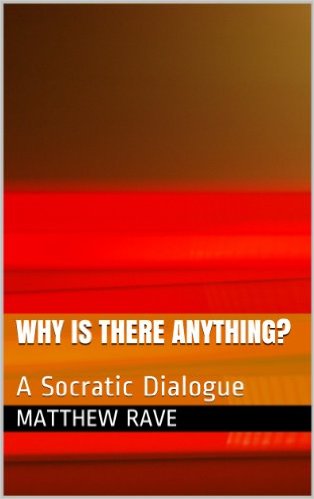
The mulitverse is actually the more reasonable explanation for why there is something, and although I don’t understand the maths, the people who do say its simplistically beautiful. Matt Rave is an associate professor of physics and comments here regularly. He has a great book on it all, Why is There Anything?
That lead me to purchasing Matthew Rave’s book that, likewise, is a most fascinating and unusual approach to this topic. His Amazon author’s page reveals that, “Dr. Matthew Rave is an assistant professor of physics at Western Carolina University, in the mountains of North Carolina. His research interests include interpretations of quantum mechanics, the geometric phase, solid state physics, and physics education.” Matthew Rave’s blogsite is here.
Matthew Rave’s book further illustrates the paradox, to my mind, that comes from thinking about why are we here, are we here and, if so, how do we know we are here?
So if that isn’t enough for you and me, then very recently The Conversation blogsite published the following from Geraint Lewis who is Professor of Astrophysics at the University of Sydney. It is republished here within the terms of The Conversation. Did I mention paradoxes and headaches!
To a human, the universe might seem like a very inhospitable place. In the vacuum of space, you would rapidly suffocate, while on the surface of a star you would be burnt to a crisp. As far as we know, all life is confined to a sliver of an atmosphere surrounding the rocky planet we inhabit.
But while the origin of life on Earth remains mysterious, there are bigger questions to answer. Namely: why do the laws of physics permit any life at all?
Hang on, the laws of physics? Surely they are a universal given and life just gets on with it?
But remember that the universe is built of fundamental pieces, particles and forces, which are the building blocks of everything we see around us. And we simply don’t know why these pieces have the properties they do.
There are many observational facts about our universe, such as electrons weighing almost nothing, while some of their quark cousins are thousands of times more massive. And gravity being incredibly weak compared to the immense forces that hold atomic nuclei together.
Why is our universe built this way? We just don’t know.
But what if…?
This means we can ask “what if” questions. What if the electron was massive and quarks were fleeting? What if electromagnetism was stronger than the nuclear strong force? If so, what would that universe be like?
Let’s consider carbon, an element forged in the hearts of massive stars, and an element essential to life as we know it.
Initial calculations of such stellar furnaces showed that they were apparently inefficient in making carbon. Then the British astronomer Fred Hoyle realised the carbon nucleus possesses a special property, a resonance, that enhanced the efficiency.
But if the strength of the strong nuclear force was only fractionally different, it would wipe out this property and leave the universe relatively devoid of carbon – and, thus, life.
The story doesn’t end there. Once carbon is made, it is ripe to be transmuted into heavier elements, particularly oxygen. It turns out that oxygen, due to the strength of the strong nuclear force, lacks the particular resonance properties that enhanced the efficiency of carbon creation.
This prevents all of the carbon being quickly consumed. The specific strength of the strong force has thus resulted in a universe with an almost equal mix of carbon and oxygen, a bonus for life on Earth.
Death of a universe
This is but a single example. We can play “what if” games with the properties of all of the fundamental bits of the universe. With each change we can ask, “What would the universe be like?”
The answers are quite stark. Straying just a little from the convivial conditions that we experience in our universe typically leads to a sterile cosmos.
This might be a bland universe, without the complexity required to store and process the information central to life. Or a universe that expands too quickly for matter to condense into stars, galaxies and planets. Or one that completely re-collapses again in a matter of moments after being born. Any complex life would be impossible!
The questions do not end there. In our universe, we live with the comfort of a certain mix of space and time, and a seemingly understandable mathematical framework that underpins science as we know it. Why is the universe so predictable and understandable? Would we be able to ask such a question if it wasn’t?
Our universe appears to balance on a knife-edge of stability. But why?
We appear to be very lucky to live in a universe that accommodates life. Zdenko Zivkovic/Flickr, CC BY
One of a multiverse
To some, science will simply fix it all. Perhaps, if we discover the “Theory of Everything”, uniting quantum mechanics with Einstein’s relativity, all of the relative masses and strengths of the fundamental pieces will be absolutely defined, with no mysteries remaining. To others, this is little more than wishful thinking.
Some seek solace in a creator, an omnipotent being that finely-tuned the properties of the universe to allow us to be here. But the move from the scientific into the supernatural leaves many uncomfortable.
There is, however, another possible solution, one guided by the murky and confused musings at the edge of science. Super-strings or M-theory (or whatever these will evolve into) suggest that the fundamental properties of the universe are not unique, but are somehow chosen by some cosmic roll of the dice when it was born.
This gives us a possible explanation of the seemingly special properties of the universe in which we live.
We are not the only universe, but just one in a semi-infinite sea of universes, each with their own peculiar set of physical properties, laws and particles, lifetimes and ultimately mathematical frameworks. As we have seen, the vast majority of these other universes in the overall multiverse are dead and sterile.
They only way we can exist to ask the question “why are we here?” is that we happen to find ourselves in a universe conducive to our very existence. In any other universe, we simply wouldn’t be around to wonder why we didn’t exist.
If the multiverse picture is correct, we have to accept that the fundamental properties of the universe were ultimately dished out in a game of cosmic roulette, a spin of the wheel that we appear to have won.
Let me give way to Hariod Brawn and part of an extensive comment she left back then:
John Zande is most certainly one of the most thoughtful, perceptive, well-informed and sharp-witted bloggers I have ever come across, and I wish him well with his book, which by the way, appears so far to have been met only with a deluge of 5-star reviews on Amazon. I daresay that you and I will both lengthen that list.
This will take us away from the daily beat of life!
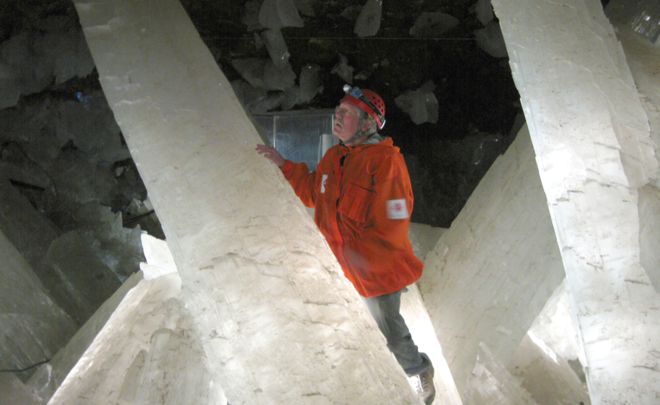
On the 18th. February the BBC News website carried an article that I found incredible. It was the story of Naica’s crystal caves in Mexico.
oooo
Naica’s crystal caves hold long-dormant life
By Jonathan Amos, BBC Science Correspondent, Boston, 18 February 2017.
The caves were discovered by miners 100 years ago. Picture credit: Penelope J. Boston
It is a remarkable discovery in an amazing place.
Scientists have extracted long-dormant microbes from inside the famous giant crystals of the Naica mountain caves in Mexico – and revived them. [Ed: my emphasis]
The organisms were likely to have been encased in the striking shafts of gypsum at least 10,000 years ago, and possibly up to 50,000 years ago.
It is another demonstration of the ability of life to adapt and cope in the most hostile of environments.
“Other people have made longer-term claims for the antiquity of organisms that were still alive, but in this case these organisms are all very extraordinary – they are not very closely related to anything in the known genetic databases,” said Dr Penelope Boston.
The new director of Nasa’s Astrobiology Institute in Moffett Field, California, described her findings here at the annual meeting of the American Association for the Advancement of Science (AAAS).
oooo
I was delighted to find more details in many other places on the ‘web’.
Creatures that thrive on iron, sulfur, and other chemicals have been found trapped inside giant crystals deep in a Mexican cave. The microbial life-forms are most likely new to science, and if the researchers who found them are correct, the organisms are still active even though they have been slumbering for tens of thousands of years.
If verified, the discovery adds to evidence that microbial life on Earth can endure harsher conditions in isolated places than scientists previously thought possible. (See “Life Found Deep Under Antarctic Ice for First Time?”)
“These organisms have been dormant but viable for geologically significant periods of time, and they can be released due to other geological processes,” says NASA Astrobiology Institute director Penelope Boston, who announced the find today at a meeting of the American Association for the Advancement of Science. “This has profound effects on how we try to understand the evolutionary history of microbial life on this planet.”
By Neil Shea, National Geographic Staff
In a nearly empty cantina in a dark desert town, the short, drunk man makes his pitch. Beside him on the billiards table sits a chunk of rock the size of home plate. Dozens of purple and white crystals push up from it like shards of glass. “Yours for $300,” he says. “No? One hundred. A steal!” The three or four other patrons glance past their beers, thinking it over: Should they offer their crystals too? Rock dust on the green felt, cowboy ballads on the jukebox. Above the bar, a sign reads, “Happy Hour: 8 a.m. to 9 p.m.”
This remote part of northern Mexico, an hour or so south of Chihuahua, is famous for crystals, and paychecks at the local lead and silver mine, where almost everyone works, are meager enough to inspire a black market. “Thirty dollars.” He leans in. “Ten.” It’s hard to take him seriously. Earlier in the day, in a cave deep below the bar, I crawled among the world’s largest crystals, a forest of them, broad and thick, some more than 30 feet long and half a million years old. So clear, so luminous, they seemed extraterrestrial. They make the chunk on the pool table seem dull as a paperweight.
Nothing compares with the giants found in Cueva de los Cristales, or Cave of Crystals. The limestone cavern and its glittering beams were discovered in 2000 by a pair of brothers drilling nearly a thousand feet below ground in the Naica mine, one of Mexico’s most productive, yielding tons of lead and silver each year. The brothers were astonished by their find, but it was not without precedent. The geologic processes that create lead and silver also provide raw materials for crystals, and at Naica, miners had hammered into chambers of impressive, though much smaller, crystals before. But as news spread of the massive crystals’ discovery, the question confronting scientists became: How did they grow so big?
It takes 20 minutes to get to the cave entrance by van through a winding mine shaft. A screen drops from the van’s ceiling and Michael Jackson videos play, a feature designed to entertain visitors as they descend into darkness and heat. In many caves and mines the temperature remains constant and cool, but the Naica mine gets hotter with depth because it lies above an intrusion of magma about a mile below the surface. Within the cave itself, the temperature leaps to 112 degrees Fahrenheit with 90 to 100 percent humidity—hot enough that each visit carries the risk of heatstroke. By the time we reach the entrance, everyone glistens with sweat.
Both by embracing the power of the natural order of things, life and death, and by reminding us all that there are in the order of over two billion stars in this universe.
That universe must be teeming with life, current and dormant, and the day when we truly confirm that will put everything into perspective!
By Pallab Ghosh Science correspondent, BBC News
Scientists have discovered what they say could be fossils of some of the earliest living organisms on Earth.
They are represented by tiny filaments, knobs and tubes in Canadian rocks dated to be up to 4.28 billion years old.
That is a time not long after the planet’s formation and hundreds of millions of years before what is currently accepted as evidence for the most ancient life yet found on Earth.
The researchers report their investigation in the journal Nature.
As with all such claims about ancient life, the study is contentious. But the team believes it can answer any doubts.
The scientists’ putative microbes from Quebec are one-tenth the width of a human hair and contain significant quantities of haematite – a form of iron oxide or “rust”.
Matthew Dodd, who analysed the structures at University College London, UK, claimed the discovery would shed new light on the origins of life.
Just be enthralled by Marc Métral and his talking dog Wendy.
Jean sent me the link to the following that had, in turn, been sent to her.
It features the show on ITV in the UK, Britain’s Got Talent, that has been running for many years. Verified on the BGT website by the 10 Years link:
Some of our favourite acts from the past ten years took to the BGT stage to pay tribute to a decade of finding amazing talent!
But the fun doesn’t end there. We’re on the lookout for even more incredible talent and we’re coming to a town near you soon! Find out where we’re holding auditions and apply now for the new series of Britain’s Got Talent!
Anyway, without further ado just watch this act. It’s not just the judges that are wowed; you will be as well!
Marc Métral and his talking dog Wendy wow the judges|Britain’s Got Talent 2015
Published on Apr 11, 2015
The Judges are left open-mouthed when Marc Métral introduces his talking dog Miss Wendy.
“Congratulations, in the nine years of doing this show, Simon has said he wanted a dog that could meow or sing, and you did both, incredible,” says Amanda.
Simon is totally smitten!
The most incredibly relationship we humans have ever had with an animal.
Tomorrow, I am going to repeat a post that first appeared on Learning from Dogs seven years ago. A beautiful documentary explaining in clear, scientific ways how important has been the relationship between the dog and humans.
But for today, as a ‘warm up’ to tomorrow’s post, I wanted to share an essay that appeared on The Conversation blogsite a little over a week ago and is republished within the terms of The Conversation site.
ooOOoo
How man’s best friend is helping cancer treatment
By Nicole Ehrhart Professor of Veterinary Medicine, Colorado State University
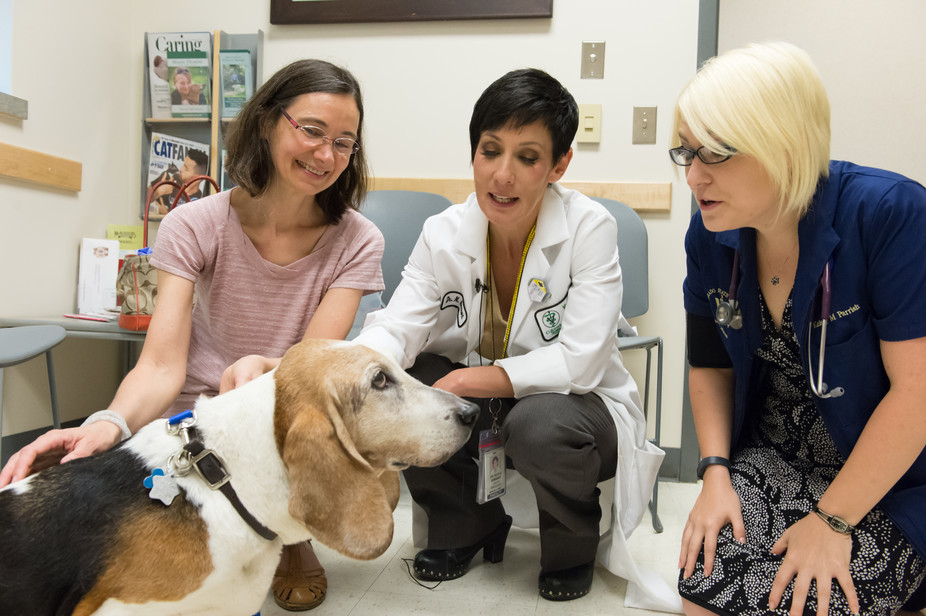
February 2, 2017The author, center, and Dr. Anna Conti, left, and student Kelsey Parrish with Conti’s Basset hound, Picasso, who had surgery for cancer. Via Colorado State University. William Cotton/CSU Photography, Author provided
“A person can learn a lot from a dog, even a loopy one like ours. Marley taught me about living each day with unbridled exuberance and joy, about seizing the moment and following your heart… Mostly, he taught me about friendship and selflessness and, above all else, unwavering loyalty.”
Isn’t it true? We learn so much from our dogs. But beyond what man’s best friend can teach us about enjoying life, they share something else with us. Cancer diagnoses in dogs are on the rise, as are cancer diagnoses in people. In fact, canine cancer is the leading cause of death in pets over the age of 10 years.
This confluence, it turns out, can be beneficial to cancer research. A field of study known as “comparative oncology” has recently emerged as a promising means to help cure cancer. Comparative oncology researchers study the similarities between naturally occurring cancers in pets and cancers in people in order to provide clues to treat cancer more effectively.
In fact, phase 1 and 2 clinical trials in comparative oncology are underway at 22 sites across the country, including Colorado State University, where I conduct research and am a surgical oncologist for animals.
Research in this field, involving veterinarians, physicians, cancer specialists and basic scientists, is leading to improved human health and more rapid access to effective cancer treatment than has been previously possible through traditional cancer research approaches.
As a species, dogs have strong physiologic and genetic similarities to people, much more so than mice, who do not typically live long enough for us to know whether they naturally get cancer. We do know that some rodent species, such as pet rats, can get cancer, but predators typically end a field mouse’s life while it is still young. The laboratory mice typically used by scientists are injected with cancer rather than it occurring naturally in their bodies.
Just as scientists officially mapped the human genome, or the complete set of genetic instructions, in 2003, scientists decoded the canine genome. They discovered that dogs have greater than 80 percent genetic similarity to humans, versus only 67 percent for mice.
In addition, cancers such as bone cancer, lymphoma and bladder cancer that spontaneously arise in pet dogs are microscopically and molecularly identical to cancers in people. Many of the genetic mutations that drive cells to become cancerous in people are the same mutations that cause cancer in dogs. In fact, when viewed under a microscope, it is impossible to distinguish between a tumor from a human and a dog.
In addition, dogs provide a large and varied population to study, important in the study of medicine. Individual dogs who develop cancer are as different from one another as are humans. Whereas laboratory mice are essentially identical twins to each other and live in a highly regulated environment, the variation among different dog breeds, home environments, diet and overall lifestyle translate into a population diversity very similar to that in humans.
Today, most pet dogs receive high-quality health care into old age and dog owners are highly motivated to seek out improved options for the management of cancer in their companions, and are also motivated to minimize side effects.
Similarities in response to treatment, too
Picasso at the James L. Voss Veterinary Teaching Hospital, Colorado State University. Author provided., Author provided.
This genetic diversity and sharing of similar DNA, physiology, microscopic structure and molecular features between dogs and humans has presented cancer researchers with a key opportunity. Dogs not only develop similar types of cancers as humans, but their cancer responds to treatments in similar ways.
This means that new cancer treatments first shown to be effective in canine cancers can frequently be predicted to have a similar benefit in human cancer patients. As a result, researchers now recognize that new drug trials in dogs with cancer will result in therapeutic discoveries that are highly “translatable”; that is, more likely to predict “real-life” medical responses in human cancer patients.
By studying how cancer responds in dogs, scientists are gaining a better understanding of how new cancer drugs not only treat the cancer but also influence the patient’s overall quality of life during treatment. This benefits dog owners, by providing access to promising new cancer treatments for their pets with cancer, and benefits human cancer patients by providing a rapid way to collect crucial data needed for FDA approval.
Dogs with cancer are helping kids
For example, a bone cancer known as osteosarcoma is so similar between dogs and people that
The author performing surgery on a dog. Author provided. Colorado State University., Author provided.
intensive research in canine osteosarcoma has led to several breakthroughs in treating osteosarcoma in children. Limb-saving surgical techniques for safe and effective reconstruction following bone tumor surgery in dogs are now the standard of care in children following bone tumor surgery.
More recently, a form of immunotherapy was shown to drastically improve survival in dogs with bone cancer by delaying or altogether preventing spread of the cancer to the lungs. As a result of the success in dogs, the FDA granted fast-track status to the same treatment for use in humans last April.
Fast-tracking was developed by the FDA to support accelerated approval for promising treatments, especially for serious and life-threatening conditions. A clinical trial in children with osteosarcoma is scheduled to begin this year at multiple pediatric cancer centers throughout the United States.
These types of discoveries demonstrate that our furry companions have a crucial role in teaching us new ways to help all victims in the war against cancer – with two legs or four.
ooOOoo
As I said in my introduction, more on this theme tomorrow.
The second set of photographs by Russian photographer Andy Seliverstoff.
The first set of these stunning photographs was last week. I shall repeat the background to the photographer that was also published a week ago.
Little Kids and Big Dogs
Andy Seliverstoff is a 58-year-old professional photographer from St. Petersburg, Russia. A few years ago some of Seliverstoff’s friends asked him to take photos of their daughter Alice in a park. They had their gigantic Great Dane, Sean, with them, so they decided to incorporate him into the photos. After seeing the results, he knew he was on to something special.
Seliverstoff did another shoot with a child featuring big dogs, and told BuzzFeed News that he was “deeply touched” by the work. That was four years ago and he’s been a dog photographer ever since.
The project has become his passion, which he chronicles in a book called “Little Kids and Their Big Dogs.“
All of the photos are taken in St. Petersburg. Its extensive parks and colder climate help create some spectacular shots.
Seliverstoff said the goal of the series wasn’t just to create beautiful pictures, but to capture the interaction between the children and the animals.
oooo
oooo
oooo
oooo
oooo
oooo
oooo
oooo
oooo
Beautiful almost beyond words! These were sent to me by Dordie from next door. Dearest Dordie has sent me another set of stunningly magical photographs that I will be sharing with you from next Sunday for a few weeks.
As I have frequently mentioned, I so enjoy having guest posts being sent to me.
They give you, dear reader, a break from yours truly and so very often they offer a new and interesting perspective on dogs, on us, and on the world.
This week there are three guest posts, in various guises, lined up and, who knows, there may be a couple more heading in.
But to the first of those guest posts.
Well, technically, more of a reposting today than a pure guest post. That reposting is of a most fascinating post published by Patrice Ayme on the 25th. January. It was called WE ARE MATHEMATICS. But there were parts of Patrice’s post that I struggled with so I am offering it to you with a rather long introduction.
I hope you enjoy it.
ooOOoo
Smack!
The sound of an object falling to the floor of the shower, suddenly and without warning, nearly caused me to jump out of my skin.
I was washing my hair and had my eyelids tightly closed lest the shampoo suds got into my eyes. Inadvertently, I had felt my right elbow dislodge something from the top of the small corner shelf that held the bar of soap and the bottle of hair shampoo.
I let the flowing warm shower water rinse the suds from my face, opened my eyes and looked down. The object that had made such a sudden, loud noise was a plastic brush maybe three or four inches long. It had fallen to the wet shower floor some five feet below the corner shelf where the brush normally lived.
As I stared down at the brush, the warm water cascading comfortably down my body, I reflected that in the space of a fraction of a second my mind had computed the distance that the unknown object had fallen and offered me a sense of the speed it must have been traveling when it hit the floor.
Now don’t get me wrong! I didn’t come up with a precise answer to that question of how fast the brush was going but in that moment of thought I sensed both the distance the brush had fallen, five feet; plus or minus, and the effect of gravity in accelerating that brush even over such a small distance. (Later I calculated the brush hit the shower base going at around 10 fps.)
Now it would have never occurred to me that my brain was capable of almost instantaneous calculations, as in mathematical calculations, if I hadn’t read in the previous twenty-four hours a recent essay from Patrice Ayme. An essay that convinced me completely that, in Patrice’s words:
The world is not as astonishingly understandable, as Einstein would have it. Neuronal grid cell studies show that we are the world. Understanding the world is understanding ourselves.
The world is not just written in mathematical language, as Galileo found out. We are made mathematically. We think mathematically, because we are made of math. We are mathematics.
Patrice had opened my eyes, more accurately opened my mind, to something that was then immediately clear to me and will be to you, dear reader: Our brains have an intuitive and instinctive sense of space. Not space in some abstract sense of the term but space in the sense of spatial awareness.
Think how easily, how quickly, you understand distance. Whether it is a measure of distance in your own home or assessing how far away that bird is flying towards and setting down on a high branch of a tall pine tree.
Think how even with our eyes closed we can navigate around a familiar part of our lives. Think how the sailors of ancient times (and trust me not so ancient times) used ‘Dead Reckoning’ (DR) to navigate safely and securely across vast oceans.
Our brains could only do this if they were computing these spatial assessments mathematically.
OK, that’s enough from me. Here’s that essay from Patrice.
ooOOoo
WE ARE MATHEMATICS
Mathematically Built Brain: The Example of Grid Cells, Incarnating Algebraic Geometry.
Understanding how the cognitive functions of the brain arise from its basic physiological components has been the final frontier in logic and rational science for thousands of years. (As I tried to explain yesterday, the superstitious religious fanatics tried their best to bury all of science, and the scientific mindset, the essence of humanity; they nearly succeeded!)
The 2014 Nobel was given to John O’Keefe (a “half”!), the rest jointly to May-Britt Moser and Edvard I. Moser “for their discoveries of cells that constitute a positioning system in the brain.” I will develop here the philosophical viewpoint, which is broader (O’Keefe’s career was steered by the influence of Hebb, the famous psychologist, who got the idea of the outside patterns imprinting the neurocircuitry of the brain).
Here is Hebb: “Let us assume that the persistence or repetition of a reverberatory activity (or “trace”) tends to induce lasting cellular changes that add to its stability.[…] When an axon of cell A is near enough to excite a cell B and repeatedly or persistently takes part in firing it, some growth process or metabolic change takes place in one or both cells such that A’s efficiency, as one of the cells firing B, is increased.”
Well it turns out that evolution has had even more imagination than that. I will even propose Patrice’s Neural Theory, a vast generalization.
Galileo famously said the language of nature was written in mathematics. It turns out that it is much more than that. Our brain is mathematically organized. What Descartes consciously discovered, a coordinate frame in which to set-up calculus, is automatically generated in the brain. This is the meaning of grid cells.
Grid cells are neurons that fire when an animal moving of its own free will traverses a set of small regions (firing fields) which are roughly equal in size and arranged in a periodic triangular array that covers all of the available environment. They were discovered in 2005 by a couple (literally) of Norwegian researchers, the Mosers, and rewarded by the Nobel Prize in 2014 (shared with O’Keefe, from London, who invented the basic experimental technique, and discovered “place cells”)
Once set, navigation can be done in the dark, blinded. Scientists’ discovery that rodents, bats and nonhuman primates have a system in the brain for so-called “dead reckoning navigation”… “Dead reckoning” refers to the ability to navigate without external cues. The term comes from ship navigation. A crew will “take a sighting” via cues such as the stars or landmarks to determine where the ship is on a map. Then, when the ship moves, ‘dead reckons’ to update location on the map paying attention to speed and direction. The Greco-Romans already had such systems, with little paddled wheels counting the distance covered over the sea. It turns out that ‘dead reckoning’ is enabled by the grid cell system, inside the brain.
Recording Of Grid Cells Activity Inside Rat Brain (Jeffery Lab and others.)
“The importance of grid cells lies in the apparently minor detail that the patches of firing (called ‘firing fields’) produced by the cells are evenly spaced. That this makes a pretty pattern is nice, but not so important in itself – what is startling is that the cell somehow ‘knows’ how far (say) 30 cm is – it must do, or it wouldn’t be able to fire in correctly spaced places. This even spacing of firing fields is something that couldn’t possibly have arisen from building up a web of stimulus associations over the life of the animal, because 30 cm (or whatever) isn’t an intrinsic property of most environments, and therefore can’t come through the senses – it must come from inside the rat, through some distance-measuring capability such as counting footsteps, or measuring the speed with which the world flows past the senses. In other words, metric information is inherent in the brain, wired into the grid cells as it were, regardless of its prior experience. This was a surprising and dramatic discovery. Studies of other animals, including humans, have revealed place, head direction and grid cells in these species too, so this seems to be a general (and thus important) phenomenon and not just a strange quirk of the lab rat.”
We should have looked for Plato’s cave. It turned out that this cave has been built, is being built inside our heads all along! This cave is built-in two ways: automatically (grid cells) and as a response to the environment, by.us, from the outside, from the environment, in.
(So it matters what our brain experienced before to mold afterwards what comes in anew from the outside! No experience is a neutral experience!)
That cave is both a topology (what’s near and what’s not, the logic of place), and a basic geometry (the grid and its grid cells). To have a grid built automatically is the equivalent of having a reference frame in mathematics. It makes sense if one wants to make mathematics!
And not just mathematics, but even Infinitesimal Calculus! It is indeed clear that animals such as dogs have a mastery of calculus: experiences have shown this, and anybody with a dog throwing a stick sideways in water will see the dog running along the shore a bit, and then jump in the water, so as to minimize the time to reach the stick, a typical calculus problem. Dogs can do calculus, because they can make algebraic geometry in their brains, having a reference frame made of these grid cells! (If they had no grid cells, they would not be able to do calculus.)
Thus Descartes rediscovered, consciously, something which had been found, evolved and calculated by evolution half a billion years ago (or more!). The reference frame, also known now as the neuronal grid cell system, is basic to all of mechanics, even Poincare’-Lorentz Relativity. (An open question: Quantum Physics uses even more general reference systems, Hilbert spaces; I will therefore predict that the brain has also that sort of organization!)
The world is not as astonishingly understandable, as Einstein would have it. Neuronal grid cell studies show that we are the world. Understanding the world is understanding ourselves.
The world is not just written in mathematical language, as Galileo found out. We are made mathematically. We think mathematically, because we are made of math. We are mathematics.
We are not just looking at shadows in a cave, as Plato would have it. And the cave was not given to us by the gods, as Socrates had it. We are the cave, we, and our personal history, built it.
Any new experience, idea or emotion, taught or experienced, is another brick in that wall of perception and analysis, we better consider it carefully, before indulging in it. Call that the Principle of Mental Precaution But that Principle extends also to what we chose NOT to experience, which can be just as bad, if not worse.
You are not just what you think. You mentally are what you were submitted to, and what you decided to submit to. Fate is written in mathematical patterns, one theorem made out of neurons, their axons, dendrites and supporting glial cells, at a time.
Such theorems are written with the physics of minds, just as sturdy as the physics of stars. Just as hopeful, just as ominous.
Plato thought mathematics were “forms”, out there, outside of the physical world. This is not what science is finding. There are not “forms” out there, and physics, nature, somewhere else. Our minds are literally made of math.
So here is my theory:
“Whatever exists in mathematics exists in the brain. And reciprocally.”
Patrice Ayme’
ooOOoo
I do so hope that this essay from Patrice fires you up as it did me. If it leaves you with questions, then offer them to me as a comment to this post and I will take it upon myself to have Patrice answer them.
Finally, did you pick up on the fact that it isn’t just our human brains that are mathematical organs, it applies to the brains of dogs as well!
Mathematics in action. (Photo courtesy of Pinterest)
First some background to the pictures that are presented both today and in a week’s time.
Little Kids and Big Dogs
Andy Seliverstoff is a 58-year-old professional photographer from St. Petersburg, Russia. A few years ago some of Seliverstoff’s friends asked him to take photos of their daughter Alice in a park. They had their gigantic Great Dane, Sean, with them, so they decided to incorporate him into the photos. After seeing the results, he knew he was on to something special.
Seliverstoff did another shoot with a child featuring big dogs, and told BuzzFeed News that he was “deeply touched” by the work. That was four years ago and he’s been a dog photographer ever since.
The project has become his passion, which he chronicles in a book called “Little Kids and Their Big Dogs.“
All of the photos are taken in St. Petersburg. Its extensive parks and colder climate help create some spectacular shots.
Seliverstoff said the goal of the series wasn’t just to create beautiful pictures, but to capture the interaction between the children and the animals.
We have a rather run-down ‘home’ for our chickens close to the house. It was run-down before the snow fell and almost brought down the surrounding wire fence.
But, hopefully, this coming Thursday sees a new walk-in run being constructed for our birds so they are better protected.
It’s time we started paying attention to chickens, one of the most misunderstood and ignored species on Earth.
There was a time when chickens were viewed as exotic, fascinating birds. Descendants of exotic Asian jungle fowl, they were revered for their ferocity and intelligence, and domesticated around 8,000 years ago, more for cockfighting than eating. But then, we humans began eating them in ever-larger quantities, until we reached the point where we are now, with 20 billion (mostly white) chickens living in dirty, crowded barns, awaiting slaughter.
Chickens have been a part of human lives for millennia, and yet they are one of the most misunderstood, if not ignored, species on Earth. Lori Marino, an American neuroscientist and animal intelligence researcher, wants to change this. She is intrigued by the fact that chickens are so rarely recognized for their cognitive abilities and frustrated that studies about birds almost always focus on other, less-domesticated species, like crows and parrots.
“Arguably even the scientific community has been influenced by public perceptions of chickens as cognitively simple… This asymmetry in the literature is likely a reflection of, as well as a contributor to, the disconnect scientists and the public have between chickens as commodities and who they actually are as individuals.”
Chickens deserve more attention, and here are some quirky, interesting facts to get you thinking about chickens less as food and more as fascinating co-inhabitants of our world. These come via Marino’s recent paper, “Thinking Chickens,” published online in Animal Cognition in January 2017.
1. Chickens are a sub-species of the red jungle fowl that hails from southeast Asia.
The red jungle fowl (galls gallus) inhabit the edges of fields, scrubland, and groves. Domestication was well established 8,000 years ago, but some records suggest it could have started as much as 58,000 years ago.
2. Domestic chickens are similar to their wild counterparts.
Despite the intense breeding and genetic manipulation of recent years, chickens have not been cognitively or behaviorally affected by domestication. This stands in contrast to dogs and wolves, for example, which have diverged significantly due to domestication. Nor have chickens become less aggressive toward predators through domestication, which is a common outcome; in fact, some chickens are more aggressive even than red jungle fowl.
3. A chicken’s beak is highly sensitive to touch.
The beak, with numerous nerve endings, is used to explore, detect, drink, preen, and defend. This also means that when a bird is de-beaked, as often happens in industrial farming, it experiences great pain, sometimes for months, which changes its behavior. Marino writes, “At the end of the beak is a specialized cluster of highly sensitive mechanoreceptors, called the bill tip organ, which allows chickens to make fine tactile discriminations.”
4. Chickens have finely tuned senses.
They can see long distance and close-up at the same time in different parts of their vision. They can see a broader range of colors than humans. They can hear at low and high frequencies at a variety of pressure levels. They possess well-developed senses of taste and smell. They can orient to magnetic fields, like many other birds.
5. Chickens are surprisingly good at math.
Three-day-old chicks are able to perform basic arithmetic and discriminate quantities, always opting to explore a set of balls with the greater number, even when an object was visibly transferred from one set to another. Five-day-old chicks have been found to track up to five objects.
“When they were presented with two sets of objects of different quantities disappearing behind two screens, they were able to successfully track which screen hid the larger number by apparently performing simple addition and subtraction.”
6. Chickens can exercise self-control.
In an experimental setting, chickens have been given the choice between 2-second delay with 6 seconds of access to food, versus a 6-second delay with 22-seconds of access to food. The hens waited for the longer reward, “demonstrating rational discrimination between different future outcomes while employing self-control to optimize those outcomes.” Self-control usually doesn’t appear in humans until four years of age.
These are just a few of the remarkable discoveries described in Marino’s study, a highly readable, entertaining paper. It’s an important reminder that chickens, arguably the most ubiquitous animals in our world, deserve far more respect than they currently receive. Hopefully this will lead to more people questioning the horrific conditions in which most of them are kept.
It’s easy to fall into the trap of looking for a humourous way to close today’s post. But a more responsible approach would be to repeat the words from the start of the article to serve as a reminder of trying, wherever possible, to think about the food we eat, especially when animals and birds have to be slaughtered to provide us with that food.
…. we reached the point where we are now, with 20 billion (mostly white) chickens living in dirty, crowded barns, awaiting slaughter.
But please don’t leave this page until you have watched the following video.
After 22 years of raising chickens for Perdue, one brave factory farmer Craig Watts was at his breaking point and did something no one has done before. He invited us, as farm animal welfare advocates, to his farm to film and tell his story. Ask your supermarket for Better Chicken at http://better-chicken.org.
This post should be read in conjunction with the post that came out an hour ago: Dogs and Learning. It was first published on Learning from Dogs on March 19th, 2014.
Cleo
Cleo between guests Darla and Cody- picture taken yesterday (March 18th, 2014).
Where to start this story about Cleo?
I guess by going back to the days when I was living in the village of Harberton, near Totnes in South Devon, England. That means going back to 2003, the year when it seemed the right time for me to get a dog. (Jean and I first met in December, 2007) There was always only one breed to be considered; the German Shepherd dog.
Thus that desire for a German Shepherd led me to Sandra Tucker who lived not too many miles away who owned the GSD breeders Jutone. It was at Jutone where I saw the wonderful puppy dog who became my Pharaoh.
But Sandra did better than breed the dog that has meant more to me than words can ever describe, she gave me some fantastic advice. That being that when Pharaoh was getting on in life, then bring in a German Shepherd puppy. There were two solid reasons why this made sense. The first was that Pharaoh would teach the new puppy many of the skills and disciplines that Pharaoh had learnt as a young dog and, secondly, the puppy would keep Pharaoh active.
That puppy was Cleo.
First picture of what was to be our puppy – 4th April, 2012, just two days before we brought her home.
oooo
Puppy Cleo coming home – April 6th, 2012
Cleo was born on the 23rd January, 2012. At that time we were still living down in Payson, Arizona. Right from the start she was, and still is, the most joyful, loving dog one could imagine. That top photograph shows in her eyes the openness of her heart and soul.
First meeting between Pharaoh and Cleo; April 7th, 2012.
So here we are coming rapidly up to the two-year anniversary (6th April, 2014) of when Cleo entered our lives.
Cleo continues to be the most loving, gentle, sweet German Shepherd.
However, as Sandra so correctly predicted, Pharaoh has ‘taught’ Cleo a number of commands such as Sit, Stay, Lie Down, Come, and more. Not a minute’s training of Cleo has come from Jean and me.
Cleo is very fond of Pharaoh and it’s obvious that Pharaoh gets a huge amount from having Cleo around him.
ooOOoo
Fast forward to now, as in January, 2017, and the relationship between Pharaoh and Cleo is still incredibly important. Cleo senses that Pharaoh is in the last ‘phase’ of his life but still shows him incredible respect.
Cleo is a very intuitive dog who appears at times to really understand what Jean and I are talking about, even when it has nothing to do with dogs. For instance, Cleo knows when I am finishing up my lunch and that the next thing that will follow is Jeannie and me taking the dogs out for their afternoon walk.
Cleo is almost certainly the most knowledgeable and obedient of all of our dogs and it’s all down to Pharaoh’s skills as a teaching dog.