Category: Innovation

I will never tire of writing about dogs!

This is another astounding article about a dog.

It happens to be in Georgia but from the dog’s point of view it could be anywhere in the world.

ooOOoo

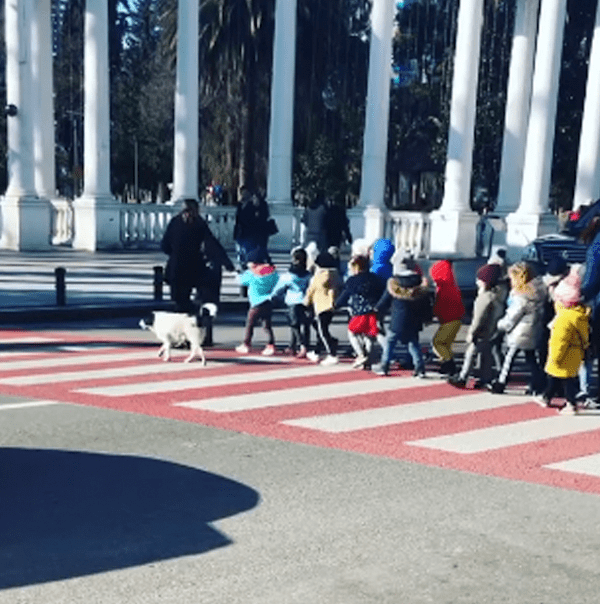
Dog Stops Traffic So Group Of Kids Can Safely Cross The Street

Such a thoughtful pup.

By
Published On 01/22/2020

Photo Credit: Beqa Tsinadze

Unfortunately, there are still some drivers out there who apparently don’t know how to treat pedestrians with the respect that they deserve.

But this little dog is doing his best to set them straight.

The other day, Beqa Tsinadze happened upon a curious scene in the town of Batumi, Georgia. There, at a clearly marked crosswalk, a group of young kids were waiting for cars to yield so they could safely cross the road.

Photo Credit: Beqa Tsinadze

Regrettably, though, it seems that many drivers weren’t eager to extend that courtesy without being told to.

So, that’s exactly what this dog did — taking on the role of crossing guard on the kids’ behalf. The moment was captured on video.

The thoughtful dog tackled the situation like a pro. But apparently this wasn’t just a one-time thing.

Tsinadze shared another video of the same dog stopping traffic and escorting yet another group of kids across the street.

Photo Credit: Beqa Tsinadze

Though it’s unclear why the pup came to adopt the role of crossing guard, it may be as a way of saying thanks.

According to Georgian media, the dog arrived to the area as a helpless stray a few years back, and has since endeared himself to members of the community who have taken it upon themselves to care for him.

The report above states that the dog goes by several names among folks in the neighborhood who know him — but there’s no doubt that you’d be safe in calling him a very good boy.

ooOOoo

Another wonderful report.

I’m sorry, I ought to write more but I would only be waffling!

Dogs observations of us humans

A widely-reported study shows the depth to which dogs understand us.

I have seen this reported both in The Smithsonian and Mother Nature News.

I have included both!

I’ll comment at the end of the articles.

ooOOoo

Stray Dogs May Understand Human Signals, Too

By Brigit Katz

Researchers in India studied whether 160 stray dogs would react to commands like gesturing toward a bowl. This image, taken in 2012, shows street dogs surrounding an Indian tea vendor in Allahabad. (AP Photo / Rajesh Kumar Singh)

Dogs are famously good at interpreting human signals, whether communicated verbally or through gestures. But much of what we know about our furry friends’ comprehension of social cues focuses on pet dogs, which share close relationships with their owners and are trained to follow commands. Now, a study published in Frontiers in Psychology, suggests that stray dogs can also understand human gestures, indicating that this ability might be innate.
The new research took place on the streets of several regions in India, which is home to some 30 million stray dogs. Coexistence between canines and humans there is not always peaceful; people have been known to attack street dogs, and vice versa. Around 36 percent of the world’s annual rabies deaths occur in India, most of them children who came into contact with infected dogs.

To better manage the country’s street dogs, it’s essential to gain further knowledge of their behavior, Anindita Bhadra, study co-author and animal behaviorist at the Indian Institute of Science Education and Research Kolkata, tells Liz Langley of National Geographic. So she and her colleagues set out to discover whether strays, which have never undergone specific training, are able to understand humans in a similar way to their pet counterparts.

The researchers took to the streets equipped with two bowls; one contained chicken and the other was empty but had been rubbed with raw chicken, transferring the food’s scent. The bowls were covered with pieces of cardboard and handed to an experimenter who did not know which one contained the snack. This researcher would approach a stray dog, place the bowls on the ground and point at one of them, sometimes momentarily, sometimes repeatedly.

In total, the researchers studied 160 adult strays. Around half of them refused to get close to either bowl, perhaps because they had negative interactions with humans in the past, the researchers speculate. But of the dogs that did approach the bowls, approximately 80 percent went to the one to which the experimenter had pointed. Whether the researcher had pointed to the bowl briefly or repeatedly did not seem to matter. This response, according to the study authors, suggests that untrained stray dogs are “capable of following complex pointing cues from humans.”

Dogs share an intertwined evolutionary history with humans, with domesticated pooches emerging at least 10,000 to 15,000 years ago, though some experts have argued for an even earlier date. This close contact has prompted dogs to develop a number of skills that allow them to communicate with people, including interpreting human emotion. Still, Bhadra says, the researchers found it “quite amazing” that stray dogs without a history of close human interaction were able to “follow a gesture as abstract as momentary pointing.”

“This means that they closely observe the human, whom they are meeting for the first time, and they use their understanding of humans to make a decision,” Bhadra adds. “This shows their intelligence and adaptability.”

Because some dogs seemed anxious and were wary of approaching the researchers, it’s not clear how a dog’s personality—and past experiences—might affect its ability to interpret human signals. But this ability does not appear to be entirely dependent on training, the study authors say, which in turn should inform efforts to manage stray dogs.

“They are quite capable of understanding our body language and we need to give them their space,” Bhadra says. “A little empathy and respect for another species can reduce a lot of conflict.”

ooOOoo

Mother Nature News had a second picture in their broadly-similar article. Indeed, I’m going to republish this article as well. For although they are of the same story they offer a slightly different account.

ooOOoo

Even stray dogs understand human cues

A new study shows these feral canines are paying close attention.

By Starre Vartan   January 21, 2020

Even untrained dogs can follow simple communications. (Photo: Abir Bhattacharya/Shutterstock)

Dogs were likely the first animals that human beings domesticated — scientific guesses vary as to whether that was 10,000 years ago in Europe or 30,000 years ago in Asia (or, as one theory goes, humans tamed grey wolves two separate times). Regardless, they have been our companions for much of human history, and all of modern history. We have evolved together.

And that longstanding connection shows up in feral dogs.

Behavioral biologist Dr. Anindita Bhadra of the Indian Institute of Science Education and Research in Kolkata, India, revealed this by studying stray dogs in several Indian cities. In the experiment, Bhadra and her colleagues would find a solo stray dog and put two covered bowls on the ground nearby. They they’d simply point to one of the bowls; some did this just once, others did it a few times.

The researchers, who published their work in Frontiers in Psychology, recorded the dogs’ reactions. Half the dogs seemed nervous, and didn’t look at or come close to either bowl. But the other half — noted as less anxious dogs by the researchers — approached the bowls. Of those friendlier dogs, about 80% went to the bowl the researcher pointed at. As long as the dogs weren’t too scared of the people, they were easily able to interpret what the pointing meant.

“We thought it was quite amazing that the dogs could follow a gesture as abstract as momentary pointing,” Bhadra said in a news release. “This means that they closely observe the human, whom they are meeting for the first time, and they use their understanding of humans to make a decision. This shows their intelligence and adaptability.”

Wolf puppies surprised researchers with their responses. (Photo: Bildagentur Zoonar GmbH/Shutterstock)

In another study, three out of 13 untrained 8-week-old wolf puppies spontaneously retrieved a ball for a person who threw it, as MNN’s Mary Jo DiLonardo explains. It was a small study, and a low percentage of retrieving puppies, but it was an unexpected result as these weren’t domesticated dogs. “It was so unexpected, and I immediately knew that this meant that if variation in human-directed play behavior exists in wolves, this behavior could have been a potential target for early selective pressures exerted during dog domestication,” Christina Hansen Wheat, a biologist at Stockholm University, said.

Her observations show that playing with people may be a very old trait for wolves, that could reflect how our human ancestors first got to know them. This playful behavior may have sparked humans’ interest in domestication. If a dog could fetch a stick or other thrown object, they could be quite useful to hunting humans.

Of course, their adorable, big puppy-dog eyes and floppy ears (both traits that have become accentuated over time as dogs evolved) are among the reason we are still drawn to dogs today. (It also helps that they’re great listeners.)

But long before that happened, dogs served an important purpose — assisting people in locating and retrieving prey, and serving as eyes and ears for an intruder. Simple tasks like showing they can follow directions or fetch an object may have moved prehistoric dogs from outside the fire circle to within it, which is why understanding these behaviors are so important.

ooOOoo

If we go back into the mists of time then prehistoric wolves (or dogs) learnt to bond with early humans because it served both their interests to so do. Humans became much more adept at hunting and wolves obviously became the benefactors of food!

Now dogs are so well bonded to human gestures that even non-domesticated dogs understand the signals that we humans put out. I say ‘non-domesticated’ but in a real sense all dogs are domesticated. It would be more accurate to say that these are dogs who do not have a home with humans.

The oldest human-animal relationship by far!

Bow ties!

Yes, you read that correctly.

I came late to my desk yesterday afternoon so you will forgive me for launching straight into a piece I read on the BBC.

ooOOoo

Bow ties give dogs in shelters a ‘second chance’

When 13-year-old Sir Darius Brown (yes, his real name) heard about displaced dogs being euthanised after Hurricanes Harvey and Irma in 2017, he had an idea.

His sister had taught him how to make bow ties and he decided to donate some to local animal shelters. It helped the dogs to get adopted faster.

Now his handmade bow ties have helped around 200 dogs across the US, leading him to receive a letter of recognition from former President Barack Obama.

ooOOoo

There’s no shortage of brilliant young people!

A truly wonderful woman

I shall never tire of sharing these sorts of stories!

In the last hours of 2019 Margaret Krupinski sent us a story about this amazing woman and how she loved all the dogs in her care.

It’s a real pleasure to reproduce that article here.

ooOOoo

(SWNS)

Woman Dubbed ‘Miracle Worker’ for Helping Paralyzed, Injured Dogs Walk Again

By SWNS
December 30, 2019

A woman who cares for sick and disabled pooches from around the world has been dubbed a “miracle worker” after getting many of them back on their feet again.

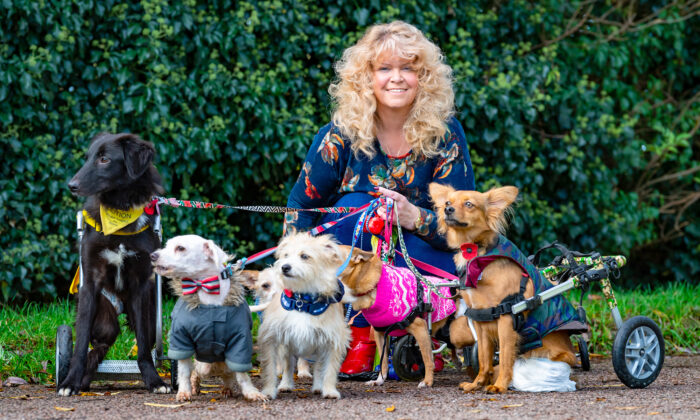
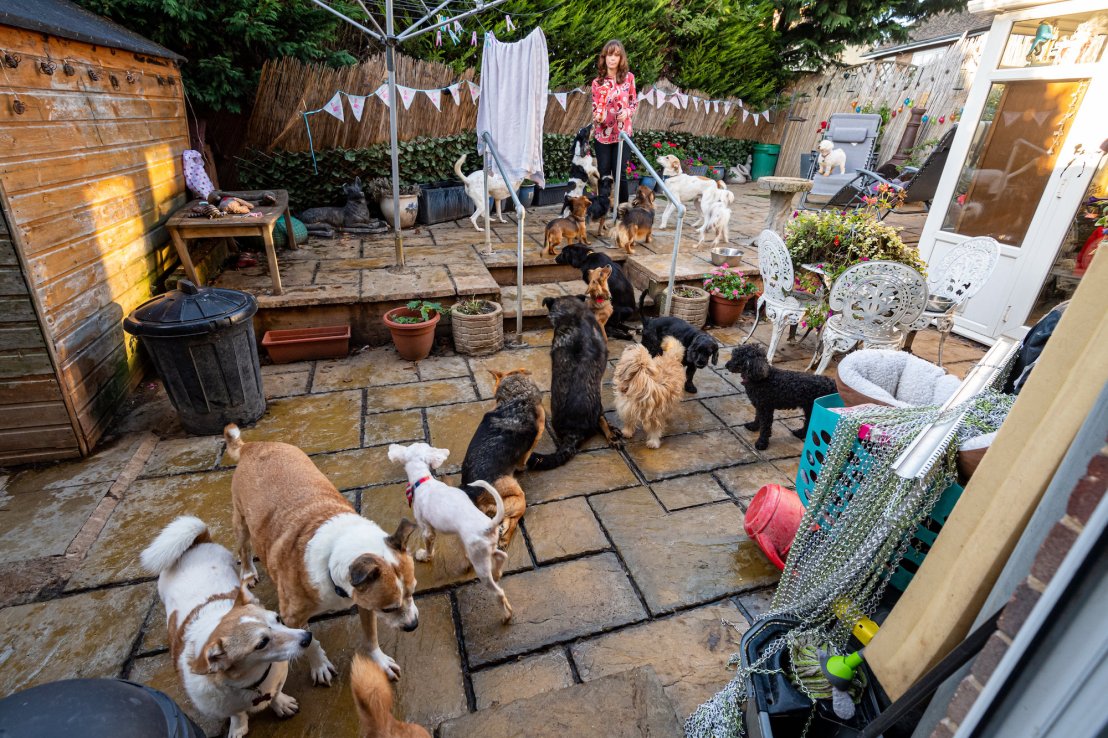
Claire-Louise Nixon, 48, is a dog lover and shares her modest home with 27 canines that no one else wants.

Claire walking with 8 out of the 27 dogs that she has helped to walk again. (©SWNS)
Claire-Louise Nixon, 51 out walking 8 of her 27 dogs that she has helped to walk again. See Cambridge copy SWCAdogs: Dog-lover Claire-Louise Nixon has told how she shares her semi-detached house with her family – and a staggering 27 rescued pooches.Claire-Louise, 48, rescues sick and paralysed dogs from around the world and looks after them at her humble home in Milton Keynes, Bucks.She says looking after the brood of canines is a full-time job and takes her from 6am until midnight.

Many of them are street dogs that have been abused or have lost limbs from mines and explosives in former war zones. But regardless of what conditions the dogs arrive in, Claire is determined to get them walking again through intense physio sessions and walks on wheels.

Her motley crew of dogs all live in her four-bedroom, semi-detached house in Milton Keynes with her husband, Gary, 50 and daughter, Rhia-Louise, 22. While Claire’s initial plan is usually to find forever homes for the dogs, quite often, their needs are too complex, with some even having to wear nappies.

The home of Clarie-Lousie Nixon who has 27 dogs living in the house. See Cambridge copy SWCAdogs: Dog-lover Claire-Louise Nixon has told how she shares her semi-detached house with her family – and a staggering 27 rescued pooches.Claire-Louise, 48, rescues sick and paralysed dogs from around the world and looks after them at her humble home in Milton Keynes, Bucks.She says looking after the brood of canines is a full-time job and takes her from 6am until midnight.
Some of the 27 dogs that Clarie-Lousie Nixon has living at her home. See Cambridge copy SWCAdogs: Dog-lover Claire-Louise Nixon has told how she shares her semi-detached house with her family – and a staggering 27 rescued pooches.Claire-Louise, 48, rescues sick and paralysed dogs from around the world and looks after them at her humble home in Milton Keynes, Bucks.She says looking after the brood of canines is a full-time job and takes her from 6am until midnight.

She said: “When I get these dogs who are in such a bad way, the vet would say: ‘Claire, you won’t get them walking again.’

“But now they say nothing is impossible! They say we work miracles with them!

“I think all they need is love, kindness and patience. When they walk into my house they see other dogs like them so they don’t feel any different that’s why I think they do so well here.

“If you give them a reason to walk again then they will.”

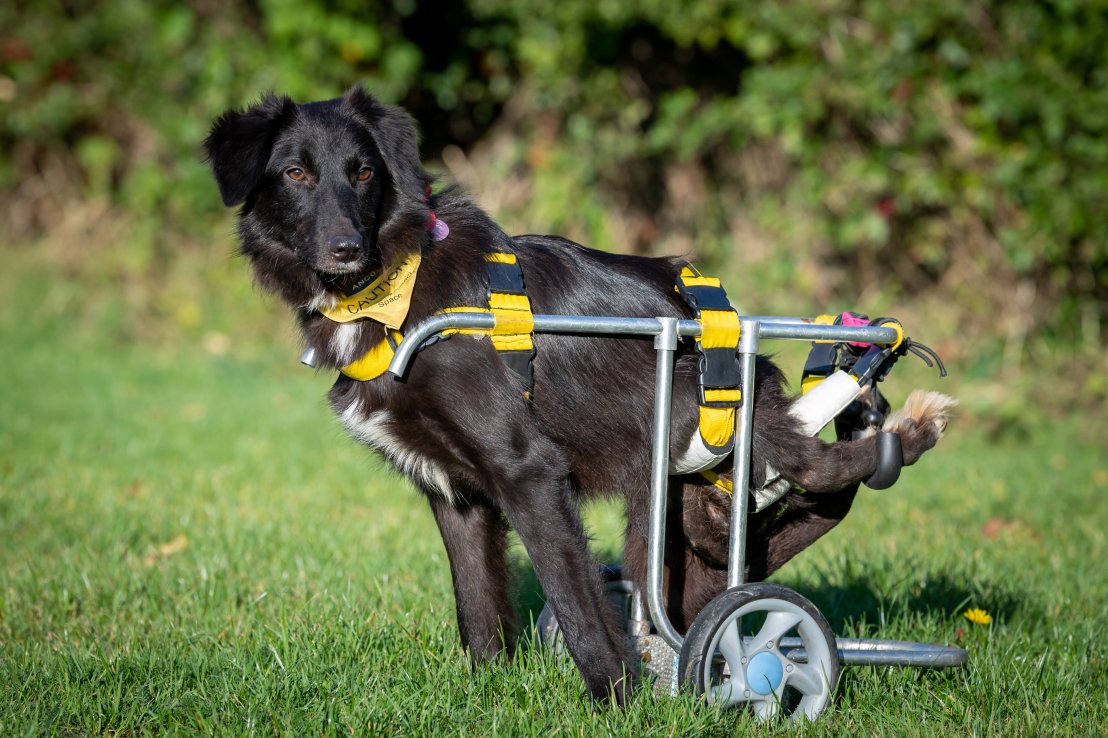
Rita Ora Collie from Romania who was abandoned on the roadside after beeing born deformed and was sent to Claire-Lousie Nixon as no one wanted her. See Cambridge copy SWCAdogs:Dog-lover Claire-Louise Nixon has told how she shares her semi-detached house with her family – and a staggering 27 rescued pooches.Claire-Louise, 48, rescues sick and paralysed dogs from around the world and looks after them at her humble home in Milton Keynes, Bucks.She says looking after the brood of canines is a full-time job and takes her from 6am until midnight.
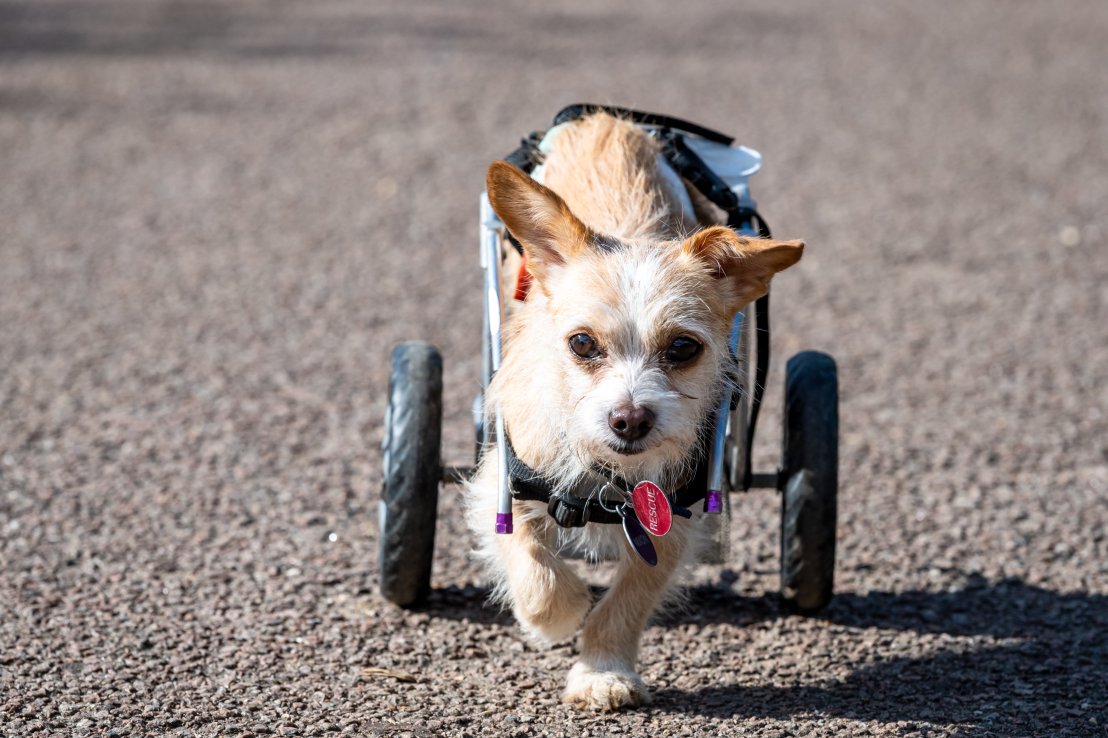
Forest Gump a small collie crossed pomeranian who was run over on an Army base in Romania. Men on the base found Clarie-Lousie Nixon on facebook and sent Forest Gump to her for treatment. See Cambridge copy SWCAdogs: Dog-lover Claire-Louise Nixon has told how she shares her semi-detached house with her family – and a staggering 27 rescued pooches.Claire-Louise, 48, rescues sick and paralysed dogs from around the world and looks after them at her humble home in Milton Keynes, Bucks.She says looking after the brood of canines is a full-time job and takes her from 6am until midnight.

Claire, who looks after the brood of canines—seven of which are paralyzed—says it’s a full-time job and takes her from 6 a.m. until midnight. Feeding them alone is a mammoth chore involving 15 kilograms (approx. 33 pounds) of biscuits and a complete crate of dog food every single day.

Eight of the dogs have to wear nappies, with little bodysuits to keep them in place, and they all need daily baths to keep them clean and infection-free. There’s a lot of cleaning up involved, and Claire is constantly trying to keep on top of the housework.

Feeding time at The home of Clarie-Lousie Nixon who has 27 dogs living in the house. See Cambridge copy SWCAdogs: Dog-lover Claire-Louise Nixon has told how she shares her semi-detached house with her family – and a staggering 27 rescued pooches.Claire-Louise, 48, rescues sick and paralysed dogs from around the world and looks after them at her humble home in Milton Keynes, Bucks.She says looking after the brood of canines is a full-time job and takes her from 6am until midnight.

Claire’s passion to care for sick dogs all started 12 years ago when a puppy named Thomas Cook, who was only a few days old, was brought to the vets to be put down. The puppy had a hair lip and cleft palate, which prevented him from suckling milk and feeding, but Claire was determined to save him.

Claire painstakingly hand-reared Thomas Cook by feeding him a bottle every few hours, and from there, it escalated to having 27 disabled and sick dogs.

She said: “It went into having paralyzed dogs and dogs that had their legs blown off in Bosnia and dogs that had been shot and still had bullets inside them.”

All of Claire’s dogs are named after celebrities that she feels describe their personalities.

Sir Elton John, who Nixon named because of the song “I’m still standing,” was rescued from Romania after he was run over and left on the road to die. This left him with a broken spine. However, with Claire’s help, he can now go on small walks.

Sir Elton John, a Jack Russell cross who Clarie-Lousie Nixon has helped to walk again. See Cambridge copy SWCAdogs: Dog-lover Claire-Louise Nixon has told how she shares her semi-detached house with her family – and a staggering 27 rescued pooches.Claire-Louise, 48, rescues sick and paralysed dogs from around the world and looks after them at her humble home in Milton Keynes, Bucks.She says looking after the brood of canines is a full-time job and takes her from 6am until midnight.

Sherlock Holmes, who was rightly named for his intelligence and curiosity, was a street dog in Oman who was shot by a security guard.

The other dogs to name a few are Patrick Swayze, who twitches all the time and was previously paralyzed, Freddie Mercury, who wanted to “break free,” and David Bowie, who was “under pressure.”

Claire said: “They’re part of the family. The dogs have a free run of the house.

“They sit where they want and they sleep wherever they happen to fall asleep—often on our beds.

“The dogs arrive with the most horrible past we give them love and [a] wonderful future. They come from all over the world but with me they are home forever.”

Doris Day the pomeranian cross who Claire-Louise Nixon is helping to walk again. See Cambridge copy SWCAdogs: Dog-lover Claire-Louise Nixon has told how she shares her semi-detached house with her family – and a staggering 27 rescued pooches.Claire-Louise, 48, rescues sick and paralysed dogs from around the world and looks after them at her humble home in Milton Keynes, Bucks.She says looking after the brood of canines is a full-time job and takes her from 6am until midnight.
Rylan Clark- neal theJack Russell cross Shih tzu who Claire-Louise Nixon helped to walk again. See Cambridge copy SWCAdogs: Dog-lover Claire-Louise Nixon has told how she shares her semi-detached house with her family – and a staggering 27 rescued pooches.Claire-Louise, 48, rescues sick and paralysed dogs from around the world and looks after them at her humble home in Milton Keynes, Bucks.She says looking after the brood of canines is a full-time job and takes her from 6am until midnight.

She further added: “I’m really lucky in that all the neighbors have dogs themselves so we don’t get complaints. And although 27 dogs sounds a lot, they are really quite well behaved.”

Claire raises funds through her organization, Wheels to Paws UK, to provide them with medical treatment, rehabilitation, and the equipment they need to walk again. Vets bills can be a huge drain on resources, but local vets are sympathetic to her cause and often offer a discount.

For long walks, the dogs are put in specially made harnesses with wheels to act as false legs so they can enjoy going out for walks. Meanwhile, those that can’t walk are put in buggies.

Other dogs are regularly taken for doggy hydrotherapy, while all those that can walk are taken out for exercise in rotation.

Claire-Louise Nixon, 51 out walking 8 of her 27 dogs that she has helped to walk again. See Cambridge copy SWCAdogs: Dog-lover Claire-Louise Nixon has told how she shares her semi-detached house with her family – and a staggering 27 rescued pooches.Claire-Louise, 48, rescues sick and paralysed dogs from around the world and looks after them at her humble home in Milton Keynes, Bucks.She says looking after the brood of canines is a full-time job and takes her from 6am until midnight.

Claire said: “The dog rescue charities abroad all know of me. So if they get a badly injured or disabled dog in need of specialist care they will pay to transport them to me in the UK. I can never say no.”

She further added: “It is tremendous hard work but I can’t tell you how rewarding it is. The love these dogs give back is amazing. I would not be without any single one of them.”

ooOOoo

There are some people around who do so much more than can be expected and Claire is very much one of those people.

To be impressed with her is only just the half of it.

Thank you Margaret for bringing this wonderful story to all our attentions.

Picture Parade Three Hundred and Twenty

A repeat of Picture Parade Fifty

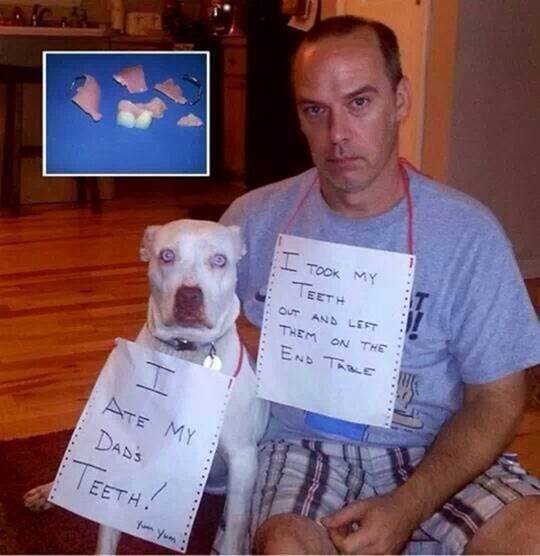
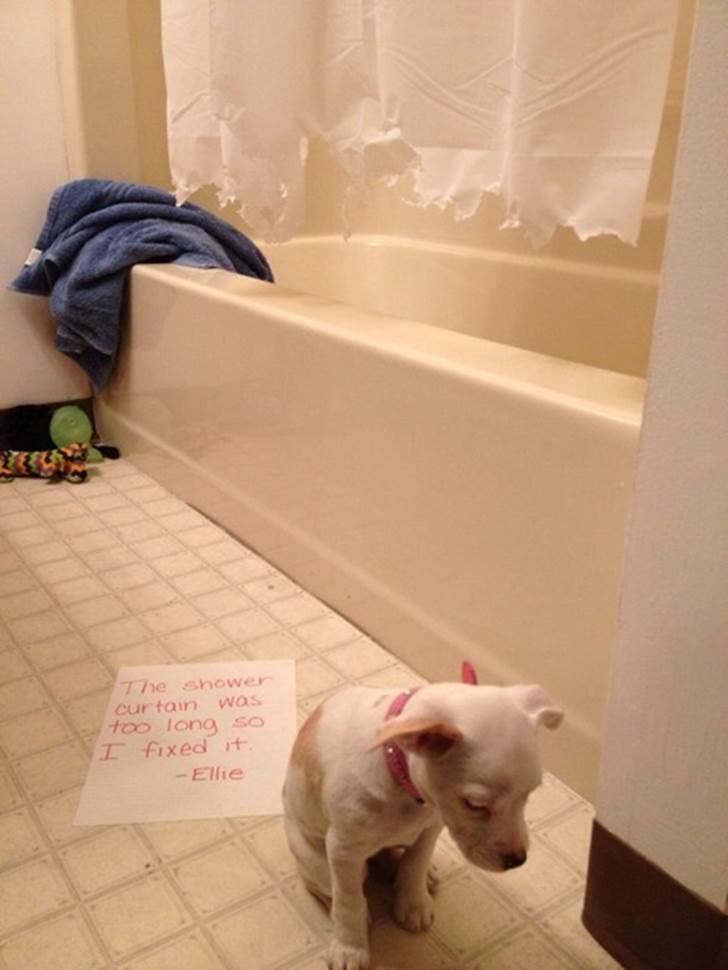
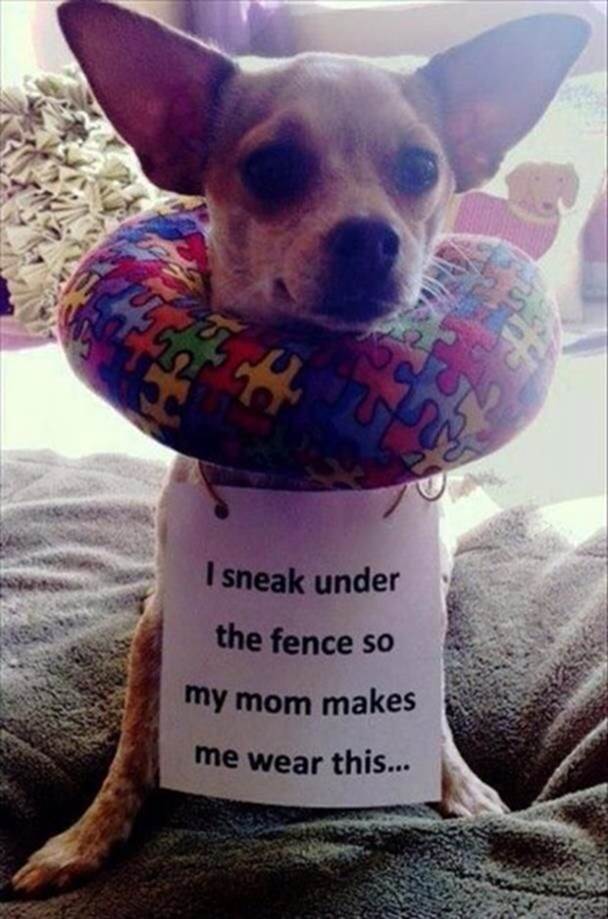
Some fabulous pictures sent in by Amanda Smith from Australia.

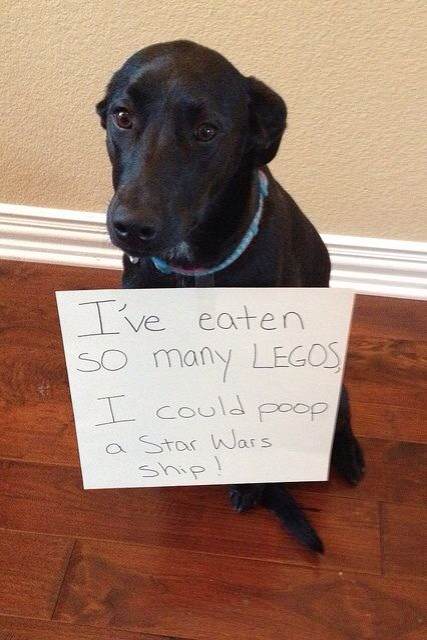
Dogs of Shame

Amanda1

oooo

Amanda2oooo

Amanda3oooo

Amanda4oooo

Amanda5oooo

Amanda6oooo

Amanda7oooo

Amanda8

Aren’t they wonderful!

Another set coming along in a week’s time!

FindShadow to the rescue!

There’s nothing so bad as losing one’s dog.

I was recently contacted by John Brooks. He writes of himself:

John Brooks loves animals from the core of his heart. Whenever he gets time, he tries to write regarding animal health & condition so that all pet lovers like you don’t fall in any hazardous situation.

He went on to explain that:

One day, Findshadow helped me to find my lost dog. So that I wrote about Findshadow.

So with no further ado, here is John’s post.

ooOOoo

What Is Findshadow How It Can Help You Find Your Missing Dog

Dog owners share a lot of the same grievances, annoyances, and frustrations. From getting up to your pet barking in the wee hours of the night to cleaning up after your dog’s mess during walks around the neighborhood, raising and taking care of a pet comes with a host of responsibilities. And with those responsibilities come work, and with work comes grievance, annoyance, and frustration.

However, one of the worst, most gut-wrenching feelings that dog owners can relate to is the moment you realize your dog is missing. After searching every room, backtracking to the park you were at with your dog in the morning, asking your neighbors if they have seen them and posting flyers on every telephone you can find, the hopelessness begins to set in.

Luckily for you, Findshadow, a free app that helps dog owners locate their missing companions, is harnessing the power of community and technology to reunite you with your lost pets. And it is doing a pretty darn good job.

So, what is Findshadow? It is is a free smartphone app that walks owners who have lost their pets step-by-step through the process of finding their dogs.

The app offers a wide array of services and tips for their users, all for free. First, you post your lost or found dog to the community. Then, the app gives you a completely personalized, step-by-step plan on how to use the app and other resources to locate your dog. While you may think of some of these steps yourself, you’ll be surprised how thorough the process can be.

After going through these first introductory steps, you can use Findshadow to print or download personalized street flyers. Although posting your pup to the community in-app will definitely increase visibility far more than strictly putting up posters, having physical images of your dog around the neighborhood will still help you get in front of a demographic that doesn’t have Findshadow downloaded.

You can share your post on social media to easily reach friends and family. With just the three aforementioned features, Findshadow has already allowed you to reach three different populations: Findshadow users, people in your neighborhood and your connections on social media.

Getting your dog’s photo in front of as many people as possible is the recipe to success for finding your dog as quickly as possible. The more people who see it, regardless if they use Findshadow or not, the more people who will be able to identify your pet if they see it.

Findshadow also has a nifty feature that makes it easier to contact nearby shelters to ask if they have seen your dog. Even if you don’t directly contact shelters yourself, Findshadow volunteers can help snap pictures of dogs in shelters and send them to you in-app to see if they match.

The sense of community behind Findshadow is powerful. Past users of Findshadow who have successfully been reunited with their dog because of the app give back to the community by becoming active volunteers. This creates a culture where owners are helping each other out. Every dog is considered important.

The interface of the app is easy-to-use and allows users to quickly switch between different features and services. You can browse through found dog listings to double-check posts to see if someone on Findshadow has already found your dog.

The amount of positive reviews and testimonials from dog owners who gush over the app is well-justified. The app has reunited countless owners with their dogs, oftentimes within the same day they went missing.

Even if you haven’t lost your dog, it is a great app to have downloaded just in case something does come up.

ooOOoo

This is the essence of blogging and sharing.

I hadn’t heard of Findshadow before now but will surely put the app on my phone.

Here’s the link to the FindShadow website.

Vibrations!

The mind-body debate!

This is a republication of a recent article that appeared on The Conversation site. In a sense, it has nothing to do with dogs. Yet in another sense, it does!

You be the judge.

Meanwhile, I have finished the draft of my book, have printed it out and now have the gargantuan task of reading and editing it before it goes to an independent proof reader. All 56,657 words.

Oh well, if you can’t take a joke, you shouldn’t have joined!

ooOOoo

Could consciousness all come down to the way things vibrate?

November 9th, 2019

By

Affiliate Guest in Psychology, University of California, Santa Barbara

Why is my awareness here, while yours is over there? Why is the universe split in two for each of us, into a subject and an infinity of objects? How is each of us our own center of experience, receiving information about the rest of the world out there? Why are some things conscious and others apparently not? Is a rat conscious? A gnat? A bacterium?

These questions are all aspects of the ancient “mind-body problem,” which asks, essentially: What is the relationship between mind and matter? It’s resisted a generally satisfying conclusion for thousands of years.

The mind-body problem enjoyed a major rebranding over the last two decades. Now it’s generally known as the “hard problem” of consciousness, after philosopher David Chalmers coined this term in a now classic paper and further explored it in his 1996 book, “The Conscious Mind: In Search of a Fundamental Theory.”

Chalmers thought the mind-body problem should be called “hard” in comparison to what, with tongue in cheek, he called the “easy” problems of neuroscience: How do neurons and the brain work at the physical level? Of course they’re not actually easy at all. But his point was that they’re relatively easy compared to the truly difficult problem of explaining how consciousness relates to matter.

Over the last decade, my colleague, University of California, Santa Barbara psychology professor Jonathan Schooler and I have developed what we call a “resonance theory of consciousness.” We suggest that resonance – another word for synchronized vibrations – is at the heart of not only human consciousness but also animal consciousness and of physical reality more generally. It sounds like something the hippies might have dreamed up – it’s all vibrations, man! – but stick with me.

How do things in nature – like flashing fireflies – spontaneously synchronize? Suzanne Tucker/Shutterstock.com

All about the vibrations

All things in our universe are constantly in motion, vibrating. Even objects that appear to be stationary are in fact vibrating, oscillating, resonating, at various frequencies. Resonance is a type of motion, characterized by oscillation between two states. And ultimately all matter is just vibrations of various underlying fields. As such, at every scale, all of nature vibrates.

Something interesting things happen when different vibrating things come together: They will often start, after a little while, to vibrate together at the same frequency. They “sync up,” sometimes in ways that can seem mysterious. This is described as the phenomenon of spontaneous self-organization.

Mathematician Steven Strogatz provides various examples from physics, biology, chemistry and neuroscience to illustrate “sync” – his term for resonance – in his 2003 book “Sync: How Order Emerges from Chaos in the Universe, Nature, and Daily Life,” including:

  • When fireflies of certain species come together in large gatherings, they start flashing in sync, in ways that can still seem a little mystifying.
  • Lasers are produced when photons of the same power and frequency sync up.
  • The moon’s rotation is exactly synced with its orbit around the Earth such that we always see the same face.

Examining resonance leads to potentially deep insights about the nature of consciousness and about the universe more generally.

External electrodes can record a brain’s activity. vasara/Shutterstock.com

Sync inside your skull

Neuroscientists have identified sync in their research, too. Large-scale neuron firing occurs in human brains at measurable frequencies, with mammalian consciousness thought to be commonly associated with various kinds of neuronal sync.

For example, German neurophysiologist Pascal Fries has explored the ways in which various electrical patterns sync in the brain to produce different types of human consciousness.

Fries focuses on gamma, beta and theta waves. These labels refer to the speed of electrical oscillations in the brain, measured by electrodes placed on the outside of the skull. Groups of neurons produce these oscillations as they use electrochemical impulses to communicate with each other. It’s the speed and voltage of these signals that, when averaged, produce EEG waves that can be measured at signature cycles per second.

Each type of synchronized activity is associated with certain types of brain function. artellia/Shutterstock.com

Gamma waves are associated with large-scale coordinated activities like perception, meditation or focused consciousness; beta with maximum brain activity or arousal; and theta with relaxation or daydreaming. These three wave types work together to produce, or at least facilitate, various types of human consciousness, according to Fries. But the exact relationship between electrical brain waves and consciousness is still very much up for debate.

Fries calls his concept “communication through coherence.” For him, it’s all about neuronal synchronization. Synchronization, in terms of shared electrical oscillation rates, allows for smooth communication between neurons and groups of neurons. Without this kind of synchronized coherence, inputs arrive at random phases of the neuron excitability cycle and are ineffective, or at least much less effective, in communication.

A resonance theory of consciousness

Our resonance theory builds upon the work of Fries and many others, with a broader approach that can help to explain not only human and mammalian consciousness, but also consciousness more broadly.

Based on the observed behavior of the entities that surround us, from electrons to atoms to molecules, to bacteria to mice, bats, rats, and on, we suggest that all things may be viewed as at least a little conscious. This sounds strange at first blush, but “panpsychism” – the view that all matter has some associated consciousness – is an increasingly accepted position with respect to the nature of consciousness.

The panpsychist argues that consciousness did not emerge at some point during evolution. Rather, it’s always associated with matter and vice versa – they’re two sides of the same coin. But the large majority of the mind associated with the various types of matter in our universe is extremely rudimentary. An electron or an atom, for example, enjoys just a tiny amount of consciousness. But as matter becomes more interconnected and rich, so does the mind, and vice versa, according to this way of thinking.

Biological organisms can quickly exchange information through various biophysical pathways, both electrical and electrochemical. Non-biological structures can only exchange information internally using heat/thermal pathways – much slower and far less rich in information in comparison. Living things leverage their speedier information flows into larger-scale consciousness than what would occur in similar-size things like boulders or piles of sand, for example. There’s much greater internal connection and thus far more “going on” in biological structures than in a boulder or a pile of sand.

Under our approach, boulders and piles of sand are “mere aggregates,” just collections of highly rudimentary conscious entities at the atomic or molecular level only. That’s in contrast to what happens in biological life forms where the combinations of these micro-conscious entities together create a higher level macro-conscious entity. For us, this combination process is the hallmark of biological life.

The central thesis of our approach is this: the particular linkages that allow for large-scale consciousness – like those humans and other mammals enjoy – result from a shared resonance among many smaller constituents. The speed of the resonant waves that are present is the limiting factor that determines the size of each conscious entity in each moment.

As a particular shared resonance expands to more and more constituents, the new conscious entity that results from this resonance and combination grows larger and more complex. So the shared resonance in a human brain that achieves gamma synchrony, for example, includes a far larger number of neurons and neuronal connections than is the case for beta or theta rhythms alone.

What about larger inter-organism resonance like the cloud of fireflies with their little lights flashing in sync? Researchers think their bioluminescent resonance arises due to internal biological oscillators that automatically result in each firefly syncing up with its neighbors.

Is this group of fireflies enjoying a higher level of group consciousness? Probably not, since we can explain the phenomenon without recourse to any intelligence or consciousness. But in biological structures with the right kind of information pathways and processing power, these tendencies toward self-organization can and often do produce larger-scale conscious entities.

Our resonance theory of consciousness attempts to provide a unified framework that includes neuroscience, as well as more fundamental questions of neurobiology and biophysics, and also the philosophy of mind. It gets to the heart of the differences that matter when it comes to consciousness and the evolution of physical systems.

It is all about vibrations, but it’s also about the type of vibrations and, most importantly, about shared vibrations.

ooOOoo

This may require more than one read. Because, if you are interested in the subject I’m sure you will wish to read it again.

But the underlying premise is that, as was said earlier,: “all matter is just vibrations of various underlying fields.

Beautiful!


Dancers and Dogs

I know it’s highlighting a book launch but still …

Here’s a YouTube video about the book:

Plus here’s an extract from Mother Nature Network:

Photographers Kelly Pratt and Ian Kreidich frequently work with professional dancers, capturing their gorgeous movements and their breathtaking abilities. But in a random moment, Pratt suggested to her husband, Kreidich, that they throw a few dogs into the mix for an unusual collaboration.

“We definitely didn’t fully know what to expect with this project,” Pratt tells MNN. “We started very small — at first we worked with our friends at the St. Louis Ballet — and just slowly tried to figure out what worked and what didn’t, when it came to working with dogs. No one had ever done this before, so it was all trial and error.”

They posted a behind-the-scenes video on social media and it vaulted into the stratosphere. It has been viewed more than 41 million times on YouTube, Facebook and Instagram.

Pratt and Kreidich spent more than two years photographing 100 dancers and 100 dogs in more than 10 cities across the U.S. Now the images of graceful dancers and furry companions are in the book “Dancers & Dogs.”

I also notice that there’s a calendar for sale.

Anyway, thought you would like to know!

Picture Parade Three Hundred and Eight

Well it’s not a true picture parade but nonetheless it’s lovely.

Taken from here.

Photo Credit: Laurenda Marie Photography

oooo

Photo Credit: Laurenda Marie Photography

oooo

Photo Credit: Laurenda Marie Photography

oooo

Photo Credit: YouTube/Patrick Helleng

Wild Deer Crashes Wedding Shoot To Eat The Bride’s Bouquet

Wedding crashers aren’t usually a good thing. But for one Michigan couple, an uninvited guest made the day even more special.

Morgan and Luke were celebrating their nuptials on the Felt Estate, in Saugatuck, Michigan, when photographer Laurenda Marie Bennett stole the couple away for “golden hour portraits.”

“We walked over this hill and made it to a field where we saw just over a wooden fence was a deer,” Bennett told The Dodo. “As soon as we arrived, the deer looked up and just casually walked over to the bride and groom.”

The friendly deer greeted the couple and quickly spotted the bride’s bouquet. The spray of flowers was too tempting for the deer to resist.

“[He] started reaching his neck over and grabbing flowers from her bouquet and just chewing away,” Bennett said. “Then he steps over the fence so he’s standing in front of them, and he’s just hanging out eating her bouquet.”

After the initial shock of the wildlife encounter wore off, Bennett started snapping photos of the bride and groom. “We were all kind of giggling and looking at each other like, ‘What’s going on? What should we do?’” Bennett said. “Morgan’s expressions were priceless — they just kind of made the photos.”

As it turned out, this specific deer is a bit of a celebrity in the area. He’s even made it to the news for photobombing a few engagement photo shoots earlier this summer.

“Never in a million years did I think I’d run into him, especially when photographing a wedding,” Bennett said. “I felt like it was meant to be.”

The deer would stop at nothing to get the flowers, so the bride eventually decided to give the hungry animal her bouquet. She had to borrow one of the bridesmaids’ arrangements for the bouquet toss — but it was worth it for the hilarious photobomb.

Videographer Patrick Hellenga, of Patrick James Films, was also on-site to capture the sweet encounter on film.

When the couple returned to the field later that night, they found that the deer had left something behind for the bride — a little wedding gift.

“When we walked back to the area where we dropped the bouquet, the deer was gone but there was one white rose still intact,” Bennett said. “She picked it up and joked, ‘It’s the final rose.’”

That’s a lovely story!


This is perfect!

A fabulous elephant story!

ooOOoo

Wild Elephant Brings Her Newborn To Meet The People Who Saved He

Such an incredible moment ❤️️

BY

PUBLISHED ON 09/13/2019
To Loijuk the elephant, nothing is more important than family — especially now that she is starting one of her own.
In 2006, the orphaned elephant was found all alone at only 5 months old, and was rescued by the Sheldrick Wildlife Trust (SWT) in Kenya. She was hand-raised by SWT until she was old enough to return to the wild.
Years have passed, but Loijuk still has a close bond with her human family. She returns to the grounds of the sanctuary every month to visit. But in September, Loijuk surprised her former caretakers with a newborn elephant calf in tow.

Sheldrick Wildlife Trust

It was clear the proud elephant mom couldn’t wait to show off her baby. The calf, who has since been named Lili, was only hours old — likely born only the night before.

Loijuk has never forgotten the kindness of those who helped her. She even invited Benjamin Kyalo, the head keeper, to have a special moment with her newborn calf.

Sheldrick Wildlife Trust

“Benjamin was able to get close to Lili (who nestled into his legs), stroke her delicate newborn skin and breathe into her trunk, thereby letting her know who he was via his scent,” Rob Brandford, executive director of SWT, told The Dodo. “Elephants have an incredible memory and sense of smell and our keepers will often breathe into the orphans’ trunks so they can recognize who they are.”

You can watch a video of Loijuk and Lili’s touching visit here:

Lili was quite wobbly on her feet during the meeting, but over the course of the week, Kyalo watched as she got stronger and stronger.

“Loijuk has stayed close to the area around the unit, allowing our keepers to watch over her and check how she’s getting on,” Brandford said. “Considering September is the peak of the dry season in Tsavo, not the most favorable of conditions for a new baby, we are delighted that Loijuk has returned close to home so that we can help supplement her diet when she visits.”

Sheldrick Wildlife Trust

In the wild, calves are raised with the help of female relatives within the herd. Loijuk has played nanny to other babies before giving birth to Lili, and now her calf has nannies of her very own — two other wild orphans named Naserian and Ithumbah.

Lili will remain with her mom’s herd in the wild for life, and if she is ever in need, she now knows there is a safe place she can always return to.

Sheldrick Wildlife Trust

Lili is the 31st calf born to female orphaned elephants raised by SWT now living wild, and she is a beacon of hope for threatened elephant populations everywhere.

“Moments like these are momentous,” Brandford said. “In saving one orphaned elephant’s life, we are not only seeing that orphan thrive but start a family.”

“Lili has a brighter future ahead of her than many elephants,” Brandford added, “and we look forward to watching this little girl grow up in the wild.”

ooOOoo

Absolutely wonderful!