Category: History

The evolution of dogs

Not quite as obvious as it might seem.

Considering that this blog is called Learning from Dogs, there has been precious little published about the animal species known as Canis familiaris; the classification of the domestic dog.  Let me try to correct that.

So, this reference explains:

The subdivision of Canidae into “foxes” and “true dogs” may not be in accordance with the actual relations; also, the taxonomic classification of several canines is disputed. Recent DNA analysis shows that Canini (dogs) and Vulpini (foxes) are valid clades (see phylogeny below). Molecular data imply a North American origin of living Canidae and an African origin of wolf-like canines (CanisCuon, and Lycaon).

Currently, the domestic dog is listed as a subspecies of Canis lupusC. l. familiaris, and the dingo (also considered a domestic dog) as C. l. dingo, provisionally a separate subspecies from C. l. familiaris; the red wolfeastern Canadian wolf, and Indian wolf are recognized as subspecies. Many sources list the domestic dog as Canis familiaris, but others, including the Smithsonian Institution and the American Society of Mammalogists, more precisely list it as a subspecies of C. l. familiaris; the red wolf, eastern Canadian wolf, and Indian wolf may or may not be separate species; in the past, the dingo has been variously classified as Canis dingoCanis familiaris dingo and Canis lupus familiaris dingo.

However a recent paper published by Nature magazine throws some interesting light of the development on the domestic dog.  As the article preview explains:

The genomic signature of dog domestication reveals adaptation to a starch-rich diet

The domestication of dogs was an important episode in the development of human civilization. The precise timing and location of this event is debated and little is known about the genetic changes that accompanied the transformation of ancient wolves into domestic dogs. Here we conduct whole-genome resequencing of dogs and wolves to identify 3.8 million genetic variants used to identify 36 genomic regions that probably represent targets for selection during dog domestication.

Nineteen of these regions contain genes important in brain function, eight of which belong to nervous system development pathways and potentially underlie behavioural changes central to dog domestication. Ten genes with key roles in starch digestion and fat metabolism also show signals of selection. We identify candidate mutations in key genes and provide functional support for an increased starch digestion in dogs relative to wolves. Our results indicate that novel adaptations allowing the early ancestors of modern dogs to thrive on a diet rich in starch, relative to the carnivorous diet of wolves, constituted a crucial step in the early domestication of dogs.

The BBC News website picked up on this:

Dog evolved ‘on the waste dump’

Jonathan AmosBy Jonathan Amos Science correspondent, BBC News

Anyone who owns a dog knows that it will rummage around in the kitchen bin looking for food, given half a chance.

But this annoying behaviour may have a more profound undercurrent than we realise, according to scientists.

A new study of dog genetics reveals numerous genes involved in starch metabolism, compared with wolves.

It backs an idea that some dogs emerged from wolves that were able to scavenge and digest the food waste of early farmers, the team tells Nature journal.

No-one knows precisely when or how our ancestors became so intimately connected with dogs, but the archaeological evidence indicates it was many thousands of years ago.

One suggestion is that the modern mutt emerged from ancient hunter-gatherers’ use of wolves as hunting companions or guards.

But another opinion holds that domestication started with wolves that stole our food leftovers and eventually came to live permanently around humans as a result.

Anyone who owns or loves dogs will find this article fascinating.  Jonathan Amos goes on to say:

“This second hypothesis says that when we settled down, and in conjunction with the development of agriculture, we produced waste dumps around our settlements; and suddenly there was this new food resource, a new niche, for wolves to make use of, and the wolf that was best able to make use of it became the ancestor of the dog,” explained Erik Axelsson from Uppsala University.

“So, we think our findings fit well with this theory that the dog evolved on the waste dump,” he told BBC News.

Dr Axelsson and colleagues examined the DNA of more than 50 modern dogs from breeds as diverse as the cocker spaniel and the German shepherd. They then compared their generic genetic information with those of 12 wolves taken from across the world.

The Swedish-US team scanned the DNA sequences of the two types of canid for regions of major difference. These would be locations likely to contain genes important in the rise of the domesticated dog.

Axelsson’s group identified 36 such regions, carrying a little over a hundred genes. The analysis detected the presence of two major functional categories – genes involved in brain development and starch metabolism.

In the case of the latter, it seems dogs have many more genes that encode the enzymes needed to break down starch, something that would have been advantageous in an ancestor scavenging on the discarded wheat and other crop products of early farmers.

Do go across to that BBC item and read the rest of the article.

That article and the paper in Nature magazine resonate strongly with an article written on the Dr George Johnson on Science website.  In fact I referred to the George Johnson piece when I first published the Dogs and integrity side piece in July 2009. (My how time flies!)  As that George Johnson piece reveals:

This week I found myself wondering about Boswell’s origins. From what creature did the domestic dog arise? Darwin suggested that wolves, coyotes, and jackals — all of which can interbreed and produce fertile offspring– may all have played a role, producing a complex dog ancestry that would be impossible to unravel. In the 1950s, Nobel Prize-winning behaviorist Konrad Lorenz suggested some dog breeds derive from jackals, others from wolves.

Based on anatomy, most biologists have put their money on the wolf, but until recently there was little hard evidence, and, as you might expect if you know scientists, lots of opinions.

The issue was finally settled in 1997 by an international team of scientists led by Robert Wayne of the University of California, Los Angeles. To sort out the evolutionary origin of the family dog, Wayne and his colleagues used the techniques of molecular biology to compare the genes of dogs with those of wolves, coyotes and jackals.

Wayne’s team collected blood, tissue, or hair from 140 dogs of sixty-seven breeds, and 162 wolves from North America, Europe, Asia, and Arabia. From each sample they extracted DNA from the tiny organelles within cells called mitochondria.

While the chromosome DNA of an animal cell derives from both parents, the mitochondrial DNA comes entirely from the mother. Biologists love to study mitochondrial DNA because of this simple line of descent, female-to-female-to-female. As changes called mutations occur due to copying mistakes or DNA damage, the mitochondrial DNA of two diverging lines becomes more and more different. Ancestors can be clearly identified when you are studying mitochondrial DNA, because clusters of mutations are not shuffled into new combinations like the genes on chromosomes are. They remain together as a particular sequence, a signature of that line of descent.

Do read the full article here.

Finally, just watch this short trailer for a BBC Horizon screened in early 2010.  (Wet eyes warning!)

So the next time you look a dog in the eyes or hug their lovely furry body, think how far back the relationship goes and marvel at how much we have learnt from them.

Man and dog.  Each loving and protecting the other!
Man and dog. Each loving and protecting the other! (Ex-feral dog Hazel snuggling up on the author’s chest who, I can assure you, was genuinely fast asleep when Jean took the picture one evening last January.)

Future uncertainties!

Prediction is very difficult, especially if it’s about the future. Niels Bohr

I love this saying from Mr. Bohr and often repeat it, albeit at times with my own twist to it.  I was reminded of this uncertainty of the future from some comments to a recent post over at Lack of Environment.  The particular post was called Can technology save us? and was a reflection of Martin Lack, the blog’s author, watching a recent BBC Horizon special called Tomorrow’s World.  (There’s the YouTube of the broadcast at the end of this post.) Martin opened his post by saying:

I happened to stumble across a BBC TV Horizon special, entitled ‘Tomorrow’s World’ last Thursday.  It begins with a fascinating review of humankind’s history of – and propensity for – invention. It also explains some truly fascinating – and inspiring – developments in the spheres of space exploration, nanotechnology, biotechnology, and power generation.

In the introduction, the programme presenter and narrator Liz Bronnin explains how, after 100’s of thousands of years of technological stagnation, the fast-moving world of technological innovation is very definitely a modern invention.

Then a little later Martin goes on to say:

After about 32 minutes, Bronnin introduces the power of the Internet to promote innovation – crowd-sourcing research funding and the concept of open-source technology – the complete abrogation of intellectual copyright… It is a fundamental challenge to globalised Capitalism; but it may well be the solution to many of our problems…

However, to me, the final third of the programme is by far the most fascinating… It looks at the challenges of finding a replacement for fossil fuels. It provides a very clear message that this is a technological challenge driven by the reality of physics – not by ideology.

But, overall, Martin lets us know his perspective with his final paragraphs:

Re-engineering nature for our benefit will, without doubt, be very very useful. However, I still think the optimism of the comment at the very end of the programme “…I never worry about the future of the human race, because I think we are totally capable of solving problems…” is very unwise. This is because anthropogenic climate disruption is a problem that is getting harder to solve the longer we fail to address it effectively.

Bronnin concludes by saying that, “it is an exciting time to be alive…” However, I remain very nervous. This is because, as Professor Peter Styles of Keele University – a strong supporter of the hydraulic fracturing industry – recently acknowledged, it will be impossible for carbon capture and storage to remove enough CO2 from the atmosphere to prevent very significant changes to our climate. This is because of the collective hypnosis that deludes most people into seeing perpetual economic growth as the solution to all our problems.

In short, I am certain that technology alone cannot save us. In order to avoid the ecological catastrophe that all but the most ideologically-prejudiced and wilfully-blind can see developing all around us… we need to modify our behaviour: This primarily means that we need to acknowledge the injustice of a “use it up and wear it out” mentality and, as individuals, all learn to use an awful lot less energy.

Climate change “sceptics” have picked a fight with history and science – primarily with the concept of Entropy – and they will lose. The only question that remains is this: Are we going to let them put us all in (what xraymike79 recently called) ‘the dustbin of failed evolutionary experiments’.

Now Jean and I also watched the Horizon special and, to be perfectly frank, found it both uplifting and inspiring.  It seemed a great counter to the overwhelming volume of commentary these days along the lines of ‘The end of the world is nigh!‘ some of that coming from yours truly! That’s not to make light of the huge hurdles ahead.

But it was a couple of comments on Martin’s post from Patrice Ayme that got me thinking.  Here’s the exchange that went between Patrice and Martin following on from a comment from Thomas Foster.

Considering that it is technology which has enabled us to “conquer” nature and thus the degradation of the environment which is a consequence of that it seems most unlikely to this writer that the cause will also bring about a cure. Thomas Foster

—–

The genus Homo has been technological for 5 million years. Give or take two million. Homo is the cure for life. Patrice Ayme

—-

If we Homo Sapiens have been technological for 5 million years, we have spent most of that time being very unsuccessful; and have spent the rest being far too successful. Is there no scope for just living in harmony with our environment (as opposed to being at war with it)? Martin Lack

—-

Hominids have been masters of the environment for at least three million years. By a million years ago, only Homo was left (but for places like Flores). Dozens of megafauna species got annihilated. Homo’s technology has extended to the entire Earth for at least a million years. The Earth itself was turned into a tool. A tool we are not at war with, but that we use. Patrice Ayme

—-

A utilitarian attitude to Nature is one that does not recognise its inherent value (i.e. which it would have even if we did not exist). Seeing ourselves as superior to Nature rather than as part of it has resulted in our not living in harmony with it. This is, by definition, equivalent to being at war with Nature. QED. Refer: Nature is not your enemyMartin Lack

—-

Call it what you want, Martin. Man manipulates nature, and that nature one calls nature has not been “natural” for more than a million years. Except if one views man as part of nature! Patrice Ayme

Patrice is a very clear thinker even if, at times, pretty hard-hitting.  But this exchange confirmed in my mind that clearly looking out to the future must always be hard.  Most certainly in this period of mankind’s evolution predicting the future is especially difficult.  Hence my contribution to Martin’s post:

Jean and I watched the Horizon special a couple of evenings ago. To be honest, I’m not entirely sure what my overall thoughts are in response to your post, Martin. What does come to mind is that old saying, “Never underestimate the power of unintended consequences.

So it may be that we are at a particular point in time, or more likely an era, where seeing clearly into the future is challenging.

The one aspect of modern life that is a game-changer is what we are doing now. Sharing ideas and thoughts across a far-flung net. Not only as the Horizon programme illustrated but as ordinary people trying to make sense of the world.

These are incredibly uncertain times.  Undoubtedly not the first in man’s long history as an historian will explain (cue to Alex!).   But to all of us alive today, these are the most uncertain times we have ever experienced!

No wonder so many of us feel lost at times in today’s world.

Here’s that BBC Horizon, courtesy of YouTube.

I will close with this thought from one masterly ‘wordsmith’, William Wordsworth.

“Life is divided into three terms – that which was, which is, and which will be. Let us learn from the past to profit by the present, and from the present, to live better in the future.”

To the Sea of Cortez.

Journey to the Sea of Cortez.

John Steinbeck
John Steinbeck

I feel very guilty as I didn’t make a note of where I came across this film.  Whoever highlighted the film, thank you!  It’s truly beautiful.  So, please, settle yourself down and be enthralled.

In March 1940, the author John Steinbeck and his friend, marine biologist Ed Ricketts, sailed down the coast of California and Mexico to the Sea of Cortez. “The abundance of life here gives one an exuberance,” they wrote, “a feeling of fullness and richness.

Their stated purpose was to document the creatures that inhabit shallow waters and tide pools on the margins of the Sea of Cortez. But it became much more. In these mysterious, phosphorescent waters they sought an understanding of mankind’s relationship to the natural world and a wellspring of hope for a world headed toward war.

Looking beyond the events of the day, the two friends foresaw our rising impact on the oceans and the devastating impact that over fishing would have on this rich sea. And yet, in their journey, they encountered a periodic cooling of the eastern Pacific Ocean known as La Niña that can still set off an explosion of life.

Can the story of their journey inspire new efforts to preserve the Sea of Cortez? Down along the shores of western Mexico, the wind blows hot and dry. Beyond these barren landscapes, cold currents rush up from the deep and the ocean literally boils with life.

Following their journey down to the Sea of Cortez in March of 1940, John Steinbeck and Ed Ricketts searched for a way to describe what they saw. “Trying to remember this place,” they wrote, “is like trying to re-create a dream. It is fierce and hostile and sullen. The stone mountains pile up to the sky and there is little fresh water. But we know we must go back if we live, and we don’t know why.

The Sea of Cortez is one of the most diverse marine ecosystems on the planet. It’s shaped by the cool waters of the California Current flowing into the warm tropics and by a complex undersea terrain that rises up along a chain of islands and sea mounts. It was the shorelines, between the desert and the deep, that drew John Steinbeck, the author, and Ed Ricketts, a marine biologist and expert on coastal ecosystems.

Ricketts’ book, “Between Pacific Tides,” is a classic study of the inter-tidal zones of the California coastline and the myriad creatures that live in shallow pools, clinging to rocks to sift the rich nutrients carried in by the tides. Steinbeck and Ricketts sought to extend this work to the Sea of Cortez and to explore ideas at the core of their friendship. They shared a belief that man’s fate, like that of the animals they saw, is linked to the health of the natural world. [Ed. my emphasis]

Ricketts is said to have inspired some of Steinbeck’s most memorable characters, including Doc in Cannery Row, and the preacher Jim Casy in The Grapes of Wrath, published a year before their voyage. Set against the backdrop of drought and economic depression, the book describes the dustbowl conditions that gripped the American heartland in the 1930’s. “Now the wind grew strong and hard and it worked at the rain crust in the corn fields. Little by little the sky was darkened by the mixing dust, and carried away. The wind grew stronger. The rain crust broke and the dust lifted up out of the fields and drove gray plumes into the air like sluggish smoke.

In most years, southerly winds carry moisture into the midsection of the country from the Gulf of Mexico. In the 1930’s, according to a recent NASA study, those winds were diverted by a build up of warm water in the Western Atlantic and by a periodic cooling of the Eastern Pacific known as La Niña. This combination robbed the region of rain.

By the time Steinbeck and Ricketts began their journey, the historic backdrop had shifted to war. Fighting had engulfed Europe and was spreading to the western Pacific. While the United States was still officially neutral, American companies had begun supplying arms to the allied effort. In early 1940, John Steinbeck used money he earned from “The Grapes of Wrath” to hire a sardine boat called the Western Flyer. From Monterrey, California, he, his wife Carol, Ed Ricketts and a four-man crew headed south, charting a course along the Mexican coastline.

By all accounts, the journey was filled with adventure, camaraderie, and a sense of wonder at the diversity of living things they encountered. Over a six-week period, the two friends wrote journal entries, took notes on conversations, and catalogued specimens they collected on the way. They compiled these writings into a book: “Sea of Cortez, A Leisurely Journal of Travel and Research,” later changed to “The Log From the Sea of Cortez.”

The work amounts to a search for a way to understand nature, and humanity at large, in a world steadily coming apart at the seams.

Ed Ricketts
Ed Ricketts

The film was released last Feb 28, 2013. Directed by Thomas Lucas, the Producers were John Friday, Thomas Lucas and Adam Ravetch.

oooOOOooo

Will end with a couple of personal reflections.  First is that when I was invited out to Mexico for Christmas 2007 by Suzann and Don, I travelled to San Carlos, Mexico on the Eastern shores of the Sea of Cortez.  San Carlos is a little under 300 miles south of the Arizonan border with Mexico and was where Jean had been living for many years.  Meeting Jean changed my life forever!  Here’s a picture of the Sea of Cortez through the rear door of Jean’s house in San Carlos.

Not the longest walk in the world to the beach!

Second reflection is about dogs. Jean had spent many years rescuing Mexican feral dogs and finding homes for them; hundreds of them over her time in San Carlos.  We brought 13 of those dogs with us when we moved to Arizona and 9 came to Oregon.  Below is Hazel, one of the five remaining Mexican ‘rescue’ dogs that are still with us in Oregon.

Hazel doing what she does so well - sleeping.
Hazel doing what she does so well – sleeping.

If only we had an alpha dog!

Yearnings for a new start!

You may wonder about the title of this post?  Stay with me for a moment.

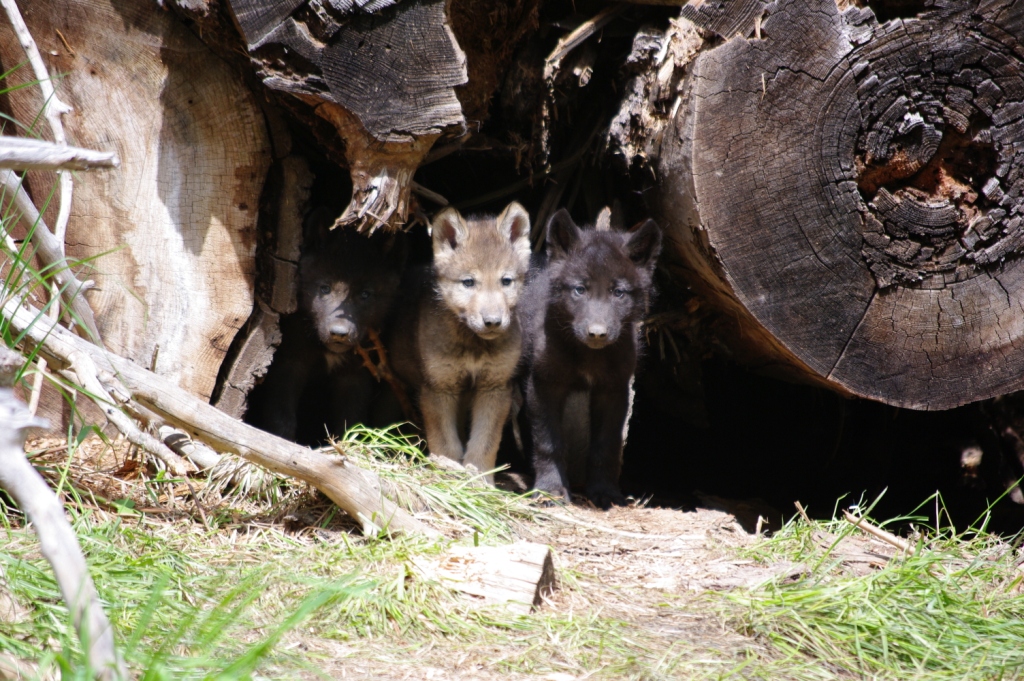
As has been written before on Learning from Dogs, when dogs were living in the wild just three animals had pack roles.  The leader of the pack, always a female animal, was the alpha dog. Second in command was the beta dog, always a dominant male, and the third role was the omega or clown dog.  The wild dog pack was thought to have consisted, typically, of about 50 animals.

Pharaoh
The wisdom of thousands of years showing clearly in Pharaoh’s eyes, our very own beta dog.

As leader of her pack an alpha dog had two primary functions .  One was having first choice as to the male dog she was going to mate with – thus demonstrating how women always choose! 😉

Her second important duty was deciding that her pack’s home range was insufficient for the needs of her ‘family’.  As wolves still do, wild dogs lived within small, well-defined territories when food was abundant.  When food became less abundant then it was time to move to more fertile grounds.  As an aside, research in South Africa as to the area requirements for a small pack of African wild dogs (Lycaon pictus) shows they require from 65 square kilometers (25 square miles) to 150 sq. km. (58 sq. mi.). (See footnote.)

Dogs, like all wild animals, instinctively live in harmony with nature.  So the call from the alpha dog to find a new range didn’t mean they left their old one as a barren disaster area.  You can see where this is heading!

Wild dogs were in contact with early man at least 50,000 years ago. (Just reflect for a moment on the length of that relationship between man and dog.) So each specie has had plenty of time to learn from the other.

Thus, as mankind is on the verge of discovering that our existing ‘territory’ is becoming unsustainable for the healthy life of the species,  one fundamental learning point from dogs appears to have escaped us: Mankind doesn’t have a new range available to our species.

This preamble came to mind when I recently read a short but powerful essay on Alex Jones’ blog The Liberated Way.  The essay was called A global leaky bucket.  Alex has very kindly given me permission to republish it.

A global leaky bucket

Global weather extremes will force people to hard choices.

Nature will have the last word in the debate over sustainability.

I write this in despair, it is snowing again here in Colchester UK.  I admit envy for those of you who live in California or Hong Kong area, I see your photographs where the seasons always seem to be warm and sunny.  The northern Jet Stream refuses to move, Greenland enjoys growing strawberries as the lambs die in the fields of Britain from the winter that refuses to let go.

The extremes of weather are noted in the South of the world as well as the North.  Argentina has had the worst floods in decades last week.  The cause is that the systems such as the Jet Stream are paralysed in one place, thus everyone suffers flood, drought or winter in excess.  Nobody is sure why this paralysis is going on with systems like the Jet Stream, some say it is climate change, the point is that we are experiencing this, and it appears to be more than a temporary issue.

My opinion is that these weather extremes are here to stay for the long duration.  One is then left with a harsh reality of does one seek to control the weather or adapt to the weather? How does one control the weather, a chaotic energy system where even a small change can have great consequences? Perhaps adaptation is the better option, but does one know how huge those adaptations will have to be where drought and flood could be lasting decades?

Lets say food, water and energy are all contained in a bucket.  We take a jug and scoop out from the bucket what we need.  There is a tap that is constantly running filling the bucket with the food, water and energy.  We waste those resources so the bucket leaks.  We disrupt or destroy the renewal systems in the ecosystems so the tap is no longer running as fast as it should.  We are greedy consumers so we take more than we need from the bucket with our jug.  How will the bucket look now? Is this a sustainable future to you?

If our global weather extremes continue as they are it will be like a storm rocking the bucket spilling its contents, will our bucket future look even less sustainable? Extreme weather destroys harvests, kills animals, sends already distressed ecosystems into the abyss.  What happens when the bucket is so empty that people can no longer enjoy their lifestyle of wasteful excess, or worse that people grow cold, hungry and thirsty? Do they sit there and do nothing but die? Will they fight? Who will fight who? As the bucket contents get ever smaller, who will win in the fighting for what is left?

Copyright (c) Alex Jones 2011-2013.

Colchester has a place in my past as I started and ran a business there between the years of 1978 to 1986.  More about that some other day.

Back to Alex’s essay.  It strongly resonated with a recent item on Peter Sinclair’s excellent blog Climate Denial Crock of the Week which I will refer to tomorrow.

So I will leave you with this tragic, emotional thought – where, oh where, is our alpha dog?

Footnote:  The figures for the ranges of wild dogs were taken from a fascinating paper published by Lindsay, du Toit and Mills that may be read here.

2020 vision

A moving, sensitive video about the Arctic.

I won’t let on why I called this post ‘2020 vision’ but if you watch the video below to just before the 7-minute mark the use of the number 2020 will become clear.

This video came to my attention from a recent post on Climate Crocks.  It’s a strongly powerful message about the changes going on in Arctic region and the profound effect those changes will have on the rest of the planet.  Indeed, many experiencing the recent weather in North-West Europe will amend the future tense of my sentence to present tense!

You can read more here about Professor Ken Dunton at the University of Texas where he is Professor, Department of Marine Science.

Professor Dunton
Professor Dunton


He is the sort of person that we should be listening to very carefully as the world changes in ways not seen for tens of thousands of years.

Sceptical about global warming? Read this!

Learning from Dogs is not a blogsite about climate change!

Why, you may ask, do I start today’s post with that sub-heading?  Because, I am conscious that many of my posts do touch on this subject.  For example, just two days ago there was Breaking news.  Then there was the piece about the climate implications for Phoenix, Arizona.  Followed the next day by the changes in the flow of the jet stream across the North Atlantic with all the weather implications for North-West Europe.

Indeed, as the heading to today’s post makes clear, this is also about the changes going on to our planet.

Learning from Dogs is about a different way of living and behaving.  A campaign, if one wants to call it that, to show that the way that modern man is living is corrupt.  Not with a big ‘C’ but still in the sense of living a dishonest life.  Learning from Dogs attempts to show that our wonderful dogs, a source of so much love and pleasure for so many millions, offer us an example of a life in and of this planet.

If there was ever a time in the history of man when we needed being reminded of our frailty and vulnerability, it is now.  As the following so starkly illustrates.

Peter Sinclair of Climate Crocks recently republished an item from Skeptical Science that opened up as follows:

A new study of ocean warming has just been published in Geophysical Research Letters by Balmaseda, Trenberth, and Källén (2013).  There are several important conclusions which can be drawn from this paper.

  • Completely contrary to the popular contrarian myth, global warming has accelerated, with more overall global warming in the past 15 years than the prior 15 years.  This is because about 90% of overall global warming goes into heating the oceans, and the oceans have been warming dramatically.

But what really jumped off the page was this graph.  It is truly scary!

orasa4
Figure 1: Ocean Heat Content from 0 to 300 meters (grey), 700 m (blue), and total depth (violet) from ORAS4, as represented by its 5 ensemble members. The time series show monthly anomalies smoothed with a 12-month running mean, with respect to the 1958–1965 base period. Hatching extends over the range of the ensemble members and hence the spread gives a measure of the uncertainty as represented by ORAS4 (which does not cover all sources of uncertainty). The vertical colored bars indicate a two year interval following the volcanic eruptions with a 6 month lead (owing to the 12-month running mean), and the 1997–98 El Niño event again with 6 months on either side. On lower right, the linear slope for a set of global heating rates (W/m2) is given.

I’m not going to republish the whole piece, although Peter Sinclair kindly gave permission, because I want to move on.  But please do go to that article here and take in the conclusions; for all our sakes.  Conclusions such as:

Their results in this respect are very similar to the main conclusion of Nuccitelli et al. (2012), in which we noted that recently, warming of the oceans below 700 meters accounts for about 30% of overall ocean and global warming.  Likewise, this new study concludes,

“In the last decade, about 30% of the warming has occurred below 700 m, contributing significantly to an acceleration of the warming trend.”

and such as:

Most importantly, everybody (climate scientists and contrarians included) must learn to stop equating surface and shallow ocean warming with global warming.  In fact, as Roger Pielke Sr. has pointed out, “ocean heat content change [is] the most appropriate metric to diagnose global warming.”  While he has focused on the shallow oceans, actually we need to measure global warming by accounting for all changes in global heat content, including the deeper oceans.  Otherwise we can easily fool ourselves into underestimating the danger of the climate problem we face.

What I want to move on to is a recent item highlighted on Grist.  This was an essay by David Roberts under the heading of Two reasons climate change is not like other environmental problems.  David opens by saying:

If you’ll forgive me for stating the obvious: Most people don’t understand climate change very well. This includes a large proportion of the nation’s politicians, journalists, and pundits — even the pundits who write about it. (I’m looking at you, Joe Nocera.)

One reason for the widespread misunderstanding is that climate change has been culturally coded as an “environmental problem.” This has been, in all sorts of ways, a disaster. Lots of pundits, especially brain-dead “centrist” pundits, have simply transferred their framing and conception of environmental problems to climate. They approach it as just another air pollution problem.

David writes that firstly carbon dioxide is not like other pollutants, for example like air particulants.  Then later goes on to say:

The second difference is that climate change is irreversible.

As Joe Romm notes in a recent post, New York Times columnist Joe Nocera slipped up in his latest column and referred to technology that would “help reverse climate change.” I don’t know whether that reflects Nocera’s ignorance or just a slip of the pen, but I do think it captures the way many people subconsciously think about climate change. If we heat the planet up too much, we’ll just fix it! We’ll turn the temperature back down. We’ll get around to it once the market has delivered economically ideal solutions.

But as this 2009 paper in Nature (among many others) makes clear, it doesn’t work that way:

This paper shows that the climate change that takes place due to increases in carbon dioxide concentration is largely irreversible for 1,000 years after emissions stop. Following cessation of emissions, removal of atmospheric carbon dioxide decreases radiative forcing, but is largely compensated by slower loss of heat to the ocean, so that atmospheric temperatures do not drop significantly for at least 1,000 years. [my emphasis]

The article is really best read in full. Because it’s a reminder that the way we presently behave is, in so many ways, a scary legacy for future generations.

So, back to dogs!

When dogs were living as wild dogs, thousands of years ago, a typical pack size was between 40 to 50 animals. The ‘head’ dog was the alpha dog, always a female.  Next in status was the beta dog, always a dominant male. The last one in terms of status was the omega dog, or clown dog.  Those genetic traits still survive in the domestic dog.

Pharaoh - still being an assertive beta dog; taken 22 days ago!
Pharaoh – still being an assertive beta dog; taken 22 days ago!

The alpha dog had two important roles as ‘leader of the pack’.  She had first pick of the male dogs, for obvious reasons. (Only much later in life do we human men come to understand that it’s always the woman who chooses!)

The second role was that she was the one who decided that their territory was unsustainable for her pack and signalled the need to find a new territory.

For man, there’s no other territory to move to.  So we will just have to clean up the only one we have!

It really is a very simple message!

Repeat after me: We are of this planet!  It’s really very simple!

There are times when I look back at my writings on Learning from Dogs, now well over 1,500 posts (1,633 as of today, to be anal about it!) and ponder if the fundamental message behind the name of the blog often gets overlooked.  The Welcome page states:

As man’s companion, protector and helper, history suggests that dogs were critically important in man achieving success as a hunter-gatherer. Dogs ‘teaching’ man to be so successful a hunter enabled evolution, some 20,000 years later, to farming, thence the long journey to modern man. But in the last, say 100 years, that farming spirit has become corrupted to the point where we see the planet’s plant and mineral resources as infinite. Mankind is close to the edge of extinction, literally and spiritually.

Dogs know better, much better! Time again for man to learn from dogs!

Elsewhere on the blog, I underpin that proposition by listing the attributes of dogs:

Dogs:

  • are integrous ( a score of 210) according to Dr David Hawkins
  • don’t cheat or lie
  • don’t have hidden agendas
  • are loyal and faithful
  • forgive
  • love unconditionally
  • value and cherish the ‘present’ in a way that humans can only dream of achieving
  • are, by eons of time, a more successful species than man.

Now this is all fine and dandy but of what relevance is this to the mess that homo sapiens now finds itself in? Two parts to that answer come to mind.

The first part is that watching a dog out in the open countryside quickly brings home the fact that these animals are part of nature and, if push comes to shove, can live in the wild and fend for themselves.  Not saying that a domestic dog would enjoy the experience but that their wild dog and grey wolf roots still rest somewhere in a dog’s consciousness.

The second part of the answer is that all animals instinctively live in harmony, in balance, with their surroundings; with their environment.

For the incredibly obvious reason that dogs, as with all other animal species, are an evolutionary consequence of the natural history of Planet Earth.  That evolutionary journey from the Grey Wolf (Canis lupus) part of the Canidae family, a family including wolves, coyotes and foxes, thought to have evolved 60 million years ago.  That journey all the way to the domestic dog (Canis lupus familiaris).

That ancient journey where the African wild dog (Lycaon pictuspainted dog) came together with early man. No one knows when but the African wild dog was certainly around when man developed speech and set out from Africa, about 50,000 years ago!

Two vastly different natural species, dog and man, evolving compatibly with each other for so many thousands of years.

Back to the attributes of dogs, in particular a dog’s ability to cherish the present.  Earlier this week I was chatting with Kevin Dick, friend from Payson, AZ days, about the ‘interesting’ times we are living in.  Kevin thought there was a significant difference between the generations born in the 1940’s and 1950’s and those born in later times.  Most people over the age of, say 55, were brought up to save for ‘a rainy day’ and, possibly, be able to leave a legacy to their offspring.  Kevin then went on to reflect that more recent generations exhibit a ‘buy today, don’t delay’ mentality.

A by-product of this materialistic instant gratification approach is that the whole damn consumer machine has created a total disconnect with the fact that we humans are of this planet.

The earth is the mother of all people..

(Chief Joseph 1840 – 1904, leader of the Wallowa band, a Native American tribe

indigenous to the Wallowa Valley in northeastern Oregon)

Humans today fail to comprehend this fundamental fact: Our ability to harm the planet and think that it won’t affect our species is complete madness!  If only we could learn how to cherish the present in the way that our dogs do!

I’m now going to offer an essay from John Hurlburt.  I knew John had written this essay but didn’t get round to reading it properly until I had finished the introduction above.  I’m blown away by the resonance between the two but, as always, John’s words are so much more eloquent.

Inside Out

Climate change, religion, economics, government, politics and social issues are topics which create strong personal opinions and cultural divisions. We have difficulty accepting ideas which may conflict with our personal understandings. As usual, it’s an ego thing. The arrogance of our species is inclusive. We all suffer the consequences.

To counter our ego, we know that everything fits together. We exist in a unified cosmos with fluctuations and diversities that emerge around and through us.

Our present transformative state is as a biological form of energy and matter which possesses a conscious awareness of the natural order. We choose to ignore or deny the essential nature of our being at our own peril. Do we live only for the moment or do we live to insure our species future? That’s our fundamental choice.

Seek the truth and identify the common good.” Zoroaster [also known as Zarathustra, Ed.]

We are a consciously aware component of a living world in an isolated corner of a remote galaxy. Everything within and on the earth has an extraterrestrial origin. We live on an incubator we call the earth. We rarely truly communicate with or fully understand the energy of nature in our lives. Our critical thinking ability has become enveloped by an electronic cloud.

We generally agree that the actions of many religions and most politics are based upon short term human interests rather than upon the long term well being of our planet and its disappearing life forms. The fact is that we only began to emerge as a species about 100,000 years ago. Hubble telescope observations have dated our universal origin to roughly 13,002,000,000 years ago.

Could it be that we only imagine ourselves as independent beings? Could it be that beyond the mind games we play there is a vast reality greater that we can understand with our limited sensory apparatus and our finite minds?

Life is a transformative experience. All species, tribes, races and genders are united by the nature of life. We pass through a period of being selfish and ambitious during our journey. Many of us choose to move into these familiar ruts and furnish them. We do not always walk the way we talk.

Nature favors species which adapt to constant change in an emerging universe.

If we agree that our intelligence is judged by choices we make, there is some question about intelligent human life on earth. A recent Harvard University study of species in relation to change estimates that the life span of the human species is approximately 100,000 years. Sound familiar?

The wisdom of our brief human history tells us that we are on a careless and needless path to self destruction. All that’s necessary to verify this assertion is to turn on the news of the day. The systemic paradigm that has been imprinted on our psyches is in constant flux. As we live and learn, we realize that our purpose is to leave life better than we found it.

A delicate balance is necessary to maintain an even strain of faith in the natural process rather than dwelling upon our self centered fears of losing something we imagine we own or not attaining something we believe we want. The earth heals itself from the inside out. We can do the same as a species. Today is the tomorrow we dreamed of yesterday. What have we done to fulfill the true purpose of our lives?

an old lamplighter

So, yes, we have much to learn from dogs.

I will close as I started. We are of this planet!  It’s really very simple!

Just another very special dog.

Trip back memory lane to the days of Zanjeer.

I had completely forgotten about the story of Zanjeer.  But thanks to a recent email from John Lewis, friend from previous Devon days, it seemed fitting for today’s post.

Zanjeer was a Labrador Retriever who served as a detection dog with the Mumbai Police. During the time of the 1993 Mumbai bombings, Zanjeer detected arms and ammunition, including 3,329 kg of RDX explosives.

Here’s how Zanjeer’s death was reported back in November, 2000.

Police dog Zanjeer dead

Date:  2000-11-17

Police sniffer dog Zanjeer, who detected arms and ammunition used in 1993 serial explosions, died at a veterinary hospital at Parel last night, Bomb Detection and Disposal Squad sources said.

The nine-year-old Labrador was admitted to the hospital last month after it developed swellings in the lungs and paws.

Among the eight dogs with the squad, Zanjeer was regarded as a hero. It had two handlers, Ganesh Andale and V G Rajput. Zanjeer had detected 3,329 kgs of RDX, nine sticks of gelatine, five kg of other explosives, 18 AK-56 rounds, five pistol rounds and 6,406 other rounds during the blast investigations.

Zanjeer was born on January 7, 1992, and was inducted into the squad on December 29, 1992. It was trained at the Dog Training Centre of the Criminal Investigation Department at Shivaji Nagar in Pune.

WikiPedia has an entry that opens thus:

Zanjeer (7 January 1992 – 16 November 2000) was a Labrador Retriever who served as a detection dog with the Mumbai Police. During the time of the 1993 Mumbai bombings, Zanjeer detected arms and ammunition, including 3,329 kg of RDX explosives.

Zanjeer was trained at the Dog Training Centre of the Criminal Investigation Department at Shivaji Nagar in Pune, India. He joined the Mumbai Police Bomb Detection and Disposal Squad on 29 December 1992 and was handled by Ganesh Andale and V G Rajput.

The name Zanjeer comes from the 1973 Hindi film Zanjeer but he was also called “Ginger” because of his coat colour.

Not including his contributions during the 1993 attacks, Zanjeer helped to recover 11 military bombs, 57 country-made bombs, 175 petrol bombs, and 600 detonators.

Some special dog!

Finally, from the First Post website comes this:

zanjeer

Zanjeer, the labrador: Unlikely hero of 1993 Mumbai blasts

A senior police officer lays a floral wreath on Mumbai’s most famous dog Zanjeer, who worked with the Bomb Squad, following his death from bone cancer in the city, November 17, 2000.Zanjeer, a golden labrador, saved thousands of lives during the serial bomb blasts in the city in March 1993 by detecting more than 3,329 kgs of the explosive RDX, 600 detonators, 249 hand grenades and 6406 rounds of live ammunition. He was buried with full honours during a ceremony attended by senior police officials. Reuters

Twenty years ago!  My, how the years slip by!. Thanks John.

A mathematical approach to the demise of the Neanderthals.

Pure mathematics is, in its way, the poetry of logical ideas. Albert Einstein.

I have never been proficient at mathematics. But that doesn’t mean that I am not fascinated by the field of maths.

Hold that in your thoughts as I mention the name of blogger: Patrice Ayme.  It’s a non-de-plume but so what!  What blows me away, to use the vernacular, is the depth of thought expressed through the keyboard of Mr. Ayme (even the gender is an assumption).  The sub-heading on the home page of his blog is “Intelligence at the core of humanism“.  Just run your eye down the list of Recent Posts to the right-hand side of the home page to get a feel for the topics covered in the last few months.  Impressive is an understatement!

Anyway, five days ago Patrice published a post proposing how the Neanderthals were outbred, under the title of Math Extinguished Neanderthals.  It fascinated me and Patrice was gracious in allowing me permission to republish it on Learning from Dogs.

oooOOOooo

Math Extinguished Neanderthals

HOW NEANDERTHALS WERE OUTBRED:

Zillions of theories about the “disappearance” of Neanderthals. The latest one, from Oxford University, claims that Neanderthals’ big, beautiful eyes, and their big muscles caused their demise. They were too busy looking at things, and flexing their muscles. The idea is that significantly larger eyes would have crowded the Neanderthal brain out, making them relatively stupid. In particular it made them incapable of having social groups as large as those of Homo Sapiens Sapiens.

Big Eyes Do Not Kill

Big Eyes Do Not Kill

Sapiens girl on the left, Neanderthal girl on the right (reconstitution published in Science Magazine a few years ago).

I have long argued that the strength of democracy came from having many brains working in parallel. There is little doubt that larger social groups bring a higher cultural intelligence, hence higher individual intelligence. So I agree about that bit of logic. Yet, ironically, to reach the conclusion that Neanderthals’ social group were less numerous, the simple fact that Neanderthals were bigger, is enough. There is no need for hazardous demeaning allegations about Neanderthals’ brains.

That big eyes made Neanderthals stupid contradicts some facts that were thought to be established:

1) Sapiens Neanderthalis’ brains were significantly larger to start with. See Wikipedia.

2) Many very clever Homo Sapiens Sapiens have small brains. Famously Anatole France, an intellectual, had only a 1,000 cubic centimeters brain. Homo Floresiensis, the “hobbit” species living on the island of Flores, Indonesia, until it was wiped out recently, was extremely intellectually capable, although it had really small (and completely different) brains.

3) In the Middle East, Neanderthals and Sapiens went back and forth through the same large caves over 50,000 years. So whatever happened, it was not in evidence for 50,000 years.

So, of course, I have my own theory. That’s what philosophy is all about: trying to guess what really matters most, and how that most significant data logically articulate. Then scientists, politicians and writers can swoop, figure out the details, and attribute themselves the glory.

What could have happened by around 28,000 years ago that caused the demise of Neanderthals? At the time, the last fierce glaciation was gaining ground. (It reached its maximum 25,000 years ago.) Some have argued, absurdly, that the Neanderthals could not take it. That’s beyond silly, as Neanderthals had evolved, from half a million years ago, precisely to handle extreme cold.

Neanderthals were stocky, powerful, and they had thrived through hundreds thousands years of glaciation, mostly on a meat diet, hunting big game. But they also knew how to cook plants, and eat them.

50,000 years ago, Neanderthals exterminated Cave Bears, a huge animal who lived in caves, prime real estate Neanderthals craved for. Could the disappearance of Cave Bears be logically linked to the disappearance of Neanderthals? Yes. That’s a consequence of my theory. More advanced technology played a direct role.

How did Neanderthals kill Cave Bears? With technology. We do not know exactly what weapons Neanderthals had at their disposal. However, technology had improved, and kept improving. Recently it was found that Sapiens Sapiens (Homo SS; I hope one gets the joke) in Africa had invented bows and arrows 80,000 Before Present (BP).  (About 60,000 years earlier than previously thought!) Before bows and arrows, the propeller had been invented, and was used in Europe. The propeller took advantage of angular momentum to send a sort of mini lance further and stronger than by hand.

Why did the Neanderthals and Denisovans (another human species from Central Eurasia) lose their edge? Advancing technology is the obvious answer. When technology of clothing and weapons was sufficiently advanced, the physiological advantage that the Neanderthals genetically had, disappeared. Homo Sapiens Sapiens could thrive just as well through winter.

At that point, Homo Sapiens Sapiens from Africa could be as successful as the Neanderthals through the freezing wastelands of Europe. OK.

But the Homo SS outbred the Neanderthals, so they became genetically more successful. How do I explain that?

Simple. However, the explanation involves the exponential function, the same function found all over, and that the mathematician Rudin called “the most important function in mathematics”. The exponential also explains the plutocratic phenomenon, and that is why it’s so dangerous. The exponential always rules extinction events, that’s why one day a species is all over, like the American Pigeon, or the Tasmanian Tiger, and the next day, it’s gone.

So visualize this. Neanderthals were bigger than Homo SS, just like the Polar Bear is bigger than the Black Bear. Bigness is an adaptation to cold. Southern Europe’s Brown Bears are smaller than those found in Kamchatka, or Alaska (also known as Grizzlies: the Grizzly is an emigrated European Brown Bear!) Bigger makes warmer inside. That’s why the most massive animal that ever was, the Blue Rorqual, at up to 180 tons, is nearly twice the mass of the largest dinosaur (it’s not just that it’s floating, but also that water is cooler than Jurassic air, I hold).

To simplify, let’s use a bit of exaggeration (that’s reasoning by exaggeration, one of my preferred tactic of thought; the one humor exploits, and why joking helps thinking). Let’s assume Neanderthals were twice more massive than Homo SS.

Now let’s consider an habitat where Homo SS and Neanderthal bands roamed. They will tend not to mix, for obvious racist reasons. The racial hatred between Neanderthals and Homo SS has got to have been colossal. People who look too different are not even sexually attracted to each other (and where Neanderthals and Homo SS were in contact in the Middle East, for 50,000 years, there is no evolution of an interbred species, an indirect proof that there was no love lost there!)

The density of human mass is going to be roughly the same all over, because that density depends only upon the resources available (mostly meat on the hoof, and fur in burrows in glaciating conditions).

Thus, there would have been apartheid. But the Homo SS would have been twice more numerous, where they reigned (from my assumption of twice the mass). So now graft on this a catastrophe; a drought, a flood, a very tough winter, a volcanic super disaster, whatever. The climate was highly variable, starting about 40,000 years ago, just when Homo SS appeared. Some have stupidly argued that Neanderthals were too stupid to adapt to this changing circumstances. Like this paralyzing stupidity struck them just when Homo SS were around. My explanation is more subtle.

After a catastrophe in said habitat, say one of these numerous habitat in Europe isolated by glacial mountain ranges, or seas and lakes, most of the human population would be wiped out, Homo SS, just as Neanderthals. There would tend to be always a small remaining population, because the greatest limit on man is man himself: as a population gets wiped out, resources rebound, and life of the survivors tend to get much easier (that’s what happened in Europe after the Black Death of 1348 CE; if nothing else, survivors could ask for higher salaries from their plutocratic masters, and they did).

So say 90% of the population of the habitat was wiped out. As suddenly resources are now not limited, the human population will rebound exponentially. The equation is: N(t) = N(0) exp(Rt). “R” is the “Malthusian” parameter, the rate of growth. Now it’s going to require twice the resources to feed a Neanderthal to sexual maturation (under our outrageously simplifying assumption that Neanderthals are twice the mass). Thus one may assume that R(Homo SS)/R(Neanderthal) is 2. The end result is that the quotient:

Number Homo SS/ Number Neanderthal = A exp(2t). (Where A is the ratio of the populations H SS/Neanderthal after the catastrophe.)

Thus the population of H SS would exponentially grow relative to that of the Neanderthals, resulting in a quick extinction. And in no way this is happening because Homo SS were superior. Just because they were more gracile.

Hence the mystery of the evolution of contemporary man is smoothly explained. Just a bit of math. QED.

Europeans & Asians: Not Just African

Europeans & Asians: Not Just African

***

Patrice Ayme

***

Note 1: what of the mentally deliquescent and racist article in the Proceedings of the Royal Society? First, they sank so low as tousing orbit size as a proxy, that Neanderthals had larger visual systems than contemporary AMH [Anatomically Modern Humans]. That’s about as intelligent as saying that, because special forces use night vision goggles, they have got to have bigger visual systems.

The main woman author also found the same physiological feature, bigger eyes, in the past, about people presently living at high latitude. She contentedly asserted that, because light levels are lower in the north, people living in the north (40,000 years at least for Homo SS) have bigger eyes. Amusingly, she did not draw, in that case the conclusion that Norwegians and the English are therefore more stupid. Somehow, though, in her lack of smarts, she applies that controversial reasoning to Neanderthals. Does she have giant eyes?

Seriously the Oxford study rests on a central fact that contradicts one of established facts about Neanderthals. Indeed it claims Neanderthals’ brains were not any larger than Homo SS.

***

Note 2; what catastrophes am I talking about? Well the climate fluctuated wildly, to start with. Second, A Campanian ignimbritevolcanic super-eruption around 40,000 years ago, followed by a second one a few thousand years later, certainly crashed Neanderthal populations (based on logic, and evidence fromMezmaiskaya cave in the Caucasus. Mitochondrial DNA analysis of a specimen there is C14 dated 29,000 years BP, one of the latest living pure Neanderthals). After such a catastrophe, the exponential rebounds of populations would have advantaged Homo SS, as explained above.

***

Note 3: OK, I exaggerated with the mass ratio. (Mathematicians often do this, considering an exaggerated case to understand the mean, through the tails.) But the real mass ratio would be aggravated because, Neanderthal was built in such a way, relative to gracile Homo SS, that they consumed more calories per day (some paleontologists have come up with 300). So there is no doubt that the effect above will play a role, even if the mass ratios were not as bad. Notice the mechanism above would tend to extinguish the Neanderthal traits that were most characteristic of the subspecies.

***

Note 4: A preferred trick of Neanderthals’ haters is to exhibitArchaic Neanderthals‘skulls, and compare them to those of modern men. The skull of an Archaic Neanderthal of 400,000 years ago should not be compared to a modern human, less than 40,000 year old! All the more since Neanderthals’ brain size augmented faster than the brain size of Homo Sapiens Sapiens.

***

Note 5: Part of the mechanism above generalizes for other species in competition. It provides with a disappearance mechanism after ecological turbulence, according to species’ ecological footprint.

oooOOOooo

So hope that others shared my pleasure at reading the essay.

Going to close with another quotation from Mr. Albert Einstein: “As far as the laws of mathematics refer to reality, they are not certain, and as far as they are certain, they do not refer to reality.”

Going beyond the self.

Further reflections on reality and delusion.

I closed yesterday’s post with this quotation from Carl Sagan, “It is far better to grasp the universe as it really is than to persist in delusion, however satisfying and reassuring.

So easy to write.  Nay, a thousand times more easy to trot out than to embrace.  Even that word embrace is too warm and fuzzy.

I’m sure that the human psyche lives in a bubble of delusion.  Clearly, if the level of delusion is abnormal then we can’t function properly as social animals.  Just take a moment or two to muse over the ways that you ‘shelter’ from reality.  Trust me I don’t exclude myself.

However, there are times when reality with a capital ‘R’ smacks us in the face.  Death of a loved one, unanticipated break-up of one’s marriage are two that come to mind.  Undoubtedly, there are others.

In yesterday’s post where I wrote of my experiences from reading Guy McPherson’s book, Walking Away from Empire, I freely admitted the struggle of embracing the truth, the Reality of where we are; ‘we’ as in industrialised man.

Aristotle
Aristotle (384 BC – 322 BC)

Reflect on the relationship that hope has with reality.  Aristotle wrote, “Hope is a waking dream” and that comes from over 2,300 years ago!

More recently, the aforementioned Professor wrote of hope:

With respect to the question, I spoke and wrote about hope way back in August 2007, when this website was launched. In that long essay — the bloated, unedited, transcript of a presentation I had delivered a few days earlier — I described hope as follows:

I view hope as the left-brain product of love, analogous to democracy as the product of freedom, or liberty. Notably, Patrick Henry did not say, “Give me democracy or give me death.” Like the rest of the founding fathers, Henry knew that freedom was primary to democracy; without the guiding light of freedom, or liberty, democracy breaks up on the shoals. Love keeps our left brain in check — that’s the message of the world’s religions. But our right-brain love creates the foundation for hope: love for nature, love for our children and grandchildren, love for each other. Without love to light the way, hope breaks up on the shoals.

Staying with Guy McPherson for a tad longer, over on Transition Voice there was an essay from him under the title of Sadly, extinction is no laughing matter.

Picking up on the Carl Sagan quote again (“It is far better to grasp the universe as it really is than to persist in delusion, however satisfying and reassuring.“) McPherson writes:

Many people disagree with Sagan, choosing delusion over reality, believing we can have infinite growth on a finite planet with no consequences for people or other creatures, other life forms, other organisms. The people in this latter group seek hope, and many of them disparage me and my actions for inducing despair.

Finally, though, I’ve concluded that hope is hopeless. As Friedrich Nietzsche pointed out, “Hope is the most evil of evils, because it prolongs man’s torment.”

To put Ed Abbey’s spin on it, “Action is the antidote to despair.” So, even though I no longer think my actions matter for humans, I’ll take action.

A worthy pity party

Near-term human extinction is a difficult pill to swallow, as is economic collapse. But ignoring ugly truths does not make them any less true. Despair is an expected and appropriate response to this information. Recognizing, accepting, and moving beyond despair are important subsequent steps.

But first, let’s despair.

Ed Abbey’s idea that action is the antidote to fear reminds me of a recent essay from Alex Jones over at The Liberated Way.  (If you haven’t previously come across Alex’s writings trust me you will be inspired!)

That essay was How to change the world published on the 28th February last.  Here’s how it opens:

Changes to self acts as ripples of change to the world.

Throw a rock into a pool it creates ripples, eventually the pool grows still again.  Like the pool nature will move to a state of harmony if given the chance.

We all know that humanity and this planet suffer many challenges.  Many feel they need to change or improve the world.  Those people fail to realise that nature knows where the state of harmony is, and is attempting to get to that state of harmony, therefore one has no need to change or improve the world.

The reason those words jumped off the page at me (OK, screen!) was the key message that letting go of what man feels compelled to do and allowing the natural forces on this planet to reign supreme is the answer.  The message that we have to go back to the natural way of doing things.  Right back to the harmony that early man had with the planet before farming corrupted our values.

Alex’s essay continues:

The problem with the desire to change the world is it becomes a form of control, attempting to force others to do something they have no desire to do. One of the problems of humanity is control, everyone trying to control each other, self and nature, which ends in conflict where nobody but the strongest wins. The problem with control is choice, liberty and creativity is taken away from those being controlled, and there is no opportunity to gain wisdom from mistakes.

I have spent too many years of my life trying to change or improve the world. I won some battles, I lost others. Worse, I became sometimes no better than those I fought against. Often control made the situation worse. I am reminded of the Greek legend of King Sisyphus who was condemned to roll a boulder up a steep hill only to see it roll down again, an activity he was condemned to repeat for all of eternity. Trying to change or improve the world was my equivalent of King Sisyphus.

The answer is to be a ripple of change to the world by doing our own thing. By changing ourselves, by living our dreams, setting an example, we emanate ripples of change into the world. We transform the world by transforming ourselves. Remember that stone that splashed into the pool? We are the stone, our activities in making ourselves happy, healthy and abundant becomes the ripples of change into the world. We force nobody to do anything, since all our efforts are focused on ourselves, we show by example which others may copy. People will follow our example since they see what we do works.

It is hard to let go, but let go we must. Change is inside rippling outwards.

It’s the old adage about change.  It first has to start from within.  As I warned in yesterday’s post, “When you read this book brace yourself for what you see staring out of the mirror back at you. There will be no room left for delusion.

Ironically for a post that carries the title of ‘Going beyond the self” going out of oneself is the only way to see reality, to brush away delusion.  From which place one can then allow change from within to occur.

I shall close with a quote from one of my favourite authors Aldous Huxley:

“Experience is not what happens to you; it’s what you do with what happens to you.”

letgo1