Category: History

The great global tragedy.

Reinforcing the need to move personhood beyond the human person.

Yesterday, I wrote about the moves to have the concept of personhood extended to chimpanzees. Here’s a small extract:

The order to show cause on the issue of habeas corpus is the first step in a process which Steven Wise and the Nonhuman Rights Project (NhRP) hope will secure Hercules and Leo’s bodily liberty and integrity. If the court were to find in their favour, the chimpanzees would no longer be kept for research and could be moved to a sanctuary in Florida.

Last Friday, George Monbiot published an essay that reinforced our need to regard our animals differently than hitherto; especially our larger animals. It is my pleasure to republish it with Mr. Monbiot’s permission.

ooOOoo

Megadeath

22nd May 2015

The destruction of some of the last of the huge animals that shaped us inflicts a great wound in our lives.

By George Monbiot, published on the Guardian’s website 22nd May 2015

When I read about the attacks on the world’s remaining elephants and rhinos, the first thought that enters my head is: “these creatures used to be everywhere”. Almost every area of land and sea, in every region of the world, had a megafauna. Elephants lived throughout Europe, Asia, Africa and America until very recently in ecological time (30,000 years ago in Europe, 14,000 years ago in the Americas). Rhinos lived across Africa, Asia and Europe. Temperate forest rhinos lived in Britain during previous interglacials, and woolly rhinos lived here in colder periods. Russia was haunted by two gigantic species: humpbacked rhinos the size of elephants, eight feet to the crest, weighing perhaps five tonnes.

Lions were everywhere except Australasia (that had a marsupial equivalent); tigers ranged to the borders of Europe; hippos wallowed in British rivers; hyaenas survived into the early Mesolithic in Britain and northern Europe. All this is easily forgotten in a world afflicted by Shifting Baseline Syndrome: our habit of conceptualising as natural and normal the ecosystems that prevailed in our own youth, unaware that they were, even then, in an extremely degraded state.

The places in which monsters remain are the last tiny redoubts of what was once a global population. Of the 42 species of terrestrial mammals weighing more than a tonne that existed on Earth when modern humans left Africa, just eight are left: the African and Asian elephants, the larger of the two hippopotamus species and the black, white, Indian, Javan and Sumatran rhinos. Seven of them are threatened and four are critically endangered.

Even in the relatively recent past, the area of land over which these animals roamed has drastically declined. Maps published in a new paper in the journal Science Advances show that elephants, hippos and black rhinos occupied most of sub-Saharan Africa when their populations were first encountered by modern Europeans, but are now confined to a few tiny specks of land.
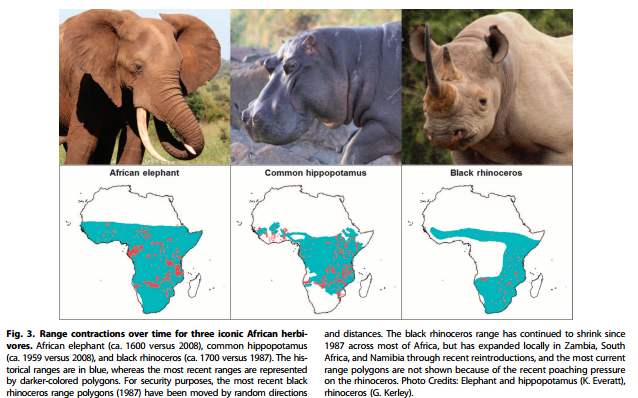
From William J. Ripple et al, 1st May 2015. Collapse of the world’s largest herbivores. Science Advances. 2015;1:e1400103

Why do the very large animals prove most susceptible to destruction? It’s partly because they reproduce slowly and partly because they require plenty of land and food for their survival, so the destruction of wild places tends to hit them sooner than it affects smaller species. But it’s also, I believe, because we have a deep-rooted urge to assert our status by killing them and owning their body parts. Even when people don’t do the killing themselves, possessing their skins, heads, tusks or horns has long been a means of acquiring bragging rights.

From the exquisite sculpture of two reindeer migrating across a river, carved from a piece of mammoth ivory 13,000 years ago and now housed in the British Museum, to the tiger skin rugs and heads of exotic beasts exhibited in stately homes today, bigging ourselves up by displaying our mastery of great beasts seems to be a fundamental human trait. Today’s aristocrats, some of whom are descendants of tribal chiefs, hang their ancestors on the wall to establish their genealogy and the heads of the animals they have killed beside them, to establish their prowess. Not much has changed in thousands of years.

Many of the world’s great sagas, tales of Ulysses, Sinbad, Sigurd, Beowulf, Cú Chulainn, St George, Arjuna, Lạc Long Quân and Glooskap, tell of struggles with megafauna real or imagined. Doubtless at least some of these stories originated in real battles with beasts whose true nature has been forgotten, as a result of their extinction. Think of Sinbad and the roc, which might be a garbled version of encounters with the elephant bird of Madagascar.

Today, some very rich people try to recreate these battles in ways that seem to me grotesque. They bid on the internet for the right to shoot a particular animal, sometimes paying tens of thousands of dollars, arrange a date, a time and a place, then fly over, in some cases with their taxidermists in tow, to bag the creature they have bought.

The animal is waiting for them – sometimes in an enclosure, sometimes just after being released from one, sometimes in the wild but already located by guides. There is no question about the outcome; otherwise the money would have to be repaid. I have heard that in some cases these people fly to a country for just a couple of days, during which they have booked the killing of several spectacular animals. Their diary secretaries arrange their schedules so that they can fit them all in. Once they have posed triumphantly with a foot on the beast they have just killed, they leave it for the taxidermist to process and move on to the next appointment with death.

This looks to me as dry and joyless as it is brutal and unsporting. Though I would struggle nowadays to bring myself to shoot a mammal or a bird (in my youth I killed and ate a few rabbits, squirrels and pigeons), I can understand the attraction of doing so in difficult circumstances, stalking and crawling and lying in wait much as a wild predator would. Canned, predetermined hunting of this kind seems empty of challenge and romance, bought rather than won. But such is the drive to establish dominion over the largest and most magnificent of beasts, and such is the obsession with conspicuous outcomes, that, for some people, none of this appears to matter.

Others are satisfied to remove themselves even further from contingency, by purchasing pieces of animals that have already been killed. My guess is that the use of rhino horn, tiger bones and other such body parts in traditional Chinese medicine, which are of course clinically useless, might be another manifestation of this deep-rooted drive, to make ourselves feel better by association with creatures larger or fiercer than ourselves.

You might have imagined that there were now plenty of alternative means of asserting our status and persuading ourselves of our own value, but traits that resonate with our evolutionary past – our ghost psyche – die hard.

So this great global tragedy continues. I know I should write about it more often. But I find it too upsetting.

Until 2008, conservationists, in some places at least, appeared to be winning. But in that year the number of rhinos killed in South Africa rose (from 13 in 2007) to 83. By 2011, the horrible tally had risen to 448. It climbed to 668 in 2012, 1004 in 2013 and 1215 in 2014. In the first four months of this year, 393 rhinos have been killed there, which is 18% more than in the same period last year.
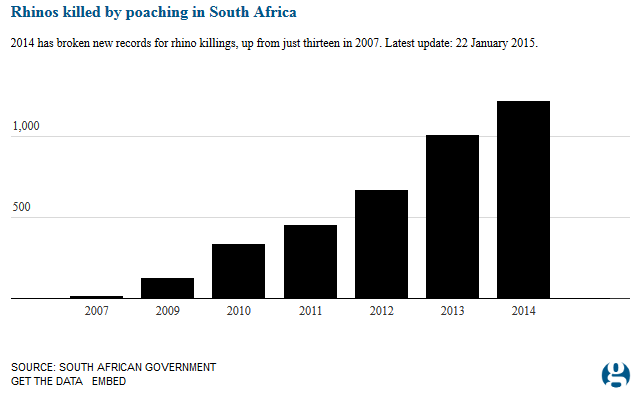
rhino-poaching-trend

The reasons for this acceleration in the Great Global Polishing are complex and not always easy to tease out. But they appear to be connected to rising prosperity in Vietnam, the exhaustion of illegal stocks held by Chinese doctors and, possibly, speculative investment in a scarce and tangible asset during the financial crisis. Corruption and judicial failure help to keep the trade alive.

Already, the western black rhino is extinct (the declaration was made in 2011). The northern white rhino has been reduced to five animals: a male at the end of its anticipated lifespan and four females, scattered between Kenya, the US and the Czech Republic.

Similar stories can be told about some populations of elephants – in particular the forest elephants of West and central Africa.

It’s not just these wonderful, enchanting creatures that are destroyed by poaching, but also many of the living processes of the places they inhabit. Elephants and rhinos are ecological engineers, creating conditions that hundreds of other species have evolved to exploit.

As the paper in Science Advances notes, the great beasts maintain a constantly shifting mosaic of habitats through a cycle of browsing and toppling and trampling, followed by the regrowth of the trees and the other plants they eat. They open up glades for other herbivores, and spaces in which predators can hunt. They spread the seeds of trees that have no other means of dispersal (other animals are too small to swallow the seeds whole, and grind them up). Many trees in Africa and Asia are distributed exclusively by megaherbivores.

They transport nutrients from rich places to poor ones and in some places reduce the likelihood of major bushfires, by creating firebreaks and eating twigs and leaves that would otherwise accumulate as potential fuel on the ground. Many animal species have co-evolved with them: the birds that eat their ectoparasites, the fish that feed on hippos’ fighting wounds (some of these species, I believe, are now used for fish pedicures), the wide range of life that depends on their dung for food and moisture, on their wallows for habitats, on the fissures they create in trees for nesting holes.

Who knows what ecological processes the world has already lost through the retreat of the megafauna? Everywhere on earth, living systems have been radically altered by the loss of the great beasts. (I’ll be discussing the impacts of the extinction of European elephants in next month’s edition of BBC Wildlife magazine).

The destruction of some of the last populations of the animals that shaped us, as well as the natural world, inflicts, I feel, a great wound in our lives, diminishing the wonderful planet on which we evolved, shrinking imagination, crushing experience. All of us should have an interest in supporting those who seek to save these wonderful creatures.

www.monbiot.com

ooOOoo

Dear Reader, I don’t intend to cast you in some dark mental place with the republication of this dark essay from Mr. Monbiot. Yet if you care about the world that we are leaving for the next generation, and I’m certain that the majority, the vast majority, of you readers do so care, then these terrible aspects of humanity must be highlighted. For if just one person is moved to make a difference then the mental pain is a necessary step on that journey of making a difference.

Always search for the rainbow – it’s there somewhere. If

you can’t find one, invent one.Anon.

More sharing of ideas

A positive message from George Monbiot.

I ran out of writing time yesterday so looked for a quick and easy post to offer you.

Not that that undervalues what is presented; far from it!

George Monbiot’s essays are frequently on topics that concern him and rightly so. However, last Thursday George published an essay that offers real hope to those that want to see an end to the ceaseless news of lost species.  It is called Otter Joy and is published with George Monbiot’s kind permission.

ooOOoo

Otter Joy

The return of Britain’s otters offers a glimpse of rewilding’s great rewards

By George Monbiot, published on the Guardian’s website, 7th May 2015

I spent last week travelling with my family across the Scottish Highlands, meeting land managers to discuss possibilities of rewilding. The speed of change there is astonishing, and opportunities for a mass restoration of living systems are emerging faster than I could have imagined even a year ago. I’ll be writing about this in a few weeks, when Rewilding Britain is launched.

But for now I want to talk not about the practicalities of rewilding but about its essence: the reason why this idea excites and inspires me so much that I’ve chosen to devote much of the rest of my life to it.

During our tour across the Highlands we stopped for a few days in the village of Shieldaig, at the head of a sea loch on the west coast. We took a cottage overlooking Shieldaig Island, partly because, for the past few years, white-tailed eagles have been nesting there. After becoming extinct in Britain in 1916, this magnificent bird, bigger than a golden eagle, was reintroduced to the island of Rum in 1975. It has been spreading slowly along the west coast. (It could have moved further across Scotland were it not for shooting and poisoning by grouse estates and others). This is one of the species I would love to see returning to much of the rest of Britain.

Unfortunately, the eagles have chosen another place to nest this year. But there were other returning species to see. I woke one morning when it was still dark, and lay in bed until I heard the song thrush in the sycamore behind the cottage start to sing. I slipped out as the light began to rise over the hills.

There’s a path that leads out of the village, winding north over the headlands and around the small bays of Loch Shieldaig. The willow warblers in the trees along the path had started to sing, and from behind the crest of a hill I heard the cry of an unfamiliar raptor – listening later to recordings, I felt it might have been a white-tailed eagle. There was not a tremor of wind and the air was clear. I could see the promontories and islands stepping away for many miles across a polished sea.

As I came over a low ridge, I noticed a disturbance in the water below me, a few metres from the shore. I dropped into the heather and watched. A moment later, two small heads broke from the sea, then the creatures arced over and disappeared again.

After another moment, the larger one – the dog otter – scrambled out of the water with something thrashing in its mouth. He dropped it onto the rocks, gripped it again, then chewed it up. Then the bitch emerged from the sea beside him, also carrying something, that she dispatched just as quickly. They plunged in again, and I watched the trails of bubbles they made as they rummaged round the roots of the kelp that filled the shallow bay.

When they emerged once more, each with a fish in its mouth, I was able to identify the quarry. They were catching rocklings: small, very slippery fish of the same olive-brown as the kelp. Over the next half hour, each of them caught about fifteen. I marvelled at their ability to grab such difficult prey. I loved the slick, swift movements with which they dived and dolphined and twisted underwater. It looked to me like an expression of pure joy.

Hiding among the rocks and heath, I could keep ahead of the otters without being seen, as they foraged round the coast. As the cliffs became lower, I found myself coming ever closer to them. Then, though I don’t know why, the otters emerged from the water without fish, shook themselves out, and climbed up the rocks, long low bodies undulating, towards me. The dog grunted and huffed while his mate made a high whickering noise. They kept raising their heads and staring in my direction. But as I was buried in the heather and they have weak eyesight, I doubt they could have seen me. Soon they were standing about 20 or 30 feet away, raising their bristly little faces to smell the air. I could hear them panting.

Then they turned and rippled back down the rocks, slipped into the water with scarcely a splash and started hunting round the coast once more. Soon they disappeared around a cliff I couldn’t negotiate.

I walked back elated, recharged with wonder and enchantment. A week later, the feeling still buoys me up.

While many species in this country are in rapid decline, the otter is among the few whose prospects are improving. This is partly because it’s no longer hunted, and partly because of a reduction in the organochlorine insecticides that accumulated up the food chain. But, especially in England, it still inhabits just a fraction of its former range.

Otters are an adaptable species that, given the chance, can quickly recolonise the habitats from which they have been excised. Their hesitant return sharpens the hopes of those of us who want a wilder Britain, who strive for the re-establishment of magnificent, enthralling wildlife that you don’t have to travel halfway around the world to see.

Already otters are beginning to appear in a few towns and cities. As they become accustomed to their protected status, they’re likely to become less shy and easier to watch, bringing nature’s wonders closer to the lives of people who have become disconnected from the living planet. If our advocacy of the widespread return to Britain of animals such as beavers, boar and lynx succeeds (and one day, perhaps, of wolves, bison, pelicans, bluefin tuna and whales of several species), the opportunities for re-enchantment will begin to blossom in places that are currently little more than wildlife deserts.

Everyone should be able to experience such marvels, and to step outside the ordered, regulated, predictable world of our own making, that sometimes seems to crush the breath out of us.

www.monbiot.com

ooOOoo

If you, like me, are uncertain what the White-tailed eagle looks like then here’s a photograph of one.

Image: Niall Benvie. RSPB.

The image was taken from a news item on the website of the Royal Society for the Protection of Birds and opens:

2011 has proved another record breaking year for breeding pairs of Scotland’s largest bird of prey. White-tailed eagles soared to new heights despite heavy storms throughout the 2011 breeding season.

Conservationists, and many sea eagle enthusiasts, had been concerned that the high winds felt across Scotland in May could have had a detrimental impact on breeding white-tailed eagles at the vulnerable part of the season when most nests contain small chicks. Indeed, some nests failed including that of BBC Springwatch star, nicknamed “Itchy”, who experts fear lost his chicks in the storm.

However, the bad weather failed to blow the species off course. Recent survey figures for the 2011 breeding season reveal that there were 57 territorial pairs in Scotland, an increase of 10 per cent on the previous year. A total of 43 young fledged successfully from these nests.

George’s essay also mentioned the Scottish sea otter.

RICHARD PETERS photography

This image came from a post on Richard Peters’ Wildlife Photography blog which is very well worth visiting.

OK, Time for Change!

George Monbiot’s devastating analysis of British politics.

Note to readers:

When you start reading the following introduction, ahead of George Monbiot’s essay, you may be excused for thinking I have lost the plot!  However, trust me there is a purpose. For this blog is called Learning from Dogs.

Introduction

We know that the relationship between Planet Earth and man, as in H. sapiens, goes back around 200,000 years.

We also know, indicated by DNA evidence, that the dog separated from the grey wolf about 100,000 years ago.

The relationship between dogs and man goes back thousands of years as well; “The going theory is that dogs were domesticated somewhere between 15,000 and 40,000 years ago.“[1]

Certainly, the dog was the first animal to be domesticated by man. In fact, some archaeologists speculate that without the dog man could not have been such a successful ‘hunter-gatherer’ allowing, in time, man to evolve into farming; the real start of modern man.

But what of today?

There is little doubt that many people, even with the minimum of awareness about the world that we live in, are deeply worried. On so many fronts there are forbidding and scary views. It feels as though all the certainty of past times has gone; as if all the trusted models of society are now broken. Whether we are talking politics, economics, employment or the environment, nothing seems to be working.

Why is this? What’s the cause?

It would be easy to condemn man’s drive for progress and an insatiable self-centredness as root causes. But it’s not the case, certainly not the whole case.

The root cause is clear. It is this. How mankind has developed is the result of mankind’s behaviours. All of us behave in many ways that are hugely damaging to the survival of our species upon this planet. It is likely that these behaviours are little unchanged over thousands of years.

But 2,000 years ago, the global population of man was only 300 million. It took 1,200 years for that global population to become 1 billion; in 1800. Now track the intervals as we come forward in time.

In 1927, just 127 years later, the two-billionth baby was born. In 1960, only 33 years on, the three-billionth baby. Just 16 years on, in 1974, the four-billionth baby was born. In 1987, 13 years later, five billion. Around October 1999, the sixth-billionth baby was born! It’s trending to a billion every decade. In other words, a 100-million population growth every year, or about 270,000 more persons every single day!

Combine man’s historic behaviours with this growth of population and we have the present situation. A totally unsustainable situation disconnected from the finite planet that supports us.

The only viable solution is to amend our behaviours. To tap into the powers of integrity, self-awareness and mindfulness and change our game.

We all have to work with the fundamental, primary relationships we have with each other and with the planet upon which we all depend. We need a level of consciousness with each other and with the living, breathing planet that will empower change. We need spiritual enlightenment. And we need it now!

That is why we have so much to learn from dogs. They are man’s best friend. They are man’s oldest friend. They have a relationship with us that is very special; possibly verging on the telepathic.[2]

They can show us how we need to live our lives. Now!

[1] The Origin of Dogs, Scientific American, August 20th, 2009
[2] Refer Dr Rupert Sheldrake best known for his theory of morphic fields and morphic resonance

The George Monbiot essay.

(I hope as you read his essay, you can now understand the reasoning behind my introduction.)

Republished with the very kind permission of Mr. George Monbiot.

ooOOoo

Code of Silence

Almost all the issues worth debating are left unmentioned in this election.

By George Monbiot, published in the Guardian 6th May 2015

Political coverage is never more trivial or evanescent than during an election. Where we might hope for enlightenment about the issues on which we will vote, we find gossip about the habits and style of political leaders, an obsession with statistically meaningless shifts in opinion polls and empty speculation about outcomes. (All this is now compounded by the birth of a royal baby, which means that our heads must simultaneously be dunked in a vat of sycophantic slobber). Anyone would think that the media didn’t want us to understand the choices confronting us.

While analysis of the issues dividing the political parties is often weak, coverage of those they have collectively overlooked is almost non-existent. The Conservatives, Labour, the Liberal Democrats and even the SNP might claim to be at each other’s throats, but they have often reached consensus about which issues are worthy of debate. This article will list a few of the omissions.

The first is so obvious that it should feature in every political discussion: the corrupt and broken system under which we will vote. The argument I’ve heard several Labour activists use – “vote for us because it’s the best we can hope for under first-past-the-post” – would carry more weight if Labour had any plans to change the system.

Where are the furious arguments about the UK’s unreformed political funding, that allows billionaires and corporations to buy the politics they want? Where is the debate about the use and abuse of royal prerogative by successive prime ministers? Where is there even a mention of the democratic black hole at the heart of Britain, into which hopes for financial and fiscal reform are sucked: the Corporation of the City of London, whose illegitimate powers pre-date the Magna Carta?

Here’s a fact with which politicans should be assailed every day: the poor in this country pay more tax than the rich. If you didn’t know this – and most people don’t* – it’s because you’ve been trained not to know it through relentless efforts by the corporate media. It distracts us by fixating on income tax, one of the few sources of revenue that’s unequivocally progressive. But this accounts for just 27% of total taxation. Overall, the richest tenth pay 35% of their income in tax, while the poorest tenth pay 43%, largely because of the regressive nature of VAT and council tax. The Equality Trust found that 96% of respondents to its survey would like a more progressive system. But where is the major party mobilising this desire, or even explaining the current injustice?

A comprehensive failure to tax land and property is a policy shared by the three major English parties, mansion tax notwithstanding. None of them seems to mind that this failure helps to replace the entrepreneurial society they claim to support with an economy based on rent and patrimonial capital. None of them seems to mind that their elaborate fiscal ringfencing of land and buildings clashes with their professed belief that capital should be used productively.

Nor will any of them mount an effective challenge to kleptoremuneration: executives siphoning off wealth they had no role in creating. None seek to modify a limited liability regime so generous that it allowed the multi-millionaire authors of the financial crisis, such as Fred Goodwin and Matt Ridley, to walk away from the pain they helped to inflict without forfeiting a penny.

Even these issues are trivial by comparison to the unacknowledged cloud that hangs over our politics: the impossibility of infinite growth on a finite planet. All major parties and media outlets are committed to never-ending economic growth, and use GDP as the primary measure of human progress. Even to question this is to place yourself outside the frame of rational political debate.

To service this impossible dream, we must work relentlessly, often in jobs that deliver no social utility and cause great harm. Who in politics is brave enough to propose that we work less and enjoy life more? Who will challenge working conditions characterised by ridiculous quotas and impossible demands, or reform a social security regime more draconian and intrusive than day release from prison? Who is prepared to wonder aloud what all this striving and punishment is for?

And how about some acknowledgement of the epidemic of loneliness, or the shocking rise in conditions such as self-harm, eating disorders, depression, performance anxiety and social phobia? Evidently, these are not fit and proper subjects for political discourse, which creates the impression that those who suffer them are not fit and proper electors.

How about some arguments over the loss of public space? Or a debate about what’s happening to children, confined as never before within four walls, both at school and at home? How about some recognition of the radical changes in transport demand, that are likely, in the age of peak car and peak plane, to render redundant the new roads and airports to which all the large parties are committed? Forget it.

The national and global collapse of biodiversity, the horrifying rate of soil loss, the conflict between aspirations to minimise climate change and maximise the production of fossil fuels: none of these are put before voters as issues of significant difference. All major parties tacitly agree to carry on as before.

Politicians will not break these silences voluntarily. They are enforced by a narrow and retentive public discourse, dominated by the corporate media and the BBC, that ignores or stifles new ideas, grovels to the elite and ostracises the excluded, keeping this nation in a state of arrested development.

After this election, we need to think again; to find new means of pushing neglected issues onto the political agenda. We might try to discover why the social media have so far mostly failed to fulfill their democratising promise. We might seek new ways of building political communities, using models as diverse as Podemos and evangelical Christianity. We might experiment with some of the Latin American techniques that have helped to transform politics from the bottom up. However we do it, we should never again permit democracy to be reduced to so narrow a choice.

www.monbiot.com

* 68% of respondents to the Equality Trust’s Survey believed that households in the highest 10% income group pay more of their income in tax than households in the lowest 10% income group.

ooOOoo

(Readers in other countries will easily be able to identify their country’s version of the issues that Mr. Monbiot speaks about.)

Conclusion

Sooner or later, and preferably sooner, each and every one of us must start looking at ourselves in the mirror, every morning, and say, “What behaviour will I change today to save this planet for all future generations?

The power of a single word!

Happy Birthday Dan! (And that word is ‘fortnight’!)

Back in September, 2013 I wrote a post called Closing my windows. It explained how I first met Dan Gomez; now some thirty-six years ago. Let me republish the relevant section:

Earlier on I wrote about launching Wordcraft, the word-processing software for personal computers. That was in early 1979 and later that year I was invited to present Wordcraft at an international gathering of Commodore dealers held in Boston, Mass.

During my presentation, I used the word ‘fortnight’ unaware that Americans don’t use this common English word.  Immediately, someone about 10 rows back in the audience called out, “Hey, Handover! What’s a fortnight?

It released the presenter’s tension in me and I really hammed up my response in saying, “Don’t be so silly, everybody knows the word fortnight!” Seem to remember asking the audience at large who else didn’t know the word.  Of course, most raised their arms!

Now on a bit of a roll, I deliberately started using as many bizarre and archaic English words that came to me.  Afterwards, the owner of the voice came up to me and introduced himself.  He was Dan Gomez, a Californian based in Costa Mesa near Los Angeles and also involved in developing software for the Commodore.

Dan became my US West Coast distributor for Wordcraft and was very successful. When Dataview was sold, Dan and I continued to see each other regularly and I count him now as one of my dear friends.  Through knowing Dan I got to know Dan’s sister Suzann and her husband Don.  It was Su that invited me to spend Christmas 2007 with her and Don at their home in San Carlos, Mexico.  Jean also lived in San Carlos and was close friends with Su. Together they had spent many years rescuing feral dogs from the streets of San Carlos and finding new homes for them.

Thus it was that I met Jean.  Discovering that Jean and I were born 23 miles apart in London!

So from ‘Hey, what’s a fortnight’ to living as happily as I have ever been in the rural countryside of Oregon.  Funny old world!

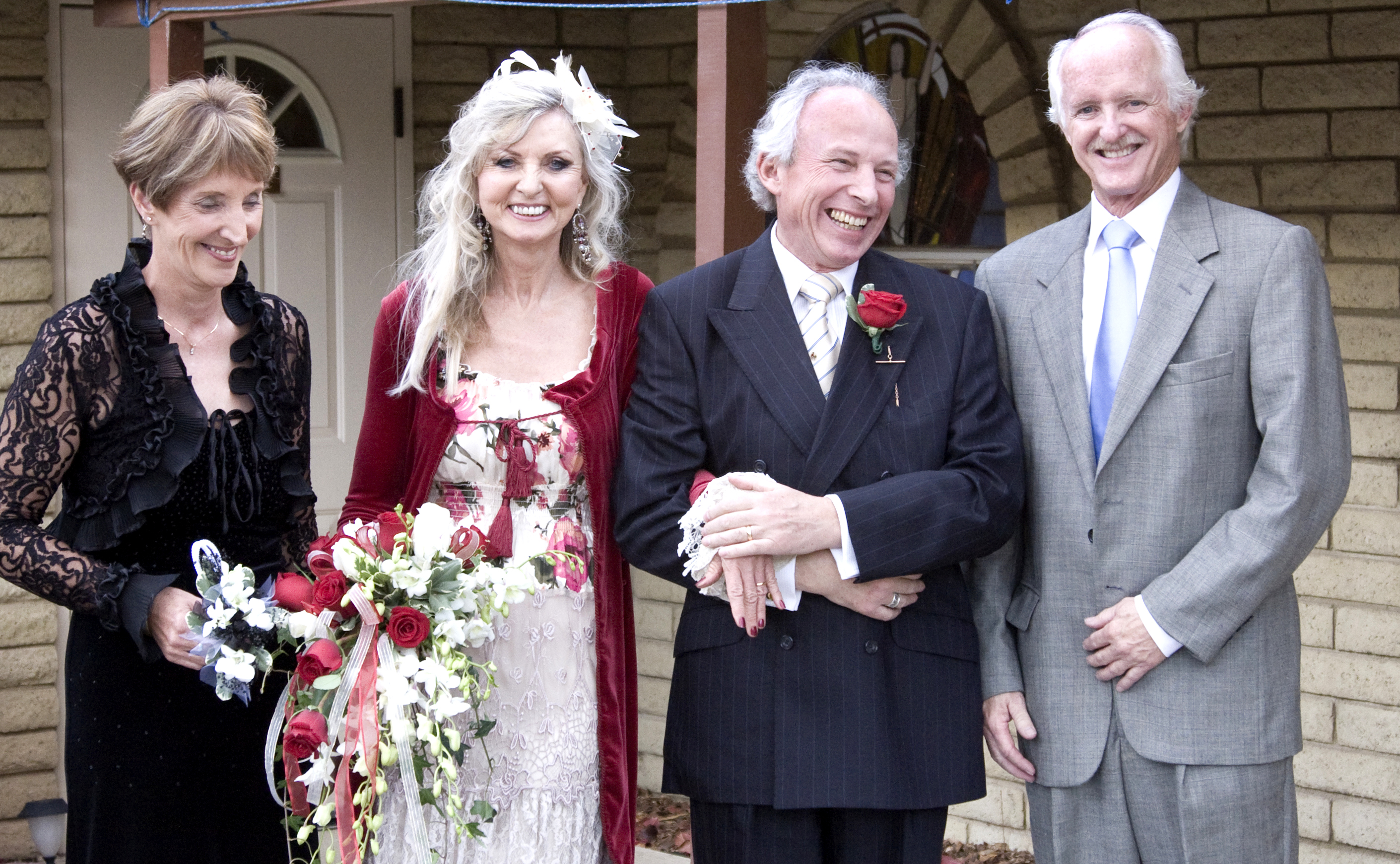
The marriage of Jean and Paul wonderfully supported by Diane, maid of honour, and best man, Dan Gomez.
Dan Gomez – Best Man, and Diane Jackson – Bridesmaid when Jean and I were married;  November 20th 2010.

It is Dan’s birthday today. One of those big birthday milestones in life. (And it would be wrong for me to openly state his age today but just let me say that Dan would be seeing a sixties birthday again!)

So to my very dear and special friend …..

Happy Birthday!

Standing for our trees

Can we stop this madness?

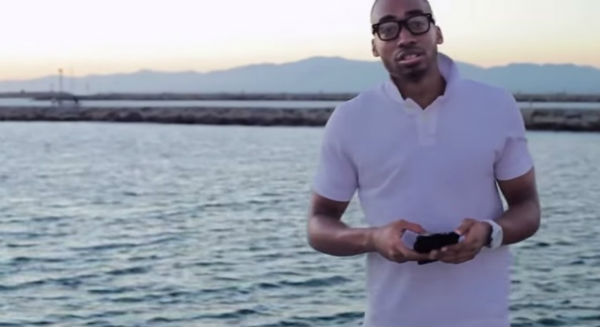
The name Richard Williams is not an uncommon one. But that doesn’t devalue what one Richard Williams has put his name to. I am referring to the Mr. Richard Williams who will be better known to many by his stage name Prince Ea; an American rapper and activist.

Mr. Richard Williams aka Prince Ea.

Here’s a little from Wikipedia:

Early life

Prince Ea was born as Richard Williams on September 16, 1988 in St. Louis, Missouri, the youngest of three children, and has resided there his whole life. The alias Prince Ea is derived from Sumerian mythology (“The prince of the Earth”). He has also graduated from the University of Missouri-St. Louis with an Anthropology degree and Latin honors.

So this particular Richard Williams is no slouch when it comes to what’s between his ears. Plus, he is of an age (27 this coming September) where the effects of what my generation has done, and is still doing, to Mother Earth will be unmissable.

Now watch this video.

Published on Apr 20, 2015
Activist and Artist Prince Ea Releases New Video on Earth Day supporting Stand for Trees campaign

Celebrity activist and spoken word artist Prince Ea launched his newest online video entitled “Dear Future Generations: Sorry” to motivate individuals to take immediate action to stop climate change by Standing for Trees.

Prince Ea was inspired to produce the video by the Stand for Trees campaign, an innovative new way for individuals to take real and effective action to protect threatened forests and help mitigate global climate change, all with the press of a button on their smart phones.

I sense so much angst inside me that it’s difficult to calm myself down and think rationally and calmly about what me and hundreds of thousands of others of my era must do.

But one thing is very clear: doing nothing is not an option!

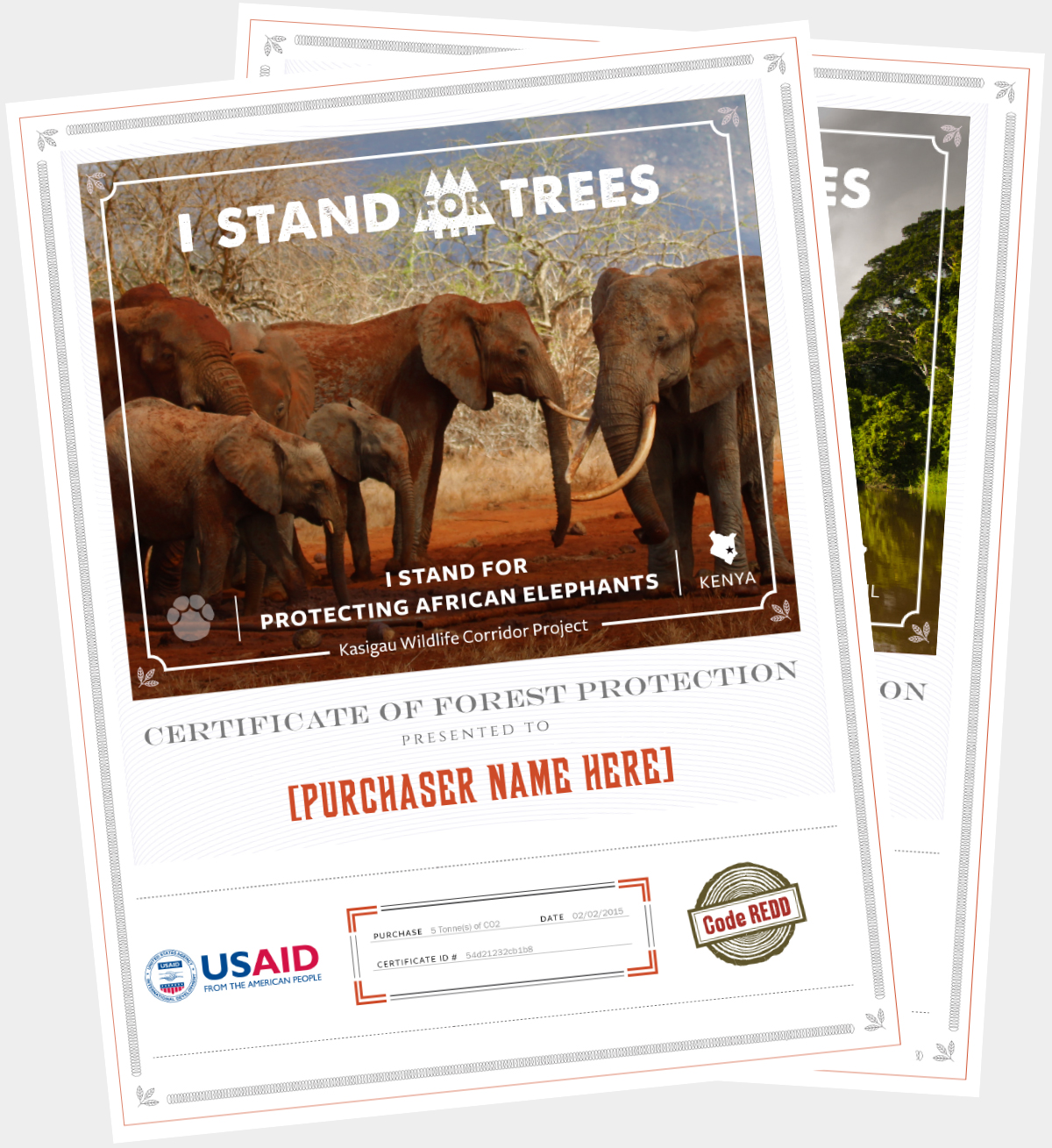
Those who have watched the video will be aware that it serves as a promotion for an organisation Stand for Trees and for making donations in the form of Trees Certificates. The website’s How it works section explains:

Purchasing Stand For Trees Certificates is one of the most effective actions an individual can take to halt deforestation and combat climate change. Here’s how it works:

How-It-Works-Step-1-v03

You buy a Stand For Trees Certificate — a unique, high-quality, verified carbon credit that protects a specific endangered forest and offsets a tonne of CO2 from entering the earth’s atmosphere. Because of your purchase, forests are left standing to do what they do best — store carbon, produce oxygen, provide habitat, and support local communities.

I strongly recommend you read everything that is available on that website including a helpful FAQs section.

It also needs to be said that neither Jean nor I have any connection with the organisation and, like many others, are considering how effective this is.  But we are minded to purchase a number of Trees Certificates in addition to a number of things that we are already doing here at home.  I was also comforted by coming across support for Stand For Trees Certificates from Richard Branson’s Virgin Group. Their web page includes this:

How does this work?

The second largest source of climate-changing CO2 emissions is the destructive clearing of the worlds’ forests. When you purchase a Stand For Trees Certificate, you prevent one tonne of CO2 from entering the atmosphere by supporting local and indigenous communities who are protecting that forest in a developing country. This creates new opportunities for communities that do not wish to choose between alleviating poverty or protecting their forests.

Each of these Certificates is verified to rigorous third-party standards for their climate, community, and biodiversity benefits. Independent auditors verify with satellite and ground data that each Certificate has indeed prevented one tonne of CO2 from reaching our atmosphere and that your money is reaching communities on the ground.

That second paragraph offers key information to my way of thinking.

Because if we don’t halt this destruction of our forests in the foreseeable future then it’s not just humans that will pay the price.

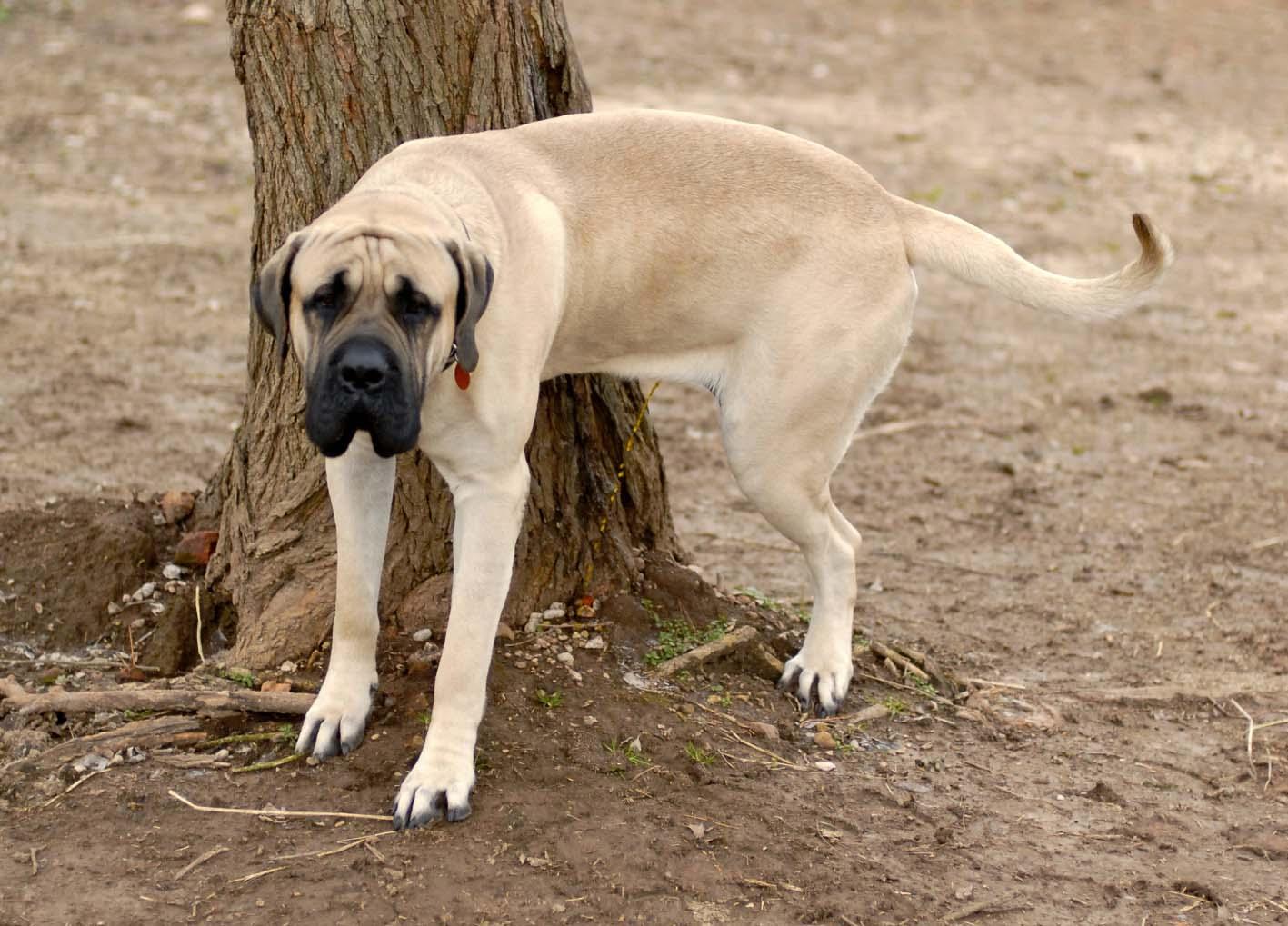
11134461_dog20pee

Back to trees

This week is starting to develop into a theme!

On Monday I published a post Hope Has A Place. It was based upon the hauntingly beautiful track of the same name from Enya. Then yesterday, serendipitously, came The watering hole. Both of those posts, although miles apart in terms of content, nonetheless seemed to subscribe to a common theme. That being that the more that everyday people, good common folk from all around the world, share their feelings, the more likely that those self-same people will make a difference. A positive difference!

Now don’t get me wrong! By presenting these recent posts I am not setting myself up to be anything other than just another everyday person and dog lover who just happens to enjoy sharing stuff via this blog.

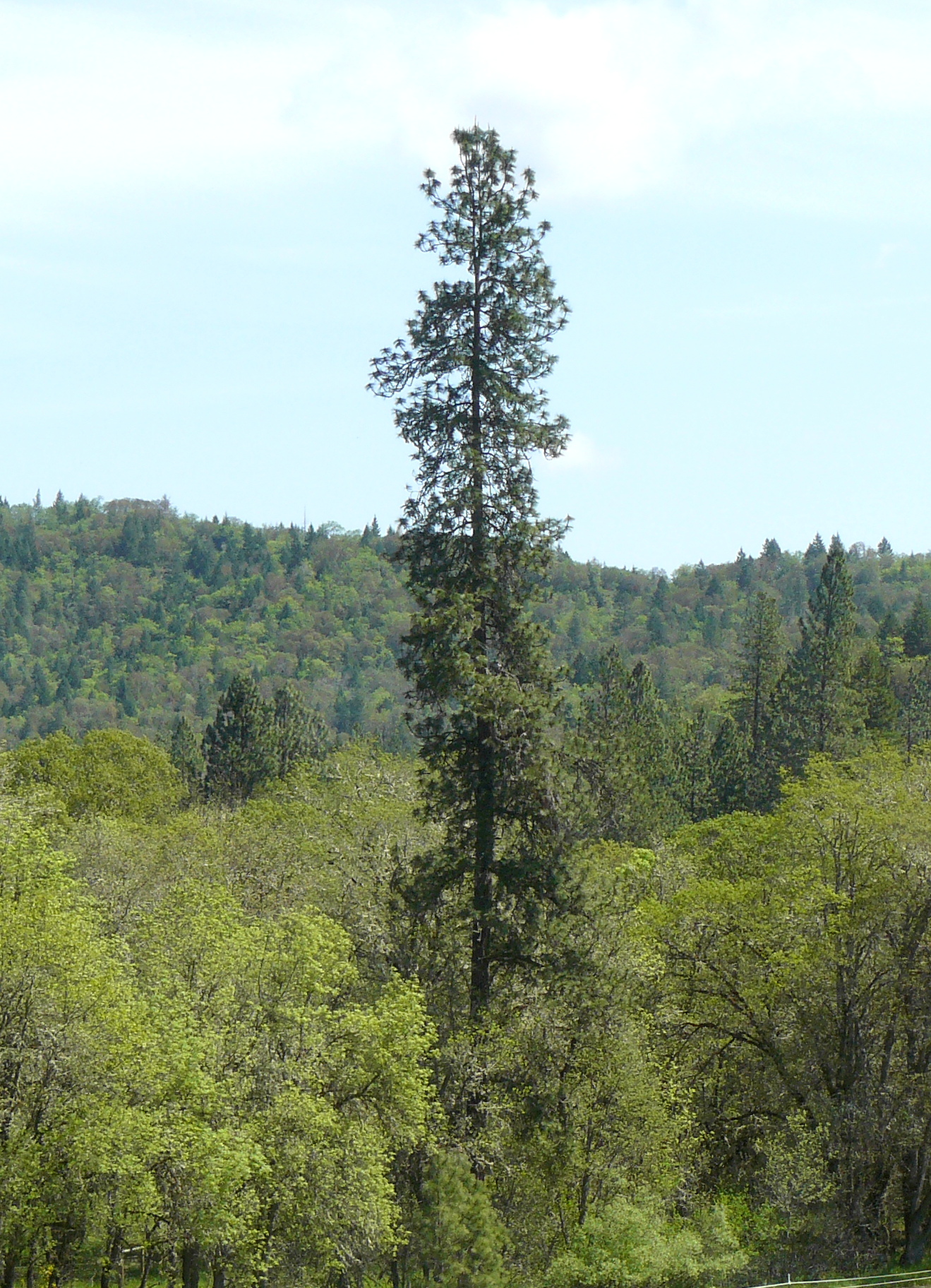
Regular readers of this place will recall that a week ago I celebrated Earth Day with a post called Our beautiful, life-giving trees. It included this picture:

We must sing for our trees.

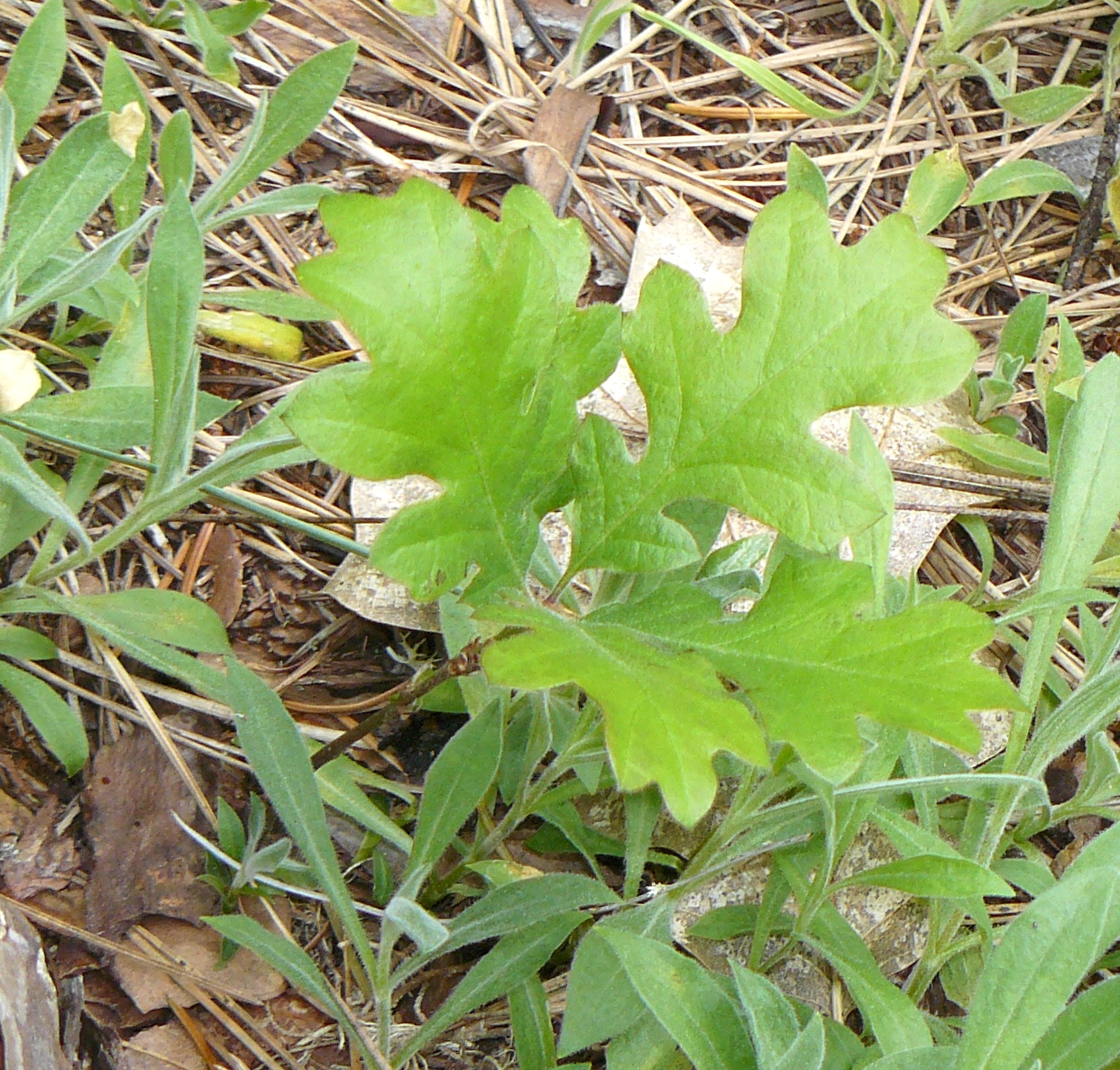
Then on the following day in a post called Now life-giving geese (by the way, the five baby goslings are doing really well!) I included this photograph:

A baby oak.
And sing for them at all ages!

Yesterday morning I received the latest post from Sue Dreamwalker. It was an impassioned plea to do something and to stop the madness. Sue, in turn, had republished the post that had appeared on Endless Light and Love.

The theme that seems to be developing this week, unplanned I should hasten to add, is that it is all too easy to be overwhelmed by the scale of change that has to take place, must take place, if this generation (I’m a 1944 baby) can die knowing that it will be alright in the end. Because it is my generation that has been responsible, has created the circumstances, for the end of life as we have all known it if nothing is done, and done in the next decade or two.

So to trees.

Our trees are both a symbol for and an indicator of the overall health of our planet.

To close off this part of my two-day post, please watch this short video.

Uploaded on Apr 1, 2015
Trees give us beauty, shade, food, clean water, oxegen, medicine, housing, fresh air, habitat and happiness. For the cost of a craft beer, or a couple of cups of coffee you can protect a specific threatened forest. Each Stand for Trees certificate offsets 1 ton of carbon from the atmosphere while providing income to local forest communities. Income that supports education, healthcare, clean water and sustainable livelihoods. Trees stand for us, isn’t it time we stand for trees?

Tomorrow, I will return to hope. Perhaps better written, return with hope.

Giving in to Nature.

The power of Nature might surprise you!

The last two posts have offered two aspects of our bountiful Nature. First we had Earth Day and the celebration of our trees. Then yesterday we had the celebration of the birth of five Canada Geese goslings.

So it seemed appropriate to continue the theme for another day.

Earlier this month there was an article over on MNN that I saved for later use simply because the message it offered was counter-intuitive. Here’s how that article opened:

Deforestation vs. nature: The winner might surprise you

Large-scale tree-planting projects, abandoned farmland help balance out rain forest destruction.

By: Michael Graham Richard
Wed, Apr 08, 2015 at 10:11 AM

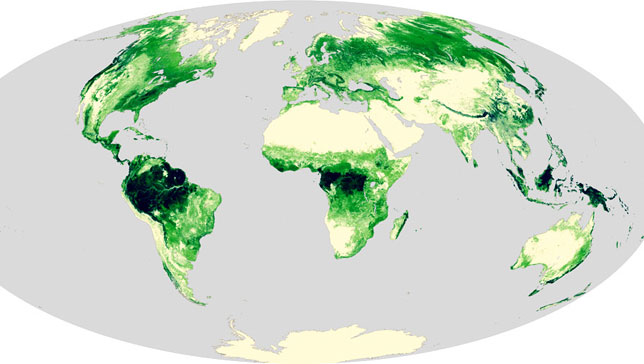
Forest canopy heights are highest near the equator and generally decrease the closer forests are to the poles. (Photo: NASA)

For decades, we’ve been hearing about how the world’s forests are under attack, how the equivalent of “36 football fields of the world’s forests are being cut every minute.” With all this pressure on nature, could the Earth possibly be getting greener? Not a chance, right? Surprisingly, that’s what a team of scientists discovered when they looked at two decades’ worth of data from satellites that use a technique called “passive microwave remote sensing,” which allows researchers to measure how much biomass, or living matter, is present on the surface of the planet.

The researchers found that despite ongoing deforestation in the rain forests of South America and Southeast Asia — a huge problem, regardless of what happens elsewhere — other regions outside the tropics, such as Africa and Australia, have been improving enough to offset the losses. Some of the more unexpected sources of this extra biomass are farmland abandoned after the fall of communism where forests have spontaneously regrown in the former Soviet republics, as well as in areas of China where large-scale tree planting projects took place.

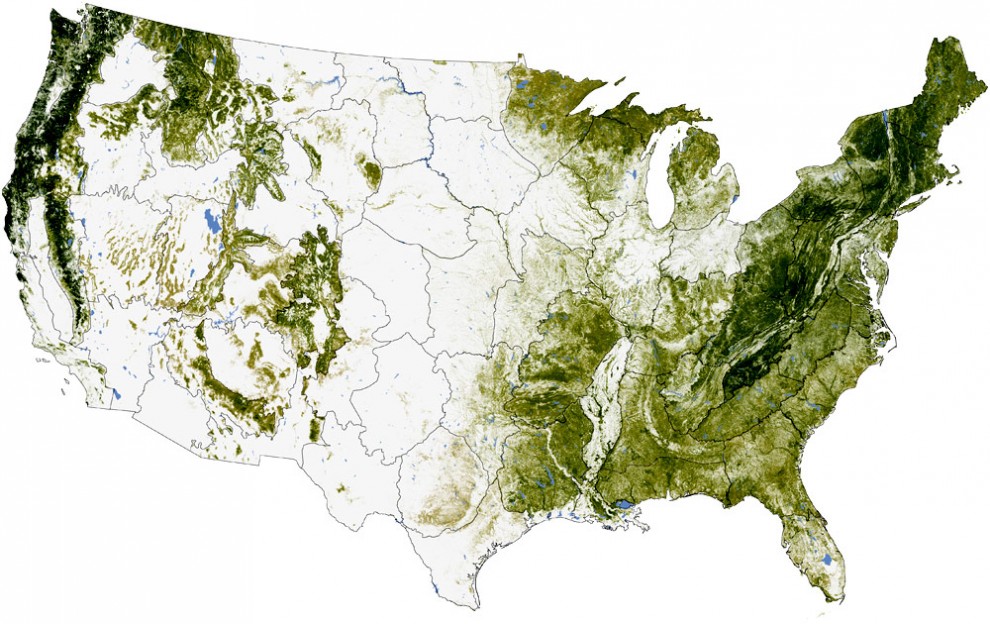
What really caught my eye was another photo from NASA that showed the biomass stored in trees in the USA.

The concentration of biomass stored in trees in the U.S. The darkest greens reveal the areas with the densest, tallest, and most robust forest growth. (Photo: NASA)

But as the article reminded readers:

We’re only talking about biomass quantities being offset, though; the loss of rain forests also mean the loss of many species of animals and plants, as well as unique habitats that can’t be replaced by other regions elsewhere, such as the savannah of Africa or the Australian Outback. So while this is good news, we can’t declare victory over deforestation just yet!

Nonetheless, I am sure that I am not the only one to welcome this reminder of the power of Nature. Or in the closing words of that MNN article:

In the period between 2003-2012, the total amount of vegetation above the ground has increased by about 4 billion tonnes of carbon. Any way you slice in, 4 billion tonnes is significant!

This is particularly important because around 25 percent of the CO2 that we release into the atmosphere by burning formerly buried hydrocarbons is absorbed by plants, so having more of them can help slow down (but not stop) climate change, and there’s a limit to plants’ rate of absorption. Still, it’s nice to get good news for a change …

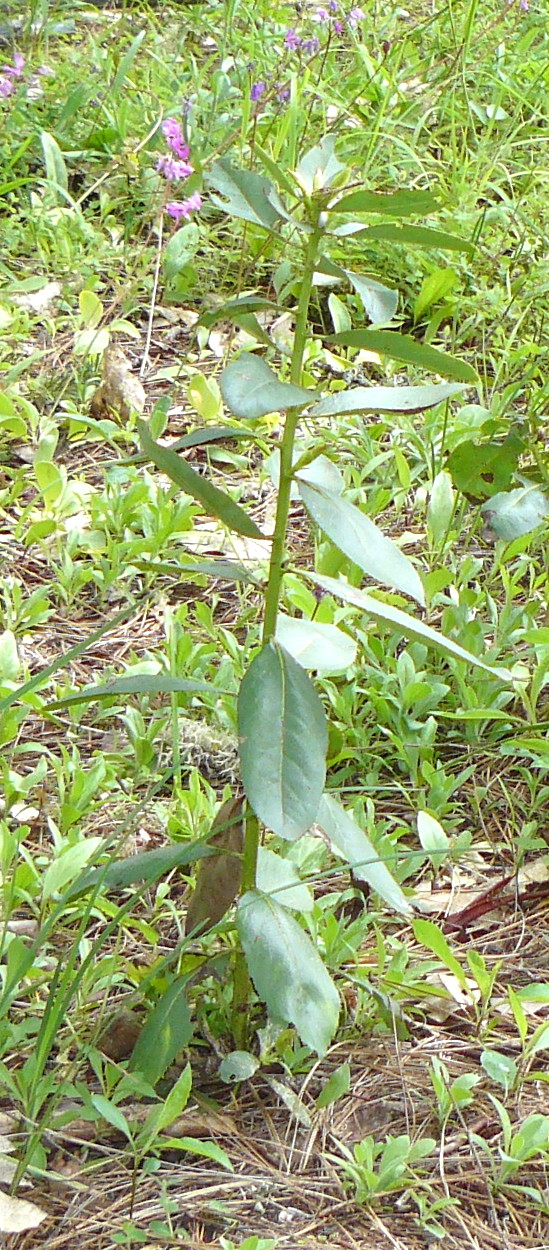
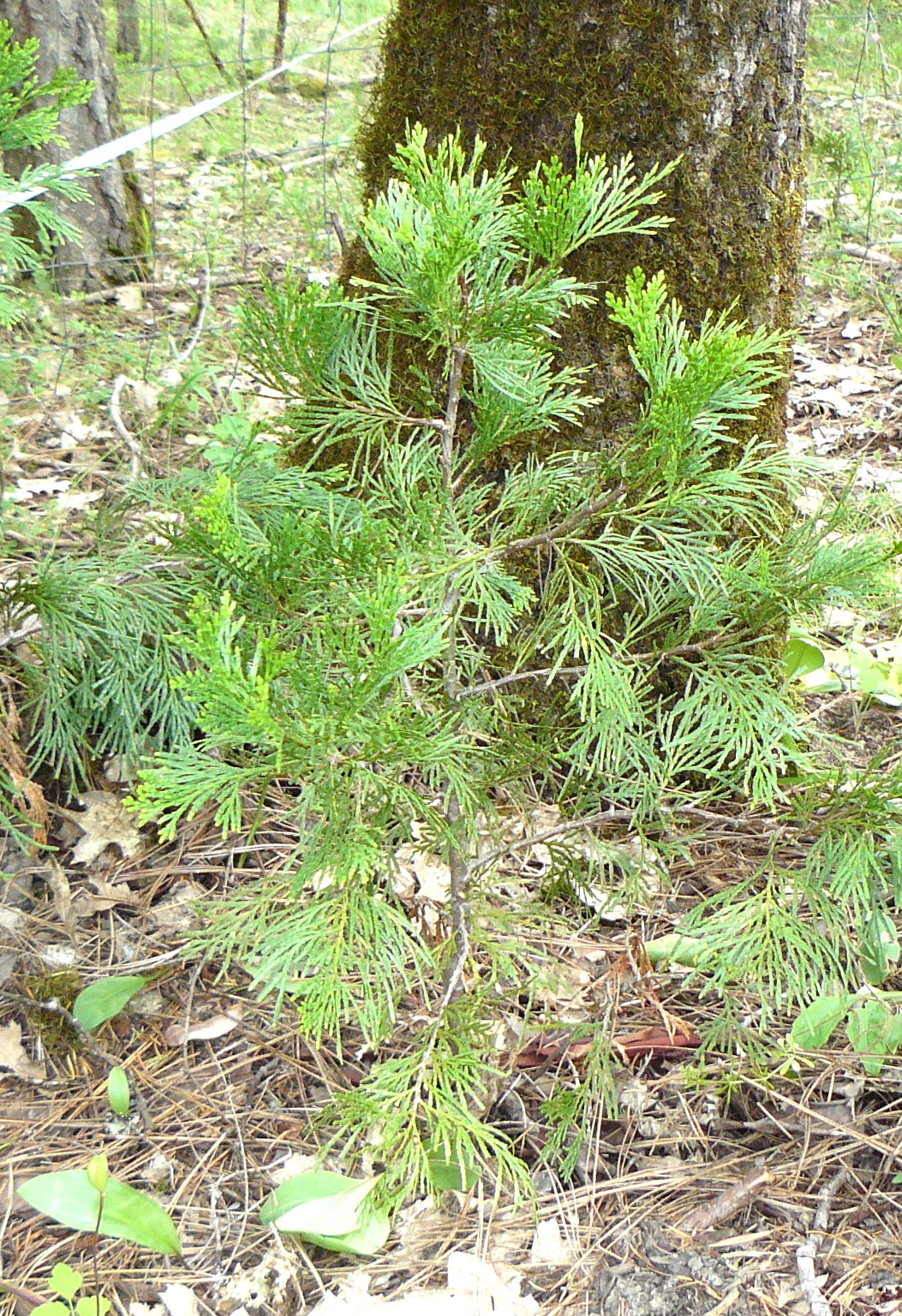
While it may be a long way yet from them being tonnes of carbon, let me close with three pictures of ‘increasing tree biomass‘ right here on Hugo Road in Merlin, Oregon.

The oak.
The oak.

oooo

The madrone.
The madrone.

oooo

The cedar.
The cedar.

Nature really does have all the answers to man’s long-term survival.

Writing 101 Day Nine

It all depends on one’s point of view!

Day Nine: Point of View

Today’s Prompt: A man and a woman walk through the park together, holding hands. They pass an old woman sitting on a bench. The old woman is knitting a small, red sweater. The man begins to cry. Write this scene.

We encourage you to give fiction a try, even if that is not what you normally do — it can be a fun way to stretch. If fiction feels like a bridge too far, take some element from the scene that speaks to you, and write a non-fiction piece about that. Perhaps you are drawn to the old woman, and will write a piece about your grandmother, or the crying man will inspire a story about the last time you cried joyful tears.

Today’s twist: write the scene from three different points of view: from the perspective of the man, then the woman, and finally the old woman.

If point of view was an object, it would be William Carlos Williams’ infamous red wheelbarrow; everything depends on it.

Consider a car/pedestrian accident: the story differs depending on whether you’re the driver, the pedestrian, or the woman across the street who witnessed the horror. Everyone will tell a different story if asked to recount the event.

Shifting point of view can be your best friend if you’ve got writers’ block. If you’re stuck or you feel your writing is boring and lifeless, Craig Nova, author of All the Dead Yale Men, suggests shifting the point of view from which your story is told:

Take point of view, for example. Let’s say you are writing a scene in which a man and a woman are breaking up. They are doing this while they are having breakfast in their apartment. But the scene doesn’t work. It is dull and flat.

Applying the [notion] mentioned above, the solution would be to change point of view. That is, if it is told from the man’s point of view, change it to the woman’s, and if that doesn’t work, tell it from the point of view of the neighborhood, who is listening through the wall in the apartment next door, and if that doesn’t work have this neighbor tell the story of the break up, as he hears it, to his girlfriend. And if that doesn’t work tell it from the point of view of a burglar who is in the apartment, and who hid in a closet in the kitchen when the man and woman who are breaking up came in and started arguing.

Now my reaction upon first reading today’s theme was that this was both fun and inspiring.  Then I realised that before I could commit words to the post I would need to let the fictional circumstances brew for a while amongst the aged brain cells and, if possible, it would be wonderful to include a dog in the story. 🙂

So for the next hour (I’m writing this at 10:30am) I shall use the wonderful weather we have today to continue my project of sorting out the grand mess around the back of the garage and see what creative thoughts come to mind!

Yet another point of view!

oooo

Echoes

“Jim, what’s the matter? You’ve seen this dear old lady sitting on the bench almost every time we’ve come walking. What’s brought on the tears today?”

Sandra thought that she knew her husband inside out, possibly better than he knew himself. Yet this quiet, sudden release of deep inner feelings from Jim had her perplexed.

Jim let go of Sandra’s fingers and fished around in his trouser pocket for a tissue. He blew his nose and wiped his eyes on his sleeve.

“Oh, it’s OK sweetheart, just some stirring of a place from too many years ago.”

Sandra re-engaged her fingers with Jim’s and they carried on walking through the park. Cleo bounded across the soft, green parkland grass, as ever looking so happy. She reflected that Cleo had always shown such happiness for being alive. Ever since they had cradled the young German Shepherd puppy in their arms. Gracious, Sandra reflected, nearly five years ago now.

What was it that had been stirred in Jim’s memories?

OK, it was the first time they had seen the old woman knitting but, otherwise, the woman was a familiar sight always sitting quietly on the park bench. Sandra struggled to recall exactly what the woman had been knitting; seemed like a tiny sweater, possibly for a very young grandchild. Why had that reduced Jim to tears? He was such an open man. That was what had attracted her to Jim all those many years ago when they had first met by chance. Jim’s previous wife, Diana, had been killed a few years before in a tragic car accident, her own husband had died of a coronary a couple of years before she met Jim.

Jim sensed that his sudden weeping would have raised some deep questions for Sandra. He struggled to rise above the pain of his recollection and decide what to do about that memory. That memory of his and Diana’s first child, a son, born with such hope yet with such tragedy written into his potentially short future. How the hospital staff had broken the news. Little Philip had been born with a massive brain aneurism and, at best, had a life expectancy of a few months. Philip never came out of hospital and died sixty days after he was born. Jim quietly ran the numbers through his mind; nearly eighteen years ago now.

He had never mentioned it to Sandra. A connection to the past that really should have died that same day as Philip died. First Philip and then Diana. After Diana died in that terrible road accident he thought that was the end of everything. Thought there was nothing that could ever happen in his future that would return a smile to his face, return the feelings of love to his heart. That’s when he started volunteering at the local dog shelter. There was something about helping those unfortunate dogs, dogs of all ages and circumstances, that, over time, spoke to him and made him discover reasons for living again. If these dogs, many of whom had had such terrible experiences, could so easily put their past behind them and enjoy living for each new moment then so could he.

That’s how he and Sandra had met. She had come in to the dog shelter carrying a small, lively little mongrel mix that she had found in the forest when out on a walk.

Their walk today, as usual, had brought them almost full circle and they were approaching the black, wooden park bench; the old lady still knitting away.

Doris had seen this couple on many previous occasions when the weather made it pleasant for her to sit on the bench here in the park. They seemed such a happy couple, unusually so in these complicated times. Every time she saw them it reminded her of the many happy years that she and Larry had had together. Still couldn’t accept that it was over five years ago now since he had died. That’s why, whenever the weather made it possible, she would come and sit on this park bench and remember the times when she and Larry would sit quietly here and just watch the world go by.

Today, for reasons only known to Cleo, as Jim and Sandra approached the park bench, Cleo went bouncing over to the old woman and next thing was sitting next to her on the seat.

Doris put out an arm to Cleo and ruffled the soft warm hair between Cleo’s gorgeous Shepherd ears. She watched as the man came over to her. “I’m so sorry but Cleo, for whatever reason, has taken a shine to sitting next to you today. Funny why today Cleo sensed the need to be with you on the bench. For we have seen you sitting out here in the park dozens of times before”

The man’s wife joined him and they both stood in front of the wooden bench. “My name’s Jim and this is my wife Sandra. I know we have seen each other frequently over the months.”

“Hi Jim and Sandra, my name is Doris and, yes, I have also seen you both out walking frequently. It looks as though your dog, Cleo is that her name, has instinctively sensed my good news.”

Jim and Sandra looked quizzically at Doris.

“Yes, I heard last weekend that my daughter and her husband successfully had the birth of their first child; a son. My grandson that is. I’m knitting him a sweater, as you can see.”

“Oh, that’s wonderful, Doris”, said Jim. “Wish we could stay a little longer and chat but we need to be home within the hour. When we next see you can we come across and here the good news in detail?”

“Of course you can! Go on, off you both go and take your gorgeous dog with you otherwise I will steal her away from you!” There was a soft laugh in the back of her throat.

“Come on, Cleo”, called Sandra and off they went.

Later when Jim and Sandra were back home and enjoying a hot tea after their walk, Jim apologised for his tears and quietly explained what had brought them on.

Sandra put down her cup of tea, came up to Jim and kissed him very slowly and tenderly on the lips.

“That was nice, sweetheart, what did I do to deserve that?”

“Jim, I didn’t want to mention it until I was certain. I have not had my period this month. I’m pretty sure that I’m pregnant. I’m going to town tomorrow to take a pregnancy test.”

For the second time that day Jim uncontrollably burst into tears.

oooo

I’m not sure how well I really captured each person’s point of view but it was fun writing it nonetheless!

Back on Monday with Writing 101 Ten.

Writing 101 Day Two

A room with a view.

Here’s what WordPress sent out:

Today’s Prompt: If you could zoom through space in the speed of light, what place would you go to right now?

The spaces we inhabit have an influence on our mood, our behavior, and even the way we move and interact with others. Enter a busy train station, and you immediately quicken your step. Step into a majestic cathedral, and you lower your voice and automatically look up. Return to your own room, and your body relaxes.

A place belongs forever to whoever claims it hardest, remembers it most obsessively, wrenches it from itself, shapes it, renders it, loves it so radically that he remakes it in his own image. – Joan Didion

Today, choose a place to which you’d like to be transported if you could — and tell us the backstory. How does this specific location affect you? Is it somewhere you’ve been, luring you with the power of nostalgia, or a place you’re aching to explore for the first time?

Today’s twist: organize your post around the description of a setting.

Giving your readers a clear sense of the space where your story unfolds will help them plunge deeper into your writing. Whether it’s a room, a house, a town, or something entirely different (a cave? a spaceship?), provide concrete details to set this place apart — and to create a more immersive reading experience.

You can go the hyperrealist route (think the opening four paragraphs of Gustave Flaubert’s A Simple Soul, a masterclass of telling detail). Or focus on how a specific space makes the people in it feel and behave, like blogger Julie Riso did in this visceral recounting of her hike through an Estonian bog.

So here we go!

 The lonely sea and the sky.

The title of my story is taken from that famous poem Sea Fever by John Masefield. Here’s that first stanza of Masefield’s poem:

I must go down to the seas again, to the lonely sea and the sky,
And all I ask is a tall ship and a star to steer her by;
And the wheel’s kick and the wind’s song and the white sail’s shaking,
And a grey mist on the sea’s face, and a grey dawn breaking.

There is a place in my mind to which I can so easily travel that resonates perfectly with my chosen title. A memory of a dark night out in the Atlantic ocean one time in the Autumn of 1969.

First let me set the scene of this place in my mind, a scene almost fifty years ago, written from that time.

The call of the open ocean

Those first few hours were utterly absorbing as I went through the whole business of clearing the yacht harbour at Gibraltar and heading out to the South-West hugging this unfamiliar coastline of Southern Spain. It was tempting to move out to deeper waters but the almost constant flow of large ships through the Straights of Gibraltar soon quashed that idea. Thankfully, the coastal winds were favourable for me and my single-masted sailing yacht.

After such a long time sailing in the relatively confined waters of the Mediterranean, it was difficult for me to imagine that in a few hours time the southern-most point of Spain would pass me by and the vastness of the Atlantic ocean would be my home for the next few weeks.

Soon the city of Tarifa was past my starboard beam and the Spanish coastline was rapidly disappearing away to the North-West. The horizon ahead of me was already approaching 180 degrees of raw, open ocean.  There was just a flicker of a thought that whispered across my mind: Oh Paul, what have you gone and done!

Where this crazy adventure had been born.

In 1986 I had the opportunity to take a few years off. Off from a working life, that is. I had started my own company in 1978 after eight years of being a salesman for the Office Products Division of IBM UK. In 1986, the successful sale of my company meant that for a while I could go and play. By chance, that summer I went on a vacation to Larnaca on the Island of Cyprus; Larnaca being on the Greek side of what was a divided island (and still is!) between Greece and Turkey.

Larnaca struck me as a lovely place on a lovely island in the Eastern part of the Mediterranean Sea. Again, quite by chance, one day during my vacation, when strolling around Larnaca Marina, I noticed a yacht with a For Sale notice on the yacht’s pulpit. The yacht, named Songbird of Kent, was a Tradewind 33, a type that I had heard about previously from reading yachting magazines. I vaguely recalled that the type had been designed in the UK by John Rock, himself an experienced deep-water yachtsman, for the purpose of serious ocean sailing and that many Tradewinds had completed vast ocean crossings.

I was still looking at the yacht, lost in some dream about sailing the seas, when a call brought me back to ground, so to speak. It was a call from a man who had just come on deck from the cabin and had spotted me looking at Songbird.

Hi, my name is Ken and I’m the owner of Songbird. Did you want to come onboard and have a look around?” I couldn’t resist!

It transpired that Ken, and Betty his wife, an English couple, had been living on Songbird for some years, cruising the Mediterranean each Summer, and now wanted to return to England.

It was obvious that the yacht, a single-masted vessel with double head-sails known in the trade as a cutter rig, had been cared for in every possible way and that the yacht was offered for sale in a manner that meant she could become my permanent new home with little or no effort on my behalf. Thus so it was that three hours later Ken and Betty and yours truly had agreed terms for the sale of Songbird of Kent. One of those spur of the moment things that we do in our lives that, so often, make being alive such a reward.

I should explain that as a younger man (I was 42 when I agreed to buy Songbird) I had devoured the books written by such round-the-world solo sailors as Francis Chichester and Joshua Slocum and many others and harboured this silly, naive dream of one day doing a solo transatlantic crossing. Later on in life, when living in Wivenhoe in Essex, I bought my first yacht but never achieved anything more than local coastal sailing and a couple of overnight sailings to Holland; all with others I should hasten to add, never solo! However, I knew for sure that if there was one yacht that was perfect for open ocean sailing it was the Tradewind.

So it wasn’t long before my home in Great Horkesley, near Colchester, had been sold and I was adjusting to a new life as a ‘live aboard yachtie’ out in Cyprus.

I loved living in Larnaca for a whole bundle of reasons that I won’t go into here. Except one! That was that in my years of living and working near Colchester, which was where my business had been based, I had been introduced to gliding and eventually had ended up becoming a gliding instructor. So imagine my delight at finding that there was an active gliding club on a British ex-military airfield thirty minutes away from Larnaca. It was not long before I was fully back to gliding.

One day, I was doing gliding experience flights for some visitors. Early in the afternoon, up came a quietly spoken Englishman who wanted to get an idea of what it was like to fly in a glider. Les, for that was his name, settled himself in. I checked his straps were secure, pointed out the canopy release and jumped into the seat behind him, and within moments we were airborne.

Later on, when back on the ground and sitting to one side of the old runway, Les and I started chatting about our backgrounds and what had brought each of us to Larnaca. I learned that Les was not only Les Powles, the famous solo sailor, but that he was living on board his yacht, Solitaire, right here in Larnaca Marina.

Over the following days, often with a beer or two in hand, I heard Les’ tales about him having been in his 50s when he built Solitaire, with little prior knowledge of boatbuilding. That he had just eight hours of sailing experience when he decided to sail solo around the world. That remarkably, he had made it across the Atlantic, albeit discovering that his navigation skills didn’t quite match up to his boatbuilding abilities. This translating to his first landfall being the coast of Brazil, a 100 miles south of, and a different hemisphere, to the Barbados he had been aiming for!

I listened for hours, in utter rapture of what Les had achieved. This quiet, unpretentious man that had achieved so much. Including how after solo circumnavigation number one, Les ended up completing a further three solo circumnavigations, all of them full of incidents. Particularly, the last one, with Les being given up for dead when he hadn’t been heard of for over four months. When eventually he sailed up the Lymington River in Hampshire, in a skeletal state, his arrival caused a media frenzy. Lymington Marina subsequently gave him a free berth for life. Les’ boat had been damaged in a storm, he had lost all communications and had virtually run out of food by the time he made it back to England. Oh, and Les was 70 at the time!

At one point in me listening to Les he asked me about my own sailing ambitions. I remarked that I had this tired old idea of a solo sailing across the Atlantic.

Have you done any solo sailing before?”, Les asked me.

I replied, “At the start of most Summers, I sail alone from Larnaca across to the Turkish coast to meet up with family and friends who want to cruise along with me.

Continuing, “Generally I head for Alanya or a little further along the Turkish coast; to Antalya. It takes me two or three days to get there non-stop, most often with me going west-about Cyprus, and then straight up to Turkey. But I am embarrassed to admit that I hate both that trip, and the return solo trip at the end of the Summer. Detest would be a better word than hate.

Pausing before adding a moment later, “If I can’t stomach solo sailing for three days then there’s no chance, no chance at all, that I could sail solo across the Atlantic ocean.

It was then that Les said something both profound and deeply inspiring.

Paul, guess what! The first three days of being alone at sea are just as terrible for me, too. Indeed, I have never met a solo sailor who doesn’t say the same. Those early days of adjusting to your new world, your new world of being alone out on the ocean, are the worst. But never lose hope that from some point around the third or fourth day, you will have worked through that transition and found an unbelievable state of mind; a freedom of mind that has no equal.

Back to reality.

So here I was, Les’ words still ringing in my ears, as slowly but persistently the coastlines of Spain to the North and of Africa to the South became more and more distant and fuzzy.  It was at 15:30 that I made an entry in my yacht’s log: “No land in sight in any direction!

Now was the time to make sure that my bunk was made up, flashlights to hand, and my alarm clock ready and set. Alarm clock? Set to go off every twenty minutes; day and night! For this was the only way to protect me and my yacht from being hit by one of those gigantic container ships that seemed to be everywhere. It took at least twenty minutes from the moment a ship’s steaming lights appearing above the horizon to crossing one’s path!

It was in the early hours of my first morning alone at sea, when once again the alarm clock had woken me and I was looking around an ocean without a single ship’s light to be seen that more of Les’ words came to me. I remembered asking Les: “What’s the ­appeal of sailing?” Les replied without a moment’s hesitation: “It’s the solitude. When you’re out at sea on your own, there’s no government or bankers to worry about. You’re not ­responsible to anyone but yourself.

Yes, I could sense the solitude that was all around me but it was an intellectual sense not an emotional one. That would come later. Inside I was still afraid of what I had let myself in for.

Remarkably quickly however, the pattern of solo life aboard a thirty-three-foot yacht became my world. Frankly, it staggered me as to how busy were my days. Feeding myself, navigating, trying to forecast the winds, staying in touch with other yachties via the short-wave radio, keeping the boat tidy and a zillion other tasks meant the first few days and nights just slipped by.

But it was a sight on my fourth night at sea that created the memory that would turn out to remain with me for all my life. The memory that I can go to anytime in my mind.

That fourth night I was already well into the routine of waking to the alarm clock, clipping on my harness as I climbed up the three steps that took me from my cabin into the cockpit, scanning the horizon with my eyes, checking that the self-steering had the boat at the correct angle to the wind and then, if no ships’ lights had been seen slipping back down into my bunk and sleeping for another twenty minutes. Remarkably, I was not suffering from any long-term tiredness during the day.

It was a little after 3am that fourth night when the alarm clock had me back up in the cockpit once again. Then it struck me.

Songbird was sailing beautifully. There was a steady wind of around ten knots from the south-east, almost a swell-free ocean, and everything set perfectly.  Not a sign of any ship in any direction.

Then I lifted my eyes upwards. There was not a cloud in the night sky, not a single wisp of mist to dim a single one of the million or more stars that were above my head. For on this dark, moonless night, so far removed from any shore-based light pollution, the vastness, yet closeness of the heavens above was simply breath-taking. I was transfixed. Utterly unable to make any rational sense of this night splendour that glittered in every direction in which I gazed. This dome that represented a vastness beyond any meaning other than a reminder of the magic of the universe.

This magic of the heavens above me that came down to touch the horizon in all directions. Such a rare sight to see the twinkling of stars almost touching the starkness of the ocean’s horizon at night. A total marriage of this one planet with the vastness of outer space.

I heard the alarm clock go off again and again next to my bunk down below. But I remained transfixed until there was a very soft lightening of the skyline to the east that announced that another dawn was on its way.

I would never again look up at the stars in a night sky without being transported back to that wonderful night and the memory of a lonely sea and sky.

ooOOoo

As dear Les said, “… a freedom of mind that has no equal.

That place in my mind, that dark, stupendous night out in the Atlantic, still has the power to remind me of that freedom!

I know it will be one of my last thoughts when my time is up.

Seeing the bigger picture.

Look beyond appearance and prejudice.

I had in mind to republish a recent George Monbiot essay but then saw this post from Alex Jones’ blog The Liberated Way.  It seemed a perfect follow-on to yesterday’s Picture parade ninety.  It is republished with Alex’s kind permission.

ooOOoo

Look beyond appearance and prejudice

Everything in nature is good says the philosopher Heraclitus. Humans love to divide everything into good and bad, thus missing the beauty of what nature offers in the blindness of their prejudices.

A few years ago, I intervened to save a baby crow from traffic and school children, taking it to a veterinarian surgery, who had the contacts of people who could look after it. The receptionist annoyed me on seeing the bird describing it as “evil.”

In fact, if people can look beyond the superstitious nonsense surrounding these black feathered birds, there is an intelligent empathy lurking inside these beautiful corvids. If humans, dolphins and octopuses are in the top division of “intelligent” animals, the corvids, including magpies, jackdaws, ravens, crows, choughs and rooks, are in the same division. The corvids use tools, play, can problem-solve, express empathy and have a rudimentary sense of self based on experiments showing they recognise themselves in a mirror. The BBC recently reported how a child had developed a close relationship with crows she was feeding in the garden, birds that were leaving her gifts. A flood of feedback by readers revealed that gift-giving by corvids to those showing kindness to them was common around the world.

The symbol of my town port is the raven. My business carries the logo of the raven, a symbol for me of its intelligence. The stories of various archetypes such as Apollo, the Celtic Mercury and Odin had ravens as their messenger birds, who symbolised memory, thought, wisdom, intelligence, and the gathering or delivery of knowledge.

The sad situation is that most people blind themselves to the beauty of a living thing like a crow or raven, based on appearance and prejudice, so that they will do it harm, even though it might manifest the very qualities of intelligence and empathy that humans admire but often appear to lack.

ooOOoo

There was a recent TED Talk that fits very nicely with today’s theme. It’s just fifteen minutes long. Enjoy.

What do you call a veterinarian that can only take care of one species? A physician. In this short and fascinating talk, Barbara Natterson-Horowitz shares how a species-spanning approach to health can improve medical care of the human animal — particularly when it comes to mental health.

Tomorrow things on Learning from Dogs are going to change for a spell. More details in twenty-four hours!