Category: History

On European Dogs

In the sense of the effect that they had on canines already living in the Americas.

I am taking the liberty, hopefully without getting my wrist slapped, of republishing a recent article that appeared on The Smithsonian Magazine website.

Simply because it offers some very interesting insights into the history of canines in The Americas.

Enjoy!

ooOOoo

European Dogs Devastated Indigenous American Pup Populations

Disease, cultural change wiped out pre-contact populations, leaving no trace of ancient dogs’ DNA in modern counterparts

A dog buried in Western Illinois 10,000 years ago is one of the oldest dogs known in the Americas, and the oldest dog burial in the world. These native American dogs were almost entirely wiped out when European colonists arrived. (Del Baston, courtesy of the Center for American Archeology)

By Meilan Solly, SMITHSONIAN.COM

The first humans to populate the Americas arrived from Siberia via the Bering land bridge around 16,000 years ago. Man’s best friend, the domesticated dog, didn’t arrive for another 6,000 years or so, crossing over just in time to avoid the land bridge’s collapse, but archaeological evidence suggests that the two species lived in harmony for thousands of years—at least until 1492, the year Columbus sailed the ocean blue.

According to a study published in Science on Thursday, “pre-contact” American dogs possessed a unique genetic signature derived not from the North American wolf, as previously thought, but from domesticated Siberian ancestors. Today, that singular genome has all but disappeared, eradicated by the 15th-century arrival of European settlers and their canine companions.

National Geographic’s Maya Wei-Haas explains that European dogs, like their human owners, probably carried diseases that pre-contact dogs were unequipped to fend off. The colonists preferred European breeds and discouraged their pets from mating with the native dogs, which study co-author Angela Perri, a zooarchaeologist at Durham University, says were viewed as “wild” and “vicious.”

“This study demonstrates that the history of humans is mirrored in our domestic animals,” Greger Larson, director of the Palaeo-BARN at Oxford and senior author of the study, said in a statement. “People in Europe and the Americas were genetically distinct, and so were their dogs. And just as indigenous people in the Americas were displaced by European colonists, the same is true of their dogs.”

To trace the story of these pre-contact dogs, researchers studied DNA found in the mitochondria of 71 North American and Siberian dog bones. The remains, which date from roughly 10,000 to 1,000 years ago, included those of the Koster dogs, a group of four domesticated canines discovered at a burial site in western Illinois during the 1970s. (A second study, newly published in pre-print server Biorxiv, further discusses these early dogs.) As Science’s David Grimm notes, the Koster pups lived about 10,000 years ago, making them the oldest known dogs in the Americas. Perri, referencing the animals’ small, slender stature, tells Grimm that “it wouldn’t be surprising if they were all used as hunting dogs.”

DNA analysis allowed the scientists to identify pre-contact dogs’ closest relatives: a group of dogs native to Zhokhov Island, a frigid Arctic site situated about 300 miles north of the Russian mainland. The Atlantic’s Ed Yong writes that these dogs were the first to be bred for a specific purpose, namely pulling their humans’ sleds.

In addition to shedding light on the first American dogs’ origins, the study offers insights on pre-contact dogs’ connections—or rather, lack of connections—with modern dogs. Researchers compared the 71 ancient genomes with DNA from more than 5,000 modern dogs, including breeds like chihuahuas and Carolina dogs, which are commonly thought to be descended from indigenous populations. The highest level of pre-contact DNA conclusively found in any of the modern dogs was four percent, a negligible result, the New York Times’ James Gorman reports.

The team’s findings suggest that modern American dogs are descended solely from Eurasian breeds introduced by European settlers. Perri tells Wei-Haas that the scientists expected to find evidence of interbreeding between the pre-contact pups and the new arrivals. Instead, they realized that the native dogs had virtually vanished.

“It is fascinating that a population of dogs that inhabited many parts of the Americas for thousands of years, and that was an integral part of so many Native American cultures, could have disappeared so rapidly,” Laurent Frantz, study co-author and evolutionary geneticist at Queen Mary University of London, said in a statement.

Oddly enough, scientists found that the closest surviving trace of pre-contact dogs’ DNA is found in a sexually transmitted canine cancer. The Los Angeles Times’ Deborah Netburn writes that the disease, known as canine transmissible venereal tumor, stems from the genetic mutation of a single North American dog that lived up to 8,225 years ago. The tumor cells spread through mating and carry a copy of that original DNA, allowing researchers to paint a clear picture of the “founding dog,” or patient zero.

Elaine Ostrander, chief of the cancer genetics and comparative genomics branch at the National Human Genome Research Institute, tells Wei-Haas, “It’s the world’s oldest continuously propagated cell line, which is really, really remarkable.”

………

Read more: https://www.smithsonianmag.com/smart-news/how-european-dogs-devastated-indigenous-american-pup-populations-180969561/#8bYPIFJtvBrqzb3I.99
Give the gift of Smithsonian magazine for only $12! http://bit.ly/1cGUiGv
Follow us: @SmithsonianMag on Twitter

ooOOoo

“This study demonstrates that the history of humans is mirrored in our domestic animals,”

Best not to go too far into that observation from Dr. Greger Larson!

Just say “No!”

We have to keep banging this drum on behalf of our wildlife!

OK! This new essay from George Monbiot applies specifically to the United Kingdom. But there’s no question in my mind that awareness of what is going in the U.K. will be important for readers in many other countries.

ooOOoo

Incompetence By Design

As state bodies are dismantled, corporations are freed to rip the living world apart

By George Monbiot, published in the Guardian 4th July 2018

It feels like the collapse of the administrative state – and this is before Brexit. One government agency after another is losing its budget, its power and its expertise. The result, for corporations and the very rich, is freedom from the restraint of law, freedom from the decencies they owe to other people, freedom from democracy. The public protections that constrain their behaviour are being dismantled.

An example is the cascading decline in the protection of wildlife and environmental quality. The bodies charged with defending the living world have been so enfeebled that they now scarcely exist as independent entities. Natural England, for example, has been reduced to a nodding dog in the government’s rear window.

Its collapse as an autonomous agency is illuminated by the case that will be heard next week in the High Court, where two ecologists, Tom Langton and Dominic Woodfield, are challenging its facilitation of the badger cull. That the cull is a senseless waste of life and money is well established, but this is only one of the issues being tested. Another is that Natural England, which is supposed to assess whether the shooting of badgers causes wider environmental harm, appears incapable of discharging its duties.

As badger killing spreads across England, it intrudes upon ever more wildlife sites, some of which protect animals that are highly sensitive to disturbance. Natural England is supposed to determine whether allowing hunters to move through these places at night and fire their guns has a detrimental effect on other wildlife, and what the impact of removing badgers from these ecosystems might be. The claimants allege that it has approved the shooting without meaningful assessments.

Some of its decisions, they maintain, are farcical. In Dorset, for example, Natural England assumed that overwintering hen harriers and merlins use only one out of all the sites that have been designated for their protection, and never stray from it. It makes the same assumption about the Bewick’s swans that winter around the Severn estuary. That birds fly, enabling them to move from one site to another, appears to have been overlooked.

Part of the problem, the claimants argue, is that staff with specialist knowledge have been prevented from making decisions. The location of the badger cull zones is such a closely guarded secret that Natural England’s local staff are not allowed to see the boundaries. As a result, they can make no meaningful assessment of what the impact might be. Instead, the decisions are made in distant offices by people who have not visited the sites.

I wanted to ask Natural England about this, but its external communications have been shut down by the government: any questions now have to be addressed to Michael Gove’s environment department, Defra. Defra told me “staff carrying out this work have all the necessary information. It would be inappropriate to comment on an ongoing legal matter.” How can Natural England be an independent body when the government it is supposed to monitor speaks on its behalf?

Another example of how far Natural England has fallen is the set of deals it has struck with grouse moor owners, allowing them to burn protected habitats, kill protected species and build roads across sites that are supposed to be set aside for wildlife. For several years, the redoubtable conservationist Mark Avery has been fighting these decisions. This May, Natural England conceded, in effect, that he was right. The agency that is meant to protect our wild places has been colluding in their destruction.

A correspondent from within Natural England tells me its staff are so demoralised that it has almost ceased to function. “Enforcement, for example, is close to non-existent … Gove seems to have somehow both raised the profile of environmental issues whilst simultaneously stripping the resources … it has never been as bad as this.”

In March, the House of Lords reported that Natural England’s budget has been cut by 44% since it was founded in 2006. The cuts have crippled both its independence and its ability to discharge its duties. It has failed to arrest the catastrophic decline in our wildlife, failed to resist the housebuilders trashing rare habitats and abandoned its regulatory powers in favour of useless voluntary agreements. As if in response, the government cut the agency’s budget by a further 14%.

Dominic Woodfield, one of the claimants in the court case next week, argues that Natural England has been “on death row” since it applied the law at Lodge Hill in Kent, where the Ministry of Defence was hoping to sell Britain’s best nightingale habitat to a housing developer. Natural England had no legal choice but to designate this land as a site of scientific interest, hampering the government’s plans. As the government slashed its budget and curtailed its independence, the agency’s disastrous response has been to try to save itself through appeasement. But all this has done is to alienate its defenders, reduce its relevance and hasten its decline. “There are still good people in Natural England. But they’re broken. They talk very slowly because they’re thinking very carefully about everything they say.”

If this is happening before we leave the European Union, I can only imagine where we will stand without the protection of European law. The environmental watchdog that, according to Michael Gove, will fill the role now played by the European Commission, will know, like Natural England, that its budget is provided by the government and can be cut at the government’s discretion. What is to prevent it from being nobbled as other agencies have been?

Already, the deliberate mutilating of the administrative state, delivering incompetence by design, has released landowners, housebuilders and assorted polluters from regulatory restraint. Only through European law have government agencies been forced to discharge their duties. Brexit strips away this defence. And if, as some propose, it paves the way for One Nation Under Gove, we should, the evidence so far suggests, be even more alarmed.

But some of us are now mobilising to turn the great enthusiasm for wildlife and natural beauty in this country into political action, and to fight the dismantling of the laws that protect our precious wild places. Watch this space.

http://www.monbiot.com

ooOOoo

On George Monbiot’s blog home page is this quote:

“I love not man the less, but Nature more.”

We must all love Nature more!

The year after!

I make no apologies for turning in on myself.

Pharaoh, who is still so badly missed by Jeannie and me, died on June 19th, 2017.

I published my thoughts The Day After on mid-summer’s day 2017. I cannot think of a more apt article to publish today than what was shared a year ago.

Here it is. If you recall this from a year ago then my apologies – please come back tomorrow!

ooOOoo

The Day After.

By Paul Handover, June 21st. 2017

Trying to cope.

This is a very personal, possibly rather mixed-up, set of reflections of how the day after Pharaoh died felt for me. Some of you may prefer not to read this or view the photos.

I sat down to write this, late morning Tuesday, as it was becoming too hot to stay outside. I felt inspired to be 100% honest about my feelings and the photographs are, in essence, copies of the pictures that are in my head.

I woke early yesterday, a little after 4am, and started listening to BBC Radio Four using ear-phones plugged into my tablet while Jeannie slept on.

But I couldn’t get the images of Monday out of my head. Such that it seemed unreal to think that less than thirty-six hours previously Pharaoh was sleeping quietly near his bed, albeit unable to walk on his own.

Then, in what seemed like the flick of a finger, Jeannie was offering Pharaoh my dinner plate Monday evening.

For every evening, unless we had eaten a very spicy meal, Pharaoh always licked my plate clean.

A routine that had gone on for years.

I lay there in bed as 1pm arrived in England (5am PDT) and BBC Radio 4 was broadcasting The World At One. Despite the gloomy headlines still focusing on that terrible fire at the Grenfell Tower in London (not three miles from where I was born in 1944), the images of Monday kept thundering into my consciousness.

How dear friend, Jim Goodbrod, and I had driven into Allen Creek Veterinary Hospital, where Jim is a visiting DVM each week, to collect the required amount of euthanasia drug (apparently just 1 c.c. for every 10 lbs of animal weight – looking at it in the syringe it seemed such a small amount of fluid to bring an end to Pharaoh’s life.)

Then over breakfast, as in Tuesday morning, Jean said how difficult it was watching Pharaoh yesterday (Monday) when Jim and I were away getting the meds because it seemed to her that Pharaoh sensed something was happening outside the run of a normal morning.

Continuing with Monday. When Jim returned, accompanied by his wife, Janet, and knelt down to examine Pharaoh his analysis was that the time was right. Pharaoh had lost massive amounts of muscle tissue from his rear legs and hips.

It was time. Jean and I settled down sitting on the floor alongside Pharaoh’s bed. Pharaoh shifted his body and placed his wonderful, furry head across my outstretched legs. It was time.

Jim injected Pharaoh with an anesthetic. Slowly, gently Pharaoh fell fast asleep. Jim shaved a patch of fur from Pharaoh’s front, right lower leg.  Janet pinched a vein in Pharaoh’s leg and moments later, Jim injected the euthanasia drug. Jean and I continued to stroke Pharaoh’s forehead but frequently looked down to where the rise and fall of Pharaoh’s lungs was visible.

Then at 11:57 PDT Monday, June 19th., there was no more breathing. Jim took out a stethoscope and confirmed that there was no heart-beat. Jim closed Pharaoh’s eyelids while Jean and I sat quietly just holding on to Pharaoh. A few minutes later, Jean and I had wriggled out from under Pharaoh and then Jim slipped a plastic sack over the rear half of Pharaoh’s still body.

Pharaoh had died without pain and in the most gentle way imaginable.

Back to Tuesday, as in early yesterday morning, and now Jean and I were awake and I was reading every comment and response to the post Adieu, Mon Brave.

I must tell you that the love and compassion extended by every single one of you, including the numerous emails sent to me, is the most precious, special recognition of what Pharaoh meant to me, to my Jeannie, and to you all.

Thank you! Thank you so much!

Time then for a call into England and to let Sandra Tucker know that Pharaoh had died. For Pharaoh had been born at Jutone, the GSD breeding kennels run by Sandra Tucker, and Jim, in Hennock, Devon.

Pharaoh’s legacy will live on forever. What he stood for. What he represented. What I learned from Pharaoh. What he inspired in me. That inspiration that will live with me until it’s my turn to take my last breath.

Then it was time, as in yesterday, to get up and try and stay occupied. But I didn’t warrant for seeing Pharaoh’s empty bed as I walked out of the bedroom into the living-room.

It looked so empty, so lonely.

I burst into tears.

I turned on my heels and went out to feed the horses and the wild deer. As is done every morning.

Walking back to the house, I stepped up on to the rear deck and looked up at the line where the tops of the forest trees on the hills to the East meet the morning sky. It was a clear, cloudless sky.

The sun was within seconds of rising above that skyline. I took a photograph and then the sun had risen. It was 06:24 am. Fifteen hours to the minute before the exact moment of the Summer Solstice this evening (21:24 PDT).

I don’t know what it all means other than in some mysterious, natural fashion, everything is connected.

Dear, sweet, noble Pharaoh.

ooOOoo

I will close by sharing a photograph that I included in my post of June 19th, 2017.

For this photograph underscores what a loyal and faithful friend Pharaoh was to me.

Taken on the 26th July, 2006 at Watchfield Aerodrome in Devon. The aircraft is a Piper Super Cub.

On veganism!

Just in case this reaches out to others concerned about their diet!

The one thing we know for sure about our fabulous dogs is that they are meat-eaters!

As the The Natural Doggie website offers (my italics):

Dogs have always been a part of our families, so much so that many dog owners even save a seat on their dining tables for their furry friends. While this is all good and well that we shower the canine members of our family with as much love and affection as we do the other members of our family, it’s important for us to remember that their digestive systems and dietary requirements differ from ours.

However, for us humans with our distinctly human dietary requirements, meat is far, far from being an essential food ingredient!

When I met Jeannie back in 2007 it quickly became clear that she was, and had been since the age of 14, a vegetarian. As soon as were living together I joined ‘the club’!

Then a few days ago we both watched a documentary that we saw on Netflix. The film was called What The Health! and, boy oh boy, did it open our eyes. Not just to the very real dangers of eating meat but also fish and chicken. We resolved to become vegans immediately.

There is a website for the film, as in What The Health Film. While the film is only available for Netflix subscribers or may be purchased in other forms, as that website explains, there is a trailer available on YouTube. (The text that follows that trailer is from the Vimeo website.)

What the Health is the groundbreaking follow-up film from the creators of the award winning documentary Cowspiracy. The film follows intrepid filmmaker Kip Andersen as he uncovers the secret to preventing and even reversing chronic diseases – and investigates why the nation’s leading health organizations don’t want us to know about it. With heart disease and cancer the leading causes of death in America, and diabetes at an all-time high, the film reveals possibly the largest health cover-up of our time.

With the help of medical doctors, researchers, and consumer advocates, What the Health exposes the collusion and corruption in government and big business that is costing us trillions of healthcare dollars, and keeping us sick.

Join Kip as he tracks down the leading and most trusted American health nonprofits to find out why these groups are staying silent, despite a growing body of evidence. Audiences will be shocked to learn the insidious roles played by pharmaceutical companies, agribusiness, and processed animal food companies in the nation’s health, especially in the most vulnerable communities, and will cheer at the transformation and recovery of those who took their lives into their own hands.

What The Health is a surprising, and at times hilarious, investigative documentary that will be an eye-opener for everyone concerned about our nation’s health and how big business influences it.

However, in fairness a quick web search comes up with other perspectives. Try this 27-minute interview with Dr. Neal Barnard.

You really should watch it even before you decide to watch What The Health. Please!

Or you may want to read the review that was published by TIME Magazine in August, 2017.

The recent pro-vegan Netflix documentary, What the Health, is under fire from nutrition experts. The film, which is co-directed by Kip Andersen and Keegan Kuhn—the creators of another Netflix documentary, Cowspiracy—and co-produced by actor Joaquin Phoenix, is being criticized by some health professionals for exaggerating weak data and misrepresenting science to promote a diet that avoids all animal foods.

TIME fact-checked the film. Here are four things that What the Health got wrong—and what it got right.

Ultimately, it all comes down to personal choices.

But for those that want to explore the pros and cons try the information on the American Vegan Society website. Or call into Vegsource.com.

Plus, on Monday I shall be republishing a recent article from George Monbiot that addresses the issue.

But I started with a reference to dogs and I shall close by doing the same thing. How many saw the item on the BBC News website about how “A dog that transformed a 104-year-old’s life“?

Image copyright Dona Tracy

Milt Lessner has “always had dogs” throughout his life – and he’s 104 years old, he tells writer Jen Reeder. So are dogs the secret to longevity?

“I’d like to think so,” he says.

“I enjoy the familiarity with them, and the pleasantness, and the bonding – especially the bonding.”

Do read the full news story here.

Have a great weekend all of you!

Reflections – Day Three

Last one from me but indebted nonetheless to Wibble

My second reflection was Never underestimate the power of unintended consequences!

Here’s my third. But first a story!!

Before I met my darling Jean I was living in the small South Devon village of Harberton. In an old converted stone barn known as Upper Barn.

Upper Barn, Harberton.

Harberton was located just three miles South-West of Totnes.

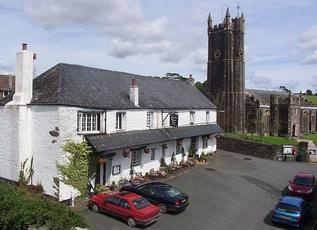
Despite the population of Harberton being just 300 persons the village had its own pub The Church House Inn located appropriately alongside the church!

Church House Inn, Harberton

I didn’t stroll the 200 yards from Upper Barn to the pub on a daily basis but certainly went there once or twice a week.

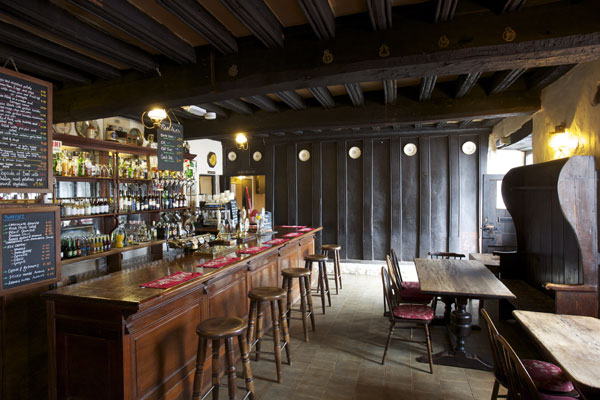
One Winter’s evening I went in to the pub for a quick pre-dinner pint. David, the landlord was behind the long bar counter, again shown to you below courtesy of the internet.

Beside me there was a single, elderly man sitting on one of the bar stools supping his pint.

I was standing next to him waiting for David to serve me and must have muttered something about the weather or about the latest local news or something inane; too long ago for me to remember.

However, I do remember so clearly what this delightful man said in response to whatever it was that I muttered.

All the world’s a little queer, save you and me, and I ha’ me doubts about thee!

I roared with laughter immediately upon hearing that wonderful reflection about the world. Added, I should say, spoken by him with a rich Devon dialect. At which point this wonderful gent spoke again and it is those next words that are my final reflection.

Now’t so queer as folk!

I never met that delightful old Devonian man again so, therefore, he will have had no idea at all at how his quotation has become part of me!

Same nominations as before:

(Finally do please note that the images in this post may be subject to copyrightLearn More)

Reflections – Day Two

Still following in the footsteps of Wibble.

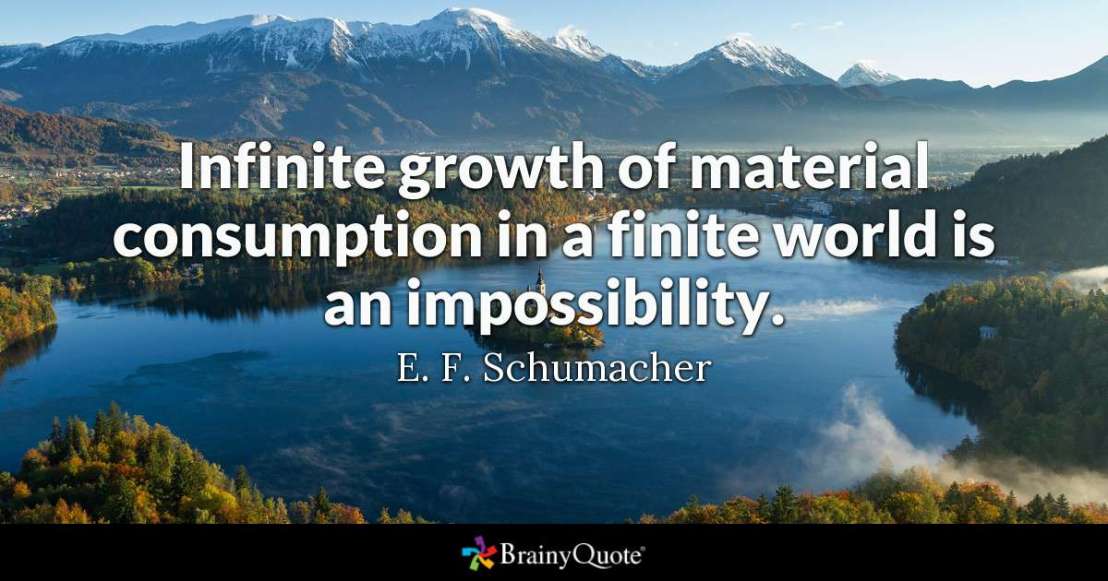
My choice of quotation last Monday was taken from E. F. Schumacher: “Infinite growth of material consumption in a finite world is an impossibility.

Deciding on what should be my second selection turned out to be more difficult. Simply because there were so many buzzing around my head.

In the end I chose this:

Never underestimate the power of unintended consequences!

Despite a web search, that brought up numerous articles concerning unintended consequences across many fields of the human experience, I was unable to find a source for the quote and therefore cannot attribute it to the original author.

Nevertheless, it strikes me as one of the core aspects of human behaviour!

As offered on Monday, here are my nominations for today:

Day Three of Reflections will be along next week!

Reflections – Day One!

Following in the footsteps of Wibble.

As in:

Now, on to the nominations:

The rules of this challenge are: post a quote on three days, each time nominating three other blogs to pick up the challenge. Or — in the spirit of wu wei — not, as you see fit 🙂

The above was taken from a post published by Colin on the 30th May.

So here’s my quote for today:

Just one of the many aspects of the life of man that underlines the madness that seems to inflict so many societies.

Here are my nominations for today and the other two days of quotes:

Day Two of Reflections will be along in a while!

The continuing fallout from Chernobyl

Will you, please, consider taking one of these puppies!

I closed last Saturday’s post with this plea: “If only there wasn’t a single dog in need of adoption in the world!

That plea is being used to introduce today’s post. An article that was recently read on the Smart News section from The Smithsonian magazine website.

I have republished it, hopefully without infringing copyrights, because it’s a story that needs to be circulated as far and wide as possible.

ooOOoo

Chernobyl Puppies Going Up for Adoption in the U.S.

Now in quarantine, the pups are expected to come to the U.S. this summer in search of their forever homes.

Please for to adopt us, Comrade. (Chernobyl Exclusion Zone Authority)
By Jason Daley smithsonian.com , May 16, 2018

In 1986, the Chernobyl nuclear power plant melted down, sending nearby residents fleeing the disaster zone. And sadly, most pets got left behind. Over the last 32 years, the surviving pups have multiplied, creating a community of hundreds that live in the Chernobyl Exclusion Zone and another 250 that live on the grounds of the former power plant itself.

Now, a dozen of those homeless puppies will head to the United States for adoption, reports Matt Novak at Gizmodo.

According to the Russian website Meduza, Ukrainian authorities have captured 200 of the stray Chernobyl puppies. They are currently keeping them in a 45-day quarantine in the city of Slavutych, and then a dozen will be shipped to the United States.

“We have rescued the first puppies, they are now in our adoption shelter going through the quarantine and decontamination process,” Lucas Hixson, co-founder of the U.S.-based Clean Futures Fund, a non-profit created to take care of Chernobyl clean-up workers, their families and the dogs tells Novak. “The goal is 200 dogs but will likely be more in the long run. My hope is to get 200 dogs rescued and adopted in the next 18 months and then go from there.”

The pups have a heartbreaking story, as The Guardian’s Julie McDowell detailed earlier this year. During the evacuation, more than 120,000 people were herded onto buses to escape the meltdown of the Unit 4 reactor, leaving most of their valuables and their pets behind. Many dogs tried to follow their owners onto the buses but were kicked off. People left notes on their doors asking authorities not to kill their animals, but Soviet Army squads were dispatched to put down as many contaminated animals as they could find.

Some of the dogs survived the army and the radiation, rebuilding their community as a pack. The Clean Futures Fund reports that the 250 dogs living on the grounds of the former power plant were likely driven out of the surrounding forests by wolves and a lack of food. Another 225 dogs roam Chernobyl City and hundreds of others live and scrounge at security checkpoints and throughout the woods and abandoned communities in the Exclusion Zone. Most of the dogs around the plant are under the age of 4 or 5, and clean-up workers at the site sometimes feed and tend to sick animals.

But last year, after becoming aware of the animals, The Clean Futures Fund decided the pups needed a more permanent solution. That’s why they’ve implemented a three-year program in the Exclusion Zone to spay and neuter 1,000 animals and vaccinate them against rabies. At their first clinic last August, the Fund spayed and neutered 350 dogs and cats in the area. Each animal was tested for radiation, given antibiotics, vaccinated for rabies and microchipped. Each dog’s vital data was also recorded.

For the next clinic scheduled for June, the Fund has also partnered with researchers from the University of South Carolina. The team will study the dogs for signs of radiation poisoning as well as genetic damage and disruptions to the dogs’ microbiomes, reports Mary Katherine Wildeman at The Post and Courier. The team will sedate the dogs and look for tumors and cataracts, which can signal radiation poisoning.

Understanding the impacts of radiation exposure is becoming increasingly important, says Timothy Mousseau, a researcher who has studied radiation in the birds, insects and small animals of Chernobyl and will lead the project. Exposure rates in daily life from medical treatments and other sources are on the rise, with the average yearly dose Americans receive doubling in the last 20 years alone.

There is no word when or where the dozen Chernobyl pups will go up for adoption. But even if you’re not lucky enough to have one of the reminders of Soviet-era nuclear power at the foot of your bed, it’s still possible to see the place for yourself and hand out treats to some of the remaining pups. There’s a booming tourism industry in the area to visit the eerie ghost towns and surprisingly quiet and beautiful green space that has overtaken the Zone.

ooOOoo

I am going to contact The Clean Futures Fund to see how one can register a potential interest in taking one of these puppies.

In the meantime, is there any reader who would be interested in having a puppy? Send me an email if so.

Picture Parade Two Hundred and Thirty-Nine

More of those pictures sent to me by Dan Gomez.

oooo

oooo

oooo

oooo


The last of these super pictures in a week’s time.

Thanks Dan!

To England and France, Part Five

Beautiful, peaceful and relaxing days!

We were in Reggie and Chris’s villa in the village of La Croix des Luques inland from the Cote d’Azur, Southern France.

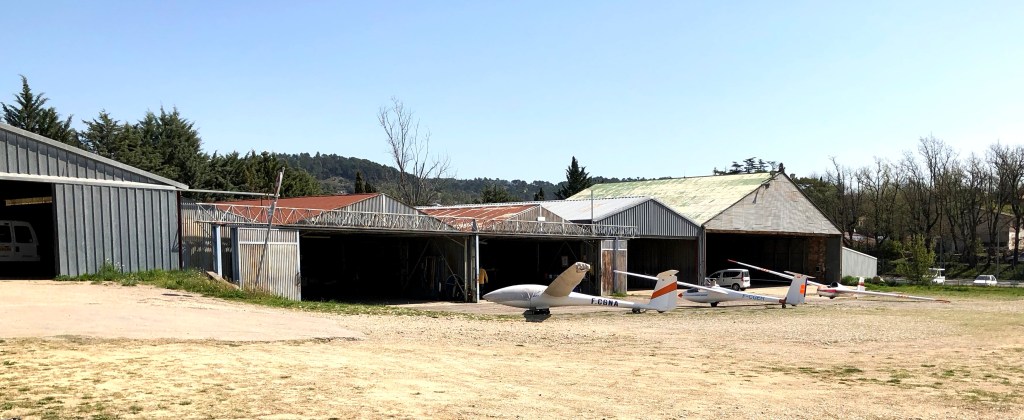
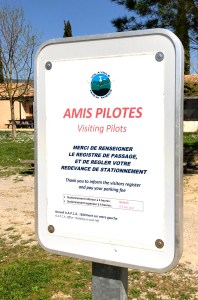
I quickly realised that their villa was not far from the world-famous sailplaning airfield at Fayence. Or LES PLANEURS DE FAYENCE as it is known. Reggie gladly offered to take Jean and me across to the airfield.

Many years ago, when I was living and working in Colchester, Essex, I became a very keen and active pilot with the Rattlesden Gliding Club in Suffolk eventually qualifying as a gliding instructor. So when Reggie suggested that I see about getting a dual flight at the Fayence Club I didn’t need asking twice.
Unfortunately, they couldn’t accommodate my wishes before we had to leave France so that opportunity had to be let go.

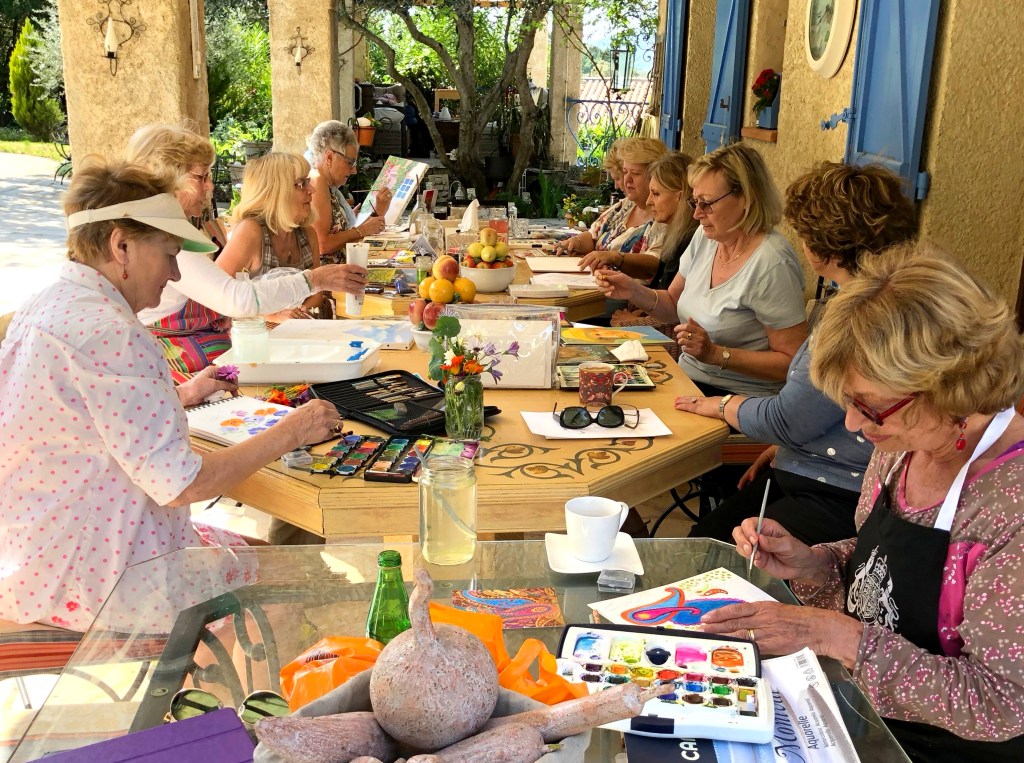
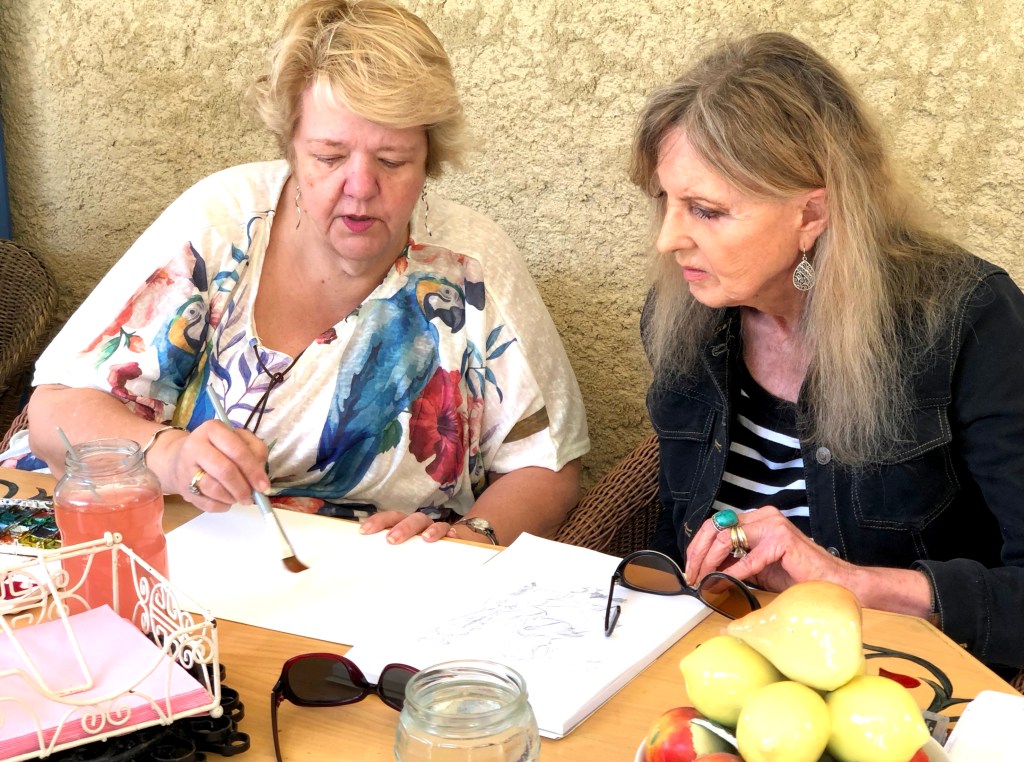
Another opportunity, this time for Jeannie, was taken advantage of. Chris was a member of a local art class and while we were going to be there the class would be meeting at the villa. Would Jean like to take part?

Jean is a good amateur artist, as many of her paintings and sketches around our house attest to. So that did take place and it was a wonderful afternoon for all concerned.

oooo

Stella, Christine’s sister, working alongside my Jeannie.

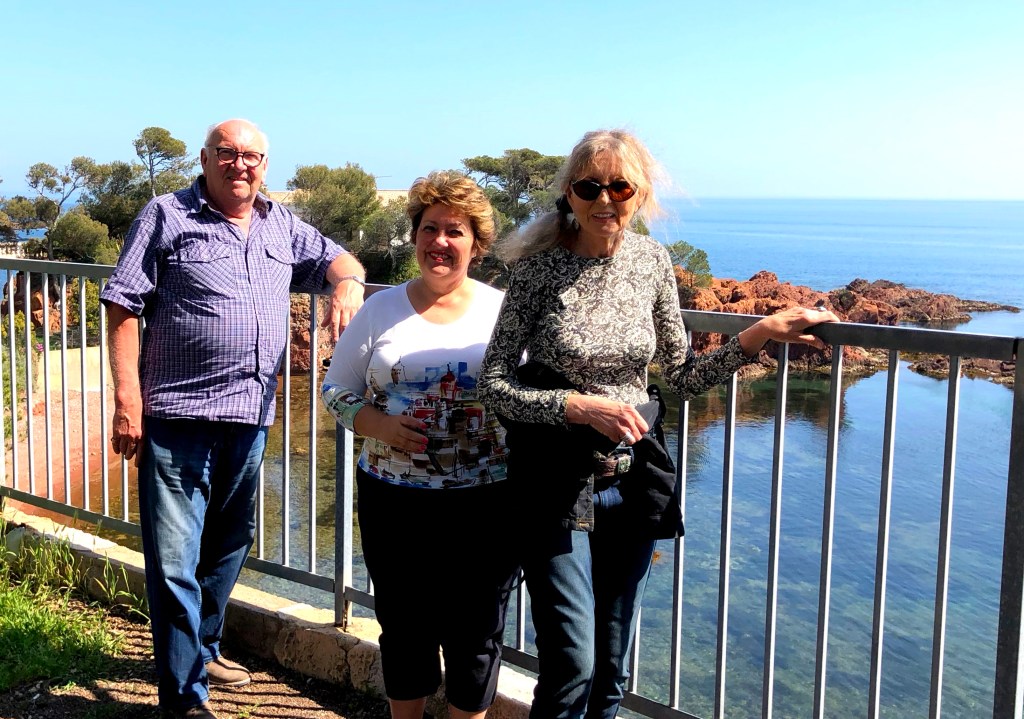
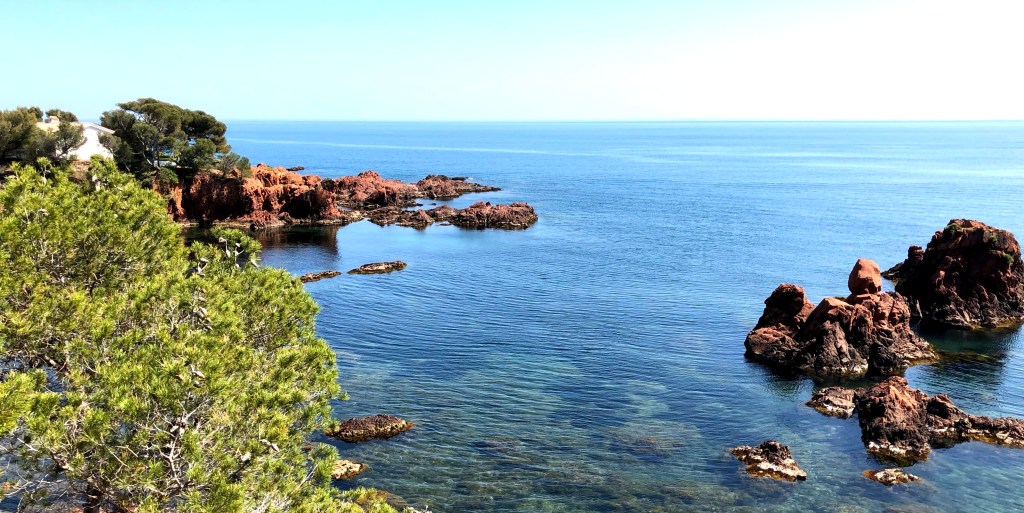
Then on a subsequent day Reggie and Chris took us for a drive along the beautiful coastline that is the essence of the Cote d’Azur.

To reach the coast Reggie took a route that went down towards Frejus and Saint-Raphael and then joined the coast road just west of Le Dramont.

I found this was stirring up very old memories. For my father, a Chartered Architect, had a passion for this part of France and every summer back in the 1950s took the four of us (Mum, Dad, me and my sister Elizabeth) for a month’s holiday. Thus many of the coastal town names had echoes from over 60 years ago. (Father died in December, 1956 of cancer.)

As we drove along, I reminisced aloud to Reggie and Chris that when I was 15 my mother decided that it would be a good thing for me to do a student exchange with a French boy. It was arranged and in the early part of the summer of 1959 in to our house in Preston Road, Wembley came Philippe, whose home was in Paris.

Then in about 4 weeks it was my turn to accompany Philippe back to Paris. It was a very ornate apartment with an air of luxury living and I felt very lost in the place. Apparently, Philippe’s father was a director with Air France.

Anyway, the father announced just a couple of days after I had arrived that all the family the following day would be flying from Paris to Nice airport, (with Air France, of course!) to then spend a month at the family’s French villa in the coastal town of Antheor.

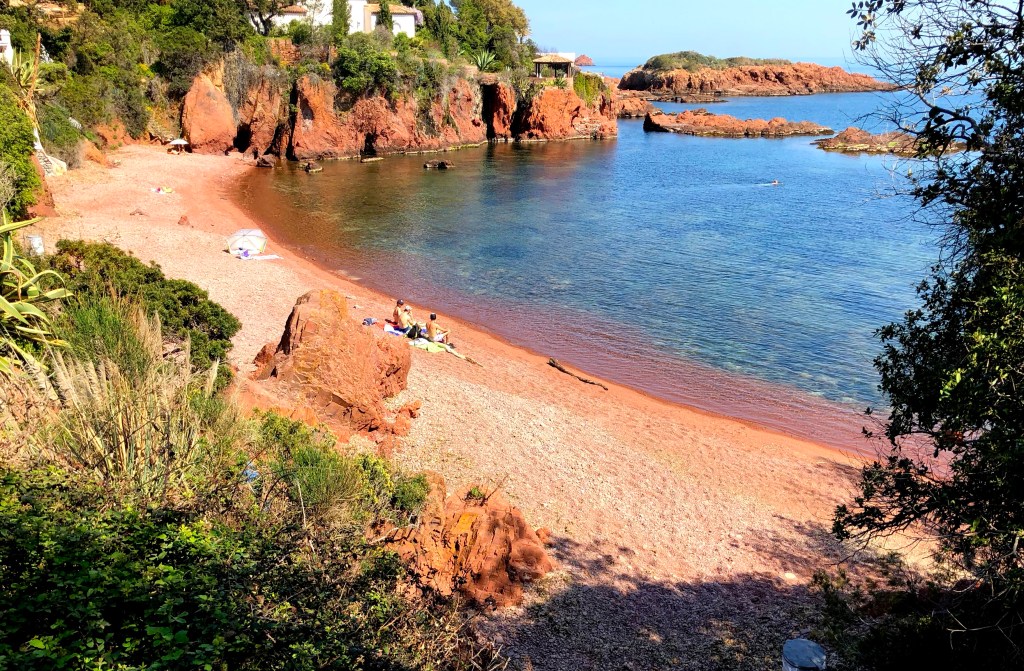
On me mentioning Antheor Reggie immediately exclaimed that we were just a few miles from going through Antheor and that we should stop there. I wondered if I would remember anything of the place.

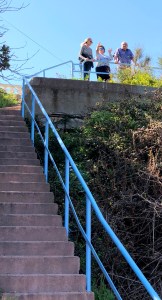
Well I did!! To my amazement when we stopped to look down at the beaches below the level of the road I thought that we were very close to the beach in front of the villa at Antheor where I used to swim, frequently on my own, every day that I stayed there.

I told everyone to stay where they were and ran on to the next beach.

Bingo!!

It was the same beach that I now recalled so clearly.

Swimming memories from 1959!

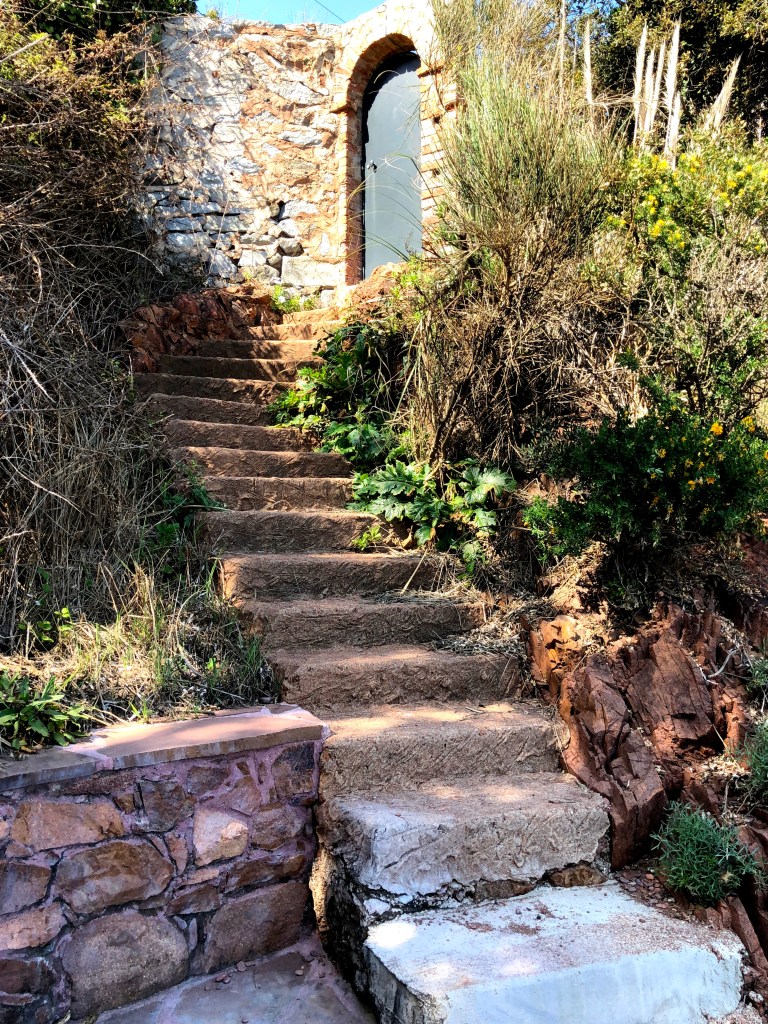
Even more amazing for me was that the iron gate and steep stone steps down to the beach were still there, albeit no longer being used as a more modern set of steps was in place.

By this time, the others had arrived at the head of the new steps and were looking down at me as I became truly lost in days so very long ago.
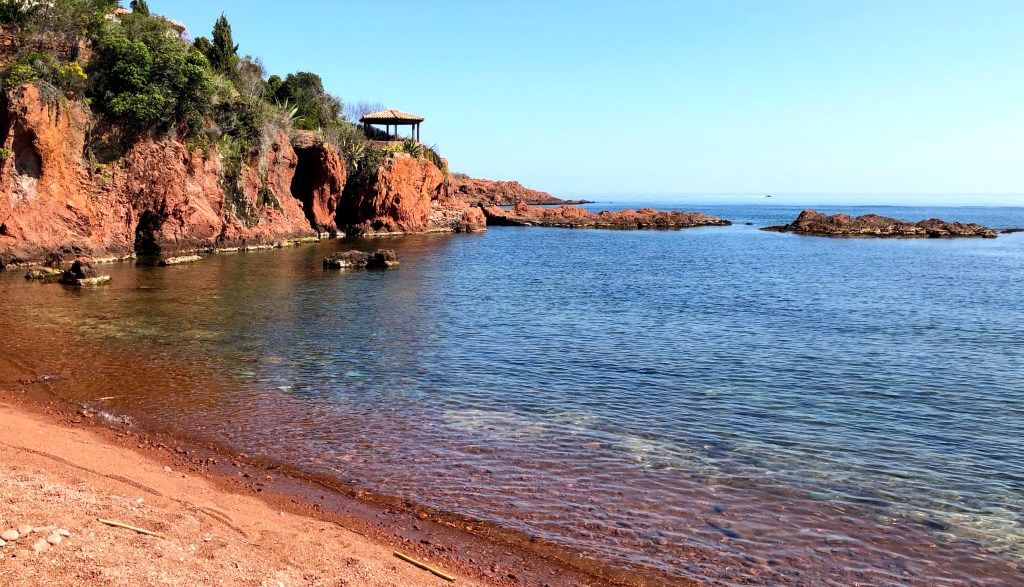
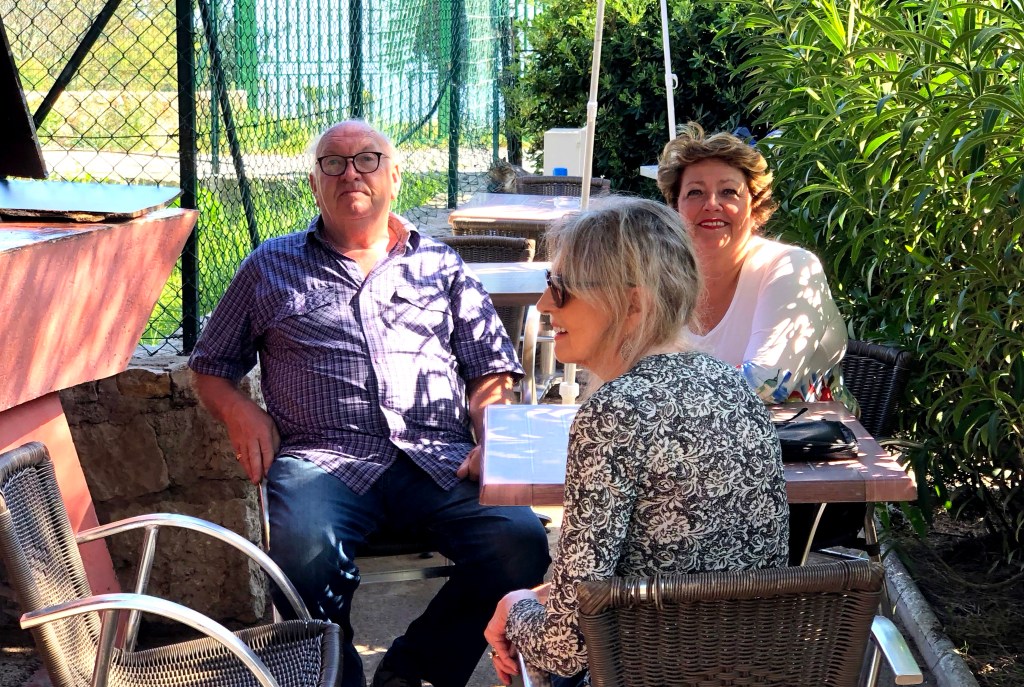
 

I have no recollection why back then the rest of the family so rarely came down to the beach that was so close to where their villa was. Indeed, it was just a case of crossing the coast road, much quieter in those years, and descending the steps to the beach.

But for this London boy it was bliss beyond measure. Maybe at some level it reminded me of family holidays for our, as in sister Elizabeth and me, father’s death was still a painful memory.

I stood still and just looked at the beach and at the sea and was transported so very clearly back to the times when I swam around the rocks, wearing a face mask and snorkel, just lost forever in what one could see underwater.

Then it was time to return to the car and resume our delightful drive.

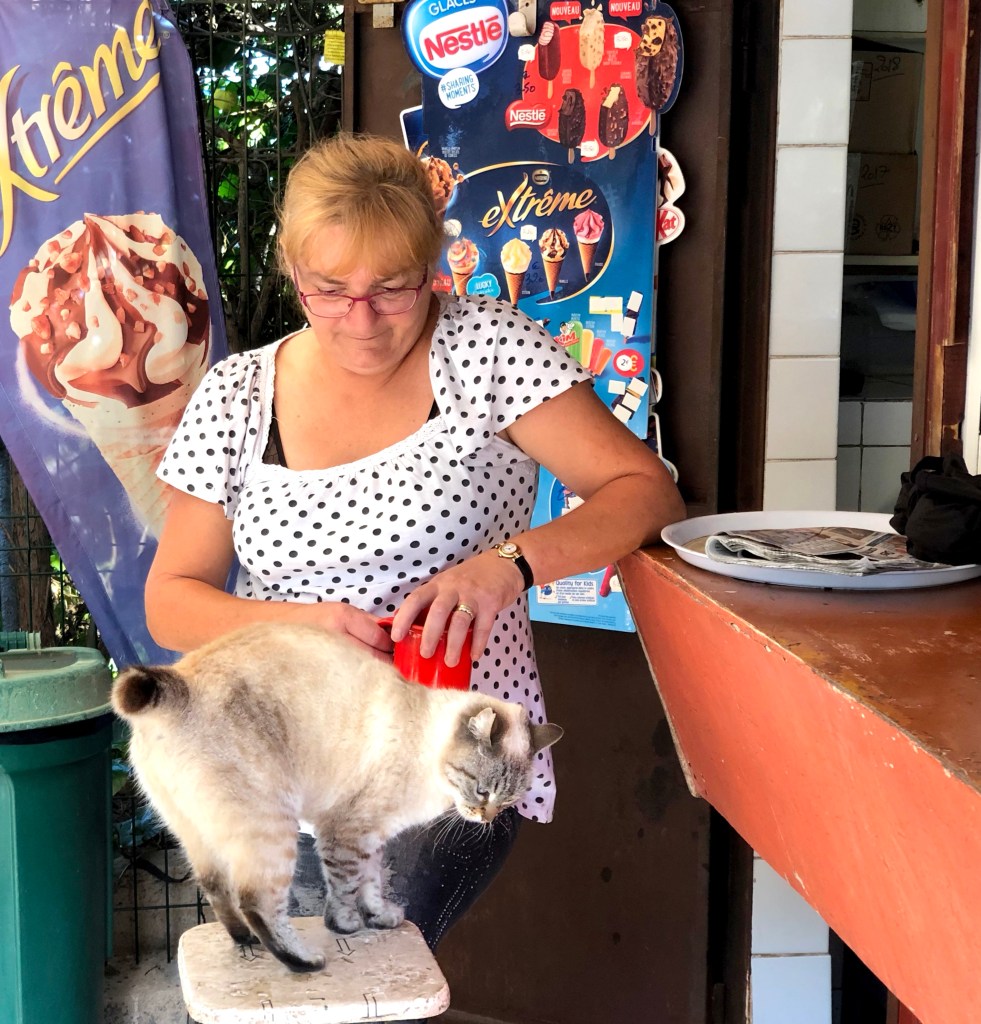
Soon after we stopped at a small beach cafe for an afternoon drink of something cool.

Everything, well for me at least, still seemed a little unreal; a little larger than life! I think that’s what inspired me to take the photograph above of the cafe proprietor and her cat!

Then we moved on again.

In due course, to another delightful evening meal somewhere local. The French expression “en famille” says it all!

These wonderful days were going by far too quickly!

In a flash it was Tuesday and Jean and I were being driven to Nice airport for another easyJet flight. But instead of returning to Bristol we had booked an easyJet flight into Gatwick. Because the last 36-hours of our vacation were being spent with my daughter’s family.

Maija’s husband, Marius, who is employed by The Royal National Theatre, near Waterloo Bridge on the south bank of the River Thames in London, frequently is working evenings but in order to spend time with me and Jeannie he had taken a day’s holiday on the 25th.

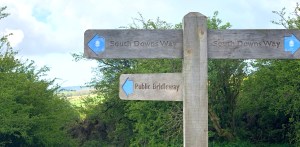
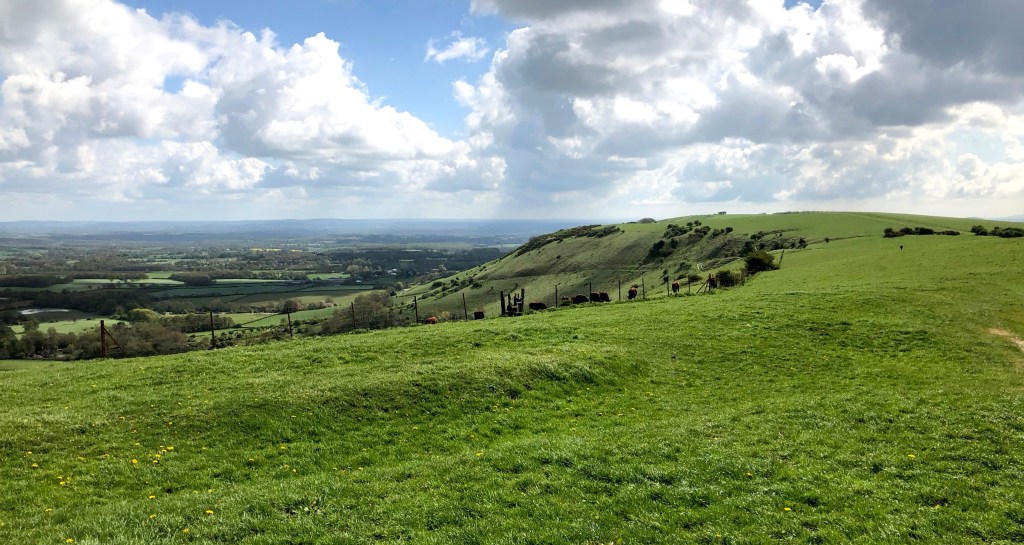
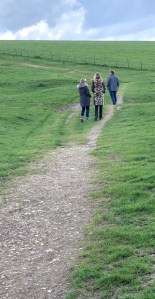
Our last day of our vacation dawned bright and sunny. It was a school day for Morten and after he had left for school Marius and Maija suggested going for a walk along the South Downs. Perfect!

For those unfamiliar with the South Downs let me quote a little of what may be read on Wikipedia.

The South Downs are a range of chalk hills that extends for about 260 square miles (670 km2)[1] across the south-eastern coastal counties of England from the Itchen Valley of Hampshire in the west to Beachy Head, near Eastbourne, East Sussex, in the east. The Downs are bounded on the northern side by a steep escarpment, from whose crest there are extensive views northwards across the Weald. The South Downs National Park forms a much larger area than the chalk range of the South Downs and includes large parts of the Weald.

The South Downs are characterised by rolling chalk downland with close-cropped turf and dry valleys, and are recognised as one of the most important chalk landscapes in England.[2] The range is one of the four main areas of chalk downland in southern England.[3]

It is a beautiful place to walk.

It was a magical way of spending our last day.

Again, I was aware of stirrings in my old memory box from many years ago, possibly when I might have taken young Alex and Maija for a walk along the Downs, or something along those lines.

But today it meant so much for Jeannie and me to be with Maija and Marius for this gorgeous walk.

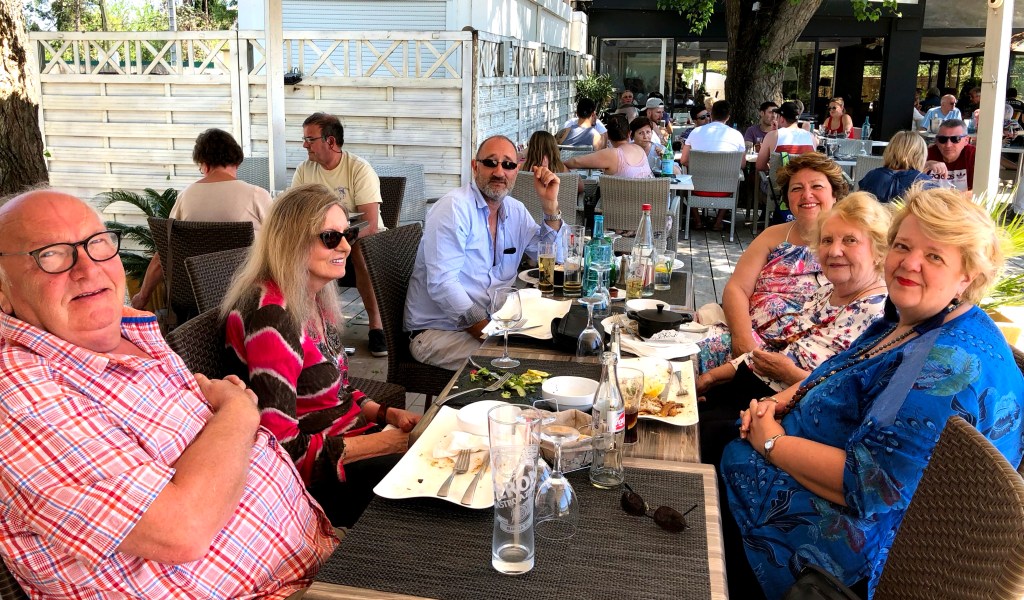
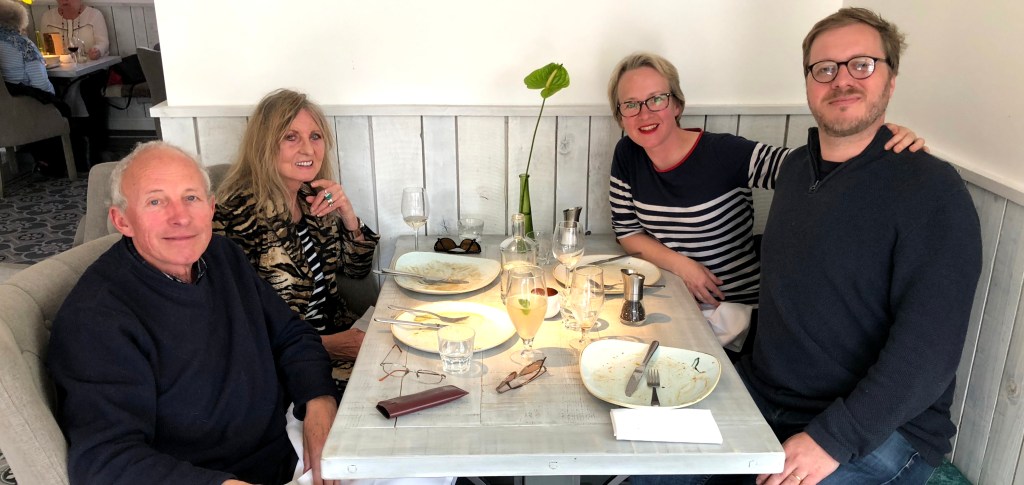
A couple of hours later we found a place to have a late lunch and asked the lady serving our table to take a photograph of all four of us!

Obviously, we had to be home in time for Morten’s return from school.

Those last hours of that day were focussed on keeping Morten company. What else mattered!

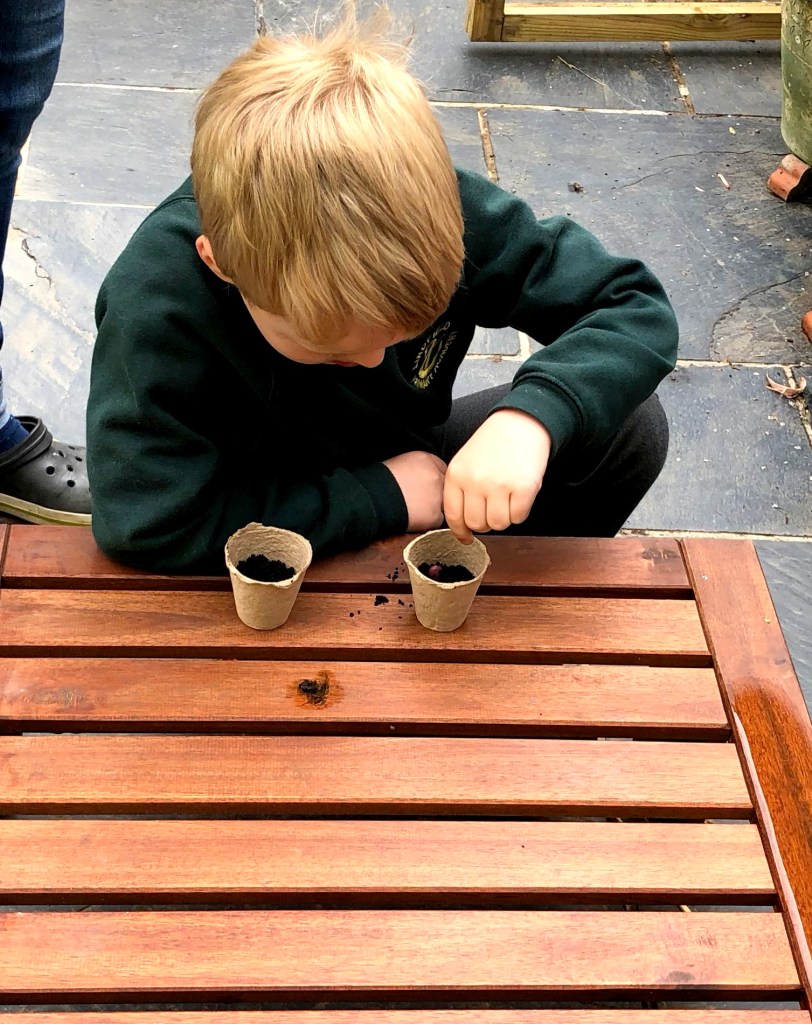
So the last photograph of the whole vacation is the one below. A picture taken of Morten planting some seeds that were bought while we were out that day.

We arrived back in Portland, Oregon around 6pm on the 26th and too late to drive all the way back to Merlin.

So after we had collected the car from the long-term parking we stopped off at the first motel that we saw heading though southern Portland.

Then around 11am on Friday, 27th April we pulled up in front of the house to be greeted by six very loving and contented dogs. Well done, Jana!

That evening those contented dogs demonstrating their happiness did more than anything to communicate a precious message.

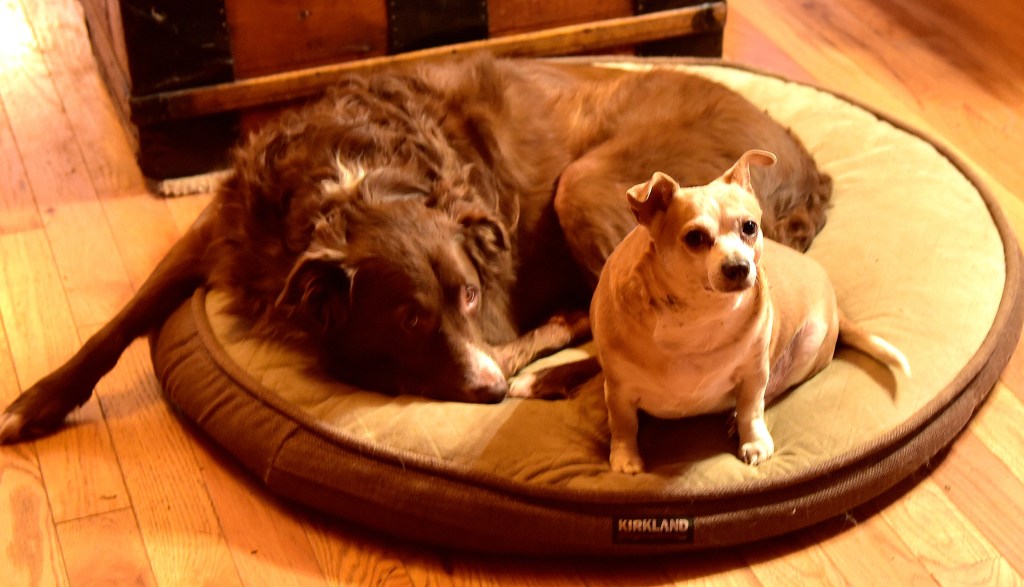
Oliver and Pedi

oooo

Brandy.

Welcome Home Jeannie and Paul!

The End!