Last Thursday, together with Jeannie, I returned to the hospital in Eugene, OR, that I was taken to on December 24th after my bike accident on the 22nd November; all of which has been shared with you good people.
Dr. Kokkino of the Oregon Neurosurgery department, he who undertook the operation to evacuate two sub-dural bleedings, wanted to check me out.
He pronounced me fit to return to normal life including bike riding. But when I queried that I was still feeling a little “second-hand” in the head from time to time Dr. K. said this:
Your brain took a major knock back in November.
It would be reasonable to assume that full healing will take at least three months and quite possibly as long as six months!
Of course, that was very comforting to hear but nonetheless very surprising. That’s what I wanted to share.
Yesterday morning, dear friend and neighbour Dordie came riding with me and we did the ‘Tunnel Loop’ circuit; about six miles.
It felt very good.
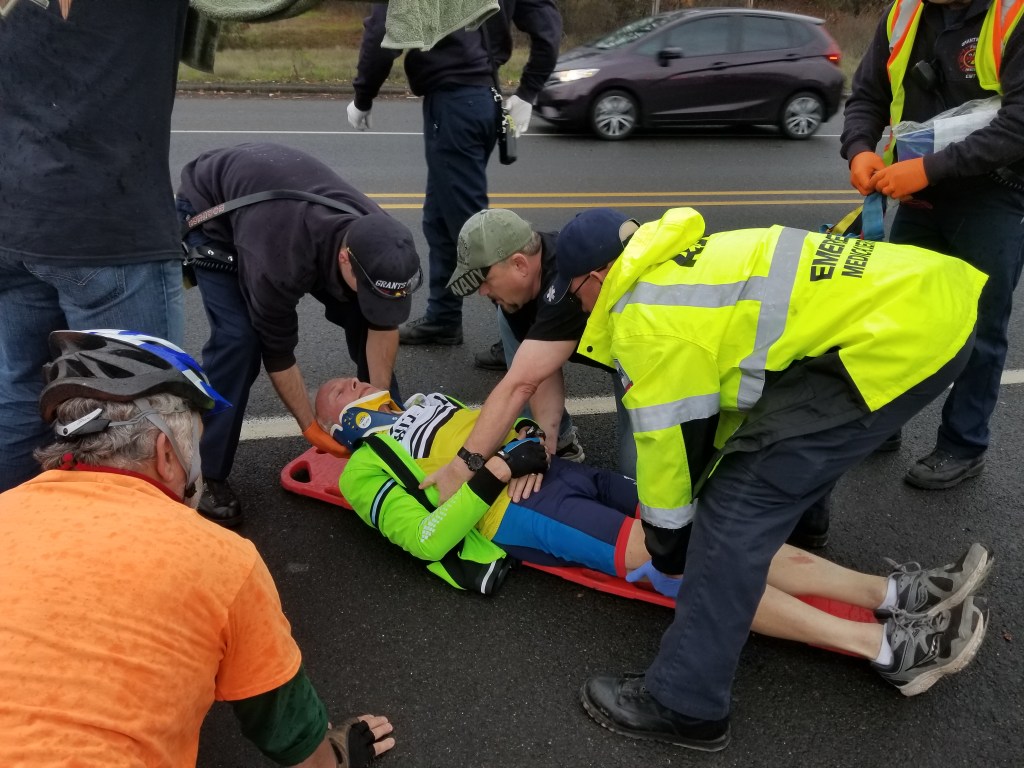
So from this:
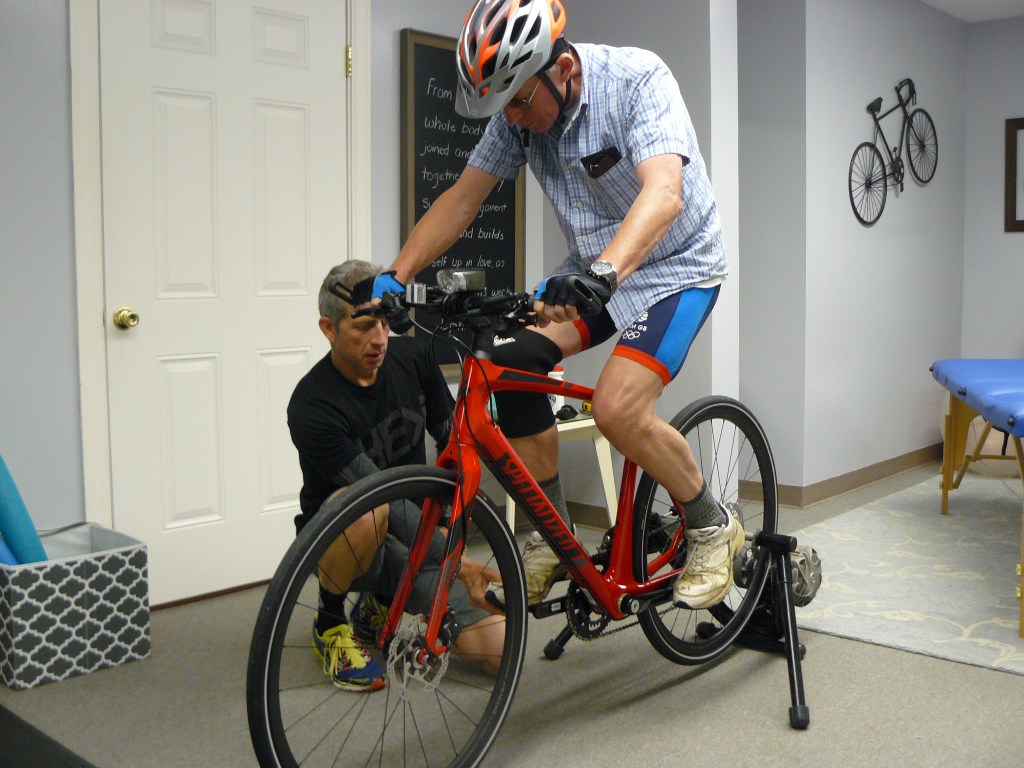
to this (me on the bike when I first purchased it!):
Will close by saying again how amazed I was to hear that prediction from Dr. K. as to how long the brain takes to heal!
Or more specifically the cleansing power of indoor plants.
Back in 2012, I published a post called Clean, clean air. I am going to republish it tomorrow because Kelli sent me an email setting out that over on her blog site she has a much more comprehensive list of plants that purify the air.
We need fresh air to live a healthy and full life, but it’s fast becoming a luxury. Residents of many major cities around the world are plagued with smog and poisonous gases from motor vehicles, fossil fuel based power plants, and factories.
The good news is there is a simple solution you can use at home to make your air much cleaner. While air purifiers might help, air purifying plants are a great and natural way to clean your home’s air supply. In this article, you’ll learn more about air pollution, its dangers, and how to choose the best air purifying plants for your home.
Anyway, if you wish to read more then go here and, as I mentioned above, my post of August, 2012 will be republished tomorrow.
While this post doesn’t specifically look at what we feed our dogs, there’s no question in my mind that good nutrition is just as important for our dogs as it is for ourselves.
Moving on!
You will know that quite a few of my recent posts have been on the back of me being made aware of how a strict diet plus taking many vitamins and supplements had had the effect of putting Colin Potter’s Parkinson’s Disease (PD) into remission. All of which was summarised in an post last week called Food Truly Does Matter.
But then a good friend who lives locally, and has a solid medical background, spoke to me and said what you are writing can’t possibly be correct because if diet and supplements really did put PD patients into remission then “everyone would be doing it“. It was difficult to argue that.
So I thought the best people to call would be the American Parkinson Disease Association. I was put through to the director of the North-West Chapter of the APDA, located in Seattle, WA., and she agreed that there was no magic bullet in terms of diet and PD remission.
But the director went on to say that diet and lifestyle were nonetheless incredibly important and that there was no question that the correct decisions in terms of lifestyle were vital for anyone with PD; whatever the stage of the disease .
Dr. Laurie Mischley
The director also went on to say that without a doubt we should make contact with Seattle Integrative Medicine also, as the title suggests, in Seattle.
In particular, make contact with Dr. Laurie Mischley for the director said that Dr. Mischley’s clinical speciality is Parkinson’s Disease.
Plus we were advised to watch a talk that Dr. Mischley gave in British Columbia towards the end of 2016.
The talk is 49 minutes long and should be watched by everyone!
Reason?
Because in the talk there is much evidence, as in factual evidence, that shows the link between our lifestyle choices and what helps or hinders those with PD.
But even more critical to my way of thinking is that the evidence presented in the talk offers solid reasons why all of us as we approach middle-age and beyond should be careful about what we eat.
This is a recorded presentation from Parkinson Society British Columbia’s Victoria Regional Conference featuring Laurie Mischley. Dr. Mischley studied naturopathic medicine (ND) at Bastyr University and epidemiology (MPH) and nutritional sciences (PhD) at the University of Washington. Her work is focused on identifying the nutritional requirements unique to individuals with neurodegenerative diseases. She has published articles on coenzyme Q10, lithium and glutathione deficiency in Parkinson’s disease (PD). Dr. Mischley maintains a small clinical practice at Seattle Integrative Medicine focused on nutrition and neurological health.
So, my dear reader, here is a little plea from Paul.
Whether or not you have PD, watch the talk and have all the people you love and care for watch it as well.
Oh, and give your dog a cuddle from Jean and me!
Please understand that I do not offer advice and nothing on any website, including the blog site Learning from Dogs, email or any other communication is intended to treat, diagnose, prevent or cure any disease. It is not a substitute for consulting your doctor. You should consult a doctor for diagnosis of conditions, before beginning any diet, exercise or supplementation or if you suspect you have any healh issue. You should not stop medication without consulting your doctor.
In yesterday’s post I mentioned that Justina had sent me a couple of links in response to me wondering if there was good nutritional advice for dogs as well as there clearly was for us!
Here are those two articles that Justina sent me links to.
Since the onset of my veterinary career, I’ve had a strong interest in how the foods our pets consume contribute to an overall state of wellness or illness. Learning how to apply this interest to my patients took many years of post-veterinary school practice, continuing education, and an ongoing belief in the inherent nutritional benefits of whole foods.
During veterinary school, students’ brains are heavily saturated with a variety of academic information. As graduation date nears, a general sense of insecurity develops about making the appropriate professional choices to best serve our patients. As a result, common sense notions about the value of looking more discerningly at the ingredients formulating a pet’s diet are often overlooked.
Chinese Medicine Meets Dog Food Therapy: What You Need to Know
You may have heard of Chinese medicine for people, but did you know that it can also be used for dogs? In fact, Chinese medicine has an entire approach to dog food therapy that is quite intriguing. Let’s talk a bit about it so you can decide if it’s right for your dog.
Chinese medicine is often referenced when anyone talks about holistic approaches to healthcare. It seems that it has a treatment for almost everything, and often those treatments work. Something I learned recently is that traditional Chinese medicine extends to dogs, and many people use hot, cold, and neutral foods to help their dogs feel better.
I am going to explore getting permission to republish both articles in full.
(Post alert! This is a longish post so if you are interested in diet, nutrition and health and are short on time just now then bookmark it for a better time for you. For I am of the opinion that this post will be of great value to you and many others!)
Regular readers of this place (you poor people!!) will be aware that via a series of lucky chances, or the fickle finger of fate as I like to call it, not being a religious person, I made contact with Justina, a London-based nutritionist, following contacting Colin Potter.
I wrote about that connection in more detail in my post The Power of Good Food that was published on the 16th January. Here’s a snippet from that post:
Richard lives with his good lady, Julie, in Minety, a village in North Wiltshire. He and I go back many, many years and we have been close friends from the day that we first met. Richard was diagnosed with early-stage Parkinson’s Disease (PD) the same year and month as my Jeannie: December, 2015.
Last New Year’s Eve Richard and Julie were at a local party and the subject of PD came up. Richard subsequently told me that he was speaking to a fellow party guest who said that he was, in turn, an acquaintance of a Colin Potter. He went to add that Colin had also been diagnosed with PD but had decided not to ‘give in’ to the diagnosis but undertake comprehensive research into the causes and whether it was possible to go into remission. He later launched a website Fight Parkinsons.
We then reached out to Colin and very quickly subscribed to his Fight-Parkinson’s site. Colin’s message was that it was all about diet! Here’s that message in a short video from Colin.
That, in turn, resulted in both Jean and me adding to our already reasonably healthy diet a significant number of additional vitamins and supplements; the reasons for which will be spelt out later on. Plus more fruit, eggs, cheese but most definitely coming off all grains, sugar, carbohydrate and processed foods. Or in Colin’s words:
The right diet
This is the high fat/ low carb diet which is covered in the Fight-Parkinsons Recovery Eating Plan on my website.
I follow a diet that excludes all grains, sugar, carbohydrate and processed foods, and is rich in fats and cholesterol-laden foods. So, in addition to organic vegetables, I eat plenty of eggs, butter, dairy (full fat), fish and a little meat.
This raises the question of cholesterol and the so-called link to heart disease.THIS ARTICLE should lay this misguided information to rest and inform you of the fraud that has been practised upon us over the past 60 years (the same period during which chronic disease, in all its forms, has rocketed).
I consume foods rich in antioxidants and avoid inflammatory foods.
Supplementation
It is vital that we get the required minerals, vitamins and amino acids on a daily basis, and THIS VIDEOof an interview with Dr Joel Wallach explains why.
I have taken numerous supplements over the past few years, often leading to me taking a small mountain of capsules each day.
So, to underline that “small mountain” phrase here is a photograph of what Jeannie and yours truly are now taking by way of vitamins and supplements.
Plus, all the other organic fruit and vegetables and nutrients.
Returning to Justina.
She has been very helpful in bringing us up to speed on the efficacy of the the required minerals, vitamins and amino acids we need on a daily basis. Or to put it more specifically on the efficacy of the products that one can purchase from Youngevity. She said that the Wellness 90 Pak was effective albeit one had to commit to taking it for a period of at least 90 days (hence the name) as the body required that time to ‘adjust’ if that’s the correct term. Here’s a description of the purpose of that ‘Wellness Pak’ from their website.
The Wellness 90 Pak™ delivers the nutritional support needed for individuals following the Wellness 90 Program. This program focuses on a diet rich in fruits, vegetables, whole grains, legumes, nuts, olive oil, and other healthy options, that helps improve your overall nutrition. This Pak™ includes: (1) TMR Total Meal Replacement-Vanilla canister, (1) Slender FX™ Sweet EZE™, (1) TrueDetox Tea™ box (30 packets), and (1) Slender FX™ Rev™ bottle. See individual products for details.
Justina then mentioned about the online food resource site known as Food Matters TV (FMTV). Not a site we had come across before but, again, once we signed up to the site, a subscription site, we were blown away by what was available. Especially a documentary called Food Matters. Here’s the trailer to that documentary (that has been viewed nearly 1.8 million times!).
As Justina pointed out the documentary expresses the same critically important message as Dr. Joel Wallach is promoting: We Are What We Eat! But there is no connection between the two.
The bottom line is that Jean and I are going to add the Wellness 90 Pak to our diets for the next 90 days and you can be sure that how it goes will be reported here.
What about our dear, dear dogs?
I asked Justina the question knowing that I would be writing and publishing this post and this is what she said:
I don’t have dogs, but my friend has two golden retrievers and one of them didn’t or couldn’t lift his tail.
She went to see conventional vet and they said he needed a surgery that costs thousands and there’s still possibility of him being paralyzed. So she found holistic vet and wanted to get their opinion.
She was really impressed as they made a special food plan for him and after 3 month he lifts his tale half way! In Chinese medicine he was called a ‘hot dog’ and needed certain nutrients daily for his condition and that was natural just majority raw food that humans eat too!
More on good food for dogs coming along tomorrow.
Hope this was interesting to you!
Finally, please understand that I do not offer advice and nothing on any website, including the blog site Learning from Dogs, email or any other communication is intended to treat, diagnose, prevent or cure any disease. It is not a substitute for consulting your doctor. You should consult a doctor for diagnosis of conditions, before beginning any diet, exercise or supplementation or if you suspect you have any health issue. You should not stop medication without consulting your doctor.
Both Emily’s previous guest posts were received very well by you. There was Four-legged Gardening, published here last October 24th, and Return To The Movies that came out on the 4th of that same month.
Now Emily writes about something that is never far away from us these days, irrespective of age: depression. And the strongly positive role of pets. Great guest post but first let me re-introduce you to Emily.
Emily Ridgewell is an arts professional and a pet enthusiast from sunny LA. Emily has a creative energy and an aesthetic sense of living, where everything beautiful is worth sharing. She loves her yorkie Olivia and writes original and fun articles on ways to learn and improve your pet-best friend’s life. She finds exciting new things to explore and experience! Don’t forget to connect with her on Twitter: @ridgewell_j
ooOOoo
The Role of Pets in Depression and Bullying in Kids
Kids today are faced with more stress and worry than ever, and childhood depression is on the rise because of it. Recent studies have shown almost 10% of children and adolescents experience depression. One of the main sources of depression among children is being the victim of bullying. Unfortunately, bullying doesn’t discriminate and can happen to boys and girls of any ethnic, racial, religious, or socio-economic background. Lasting effects of being bullied include having low self-esteem and negative self-image, unhappiness at school and difficulty focusing, and trouble establishing healthy relationships with peers.
Interestingly enough, these side effects are found in the bullies as well as their victims. Both are more likely to experience depressive symptoms than those who have never been involved in bullying. They also are more likely to have coexisting mental health issues, such as Oppositional Defiance Disorder, Attention Deficit Disorder, and Clinical Depression and Anxiety. If left unaddressed, these feeling of depression and low self-worth can lead to chronic levels of mental health issues, isolation, and even suicidal ideation.
The first line of defense for parents is arming themselves with strategies to help their children cope with feelings of depression and address them when they first appear. First and foremost, they need to recognize the signs of depression. Then they need to put their heads together and come up with a plan to help their child combat it. Use resources such as your pediatrician, teachers, and school counselors to help develop a long term plan. In the meantime, one of the most effective and immediate ways to help them at home is by getting a pet.
Pets have several benefits that help combat depression and help your child feel happier, more whole, and well connected. First of all, they offer uncomplicated, unconditional love. They don’t say hurtful things, get angry over petty misunderstandings, or hold grudges. They simply love and express joy every time they see their owners. They also offer constant companionship. Having a pet means never having to feel alone or isolated. Additionally, the act of petting a dog or cat (or any other pet, for that matter) offers physical touch and provides comfort, creating a soothing effect and releasing feel-good endorphins in the brain. In turn, this reduces stress and anxiety and helps your child feel calmer and more emotionally balanced.
Further, having a pet means your child will have an added responsibility. Contrary to what you may originally think, a new responsibility provides a distraction and offers a positive focus instead of what’s bothering him.. Plus, he’ll feel good about himself for taking care of something that needs him. He will feel capable, and this bolsters self-esteem and causes a ripple effect in all aspects of her life. It’s a win-win situation.
If you opt for a dog, part of the responsibilities will be walking it. This earns another point in the fight against depression for a couple of reasons. It will make your child be physically active, a well-known tool for negating depressive symptoms. It also is an excellent way to increase social interaction. People are always wanting to touch a puppy, and this leads to a natural conversation when they ask permission. Even if your child is anxious about talking to new people, dogs and pets are automatic ice breakers. Talking about their pet can easily guide the conversation with very little pressure on your child to generate small talk. If they are engaging in conversation, they are less likely to feel isolated and will benefit mentally from the interaction.
Of course, pet ownership isn’t something you should jump into lightly. Be sure to choose the right pet for your child and teach him the right way to handle and care for it. With care and supervision, your child and her pet will become fast friends in no time. While there is no quick fix for depression, owning a pet has multiple benefits which will show their impact quickly. Having an unconditional friend to love can work wonders for building confidence and self-esteem and combatting the negative effects of bullying and depression.
ooOOoo
Emily is spot on. Pets, especially dogs, are the epitome of loving us humans unconditionally and that connection is precious beyond words. Being able to hug or cuddle a dog, frequently as an ad-hoc impulse, is about as comforting a place that us humans, well certainly this human, can get.
Sitting in front of the television of an evening and having a cat snuggle up next to one and start purring is a very close second-best!
It primarily featured a short video from the home page of Colin Potter’s Fight Parkinson’s website. That video explained how a strict regime of the right food and supported by supplements had made an incredible difference to his health, effectively putting his PD into remission.
Or in Colin’s words:
I am Colin Potter and I have a Parkinson’s diagnosis.
Only there’s one difference between me and virtually all other people with Parkinson’s
I no longer suffer from its symptoms. I don’t take conventional medications.
You’d hardly know I had Parkinson’s. How is this possible?
I’m not a doctor, I’m just an ordinary bloke diagnosed with Parkinson’s in 2011 who just didn’t like what he was being told by his doctors; that his condition was incurable and his health would go into permanent decline.
So, I started my own research, and found thousands of authoritative research studies that:
Showed that Parkinson’s mostly had its origins in our lifestyle and environment
Revealed the possible, specific causes behind Parkinson’s
Promoted the actions I could take to fix the problem
Allowed me to cease levodopa medication
I then made the necessary changes to my lifestyle and diet and here I am, two+ years later, healthy and recovered.
I know many of you will find it hard to dedicate a measurable amount of ‘viewing’ time to this post but that doesn’t stop me from recommending a subsequent video.
Namely, a longer (32 minutes) interview of Colin Potter that really explains his transformation
There’s even more to share with you but Jeannie and I have made a fundamental decision. That is that before we go any further it is only right that we seek the views of a local nutritionist in nearby Grants Pass.
We need to be certain that the major changes that we are planning in terms of diet and supplement intake are supported by local, qualified persons.
We will share those findings with you very soon.
But it does cross my mind that the following should be included in this post.
We do not offer advice and nothing on any website, email or any other communication is intended to treat, diagnose, prevent or cure any disease. It is not a substitute for consulting your doctor. You should consult a doctor for diagnosis of conditions, before beginning any diet, exercise or supplementation or if you suspect you have any health issue. You should not stop medication without consulting your doctor.
Getting to the truth of what is or is not good for our dogs.
As many will understand so very often I am acting more as a messenger than an authoritative source in this place. It is very difficult for me, almost impossible indeed, for me to verify the validity of what is posted here.
On January 11th, I published a guest post from Kathreen Miller. Her article was called Is Organic Food Really Good For Your Dog To Eat?
Yesterday, local good friend and neighbour, Jim Goodbrod, sent me an email pointing out a number of weaknesses in Kathreen’s article and giving me permission to republish what he wrote as a post on Learning from Dogs.
Jim is an experienced Doctor of Veterinary Medicine (DVM) and has frequently advised us, both professionally and informally, about our own dogs and cats. We trust him fully. Jim attends a couple of local vet clinics including Lincoln Road Veterinary Clinic in Grants Pass to where we take our pets when required.
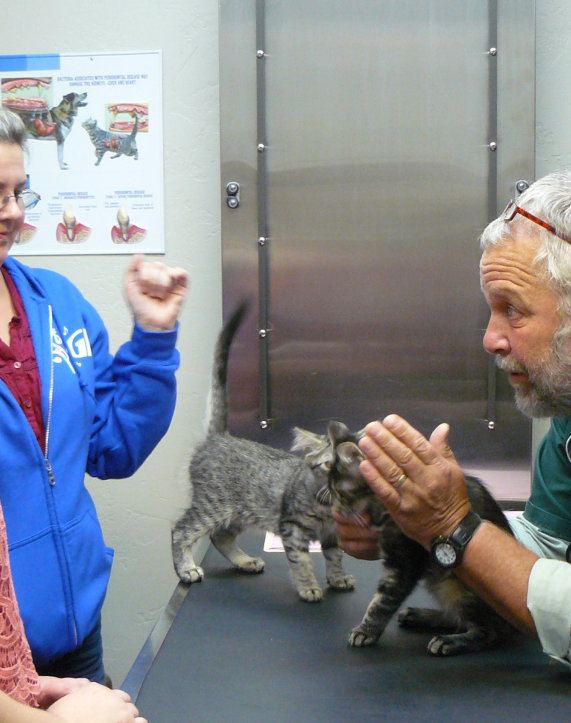
Dr. Jim seeing a patient at Lincoln Road Vet.
Here is Jim’s update published with his kind permission and unchanged by me apart from some minor formatting amendments including italicising some phrases.
ooOOoo
Hey Paul …
Regarding your post of 1-11-18, a guest post by Kathreen Miller concerning canine diet, I feel the need (justified or not) to clarify a few points. She seems to be a big proponent of “organic diets” and lest your readers be misled, I think we need to define what is meant by “organic”.
The legal definition of “organic” is codified by the USDA National Organic Program (NOP) in 7 CFR 205. Pet foods and pet treats must comply with these regulations or they may not legally use the word “organic” on the label. If you read these regulations, you will find that “organic” refers only to the handling and processing of ingredients and products.
These regulations cover: ingredient sourcing, ingredient handling, manufacturing, and labeling & certification of products wanting to use the word “organic” in their labeling.
However, these rules are not considered by NOP as a means to ensure safer, healthier, or more nutritious foods. In fact, there is no regulatory distinction in the tolerable levels of pesticides, drugs, or other residues allowed in organic vs conventional products (even though lower residues may in fact be a result).
Rather, the “organic” label is viewed as a confirmation of the organic production process, and the purchaser is left to his or her own determination as to whether the costs merit the perceived benefits. The bottom line is that “organic” refers to the processing of a product, and makes no guarantees as to the quality or digestibility of ingredients, safety, nutritional value or health benefits of the product.
A savvy pet owner, in order to ensure her dog’s optimal nutritional health, would be better advised to follow guidelines outlined by WSAVA or AAHA (or other reputable source) rather than to reflexively reach for the dog food that says “organic” on the label. The “organic” label does not necessarily mean a diet is good or bad, but it has nothing to do with the nutritional adequacy of the diet and hence your dog’s health.
Another point: Kathreen seems to buy into the popular myth that plant-based ingredients (like corn) are poorly digested fillers that provide little nutritional value and can cause allergies. Corn provides a good source of carbohydrates, essential amino acids, protein, and essential fatty acids in the diets of dogs and cats. It is highly digestible and is not a common cause of allergies. It is actually a very good nutrient as an ingredient in pet food.
My last point is regarding the product “Pet Bounce” that Kathreen endorses as a treatment for arthritic pain in dogs. This product is labelled as homeopathic and as such is nothing more than a placebo.
It has been proven over and over and over again that homeopathic remedies are nothing but water and perform no better than placebos in numerous clinical trials. Reading the list of ingredients, one can see that it contains:
1) Belladonna 6X
2)Caulphyllum 6C
3) Colchicum autumnale 200C
4) Apis mellifica 30C
5) Rhus toxicodendron 200C
6) Ruta graveolens 6X.
Anyone familiar with homeopathic nomenclature knows that, for example, the Apis mellifica 30C designation means that this particular herb is diluted in water 1 to or (that’s 1 followed by 60 zeroes!).
To put it into perspective, that’s equivalent to 1 molecule of this substance in a sphere of water 90 million miles in diameter (approximately the distance of the earth to the sun). That’s a 30C dilution.
At a 200C dilution, the treating substance is diluted more than the total number of atoms in the known universe!
Regardless of any medicinal properties these herbs may have, they are so fantastically diluted that there is not one molecule present in the final solution.
I defy any reasonable person to tell me that this so-called remedy is effective to treat anything and consists of anything more than a water placebo.
My problem with this kind of snake oil is that well-meaning pet owners waste their money (~$50.00 per bottle!) on this useless product, believing all the hype and thinking that they are improving the quality of their dog’s life, meanwhile squandering the opportunity to actually help their dog with an effective and evidence-based treatment.
Kathreen seems to be a nice and well-intentioned woman, but I don’t know what qualifies her as a “pet health expert”, other than her own opinion. According to her profile (from your blog) she lives in Chicago with her daughter and dog “Buddy” and listens to music, watches TV, and travels. That’s it? Nothing more??
Sometime over the next few days I will write a post about an amazing connection that Jean made, via Richard in England, with Colin Potter. He is the founder of the site Fight Parkinson’s.
It is mentioned as an introduction to today’s post because Colin stresses the critical importance of the right diet for us humans.
Richard lives with his good lady, Julie, in Minety, a village in North Wiltshire. He and I go back many, many years and we have been close friends from the day that we first met. Richard was diagnosed with early-stage Parkinson’s Disease (PD) the same year and month as my Jeannie: December, 2015.
Last New Year’s Eve Richard and Julie were at a local party and the subject of PD came up. Richard subsequently told me that he was speaking to a fellow party guest who said that he was, in turn, an acquaintance of a Colin Potter. He went to add that Colin had also been diagnosed with PD but had decided not to ‘give in’ to the diagnosis but undertake comprehensive research into the causes and whether it was possible to go into remission. He later launched a website Fight Parkinsons.
This is Colin’s video that appears on the home page of Fight Parkinson’s.
Parkinson’s RecoveryThis is where you find the answers to the causes of Parkinson’s and the actions you can take which may bring about a recovery.
There are actions that I’ve taken which have required guidance from a doctor (of Functional Medicine) or special practitioner. Other steps, such as changing to a better diet, I have done independently based upon my research.
Nowadays, there are so many ways that we fall foul of nature and the kind of life we are built to lead. Industrialisation and technology expose our bodies to so much stress and toxic substances, it’s no wonder that chronic disease arises. It also means that there are many things to put right.
This has been a journey of learning over several years and, with subsequent knowledge, there are some things I did at the start that I would do differently now. Nevertheless, I did them and can’t turn the clock back.
I share this with you because the chances are that you know someone who knows someone with PD. The information on the Fight Parkinson’s website is too important not to be shared as far and wide as possible.
The subscription price for signing up to all the information is just $5/GBP3.60 per month. Both Jeannie and Richard are subscribers.
John, he of the blog site The Superstitious Naked Ape, recently sent me this appeal. I am very pleased to republish it here.
ooOOoo
Hello,
When I started Mercy For Animals nearly 20 years ago, I was a kid from the Midwest with a big dream and an unwavering determination to help animals. Building MFA was not easy. Our first meeting had three attendees. We had no money. But as we grew, I surrounded myself with incredible supporters like you, passionate volunteers, and committed colleagues.
MFA is the most meaningful endeavor of my life so far. My journey has been moving and inspiring. Working alongside such brilliant colleagues and implementing our shared vision of a kinder world for farmed animals has been an honor. Together, we have built MFA into the powerful organization it is today—one that achieves groundbreaking successes as the result of teamwork.
As MFA has grown in the past few years, I’ve found the personal and creative space to think about how I can best continue to shape our movement—and help more animals. This space led me to launch Circle V, the first vegan animal rights music festival, and to conceptualize and co-found The Good Food Institute, an organization that supports innovation in food and science to produce alternatives that are superior to animal products.
I’ve determined that I can be most effective right now by helping launch exciting new companies and initiatives. This means remaining in this creative, big-picture space and handing over much of the day-to-day operations at MFA to other skilled and respected leaders within the organization.
I’m proud to announce that our executive vice president, Matt Rice, has been promoted to president of MFA. I will continue to serve MFA as chair of the board of directors and will remain intimately involved in strategic decisions as the organization’s founder.
For more than 15 years, Matt Rice has been a central leader in the animal protection movement. He shares my vision for MFA and has implemented it with determination, tireless dedication, and compassion for animals and people.
Matt began in MFA’s New York office carrying out grassroots outreach before being promoted to director of operations. He later moved to Los Angeles to take over as director of investigations, working closely with our brave undercover investigators. Matt has overseen many of MFA’s biggest cases, most successful campaigns, and other victories. As executive vice president, he has overseen all departments.
Click below to watch a video about Matt and MFA’s priorities for 2018.
Matt is steadfast in his commitment to MFA. He is an ideal team player with sound judgment—a true powerhouse for animals. I trust him completely.
Matt is already working with other senior MFA leaders to implement new systems and structures, and we will launch compelling new campaigns this year. Matt is supported by a team of some of the best activists I’ve ever met.
I know that MFA will continue to break barriers and exceed expectations worldwide. Much remains to be done for animals, but we’ve proved time and again that for a movement built on love and persistence, no company is too powerful, no factory farm too big, and no government too mighty.
I’ve never been more optimistic about the future of MFA and our movement. Our greatest victories are still ahead.
Nathan Runkle
Founder
ooOOoo
Let me add that there is much information about the charity on WikiPedia, from which I quote a little:
Mercy For Animals (MFA) is an international non-profit organization dedicated to preventing cruelty to farmed animals and promoting compassionate food choices and policies, founded in October 1999. Nathan Runkle is the group’s executive director and founder.[1] Focusing primarily on advocacy on behalf of farmed animals, MFA runs a number of campaigns that aim to educate the public on animal protection issues and to encourage them to adopt a vegan diet.[2] It has engaged in several undercover investigations, primarily of egg farms, and has produced television commercials showing the treatment of animals in slaughterhouses and factory farms.[3] MFA is headquartered in Los Angeles.




 This is where you find the answers to the causes of Parkinson’s and the actions you can take which may bring about a recovery.
 Learning from Dogs