It is easier to save the picture on WordPress!

The meal was taken at The Twisted Cork in Grants Pass. We did not have a reservation hence the small round table. It was still a lovely event.
Dogs are animals of integrity. We have much to learn from them.
Category: Health
It is easier to save the picture on WordPress!
The meal was taken at The Twisted Cork in Grants Pass. We did not have a reservation hence the small round table. It was still a lovely event.
Saving a large dog!
What is it about people who discard dogs? And not in a caring manner but just dumped!
This article from The Dodo tells the story of a wonderful rescue.
ooOOoo
By Ashley Ortiz, Published on Oct 25, 2024
The other day, volunteer dog rescuer Mary Nakiso was driving through California’s Orange County when she passed someone cowering on the side of the street. The creature was large, hairy and alone. With a sinking feeling in her stomach, Nakiso slammed on her brakes to investigate.
As she approached the animal, Nakiso realized just how massive and afraid he was.
“He is literally 75 pounds and so big but so scared,” Suzette Hall, founder of Logan’s Legacy 29, wrote on Facebook.
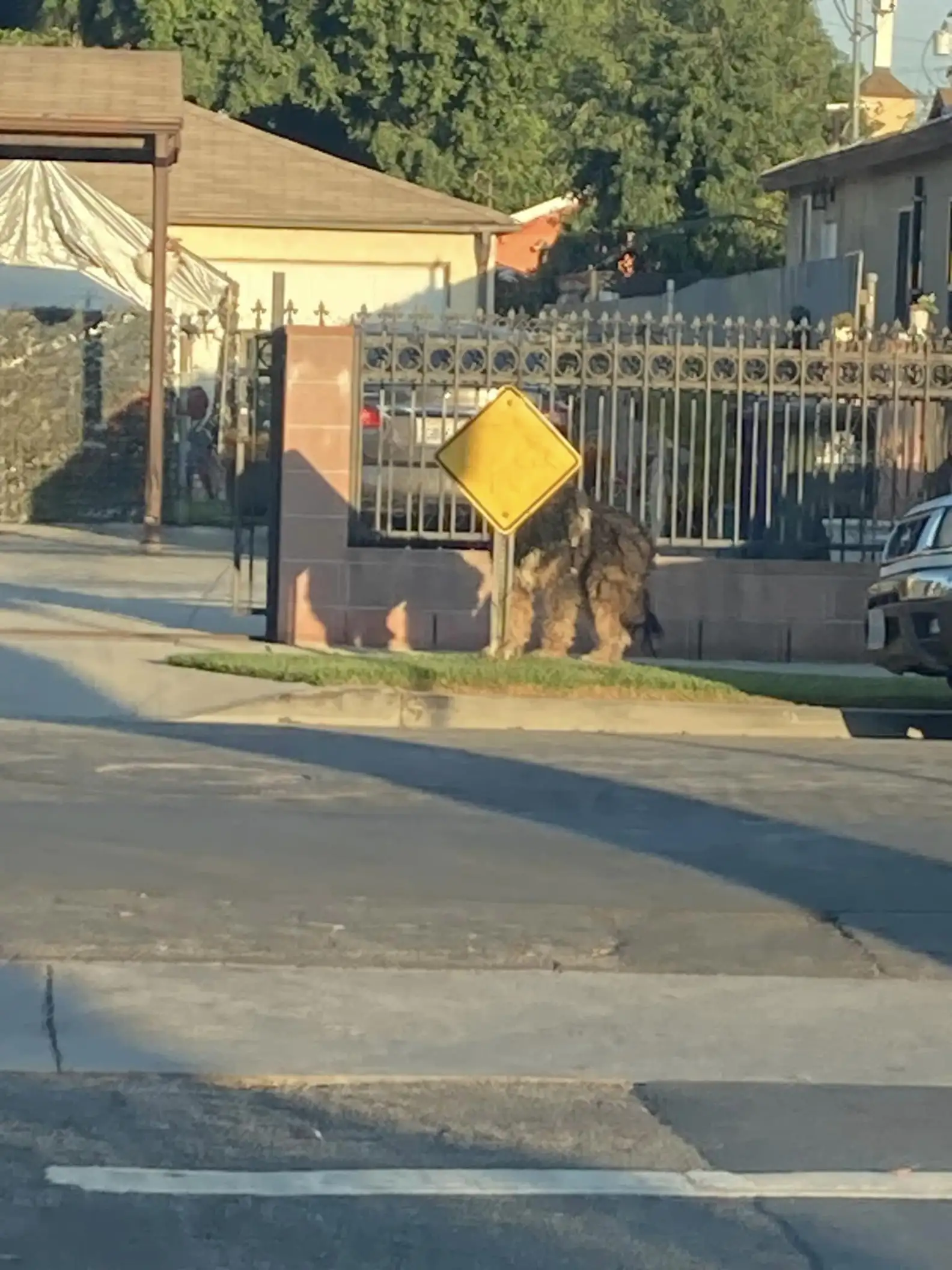
The giant dog was petrified, which Nakiso soon learned was the result of being “thrown out” by his family a few minutes earlier.
“When he first got thrown out, he was so confused [and] running in circles in traffic,” Hall wrote. “A huge jeep with huge tires literally went over him …”
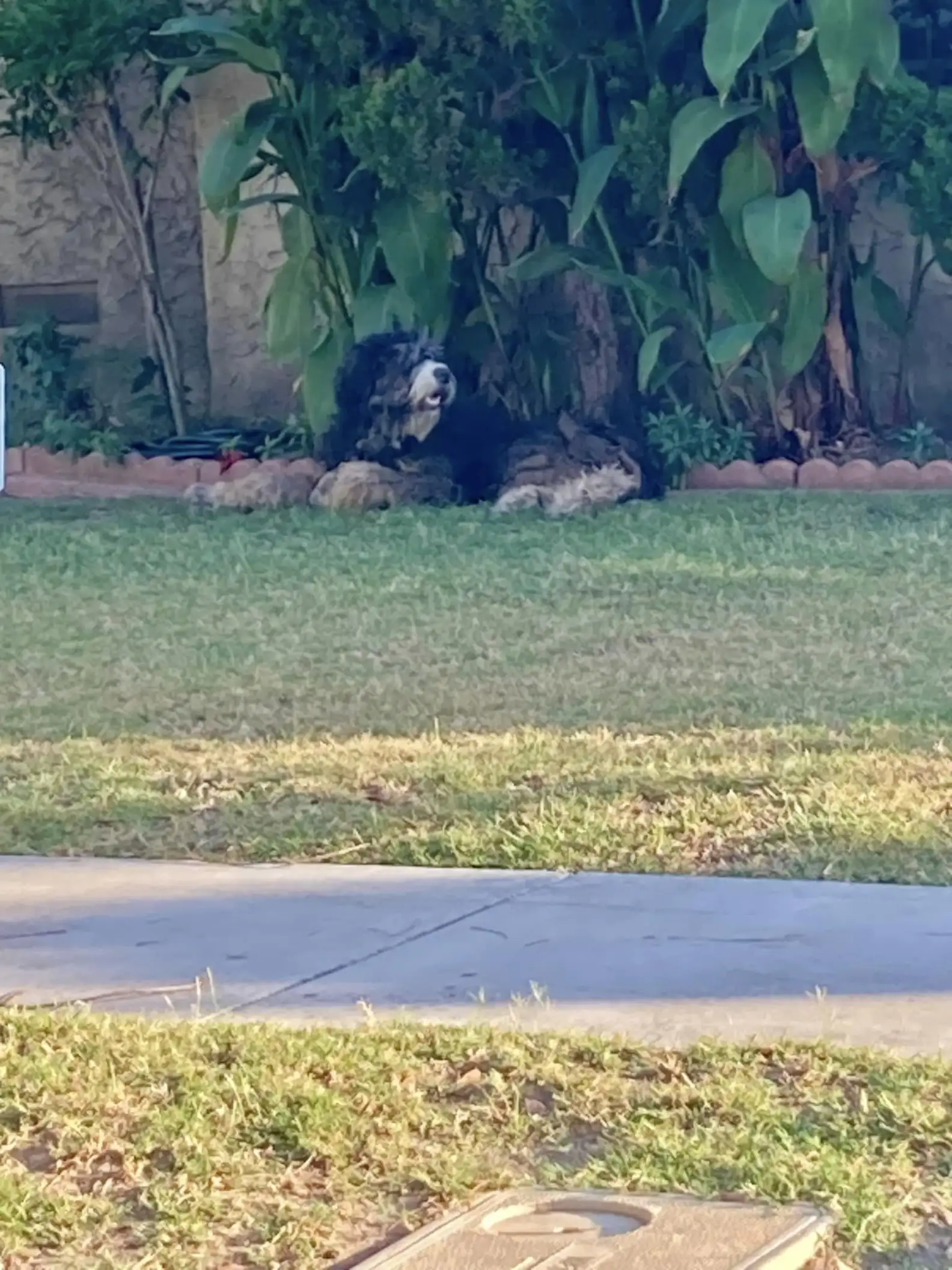
The pup, later named Benji, had no idea where his family had gone. He roamed the busy streets frantically, hoping to find his way home. After a while of running around in circles and dodging cars, Benji eventually disappeared.
Nakiso called Hall to notify her about Benji, and the two started monitoring local social media groups for any sightings of him. Later that day, someone posted about seeing a giant matted dog in their neighborhood.
Hall couldn’t make it back to the neighborhood fast enough due to traffic, so she messaged three more of her trusted friends who lived nearby.
The group of volunteers immediately agreed to help.
“I sent a message to Nuñez Aky, Yamileth and Karla,” Hall wrote. “When they got there, he was running back and forth so fast. So they waited for him to settle down.”
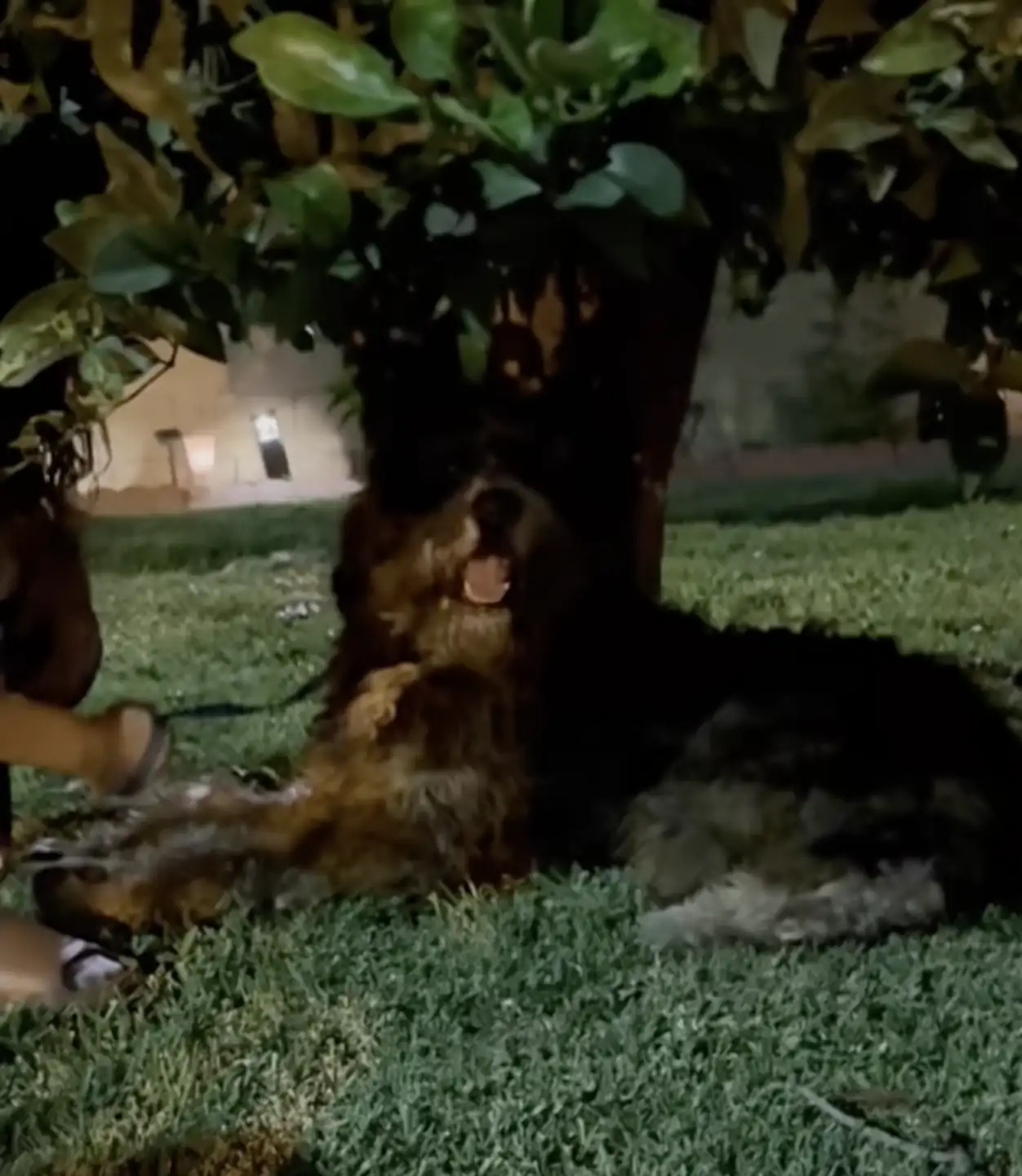
Hall stayed glued to her phone for updates while the team of volunteer rescuers hatched a plan to corner the flighty dog once and for all.
Then, she finally received the news she’d been hoping to hear all day.
“[B]ecause they are so amazing, they got him into a yard and shut the gate,” Hall wrote. “My heart was so happy. The fear and terror he had been through was over, and this big hunk of pure love was finally safe.”
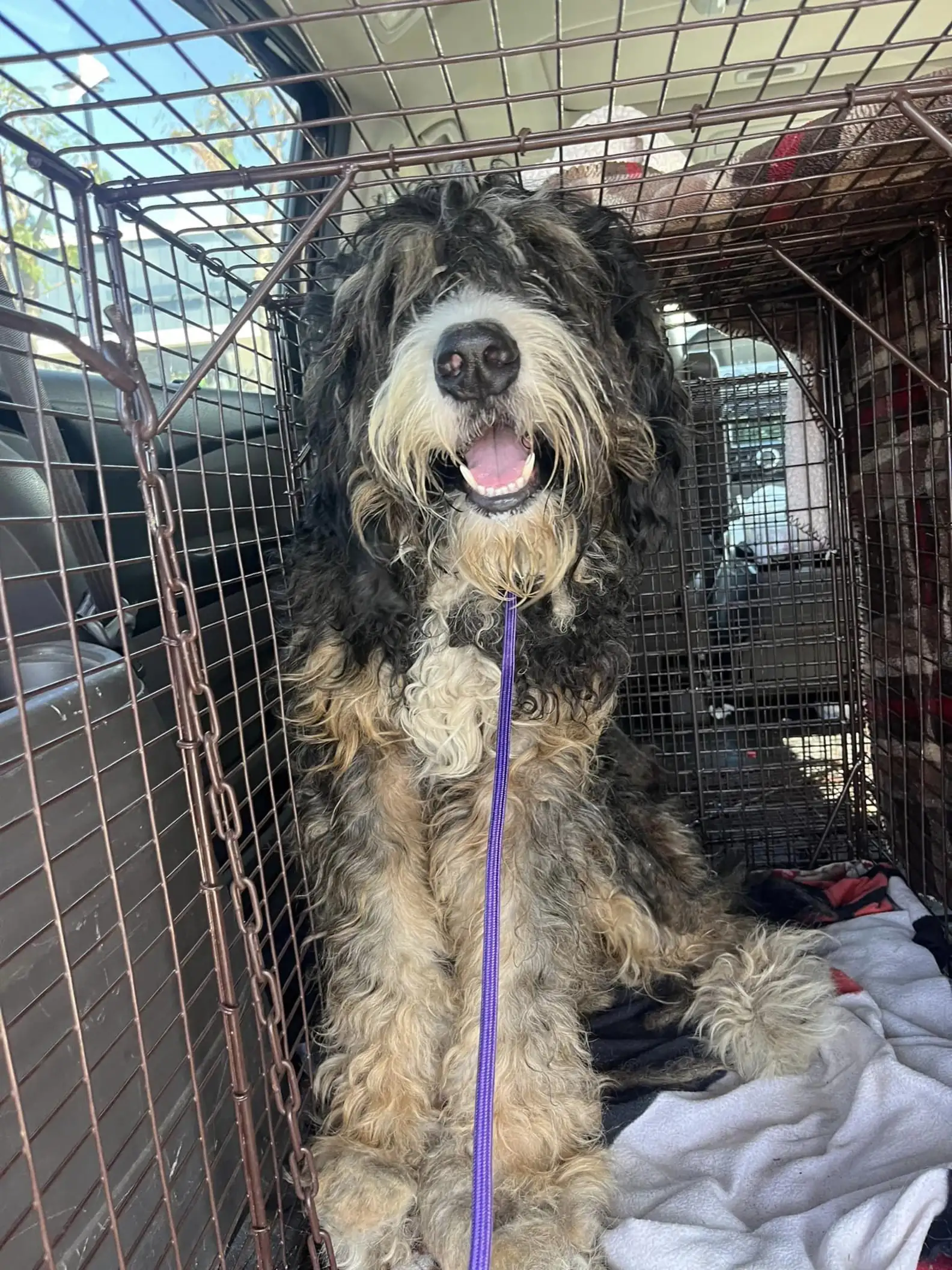
The rescuers showered Benji with love and praise before carrying him to their car. They drove him straight to Camino Pet Hospital, where the shaggy pup received a long-overdue makeover.
“All the layers of his past [have] been shaved away,” Hall wrote in a Facebook update. “He literally had dreadlocks.”
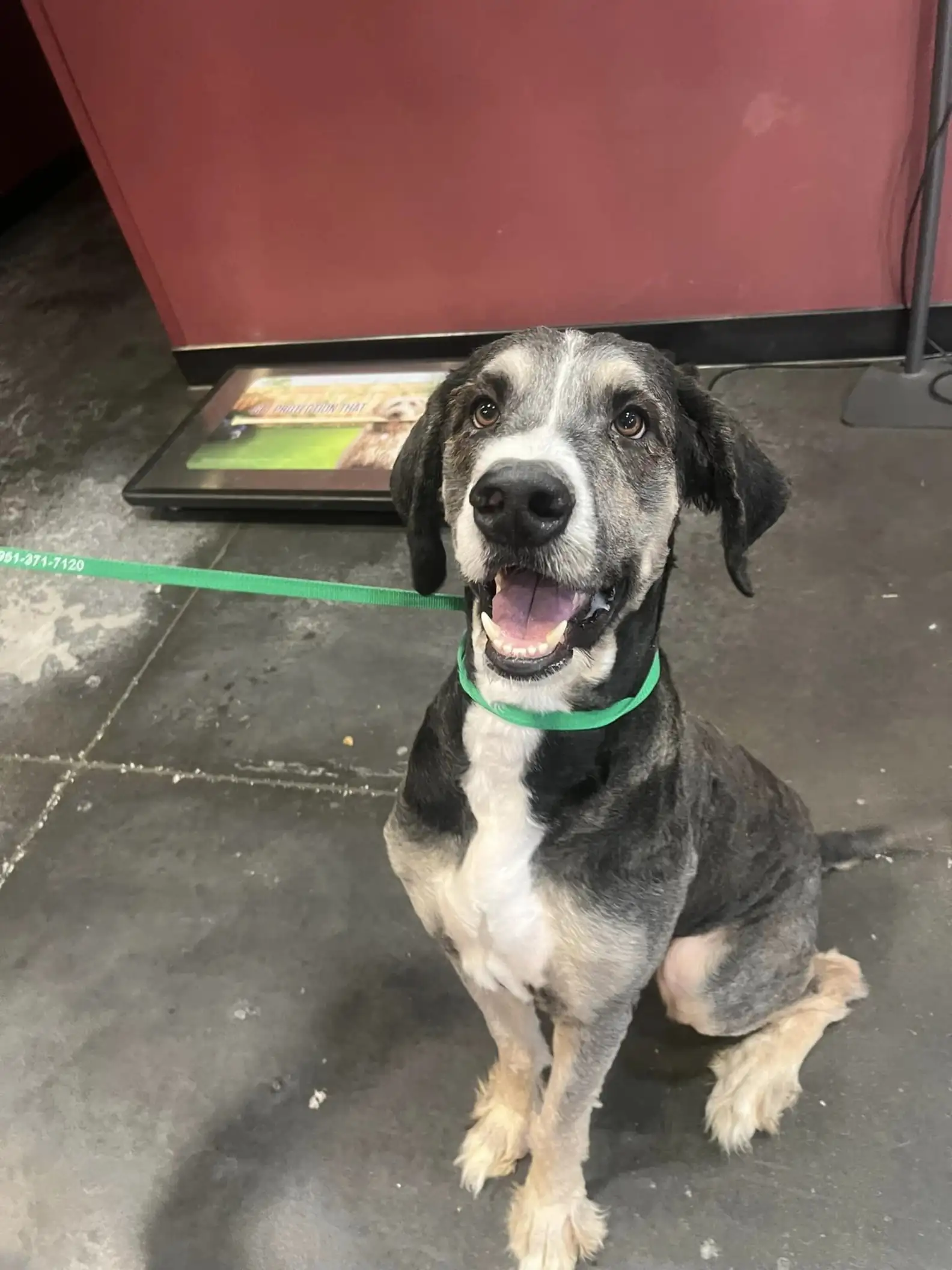
Benji’s makeover was just the first of many steps to get him the home of his dreams. He’s since been neutered, and after a few more days of healing, he’ll finally be able to meet his new foster family next week.
It’s hard to know what Benji’s life was like before he was rescued, but his future is certain thanks to Hall and her team of volunteers. As Hall sees it, Benji will soon receive all the love and attention he’s always deserved.
“Benji is the sweetest, most loving dog I have ever met,” Hall told The Dodo. “[He’s] truly a miracle.”
—-
You can inquire about adopting Benji by emailing Suzette Hall at Info@loganslegacy29.com.
To help pups like Benji get the care they need, you can donate to Logan’s Legacy 29 here.
ooOOoo
That is a most beautiful story and one that should inspire many readers to look after, and care for, dogs where ever they are.
Many congratulations to Suzette for rescuing Benji.
Once more, an article on the changing climate.
Recently, the BBC News reported that:
Global efforts to tackle climate change are wildly off track, says the UN, as new data shows that warming gases are accumulating faster than at any time in human existence.
Current national plans to limit carbon emissions would barely cut pollution by 2030, the UN analysis shows, leaving efforts to keep warming under 1.5C this century in tatters.
The update comes as a separate report shows that greenhouse gases have risen by over 11% in the last two decades, with atmospheric concentrations surging in 2023.
ooOOoo
Shuang-Ye Wu, University of Dayton
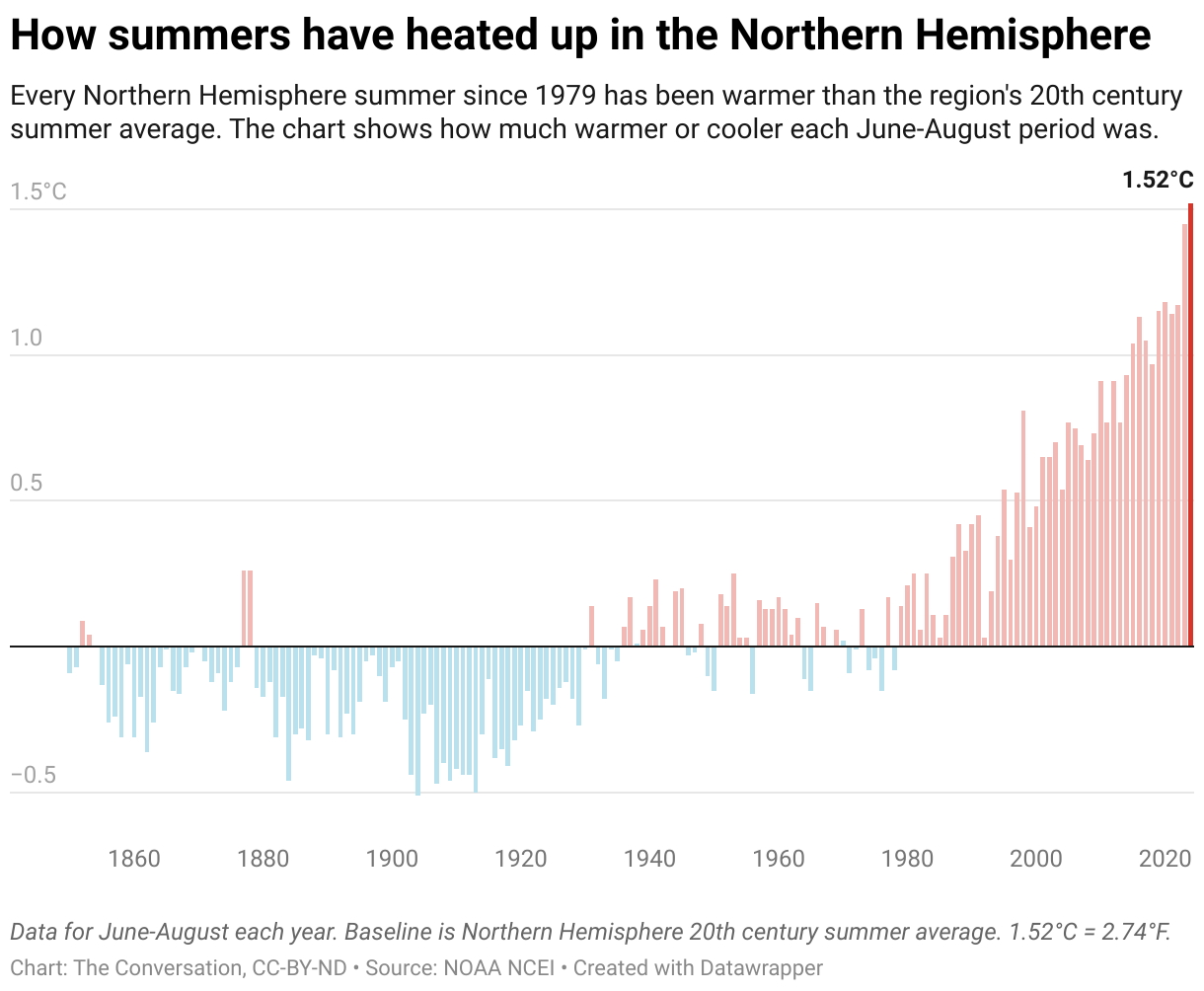
Summer 2024 was officially the Northern Hemisphere’s hottest on record. In the United States, fierce heat waves seemed to hit somewhere almost every day.
Phoenix reached 100 degrees for more than 100 days straight. The 2024 Olympic Games started in the midst of a long-running heat wave in Europe that included the three hottest days on record globally, July 21-23. August was Earth’s hottest month in the National Oceanic and Atmospheric Administration’s 175-year record.
Overall, the global average temperature was 2.74 degrees Fahrenheit (1.52 degrees Celsius) above the 20th-century average.
That might seem small, but temperature increases associated with human-induced climate change do not manifest as small, even increases everywhere on the planet. Rather, they result in more frequent and severe episodes of heat waves, as the world saw in 2024.
The most severe and persistent heat waves are often associated with an atmospheric pattern called a heat dome. As an atmospheric scientist, I study weather patterns and the changing climate. Here’s how heat domes, the jet stream and climate change influence summer heat waves and the record-hot summer of 2024.
If you listened to weather forecasts during the summer of 2024, you probably heard the term “heat dome” a lot.
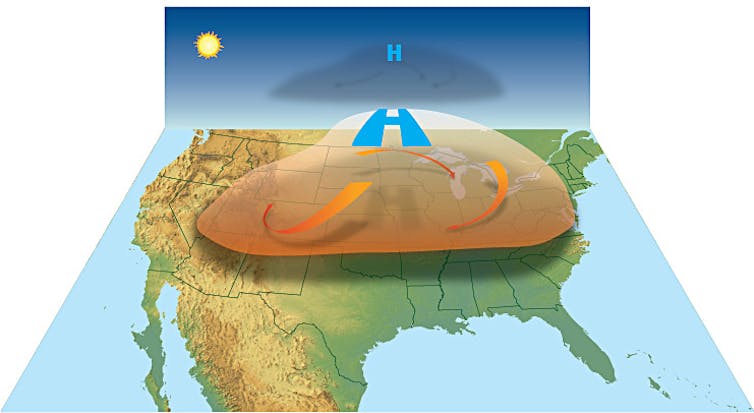
A heat dome is a persistent high-pressure system over a large area. A high-pressure system is created by sinking air. As air sinks, it warms up, decreasing relative humidity and leaving sunny weather. The high pressure also serves as a lid that keeps hot air on the surface from rising and dissipating. The resulting heat dome can persist for days or even weeks.
The longer a heat dome lingers, the more heat will build up, creating sweltering conditions for the people on the ground.
How long these heat domes stick around has a lot to do with the jet stream.
The jet stream is a narrow band of strong winds in the upper atmosphere, about 30,000 feet above sea level. It moves from west to east due to the Earth’s rotation. The strong winds are a result of the sharp temperature difference where the warm tropical air meets the cold polar air from the north in the mid-latitudes.
The jet stream does not flow along a straight path. Rather, it meanders to the north and south in a wavy pattern. These giant meanders are known as the Rossby waves, and they have a major influence on weather.
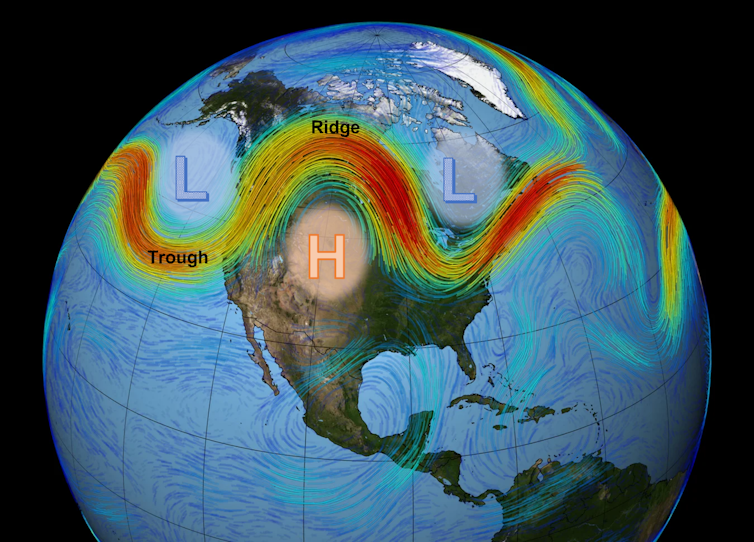
Where the jet stream arcs northward, forming a ridge, it creates a high-pressure system south of the wave. Where the jet stream dips southward, forming a trough, it creates a low-pressure system north of the jet stream. A low-pressure system contains rising air in the center, which cools and tends to generate precipitation and storms.
Most of our weather is modulated by the position and characteristics of the jet stream.
The jet stream, or any wind, is the result of differences in surface temperature.
In simple terms, warm air rises, creating low pressure, and cold air sinks, creating high pressure. Wind is the movement of the air from high to low pressure. Greater differences in temperature produce stronger winds.
For the Earth as a whole, warm air rises near the equator, and cold air sinks near the poles. The temperature difference between the equator and the pole determines the strength of the jet stream in each hemisphere.
However, that temperature difference has been changing, particularly in the Northern Hemisphere. The Arctic region has been warming about three times faster than the global average. This phenomenon, known as Arctic amplification, is largely caused by the melting of Arctic sea ice, which allows the exposed dark water to absorb more of the Sun’s radiation and heat up faster.
Because the Arctic is warming faster than the tropics, the temperature difference between the two regions is lessened. And that slows the jet stream.
As the jet stream slows, it tends to meander more, causing bigger waves. The bigger waves create larger high-pressure systems. These can often be blocked by the deep low-pressure systems on both sides, causing the high-pressure system to sit over a large area for a long period of time.
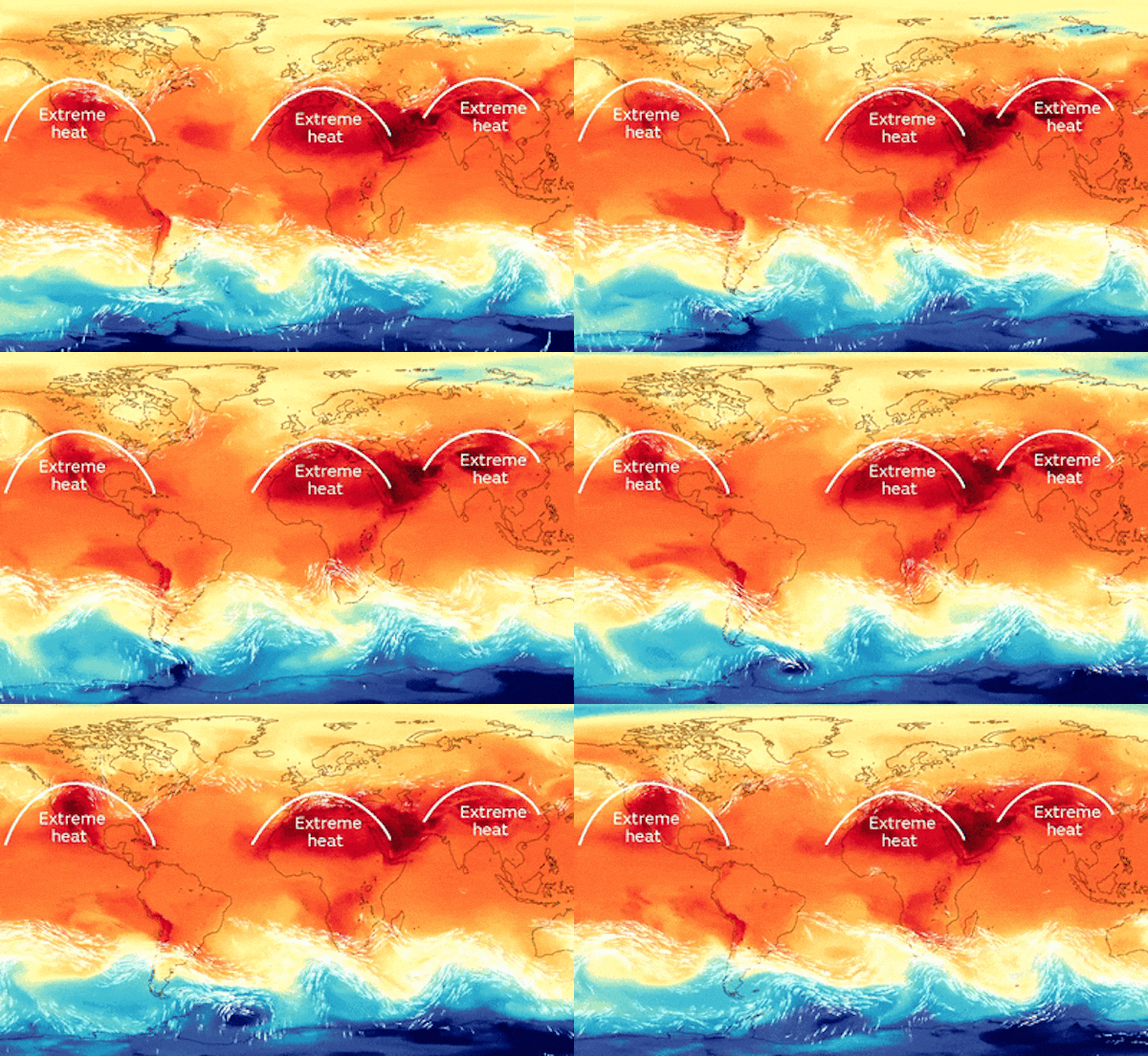
Typically, waves in the jet stream pass through the continental United States in around three to five days. When blocking occurs, however, the high-pressure system could stagnate for days to weeks. This allows the heat to build up underneath, leading to blistering heat waves.
Since the jet stream circles around the globe, stagnating waves could occur in multiple places, leading to simultaneous heat waves at the mid-latitude around the world. That happened in 2024, with long-lasting heat waves in Europe, North America, Central Asia and China.
The same meandering behavior of the jet stream also plays a role in extreme winter weather. That includes the southward intrusion of frigid polar air from the polar vortex and conditions for severe winter storms.
Many of these atmospheric changes, driven by human-caused global warming, have significant impacts on people’s health, property and ecosystems around the world.
Shuang-Ye Wu, Professor of Geology and Environmental Geosciences, University of Dayton
This article is republished from The Conversation under a Creative Commons license. Read the original article.
ooOOoo
I maybe approaching my own end of life but millions of others are younger than me. When I see a woman with a young baby in her arms I cannot stop myself from wondering what that generation is going to do.
Like any new start-up of a business venture, this requires knowledge, skills and quite a bit of luck!
I am delighted to offer this guest post by Penny.
ooOOoo
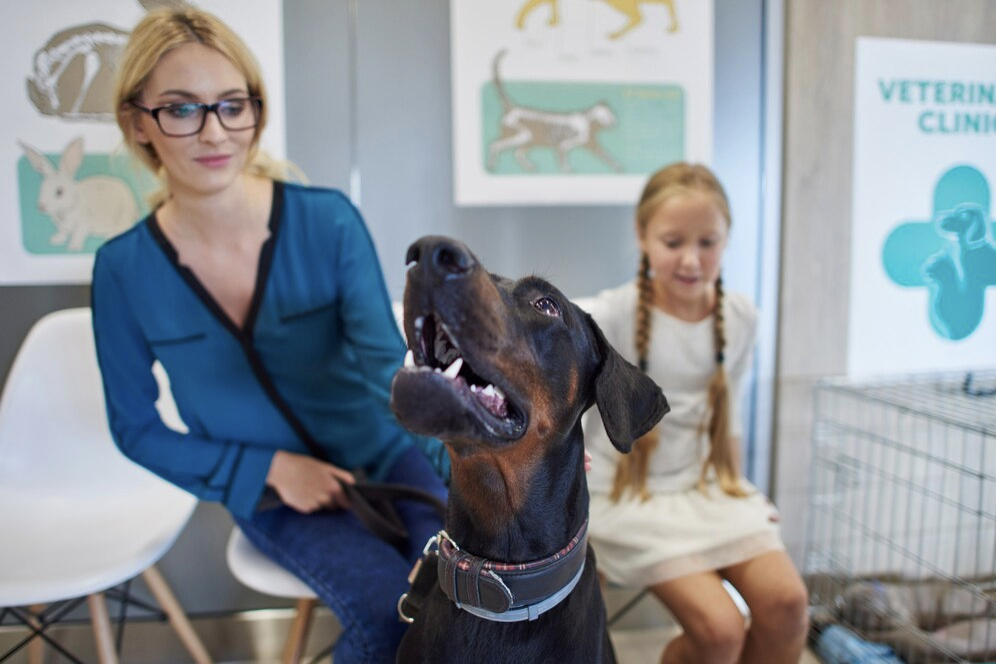
Image: Freepik
Vision to Reality: Building a Profitable Vet Clinic
Launching a veterinary clinic is a significant endeavor that requires meticulous planning and strategic decision-making. This venture combines a passion for animal care with the intricacies of managing a successful business. Aspiring clinic owners must navigate several critical steps to lay a strong foundation and ensure operational excellence. Starting your own clinic promises not only to fulfill a dream of helping animals but also to establish a thriving enterprise in the community.
Build a Strong Foundation with an Effective Marketing Strategy
A robust marketing strategy is essential to attract potential clients in the digital era. Establishing a professional online presence through a user-friendly website that details your services, team, and location builds trust among pet owners. Engage actively on social media with regular updates and client testimonials to showcase your expertise and commitment to animal care. Forge partnerships with local pet-related businesses to increase visibility and drive traffic to your clinic, enhancing both your and your partners’ customer bases.
Craft a Clear and Detailed Business Plan
A well-constructed business plan acts as your clinic’s roadmap, detailing your mission, services offered, and the specific target market. Identify your niche early—whether it’s specializing in certain animals or treatments—to attract the appropriate clientele. Include comprehensive financial projections and a marketing budget in your plan to ensure financial preparedness and support your clinic’s promotional activities.
Enhance Your Business Knowledge by Pursuing an MBA
Running a veterinary clinic demands a blend of clinical and business expertise. Pursuing a master’s of business administration online can boost your proficiency in key business areas such as strategy, management, and finance. An MBA not only deepens your understanding of business operations but also enhances leadership skills and self-assessment capabilities. These competencies are essential for balancing the medical and business demands of your clinic, ensuring its long-term success.
Safeguard Your Business with Proper Insurance
Operating a veterinary clinic comes with inherent risks, making comprehensive insurance coverage essential. Essential policies include malpractice insurance to handle legal issues and general liability insurance for accidents on your premises. Property insurance is crucial to protect your clinic’s infrastructure and equipment against unexpected events. Consulting with an insurance expert can ensure that you have thorough coverage to protect against potential financial setbacks.
Invest in High-Quality Veterinary Equipment
Providing top-tier care necessitates investing in high-quality veterinary equipment. Essential tools like X-ray machines, surgical instruments, and lab equipment should be of the highest standard to ensure accurate diagnoses and treatments. Modern technologies, such as digital imaging systems, not only enhance patient care but also improve operational efficiency. While the initial cost may be higher, investing in quality equipment pays off in the long run by boosting efficiency and minimizing errors.
Secure the Necessary Funding for Your Clinic
Securing sufficient funding is critical when starting a veterinary clinic. Estimate your startup costs accurately to understand your financial needs, including equipment, premises, staffing, and marketing. Explore diverse financing options, such as bank loans, private investors, and specialty medical practice loans that might offer favorable terms. Adequate initial funding prevents cash flow problems and supports your clinic’s growth trajectory.
Choose the Right Location for Your Clinic
The location of your clinic is pivotal to its success, necessitating a spot with a high demand for veterinary services. Conduct thorough market research to choose a community rich in pet owners who need your services. Select a location that is accessible, visible, and has ample parking to ensure convenience for your clients. Proximity to complementary services like pet groomers or dog trainers can further enhance client traffic and provide expansion opportunities.
Opening a veterinary clinic is both challenging and rewarding, demanding a careful blend of dedication and strategic foresight. Success in this field not only enhances the well-being of pets but also contributes positively to the local community. It requires ongoing commitment to adapt and grow in a dynamic environment. Ultimately, the fulfillment of running a successful veterinary clinic comes from both the impact on animal health and the achievement of entrepreneurial goals.
Discover the timeless wisdom that dogs offer at Learning from Dogs, where integrity and living in the present are celebrated. Dive into our content and embrace the lessons from our four-legged friends.
ooOOoo
This is a skilled summary of the needs of opening a vet’s clinic. And thank you, Penny, for your last paragraph. It has been a pleasure!
Back to dogs!

Photo by Harshit Suryawanshi on Unsplash

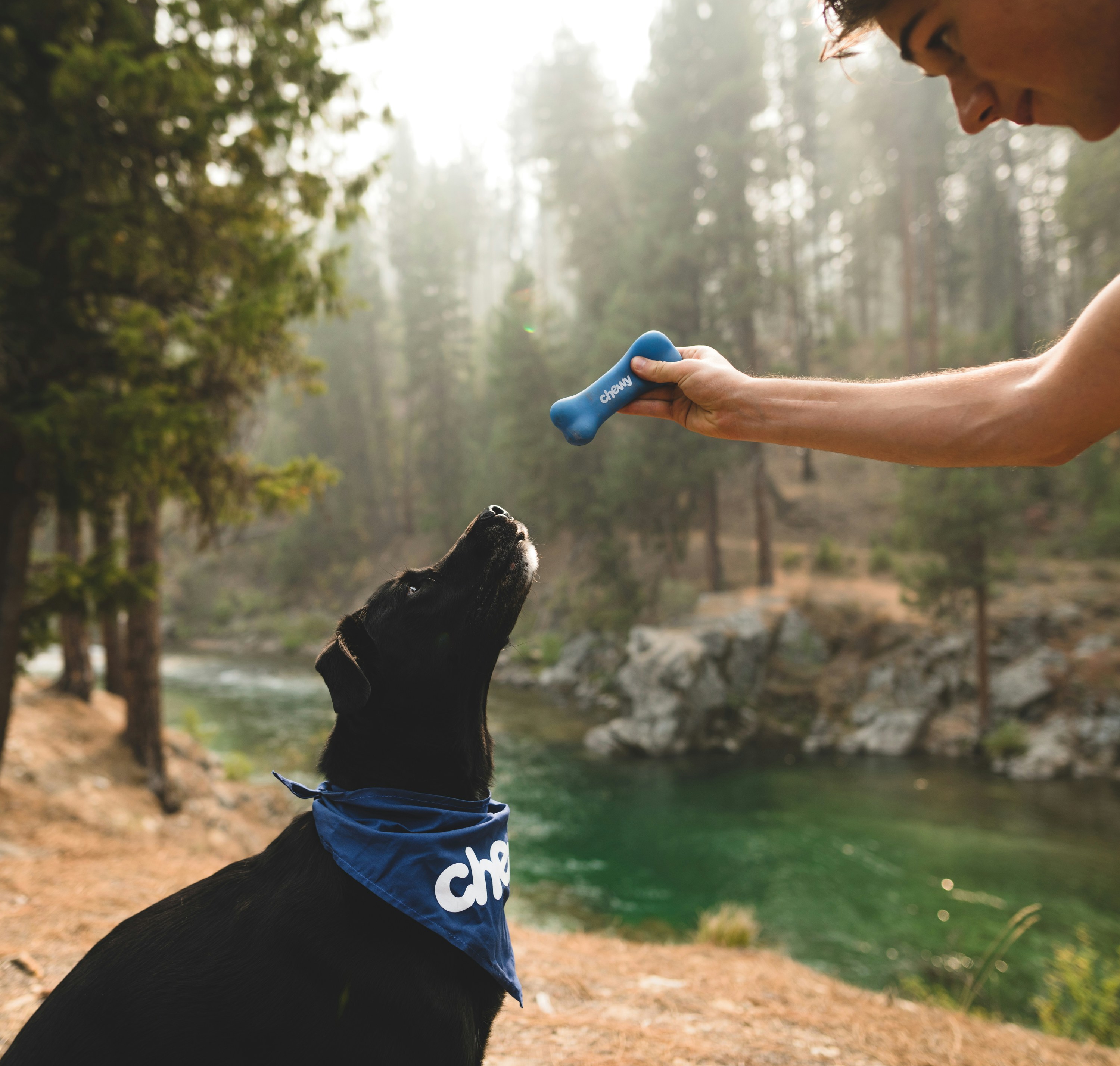
Photo by Peter Muniz on Unsplash
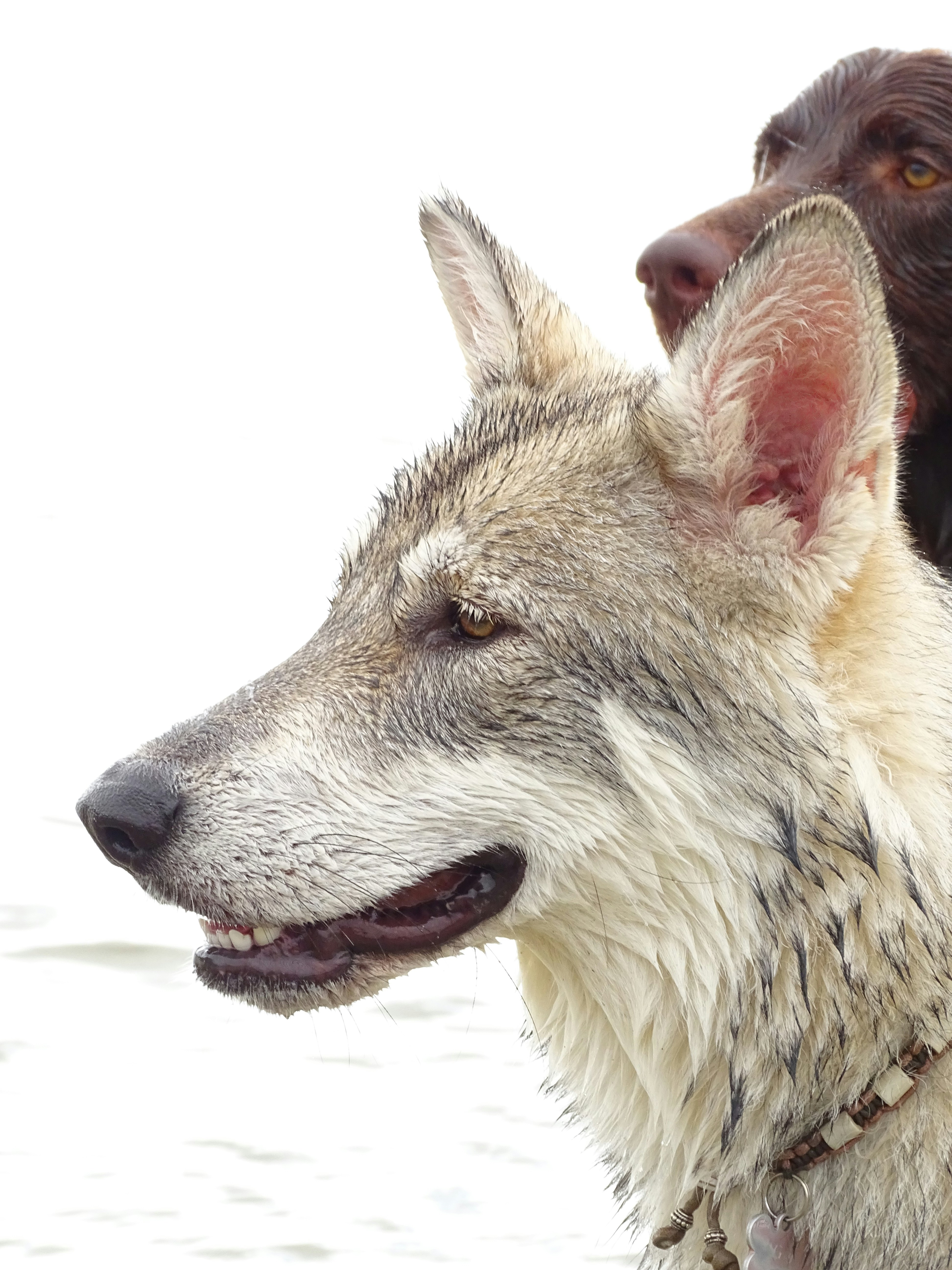
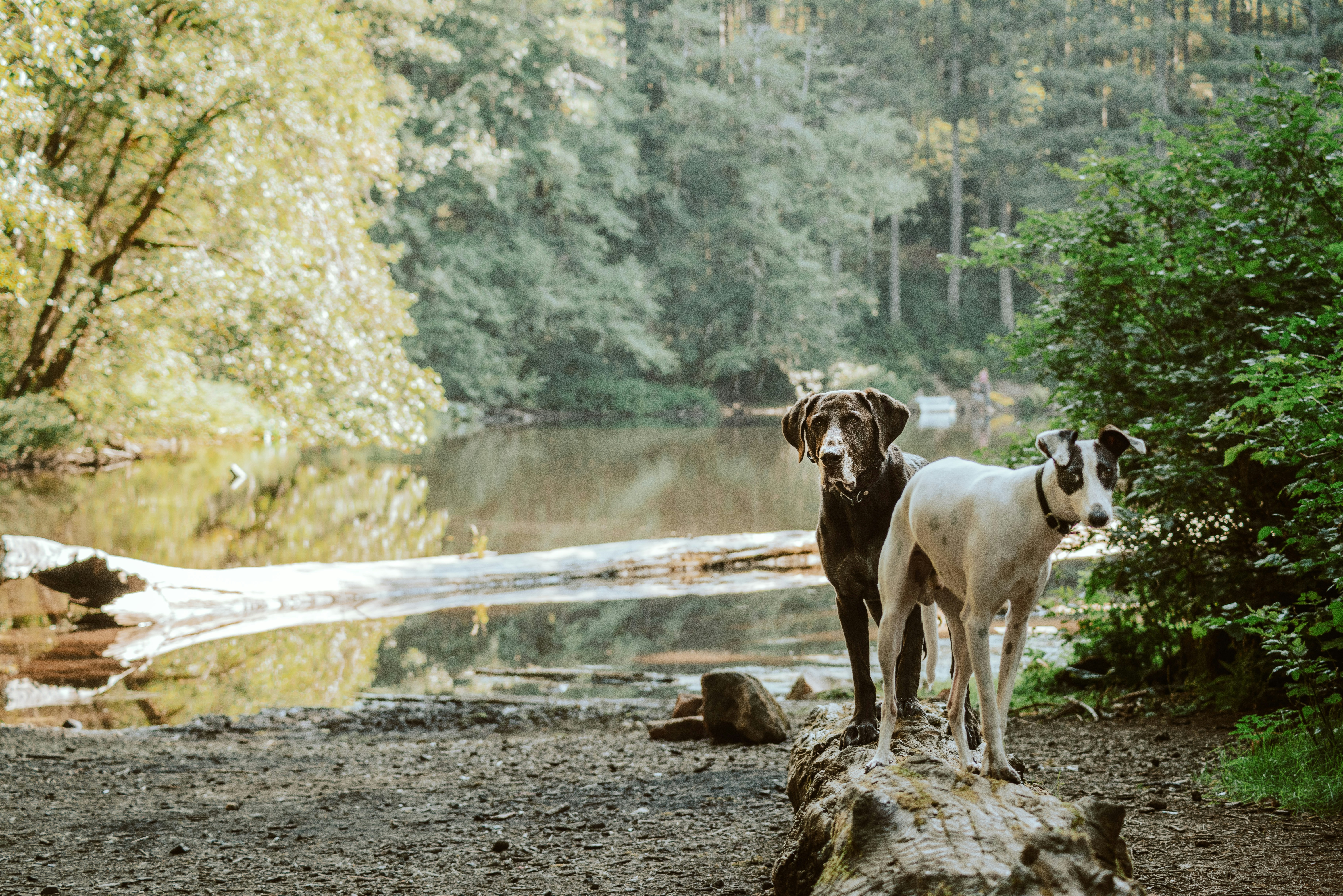
Photo by Aldo Houtkamp on Unsplash

Again, a photo by Aldo Houtkamp on Unsplash

Again, a very beautiful selection by yours truly!
For the last two days we have had some major tree work done.
A couple of weeks ago, our neighbour Clarence came across to our land to point out a dying pine. It was alongside the house together with two other trees, another pine and a fir. The pines were over a hundred feet tall.
They had to come down reasonably quickly otherwise they would crash into the roof with terrible consequences.
Clarence recommended a company, August Hunicke Arborists Inc., and August came round to give us an estimate.
And on Tuesday and Wednesday they came to do the job. They had a great deal of equipment plus lots of experience. They were four of them. And the two pines were very far gone.
At the end of the project I took two photographs and here they are:

oooo
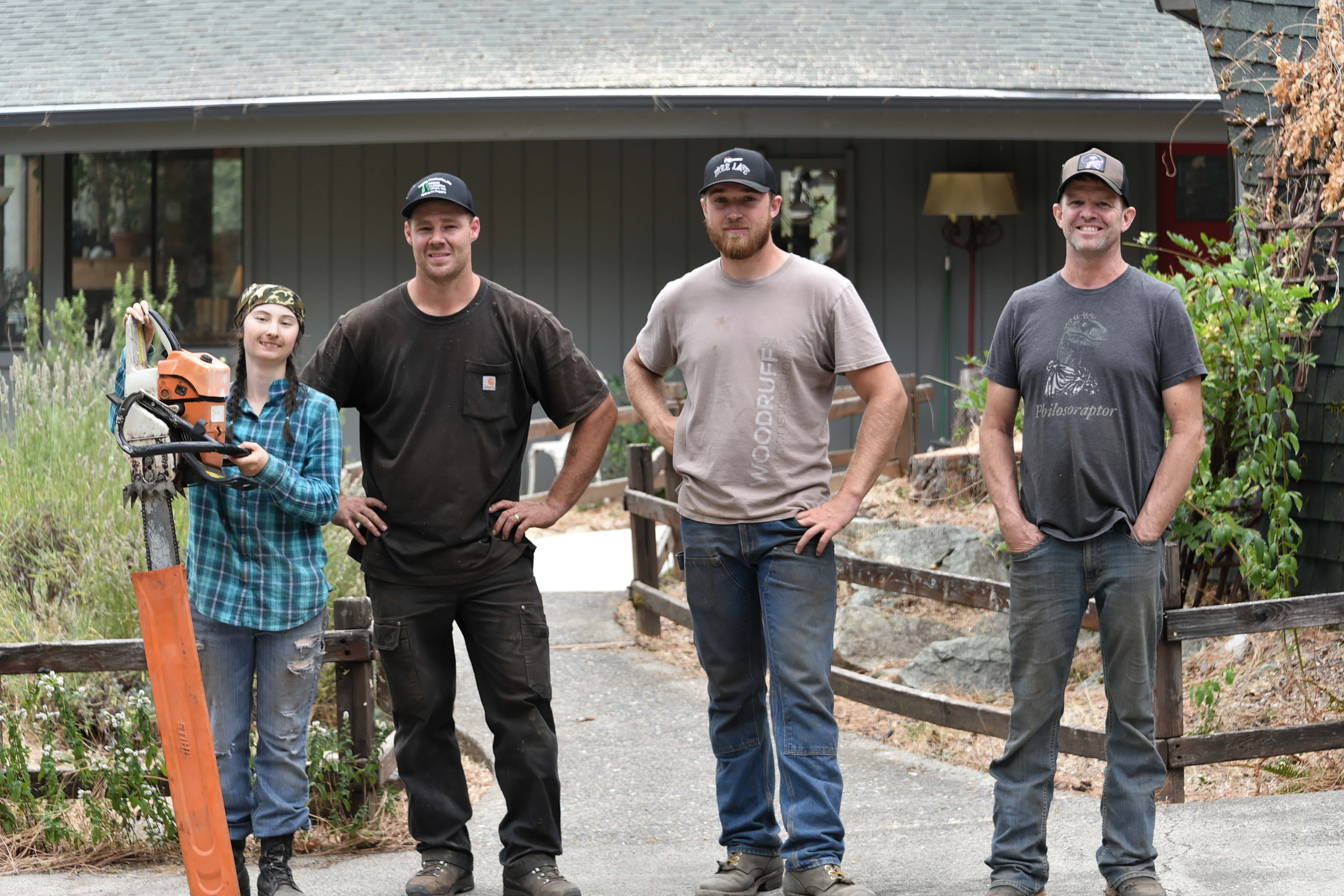
It was not cheap but they did an excellent job.
A great post on WebMD.
Now I appreciate that many who come to this place are not seniors but as I approach 80 that makes me most definitely a senior.
So this article was highly relevant.
ooOOoo

Medically Reviewed by Poonam Sachdev on October 12, 2023
Written by WebMD Editorial Contributors
Any dog owner can tell you there’s nothing like having a loyal companion. Dogs are good pets for people of any age, as long as you choose the right dog for your lifestyle.
If you’re an older adult looking to find a furry, four-legged friend, here are a few things you should consider.
It’s a big responsibility, but the benefits are worth the work. Dogs can give you joy, companionship, and unconditional love. They can bring warmth and comfort into your life.
Better health. Decades of studies have shown the health benefits of spending time with dogs. Dog owners tend to have better heart and blood vessel health, including lower blood pressure, than those who don’t have a pet pup. That’s because dogs get people moving. Walking a dog regularly can help you boost how much exercise you get each day.
Less lonely. Dogs offer companionship just by being around. They might also help you be more social. Taking your dog on walks gives you a chance to meet neighbors or other canine owners at the local dog park.
Much happier. Looking at your dog can release a hormone that makes you feel happier. Science shows that gazing into your dog’s eye releases oxytocin. Known as the love hormone, oxytocin quickly boosts your mood.
Before you get a furry pal, you should think about what you can offer the dog, as well as what they can offer you. You want to make sure to choose a dog that will be happy with the kind of life you lead. Consider these things when you start looking for a new pet.
Space. How much room do you have indoors and outdoors? You need to pick a dog that will be happy with the space you have to offer.
Exercise. Some dogs need a lot of exercise, while others are happy hanging out on the couch all day. Think about how much exercise time you can give your pup. Also, think about how fit you are. You may not want a large, strong dog that could tug hard on the leash and cause you to get hurt on a walk.
Cost. All dogs need vet care, food, and toys. If they need a lot of grooming, you need to consider paying a professional groomer.
Age. Puppies are cute, but they’re also a lot of work. Older dogs may already have some training, but they might be set in their ways. Spend some time thinking about what you’re willing to accept in dog behavior.
Here are a few breeds that are natural choices for older adults.
Bichon Frise. These dogs are very small and cute. Their fluffy coats need regular grooming. They’re happy in small homes and apartments, and they only need moderate exercise.
Cocker spaniels. These dogs are known for their beautiful, soft coats, which need regular grooming. They’re gentle and friendly, and usually weigh under 30 pounds. They need regular walks to stay fit, but they aren’t highly energetic.
Beagles. They’re small, smart, and make wonderful companions. Their short coats are easy to groom. Beagles are energetic and need a lot of exercise every day.
Greyhounds. They can run fast, but they don’t always want to. They’re happiest lounging around indoors, but they need walks to stay fit. They’re large, usually weighing around 60 pounds, but they have short coats that don’t require a lot of grooming.
Pugs. These happy little dogs make great companions. They’re usually around 15 pounds and have short, easy-to-groom coats. They need more exercise than they want because they’re prone to be overweight. Regular walks can take care of that.
If you’re an older adult looking for a four-legged companion, you can speak to a veterinarian or a dog trainer in your area for more information. They can help you choose the perfect pet.
ooOOoo
I am certain there are many people who will find this a practical help in deciding what dog to get.
In my own case we currently have two dogs, Cleo and Oliver, and I frequently ponder on what Jean and I do when the last of them dies.
This article reminds me and Jean that at whatever age we are it is better to have a dog than not!
We are speaking of the universe.
I follow Patrice Ayme and have done for many years. Some of his posts are super-intellectual and those I struggle to understand.
But a post published on September 8th, 2024 was very easy for me, and countless others no doubt, to understand and I have pleasure in republishing it on Learning from Dogs today.
ooOOoo
September 8, 2024
I doubt that there are civilizations around. We are facing a galaxy devoid of intelligent aliens: little green mats out there, not little green men.
First, we don’t see them. With foreseeable technology (hibernation, nuclear propulsion, compact thermonuclear reactors, bioengineering, AI, quantum computers) we should be able to send very large interstellar spaceships at 1,000 kilometers per second… Thus it would take a millennium to colonize the Centaur tri-star system…. 25,000 years to colonize a 200 light years across ball… And the entire galaxy in ten million years… Wars would only accelerate the expansion. So if there was a galactic civilization, within ten million years it would have spanned the entire galaxy and its presence should be in sight.
Second, life took nearly four billion years to evolve animals. Bacterial life could have been nearly extinguished on Earth many times…. Be it only during the Snowball Earths episodes. A star whizzing by could have launched a thousand large comets. The large planets could have fallen inward.
Third, ultra intelligent life may not be able to have hands or tentacles and thus develop industry. Once intelligent life forms have evolved, say sea lions or parrots, let alone wolves, they may just be sitting ducks for the next disaster which would revert life to the bacterial level, erasing billions of years of evolution.
Fourth, when civilization is launched, it can fail… And not get a second chance (from lack of availability of mines after easy picking during the initial civilization).
Fifth, nuclear powered Earth is special. Earth has plate tectonics, probably from a nuclear reactor at the core, keeps the CO2 just so for a temperate temperature… Water, but not too much. Her large Moon stabilizes her. Earth doesn’t have a weird rotation like Venus (retrograde and slow) or Mars (spectacularly tilting axis). Ian Miller has aluminosilicates considerations on top of that.
So I don’t expect little green men… Besides those sent by the perverse Putin…
Just when we thought we knew of all the stress, here is another one: if we go extinct, the universe loses its soul! We have thus found a new Superior Moral Directive: SUS, Save Unique Soul!

Expect little green mats, not little green men.
Patrice Ayme
ooOOoo
A couple of weeks ago I gave a talk to our local Freethinkers group and called it The Next Ten Years. It began, thus:
This presentation is about the world of the future; of the near future. And the biggest issue, most agree, is the change in the climate.
The Global Temperature anomaly, as of last year, 2023, is 1.17 Centigrade, 2.11 Fahrenheit, above the long-term average from 1951 to 1980. The 10 most recent years are the warmest years on record.
Antoine de Saint-Exupéry is quoted as saying that ‘a goal without a plan is just a wish.’ So my plan is to show you how we can change, no let me put that more strongly, how we must change in the next ten years. Because our present habits are ruining the world.
This is a lovely story from The Dodo.
I saw this article in the August 23rd issue of The Dodo magazine and it appealed to me.
So I wanted to share it with you all.
ooOOoo
Published on Aug 23, 2024
Ellie Woods’ family dog Bobby has always been an important part of her love story with her wife Georgie Woods. When Ellie brought Georgie home for the first time, the family member she was most anxious for Georgie to meet was Bobby.
When the couple got engaged and started planning their wedding, they decided it would be fun to try to document the wedding from Bobby’s unique perspective. So right before the ceremony started, they attached a GoPro to Bobby’s back and then set him loose.
For some dogs, walking around with a camera on their back might take some getting used to — but not for Bobby. He immediately felt comfortable.
“He loves being the center of attention,” Georgie told The Dodo. “He just loved it.”
Georgie and Ellie said having Bobby at their wedding was incredibly meaningful for them.

“Animals are really important to queer couples,” Ellie said. “[I]t was so important to have him … as part of our big day.
When the newlyweds sat down to watch the footage Bobby had captured, what they saw surprised and delighted them. The GoPro had caught Bobby stealing hors d’oeuvres and even walking in on Georgie’s sister in the bathroom. While Bobby is an expert videographer, he is still a dog, after all.
Of course, Bobby’s camera recorded much more than shenanigans. Georgie and Ellie loved watching themselves walk down the aisle together from Bobby’s perspective.
“It captured some really special moments,” Ellie said. “[W]e couldn’t be happier for how it came out because it’s just so organic and such an interesting, different perspective.”
ooOOoo
Dogs are just incredible. As much as I have already said that, time and time again there comes a story that just reinforces that previous sentence.



 Learning from Dogs