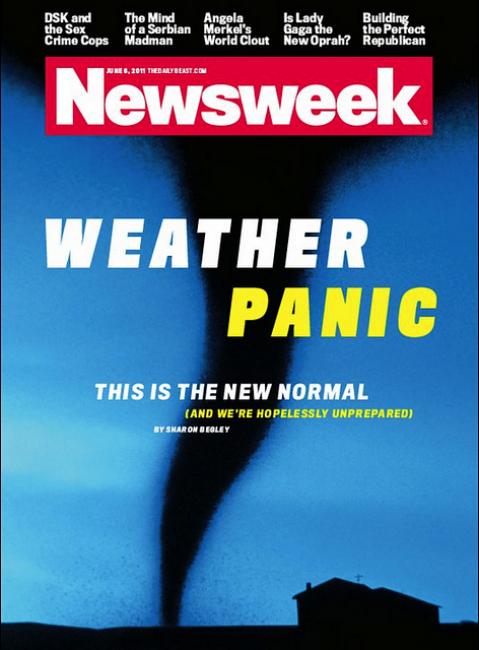
Category: Health

Total, utter madness, Pt 2.

More on the way we are most likely treating Planet Earth.

At the start of the week the first of a shortish series of articles was published, reflecting my support of the book, World on the Edge.  Here’s what I wrote then:

I have mentioned before the Earth Policy Institute and Lester Brown’s latest book, World on the Edge.  Details of the book are here.

At the time of writing this Post (10am US Mountain Time on the 4th Feb.) I have read through to the end of Chapter 5 of the book and will have it completed soon.  It’s opening my eyes hugely!

I have decided over the next week or so to summarise each chapter, hoping that this encourages many readers of Learning from Dogs to reflect, go to the EPI website, buy the book or think about making a difference in any way that you can.

So today, I move on to the next chapter.

Chapter two, Falling Water Tables and Shrinking Harvests.

  • The term ‘fossil aquifer’ demonstrated that not all aquifers are the same.  Let me quote, “There are two sources of irrigation water: underground water and surface water.  Most underground water comes from aquifers that are regularly replenished with rainfall; these can be pumped indefinitely as long as water extraction does not exceed recharge.  But a distinct minority of aquifers are fossil aquifers – containing water put down eons ago.  Since these do not recharge, irrigation ends whenever they are pumped dry.
  • The big fossil aquifers are the Ogallala underlying the US Great Plains, the major aquifer in Saudi Arabia , and the deep aquifer under the North China Plain.
  • Saudi Arabia started drilling for water from their underground fossil aquifer when after the Arab oil-export in the 1970s, the Saudis realised that they were dependent on imported grain and set out to create self-sufficiency in grain by way of irrigation.
  • In January 2008 the Saudis announced that this huge aquifer was largely depleted!
  • From 2007 to 2010 the Saudi wheat harvest dropped from nearly 3 million tons to around 1 million tons.
  • The likelihood is that the last Saudi harvest will be around 2012.

One can’t imagine how the management of a fine and proud country such as Saudi Arabia could be so foolish!  But slightly closer to home …..

  • In most of the leading U.S. irrigation states, the amount of irrigated area has peaked and begun to decline.
  • California, historically the irrigation leader, has seen irrigated areas fall from nearly 9 million acres in 1997 to an estimated 7.5 million acres in 2010, that’s a 16% drop!  Why?
  • Aquifer depletion and diversion of water to fast-growing cities!
  • Then there’s Texas.  Their irrigated area peaked in 1978 at 7 million acres, now down to 5 million acres, a loss of 29%, as the Ogallala fossil aquifer under the Texas panhandle becomes depleted.
  • Colorado has seen its irrigated are shrink by 15%
  • Arizona’s irrigated area is shrinking.
  • Florida’s irrigated area is shrinking.

Then there’s India.  Then there’s Mexico.  And on and on.  I could quote so much more from this single chapter but – you get the message!

Here’s how the chapter ends.

Today more than half the world’s peoples live in countries with food bubbles.  The question for each of these countries is not whether the bubble will burst, but when – and how the government will cope with it. [Read that last sentence again, folks. Ed]

Will governments be able to import grain to offset production losses?  For some countries, the bursting of the bubble may well be catastrophic.  For the world as a whole, the near-simultaneous bursting of several national food bubbles, as aquifers are depleted could create unmanageable food shortages.

This situation poses an imminent threat to food security and political stability.  We have a choice to make.  We can continue with over-pumping as usual and suffer the consequences.  Or we can launch a worldwide effort to stabilise aquifers by raising water productivity – patterning the campaign on the highly successful effort to raise grainland productivity that was launched a half-century ago.

H’mmm.  Tough reading.

Amazon Drought in 2005.

The above photograph was taken from this website; here’s an extract from the accompanying article.

Food inflation is here and it’s here to stay.  We can see it getting worse every time we buy groceries. Basic food commodities like wheat, corn, soybeans, and rice have been skyrocketing since July, 2010 to record highs.  These sustained price increases are only expected to continue as food production shortfalls really begin to take their toll this year and beyond.

This summer Russia banned exports of wheat to ensure their nation’s supply, which sparked complaints of protectionism.  The U.S. agriculture community is already talking about rationing corn over ethanol mandates versus supply concerns. We’ve seen nothing yet in terms of food protectionism.

But as I wrote in the previous article, “Be worried, be concerned but don’t panic – you and I, all of us, have the collective power to sort this all out.”  Lester Brown’s book sets out some strong advice on the way forward.

To be continued, as they say.

Nothing ‘knows’ like a dog’s nose

Lovely what comes across one’s PC screen.

It started when someone we know in Payson, Peter N, posted an item on Facebook about dogs being able to smell out cancer.  The Facebook item referred to an article in Natural News.  That item here went as follows:

(NaturalNews) The mainstream media is suddenly reporting on the idea that dogs can sniff out cancer in human beings. This concept is no surprise to NaturalNews readers, of course, as we’ve talked about this before, but until now the idea that cancer patients could be detected by smelling them was considered pure quackery by conventional doctors.

Of course, conventional doctors are once again wrong:Cancer patients do have a particular smelldue to the metabolic off-gassing of cancer cell tumors. But here’s the real story the mainstream media isn’t telling you: It’s not just dogs that can smell cancer — manyhealth practitionerscan also smell cancer patients.

I’ve personally spoken to numerous natural health practitioners who say they can smell cancer in patients. It’s not really a difficult thing to do, it turns out. With a bit of training, I believe most doctors could even be trained to do it, much like this dog in Japan which correctly identified cancer from stool samples 37 out of 38 times.

It doesn’t mean doctors have to sniff patients’ poo, either: You can also smell cancer on someone’s breath, so just talking to a patient can give a doctor an opportunity to do that. (Historically, by the way, physicians use to taste patients’ urine, from which they could diagnose a number of diseases, especially diabetes.)

This particular research on dogs’ ability to sniff out cancer was conducted by researchers at the Kyushu University in Japan. Dr Hideto Sonoda, who conducted the research, told the BBC, “The specific cancer scent indeed exists, but the chemical compounds are not clear. Only the dog knows the true answer.”

An important point in all this is thatthe cancer-sniffing dogs were able to detect early-stage bowel cancer— something that is extremely difficult for modern medical technology to detect. And it only takes a dog a few seconds — at virtually zero cost — to make the assessment.

Now, of course, medical scientists are busy trying to build an electronic device to replace the dog, because conventional medicine can’t stand the fact that something built by nature (the dog’s nose) might be better than some million-dollar electronic gizmo they come up with that can be billed out at $500 a test. So rather than just using dogs who can already detect cancer right now, they’re going to wait around a few years and try to create some high-tech equipment that will probably be a poor replacement for the dog.

That’s how modern medicine works: It steals good ideas from nature and replicates them, but the results are almost always a poor imitation of what Mother Nature has provided for free. Here’s how the end results would likely stack up:

CANCER-SNIFFING DOG
Accuracy: 98%
Cost: One dog biscuit and a pat on the head

CANCER-SNIFFING HIGH-TECH MACHINE
Accuracy: 60%
Cost: $500 billed to Medicare [the US medical system for those unfamiliar with the term. Ed.]

Gee, which one do you think conventional medicine will end up using?

In fact, a quick web search finds much information on the topic including these YouTube videos.

Now how to get our dogs to tell us ……… we’re OK; assuming we are!

Then from HousePet online magazine comes this:

The British Medical Journal published a ground-breaking research reporting how dogs have been trained to detect bladder cancer by its smell in urine, bringing together dogs’ exceptional sense of smell, with the theory that cancer produces chemicals with distinctive odours. (on September 24th, 2004 )

Six dogs, none of which had any prior experience in scent discrimination, were trained over seven months to distinguish between urine samples from bladder cancer patients and those from healthy people and individuals with non-cancerous diseases. For the final tests, each dog was offered a set of seven urine samples, and their task was to determine which of them was from a patient with bladder cancer. All of the samples used in the tests were completely new and unfamiliar to the dogs.

The dogs, comprising three spaniels, one papillon, one Labrador and one mongrel, correctly selected the bladder cancer urine on 22 out of 54 occasions – an average success rate of 41% compared to the 14% which would have been expected if the dogs had randomly selected a sample each time. This was statistically significant.

The research was undertaken by a unique partnership of medical scientists, including a statistician, and dog trainers. An orthopaedic surgeon from Buckinghamshire, Mr John Church, brought together colleagues from the Department of Dermatology, Buckinghamshire Hospitals NHS Trust (funded by the Erasmus Wilson Dermatological Research Fund) to develop and supervise the scientific protocol for the research, and Hearing Dogs for Deaf People (based near Princes Risborough) for the purpose of training the dogs for the trial.

“We were flattered to be asked to assist in this study on the basis of our reputation in the field of training dogs,” Claire Guest, Operations Director at Hearing Dogs said, “although we have been very careful not to let this project affect our normal work which involves training dogs for deaf people. The four of us who trained these cancer detection dogs did so using our own pet dogs, in our own homes, in our own spare time.”

Back row: And Cook, Claire Guest, Martin Church. Front row: Carolyn Willis, John Church, Susannah Church

I rather loved the quote from John Church, “I am a passionate believer that animals have a huge amount to teach us, and I have heard many stories of people who have been alerted to the presence of cancer in their bodies by their pet dogs. I was delighted to find that the two charities were open-minded enough to participate in this study, so that we could really examine this phenomenon scientifically.”

As I keep going on about – we really can learn from dogs!

Thanks Peter.

Flowers for your Valentine

This opened my eyes; thought I would share it with you.

I know that many of the several hundred readers of Learning from Dogs are not in the USA.  But many are.  Hence me deciding, after mulling it over, to publish in full the contents of an email that came in a short while ago from the organisation Change.

Here’s that email.

Dear Paul,

Valentine’s Day, which accounts for 40% of fresh flower sales annually, is fast approaching.

Not always a sweet smell.


If you’re planning to order a bouquet from 1-800-Flowers — the world’s largest florist — you should know where most of those flowers really come from.

At flower farms in Ecuador and Colombia — the countries that export the most to the U.S. — two-thirds of the workers are women. These women are routinely subjected to harassment and even rape from their male supervisors. They suffer eye infections and miscarriages from consistent contact with dangerous pesticides.

In the weeks leading up to Valentine’s Day and Mother’s Day, they’re routinely forced to work 80-hour weeks with no overtime pay. Attempts to form a union are met with opposition by police and armed forces.

Many retailers — such as Whole Foods and Stop & Shop — have taken the important first step of offering Fair Trade flowers to consumers who want no part of these abuses. Fair Trade certified farms must adhere to strict standards for workers’ rights, which prevents the abuses described above.

1-800-Flowers is the largest florist in the world. Yet they offer no Fair Trade flowers at all.

Tell 1-800-Flowers to join other major retailers in offering Fair Trade flowers.

1-800-Flowers uses a certifying agency called Florverde, which ensures that its flower farms measure up to certain environmental standards — this is a good thing. But Florverde has almost no labor standards: A farm can be certified even if it uses forced labor.Indeed, Florverde is owned by the Association of Colombian Flower Exporters, so it has a financial incentive to keep wages low and suppress workers’ rights.

This is the week before Valentine’s Day — more people will purchase flowers during the next seven days than any other week this year. This is our best opportunity to demand a promise from 1-800-Flowers to join its competitors in offering Fair Trade flowers. So after you sign the petition, please share this email widely and post on Facebook — do everything you can to pressure 1-800-Flowers to show a little respect for the women who toil in unbearable circumstances. The women without whom they’d have no flowers to sell.

Click the link below to tell 1-800-Flowers to make a promise this Valentine’s Day to sell Fair Trade flowers:

http://www.change.org/petitions/ask-1-800-flowers-to-offer-fair-trade-flowers-that-arent-picked-by-exploited-workers?alert_id=IiStMzHsCg_LCLOlfFAhl&me=aa

Since this campaign began, the company has emailed to tell us that it will post more information on its website about the farms that supply their flowers. But this is a far cry from selling fair trade products — and we have much more to do to make sure workers are protected. This is the week to do it.

Thanks for taking action,

Patrick and the Change.org team

If you feel so minded to sign the petition, which can be done by people outside the USA, then that may be done here.

Thanks.

Total, utter madness, Pt 1.

The way we are most likely treating Planet Earth is almost beyond comprehension.

I have mentioned before the Earth Policy Institute and Lester Brown’s latest book, World on the Edge.  Details of the book are here.

At the time of writing this Post (10am US Mountain Time on the 4th Feb.) I have read through to the end of Chapter 5 of the book and will have it completed soon.  It’s opening my eyes hugely!

I have decided over the next week or so to summarise each chapter, hoping that this encourages many readers of Learning from Dogs to reflect, go to the EPI website, buy the book or think about making a difference in any way that you can.

Chapter One, On the Edge, sets the background:

  • Summer of 2010 sees record-high temperates in Moscow, Russia’s grain harvest shrank by 40 million tons (40%) to 60 million tons.
  • Record high temperatures in south-central Pakistan were recorded. Snow and glaciers in the Himalayas melted fast, 20 million Pakistanis were affected by the resultant flooding, 2,000 died, 6 million acres of crops damaged.
  • A 2002 study by Mathis Wackernagel concluded that, “humanity’s collective demands first surpassed the earth’s regenerative capacity around 1980.  By 1999, global demand’s on the earth’s natural systems exceeded sustainable yields by 20 percent.  Ongoing calculations show it at 50 percent in 2007.  Stated otherwise, it would take 1.5 Earths to sustain our current consumption.” [my emphasis]
  • “No previous civilisation has survived the ongoing destruction of its natural supports.  Nor will ours.”

Let’s turn to NOAA.  A few salient points from there State of the Climate – Global Review for 2010.

  • For 2010, the combined global land and ocean surface temperature tied with 2005 as the warmest such period on record, at 0.62°C (1.12°F) above the 20th century average of 13.9°C (57.0°F). 1998 is the third warmest year-to-date on record, at 0.60°C (1.08°F) above the 20th century average.
  • The 2010 Northern Hemisphere combined global land and ocean surface temperature was the warmest year on record, at 0.73°C (1.31°F) above the 20th century average. The 2010 Southern Hemisphere combined global land and ocean surface temperature was the sixth warmest year on record, at 0.51°C (0.92°F) above the 20th century average.
  • The global land surface temperature for 2010 tied with 2005 as the second warmest on record, at 0.96°C (1.73°F) above the 20th century average. The warmest such period on record occurred in 2007, at 0.99°C (1.78°F) above the 20th century average.


Russian forest fires.


From the UK Guardian newspaper.

2010 is becoming the year of the heatwave, with record temperatures set in 17 countries.

Record highs have occurred in Russia, Belarus and Ukraine – the three nations at the centre of the eastern European heatwave which has lasted for more than three weeks – but also African, Middle Eastern and Latin American countries.

Temperatures in Moscow, which have been consistently 20C above normal, today fell to 31C (86F), and President Dmitry Medvedev cancelled a state of emergency in three out of seven Russian regions affected by forest fires.

Thousand of hectares of forest burned in the fires, killing 54 people and leaving thousands homeless. For days, Moscow was shrouded in smog, and environmentalists raised fears that the blaze could release radioactive particles from areas contaminated in the 1986 Chernobyl disaster.

Wildfires have also swept through northern Portugal, killing two firefighters and destroying 18,000 hectares (44,500 acres) of forests and bushland since late July. Some 600 firefighters were today struggling to contain 29 separate fires.

But the extreme heat experienced in Europe would barely have registered in Iraq, Saudi Arabia, Niger, Pakistan and Sudan, all of which have recorded temperatures of more than 47C (115F) since June. The number of record highs is itself a record – the previous record was for 14 new high temperatures in 2007.

The freak weather conditions, which have devastated crops and wildlife, are believed to have killed thousands of elderly people, especially in Russia and northern India. The 2003 European heatwave killed about 15,000 people.

Be worried, be concerned but don’t panic – you and I, all of us, have the collective power to sort this all out.  More about this soon.

So near, so far!

Mixed emotions about those other worlds out there.

In recent times, Learning from Dogs has been reflecting on the magic, and fragility, of the planet we all live on.

There was the photograph of the Earthrise that attracted quite a few comments.  That was followed up by the amazing photograph of the Earth from Voyager 1 taken in 1990 from 3,762,136,324 miles away!  Then the lovely poem from Sue.

So it was interesting to note my mixed emotions to a piece on the BBC News website yesterday.  Here’s a flavour.

Worlds away

Astronomers have identified some 54 new planets where conditions may be suitable for life.

Five of the candidates are Earth-sized.

The announcement from the Kepler space telescope team brings the total number of exoplanet candidates they have identified to more than 1,200.

The data release also confirmed a unique sextet of planets around a single star and 170 further solar systems that include more than one planet circling far-flung stars.

Read the rest of the item here. (and there’s a fuller version on NetworkWorld)

So here are those mixed emotions.

  • Man has been, and still continues to be, wonderfully curious to the point of spending huge sums of money on projects that appear to do nothing more than satisfy that curiosity. (The (Kepler) mission‘s life-cycle cost is estimated at US$600 million, including funding for 3.5 years of operation, from here.)  That’s a beautiful trait, in my humble opinion.
  • Homo Sapiens is a wonderfully innovative and creative species, as so wonderfully presented by Alan Alda on a recent PBS Programme called The Human Spark.  (See the YouTube intro at the end of this Post.)
  • Look at all the inventions and incredible advances to our species that are all around us – including the PC I am using and the World Wide Web that is aiding this message!
  • For such an intelligent species as us, why is it that we are treating Planet Earth in such a suicidal manner through greed, pollution and over-consumption!
  • As was reported yesterday, we could be on the verge of total and utter chaos in terms of food.  Then also yesterday was a small item about food prices reaching a new global record.
  • It always struck me as absurd to conclude that this planet is the only habitable planet in the universe – ‘Astronomers estimate there are 1021 stars in the universe. With a conservative estimate of three planets per star (some could have many more, some would have none at all) this puts the estimated number of planets into millions of billions.‘ From here.
  • So the data coming in from Kepler is truly astounding and, personally, underlines this era as a great time to be alive.
  • But there simply is no choice in that for decades ahead, if not centuries ahead, Planet Earth is all there is for us.  So why do we do it so much harm!
  • Our civilisation is likely to go to the very limits of survivability before the message that the existing ‘model’ is broken is picked up by every major political party in the world.  That is very, very scary to contemplate.
  • So it looks as though, soon, mankind will face the ultimate decision of all time.  Give up and let the chaos overwhelm us all, or … or what?  In other words millions of us will have to live with the consequences of our greed.
  • The ‘or what?’ can only be a faith that it will be OK.
  • A faith that mankind will use the power of dreams, imagination and energy to create a new future that will, at long last, be a new dawn of democratic and just, integrous existence.
  • And maybe, just maybe, that could be the Second Coming and maybe, just maybe, the world’s Churches and religions will be our saving grace.

But of that day and hour knoweth no man, no, not the angels of heaven, but my Father only. Matthew 24:36

Fascinating times – a Chinese proverb, ‘It’s better to be a dog in a peaceful time than be a man in a chaotic period.’

Finally, here’s that video of the series preview to The Human Spark.

Earth Policy Institute

An organisation that deserves wide support.

Read it!

My copy of Lester Brown’s book World on the Edge arrived on Tuesday and already it’s opening my eyes big time.  I do recommend that you think about purchasing the book, or you may download the entire book for free – details here.

Regular visitors to Learning from Dogs will remember that there was mention in a recent Post, Group Human Insanity about Lester Brown’s new book.  I have subscribed to regular updates from the EPI and recently received the following; it’s worth reproducing in full, with the permission of the EPI.

Restoring Food Security for All
Takes Action on Many Fronts

www.earth-policy.org/book_bytes/2011/wotech12_ss5

By Lester R. Brown

Today there are three sources of growing demand for food: population growth; rising affluence and the associated jump in meat, milk, and egg consumption; and the use of grain to produce fuel for cars.

Population growth is as old as agriculture itself. But the world is now adding close to 80 million people per year. Even worse, the overwhelming majority of these people are being added in countries where cropland is scarce, soils are eroding, and irrigation wells are going dry.

Even as we are multiplying in number, some 3 billion of us are trying to move up the food chain, consuming more grain-intensive livestock products. As incomes rise, annual grain consumption per person climbs from less than 400 pounds, as in India today, to roughly 1,600 pounds, as among those living high on the food chain in the United States, where diets tend to be heavy with meat and dairy products.

When the United States attempted to reduce its oil insecurity by converting grain into ethanol, the growth in world grain demand, traditionally around 20 million tons per year, suddenly jumped to over 50 million tons in 2007. Roughly 119 million tons of the 2009 U.S. grain harvest of 416 million tons went to ethanol distilleries, an amount that exceeds the grain harvests of Canada and Australia combined. This massive ethanol distillery investment in the United States launched an epic competition between cars and people for grain.

On the supply side of the food equation, several trends are making it more difficult to expand production rapidly enough to keep up with demand. These include soil erosion, aquifer depletion, more frequent crop-shrinking heat waves, melting ice sheets, melting mountain glaciers, and the diversion of irrigation water to cities.

Farmers are also losing cropland to nonfarm uses. Cars compete with people not only for the grain supply but also for the cropland itself. The United States, for example, has paved an area for cars larger than the state of Georgia. Every five cars added to the U.S. fleet means another acre of land will be paved over—the equivalent of a football field.

The implications for China of this relationship between cars and cropland are startling. In 2009, for the first time, more cars were sold in China than in the United States. If China were to reach the U.S. ownership rate of three cars for every four people, it would have over a billion cars, more than the entire world has today. The land that would have to be paved to accommodate these cars would be two thirds the area China currently has in rice.

This pressure on cropland worldwide is running up against increased demand for soybeans, which are the key to expanding the production of meat, milk, and eggs. Adding soybean meal to livestock and poultry feed sharply boosts the efficiency with which grain is converted into animal protein. This is why world soybean use climbed from 17 million tons in 1950 to 252 million tons in 2010, a 15-fold jump.

Nowhere is the soaring demand for soybeans more evident than in China, where the crop originated. As recently as 1995, China produced 14 million tons of soybeans and consumed 14 million tons. In 2010, it still produced 14 million tons, but it consumed a staggering 64 million tons. In fact, over half of the world’s soybean exports now go to China.

Demand is climbing, but since scientists have failed to increase yields rapidly, the world gets more soybeans largely by planting more soybeans. The soybean is devouring land in the United States, Brazil, and Argentina, which together account for four fifths of world soybean production and 90 percent of exports.

Ensuring future food security was once the exclusive responsibility of the ministry of agriculture, but this is changing. The minister of agriculture alone, no matter how competent, can no longer be expected to secure food supplies. Indeed, efforts by the minister of health and family planning to lower human fertility may have a greater effect on future food security than efforts in the ministry of agriculture to raise land fertility.

Similarly, if ministries of energy cannot quickly cut carbon emissions, the world will face crop-shrinking heat waves that can massively and unpredictably reduce harvests. Saving the mountain glaciers whose ice melt irrigates much of the cropland in China and India during the dry season is the responsibility of the ministry of energy, not solely the ministry of agriculture.

If the ministries of forestry and agriculture cannot work together to restore tree cover and reduce floods and soil erosion, grain harvests will shrink not only in smaller countries like Haiti and Mongolia, as they are doing, but also in larger countries, such as Russia and Argentina—both wheat exporters.

And where water shortages restrict food output, it will be up to ministries of water resources to do everything possible to raise national water productivity. With water, as with energy, the principal potential now is in increasing efficiency, not expanding supply.

In a world where cropland is scarce and becoming more so, decisions made in ministries of transportation on whether to develop land-consuming, auto-centered transport systems or more-diversified systems that are much less land-intensive will directly affect world food security.

In the end, it is up to ministries of finance to reallocate resources in a way that recognizes the new threats to security posed by agriculture’s deteriorating natural support systems, continuing population growth, human-driven climate change, and spreading water shortages. Since many ministries of government are involved, it is the head of state who must redefine security.

At the international level, we need to address the threat posed by growing climate volatility and the associated rise in food price volatility. The tripling of wheat, rice, corn, and soybean prices between 2007 and 2008 put enormous stresses on governments and low-income consumers. This price volatility also affects producers, since price uncertainty discourages investment by farmers.

In this unstable situation, a new mechanism to stabilize world grain prices is needed—in effect, a World Food Bank (WFB). This body would establish a support price and a ceiling price for wheat, rice, and corn. The WFB would buy grain when prices fell to the support level and return it to the market when prices reached the ceiling level, thus moderating price fluctuations in a way that would benefit both consumers and producers.

One simple way to improve food security is for the United States to eliminate the fuel ethanol subsidy and abolish the mandates that are driving the conversion of grain into fuel. This would help stabilize grain prices and buy some time in which to reverse the environmental and demographic trends that are undermining our future. It would also help relax the political tensions over food security that have emerged within importing countries.

And finally, we all have a role to play as individuals. Whether we decide to bike, bus, or drive to work will affect carbon emissions, climate change, and food security. The size of the car we drive to the supermarket and its effect on climate may indirectly affect the size of the bill at the supermarket checkout counter. At the family level, we need to hold the line at two children. And if we are living high on the food chain, we can eat less grain-intensive livestock products, improving our health while helping to stabilize climate. Food security is something in which we all have a stake—and a responsibility.

#   #   #

Adapted from Chapter 5, “The Emerging Politics of Food Scarcity” and Chapter 12, “Feeding Eight Billion” in Lester R. Brown, World on the Edge: How to Prevent Environmental and Economic Collapse
(New York: W.W. Norton & Company, 2011), available online at www.earth-policy.org/books/wote

Additional data and information sources at www.earth-policy.org

Feel free to pass this information along to friends, family members, and colleagues!

Not much I can add to that!

UPDATE:  Just a few hours after completing the Post, I saw this on the BBC News website.

The global consumption of fish has hit a record high, reaching an average of 17kg per person, a UN report has shown.

Fisheries and aquaculture supplied the world with about 145m tonnes in 2009, providing about 16% of the population’s animal protein intake.

The findings published by the Food and Agriculture Organization (FAO) also stressed that the status of global fish stocks had not improved.

It said that about 32% were overexploited, depleted or recovering.

“That there has been no improvement in the status of stocks is a matter of great concern,” said Richard Grainger, one of the report’s authors and FAO senior fish expert.

Full article on the BBC is here.


Don’t forget Tara’s Babies!

Big thank you to all those that have acted.

I have received quite a few emails in response to a mailing sent out by me yesterday promoting the fabulous work being done by a dog rescue centre near Payson, here in Arizona.  Thank you for letting me know you are adding your support to this great effort by Tara’s Babies to win $250,000 from Pepsi!

If you missed the post on Friday, here’s a link to it – https://learningfromdogs.com/2011/01/21/taras-babies/

An email received a short while ago from Tara’s Babies shows that everyone involved is making a difference!

Yesterday we were unplaced in

The Animal Rescue Site, now we’re

#9 in AZ and 266 overall!

Thank you for VOTING : we CAN win!!


PEPSI VOTING LINKS:Three dogs
a. vote online here

b. text 105549 to 73774


c. Have a Facebook page?
1. Click here
2. Click on “Vote for this Idea”
3. Click on “Login with Facebook account”
4. Click on “Vote for this Idea” again!
 

THE ANIMAL RESCUE SITE VOTING LINK:


1. Click here

2. Click on the Purple Box “Click Here to Give, its FREE”

3. Click on thje link in the box at the top of the page “Vote Now”

4. Search for “Taras Babies” in “AZ”

5. Click on “VOTE”

6. Prove you are a human being and not a Bot by identifying an animal!

7. Click on “Confirm Vote”

NB: You only have to do Step 4 – Search – the first time you vote. The site remembers Tara’s Babies for you!
Mr HCompassion  community  innovation

love   determination  humor  prayer

MANY THANKS FROM ALL OF US AT TARA’S BABIES


Tara’s Babies

A rare request from Learning from Dogs asking if you will vote on behalf of a dog rescue centre.

Many who follow this Blog will know that my beautiful wife, Jean, is totally devoted to dogs, especially rescue dogs.  Over the years that she and her previous husband Ben, who died in 2005, lived in Mexico, Jean must have rescued at least 70 dogs.  Even today, we have 11 ex-rescue dogs enjoying a fabulous life in our mountain home here in Payson, Arizona.

So it was a big surprise to come across a dog rescue organisation called Tara’s Babies and find that their sanctuary is in our neighbourhood.


Photo by Wib Middleton


Here’s a description of the organisation taken from the local newspaper from September 9th, 2009.

By Alan R. Hudson
Gazette/Connection Correspondent
It has been nearly five years since Tara’s Babies Animal Welfare began rescuing animals displaced by Hurricane Katrina. Tara’s Babies operates a no-kill animal rescue and sanctuary “off the grid” at the Ellinwood Ranch, near Young.

A few dogs from the dark days of Katrina still remain and many more have been added since. This is no normal animal rescue however: It is operated by three very dedicated and compassionate ordained Buddhists.

Kunzang Drolma, a Buddhist Nun and the director of Tara’s Babies, graciously invited the Connection to spend the afternoon at the facility. When we arrived, she was (as we had anticipated) wearing her Shamtab—the traditional Buddhist robe—as she fed her canine adoptees.

From that article Drolma explains:

“Katrina was a catastrophe that threw it in everyone’s faces but ultimately, every day, hundreds of dogs and cats are being euthanized in shelters because there’s not enough space for them—just because they were abused, homeless, old or sick. And so that’s when we just moved straight into this process of being a no-kill rescue and sanctuary. We will never euthanize.”

What’s needed, explained Drolma, is a paradigm shift. One that is so profound that shelters will become a thing of the past. While euthanasia is something that Tara’s Babies does not agree with, the solution lies at a higher cultural level.

Frankly, my view is that we need solutions to so many of life’s problems to come from a ‘higher cultural level’ but this Post is about helping Tara’s Babies raise more funds to help their mission.  It’s easy for any of you to help.  You can do it now from your computer.

Go here – http://www.tarasbabies.org/pepsi_refresh.html and read.  If you need convincing of the purpose watch this video (the one at that last web page or direct from YouTube as below).

And from that web-link you can read:

Feel free to copy and personalize the following paragraph to send to your friends:

“Have you heard about Tara’s Babies Animal Welfare, a No-Kill Dog Rescue and Sanctuary in Arizona? They started rescuing dogs left homeless and injured by Hurricane Katrina, after their founder, Jetsunma Ahkon Lhamo, felt compelled to act on seeing the devastation and suffering in the Gulf. They have continued rescuing dogs on death row in overcrowded shelters ever since.

Tara’s Babies Animal Welfare is working to win a $250,000 Pepsi Refresh grant by receiving the most votes for their project in the month of January. The grant will allow them to improve the care they provide to dogs at their beautiful, off-the-grid Sanctuary.

I am going to help Tara’s Babies Animal Welfare by voting for them daily in the Pepsi Refresh grant program and hope that you will too. Please visit www.tarasbabies.org to check them out. You will be able to sign up from their website to support their application to Pepsi Refresh.

The dogs need your vote!”

Here, here!  It’s very quick to initiate and then each day all you need to do is to add your daily vote – a few seconds of your life exchanged for the rest of the life of a dog that, otherwise, would have nowhere to go!

Thank you!


Dr Bruce Lipton continued

The concluding videos from his lecture The Biology of Perception.

No point in going any further if you haven’t seen Parts 1 to 4 which are here.

Here are Parts 5 to 7.