I read this out aloud to Jeannie last night, as I do with every post that is published, and found this chapter really didn’t flow. I’m making the mistake of including too many words of direct quotations, many of which are not easy to follow.
So just wanted to let you know that if this strikes you the same way, you are not alone! 😉
It is, of course, just the first draft, but nonetheless …. wanted you to read this first.
oooo
Greed, inequality and poverty
Just three words: greed; inequality; poverty.
Just three words that metaphorically come to me like a closed, round, wooden lid hiding a very deep, dark well. That lifting this particular lid, the metaphorical one, exposes an almost endless drop into the vastness of where our society appears to have fallen.
That this dark well, to stay with the metaphor, is lined with example after example of greed, inequality and poverty is a given.
One might conclude that examining any of those examples is pointless, not in terms of the reality of our world, but in terms of influencing the views of a reader. If you are a reader who is uncertain about the current levels of greed, inequality and poverty then it’s unlikely that a few examples, or a few hundred examples, are going to change minds. (One might argue that you wouldn’t be reading this book in the first place!)
Thus when I was digging around, looking for insight into how and why we, as in society, are in such times, I was looking for core evidence. Very quickly, it struck me that the chapter title really should simply have been: Inequality. Because inequality, by implication, is the result of greed and results in poverty.
In November, 2014, at the time I was drafting this book, a new report was issued by the Center of Economic Policy Research (CEPR) on the latest (American) Survey of Consumer Finances. It painted a picture very familiar to many: the rich becoming richer while those with less wealth are falling further and further behind.
David Rosnick of the CEPR, and one of the report co-authors, made this important observation:
The decline in the position of typical households is even worse than the Consumer Finances survey indicates. In 1989, many workers had pensions. Far fewer do now. The value of pensions isn’t included in these surveys due to the difficulty of determining what they are worth on a current basis. But they clearly are significant assets that relatively few working age people have now.
Sharmini Peries, of The Real News Network, in an interview with David Rosnick, asked:
PERIES: David, just quickly explain to us what is the Consumer Finance Survey. I know it’s an important survey for economists, but why is it important to ordinary people? Why is it important to us?
ROSNICK: So, every three years, the Federal Reserve interviews a number of households to get an idea of what their finances are like, do they have a lot of wealth, how much are their house’s worth, how much they owe on their mortgages, how much they have in the bank account, how much stocks do wealthy people own. This gives us an idea of their situations, whether they’re going to be prepared for retirement. And we can see things like the effect of the housing and stock bubbles on people’s wealth, whether they’ve been preparing for eventual downfalls, how they’ve reacted to various economic circumstances, how they’re looking to the long term. So it’s a very useful survey in terms of finding out how households are prepared and what the distribution of wealth is like.
PERIES: So your report is an analysis of the report. And what are your key findings?
ROSNICK: So, largely over the last 24 years there’s been a considerable increase in wealth on average, but it’s been very maldistributed. Households in the bottom half of the distribution have actually seen their wealth fall, but the people at the very top have actually done very well. And so that means that a lot of people who are nearing retirement at this point in time are actually not well prepared at all for retirement and are going to be very dependent on Social Security in order to make it through their retirement years.
PERIES: So, David, address the gap. You said there’s a great gap between those that are very wealthy and those that are not. Has this gap widened over this period?
ROSNICK: It absolutely has. As, say, the top 5 percent in wealth, the average wealth for people in the top 5 percent is about 66 percent higher in 2013, the last survey that was completed, compared to 1989. By comparison, for the bottom 20 percent, their wealth has actually fallen 420 percent. They basically had very little to start with, and now they have less than little.
PERIES: So the poorer is getting poorer and the richer is getting extremely richer.
ROSNICK: Very much so.
To my way of thinking, if in the period 1989 through to 2013 “the average wealth for (American) people in the top 5 percent is about 66 percent higher” and “for the bottom 20 percent, their wealth has actually fallen 420 percent” it’s very difficult not to see the hands of greed at work and a consequential devastating increase in inequality.
In other words, the previous few paragraphs seemed to present, and present clearly, the widening gap between the ‘haves’ and the ‘have-nots’, comparatively speaking, and that it was now time for society to understand the trends, to reflect on where this is taking us, if left unchallenged, and to push back as hard as we can both politically and socially.
I wrote that shortly before another item appeared in my email ‘in-box’ in the middle of November (2014), a further report about inequality that, frankly, emotionally speaking, just smacked me in the face. It seemed a critical addition to the picture I was endeavouring to present.
Namely, on the 13th October, 2014, the US edition of The Guardian newspaper published a story entitled: US wealth inequality – top 0.1% worth as much as the bottom 90%. The sub-heading enlarged the headline: Not since the Great Depression has wealth inequality in the US been so acute, new in-depth study finds.
The study referred to was a paper released by the National Bureau of Economic Research, Cambridge, MA, based on research conducted by Emmanuel Saez and Gabriel Zucman. The paper’s bland title belied the reality of the research findings: Wealth Inequality in the United States since 1913.
As the Guardian reported:
Wealth inequality in the US is at near record levels according to a new study by academics. Over the past three decades, the share of household wealth owned by the top 0.1% has increased from 7% to 22%. For the bottom 90% of families, a combination of rising debt, the collapse of the value of their assets during the financial crisis, and stagnant real wages have led to the erosion of wealth. The share of wealth owned by the top 0.1% is almost the same as the bottom 90%.
The picture actually improved in the aftermath of the 1930s Great Depression, with wealth inequality falling through to the late 1970s. It then started to rise again, with the share of total household wealth owned by the top 0.1% rising to 22% in 2012 from 7% in the late 1970s. The top 0.1% includes 160,000 families with total net assets of more than $20m (£13m) in 2012.
In contrast, the share of total US wealth owned by the bottom 90% of families fell from a peak of 36% in the mid-1980s, to 23% in 2012 – just one percentage point above the top 0.1%.
The report was not exclusively about the USA. As the closing paragraphs in The Guardian’s article illustrated:
Among the nine G20 countries with sufficient data, the richest 1% of people (by income) have increased their income share significantly since 1980, according to Oxfam. In Australia, for example, the top 1% earned 4.8% of the country’s income in 1980. That had risen to more than 9% by 2010.
Oxfam says that in the time that Australia has held the G20 presidency (between 2013 and 2014) the total wealth in the G20 increased by $17tn but the richest 1% of people in the G20 captured $6.2tn of this wealth – 36% of the total increase.
I find it incredibly difficult to have any rational response to those figures. I am just aware that there is a flurry of mixed emotions inside me and, perhaps, that’s how I should leave it. Nonetheless, there’s one thing that I can’t keep to myself and that this isn’t the first time that such inequality has arisen, the period leading up the the Great Depression of the 1930s comes immediately to mind, and I doubt very much that it will be the last.
Unless!
Unless the growing catalogue of unsustainable aspects of this 21st century, a few of which have been the focus of this Part Three, brings about, perhaps in many different ways, a force for change that is unstoppable.
But before that is explored in Part Four, there is the one final element of the greed, inequality and poverty theme of this chapter that must be aired; the issue of poverty.
Contrary to my anticipation, the figures for poverty trends can be read in many ways and don’t give a clear-cut uniform picture. Nevertheless, it does’t take a genius to work out that the future, especially for young people, could be alarming.
Today, the poor people are the young. Today, the young are heading into a future that has many frightening aspects.
Take the present population numbers, the mind-boggling scale of the use of energy in these times, not to mention the levels of debt across so many countries (on the 14th November, 2014, the Federal Debt of the USA was about $18,006,100,032,000), possible unsustainable global climate change trends, and is it any wonder that those born in the period 1928 to 1945 (I was born in 1944), the generation that has been called the Silent Generation, must be wondering what the future holds for their children and grandchildren and what they or anyone can do today and tomorrow, to prevent these future generations sinking into oblivion.
I came across a quotation from Simon Caulkin, the award winning management writer: “It’s all the product of human conduct!”
Yes, Simon is right. Only human conduct will find that sustainable, balanced relationship with each other and, critically, with the planet upon which all our futures depend. Yet, something nags at me; a half-conscious doubt that starts with the word ‘but!’ Not that it doesn’t all come down to human conduct; not a moment’s hesitation on that one. But there’s still that half-conscious doubt. A doubt that starts to take shape on the back of that wonderful quotation from Einstein: “Insanity: doing the same thing over and over again and expecting different results.”
Then from that half-conscious place in one’s head comes another word. The word: Faith. Faith in us, as in faith in humanity. Faith that not only can we change our relationship with ourselves, with our communities and, above all, with our planet, but that we will. Faith that we, as in mankind, will embrace the many beautiful qualities of the animal that is so special to so many millions of us: our dogs. Not just embrace but pin our future on the premise that adopting the qualities of love, trust, honesty, openness and more, qualities that we see daily in our closest animal companions, is our potential salvation.
Thus comes the end of this set of depressing aspects of our 21st century. Time to move on in this story of learning from dogs and envelope ‘Of change in thoughts and deeds’; the title of the next section of this book. For we truly need a change to a better future.
That quote is from the film Interstellar. Last Thursday, Jean and me, with our neighbours Dordie and Bill, went into Grants Pass to watch the film. Speaking for myself, even after three days have passed, I still haven’t settled on a clear opinion of the film. Don’t get me wrong, it was a magnificent production and held one’s attention for every minute of the three-hour performance.
All of which is a preamble for an insightful essay from George Monbiot published on November 11th and republished here with George’s kind permission.
ooOOoo
Better Dead Than Different
Our visions of the future are defined, like the film Interstellar, by technological optimism and political defeatism.
By George Monbiot, published in the Guardian 12th November 2014
“It’s like we’ve forgotten who we are,” the hero of Interstellar complains. “Explorers, pioneers, not caretakers … We’re not meant to save the world. We’re meant to leave it.” It could be the epigraph of our age.
Don’t get me wrong. Interstellar is a magnificent film, true to the richest traditions of science fiction, visually and auditorally astounding. See past the necessary silliness and you will find a moving exploration of parenthood, separation and ageing. It is also a classic exposition of two of the great themes of our age: technological optimism and political defeatism.
The Earth and its inhabitants are facing planetary catastrophe, caused by “six billion people, and every one of them trying to have it all”, which weirdly translates into a succession of blights, trashing the world’s crops and sucking the oxygen out of the atmosphere. (When your major receipts are in the US, you can’t afford to earn the hatred of the broadcast media by mentioning climate change. The blight, an obvious substitute, has probably averted millions of dollars of lost takings).
The civilisational collapse at the start of the film is intercut with interviews with veterans of the Dust Bowl of the 1930s. Their worn faces prefigure the themes of ageing and loss. But they also remind us inadvertently of a world of political agency. Great follies were committed but big, brave things were done to put them right: think of the New Deal and the Civilian Conservation Corps (1). That world is almost as different from our own as the planets visited by Interstellar’s astronauts.
They leave the Earth to find a place to which humans can escape or, if that fails, one in which a cargo of frozen embryos can be deposited. It takes an effort, when you emerge, to remember that such fantasies are taken seriously by millions of adults, who consider them a realistic alternative to addressing the problems we face on Earth.
NASA runs a website devoted to the idea (2). It claims that gigantic spaceships, “could be wonderful places to live; about the size of a California beach town and endowed with weightless recreation, fantastic views, freedom, elbow-room in spades, and great wealth.” Of course, no one could leave, except to enter another spaceship, and the slightest malfunction would cause instant annihilation. But “settlements in earth orbit will have one of the most stunning views in our solar system – the living, ever-changing Earth.” We can look back and remember how beautiful it was.
And then there’s the money to be made. “Space colonization is, at its core, a real estate business. … Those that colonize space will control vast lands, enormous amounts of electrical power, and nearly unlimited material resources. [This] will create wealth beyond our wildest imagination and wield power – hopefully for good rather than for ill.”(3) In other words, we would leave not only the Earth behind but also ourselves.
That’s a common characteristic of such fantasies: their lack of imagination. Wild flights of technological fancy are accompanied by a stolid incapacity to picture the inner life of those who might inhabit such systems. People who would consider the idea of living in the Gobi Desert intolerable – where, an estate agent might point out, there is oxygen, radiation-screening, atmospheric pressure and 1g of gravity – rhapsodise about living on Mars. People who imagine that human life on Earth will end because of power and greed and oppression imagine we will escape these forces in pressure vessels controlled by technicians, in which we would be trapped like tadpoles in a jamjar.
If space colonisation is impossible today, when Richard Branson, for all his billions, cannot even propel people safely past the atmosphere(4), how will it look in a world that has fallen so far into disaster that leaving it for a lifeless, airless lump of rock would be perceived as a good option? We’d be lucky in these circumstances to possess the wherewithal to make bricks.
Only by understanding this as a religious impulse can we avoid the conclusion that those who gleefully await this future are insane. Just as it is easier to pray for life after death than it is to confront oppression, this fantasy permits us to escape the complexities of life on Earth for a starlit wonderland beyond politics. In Interstellar, as in many other versions of the story, space is heaven, overseen by a benign Technology, peopled by delivering angels with oxygen tanks.
Space colonisation is an extreme version of a common belief: that it is easier to adapt to our problems than to solve them. Earlier this year, the economist Andrew Lilico argued in the Telegraph(5) that we can’t afford to prevent escalating climate change, so instead we must learn to live with it. He was challenged on Twitter to explain how people in the tropics might adapt to a world in which four degrees of global warming had taken place. He replied: “I imagine tropics adapt to 4C world by being wastelands with few folk living in them. Why’s that not an option?”(6)
Re-reading his article in the light of this comment, I realised that it hinged on the word “we”. When the headline maintained that “We have failed to prevent global warming, so we must adapt to it” (7), the “we” referred in these instances to different people. We in the rich world can brook no taxation to encourage green energy, or regulation to discourage the consumption of fossil fuels. We cannot adapt even to an extra penny of tax. But the other “we”, which turns out to mean “they” – the people of the tropics – can and must adapt to the loss of their homes, their land and their lives, as entire regions become wastelands. Why is that not an option?
The lives of the poor appear unimaginable to people in his position, like the lives of those who might move to another planet or a space station. So reducing the amount of energy we consume and replacing fossil fuels with other sources, simple and cheap as these are by comparison to all other options, is inconceivable and outrageous, while the mass abandonment of much of the inhabited surface of the world is a realistic and reasonable request. “It is not contrary to reason to prefer the destruction of the whole world to the scratching of my finger”, David Hume noted (8), and here we see his contemplation reified.
But at least Andrew Lilico could explain what he meant, by contrast to most of those who talk breezily about adapting to climate breakdown. Relocating cities to higher ground? Moving roads and railways, diverting rivers, depopulating nations, leaving the planet? Never mind the details. Technology, our interstellar god, will sort it out, some day, somehow.
George: this is a formula for the deferment of hard choices to an ever-receding neverland of life after planetary death.
I am using the software Scrivener to write this book. I fail to recall how I came across Scrivener but, boy of boy, am I glad I did. It is fabulous. One can set out the raw structure of the book, section by section, chapter by chapter, much helping keep one’s mind on the construction of the book as the writing progresses.
All of which is a preamble for me telling you that when I clicked on the chapter ‘folder’ that was named Power and corruption, a folder empty of any words, my heart sank. Power and corruption! Where, oh where, does one start!
Then almost immediately kicked myself; metaphorically speaking! Simply for the reason that one of the most famous sayings is surely that of Lord Acton, the 19th-century British historian: “Power tends to corrupt; Absolute power corrupts absolutely.” That is the place to start this essay on power and corruption.
History has plenty of examples of the tendency of power to corrupt. Of course, when the word ‘power’ is used on its own it misses its natural companion words; the words ‘other people’. Ergo: Power over other people tends to corrupt; Absolute power over other people corrupts absolutely. Napoleon Bonaparte declaring himself as emperor comes to mind, as does further back in time, the Roman emperors, who declared themselves gods, demonstrated absolute corruption from the absolute power, over other people, that they wielded.
Anyway, returning to Lord Acton, or to give him his full name, John Emerich Edward Dalberg Acton. He was the 19th century historian and moralist who was otherwise known more simply as Lord Acton, as in the first Baron Acton (Lord Acton lived from 1834 until 1902). His expression, “Absolute power corrupts absolutely; ……” arose expressed in a letter to Bishop Mandell Creighton in 1887:
“Power tends to corrupt, and absolute power corrupts absolutely. Great men are almost always bad men.”
Great men are almost always bad men: Now there’s a statement to play with!
Despite the text written in Lord Acton’s letter to the Bishop having become a favourite of the many collectors of quotations, it is probable that Lord Acton didn’t invent the idea; quotations very similar had been uttered by several authors well before 1887.
Let us explore the central question as to why it is that power has a corrupting characteristic; a largely corrupting characteristic might be more accurate. For in the Smithsonian magazine of October, 2012, there was an article that examined the social science behind why power brings out both the worst in some people, but also, at times, the best in people.
Why Power Corrupts
His [Lord Acton’s] maxim has been vividly illustrated in psychological studies, notably the 1971 Stanford Prison Experiment, which was halted when one group of students arbitrarily assigned to serve as “prison guards” over another group began to abuse their wards.
But new scholarship is bringing fresh subtlety to psychologists’ understanding of when power leads people to take ethical shortcuts — and when it doesn’t. Indeed, for some people, power seems to bring out their best. After all, good people do win elective office, says Katherine A. DeCelles, a professor of management at the University of Toronto, and no few business executives want to do good while doing well. “When you give good people power,” DeCelles says she wondered, are they more able than others “to enact that moral identity, to do what’s right?”
In a study recently published in the Journal of Applied Psychology, DeCelles and her co-authors found that the answer is yes. People’s sense of “moral identity”—the degree to which they thought it was important to their sense of self to be “caring,” “compassionate,” “fair,” “generous” and so on—shaped their responses to feelings of power.
Christopher Shea, the author of the Smithsonian article, went on to explain that:
DeCelles and her colleagues developed moral identity scores for two groups, 173 working adults and 102 undergraduates, by asking the participants to rate how important those ethically related attributes were to them. The researchers had some participants write an essay recalling an incident in which they felt powerful, while others wrote about an ordinary day. Then the participants took part in lab experiments to probe how they balanced self-interest against the common good.
Christopher Shea then concluded:
The experiment involving the adults found a similar relationship between moral identity, ethical behavior and innate aggressiveness. Assertive people who scored low on the moral-identity scale were more likely to say they’d cheated their employer in the past week than more passive types with similar moral-identity scores. But among those with high moral-identity scores, the assertive people were less likely to have cheated.
In sum, the study found, power doesn’t corrupt; it heightens pre-existing ethical tendencies. Which brings to mind another maxim, from Abraham Lincoln: “Nearly all men can stand adversity, but if you want to test a man’s character, give him power.”
Yet despite the evidence presented that power does not automatically corrupt, the news is so often full of stories of powerful men, well predominantly men, behaving badly in all manner of ways: sex with their staff, assaulting others, such as hotel maids, cheating and lying. So if there is no direct wiring between power and corruption, that power does not automatically corrupt, it still leaves open the question of why power so often does corrupt. What motivates people in power to behave so badly?
In my research, I came across an article in WIRED magazine, How Power Corrupts, that revealed:
Psychologists refer to this [Why does power corrupt] as the paradox of power. The very traits that helped leaders accumulate control in the first place all but disappear once they rise to power. Instead of being polite, honest and outgoing, they become impulsive, reckless and rude. According to psychologists, one of the main problems with authority is that it makes us less sympathetic to the concerns and emotions of others. For instance, several studies have found that people in positions of authority are more likely to rely on stereotypes and generalizations when judging other people. They also spend much less time making eye contact, at least when a person without power is talking.
Then later on Jonah Lehrer, the author of the article, explained:
Although people almost always know the right thing to do — cheating is wrong — their sense of power makes it easier to rationalize away the ethical lapse. For instance, when the psychologists asked the subjects (in both low- and high-power conditions) how they would judge an individual who drove too fast when late for an appointment, people in the high-power group consistently said it was worse when others committed those crimes than when they did themselves. In other words, the feeling of eminence led people to conclude that they had a good reason for speeding — they’re important people, with important things to do — but that everyone else should follow the posted signs.
Concluding:
The larger lesson is that Foucault had a point: The dynamics of power can profoundly influence how we think. When we climb the ladder of status, our inner arguments get warped and our natural sympathy for others is vanquished. Instead of fretting about the effects of our actions, we just go ahead and act. We deserve what we want. And how dare they resist. Don’t they know who we are?
At this point, I sat staring at the screen for some time, wondering what to make of my research findings. Just ‘hearing’ my mind coming up with questions, questions that were rhetorical in nature, not hearing hard, clear questions that could command hard, clear answers. Questions such as:
• Is this characteristic of power warping our judgment, profoundly influencing how we think, as Foucault is recorded as saying, ‘hard-wired’ in humans?
• If so, has it always been this way?
• If not having always been this way with man, then what brought it on?
• Irrespective of the scale of an emergency affecting mankind, either on a regional or global scale, would power always have a tendency to corrupt?
• What cultural changes would need to take place to break the link between power and corruption?
• Indeed, could there be any changes that would achieve this?
1944 to 2014 in what seems like the blink of an eye.
At 7:30am UTC on November 8th, 1944 in the antenatal ward of Hampstead Heath General Hospital, North-West London, yours truly took his first lung-full of air.
It would be impossible to list all the memorable things that have happened in these last seventy years and, anyway, it would bore your pants off!
So all I want to reflect upon were those first six months, despite me not remembering any moment of them.
For on May 8th, 1945 World War II ended.
Here’s the historic announcement by Sir Winston Churchill.
The Allies accepted the unconditional surrender of the defeated Third Reich on May 8, 1945. This brought an end to the Second World War in Europe after 2074 days.
My mother, still very much alive at the age of 94, recalls that on hearing that announcement from Churchill she looked down at me and knew her young baby boy wasn’t going to be killed by a German bomb.
By no means was this a theoretical concern of hers. For in much of the preceding months the Germans had been hammering London with their V-1 “Buzz Bombs”. As this historic photograph shows.
A V-1, “buzz bomb”, plunging toward central London, 1945.
This bomb landed on a side road off Drury Lane blasted several buildings, including the office of the Daily Herald. Known as the Flying bomb, Buzz bomb or Doodlebug, V-1 was the first modern guided missile used in wartime and the forerunner of today’s cruise missile. The V-1 (and later V-2 ) added a new terror to an already terrible war – robot missiles. Once launched, these weapons flew without human intervention to strike distant targets.
Circumstances meant that my mother was living in North-West London when I was born and that’s where I was brought up for the first two years of my life. Still remember the address: 17 Burnside Crescent, Alperton, North-West London.
Burnside Crescent was close to factories that were being targeted by the Germans. That meant that at night my mother and I slept in what was called a Morrison shelter.
An indoor Morrison shelter.
As if to underscore the hazards of early-1945 London, the photograph below is of a young boy, Toni Frisell, the sole family survivor from a V-1 bombing in 1945.
Toni Frissell – wonder where he is now?
So here I am still a living being and still loving my life.
How to close?
By coming all the way forward to modern times and the incredible technology that enables so much. Not just the world of blogging but such things as NASA’s Scientific Visualization Studio from where this compelling video was taken.
I wrote about my first six months that were not remembered one jot!
This quote, therefore, seems an apt statement for the end of today’s post.
It is said that the first casualty in war is truth!
In yesterday’s post Vested interests, perhaps, I featured an article brought to my attention by dear friend, Dan Gomez. Namely an article featured in the UK’s Daily Mail newspaper that was headlined: ‘There is NO climate crisis’: Man-made global warming is a lie and not backed up by science, claims leading meteorologist.
Dan’s strong belief is that labelling the natural change in the world’s climate as anthropogenic global warming (AGW) serves governments and many large institutions incredibly well because it offers greater leverage to raise taxes. In other words, Dan has no doubt that the climate is changing, but as a result of natural forces that go back long before the days of man. In other words, it is being ‘sold’ as the direct result of man’s activities because it makes it easier to apply taxes and levies for purposes not related to climate matters.
As John Coleman was reported as saying:
John Coleman, who co-founded the Weather Channel, claims that the belief humans are causing climate change is not backed up by science.
In an open letter attacking the UN, the 80-year-old from San Diego, said that what ‘little evidence’ there is for global warming points to natural cycles in temperature.
‘There is no climate crisis,’ he wrote. ‘The ocean is not rising significantly. The polar ice is increasing, not melting away. Polar bears are increasing in number. ‘Heat waves have actually diminished, not increased. There is not an uptick in the number or strength of storms.
‘I have studied this topic seriously for years. It has become a political and environment agenda item, but the science is not valid.’
Now I am as sceptical about the workings of governments as the next man. But I find it incredibly difficult to believe that AGW is a myth, hoax or conspiracy. There is a wall of science to say that we, as in man, are dangerously close to going over the edge, going beyond ‘tipping points’ from which there is no returning.
A quick dip into Wikipedia tells us [my emphasis]:
Scientific understanding of the cause of global warming has been increasing. In its fourth assessment (AR4 2007) of the relevant scientific literature, the Intergovernmental Panel on Climate Change (IPCC) reported that scientists were more than 90% certain that most of global warming was being caused by increasing concentrations of greenhouse gases produced by human activities. In 2010 that finding was recognized by the national science academies of all major industrialized nations.
Affirming these findings in 2013, the IPCC stated that the largest driver of global warming is carbon dioxide (CO2) emissions from fossil fuel combustion, cement production, and land use changes such as deforestation.
Only last Wednesday there was an item on Naked Capitalism that opened [again, my emphasis]:
J.D. Alt: Have We Passed the Tipping Point of Biological Collapse?
The squiggle illustrated here may look like the Ebola virus, but it isn’t. The resemblance is just an eerie coincidence. It’s actually a graphical snapshot of the classic “Predator-Prey Model.” This mathematical exercise, first developed in the 1920s, serves as the introductory basis for a more recent NASA funded effort which produced—amidst a brief flurry of news and commentary last spring—the startling conclusion that a complete collapse of modern civilization may now be “irreversible.”
The NASA study involved the creation and running of a more elaborate model—HANDY (Human and Nature Dynamics)—which simulates the human consumption of naturally replenishing systems, as well as (intriguingly, given today’s news cycle) wealth and income inequality between two classes of citizens: “Elites” and “Commoners.” Now a new study, just released by the World Wildlife Fund, reports a grim statistic suggesting the abstract mathematics of the HANDY Model may be more than just a theoretical exercise. According to the WWF, in the last forty years—from 1970 to 2010—the Earth has lost over HALF (52%) of its wildlife population.
There are yards and yards of solid information all over the internet about our changing climate. The loss of wildlife, the destruction of forests and wild lands is beyond argument, and those aspects of this ‘modern’ world are most certainly the direct result of man’s activities! Our inability to stop growing as a global population is insane. Our inability to stop seeing continual economic and material growth as a ‘good thing’ is insane. We need massive change – now!
Therein lays the problem. Because, whether or not there is an approaching climate catastrophe as a result of man’s activities is, in a very real sense, irrelevant. If that seems a bizarre thing to write, I mean it is irrelevant in terms of what you and I, ordinary people trying to lead civilised lives, can do to make a difference.
Patrice Ayme recently published a post under the title of Total Plutocracy covering the death of Christophe de Margerie when his jet hit a snow plough on a Moscow runway at midnight, flipped on its back, caught fire, and skidded across. All four on board died.
Now the accidental death of any person is a tragedy, make no mistake, but as Patrice revealed in his post, this particular accident did raise some interesting aspects. Here’s a little of what Patrice wrote:
With 200 billion Euros in revenue, TOTAL SA is not far behind the French government budget. TOTAL’s profits are 14 billion Euros (“Soyons serieux!” laughed Margerie). It pays nearly no tax in France, having concentrated there its money losing refineries.
Other countries get nearly all their fuel from French refineries; TOTAL has also a green light to frack in Britain. So this is not just a French situation. TOTAL is one of the five great oil companies concentrating the fossil fuel firepower. Those companies have the best technology. Some of TOTAL’s specialties are very deep water drilling, and using steam to extract tar oil in Canada.
What was de Margerie doing at midnight? Flying back to France, after meeting with Putin and Medvedev, late at night.
That’s how these guys are: great fun. Putin was recently invited to Milan for a big time European meeting. He arrived several hours late to visit with Merkel, who was not amused. After keeping her up past midnight, he motored to Berlusconi’s mansion, and the two plutocrats reveled together until 4 am. (We don’t know how many female teenagers were in attendance to further their studies.)
The next European meeting was at 8am, and Putin showed up.
Supposedly Margerie had just told Medvedev and Putin to cool it with Ukraine. At least that’s the massaging message Margerie’s minions floated after his death.
Why was Margerie so important to the Russian dictators? Because the six “supermajor” oil companies have the advanced technology. After all, they recruit from the best universities in the world (that’s paid by taxpayers). TOTAL SA was the spearhead of high tech development for hydrocarbon production in Russia. Among other things, it’s helping to build a gas liquefaction plant in the far north, to load special ships with methane (something TOTAL does with Qatar, in the world’s largest such installation).
Once a ship is fully loaded, it has several times the explosive power deployed at Hiroshima (such a catastrophic accident has not happened yet, but it’s just a matter of time).
When citizen Lambda dies, Mr. Anybody, nobody official cares. When a major plutocrat dies, our leaders, even our socialist leaders, weep, and present the accident as a national, even international tragedy.
Is the death of a plutocrat worth that much more, that all this public weeping has to occur?
And, by the way, who and what has authorized Mr. Margerie to lead his own foreign policy? Who authorized him to make nice with thermonuclear dictators? To the point of allowing their survival?
I recommend that you read it in full for it says so much about what is wrong with these present times: so much inequality and so many abuses of power.
Just the other day the Guardian newspaper published an article under the title of: Richest 1% of people own nearly half of global wealth, says report.
The richest 1% of the world’s population are getting wealthier, owning more than 48% of global wealth, according to a report published on Tuesday which warned growing inequality could be a trigger for recession.
According to the Credit Suisse global wealth report (pdf), a person needs just $3,650 – including the value of equity in their home – to be among the wealthiest half of world citizens. However, more than $77,000 is required to be a member of the top 10% of global wealth holders, and $798,000 to belong to the top 1%.
“Taken together, the bottom half of the global population own less than 1% of total wealth. In sharp contrast, the richest decile hold 87% of the world’s wealth, and the top percentile alone account for 48.2% of global assets,” said the annual report, now in its fifth year.
On October 8th, George Monbiot published an essay in The Guardian newspaper under the title of The Toll-Booth Economy. The opening lines set the theme.
Corporate power is the real enemy within, but none of the major parties will confront it.
The more power you possess, the more insecure you feel. The paranoia of power drives people towards absolutism. But far from curing them of the conviction that they are threatened and beleaguered, it becomes only stronger.
On Friday, the Chancellor of the Exchequer, George Osborne, claimed that business is under political attack on a scale it has not faced since the fall of the Berlin wall. He was speaking at the Institute of Directors, where he was introduced with the claim that “we are in a generational struggle to defend the principles of the free market against people who want to undermine it or strip it away.” A few days before, while introducing Osborne at the Conservative party conference, Digby Jones, formerly the head of the Confederation of British Industry, warned that companies are at risk of being killed by “regulation from Big Government” and of drowning “in the mire of anti-business mood music encouraged by vote-seekers.” Where is that government and who are these vote-seekers? They are a figment of his imagination.
Indeed, I will. Go on with just one more reference. From the Smithsonian. An article that started, as follows:
Five Conflicts and Collapses That May Have Been Spurred by Climate Change
Earth’s changing climate has been a spectre in centuries of civil conflict and, at times, the collapse of whole civilizations
By Natasha Geiling
smithsonian.com
October 20, 2014
Is climate change a matter of national security? In a warming world, sea-level rise, drought and soil degradation are putting basic human needs such as food and shelter at risk. In March, the U.S. Department of Defense called climate change a “threat multiplier,” saying that competition for resources “will aggravate stressors abroad such as poverty, environmental degradation, political instability and social tensions—conditions that can enable terrorist activity and other forms of violence.”
Connecting climate change to a global increase in violence is tricky, and attempts to make such a link receive a fair amount of criticism. A hotter planet doesn’t automatically become a more conflict-ridden one. The 2000s, for instance, saw some of the highest global temperatures in recorded history—and some of the lowest rates of civil conflict since the 1970s.
But there are historical examples of civilizations that did not fare well when faced with drastic environmental change, and those examples may offer a window into the future—and even help prevent catastrophe. “We can never know with 100-percent certainty that the climate was the decisive factor [in a conflict],” says Solomon Hsiang, assistant professor of public policy at the University of California, Berkeley. “But there’s a lot of cases where things look pretty conspicuous.”
Earlier on I ventured the idea that whether or not an approaching climate catastrophe was a result of man’s activities was, in a very real sense, irrelevant. Because of the lack of individual power to make a real difference, especially a political difference.
What is relevant is improving the way we govern ourselves. The abuses of money and power are too widespread to be ignored. We need to start with strong local democracies and thence building a system of global governance that really is of the people by the people for the people.
Note: As tomorrow’s post will explain, the next few weeks will be encroaching seriously on my blogging time. So it was very timely to receive this guest essay from John in the last couple of days and even more generous of him to give me permission to republish it.
It will make an interesting comparison to an item from Dan Gomez being published on Thursday.
ooOOoo
Notes on Dealing With Imminent Catastrophe
We know that our world economy is leveraged at least twenty-five times beyond any earthly material foundation. Regardless of this reality, we have made an artificial global economy more real than our physical world. This situation only makes sense when we recognize that we’re being encouraged to re-establish our awareness of reality. It’s a final exam time for a leading edge species of clever monkeys.
Nature has tolerated human activities for millions of years. Now that our demographics ravenously swarm the globe, belch poisons into the five mile band of air that sustains surface life on earth, dumps wastes and toxins into streams, rivers, lakes and oceans, and arrogantly refuses to understand obvious warnings; Nature is reacting.
For those who are inclined to either or choices, in accordance with the physical Law of Entropy, the decision is between pursuing constructive or destructive actions. For those who are more spiritually oriented, there is no question. In either case, we know what needs to be done.
Our first order of business is to stabilize our inclusive global economy through green initiatives that are operated for profit without damage to the eco-system. Yes, this sounds impossible the first time we think about it. Can we come up with a better plan? Not really, when we stop and honestly consider our situation. We’re poised on the brink of a material, economic and cultural collapse created by human beings.
Wars continue to be waged world wide over territory and rapidly diminishing fossil fuel resources. We have essentially lost trust in each other as equal members of a common community we call Earth. And, we are rapidly losing faith in the unsustainably inflated symbol of trust we call Money.
A green economy is our best solution for the multiple problems that plague us. Here’s why and a few suggestions about how we go about the process. Essentially, our critical need for renaissance is a process of education, formation and transformation.
When we return to the land as a global priority, the use of solar energy can replace massive industrial electrical generators running on fossil fuel derivatives. Most industrial generators may be easily converted to bio-diesel fuel. Industrial diesel generators worldwide can be converted to bio-fuel overnight. No mechanical adaptation is required.
Electric cars already set speed records at Europe’s classic racetracks. Solar electric cars are on the horizon. A bio-diesel engine to power a golf cart costs about $500 today and is available from Amazon.
There’s a natural need for co-operation when we return to the land and collectively re-establish our financial roots. First, we recognize that each of our actions affects the well being of the earth and its inhabitants. Second we realize that we are responsible for the well being of the Earth which sustains our being.
Third, we re-establish our natural connection with the unity of a living universe. We begin with the community gardens and farmer’s markets that are already operational, and rebuild accordingly.
When we are foolish, we act independently for our personal well being. When we are wise, we act together for the well being of the earth and each other. Growing our own food not only assures that what we eat will be free of chemical by-products; it also makes us aware of how fragile our consumer supply lines have become. Recycling our food waste as fertilizer completes a natural growth cycle.
By the way, a back yard greenhouse can produce enough bio-fuel to operate a diesel vehicle and a solar panel array can generate enough energy to charge your electric car. How much money does this save each year?
We don’t need nuclear reactors that sometimes melt down and sicken us with a continual stream of radiation carried by the tides and the winds of an integrated planet. We don’t need the wastes of nuclear reactors that poison the earth for millennium.
We don’t need nuclear weapons capable of destroying most, if not all, of the life on earth in an all out suicidal war. The only creatures to survive the holocaust of nuclear war would need to be radiation resistant; shielded deep underground or deep under the sea.
Harnessing wind, water and geothermal energy are wiser ways to keep our world energized in a green economy. A combination of habitats and communities powered by solar and geothermal energy will produce a new building boom as we shed the skin of our former infrastructure and a green architectural industry emerges.
Recycling the components of our technological world not only reduces our industrial waste, it decreases the cost of manufacture. Similarly, adapting and reusing what we already have decreases our personal expenses and reduces our demands on the earth.
These are only a few of the ideas which are already possible. Many more are already in the process of becoming our greater reality.
Still think such a massive transformation is impossible? If so, please know that you remain in our prayers.
There is hope for tomorrow. Science consistently opens new doors. Faith in the Nature of God of which we are each an infinitesimal part makes us unified and strong as a consciously aware biological species.
Yesterday, the central theme of my post was the essay from Tom Engelhardt where he interviews Laura Poitras on the back of the recent release of her film Citizenfour. You will recall that I closed the post as follows:
On first reading the TomGram I found myself nodding vigorously, metaphorically speaking, with the whole thrust of the essay.
Then what appeared to be small uncertainties started appearing in my mind.
Those will be the subject of tomorrow’s post.
To set the background to what follows, you need to know a little about my own military experiences; which is not saying very much!
I was born in London six months to the day before WWII ended; at least the European side of things. When I got to the age of being vulnerable to a call-up if circumstances so dictated, I thought I would influence things by volunteering to join the United Kingdom’s Royal Naval Reserve or the RNR. The world in the early 60’s especially in Europe was far from stable. Thus, I signed up with London Division, RNR that was headquartered on HMS President, moored on the River Thames in the centre of London.
HMS President.
I served as a Radio Operator in the RNR from 1963 to 1968. Inevitably, as a radio operator I was security cleared and, in time, as I was promoted up the ranks, allowed to handle traffic up to but not including “Top Secret: Captain’s Eyes Only”.
In 1968 I decided to emigrate to Australia and resigned from the RNR. The parting advice was that the knowledge I had acquired prevented me, for my own safety, from entering any country hostile to NATO for a period of a further 5 years. Including the Soviet Union; naturally.
At the end of 1970, living and working in Sydney, I was planning to attend Expo70 in Japan and then travel on to Helsinki, Finland. One look at the atlas made it clear that a wonderful way of travelling westwards was via the Russian Trans-Siberian express.
So off I trotted to the British Embassy in Sydney to seek advice about entering Russia in this fashion. One of the military guys, on hearing about my concerns, laughed his head off and said, “The Russians will know more about you than we do!” Then, becoming more serious, he added: “My friend, if you ever find yourself in a difficult corner anywhere in a country hostile to the West, just find a way of transmitting your RNR Service Number to us and we’ll take care of things”. To this day, well over 40 years later, I still remember my service number.
Returning to the subject of the American security ‘apparatus’, Laura Poitras answered a question from Tom Engelhardt that seems very pertinent.
TE: To ask the same question another way, what would the world be like without Edward Snowden? After all, it seems to me that, in some sense, we are now in the Snowden era.
LP: I agree that Snowden has presented us with choices on how we want to move forward into the future. We’re at a crossroads and we still don’t quite know which path we’re going to take. Without Snowden, just about everyone would still be in the dark about the amount of information the government is collecting. I think that Snowden has changed consciousness about the dangers of surveillance. We see lawyers who take their phones out of meetings now. People are starting to understand that the devices we carry with us reveal our location, who we’re talking to, and all kinds of other information. So you have a genuine shift of consciousness post the Snowden revelations.
What struck me was the point about a changed consciousness. That is healthy. Without doubt.
The technology available to the governments of countries with regard to the gathering of all sorts of data represents a place where we haven’t been before. Inevitably, learning how best to govern that data, with both a small ‘g’ and a large ‘G’, is going to be a traveled road where some wrong turnings are made from time to time.
If the Edward Snowden affair has accelerated that learning process, then that seems nothing but good.
If all I knew about Edward Snowden were his portrait in Laura Poitras’ documentary, Citizenfour, I’d probably regard him as a conscientious, brave young man, maybe an American hero. But Poitras, a very talented filmmaker who flipped from journalist to collaborator in this story long ago, has chosen to leave a lot out.
Snowden’s claim as a whistleblower, exposing the National Security Agency’s violations of civil liberties, rests on some of the documents that he leaked, which reveal that the NSA’s domestic surveillance was far more extensive than anyone had imagined—and, in a few instances, conducted in defiance of orders from the Foreign Intelligence Surveillance Court.
However, many other documents—which he downloaded at the NSA facility in Hawaii and turned over to Poitras and the Guardian’s Glenn Greenwald in Hong Kong—go far beyond exposures of spying on Americans.
Judging from Snowden-derived stories in the Guardian and the Washington Post, some of these documents also detail NSA intercepts of email and cellphone conversations by Taliban fighters in Pakistan; assessments of CIA assets in several foreign countries; and surveillance of cellphone calls “worldwide” that (in the Post’s words) allows the NSA “to look for unknown associates of known intelligence targets by tracking people whose movements intersect.” In Snowden’s first interview abroad, with the South China Morning Post, he disclosed that the NSA routinely hacks into hundreds of computers in Hong Kong and China. Just last week a story co-authored by Poitras in Greenwald’s new publication, the Intercept, revealed—again, based on Snowden-supplied documents—that the NSA has undercover operatives in Germany and China.
Whatever you think about foreign intelligence operations, the NSA’s core mission is to intercept communications of foreign governments and agents. If Snowden and company wanted to take down an intelligence agency, they should say so. But that has nothing to do with whistleblowing or constitutional rights.
The National Security Agency/Central Security Service (NSA/CSS) leads the U.S. Government in cryptology that encompasses both Signals Intelligence (SIGINT) and Information Assurance (IA) products and services, and enables Computer Network Operations (CNO) in order to gain a decision advantage for the Nation and our allies under all circumstances.
The Information Assurance mission confronts the formidable challenge of preventing foreign adversaries from gaining access to sensitive or classified national security information. The Signals Intelligence mission collects, processes, and disseminates intelligence information from foreign signals for intelligence and counterintelligence purposes and to support military operations. This Agency also enables Network Warfare operations to defeat terrorists and their organizations at home and abroad, consistent with U.S. laws and the protection of privacy and civil liberties.
I read, “to gain a decision advantage for the Nation and our allies under all circumstances” as meaning maintaining a positive security for the Nation. My home nation as it happens.
While the scale may be beyond comparison, the principle of maintaining a secure nation or home strikes me as no different as locking the doors of our house when we go off somewhere. And that’s even with nine dogs in the house!
Given that what any ex-head of GCHQ might say, the recent words from Sir Iain Lobban, as reported by the BBC, were not extreme; far from it.
Sir Iain Lobban.
A dimly lit bunker beneath Whitehall – perhaps a suitable venue for a man to say farewell to a 31-year career in what had been one of the most secret parts of the British state.
Sir Iain Lobban was joined by an assortment of spies and securocrats including former heads of GCHQ and the current chief of MI6. It was a venue not chosen by chance.
As he leaves his position as director of GCHQ, Sir Iain used his speech to try to connect the work of today’s GCHQ with its predecessor at Bletchley Park which supplied vital information to Sir Winston Churchill who, from the same bunker, directed Britain’s wartime efforts.
Then, the mission was intercepting and breaking the Enigma code used by the German military to communicate. Dealing with today’s threats, Sir Iain argued, involved going online.
“Those who would do us harm don’t want to be found. They choose certain routers or applications to hide in the darkest places of the internet. We have to enter that labyrinth to find them. We work to crack their defences,” he told the audience.
Sir Iain took aim at those who saw spy agencies polluting a free internet. “We all now know that the beautiful dream of the internet as a totally ungoverned space was just that – a beautiful dream.
“Like all utopian visions, it was flawed because it failed to account for the persistence of the worst aspects of human nature.
“Alongside the blessings – the comprehensive information, the communities of interest, the commercial opportunities and efficiencies – there are the plotters, the proliferators and the paedophiles.”
Being reported later on as saying:
“The people who work at GCHQ would sooner walk out the door than be involved in anything remotely resembling ‘mass surveillance’.” he asserted.
“Secret does not have to equal sinister,” he went on to say, blaming the idea partly on the portrayal of intelligence in popular culture.
Poitras hopes the documentary will allow audiences to reach their own conclusions about Snowden, who is wanted in the United States on charges brought under the Espionage Act and is viewed as either a traitor or a hero.
Only time will tell if the USA is overdoing the ‘mass’ aspect of surveillance, or if it’s right for this age in the affairs of man.
That nothing can be constructed perfectly the first time around is a truism for life at all scales. Thank goodness I’m living in a country where I feel able to offer these thoughts.
Maybe an open debate is the most important aspect of this important topic – the one about national security.
I am frequently a republisher of essays that are presented over on TomDispatch, as regulars of this place know well. As the TD ‘About’ page explains, in part and my emphasis,:
In December 2002, it gained its name, became a project of The Nation Institute, and went online as “a regular antidote to the mainstream media.“
No bad thing as the ‘media’ is a vast machine and it’s long been difficult, nay impossible, to separate fact from fiction. Perhaps, better expressed as impossible to separate fact from agenda!
TD’s ‘About’ page goes on to add, and again my emphasis:
Tomdispatch is intended to introduce readers to voices and perspectives from elsewhere (even when the elsewhere is here). Its mission is to connect some of the global dots regularly left unconnected by the mainstream media and to offer a clearer sense of how this imperial globe of ours actually works.
Stay with that last thought, the one about having a clearer sense of how this imperial globe works, and I am assuming Tom Engelhardt has in mind the USA when he uses the word “imperial”, for both today and tomorrow. Why? Because in this particular instance I’m not sure that I have ended up with a clearer sense about how the security apparatus works across the USA and much of the rest of the ‘Western world’. I want to explore this very important topic over two days.
Back to TomDispatch.
On the 19th October, Tom published a joint essay, or TomGram as he calls it, with Laura Poitras about her film Citizenfour. This film is about Edward Snowden. The TomGram was called: Laura Poitras and Tom Engelhardt, The Snowden Reboot.
Here is the trailer to the film.
Next to the TomGram. But first a note about hyperlinks. There are many links in the TomGram, many of which offer great insight into the background to the essay. However, there are too many to carry across to my republication so, please, do go across to TomDispatch if you wish to pursue a link or two.
Finally, a thank you to both Tom and Laura for giving me permission to republish.
ooOOoo
Tomgram: Laura Poitras and Tom Engelhardt, The Snowden Reboot
[Note for TomDispatch Readers: Call me moved. I recently went to the premiere of Citizenfour, Laura Poitras’s engrossing new film on Edward Snowden, at the New York Film Festival. The breaking news at film’s end: as speculation had it this summer, there is indeed at least one new, post-Snowden whistleblower who has come forward from somewhere inside the U.S. intelligence world with information about a watchlist (that includes Poitras) with “more than 1.2 million names” on it and on the American drone assassination program.
Here’s what moved me, however. My new book, Shadow Government: Surveillance, Secret Wars, and a Global Security State in a Single-Superpower World, ends with a “Letter to an Unknown Whistleblower,” whose first lines are: “I don’t know who you are or what you do or how old you may be. I just know that you exist somewhere in our future as surely as does tomorrow or next year… And how exactly do I know this? Because despite our striking inability to predict the future, it’s a no-brainer that the national security state is already building you into its labyrinthine systems.” And now, of course, such a whistleblower is officially here and no matter how fiercely the government may set out after whistleblowers, there will be more. It’s unstoppable, in part thanks to figures like Poitras, who is the subject of today’s TomDispatch interview. Tom]
Edward Snowden and the Golden Age of Spying
A TomDispatch Interview With Laura Poitras
Here’s a Ripley’s Believe It or Not! stat from our new age of national security. How many Americans have security clearances? The answer: 5.1 million, a figure that reflects the explosive growth of the national security state in the post-9/11 era. Imagine the kind of system needed just to vet that many people for access to our secret world (to the tune of billions of dollars). We’re talking here about the total population of Norway and significantly more people than you can find in Costa Rica, Ireland, or New Zealand. And yet it’s only about 1.6% of the American population, while on ever more matters, the unvetted 98.4% of us are meant to be left in the dark.
For our own safety, of course. That goes without saying.
All of this offers a new definition of democracy in which we, the people, are to know only what the national security state cares to tell us. Under this system, ignorance is the necessary, legally enforced prerequisite for feeling protected. In this sense, it is telling that the only crime for which those inside the national security state can be held accountable in post-9/11 Washington is not potential perjury before Congress, or the destruction of evidence of a crime, or torture, or kidnapping, or assassination, or the deaths of prisoners in an extralegal prison system, but whistleblowing; that is, telling the American people something about what their government is actually doing. And that crime, and only that crime, has been prosecuted to the full extent of the law (and beyond) with a vigor unmatched in American history. To offer a single example, the only American to go to jail for the CIA’s Bush-era torture program was John Kiriakou, a CIA whistleblower who revealed the name of an agent involved in the program to a reporter.
In these years, as power drained from Congress, an increasingly imperial White House has launched various wars (redefined by its lawyers as anything but), as well as a global assassination campaign in which the White House has its own “kill list” and the president himself decides on global hits. Then, without regard for national sovereignty or the fact that someone is an American citizen (and upon the secret invocation of legal mumbo-jumbo), the drones are sent off to do the necessary killing.
And yet that doesn’t mean that we, the people, know nothing. Against increasing odds, there has been some fine reporting in the mainstream media by the likes of James Risen and Barton Gellman on the security state’s post-legal activities and above all, despite the Obama administration’s regular use of the World War I era Espionage Act, whistleblowers have stepped forward from within the government to offer us sometimes staggering amounts of information about the system that has been set up in our name but without our knowledge.
Among them, one young man, whose name is now known worldwide, stands out. In June of last year, thanks to journalist Glenn Greenwald and filmmaker Laura Poitras, Edward Snowden, a contractor for the NSA and previously the CIA, stepped into our lives from a hotel room in Hong Kong. With a treasure trove of documents that are still being released, he changed the way just about all of us view our world. He has been charged under the Espionage Act. If indeed he was a “spy,” then the spying he did was for us, for the American people and for the world. What he revealed to a stunned planet was a global surveillance state whose reach and ambitions were unique, a system based on a single premise: that privacy was no more and that no one was, in theory (and to a remarkable extent in practice), unsurveillable.
Its builders imagined only one exemption: themselves. This was undoubtedly at least part of the reason why, when Snowden let us peek in on them, they reacted with such over-the-top venom. Whatever they felt at a policy level, it’s clear that they also felt violated, something that, as far as we can tell, left them with no empathy whatsoever for the rest of us. One thing that Snowden proved, however, was that the system they built was ready-made for blowback.
Sixteen months after his NSA documents began to be released by the Guardian and the Washington Post, I think it may be possible to speak of the Snowden Era. And now, a remarkable new film, Citizenfour, which had its premiere at the New York Film Festival on October 10th and will open in select theaters nationwide on October 24th, offers us a window into just how it all happened. It is already being mentioned as a possible Oscar winner.
Director Laura Poitras, like reporter Glenn Greenwald, is now known almost as widely as Snowden himself, for helping facilitate his entry into the world. Her new film, the last in a trilogy she’s completed (the previous two being My Country, My Country on the Iraq War and The Oath on Guantanamo), takes you back to June 2013 and locks you in that Hong Kong hotel room with Snowden, Greenwald, Ewen MacAskill of the Guardian, and Poitras herself for eight days that changed the world. It’s a riveting, surprisingly unclaustrophic, and unforgettable experience.
Before that moment, we were quite literally in the dark. After it, we have a better sense, at least, of the nature of the darkness that envelops us. Having seen her film in a packed house at the New York Film Festival, I sat down with Poitras in a tiny conference room at the Loews Regency Hotel in New York City to discuss just how our world has changed and her part in it.
Tom Engelhardt: Could you start by laying out briefly what you think we’ve learned from Edward Snowden about how our world really works?
Laura Poitras: The most striking thing Snowden has revealed is the depth of what the NSA and the Five Eyes countries [Australia, Canada, New Zealand, Great Britain, and the U.S.] are doing, their hunger for all data, for total bulk dragnet surveillance where they try to collect all communications and do it all sorts of different ways. Their ethos is “collect it all.” I worked on a story with Jim Risen of the New York Times about a document — a four-year plan for signals intelligence — in which they describe the era as being “the golden age of signals intelligence.” For them, that’s what the Internet is: the basis for a golden age to spy on everyone.
This focus on bulk, dragnet, suspicionless surveillance of the planet is certainly what’s most staggering. There were many programs that did that. In addition, you have both the NSA and the GCHQ [British intelligence] doing things like targeting engineers at telecoms. There was an article published at The Intercept that cited an NSA document Snowden provided, part of which was titled “I Hunt Sysadmins” [systems administrators]. They try to find the custodians of information, the people who are the gateway to customer data, and target them. So there’s this passive collection of everything, and then things that they can’t get that way, they go after in other ways.
I think one of the most shocking things is how little our elected officials knew about what the NSA was doing. Congress is learning from the reporting and that’s staggering. Snowden and [former NSA employee] William Binney, who’s also in the film as a whistleblower from a different generation, are technical people who understand the dangers. We laypeople may have some understanding of these technologies, but they really grasp the dangers of how they can be used. One of the most frightening things, I think, is the capacity for retroactive searching, so you can go back in time and trace who someone is in contact with and where they’ve been. Certainly, when it comes to my profession as a journalist, that allows the government to trace what you’re reporting, who you’re talking to, and where you’ve been. So no matter whether or not I have a commitment to protect my sources, the government may still have information that might allow them to identify whom I’m talking to.
TE: To ask the same question another way, what would the world be like without Edward Snowden? After all, it seems to me that, in some sense, we are now in the Snowden era.
LP: I agree that Snowden has presented us with choices on how we want to move forward into the future. We’re at a crossroads and we still don’t quite know which path we’re going to take. Without Snowden, just about everyone would still be in the dark about the amount of information the government is collecting. I think that Snowden has changed consciousness about the dangers of surveillance. We see lawyers who take their phones out of meetings now. People are starting to understand that the devices we carry with us reveal our location, who we’re talking to, and all kinds of other information. So you have a genuine shift of consciousness post the Snowden revelations.
TE: There’s clearly been no evidence of a shift in governmental consciousness, though.
LP: Those who are experts in the fields of surveillance, privacy, and technology say that there need to be two tracks: a policy track and a technology track. The technology track is encryption. It works and if you want privacy, then you should use it. We’ve already seen shifts happening in some of the big companies — Google, Apple — that now understand how vulnerable their customer data is, and that if it’s vulnerable, then their business is, too, and so you see a beefing up of encryption technologies. At the same time, no programs have been dismantled at the governmental level, despite international pressure.
TE: In Citizenfour, we spend what must be an hour essentially locked in a room in a Hong Kong hotel with Snowden, Glenn Greenwald, Ewan MacAskill, and you, and it’s riveting. Snowden is almost preternaturally prepossessing and self-possessed. I think of a novelist whose dream character just walks into his or her head. It must have been like that with you and Snowden. But what if he’d been a graying guy with the same documents and far less intelligent things to say about them? In other words, how exactly did who he was make your movie and remake our world?
LP: Those are two questions. One is: What was my initial experience? The other: How do I think it impacted the movie? We’ve been editing it and showing it to small groups, and I had no doubt that he’s articulate and genuine on screen. But to see him in a full room [at the New York Film Festival premiere on the night of October 10th], I’m like, wow! He really commands the screen! And I experienced the film in a new way with a packed house.
TE: But how did you experience him the first time yourself? I mean you didn’t know who you were going to meet, right?
LP: So I was in correspondence with an anonymous source for about five months and in the process of developing a dialogue you build ideas, of course, about who that person might be. My idea was that he was in his late forties, early fifties. I figured he must be Internet generation because he was super tech-savvy, but I thought that, given the level of access and information he was able to discuss, he had to be older. And so my first experience was that I had to do a reboot of my expectations. Like fantastic, great, he’s young and charismatic and I was like wow, this is so disorienting, I have to reboot. In retrospect, I can see that it’s really powerful that somebody so smart, so young, and with so much to lose risked so much.
He was so at peace with the choice he had made and knowing that the consequences could mean the end of his life and that this was still the right decision. He believed in it, and whatever the consequences, he was willing to accept them. To meet somebody who has made those kinds of decisions is extraordinary. And to be able to document that and also how Glenn [Greenwald] stepped in and pushed for this reporting to happen in an aggressive way changed the narrative. Because Glenn and I come at it from an outsider’s perspective, the narrative unfolded in a way that nobody quite knew how to respond to. That’s why I think the government was initially on its heels. You know, it’s not everyday that a whistleblower is actually willing to be identified.
TE: My guess is that Snowden has given us the feeling that we now grasp the nature of the global surveillance state that is watching us, but I always think to myself, well, he was just one guy coming out of one of 17 interlocked intelligence outfits. Given the remarkable way your film ends — the punch line, you might say — with another source or sources coming forward from somewhere inside that world to reveal, among other things, information about the enormous watchlist that you yourself are on, I’m curious: What do you think is still to be known? I suspect that if whistleblowers were to emerge from the top five or six agencies, the CIA, the DIA, the National Geospatial Intelligence Agency, and so on, with similar documentation to Snowden’s, we would simply be staggered by the system that’s been created in our name.
LP: I can’t speculate on what we don’t know, but I think you’re right in terms of the scale and scope of things and the need for that information to be made public. I mean, just consider the CIA and its effort to suppress the Senate’s review of its torture program. Take in the fact that we live in a country that a) legalized torture and b) where no one was ever held to account for it, and now the government’s internal look at what happened is being suppressed by the CIA. That’s a frightening landscape to be in.
In terms of sources coming forward, I really reject this idea of talking about one, two, three sources. There are many sources that have informed the reporting we’ve done and I think that Americans owe them a debt of gratitude for taking the risk they do. From a personal perspective, because I’m on a watchlist and went through years of trying to find out why, of having the government refuse to confirm or deny the very existence of such a list, it’s so meaningful to have its existence brought into the open so that the public knows there is a watchlist, and so that the courts can now address the legality of it. I mean, the person who revealed this has done a huge public service and I’m personally thankful.
TE: You’re referring to the unknown leaker who’s mentioned visually and elliptically at the end of your movie and who revealed that the major watchlist you’re on has more than 1.2 million names on it. In that context, what’s it like to travel as Laura Poitras today? How do you embody the new national security state?
LP: In 2012, I was ready to edit and I chose to leave the U.S. because I didn’t feel I could protect my source footage when I crossed the U.S. border. The decision was based on six years of being stopped and questioned every time I returned to the United States. And I just did the math and realized that the risks were too high to edit in the U.S., so I started working in Berlin in 2012. And then, in January 2013, I got the first email from Snowden.
TE: So you were protecting…
LP: …other footage. I had been filming with NSA whistleblower William Binney, with Julian Assange, with Jacob Appelbaum of the Tor Project, people who have also been targeted by the U.S., and I felt that this material I had was not safe. I was put on a watchlist in 2006. I was detained and questioned at the border returning to the U.S. probably around 40 times. If I counted domestic stops and every time I was stopped at European transit points, you’re probably getting closer to 80 to 100 times. It became a regular thing, being asked where I’d been and who I’d met with. I found myself caught up in a system you can’t ever seem to get out of, this Kafkaesque watchlist that the U.S. doesn’t even acknowledge.
TE: Were you stopped this time coming in?
LP: I was not. The detentions stopped in 2012 after a pretty extraordinary incident.
I was coming back in through Newark Airport and I was stopped. I took out my notebook because I always take notes on what time I’m stopped and who the agents are and stuff like that. This time, they threatened to handcuff me for taking notes. They said, “Put the pen down!” They claimed my pen could be a weapon and hurt someone.
“Put the pen down! The pen is dangerous!” And I’m like, you’re not… you’ve got to be crazy. Several people yelled at me every time I moved my pen down to take notes as if it were a knife. After that, I decided this has gotten crazy, I’d better do something and I called Glenn. He wrote a piece about my experiences. In response to his article, they actually backed off.
TE: Snowden has told us a lot about the global surveillance structure that’s been built. We know a lot less about what they are doing with all this information. I’m struck at how poorly they’ve been able to use such information in, for example, their war on terror. I mean, they always seem to be a step behind in the Middle East — not just behind events but behind what I think someone using purely open source information could tell them. This I find startling. What sense do you have of what they’re doing with the reams, the yottabytes, of data they’re pulling in?
LP: Snowden and many other people, including Bill Binney, have said that this mentality — of trying to suck up everything they can — has left them drowning in information and so they miss what would be considered more obvious leads. In the end, the system they’ve created doesn’t lead to what they describe as their goal, which is security, because they have too much information to process.
I don’t quite know how to fully understand it. I think about this a lot because I made a film about the Iraq War and one about Guantanamo. From my perspective, in response to the 9/11 attacks, the U.S. took a small, very radical group of terrorists and engaged in activities that have created two generations of anti-American sentiment motivated by things like Guantanamo and Abu Ghraib. Instead of figuring out a way to respond to a small group of people, we’ve created generations of people who are really angry and hate us. And then I think, if the goal is security, how do these two things align, because there are more people who hate the United States right now, more people intent on doing us harm? So either the goal that they proclaim is not the goal or they’re just unable to come to terms with the fact that we’ve made huge mistakes in how we’ve responded.
TE: I’m struck by the fact that failure has, in its own way, been a launching pad for success. I mean, the building of an unparallelled intelligence apparatus and the greatest explosion of intelligence gathering in history came out of the 9/11 failure. Nobody was held accountable, nobody was punished, nobody was demoted or anything, and every similar failure, including the one on the White House lawn recently, simply leads to the bolstering of the system.
LP: So how do you understand that?
TE: I don’t think that these are people who are thinking: we need to fail to succeed. I’m not conspiratorial in that way, but I do think that, strangely, failure has built the system and I find that odd. More than that I don’t know.
LP: I don’t disagree. The fact that the CIA knew that two of the 9/11 hijackers were entering the United States and didn’t notify the FBI and that nobody lost their job is shocking. Instead, we occupied Iraq, which had nothing to do with 9/11. I mean, how did those choices get made?
Laura Poitras is a documentary filmmaker, journalist, and artist. She has just finished Citizenfour, the third in a trilogy of films about post-9/11 America that includes My Country, My Country, nominated for an Academy Award, and The Oath, which received two Emmy nominations. In June 2013, she traveled to Hong Kong with Glenn Greenwald to interview Edward Snowden and made history. She has reported on Snowden’s disclosures about the NSA for a variety of news outlets, including the Guardian, Der Spiegel, and the New York Times. Her NSA reporting received a George Polk award for National Security Reporting and the Henri Nannen Prize for Services to Press Freedom.
Tom Engelhardt is a co-founder of the American Empire Project and the author of The United States of Fear as well as a history of the Cold War, The End of Victory Culture. He runs the Nation Institute’s TomDispatch.com. His new book, Shadow Government: Surveillance, Secret Wars, and a Global Security State in a Single-Superpower World (Haymarket Books), has just been published.
Follow TomDispatch on Twitter and join us on Facebook. Check out the newest Dispatch Book, Rebecca Solnit’s Men Explain Things to Me.
Copyright 2014 Laura Poitras and Tom Engelhardt.
ooOOoo
On first reading the TomGram I found myself nodding vigorously, metaphorically speaking, with the whole thrust of the essay.
Then what appeared to be small uncertainties started appearing in my mind.
Let’s start with the Ebola outbreak with the latest news from the BBC suggesting:
The death toll from the Ebola virus outbreak has risen to 4,447, with the large majority of victims in West Africa, the World Health Organization (WHO) says.
WHO assistant director-general Bruce Aylward also said there could be up to 10,000 new cases a week within two months if efforts were not stepped up,
But the rate of new infections in some areas has slowed down, he added.
Next up.
I’ve been musing as to whether or not I was going to republish a recent essay from George Monbiot. The one in question being The Kink in the Human Brain. It opens, thus:
Pointless, joyless consumption is destroying our world of wonders.
By George Monbiot, published in the Guardian 2nd October 2014
This is a moment at which anyone with the capacity for reflection should stop and wonder what we are doing.
If the news that in the past 40 years the world has lost over 50% of its vertebrate wildlife (mammals, birds, reptiles, amphibians and fish) fails to tell us that there is something wrong with the way we live, it’s hard to imagine what could. Who believes that a social and economic system which has this effect is a healthy one? Who, contemplating this loss, could call it progress?
In fairness to the modern era, this is an extension of a trend that has lasted some two million years. The loss of much of the African megafauna – sabretooths and false sabretooths, giant hyaenas and amphicyonids (bear dogs), several species of elephant – coincided with the switch towards meat eating by hominims (ancestral humans). It’s hard to see what else could have been responsible for the peculiar pattern of extinction then.
My spirits continued downward, especially when I clicked on that first link and read this from the Guardian website:
Rubbish dumped on the tundra outside llulissat in Greenland stand in stark contrast to icebergs behind from the Sermeq Kujullaq or llulissat Ice fjord – a Unesco world heritage site. Photograph: Global Warming Images/WWF-Canon
The number of wild animals on Earth has halved in the past 40 years, according to a new analysis. Creatures across land, rivers and the seas are being decimated as humans kill them for food in unsustainable numbers, while polluting or destroying their habitats, the research by scientists at WWF and the Zoological Society of London found.
“If half the animals died in London zoo next week it would be front page news,” said Professor Ken Norris, ZSL’s director of science. “But that is happening in the great outdoors. This damage is not inevitable but a consequence of the way we choose to live.” He said nature, which provides food and clean water and air, was essential for human wellbeing.
“We have lost one half of the animal population and knowing this is driven by human consumption, this is clearly a call to arms and we must act now,” said Mike Barratt, director of science and policy at WWF. He said more of the Earth must be protected from development and deforestation, while food and energy had to be produced sustainably.
Then a few days ago, one of our neighbours sent me an email with his latest news about ISIS. This is what he sent:
Got this from one of my closest friends today, it came from his brother so I’m pretty confident that it’s true. There is some really bad stuff on the horizon and it’s probably gonna come this way like a runaway train!! Everybody better start thinking about where they want to stand when push comes to shove!
With “this’ being in part:
Missionaries who are in the areas that are being attacked by ISIS. ISIS has taken over the town they are in today. He said ISIS is systematically going house to house to all the Christians and asking the children to denounce Jesus. He said so far not one child has. And so far all have consequently been killed. But not the parents. The UN has withdrawn and the missionaries are on their own. They are determined to stick it out for the sake of the families – even if it means their own deaths. They are very afraid, have no idea how to even begin ministering to these families who have had seen their children martyred. Yet he says he knows God has called them for some reason to be His voice and hands at this place at this time. Even so, they are begging for prayers for courage to live out their vocation in such dire circumstances. And like the children, accept martyrdom if they are called to do so. These brave parents instilled such a fervent faith in their children that they chose martyrdom. Please surround them in their loss with your prayers for hope and perseverance.
One missionary was able to talk to her brother briefly by phone. She didn’t say it, but I believe she believes it will be their last conversation. Pray for her too. She said he just kept asking her to help him know what to do and do it. She told him to tell the families we ARE praying for them and they are not alone or forgotten — no matter what. Please keep them all in your prayers.
Love the poem/verse Illusion. The lines, Following the herd, bleating like sheep, Held captive, half asleep. hit a strong note with me.
As we often wonder why people can’t think for themselves outside the box but then again maybe that is part of being human. Life is a mystery isn’t it? Enjoyed the post,
Maria’s comment about life being a mystery was interpreted by me as humans being a mystery and the realisation that it has ever been so. For it resonated with a recent programme over on the BBC that included information on the ancient Teotihuacan people who ruled in what is present-day Mexico some 2,000 years ago. From Wikipedia:
View of the Avenue of the Dead and the Pyramid of the Sun, from Pyramid of the Moon (Pyramide de la Luna).
Teotihuacan /teɪˌoʊtiːwəˈkɑːn/, also written Teotihuacán (Spanish About this sound teotiwa’kan (help·info)), was a pre-Columbian Mesoamerican city located in the Valley of Mexico, 30 miles (48 km) northeast of modern-day Mexico City, known today as the site of many of the most architecturally significant Mesoamerican pyramids built in the pre-Columbian Americas. Apart from the pyramids, Teotihuacan is also anthropologically significant for its complex, multi-family residential compounds, the Avenue of the Dead, and the small portion of its vibrant murals that have been exceptionally well-preserved. Additionally, Teotihuacan exported a so-called “Thin Orange” pottery style and fine obsidian tools that garnered high prestige and widespread utilization throughout Mesoamerica.
The city is thought to have been established around 100 BC, with major monuments continuously under construction until about AD 250. The city may have lasted until sometime between the 7th and 8th centuries AD, but its major monuments were sacked and systematically burned around 550 AD. At its zenith, perhaps in the first half of the 1st millennium AD, Teotihuacan was the largest city in the pre-Columbian Americas, with a population estimated at 125,000 or more, making it at minimum the sixth largest city in the world during its epoch. Teotihuacan began as a new religious center in the Mexican Highland around the first century AD. This city came to be the largest and most populated center in the New World. Teotihuacan was even home to multi-floor apartment compounds built to accommodate this large population. The civilization and cultural complex associated with the site is also referred to as Teotihuacan or Teotihuacano.
That BBC programme also included the fact that almost on a daily basis the Teotihuacan authorities viewed the assassinations of often hundreds of lower class people as perfectly normal.
In other words, despicable cruelty of man upon man, not to mention an utter disregard for the natural world, has been going on for thousands of years!
Thus it underlined to me, in spades, that what ‘other people’ get up to is, to a very great extent, irrelevant. Because whatever the circumstances we have a choice: we always have a choice. Or if you will forgive me for repeating my closing sentences in yesterday’s post:
Whatever is going on in the world, whatever has the power to create fear in our minds, in the end it comes down to another power, the power of thought, and our choice of the behaviors that we offer the world.
That is why dogs are so important. Because they almost predominantly love sharing and living their lives in the company of humans.
We all need a reminder of the many good things happening in our world!
It’s common knowledge that homo sapiens is wired to react to the threat of danger in a rapid manner. But while the danger of a bear or a lion jumping on us from out of the trees is much diminished in the 21st century, our fear-response circuits are still alive and active. One of the fundamental reasons why so much of the media ‘sells’ stories via alarmist headlines.
Thus it was a real delight to come across a magazine with the simple, yet powerful, brand name of YES!
Cover of the current issue of YES!
Even better than coming across YES! was receiving a complimentary subscription for Jean and me! (Thanks John H!) Jean and I took to the magazine immediately. Not only because of an active blog but also because of their support for sharing their content. I quote:
Reprints & Reposts
We want you to pass along the work of YES! Magazine. All we ask is that you follow these easy steps:
Text
For all material designated Creative Commons (cc):
(as used herein, material means the text of the articles, and does not mean titles, images, or illustrations)
Use the same byline information that we have placed at the end of the article. For reposts, keep links intact.
Material is free except for commercial use.
Do not alter, change, or add to the material.
Please notify us that you are reprinting by sending an email to reprints [at] yesmagazine.org.
We have adopted Creative Commons licensing beginning with our issue #44. We readily grant reprint permission for earlier copyrighted material, upon request. Just ask us at reprints [at] yesmagazine.org. We occasionally reprint or excerpt material that is copyrighted by others, and this material is NOT included in the Creative Commons license.
The Buy Nothing Project began as an experimental hyper-local gift economy on Bainbridge Island, WA; in just 8 months, it has become a social movement, growing to over 25,000 members in 150 groups, in 4 countries. Our local groups form gift economies that are complementary and parallel to local cash economies; whether people join because they’d like to quickly get rid of things that are cluttering their lives, or simply to save money by getting things for free, they quickly discover that our groups are not just another free recycling platform. A gift economy’s real wealth is the people involved and the web of connections that forms to support them. Time and again, members of our groups find themselves spending more and more time interacting in our groups, finding new ways to give back to the community that has brought humor, entertainment, and yes, free stuff into their lives. The Buy Nothing Project is about setting the scarcity model of our cash economy aside in favor of creatively and collaboratively sharing the abundance around us.
How does the Buy Nothing Project work? Using the free platform provided by Facebook Groups, Buy Nothing Project members can easily participate with their local group. Our rules are simple: “Post anything you’d like to give away, lend, or share amongst neighbors. Ask for anything you’d like to receive for free or borrow. Keep it legal. Keep it civil. No buying or selling, no trades or bartering, we’re strictly a gift economy.” The transparency of Facebook groups’ design allows our members to see mutual friends they share with relative strangers, and to build trust based on real-life connections visible through personal profile information. This trust allows groups to grow quickly and encourages people to both give freely and ask for what they need; everything from toilet paper roll springs to rides home from the doctor; burial sites for beloved pets to freshly-baked bread and casseroles have been given freely; our members share things mundane and meaningful in equal measure, and throughout it all connect with each other by means of the shared personal stories and chatting encouraged by the platform. We rely on our co-founders’ daily guidance and direction for the development of our nascent culture, assisted by a team of volunteer local administrators who have on-the-ground knowledge of their communities.
Why the Buy Nothing Project? The Buy Nothing Project is brought to you by the creators of Trash Backwards (www.trashbackwards.com,) an app that helps you with the last of the 3 Rs, “Reusing” and “Recycling” the everyday things in your life. The Buy Nothing Project addresses the first of the 3 R’s, “Reduce” as well as the lesser-known Rs “Refuse” and “Rethink.” Participating in a local Buy Nothing Project group allows individuals and communities to reduce their own dependence on single-use and virgin materials by extending the life of existing items through gifting and sharing between group members. Rethinking consumption and refusing to buy new in favor of asking for an item from a neighbor may make an impact on the amount of goods manufactured in the first place, which in turn may put a dent in the overproduction of unnecessary goods that end up in our landfills, watersheds, and our seas. It most certainly creates connections between people who see each other in real life, not just online, leading to more robust communities that are better prepared to tackle both hard times and good by giving freely. The Trash Backwards app, blog articles, and Buy Nothing Project groups are diverting more materials from our landfills and oceans than we can possibly quantify as hundreds of items are rehomed each day.
The Buy Nothing Project Strengthens Communities.
Our Statistics:
With over 25,000 members and growing every day, we have a captive audience in each of our groups. Most members visit the group pages several times a day and many literally spend hours there, commenting, reading posts, while posting their own gifts and wants.
Our Trash Backwards blog, app, and the Buy Nothing Project website garner over 50,000 unique visitors per month. With 7,000 followers on Pinterest and 3,775 “likes” on our Facebook Pages, we have enough sway to bring significant traffic to our sites whenever we upload news or new blog posts.
Funding:
With funding to staff our core project, PR, legal help, design, and developers, the Buy Nothing movement will grow quickly, spreading the joys of gift economy giving and receiving. The world is ready for this experimental model of sharing our possessions and talents to help others, but the endeavor needs its basic operational costs covered to foster the movement even further.
Isn’t that a fabulous idea!
I’m determined to start a local group here in Merlin, Oregon.
My final item of good news, that I’m sure many others read about, was:
A declaration announced as part of a UN summit on climate change being held in New York also pledges to halve the rate of deforestation by the end of this decade and to restore hundreds of millions of acres of degraded land.
The Guardian newspaper released the news, as follows:
UN climate summit pledges to halt the loss of natural forests by 2030
New York declaration on forests could cut carbon emissions equivalent of taking all the world’s cars off the road
PEKANBARU, SUMATRA, INDONESIA – JULY 11: A forest activist inspects land clearing and drainage of peat natural forest located on the concession of PT RAPP (Riau Andalan Pulp and Paper), a subsidiary of APRIL group which is being developed for a pulp and paper plantation at Pulau Padang, Kepulauan Meranti district on July 11, 2014 in Riau province, Sumatra, Indonesia. The Nature Climate Change journal has reported that Indonesia lost 840,000 hectares of natural forest in 2012 compared to 460,000 hectares in Brazil despite their forest being a quarter of the size of the Amazon rainforest. According to Greenpeace, the destruction of forests is driven by the expansion of palm oil and pulp & paper has increased the greenhouse gas emissions, pushing animals such as sumatran tigers to the brink of extinction, and local communities to lose their source of life. (Photo by Ulet Ifansasti/Getty Images)
Governments, multinational companies and campaigners are pledging to halt the loss of the world’s natural forests by 2030.
A declaration announced as part of a UN summit on climate change being held in New York also pledges to halve the rate of deforestation by the end of this decade and to restore hundreds of millions of acres of degraded land.
Backers of the New York declaration on forests claim their efforts could save between 4.5bn and 8.8bn tonnes of carbon emissions per year by 2030 – the equivalent of taking all the world’s cars off the road.
The UK, Germany and Norway have pledged to enter into up to 20 programmes over the next couple of years to pay countries for reducing their deforestation, which could be worth more than £700m.
Companies such as Kellogg’s, Marks & Spencer, Barclays, Nestle, the palm oil giant Cargill, Asia Pulp and Paper and charities including the RSPB, WWF and the International Union for Conservation of Nature (IUCN) have signed the declaration.
The declaration’s supporters say ending the loss of the world’s natural forests will be an important part of limiting global temperature rises to 2C, beyond which the worst impacts of climate change are expected to be felt.
It comes after analysis suggests that land use change such as deforestation accounts for around 8% of the world’s carbon emissions, with carbon dioxide released when trees are felled and burned to free up land for agriculture or development.
“Forests represent one of the largest, most cost-effective climate solutions available today,” the declaration says.
“Action to conserve, sustainably manage and restore forests can contribute to economic growth, poverty alleviation, rule of law, food security, climate resilience and biodiversity conservation.”
Signatories to the declaration are committing to a number of steps to halt forest loss, including backing a private sector goal of eliminating deforestation from producing agricultural products such as palm oil, soy, paper and beef by no later than 2020.
They are also seeking to support alternatives to deforestation which is caused by subsistence farming and the need for wood fuel for energy and reward countries that reduce forest emissions.
Cargill promises to stop chopping down rainforests. This is huge.
By Nathanael Johnson
Everything I’ve been reading about the U.N. Climate Summit had been making me pretty gloomy, until I read about the New York Declaration on Forests.
The first notice was a press release from the Rainforest Action Network informing me that Cargill, the agribusiness giant, had pledged “to protect forests in all of Cargill’s agricultural supply chains and to endorse the New York Declaration on Forests.” Cargill has a big handprint — they have soy silos in Brazil and palm oil plants in Malaysia. So as of now, if you want to carve a farm out of the jungle, you’re going to get the cold shoulder from a company that is a prime connector to world markets.
And this isn’t limited to hot-button crops like soy and oil palm. Here’s what Cargill’s CEO Dave MacLennan said at the U.N.: “We understand that this sort of commitment cannot be limited to just select commodities or supply chains,” said MacLennan. “That’s why Cargill will take practical measures to protect forests across our agricultural supply chains around the world.”
It’s not just Cargill. Kellogg’s, Unilever, Nestle, Asia Pulp and Paper, General Mills, Danone, Walmart, McDonalds, and many other corporations have committed to the New York Declaration on Forests. But, here’s why Cargill is interesting: It’s making a concrete pledge, while the actual declaration is pretty mushy at this point. The declaration calls for ending forest loss by 2030. And, to quote a U.N. brief: “It also calls for restoring forests and croplands of an area larger than India. Meeting these goals would cut between 4.5 and 8.8 billion tons of carbon pollution every year — about as much as the current emissions of the United States.” Or about as much as taking all the cars in the world off the roads — that’s another comparison I’ve seen. The details are supposed to be hammered out in time for the 2015 convention in Paris.
So as much as you, I and hundreds of thousands of others get battered with ‘gloom and doom’ stories every single day, we do need to balance that out from time-to-time with the good things around us. Also every single day.
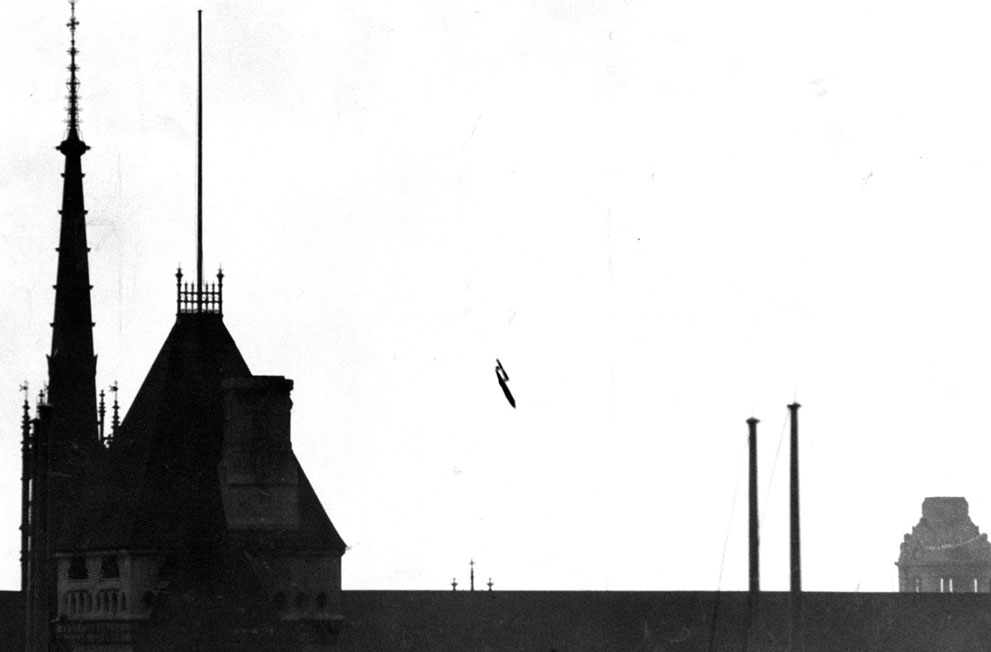
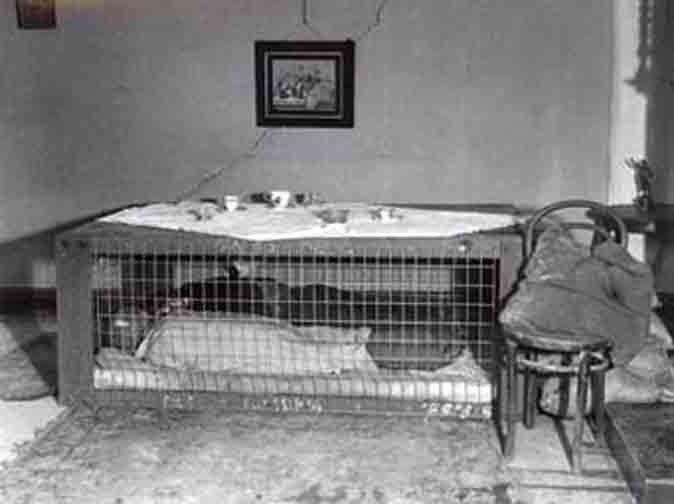
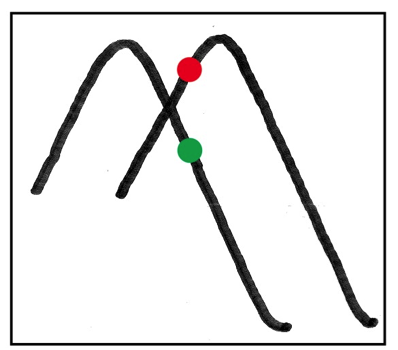
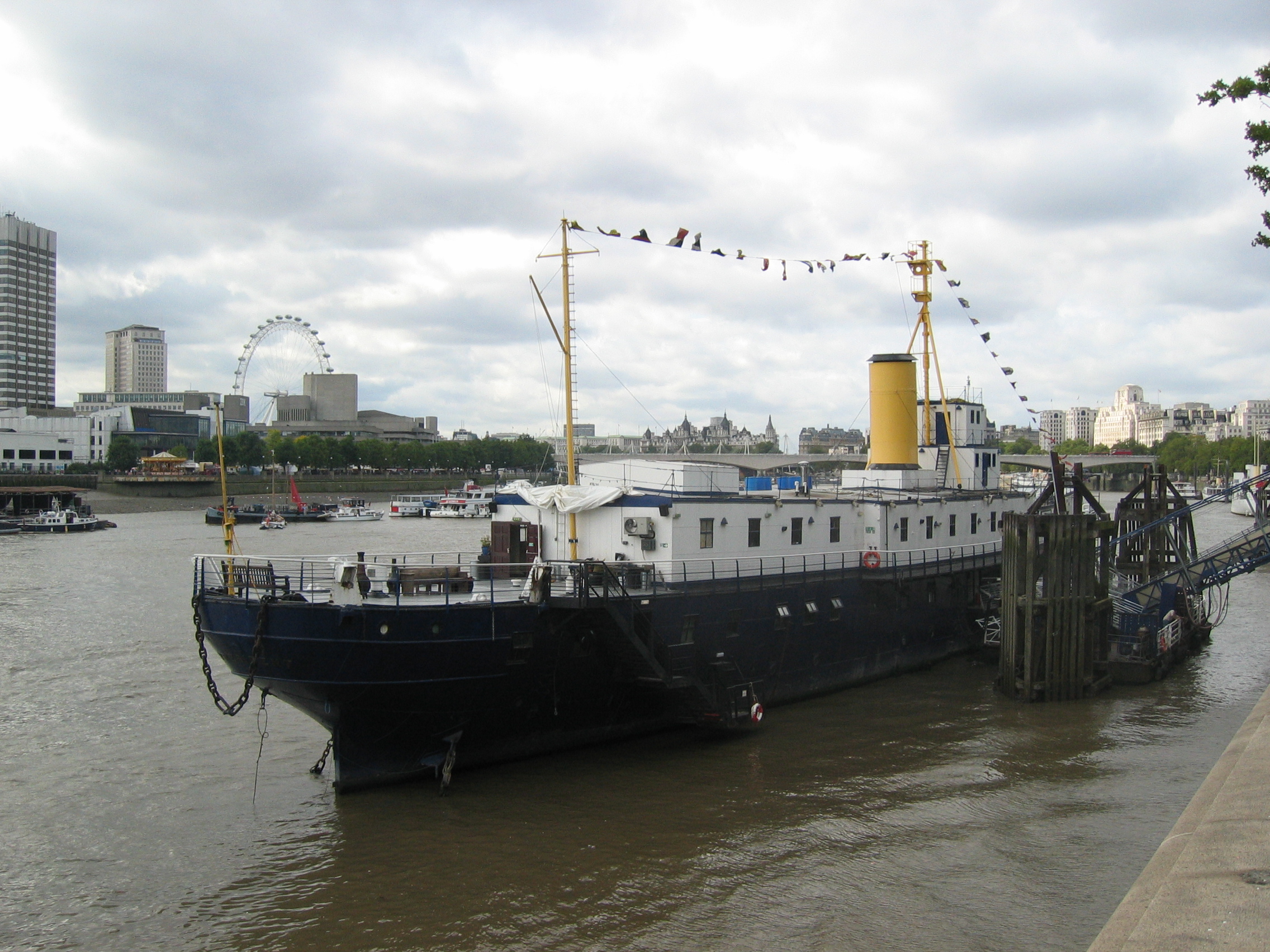


 Learning from Dogs
