Category: Government

Darkness!

Chris Impey writes about his specialty in observational cosmology.

This has nothing to do with life, nothing that we are dealing with in our daily affairs, and has nothing to do with our dear dogs. BUT! This is incredibly interesting! Incredibly and beautifully interesting!

ooOOoo

The most powerful space telescope ever built will look back in time to the Dark Ages of the universe
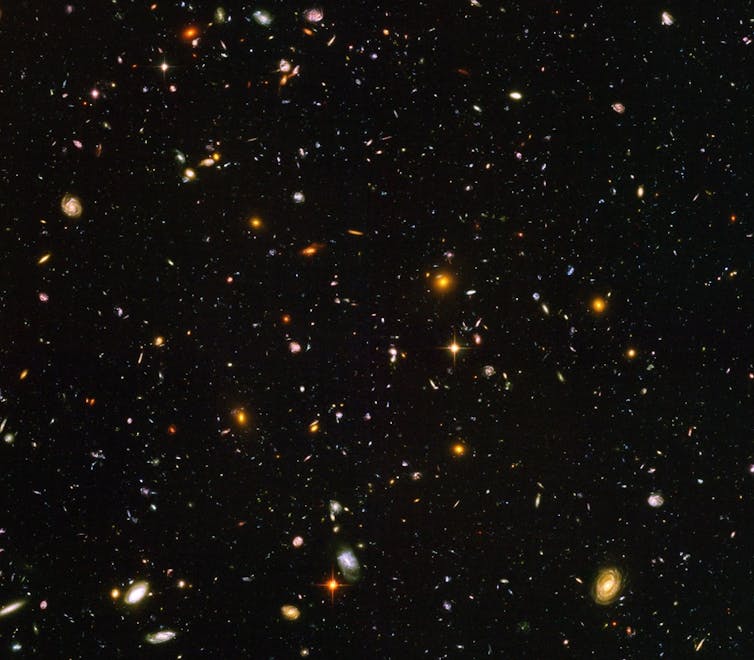
Hubble took pictures of the oldest galaxies it could – seen here – but the James Webb Space Telescope can go back much farther in time. NASA

Chris Impey, University of Arizona

Some have called NASA’s James Webb Space Telescope the “telescope that ate astronomy.” It is the most powerful space telescope ever built and a complex piece of mechanical origami that has pushed the limits of human engineering. On Dec. 18, 2021, after years of delays and billions of dollars in cost overruns, the telescope is scheduled to launch into orbit and usher in the next era of astronomy.

I’m an astronomer with a specialty in observational cosmology – I’ve been studying distant galaxies for 30 years. Some of the biggest unanswered questions about the universe relate to its early years just after the Big Bang. When did the first stars and galaxies form? Which came first, and why? I am incredibly excited that astronomers may soon uncover the story of how galaxies started because James Webb was built specifically to answer these very questions.
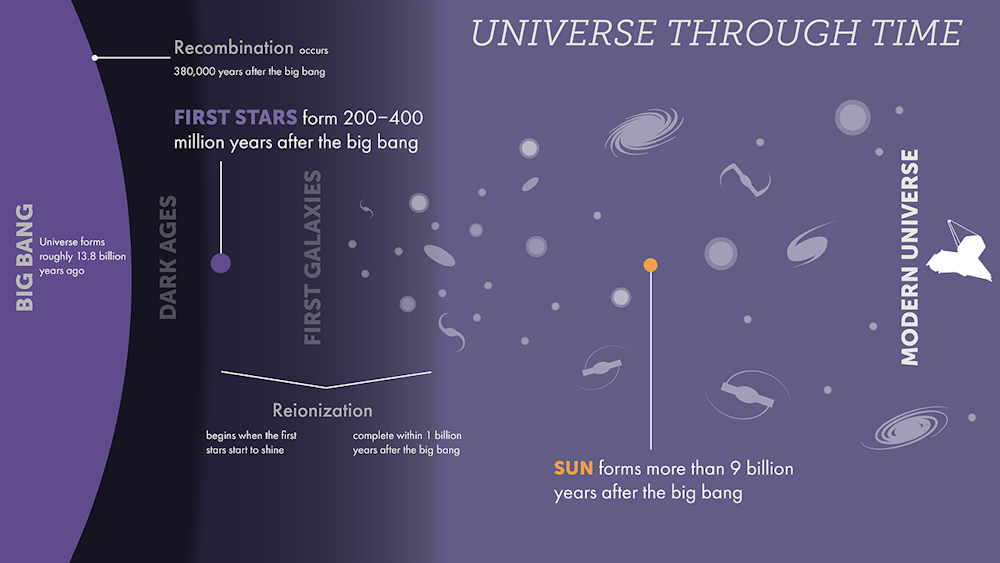
A graphic showing the progression of the Universe through time.
The Universe went through a period of time known as the Dark Ages before stars or galaxies emitted any light. Space Telescope Institute

The ‘Dark Ages’ of the universe

Excellent evidence shows that the universe started with an event called the Big Bang 13.8 billion years ago, which left it in an ultra-hot, ultra-dense state. The universe immediately began expanding after the Big Bang, cooling as it did so. One second after the Big Bang, the universe was a hundred trillion miles across with an average temperature of an incredible 18 billion F (10 billion C). Around 400,000 years after the Big Bang, the universe was 10 million light years across and the temperature had cooled to 5,500 F (3,000 C). If anyone had been there to see it at this point, the universe would have been glowing dull red like a giant heat lamp.

Throughout this time, space was filled with a smooth soup of high energy particles, radiation, hydrogen and helium. There was no structure. As the expanding universe became bigger and colder, the soup thinned out and everything faded to black. This was the start of what astronomers call the Dark Ages of the universe.

The soup of the Dark Ages was not perfectly uniform and due to gravity, tiny areas of gas began to clump together and become more dense. The smooth universe became lumpy and these small clumps of denser gas were seeds for the eventual formation of stars, galaxies and everything else in the universe.

Although there was nothing to see, the Dark Ages were an important phase in the evolution of the universe.
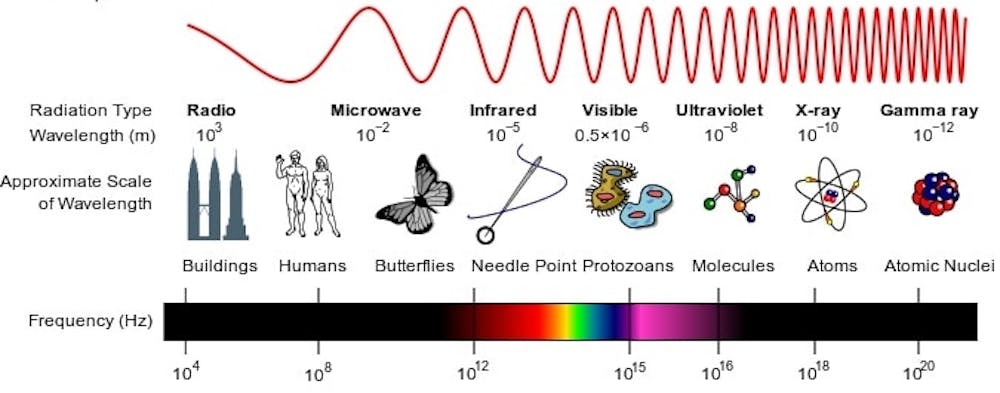
A diagram showing different wavelengths of light compared to size of normal objects.
Light from the early universe is in the infrared wavelength – meaning longer than red light – when it reaches Earth. Inductiveload/NASA via Wikimedia Commons, CC BY-SA

Looking for the first light

The Dark Ages ended when gravity formed the first stars and galaxies that eventually began to emit the first light. Although astronomers don’t know when first light happened, the best guess is that it was several hundred million years after the Big Bang. Astronomers also don’t know whether stars or galaxies formed first.

Current theories based on how gravity forms structure in a universe dominated by dark matter suggest that small objects – like stars and star clusters – likely formed first and then later grew into dwarf galaxies and then larger galaxies like the Milky Way. These first stars in the universe were extreme objects compared to stars of today. They were a million times brighter but they lived very short lives. They burned hot and bright and when they died, they left behind black holes up to a hundred times the Sun’s mass, which might have acted as the seeds for galaxy formation.

Astronomers would love to study this fascinating and important era of the universe, but detecting first light is incredibly challenging. Compared to massive, bright galaxies of today, the first objects were very small and due to the constant expansion of the universe, they’re now tens of billions of light years away from Earth. Also, the earliest stars were surrounded by gas left over from their formation and this gas acted like fog that absorbed most of the light. It took several hundred million years for radiation to blast away the fog. This early light is very faint by the time it gets to Earth.

But this is not the only challenge.

As the universe expands, it continuously stretches the wavelength of light traveling through it. This is called redshift because it shifts light of shorter wavelengths – like blue or white light – to longer wavelengths like red or infrared light. Though not a perfect analogy, it is similar to how when a car drives past you, the pitch of any sounds it is making drops noticeably. Similar to how a pitch of a sound drops if the source is moving away from you, the wavelength of light stretches due to the expansion of the universe.

By the time light emitted by an early star or galaxy 13 billion years ago reaches any telescope on Earth, it has been stretched by a factor of 10 by the expansion of the universe. It arrives as infrared light, meaning it has a wavelength longer than that of red light. To see first light, you have to be looking for infrared light.

Telescope as a time machine

Enter the James Webb Space Telescope.

Telescopes are like time machines. If an object is 10,000 light-years away, that means the light takes 10,000 years to reach Earth. So the further out in space astronomers look, the further back in time we are looking.

A large golden colored disc with a sensor in the middle and scientists standing below.
The James Webb Space Telescope was specifically designed to detect the oldest galaxies in the universe. NASA/JPL-Caltech, CC BY-SA

Engineers optimized James Webb for specifically detecting the faint infrared light of the earliest stars or galaxies. Compared to the Hubble Space Telescope, James Webb has a 15 times wider field of view on its camera, collects six times more light and its sensors are tuned to be most sensitive to infrared light.

The strategy will be to stare deeply at one patch of sky for a long time, collecting as much light and information from the most distant and oldest galaxies as possible. With this data, it may be possible to answer when and how the Dark Ages ended, but there are many other important discoveries to be made. For example, unraveling this story may also help explain the nature of dark matter, the mysterious form of matter that makes up about 80% of the mass of the universe.

James Webb is the most technically difficult mission NASA has ever attempted. But I think the scientific questions it may help answer will be worth every ounce of effort. I and other astronomers are waiting excitedly for the data to start coming back sometime in 2022.

Chris Impey, University Distinguished Professor of Astronomy, University of Arizona

This article is republished from The Conversation under a Creative Commons license. Read the original article.

ooOOoo

The dark ages of the universe that lasted for millions of years until gravity started to form some order out of the ‘soup’.

I don’t know about you but the winter nights, when the sky is clear, have me waiting outside for the dogs to come in looking up at the night sky just lost in the sheer wonder of it all.

The very best of luck to NASA on December 18th!

Our Oregon wolves

A very close relative to the domestic dog.

Indeed until a short time ago it was thought that the dog evolved from the grey wolf but recently I read that the dog evolved as its own species.

But the following is a republication of an article on Oregon Wild about wolves returning to the State of Oregon.

ooOOoo

Wolves in Oregon

Gray wolves (Canis lupus) were once common in Oregon, occupying most of the state. However, a deliberate effort to eradicate the species was successful by the late 1940s.

In fact, trouble for wolves began almost 100 years earlier, in the years before Oregon became a state. In 1843 the first wolf bounty was established and Oregon’s first legislative session was called in part to address the “problem of marauding wolves.” By 1913, people could collect a $5 state bounty and an Oregon State Game Commission bounty of $20. The last recorded wolf bounty was paid out in 1947.

After an absence of over half a century, wolves began to take their first tentative steps towards recovery. Having dispersed from Idaho, the native species is once again trying to make a home in Oregon. One of the first sightings came in 1999 when a lone wolf was captured near the middle fork of the John Day River, put in a crate and quickly returned to Idaho by government wildlife agents. In 2000, two wolves were found dead – one killed by a car, the other illegally shot.

In 2006, a flurry of sightings led biologists to believe a number of wild wolves were living in Northeast Oregon near the Wallowa Mountains and the Eagle Cap Wilderness. Sadly, a wolf found shot to death near La Grande in May 2007 clearly indicated wolves had arrived in the area.

After that sad chapter, wolves began to establish a fragile foothold in the state. In July 2008 pups were confirmed to a wolf named Sophie by the Oregon Wild wolf pack (and B-300 to government biologists). Those pups represented the first wolves in Oregon in nearly 60 years! A second set of six pups were confirmed and videotaped in November 2009. The following July, a third litter of pups was confirmed.

Unfortunately, the news was tempered with additional poaching and heavy-handed state management. After peaking at 26 confirmed wolves, wolf recovery stalled out in 2011. While some wolves dispersed from the Imnaha Pack, only one pup was confirmed to Oregon’s best-known pack, and two pups were confirmed in one of the state’s other two packs (the Walla Walla and Wenaha). Oregon’s confirmed wolf population fell to 17, and then to 14, when the state killed three more wolves (two on purpose) and poachers killed a fourth.

In 2011, wolves in Eastern Oregon lost their federal protections due to an unprecedented congressional budget rider sponsored by Montana Sen. John Tester. Hours later,  Oregon used their new authority to kill two wolves and issue dozens of landowner kill permits at the request of the livestock industry.

Meanwhile, anti-wildlife interests and their political allies pushed over half a dozen bills in Salem aimed at making it easier to kill wolves and undermine wolf recovery. Most of the bills were defeated, but a compensation fund and new predator killing fund were approved.

Wolf hunts in nearby states also threaten the region’s fragile recovery. When wolves were federally delisted the region was home to an estimated population of about 1,700 wolves. Over 1,000 were killed in the first two seasons alone.

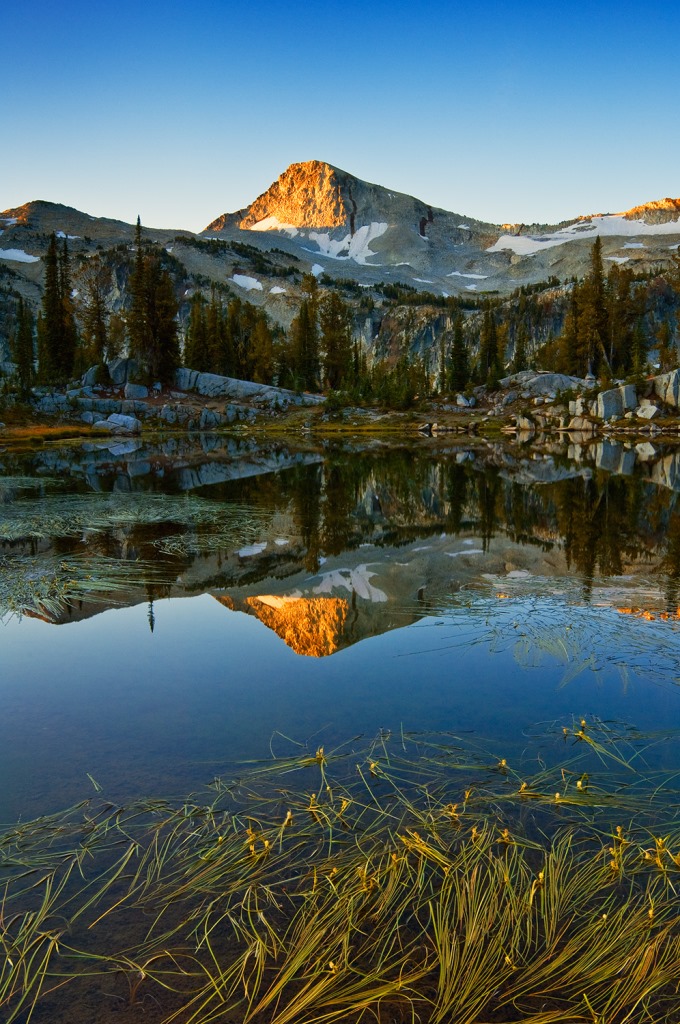
The large tracts of pristine and unspoiled Wilderness and roadless areas in Northeast Oregon are vital components in the successful recovery of wolves, and other wildlife too. (Ed: see the photograph below of the wild lands of Oregon.) The reappearance of wolves, wolverines, and other endangered wildlife in Oregon further underscores the importance of protecting those roadless areas that remain on public land.

Anticipating the eventual return of wolves, the state of Oregon completed a Wolf Conservation and Management Plan in 2005 aimed at making rational decisions in the light of day that would lead to wolf recovery. Though state polling put support for wolf recovery at over 70 percent, the plan was weak, allowed the state to kill wolves, and set scientifically indefensible recovery goals.

Even so, the plan was actively opposed by the Oregon Cattlemen’s Association. They argued in their minority report that “wolves are being used as a biological weapon” and that wolves are a non-native species that citizens should have the right to shoot without permits. 

Oregon Wild and other conservationists generally – if reluctantly – agreed to honor the compromise embodied in the plan. Most believed lethal control would be an option of last resort and conservation would be a priority.

After the state shot two young wolves in response to the first livestock depredations in over half a century, it was clear the state was willing to address the concerns of the livestock industry by killing wolves.

In 2010, the plan was reviewed and revised. The public process took the better part of a year and demonstrated that support for wolf recovery had grown. Over 90 percent of a staggering 20,000 public comments were in favor of stronger protections for Oregon’s endangered gray wolves. Oregon Wild joined other conservationists and the Oregon public in defending the plan against continued attacks. Though the plan survived relatively intact, most of the approved changes made it easier to kill wolves. 

In 2011, a lone wolf from the Imnaha Pack generated international headlines when he became the first in Western Oregon since 1947, and then the first in California in nearly a century. The story of Journey (OR-7) provided a welcome opportunity to step away from the unnecessary controversy manufactured by those opposed to wolf recovery and instead reflect on the positive story of a native species retaking its rightful place on the landscape.

Since 2012, wolf recovery in Oregon has slowly started to get back on track. Although the population has increased over the last several years, in 2015, and with only 78 known adult wolves in the state, the Oregon Department of Fish and Wildlife and its Commission decided to prematurely strip wolves of state Endangered Species Act protections — despite what peer reviewed, independent scientists recommended. Shortly after, lawmakers in Salem passed HB 4040: a bill that statutorily affirmed the delisting of Oregon’s wolves. The passage of HB 4040 essentially blocked the ability of conservation organizations to bring forth a lawsuit challenging the merits of the Commission’s decision.

The latest update to the Wolf Conservation and Management Plan — which was approved by the Commission in June of 2019 —  significantly erodes protections for wolves by lowering the threshold for when the state can kill wolves, removing requirements for non lethal conflict deterrence, and opening the door toward public hunting and trapping. 

For many, wolves are a symbol of freedom, wilderness, and the American west, and Oregon’s wolf country contains some of the most spectacular landscapes in the world. Science continues to demonstrate the positive impacts of wolves on the landscape and the critical role played by big predators, and interest in their return is fueling tourism in Oregon’s wolf country and elsewhere in the west.

Still, wolves are threatened by a purposeful campaign of misinformation and fear. This webpage shoots down many of the common myths about wolves. A small number of vocal anti-wolf activists, along with industry lobbyists and their political allies, continue to work to undermine already weak protections for wolves and other wildlife.

The Future

For a state that prides itself on its green reputation, the extermination of wolves is one of our greatest environmental tragedies. Their return represents an opportunity at redemption.

Most Oregonians value native wildlife and believe wolves have a rightful place on the landscape. We are happy to know the silence of a hike in the Eagle Cap might be broken by the lonely howl of a wolf. If that howl is to remain, it’s critical that those who value wolves and other native wildlife stand up and speak up on their behalf.

ooOOoo

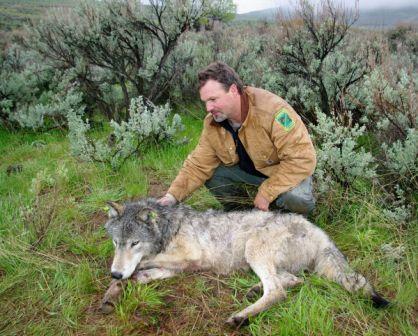
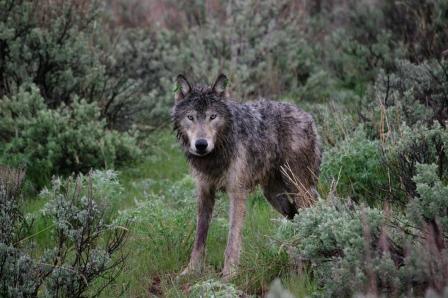
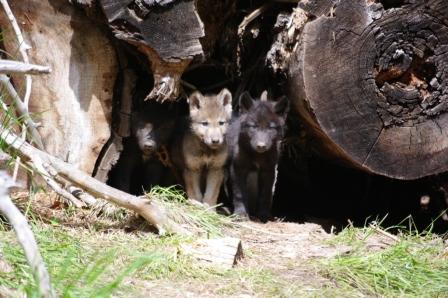
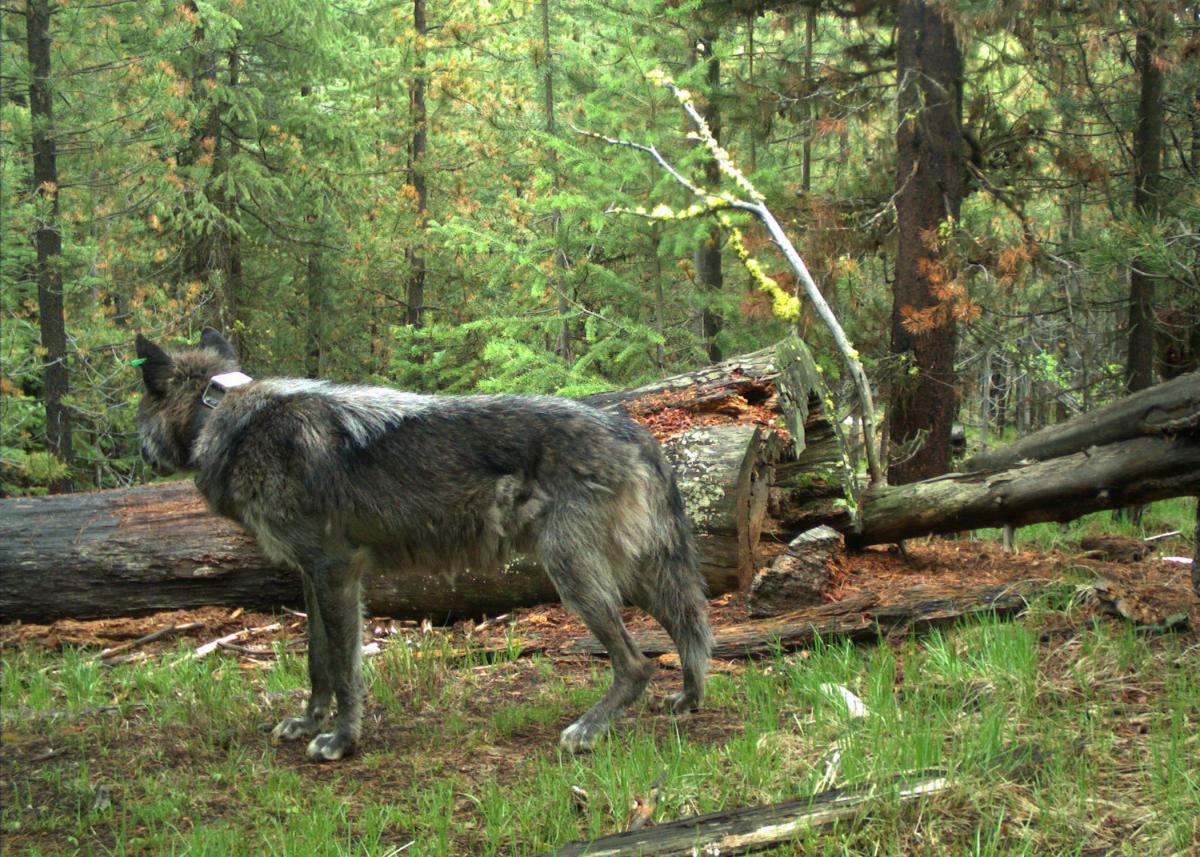
Plus there were photographs embedded within the text that I thought would be better appreciated if they were offered separately. Here they are:

oooo
oooo
oooo
oooo

Finally a collection of wolf photographs from a link on Oregon Wild that is no longer in use. I downloaded these pictures in 2016!

OR2
130518_OR4_odfw

Long may they prosper!

Oh dear, I meant deer!

A timely reminder from The Conversation.

We live in a rural part of Southern Oregon. The number of deer hit on our roads is appalling. Not infrequently when out cycling I come across a deer that seems uninjured. Often I get off my bike and stroke the animal, or drag it from the centre of the road to the shoulder. But it is dead.

Once recently the deer was still warm. What surprises me is that they are always dead. There never seems to be a deer that has been wounded. Probably just as well as I wouldn’t want to leave the animal.

We feed the deer at home on a daily basis and there is a young stag that has become familiar with me and starts eating the COB (corn, oats and barley mixed together) even before I have finished setting out the six piles of food. They are very dear creatures.

So this article has to be shared with you!

ooOOoo

Fall means more deer on the road: 4 ways time of day, month and year raise your risk of crashes

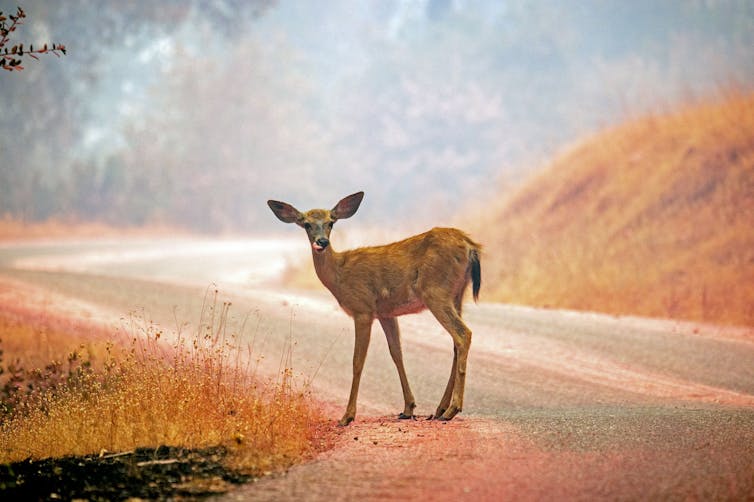
Deer cross roads whenever they wish, but some time periods are higher risk than others. Josh Edelson/AFP via Getty Images

Tom Langen, Clarkson University

Autumn is here, and that means the risk of hitting deer on rural roads and highways is rising, especially around dusk and during a full moon.

Deer cause over 1 million motor vehicle accidents in the U.S. each year, resulting in more than US$1 billion in property damage, about 200 human deaths and 29,000 serious injuries. Property damage insurance claims average around $2,600 per accident, and the overall average cost, including severe injuries or death, is over $6,000.

While avoiding deer – as well as moose, elk and other hoofed animals, known as ungulates – can seem impossible if you’re driving in rural areas, there are certain times and places that are most hazardous, and so warrant extra caution.

Transportation agencies, working with scientists, have been developing ways to predict where deer and other ungulates enter roads so they can post warning signs or install fencing or wildlife passages under or over the roadway. Just as important is knowing when these accidents occur.

My former students Victor Colino-Rabanal, Nimanthi Abeyrathna and I have analyzed over 86,000 deer-vehicle collisions involving white-tailed deer in New York state using police records over a three-year period. Here’s what our research and other studies show about timing and risk:

Time of day, month and year matters

The risk of hitting a deer varies by time of day, day of the week, the monthly lunar cycle and seasons of the year.

These accident cycles are partly a function of driver behavior – they are highest when traffic is heavy, drivers are least alert and driving conditions are poorest for spotting animals. They are also affected by deer behavior. Not infrequently, deer-vehicle accidents involve multiple vehicles, as startled drivers swerve to miss a deer and collide with a vehicle in another lane, or they slam on the breaks and are rear-ended by the vehicle behind.

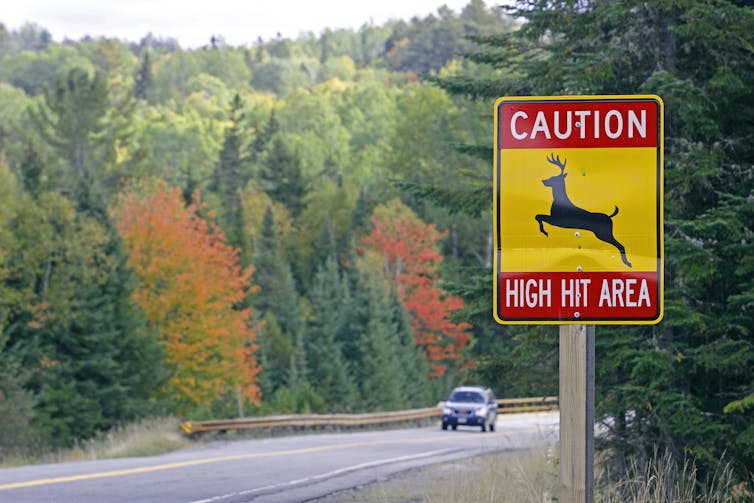
Car on road during the start of leaf colors with road sign reading: Caution: High Hit Area
A sign warns of deer traffic on Route 16 in Franklin County, Maine. Education Images/Universal Images Group via Getty Images

In analyzing thousands of deer-vehicle collisions, we found that these accidents occur most frequently at dusk and dawn, when deer are most active and drivers’ ability to spot them is poorest. Only about 20% of accidents occur during daylight hours. Deer-vehicle accidents are eight times more frequent per hour of dusk than daylight, and four times more frequent at dusk than after nightfall.

During the week, accidents occur most frequently on days that have the most drivers on the road at dawn or dusk, so they are associated with work commuter driving patterns and social factors such as Friday “date night” traffic.

Over the span of a month, the most deer-vehicle accidents occur during the full moon, and at the time of night that the moon is brightest. Deer move greater distances from cover and are more likely to enter roadways when there is more illumination at night. The pattern holds for deer and other ungulates in both North America and Europe.

Over a year, by far the highest numbers of deer-vehicle accidents are in autumn, and particularly during the rut, when bucks search and compete to mate with does. In New York state, the peak number of deer-vehicle accidents occurs in the last week of October and first weeks of November. There are over four times as many deer-vehicle accidents during that period than during spring. Moose-vehicle accidents show a similar pattern.

That high-risk period is also when daylight saving time ends – it happens on Nov. 7, 2021, in the U.S. Shifting the clock one hour back means more commuters are on the road during the high-risk dusk hours. The result is more cars driving at the peak time of day and during the peak time of the year for deer-vehicle accidents.

Overall, given that most U.S. states and more than 70 countries have seasonal “daylight saving” clock shifts, elevated ungulate-vehicle accident rates caused by clock shift may be a widespread problem.

[Over 100,000 readers rely on The Conversation’s newsletter to understand the world. Sign up today.]

There is a longstanding debate about the benefit of a daylight saving clock shift, given how it disrupts humans’ circadian rhythms, causing short-term stress and fatigue. Risk of deer-vehicle accidents may be another reason to reconsider whether clock shifts are worthwhile.

Deer still cross roads at any time

It’s important to remember that deer-vehicle accidents can occur at any time of day or night, on any day of the year – and that deer can show up in urban areas as well as rural ones.

The insurance company State Farm found that on average, U.S. drivers have a 1 in 116 chance of hitting an animal, with much higher rates in states such as West Virginia, Montana and Pennsylvania. Over the 12 months ending in June 2020, State Farm counted 1.9 million insurance claims for collisions with wildlife nationwide. Around 90% of those involved deer.

Where deer or other ungulates are likely to be present, drivers should always be alert and cautious, especially at dawn, dusk, on bright moonlit nights and during the fall rut.

Tom Langen, Professor of Biology, Clarkson University

This article is republished from The Conversation under a Creative Commons license. Read the original article.

ooOOoo

Nothing else to say but we drivers need to slow down and extra vigilant. Driving safely means always allowing for the unexpected and never following the vehicle in front too close. The minimum safe distance is one vehicle length for every 10 miles per hour in speed!

Twenty years ago!

A tribute to that terrible event.

This is an hour-long video from YouTube.

It is about the role that dogs played.

https://youtu.be/EpwApifgdr8

This documentary reveals the unknown true stories of the working rescue dogs who saved lives at Ground Zero during the September 11, 2001 crisis and aftermath. Blind office worker Michael Hingson had to trust his seeing-eye dog Roselle on a treacherous descent of 78 flights of stairs to escape only moments before the towers collapsed. Lt. David Lim was called to duty with his dog Sirius. Genelle Guzman-McMillan was found by recovery dogs after being pinned under the rubble for 27 hours.

Once again, dogs come to the rescue of us humans, both physically and psychologically!

Protect Pipe Fork

Please, let me use the power of the internet to spread the word!

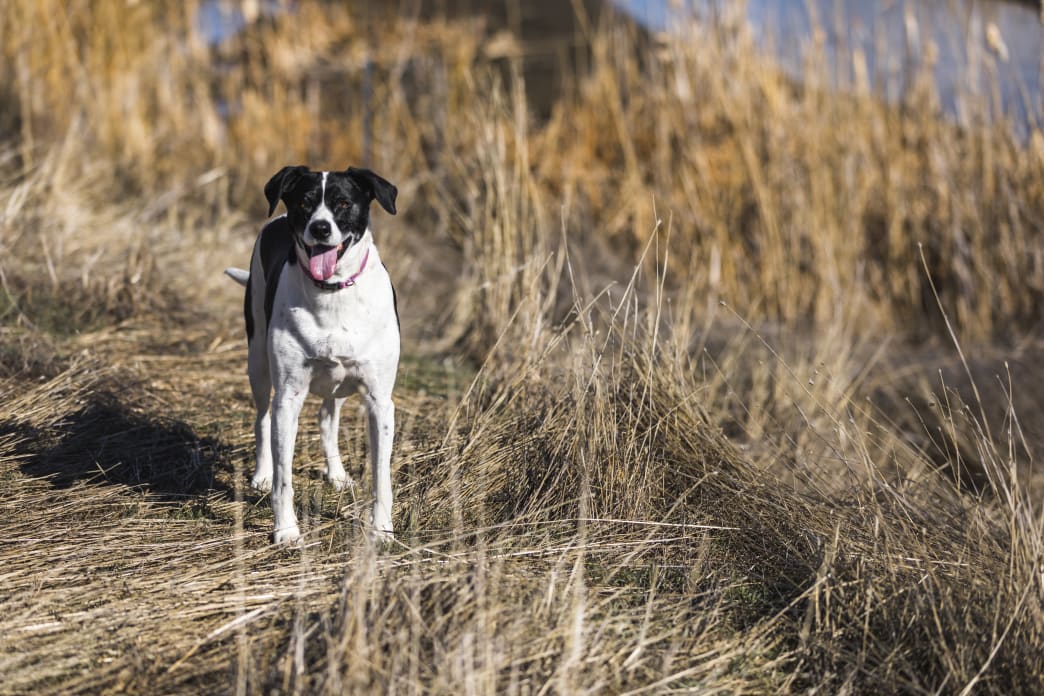
On the face of it this has nothing to do with dogs. Or does it? Because the stream and the forest will most certainly be favourite walks for people and their dogs. (Indeed a very quick search online brought up the following picture🙂

Why Your Dog Will Love A Trip To Klamath As Much As You Do.

So this post is to drum up support for this critically important area. Please also sign the petition. Thank you.

ooOOoo

Protect Pipe Fork

Pipe Fork is a compelling example of lush, mature riparian forest in the Klamath-Siskyou Bioregion of Southern Oregon. Pipe Fork Creek originates from pure-water springs nestled in ancient forest on the east flank of Grayback Mountain, and flows cold and clear and abundantly year-round through a narrow canyon wilderness into the Williams Valley. There it provides generously for farms and homes as well as for rich spawning and nursery grounds vital to chinook and coho salmon. 

Designated a Research Natural Area (RNA) of Critical Environmental Concern by the Bureau of Land Management, the upper reaches of Pipe Fork have also been nominated for designation as a Federal Wild and Scenic River. Rare Pacific fishers and martens, spotted owls, elk, bear, and many other animals, as well as numerous species of rare plants, live in the undisturbed forests of the RNA. 

Josephine County has had plans to sell a 320-acre parcel right next to the BLM RNA that encompasses both sides of Pipe Fork, and to clearcut 114 acres on the north side of the creek. The devastation that would result from clearcutting on the steep slopes above Pipe Fork would do lasting damage to the sensitive riparian forest and would greatly diminish the quality and quantity of water that flows into the Williams Valley. 

But we will not let this happen! We are determined and optimistic that by all of us working together, this precious place will be saved for the benefit of present and future generations.

Williams Community Forest Project invites you to watch our brand new 7-minute film showcasing the wonders of Pipe Fork and our efforts to preserve it, and to sign the petition at the bottom of the page. Please share this page with like-minded friends and family, allies and colleagues! 

Pristine Waters 4K from Wise Oak Productions on Vimeo.

ooOOoo

Now go to the link below which has what I published above but more importantly has the petition. Please sign it!

Protect Pipe Fork

Thank you!

Time marches on!

So we are now at the last day of July!

In many ways this has been a strange month in a somewhat strange year! No, more than that! We are at last seeing climate change come to the fore in terms of topics. Yves Smith, who produces Naked Capitalism (and it’s a great blog) had an item on climate change recently. Here’s an extract:

Yves here. As many of you know, I am considerably frustrated with Green New Deal advocates, because I see them as selling hopium. They act as if we can preserve modern lifestyles as long as we throw money, some elbow grease, and a lot of new development (using current dirty infrastructure to build it) at it. We’re already nearing the point where very bad outcomes, like widespread famines and mass migrations due to flooding, are baked in. And even that take charitably assumes that a rump of what we consider to be civilization survives.

There were many replies from a variety of people; I loved this one from Tom Stone:

A rational response to this crisis is not politically or societally feasible.

And the crisis is here, now.

The changes are not linear, a concept many of the people I talk to about climate change have difficulty accepting.

Large parts of the SF Bay Area are going to be heavily impacted (It’s my stomping ground, so I’m familiar with it) by salt water intrusion, levee failure, lack of water to to changing precipitation patterns in the Sierra’s…

A lot of Bay Area Housing is built on fill or in low lying areas, those homes will start to be abandoned within a decade if current trends continue.

Add the devastation from the inevitable Earthquake on the Hayward Fault which our local and State Governments are totally incapable of dealing with and it is going to be a godawful mess.

I looked at the Disaster planning for a quake on the Hayward Fault some years ago and all of the assumptions are for a “Best Case” scenario.

The quake won’t come in October during a drought and a high wind event, it won’t come at the wrong time of day, it won’t come in the spring during a high water period when Levee’s are stressed…

The Bay areas disaster response center was built in the 1950’s to withstand a nuclear attack, it is underground and was built smack dab in the middle of the Hayward Fault.

Have I mentioned that 20 years after 9/11 the various emergency responders do not have a commonality in their communications gear?

The more people that read this and other article the better.

Plus I am going to include my reply:

Your piece, Yves, that you published from Rolf was excellent and so was Tom Stone’s comment above. The scale of the issue is immense but at least climate change has now become a mainstream topic, and rightly so. National Geographic magazine published a special edition in May, 2020 to commemorate the anniversary of the fiftieth Earth Day. I think it was 1962 when Rachel Carson published Silent Spring. So we can’t complain that this isn’t a new issue. But whether or not we make it to the one hundred anniversary of that first Earth Day depends on the myriad of actions that we, as in all of us, including especially our leaders and politicians, make NOW! Let me spell it out. NOW means within the next 5 years at the latest. I am 76 and a passionate advocate of a change in mass behaviors. For I have a single grandson, Morten, living with his parents back in England who is 10. I fear for his future and for the future of all of his age.

Anyway, to get back to the article about dogs that I wanted to share with you. It is from Treehugger.

ooOOoo

This 13-Year-Old Dog Has a Home Again

It’s heartbreaking when senior pets lose their families.

By Mary Jo DiLonardo

Mary Jo DiLonardo

Published July 29th, 2021

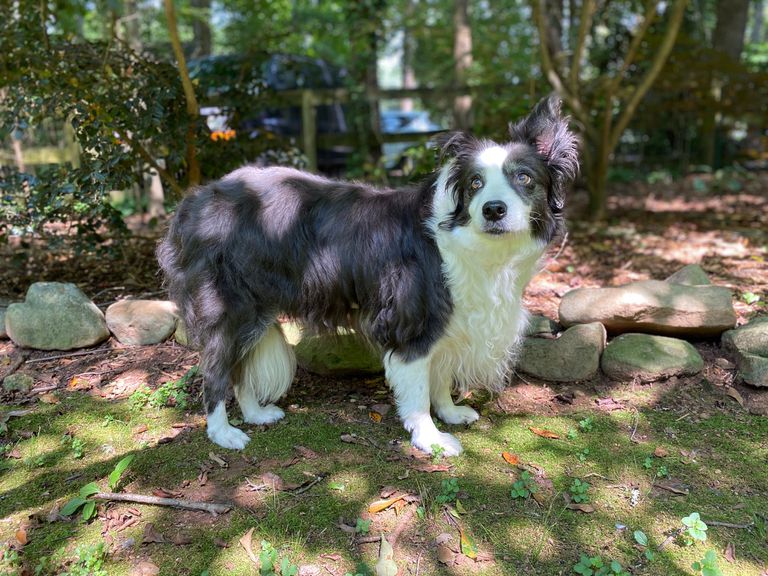
Magdalen in her new yard. Mary Jo DiLonardo

This weekend, my husband and I were the last step in a transport to get a dog to her new home. 

Typically, when we have a new dog in the backseat, it’s a raucous foster puppy (or two) in a crate. There’s usually barking and tumbling and playing until the motion of the car lulls them to sleep.

But this passenger was a much different story.

Magdalen is a 13-year-old border collie. Her owner gave her up temporarily when he was sick, but when he fully recuperated a few months later, he said he didn’t want her back. He had her since she was a puppy but now had no place for her.

The family who had given her a temporary home had children and other dogs and was unable to give her a permanent home. When Speak St. Louis, the rescue I work with, was contacted about the border collie, they offered to take her in. 

She went to the groomer for her very matted coat and to the vet for a basic health check.

The spa visit made her look (and no doubt, feel) much better. But the vet didn’t have great news. She had to have surgery for mammary masses and her mouth was swollen with all sorts of dental issues. One surgery later and she had six masses removed. Two teeth fell out during cleaning and 11 more had to be extracted.

Fortunately, the growths were benign and she slowly began to recover. 

Stressed and Resigned

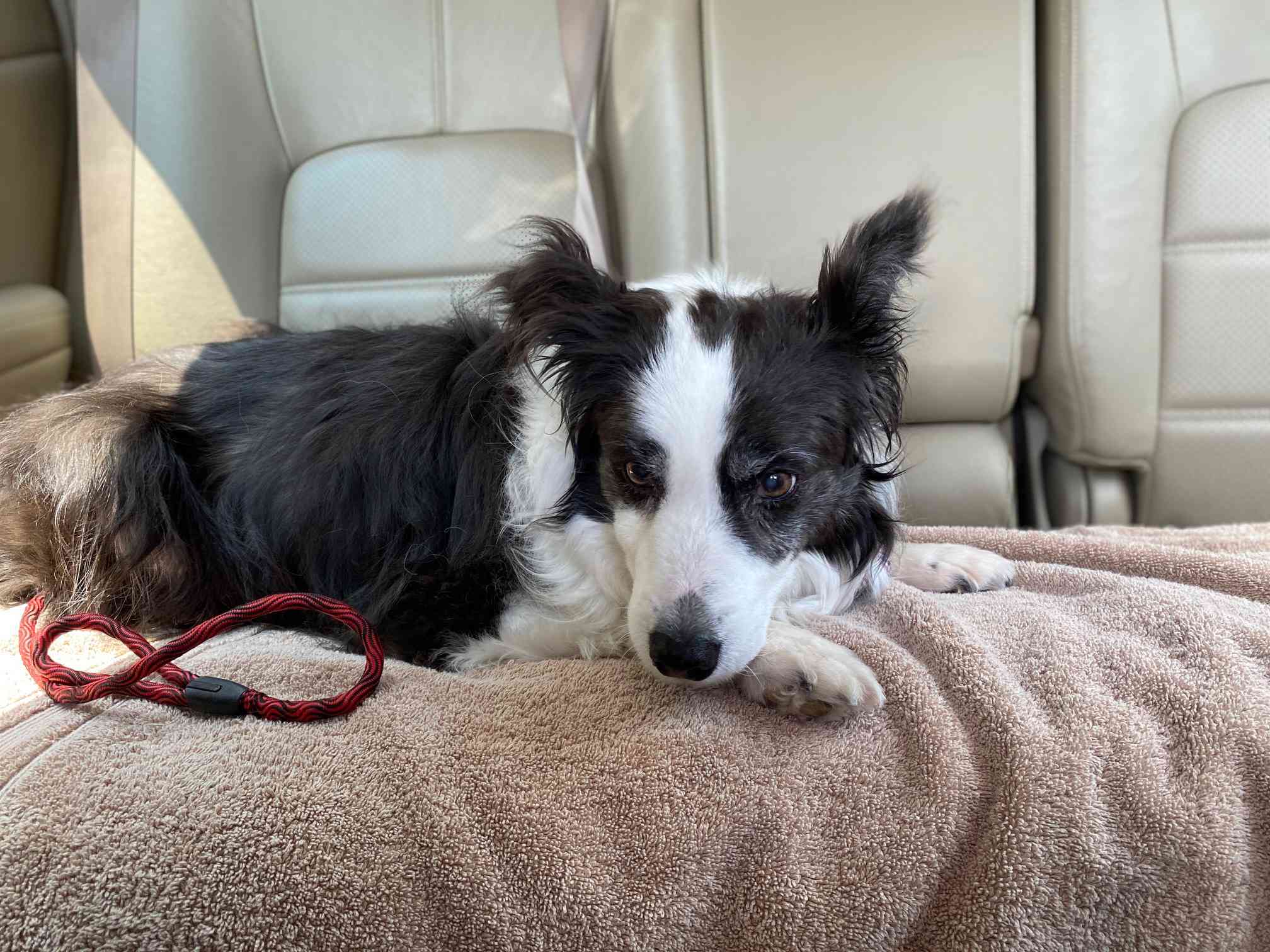
Magdalen barely moved on the ride to her new home. Mary Jo DiLonardo

On the trip home, the sweet senior looked so resigned in our backseat. The last kind transporter gently lifted her from her car and placed her in ours, where she barely moved as she re-settled herself.

She had just spent several weeks in the care of a wonderful foster parent where she recuperated from her surgery and from being left by her family. 

I’m sure at this point she was just shut down and stressed and quietly rolling with whatever happened to her. She took the pieces of kibble we offered but her tail didn’t wag because it was tucked mostly between her legs.

It was heartbreaking to know that not so long ago she was someone’s pet and she was discarded.

It’s understandable that her owner needed some temporary help when he was sick and overwhelmed. But I can’t imagine why he wouldn’t have wanted her back now. I think of my own dog and dogs we’ve lost to old age in the past. They’re family and they stay that way forever.

Dogs aren’t disposable.

Why People Give Up Senior Pets 

Senior pets often end up in shelters and with rescues when their owners die and no one in the family is able to take them in. 

Or some people give them up when they become harder to care for. Seniors can have more health problems and often people can’t afford the costs. They also aren’t as fun as their younger counterparts, and sometimes get cranky or snippy around children.

For rescues and shelters, it’s much easier to get a cute, bouncy puppy adopted than a less active senior that might come with health baggage and who might only be with the family for a few years.

A survey by PetFinder found that “less adoptable” pets like seniors or special needs animals spend nearly four times as long on the adoption site before they find a home.1

But older dogs have lots of benefits. Unlike puppies, they usually arrive housebroken. Sure, there are the occasional accidents as they figure things out, but they mostly know they are supposed to potty outside.

Senior dogs won’t chew your furniture or your fingers. They don’t bounce off the walls and wake you up in the middle of the night to go outside. They don’t need as much exercise as younger dogs but will revel in all the attention you want to give them.

Mary Jo DiLonardo

As for Magdalen, she is coming out of her shell in her new home. She was adopted by a good friend of mine who is a dog trainer. She has a soft heart for seniors and a passion for brainy border collies.

Because the pup is very driven by food, her new mom is going to try nosework with her. That’s an activity where she can sniff out treats in all sorts of hidden places. That will give her a job and a hobby—and lots of food!

Magdalen doesn’t have her tail between her legs anymore and the resident dogs are figuring out that she’s here to stay. But the key is for her to understand that this is now her forever home and no one will ever leave her again.

ooOOoo

Of the six dogs we have here at home three are old. But they still remain happy and carefree which is a little different to yours truly who, as much as he tries very hard not to do so, worries about the big things in life and, frankly, the biggest of them all is climate change.

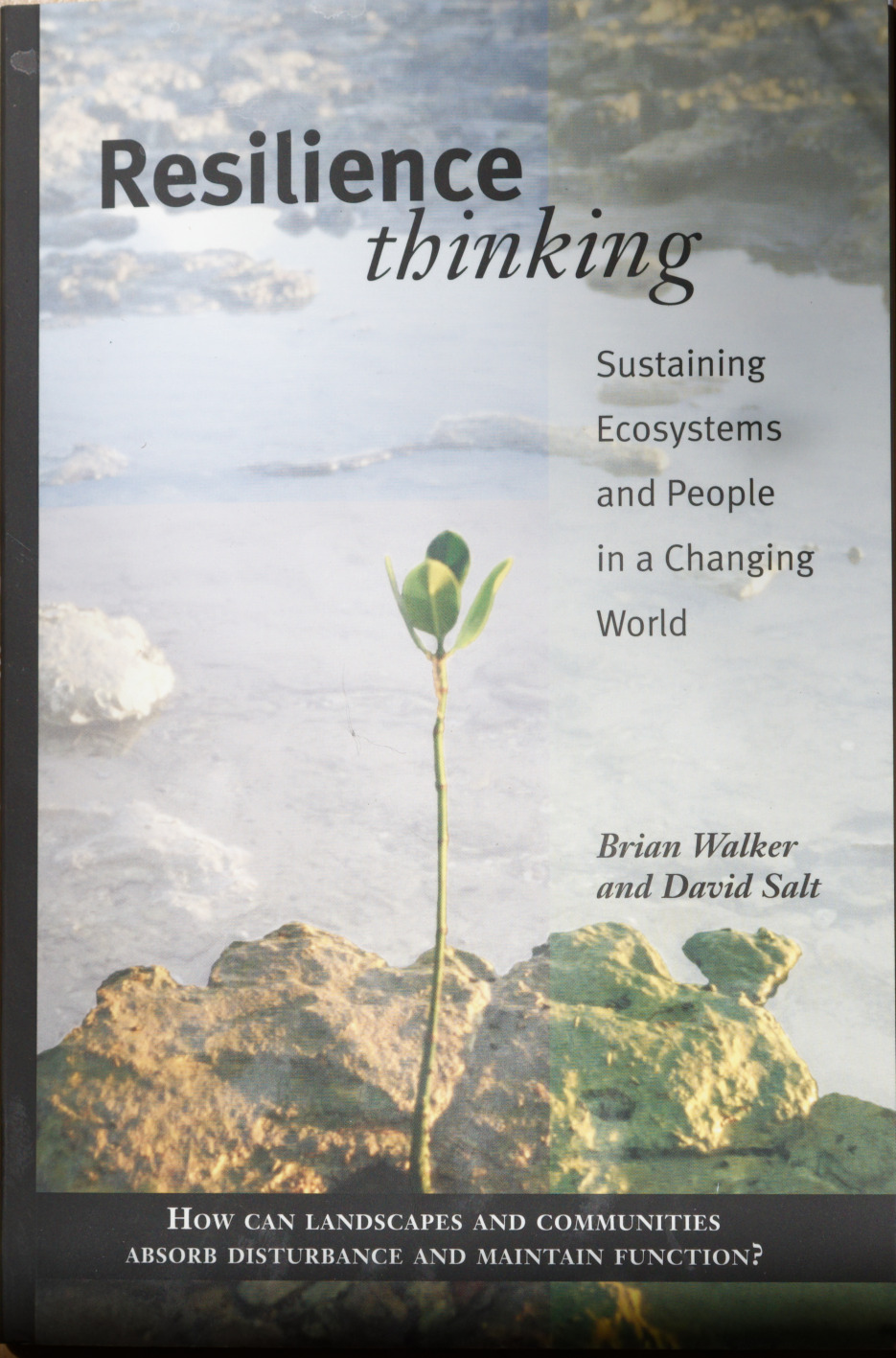
Resilience Thinking – a review

A book to make one think anew.

Let me make myself absolutely clear about this book, indeed I can do no better than to publish part of an email that I sent to the authors last Saturday:

To say that I was inspired by what you wrote is an understatement. More accurately it has changed my whole understanding of this planet, of the natural order of things, of the politics of the Western world, of vast numbers of us humans, and how precarious is our world just now. It has opened my eyes radically, and I thought before that I was fairly in touch with things.

Resilience is a simple idea but in its application has proved to be anything such. On page 2 the authors set out as they saw it The Drivers of Unsustainable Development. Here’s how that section develops:

Our world is facing a broad range of serious and growing resource issues. Human-induced soil degradation has been getting worse since the 1950s. About 85 percent of agriculture land contains areas degraded by erosion, rising salt, soil compaction, and various other factors. It has been estimated (Wood et al. 2000) that soil degradation has already reduced global agricultural productivity by around 15 percent in the last fifty years. In the last three hundred years, topsoil has been lost at a rate of 200 million tons per year; in the last fifty years it has more than doubled to 760 million tons per year.

As we move deeper into the twenty-first century we cannot afford to lose more of our resource base. The global population is now expanding by about 75 million people each year. Population growth rates are declining, but the world’s population will still be expanding by almost 60 million per year in 2030. The United Nations projections put the global population at nearly 8 billion in 2025. In addition, if current water consumption patterns continue unabated, half the world’s population will live in water-stressed river basins by 2025.

The Food and Agriculture Organization of the United Nations (FAO) 2004 Annual Hunger Report estimates that over 850 million people suffer from chronic hunger. Hunger kills 5 million children every year.

It goes on ….!

Now I want to quote from the end of the book, from their section on Resilience Thinking.

In our opening chapter we observed that there were many pathways into resilience thinking and suggested readers not worry too much if the finer details of a resilience framework are a bit obscure. We emphasized that what is of much more importance is an appreciation of the broader themes that underpin such a framework. Those broader themes revolve around humans existing within linked social and ecological systems. These are complex adaptive systems, and attempts to control or optimize parts of such systems without consideration of the responses that this creates in the broader system are fraught with risk. Much of this book has been spent on attempting to explore the consequences of such an approach.

In the broadest sense, optimizing and controlling components of a system in isolation of the broader system results in a decline in resilience, a reduction in options, and the shrinkage of the space in which we can safely operate. Resilience thinking moves us the other way.

It is our hope that readers who are persuaded of this basic premise will be encouraged to explore the inevitable consequences of such thinking. Even if you are not completely clear on the basins of attractions, thresholds, and adaptive cycles, if the concepts of ecological resilience and dynamic social-ecological systems have any resonance then you are in a better position to appreciate what is happening to the world around you.

The phrase complex adaptive system was new to me but intuitively I got what the authors meant. As they state on page 35: The three requirements for a complex adaptive system are:

  • That it has components that are independent and interacting,
  • There is some selection process at work on those components (and on the results of local interactions),
  • Variation and novelty are constantly being added to the system (through components changing over time or new ones coming in),

This was my eye-opener. It was now obvious that many processes, especially in nature, that I had hitherto regarded as constant were changing albeit usually on a timescale of many decades sometimes centuries.

And the other conclusion that was inescapable was that we humans were largely responsible for those changes because we couldn’t see the longterm consequences of what we were doing.

As I remarked in a previous post :

David writes that firstly carbon dioxide is not like other pollutants, for example like air particulants.  Then later goes on to say:

The second difference is that climate change is irreversible.

As Joe Romm notes in a recent post, New York Times columnist Joe Nocera slipped up in his latest column and referred to technology that would “help reverse climate change.” I don’t know whether that reflects Nocera’s ignorance or just a slip of the pen, but I do think it captures the way many people subconsciously think about climate change. If we heat the planet up too much, we’ll just fix it! We’ll turn the temperature back down. We’ll get around to it once the market has delivered economically ideal solutions.

But as this 2009 paper in Nature (among many others) makes clear, it doesn’t work that way:

This paper shows that the climate change that takes place due to increases in carbon dioxide concentration is largely irreversible for 1,000 years after emissions stop. Following cessation of emissions, removal of atmospheric carbon dioxide decreases radiative forcing, but is largely compensated by slower loss of heat to the ocean, so that atmospheric temperatures do not drop significantly for at least 1,000 years. [my emphasis]

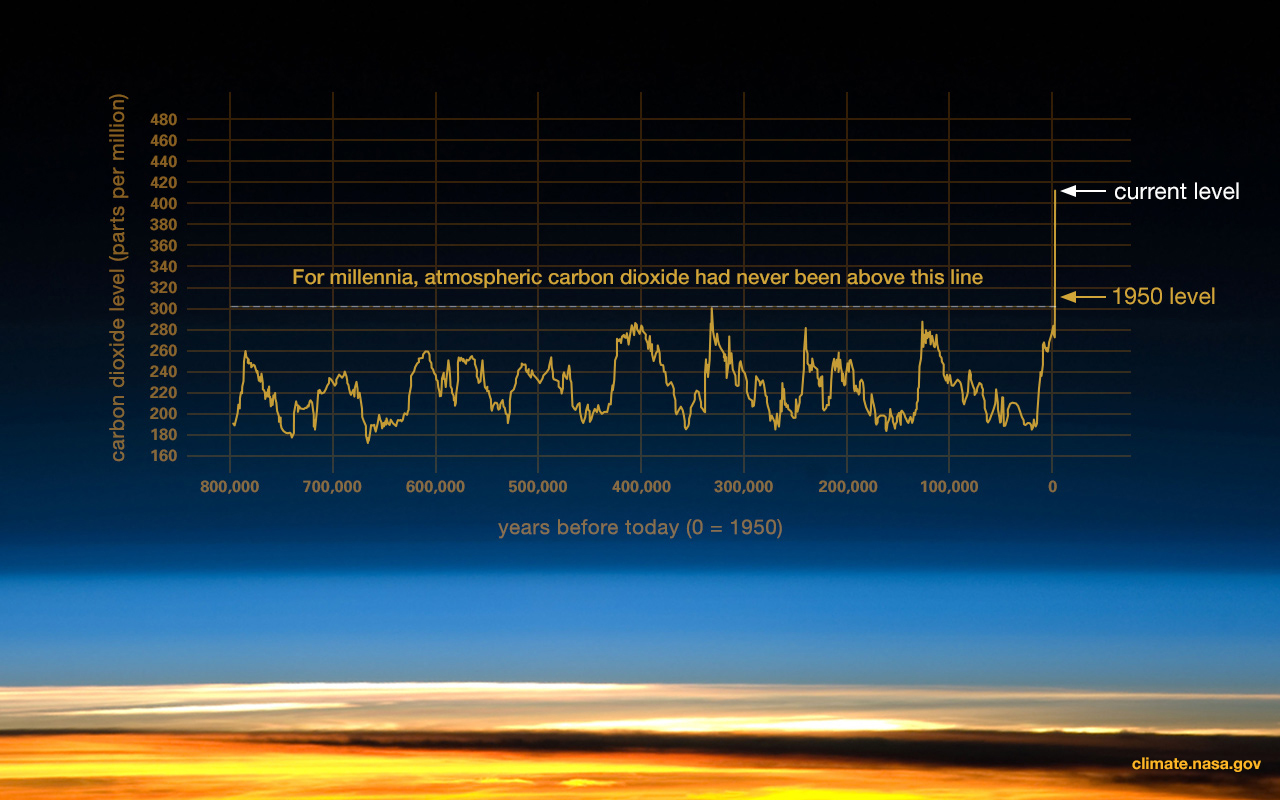
My last piece in this review is to republish a graph that is shown on the NASA Global Climate Change website:

For all our sakes, dogs and humans and many other species, let us all please change our behaviours! Soon!

Back to the book: It is a remarkable book!

I will close with quoting one of the praises shown on the back cover. This one by Thomas Homer-Dixon, professor of political science, University of Toronto, and director of the Trudeau Centre for Peace and Conflict Studies.

Resilience Thinking is an essential guidebook to a powerful new way of understanding our world – and of living resiliently with it – developed in recent decades by an international team of ecologists. With five clear and compelling case studies drawn from regions as diverse as Florida, Sweden, and Australia, this book shows how all highly adaptive systems – from ecologies to economics – go through regular cycles of growth, reorganization, and renewal and how our failures to understand the basic principles of resilience have often led to disaster. Resilience Thinking gives us the conceptual tools to help us cope with the bewildering surprises and challenges of our new century.

Please, if you can, think about reading it.

Donate to fund dogs in the Serengeti

This plea came in from Mr. Pedantry!

This came in yesterday and I thought for some time that I wouldn’t be able to publish it quickly owing to me getting my knickers in a twist.

But all was resolved and therefore I am delighted to republish it.

ooOOoo

Donate to fund the dogs saving elephants

Ever heard of dogs saving elephants?

In the Serengeti, a small, specially trained team of rescue dogs sniff out poachers and sound the alarm. Just 4 dogs have helped arrest hundreds of poachers, saving countless elephants being murdered for their ivory.

Almost a quarter of the elephants in the park now live in the tiny area they protect — but poaching is on the rise everywhere else and there are thousands more elephants that still need protection.

That’s why the team behind this amazing project are asking for your help to train up more of these sniffer dogs — and save double the number of elephants.

With 96 of these gentle giants killed each day, every moment counts.

Can you chip in to help?

ooOOoo

Whatever you can spare please contribute to the donation request.

The page to go to is here!

Here is a YouTube video to watch.

COP 26

Alok Sharma on why COP26 is our best chance for a greener future.

I wanted to share the eight-minute video that appeared on TED Talks. But it hasn’t appeared on YouTube as yet.

But the link is embedded above so if you don’t want to watch the slightly longer version (just 22 minutes) then that is fine.

https://youtu.be/88lXnr59s-Y

I will share the words that came with the TED Talks video.

Something powerful is happening around the world. The issue of climate change has moved from the margins to the mainstream, says Alok Sharma, the President-Designate of COP26, the United Nations climate conference set to take place in November 2021 in Glasgow, Scotland. He unpacks what this shift means for the world economy and the accelerating “green industrial revolution” — and lays out the urgent actions that need to happen in order to limit global temperature rise.

Plus on the speaker, Alok Sharma.

Alok Sharma is a British politician, Cabinet Minister and President-Designate of COP26, the United Nations Climate Change Conference being held in Glasgow from 31 October until 12 November.

Sharma was previously UK Secretary of State for Business, Energy and Industrial Strategy. Before that, he was UK Secretary of State for International Development. He has also served in ministerial roles in the Department of Work and Pensions, Department for Communities and Local Government, and at the Foreign and Commonwealth Office. Prior to politics, he worked in finance.

Please watch the video for all our sakes.

For the sake of our dogs, and for the sake of everyone on this planet.

Fire-wising call.

Normal service is being interrupted!

I have been reluctant to tackle the fire preparations. One of the issues is that daily temperatures have been excessive and that makes working outside difficult.

But we have to and it is going to take some planning and preparation to be ready to evacuate should we get the call.

So for a short while there is going to be a break in me offering posts to you all on Learning from Dogs. I don’t know how long and it could be just a quick break.

For information to any others who want to know more. the Oregon State University provide a fantastic Fire Program website.

Frankly it would be so much easier to ignore it all because what with our dogs and horses and our parakeets and preparing the home and so much more it is a great deal of work.

But I know that is not the answer.

Being prepared is!