I came at today’s post from a number of directions.
A few days ago I was catching up with a good friend back in the UK, Peter M. We hadn’t spoken in a couple of months. One of the items from my end was mentioning that I had converted to a vegetarian diet, verging on trying to be a vegan. Jeannie has been a vegetarian for almost her entire life. Having made the change to a vegetarian diet, to my surprise I had gained 12 lbs (5.4 kgs) in the last month. Peter then mentioned that he, too, had put on 8 kgs before deciding to try and cut back. Peter and I are of the same age and motivated to stay as fit and healthy as we can. Anyway, Peter’s route for losing some weight was to commit to the fasting arrangement promoted and recommended by Dr. Michael Mosley – more of this later.
The conversation also reminded me of an essay by George Monbiot back at the end of November: Wrong About Being Wrong. Mr. Monbiot wrote of his mind changes about being vegetarian. With his permission, here is that essay.
oooOOOooo
Wrong About Being Wrong
November 27, 2013
The argument seems, once more, decisively to favour veganism.
By George Monbiot, published on the Guardian’s website 27th November 2013
He did it quietly, and the decision is the better for that: Al Gore, according to reports in the US press, has gone vegan.
Certain things could be said about other aspects of his lifestyle: his enormous houses and occasional use of private jets, for example. While we can’t demand that everyone who espouses green causes should live like a Jain monk, I think we can ask that they don’t live like Al Gore. He’s a brilliant campaigner, but I find the disjunction between the restraint he advocates and the size of his ecological footprint disorienting.
So saying, if he is managing to sustain his vegan diet, in this respect he puts most of us to shame. I tried it for 18 months and almost faded away. I lost two stone, went as white as a washbasin and could scarcely concentrate. I think I managed the diet badly; some people appear to thrive on it. Once, after I had been unnecessarily rude about vegans and their state of health (prompted no doubt by my own failure), I was invited to test my views in an unconventional debate with a vegan cage fighter. It was a kind invitation, but unfortunately I had a subsequent engagement.
In 2010, after reading a fascinating book by Simon Fairlie, a fair part of which was devoted to attacking my views, I wrote a column in which I maintained that I’d been wrong to claim that veganism is the only ethical response to what is arguably the world’s most urgent social justice issue. Diverting grain that could have fed human beings to livestock, I’d argued, is grotesque when 800 million go hungry.
Fairlie does not dispute this, and provides many examples of the madness of the current livestock production system. But he points out that plenty of meat can be produced from feed which humans cannot eat, by sustaining pigs on waste and grazing cattle and sheep where crops can’t grow. I was swayed by his argument. But now I find myself becoming unswayed. In the spirit of unceasing self-flagellation I think I might have been wrong about being wrong.
Part of the problem is that while livestock could be fed on waste and rangelands, ever less of the meat we eat in the rich nations is produced this way. Over the past week, a row has erupted between chefs and pig farmers over the issue of swill. The chefs point out – as Simon Fairlie does – that it is ridiculous to feed pigs on soya grown at vast environmental cost in the Amazon instead of allowing them to dispose of our mountain of waste food. Feeding pigs on swill has been forbidden since the foot and mouth outbreak of 2001.
The farmers respond that the risks of spreading disease are too great and that pigs fed on waste grow more slowly than pigs fed on soya. I side with the chefs: I believe that a society capable of identifying the Higgs boson should be able to sterilise waste food. But I suspect that they’re not going to win: the industry and its regulators are firmly against them.
I should have seen it coming, but I watched in horror as the meat industry used my article to justify the consumption of all meat, however it was produced, rather than just the meat raised on food that humans can’t eat. A potential for good is used to justify harm.
While researching my book Feral, I also came to see extensive livestock rearing as a lot less benign than I – or Simon Fairlie – had assumed. The damage done to biodiversity, to water catchments and carbon stores by sheep and cattle grazing in places unsuitable for arable farming (which means, by and large, the hills) is out of all proportion to the amount of meat produced. Wasteful and destructive as feeding grain to livestock is, ranching appears to be even worse.
The belief that there is no conflict between this farming and arable production also seems to be unfounded: by preventing the growth of trees and other deep vegetation in the hills and by compacting the soil, grazing animals cause a cycle of flash floods and drought, sporadically drowning good land downstream and reducing the supply of irrigation water.
So can I follow Al Gore, and do it better than I did before? Well I intend at least to keep cutting my consumption of animal products, and to see how far I can go. It’s not easy, especially for a person as greedy and impetuous as I am, but there has to be a way.
Back to the conversation with Peter M. about fasting. He spoke enthusiastically about Dr. Mosley who one quickly discovers,
Dr. Michael Mosley.
Michael J. Mosley (born 22 March 1957) is a British journalist, medical doctor, producer and TV presenter. He is probably best known as a television presenter of programmes on biology and medicine, particularly his series on the workings of the human body, Inside the Human Body and his regular appearances as the friendly medic on The One Show.
He was interviewed by Steve Wright of BBC Radio 2 back in January, 2012 and that interview is on YouTube:
That BBC Horizon programme is no longer available to watch but a 4-minute extract may be seen here:
Inevitably, Dr. Mosley has a website Fast Diet that is packed full of valuable information.
So just as soon as we have the water back to the house and I can have a long, hot shower I intend to adopt the 5:2 diet.
With thanks to Cynthia for including me on her recent email.
oooOOOooo
FDA seeks pet owner help on dangerous jerky treats
From Associated Press October 23, 2013 8:17 AM EST
WASHINGTON (AP) — The Food and Drug Administration is appealing to dog and cat owners for information as it struggles to solve a mysterious outbreak of illness and deaths among pets that ate jerky treats.
In a notice to consumers and veterinarians published Tuesday, the agency said it has linked illnesses from jerky pet treats to 3,600 dogs and 10 cats since 2007. About 580 of those pets have died.
The FDA’s Center for Veterinary Medicine has run more than 1,200 tests, visited pet treat manufacturing plants in China and worked with researchers, state labs and foreign governments but hasn’t determined the exact cause of the illness, the FDA statement said.
“This is one of the most elusive and mysterious outbreaks we’ve encountered,” Bernadette Dunham, a veterinarian and head of the FDA vet medicine center, said in the statement.
Pets can suffer from a decreased appetite, decreased activity, vomiting and diarrhea among other symptoms within hours of eating treats sold as jerky tenders or strips made of chicken, duck, sweet potatoes or dried fruit.
Severe cases have involved kidney failure, gastrointestinal bleeding, and a rare kidney disorder, the FDA said.
Most of the jerky treats implicated have been made in China, the FDA said.
The FDA has issued previous warnings. A number of jerky pet treat products were removed from the market in January after a New York state lab reported finding evidence of up to six drugs in certain jerky pet treats made in China, the FDA said. The agency said that while the levels of the drugs were very low and it was unlikely that they caused the illnesses, there was a decrease in reports of jerky-suspected illnesses after the products were removed from the market. FDA believes that the number of reports may have declined simply because fewer jerky treats were available.
oooOOOooo
That FDA Notice is here. I have taken the liberty of republishing it in full.
oooOOOooo
Jerky Pet Treats
The problem
Since 2007, FDA has received reports of illnesses in pets associated with the consumption of jerky pet treats. As of September 24, 2013, FDA has received approximately 3000 reports of pet illnesses which may be related to consumption of the jerky treats. The reports involve more than 3600 dogs, 10 cats and include more than 580 deaths.
What we are doing
FDA is working with laboratories across the country to investigate causes. To date, testing for contaminants in jerky pet treats has not revealed a cause for the illnesses.
We have tested for:
Salmonella
Metals or Elements (such as arsenic, cadmium and lead, etc.)
Markers of irradiation level (such as acyclobutanones).
Pesticides
Antibiotics (including both approved and unapproved sulfanomides and tetracyclines)
Mold and mycotoxins (toxins from mold)
Rodenticides
Nephrotoxins (such as aristolochic acid, maleic acid, paraquat, ethylene glycol, diethylene glycol, toxic hydrocarbons, melamine, and related triazines)
Other chemicals and poisonous compounds (such as endotoxins).
Testing has also included measuring the nutritional composition of jerky pet treats to verify that they contain the ingredients listed on the label and do not contain ingredients that are not listed on the label. Another area of investigation includes the effects of irradiation and its byproducts.
Watch your pet closely. Signs that may occur within hours to days of feeding the jerky treat products are decreased appetite, decreased activity, vomiting, diarrhea (sometimes with blood or mucus), increased water consumption and/or increased urination. Severe cases are diagnosed with pancreatitis, gastrointestinal bleeding, and kidney failure or the resemblance of a rare kidney related illness called Fanconi syndrome.
If your pet has experienced signs of illness, please report it to FDA. Once a consumer has filed a report with their local FDA Consumer Complaint Coordinator, or electronically through our safety reporting portal, FDA will determine whether there is a need to conduct a follow-up phone call or obtain a sample of the jerky pet treat product in question. While FDA does not necessarily respond to every individual complaint submitted, each report becomes part of the body of knowledge that helps to inform FDA on the situation or incident.
What veterinarians can do
The “Dear Veterinarian” letter to veterinary professionals explains how they can provide valuable assistance to the agency’s investigation, requests that veterinarians report to FDA any cases of jerky pet treat-related illness that come to their attention and, when requested, that they also provide samples for diagnostic testing by the Veterinary Laboratory Investigation and Response Network (Vet-LIRN), a network of veterinary laboratories affiliated with FDA.
oooOOOooo
I just mentioned this to Jeannie who says that while we do feed our dogs jerky treats, she is careful to purchase only those brands that are made in the USA.
The sub-heading is the first line of the poem To Autumn by John Keats. The full poem closes today’s post.
Old habits from England die hard. My way of explaining my reticence to adopt a whole panoply of American words including Fall. Of course, it’s the perfect word to describe this time of the year but, nonetheless, Autumn feels like its ‘hard-wired’ into my personal vocabulary.
With the Summer heat behind us, the task-list for jobs to be done outside can no longer be fudged by “it’s too hot to work outside just now” excuse!
Frankly, the weather at the moment is so beautiful that it’s a privelege to be out in the open; to be enveloped by Nature.
Autumn colours on the trees along our Northern boundary. Mt. Sexton in the distance.
One job that we have been engaged in is installing a couple of raised vegetable beds on the flat area that used to be a tennis court. We had the asphalt base torn up a few months back. Yesterday, saw the first of the two beds filled ready for a crop of Winter vegetables to be planted in the coming weeks.
Anticipating eating our own vegetables for next year.
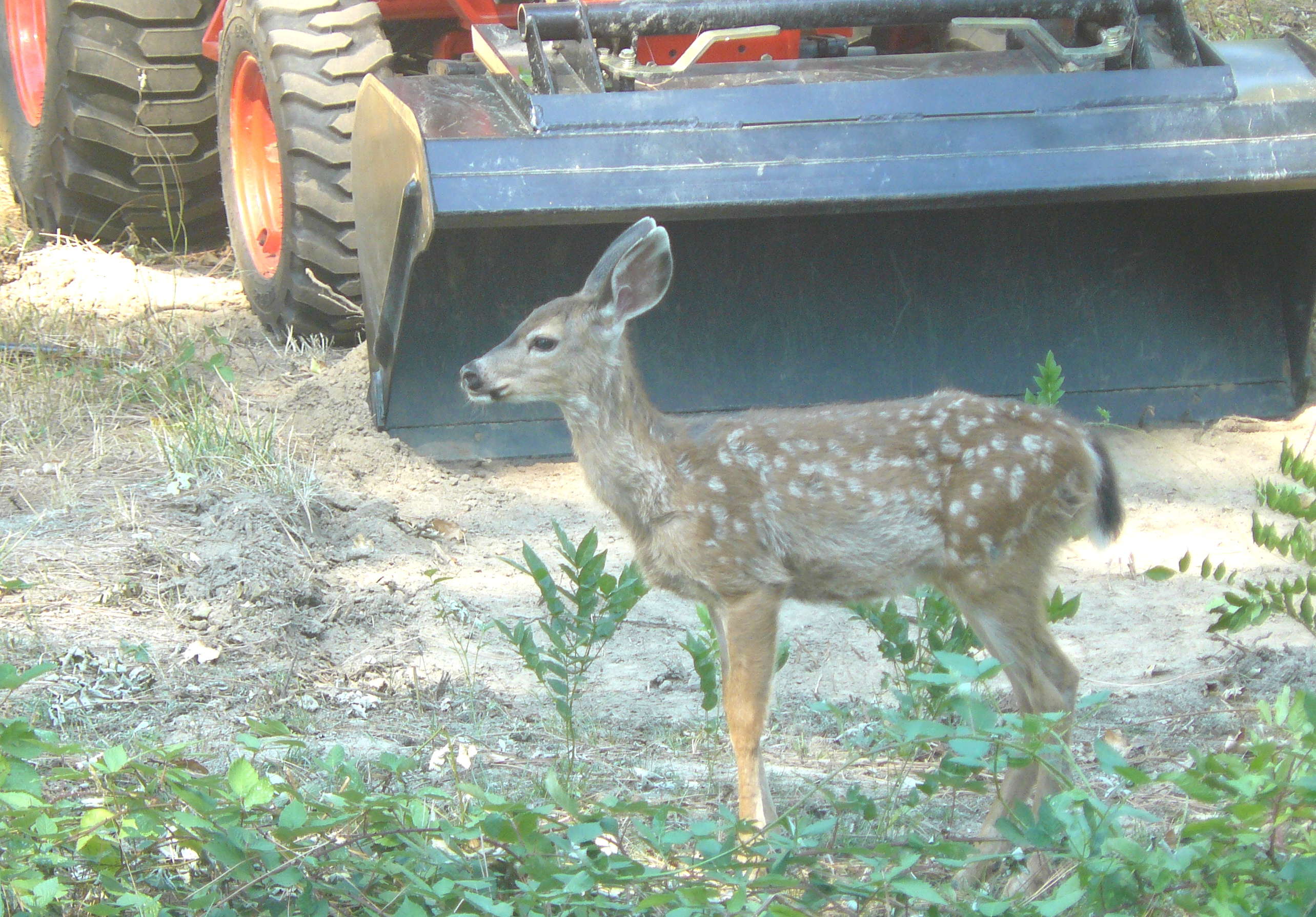
So many wild creatures, large and small, are storing up their body reserves for the long Winter months. Our neighbours, Dordie and Bill, regularly feed the wild deer and we have joined in as well. It’s fascinating to see how quickly they work out that we are not going to harm them. The picture below shows a young deer that allowed me to jump off the tractor, go indoors to find my camera, and return to snap the gorgeous, pretty creature.
Trusting little soul.
There’s been a couple of posts that I want to refer to because they underline the fact that humans are so prone to forgetting that we are of the wild, from the wild and connected to the wild. That’s for tomorrow.
Thus will close today with a recent Autumnal picture of the early-morning mists across our open grass area.
Misty Autumnal mornings
So to that John Keats poem:
To Autumn
John Keats (1820)
Season of mists and mellow fruitfulness,
Close bosom-friend of the maturing sun;
Conspiring with him how to load and bless
With fruit the vines that round the thatch-eves run;
To bend with apples the moss’d cottage-trees,
And fill all fruit with ripeness to the core;
To swell the gourd, and plump the hazel shells
With a sweet kernel; to set budding more,
And still more, later flowers for the bees,
Until they think warm days will never cease,
For Summer has o’er-brimm’d their clammy cells.
Who hath not seen thee oft amid thy store?
Sometimes whoever seeks abroad may find
Thee sitting careless on a granary floor,
Thy hair soft-lifted by the winnowing wind;
Or on a half-reap’d furrow sound asleep,
Drows’d with the fume of poppies, while thy hook
Spares the next swath and all its twined flowers:
And sometimes like a gleaner thou dost keep
Steady thy laden head across a brook;
Or by a cyder-press, with patient look,
Thou watchest the last oozings hours by hours.
Where are the songs of Spring? Ay, where are they?
Think not of them, thou hast thy music too,—
While barred clouds bloom the soft-dying day,
And touch the stubble-plains with rosy hue;
Then in a wailful choir the small gnats mourn
Among the river sallows, borne aloft
Or sinking as the light wind lives or dies;
And full-grown lambs loud bleat from hilly bourn;
Hedge-crickets sing; and now with treble soft
The red-breast whistles from a garden-croft;
And gathering swallows twitter in the skies.
Although not my usual type of post here on Learning from Dogs a forthcoming event regarding GMOs seemed worthy of greater promotion, especially as it includes concerns about possible ‘contaminated’ dog food. The event was mentioned on the Permaculture News blog; a blog that I follow.
What was described was a free, 3-day online ‘summit’ about genetically modified organisms. Let me quote from the blog post:
The scary truth about Genetically Modified Organisms (GMOs) is being deliberately kept from you….
Fact: Your food has been unnaturally changed. These changes have very serious consequences.
Your family’s health is at risk and you deserve the truth….
We’re going to share with you the true effects of genetically engineered food on human health and the environment. You’re invited to join our panel of experts, researchers and activists in an inspirational and free, 3-day GMO Summit — October 25-27, 2013.
This is a virtual event you can enjoy at no cost from the comfort and convenience of your own home.
If you want to know the truth about GMOs and the risks Monsanto, the government, their paid advisors and the media are deliberately hiding from you, then join in this unique, free summit.
There’s an impressive line-up of 10 main speakers and another 10 supplementary speakers. And, as the blog post goes on to say:
We didn’t want to overwhelm you in just 3 days, so once the GMO Mini Summit is complete, you’ll get even more empowered by 10 more experts in interviews over the next 5 weeks (2 per week) who will share even more about this crucial topic. When you register for free you will gain access to all 20 speakers!
So you need to go here to sign up, after which you will be directed to a welcome page. There you will learn more about the way that GMOs are affecting so many aspects of our lives and of the lives of our beloved dogs.
Conclusive evidence that mankind is part of nature!
Subtext = There are times when our arrogance and mindlessness beggars belief.
Sorry, if you pick up on a degree of emotion in today’s post. It’s impossible to hide!
Here’s what has fed that.
A few days ago, I came across some stunning images of bees, over on the Flickr website. Particularly, I was here and offer below a small sample of what was seen:
Chrysidid Wasp, U, Side, UT, Utah Co_2013-08-07-17.51.41 ZS PMax
Much more may be learned about bees by going to the USGS Bee Inventory and Monitoring Lab (BIML). The BIML website is here.
Then coincidentally (seems to be happening much of this week!) Jean and I watched the latest TED Talk by Marla Spivak. It was called: Why bees are disappearing.
Marla’s talk is just 15-minutes long, and I beg of you to watch it because the ramifications for all of warm-blooded life on this planet are frightening if we don’t amend our ways – and amend them pretty damn soon!
Honeybees have thrived for 50 million years, each colony 40 to 50,000 individuals coordinated in amazing harmony. So why, seven years ago, did colonies start dying en masse? Marla Spivak reveals four reasons which are interacting with tragic consequences. This is not simply a problem because bees pollinate a third of the world’s crops. Could this incredible species be holding up a mirror for us?
Marla Spivak researches bees’ behavior and biology in an effort to preserve this threatened, but ecologically essential, insect. Full bio »
You may also want to go across to the University of Minnesota‘s Bee Lab website, where there is much more from Marla about our bees.
Washington — The Centers for Disease Control on Monday confirmed a link between routine use of antibiotics in livestock and growing bacterial resistance that is killing at least 23,000 people a year.
The report is the first by the government to estimate how many people die annually of infections that no longer respond to antibiotics because of overuse in people and animals.
CDC Director Thomas Frieden called for urgent steps to scale back and monitor use, or risk reverting to an era when common bacterial infections of the urinary tract, bloodstream, respiratory system and skin routinely killed and maimed.
“We will soon be in a post-antibiotic era if we’re not careful,” Frieden said. “For some patients and some microbes, we are already there.”
The SFC report later goes on to say:
At least 70 percent of all antibiotics in the United States are used to speed growth of farm animals or to prevent diseases among animals raised in feedlots. Routine low doses administered to large numbers of animals provide ideal conditions for microbes to develop resistance.
“Widespread use of antibiotics in agriculture has resulted in increased resistance in infections in humans,” Frieden said.
It concludes, thus:
Legislation goes nowhere
Organic certification prohibits antibiotic use, but raising such animals is costly, he said.
Rep. Henry Waxman, D-Los Angeles, first introduced legislation in 1980 to restrict antibiotic use in livestock. For the past decade, Rep. Louise Slaughter, D-N.Y., has introduced similar bills, joined in recent years by Sens. Dianne Feinstein, D-Calif., and Kirsten Gillibrand, D-N.Y., but the measures have gone nowhere.
“We constantly hear from the pharmaceutical and livestock industry that antibiotic use in livestock is not a problem and we should focus on human use,” said Avinash Kar, a staff attorney at the San Francisco office of the Natural Resources Defense Council, an environmental group that has sued the FDA to force it to ban using antibiotics to promote growth in livestock. The case is now pending before the 2nd U.S. Circuit Court of Appeals.
Americans Are 110 Times More Likely to Die from Contaminated Food Than Terrorism
September 17, 2013 – This article first appeared on Truth-Out.org.
One of the most important revelations from the international drama over Edward Snowden’s NSA leaks in May is the exposure of a nearly lunatic disproportion in threat assessment and spending by the US government. This disproportion has been spawned by a fear-based politics of terror that mandates unlimited money and media attention for even the most tendentious terrorism threats, while lethal domestic risks such as contaminated food from our industrialized agribusiness system are all but ignored. A comparison of federal spending on food safety intelligence versus antiterrorism intelligence brings the irrationality of the threat assessment process into stark relief.
In 2011, the year of Osama bin Laden’s death, the State Department reported that 17 Americans were killed in all terrorist incidents worldwide. The same year, a single outbreak of listeriosis from tainted cantaloupe killed 33 people in the United States. Foodborne pathogens also sickened 48.7 million, hospitalized 127,839 and caused a total of 3,037 deaths. This is a typical year, not an aberration.
See what I mean about our mindlessness! That article continues:
We have more to fear from contaminated cantaloupe than from al-Qaeda, yet the United States spends $75 billion per year spread across 15 intelligence agencies in a scattershot attempt to prevent terrorism, illegally spying on its own citizens in the process. By comparison, the Food and Drug Administration (FDA) is struggling to secure $1.1 billion in the 2014 federal budget for its food inspection program, while tougher food processing and inspection regulations passed in 2011 are held up by agribusiness lobbying in Congress. The situation is so dire that Jensen Farms, the company that produced the toxic cantaloupe that killed 33 people in 2011, had never been inspected by the FDA.
I can’t stomach any more (whoops, pardon the pun!) so if you want to read to the end, it’s here.
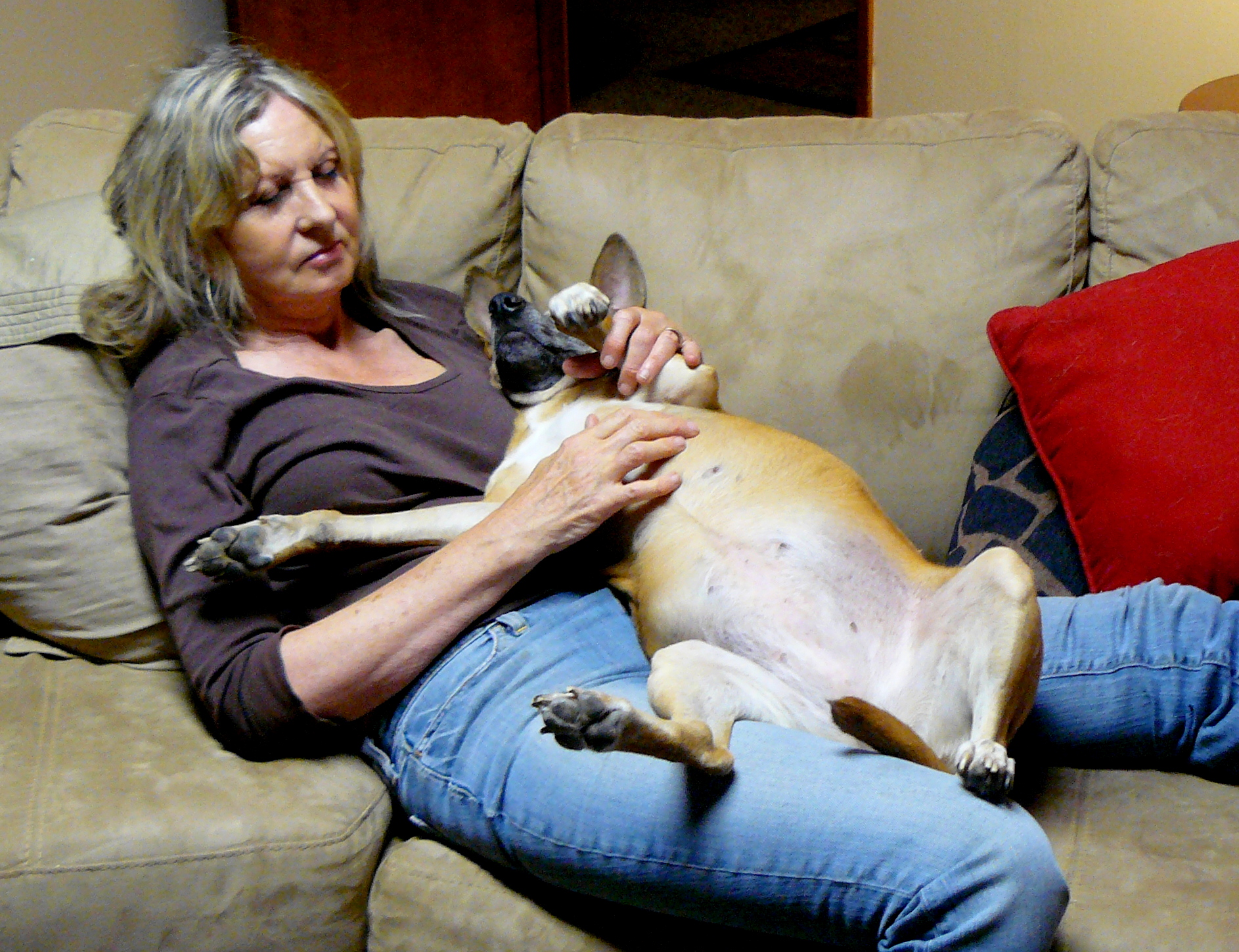
OK, sufficient for today! Need to find a dog to curl up with.
Yesterday, I wrote about the growing awareness of a major crisis affecting bees in a number of countries. Coincidentally, when researching the various articles for that post, into my email ‘inbox’ came the latest essay from George Monbiot published both in the UK Guardian newspaper and on his own blog. The title was DDT 2.0. I emailed Mr. Monbiot requesting permission to republish his essay in full on Learning from Dogs and promptly received his approval to so do.
But for those who for whatever reason, don’t recall clearly the history of DDT, here’s some background.
Wikipedia’s entry opens, thus:
DDT (dichlorodiphenyltrichloroethane) is an organochlorineinsecticide which is a colorless, crystalline solid, tasteless and almost odorless chemical compound. Technical DDT has been formulated in almost every conceivable form including solutions in xylene or petroleum distillates, emulsifiable concentrates, water-wettable powders, granules, aerosols, smoke candles, and charges for vaporisers and lotions.[2]
First synthesized in 1874, DDT’s insecticidal properties were not discovered until 1939, and it was used with great success in the second half of World War II to control malaria and typhus among civilians and troops. The Swiss chemist Paul Hermann Müller was awarded the Nobel Prize in Physiology or Medicine in 1948 “for his discovery of the high efficiency of DDT as a contact poison against several arthropods.”[3] After the war, DDT was made available for use as an agricultural insecticide, and soon its production and use skyrocketed.[4]
Then goes on to mention Rachel Carson (1907 – 1964) and her mind-boggling expose of DDT in the famous book Silent Spring.
How a courageous woman took on the chemical industry and raised important questions about humankind’s impact on nature.
Although their role will probably always be less celebrated than wars, marches, riots or stormy political campaigns, it is books that have at times most powerfully influenced social change in American life. Thomas Paine’s Common Sense galvanized radical sentiment in the early days of the American revolution; Uncle Tom’s Cabin by Harriet Beecher Stowe roused Northern antipathy to slavery in the decade leading up to the Civil War; and Rachel Carson’s Silent Spring, which in 1962 exposed the hazards of the pesticide DDT, eloquently questioned humanity’s faith in technological progress and helped set the stage for the environmental movement.
Carson, a renowned nature author and a former marine biologist with the U.S. Fish and Wildlife Service, was uniquely equipped to create so startling and inflammatory a book. A native of rural Pennsylvania, she had grown up with an enthusiasm for nature matched only by her love of writing and poetry. The educational brochures she wrote for the Fish and Wildlife Service, as well as her published books and magazine articles, were characterized by meticulous research and a poetic evocation of her subject.
It’s the new DDT: a class of poisons licensed for widespread use before they had been properly tested, which are now ripping the natural world apart. And it’s another demonstration of the old truth that those who do not learn from history are destined to repeat it.
It is only now, when neonicotinoids are already the world’s most widely deployed insecticides, that we are beginning to understand how extensive their impacts are. Just as the manufacturers did for DDT, the corporations which make these toxins claimed that they were harmless to species other than the pests they targeted. Just as they did for DDT, they have threatened people who have raised concerns, published misleading claims and done all they can to bamboozle the public. And, as if to ensure that the story sticks to the old script, some governments have collaborated in this effort. Among the most culpable is the government of the United Kingdom.
As Professor Dave Goulson shows in his review of the impacts of these pesticides, we still know almost nothing about how most lifeforms are affected. But as the evidence has begun to accumulate, scientists have started discovering impacts across a vast range of wildlife.
Most people who read this newspaper will be aware by now of the evidence fingering neonicotinoids as a major cause of the decline of bees and other pollinators. These pesticides can be applied to the seeds of crops, and they remain in the plant as it grows, killing the insects which eat it. The quantities required to destroy insect life are astonishingly small: by volume these poisons are 10,000 times as powerful as DDT. When honeybees are exposed to just 5 nanogrammes of neonicotinoids, half of them will die. As bees, hoverflies, butterflies, moths, beetles and other pollinators feed from the flowers of treated crops, they are, it seems, able to absorb enough of the pesticide to compromise their survival.
But only a tiny proportion of the neonicotinoids that farmers use enter the pollen or nectar of the flower. Studies conducted so far suggest that only between 1.6 and 20% of the pesticide used for dressing seeds is actually absorbed by the crop: a far lower rate even than when toxins are sprayed onto leaves. Some of the residue blows off as dust, which is likely to wreak havoc among the populations of many species of insects in hedgerows and surrounding habitats. But the great majority – Goulson says “typically more than 90%” – of the pesticide applied to the seeds enters the soil.
In other words, the reality is a world apart from the impression created by the manufacturers, which keep describing the dressing of seeds with pesticides as “precise” and “targeted”.
Neonicotinoids are highly persistent chemicals, lasting (according to the few studies published so far) for up to 19 years in the soil. Because they are persistent, they are likely to accumulate: with every year of application the soil will become more toxic.
What these pesticides do once they are in the soil, no one knows, as sufficient research has not been conducted. But – deadly to all insects and possibly other species at tiny concentrations – they are likely to wipe out a high proportion of the soil fauna. Does this include earthworms? Or the birds and mammals that eat earthworms? Or for that matter, the birds and mammals that eat insects or treated seeds? We don’t yet know enough to say.
This is the story you’ll keep hearing about these pesticides: we have gone into it blind. Our governments have approved their use without the faintest idea of what the consequences are likely to be.
You might have had the impression that neonicotinoids have been banned by the European Union. They have not. The use of a few of these pesticides has been suspended for two years, but only for certain purposes. Listening to the legislators, you could be forgiven for believing that the only animals which might be affected are honeybees, and the only way in which they can be killed is through the flowers of plants whose seeds were dressed.
But neonicotinoids are also sprayed onto the leaves of a wide variety of crop plants. They are also spread over pastures and parks in granules, in order to kill insects that live in the soil and eat the roots of the grass. These applications, and many others, remain legal in the European Union, even though we don’t know how severe the wider impacts are. We do, however, know enough to conclude that they are likely to be bad.
Of course, not all the neonicotinoids entering the soil stay there indefinitely. You’ll be relieved to hear that some of them are washed out, whereupon … ah yes, they end up in groundwater or in the rivers. What happens there? Who knows? Neonicotinoids are not even listed among the substances that must be monitored under the EU’s water framework directive, so we have no clear picture of what their concentrations are in the water that we and many other species use.
But a study conducted in the Netherlands shows that some of the water leaving horticultural areas is so heavily contaminated with these pesticides that it could be used to treat lice. The same study shows that even at much lower concentrations – no greater than the limits set by the European Union – the neonicotinoids entering river systems wipe out half the invertebrate species you would expect to find in the water. That’s another way of saying erasing much of the foodweb.
I was prompted to write this article by the horrible news from the River Kennet in southern England: a highly protected ecosystem that is listed among the few dozen true chalk streams on earth. Last month someone – farmer or householder, no one yet knows – flushed another kind of pesticide, chlorpyrifos, down their sink. The amount was equivalent – in pure form – to two teaspoonsful. It passed through Marlborough sewage works and wiped out most of the invertebrates in fifteen miles of the river.
The news hit me like a bereavement. The best job I ever had was working, during a summer vacation from university, as temporary waterkeeper on the section of the Kennet owned by the Sutton estate. The incumbent had died suddenly. It was a difficult job and, for the most part, I made a mess of it. But I came to know and love that stretch of river, and to marvel at the astonishing profusion of life the clear water contained. Up to my chest in it for much of the day, I immersed myself in the ecology, and spent far more time than I should have done watching watervoles and kingfishers; giant chub fanning their fins in the shade of the trees; great spotted trout so loyal to their posts that they had brushed white the gravel of the river bed beneath their tails; native crayfish; dragonflies; mayflies; caddis larvae; freshwater shrimps and all the other teeming creatures of the benthos.
In the evenings, wanting company and fascinated in equal measure by the protest and the remarkable people it attracted, I would stop at the peace camp outside the gates of the Greenham Common nuclear base. I’ve told the strange story that unfolded during my visits in another post.
Campaigners seeking to protect the river have described how, after the contamination,the river stank from the carcases of the decaying insects and shrimps. Without insects and shrimps to feed on, the fish, birds and amphibians that use the river are likely to fade away and die.
After absorbing this news, I remembered the Dutch study, and it struck me that neonicotinoid pesticides are likely, in many places, to be reducing the life of the rivers they enter to a similar extent: not once, but for as long as they are deployed on the surrounding land.
Richard Benyon, the minister supposed to be in charge of protecting wildlife and biodiversity, who happens to own the fishing rights on part of the River Kennet, and to represent a constituency through which it passes, expressed his “anger” about the chlorpyrifos poisoning. Should he not also be expressing his anger at the routine poisoning of rivers by neonicotinoids?
Were he to do so, he would find himself in serious trouble with his boss. Just as they are systematically poisoning our ecosystems, neonicotinoids have also poisoned the policies (admittedly pretty toxic already) of the department supposed to be regulating them. In April, Damian Carrington, writing in the Observer, exposed a letter sent by the ministerin charge of the Department for Environment, Food and Rural Affairs (Defra), Owen Paterson, to Syngenta, which manufactures some of these pesticides. Paterson promised the company that his efforts to prevent its products from being banned “will continue and intensify in the coming days”.
And sure enough, the UK refused to support the temporary bans proposed by the commission both in April and last month, despite the massive petitions and the 80,000 emails on the subject that Paterson received. When Paterson and Deathra were faced with a choice between the survival of natural world and the profits of the pesticides companies, there was not much doubt about how they would jump. Fortunately they failed.
Their attempt to justify their votes led to one of the most disgraceful episodes in the sorry record of this government. The government’s new chief scientist, Sir Mark Walport, championed a “study” Deathra had commissioned, which purported to show that neonicotinoids do not kill bees. It was not published in a peer-reviewed journal, nor could it be, as as any self-respecting scientist, let alone the government’s chief scientist, should have been able to see in a moment that it was complete junk. Among many other problems, the controls were hopelessly contaminated with the pesticide whose impacts the trial was supposed to be testing. The “study” was later ripped apart by the European Food Safety Authority.
But Walport did still worse, making wildly misleading statements about the science, and using scare tactics and emotional blackmail to try to prevent the pesticides from being banned, on behalf of his new masters.
It is hard to emphasise sufficiently the importance of this moment or the dangers it contains: the total failure of the government’s primary source of scientific advice, right at the beginning of his tenure. The chief scientist is not meant to be a toadying boot-licker, but someone who stands up for the facts and the principles of science against political pressure. Walport disgraced his post, betrayed the scientific community and sold the natural world down the river, apparently to please his employers.
Last week, as if to remind us of the extent of the capture of this government by the corporations it is supposed to be regulating, the scientist who led the worthless trials that Walport and Paterson cited as their excuse left the government to take up a new post at … Syngenta. It seems to me that she was, in effect, working for them already.
So here we have a department staggering around like a drunkard with a loaded machine gun, assuring us that it’sh perfectly shafe. The people who should be defending the natural world have conspired with the manufacturers of broad-spectrum biocides to permit levels of destruction at which we can only guess. In doing so they appear to be engineering another silent spring.
oooOOOooo
Frankly, there are more and more occasions when I think that if homo sapiens becomes virtually extinct there will be no queries as to why it happened. Then again, a much more positive muse would be to see the ever-increasing madness going on in today’s world as the crumbling death throws of a materialistic and consumptionist era that is past its time.
Note: I would like to remind good readers of Learning from Dogs as to what I wrote a week ago; namely:
My daughter, Maija, son-in-law, Marius, and grandson, Morten, aged two, are staying with us over the next couple of weeks, arriving tomorrow.
So being able to offer a daily fresh post on Learning from Dogs will be a challenge. As indeed, it should be: Family should always be the top priority.
However, rather than leaving you with blank pages, I shall be regurgitating some earlier posts, starting tomorrow.
Thus the room for creative writings from yours truly is restrained, if not impossible, until Maija and company leave on Friday morning.
oooo
Guard their future – and ours!
For today I want to focus, primarily using materials from elsewhere, on the developing situation regarding our bees: they are in crisis.
This all came to my attention when Jean and I were able to watch a recent BBC Horizon Special: What’s Killing Our Bees? As the BBC Horizon website explains:
Bill Turnbull investigates one of the biggest mysteries in the British countryside: what is killing our bees. It is a question that generates huge controversy. Changes in the weather, pesticides and even a deadly virus have all been blamed. It is a question that Bill is all too familiar with as a beekeeper himself. He meets the scientists who are fitting minute radar transponders on to bees to try to find answers.
Not sure how long this will remain available on YouTube but here is the first quarter of that BBC Horizon Special.
But the message put out by Bill Turnbull that this was solely a mystery for the British countryside was demolished in TIME Magazine for August 12th, which ran as their lead story:
Bees making the headlines.
You can thank the Apis mellifera, better known as the Western honeybee, for 1 in every 3 mouthfuls you’ll eat today. Honeybees — which pollinate crops like apples, blueberries and cucumbers — are the “glue that holds our agricultural system together,” as the journalist Hannah Nordhaus put it in her 2011 book The Beekeeper’s Lament. But that glue is failing. Bee hives are dying off or disappearing thanks to a still-unsolved malady called colony collapse disorder (CCD), so much so that commercial beekeepers are being pushed out of the business.
So what’s killing the honeybees? Pesticides — including a new class called neonicotinoids — seem to be harming bees even at what should be safe levels. Biological threats like the Varroa mite are killing off colonies directly and spreading deadly diseases. As our farms become monocultures of commodity crops like wheat and corn — plants that provide little pollen for foraging bees — honeybees are literally starving to death. If we don’t do something, there may not be enough honeybees to meet the pollination demands for valuable crops. But more than that, in a world where up to 100,000 species go extinct each year, the vanishing honeybee could be the herald of a permanently diminished planet.
Forgive me, but just have to repeat that last sentence: “the vanishing honeybee could be the herald of a permanently diminished planet.”
If bees keep dying off at this rate, we are going to be facing a horrific agricultural crisis very rapidly in the United States. Last winter, 31 percent of all U.S. bee colonies were wiped out. The year before that it was 21 percent. These colony losses are being described as “catastrophic” by those in the industry, and nobody is quite sure how to fix the problem. Some are blaming the bee deaths on pesticides, others are blaming parasites and others are blaming cell phones. But no matter what is causing these deaths, if it doesn’t stop we will all soon notice the effects at the supermarket. Bees pollinate about a hundred different crops in the United States, and if the bees disappear nobody is quite sure how we will be able to continue to grow many of those crops. This emerging crisis does not get a lot of attention from the mainstream media, but if we continue to lose 30 percent of our bees every year it is going to have a cataclysmic effect on our food supply.
The frightening thing is that the bee deaths appear to be accelerating and they appear to be even worse in the UK and Canada…
This past winter was one of the worst on record for bees. In the U.S., beekeepers lost 31 percent of their colonies, compared to a loss of 21 percent the previous winter. In Canada, the Canadian Honey Council reports an annual loss of 35 percent of honey bee colonies in the last three years. In Britain, the Bee Farmers’ Association says its members lost roughly half their colonies over the winter.
“It has been absolutely catastrophic,” said Margaret Ginman, who is general secretary of the Bee Farmers’ Association. “This has been one of the worst years in living memory.”
Scientists have been scrambling to figure out what is causing this, and one study that was recently conducted by researchers at the University of Maryland and the U.S. Department of Agriculture may have some answers…
The United States Department of Agriculture (USDA) website is an obvious point of reference although a quick search by me failed to find confirmation of the importance of bee pollination for many crops, as was reported in the TIME Magazine article, namely:
Although many crops are only partially dependent on bee pollination, others, like the almond, cannot get by without it. According to USDA, one-third of the food in our diet relies to some extent on bee pollination.
Almond: 100%
Apple: 90%
Asparagus: 90%
Avocado: 90%
I’m sure you get the message!
Tomorrow, I will present a recent essay from George Monbiot who offers his view of this major crisis.
It is our routine at home here in Oregon to let the kitchen group of dogs out first (Lily, Ruby, Casey & Paloma, with Sweeny tagging along) while Jean puts together our small breakfast. The time is around 6am to 6:30am and both Jean and I are usually wearing dressing gowns. Once this first group has been outside, then I let the ‘bedroom’ group out (Pharaoh, Cleo, Hazel and Dhalia).
Such as I did this morning, unusually a day starting dull with overcast cloud.
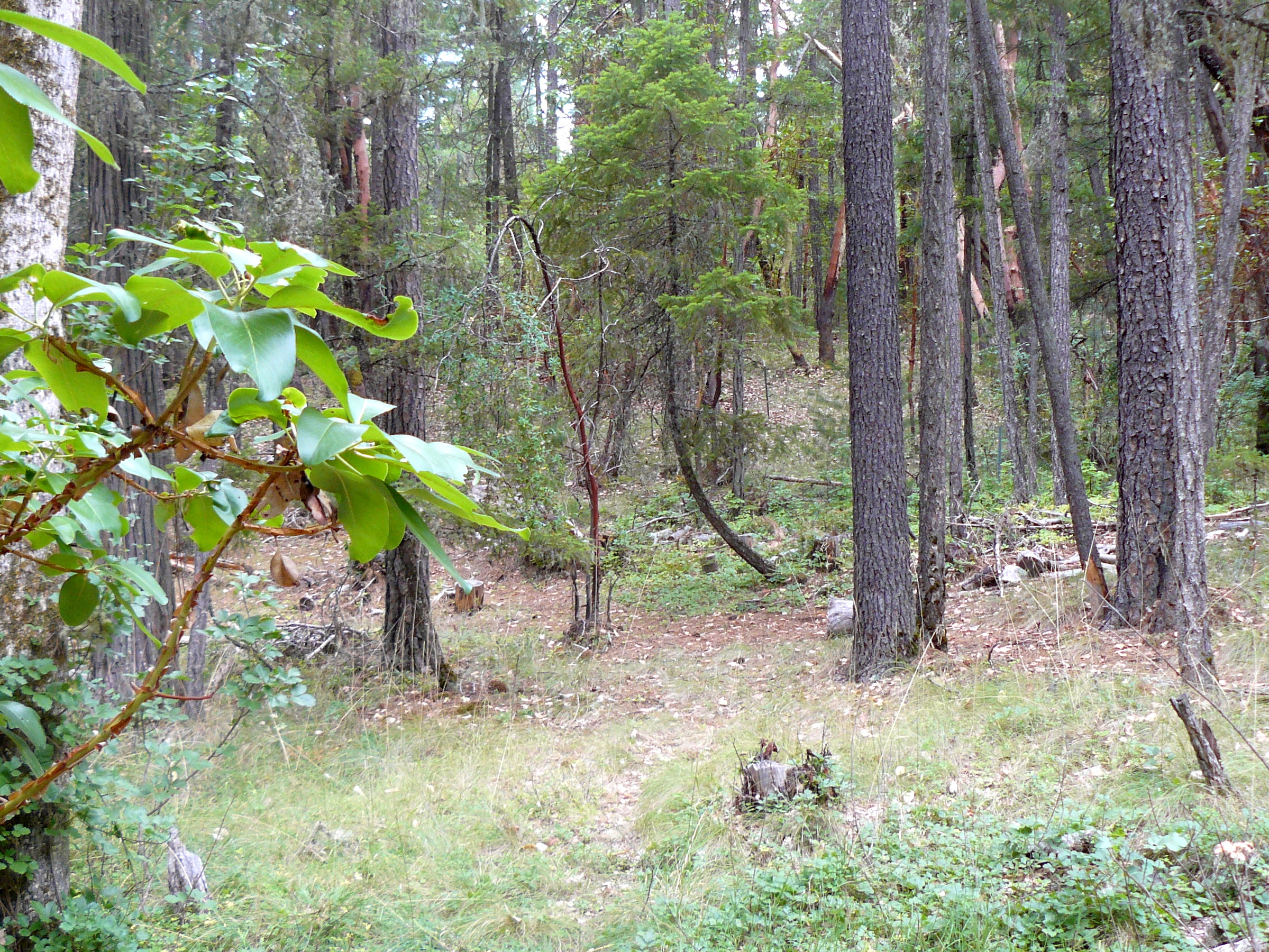
Suddenly, I heard the most awful squealing of an animal in pain over in the dense wooded area to the South-West of the property.
The wooded area in question.
In plastic slippers and dressing-gown only, I dashed into the woods and to my horror saw that Cleo, Hazel and Dhalia had cornered a young deer, and at least Hazel was nipping at a rear leg.
A not uncommon sight at home.
I screamed at the dogs, to no avail. They took not the slightest notice of me.
Then the young deer wriggled free and fled into the trees. The dogs recornered it and plunged in again. The deer broke free again, and so it went on. Eventually, after some ten minutes of the most dreadful hollering and chasing by me, the young deer jumped a fence and ran off with its mother who had been shadowing the terrible event. I prayed that it wasn’t badly hurt.
Gracious, I was so angry with the dogs! What disgusting behaviour towards this young, beautiful creature.
When I was back in the house trying to regain my breath, still so angry at the dogs, a thought came to my mind. Tens of thousands of years ago, this behaviour of the dogs was held in great esteem.
Early man evolved from a tribal hunter-gatherer existence to the pastoral life of farming about 10,000 years ago. If the DNA evidence shows, as it does, that the dog evolved from the wolf as a separate species around 100,000 years ago, then dogs were part of the life of hunter-gatherer man for something of the order of 90,000 years, possibly a couple of decades longer!
In fairness, the present lineage of dogs was domesticated from grey wolves only about 15,000 years ago. Despite fossil remains of domesticated dogs having been found in Siberia and Belgium from about 33,000 years ago, none of those lineages survived the Last Glacial Maximum. No fossil specimens prior to 33,000 years ago have indicated that they are clearly from the morphologically domesticated dog.
Even if, and it’s a very big ‘if’, the relationship between man and dog is only about 15,000 years old, one can only speculate how each species came to know the other, in every imaginable way.
Actually, we can go beyond speculation because in a study published by the PLOS ONE scientific journal in March 2013, Dr. Robert Losey, Associate Professor in the Department of Anthropology, University of Alberta and the lead author, explained that:
Dog burials appear to be more common in areas where diets were rich in aquatic foods because these same areas also appear to have had the densest human populations and the most cemeteries,
If the practice of burying dogs was solely related to their importance in procuring terrestrial game, we would expect to see them in the Early Holocene (around 9,000 years ago), when human subsistence practices were focused on these animals. Further, we would expect to see them in later periods in areas where fish were never really major components of the diet and deer were the primary focus, but they are rare or absent in these regions.
The PLOS ONE paper went on to report that researchers found that most of the dog burials occurred during the Early Neolithic period, some 7,000-8,000 years ago, and that “dogs were only buried when human hunter-gatherers were also being buried.”
So back to the morning’s drama between the dogs and the young deer.
The efficiency of the way the dogs cornered the deer was breath-taking. Had I not been coming at them in such a state of anger and agitation, and especially if I was one of a group of say, 2 or 3 humans, the odds are that the deer could have been grabbed and dispatched. In other words, those three dogs had demonstrated that 20,000, 40,000, 80,000 or more years ago, they were critically useful at helping early hunter-gatherer man feed himself.
Back to Dr. Losey’s view, “I think the hunter-gatherers here saw some of their dogs as being nearly the same as themselves, even at a spiritual level. At this time, dogs were the only animals living closely with humans, and they were likely known at an individual level, far more so than any other animal people encountered. People came to know them as unique, special individuals.”
Does make sense, doesn’t it.
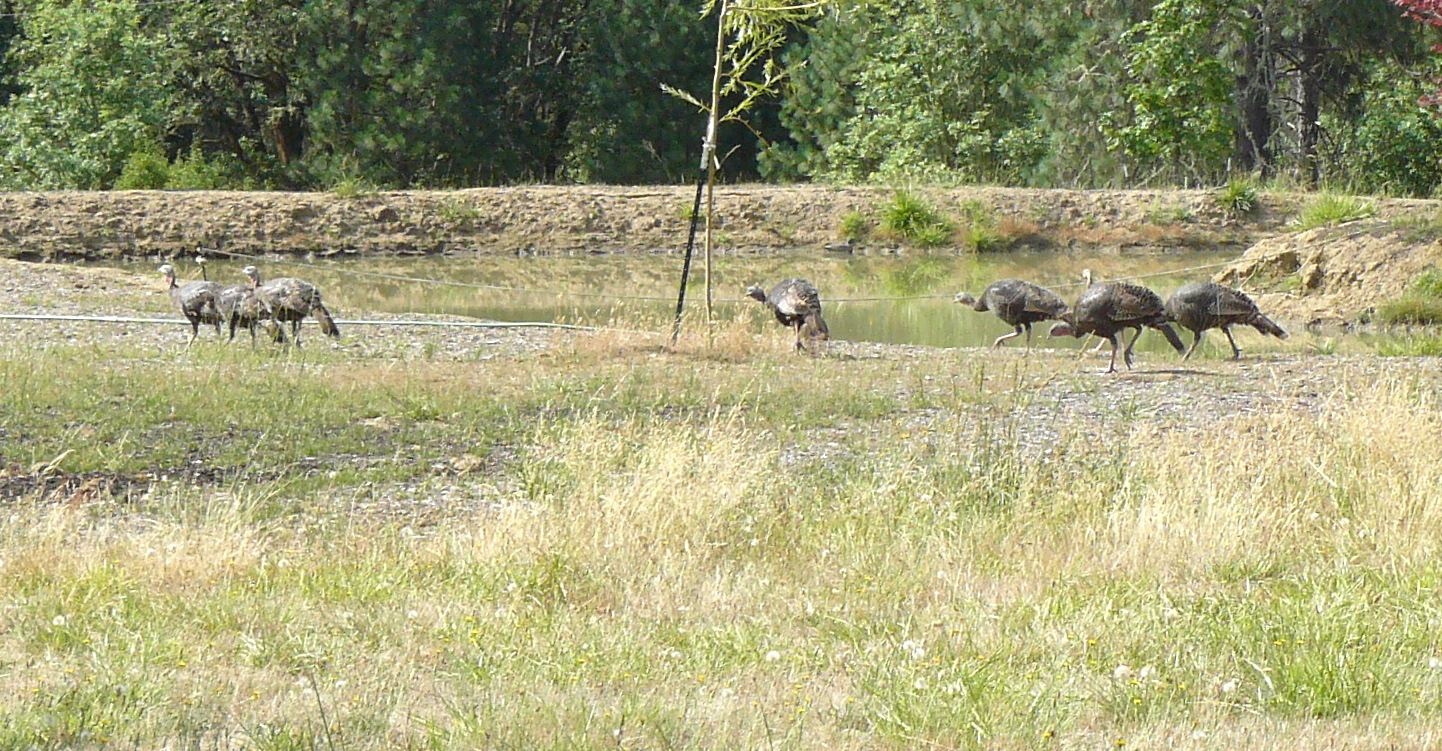
“Oh look! We could have turkey for dinner tonight!”
Without doubt, President Obama’s recent speech on climate change was very welcome. I fervently hope this is a genuine commitment to change the course of the biggest and most powerful nation on our planet. Abandoning the Keystone XL pipeline would be the proof to my mind. UPDATE: But read this!
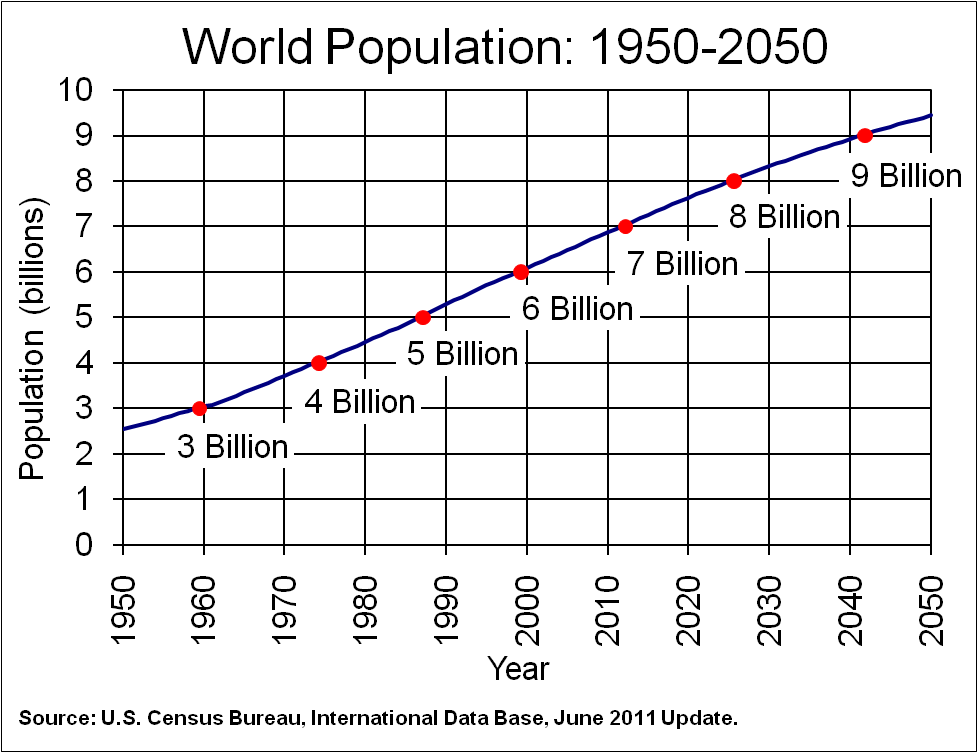
But the runaway, exponential growth in CO2 has a brother; huge growth in the world’s population.
I’m going to ‘smack you in the face‘ with this population chart.
To put that into context from a personal perspective, when I was born in 1944 the global population was 2.5 billion persons. Some 4.7 billion fewer people than today!
But that prediction from the U.S Census Bureau in June, 2011 is already out of date!
13 June 2013 – The current world population of 7.2 billion is projected to increase by 1 billion over the next 12 years and reach 9.6 billion by 2050, according to a United Nations report launched today, which points out that growth will be mainly in developing countries, with more than half in Africa.
Now please humour me for a few moments. If the world population is presently 7.2 billion people and by 2050 the prediction is 9.2 billion people, that is an increase of 2,400,000,000 persons.
The end of 2050 is 438 months away. Now do the maths. That growth in population in that time period is the equivalent of an increase in population of 5,479,000 persons every single month!
Need to find a darkened room – I feel a headache coming on!
Why the choice of this sub-heading? Well, just because a number of quite separate articles and essays have come together to offer a powerful, cohesive argument for reconsidering the role of Nature in the future of mankind.
Of course, my use of words in that preceding sentence is completely ludicrous; the suggestion that ‘Nature’ is disconnected from ‘mankind’. Yet millions of us, to a greater or lesser degree, do behave as if we are the masters of the world.
So let me dip into what has been ‘crossing my desk’ in recent times.
On May 28th, George Monbiot published in The Guardian newspaper an essay entitled A Manifesto for Rewilding the World. (The link takes you to the article on the Monbiot blogsite.) Here’s how that essay opened,
Until modern humans arrived, every continent except Antarctica possessed a megafauna. In the Americas, alongside mastodons, mammoths, four-tusked and spiral-tusked elephants, there was a beaver the size of a black bear: eight feet from nose to tail(1). There were giant bison weighing two tonnes, which carried horns seven feet across(2).
The short-faced bear stood thirteen feet in its hind socks(3). One hypothesis maintains that its astonishing size and shocking armoury of teeth and claws are the hallmarks of a specialist scavenger: it specialised in driving giant lions and sabretooth cats off their prey(4). The Argentine roc (Argentavis magnificens) had a wingspan of 26 feet(5). Sabretooth salmon nine feet long migrated up Pacific coast rivers(6).
During the previous interglacial period, Britain and Europe contained much of the megafauna we now associate with the tropics: forest elephants, rhinos, hippos, lions and hyaenas. The elephants, rhinos and hippos were driven into southern Europe by the ice, then exterminated around 40,000 years ago when modern humans arrived(7,8,9). Lions and hyaenas persisted: lions hunted reindeer across the frozen wastes of Britain until 11,000 years ago(10, 11). The distribution of these animals has little to do with temperature: only where they co-evolved with humans and learnt to fear them did they survive.
I’m not going to reproduce the bulk of the article; just hoped that I have tickled your curiousity sufficient for you to read it in full here. But will just show you how it closed:
Despite the best efforts of governments, farmers and conservationists, nature is already beginning to return. One estimate suggests that two thirds of the previously-forested parts of the US have reforested, as farming and logging have retreated, especially from the eastern half of the country(23). Another proposes that by 2030 farmers on the European Continent (though not in Britain, where no major shift is expected) will vacate around 30 million hectares (75 million acres), roughly the size of Poland(24). While the mesofauna is already beginning to spread back across Europe, land areas of this size could perhaps permit the reintroduction of some of our lost megafauna. Why should Europe not have a Serengeti or two?
Above all, rewilding offers a positive environmentalism. Environmentalists have long known what they are against; now we can explain what we are for. It introduces hope where hope seemed absent. It offers us a chance to replace our silent spring with a raucous summer.
Then further research for this post brought to light an interview with David Suzuki in February. Widely reported, I picked the version published on Straight.com, from which comes:
In December, Canadian specialty TV channel Business News Network interviewed me about the climate summit in Copenhagen. My six-minute interview followed a five-minute live report from Copenhagen, about poor countries demanding more money to address climate change and rich countries pleading a lack of resources. Before and after those spots were all kinds of reports on the Dow Jones Industrial Average, the price of gold and the loonie, and the implications of some new phone technology.
For me, this brought into sharp focus the inevitable failure of our negotiating efforts on climate change. BNN, like the New York-based Bloomberg channel, is a 24-hour-a-day network focused completely on business. These networks indicate that the economy is our top priority. And at Copenhagen, money dominated the discussions and the outcome.
But where is the 24-hour network dealing with the biosphere? As biological creatures, we depend on clean air, clean water, clean soil, clean energy, and biodiversity for our well-being and survival. Surely protecting those fundamental needs should be our top priority and should dominate our thinking and the way we live. After all, we are animals and our biological dependence on the biosphere for our most basic needs should be obvious.
The economy is a human construct, not a force of nature like entropy, gravity, or the speed of light or our biological makeup. It makes no sense to elevate the economy above the things that keep us alive. But that’s what our prime minister does when he claims we can’t even try to meet the Kyoto targets because that might have a detrimental effect on the economy.
This economic system is built on exploiting raw materials from the biosphere and dumping the waste back into the biosphere. And conventional economics dismisses all the “services” that nature performs to keep the planet habitable for animals like us as “externalities”. As long as economic considerations trump all other factors in our decisions, we will never work our way out of the problems we’ve created.
Concluding:
Nature is our home. Nature provides our most fundamental needs. Nature dictates limits. If we are striving for a truly sustainable future, we have to subordinate our activities to the limits that come from nature. We know how much carbon dioxide can be reabsorbed by all the green things in the oceans and on land, and we know we are exceeding those limits. That’s why carbon is building up in the atmosphere. So our goal is clear. All of humanity must find a way to keep emissions below the limits imposed by the biosphere.
The only equitable course is to determine the acceptable level of emissions on a global per capita basis. Those who fall below the line should be compensated for their small carbon footprint while those who are far above should be assessed accordingly. But the economy must be aligned with the limits imposed by the biosphere, not above them.
Quite clearly, if we continue to turn our backs on Nature, the consequences won’t be long in tapping us on the shoulder.
So, going to close it today with this, seen nearly a month ago on the PRI website:
Imagine the type of world we could see
If instead of saying ‘pray,’ we said, ‘plant a tree’.
With this one little change so much more could be done
To protect all living things found under the sun.
We could ‘plant a tree’ for our troops sent away into war
So when they return they’d come home to find more.
We could ‘plant a tree’ at our churches with our husband or wife
To praise the Creator through a celebration of life.
We could ‘plant a tree’ for the needy and for those with no food
We could even plant in public without seeming rude.
The government would not have to introduce rules,
And most likely we could ‘plant a tree’ at our schools.
If we took it to task to ‘plant trees’ for the poorest,
We would all soon be reaping the wealth of a forest.
We could plant freely with those of all religions and creeds,
The improvement of earth would be based on these deeds.
We could plant with our neighbours, our family, and friends,
And ‘plant a tree’ with our enemies to help make amends.
If we ‘plant a tree’ for the sick to show them we care,
We would also be healing the soil, water, and air.
We could ‘plant a tree’ to observe when two people wed,
And plant one with our kids each night before bed.
Throughout the history of the whole human race
We find respect for the ‘tree’ has always had a place.
The great Ash of the Norse was their tree of the World,
And on a tree in the Garden is where the serpent once curled.
It was in groves of Oaks that the Druid priests wandered,
And under the Bodhi where the great Buddha pondered.
In the Bible it’s clear that we have all that we need:
‘All the trees with their fruits and plants yielding seed’.
Despite all these lessons that the past has taught
Now days, it seems, we cut our trees without thought.
This is confirmed by the Koran, for in it we read:
‘Many are the marvels of earth, yet we pay them no heed’.
We all have a duty, no matter what nation
To perform our part in protecting Creation.
Just think what we’d have if we had picked up a spade
Every time each one of us bowed our heads and prayed.









 Learning from Dogs