Category: Food

Dogs observations of us humans

A widely-reported study shows the depth to which dogs understand us.

I have seen this reported both in The Smithsonian and Mother Nature News.

I have included both!

I’ll comment at the end of the articles.

ooOOoo

Stray Dogs May Understand Human Signals, Too

By Brigit Katz

Researchers in India studied whether 160 stray dogs would react to commands like gesturing toward a bowl. This image, taken in 2012, shows street dogs surrounding an Indian tea vendor in Allahabad. (AP Photo / Rajesh Kumar Singh)

Dogs are famously good at interpreting human signals, whether communicated verbally or through gestures. But much of what we know about our furry friends’ comprehension of social cues focuses on pet dogs, which share close relationships with their owners and are trained to follow commands. Now, a study published in Frontiers in Psychology, suggests that stray dogs can also understand human gestures, indicating that this ability might be innate.
The new research took place on the streets of several regions in India, which is home to some 30 million stray dogs. Coexistence between canines and humans there is not always peaceful; people have been known to attack street dogs, and vice versa. Around 36 percent of the world’s annual rabies deaths occur in India, most of them children who came into contact with infected dogs.

To better manage the country’s street dogs, it’s essential to gain further knowledge of their behavior, Anindita Bhadra, study co-author and animal behaviorist at the Indian Institute of Science Education and Research Kolkata, tells Liz Langley of National Geographic. So she and her colleagues set out to discover whether strays, which have never undergone specific training, are able to understand humans in a similar way to their pet counterparts.

The researchers took to the streets equipped with two bowls; one contained chicken and the other was empty but had been rubbed with raw chicken, transferring the food’s scent. The bowls were covered with pieces of cardboard and handed to an experimenter who did not know which one contained the snack. This researcher would approach a stray dog, place the bowls on the ground and point at one of them, sometimes momentarily, sometimes repeatedly.

In total, the researchers studied 160 adult strays. Around half of them refused to get close to either bowl, perhaps because they had negative interactions with humans in the past, the researchers speculate. But of the dogs that did approach the bowls, approximately 80 percent went to the one to which the experimenter had pointed. Whether the researcher had pointed to the bowl briefly or repeatedly did not seem to matter. This response, according to the study authors, suggests that untrained stray dogs are “capable of following complex pointing cues from humans.”

Dogs share an intertwined evolutionary history with humans, with domesticated pooches emerging at least 10,000 to 15,000 years ago, though some experts have argued for an even earlier date. This close contact has prompted dogs to develop a number of skills that allow them to communicate with people, including interpreting human emotion. Still, Bhadra says, the researchers found it “quite amazing” that stray dogs without a history of close human interaction were able to “follow a gesture as abstract as momentary pointing.”

“This means that they closely observe the human, whom they are meeting for the first time, and they use their understanding of humans to make a decision,” Bhadra adds. “This shows their intelligence and adaptability.”

Because some dogs seemed anxious and were wary of approaching the researchers, it’s not clear how a dog’s personality—and past experiences—might affect its ability to interpret human signals. But this ability does not appear to be entirely dependent on training, the study authors say, which in turn should inform efforts to manage stray dogs.

“They are quite capable of understanding our body language and we need to give them their space,” Bhadra says. “A little empathy and respect for another species can reduce a lot of conflict.”

ooOOoo

Mother Nature News had a second picture in their broadly-similar article. Indeed, I’m going to republish this article as well. For although they are of the same story they offer a slightly different account.

ooOOoo

Even stray dogs understand human cues

A new study shows these feral canines are paying close attention.

By Starre Vartan   January 21, 2020

Even untrained dogs can follow simple communications. (Photo: Abir Bhattacharya/Shutterstock)

Dogs were likely the first animals that human beings domesticated — scientific guesses vary as to whether that was 10,000 years ago in Europe or 30,000 years ago in Asia (or, as one theory goes, humans tamed grey wolves two separate times). Regardless, they have been our companions for much of human history, and all of modern history. We have evolved together.

And that longstanding connection shows up in feral dogs.

Behavioral biologist Dr. Anindita Bhadra of the Indian Institute of Science Education and Research in Kolkata, India, revealed this by studying stray dogs in several Indian cities. In the experiment, Bhadra and her colleagues would find a solo stray dog and put two covered bowls on the ground nearby. They they’d simply point to one of the bowls; some did this just once, others did it a few times.

The researchers, who published their work in Frontiers in Psychology, recorded the dogs’ reactions. Half the dogs seemed nervous, and didn’t look at or come close to either bowl. But the other half — noted as less anxious dogs by the researchers — approached the bowls. Of those friendlier dogs, about 80% went to the bowl the researcher pointed at. As long as the dogs weren’t too scared of the people, they were easily able to interpret what the pointing meant.

“We thought it was quite amazing that the dogs could follow a gesture as abstract as momentary pointing,” Bhadra said in a news release. “This means that they closely observe the human, whom they are meeting for the first time, and they use their understanding of humans to make a decision. This shows their intelligence and adaptability.”

Wolf puppies surprised researchers with their responses. (Photo: Bildagentur Zoonar GmbH/Shutterstock)

In another study, three out of 13 untrained 8-week-old wolf puppies spontaneously retrieved a ball for a person who threw it, as MNN’s Mary Jo DiLonardo explains. It was a small study, and a low percentage of retrieving puppies, but it was an unexpected result as these weren’t domesticated dogs. “It was so unexpected, and I immediately knew that this meant that if variation in human-directed play behavior exists in wolves, this behavior could have been a potential target for early selective pressures exerted during dog domestication,” Christina Hansen Wheat, a biologist at Stockholm University, said.

Her observations show that playing with people may be a very old trait for wolves, that could reflect how our human ancestors first got to know them. This playful behavior may have sparked humans’ interest in domestication. If a dog could fetch a stick or other thrown object, they could be quite useful to hunting humans.

Of course, their adorable, big puppy-dog eyes and floppy ears (both traits that have become accentuated over time as dogs evolved) are among the reason we are still drawn to dogs today. (It also helps that they’re great listeners.)

But long before that happened, dogs served an important purpose — assisting people in locating and retrieving prey, and serving as eyes and ears for an intruder. Simple tasks like showing they can follow directions or fetch an object may have moved prehistoric dogs from outside the fire circle to within it, which is why understanding these behaviors are so important.

ooOOoo

If we go back into the mists of time then prehistoric wolves (or dogs) learnt to bond with early humans because it served both their interests to so do. Humans became much more adept at hunting and wolves obviously became the benefactors of food!

Now dogs are so well bonded to human gestures that even non-domesticated dogs understand the signals that we humans put out. I say ‘non-domesticated’ but in a real sense all dogs are domesticated. It would be more accurate to say that these are dogs who do not have a home with humans.

The oldest human-animal relationship by far!

How old is that doggie in the window?

Interesting article about calculating a dog’s age.

It’s a well-known ‘calculation’ that a dog’s age is seven years for every human year. But it’s wrong; the scientific result is more complex.

But rather than me say it, I’ll hand it over to Christian Yates of the BBC who on the 6th January this year published an article on this subject.

ooOOoo

Your pet clearly ages faster than you do, but new research is giving us a much clearer idea of just how old your dog really might be.

By Christian Yates, January 6th, 2020

If your dog has been alive and kicking its paws about for a decade, the widely held belief is it has aged as much as a human would have done over 70 years. This conversion factor – each year of a dog’s life accounting for seven human years – comes from dividing human life expectancy of around 77 by the canine life expectancy of around 11.

The underlying assumption is that each calendar year a dog lives through is equivalent to seven human years at any stage of a dog’s life. But new research suggests that things aren’t so simple. And if we look at some basic developmental milestones, it’s clear why.

For example, most dog breeds reach sexual maturity between the ages of six and 12 months – the upper end of that range corresponding, by the traditional conversion, to a human age of seven. And at the other end of the spectrum, although unusual, some dogs have been known to live for over 20 years. Under the “factor-of-seven” conversion rule, this would equate to an unfathomable 140 human-equivalent years.

New insights into how dogs age suggest our pets move into middle age more rapidly than most owners might suspect (Credit: Getty Images)

To make matters more complicated, dogs’ life expectancy depends significantly on the breed. Smaller dogs tend to live significantly longer, suggesting that they age more slowly than bigger dogs.

All of this raises the question of what exactly we mean by age. The most obvious way to describe it is simply the length of time that has passed since birth. This is known as the chronological definition of age.

When it comes to comparing animal ages across species, the biological definitions of age are far more useful than their chronological counterparts

However, there are other descriptions. Biological age, for example, is a more subjective definition, which relies on assessing physiological indicators to identify an individual’s development. These include measures like the “frailty index” – surveys that take into account an individual’s disease status, cognitive impairments and levels of activity.

Then there are the more objective ageing biomarkers, such as levels of gene expression (genes produce proteins at differing rates at different stages of life) or numbers of immune cells. The rate at which biological age increases depends on genetically inherited factors, mental health and lifestyle.

Rather than celebrating chronological age, looking at the levels of methylation on a dog’s DNA is a much more accurate measure of aging (Credit: Getty Images)

For example, if you’ve spent a lot of time eating junk food and smoking cigarettes instead of taking exercise and eating healthily, the chances are your biological age will exceed your chronological age. Or, you might be a 60-year-old with the body of a 40-year-old if you’ve looked after yourself well.

A dog’s life

When it comes to comparing animal ages across species, the biological definitions of age are far more useful than their chronological counterparts. Knowing a hamster is six weeks old doesn’t give you a good picture of that animal’s life stage, even if you know the life expectancy of a hamster is only three years. Learning that a hamster has reached an age where it can reproduce gives a much better picture of its level of maturity.

The authors of the new ageing study suggest that a sensible way to measure biological age is though so-called “epigenetic clocks” – changes to the packaging of our DNA that accumulate over time in all mammals.

In their first year of life, puppies grow up so quickly that they age the equivalent of 31 human years (Credit: Getty Images)

In particular, “methylation” – the addition of methyl groups (a carbon atom bonded to three hydrogen atoms) to DNA – seems to be a good indicator of age. Many prominent physiological markers, such as the development of teeth, seem to occur at the same levels of methylation across different species. So by matching the levels of methylation in Labrador retrievers and humans, the researchers derived a formula to map dog age to its human equivalent.

That formula is: human equivalent age = 16 x ln(dog’s chronological age) + 31.

Here “ln” represents a mathematical function known as the natural logarithm. The logarithm function is well-known in the non-linear scales for energy released during earthquakes (Richter) or for measuring sound (decibels). It comes in useful for measuring quantities whose sizes vary over many orders of magnitude. It’s even possible that a logarithmic experience of the passing of time might explain why we perceive time speeding up as we get older.

A handy short cut is to remember that the first dog year counts for 31 human years

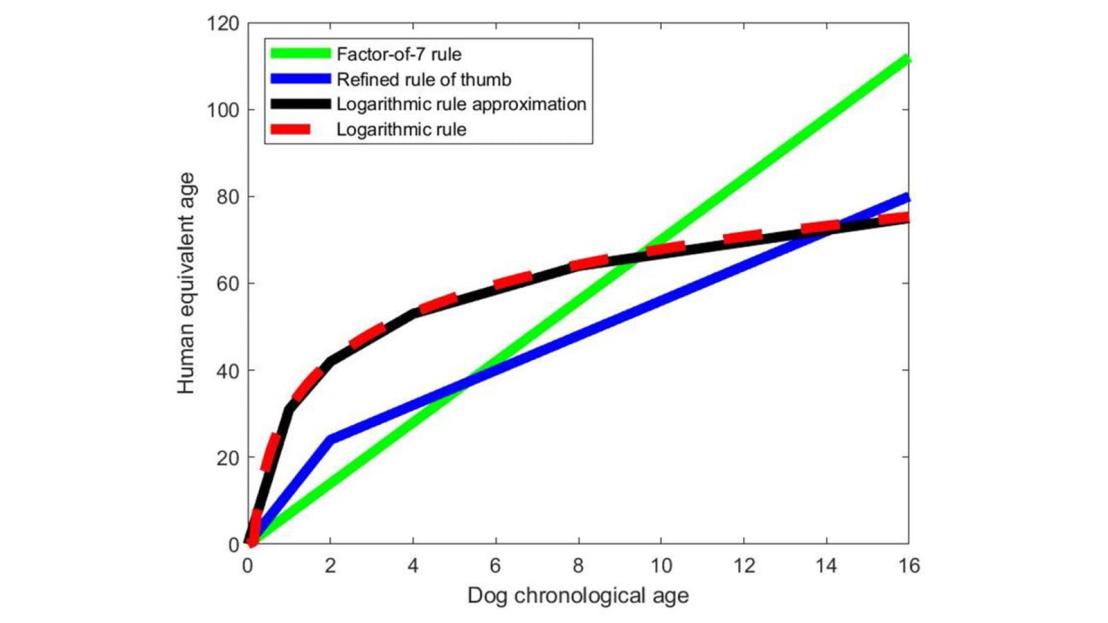
In the graph below, you can see how the natural logarithm works to convert the years a dog has lived (dog age) into the equivalent human age in the red dashed curve. The curve suggests that dogs mature extremely rapidly at first, but that their ageing then slows down, meaning that most of their lives are experienced as a form of protracted middle age.

A handy short cut is to remember that the first dog year counts for 31 human years. Then, after that, every time the dog’s chronological age doubles, the number of equivalent human years increases by 11. So eight calendar years represents three “doublings” (from one to two, two to four and then four to eight) giving a dog age equivalent of 64 (that’s 31 + 3×11).

This useful approximation is plotted as the black curve on the conversion figure below. The green line represents the discredited factor-of-seven rule that suggests unrealistic ages at the higher end of the dog age spectrum.

In eight calendar years a dog will approximately age the equivalent of 64 years (Credit: Christian Yates)

Most dog lovers will already have suspected that the human-to-dog age relationship is non-linear, having noticed that, initially, their pets mature much more quickly than the linear factor-of-seven rule suggests.

more sophisticated refinement to the factor-of-seven rules has suggested that each of the dog’s first two years correspond to 12 human years while all subsequent years count for four human equivalents. The blue curve in the above figure, which represents this ad hoc rule, shows better agreement with the new logarithmic law.

In practice the new molecular insights into human-to-dog age conversion encapsulated by the logarithmic law suggest that dogs move into middle age even more rapidly than most dog-owners would have suspected. It’s worth bearing in mind, when you find that Rex is reluctant to chase the ball like he once did, that he’s probably got more miles on the clock than you’ve been giving him credit for.

Christian Yates is a senior lecturer in mathematical biology at the University of Bath. He is also the author of The Maths of Life and Death.

This article originally appeared on The Conversation, and is republished under a Creative Commons licence. 

ooOOoo

I don’t know about you but I found this article extremely interesting.

Well done the BBC!

Pentobarbital found in route to dog food!

This is another important dog food recall notice.

The first of the New Year but I suspect if will be far from the last.

ooOOoo

Dear Fellow Dog Lover,

I’m pleased to report there have been no dog food recalls issued since September 26, 2019.

Euthanasia Drug Discovered in Adulterated Animal Fat

The FDA recently discovered an animal euthanasia drug (pentobarbital) in test samples collected at a major supplier of animal fat to the pet food industry.

We’re unable to locate any information about which pet food brands may have purchased the affected ingredient.

For this reason, we recommend all dog and cat owners remain alert to the potential for future recalls related to this news.

Click here to read the official FDA Warning Letter sent to the producer.

Dog Food Recall Update

Some pet foods previously recalled may still be on store shelves… or in your own home. So, if you’ve missed any of the 11 recalls we’ve sent since July… be sure to visit our Dog Food Recalls page for full details.

10 Best Dog Food Lists
Recently Updated

Over the last 90 days, The Dog Food Advisor has updated the following best dog food pages:

  • Best Dry Dog Food
  • Best Wet Dog Food
  • Best Puppy Food
  • Best Affordable Dog Food
  • Best Dog Food for Allergies
  • Best Grain-Free Dog Food
  • Best Dog Food Made with Grain
  • Best Dog Food for Sensitive Stomach
  • Best Senior Dog Food
  • Best Dog Food for Weight Loss

Click here to see ALL our Best Dog Food lists for January 2020

Please be sure to share this report with other pet owners.
Mike Sagman, Editor
The Dog Food Advisor
Saving Good Dogs From Bad Dog Food

ooOOoo

Once again may I add my plea to Mike Sagman’s request to share this report as far and wide as you can.

What your pet dogs need to eat! Eat meat!

A fascinating article on vegetarian diets for our dogs.

We are non-meat eaters here at home. Have been for a while. Our diet is essentially vegan most of the time with some fish thrown in as well. It seems to be doing us well!

But what does us good is not what does dogs good. Not at all!

You know that dogs need meat but there was a recent article on Mother Nature Network which went into details:

ooOOoo

Is a vegetarian diet safe for my dog?

By Jessica Knoblauch
June 3, 2019.

Experts say plant-based diets don’t always give dogs the nutrition they need. (Photo: Stickler/Shutterstock)

More people are forgoing meat in their diets for a whole spectrum of reasons — from environmental to philosophical — and now vegetarians are taking a second look at their dogs’ meat-based diets too. As a result, more owners are putting their dogs on a vegetarian or even vegan diet to bypass the health and ethical dilemmas that come with a side of beef, pork or chicken in their pet’s kibble.

“I’ve been vegan for more than two years now, and I don’t wish to contribute to the slaughterhouse or factory farm industry for my own food nor for my dogs’,” explains Debra Benfer, who together with her husband owns three vegan dogs. “If people really read what ingredients are put in dog food, I believe more people would understand why a vegetarian diet is the way to go.”

Some of those ingredients include meat from animals deemed unfit for human consumption, known in the pet food industry as the 4 Ds — dead, dying, diseased or disabled animals. In addition, many commercial pet foods contain “meat meal” or “byproducts,” which can include various animal parts and slaughterhouse waste that don’t exactly match the idyllic pictures of juicy meat chunks often seen on a bag or can of dog food. Much like commercial meat for humans, meat used in pet food can contain hormones, pesticides and antibiotics, a concern that has led many dog owners to seek alternative diets.

“If someone is saying it’s OK to give my dog these things, I would add a 5th ‘D’ to that equation and say ‘don’t,’” says Jill Howard Church, president of the Vegetarian Society of Georgia. “As a vegetarian, I know what’s in human meat and since the meat that falls below the human standard is what goes into pet food, it gives me cause for concern.”

Church’s two dogs were on a vegetarian diet for their entire lives and lived to be a healthy 15 and 19 years old. Church currently has a 3-year-old black Labrador retriever that’s also thriving on a vegetarian diet.

Church and Benfer’s positive experience with vegetarian dog diets is mirrored in hundreds of testimonials found on the internet from owners who have successfully switched their dogs to a vegetarian diet. Some owners have bypassed the dog food industry altogether by cooking their own wholesome vegetarian dog meals.

“People are taking control of their animals’ diet back into their own hands instead of relying on the pet food industry so much,” says Greg Martinez, author of “Dog Dish Diet: Sensible Nutrition for Your Dog’s Health“. “We’ve all been held hostage by industry a little bit.”

In addition to decreasing a dog’s carbon pawprint (meat production is a major contributor to greenhouse gas emissions), owners say that putting their dogs on a vegetarian diet has resulted in everything from longer life spans and shinier coats to decreased aggression.

‘It is truly unnatural for them’

It would be smart to consult with a veterinary nutritionist before switching to a vegetarian diet for your dog. (Photo: Rasulov/Shutterstock)

However, there are those who worry that vegetarian dogs may not be able to get adequate nutrition from a plant-based diet. Dogs, like humans, are omnivores, meaning they can survive on a diet of either plant or animal origin, but owners must be careful to ensure that their dogs are getting the proper nutrients from plant-based ingredients. (Cats, on the other hand, are strictly carnivores.)

According to the Association of American Feed Control Officials (AAFCO), a non-regulatory industry group that establishes pet food standards, dog food for an average adult dog should contain about 18% protein, an amount deemed necessary for good health and proper growth and development. But since every protein source contains different levels of amino acids, which are protein’s building blocks, all protein is not created equal. Some proteins are better for pets than others. For example, egg and cottage cheese are considered quality sources of protein for dogs.

“Vegetarian proteins tend not to have all the amino acids, so you have to do multiple combinations of varying types of sources of protein to get the right amino acids, which can get a little tricky to manage,” says Dr. Jessica Waldman, a veterinarian who operates a full-time pet rehabilitation clinic in Santa Monica, California. Waldman says she steers her clients away from vegetarian diets because she believes they are unnatural.

“Although I think it would be possible to put a dog on a vegetarian diet, it is truly unnatural for them,” says Waldman. “There are still dogs in the wild and they eat a vast majority of animal protein, so I think that keeping your pet’s diet as close to natural is best for limiting disease and promoting health.”

Other vets disagree, arguing that dogs can successfully be vegetarians as long as their diet is balanced and they are able to get proteins from varying sources.

Dr. Jennifer Larsen, a veterinary nutritionist at the University of California-Davis, says that both commercial and home-cooked vegetarian diets “can be used safely and can provide adequate nutrition if carefully and appropriately formulated” and as long as owners pay special attention to providing their dogs with the proper protein and amino acids.

Commercial vegetarian diets and home-cooked options are prescribed by veterinarians for dogs with specific diseases, but there currently isn’t much extensive research to prove or disprove their healthfulness. One survey conducted by PETA found that 82% of dogs that had been vegan for five years or more were in good to excellent health and that the longer a dog remained on a vegetarian or vegan diet, the greater the likelihood that the dog would have overall good to excellent health.

The study, however, also found that vegetarian dogs may be more prone to urinary tract infections as well as a form of heart disease known as dilated cardiomyopathy, which can be caused by a deficiency of the amino acids L-carnitine or taurine. But as the researchers pointed out, DCM isn’t just a problem for vegetarian dogs since L-carnitine and taurine also can be washed away in the processing of meat in commercial dog food.

To help bypass this problem, some commercial dog food companies like V-dog, a high protein vegan dog food, have added taurine and L-carnitine to their formulas to insure quality health that “exceeds the nutrient profiles established by the AAFCO,” says V-dog President David Middlesworth.

Though putting dogs on a vegetarian diet may remain controversial until further studies are conducted, veterinarians and vegetarian dog owners can agree that people considering putting their dog on a vegetarian diet should first do their own research to determine what’s best for their individual dog’s needs and/or consult their veterinarian.

Jennifer Adolphe, an animal nutritionist at the University of Saskatchewan, told The Washington Post that pet owners should do research. She advises pet owners to do “some homework to find out who is behind the company, if it employs a full-time qualified nutritionist, what kind of quality control measures do they use.”

“It just takes research and the willingness to stick by your reasons for having your dogs on a vegetarian diet,” says Benfer, who often makes homemade dog food for her three vegan dogs. “I get strange looks when I let people know my dogs are vegan, but it’s only because they aren’t educated about dogs being vegetarian and don’t realize how easy and possible it really is to do.”

Editor’s note: This story has been updated with new information since it was published in August 2010.

ooOOoo

Well not much to add from me. This article is completely clear to my mind.

Dogs need meat!

A cat-food recall!

J.M. Smucker recall.

In terms of the Webformix internet cut-outs there has only been one noticeable break and that was yesterday early morning.

So I feel confident in posting this food recall notice that also came in yesterday.

ooOOoo

Dear Fellow Dog Lover,

I’m pleased to report there have been no dog food recalls since September 26.

However, for our many dog owners who also own a cat…

J. M. Smucker has recalled certain lots of Special Kitty canned cat food because the product contains ingredients that “do not meet the company’s quality and safety standards”.

Eating the affected food may cause nausea, vomiting or a host of other symptoms… some more severe… including death.

Click here to read the announcement.

Dog Food Recall Update

Some dog foods previously recalled may still be on store shelves… or in your own home. So, if you’ve missed any of the 11 recalls we’ve sent since July… be sure to visit our Dog Food Recalls page for full details.

9 Best Dog Food Lists
Recently Updated
Over the last 60 days, The Dog Food Advisor has updated the following best dog food pages:

  • Best Dry Dog Food
  • Best Puppy Food
  • Best Affordable Dog Food
  • Best Dog Food for Allergies
  • Best Grain-Free Dog Food
  • Best Dog Food Made with Grain
  • Best Dog Food for Sensitive Stomach
  • Best Senior Dog Food
  • Best Dog Food for Weight Loss

Click here to see our Best Dog Foods for December 2019
Please be sure to share this report with other pet owners.

Mike Sagman, Editor
The Dog Food Advisor
Saving Good Dogs From Bad Dog Food
P.S. Not yet on our recall notification list? Click here to get FREE lifesaving recall alerts by email. No spam. Cancel anytime.

ooOOoo

And here’s that J.M. Smucker announcement link:

The J. M. Smucker Company Issues Voluntary Recall of Specific Lots of Special Kitty® Wet, Canned Cat Food Due to Health Concerns

A Dog Food Recall summary

Just read and check on your own circumstances.

This latest email from the Important Dog Recall Update is just that: an update!

ooOOoo

Dear Fellow Dog Lover

I’m pleased to report there have been no new recalls announced since our last email on November 19.

However, some recalled products may still be on store shelves… or even in your own home. So, if you’ve missed any of the 11 recalls we’ve sent since July… be sure to visit our Dog Food Recalls page for full details.

8 Best Dog Food Lists
Recently Updated

Over the last 60 days, The Dog Food Advisor has updated the following best dog food pages:

  • Best Dry Dog Food
  • Best Puppy Food
  • Best Affordable Dog Food
  • Best Dog Food for Allergies
  • Best Grain-Free Dog Food
  • Best Dog Food Made with Grain
  • Best Senior Dog Food
  • Best Dog Food for Weight Loss

Click here to see our Best Dog Foods for December 2019

Please be sure to share this report with other pet owners.
Mike Sagman, Editor
The Dog Food Advisor
Saving Good Dogs From Bad Dog Food

ooOOoo

Mike Sagman does a brilliant job!

Now a cat recall!

This is self-explanatory!

ooOOoo

Dear Fellow Dog Lover,

I’m pleased to report there have been no recalls since September 26.
However, for the many dog owners who also own a cat…

Go Raw is recalling one lot of its “Quest Beef Cat Food”… because it may be contaminated with Salmonella.
Missed any of the 11 other recalls we’ve sent since early July? Be sure to visit our Dog Food Recalls page for full details.
6 Best Dog Food Lists Updated
The Dog Food Advisor has recently updated the following best dog food pages:

  • Best Dry Dog Foods
  • Best Puppy Foods
  • Best Dog Food for Allergies
  • Best Grain-Free Dog Foods
  • Best Senior Dog Foods
  • Best Dog Food for Weight Loss

Click here to see our Best Dog Foods for November 2019

Please be sure to share this news with other pet owners.

Mike Sagman, Editor
The Dog Food Advisor
Saving Good Dogs From Bad Dog Food
P.S. Not yet on our recall notification list? Click here to get FREE lifesaving recall alerts by email. No spam. Cancel anytime.

ooOOoo

This is a brilliant service!

Dogs are meat-eaters!

Humans are not – never have been!

On Monday when Jeannie and I went to our regular session at Club Northwest, Jean to her Rock Steady class, and me to spend 45 minutes with Austin Raymond, one of the fitness coaches, he and I were speaking of health in general and veganism in particular. Austin, Jean and I are vegans.

Austin mentioned had we watched the film The Game Changers on Netflix? I replied that we had not but we were subscribers to Netflix and would watch it in the evening.

Well what an incredible film! I mean really incredible!

P.S. If you are a Netflix subscriber then you may watch it without any fuss.

(So I taken time out from book writing to publish this post; I’m over 9,000 words already written in November!)

Here’s a YouTube trailer to the film:

Have you ever seen an ox eating meat!

But apart from the solid science that we never were meat-eaters were the facts about illness being so much prevalent in those eating meat compared to vegans. That was just one aspect of the film that grabbed our attention! There were many more.

Back to fundamentals!

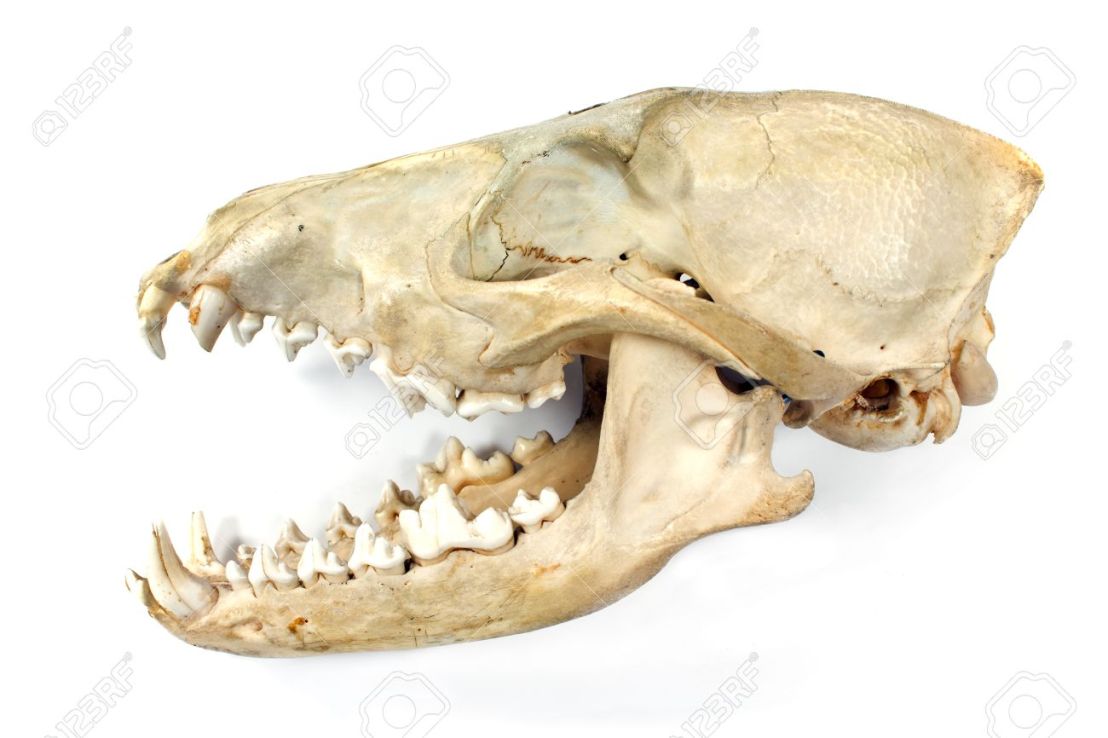
Let’s examine one fact, the jaw shape.

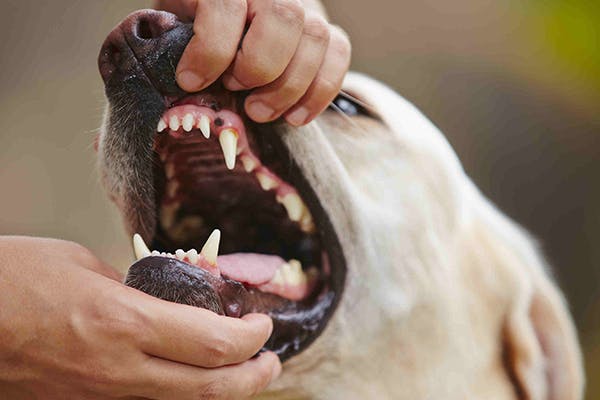
Here’s the jaw of a dog.

Dog skull and jaw isolated on white

and here’s another:

That is a mouth that has evolved to tear meat from an animal.

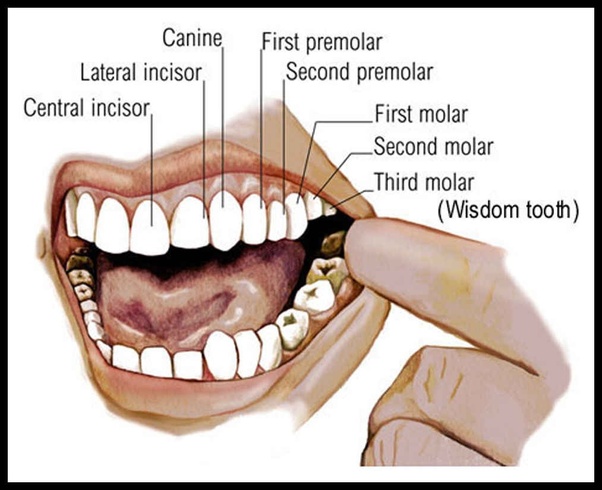
And here’s the jaw of a human:

and the picture of the whole skull.

Notice that the teeth have always been adapted to eat fruit and vegetables.

And that’s before we think how much land has been converted from natural land and forest to grazing land for cattle and sheep!

Now I don’t know how long the full documentary will remain for free on YouTube but here it is:

It is an hour and twenty-five minutes long.

But PLEASE watch it! It’s very important.

And I would be very interested in your thoughts!

In my opinion this is as important as it gets.

Thank you, Austin!

Two more dog food recalls

These are both from late September.

I have been catching up on my emails and saw that two had come in; one from the 24th September and one from the 25th September.

Here they are.

ooOOoo

September 25th, 2019

Hill’s Pet Nutrition confirms the company has discontinued production and sale of its Hill’s Ideal Balance dry and wet dog foods. No reason for this action has been given.

oooo

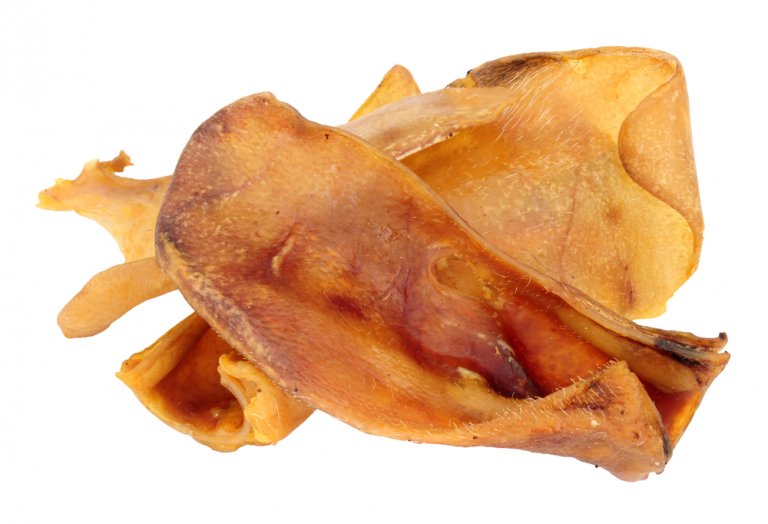
TDBBS Recalls USA-Made Pig Ear Pet Treats

September 24, 2019 — TDBBS of Richmond, VA, is recalling a limited distribution of 2 pig ear pet treat products sold via Amazon.com due to possible contaminationwith Salmonella bacteria.

What’s Recalled?

The affected products were shipped to customers between April 22, 2019, and August 13, 2019.

Customers are advised to dispose of any USA Thick Pig Ear 8 Pack and USA Thick Pig Ear 20 Pack from the following shipments.

All UPCs, Best By Dates and Lot Codes are located on the package back.

A sample image of one of the product labels is posted below. See above table for specific lot numbers and Best By dates.

Why the Recall?

This recall is the result of routine sampling conducted by the Michigan Department of Agriculture and Rural Development.

The sample package tested positive for Salmonella. No illnesses have been reported. And according to the company, “the amount of affected product is minimal”.

About Salmonella

Salmonella can affect animals eating the products, and there is risk to humans from handling contaminated pet products, especially if they have not thoroughly washed their hands after having contact with the products or surfaces exposed to these products.

Healthy people infected with Salmonella should monitor themselves for some or all the following symptoms: nausea, vomiting, diarrhea or bloody diarrhea, abdominal cramping and fever.

Rarely, Salmonella can result in more serious ailments, including arterial infections, endocarditis, arthritis, muscle pain, eye irritation, and urinary tract symptoms.

Consumers exhibiting these signs after having contact with this product or a pet that has eaten the product should contact their healthcare providers.

Pets with Salmonella infections may be lethargic and have diarrhea or bloody diarrhea, fever, and vomiting.

Some pets will have only decreased appetite, fever and abdominal pain.

Infected but otherwise healthy pets can be carriers and infect other animals or humans.

Company Statement

TDBBS included the following text within the FDA recall announcement:

“TDBBS treats and chews are produced to robust safety and quality standards, using the most advanced food safety protocols. Our team is committed to doing its part to caring for the pets who enjoy our products. We regret the concern and inconvenience this recall creates for our customers.

“Our company has ceased the production and distribution of this product as we, in cooperation with the FDA, continue to investigate the situation further. TDBBS’s product safety team is conducting its own stringent review to identify what measures can be established to prevent this situation from recurring.

“Our safety teams have been rigorously testing our products and raw materials, working with independent testing firms and conducting an internal investigation within our supply chain to determine how this situation occurred. Nevertheless, we believe it is appropriate out of an abundance of caution to conduct this voluntary recall in cooperation with our customer.”

What to Do?

If your pet has consumed the recalled product and has these symptoms, please contact your veterinarian.

Consumers may contact customer service at 877-483-5853, Monday to Friday 9 to 5 PM or email TDBBS at customerservice@tdbbsllc.com.

U.S. citizens can report complaints about FDA-regulated pet food products by calling the consumer complaint coordinator in your area.

Or go to https://www.fda.gov/petfoodcomplaints.

Canadians can report any health or safety incidents related to the use of this product by filling out the Consumer Product Incident Report Form.

ooOOoo

As usual, please share these wherever you can.

Corgi cafes!

Why thousands are flocking to corgi cafes.

From the BBC News:

Corgi cafes are all the rage, so what’s behind the global phenomenon transforming the fortunes of this once overlooked dog breed?

Corgi cafes are especially popular in Asia, with businesses thriving in Thailand, Japan and China.

You can watch the video here.

There’s also another video on YouTube.

Enjoy!