On Monday when Jeannie and I went to our regular session at Club Northwest, Jean to her Rock Steady class, and me to spend 45 minutes with Austin Raymond, one of the fitness coaches, he and I were speaking of health in general and veganism in particular. Austin, Jean and I are vegans.
Austin mentioned had we watched the film The Game Changers on Netflix? I replied that we had not but we were subscribers to Netflix and would watch it in the evening.
Well what an incredible film! I mean really incredible!
P.S. If you are a Netflix subscriber then you may watch it without any fuss.
(So I taken time out from book writing to publish this post; I’m over 9,000 words already written in November!)
Here’s a YouTube trailer to the film:
Have you ever seen an ox eating meat!
But apart from the solid science that we never were meat-eaters were the facts about illness being so much prevalent in those eating meat compared to vegans. That was just one aspect of the film that grabbed our attention! There were many more.
Back to fundamentals!
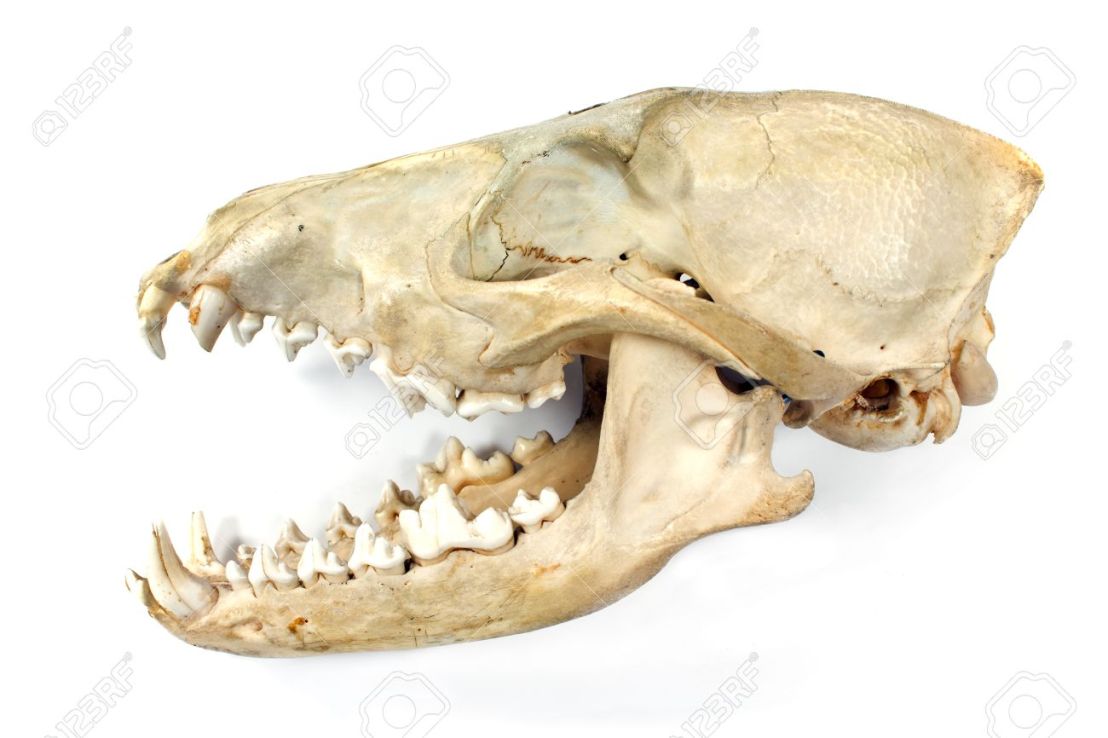
Let’s examine one fact, the jaw shape.
Here’s the jaw of a dog.
Dog skull and jaw isolated on white
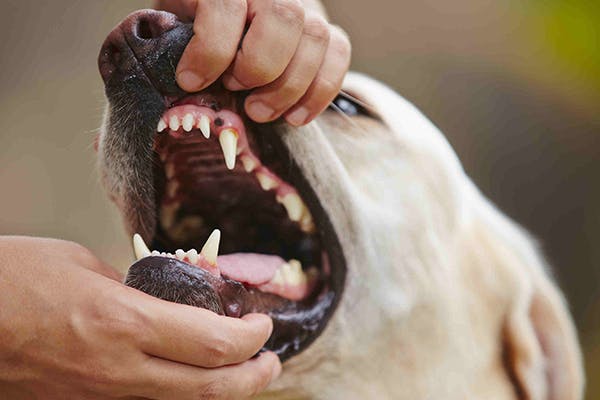
and here’s another:
That is a mouth that has evolved to tear meat from an animal.
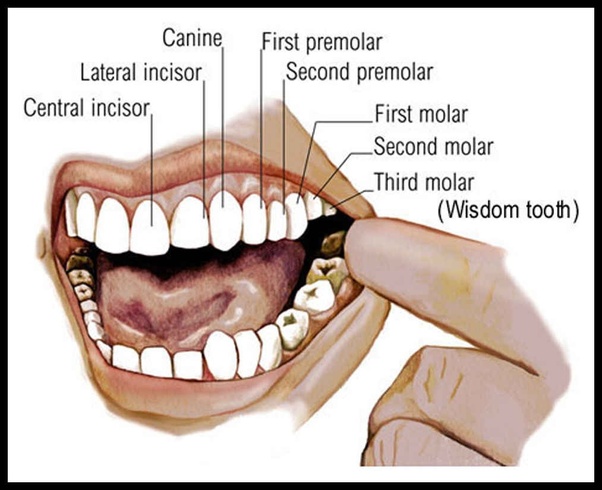
And here’s the jaw of a human:
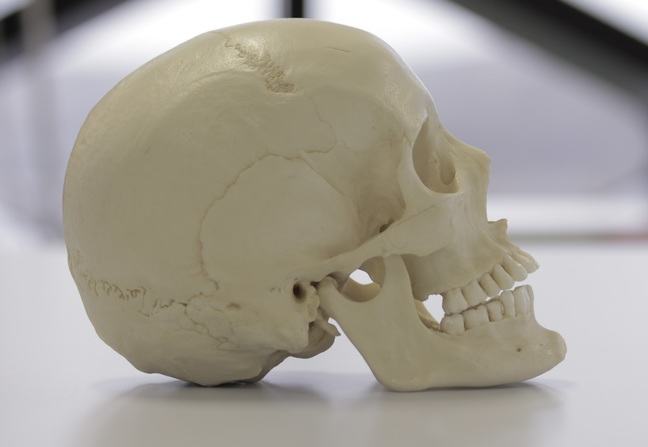
and the picture of the whole skull.
Notice that the teeth have always been adapted to eat fruit and vegetables.
And that’s before we think how much land has been converted from natural land and forest to grazing land for cattle and sheep!
Now I don’t know how long the full documentary will remain for free on YouTube but here it is:
I have been catching up on my emails and saw that two had come in; one from the 24th September and one from the 25th September.
Here they are.
ooOOoo
September 25th, 2019
Hill’s Pet Nutrition confirms the company has discontinued production and sale of its Hill’s Ideal Balance dry and wet dog foods. No reason for this action has been given.
oooo
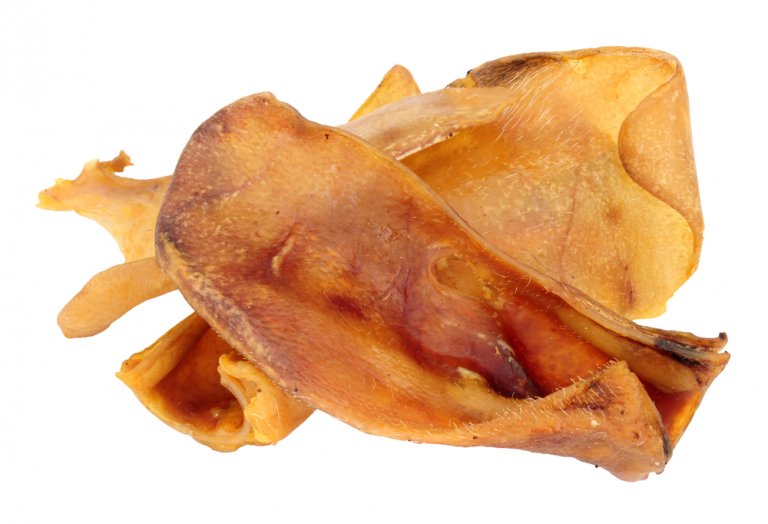
TDBBS Recalls USA-Made Pig Ear Pet Treats
September 24, 2019 — TDBBS of Richmond, VA, is recalling a limited distribution of 2 pig ear pet treat products sold via Amazon.com due to possible contaminationwith Salmonella bacteria.
What’s Recalled?
The affected products were shipped to customers between April 22, 2019, and August 13, 2019.
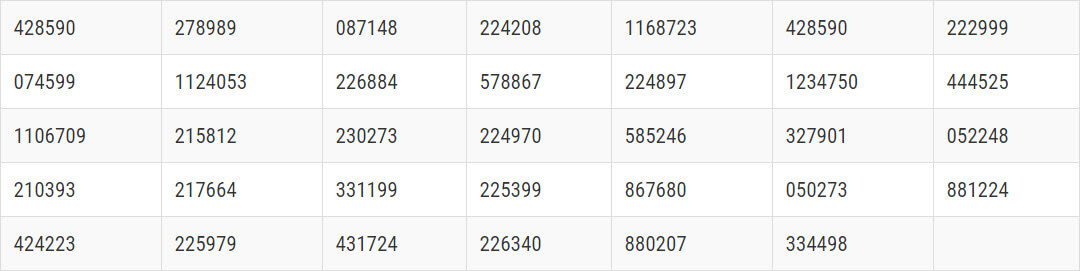
Customers are advised to dispose of any USA Thick Pig Ear 8 Pack and USA Thick Pig Ear 20 Pack from the following shipments.
All UPCs, Best By Dates and Lot Codes are located on the package back.
A sample image of one of the product labels is posted below. See above table for specific lot numbers and Best By dates.
Why the Recall?
This recall is the result of routine sampling conducted by the Michigan Department of Agriculture and Rural Development.
The sample package tested positive for Salmonella. No illnesses have been reported. And according to the company, “the amount of affected product is minimal”.
About Salmonella
Salmonella can affect animals eating the products, and there is risk to humans from handling contaminated pet products, especially if they have not thoroughly washed their hands after having contact with the products or surfaces exposed to these products.
Healthy people infected with Salmonella should monitor themselves for some or all the following symptoms: nausea, vomiting, diarrhea or bloody diarrhea, abdominal cramping and fever.
Rarely, Salmonella can result in more serious ailments, including arterial infections, endocarditis, arthritis, muscle pain, eye irritation, and urinary tract symptoms.
Consumers exhibiting these signs after having contact with this product or a pet that has eaten the product should contact their healthcare providers.
Pets with Salmonella infections may be lethargic and have diarrhea or bloody diarrhea, fever, and vomiting.
Some pets will have only decreased appetite, fever and abdominal pain.
Infected but otherwise healthy pets can be carriers and infect other animals or humans.
“TDBBS treats and chews are produced to robust safety and quality standards, using the most advanced food safety protocols. Our team is committed to doing its part to caring for the pets who enjoy our products. We regret the concern and inconvenience this recall creates for our customers.
“Our company has ceased the production and distribution of this product as we, in cooperation with the FDA, continue to investigate the situation further. TDBBS’s product safety team is conducting its own stringent review to identify what measures can be established to prevent this situation from recurring.
“Our safety teams have been rigorously testing our products and raw materials, working with independent testing firms and conducting an internal investigation within our supply chain to determine how this situation occurred. Nevertheless, we believe it is appropriate out of an abundance of caution to conduct this voluntary recall in cooperation with our customer.”
What to Do?
If your pet has consumed the recalled product and has these symptoms, please contact your veterinarian.
Consumers may contact customer service at 877-483-5853, Monday to Friday 9 to 5 PM or email TDBBS at customerservice@tdbbsllc.com.
U.S. citizens can report complaints about FDA-regulated pet food products by calling the consumer complaint coordinator in your area.
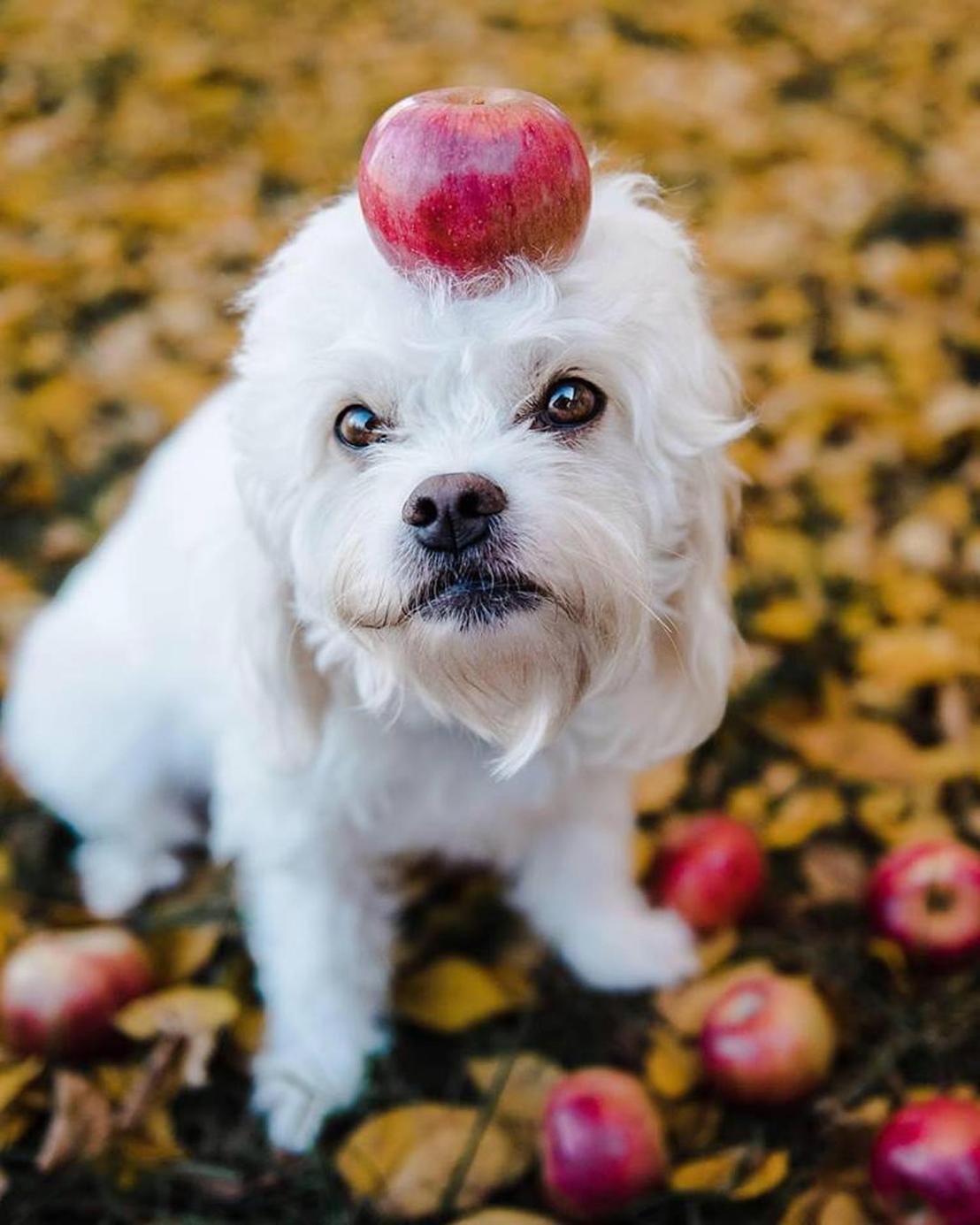
Your pooch may be the apple of your eye, but did you know you can take her to pick apples with you, too? Many farms and orchards around the country welcome four-legged guests. Not only can you use apples to make delicious apple pies, apple cider and apple butter, but your pup can enjoy the fruit as well! According to the American Kennel Club, apples are safe for dogs to eat, in moderation of course. However, dogs should not consume the seeds because they contain a plant compound that converts into cyanide when chewed. The core should also be kept away from pups, as it could be a choking hazard.
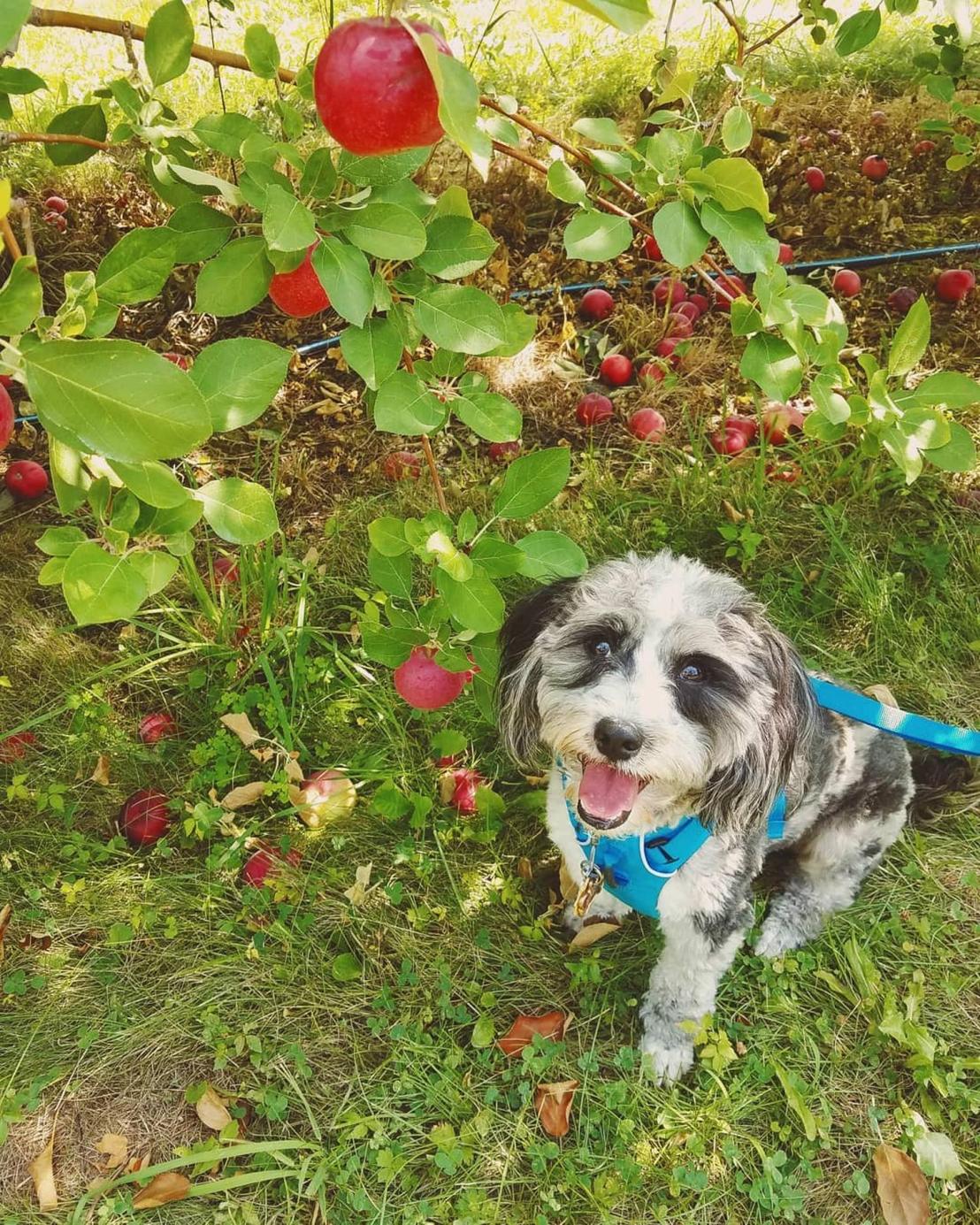
“Give us apples … and then maybe we’ll tell you who’s who.” Photo by @ellogoldengirls
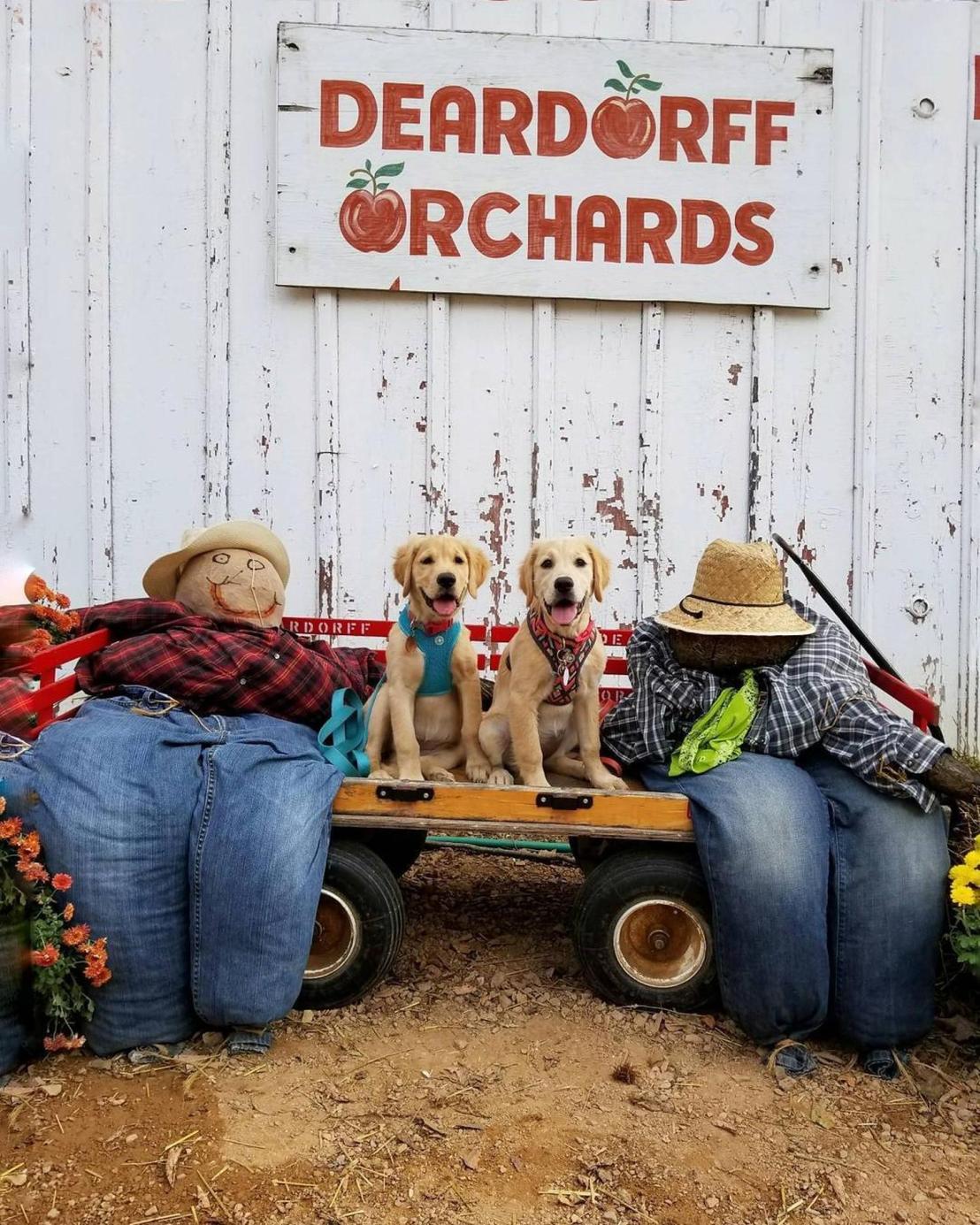
Deardorff Orchards loves dogs, which is why they have two separate pet water stations on the premises as well as waste bags available for guests with pups. Dogs are welcome on their 125 acres of grounds if they’re leashed and friendly. You and your pup will be able to pick from their 10 varieties of apples, and their 3,000 trees ensure you can have your pick of the litter. Deardorff Orchards also has pumpkins, red wagons if you want to tow along your kids or your exceptionally lazy dog, and farm animals for Fido to meet. Guests are welcome to enjoy the barn, listen to live music, sample their wines, and take a tractor ride on the weekends. If your furry travel companion still isn’t ready to go home after a trip to the farm, visit dog-friendly Minneapolis, which is only about an hour away.
Pick-Your-Own apples is available at Deardorff Orchards Fridays to Sundays from September 5 through late October. Depending on the weather, apple picking is open from noon until 5 p.m. Customers must purchase at minimum a half-peck bag (roughly six pounds) before heading to the orchard. The cost varies depending on the apple variety and availability.
“Beep beep! Tired pup coming through!” Photo by Julie Leaver
Just a short drive from Asheville (and about two hours from Charlotte), Grandad’s Apples has been family-owned and operated since 1994. Pups and people alike can enjoy the 100 acres of the farm. Leashed dogs can join you while picking apples from the orchard but are not allowed in the pumpkin and playground areas. Fido is welcome inside the Barn and Country Store (where you can shop for apple turnovers, hot cider donuts, caramel apples and other goodies), near the barnyard corral where he can hang out with the resident farmyard animals, and in their 5-acre corn maze. Weekends at Grandad’s are full of fun events like cow trains, jump pillows, and even an apple cannon!
Grandad’s Apples is open for apple picking from late July through the third week of October from 8 a.m. to 6 p.m. daily. Pick-Your-Own is $11 for a peck and $18 for a half bushel. The corn maze is $4 per person and free for dogs. They recommend calling ahead to learn what’s available for picking before visiting.
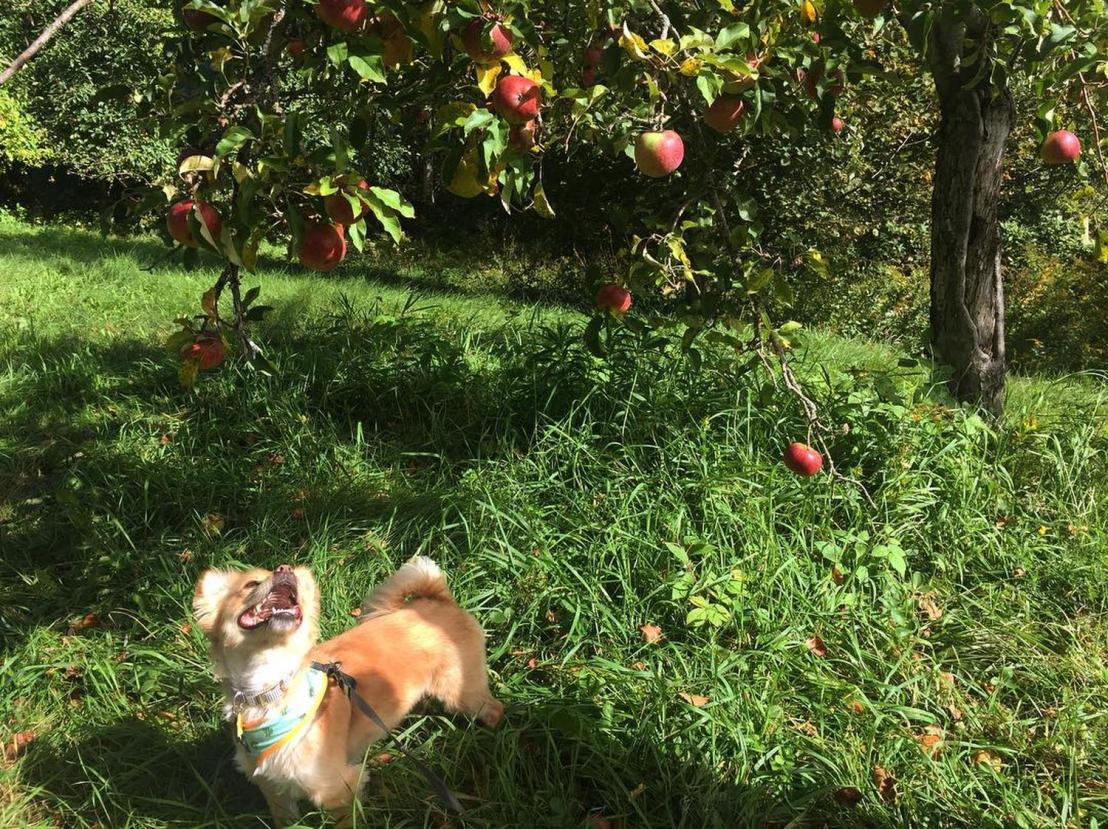
My fur coat really makes the apples pop.”
Photo by Facebook.com/WrightsFarm
Your pooch will love exploring Wrights Farm’s vast 453 acres. In addition to picking from the 100,000 bushels of apples they grow every year, you and Fido can hike, bike, picnic or tailgate here. They even welcome you to bring gas grills, kites and frisbees. The farm, which has been family-run for five generations, also offers Pick-Your-Own pumpkins and sells a variety of fruits, vegetables, baked goods, jams, jellies, pickles and apple sauces.
You can pick apples at Wrights Farm from September 8 to November 3, 2019. Pick-Your-Own hours are from 8 a.m. to 4:30 p.m every day. Admission is $12 and includes a one-peck bag. Children 5 to 9 years old pay $6 and receive a ½-peck bag. Children under 5 and dogs are free. Additional bags are available for purchase.
“It’s been apple-asure to share the wagon with you.” Photo by @itsokayklar
Dogs are part of the family, which is why leashed pups are invited to create fall memories along with everyone else at Kiyokawa Family Orchards. The family-owned and operated business has been growing produce (more than 120 varieties of apples and pears today!) since 1911. Dogs can lend a helping paw in the orchards. However, they may not enter the fruit stand. There is a water bowl for your pup to cool off and waste bags are available for easy cleanup. After you get your selection from the largest U-Pick orchard in the valley, don’t forget to snap some photos of Fido with the gorgeous backdrop of Mt. Hood.
Kiyokawa Family Orchards is open Saturdays and Sundays from July 13 to August 30 from 9 a.m. to 6 p.m. From August 30 to November 4, operating hours are Monday to Friday from 10 a.m. to 6 p.m. and weekends from 9 a.m. to 6 p.m. There is no admission fee and fruit prices vary.
“Please fall! C’mon, just one! Please!” Photo by @mchemelski
Terison Apple Orchard gets it. One of their owners has her own pet-sitting service, so they understand how much people love their pooches. Leashed dogs can help you pick apples in their low-spray orchard. It’s the first Pick-Your-Own orchard in Maine, and you and your pup can bond together while savoring the sweet fruits of your labor.
While exact dates and hours vary due to the weather, Terison Apple Orchard is generally open from early September through October, from 9 a.m. to 5 p.m. daily. The orchard is self-service and uses the honor system. Bags cost $10 and $20, payable by cash only.
Apple picking with your pup can be a real balancing act.
Photo by Facebook.com/ciderhillfamilyorchardLeashed furry family members can help you pick from 18 different types of apples at Cider Hill Family Orchard’s 1,500 apple trees. Dogs are welcome on the 38 acres of farmland, but they may not enter buildings including the gift shop. Cider Hill also has a pumpkin patch, a fishing pond, a fire pit, hayrides and kid’s train rides. While you’re here, don’t forget to sample delicious treats made on site like cinnamon-cider doughnuts, apple crisp, kettle corn and apple butter.
Apple picking at Cider Hill begins in August. However, the end of the season varies due to the weather. In August, operating hours are 9 a.m. to 5 p.m. Tuesday through Saturday. In September and October, operating hours are 9 a.m. to 5 p.m Tuesday through Saturday and noon to 5 p.m. on Sunday. There is no admission fee. A peck of apples is $11, a half bushel is $21, and a bushel is $40. Aggressive dogs are not permitted.
Don’t sit under the apple tree with anyone else but me. Photo by @thesecretworldofjensendean
Applecrest Farm is not only the oldest continuously operated apple orchard in America, and the oldest and largest in New Hampshire, it’s also dog friendly! Pups are welcome if they’re leashed, under control and picked up after. The farm boasts 220 acres and more than 40 types of apples. While dogs are not permitted in buildings or in the blueberry fields, you and Fido may enjoy the free tractor rides offered to and from the orchard on weekends in September and October. If your pup is itching for a road trip, the farm is conveniently located an hour from Boston and about 15 miles from historic Portsmouth and Newburyport.
Customers can pick apples from mid-August to late October from 8 a.m. to 5:30 p.m. daily. Admission is free. Pick-Your-Own apples are sold by the peck for $20 and by the half bushel for $30, payable by cash only.
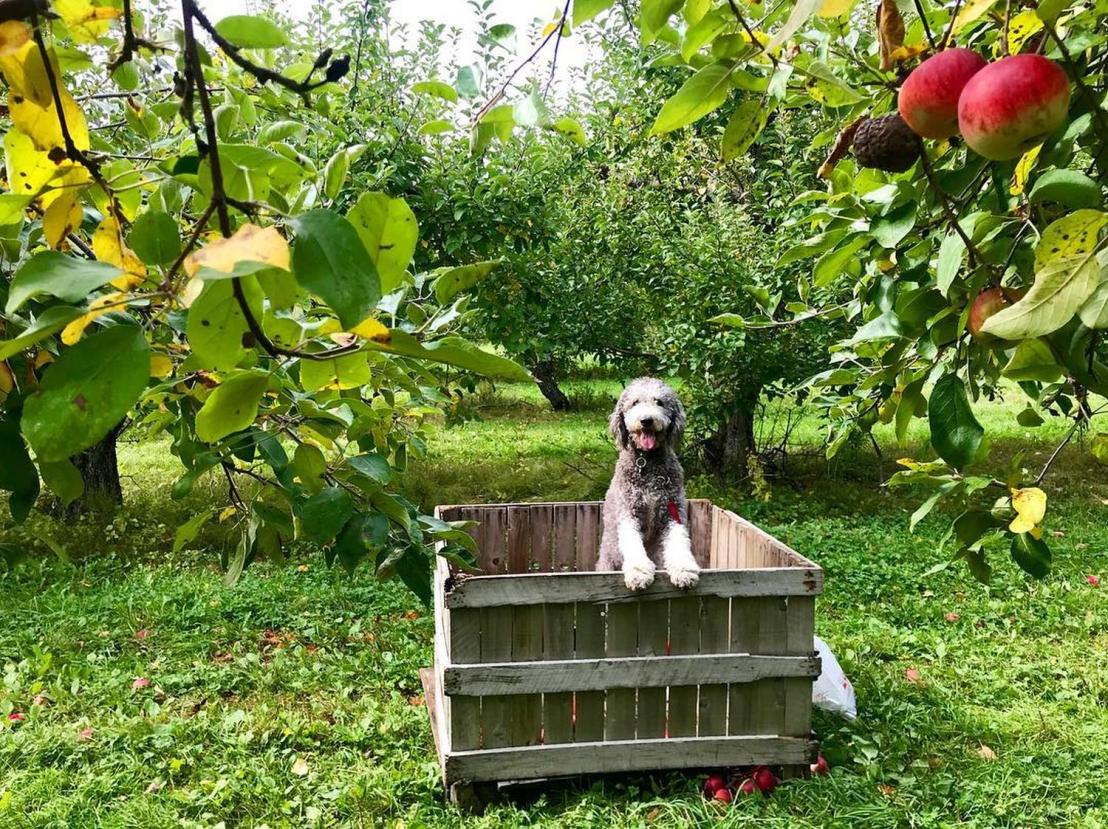
“Now, how do I get out?”
Photo by @rogerdawgHilltop Orchards uses eco-farming methods to grow no-residue apples, which you and your leashed pup can pick together. The family-run property sits on 200 acres and grows 26 varieties of apples, most of which are available for Pick-Your-Own. On weekends during peak season, they offer free hayrides for two-legged and four-legged guests alike from 11 a.m. to 5 p.m. Hilltop Orchards also allows visitors with pets to use their land for hiking, skiing and snowshoeing. In addition, furry visitors can join you for wine and/or hard cider tastings at their on-site Furnace Brook Winery.
Apple season at Hilltop Orchards runs from Labor Day through Columbus Day, although they often have limited availability before and after these dates. The orchards are open daily from 9 a.m. to 5 p.m. A half peck costs $7, a peck costs $10, and a half bushel costs $20.
“Just one small one while they’re not looking …” Photo by @remisayshi
Minnetonka Orchards is very dog friendly. Dogs are welcome in all 12 acres of apple orchards and even on hayrides. They only ask that dogs are leashed and picked up after. The orchards, which have been around since 1976, feature 12 types of apples. The grounds also include Cinderella pumpkin patches and fields of gourds and squash. Other activities include a petting zoo, a tree deck, a corn maze, nature trails and several kids’ play areas. Tasty snacks like apple donuts and brats are also available for purchase. Their sister company, Painter Creek Winery & Cidery, allows dogs as well.
Minnetonka Orchards is open daily from late August through October. Hours of operation are from 10 a.m. to 7 p.m. The admission fee varies based on the crop but includes access to all the attractions on the premises.
“One apple picked and I’m already dog-tired.” Photo by @kyandthetriguy
Alldredge Orchards welcomes dogs to pick apples with their owners as long as they’re leashed and cleaned up after (and you let them pet your pooch!). They grow several varieties which vary year to year depending on the weather. The property also has a pumpkin patch, barn store, cafe, playground and farm animals, so there’s plenty of fun for the whole family.
Alldredge Orchards is open from Labor Day Weekend through October. Guests can pick apples during the weekends from 10 a.m. to 5 p.m. Admission is $3 for ages 2 and up. Prices for apples are based on the crop and availability, and they recommend calling ahead before visiting.
“You see the fruits of my labor?” Photo by sherryontherock/BringFido
Doe Orchards has offered Pick-Your-Own apples since the 1960s and has no plans of stopping now. Leashed four-legged guests are allowed during the fall as long as their two-legged companions clean up after them. Doe Orchards also has pumpkins, gourds, honey and cider. There are plenty of areas for picnicking after a long day of fruit-filled fun.
Apple picking usually begins Labor Day weekend (but may be a little later this season due to weather) and ends in mid-October. Hours of operation are 10 a.m. to 5 p.m. daily. Prices in 2018 were $17 for a peck and $30 for a half bushel.
I pick, U pick, we all pick apples! Photo by @ikellih
West Valley U-Pick offers a great pesticide-free option for you and your pup, not to mention it was named one of Washington’s top 10 apple picking spots. Leashed dogs are welcome anywhere on the property to help you sniff out your perfect pick of apples or other seasonal fruits and veggies. If your pooch really wants to feel accomplished, you can even use one of the orchard’s old-fashioned hand-cranked cider presses to make your own cider.
Fido can pick apples Monday through Saturday 8 a.m. to 7 p.m. and Sunday 8 a.m. to 5 p.m. from late August until the end of September. There is no admission fee for two- or four-legged pickers. Apples are $0.85 per pound and cider presses may be used for free with the purchase of U-Pick apples–simply bring your own container or purchase one of theirs.
“Didn’t I do good? Aren’t I a good boy? Shouldn’t I get … treats?” Photo by Nicolle/BringFido
Dogs are welcome to join you at DeMeritt Hill Farm as long as they are leashed at all times. Don’t worry if you forget one! Leashes are available for rent or purchase at their store. There are trash bins throughout the property for easy cleanup after your pup. Dogs are allowed on the orchard grounds (with 25 apple varieties) and trails, just not in the buildings or on the hayrides.
The farm gives back to animals as well. Every October, it hosts Haunted Overload, a Halloween attraction that benefits the Pope Memorial Humane Society. Dogs are allowed during day haunts but are not permitted at night. The annual “spooktacle” has been voted one of the top haunted attractions in the country multiple times, and even won “The Great Halloween Fright Fight’” on ABC. The $50,000 grand prize from the show was donated to the Humane Society.
DeMeritt Farms is open for apple picking from late August through October. Pick-Your-Own is available Wednesday through Sunday from 10 a.m. to 5 p.m. There is no admission fee, but customers must purchase a one-peck bag before entering the orchard. The price depends on the type of apple but is typically around $16 per peck.
ooOOoo
Yes, I know they are selling apples but nonetheless the photographs are so good that as far as I am concerned the post is a big plus!
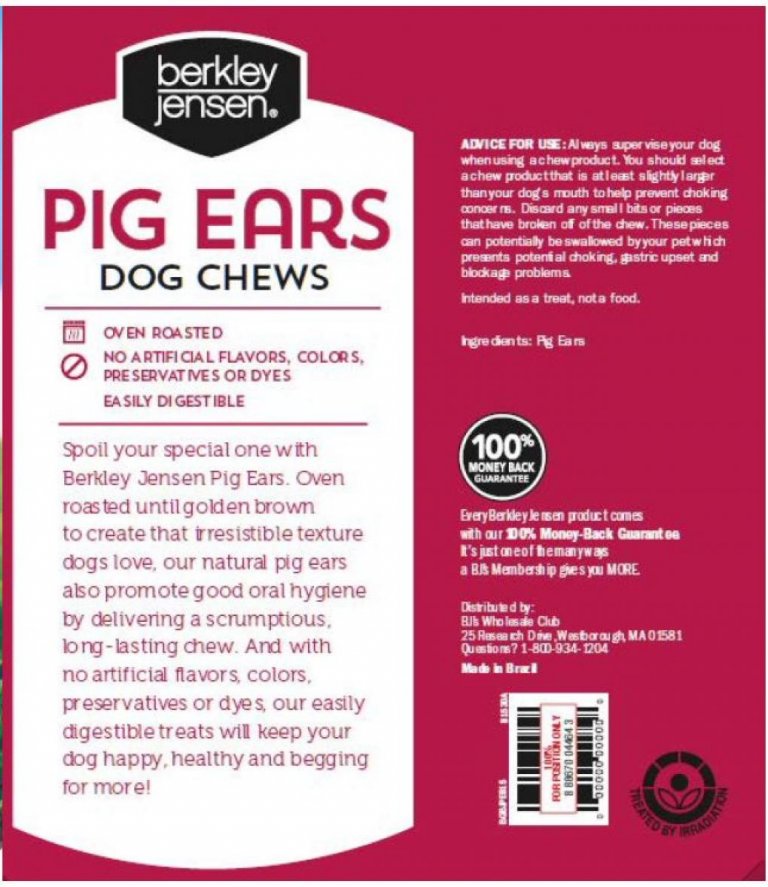
Berkley Jensen Pig Ear Dog Chews Sold at BJ’s Wholesale Club Recalled
September 3, 2019 — Dog Goods USA is expanding its recent recall to include all 30-packs of Berkley Jensen brand pig ear dog chews sold at BJ’s Wholesale Club stores due to possible contamination with Salmonella.
The previous recall is being expanded after testing by Rhode Island Department of Health found Salmonella bacteria in Berkley Jensen brand pig ear pet chews.
What’s Being Recalled?
Dog Goods USA LLC of Tobyhanna, PA, has been contacted by the FDA and is conducting a voluntary recall of the following products: non-irradiated bulk and packaged pig ears branded Chef Toby Pig Ears with the lot codes indicated below.
The affected products were distributed nationwide in retail stores.
What Caused the Recall?
According to the company, Dog Goods USA purchased the affected treats from a single supplier in Brazil from September 2018 through August 2019.
The U.S. Food and Drug Administration, together with the Centers for Disease Control and Prevention and State partners, is investigating a link between pig ear pet treats and human cases of salmonellosis.
About Salmonella
Healthy people infected with Salmonella should monitor themselves for some or all of the following symptoms: nausea, vomiting, diarrhea or bloody diarrhea, abdominal cramping and fever.
Rarely, Salmonella can result in more serious ailments, including arterial infections, endocarditis, arthritis, muscle pain, eye irritation, and urinary tract symptoms.
Consumers exhibiting these signs after having contact with this product should contact their healthcare providers.
Pets with Salmonella infections may be lethargic and have diarrhea or bloody diarrhea, fever and vomiting.
Some pets will have only decreased appetite, fever and abdominal pain.
Infected but otherwise healthy pets can be carriers and infect other animals and humans.
If your pet has consumed the recalled product and has these symptoms, please contact your veterinarian.
The following statement has been provided by the company:
Dog Goods has also launched an internal investigation to determine, when and where the Products may have been contaminated.
To date, this internal investigation has not indicated any vulnerability in the company’s practices, including but not limited to the inspection, handling and storage of the Products.
Nonetheless, Dog Goods will continue to investigate the matter, collaborate fully with the FDA and the CDC, and provide further information to its customers and the public as appropriate.
What to Do?
Consumers who have purchased the products are urged to return them to the place of purchase for a full refund.
Consumers with questions may contact the company at 786-401-6533 from Monday to Friday, 9 AM ET through 5 PM ET.
U.S. citizens can report complaints about FDA-regulated pet food products by calling the consumer complaint coordinator in your area.
Specifically Aunt Jeni’s Home Made frozen raw pet food.
Here are the details.
ooOOoo
FDA Warning: Do Not Feed Certain Lots of Aunt Jeni’s Dog Food
August 30, 2019 — The U.S. Food and Drug Administration is warning pet ownersnot to feed their pets certain lots of Aunt Jeni’s Home Made frozen raw pet food.
That’s because 2 samples collected during an inspection of the company’s product tested positive for Salmonella and/or Listeria monocytogenes.
FDA is issuing this warning since these lots of Aunt Jeni’s Home Made frozen raw pet food represent a serious threat to both human and animal health.
Because the products are sold and stored frozen, FDA is concerned that people may still have them in their possession.
No product images have been provided by the FDA or the company.
Which Products Are Affected?
The affected products include:
Aunt Jeni’s Home Made Turkey Dinner Dog Food
Package size: 5 pounds (2.3kg)
Lot number: 175199 JUL2020
Aunt Jeni’s Home Made Chicken Dinner Dog Food
Package size: 5 pounds (2.3kg)
Lot number: 1152013 JUL2020
Aunt Jeni’s Home Made pet foods are sold frozen both online and through various retail locations. Lot codes are printed on the lower right corner of the front of each bag.
About Salmonella
Salmonella is a bacterium that can cause illness and death in humans and animals, especially those who are very young, very old, or have weak immune systems.
According to CDC, people infected with Salmonella can develop diarrhea, fever and abdominal cramps.
Most people recover without treatment. However, in some people, the diarrhea may be so severe that they need to be hospitalized.
In some patients, the Salmonella infection may spread from the intestines to the blood stream and then to other body sites unless the person is treated promptly with antibiotics.
Consult your health care provider if you have symptoms of Salmonella infection.
Pets do not always display symptoms when infected with Salmonella.
However, signs can include vomiting, diarrhea (which may be bloody), fever, loss of appetite and/or decreased activity level.
If your pet has these symptoms, consult a veterinarian promptly.
You should also be aware that infected pets can shed the bacteria in their feces and saliva without showing signs of being sick, further contaminating the household environment.
About Listeria
Like Salmonella, Listeria monocytogenes is another bacterium that can cause illness and death in humans and animals, especially those who are pregnant, very young, very old, or have weak immune systems.
According to CDC, listeriosis in humans can cause a variety of symptoms, depending on the person and the part of the body affected.
Symptoms can include headache, stiff neck, confusion, loss of balance, and convulsions in addition to fever and muscle aches.
Pregnant women typically experience only fever and other flu-like symptoms, such as fatigue and muscle aches.
However, infections during pregnancy can lead to miscarriage, stillbirth, premature delivery, or life-threatening infection of the newborn.
Pregnant women and their newborns, adults age 65 and older, and people with weakened immune systems are more likely to get sick with listeriosis.
Anyone with symptoms of listeriosis should contact a health care provider.
Listeria infections are uncommon in pets. However, they are still possible.
Symptoms may include mild to severe diarrhea, anorexia, fever, nervous, muscular and respiratory signs, abortion, depression, shock and death.
Pets do not need to display symptoms to be able to pass Listeria on to their human companions.
As with Salmonella, infected pets can shed Listeria in their feces and saliva without showing signs of being sick, further contaminating the household environment.
What to Do?
If you have any of the affected product, stop feeding it to your pets and throw it away in a secure container where other animals, including wildlife, cannot access it.
Consumers who have had this product in their homes should clean refrigerators and freezers where the product was stored.
Clean and disinfect all bowls, utensils, food prep surfaces, pet bedding, toys, floors, and any other surfaces that the food or pet may have had contact with.
Because animals can shed the bacteria in the feces when they have bowel movements, it’s important to clean up the animal’s feces in yards or parks where people or other animals may become exposed.
Consumers should thoroughly wash their hands after handling the affected product or cleaning up potentially contaminated items and surfaces.
U.S. citizens can report complaints about FDA-regulated pet food products by calling the consumer complaint coordinator in your area.
A massive cull of pet cats and dogs in the UK during WW11.
Out of the blue the other day Margaret from Tasmania sent me an email.
Hi Paul,
I happened to come across this rather sad but interesting story.
Thought you might like to read it.
Warm regards
– Margaret (from Tasmania)
The email contained a link to this very sad information.
ooOOoo
The little-told story of the massive WWII pet cull
By Alison Feeney-Hart
BBC News Magazine
12th October, 2013
This dog was treated by a vet, but many were put down at the outbreak of WWII
At the beginning of World War II, a government pamphlet led to a massive cull of British pets. As many as 750,000 British pets were killed in just one week. This little-discussed moment of panic is explored in a new book.
The cull came as the result of a public information campaign that caused an extraordinary reaction among anxious Britons.
In the summer of 1939, just before the outbreak of war, the National Air Raid Precautions Animals Committee (NARPAC) was formed. It drafted a notice – Advice to Animal Owners.
The pamphlet said: “If at all possible, send or take your household animals into the country in advance of an emergency.” It concluded: “If you cannot place them in the care of neighbours, it really is kindest to have them destroyed.”
The advice was printed in almost every newspaper and announced on the BBC. It was “a national tragedy in the making”, says Clare Campbell, author of new book Bonzo’s War: Animals Under Fire 1939 -1945.
Campbell recalls a story about her uncle. “Shortly after the invasion of Poland, it was announced on the radio that there might be a shortage of food. My uncle announced that the family pet Paddy would have to be destroyed the next day.”
After war was declared on 3 September 1939, pet owners thronged to vets’ surgeries and animal homes.
An RAF serviceman delivers a stray to Battersea
“Animal charities, the PDSA, the RSPCA and vets were all opposed to the killing of pets and very concerned about people just dumping animals on their doorsteps at the start of the war,” says historian Hilda Kean.
Battersea Dogs and Cats Home opened its doors in 1860 and survived both wars. “Many people contacted us after the outbreak of war to ask us to euthanise their pets – either because they were going off to war, they were bombed, or they could no longer afford to keep them during rationing,” a spokesman says.
“Battersea actually advised against taking such drastic measures and our then manager Edward Healey-Tutt wrote to people asking them not to be too hasty.”
But Campbell cites an Arthur Moss of the RSPCA who, “gloomily pronounced that the primary task for them all would be the destruction of animals”.
In the first few days of war, PDSA hospitals and dispensaries were overwhelmed by owners bringing their pets for destruction. PDSA founder Maria Dickin reported: “Our technical officers called upon to perform this unhappy duty will never forget the tragedy of those days.”
In Memoriam notices started to appear in the press. “Happy memories of Iola, sweet faithful friend, given sleep September 4th 1939, to be saved suffering during the war. A short but happy life – 2 years, 12 weeks. Forgive us little pal,” said one in Tail-Wagger Magazine.
The first bombing of London in September 1940 prompted more pet owners to rush to have their pets destroyed.
Many people panicked, but others tried to restore calm. “Putting your pets to sleep is a very tragic decision. Do not take it before it is absolutely necessary,” urged Susan Day in the Daily Mirror.
But the government pamphlet had sowed a powerful seed.
“People were basically told to kill their pets and they did. They killed 750,000 of them in the space of a week – it was a real tragedy, a complete disaster,” says Christy Campbell, who helped write Bonzo’s War.
Historian Hilda Kean says that it was just another way of signifying that war had begun. “It was one of things people had to do when the news came – evacuate the children, put up the blackout curtains, kill the cat.”
It was the lack of food, not bombs, that posed the biggest threat to wartime pets. There was no food ration for cats and dogs.
As war approached, families increasingly worried about feeding their animals
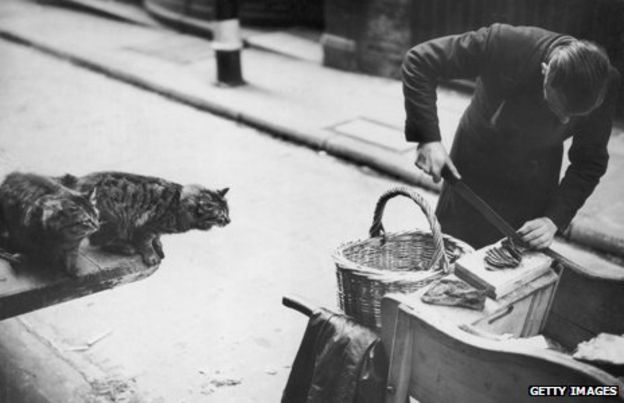
But many owners were able to make do. Pauline Caton was just five years old at the time and lived in Dagenham. She remembers “queuing up with the family at Blacks Market in Barking to buy horsemeat to feed the family cat”.
And even though there were just four staff at Battersea, the home managed to feed and care for 145,000 dogs during the course of the war.
In the middle of the pet-culling mayhem, some people tried desperately to intervene. The Duchess of Hamilton – both wealthy and a cat lover – rushed from Scotland to London with her own statement to be broadcast on the BBC. “Homes in the country urgently required for those dogs and cats which must otherwise be left behind to starve to death or be shot.”
“Being a duchess she had a bit of money and established an animal sanctuary,” says historian Kean. The “sanctuary” was a heated aerodrome in Ferne. The duchess sent her staff out to rescue pets from the East End of London. Hundreds and hundreds of animals were taken back initially to her home in St John’s Wood. She apologised to the neighbours who complained about the barking.
But at a time of such uncertainty, many pet owners were swayed by the worst-case scenario.
“People were worried about the threat of bombing and food shortages, and felt it inappropriate to have the ‘luxury’ of a pet during wartime,” explains Pip Dodd, senior curator at the National Army Museum.
“The Royal Army Veterinary Corps and the RSPCA tried to stop this, particularly as dogs were needed for the war effort.”
Ultimately, given the unimaginable human suffering that followed over the six years of the war, it is perhaps understandable that the extraordinary cull of pets is not better known.
But the episode brought another sadness to people panicked and fearful at the start of hostilities.
The story is not more widely known because it was a difficult story to tell, says Kean.
“It isn’t well known that so many pets were killed because it isn’t a nice story, it doesn’t fit with this notion of us as a nation of animal lovers. People don’t like to remember that at the first sign of war we went out to kill the pussycat,” she says.
It’s very difficult to make one’s mind up. As was written there were no food ration cards for pets.
But at the same time this huge pet cull was too much, too soon.
As was written, “The story is not more widely known because it was a difficult story to tell, says (Hilda) Kean.
“It isn’t well known that so many pets were killed because it isn’t a nice story, it doesn’t fit with this notion of us as a nation of animal lovers. People don’t like to remember that at the first sign of war we went out to kill the pussycat,” she says.”
It was a most interesting link albeit a very sad one.
This story comes from Mexico, a country renowned for being a hot place. Even in Northern Mexico it can be flipping hot (and that’s putting it nicely). Let’s face it I met Jeannie in San Carlos, Mexico in 2007. San Carlos is in the county of Sonora, just along the coast from Guaymas and about 270 miles South from Nogales on the Arizona border.
Recently, on a scorching hot day in northern Mexico, Adolfo Pazzi Ahumada witnessed love in its purest form.
After noticing he was out of milk at home, Ahumada decided to brave the 104°F weather to make a quick stop at his local market. When he arrived, he saw sweet scene unfolding out front.
“A stray dog was being fed and getting water from the [store] clerk,” Ahumada told The Dodo. “Then I saw they let the dog inside.”
Google Maps
Once Ahumada entered the store, he decided to ask the clerk about the dog. Ahumada recounted that conversation to The Dodo: “He has been here the past [few] days. We suspect he was left behind by his owner. He came to us for help,” the clerk told Ahumada. “We could only provide him with food, water and some toys from the store that we paid with our money.”
But the shop’s kindness doesn’t end there.
“We let him inside because the temperature outside is really hell-like. We feel bad for him, but he looks happier around the store,” the clerk said.
Peeking down one of the aisles, Ahumada observed that firsthand:
Adolfo Pazzi Ahumada
The downtrodden dog had found people who cared.
In the time he’s been there, the dog has shown kindness to the clerks and customers in return. The store hopes perhaps a shopper will see fit to adopt him into their home.
Unable to be that person, Ahumada paid for his milk and bought a treat for the dog to enjoy after his nap — resting assured the pup was in safe and caring hands until that day comes.
Adolfo Pazzi Ahumada
“I felt bad for what the dog has passed through,” Ahumada said. “But he is now receiving the love he deserves.”
ooOOoo
I find myself staggered at what this dog has endured yet at the same time how very quickly he settled in at the store. Well done to all the staff at the OXXO store. It would have been so easy to let the dog suffer and in all probability die in the heat.
Please, let the sweet dog find a loving home as soon as possible!
Because they have the potential to be contaminated with Salmonella bacteria.
Yet another recall.
ooOOoo
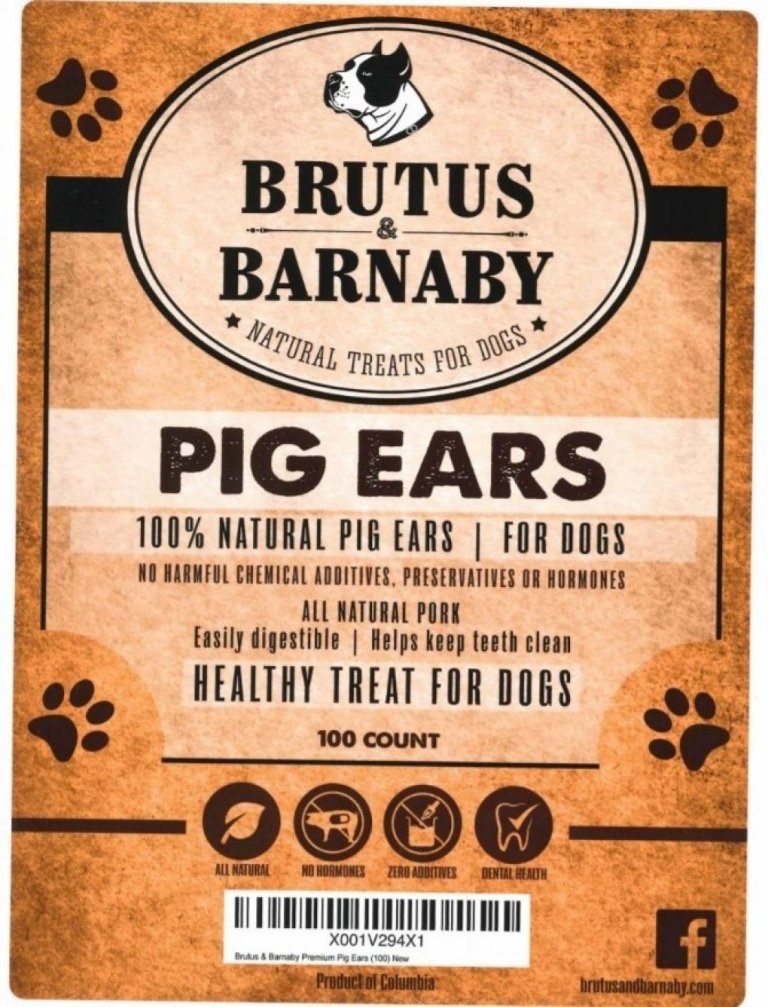
Brutus & Barnaby Pig Ears Dog Treats Recall
August 27, 2019 — Brutus & Barnaby LLC of Clearwater, Florida, is recalling all size variations of its Pig Ears for Dogs because they have the potential to be contaminated with Salmonella bacteria.
What Products Are Recalled?
Bags of Brutus & Barnaby Pig Ears were distributed throughout all states via Amazon.com, Chewy.com, Brutusandbarnaby.com and the brick and mortar Natures Food Patch in Clearwater, Florida.
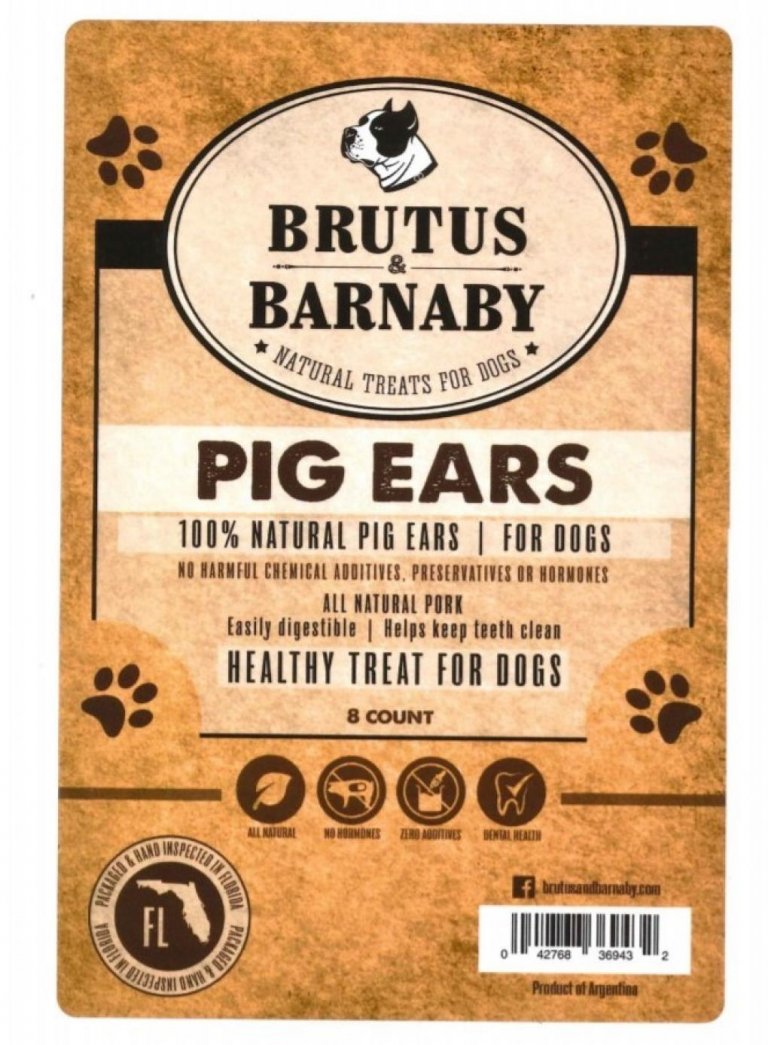
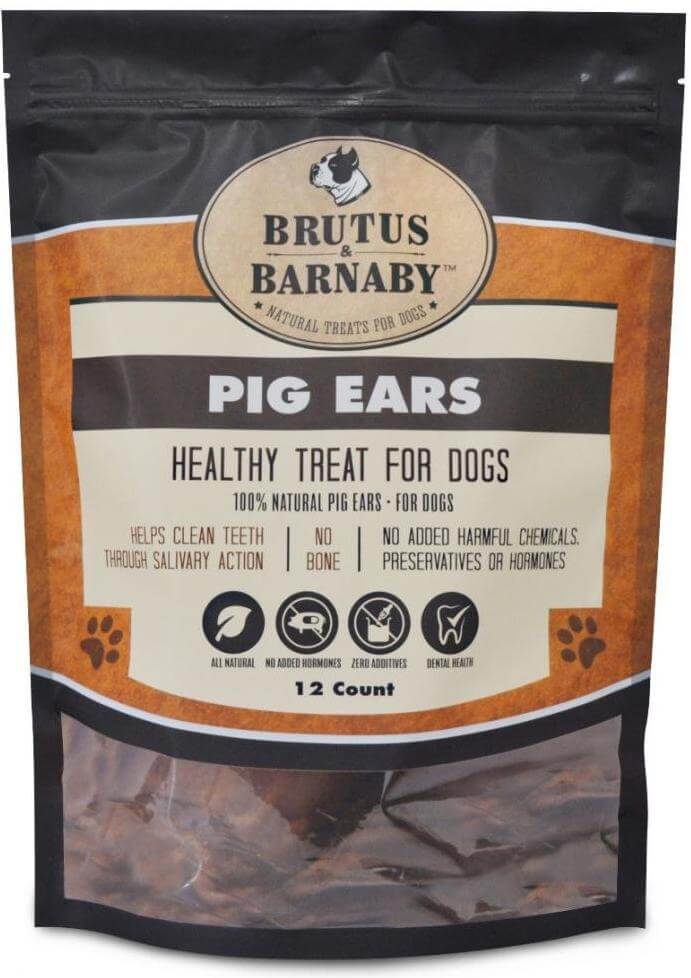
The product label is identified by the company’s trademarked logo and reads “Pig Ears 100% Natural Treats for Dogs”.
The affected products were available in 4 sizes:
Brutus & Barnaby Pig Ears (8 Count)
Brutus & Barnaby Pig Ears (12 Count)
Brutus & Barnaby Pig Ears (25 Count)
Brutus & Barnaby Pig Ears (100 Count)
Brutus & Barnaby has ceased the production and distribution of the product as FDA and the company continue their investigation as to what caused the problem.
About Salmonella
Salmonella can affect animals eating the products and there is risk to humans from handling contaminated pet products, especially if they have not thoroughly washed their hands after having contact with the products or any surfaces exposed to these products.
Healthy people infected with Salmonella should monitor themselves for some or all of the following symptoms: nausea, vomiting, diarrhea or bloody diarrhea, abdominal cramping and fever.
Rarely, Salmonella can result in more serious ailments, including arterial infections, endocarditis, arthritis, muscle pain, eye irritation, and urinary tract symptoms.
Consumers exhibiting these signs after having contact with this product should contact their healthcare providers.
Pets with Salmonella infections may be lethargic and have diarrhea or bloody diarrhea, fever, and vomiting.
Some pets will have only decreased appetite, fever and abdominal pain.
Infected but otherwise healthy pets can be carriers and infect other animals or humans.
If your pet has consumed the recalled product and has these symptoms, please contact your veterinarian.
What to Do?
Consumers who have purchased Brutus & Barnaby pig ears are urged to destroy any remaining product not yet consumed and to contact the place of purchase for a full refund.
Consumers with questions may contact the company at 800-489-0970 Monday through Friday, 9 am to 5 PM ET.
U.S. citizens can report complaints about FDA-regulated pet food products by calling the consumer complaint coordinator in your area.
There seem to be more than normal just at present.
But anyway let’s go directly to the recall.
ooOOoo
Dog Goods USA Recalls Chef Toby Pig Ears Dog Treats
August 16, 2019 — Dog Goods USA LLC of Tobyhanna, PA, is recalling its Chef Toby Pig Ears Treats due to possible contamination with Salmonella bacteria and its associated health risks.
Chef Toby Pig Ears Treats Product Images
The images below represent the labels of the recalled products:
What Caused the Recall?
Dog Goods bought the affected products from a single supplier in Brazil from September 2018 through August 2019 and distributed them nationwide in retail stores.
The FDA sampled pig ears manufactured by its supplier in Brazil and one sample tested positive for Salmonella.
As previously reported on this website, the U.S. Food and Drug Administration (FDA), together with the Centers for Disease Control and Prevention (CDC) and State partners, is investigating a suspected link between pig ear pet treats and human cases of salmonellosis.
What’s Being Recalled?
Dog Goods USA LLC is conducting a voluntary recall of the following bulk and packaged pig ears branded Chef Toby Pig Ears.
Healthy people infected with Salmonella should monitor themselves for some or all of the following symptoms: nausea, vomiting, diarrhea or bloody diarrhea, abdominal cramping and fever.
Rarely, Salmonella can result in more serious ailments, including arterial infections, endocarditis, arthritis, muscle pain, eye irritation, and urinary tract symptoms.
Consumers exhibiting these signs after having contact with this product should contact their healthcare providers.
Pets with Salmonella infections may be lethargic and have diarrhea or bloody diarrhea, fever and vomiting.
Some pets will have only decreased appetite, fever and abdominal pain. Infected but otherwise healthy pets can be carriers and infect other animals and humans.
If your pet has consumed the recalled product and has these symptoms, please contact your veterinarian.
Dog Goods has also launched an internal investigation to determine if, when and where the Products may have been contaminated.
To date, this internal investigation has not indicated any vulnerability in the company’s practices, including but not limited to the inspection, handling and storage of the Products.
No illnesses have been linked to the products to date.
Nonetheless, Dog Goods will continue to investigate the matter, collaborate fully with the FDA and the CDC, and provide further information to its customers and the public as appropriate.
What to Do?
Consumers who have purchased the products are urged to return them to the place of purchase for a full refund.
Consumers with questions may contact the company at 786-401-6533 (ext 8000) from 9 am ET through 5 pm ET.
U.S. citizens can report complaints about FDA-regulated pet food products by calling the consumer complaint coordinator in your area.



 My fur coat really makes the apples pop.”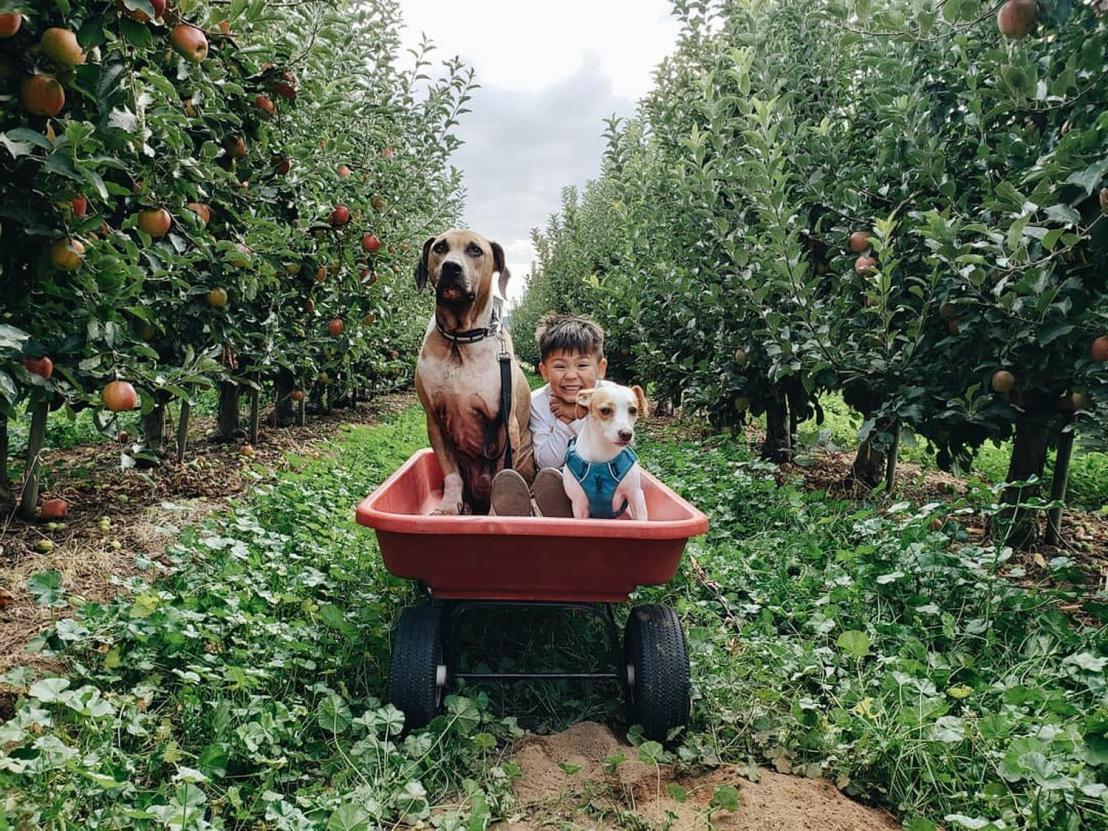









 Learning from Dogs