Category: Flying

AGW – summing up.

“If there’s any doubt, there’s no doubt!”

I opened the first post on Monday with the sub-heading: “Certainty is perfect knowledge secure from error or doubt.” going on to write that, “Whatever your views on the effect of man’s behaviours on our planet’s climate, it’s a long way from the logical idea of ‘2 + 2‘!”

Within that very strict definition, I remain unmoved.  The argument that mankind is the cause of the present change in the climate of Planet Earth is not certain!

However, if only life was that simple! The change in our planet’s atmosphere is possibly the most emotionally-laden topic of all time.  For some reason that quotation attributed to Hiram Johnson comes to mind, “The first casualty when war comes is truth.” because the supporters and deniers of AGW are engaged in what amounts to a verbal war.

Each side can draw on much information.

For example, a very recent article in The New York Times by their Justin Gillis offered this:

The rise in the surface temperature of earth has been markedly slower over the last 15 years than in the 20 years before that. And that lull in warming has occurred even as greenhouse gases have accumulated in the atmosphere at a record pace.

The slowdown is a bit of a mystery to climate scientists. True, the basic theory that predicts a warming of the planet in response to human emissions does not suggest that warming should be smooth and continuous. To the contrary, in a climate system still dominated by natural variability, there is every reason to think the warming will proceed in fits and starts.

But given how much is riding on the scientific forecast, the practitioners of climate science would like to understand exactly what is going on. They admit that they do not, even though some potential mechanisms of the slowdown have been suggested. The situation highlights important gaps in our knowledge of the climate system, some of which cannot be closed until we get better measurements from high in space and from deep in the ocean.

As you might imagine, those dismissive of climate-change concerns have made much of this warming plateau. They typically argue that “global warming stopped 15 years ago” or some similar statement, and then assert that this disproves the whole notion that greenhouse gases are causing warming.

Rarely do they mention that most of the warmest years in the historical record have occurred recently. Moreover, their claim depends on careful selection of the starting and ending points. The starting point is almost always 1998, a particularly warm year because of a strong El Niño weather pattern.

Dan Gomez, a long-time friend of over 40 years and a regular contributor to items on Learning from Dogs, wrote in a recent email,

I’m not sure what is meant by “believer”, Paul.  The Universe unfolds as it should.  Because many have been led to “believe” that AGW is inevitable and that all the facts are the ‘Truth”, we’ve created a religious substitute, almost a new “industry” with significant “tithing” obligations, etc. (e.g. Cap and Trade). Presumptions and facts are being manipulated to fulfill the prophecy.

Interesting to note in our daily lives, that weather prediction is very good 24-36 hrs out.  This drops precipitously just a few days out.  More than 7-10 days is nearly impossible. Even though both Europe and the USA have decreased CO2 levels by multiple percentage points over the last 20 years, the rest of the world does not care and the impact is very problematic.  Recently, CO2 gas has increased overall but heat has not. In the past, warming has occurred followed by CO2 levels increasing. Global politics and redistribution of wealth schemes continue to interfere with common sense.

Let’s just deal with the facts as Science reveals its secrets. New information is discovered every day about the interaction of the  Earth/Sun/Atmosphere/Lithosphere/Hydrosphere. New information is learned every day about the Universe.  These are not closed subjects. Climatology, meteorology, geology and solar system dynamics will continue to shape the Earth’s future for millennia to come whether Man is involved or not.

There is much in what Dan writes that has me nodding my head; stimulates my recollection of what Luther Haave and Derek Alker wrote in 2009:

With the explosion of knowledge, particularly in the past 100 years, each of us has found it a requirement for being successful, and to being able to earn a living, to concentrate our knowledge in an ever increasingly narrow field. Just as we have come to expect others to defer to our expertise in our narrow area, we have come to assume that we need to defer to others who have a deeper comprehension of seemingly complex topics such as the science related to climate change. [Apologies, can’t find the web link for this.]

However, if we broaden the perspective from that tight definition of certainty to an analysis of probabilities, then it all changes for me and I can embrace the views so strongly put forward by Martin Lack.

For example, Martin left a comment on Monday, “ACD is not a matter of opinion or belief; it is a matter of probability. As such, all that matters now is the extremely high probability that the scientific consensus is real, reasonable and reliable.”  That comment included a link to a discussion on the website Skeptical Science, Is the science settled? Let me quote from that:

Some aspects of the science of AGW are known with near 100% certainty. The greenhouse effect itself is as established a phenomenon as any: it was discovered in the 1820s and the basic physics was essentially understood by the 1950s. There is no reasonable doubt that the global climate is warming. And there is also a clear trail of evidence leading to the conclusion that it’s caused by our greenhouse gas emissions. Some aspects are less certain; for example, the net effect of aerosol pollution is known to be negative, but the exact value needs to be better constrained.

What about the remaining uncertainties? Shouldn’t we wait for 100% certainty before taking action? Outside of logic and mathematics, we do not live in a world of certainties. Science comes to tentative conclusions based on the balance of evidence. The more independent lines of evidence are found to support a scientific theory, the closer it is likely to be to the truth. Just because some details are still not well understood should not cast into doubt our understanding of the big picture: humans are causing global warming.

In most aspects of our lives, we think it rational to make decisions based on incomplete information. We will take out insurance when there is even a slight probability that we will need it. Why should our planet’s climate be any different?

That, ultimately, delivers for me what truly counts.

I am not a scientist; just a Brit living in Southern Oregon trying to make sense of the world while I still have a functioning head and body – time is not on my side! 😉  The powerful common-sense in the sentence, “Outside of logic and mathematics, we do not live in a world of certainties.” is beyond argument.

In the year 2012, the total number of passengers carried by US Airlines and other carriers in and out of the USA was a staggering 815 million people. 815,000,000 people!

Remember the sub-heading from the start of this post!  “If there’s any doubt, there’s no doubt!” Years ago I heard that from Bob Derham, a long-time friend and a commercial airline Captain since the time God was a boy!  It’s that cautious, safety-focused attitude that has made airline transport such an amazing mode of transport for all those millions of passengers.

Should we not travel with the same cautious, safety-focused attitude on the ‘vehicle’ that carries every man, woman and child; every animal, plant and living thing: Planet Earth!

The answer is obvious – more than obvious!

More on Pharaoh’s life.

What a wonderful relationship it has been.

Years ago if I was ever to own a dog, it had to be one breed and one breed only: a German Shepherd Dog.

The reason for this was that back in 1955 my father and mother looked after a German Shepherd dog called Boy.  Boy belonged to a lovely couple, Maurice and Marie Davies.  They were in the process of taking over a new Public House (Pub); the Jack & Jill in Coulsdon, Surrey.  My father had been the architect of the Jack & Jill.

Jack & Jill, Longlands Avenue, Coulsdon, Surrey

As publicans have a tough time taking holidays, it was agreed that the move from their old pub to the Jack & Jill represented a brilliant opportunity to have that vacation.  My parents offered to look after Boy for the 6 weeks that Maurice and Marie were going to be away.

Boy was the most gentle loveable dog one could imagine and I quickly became devoted to him; I was 11 years old at the time.  So when years later it seemed the right time to have a dog, there was no question about the breed.  Boy’s memory lived on all those years, and, as this post reveals, still does!

Pharaoh was born June 3rd, 2003 at Jutone Kennels up at Bovey Tracy, Devon, on the edge of Dartmoor.  As the home page of the Jutone website pronounces,

The Kennel was established in 1964 and it has always been the aim to breed the best German Shepherd Dogs for type and temperament. To this end the very finest German bloodlines are used to continue a modern breeding programme.

and elsewhere on that website one learns:

Jutone was established by Tony Trant who was joined by Sandra Tucker in 1976. Sandra continues to run Jutone since Tony passed away in 2004. Both Tony and Sandra qualified as Championship Show judges and Sandra continues to judge regularly. Sandra is the Secretary and a Life Member of the German Shepherd Dog Club of Devon.

93ac7d454b15519effff8014ffffffd3
Tony Trant

Turning to Pharaoh, here are a few more pictures over the years.

Pharaoh, nine months old.

oooOOOooo

One year old: June 3rd 2004.

The next picture of Pharaoh requires a little background information.

For many years I was a private pilot and in later days had the pleasure, the huge pleasure, of flying a Piper Super Cub, a group-owned aircraft based at Watchford Farm in South Devon.  The aircraft, a Piper PA-18-135 Super Cub, was originally supplied to the Dutch Air Force in 1954 and was permitted by the British CAA to carry her original military markings including her Dutch military registration, R-151, although there was a British registration, G-BIYR, ‘underneath’ the Dutch R-151.  (I wrote more fully about the history of the aircraft on Learning from Dogs back in August 2009.)

Piper Cub R151
Piper Cub R151

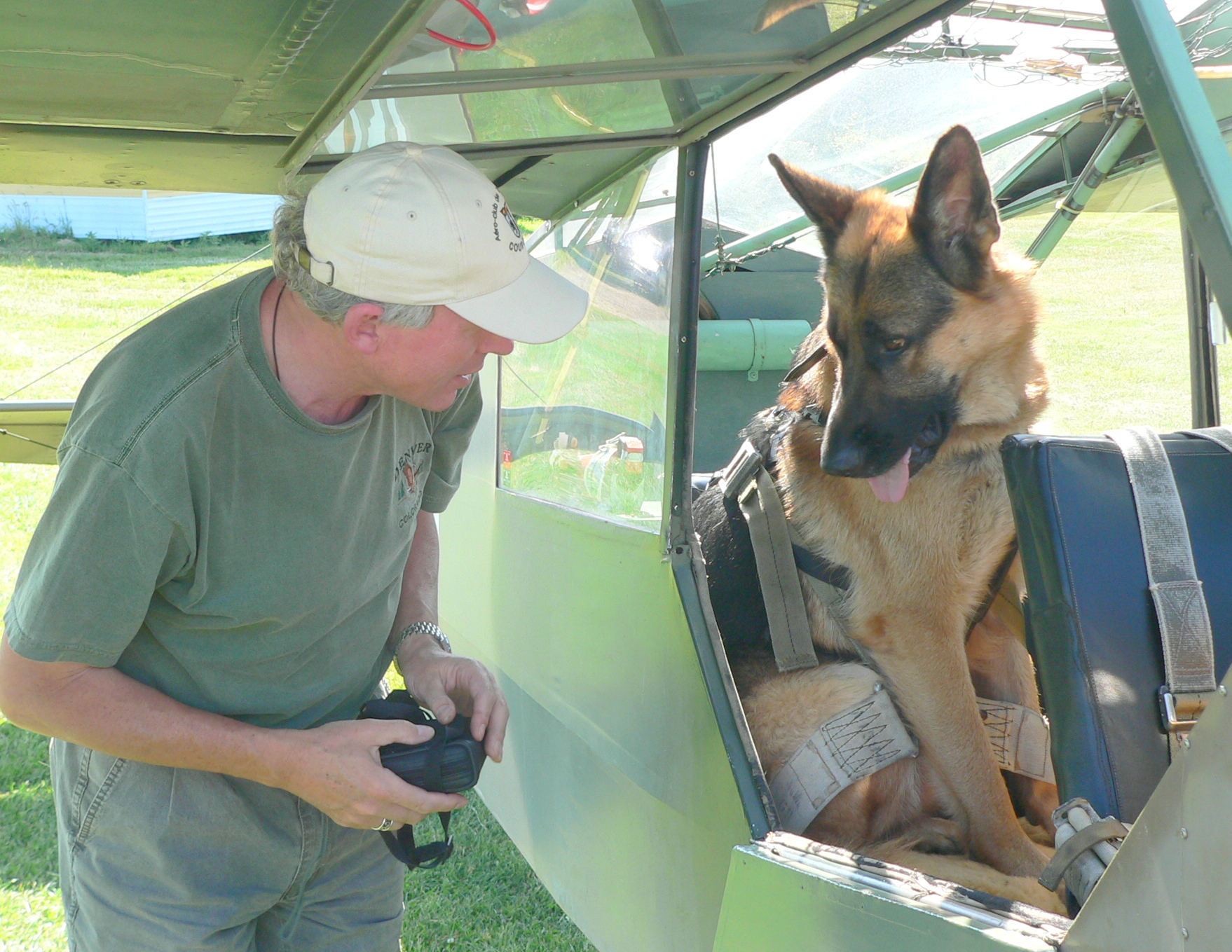
Anyway, every time I went to the airfield with Pharaoh he always tried to climb into the cockpit.  So one day, I decided to see if he would sit in the rear seat and be strapped in.  Absolutely no problem with that!

Come on Dad, let's get this thing off the ground!
Come on Dad, let’s get this thing off the ground!

My idea had been to fly a gentle circuit in the aircraft.  First I did some taxying around the large grass airfield that is Watchford to see how Pharaoh reacted.  He was perfectly behaved.

Then I thought long and hard about taking Pharaoh for a flight.  In the Cub there is no autopilot so if Pharaoh struggled or worse it would have been almost impossible to fly the aircraft and cope with Pharaoh.  So, in the end, I abandoned taking him for a flight.  The chances are that it would have been fine.  But if something had gone wrong, the outcome just didn’t bear thinking about.

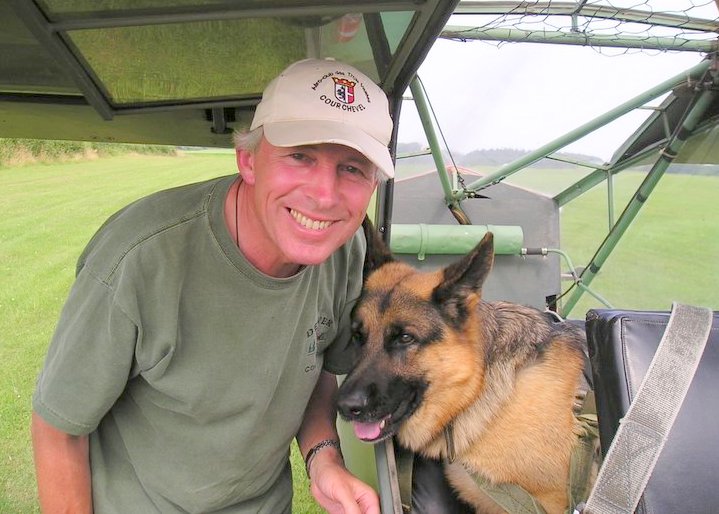
So we ended up motoring for 30 minutes all around the airfield which, as the next picture shows, met with doggie approval.  The date was July 2006.

That was fun!
That was fun!

What a dear dog he has been over all the years and, thankfully, still is!

As if to reinforce the fabulous dog he still is, yesterday it was almost as though he knew he had to show how youthful he still was.

Because, when I took his group of dogs out around 7.30am armed with my camera, Pharaoh was brimming over with energy.

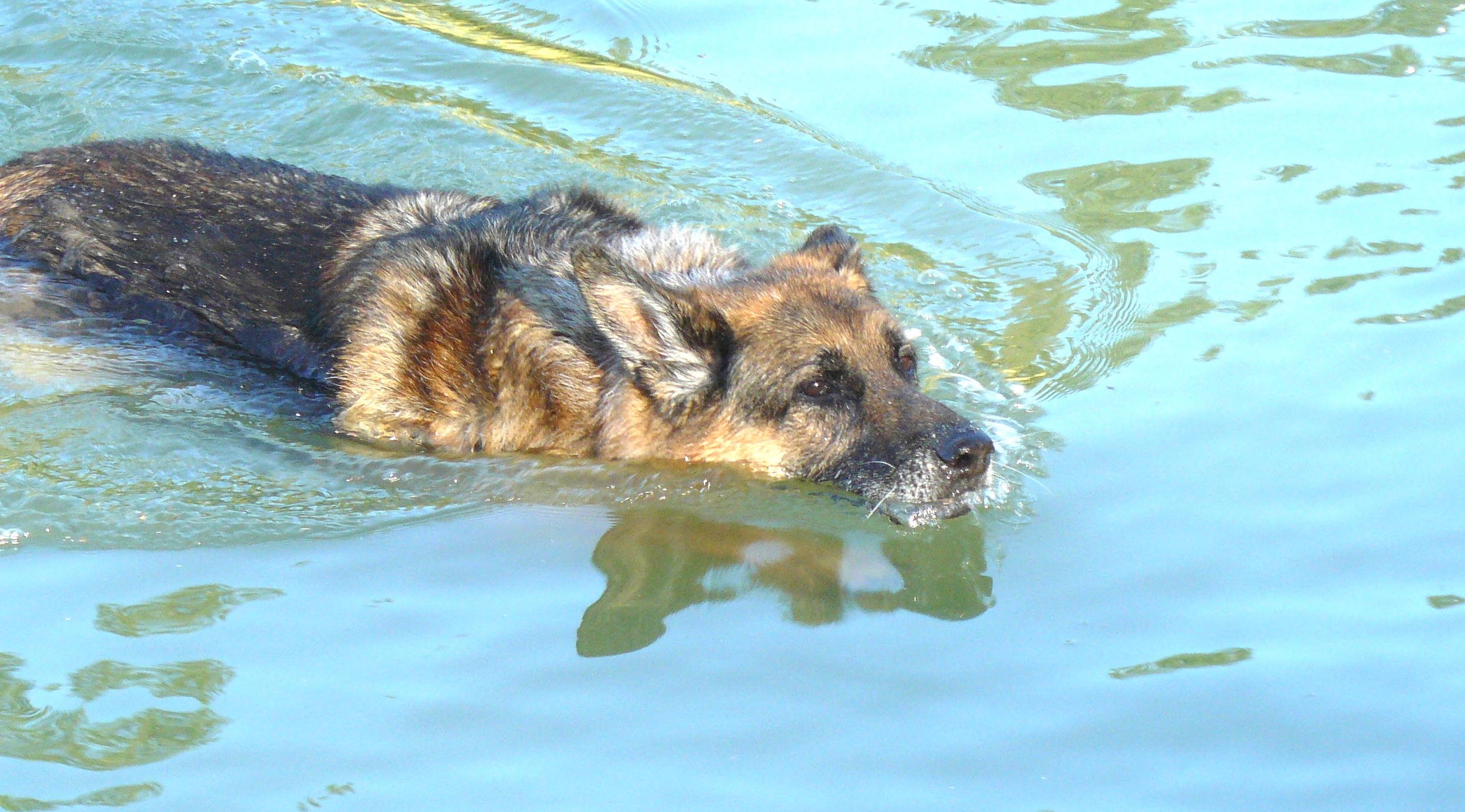
First up was a swim in the pond.

Ah, an early birthday dip! Bliss!

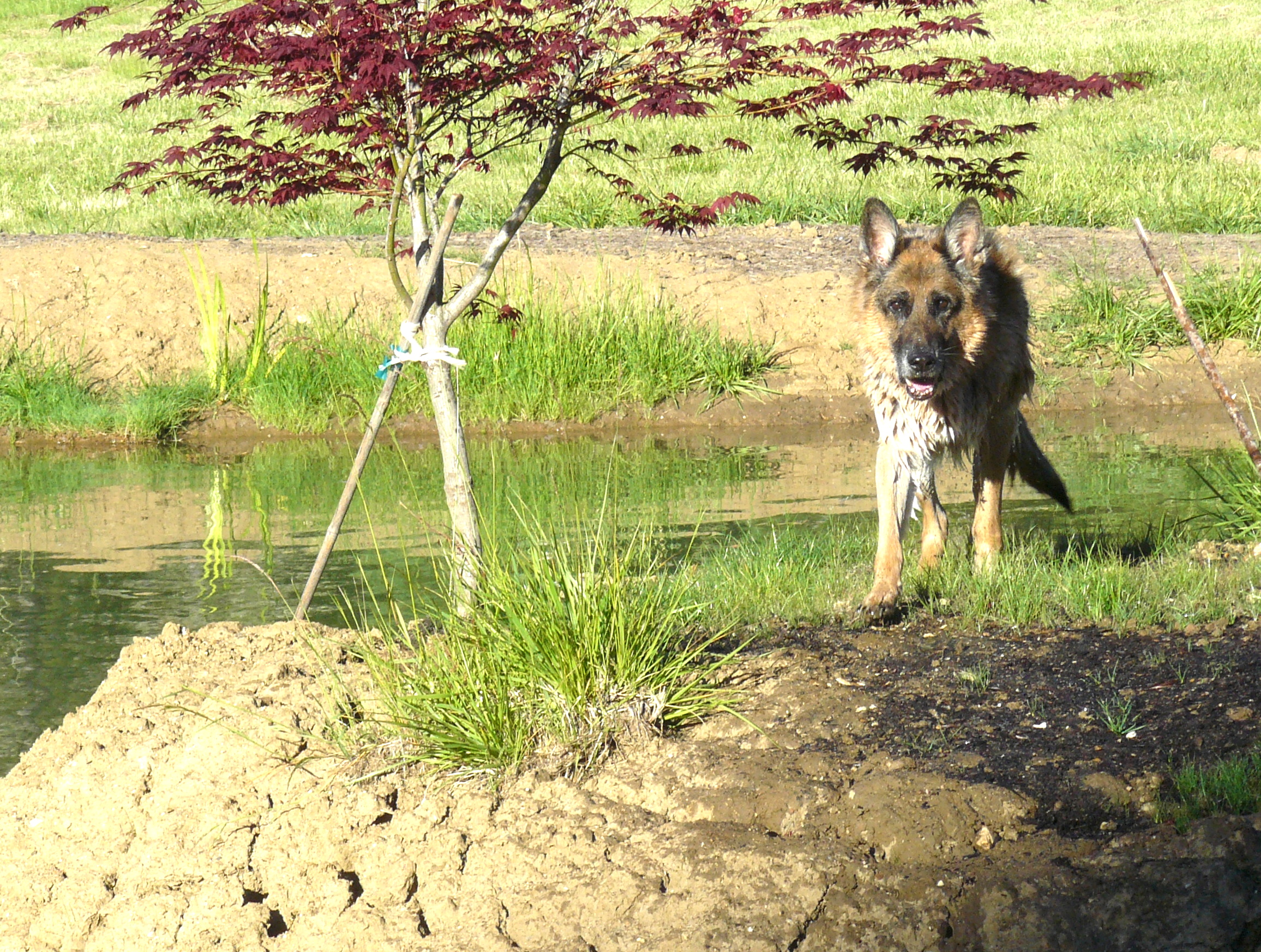
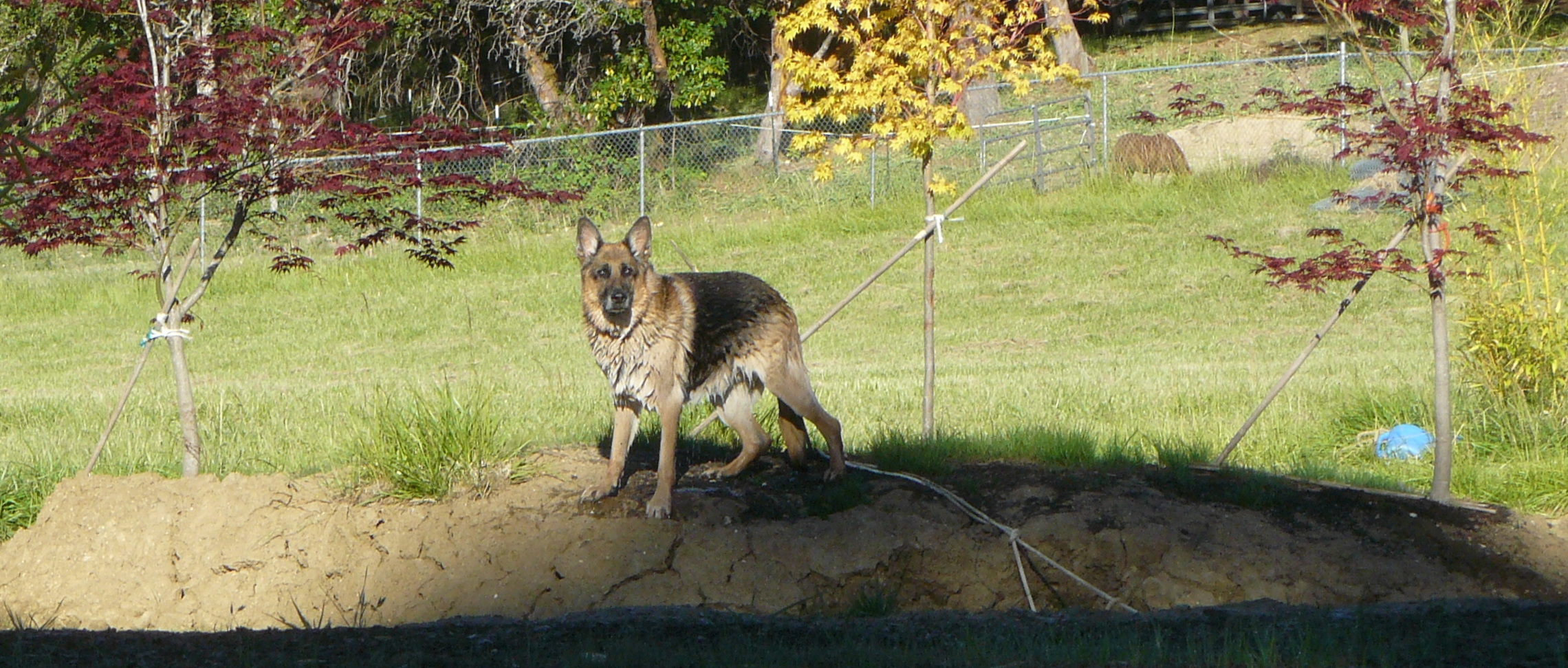
Then in a way he has not done before, Pharaoh wanted to play ‘King of my Island’, which is in the middle of the pond.

Halt! Who goes there!

ooo

This is my island! So there!

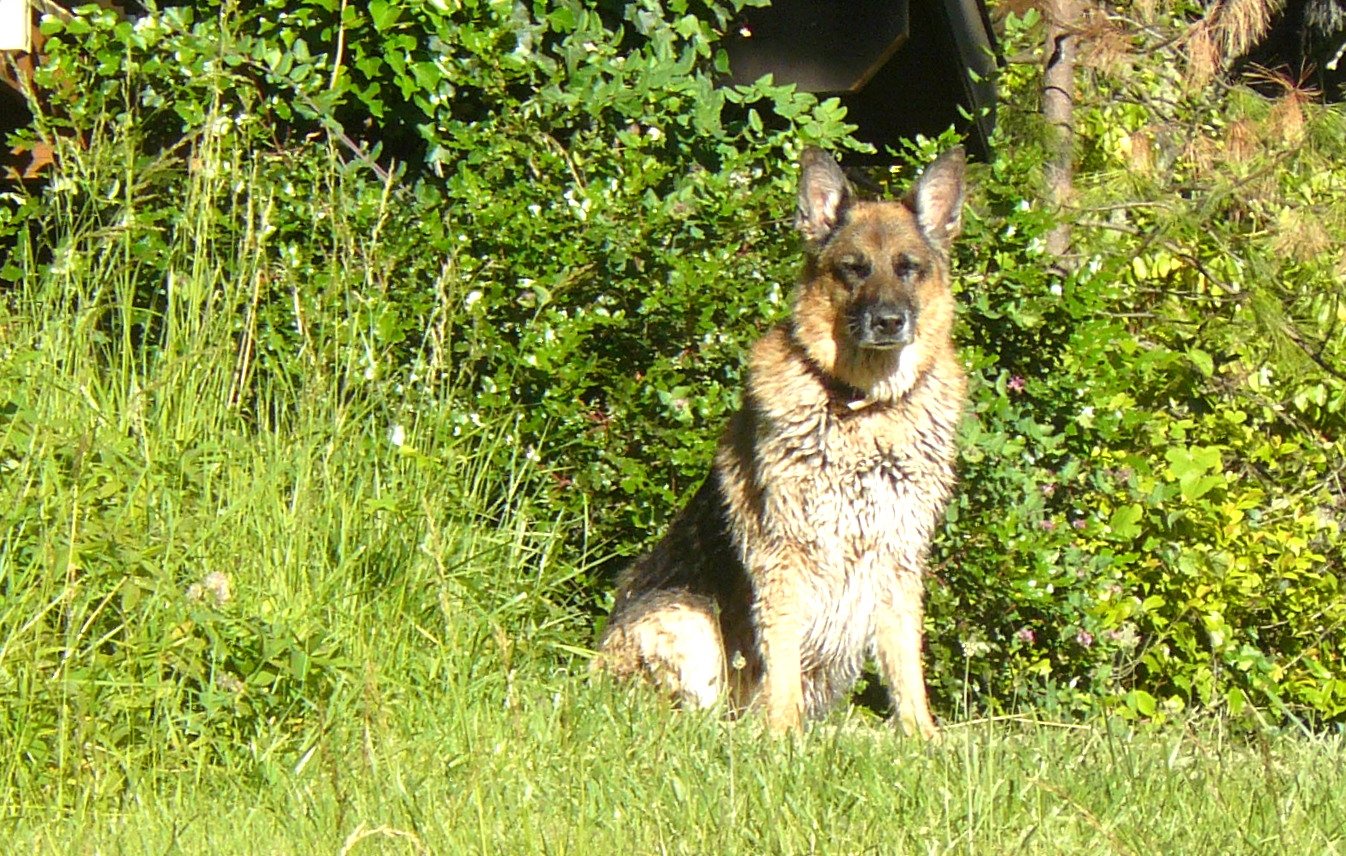
Then a while later, when back on dry land, so to speak, it was time to dry off in the morning sunshine.

Actually, this isn't a bad life!
Actually, this isn’t a bad life!

Long may he have an enjoyable and comfortable life.

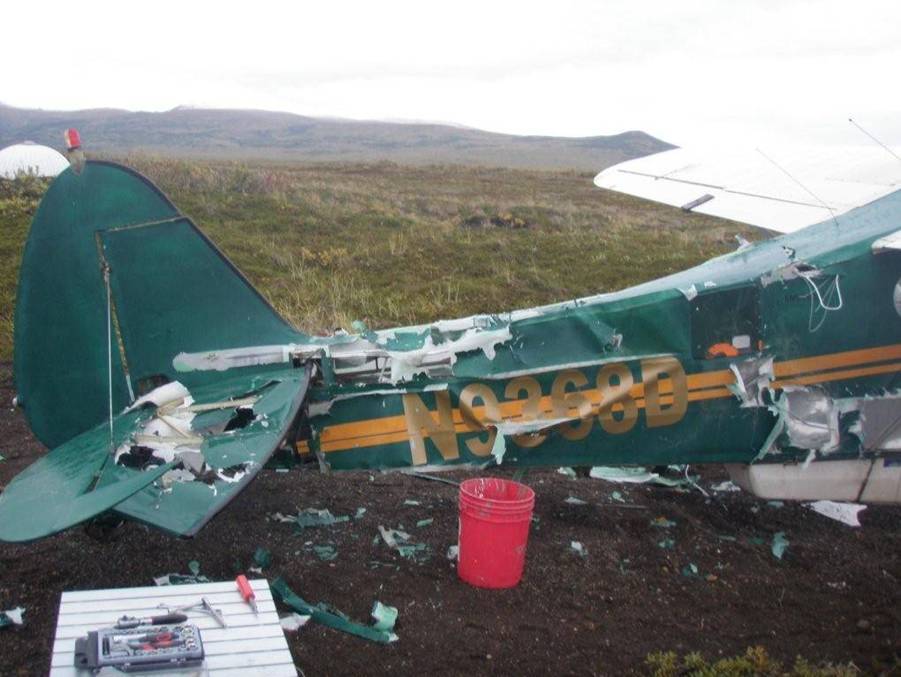
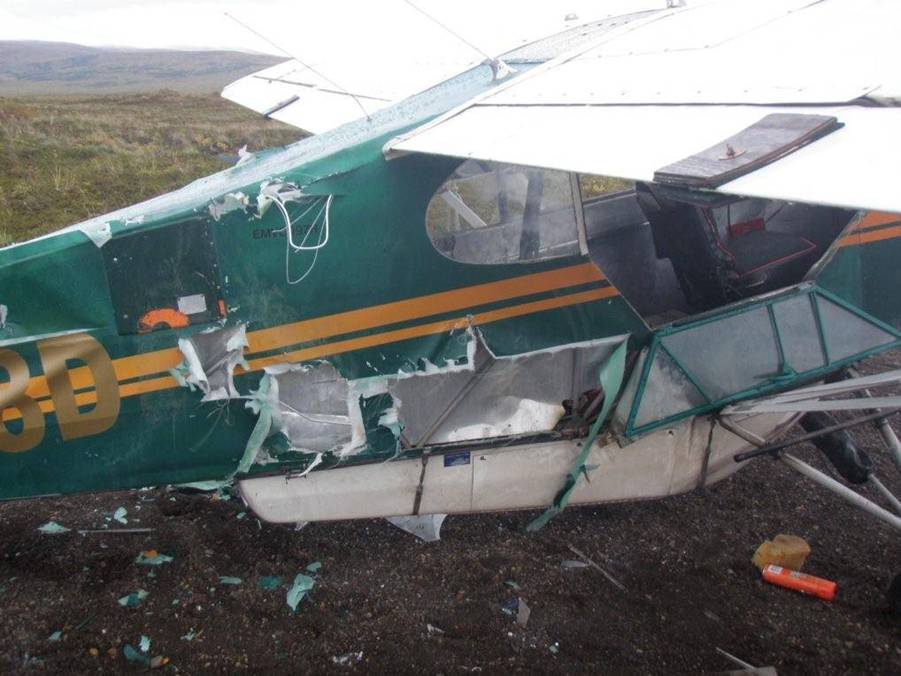
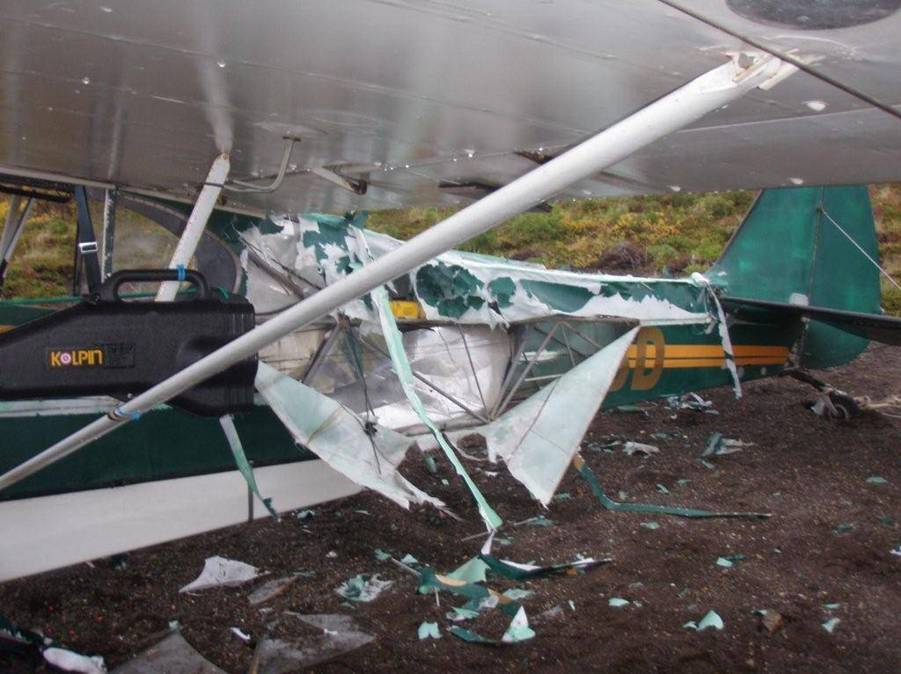
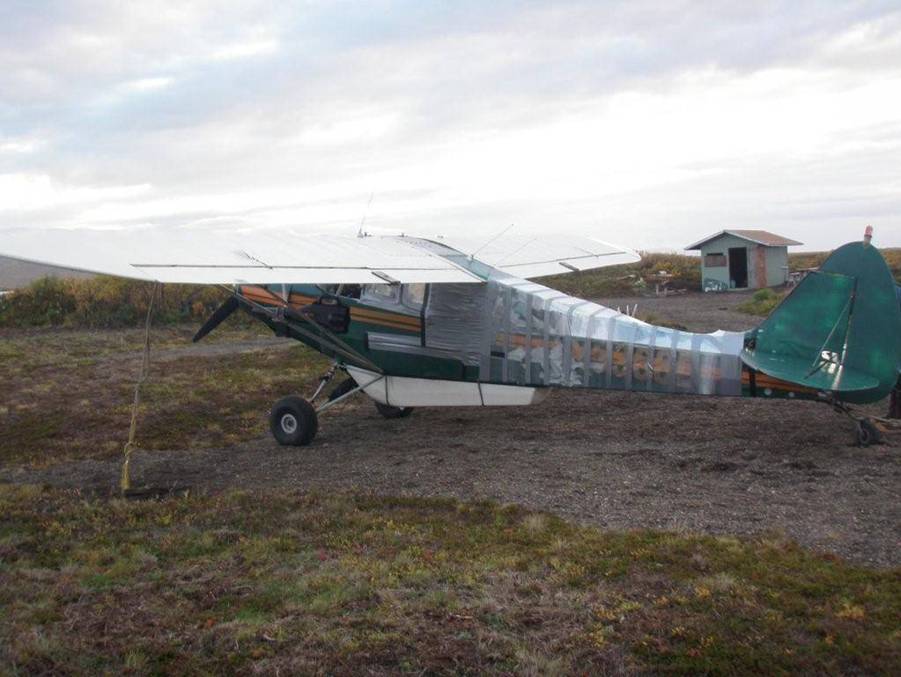
Bears and duct tape!

With grateful thanks to Cynthia G. who sent this to me.

(Going to take a break from the serious writing for this long week-end)

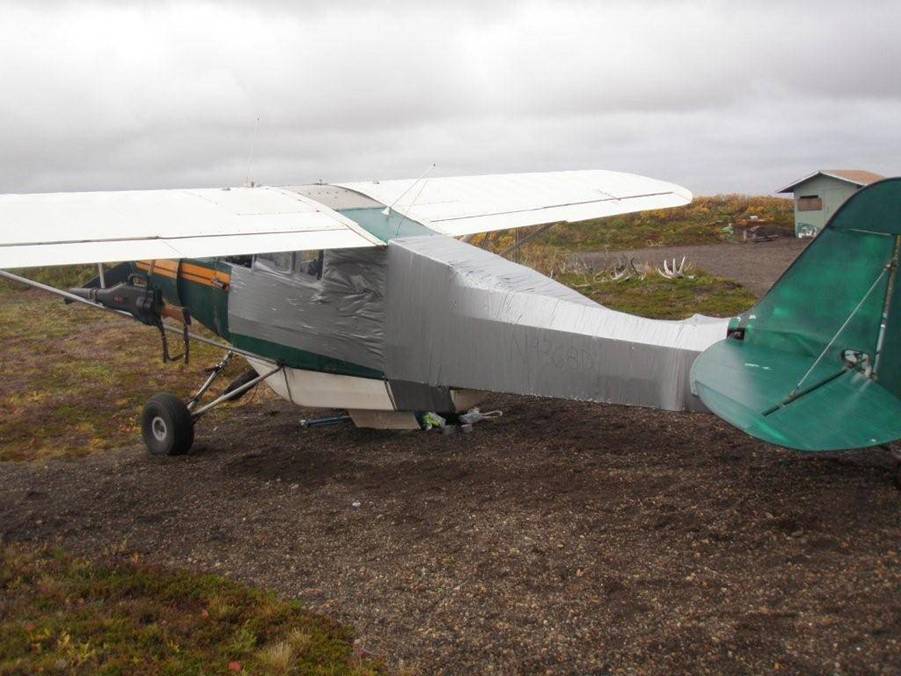
So, what's the story here?
So, what’s the story here?

The place: The Alaskan Wilderness

Just a bear wanting some food!

The event: A private “fly-in” fishing excursion to that Alaskan wilderness.

Well, a bear would, wouldn't it!
Well, a bear would, wouldn’t it!

The mistake: The pilot and fishermen left a cooler and bait in the plane.

Now what?
Now what?

The consequence: The bear went exploring for food!

Nothing if not ingenious!

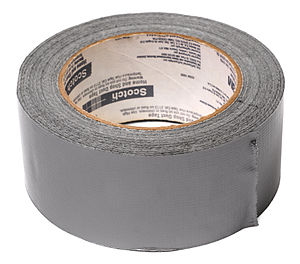
The smart thinking: The pilot used his radio and had another pilot bring him 2 new tires, 3 cases of duct tape, and a supply of sheet plastic.

And they all happily went home!

The result: The pilot patched the plane together, and they all flew home!

duct tape

The moral of this story: Duct Tape? Never Leave Home Without It

More Bird and Fortune

The power of humour in reflecting life back at us!

It was such fun revisiting John Bird and John Fortune back in July, see That sub-prime crisis, that I found another one for your enjoyment.  On the proposal for the privatisation of British Air Traffic Control. Goes back to 1996, I think, but clearly from Rory Bremner: Who else!

.

The passion of flying

Another gem from Capt. Bob.

Many of you will have watched the video of the dolphins being rescued off a Brazilian beach that I published a week ago under the title of Wet eyes warning.  That was sent to me by Capt. Bob.  Bob, like my son, is a commercial airline captain.

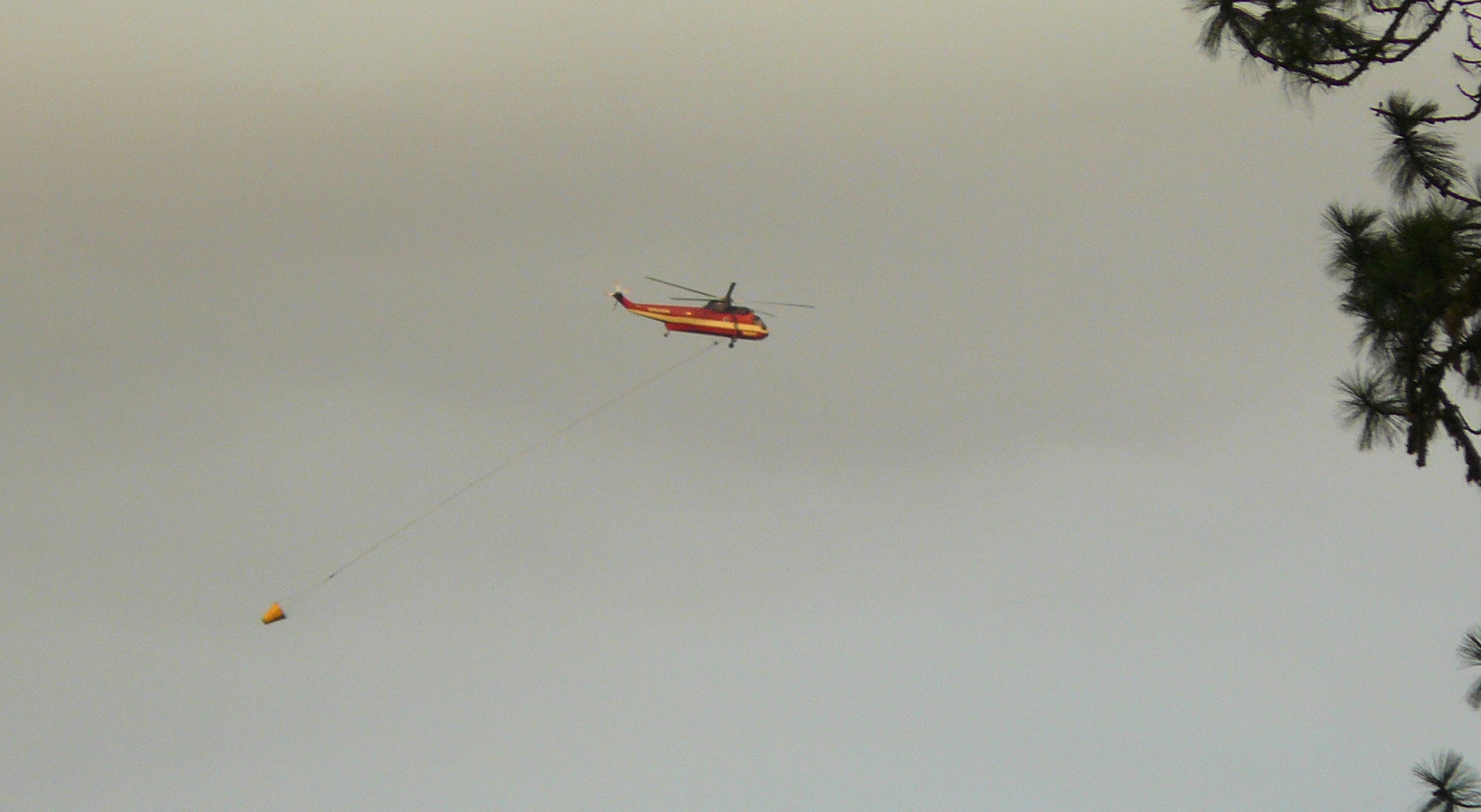
Now Bob has sent me this.  Some day, I’ll natter on about my own amateur love affair with flying, both gliding (sailplane in USA speak) and power.  But for now just marvel at the skills on display as in the name of fire control these crews quite deliberately do all the things that most would consider suicidal in aviation affairs.

Rescuing Cranes

First published on November 8th, 2009.

This makes me proud to be human!

Operation Migration

Index_8990

As their website explains:

Operation Migration has played a leading role in the reintroduction of endangered Whooping cranes into eastern North America since 2001. In the 1940s the species was reduced to just 15 birds.

Operation Migration is a founding partner of the Whooping Crane Eastern Partnership (WCEP), the coalition of non-profit organizations and government agencies behind the project to safeguard the endangered Whooping crane from extinction.

Want to get involved? Here’s how.

Remember the film ET? Just look at this next picture …

Continue reading “Rescuing Cranes”

Extreme weather events

Nature is really starting to speak to mankind!

I started writing this post back on the 25th September.  Why so far back?  Because that day something came into my in-box that deserved the widest circulation.  It’s an event being held just under a month from today, November 14th.  But it seemed worthwhile to give this amount of notice.  However, the reason why I wanted to start it back in September was because in the last 24 hours of that day, the 25th, the UK offered very good evidence of the significant increase in severe weather.

From the UK’s Met Office blog on the 25th September, 2012, (I have included the inches equivalent of the mm figures)

Rainfall figures: over a month’s worth of rain in two days

Rainfall totals for the past few days – from 1:00 am Sunday morning to 8:00 am this morning [Tuesday] – show some areas have already had more than twice their usual September rainfall. Ravensworth, in North Yorkshire, has seen the highest total, with 107.8 mm [4.24 in] falling, over 200 % of its average September rainfall.

The rainfall has been widespread, with many areas across the United Kingdom receiving large totals. Killylane, in Antrim Northern Ireland saw 98.2 mm [3.87 in], and high totals were also recorded in the south-west, with 72.4 mm [2.85 in] in Filton and 65.2 mm [2.57 in] at Dunkeswell Aerodrome.

Dunkeswell Aerodrome in Devon was where I used to fly our group-owned Piper Super Cub, still in military markings.

Piper Super Cub at Dunkeswell Aerodrome
A carriage made for two!

Anyway, back to the plot!

Also on that day (September 25th) the website Think Progress released this item,

Markey/Waxman Report: Carbon Pollution Creating A ‘Cocktail Of Heat And Extreme Weather’

By Climate Guest Blogger and Stephen Lacey on Sep 25, 2012 at 3:31 pm

by Katie Valentine and Stephen Lacey

Two House Democrats have released a report that aims to connect the dots on climate change and extreme weather events.

The staff report, issued by Henry Waxman (D-Calif.) and Edward Markey (D-Mass.), outlines the past year’s record-setting temperatures, storms, droughts, water levels and wildfires, and is being circulated in an attempt to rebuild congressional momentum to address climate change.

“The evidence is overwhelming — climate change is occurring and it is occurring now,” said Rep. Waxman, a Ranking Member of the Energy and Commerce Committee, in a statement.

The report outlines the stunning array of record-breaking extreme weather events throughout 2012 within five categories:

Extreme temperatures

  • July was the hottest month ever recorded in the continental U.S.  Some areas were 8 degrees warmer than average, with the average temperature in the lower 48 states at 77.6 degrees Fahrenheit, 3.3 degrees above the 20th century average.
  • Spring 2012 saw the warmest March, third-warmest April and second-warmest May in history, and was approximately 5.2 degrees Fahrenheit above average overall.
  • Through late June 2011, daily record highs were outnumbering daily record lows by 9-to-1.

Drought

  • As of September, 64 percent of the continental U.S. is experiencing drought, with August and September 2012 comparable to the worst months of the 1930s Dust Bowl.
  • By the beginning of August, more than half the counties in the U.S. had been designated disaster zones because of drought.
  • As of August, 51 percent of corn and 38 percent of soybeans grown in the U.S. were rated as poor or very poor by the U.S. Department of Agriculture. Some states’ corn fared worse – Indiana had 70 percent of its corn rated as poor or very poor, and Missouri had 84 percent.

Wildfires

  • This fire season 8.6 million acres – roughly the size of Connecticut and New Jersey combined – have burned in the U.S., with fires still burning in parts of the West.
  • Wildfires in Colorado have killed six people, destroyed 600 homes and caused about $500 million in property damage.
  • There has been nearly a four-fold increase in large wildfires in the West in recent decades, with fires burning longer and more intensely and wildfire seasons lasting longer.

Storms

  • Tropical Storm Debby caused Florida to have its wettest June on record. The storm killed at least seven people and also damaged more than 7,500 homes and businesses.
  • In July, the “derecho” storm system killed at least 23 people and left more than 3.7 million people without power.
  • In August, Hurricane Isaac caused storm surges of up to 15 feet in some places and contributed to Louisiana and Mississippi experiencing their second-wettest August on record and to Florida experiencing its wettest summer on record.

Extreme water levels and water temperatures

  • In July, water in the Great Lakes reached temperatures of 60 and 65 degrees Fahrenheit – more than 10 degrees warmer than the same time last year.
  • In August, water temperatures of up to 97 degrees and low water levels caused tens of thousands of fish to die in Midwestern lakes and rivers.
  • Low water levels in the Mississippi watershed have caused some barge companies to reduce their loads by 25 percent and have caused harbor closures in Tennessee, Missouri, Arkansas and Mississippi.

According to the report, 2012 natural disasters (not including wildfires or drought) have caused $22 billion in insured losses and more than 220 deaths as of August. The full cost of 2012’s extreme weather events isn’t yet known, but it’s expected to rival 2011’s record-breaking $55 billion.

The document outlines what scientists following the link between extreme weather and climate change have been saying for years: more carbon pollution adds extra energy in the atmosphere, thus warming the planet and making extreme weather events more likely.

Read the full report here.

So what came into my in-box?  An announcement from The Climate Reality Project: 24 HOURS OF REALITY: The Dirty Weather Report.

NOVEMBER 14-15, 2012

A lot can change in a day. This November 14, we hope you can help us make big change happen.

Join The Climate Reality Project for 24 Hours of Reality: The Dirty Weather Report. This will be our second annual, online event showing how global climate change is connected to the extreme weather we experience in our daily lives. The entire 24-hour event will be broadcast live over the Internet.

We’ll move between our home studio in New York City and into each region of the world, bringing voices, news and multimedia content across all 24 time zones. We’ll feature videos from around the globe, man-on-the-street reports, music, and most importantly, stories from communities moving forward with solutions.

Most of all, we’ll generate new energy and urgency around the fact that we must — and we can — work together to address the climate crisis.

GET INVOLVED

Sign up today to be a part of the global community taking part in 24 Hours of RealityRSVP on Facebook. Share this event with your friends. Submit your own video about the impacts of climate change where you live. And keep checking this page: We’ll post further details as the event draws closer.

Millions of people around the world know that the weather, their climate is changing.  But if you can take some more powerful evidence of just how it’s all changing then go and read a recent report on the Grist website, entitled ‘Deadly connection: New report on extreme weather and climate change’

So one more video to close.

A whole new meaning to the term ‘freefall’!

Just one small step for Felix Baumgartner, and some step!

Felix Baumgartner

I was speaking with my son, Alex, in England about an hour ago and he brought to my attention a feat that is breath-taking, in the fullest meaning of that expression.  I had to share the details with you as I’m sure that many, like me, were not aware of what is happening in a little under twelve hours time, subject to everything being in place.

A free-fall commencing from an altitude of 120,000 feet!  (Oh,that’s just about 23 miles up!)

The website to go to is the Red Bull Stratus site.  But if like me you are not really aware of who Felix is then on Wikipedia one can read this,

Felix Baumgartner (born 20 April 1969) is an Austrian skydiver and a BASE jumper. He is renowned for the particularly dangerous nature of the stunts he has performed during his career. Baumgartner spent time in the Austrian military where he practiced parachute jumping, including training to land on small target zones.

The Wikipedia entry goes on to explain,

He was born on 20 April 1969 in Salzburg, Austria.

In 1999 he claimed the world record for the highest parachute jump from a building when he jumped from the Petronas Towers in Kuala Lumpur, Malaysia. On 31 July 2003, Baumgartner became the first person to skydive across the English Channel using a specially made carbon fiber wing.

Baumgartner set the world record for the lowest BASE jump ever (95 feet), from the hand of the Christ the Redeemer statue in Rio de Janeiro.

He became the first person to BASE jump from the completed Millau Viaduct in France on 27 June 2004 and the first person to sky dive onto, then BASE jump from, the Turning Torso building in Malmö, Sweden on 18 August 2006.

On 12 December 2007 he became the first person to jump from the 91st floor observation deck, then went to the 90th floor (about 390 m (1,280 ft)) of the then tallest completed building in the world, Taipei 101, Taipei, Taiwan.

But to my mind, none of those previous jumps compare to this mission,

Red Bull Stratos, a mission to the edge of space, will attempt to transcend human limits that have existed for 50 years. Supported by a team of experts Felix Baumgartner plans to ascend to 120,000 feet in a stratospheric balloon and make a freefall jump rushing toward earth at supersonic speeds before parachuting to the ground. His attempt to dare atmospheric limits holds the potential to provide valuable medical and scientific research data for future pioneers.

The Red Bull Stratos team brings together the world’s leading minds in aerospace medicine, engineering, pressure suit development, capsule creation and balloon fabrication. It includes retired United States Air Force Colonel Joseph Kittinger, who holds three of the records Felix will strive to break.

Joe’s record jump from 102,800 ft in 1960 was during a time when no one knew if a human could survive a jump from the edge of space. Joe was a Captain in the U.S. Air Force and had already taken a balloon to 97,000 feet in Project ManHigh and survived a drogue mishap during a jump from 76,400 feet in Excelsior I. The Excelsior III mission was his 33rd parachute jump.

Although researching extremes was part of the program’s goals, setting records wasn’t the mission’s purpose. Joe ascended in helium balloon launched from the back of a truck. He wore a pressurized suit on the way up in an open, unpressurized gondola. Scientific data captured from Joe’s jump was shared with U.S. research personnel for development of the space program. Today Felix and his specialized team hope to take what was learned from Joe’s jumps more than 50 years ago and press forward to test the edge of the human envelope.

So if you are able and would like to watch the event live then this is the appropriate link.

Good luck to all involved.  What an amazing feat!

Tad too much cabin pressure!

A short pencil is better than a long memory.

The origins of this saying seem to have disappeared in the mists of time but it’s a rare person that doesn’t write a list from time to time.  But when it comes to critical processes, having a list, or better known as a ‘checklist’ is essential to completing the process correctly.

With that in mind, then let me introduce you to a story recently sent to me by old friend Dan Gomez.

oooOOOooo

I’ve always done it this way!

This is an example of what happens when we do not pay attention to detail, and do not follow instructions and checklists!

A KC-135 Aircraft was being pressurized at ground level. The outflow valves which are used to regulate the pressure of the aircraft were capped off during a 5-year overhaul and never re-opened. The post-investigation revealed that a civilian depot technician who “had always done it that way” was using a homemade gauge, and no procedure.

Apparently, the technician’s gauge didn’t even have a max “peg” for the needle, so it was no surprise he missed it when the needle went around the gauge the first time.

As the technician continued to pressurize the aircraft with the needle on its second trip around the gauge there was a “boom”.  One KC-135 went bang!  Indeed, the rear hatch was blown over 70 yards away, through a blast fence!

An incident like this is never funny and is further regrettable when we consider that this mistake is one that we taxpayers will end up paying for. Fortunately, no one was reported as being injured.

This was a good “Lessons Learned” for making sure we have trained people, with the correct tools, and who are following detailed procedures. It should serve as a reminder that just because you’ve always done it that way, it does not make it the “right” way!

oooOOOooo

Now where did I leave that pencil!

In memory of Neil.

There will only ever be one Neil Armstrong.

Like millions of others on this planet, I was held spellbound by the historic and epic moment of man placing his mark on another heavenly body, the Moon.  I had been so wrapped up in NASA’s space missions that I took a holiday from work (I was working at the time for ICIANZ in Sydney, Australia) for the week of July 16th, 1969.

It was, of course, July 16th when the Apollo 11 Mission launched from the Kennedy Space Center culminating at precisely 20:17:39 UTC on July 20, 1969, the moment when the Lunar Module made lunar contact.

But in terms of me writing my own obituary for Neil, what could I offer?

Then a couple of items changed my mind.

Neil Armstrong (August 5, 1930 – August 25, 2012)

The first was reading the obituary printed in The Economist.  I have long admired the many, many beautiful obituaries that have been published by this newspaper and this one was no exception.  Take this extract from the Neil Armstrong obituary,

He had an engineer’s reserve, mixed with a natural shyness. Even among the other astronauts, not renowned for their excitability, he was known as the “Ice Commander”. Mike Collins, one of his crew-mates on the moon mission, mused that “Neil never transmits anything but the surface layer, and that only sparingly.” He once lost control of an unwieldy contraption nicknamed the Flying Bedstead that was designed to help astronauts train for the lunar landing. Ejecting only seconds before his craft hit the ground and exploded, he dusted himself off and coolly went back to his office for the rest of the day. There was work to be done.

Then the beautiful words that bring the obituary to a close,

Earth’s beauty

Over half a century, the man who never admitted surprise was surprised to observe the fading of America’s space programme. The Apollo project was one of the mightiest achievements of the potent combination of big government and big science, but such enterprises came to seem alien as well as unaffordable. Mr Armstrong, who after his flight imagined bases all over the moon, sadly supposed that the public had lost interest when there was no more cold-war competition.

Yet the flights had one huge unintended consequence: they transformed attitudes towards Earth itself. He too had been astonished to see his own planet, “quite beautiful”, remote and very blue, covered with a white lace of clouds. His reserve, after all, was not limitless. One photograph showed him in the module after he and Buzz Aldrin had completed their moon-walk, kicking and jumping their way across the vast, sandy, silver surface towards the strangely close horizon. He is dressed in his spacesuit, sports a three-day beard, and is clearly exhausted. On his face is a grin of purest exhilaration.

” … they transformed attitudes towards Earth itself. He too had been astonished to see his own planet, “quite beautiful”, remote and very blue, covered with a white lace of clouds.”   For that reason alone, we need to celebrate the achievement of the Apollo 11 mission for putting our own planet into perspective within the enormity of the universe.

The second item that persuaded me to write this was a wonderful historic insight into how a potential catastrophy on the surface of the Moon would have been handled by President Nixon.  This historic item was published on Carl Milner’s blog the other day, the specific item being  What if the Moon Landing Failed?  Republished with the very kind permission of Carl.

What if the Moon Landing Failed?

Posted on September 1, 2012 by 

When Richard Nixon was the President of the United States, they had a speech ready for him to deliver to the world just in case the 1969 moon landing had ended in disaster. In fact many experts believed there was a big chance that Neil Armstrong and Edwin ‘Buzz’ Aldrin could have really gotten stuck on the moon. It’s something we don’t really think about now because we all know it was such a success. American Archives have unearthed the speech that would have been delivered if the late great Armstrong and Aldrin had never made it back to earth. This is such a great piece of history that I thought I might never see.

Give it a read, It’s such a moving and well prepared speech, and such a good thing that President Nixon never had to delivered it.

So, as with millions of others, I am delighted that this speech remained unspoken and instead we experienced: “At 5:35 p.m. (US EDT), Armstrong and Aldrin successfully docked and rejoined Collins, and at 12:56 a.m. on July 22 Apollo 11 began its journey home, safely splashing down in the Pacific Ocean at 12:50 p.m. on July 24.

Neil Armstrong’s legacy is not only being part of the wonderful team that allowed man to make the first footprint on the Moon but also bringing into our human consciousness that this blue, wonderful planet we all live on is the only home we have.

First Full-View Photo of Earth
Photograph courtesy NASA Johnson Space Center
This famous “Blue Marble” shot represents the first photograph in which Earth is in full view. The picture was taken on December 7, 1972, as the Apollo 17 crew left Earth’s orbit for the moon. With the sun at their backs, the crew had a perfectly lit view of the blue planet.

Strikes me that celebrating July 20th each year as Blue Planet Day might not be a bad idea!  Any takers?  Now that would be a legacy for Neil!