Category: Finance

Bitter Lake ripples.

Reflections on last Thursday’s post.

Last Thursday, I published a post under the title of Oil, money, banks, guns and blood. It was such a departure from my normal style of blog post that I anticipated that it would slide by without any comment. Wrong! It had the highest readership of the week and attracted some powerful and insightful replies. So much so that I expressed the desire to reflect on those replies before responding. Thus, today’s post is my response to your comments and feelings.

First, Hariod Brawn of the blogsite Contentedness responded, in part:

Now, where are we? Val’s words are a good place to begin: “Nothing is what is seems, or will ever be the same again.” Nobody knows for sure, but piecing together fragments of world events, my instinct (fwiw) tells me that we are in the incipient stages of the collapse of the 20th.c. paradigm. Neoliberalism has failed; further than that, Capitalism has failed – we have no free markets where it counts; they’re all rigged. Politics has failed too, having been bought out by the corporates. [There are over 30,000 lobbyists in Washington alone] All that Western Governments have to offer is a doomed re-run of failed practices (same with Japan actually). Worse still, they have gone down on their knees and begged the financial sector to create a fix. The private banks have been given access to vast sums of QE cash at virtually zero interest in order to continue rigging markets (via their agents) all to their benefit whilst also creating huge market distortions in asset bubbles. Has the wealth they created trickled down? Has it hell. Whilst all this is going on, and as the film so clearly demonstrates, the Middle East looks like fulfilling its promise of the last century as being the flashpoint for warfare on a vast scale. And of course, if by some miracle we escape financial collapse, and world peace is not threatened by warfare, then the environment is going down the pan because – guess what? – our politicians have failed us once again. I have said enough on this.

Hariod then went on to recommend the films of Chris Hedges that will be featured on Learning from Dogs at a future date.

Then Val Boyco, her blogsite being Find Your Middle Ground, wrote a response before viewing the film:

Without being informed yet … my thinking is that the world we live in is so complex, stressful and fast that we can’t absorb everything that happens. We simplify and label, in order to make sense. We chop and segment in order to understand, but we miss the full story and many have lost the ability to grasp the bigger picture…. or are too fearful of going against the expectations of others and becoming one of “them” instead of one of “us”.

Then reinforced by her comment after watching the film:

I just watched the movie Paul. It is powerful and very disturbing. As you say, it undermines what we believe is real. It also reveals the complexity – misunderstanding – manipulation – corruption – opium, oil and the struggle for power – naivety – chaos.
In the dualistic fairy tale world of good vs evil it has created a nightmare of errors.
Nothing is what is seems.
Or will ever be the same again.

There was a comment from Patrice Ayme:

Giant American global corporations, the 200 largest ones, do 100 billion dollars of tax evasion through Luxembourg alone. Each year. Many are media companies. Wonder why stories make no sense?

Juncker directed that. Now he is head of the European Commission, and insist Greece shall pay every single penny.

As it happened, my dad was among a European group of geologists working for the Afghan government, who discovered Afghanistan’s riches… In the 1970s. All hell broke loose shortly thereafter.

I write about these sorts of things, day in, day out. But most people prefer the opium of feel-good…

Patrice then went further in offering a post over on his own blog that carried the specific title of Great Bitter Lake. Let me quote a little from that:

“Bitter Lake” is about the conspiracy between American plutocracy and Saudi plutocracy. Plutocrat Roosevelt was freshly flown from Yalta, to the Great Bitter Lake, on the Suez Canal. The idea was to steal the Maghreb, and the Middle East from the French and the British, by making a theocratic alliance.

At Yalta, Roosevelt had given half of Europe to his Comrade Stalin. (Plutocrats of the world naturally unite!)

Never mind that Poland had fought the Nazis courageously the Nazis, at a time when the USA was militarily and diplomatically collaborating… with the Nazis (or maybe, precisely, the Poles had to be punished!) Roosevelt had to be strict: the French had successfully escaped from the military occupation (AMGOT) he had set-up for them.

The movie “Bitter Lake” exposes (some) of the American plutocracy led conspiracies which led to the devastation, among other things, of Afghanistan, and other constituencies, thanks to the Wahhabist Islam it unleashed on the world.

Readers of this site will be familiar with the general ambiance.

One caveat: all what is in the documentary and makes American plutocrats (Roosevelt) and their servants (Reagan) look bad, is correct. However the real situation, the real badness is way worse. (For example the secret, official USA intervention in Afghanistan was under Carter, on July 3, 1979. However the real even more secret intervention, through the Pakistani ISI was even earlier and even more vicious.

So what is my response?

It is this:

In 1887, Oscar Wilde said, referring to the differences between the British and the Americans: “We have really everything in common with America nowadays, except, of course, language.”

By way of example there is a saying back in my old country that when something is “… going to the dogs”, it means an irreversible decline in standards; the phrase usually aimed at an organisation or even a country.

Many, especially those of my age, might nod sagely and reflect that something ‘is going to the dogs‘ in terms of the wider Western world.

Let me be specific. There are destructive and dysfunctional issues in modern societies that I would list as: Selfishness; Power & Corruption; Short-termism; Materialism; Population growth; Greed, inequality and poverty. It’s not an exhaustive list!

Now many would argue the ‘whys’ and ‘wherefores’ about what precisely is wrong with Western societies in this 21st century but far fewer would argue with the underlying premise; that something is fundamentally wrong with today’s world.

Indeed, one of the things that is impossible to miss is the body language, the look on a face, the shrug of a shoulder, when one casually remarks that these are interesting times! From strangers and friends alike.

There is no question that what mankind has ‘enjoyed’ these last fifty years or so cannot be continued for very much longer. That the era since the 1960s of growth, materialism and consumption is running one very basic and fundamental resource dry. You know the one I am referring to: Planet Earth.

My hope is that the widely-felt feelings that something is fundamentally wrong with today, are the feelings man has always experienced, since time immemorial, when mankind has passed through the threshold between two eras.

My hope is that the new era, one that we quite possibly may now just be entering, a new era of sustainable living on this planet, of social and political changes to replace extreme levels of inequality, of stronger communities of like-minded persons, will be obvious to all, but especially obvious to our next generation, within the next ten years; possibly fewer than ten years.

One thing is for sure. The sharing of ideas and feelings as is the style of modern blogging is critical to the forming of the opinions that precede the changes that so many now see as unstoppable.

Sometimes the world seems very strange.

Turn aside if you are looking for a bright, optimistic start to the week.

Two separate experiences have come together to offer, well anyway for me, a sense of now not recognising the world I grew up in. The first was Episode One of a programme on BBC Television, broadcast last Thursday, and the second was an essay from Ann Jones on the TomDispatch site, published yesterday.

First, that BBC programme. Despite not being able to view it directly here in Oregon, both the programme details and a first-hand account from a British viewer confirm the essence of this two-part series. Here’s what is on the BBC iPlayer website:

The Super Rich and Us

First shown: 8 Jan 2015

Britain has more billionaires per head than any other country on earth, yet we’re also the most unequal nation in Europe. We were told the super-rich would make us richer too, so why hasn’t that happened, and what does the arrival of their astronomical wealth really mean for the rest of us? In programme one of this two-part series, Jacques Peretti looks at how the super-rich first exploited an obscure legal loophole to make Britain one of the most attractive tax havens on earth. He argues this was no accident. Wooing the super-rich was a deliberate strategy by government to reconfigure the British economy, under the belief their wealth would trickle down to the rest of us. But it didn’t. The OECD now say the British economy would have been 20 per cent bigger had we not pursued the super-rich. So who sold us the fallacy and why?
Jacques meets the super-rich themselves – from those buying premiership football clubs to the billionaires who are breaking ranks to criticise the decisions that made them richer and society more unequal.

Jacques challenges the architects of these policies, as well as tracking down the foreign multimillionaires who are buying up Britain and turning us from a nation of property owners to a nation of renters. He uncovers new research that shows growing inequality has been driven by this key factor of unaffordable property, and the far-reaching effect this will have on every aspect of our lives. Inequality is reshaping Britain into two simple classes: the 99 per cent and the one per cent. This is the story of how it happened and what it means for all of us.

While, for obvious reasons, the programme can’t be included in this post, one can get a flavour of the degree of inequality in Britain from this BBC News item from last May.

The second experience was reading the latest post published over on the TomDispatch site; an essay from Ann Jones (see bio at end). Some while ago, Tom Engelhardt, he of TomDispatch, was sufficiently generous to give a blanket permission for his essays to be republished on Learning from Dogs. Here is that essay from Ann. (NB: In the original there are numerous hyperlinks to other materials, too many for me to transfer across: Apologies.)

ooOOoo

Tomgram: Ann Jones, Answering for America

Posted by Ann Jones at 8:00am, January 11, 2015.

One of the grimmer small events of recent American life occurred just as 2014 was ending. A mother had her two-year old toddler perched in a shopping cart at an Idaho Wal-Mart. He reached into her purse, specially made for carrying a concealed firearm (and a Christmas gift from her husband), found his mother’s pistol in it, pulled it out, and shot and killed her. And she wasn’t the only victim of a child who came upon a loaded weapon. Between 2007 and 2011, at least 62 children 14 or younger died in similarly nightmarish accidents with loaded weapons.

Nor was this specific incident an anomaly. In fact, if you are an American, you are statistically in less danger of dying from a terrorist attack in this country than from a toddler shooting you. And by the way, you’re 2,059 times more likely to die by your own hand with a weapon of your choosing than in a terrorist attack anywhere on Earth. You’re also more than nine times as likely to be killed by a police officer as by a terrorist.

And remind me, how many American taxpayer dollars have gone into “security” from terrorism and how many into security from weaponry? You know the answer to that. In fact, guns of just about every variety seem to circulate ever more freely in this country as the populace up-armors itself in yet more ways. Think of it as a kind of arms race. Emboldened by the National Rifle Association (NRA), Americans are ever more weaponized. There were an estimated 300-310 million guns in the U.S. in 2009 (a figure that has undoubtedly risen), and up to four million Americans now own assault rifles — one popular weapon of choice, by the way, for mass killers. In the meantime, the percentage of Americans who favor a ban on handguns (25%) has fallen to an all-time low.

As for “carrying,” it’s now legal in every state in America and allowed in ever more situations as well. In the last year, for instance, Idaho, where that mother died, became the seventh state to green-light the carrying of concealed guns on college campuses. To put all this in perspective, less than two decades ago, fewer than a million concealed weapons were being legally carried in the U.S.; now, more than one million people are permitted to carry such weapons in Florida alone. In twenty-first-century America, the “right to bear arms” has been extended in every direction, while there has also been a “sharp rise” in mass killings.

Meanwhile — since what’s an arms race without a second party? — the police, mainlining into the Pentagon, have been up-armoring at a staggering pace. It’s no longer an oddity for American police officers to be armed with assault rifles and grenade launchers as if in a foreign war zone or to arrive on the scene with a mine-resistant ambush-protected vehicle previously used in our distant wars. And by the way, while much anger has been displayed, by the police in particular, over the recent murders of two patrolmen in Brooklyn by a disturbed man carrying a Taurus semiautomatic handgun, that anger seems not to extend to his ability to arm himself or to the pawnshop filled with weaponry that originally sold the gun (but not to him).

One mistake you shouldn’t make, however, is to imagine that Americans consider the right to bear arms universal. Just consider, for example, the CIA’s “signature drone strikes” in Pakistan and elsewhere. Over the last two presidencies, the Agency has gained the “right” to drone-kill young men of military age bearing arms — in societies where arms-bearing, as here, is the norm — about whom nothing specific is known except that they seem to be in the wrong place at the right time. The NRA, curiously enough, has chosen not to defend them.

If, to a visitor from Mars or even (as TomDispatch regular Ann Jones points out) Europe, all this might seem like the definition of madness, it’s also increasingly the definition of a way of life in this country. What was once the “tool” of law enforcement types, the military, and hunters is now the equivalent of an iPhone, a talisman of connection and social order. It’s something that just about anyone can put in a pocket, a purse, or simply strap on in the full light of day in a land where all of us, even toddlers, seem to be heading for the O.K. Corral. Jones, author of They Were Soldiers: How the Wounded Return From America’s Wars — The Untold Story, has seen her share of carnage and experienced her share of stress. Today, however, she considers another kind of stress, the pressure to explain to others a country whose citizens don’t even notice how inexplicable they are becoming. Tom

Is This Country Crazy?

Inquiring Minds Elsewhere Want to Know

By Ann Jones

Americans who live abroad — more than six million of us worldwide (not counting those who work for the U.S. government) — often face hard questions about our country from people we live among. Europeans, Asians, and Africans ask us to explain everything that baffles them about the increasingly odd and troubling conduct of the United States. Polite people, normally reluctant to risk offending a guest, complain that America’s trigger-happiness, cutthroat free-marketeering, and “exceptionality” have gone on for too long to be considered just an adolescent phase. Which means that we Americans abroad are regularly asked to account for the behavior of our rebranded “homeland,” now conspicuously in decline and increasingly out of step with the rest of the world.

In my long nomadic life, I’ve had the good fortune to live, work, or travel in all but a handful of countries on this planet. I’ve been to both poles and a great many places in between, and nosy as I am, I’ve talked with people all along the way. I still remember a time when to be an American was to be envied. The country where I grew up after World War II seemed to be respected and admired around the world for way too many reasons to go into here.

That’s changed, of course. Even after the invasion of Iraq in 2003, I still met people — in the Middle East, no less — willing to withhold judgment on the U.S. Many thought that the Supreme Court’s installation of George W. Bush as president was a blunder American voters would correct in the election of 2004. His return to office truly spelled the end of America as the world had known it. Bush had started a war, opposed by the entire world, because he wanted to and he could. A majority of Americans supported him. And that was when all the uncomfortable questions really began.

jonessoldiersIn the early fall of 2014, I traveled from my home in Oslo, Norway, through much of Eastern and Central Europe. Everywhere I went in those two months, moments after locals realized I was an American the questions started and, polite as they usually were, most of them had a single underlying theme: Have Americans gone over the edge? Are you crazy? Please explain.

Then recently, I traveled back to the “homeland.” It struck me there that most Americans have no idea just how strange we now seem to much of the world. In my experience, foreign observers are far better informed about us than the average American is about them. This is partly because the “news” in the American media is so parochial and so limited in its views both of how we act and how other countries think — even countries with which we were recently, are currently, or threaten soon to be at war. America’s belligerence alone, not to mention its financial acrobatics, compels the rest of the world to keep close track of us. Who knows, after all, what conflict the Americans may drag you into next, as target or reluctant ally?

So wherever we expatriates settle on the planet, we find someone who wants to talk about the latest American events, large and small: another country bombed in the name of our “national security,” another peaceful protest march attacked by our increasingly militarized police, another diatribe against “big government” by yet another wannabe candidate who hopes to head that very government in Washington. Such news leaves foreign audiences puzzled and full of trepidation.

Question Time

Take the questions stumping Europeans in the Obama years (which 1.6 million Americans residing in Europe regularly find thrown our way). At the absolute top of the list: “Why would anyone oppose national health care?” European and other industrialized countries have had some form of national health care since the 1930s or 1940s, Germany since 1880. Some versions, as in France and Great Britain, have devolved into two-tier public and private systems. Yet even the privileged who pay for a faster track would not begrudge their fellow citizens government-funded comprehensive health care. That so many Americans do strikes Europeans as baffling, if not frankly brutal.

In the Scandinavian countries, long considered to be the most socially advanced in the world, a national (physical and mental) health program, funded by the state, is a big part — but only a part — of a more general social welfare system. In Norway, where I live, all citizens also have an equal right to education (state subsidized preschool from age one, and free schools from age six through specialty training or university education and beyond), unemployment benefits, job-placement and paid retraining services, paid parental leave, old age pensions, and more. These benefits are not merely an emergency “safety net”; that is, charitable payments grudgingly bestowed upon the needy. They are universal: equally available to all citizens as human rights encouraging social harmony — or as our own U.S. constitution would put it, “domestic tranquility.” It’s no wonder that, for many years, international evaluators have ranked Norway as the best place to grow old, to be a woman, and to raise a child. The title of “best” or “happiest” place to live on Earth comes down to a neighborly contest among Norway and the other Nordic social democracies, Sweden, Denmark, Finland, and Iceland.

In Norway, all benefits are paid for mainly by high taxation. Compared to the mind-numbing enigma of the U.S. tax code, Norway’s is remarkably straightforward, taxing income from labor and pensions progressively, so that those with higher incomes pay more. The tax department does the calculations, sends an annual bill, and taxpayers, though free to dispute the sum, willingly pay up, knowing what they and their children get in return. And because government policies effectively redistribute wealth and tend to narrow the country’s slim income gap, most Norwegians sail pretty comfortably in the same boat. (Think about that!)

Life and Liberty

This system didn’t just happen. It was planned. Sweden led the way in the 1930s, and all five Nordic countries pitched in during the postwar period to develop their own variations of what came to be called the Nordic Model: a balance of regulated capitalism, universal social welfare, political democracy, and the highest levels of gender and economic equality on the planet. It’s their system. They invented it. They like it. Despite the efforts of an occasional conservative government to muck it up, they maintain it. Why?

In all the Nordic countries, there is broad general agreement across the political spectrum that only when people’s basic needs are met — when they can cease to worry about their jobs, their incomes, their housing, their transportation, their health care, their kids’ education, and their aging parents — only then can they be free to do as they like. While the U.S. settles for the fantasy that, from birth, every kid has an equal shot at the American dream, Nordic social welfare systems lay the foundations for a more authentic equality and individualism.

These ideas are not novel. They are implied in the preamble to our own Constitution. You know, the part about “we the People” forming “a more perfect Union” to “promote the general Welfare, and secure the Blessings of Liberty to ourselves and our Posterity.” Even as he prepared the nation for war, President Franklin D. Roosevelt memorably specified components of what that general welfare should be in his State of the Union address in 1941. Among the “simple basic things that must never be lost sight of,” he listed “equality of opportunity for youth and others, jobs for those who can work, security for those who need it, the ending of special privileges for the few, the preservation of civil liberties for all,” and oh yes, higher taxes to pay for those things and for the cost of defensive armaments.

Knowing that Americans used to support such ideas, a Norwegian today is appalled to learn that a CEO of a major American corporation makes between 300 and 400 times as much as its average employee. Or that governors Sam Brownback of Kansas and Chris Christie of New Jersey, having run up their state’s debts by cutting taxes for the rich, now plan to cover the loss with money snatched from the pension funds of workers in the public sector. To a Norwegian, the job of government is to distribute the country’s good fortune reasonably equally, not send it zooming upward, as in America today, to a sticky-fingered one percent.

In their planning, Norwegians tend to do things slowly, always thinking of the long term, envisioning what a better life might be for their children, their posterity. That’s why a Norwegian, or any northern European, is aghast to learn that two-thirds of American college students finish their education in the red, some owing $100,000 or more. Or that in the U.S., still the world’s richest country, one in three children lives in poverty, along with one in five young people between the ages of 18 and 34. Or that America’s recent multi-trillion-dollar wars were fought on a credit card to be paid off by our kids. Which brings us back to that word: brutal.

Implications of brutality, or of a kind of uncivilized inhumanity, seem to lurk in so many other questions foreign observers ask about America like: How could you set up that concentration camp in Cuba, and why can’t you shut it down? Or: How can you pretend to be a Christian country and still carry out the death penalty? The follow-up to which often is: How could you pick as president a man proud of executing his fellow citizens at the fastest rate recorded in Texas history? (Europeans will not soon forget George W. Bush.)

Other things I’ve had to answer for include:

* Why can’t you Americans stop interfering with women’s health care?

* Why can’t you understand science?

* How can you still be so blind to the reality of climate change?

* How can you speak of the rule of law when your presidents break international laws to make war whenever they want?

* How can you hand over the power to blow up the planet to one lone, ordinary man?

* How can you throw away the Geneva Conventions and your principles to advocate torture?

* Why do you Americans like guns so much? Why do you kill each other at such a rate?

To many, the most baffling and important question of all is: Why do you send your military all over the world to stir up more and more trouble for all of us?

That last question is particularly pressing because countries historically friendly to the United States, from Australia to Finland, are struggling to keep up with an influx of refugees from America’s wars and interventions. Throughout Western Europe and Scandinavia, right-wing parties that have scarcely or never played a role in government are now rising rapidly on a wave of opposition to long-established immigration policies. Only last month, such a party almost toppled the sitting social democratic government of Sweden, a generous country that has absorbed more than its fair share of asylum seekers fleeing the shock waves of “the finest fighting force that the world has ever known.”

The Way We Are

Europeans understand, as it seems Americans do not, the intimate connection between a country’s domestic and foreign policies. They often trace America’s reckless conduct abroad to its refusal to put its own house in order. They’ve watched the United States unravel its flimsy safety net, fail to replace its decaying infrastructure, disempower most of its organized labor, diminish its schools, bring its national legislature to a standstill, and create the greatest degree of economic and social inequality in almost a century. They understand why Americans, who have ever less personal security and next to no social welfare system, are becoming more anxious and fearful. They understand as well why so many Americans have lost trust in a government that has done so little new for them over the past three decades or more, except for Obama’s endlessly embattled health care effort, which seems to most Europeans a pathetically modest proposal.

What baffles so many of them, though, is how ordinary Americans in startling numbers have been persuaded to dislike “big government” and yet support its new representatives, bought and paid for by the rich. How to explain that? In Norway’s capital, where a statue of a contemplative President Roosevelt overlooks the harbor, many America-watchers think he may have been the last U.S. president who understood and could explain to the citizenry what government might do for all of them. Struggling Americans, having forgotten all that, take aim at unknown enemies far away — or on the far side of their own towns.

It’s hard to know why we are the way we are, and — believe me — even harder to explain it to others. Crazy may be too strong a word, too broad and vague to pin down the problem. Some people who question me say that the U.S. is “paranoid,” “backward,” “behind the times,” “vain,” “greedy,” “self-absorbed,” or simply “dumb.” Others, more charitably, imply that Americans are merely “ill-informed,” “misguided,” “misled,” or “asleep,” and could still recover sanity. But wherever I travel, the questions follow, suggesting that the United States, if not exactly crazy, is decidedly a danger to itself and others. It’s past time to wake up, America, and look around. There’s another world out here, an old and friendly one across the ocean, and it’s full of good ideas, tried and true.

Ann Jones, a TomDispatch regular, is the author of Kabul in Winter: Life Without Peace in Afghanistan, among other books, and most recently They Were Soldiers: How the Wounded Return From America’s Wars — The Untold Story, a Dispatch Books project.

Follow TomDispatch on Twitter and join us on Facebook. Check out the newest Dispatch Book, Rebecca Solnit’s Men Explain Things to Me, and Tom Engelhardt’s latest book, Shadow Government: Surveillance, Secret Wars, and a Global Security State in a Single-Superpower World.

Copyright 2015 Ann Jones

ooOOoo

Ann Jones has her own website, from which one learns her background as:

Bio~~element2

ANN JONES is a journalist, photographer, and the author of ten books of nonfiction. She has written extensively about violence against women. Since 2001, she has worked intermittently as a humanitarian volunteer in conflict and post-conflict countries in the Middle East, sub-Saharan Africa, and central and south Asia. From Afghanistan and the Middle East, she has reported on the impact of war upon civilians; and she has embedded with American forces in Afghanistan to report on war’s impact on soldiers. Her articles on these and other matters appear most often in The Nation and online at www.TomDispatch.com. Her work has received generous support from the Radcliffe Institute for Advanced Study at Harvard University, where she held the Mildred Londa Weisman Fellowship in 2010-11, the John Simon Guggenheim Memorial Foundation (2011-12), and the Fulbright Foundation (2012). She lives in Oslo, Norway, with two conversational cats.

oooo

My apologies if you, too, have been disheartened by today’s post. However, these fundamental issues about how nations serve their peoples really do need to be very widely broadcast.

A breath of common-sense.

George Monbiot perfectly spells it out.

Regular readers of this place will know that it is a rare couple of weeks without a republication of a George Monbiot essay.  His voice seems so often to be a ray of common-sense shining into a dark cave of present-day madness. None more obvious than this essay that was published last Monday under the title of There Is An Alternative.

It’s a huge honour to be able to share this with you, dear readers.

ooOOoo

There Is An Alternative

December 8, 2014

The great political question of our age is what to do about corporate power. It’s time we answered it.
By George Monbiot, published in the Guardian 8th December 2014

Does this sometimes feel like a country under enemy occupation? Do you wonder why the demands of so much of the electorate seldom translate into policy? Why the Labour Party, like other former parties of the left, seems incapable of offering effective opposition to market fundamentalism, let alone proposing coherent alternatives? Do you wonder why those who want a kind and decent and just world, in which both human beings and other living creatures are protected, so often appear to find themselves confronting the entire political establishment?

If so, you have already encountered corporate power. It is the corrupting influence that prevents parties from connecting with the public, distorts spending and tax decisions and limits the scope of democracy. It helps to explain the otherwise inexplicable: the creeping privatisation of health and education, hated by almost all voters; the private finance initiative, which has left public services with unpayable debts(1,2); the replacement of the civil service with companies distinguished only by their incompetence(3); the failure to re-regulate the banks and to collect tax; the war on the natural world; the scrapping of the safeguards that protect us from exploitation; above all the severe limitation of political choice in a nation crying out for alternatives.

There are many ways in which it operates, but perhaps the most obvious is through our unreformed political funding system, which permits big business and multimillionaires effectively to buy political parties. Once a party is obliged to them, it needs little reminder of where its interests lie. Fear and favour rule.

And if they fail? Well, there are other means. Before the last election, a radical firebrand said this about the lobbying industry(4): “It is the next big scandal waiting to happen … an issue that exposes the far-too-cosy relationship between politics, government, business and money. … secret corporate lobbying, like the expenses scandal, goes to the heart of why people are so fed up with politics.” That, of course, was David Cameron, and he’s since ensured that the scandal continues. His lobbying act restricts the activities of charities and trade unions, but imposes no meaningful restraint on corporations(5).

Ministers and civil servants know that if they keep faith with corporations while in office they will be assured of lucrative directorships in retirement. Dave Hartnett, who, as head of the government’s tax collection agency HMRC, oversaw some highly controversial deals with companies like Vodafone and Goldman Sachs(6,7), apparently excusing them from much of the tax they seemed to owe, now works for Deloitte, which advises companies like Vodafone on their tax affairs(8). As head of HMRC he met one Deloitte partner 48 times(9).

Corporations have also been empowered by the globalisation of decision-making. As powers but not representation shift to the global level, multinational business and its lobbyists fill the political gap. When everything has been globalised except our consent, we are vulnerable to decisions made outside the democratic sphere.

The key political question of our age, by which you can judge the intent of all political parties, is what to do about corporate power. This is the question, perennially neglected within both politics and the media, that this week’s series of articles will attempt to address. I think there are some obvious first steps.

A sound political funding system would be based on membership fees. Each party would be able to charge the same fixed fee for annual membership (perhaps £30 or £50). It would receive matching funding from the state as a multiple of its membership receipts. No other sources of income would be permitted. As well as getting the dirty money out of politics, this would force political parties to reconnect with the people, to raise their membership. It will cost less than the money wasted on corporate welfare every day.

All lobbying should be transparent. Any meeting between those who are paid to influence opinion (this could include political commentators like myself) and ministers, advisers or civil servants in government should be recorded, and the transcript made publicly available. The corporate lobby groups that pose as thinktanks should be obliged to reveal who funds them before appearing on the broadcast media(10,11), and if the identity of one of their funders is relevant to the issue they are discussing, it should be mentioned on air.

Any company supplying public services would be subject to freedom of information laws (there would be an exception for matters deemed commercially confidential by the information commissioner). Gagging contracts would be made illegal, in the private as well as the public sector (with the same exemption for commercial confidentiality). Ministers and top officials should be forbidden from taking jobs in the sectors they were charged with regulating.

But we should also think of digging deeper. Is it not time we reviewed the remarkable gift we have granted to companies in the form of limited liability? It socialises the risks which would otherwise be carried by a company’s owners and directors, exempting them from the costs of the debts they incur or the disasters they cause, and encouraging them to engage in the kind of reckless behaviour that caused the financial crisis. Should the wealthy authors of the crisis, like Fred Goodwin or Matt Ridley, not have incurred a financial penalty of their own?

We should look at how we might democratise the undemocratic institutions of global governance, as I outlined in my book The Age of Consent(12). This could involve the dismantling of the World Bank and the IMF, which are governed without a semblance of democracy, and cause more crises than they solve, and their replacement with a body rather like the international clearing union designed by John Maynard Keynes in the 1940s, whose purpose was to prevent excessive trade surpluses and deficits from forming, and therefore international debt from accumulating.

Instead of treaties brokered in opaque meetings between diplomats and transnational capital (of the kind now working towards a Transatlantic Trade and Investment partnership), which threaten democracy, the sovereignty of parliaments and the principle of equality before the law, we should demand a set of global fair trade rules, to which multinational companies would be subject, losing their licence to trade if they break them. Above all perhaps, we need a directly elected world parliament, whose purpose would be to hold other global bodies to account. In other words, instead of only responding to an agenda set by corporations, we must propose an agenda of our own.

This is not only about politicians, it is also about us. Corporate power has shut down our imagination, persuading us that there is no alternative to market fundamentalism, and that “market” is a reasonable description of a state-endorsed corporate oligarchy. We have been persuaded that we have power only as consumers, that citizenship is an anachronism, that changing the world is either impossible or best effected by buying a different brand of biscuits.

Corporate power now lives within us. Confronting it means shaking off the manacles it has imposed on our minds.

www.monbiot.com

References:

1. http://www.dropnhsdebt.org.uk/

2. http://www.monbiot.com/2010/11/22/the-uks-odious-debts/

3. http://www.monbiot.com/2014/05/05/land-of-impunity-2/

4. https://tompride.wordpress.com/2014/10/13/lobbying-camerons-deleted-speech-and-his-jaw-dropping-hypocrisy/

5. http://www.lobbyingtransparency.org/

6. http://www.theguardian.com/commentisfree/2010/oct/22/vodafone-tax-case-leaves-sour-taste

7. http://www.theguardian.com/business/2011/oct/11/goldman-sachs-interest-tax-avoidance

8. http://www.theguardian.com/business/2013/may/27/deloitte-appoints-dave-hartnett-tax

9. http://www.theguardian.com/business/2013/may/27/deloitte-appoints-dave-hartnett-tax

10. http://www.monbiot.com/2013/11/29/hidden-interests/

11. http://www.monbiot.com/2011/10/17/show-me-the-money/

12. http://www.monbiot.com/books/the-age-of-consent/

The book! Part Three: Materialism

“Money has never made man happy, nor will it, there is nothing in its nature to produce happiness. The more of it one has the more one wants.” Thus, it is reputed, spoke Benjamin Franklin, one of the Founding Fathers of the United States and who in many ways could be regarded as “the First American”.

In my previous chapter on short-termism, I quoted from an article by Larry Elliot, Economics Editor of The Guardian newspaper. The closing paragraphs of that article read:

“The premise of the Global Commission on the Economy and Climate is that nothing will be done unless finance ministers are convinced of the need for action, especially given the damage caused by a deep recession and sluggish recovery.

Instead of preaching to the choir the plan is to show how to achieve key economic objectives – growth, investment, secure public finances, fairer distribution of income – while at the same time protecting the planet. The pitch to finance ministers will be that tackling climate change will require plenty of upfront investment that will boost growth rather than harm it.”

“ …. the plan is to show how to achieve key economic objectives ……. while at the same time protecting the planet.” [My italics]

That those two paragraphs and the phrase “key economic objectives” seem perfectly reasonable statements to me and, I don’t doubt, many, many others, illustrates how deeply we are entrenched in the money, or materialistic, world.

I have spent my whole life hearing the term ‘Gross Domestic Product’, or GDP as it is commonly described, and never ever stopped to wonder about the history of this well-known measure. Thus I was genuinely surprised to learn that the term is not yet one hundred years old, by some years. On the website Foreign Policy one finds a brief history of GDP: “One stat to rule them all.” It offers the following:

Out of the carnage of the Great Depression and World War II rose the idea of gross domestic product, or GDP: the ultimate measure of a country’s overall welfare, a window into an economy’s soul, the statistic to end all statistics. Its use spread rapidly, becoming the defining indicator of the last century. But in today’s globalized world, it’s increasingly apparent that this Nobel-winning metric is too narrow for these troubled economic times.

1937: Simon Kuznets, an economist at the National Bureau of Economic Research, presents the original formulation of gross domestic product in his report to the U.S. Congress, “National Income, 1929-35.” His idea is to capture all economic production by individuals, companies, and the government in a single measure, which should rise in good times and fall in bad. GDP is born.

1944: Following the Bretton Woods conference that established international financial institutions such as the World Bank and the International Monetary Fund, GDP becomes the standard tool for sizing up a country’s economy.

1959: Economist Moses Abramovitz becomes one of the first to question whether GDP accurately measures a society’s overall well-being. He cautions that “we must be highly skeptical of the view that long-term changes in the rate of growth of welfare can be gauged even roughly from changes in the rate of growth of output.”

1962: But GDP evangelists reign. Arthur Okun, staff economist for U.S. President John F. Kennedy’s Council of Economic Advisers, coins Okun’s Law, which holds that for every 3-point rise in GDP, unemployment will fall 1 percentage point. The theory informs monetary policy: Keep growing the economy, and everything will be just fine. [My italics]

Keep growing the economy and everything will be fine! Thank goodness we have unlimited resources on this planet! Please forgive my irony!

Management thinker Peter Drucker is often quoted as saying that “you can’t manage what you can’t measure” but my understanding was that the saying came from William Edwards Deming; October 1900- December 1993. Deming was fundamentally an American statistician although his bio reveals many other talents: engineer; professor; author; lecturer; and management consultant.

Irrespective of the origins of the saying, it misses one fundamental point! That is of being certain that what you wish to manage is being measured appropriately. Not measuring pears if you wish to manage apples!

Stay with this idea for a while longer.

There is an organisation known as the Social Progress Imperative. The organisation is described on their website, as follows:

THE IMPERATIVE
Numerous studies have found a high correlation between economic growth and a wide variety of social indicators, yet there is growing awareness that economic measures alone do not fully capture social progress.

The Social Progress Imperative’s mission is to improve the quality of lives of people around the world, particularly the least well off, by advancing global social progress. The Social Progress Index provides a robust, holistic and innovative measurement tool to guide countries’ choices to enable greater social progress and foster research and knowledge-sharing on the policies and investments that will best achieve that goal. Social progress is defined as the capacity of a society to meet the basic human needs of its citizens, establish the building blocks that allow citizens and communities to enhance and sustain the quality of their lives, and create the conditions for all individuals to reach their full potential.

The Social Progress Index is a tool that we hope will be widely used to inform and influence policies and institutions around the world. The Index is founded on the principle that what we measure guides the choices we make. By measuring the things that really matter to people — their basic needs, their food, shelter and security; their access to healthcare, education, and a healthy environment; their opportunity to improve their lives — the Social Progress Index is an attempt to reshape the debate about development.

“…. what we measure guides the choices we make.” Pretty flippin’ obvious when you think about it! As is understanding the “things that really matter to people”!

Michael Green is the Chief Executive Office (CEO) of the Social Progress Imperative. He gave a TED Talk in November, 2014 that is introduced:

The term Gross Domestic Product is often talked about as if it were “handed down from god on tablets of stone.” But this concept was invented by an economist in the 1920s. We need a more effective measurement tool to match 21st century needs, says Michael Green: the Social Progress Index. With charm and wit, he shows how this tool measures societies across the three dimensions that actually matter. And reveals the dramatic reordering of nations that occurs when you use it.

As Michael Green said at the October, 2014 TED Global conference: “GDP is imperfect and incomplete: The world urgently needs a measurement revolution.”

If now writing about the BBC radio show, The Goon Show, suggests I have lost the plot, just hang in with me for a few more moments.

The Goon Show ran from 1951 to 1960 and was broadcast by what was then known as the BBC Home Service. It was hilariously funny and became a comedy legend. It starred Spike Milligan, Peter Sellers and Harry Secombe, not forgetting the wonderful narratives from Wallace Greenslade. The Goon Show was an integral part of my ‘education’ during my formative years; I was seven in November of 1951 and the radio was the source of news, current affairs, education, and humour. Spike Milligan was an outstanding actor in The Goon Show and became a comedy legend in his own right.

A quotation from dear, dear Spike seems a very fitting way to round off this chapter on materialism. Namely: “All I ask is the chance to prove that money can’t make me happy.“

1,272 words. Copyright © 2014 Paul Handover

oooo

Now although it is not part of the book, I was so impressed by Michael Green’s TED Talk, that it now follows. You will love it!

Published on Nov 11, 2014
The term Gross Domestic Product is often talked about as if it were “handed down from god on tablets of stone.” But this concept was invented by an economist in the 1920s. We need a more effective measurement tool to match 21st century needs, says Michael Green: the Social Progress Index. With charm and wit, he shows how this tool measures societies across the three dimensions that actually matter. And reveals the dramatic reordering of nations that occurs when you use it.

Returning to the land – a guest essay.

A question of a possible catastrophe

Note: As tomorrow’s post will explain, the next few weeks will be encroaching seriously on my blogging time. So it was very timely to receive this guest essay from John in the last couple of days and even more generous of him to give me permission to republish it.

It will make an interesting comparison to an item from Dan Gomez being published on Thursday.

ooOOoo

Notes on Dealing With Imminent Catastrophe

We know that our world economy is leveraged at least twenty-five times beyond any earthly material foundation. Regardless of this reality, we have made an artificial global economy more real than our physical world. This situation only makes sense when we recognize that we’re being encouraged to re-establish our awareness of reality. It’s a final exam time for a leading edge species of clever monkeys.

Nature has tolerated human activities for millions of years. Now that our demographics ravenously swarm the globe, belch poisons into the five mile band of air that sustains surface life on earth, dumps wastes and toxins into streams, rivers, lakes and oceans, and arrogantly refuses to understand obvious warnings; Nature is reacting.

For those who are inclined to either or choices, in accordance with the physical Law of Entropy, the decision is between pursuing constructive or destructive actions. For those who are more spiritually oriented, there is no question. In either case, we know what needs to be done.

Our first order of business is to stabilize our inclusive global economy through green initiatives that are operated for profit without damage to the eco-system. Yes, this sounds impossible the first time we think about it. Can we come up with a better plan? Not really, when we stop and honestly consider our situation. We’re poised on the brink of a material, economic and cultural collapse created by human beings.

Wars continue to be waged world wide over territory and rapidly diminishing fossil fuel resources. We have essentially lost trust in each other as equal members of a common community we call Earth. And, we are rapidly losing faith in the unsustainably inflated symbol of trust we call Money.

A green economy is our best solution for the multiple problems that plague us. Here’s why and a few suggestions about how we go about the process. Essentially, our critical need for renaissance is a process of education, formation and transformation.

When we return to the land as a global priority, the use of solar energy can replace massive industrial electrical generators running on fossil fuel derivatives. Most industrial generators may be easily converted to bio-diesel fuel. Industrial diesel generators worldwide can be converted to bio-fuel overnight. No mechanical adaptation is required.

Electric cars already set speed records at Europe’s classic racetracks. Solar electric cars are on the horizon. A bio-diesel engine to power a golf cart costs about $500 today and is available from Amazon.

There’s a natural need for co-operation when we return to the land and collectively re-establish our financial roots. First, we recognize that each of our actions affects the well being of the earth and its inhabitants. Second we realize that we are responsible for the well being of the Earth which sustains our being.

Third, we re-establish our natural connection with the unity of a living universe. We begin with the community gardens and farmer’s markets that are already operational, and rebuild accordingly.

When we are foolish, we act independently for our personal well being. When we are wise, we act together for the well being of the earth and each other. Growing our own food not only assures that what we eat will be free of chemical by-products; it also makes us aware of how fragile our consumer supply lines have become. Recycling our food waste as fertilizer completes a natural growth cycle.

By the way, a back yard greenhouse can produce enough bio-fuel to operate a diesel vehicle and a solar panel array can generate enough energy to charge your electric car. How much money does this save each year?

We don’t need nuclear reactors that sometimes melt down and sicken us with a continual stream of radiation carried by the tides and the winds of an integrated planet. We don’t need the wastes of nuclear reactors that poison the earth for millennium.

We don’t need nuclear weapons capable of destroying most, if not all, of the life on earth in an all out suicidal war. The only creatures to survive the holocaust of nuclear war would need to be radiation resistant; shielded deep underground or deep under the sea.

Harnessing wind, water and geothermal energy are wiser ways to keep our world energized in a green economy. A combination of habitats and communities powered by solar and geothermal energy will produce a new building boom as we shed the skin of our former infrastructure and a green architectural industry emerges.

Recycling the components of our technological world not only reduces our industrial waste, it decreases the cost of manufacture. Similarly, adapting and reusing what we already have decreases our personal expenses and reduces our demands on the earth.

These are only a few of the ideas which are already possible. Many more are already in the process of becoming our greater reality.

Still think such a massive transformation is impossible? If so, please know that you remain in our prayers.

There is hope for tomorrow. Science consistently opens new doors. Faith in the Nature of God of which we are each an infinitesimal part makes us unified and strong as a consciously aware biological species.

John Hurlburt

an old lamplighter

ooOOoo

Consequences of a very different sort.

Another in the endless series of the strange affairs of man!

Regulars will know that frequently I republish essays from the stables of TomDispatch. Many of you will ask why, I don’t doubt. What have these essays got to do with learning from our closest animal companion; the dog?

Well, the answer is that it is about integrity.  Dogs offer mankind a wonderful example of what flows from having a deep sense of integrity. And when it comes to examples of mankind’s ambivalence, to put it mildly, towards integrity, there is no better example than war!

Thus with no further ado, here is a recent essay from TomDispatch that illustrates the long-term relationship of the United States of America with war! Republished with both Tom Engelhardt’s and Peter Van Buren’s kind permission.  (NB: In the original essay there are many links to other sources of information.  The links were too many for me to ‘copy’ across so please go to the essay on TomDispatch if you wish to see and follow the links. Recommended follows, by the way.)

ooOOoo

Tomgram: Peter Van Buren, Back to the Future in Iraq

Posted by Peter Van Buren at 8:01am, September 23, 2014.
Follow TomDispatch on Twitter @TomDispatch.

On April 4, 1967, Martin Luther King delivered a speech at Riverside Church in New York City titled “Beyond Vietnam: A Time to Break Silence.” In it, he went after the war of that moment and the money that the U.S. was pouring into it as symptoms of a societal disaster. President Lyndon Johnson’s poverty program was being “broken and eviscerated,” King said from the pulpit of that church, “as if it were some idle political plaything on a society gone mad on war… We were taking the black young men who had been crippled by our society and sending them eight thousand miles away to guarantee liberties in Southeast Asia which they had not found in southwest Georgia and East Harlem. I could not be silent in the face of such cruel manipulation of the poor.” Twice more in that ringing speech he spoke of “the madness of Vietnam” and called for it to cease.

Don’t think of that as just a preacher’s metaphor. There was a genuine madness on the loose — and not just in the “free-fire zones” of Vietnam but in policy circles here in the United States, in the frustration of top military and civilian officials who felt gripped by an eerie helplessness as they widened a terrible war on the ground and in the air. They were, it seemed, incapable of imagining any other path than escalation in the face of disaster and possible defeat. Even in the years of Ronald Reagan’s presidency, when there was a brief attempt to paint that lost war in a more heroic hue (“a noble cause,” the president called it), that sense of madness, or at least of resulting mental illness, lingered. It remained embedded in a phrase then regularly applied to Americans who were less than willing to once again head aggressively into the world. They were suffering from, it was said, “Vietnam syndrome.”

Today, almost 25 years into what someday might simply be called America’s Iraq War (whose third iteration we’ve recently entered), you can feel that a similar “madness” has Washington by the throat. Just as King noted of the Vietnam era, since 9/11 American domestic programs and agencies have been starved while money poured into the coffers of the Pentagon and an increasingly bloated national security state. The results have been obvious. In the face of the spreading Ebola virus in West Africa, for instance, the president can no longer turn to civilian agencies or organizations for help, but has to call on the U.S. military in an “Ebola surge” — even our language has been militarized — although its forces are not known for their skills, successes, or spendthrift ways when it comes to civilian “humanitarian” or nation-building operations.

We’ve already entered the period when strategy, such as it is, falls away, and our leaders feel strangely helpless before the drip, drip, drip of failure and the unbearable urge for further escalation. At this point, in fact, the hysteria in Washington over the Islamic State seems a pitch or two higher than anything experienced in the Vietnam years. A fiercely sectarian force in the Middle East has captured the moment and riveted attention, even though its limits in a region full of potential enemies seem obvious and its “existential threat” to the U.S. consists of the possibility that some stray American jihadi might indeed try to harm a few of us. Call it emotional escalation in a Washington that seems remarkably unhinged.

It took Osama bin Laden $400,000 to $500,000, 19 hijackers, and much planning to produce the fallen towers of 9/11 and the ensuing hysteria in this country that launched the disastrous, never-ending Global War on Terror. It took the leaders of the Islamic State maybe a few hundred bucks and two grim videos, featuring three men on a featureless plain in Syria, to create utter, blind hysteria here. Think of this as confirmation of Karl Marx’s famous comment that the first time is tragedy, but the second is farce.

One clear sign of the farcical nature of our moment is the inability to use almost any common word or phrase in an uncontested way if you put “Iraq” or “Islamic State” or “Syria” in the same sentence. Remember when the worst Washington could come up with in contested words was the meaning of “is” in Bill Clinton’s infamous statement about his relationship with a White House intern? Linguistically speaking, those were the glory days, the utopian days of official Washington.

Just consider three commonplace terms of the moment: “war,” “boots on the ground,” and “combat.” A single question links them all: Are we or aren’t we? And to that, in each case, Washington has no acceptable answer. On war, the secretary of state said no, we weren’t; the White House and Pentagon press offices announced that yes, we were; and the president fudged. He called it “targeted action” and spoke of America’s “unique capability to mobilize against an organization like ISIL,” but God save us, what it wasn’t and wouldn’t be was a “ground war.”

Only with Congress did a certain clarity prevail. Nothing it did really mattered. Whatever Congress decided or refused to decide when it came to going to war would be fine and dandy, because the White House was going to do “it” anyway. “It,” of course, was the Clintonesque “is” of present-day Middle Eastern policy. Who knew what it was, but here was what it wasn’t and would never be: “boots on the ground.” Admittedly, the president has already dispatched 1,600 booted troops to Iraq’s ground (with more to come), but they evidently didn’t qualify as boots on the ground because, whatever they were doing, they would not be going into “combat” (which is evidently the only place where military boots officially hit the ground). The president has been utterly clear on this. There would be no American “combat mission” in Iraq. Unfortunately, “combat” turns out to be another of those dicey terms, since those non-boots had barely landed in Iraq when Chairman of the Joint Chiefs Martin Dempsey started to raise the possibility that some of them, armed, might one day be forward deployed with Iraqi troops as advisers and spotters for U.S. air power in future battles for Iraq’s northern cities. This, the White House now seems intent on defining as not being a “combat mission.”

And we’re only weeks into an ongoing operation that could last years. Imagine the pretzeling of the language by then. Perhaps it might be easiest if everyone — Congress, the White House, the Pentagon, and Washington’s pundits — simply agreed that the United States is at “war-ish” in Iraq, with boots on the ground-ish in potentially combat-ish situations. Former State Department whistleblower and TomDispatch regular Peter Van Buren spent his own time in Iraq and wrote We Meant Well: How I Helped Lose the Battle for the Hearts and Minds of the Iraqi People about it. Now, he considers the mind-boggling strangeness of Washington doing it all over again, this time as the grimmest of farces. Tom

Apocalypse Now, Iraq Edition

Fighting in Iraq Until Hell Freezes Over 
By Peter Van Buren

I wanted to offer a wry chuckle before we headed into the heavy stuff about Iraq, so I tried to start this article with a suitably ironic formulation. You know, a déjà-vu-all-over-again kinda thing. I even thought about telling you how, in 2011, I contacted a noted author to blurb my book, We Meant Well: How I Helped Lose the Battle for the Hearts and Minds of the Iraqi People, and he presciently declined, saying sardonically, “So you’re gonna be the one to write the last book on failure in Iraq?”

I couldn’t do any of that. As someone who cares deeply about this country, I find it beyond belief that Washington has again plunged into the swamp of the Sunni-Shia mess in Iraq. A young soldier now deployed as one of the 1,600 non-boots-on-the-ground there might have been eight years old when the 2003 invasion took place. He probably had to ask his dad about it. After all, less than three years ago, when dad finally came home with his head “held high,” President Obama assured Americans that “we’re leaving behind a sovereign, stable and self-reliant Iraq.” So what happened in the blink of an eye?

The Sons of Iraq

Sometimes, when I turn on the TV these days, the sense of seeing once again places in Iraq I’d been overwhelms me. After 22 years as a diplomat with the Department of State, I spent 12 long months in Iraq in 2009-2010 as part of the American occupation. My role was to lead two teams in “reconstructing” the nation. In practice, that meant paying for schools that would never be completed, setting up pastry shops on streets without water or electricity, and conducting endless propaganda events on Washington-generated themes of the week (“small business,” “women’s empowerment,” “democracy building.”)

We even organized awkward soccer matches, where American taxpayer money was used to coerce reluctant Sunni teams into facing off against hesitant Shia ones in hopes that, somehow, the chaos created by the American invasion could be ameliorated on the playing field. In an afternoon, we definitively failed to reconcile the millennium-old Sunni-Shia divide we had sparked into ethnic-cleansing-style life in 2003-2004, even if the score was carefully stage managed into a tie by the 82nd Airborne soldiers with whom I worked.

In 2006, the U.S. brokered the ascension to power of Prime Minister Nouri al-Maliki, a Shia politician handpicked to unite Iraq. A bright, shining lie of a plan soon followed. Applying vast amounts of money, Washington’s emissaries created the Sahwa, or Sons of Iraq, a loose grouping of Sunnis anointed as “moderates” who agreed to temporarily stop killing in return for a promised place at the table in the New(er) Iraq. The “political space” for this was to be created by a massive escalation of the American military effort, which gained a particularly marketable name: the surge.

I was charged with meeting the Sahwa leaders in my area. My job back then was to try to persuade them to stay on board just a little longer, even as they came to realize that they’d been had. Maliki’s Shia government in Baghdad, which was already ignoring American entreaties to be inclusive, was hell-bent on ensuring that there would be no Sunni “sons” in its Iraq.

False alliances and double-crosses were not unfamiliar to the Sunni warlords I engaged with. Often, our talk — over endless tiny glasses of sweet, sweet tea stirred with white-hot metal spoons — shifted from the Shia and the Americans to their great-grandfathers’ struggle against the British. Revenge unfolds over generations, they assured me, and memories are long in the Middle East, they warned.

When I left in 2010, the year before the American military finally departed, the truth on the ground should have been clear enough to anyone with the vision to take it in. Iraq had already been tacitly divided into feuding state-lets controlled by Sunnis, Shias, and Kurds. The Baghdad government had turned into a typical, gleeful third-world kleptocracy fueled by American money, but with a particularly nasty twist: they were also a group of autocrats dedicated to persecuting, marginalizing, degrading, and perhaps one day destroying the country’s Sunni minority.

tomjoadU.S. influence was fading fast, leaving the State Department, a small military contingent, various spooks, and contractors hidden behind the walls of the billion-dollar embassy (the largest in the world!) that had been built in a moment of imperial hubris. The foreign power with the most influence over events was by then Iran, the country the Bush administration had once been determined to take down alongside Saddam Hussein as part of the Axis of Evil.

The Grandsons of Iraq

The staggering costs of all this — $25 billion to train the Iraqi Army, $60 billion for the reconstruction-that-wasn’t, $2 trillion for the overall war, almost 4,500 Americans dead and more than 32,000 wounded, and an Iraqi death toll of more than 190,000 (though some estimates go as high as a million) — can now be measured against the results. The nine-year attempt to create an American client state in Iraq failed, tragically and completely. The proof of that is on today’s front pages.

According to the crudest possible calculation, we spent blood and got no oil. Instead, America’s war of terror resulted in the dissolution of a Middle Eastern post-Cold War stasis that, curiously enough, had been held together by Iraq’s previous autocratic ruler Saddam Hussein. We released a hornet’s nest of Islamic fervor, sectarianism, fundamentalism, and pan-nationalism. Islamic terror groups grew stronger and more diffuse by the year. That horrible lightning over the Middle East that’s left American foreign policy in such an ugly glare will last into our grandchildren’s days. There should have been so many futures. Now, there will be so few as the dead accumulate in the ruins of our hubris. That is all that we won.

Under a new president, elected in 2008 in part on his promise to end American military involvement in Iraq, Washington’s strategy morphed into the more media-palatable mantra of “no boots on the ground.” Instead, backed by aggressive intel and the “surgical” application of drone strikes and other kinds of air power, U.S. covert ops were to link up with the “moderate” elements in Islamic governments or among the rebels opposing them — depending on whether Washington was opting to support a thug government or thug fighters.

The results? Chaos in Libya, highlighted by the flow of advanced weaponry from the arsenals of the dead autocrat Muammar Gaddafi across the Middle East and significant parts of Africa, chaos in Yemen, chaos in Syria, chaos in Somalia, chaos in Kenya, chaos in South Sudan, and, of course, chaos in Iraq.

And then came the Islamic State (IS) and the new “caliphate,” the child born of a neglectful occupation and an autocratic Shia government out to put the Sunnis in their place once and for all. And suddenly we were heading back into Iraq. What, in August 2014, was initially promoted as a limited humanitarian effort to save the Yazidis, a small religious sect that no one in Washington or anywhere else in this country had previously heard of, quickly morphed into those 1,600 American troops back on the ground in Iraq and American planes in the skies from Kurdistan in the north to south of Baghdad. The Yazidis were either abandoned, or saved, or just not needed anymore. Who knows and who, by then, cared? They had, after all, served their purpose handsomely as the casus belli of this war. Their agony at least had a horrific reality, unlike the supposed attack in the Gulf of Tonkin that propelled a widening war in Vietnam in 1964 or the nonexistent Iraqi WMDs that were the excuse for the invasion of 2003.

The newest Iraq war features Special Operations “trainers,” air strikes against IS fighters using American weapons abandoned by the Iraqi Army (now evidently to be resupplied by Washington), U.S. aircraft taking to the skies from inside Iraq as well as a carrier in the Persian Gulf and possibly elsewhere, and an air war across the border into Syria.

It Takes a Lot of Turning Points To Go In a Circle

The truth on the ground these days is tragically familiar: an Iraq even more divided into feuding state-lets; a Baghdad government kleptocracy about to be reinvigorated by free-flowing American money; and a new Shia prime minister being issued the same 2003-2011 to-do list by Washington: mollify the Sunnis, unify Iraq, and make it snappy. The State Department still stays hidden behind the walls of that billion-dollar embassy. More money will be spent to train the collapsed Iraqi military. Iran remains the foreign power with the most influence over events.

One odd difference should be noted, however: in the last Iraq war, the Iranians sponsored and directed attacks by Shia militias against American occupation forces (and me); now, its special operatives and combat advisors fight side-by-side with those same Shia militias under the cover of American air power. You want real boots on the ground? Iranian forces are already there. It’s certainly an example of how politics makes strange bedfellows, but also of what happens when you assemble your “strategy” on the run.

Obama hardly can be blamed for all of this, but he’s done his part to make it worse — and worse it will surely get as his administration once again assumes ownership of the Sunni-Shia fight. The “new” unity plan that will fail follows the pattern of the one that did fail in 2007: use American military force to create a political space for “reconciliation” between once-burned, twice-shy Sunnis and a compromise Shia government that American money tries to nudge into an agreement against Iran’s wishes. Perhaps whatever new Sunni organization is pasted together, however briefly, by American representatives should be called the Grandsons of Iraq.

Just to add to the general eeriness factor, the key people in charge of putting Washington’s plans into effect are distinctly familiar faces. Brett McGurk, who served in key Iraq policy positions throughout the Bush and Obama administrations, is again the point man as Deputy Assistant Secretary of State for Iraq and Iran. McGurk was once called the “Maliki whisperer” for his closeness to the former prime minister. The current American ambassador, Robert Stephen Beecroft, was deputy chief of mission, the number two at the Baghdad embassy, back in 2011. Diplomatically, another faux coalition of the (remarkably un)willing is being assembled. And the pundits demanding war in a feverish hysteria in Washington are all familiar names, mostly leftovers from the glory days of the 2003 invasion.

Lloyd Austin, the general overseeing America’s new military effort, oversaw the 2011 retreat. General John Allen, brought out of military retirement to coordinate the new war in the region — he had recently been a civilian advisor to Secretary of State John Kerry — was deputy commander in Iraq’s Anbar province during the surge. Also on the U.S. side, the mercenary security contractors are back, even as President Obama cites, without a hint of irony, the ancient 2002 congressional authorization to invade Iraq he opposed as candidate Obama as one of his legal justifications for this year’s war. The Iranians, too, have the same military commander on the ground in Iraq, Qassem Suleimani, the head of the Iranian Revolutionary Guards Corps’s Quds Force. Small world. Suleimani also helps direct Hezbollah operations inside Syria.

Even the aircraft carrier in the Persian Gulf launching air strikes, the USS George H.W. Bush, is fittingly named after the president who first got us deep into Iraq almost a quarter century ago. Just consider that for a moment: we have been in Iraq so long that we now have an aircraft carrier named after the president who launched the adventure.

On a 36-month schedule for “destroying” ISIS, the president is already ceding his war to the next president, as was done to him by George W. Bush. That next president may well be Hillary Clinton, who was secretary of state as Iraq War 2.0 sputtered to its conclusion. Notably, it was her husband whose administration kept the original Iraq War of 1990-1991 alive via no-fly zones and sanctions. Call that a pedigree of sorts when it comes to fighting in Iraq until hell freezes over.

If there is a summary lesson here, perhaps it’s that there is evidently no hole that can’t be dug deeper. How could it be more obvious, after more than two decades of empty declarations of victory in Iraq, that genuine “success,” however defined, is impossible? The only way to win is not to play. Otherwise, you’re just a sucker at the geopolitical equivalent of a carnival ringtoss game with a fist full of quarters to trade for a cheap stuffed animal.

Apocalypse Then — And Now

America’s wars in the Middle East exist in a hallucinatory space where reality is of little import, so if you think you heard all this before, between 2003 and 2010, you did. But for those of us of a certain age, the echoes go back much further. I recently joined a discussion on Dutch television where former Republican Congressman Pete Hoekstra made a telling slip of the tongue. As we spoke about ISIS, Hoekstra insisted that the U.S. needed to deny them “sanctuary in Cambodia.” He quickly corrected himself to say “Syria,” but the point was made.

We’ve been here before, as the failures of American policy and strategy in Vietnam metastasized into war in Cambodia and Laos to deny sanctuary to North Vietnamese forces. As with ISIS, we were told that they were barbarians who sought to impose an evil philosophy across an entire region. They, too, famously needed to be fought “over there” to prevent them from attacking us here. We didn’t say “the Homeland” back then, but you get the picture.

As the similarities with Vietnam are telling, so is the difference. When the reality of America’s failure in Vietnam finally became so clear that there was no one left to lie to, America’s war there ended and the troops came home. They never went back. America is now fighting the Iraq War for the third time, somehow madly expecting different results, while guaranteeing only failure. To paraphrase a young John Kerry, himself back from Vietnam, who’ll be the last to die for that endless mistake? It seems as if it will be many years before we know.

Peter Van Buren blew the whistle on State Department waste and mismanagement during the Iraqi reconstruction in his first book, We Meant Well: How I Helped Lose the Battle for the Hearts and Minds of the Iraqi People. A Tom Dispatch regular, he writes about current events at his blog, We Meant Well. His latest book is Ghosts of Tom Joad: A Story of the #99Percent.

Follow TomDispatch on Twitter and join us on Facebook. Check out the newest Dispatch Book, Rebecca Solnit’s Men Explain Things to Me.

Copyright 2014 Peter Van Buren

ooOOoo

This is not an easy essay to read; far from it!  Let alone make wise reflections!  I spent a number of minutes wondering how to close the post but, in the end, couldn’t think of anything useful to add. There was something overpoweringly sad about Peter’s essay. That something encapsulated in a sentence Peter wrote in the first half: “Revenge unfolds over generations, they assured me, and memories are long in the Middle East, they warned.“

The strange affairs of man!

The Goon Show!

Except this version isn’t funny!

I’m really showing my age and cultural upbringing through the choice of this title to today’s post.

For The Goon Show was an integral part of my ‘education’ during my formative years. Spike Milligan was an outstanding actor in The Goon Show, a comedy legend, along with Peter Sellers and Harry Secombe; not forgetting the narratives from Wallace Greenslade.

The Goon Show ran from 1951 to 1960 (I was born in 1944) broadcast by the BBC Home Service.

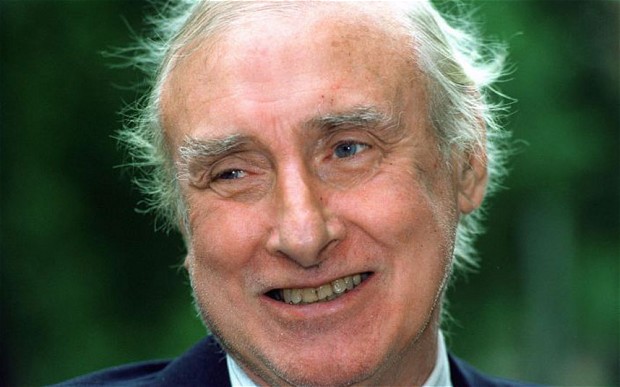
Spike Milligan after receiving his Order of the British Empire (OBE) in 1992.

What’s this all leading up to?

Simply that a recent speech by George Monbiot reveals such utter madness in the upper echelons of the United Kingdom that only reflecting on The Goon Show offers any meaning to this old Brit. Not that the USA escapes Mr. Monbiot’s analysis.

Here’s how the speech opens:

The Pricing of Everything

Ladies and gentlemen, we are witnessing the death of both the theory and the practice of neoliberal capitalism. This is the doctrine which holds that the market can resolve almost all social, economic and political problems. It holds that people are best served, and their prosperity is best advanced, by the minimum of intervention and spending by the state. It contends that we can maximise the general social interest through the pursuit of self-interest.

To illustrate the spectacular crashing and burning of that doctrine, let me tell you the sad tale of a man called Matt Ridley. He was a columnist on the Daily Telegraph until he became – and I think this tells us something about the meritocratic pretensions of neoliberalism – the hereditary Chair of Northern Rock: a building society that became a bank. His father had been Chair of Northern Rock before him, which appears to have been his sole qualification.

While he was a columnist on the Telegraph he wrote the following:

The government “is a self-seeking flea on the backs of the more productive people of this world. … governments do not run countries, they parasitize them.”(1) He argued that taxes, bail-outs, regulations, subsidies, interventions of any kind are an unwarranted restraint on market freedom. When he became Chairman of Northern Rock, Mr Ridley was able to put some of these ideas into practice. You can see the results today on your bank statements.

In 2007 Matt Ridley had to go cap in hand to the self-seeking flea and beg it for what became £27 billion. This was rapidly followed by the first run on a British bank since 1878. The government had to guarantee all the deposits of the investors in the bank. Eventually it had to nationalise the bank, being the kind of parasitic self-seeking flea that it is, in order to prevent more or less the complete collapse of the banking system. (2)

You can read the full transcript and look up the references over on the George Monbiot website.

However, a real bonus is that his speech (delivered without notes!), his SPERI Annual Lecture, hosted by the Sheffield Political Economy Research Institute at the University of Sheffield, was recorded on video.

Please set aside a quiet hour (and a tad) to listen to George Monbiot and wonder at the goon show that we are all acting out!  In fact, watching his speech and his answers to a number of questions from the audience will give you something that the transcript just can’t convey.  Watch it!  You will be inspired!

(SPERI Annual Lecture by George Monbiot: “The Pricing of Everything” at the Octagon in Sheffield, UK, on 29th April 2014.)

Back to dear old Spike Milligan and to close with what seems like a very apt quote of his.

“All I ask is the chance to prove that money can’t make me happy.“

Climate Change and Humanity

A powerful essay by Tom Engelhardt from his blogsite TomDispatch.

Regular readers of Learning from Dogs know that essays from TomDispatch often find their way onto these pages.  They are republished with the generous permission of Tom and I endeavour to select those essays that shine a new light on a current issue.   No less so than with today’s essay, first published over on TomDispatch on May 22nd, 2014.

Just a note before you start reading Tom’s very important essay.  That there are many links to papers, articles and other references throughout the essay.  (I know, they took me a couple of hours to set up!)  Could I recommend strongly that you ‘click’ on each link and make a note of the references you wish to read at a later time.  I shall be referring to some of them next week when I comment more generally on this fabulous essay.

ooOOoo

Tomgram: Engelhardt, Is Climate Change a Crime Against Humanity?

The 95% Doctrine

Climate Change as a Weapon of Mass Destruction 

By Tom Engelhardt

Who could forget? At the time, in the fall of 2002, there was such a drumbeat of “information” from top figures in the Bush administration about the secret Iraqi program to develop weapons of mass destruction (WMD) and so endanger the United States. And who — other than a few suckers — could have doubted that Saddam Hussein was eventually going to get a nuclear weapon? The only question, as our vice president suggested on “Meet the Press,” was: Would it take one year or five? And he wasn’t alone in his fears, since there was plenty of proof of what was going on. For starters, there were those “specially designed aluminum tubes” that the Iraqi autocrat had ordered as components for centrifuges to enrich uranium in his thriving nuclear weapons program. Reporters Judith Miller and Michael Gordon hit the front page of the New York Times with that story on September 8, 2002.

Then there were those “mushroom clouds” that Condoleezza Rice, our national security advisor, was so publicly worried about — the ones destined to rise over American cities if we didn’t do something to stop Saddam. As she fretted in a CNN interview with Wolf Blitzer on that same September 8th, “[W]e don’t want the smoking gun to be a mushroom cloud.” No, indeed, and nor, it turned out, did Congress!

And just in case you weren’t anxious enough about the looming Iraqi threat, there were those unmanned aerial vehicles — Saddam’s drones! — that could be armed with chemical or biological WMD from his arsenal and flown over America’s East Coast cities with unimaginable results. President George W. Bush went on TV to talk about them and congressional votes were changed in favor of war thanks to hair-raising secret administration briefings about them on Capitol Hill.

In the end, it turned out that Saddam had no weapons program, no nuclear bomb in the offing, no centrifuges for those aluminum pipes, no biological or chemical weapons caches, and no drone aircraft to deliver his nonexistent weapons of mass destruction (nor any ships capable of putting those nonexistent robotic planes in the vicinity of the U.S. coast). But what if he had? Who wanted to take that chance? Not Vice President Dick Cheney, certainly. Inside the Bush administration he propounded something that journalist Ron Suskind later dubbed the “one percent doctrine.” Its essence was this: if there was even a 1% chance of an attack on the United States, especially involving weapons of mass destruction, it must be dealt with as if it were a 95%-100% certainty.

Here’s the curious thing: if you look back on America’s apocalyptic fears of destruction during the first 14 years of this century, they largely involved three city-busting weapons that were fantasies of Washington’s fertile imperial imagination. There was that “bomb” of Saddam’s, which provided part of the pretext for a much-desired invasion of Iraq. There was the “bomb” of the mullahs, the Iranian fundamentalist regime that we’ve just loved to hate ever since they repaid us, in 1979, for the CIA’s overthrow of an elected government in 1953 and the installation of the Shah by taking the staff of the U.S. embassy in Tehran hostage. If you believed the news from Washington and Tel Aviv, the Iranians, too, were perilously close to producing a nuclear weapon or at least repeatedly on the verge of the verge of doing so. The production of that “Iranian bomb” has, for years, been a focus of American policy in the Middle East, the “brink” beyond which war has endlessly loomed. And yet there was and is no Iranian bomb, nor evidence that the Iranians were or are on the verge of producing one.

Finally, of course, there was al-Qaeda’s bomb, the “dirty bomb” that organization might somehow assemble, transport to the U.S., and set off in an American city, or the “loose nuke,” maybe from the Pakistani arsenal, with which it might do the same. This is the third fantasy bomb that has riveted American attention in these last years, even though there is less evidence for or likelihood of its imminent existence than of the Iraqi and Iranian ones.

To sum up, the strange thing about end-of-the-world-as-we’ve-known-it scenarios from Washington, post-9/11, is this: with a single exception, they involved only non-existent weapons of mass destruction. A fourth weapon — one that existed but played a more modest role in Washington’s fantasies — was North Korea’s perfectly real bomb, which in these years the North Koreans were incapable of delivering to American shores.

The “Good News” About Climate Change

In a world in which nuclear weapons remain a crucial coin of the realm when it comes to global power, none of these examples could quite be classified as 0% dangers. Saddam had once had a nuclear program, just not in 2002-2003, and also chemical weapons, which he used against Iranian troops in his 1980s war with their country (with the help of targeting information from the U.S. military) and against his own Kurdish population. The Iranians might (or might not) have been preparing their nuclear program for a possible weapons breakout capability, and al-Qaeda certainly would not have rejected a loose nuke, if one were available (though that organization’s ability to use it would still have been questionable).

In the meantime, the giant arsenals of WMD in existence, the American, Russian, Chinese, Israeli, Pakistani, and Indian ones that might actually have left a crippled or devastated planet behind, remained largely off the American radar screen. In the case of the Indian arsenal, the Bush administration actually lent an indirect hand to its expansion. So it was twenty-first-century typical when President Obama, trying to put Russia’s recent actions in the Ukraine in perspective, said, “Russia is a regional power that is threatening some of its immediate neighbors. I continue to be much more concerned when it comes to our security with the prospect of a nuclear weapon going off in Manhattan.”

Once again, an American president was focused on a bomb that would raise a mushroom cloud over Manhattan. And which bomb, exactly, was that, Mr. President?

Of course, there was a weapon of mass destruction that could indeed do staggering damage to or someday simply drown New York City, Washington D.C., Miami, and other East coast cities. It had its own efficient delivery systems — no nonexistent drones or Islamic fanatics needed. And unlike the Iraqi, Iranian, or al-Qaeda bombs, it was guaranteed to be delivered to our shores unless preventive action was taken soon. No one needed to hunt for its secret facilities. It was a weapons system whose production plants sat in full view right here in the United States, as well as in Europe, China, and India, as well as in Russia, Saudi Arabia, Iran, Venezuela, and other energy states.

So here’s a question I’d like any of you living in or visiting Wyoming to ask the former vice president, should you run into him in a state that’s notoriously thin on population: How would he feel about acting preventively, if instead of a 1% chance that some country with weapons of mass destruction might use them against us, there was at least a 95% — and likely as not a 100% — chance of them being set off on our soil? Let’s be conservative, since the question is being posed to a well-known neoconservative. Ask him whether he would be in favor of pursuing the 95% doctrine the way he was the 1% version.

After all, thanks to a grim report in 2013 from the Intergovernmental Panel on Climate Change, we know that there is now a 95%-100% likelihood that “human influence has been the dominant cause of the observed warming [of the planet] since the mid-20th century.” We know as well that the warming of the planet — thanks to the fossil fuel system we live by and the greenhouse gases it deposits in the atmosphere — is already doing real damage to our world and specifically to the United States, as a recent scientific report released by the White House made clear. We also know, with grimly reasonable certainty, what kinds of damage those 95%-100% odds are likely to translate into in the decades, and even centuries, to come if nothing changes radically: a temperature rise by century’s end that could exceed 10 degrees Fahrenheit, cascading species extinctions, staggeringly severe droughts across larger parts of the planet (as in the present long-term drought in the American West and Southwest), far more severe rainfall across other areas, more intense storms causing far greater damage, devastating heat waves on a scale no one in human history has ever experienced, masses of refugees, rising global food prices, and among other catastrophes on the human agenda, rising sea levels that will drown coastal areas of the planet.
Buy the Book

From two scientific studies just released, for example, comes the news that the West Antarctic ice sheet, one of the great ice accumulations on the planet, has now begun a process of melting and collapse that could, centuries from now, raise world sea levels by a nightmarish 10 to 13 feet. That mass of ice is, according to the lead authors of one of the studies, already in “irreversible retreat,” which means — no matter what acts are taken from now on — a future death sentence for some of the world’s great cities. (And that’s without even the melting of the Greenland ice shield, not to speak of the rest of the ice in Antarctica.)

All of this, of course, will happen mainly because we humans continue to burn fossil fuels at an unprecedented rate and so annually deposit carbon dioxide in the atmosphere at record levels. In other words, we’re talking about weapons of mass destruction of a new kind. While some of their effects are already in play, the planetary destruction that nuclear weapons could cause almost instantaneously, or at least (given “nuclear winter” scenarios) within months, will, with climate change, take decades, if not centuries, to deliver its full, devastating planetary impact.

When we speak of WMD, we usually think of weapons — nuclear, biological, or chemical — that are delivered in a measurable moment in time. Consider climate change, then, a WMD on a particularly long fuse, already lit and there for any of us to see. Unlike the feared Iranian bomb or the Pakistani arsenal, you don’t need the CIA or the NSA to ferret such “weaponry” out. From oil wells to fracking structures, deep sea drilling rigs to platforms in the Gulf of Mexico, the machinery that produces this kind of WMD and ensures that it is continuously delivered to its planetary targets is in plain sight. Powerful as it may be, destructive as it will be, those who control it have faith that, being so long developing, it can remain in the open without panicking populations or calling any kind of destruction down on them.

The companies and energy states that produce such WMD remain remarkably open about what they’re doing. Generally speaking, they don’t hesitate to make public, or even boast about, their plans for the wholesale destruction of the planet, though of course they are never described that way. Nonetheless, if an Iraqi autocrat or Iranian mullahs spoke in similar fashion about producing nuclear weapons and how they were to be used, they would be toast.

Take ExxonMobil, one of the most profitable corporations in history. In early April, it released two reports that focused on how the company, as Bill McKibben has written, “planned to deal with the fact that [it] and other oil giants have many times more carbon in their collective reserves than scientists say we can safely burn.” He went on:

The company said that government restrictions that would force it to keep its [fossil fuel] reserves in the ground were ‘highly unlikely,’ and that they would not only dig them all up and burn them, but would continue to search for more gas and oil — a search that currently consumes about $100 million of its investors’ money every single day. ‘Based on this analysis, we are confident that none of our hydrocarbon reserves are now or will become “stranded.”‘

In other words, Exxon plans to exploit whatever fossil fuel reserves it possesses to their fullest extent. Government leaders involved in supporting the production of such weapons of mass destruction and their use are often similarly open about it, even while also discussing steps to mitigate their destructive effects. Take the White House, for instance. Here was a statement President Obama proudly made in Oklahoma in March 2012 on his energy policy:

Now, under my administration, America is producing more oil today than at any time in the last eight years. That’s important to know. Over the last three years, I’ve directed my administration to open up millions of acres for gas and oil exploration across 23 different states. We’re opening up more than 75% of our potential oil resources offshore. We’ve quadrupled the number of operating rigs to a record high. We’ve added enough new oil and gas pipeline to encircle the Earth and then some.

Similarly, on May 5th, just before the White House was to reveal that grim report on climate change in America, and with a Congress incapable of passing even the most rudimentary climate legislation aimed at making the country modestly more energy efficient, senior Obama adviser John Podesta appeared in the White House briefing room to brag about the administration’s “green” energy policy. “The United States,” he said, “is now the largest producer of natural gas in the world and the largest producer of gas and oil in the world. It’s projected that the United States will continue to be the largest producer of natural gas through 2030. For six straight months now, we’ve produced more oil here at home than we’ve imported from overseas. So that’s all a good-news story.”

Good news indeed, and from Vladmir Putin’s Russia, which just expanded its vast oil and gas holdings by a Maine-sized chunk of the Black Sea off Crimea, to Chinese “carbon bombs,” to Saudi Arabian production guarantees, similar “good-news stories” are similarly promoted. In essence, the creation of ever more greenhouse gases — of, that is, the engine of our future destruction — remains a “good news” story for ruling elites on planet Earth.

Weapons of Planetary Destruction

We know exactly what Dick Cheney — ready to go to war on a 1% possibility that some country might mean us harm — would answer, if asked about acting on the 95% doctrine. Who can doubt that his response would be similar to those of the giant energy companies, which have funded so much climate-change denialism and false science over the years? He would claim that the science simply isn’t “certain” enough (though “uncertainty” can, in fact, cut two ways), that before we commit vast sums to taking on the phenomenon, we need to know far more, and that, in any case, climate-change science is driven by a political agenda.

For Cheney & Co., it seemed obvious that acting on a 1% possibility was a sensible way to go in America’s “defense” and it’s no less gospel for them that acting on at least a 95% possibility isn’t. For the Republican Party as a whole, climate-change denial is by now nothing less than a litmus test of loyalty, and so even a 101% doctrine wouldn’t do when it comes to fossil fuels and this planet.

No point, of course, in blaming this on fossil fuels or even the carbon dioxide they give off when burned. These are no more weapons of mass destruction than are uranium-235 and plutonium-239. In this case, the weaponry is the production system that’s been set up to find, extract, sell at staggering profits, and burn those fossil fuels, and so create a greenhouse-gas planet. With climate change, there is no “Little Boy” or “Fat Man” equivalent, no simple weapon to focus on. In this sense, fracking is the weapons system, as is deep-sea drilling, as are those pipelines, and the gas stations, and the coal-fueled power plants, and the millions of cars filling global roads, and the accountants of the most profitable corporations in history.

All of it — everything that brings endless fossil fuels to market, makes those fuels eminently burnable, and helps suppress the development of non-fossil fuel alternatives — is the WMD. The CEOs of the planet’s giant energy corporations are the dangerous mullahs, the true fundamentalists, of planet Earth, since they are promoting a faith in fossil fuels which is guaranteed to lead us to some version of End Times.

Perhaps we need a new category of weapons with a new acronym to focus us on the nature of our present 95%-100% circumstances. Call them weapons of planetary destruction (WPD) or weapons of planetary harm (WPH). Only two weapons systems would clearly fit such categories. One would be nuclear weapons which, even in a localized war between Pakistan and India, could create some version of “nuclear winter” in which the planet was cut off from the sun by so much smoke and soot that it would grow colder fast, experience a massive loss of crops, of growing seasons, and of life. In the case of a major exchange of such weapons, we would be talking about “the sixth extinction” of planetary history.

Though on a different and harder to grasp time-scale, the burning of fossil fuels could end in a similar fashion — with a series of “irreversible” disasters that could essentially burn us and much other life off the Earth. This system of destruction on a planetary scale, facilitated by most of the ruling and corporate elites on the planet, is becoming (to bring into play another category not usually used in connection with climate change) the ultimate “crime against humanity” and, in fact, against most living things. It is becoming a “terracide.”

Tom Engelhardt is a co-founder of the American Empire Project and author of The United States of Fear as well as a history of the Cold War, The End of Victory Culture (from which some of this essay has been adapted). He runs the Nation Institute’s TomDispatch.com. His latest book, co-authored with Nick Turse, is Terminator Planet: The First History of Drone Warfare, 2001-2050.

Copyright 2014 Tom Engelhardt

ooOOoo

There are so many strong and fundamental points raised in this essay from Tom that I am going to return to them next week.  (Will give it a rest for July 4th!)
Those annoying adverts on this blog!

Yes, I find them annoying too!

When you are a WordPress user, as is Learning from Dogs, you can pay $30 a year to stop advertisements from appearing on one’s blogsite.

This is how WordPress explain their policy on advertising:

We sometimes display advertisements on your blog to help pay the bills. This keeps free features free! We only run them in limited places, and we do not show ads to logged-in readers, which means only a very small percentage of your page views will actually contain ads. To eliminate ads on your blog entirely, you can purchase the No-Ads Upgrade for a single blog (per year).

I choose not to pay that upgrade, despite the ads being annoying; of that I have no doubt.

For this reason.

WordPress pay an amount of their advertising income to the owner of the blog.  Thus twenty-four hours ago, WordPress sent me an email:

Just thought you’d like to know WordPress.com sent you $106.23 USD.

I’m not sure but I think that covers the last twelve months.

That $106 will be divided into two with $53 staying with Jean and me and $53 going to our nearest humane society; Rogue Valley Humane Society.

Just wanted to let you know.

The temptation to turn ever inwards.

A run of essays that, collectively, deeply disturb me.

My seventieth birthday is fewer than six months away. Indeed, it will be just a little over two weeks after we celebrate the second anniversary of our arrival to this beautiful homestead back on October 25th, 2012.  Two years: Seventy years! Time seems to run through one’s fingers like the proverbial sand.  It’s difficult to avoid the irony that comes with recognising the two journeys.  The one journey bringing me to living here on our rural Oregonian acres, with stunning scenery, wonderful animals and so much love in the air.  The other journey bringing me to the realisation that this is the Autumn of my life and the sense, the keen sense, of my own mortality.

What, may you ask, has brought this feeling, these words, to the surface?

Well, I’ll tell you.

It’s been the coincidence of essays from three authors across the ‘blogosphere’ that I have recently read.  Taken together, they paint a picture that disturbs me. Very much so. They sing out to me that mankind is spiralling ever downwards to oblivion and that the dark forces of greed, power and control will never be stopped; well not by man that is!

Here are the links to those essays.

The first was from Tom Englehardt.  It was an essay entitled: A Record of Unparalleled Failure published on June 10th. That opened:

The United States has been at war — major boots-on-the-ground conflicts and minor interventions, firefights, air strikes, drone assassination campaigns, occupations, special ops raids, proxy conflicts, and covert actions — nearly nonstop since the Vietnam War began. That’s more than half a century of experience with war, American-style, and yet few in our world bother to draw the obvious conclusions.

Given the historical record, those conclusions should be staring us in the face. They are, however, the words that can’t be said in a country committed to a military-first approach to the world, a continual build-up of its forces, an emphasis on pioneering work in the development and deployment of the latest destructive technology, and a repetitious cycling through styles of war from full-scale invasions and occupations to counterinsurgency, proxy wars, and back again.

The second was from another American, Jim Wright, who is the author of the blog Stonekettle Station. Jim describes himself as:

I’m a retired US Navy Chief Warrant Officer. Nowadays I live in Alaska where I spend most of my time working in my woodshop or fishing. I occasionally consult for the Military. I have delusions of becoming a full time writer – or conquering the universe, whichever is easier…

Thanks to Yves Smith’s Naked Capitalism, I followed a link to a recent essay from Jim under the title of Absolutely Nothing, published on the 14th June.

I’m not going to quote from it, not because I don’t approve of his essay, far from it, but because there are many tough, profane words and I do not wish inadvertently to upset my readers.  But it is very strongly recommended.

The third essay is from fellow Englishman, George Monbiot, whose work has been regularly republished on Learning from Dogs.

While his essay is not specifically about war, unlike the other two, it does, nonetheless, contribute to my feelings of not wanting to engage with anything that is outside being a better husband, landowner and animal lover.  It is called The Values Ratchet and is republished here with the generous permission of George Monbiot.

ooOOoo

The Values Ratchet

June 10th, 2014

How to ensure that nations slide ever further into selfishness, and ever further to the right.

By George Monbiot, published in the Guardian 11th June 2014

Any political movement that fails to understand two basic psychological traits will, before long, fizzle out. The first is Shifting Baseline Syndrome. Coined by the biologist Daniel Pauly, it originally described our relationship to ecosystems(1), but it’s just as relevant to politics. We perceive the circumstances of our youth as normal and unexceptional – however sparse or cruel they may be. By this means, over the generations, we adjust to almost any degree of deprivation or oppression, imagining it to be natural and immutable.

The second is the Values Ratchet (also known as policy feedback). If, for example, your country has a public health system which ensures that everyone who needs treatment receives it without payment, it helps instil the belief that it is normal to care for strangers, and abnormal and wrong to neglect them(2,3). If you live in a country where people are left to die, this embeds the idea that you have no responsibility towards the poor and weak. The existence of these traits is supported by a vast body of experimental and observational research, of which Labour and the US Democrats appear determined to know nothing.

We are not born with our core values: they are strongly shaped by our social environment. These values can be placed on a spectrum between extrinsic and intrinsic. People towards the intrinsic end have high levels of self-acceptance, strong bonds of intimacy and a powerful desire to help other people. People at the other end are drawn to external signifiers, such as fame, financial success, image and attractiveness(4). They seek praise and rewards from others.

Research across 70 countries suggests that intrinsic values are strongly associated with an understanding of others, tolerance, appreciation, cooperation and empathy(5,6,7). Those with strong extrinsic values tend to have lower empathy, a stronger attraction towards power, hierarchy and inequality, greater prejudice towards outsiders and less concern for global justice and the natural world(8,9). These clusters exist in opposition to each other: as one set of values strengthens, the other weakens(10,11).

People at the extrinsic end tend to report higher levels of stress, anxiety, anger, envy, dissatisfaction and depression than those at the intrinsic end of the spectrum(12,13,14). Societies in which extrinsic goals are widely adopted are more unequal and uncooperative than those with deep intrinsic values. In one experiment, people with strong extrinsic values who were given a resource to share soon exhausted it (unlike a group with strong intrinsic values), as they all sought to take more than their due(15).

As extrinsic values are strongly associated with conservative politics, it’s in the interests of conservative parties and conservative media to cultivate these values. There are three basic methods. The first is to generate a sense of threat. Experiments reported in the journal Motivation and Emotion suggest that when people feel threatened or insecure they gravitate towards extrinsic goals(16). Perceived dangers – such as the threat of crime, terrorism, deficits, inflation or immigration – trigger a short-term survival response, in which you protect your own interests and forget other people’s.

The second method is the creation of new frames, structures of thought through which we perceive the world. For example, if tax is repeatedly cast as a burden, and less tax is described as relief, people come to see taxation as a bad thing that must be remedied(17). The third method is to invoke the Values Ratchet: when you change the way society works, our values shift in response. Privatisation, marketisation, austerity for the poor, inequality: they all shift baselines, alter the social cues we receive and generate insecurity and a sense of threat.

Margaret Thatcher’s political genius arose from her instinctive understanding of these traits, long before they were described by psychologists and cognitive linguists: “Economics are the method; the object is to change the heart and soul.”(18) But Labour and the Democrats no longer have objects, only methods. Their political philosophy is simply stated: if at first you don’t succeed, flinch, flinch and flinch again. They seem to believe that if they simply fall into line with prevailing values, people will vote for them by default. But those values and baselines keep shifting, and what seemed intolerable before becomes unremarkable today. Instead of challenging the new values, these parties keep adjusting. This is why they always look like their opponents, with a five-year lag.

There is no better political passion killer than Labour’s Zero-Based Review(19). Its cover is Tory blue. So are the contents. It promises to sustain the coalition’s programme of cuts and even threatens to apply them to the health service(20). But, though it treats the deficit as a threat that must be countered at any cost, it says not a word about plugging the gap with innovative measures such as a Robin Hood tax on financial transactions, a land value tax, a progressively-banded council tax or a windfall tax on extreme wealth. Nor does it mention tax avoidance and evasion. The poor must bear the pain through spending cuts, sustaining a cruel and wildly unequal social settlement.

At the end of last month, Chris Leslie, Labour’s Shadow Chief Secretary to the Treasury, promised, like George Osborne, that the cuts would be sustained for “decades ahead”(21). He asserted that Labour’s purpose in government would be to “finish that task on which [the Chancellor] has failed”: namely “to eradicate the deficit”. The following day the shadow business secretary, Chuka Umunna, sought to explain why Labour had joined the political arms race on immigration. In doing so, he revealed that his party will be “radical in reforming our economy” in support of “a determinedly pro-business agenda”(22). They appear to believe that success depends on becoming indistinguishable from their opponents.

It’s not quite as mad as the old tactic among some Marxist groups of promoting inequality and injustice in the hope that popular fury would lead to revolution, but it’s not far off. Quite aside from the obvious flaw (what’s the sodding point of voting for a party that offers no substantial change in policy?), it evinces a near-perfect psychological illiteracy. When a party reinforces conservative values and conservative ideas, when it fails clearly to expound any countervailing values, when it refuses to reverse the direction of the Values Ratchet, what outcome does it expect, other than a shift towards conservatism?

http://www.monbiot.com

References:

1. Daniel Pauly, 1995. Anecdotes and the Shifting Baseline Syndrome of Fisheries. Trends in Ecology and Evolution 10. 10:430.

2. Stefan Svallfors, 2010 Policy feedback, generational replacement, and attitudes to state intervention: Eastern and Western Germany, 1990-2006, European Political Science Review, 2, 119-135.

3. Tom Crompton, September 2010. Common Cause: The Case for Working with our Cultural Values. WWF-UK. http://assets.wwf.org.uk/downloads/common_cause_report.pdf

4. Tim Kasser, November 2011. Values and Human Wellbeing. The Bellagio Initiative. http://www.bellagioinitiative.org/wp-content/uploads/2011/10/Bellagio-Kasser.pdf

5. Shalom H. Schwartz, 2006. Basic Human Values: Theory, Measurement, and Applications. Revue Française de Sociologie, 47/4. http://bit.ly/1hL1JFJ

6. Frederick Grouzet et al, 2005. The structure of goal contents across fifteen cultures. Journal of Personality and Social Psychology, 89, 800-816. http://psycnet.apa.org/journals/psp/89/5/800/

7. Tom Crompton, September 2010. Common Cause: The Case for Working with our Cultural Values. WWF-UK. http://assets.wwf.org.uk/downloads/common_cause_report.pdf

8. Tim Kasser, November 2011. Values and Human Wellbeing. The Bellagio Initiative. http://www.bellagioinitiative.org/wp-content/uploads/2011/10/Bellagio-Kasser.pdf

9. Kennon M. Sheldon and Charles P. Nichols, 2009. Comparing Democrats and Republicans on
Intrinsic and Extrinsic Values. Journal of Applied Social Psychology, 2009, 39, 3, pp. 589–623.

10. Tim Kasser, November 2011. Values and Human Wellbeing. The Bellagio Initiative. http://www.bellagioinitiative.org/wp-content/uploads/2011/10/Bellagio-Kasser.pdf

11. Tom Crompton, September 2010. Common Cause: The Case for Working with our Cultural Values. WWF-UK. http://assets.wwf.org.uk/downloads/common_cause_report.pdf

12. Tim Kasser, 2014. Changes in materialism, changes in psychological well-being: Evidence from three longitudinal studies and an intervention experiment. Motivation and Emotion, 38:1–22. doi: 10.1007/s11031-013-9371-4

13. Kennon M. Sheldon and Tim Kasser, 2008. Psychological threat and extrinsic goal striving. Motivation and Emotion, 32:37–45. Doi: 10.1007/s11031-008-9081-5 http://www.selfdeterminationtheory.org/SDT/documents/2008_SheldonKasser_MOEM.pdf

14. Tim Kasser, November 2011. Values and Human Wellbeing. The Bellagio Initiative. http://www.bellagioinitiative.org/wp-content/uploads/2011/10/Bellagio-Kasser.pdf

15. Kennon M. Sheldon, and Holly McGregor, 2000. Extrinsic value orientation and the “tragedy of the commons.” Journal of Personality, 68, 383–411. http://onlinelibrary.wiley.com/doi/10.1111/1467-6494.00101/abstract;jsessionid=A7F705A627AE58C7814C6AC62749E128.f03t04

16. Kennon M. Sheldon and Tim Kasser, 2008. Psychological threat and extrinsic goal striving. Motivation and Emotion, 32:37–45. Doi: 10.1007/s11031-008-9081-5 http://www.selfdeterminationtheory.org/SDT/documents/2008_SheldonKasser_MOEM.pdf

17. Tom Crompton, September 2010. Common Cause: The Case for Working with our Cultural Values. WWF-UK. http://assets.wwf.org.uk/downloads/common_cause_report.pdf

18. http://www.margaretthatcher.org/document/104475

19. http://www.yourbritain.org.uk/uploads/editor/files/Zero_Based_Review.pdf

20. “We will be cutting departmental spending in 2015-16 and not raising it, with no more borrowing to cover day-to-day spending”
“The fundamental principle of the Zero-Based Review is that all spending is in scope and all budgets will be challenged. The review will cover all areas of public spending, including those that have been protected in the current Spending Review such as health”.

21. http://press.labour.org.uk/post/87284550049/long-termism-in-public-finance-speech-by-chris-leslie

22. http://www.theguardian.com/commentisfree/2014/may/30/labour-immigration-ukip-farage

ooOOoo

Sometimes, nay too many times, one has to wonder about the human race and where it is heading!

If after all these thousands of years man continues failing to learn from history, perhaps we should try something different?

Learn from dogs!

Now, the first lesson is about love - unconditional love.
Now, the first lesson is about love – unconditional love.