Category: Finance

Fed Funds Rate and Consumer/Business Costs

Looking more closely at the implications of changes in the Fed rate

Fed funds rate chart_img
Fed Funds rate influences consumer and business interest costs

Does the Fed Funds Rate, the rate charged by the Federal Reserve to make short-term loans to banks, directly influence the interest rate consumers and businesses pay on credit cards, mortgages, and consumer and business loans?  If you took the word of the average business news commentator, you would think not.  But the answer, of course, is yes.

One way to view the market rate of interest, although certainly not the only correct or useful way, is to think of it as a base rate that represents the risk-free rate, a rate that compensates the population for its impatience to consume the goods it would have consumed had it not lent the funds out in the first place. This risk-free rate is also influenced by the efficiency and functioning of the capital markets that bring borrowers and lenders together.

A risk premium is then added to this base rate of risk-free interest, one that varies depending on the degree of uncertainty of the lender getting repaid.  The risk of default, the risk of prepayment, the risk of political uprising, exchange rate risk, and many other sources of uncertainty — including the risk of inflation — raise the level of the risk premium commanded by lenders in the market.  As an example, over the last 100 years or so, the average annual risk-free rate in the U.S. has been about 4%, and the average annual risk premium for equity securities has been about 8%, bringing the average annual observed interest rate or rate of return to about 12% on these securities.

So what happens to the interest rate charged to consumers and businesses when the Fed raises the fed funds rate?  Basically, the level of the risk-free rate in the economy rises and, as debt contracts expire or new lending takes place, this higher base rate gets factored into the market rate of interest charged.

Overall, the demand for loanable funds falls, the aggregate demand curve for the economy falls, and equilibrium output and employment fall, RELATIVE to where they would have been without the rate increase. The bright side is that a reduction in the money supply that accompanies an increase in the fed funds rate is absolutely essential to curtailing inflation, which drives the risk premium, and represents a much greater cost to the economy.

By Sherry Jarrell
Oh, Irony! The Markets and Obama’s Policies

Where are capital markets heading?

In a recent article, Moody’s announced that it may have to reduce the AAA rating of U.S bonds because of excess spending and historic debt levels of the U.S. government under President Obama.

Moody’s Investors Service Inc. said the U.S. government’s AAA bond rating will come under pressure in the future unless additional measures are taken to reduce budget deficits projected for the next decade.

The U.S. retains its top rating for now because of a “high degree of economic and institutional strength,” the New York- based rating company said in a statement today. The ratios of government debt to the U.S. gross domestic product and revenue have increased “sharply” during the credit crisis and recession. Moody’s expects the ratios to remain higher compared with other AAA-rated countries after the crisis.

What this means in practical terms is that the cost of borrowing by the U.S. government will rise, which will increase spending via more borrowing or higher taxes or more money creation to pay for the higher interest costs.  Sound like a vicious cycle to you?

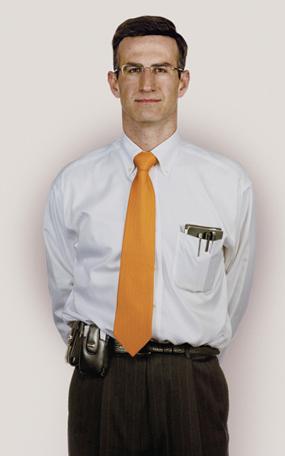
Has anyone noticed the absolute irony of the world capital market having a seat at the table that assesses the viability of Obama’s policies? Obama, who has spent the last year denigrating free markets and capitalism, and has laid the blame for the credit crisis squarely at the feet of those greedy capitalists, now has to deal with a rating agency, which plays a pivotal role in the functioning of those very capital markets, evaluating the creditworthiness of his policies and those of his budget director, Peter Orszag, pictured here.

Peter Orszag, Obama's Budget Director

How wonderfully ironic!

The U.S. would not be the first.   Ireland was recently downgraded, and Japan lost its AAA rating from Moodys in November of 1998; both faced higher borrowing costs as a result.

By Sherry Jarrell

Tax, Law, Crime and Morality in Banking

More holes than in a Swiss Cheese!

There is currently a merry old ding-dong spat going on between the German and Swiss governments. Basically, someone has got hold of information about German citizens with bank accounts in Switzerland where they are hiding large sums on which they should pay German taxes.

This or these enterprising whistleblower(s) are offering to sell this data to the German government for a hefty fee. The German government is on the point of accepting to buy this “illegally-obtained” information from the (from the Swiss point of view) criminals who have stolen their secret bank data.

This story raises a large number of fascinating questions. It has long been common knowledge that Switzerland offers banking facilities with few questions asked. Any self-respecting criminal or tax evader has or had a secret, numbered Swiss account.

What has always amazed me is how they have got away with this for so long, stuck as they are in the centre of Europe. How is it possible that other countries have allowed Switzerland to become a haven for money obtained illegally in other countries?

For it is clearly immoral to profit from the illegal activities of foreign nationals, isn’t it? What exactly is the difference between this behaviour and “receiving stolen goods”? Worse, we have to remember that the largest sums come from drugs. Anyone willing to look after (or launder) drug  money is complicit in the misery and deaths of millions of drug addicts worldwide. Yet the Swiss have pulled off this trick for decades. The Swiss banking (and government) fraternity has never shied away from shady dealings, being until the end of WWII covert supporters of the Nazis.

Well, Angela Merkel is going to do a deal with presumably Swiss “criminals” (according to the Swiss government) in order to recoup money it is owed by German criminals (according to Germany). What a merry old moral maze we have here. But in truth, the world is now too small and inter-connected to allow either tax evasion on a vast scale  or the safeguarding of criminal funds.

Switzerland has to decide whether to remain as a supporter of tax evaders and gangsters (including of course African Presidents who have ripped their countries off in a big way) OR to join the real, civil, honest and inter-connected world.

The rest of us should stop tolerating this connivance with crime. “Client secrecy” is no excuse for condoning and profiting from crime.

More on the whole  Nazi gold in Switzerland story is here.

By Chris Snuggs

What a con!

How do young drivers afford the insurance?

My daughter turned 17 years of age on 4th February, and has been excited about the possibility of being able to drive for some time, apart from a period of concern when the British Government hinted at raising the driving age to 18. Fortunately that passed.

I likewise always wanted to drive and at age 17 moved from two wheels to four and in 10 days had passed my test. The car insurance giving nearly minimum cover was £26 a year, my first car having a 2.6 litre engine. The next was a Jaguar 2.4, and the third, another Jag, this time a 3.8 XK 150S, for which I probably had to pay an extra £10 a year, all while I was 17. (1969 ) Continue reading “What a con!”

Greece – sick man of Europe

A looming low point in the long history of the Greek empire

It seems the EU is considering whether to bail out Greece, in danger of defaulting on its loans, so high is its debt.

Athens

A spokesman has been quoted as saying “it is unthinkable” that Greece should default and that “something would have to be done.”

I imagine the rest of the EU countries (their citizens at least, those who actually pay the taxes) are not exactly slavering over the prospect of their money being used to bail out yet another organism living beyond its means.

And this is the point, we ALL have to start living within our means: individuals, countries, the planet. ANY other course leads to doom. And as an EU taxpayer I feel very hesitant about bailing out ANY country. Not though lack of fellow-feeling (it could be us next time) but because IF you bail them out then they WON’T change their habits. We bailed out the banks; have you seen THEM change their habits? I certainly haven’t, except that they won’t lend small businesses (the TOTALLY INNOCENT VICTIMS of all this) any money. The obscene fat-cat “bonuses” are starting up all over again like mushrooms in the meadow. No, let them go bust; only that will concentrate their minds.

And let us not forget that Greece LIED about its finances in order to qualify for the EU in the first place! An end to lies! An end to the easy option. An end to my taxes bailing out an indisciplined over-spender!

By Chris Snuggs

Bankers’ Bonuses

Scoop information – direct from the Board Room

Given the plethora of comments on banking bonuses recently our intrepid reporter has managed to get access to a bankers’ board meeting to establish exactly how targets and bonuses are planned. His transcript is highly revealing of a complex system tightly geared to the bank’s activities and designed to give maximum incentive to those at the highest level.

So here you have it …..

Board Meeting at FatGreedyBankers, Limited (extremely)

Hello chaps. We’re here to set the targets for this year’s bonuses.

Jolly good, Sir Tosser. What did you have in mind?

Well, if the bank doesn’t actually go bankrupt we all get £1,000,000 quid. This is our baseline. Got to have a baseline ….. Then we get an extra £1,000,000 bonus for every £10 profit we make. What do you think?

I must say these are pretty stiff targets, Sir. As you know, the chances of going bankrupt are very high.

Yes, but then we get bailout money so we don’t have to worry about that.

No Sir. Well, I’m sure we all relish a challenge, don’t we chaps? Let’s go for it!

By Chris Snuggs

Remarkable people: Charlie Simpson

What a contribution!

How does a 7 year old contribute more in one day than most people contribute in a whole lifetime?

To give your time and effort to raise money for charity is noble and worthwhile, and many people do it for a variety of causes and for a variety of personal and public reasons.

To maximise the benefit of your efforts, however, is also important; anyone who has had difficulty finding sponsors for their swim, run or ride can tell you that!

Connecting with people

Charlie Simpson made a short video in his attempt to raise money for people of Haiti as they deal with the consequences of the earthquake there.

That video is clear, it is personal and I defy anyone who watches it not to feel a connection with this young boy from London.

He aimed for £500. At the time of writing, he has passed £118,000 !! You can give here

By John Lewis

Establishing “cause and effect”

In this second of two posts on John Bougearel’s guest post at Naked Capitalism, Sherry Jarrell provides an economist’s response.

Response to “2010: Foreseeable and Unforeseeable Risks …”

In this wide-ranging and comprehensive piece, John Bougearel warns of the repercussions on the world economy of the steps taken to remedy the financial crisis.  He warns of the impact of the Federal Reserve absorbing the toxic assets and shaky collateral on its balance sheet, and of the unsustainability of Social Security and Medicare in an aging demographic.   On these basic facts, I agree.

One of the most difficult things for any writer to do when talking about economics and finance is to establish cause and effect.  In trying to analyze past policy decisions and recommend future actions, however, it is absolutely imperative to distinguish cause and effect.  In my view, Mr. Bougearel’s overview is either silent on this issue or implicitly assigns blame to the markets, when it belongs squarely on the doorstep of misguided government regulations. Continue reading “Establishing “cause and effect””

The Room For Policy Error is Enormous

In this first of two posts on John Bougearel’s guest post at Naked Capitalism, Paul Handover suggests that we read it and think about the implications.

A rather sobering reminder of the potential challenges for 2010

I am a subscriber to Naked Capitalism, thoroughly recommended by the way, and recently Yves published a guest post

John Bougearel

by John Bougearel, author of Riding the Storm Out and Director of Financial and Equity Research for Structural Logic.

I wrote to both Yves and John asking for permission to reproduce the article in full but, so far, no replies have been received.  Therefore the following are some important quotes from the article which I recommend you read in full by going to Naked Capitalism.

Read the rest of this Post

U.S. GDP Growth Revised Downward….again!

Lies, damn lies, and statistics!

What a shock.  U.S. GDP is not growing at 3.5% per year, as originally reported, and celebrated with much fanfare from President Obama about how the stimulus program was working.   It is not even growing at the revised 2.8% annualized rate reported a couple of weeks later.  The latest re-revised figure is 2.2%.

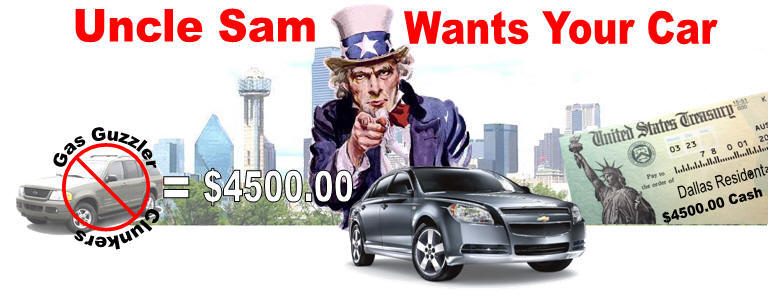
Nearly the entire 2.2% annualized growth, or 3rd quarter growth of 0.55%, is driven by the cash for clunkers program, the government spending program (also called the stimulus program, but I have a big problem with that particular name), and the extended tax credit for first-time home buyers. As a result, this increase in GDP is not only entirely temporary and fleeting, it will cause lower GDP later.

The cash for clunkers program did not create more overall demand for cars; it simply pulled some of the future demand for a new car into today, all the while wasting millions of tax dollars on administering the program, and putting some dealerships out of business in the process.

The spending program simply shifted profits from businesses to support other segments of society, all of which is temporary and destroys the productive capacity of the economy for many periods to come.

The extended tax credit to first-time home buyers is a real head-scratcher.  A curious time to redistribute funds from the producers in the economy to finance a program which lowers the cost to those home buyers who would not have the funds to buy a home in the first place….second wave of home mortgage foreclosures, anyone?

By Sherry Jarrell