Category: Finance

Speechless!

Maybe it’s me but at any level this appears to be very wrong!

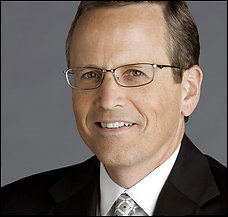
Haldeman - Freddie Mac
Williams - Fannie Mae

The US Government put huge amounts of taxpayer’s money into the two huge US Mortgage companies Fannie Mae (Federal National Mortgage Association) and Freddie Mac (Federal Home Loan Mortgage Corporation).

Now the BBC has reported that:

The heads of US mortgage giants Fannie Mae and Freddie Mac may each receive pay packages of up to $6m (£3.7m) for 2009, depending on company performance.

Now I’m not an American nor do I really understand the issues BUT when taxpayers put in $111,000,000,000 of THEIR money into these organisations (that’s $365 for every man, woman and child on the US Census!) and so many of those same US taxpayers are up the proverbial financial creek without a paddle, there has to be a better way of rewarding top bosses (of US publicly owned corporations) than the option of $6,000,000 each!

But the regulator which decided the pay levels said the awards were 40% lower than before the government bailout.

The sums involved reflected the need to attract and retain talent, it argued.

Frankly, I just don’t believe that there aren’t many other incredibly capable business leaders who would do these jobs for a fraction of six million dollars.  (The present incumbents are Michael Williams at Fannie Mae and Charles E. Haldeman Jr. at Freddie Mac who will receive a base of $900,000 in 2010 with the opportunity to earn $5.1 more if “certain targets are met“.)

Read the article here – I’m going to lay down in a dark, quiet room for a while!

By Paul Handover

The Insanity of Medicare 2.0

US still struggling to find a proper health care solution

We’ve all heard this definition of insanity: doing the same thing over and over again but expecting a different result.

Here, in a nutshell, is the insanity of the current U.S. health care debate:

  1. Medicare, the government’s single-payer wealth redistribution health care program, is quickly going bankrupt.  No one disputes this fact.
  2. When President Obama refers to “cutting costs of healthcare,” he is referring to cutting the Medicare budget. Period.  No increased efficiencies, no improved services, no reduced market-clearing prices. No, cutting costs refers to reducing the fraction of the U.S. government’s tax collections devoted to Medicare.
  3. The new Health Care Plan is fundamentally a new Medicare program. Let’s call is Medicare 2.0.
  4. Medicare 2.0 is being funded in large part by cutting the current Medicare budget item. We are supposed to ignore the fact that the funds cut from the current Medicare program will be spent on Medicare 2.0.
  5. The Medicare 2.0 plan shifts as much as 25% of its (under)estimated costs (e.g. payments to physicians) to other accounts.  The costs are still there; these obligations would still need to be paid by the government under the proposed legislation, but Congress is hoping the public won’t “count” the shifted costs if they slap another name on them, further fostering the illusion of “lowering costs of health care.”
  6. Medicare 2.0 will also go bankrupt but, as a larger, more far-reaching entitlement program, the impact on the U.S. budget will be larger and more far-reaching.

By Sherry Jarrell

An Overview of the Study of Macroeconomics

A primer from Prof. Jarrell on this important subject

Macroeconomics is the study of aggregate supply and demand, and looks both internally to the workings of the economy and externally to how a domestic economy interacts with others worldwide.

Macro builds on the principles of microeconomics, which is the study of prices and quantities of individual goods and the markets where these goods are produced and sold.

In macro, “price” refers to some index of the prices of domestic goods and services, and “quantity” refers to some measure of the value of domestic production or “output.”  One common measure of output is gross domestic product (“a measure of the productive activity of a country computed on the basis of the ownership of the factors of production”). A country’s standard of living is usually directly correlated with its real output, or the value of total output corrected for inflation.

J M Keynes
John M Keynes

Unlike microeconomics, macroeconomics started with the idea that prices and markets do not continuously resolve all of the coordination requirements of a modern economy.   Such “failures of coordination” (Keynes) seem likely when one views the economy as the collective sum of thousands of microeconomic markets.

For example, although most economies around the world have experienced generally positive trends in their gross domestic product, short run positive and negative deviations (recessions and, in more dramatic examples of the failure of coordination, depressions) around the trend line, or “business cycles,” are common.

Inflation is the rate of change of the average level of prices, where the price level is usually measured as a price index.  Inflation rates are typically quoted in annualized percentages.  In normal times, the inflation rate is procyclical: it rises in periods of high growth and declines in periods of slow growth.  Unemployment, by contrast, is usually countercyclical.  The U. S. inflation rate was as likely to be negative as it was positive before World War II; since then, price levels have risen fairly consistently.

Read more about this important topic

Housing and the Economic Recovery

Perhaps the housing market is the best economic indicator?

As an economist, I am frequently asked for my predictions on when the economy is going to turn around.  Have we reached the bottom?  Have we begun to recover?  Might we go into a second, perhaps more severe recession?

Those are tough questions to answer.  Business cycles are notoriously difficult to predict.  In fact, about the only thing we know for sure is that no two business cycles are alike. Each is unique in some significant way.

Changes in the housing market may be one of the most meaningful indicators of a recovery, because housing stability is such a fundamental indicator of how households are budgeting their income.  Notice that I did not say that the level of homeownership was a useful indicator; instead, I look to changes in the housing market, either away from or toward an apparently sustainable and affordable supply of homes, for evidence of where in the business cycle the economy may be.

Despite record low mortgage rates and first-time home buyer credits, the U.S. housing market remains anemic.  Rising foreclosures in several major metropolitan areas will keep housing prices low for some time to come.

The U.S. currently has about 1.7 million excess housing units available.  Typically, about 1.3 million new households are formed in the U.S. per year.  But with the unemployment rate topping 10%, new household formation will fall to about 1 million per year.  If new home construction remains at its current level of about 600,000 units per year, it will take over 4 years (1.7 million/400,000) for the excess supply of housing to be absorbed and housing prices to recover.

Recovery rates will be much slower in some markets, such as in Florida, Nevada, and California, but I believe that the rest of the U.S. along with most other developed economies are looking at a three- to four-year period of time before housing and thus the overall levels of output return to their pre-recession levels.

By Sherry Jarrell

The Mystery of the Disappearing Ethics

The Dubai debt crisis raises fundamental questions.


UK banks account for half the £60billion of global loans to the debt-laden emirate, new statistics show.

Well done British banks ….. loads of loans built on sand … I suppose the words “conservative” and “prudent” didn’t get printed in the Banking Terminology dictionary?

So Britain, that Global Giant of the banking world, has half the dodgy loans? British banks are therefore as daft as the rest of the world put together? (Can someone check my maths!)

Oh, and why exactly were the banks lending money to SORDID DICTATORSHIPS? Would we have lent billions to Hitler’s Germany in 1937? What on earth happened to ETHICS in the financial world? I suppose lending to POOR countries who need it rather than the nasty, venal, corrupt dictatorships of the Middle East was right off the radar?

There is an obsession with the “Human Rights” of immigrants and others in Britain, but a complete and utter turning of  blind eyes to the slavery going on in the Middle East, as if it doesn’t concern us because it’s in “another far-off country of which we know little”. (Neville Chamberlain’s shameful explanation of his inaction over Hitler’s annexation of the Sudetenland in Czechoslovakia in 1936.)

Sorry, but “No Man is an Island” …. we can’t sign the UN Declaration of Human Rights on the one hand and then blithely lend money (the PEOPLE’S money) to countries that are treating people so terribly.

I hope Dubai goes bankrupt and our cretinous banks with it so that we can start again with people’s banks that have a modicum of honour and decency and are prepared to invest in democracies, not insanely greedy property developments based on dictators’ idle fantasies.

It wasn’t much different with Sadaam Hussein, whatever you think of the invasion. This was a man who – just to take one example – gassed to death 5,000 innocent men, women and children in one single village alone. Yet countries in the “free world” were secretly queuing up to do deals with him. One British government MP even went there and shook his hand, the hand that consigned hundreds of thousands of people to a horrible death.

Ecology? Apart from anything else, Dubai’s carbon emissions are pro rata 250% higher than the US, so much power goes into air-conditioning and desalination. Once again, the left hand doesn’t know or care what the right hand is doing. A British minister tells us to stop eating meat to save the world while British banks simultaneously rush to finance a humongously-profligate and obscenely-elitist project in the desert.

I sometimes wonder if we really deserve to survive Global Warming. Will it be God’s way of cleansing the Earth of an aberrant experiment in free will?

By Chris Snuggs

Commercial Real Estate and the U.S. Financial System

This is not over yet, folks

The U.S. banking system remains vulnerable to sizeable potential losses as the housing market struggles to recover.

Estimates of these losses range from $500 billion to $1 trillion (£312 bn – £625 bn). The Federal Reserve Board is especially concerned about the impact of commercial real estate on many regional and small banks across the country.  Occupancy and rental rates continue to decline dramatically as 2009 draws to a close, and the worst seems yet to come.

Commercial real estate loans on banks’ balance sheets total almost $1.1 trillion dollars.  With near-term commercial real estate losses topping $100 billion, the Wall Street Journal estimates that as many as one-third of small and mid-size U.S. banks could experience financial distress.


Troubled banks restrict lending until they can raise more capital.  In this illiquid market, expect banks to fight for survival by raising lending rates, shortening maturities, and lowering loan amounts.  Credit will continue to shrink in the U.S., which spells big trouble for any economic recovery.

By Sherry Jarrell

Let’s Introduce Obama’s Left Hand to his Right

To post or … what to post?

As I was perusing the business press this morning, an article caught my eye:  “That would make a great post!” I thought to myself.  I continued reading through the rest of the articles, intending to go back to the one that piqued my interest to compose a comment.  Of course, when I went back, I could not find it!

Trouble internally

But in the process of looking for that particular paragraph, I noticed something troubling. Something that, should my students’ papers include the same, would bring their score down by a full letter grade, if not more.

Read more of this Post

Why the Anger over U.S. Executive Compensation?

Pay and the Free Market

It came up again in conversation today:  someone was offended and upset over the level of compensation of some senior executives in the U.S. economy.   I have to admit I just do not understand the anger. And I have a fundamental lack of respect for the arguments that have been served up thus far in support of the position.

I have tried to resist drawing the conclusion that the anger is born of envy, but I am very close to throwing in the towel on that one.  Why should we begrudge anyone who earns a healthy salary, especially in an economy that provides each of us the opportunity to aspire to the same?

Even if there were reasonable ways around the practical issues and costs associated with legislative caps on salaries — how to set them, who sets them, using what measures, what value judgements — it simply makes no sense.  It is the antithesis of a competitive market economy where individuals have the incentive to learn, grow, work hard, and succeed.  It ignores the role played by capitalism in creating a strong and vibrant private economy that provides endless opportunities for all who want to put in the hours and the effort to succeed.

U.S. corporate governance rules provide the framework for determining the compensation for senior executives, and it works remarkably well.  Each shareholder, or owner of the company, gets one vote on material issues such as reorganization. The Board of Directors is responsible for hiring and firing senior management on behalf of the shareholders.  If the shareholders do not like the decisions of the board, including those that set the level and form of compensation for senior management, they have at least two, very effective choices. They can either sell their shares in the company or they can vote to replace the board members.  The board can take several steps if, after negotiating the compensation package for senior management, the executive fails to perform. The board can withhold the bonus, renegotiate the terms of the contract, or fire the executive.  Then the long, mostly objective arm of the competitive labor market will determine the market-clearing value for the skills and experience of the recently fired executive.

One thing I’ve never quite understood is why the market doesn’t seem to exact more punishment on senior executives who run their companies into the ground.  Maybe there is an old boys network that looks out for ex-executives; maybe my observations are biased; maybe I notice only those cases where failed executives rise again.  But it’s an empirical question, in any case; we can gather data on the issue and study it objectively.

Regardless of the conclusions of such an analysis, however, decisions about executive compensation must remain in the labor market where your ability to produce economic value still reigns supreme over your ability to curry votes and political favor.

By Sherry Jarrell

Remarkable people: Warren Buffett

What does Bill Gates admire about Warren Buffet?


On this blog about integrity, and in these difficult economic times, it is particularly poignant to note that Bill Gates cites Warren Buffett’s integrity. This was during a recent event at Columbia Business School in New York City, see below.

While many of the questions from MBA students and the answers from Gates and Buffett are not new, Buffett’s brief witty and topical comments provide considerable insight into his thinking.

It is particularly interesting to get a sense of how the world is viewed by people with their perspective. When asked about the outlook for America, both Gates and Buffett answered that it is very good. Warren Buffett even offered any of the MBA students $100,000 in return for 10% of their future earnings. Later, he increased the offer to $150,000, if they received training in personal communication skills!

Watch them together on CNBC at Columbia Business School, New York City on November 12, 2009.

Maybe you are interested in further information about Warren Buffett, if so you are not alone. The BBC, among others, have taken a strong interest in him recently.

You might like to read and view some recent stories on the “Oracle of Omaha” including:

Despite a setback in 2008, Warren Buffett’s long term investment success is without question.

By John Lewis

Goldman Sachs – doing God’s work!

A fascinating and revealing interview in the Sunday Times.

This article in the British Sunday Times was published on November 8th and I’m sure many will have read it.  But for those that didn’t it really is worth settling down to a reasonably long read.  For you will learn that Goldman Sachs:

It’s the site of the best cash-making machine that global capitalism has ever produced, and, some say, a political force more powerful than governments. The people who work behind the brass-trim glass doors make more money than some countries do. They are the rainmakers’ rainmakers, the biggest swinging dicks in the financial jungle. Their assets total $1 trillion, their annual revenues run into the tens of billions, and their profits are in the billions, which they distribute liberally among themselves. Average pay this recessionary year for the 30,000 staff is expected to be a record $700,000. Top earners will get tens of millions, several hundred thousand times more than a cleaner at the firm. When they have finished getting “filthy rich by 40”, as the company saying goes, these alpha dogs don’t put their feet up. They parachute into some of the most senior political posts in the US and beyond, prompting accusations that they “rule the world”. Number 85 Broad Street is the home of Goldman Sachs.

The world’s most successful investment bank likes to hide behind the tidal wave of money that it generates and sends crashing over Manhattan, the City of London and most of the world’s other financial capitals. But now the dark knights of banking are being forced, blinking, into the cold light of day. The public, politicians and the press blame bankers’ reckless trading for the credit crunch and, as the most successful bank still standing, Goldman is their prime target. Here, politicians and commentators compete to denounce Goldman in ever more robust terms — “robber barons”, “economic vandals”, “vulture capitalists”. Vince Cable, the Lib Dem Treasury spokesman, contrasts the bank’s recent record results — profits of $3.2 billion in the last quarter alone — and its planned bumper bonus payments with what has happened to ordinary people’s jobs and incomes in 2009.

and later on in conversation with the Chairman and CEO, Lloyd Blankfein:

“Is it possible to have too much ambition? Is it possible to be too successful?” Blankfein shoots back. “I don’t want people in this firm to think that they have accomplished as much for themselves as they can and go on vacation. As the guardian of the interests of the shareholders and, by the way, for the purposes of society, I’d like them to continue to do what they are doing. I don’t want to put a cap on their ambition. It’s hard for me to argue for a cap on their compensation.”

So, it’s business as usual, then, regardless of whether it makes most people howl at the moon with rage? Goldman Sachs, this pillar of the free market, breeder of super-citizens, object of envy and awe will go on raking it in, getting richer than God? An impish grin spreads across Blankfein’s face. Call him a fat cat who mocks the public. Call him wicked. Call him what you will. He is, he says, just a banker “doing God’s work”

Indeed!

By Paul Handover