I’m sure that there’s only so much you can take of our trip to Utah and back. So I have selected the more interesting photographs and will share them with you today and the next two days.
Saturday, 28th September
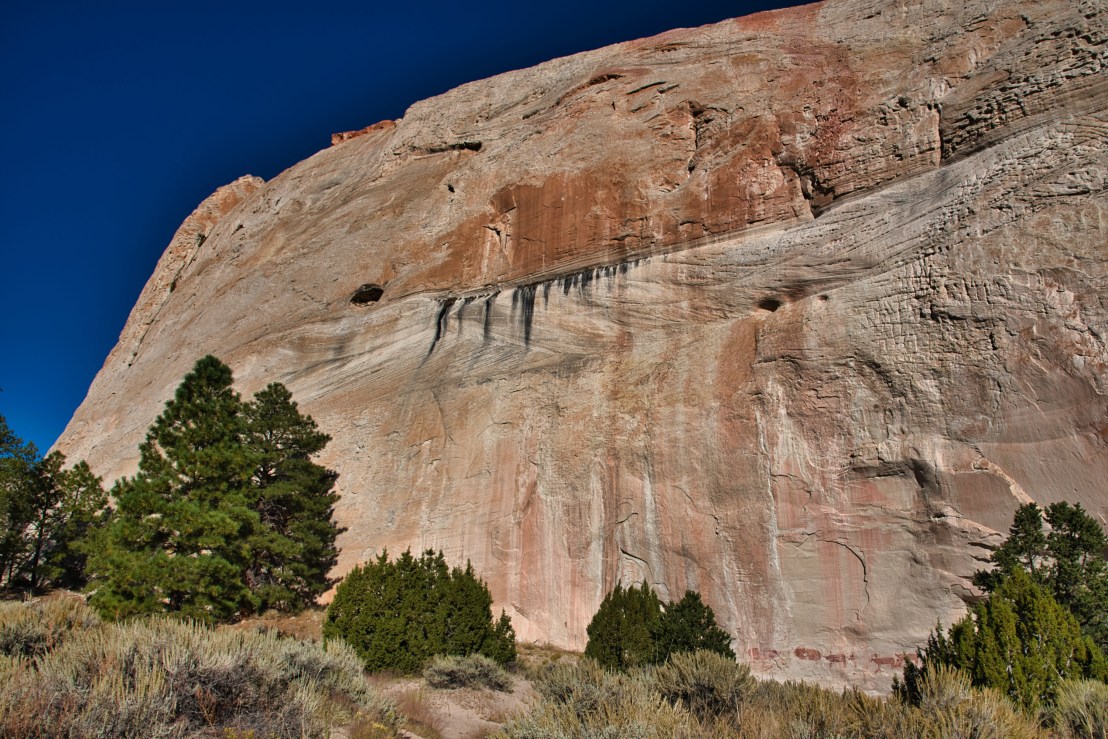
Vance, of The Flute Shop, gave us directions to some ancient petroglyphs that were painted on a rock wall quite close to where we were staying.
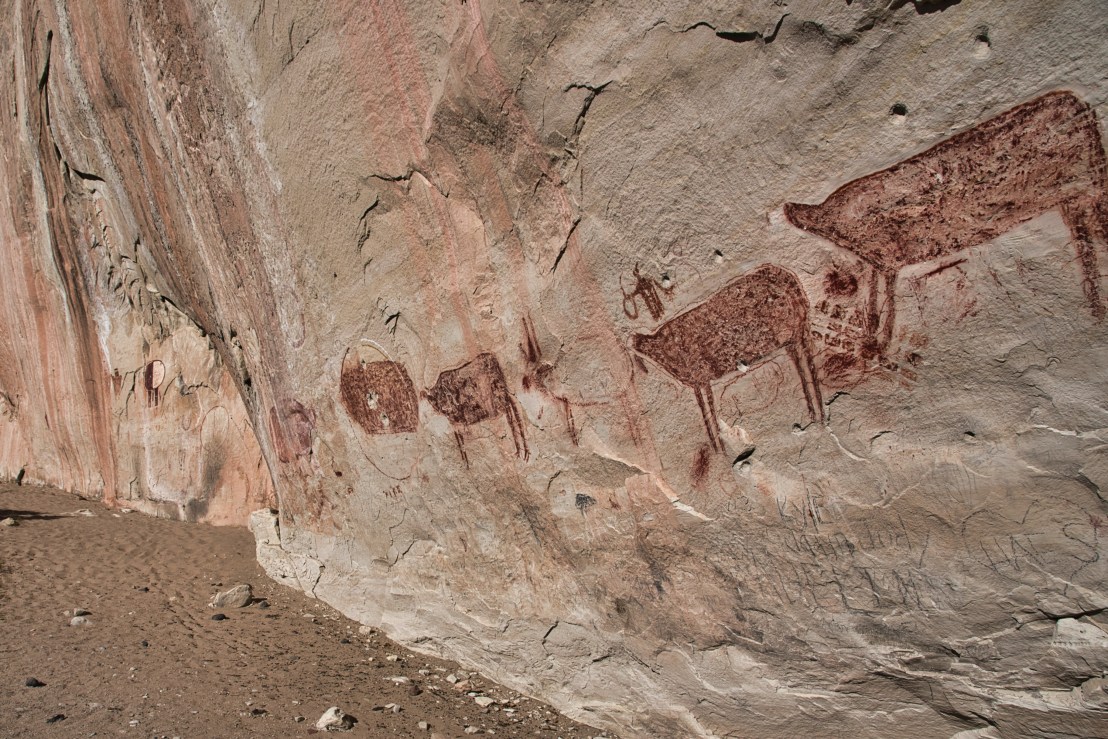
First, that rock wall. The petroglyphs can be seen at the bottom of the rock face.
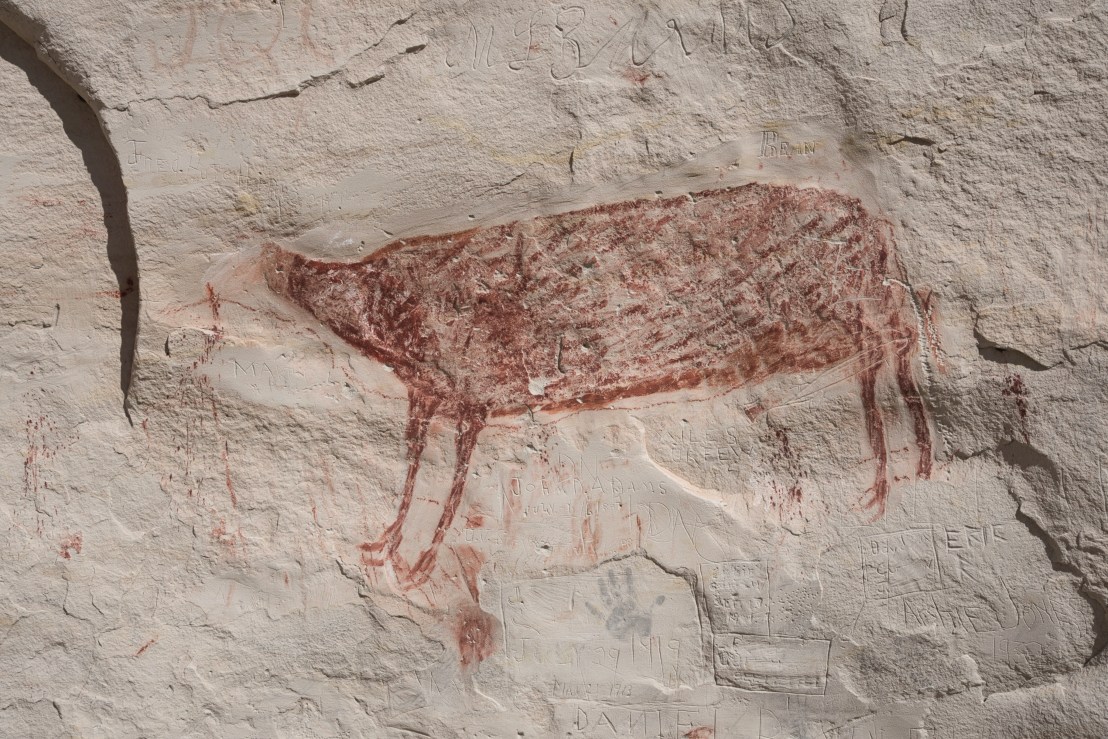
Then a close up. It was amazing that although there was a great deal of name carving close by there was none on the petroglyph images themselves.
They were about 700 years old.
Sunday, 29th September
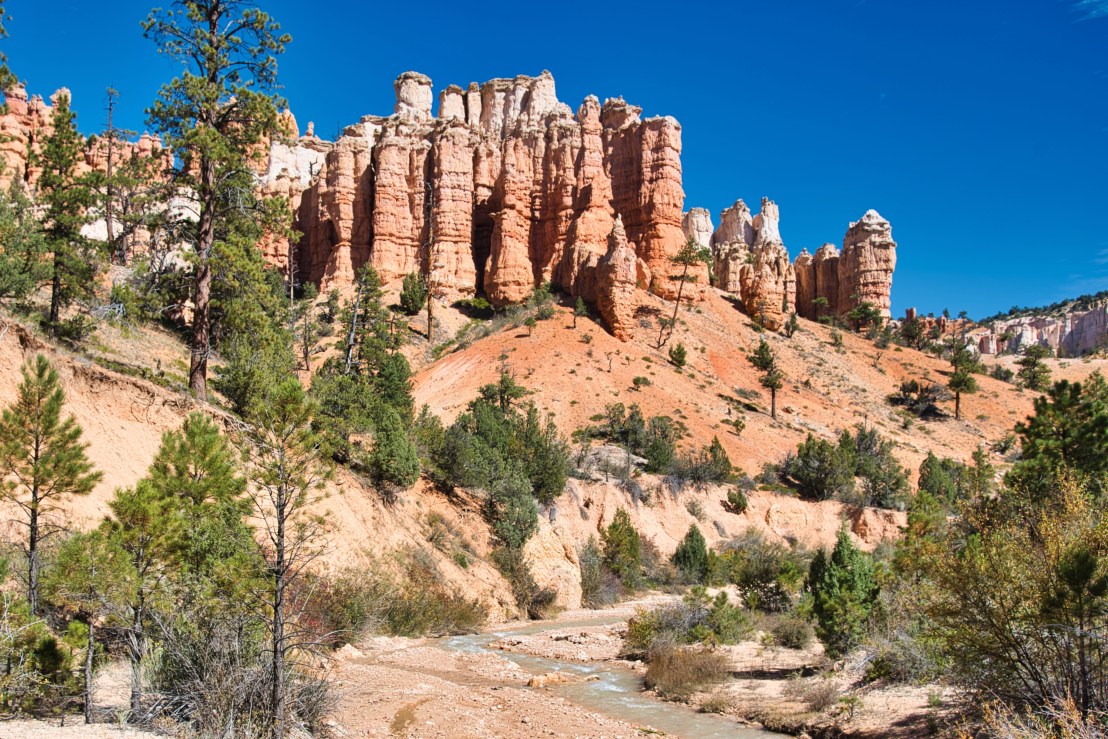
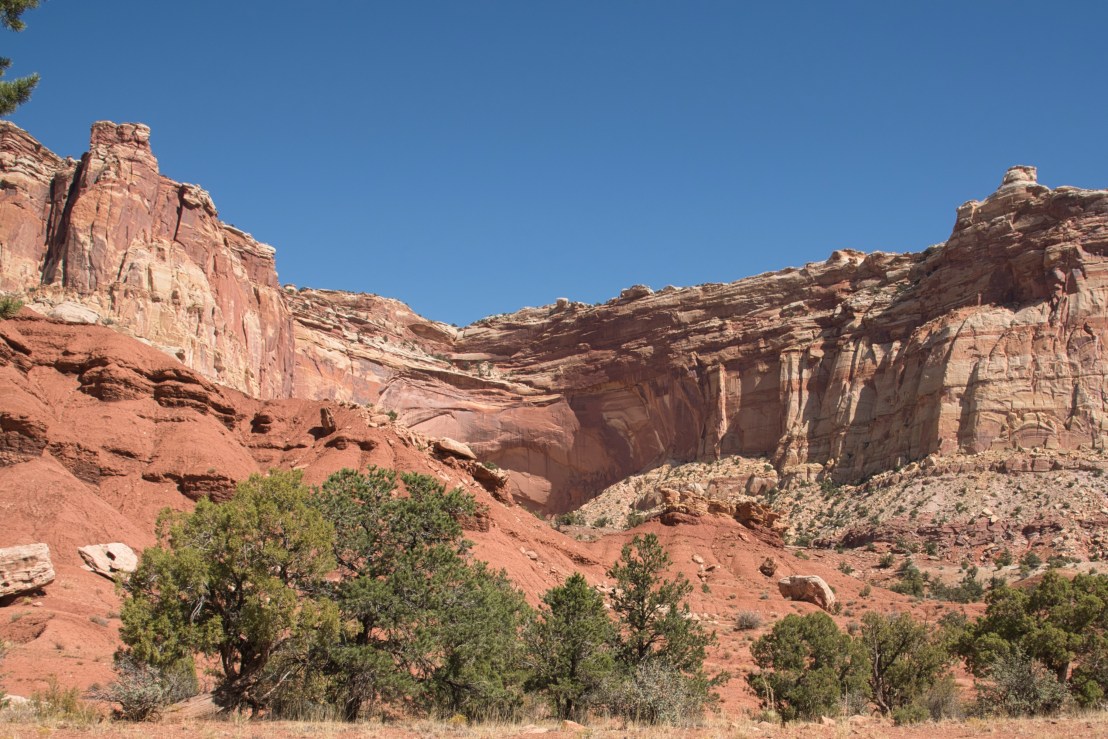
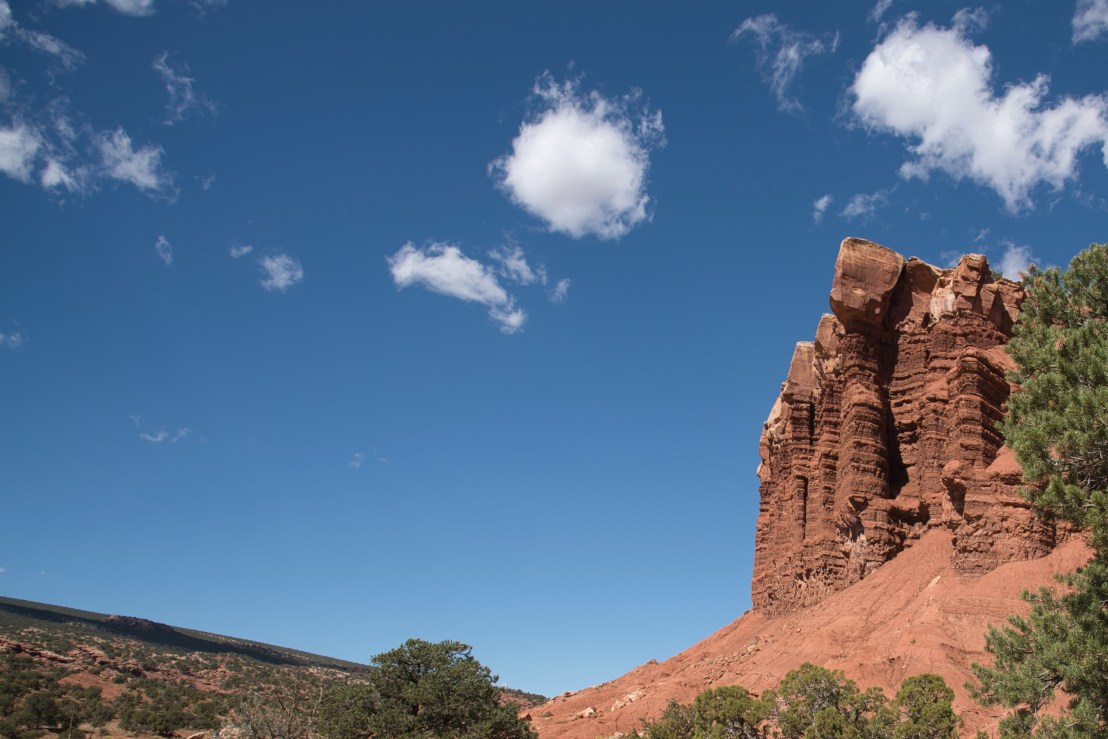
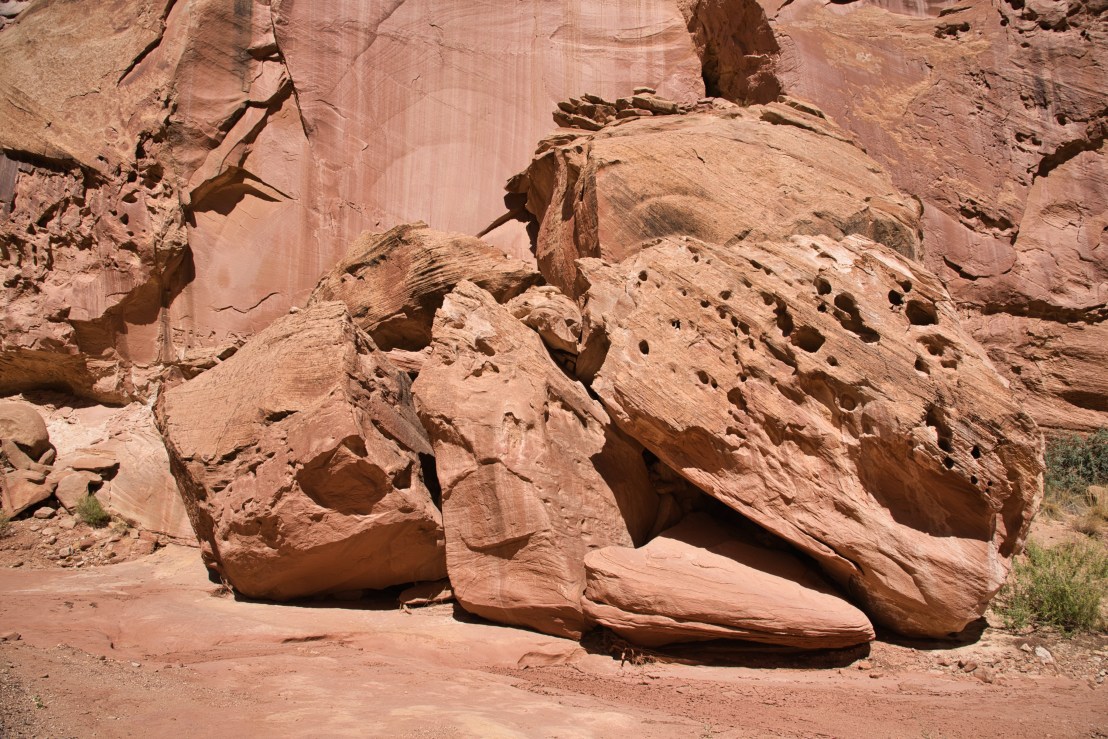
Today it was the long drive down to Kanab, about 200 miles, but we stopped frequently to take photographs of the never-ending marvels that we saw.
We have had a taste of this a week-and-a-half ago.
We were truly alone when we went to Utah.
But then again, one of the privileges of being on 13 acres, 13 very rural acres, here in Southern Oregon is that being alone is not that far away!
I don’t want to underplay the importance of this posting, republished from The Conversation website (with permission), because we live in so busy times.
Written by three professors, it’s a very wise and profound article.
ooOOoo
Spending time alone in nature is good for your mental and emotional health
Associate Professor of Outdoor Education, Montreat College
Today Americans live in a world that thrives on being busy, productive and overscheduled. Further, they have developed the technological means to be constantly connected to others and to vast options for information and entertainment through social media. For many, smartphones demand their attention day and night with constant notifications.
As a result, naturally occurring periods of solitude and silence that were once commonplace have been squeezed out of their lives. Music, reality TV shows, YouTube, video games, tweeting and texting are displacing quiet and solitary spaces. Silence and solitude are increasingly viewed as “dead” or “unproductive” time, and being alone makes many Americans uncomfortable and anxious.
We study and teach outdoor education and related fields at several colleges and organizations in North Carolina, through and with other scholars at 2nd Nature TREC, LLC, a training, research, education and consulting firm. We became interested in the broader implications of alone time after studying intentionally designed solitude experiences during wilderness programs, such as those run by Outward Bound. Our findings reveal that time alone in nature is beneficial for many participants in a variety of ways, and is something they wish they had more of in their daily life.
On an average day in 2015, individuals aged 15 and over spent more than half of their leisure time watching TV. Bureau of Labor Statistics, Americans Time Use Survey
Reflection and challenge
We have conducted research for almost two decades on Outward Bound and undergraduate wilderness programs at Montreat College in North Carolina and Wheaton College in Illinois. For each program, we studied participants’ experiences using multiple methods, including written surveys, focus group interviews, one-on-one interviews and field notes. In some cases, we asked subjects years later to look back and reflect on how the programs had affected them. Among other questions, our research looked at participant perceptions of the value of solo time outdoors.
Our studies showed that people who took part in these programs benefited both from the outdoor settings and from the experience of being alone. These findings build on previous research that has clearly demonstrated the value of spending time in nature.
Scholars in fields including wilderness therapy and environmental psychology have shown that time outdoors benefits our lives in many ways. It has a therapeutic effect, relieves stress and restores attention. Alone time in nature can have a calming effect on the mind because it occurs in beautiful, natural and inspirational settings.
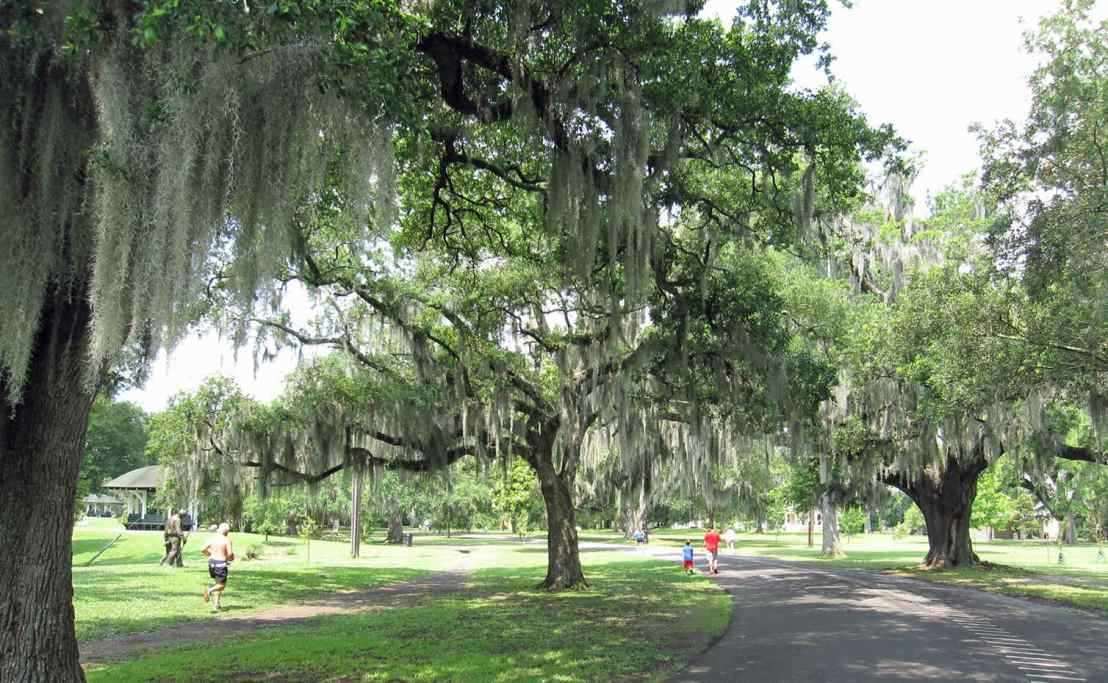
Spending time in city parks like Audubon Park in New Orleans provides some of the same benefits as time in wilderness areas, including reduced stress levels and increased energy levels. InSapphoWeTrust, CC BY-SA
Nature also provides challenges that spur individuals to creative problem-solving and increased self-confidence. For example, some find that being alone in the outdoors, particularly at night, is a challenging situation. Mental, physical and emotional challenges in moderation encourage personal growth that is manifested in an increased comfort with one’s self in the absence of others.
Being alone also can have great value. It can allow issues to surface that people spend energy holding at bay, and offer an opportunity to clarify thoughts, hopes, dreams and desires. It provides time and space for people to step back, evaluate their lives and learn from their experiences. Spending time this way prepares them to re-engage with their community relationships and full work schedules.
Putting it together: The outdoor solo
Participants in programmed wilderness expeditions often experience a component known as “Solo,” a time of intentional solitude lasting approximately 24-72 hours. Extensive research has been conducted on solitude in the outdoors because many wilderness education programs have embraced the educational value of solitude and silence.
Solo often emerges as one of the most significant parts of wilderness programs, for a variety of reasons. Alone time creates a contrasting experience to normal living that enriches people mentally, physically and emotionally. As they examine themselves in relation to nature, others, and in some cases, God, people become more attuned to the important matters in their lives and in the world of which they are part.
Solo, an integral part of Outward Bound wilderness trips, can last from a few hours to 72 hours. The experience is designed to give participants an opportunity to reflect on their own thoughts and critically analyze their actions and decisions.
Solitary reflection enhances recognition and appreciation of key personal relationships, encourages reorganization of life priorities, and increases appreciation for alone time, silence, and reflection. People learn lessons they want to transfer to their daily living, because they have had the opportunity to clarify, evaluate and redirect themselves by setting goals for the future.
For some participants, time alone outdoors provides opportunity to consider the spiritual and/or religious dimension of life. Reflective time, especially in nature, often enhances spiritual awareness and makes people feel closer to God. Further, it encourages their increased faith and trust in God. This often occurs through providing ample opportunities for prayer, meditation, fasting, Scripture-reading, journaling and reflection time.
Retreating to lead
As Thomas Carlyle has written, “In (solitary) silence, great things fashion themselves together.” Whether these escapes are called alone time, solitude or Solo, it seems clear that humans experience many benefits when they retreat from the “rat race” to a place apart and gather their thoughts in quietness.
In order to live and lead effectively, it is important to be intentional about taking the time for solitary reflection. Otherwise, gaps in schedules will always fill up, and even people with the best intentions may never fully realize the life-giving value of being alone.
ooOOoo
I would modify that advice from Thomas Carlyle and that is to include a dog.
For in my experience when one is in the mood for a bit of solitary reflection your dog seems to sense it as well.
As soon as we were on our way, first thing was to find a bed for the night in the area of the Capitol Reef NP. This was a popular time of the year and so many places were full. Our ‘fall-back’ position was to sleep in the truck but I really hoped it wouldn’t come to that.
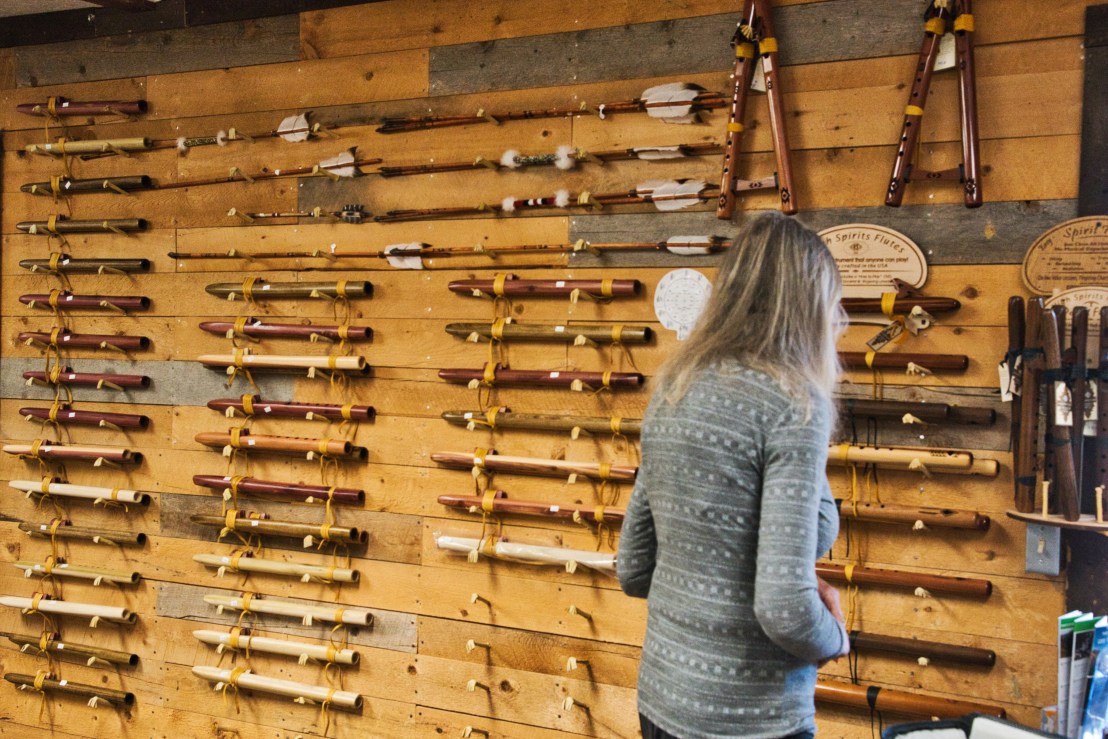
Eventually we found a room for just tonight in The Flute Shop and Motel in Torrey, just 10 miles from the National Park. Run by Vance and Elaine Morrill it was more than just a motel, it was a scene of much fascination. For Vance made flutes the American Indian way.
But more of that later.
Oh, and there’s a dog story as well. Again, I’m writing that up as a separate post.
On to the Capitol Reef Park.
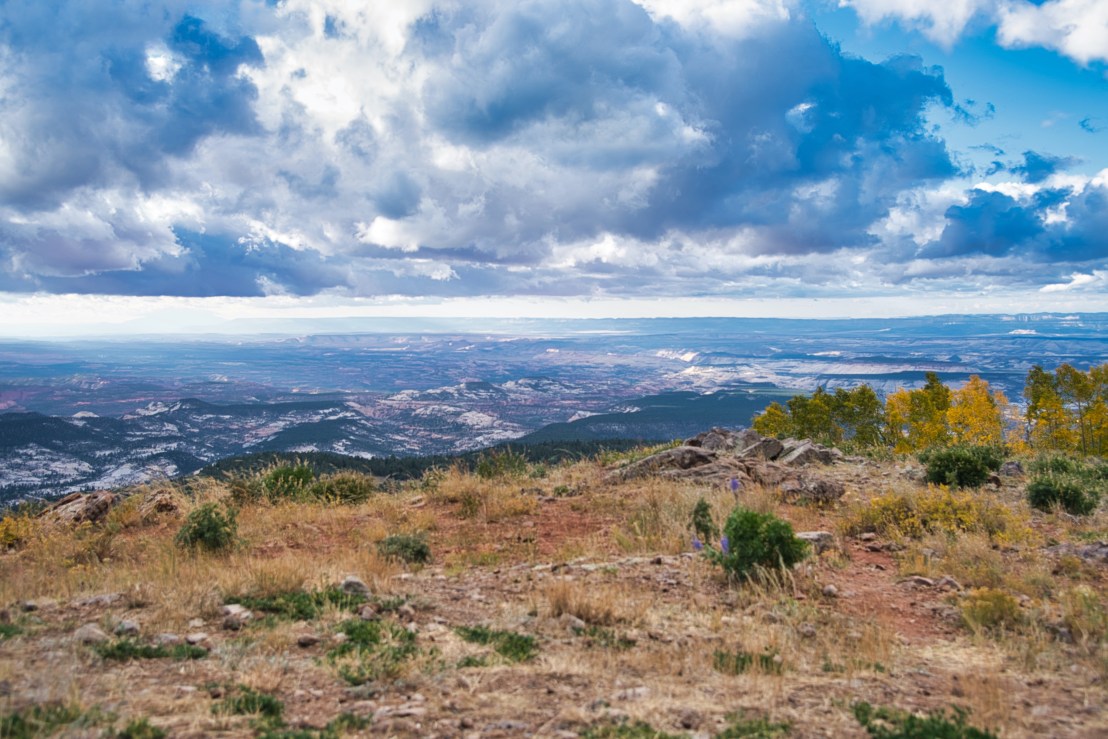
Or rather a pause before we descended off the heights that surrounded this part of Utah down to the park.
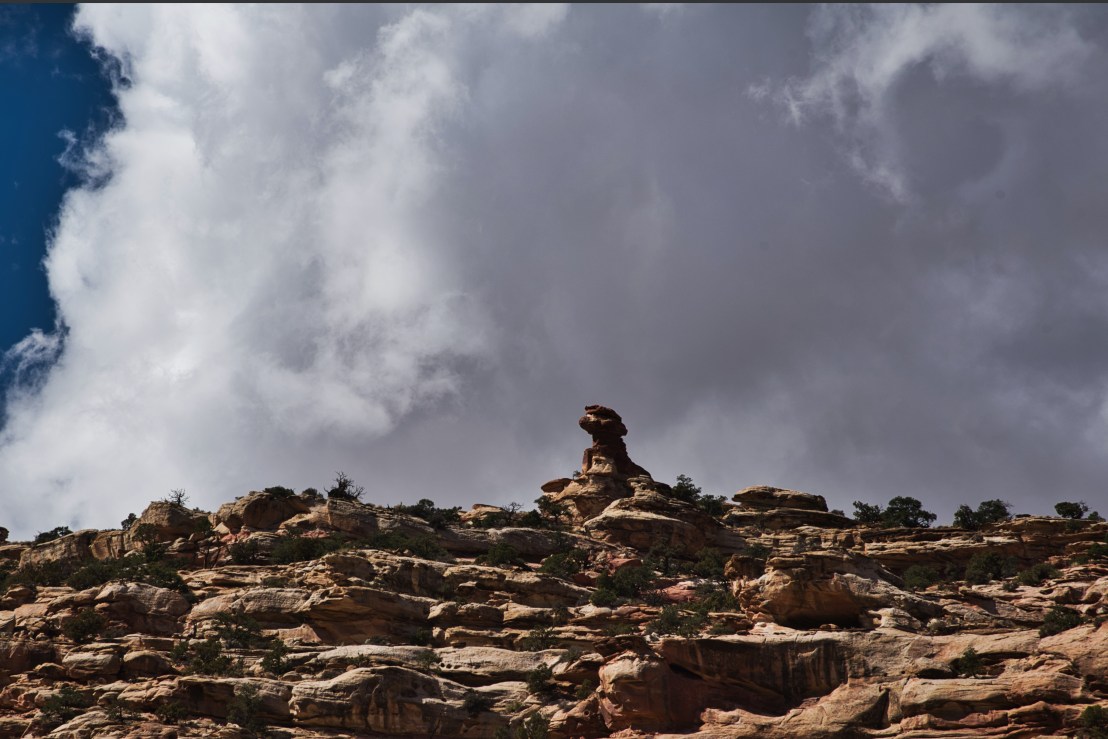
The pause was to take a photograph of an intense rain storm that had a spot quite close where the remnants of a rainbow could just be made out. It’s hardly visible in the above picture.
It was simply stunning.
Beyond words.
I promised you a little more about Vance Morrill and his flutes. But apart from the photograph I will delay that for a while (until the draft of the post has been approved by Vance).
Here is Jean looking at them.
Finally, Vance promised to draw some routes in the morning to some of the lesser known spots in Capitol Reef.
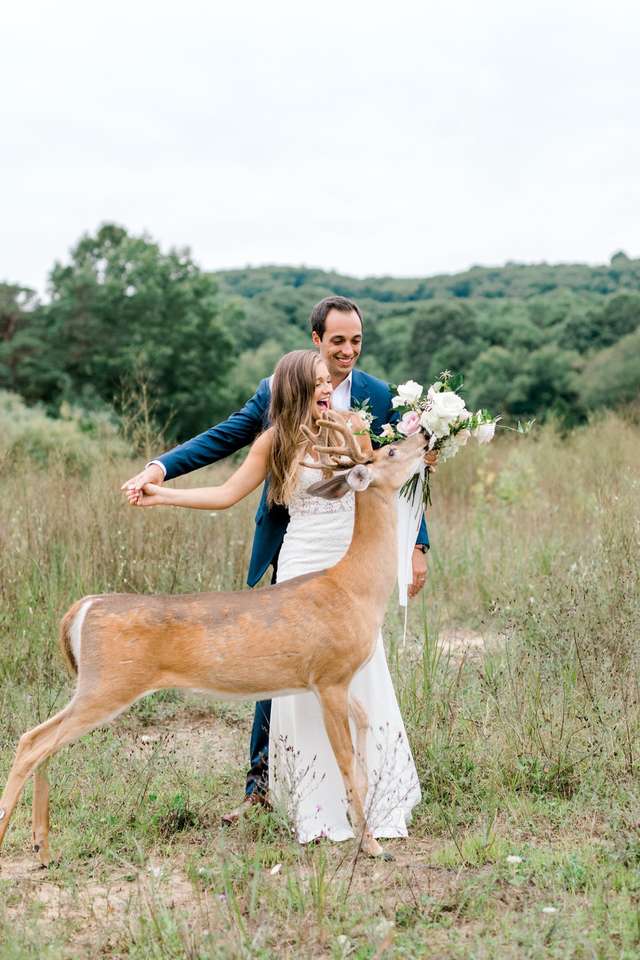
Wild Deer Crashes Wedding Shoot To Eat The Bride’s Bouquet
Wedding crashers aren’t usually a good thing. But for one Michigan couple, an uninvited guest made the day even more special.
Morgan and Luke were celebrating their nuptials on the Felt Estate, in Saugatuck, Michigan, when photographer Laurenda Marie Bennett stole the couple away for “golden hour portraits.”
“We walked over this hill and made it to a field where we saw just over a wooden fence was a deer,” Bennett told The Dodo. “As soon as we arrived, the deer looked up and just casually walked over to the bride and groom.”
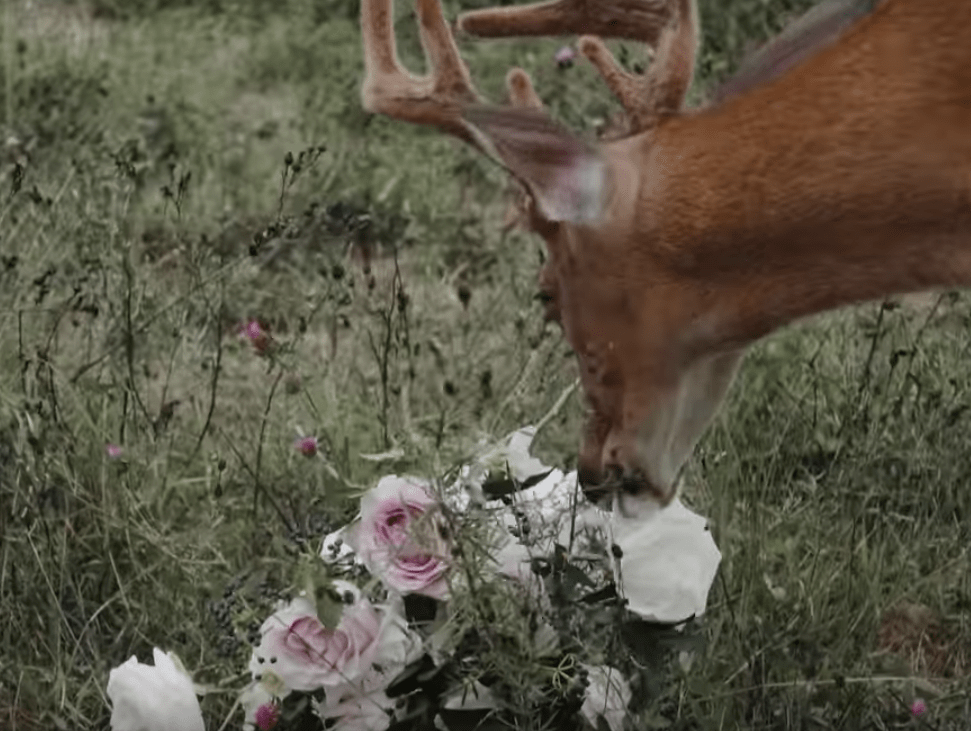
The friendly deer greeted the couple and quickly spotted the bride’s bouquet. The spray of flowers was too tempting for the deer to resist.
“[He] started reaching his neck over and grabbing flowers from her bouquet and just chewing away,” Bennett said. “Then he steps over the fence so he’s standing in front of them, and he’s just hanging out eating her bouquet.”
After the initial shock of the wildlife encounter wore off, Bennett started snapping photos of the bride and groom. “We were all kind of giggling and looking at each other like, ‘What’s going on? What should we do?’” Bennett said. “Morgan’s expressions were priceless — they just kind of made the photos.”
As it turned out, this specific deer is a bit of a celebrity in the area. He’s even made it to the news for photobombing a few engagement photo shoots earlier this summer.
“Never in a million years did I think I’d run into him, especially when photographing a wedding,” Bennett said. “I felt like it was meant to be.”
The deer would stop at nothing to get the flowers, so the bride eventually decided to give the hungry animal her bouquet. She had to borrow one of the bridesmaids’ arrangements for the bouquet toss — but it was worth it for the hilarious photobomb.
Videographer Patrick Hellenga, of Patrick James Films, was also on-site to capture the sweet encounter on film.
When the couple returned to the field later that night, they found that the deer had left something behind for the bride — a little wedding gift.
“When we walked back to the area where we dropped the bouquet, the deer was gone but there was one white rose still intact,” Bennett said. “She picked it up and joked, ‘It’s the final rose.’”
We are staying at the Noor Hotel in Torrey, Utah. We are here for just one night and will be heading South in a few hours time on Highway UT-12, a scenic route, from this stupendous area of geological wonderland down to Kanab, about 200 miles away.
Tomorrow we will have been on our travels for just one week. To say that we have done a lot would be an understatement! It started by us getting to Lakeview, SE Oregon, on Monday evening and finding that Brandy was very unhappy. So much so that on the Tuesday morning we drove the 4 hours back to Merlin and left him with Jana and the gang. He was so pleased to be back and all the other dogs likewise to see Brandy.
Then we drove back to Lakeview the same day!
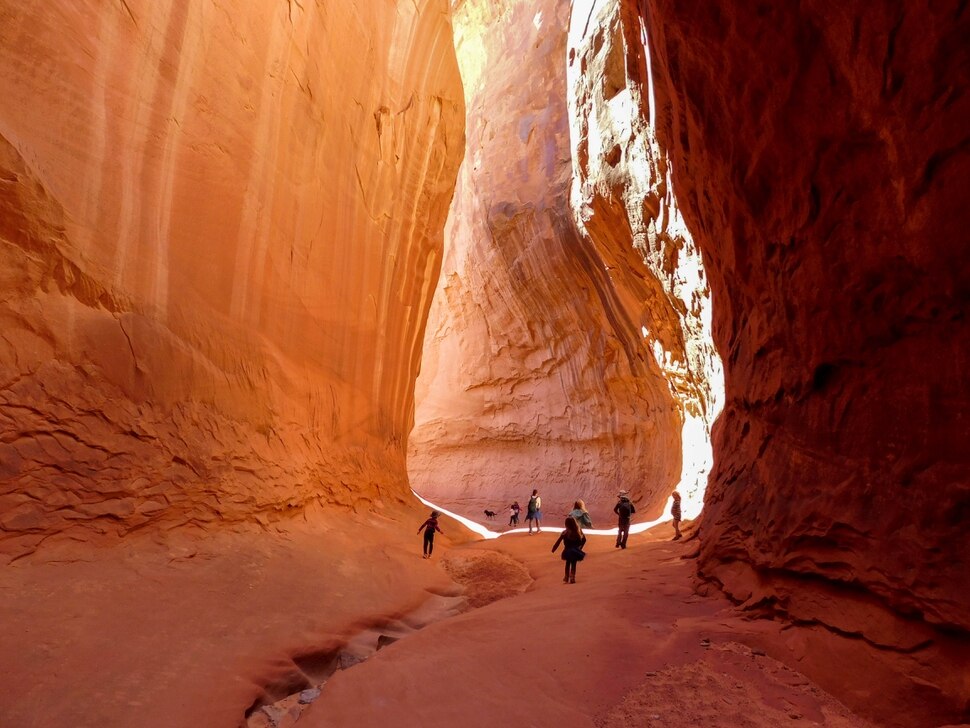
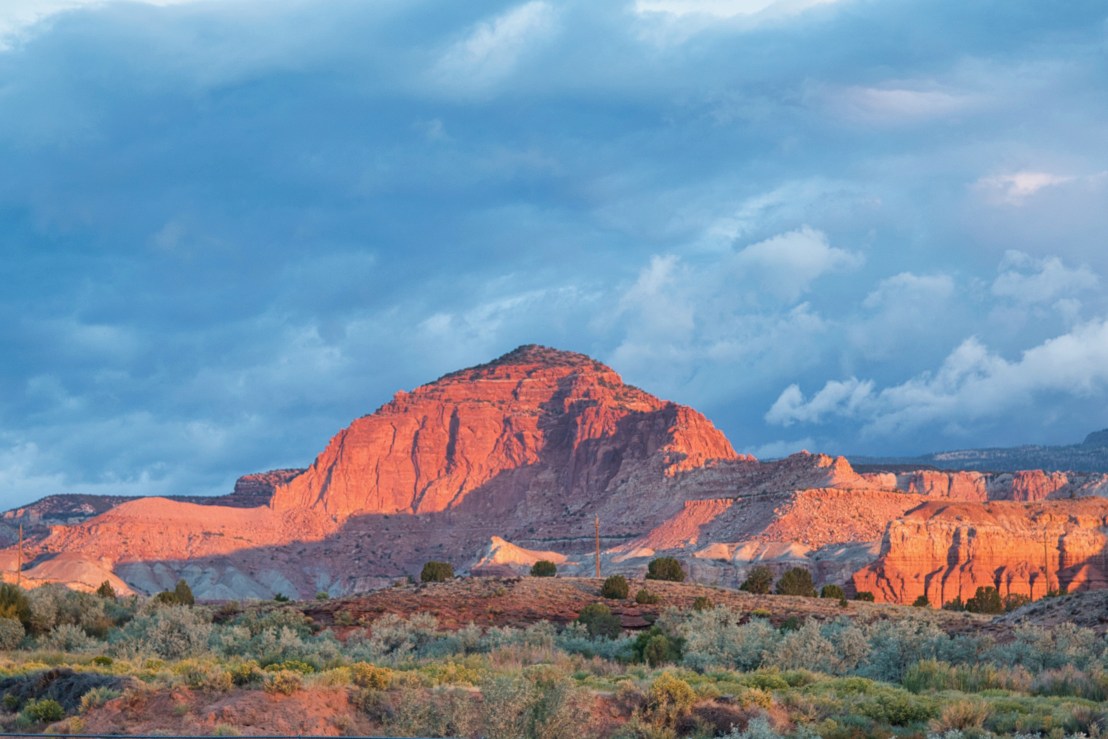
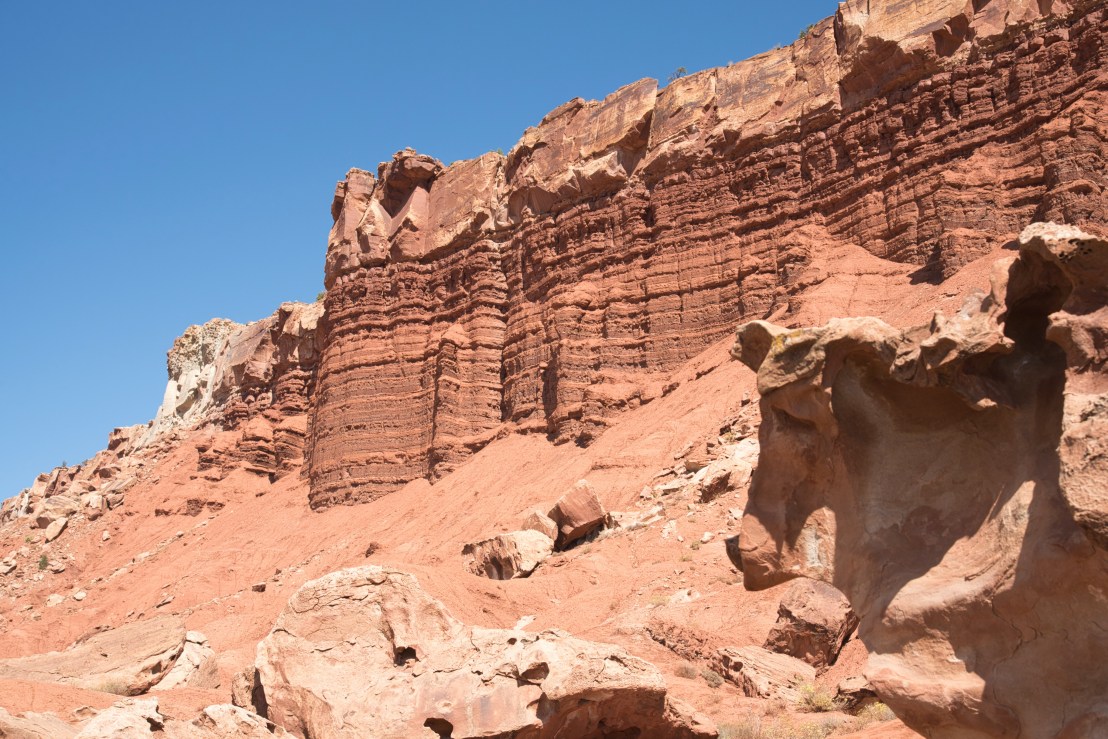
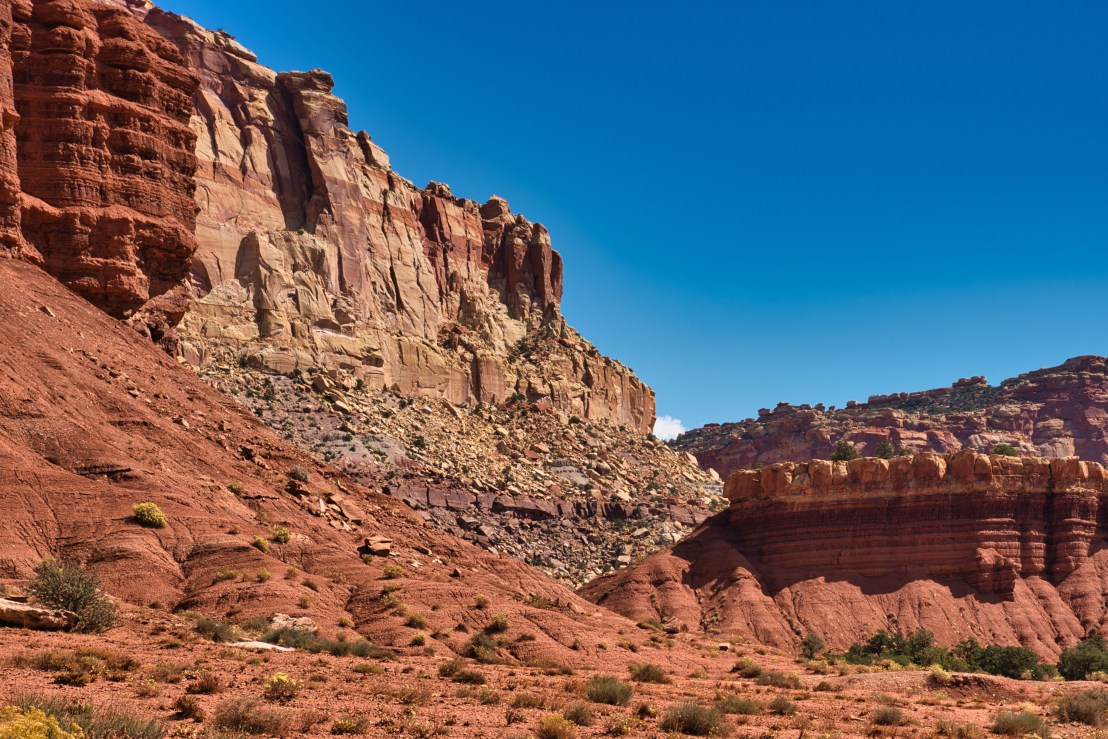
Now we have seen such sights that are beyond words. This part of the world is variously 7,000 – 8,000 feet high. We are over 7,000 feet now. The region is known as the Waterpocket Uplift that includes Capitol Reef National Park and is dramatic, sensational and overwhelmingly beautiful. I have taken over 150 photographs already. Trust me, I can’t wait to post some of the better ones in about 10 days time.
So that’s all for now. Jeannie and I are well, very fortunate to have come this way, but missing our dogs!
So love to you all.
It may be quite a long time before there’s another update from us, and I’m sorry I can’t yet welcome new visitors or engage in responses to individual comments. And apologies for not being able to share a picture. That will come!
Written by Rob Moir, Ph.DI recently returned from a research sail through the Denmark Straits and I couldn’t be more in awe of mother nature.
We sailed aboard the gaft-rigged ketch Tecla out of Isafjordur, Iceland, bound for Greenland. We were thirteen women and men on a hundred-foot steel-hulled sailing vessel.
As we cleared the steep-sided fjord and sailed out into the bay past towering headlands, we saw a humpback whale breach. It rose straight out of the water, extended enormous knobby flippers, rotated and fell on its side with a large splash.
We sailed on, and another wheeled before us.
Further out, white-beaked dolphins streaked, exhaled, and splashed in the bow waves at the front of our boat.
Gray and white fulmars with outstretched wings carved the sky and nearly scratched the sea. And then there were icebergs.
The natural beauty of Mother Earth never ceases to take my breath away, no matter how many times I see it.
We traversed the threshold between the Atlantic and the Arctic Oceans. The south-bound East Greenland current squeezed between the craggy coasts of Iceland and Greenland to become a “superhighway” for turbulent water. Here, the denser Arctic water mass crashes into the bulwark front of warmer Atlantic Water. Arctic water plunges downwards into the Denmark Strait Cataract. This is the world’s largest waterfall. Yet, skimming the surface of immense water all we see are waves that crest white tumble and stream like the tossed manes of charging horses.
Unfortunately, we also saw the threats to nature.
First, a quick science lesson: When seawater freezes at the ocean surface, the ice is actually made of freshwater; the salt gets rejected back into the surrounding water. That surrounding water then becomes denser and sinks. This happens on a massive scale, which results in ocean currents around the world. Think of it like an organic engine that circulates the oceans’ water.
Now, because global warming exposes more of the surface every summer than it used to (about twice as much, in fact) that means more surface ice each winter. That means that our ocean circulation engine is twice as big, which radically alters the seascape, threatens not only the ocean ecosystem – from tiny algae to those humpback whales – but life worldwide.
We caused global warming. Now we must come together to decrease carbon emissions and increase carbon capture. For the Denmark Strait, for the humpback whales, and for our own places of habitation.
ooOOoo
I will do no better than to repeat that last paragraph.
We caused global warming. Now we must come together to decrease carbon emissions and increase carbon capture. For the Denmark Strait, for the humpback whales, and for our own places of habitation.
PUBLISHED ON 09/13/2019
To Loijuk the elephant, nothing is more important than family — especially now that she is starting one of her own.
In 2006, the orphaned elephant was found all alone at only 5 months old, and was rescued by the Sheldrick Wildlife Trust (SWT) in Kenya. She was hand-raised by SWT until she was old enough to return to the wild.
Years have passed, but Loijuk still has a close bond with her human family. She returns to the grounds of the sanctuary every month to visit. But in September, Loijuk surprised her former caretakers with a newborn elephant calf in tow.
Sheldrick Wildlife Trust
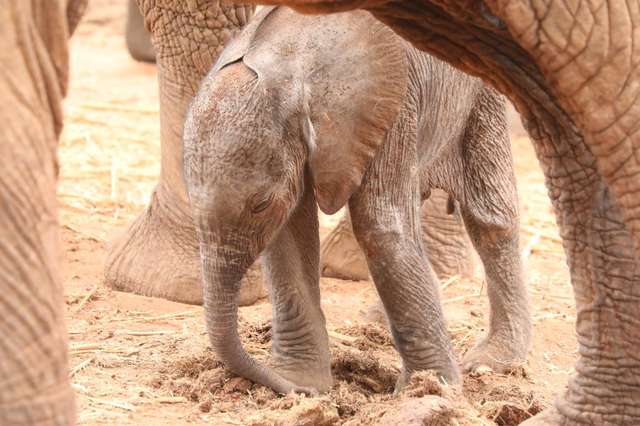
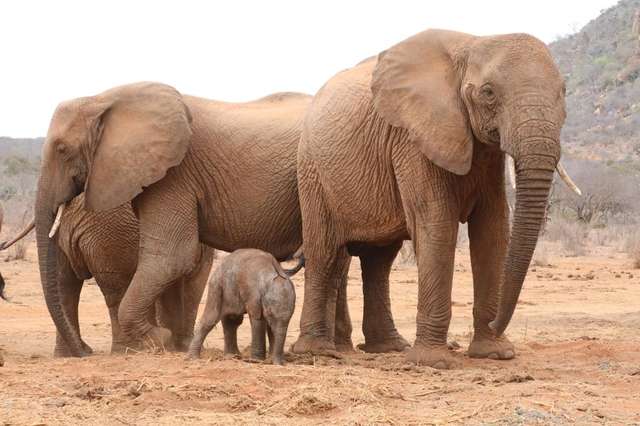
It was clear the proud elephant mom couldn’t wait to show off her baby. The calf, who has since been named Lili, was only hours old — likely born only the night before.
Loijuk has never forgotten the kindness of those who helped her. She even invited Benjamin Kyalo, the head keeper, to have a special moment with her newborn calf.
Sheldrick Wildlife Trust
“Benjamin was able to get close to Lili (who nestled into his legs), stroke her delicate newborn skin and breathe into her trunk, thereby letting her know who he was via his scent,” Rob Brandford, executive director of SWT, told The Dodo. “Elephants have an incredible memory and sense of smell and our keepers will often breathe into the orphans’ trunks so they can recognize who they are.”
You can watch a video of Loijuk and Lili’s touching visit here:
Lili was quite wobbly on her feet during the meeting, but over the course of the week, Kyalo watched as she got stronger and stronger.
“Loijuk has stayed close to the area around the unit, allowing our keepers to watch over her and check how she’s getting on,” Brandford said. “Considering September is the peak of the dry season in Tsavo, not the most favorable of conditions for a new baby, we are delighted that Loijuk has returned close to home so that we can help supplement her diet when she visits.”
Sheldrick Wildlife Trust
In the wild, calves are raised with the help of female relatives within the herd. Loijuk has played nanny to other babies before giving birth to Lili, and now her calf has nannies of her very own — two other wild orphans named Naserian and Ithumbah.
Lili will remain with her mom’s herd in the wild for life, and if she is ever in need, she now knows there is a safe place she can always return to.
Sheldrick Wildlife Trust
Lili is the 31st calf born to female orphaned elephants raised by SWT now living wild, and she is a beacon of hope for threatened elephant populations everywhere.
“Moments like these are momentous,” Brandford said. “In saving one orphaned elephant’s life, we are not only seeing that orphan thrive but start a family.”
“Lili has a brighter future ahead of her than many elephants,” Brandford added, “and we look forward to watching this little girl grow up in the wild.”
A sobering article about the unacceptable face of dogs!
Jim Goodbrod recently sent me an email that included a copy of a recent article in the Washington Post.
Here’s what Jim wrote:
Hey Paul…..
I read this article in the Washington Post a couple weeks ago: it’s not something we want to hear or admit to, but I thought you’d find it interesting nonetheless.
Regards, Jim
Jim got it in one when he said that it’s not something we want to admit to.
But it deserves sharing with you.
ooOOoo
The dog is one of the world’s most destructive mammals. Brazil proves it.
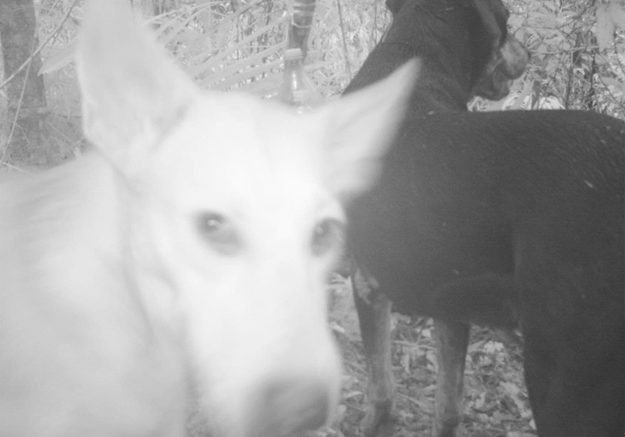
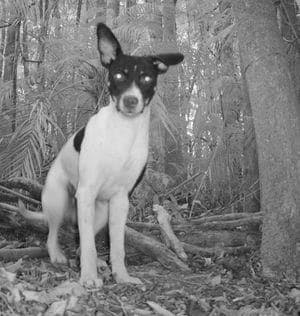
Surveillance cameras placed by researchers in Brazil’s Tijuca National Park capture a pair of dogs. (Courtesy of Katyucha Silva)
RIO DE JANEIRO — High above this Brazilian city, in a jungle blanketing a mountain, the turtles were out, and the scene was hopeful.
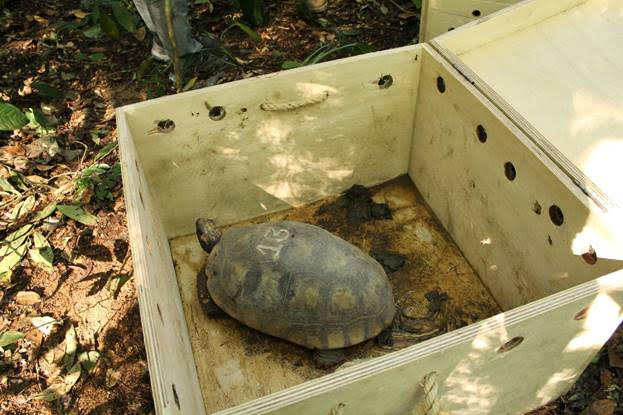
Scientists were reintroducing 15 mud-caked tortoises to this urban forest where they had once been plentiful. Children were running around. People were oohing and aahing. A stern-looking security guard appeared to briefly smile.
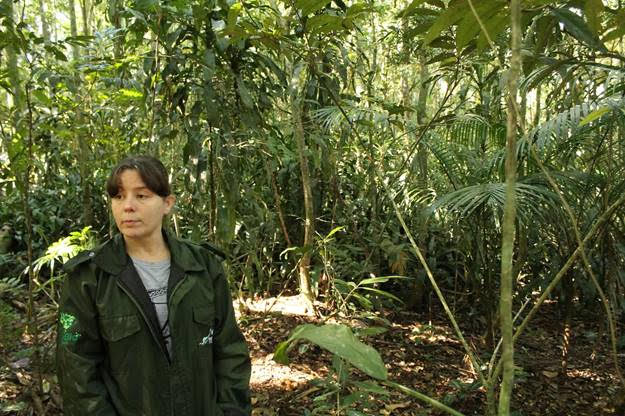
But not government biologist Katyucha Silva. She was thinking about dogs.
What would they do to these turtles? What were they doing to Brazil?
It’s a question more researchers are beginning to ask in a country where there are more dogs than children — and where dogs are quickly becoming the most destructive predator. They’re invading nature preserves and national parks. They’re forming packs, some 15 dogs strong, and are hunting wild prey. They’ve muscled out native predators such as foxes and big cats in nature preserves, outnumbering pumas 25 to 1 and ocelots 85 to 1.
Every year, they become still more plentiful, spreading diseases, disrupting natural environments, goosing scientists who set up elaborate camera systems to photograph wild animals, only to come away with pictures of curious canines.
“It’s a difficult thing for people to hear,” said Isadora Lessa, a Rio de Janeiro biologist who wrote her doctoral dissertation on domestic dogs causing environmental mayhem. “They love dogs too much.”
How the dog became one of the world’s most harmful invasive mammalian predators is as much a global story as a Brazilian one. Over the last century, as the human population exploded, so did the dog population, growing to an estimated 1 billion.
That has been great for people — and even better for dogs — but less so for nature, according to a growing body of academic research implicating canines, particularly the free-roaming ones, in environmental destruction.
“The global impacts of domestic dogs on wildlife are grossly underestimated,” researchers concluded in a 2017 study published in the journal Biological Conservation. The researchers, based in Australia, convicted dogs in the extinction of 11 species and declared them the third-most-damaging mammal, behind only cats and rodents.
The International Union for Conservation of Nature maintains a list of animals whose numbers dogs are culling. There are 191, and more than half are classified as either endangered or vulnerable. They range from lowly iguanas to the famed Tasmanian devil, from doves to monkeys, a diversity of animals with nothing in common beyond the fact that dogs enjoy killing them. In New Zealand, the organization reported, a single German shepherd once did in as many as 500 kiwis — and that was the conservative estimate.
“Unfortunately, we have a big problem,” said Piero Genovesi, chair of the agency’s invasive species unit. “There is a growing number of dogs.”
People all over the world are — begrudgingly — beginning to take note.
In Chile, stray dogs were the top concern among city dwellers surveyed this year, topping deteriorating sidewalks and theft. In New Zealand, some communities moved last year to restrict the movement of dogs in a gambit to save little blue penguins. In India, farmers are complaining about stray dogs killing their livestock, just as other predators once had.
And in Brazil, atop a mountain outside of Rio de Janeiro, 15 tortoises were nestling into the forest floor, oblivious to the danger of the forest’s leading predator.
‘A complex problem’
And in Brazil, atop a mountain outside of Rio de Janeiro, 15 tortoises were nestling into the forest floor, oblivious to the danger of the forest’s leading predator.
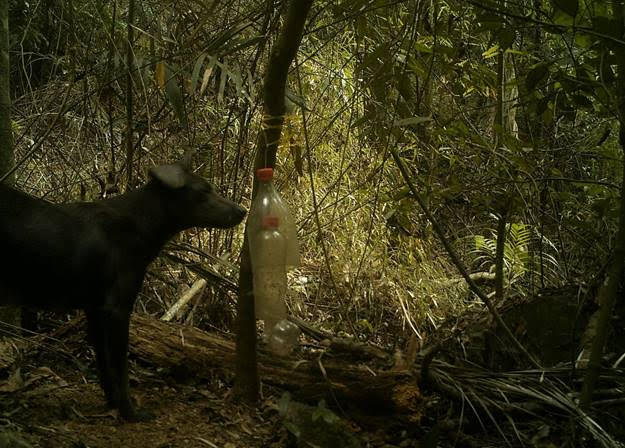
Researchers estimate there are more than 100 dogs in Tijuca National Park outside Rio de Janeiro, where they hunt and kill wild animals in packs. (Courtesy of Katyucha Silva)
Brazil is home to an estimated 52 million dogs, according to the most recent government statistics — more than anywhere in Latin America — but their lives vary widely. In a nation defined by inequality, where the rich fly in helicopters over the poor in the favelas below, the dog has become one more way of understanding the divide.
In wealthy cities, the dog is everywhere, strolling through fancy shopping malls, sitting in the laps of restaurant patrons, even riding paddle boards out on the surf. Some people wheel their dogs around in little strollers.
“The dog brings to Brazilians some things that Brazilians appreciate in themselves,” said Alexandre Rossi, a television personality more commonly known as Dr. Pet. “To be friendly, to want to socialize with everyone . . . and be there and be close to your family. These are perceived as very good Brazilian qualities.”
On the streets of trendy Ipanema one recent afternoon, few people could believe that a dog — or at least their dog — could be much of predator.
“The dog is a friend!” sputtered Philipe Soares, the furball Bobby at his feet. “No, I’ve never thought of him that way.”
“Difficult to imagine,” said Carlos Alberto Vicente, peering down at his own pooch.
“In her case,” said Flavio Vilela, a shirtless man striding through a park with a small mutt named Nicoli, “they’d hunt her.”
The problem, researchers say, isn’t these dogs, who lead the coddled lives of European or American pets.
The problem is the dogs in poorer and more rural communities, where the life of the dog is more frequently the life of hunger. They prowl the streets day and night with neither a collar nor an owner, looking for food wherever it can be found — in trash heaps, alongside roads, and in forests and fields, where they form packs to hunt and kill.
“It’s a very complex problem,” said Silva, the government biologist.
A stunning discovery
Katyucha Silva, a government researcher, has discovered dozens of dogs in Tijuca National Park. (Terrence McCoy/The Washington Post)
Ana Maria Paschoal, a researcher at the Federal University of Minas Gerais, remembers when she first started thinking about the dog differently. She was out in the Atlantic Forest in Southeast Brazil around a decade ago when she noticed there were an awful lot of them.
She wondered: How many dogs are using the protected areas? Are these feral or domestic dogs? Is their presence changing the occurrence of wild species?
So she set up cameras across 2,400 acres of forest to find out. What she discovered, published in 2012 in the scientific journal Mammalia, stunned her.
“The presence of the domestic dog is a threat,” Paschoal and her co-authors concluded.
The research, subsequently confirmed in a larger survey, laid the groundwork for a growing field of study here. One researcher linked Brazil’s dogs to the spread of diseases. Another accused the dogs in the National Park of Brasilia, where they hunted in massive packs, of scaring off natural predators. It was found that the closer humans lived to a nature preserve, the more likely dogs had penetrated it.
The International Union for Conservation of Nature has counted 191 species whose numbers dogs are culling. More than half are endangered or vulnerable. (Courtesy of Katyucha Silva)
But perhaps most striking? The dogs were neither feral nor domestic — but somewhere in between.
“All the dogs we detected had an ‘owner’ or a person that the animal has a bond with,” Paschoal said. “The species population increases following human populations, exacerbating their potential impact on wildlife.”
It was something Fernando Fernandez, an ecology professor at the Federal University of Rio de Janeiro, learned the hard way. For the last decade, he has been reintroducing native animals to the Tijuca forest, one of the world’s largest urban woodlands, which spills across Rio de Janeiro’s mountains.
First came the agouti, a squirrel-like rodent. Then followed a problem: “Dogs.”
They started killing the agouti, and not for food. It was just for fun.
Fernandez and Silva wanted to learn more. They set up cameras and discovered dozens of dogs in the forest. They estimated more than 100 dogs were in the park — not residents, it turned out, so much as frequent visitors, tracking in from nearby favelas.
“These are people who are very poor,” said Silva, who has six dogs at home. “They don’t have money to build walls. . . . When the owners leave for work, the dog leaves, too, and only returns when the owner comes back to the house from work.”
The owners often have no idea what their dogs are up to. Even if they were told, Rob Young said, they almost certainly wouldn’t believe it.
Young, chairman of wildlife conservation at the University of Salford in Britain, witnessed the psychology at work after seeing dogs kill flightless birds in the state of Minas Gerais.
“We’d do interviews with the farmers: ‘Have you seen these dogs?’
“And they’d say, ‘Yeah, but my dogs aren’t the problem; it’s my neighbor’s dogs.’
“Every farmer would say the same thing.”
These factors — inability to see aggression in dogs, intractable inequality, the rapid expansion of humanity — left Silva feeling apprehensive as she watched the tortoises being reintroduced into the Tijuca forest.
In the long term, she didn’t know how the problem of dogs laying waste to the world’s environments would realistically improve.
And in the short term: Could dogs kill these tortoises, just as they’d dispatched a few agouti?
“Yes,” she said. “They could.”
Silva worries that tortoises reintroduced in the park could fall prey to dogs. (Terrence McCoy/The Washington Post)
ooOOoo
It’s a tough read and there doesn’t appear to be a solution, not in the short-term at least.
As was reported in the article it is as much a global problem with something of the order of a billion dogs roaming the planet.
Now it’s still two weeks away but on the 23rd September we are going away until the 8th October.
We are driving to Utah specifically to see the slot canyons in Capital Reef National Park, and elsewhere.
The story behind this was quite a few months ago I was reading on Ugly Hedgehog about these canyons and said to Jeannie that we really should try and go there before we get too old.
As it happened, Jana could babysit the house and dogs, cats and horses on the dates that I mentioned earlier on.
We are taking just one dog with us. We will take Brandy because he adores being taken for a drive and he has the habit of going for a walkabout when at home and we thought it wasn’t fair on Jana.
So it’s all uncertain as to what I shall do with the blog. Whether I will have time to use old posts, or leave it alone completely, or from time to time go online and leave a brief post.
Things may become clearer nearer the time.
But it seemed like a good idea to give your a heads-up!










 Gray and white fulmars with outstretched wings carved the sky and nearly scratched the sea. And then there were icebergs.